Final report for ENE22-174
Project Information
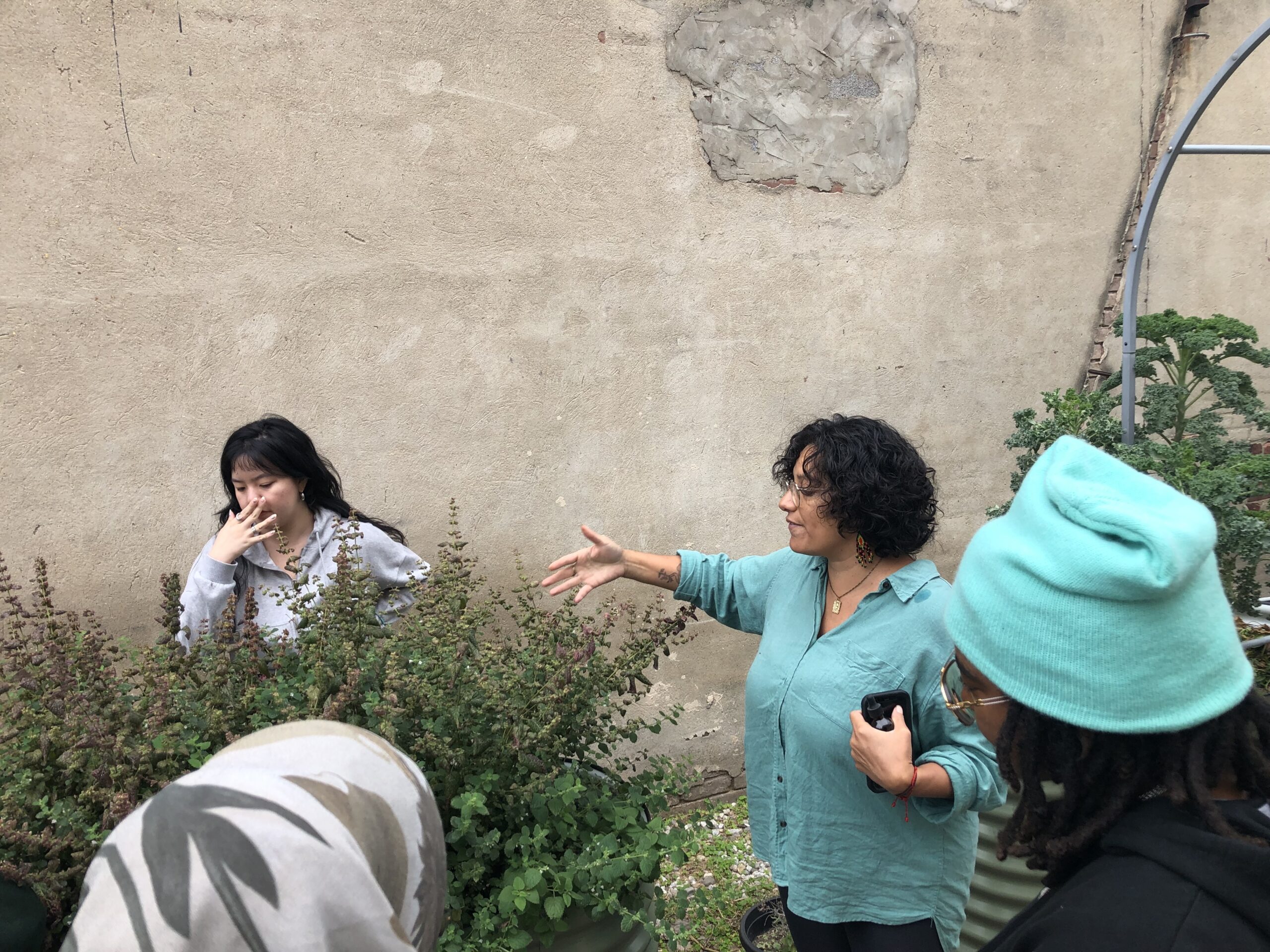
The Greater Newark Sustainable Farming Practices and Local Entrepreneurship Program provided a program comprised of six workshop intensives and a year-long demonstration bed project for service providers in the Greater Newark region that enabled them to learn from other regional service providers and farmers. Service providers from the Munsee Three Sisters Medicinal Farm, Urban Agricultural Cooperative, Newark Science and Sustainability, and Elevate Newark led each workshop. These workshops included trainings on traditional medicinal herbs and seed saving with the Munsee Three Sisters Medicinal Farm, led by knowledge bearers of the Turtle Clan of the Ramapough Lunaape; soil testing and in-depth composting methods and local policies from the Urban Agricultural Cooperative; and local farm management, business, and networking through Newark Science and Sustainability and Elevate Newark’s workshops on local entrepreneurship in markets that included the holistic health and aromatherapy industry.
The Healing Garden at Rutgers University served as an onsite demonstration space where farmers and service providers led farmers through a series of six half-day workshops that ran for Fall 2022-Spring 2023 and continued with farmer implementation in Spring 2023/Fall 2023 with additional follow-up in Fall and Spring of 2024 and 2025. At the end of the program, they also completed a demonstration plot onsite that illustrated one or more specific aspects of the program that they have learned and will be implementing and teaching at their farm. Participant activities were included on an online website, incorporating their work and their own workshops on sustainable farming methods and their local farming businesses into the larger context of farms in the Greater Newark and Northern New Jersey region. As a result of their participation in the project six service providers in the Greater Newark region worked with 36 farmers through training in sustainable farming methods, including soil testing, composting, seed saving & exchange, and local entrepreneurship. Rutgers University also decided to invest in the garden site by doubling the size and significantly upgrading the infrastructure to make it more inviting to more learners and members of the public.
Twelve service providers in the Greater Newark region will impact a total of 60 farmers through training in sustainable farming methods, including soil testing, composting, seed saving & exchange, and local entrepreneurship.
Trainees will be trained in sustainable farming methods including soil testing, composting, and seed saving and exchange, and local entrepreneurship. They will build demonstration beds onsite at the Rutgers University-Newark Healing Garden with their trainers. We will follow up with each participant with a debrief interview to learn how they implemented the demonstration methods from the workshops and taught the adopted methods at their farms/businesses. We will ask how this has measurably affected/changed their practices.
The Greater Newark Sustainable Farming Practices and Local Entrepreneurship Program provided a program comprised of six workshop intensives and a two-year-long demonstration bed project for service providers in the Greater Newark region that enabled them to learn from other regional service providers and farmers. Service providers from the Munsee Three Sisters Medicinal Farm, Urban Agricultural Cooperative, Newark Science and Sustainability, and Elevate Newark led each workshop. These workshops included training on traditional medicinal herbs and seed saving with the Munsee Three Sisters Medicinal Farm, led by knowledge bearers of the Turtle Clan of the Ramapough Lunaape; soil testing and in-depth composting methods and local policies from the Urban Agricultural Cooperative and Rutgers University-Newark Earth and Environmental Sciences Department; and local farm management, business, and networking through Newark Science and Sustainability and Elevate Newark’s workshops on local entrepreneurship in markets that include the holistic health and aromatherapy industry.
The Healing Garden at Rutgers University served as an onsite demonstration space where farmers and service providers taught farmers through two full-days of workshops in May 2023 and continued with farmer implementation through Summer 2023/Spring 2024 through a year-long mentorship with workshop leaders. This was extended with additional follow-up workshops and an online series of 6 classes on Ecopreneurship that extended the initial in-person intensive workshop in 2024-2025. An additional hands-on Ecopreneurship was added in Spring 2025. This extension of the initially planned 2023 workshops allowed for more farmer attendance and the ability for workshop leaders to be present together beyond the two days and to continue implementation and training. The initial May 20-21, 2023 were chosen as the dates for the workshop intensives to provide for warmer weather and allow for timing for planting demonstration beds with the participants.
At the end of the program, the farmers also completed at least one and up to three demonstration plots onsite to illustrate one or more specific aspects of the program that they have learned and will be implementing and teaching at their farm or organization. Participants were included onto a blog to incorporate their work with sustainable farming methods and their local farming businesses onto the Healing Garden website to help promote their work.
Cooperators
- (Educator)
- (Educator)
- (Educator)
- (Educator)
Educational approach
Engagement:
The Greater Newark Sustainable Farming Practices and Local Entrepreneurship Program will allow 12 service providers (who will then be able to go back and train their teams and farmers to expand the target reach of this program) to participate in six workshop intensives on Sustainable farming practices and develop their own demonstration projects specific to what they learn from the program and the ways they wish to adopt methodologies for their businesses/organizations.
Applicants will be recruited through the service providers and farmers with which we are partnering. Applications will be accessed by an advisory committee of team members, PI and CoPIs with interviews. Urban Agricultural Cooperative operates farmers markets and programs to support growers and food entrepreneurs in the region, established The Cooperative Market, and have deep connections within the community and organizations involved in the local food system and local businesses and health. One of the main reasons that Clan Mother Michaeline Picaro and Chief Vincent Mann co-founded the organic Munsee Three Sisters Medicinal farm was to increase local jobs in the field from planting to retail. Newark Science and Sustainability works with local markets and established the Farm to Table Cooperative CSA. The organization presents events/large-scale conferences including the annual Sustainable Living Empowerment Conference, bringing together organizations and farmers. We will work with these organizations for outreach via emails, online, and social media, as well as flyers, brochures, and postcards that will be sent to service providers to disseminate. UAC and Science and Sustainability noted that their staff would have interest to be participants as they include service providers in the field who then go forth beyond their organizations in the near future. We will also reach out individually to those we know who may have interest/benefit from such a program.
Learning:
Farmer/Service Provider participants will learn different sustainable farming practices and be advised by trainers from the program workshops through their work directly with training farmers.
Hands-on experiential learning from soil testing to the development of self-designed demonstration beds and plant-based products, as well as additional readings, presentations, and access to trainers as advisors will help farmers learn sustainable methods and framings to rethink their training practices and business models and as they apply them.
Workshops will take place for 2 full-days with six workshops including the orientation to participant's work on their demonstration plots. The second phase of the program is the year-long development of a demonstration bed under the advisement of the workshop trainers. Also during this time, they will be advised in terms of their business plan development in relation to the workshops. During this time, the participants will develop the mission/goal of the demonstration bed, which will reflect their organization’s goals and what they learned at the workshops. They will have help from designer/architect/horticultural advisors during this process as well to help build out the beds and signage that will also interconnect with each other through a narrative and mapping project to help promote their work and projects. After each workshop, they will receive a digital “badge” to note that they have gone through the training. They can use the badge to indicate they have completed this training.
After they go through the workshops and complete their demonstration bed, they will join a debriefing process with the Co-PIs in which they will have exit-interview style debrief sessions to talk about what they learned and thoughts about the program.
Workshops will include topics:
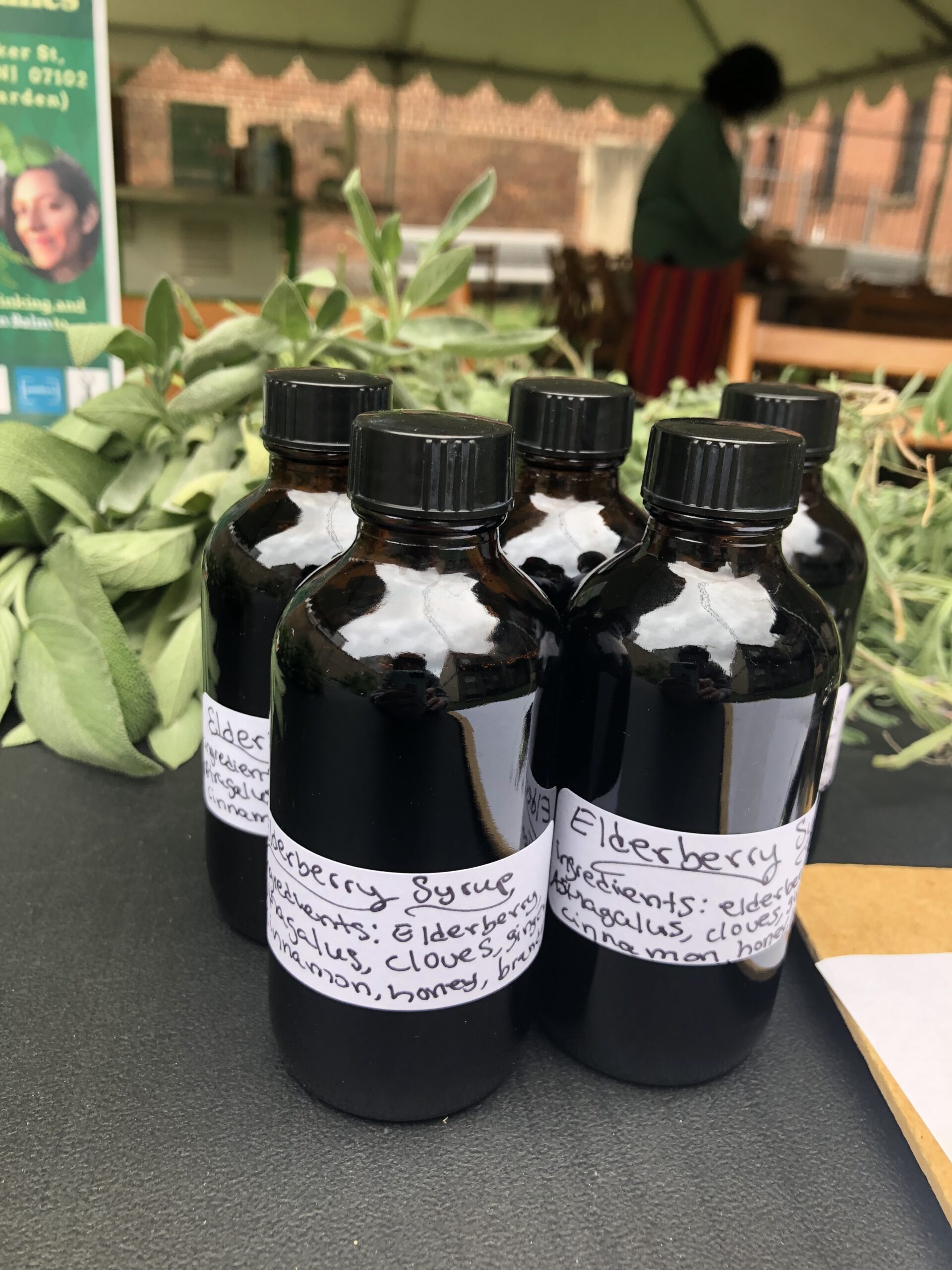
Farming Practices and Traditional Medicinal Plants: Holistic care products for community health and local organic products for small-scale farms and businesses.
Business Planning: Business model planning for local entrepreneurship.
Aromatherapy and holistic market: From farm management to local retail.
Urban Farm Entrepreneurship - how local growers can tap into networks to sell online, in person, wholesale and special event catalogs.
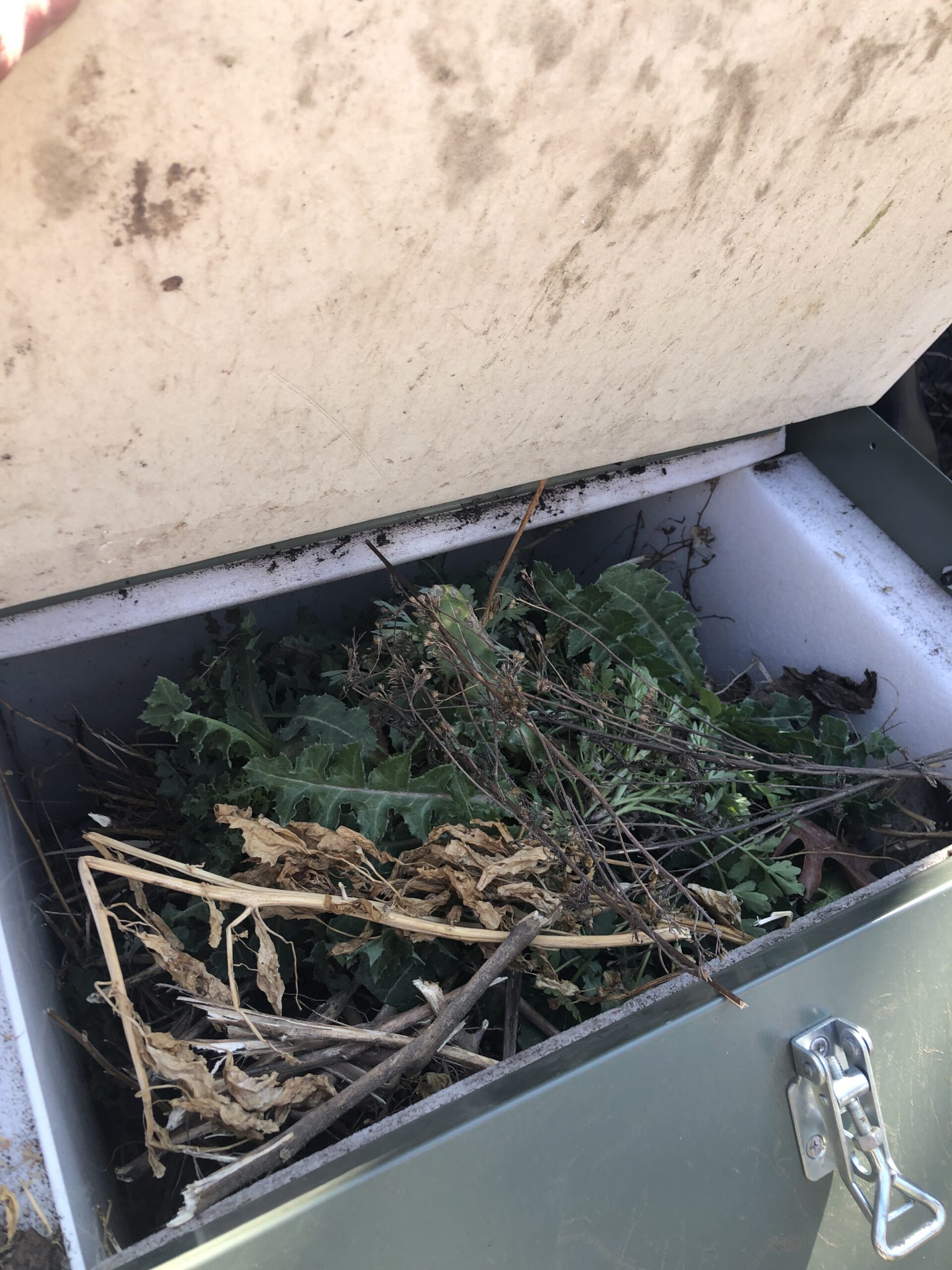
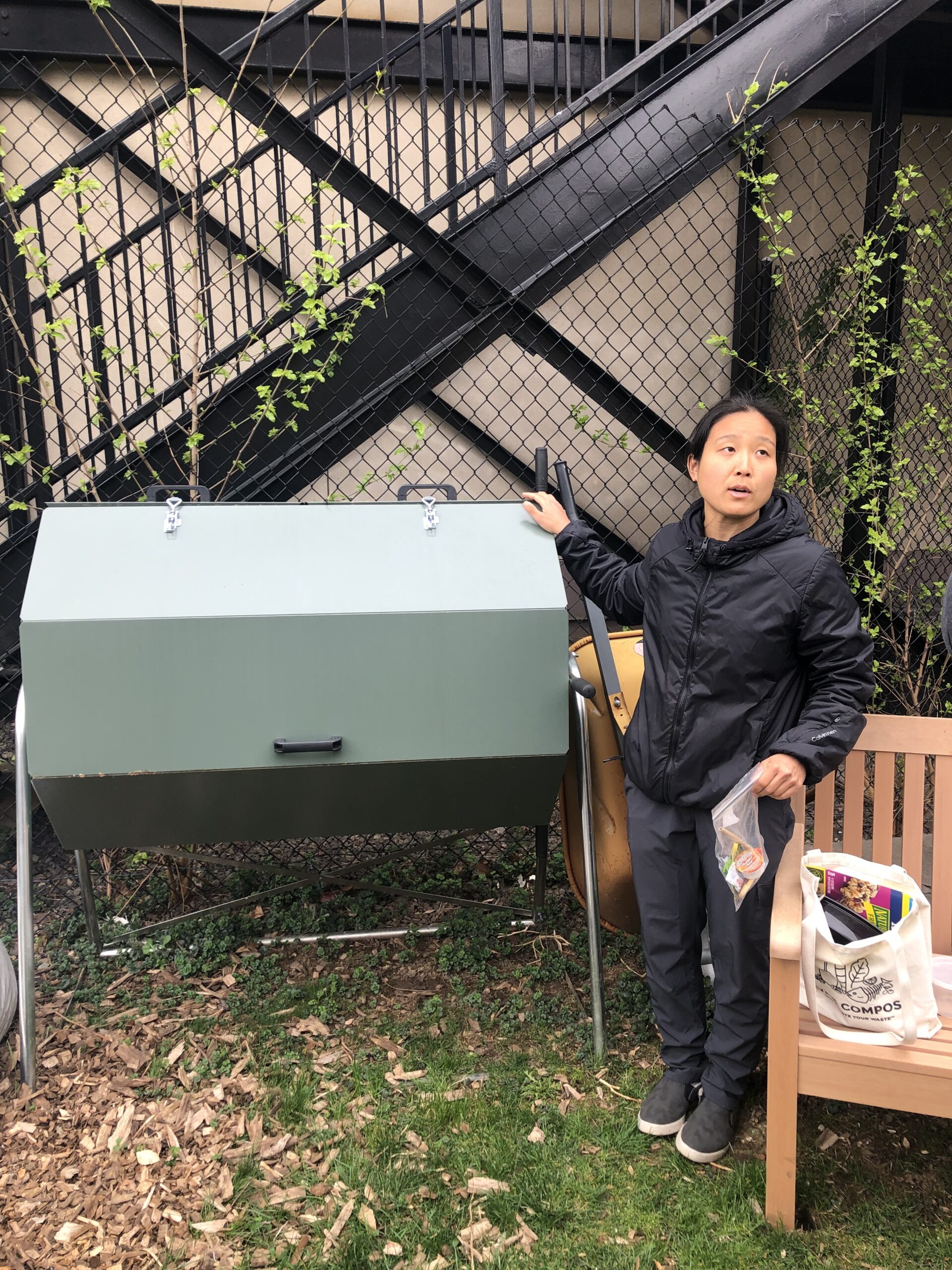
Composting small-scale food and garden scraps with Aerated Static Pile method
see detailed curriculum
Evaluation:
The performance target will be achieved through personal debrief interviews that the PI and Co-PIs will undertake with participants, asking them a survey of questions pertaining to which of the learned methods they have worked with and how they have been able to demonstrate and train others on these methodologies. We will ask them how this has impacted their businesses, other trainers, and farmers. We expect that the answers will be both verifiable through numbers as well as the thoughts of the participants themselves, which is important.
Milestones
Milestones:
Engagement:
Milestone: April 30, 2022-October 30, 2025
The Greater Newark Sustainable Farming Practices and Local Entrepreneurship Program begins; the key personnel will meet along with advisors to go over the program and workshop schedules.
Status:
Accomplishments:
Milestone: April 2022-July 2022 — Demonstration area implemented
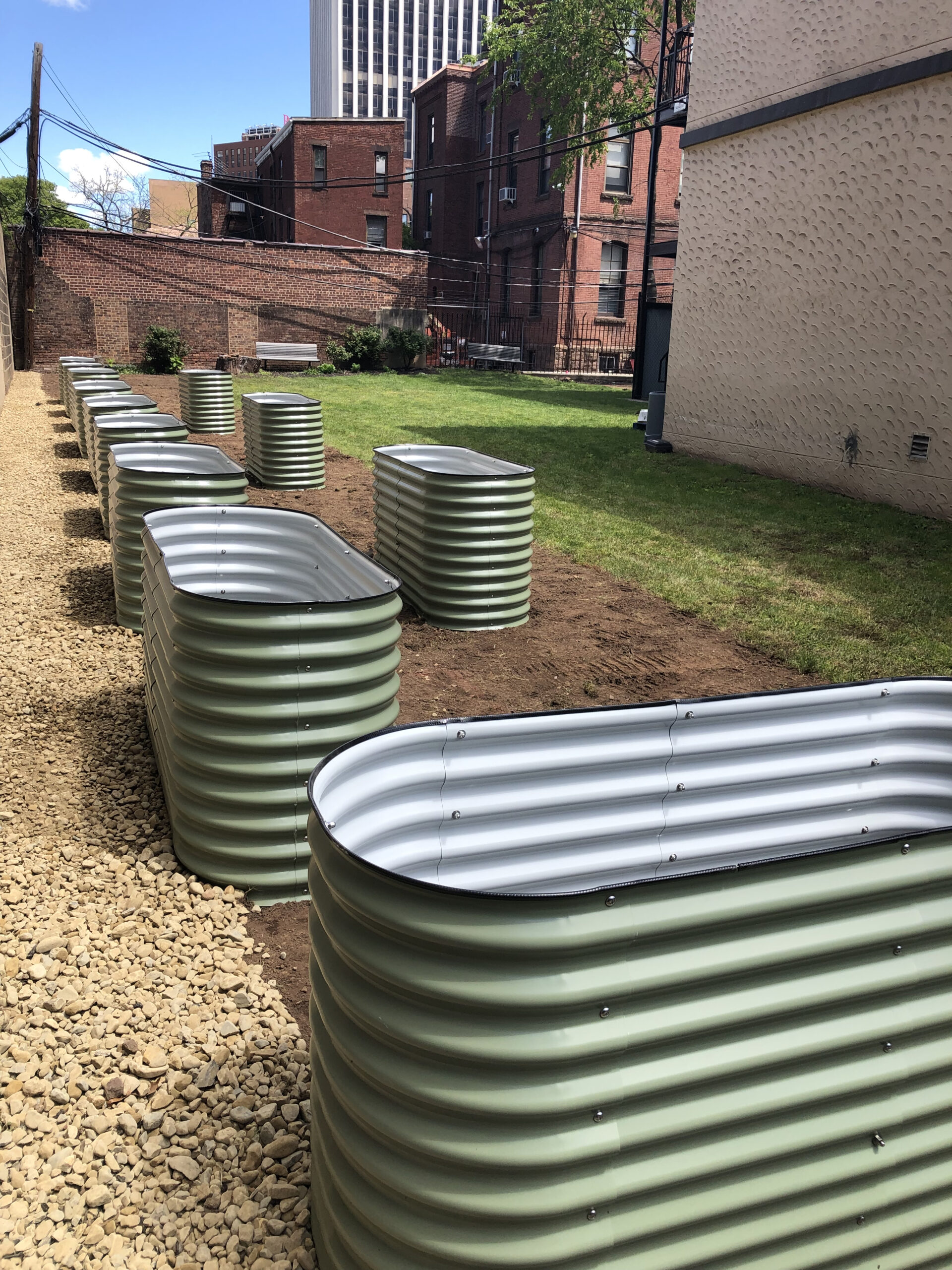
Project PI and Landscape Architect meet to go over and implement demonstration bed and demonstration area design and seating. This will include a shaded area for teaching by implementing a pergola, providing seating and raised beds.
Status: Complete April 2023-July 2025
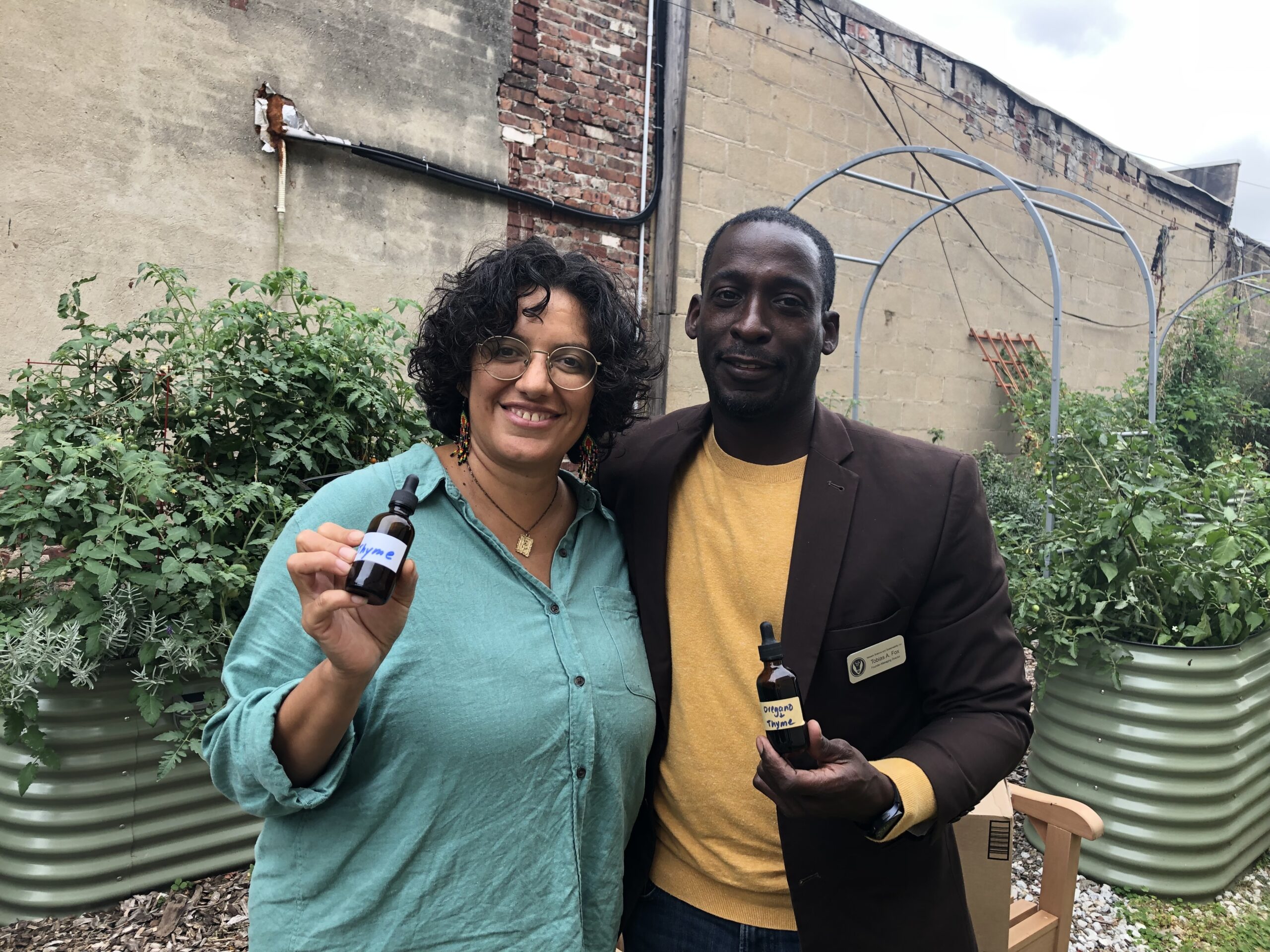
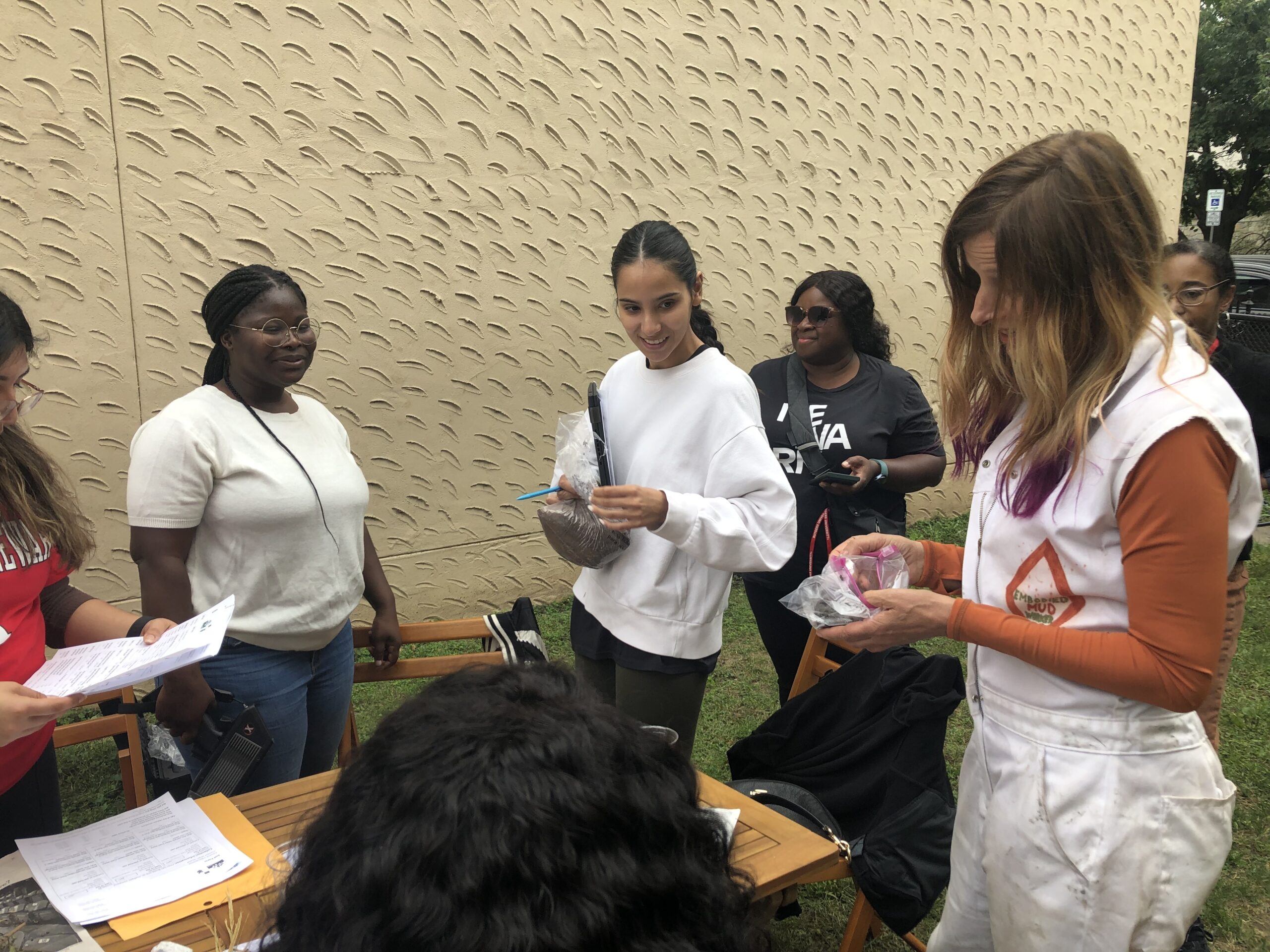
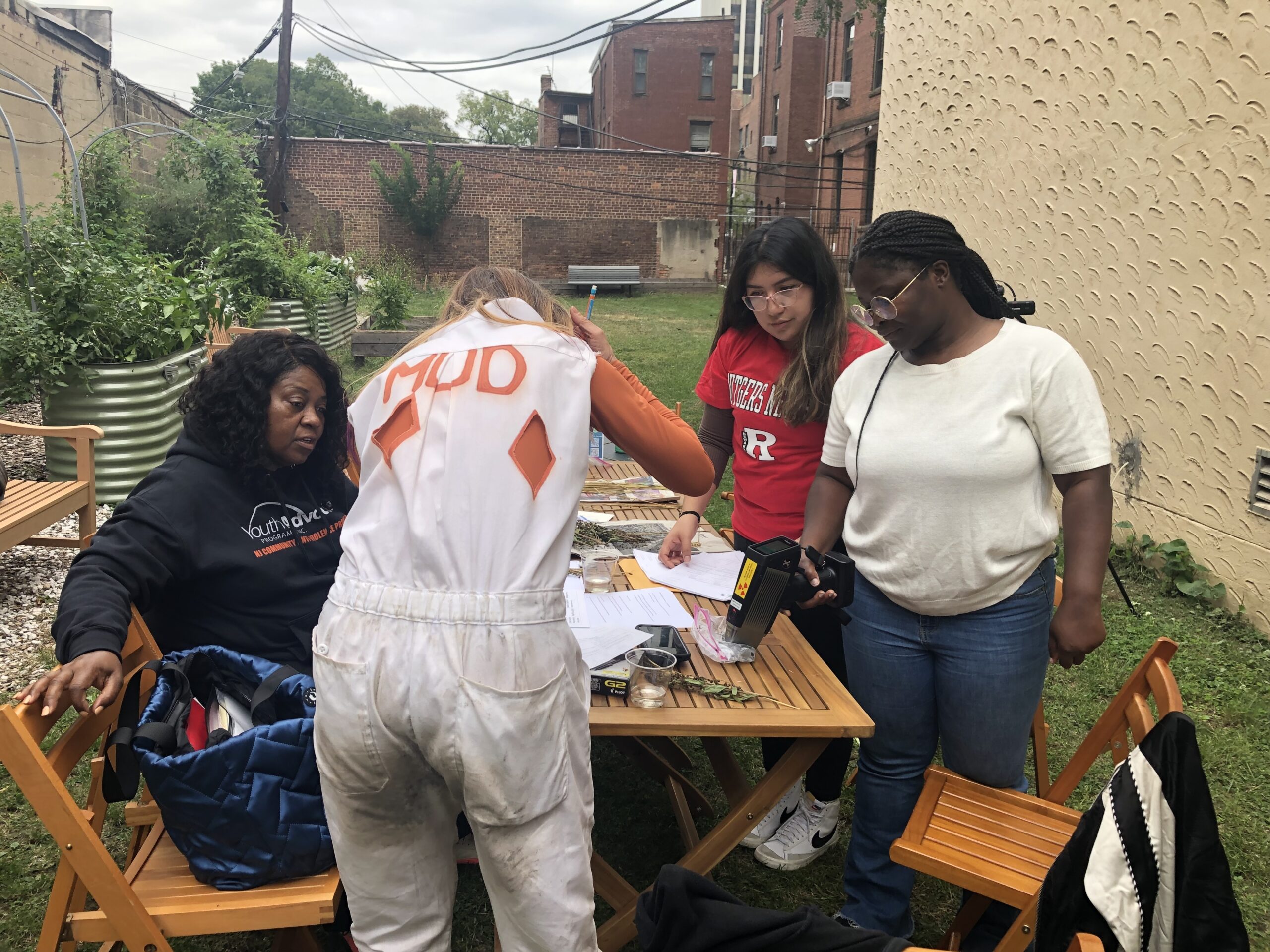
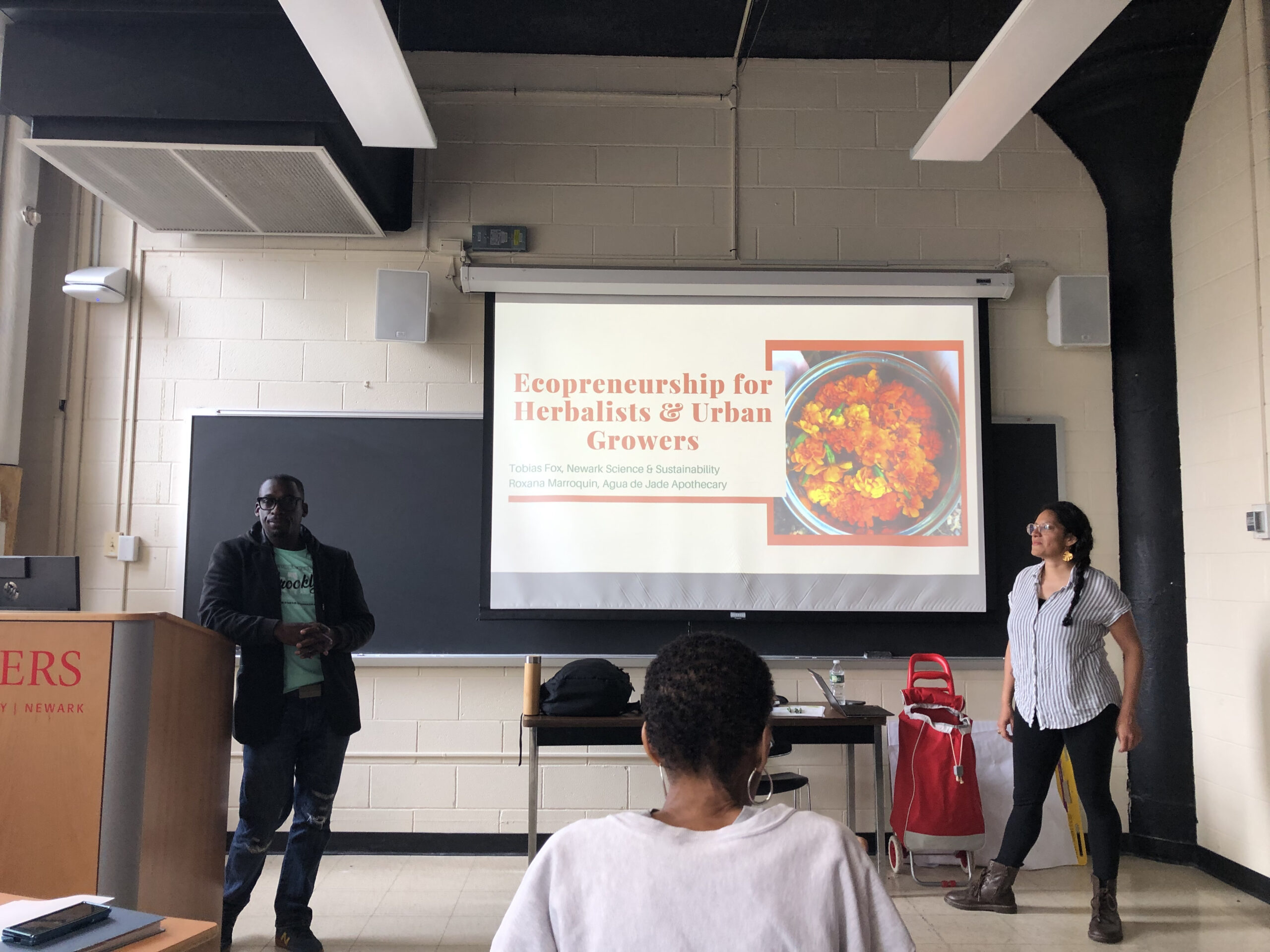
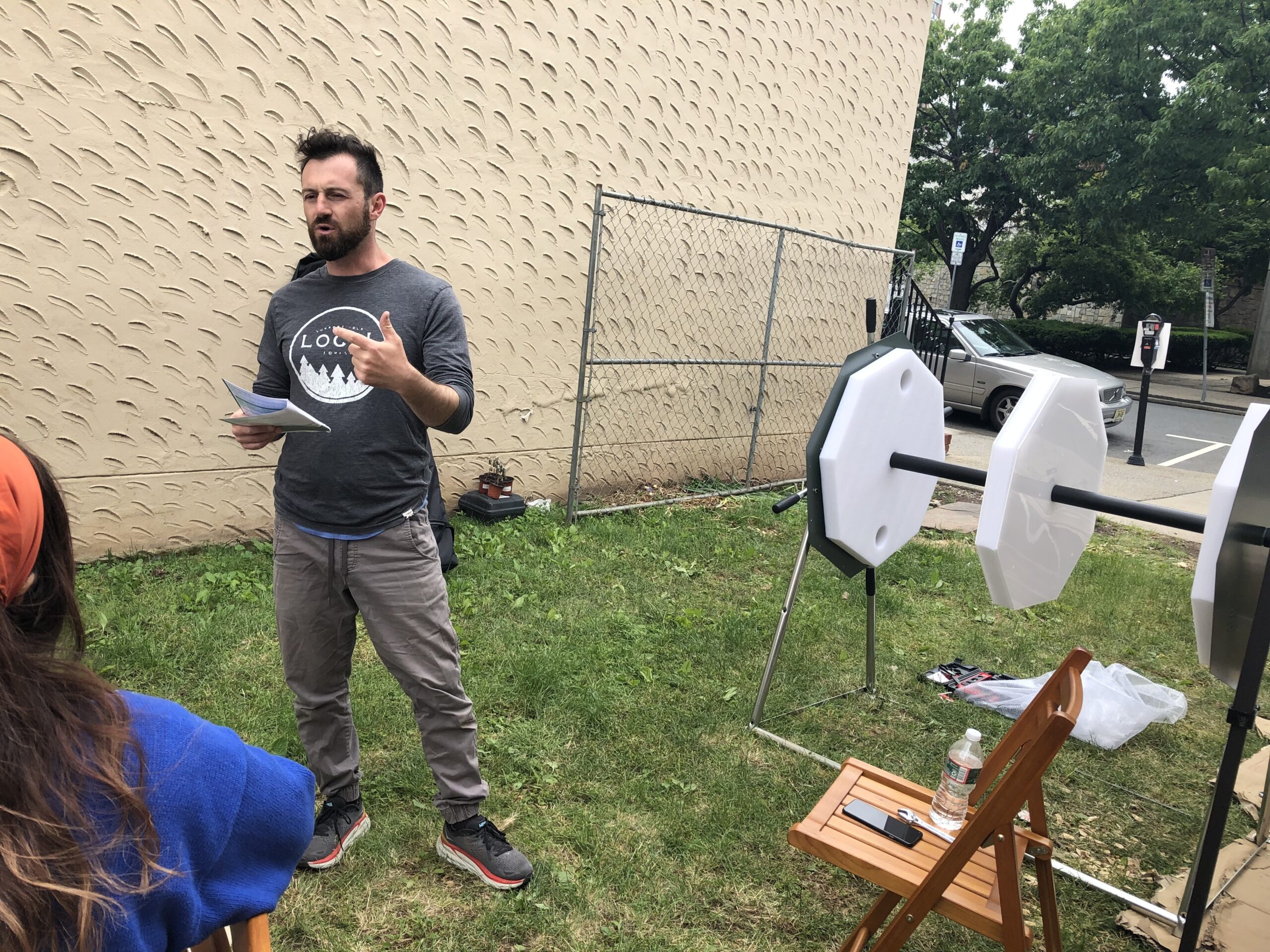
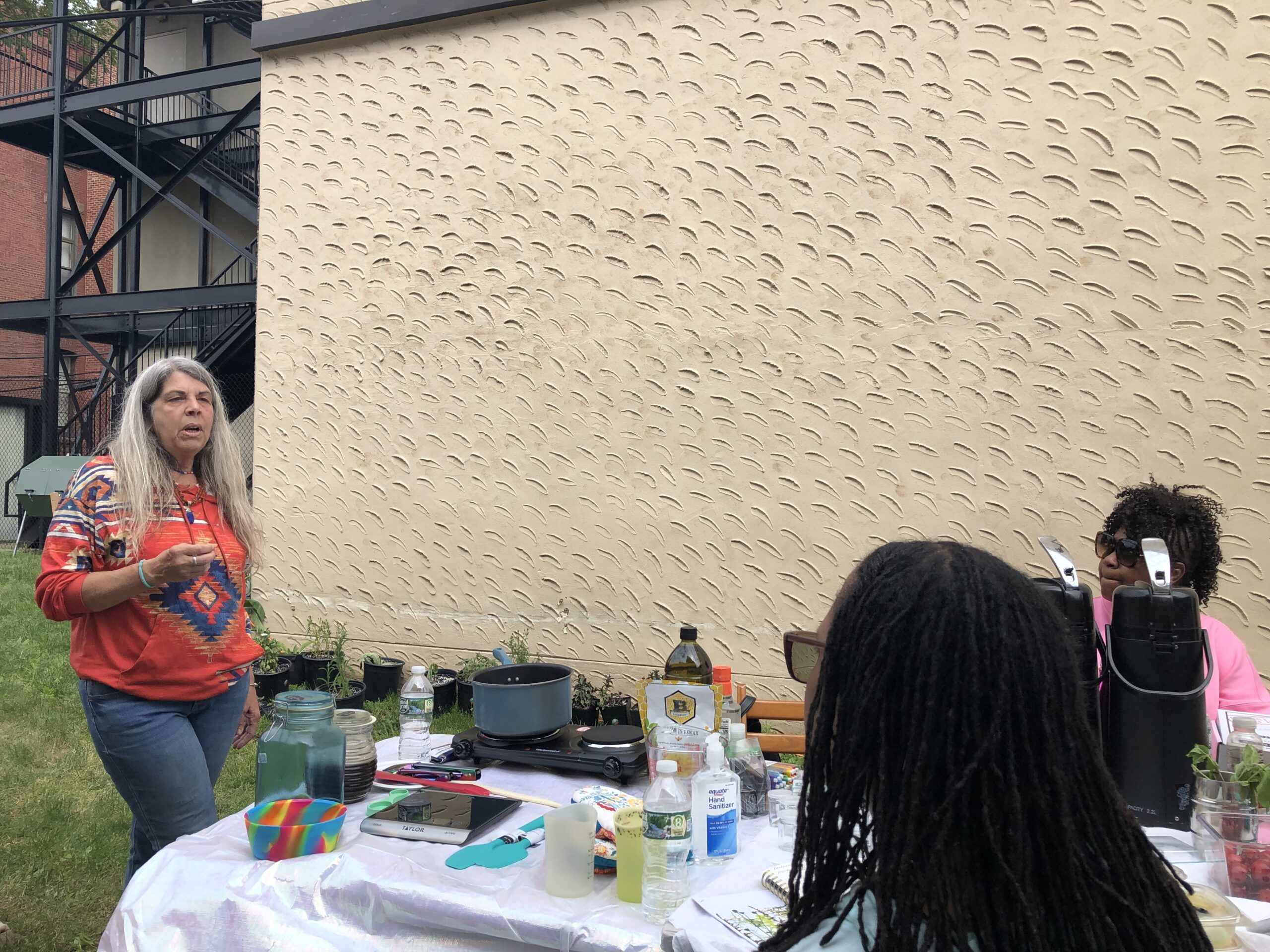
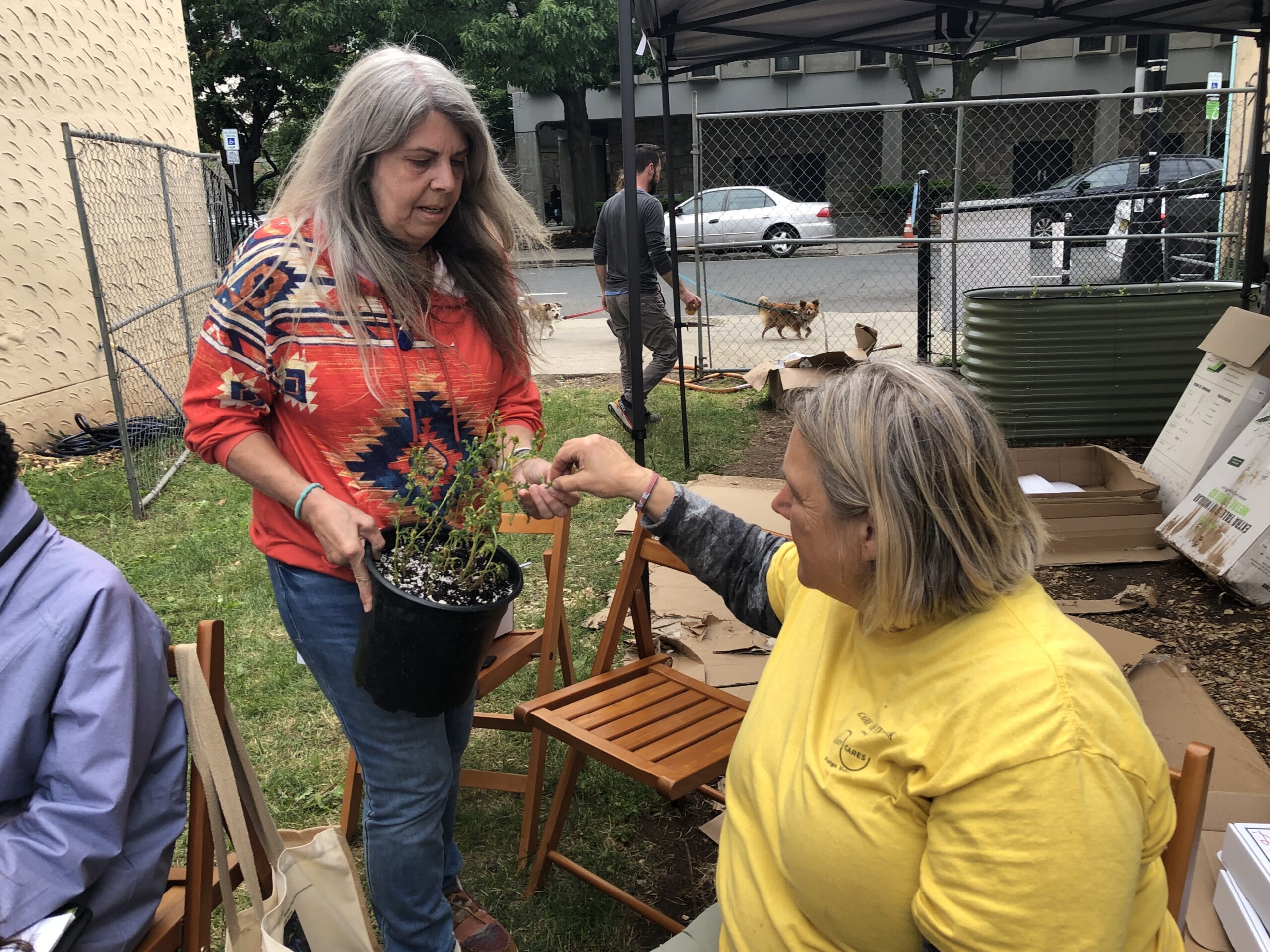
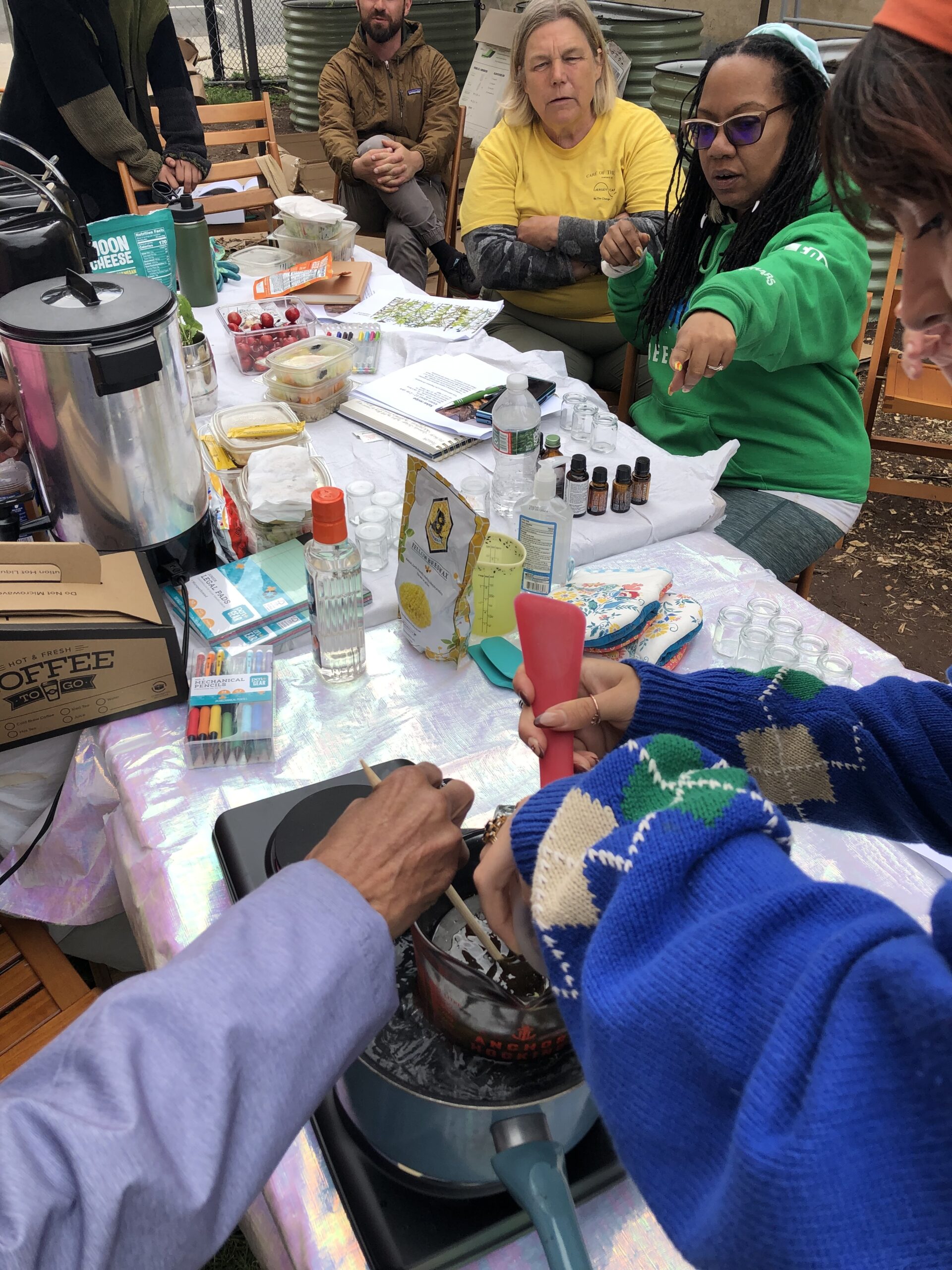
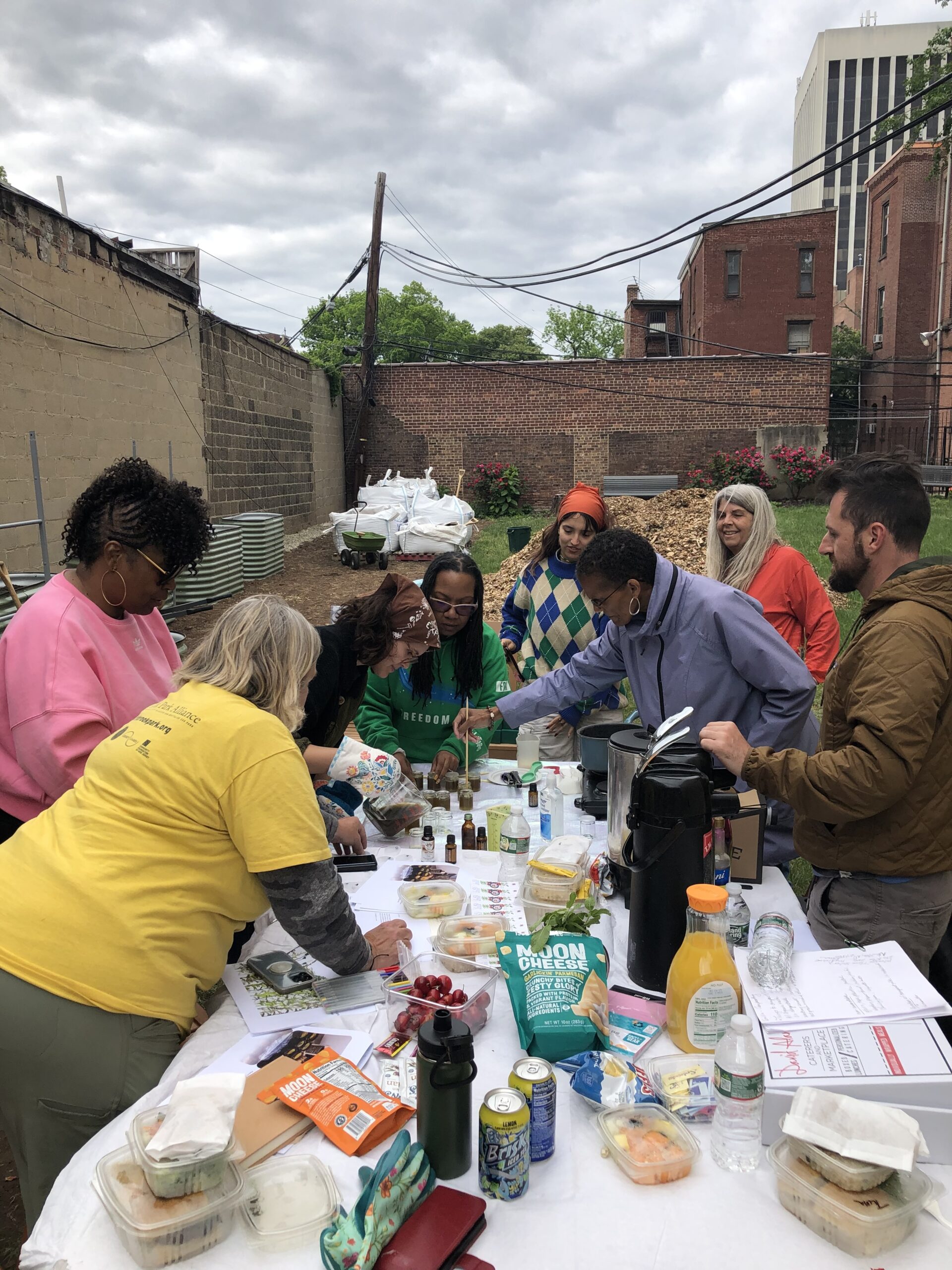
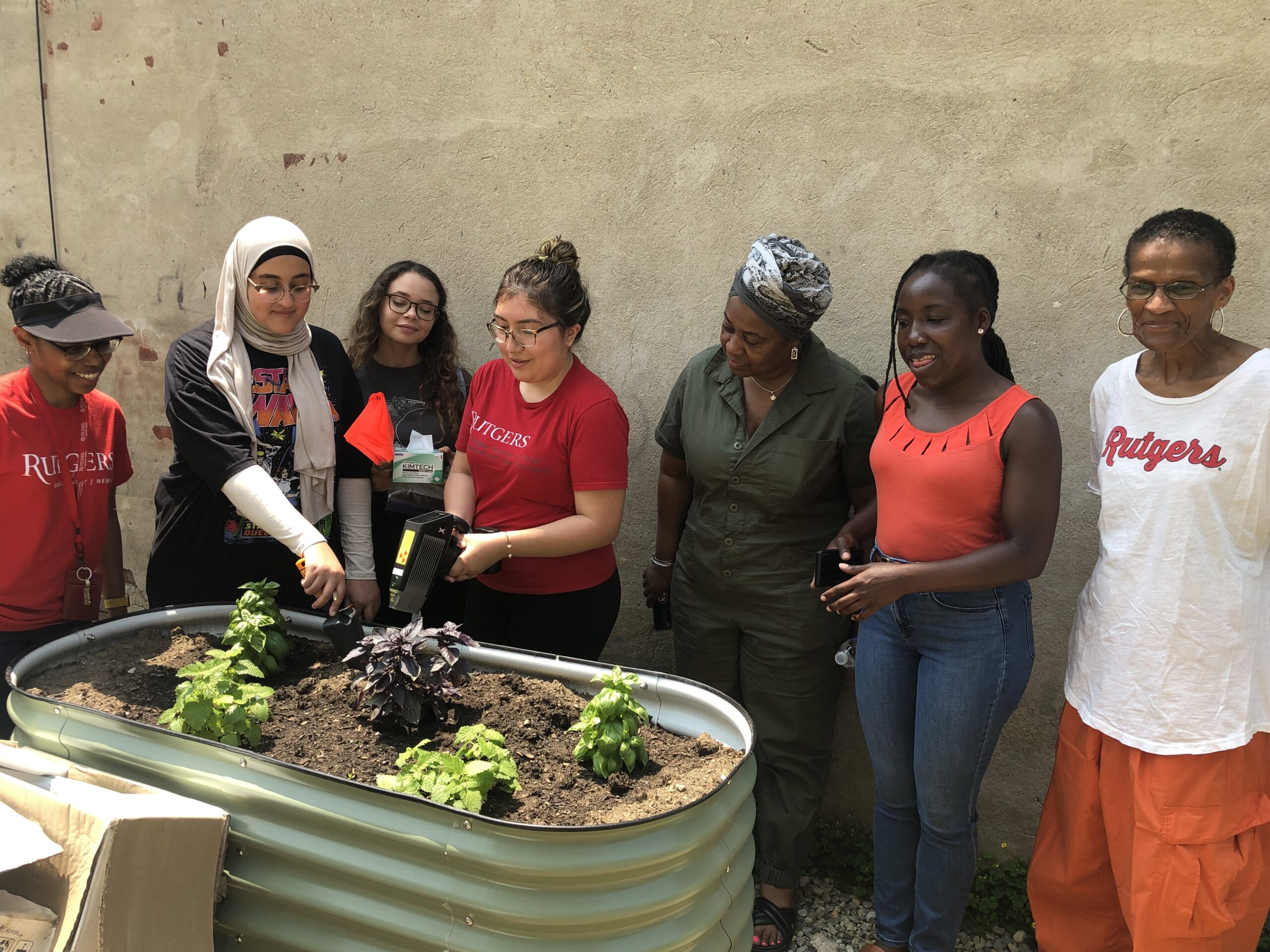
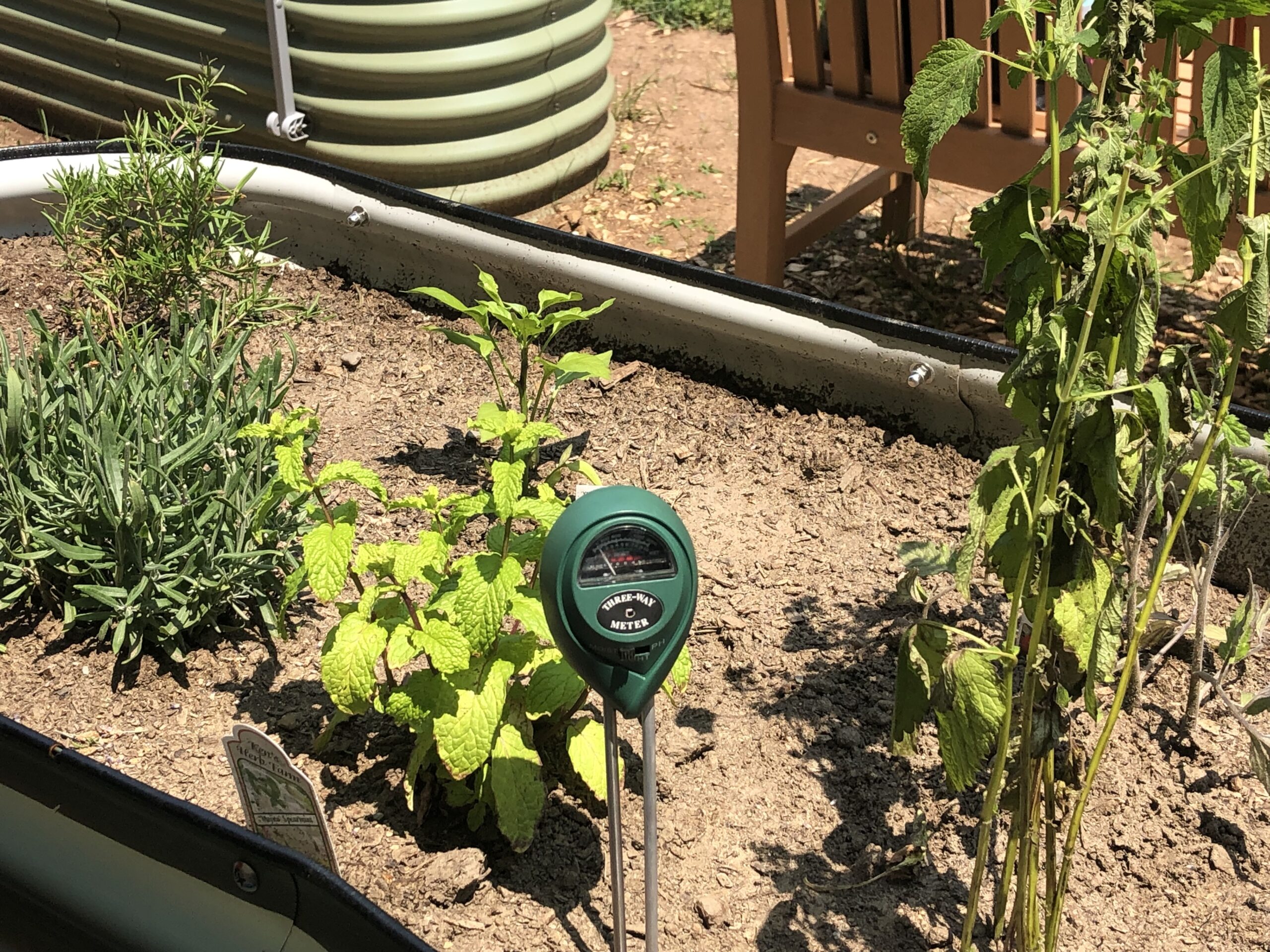
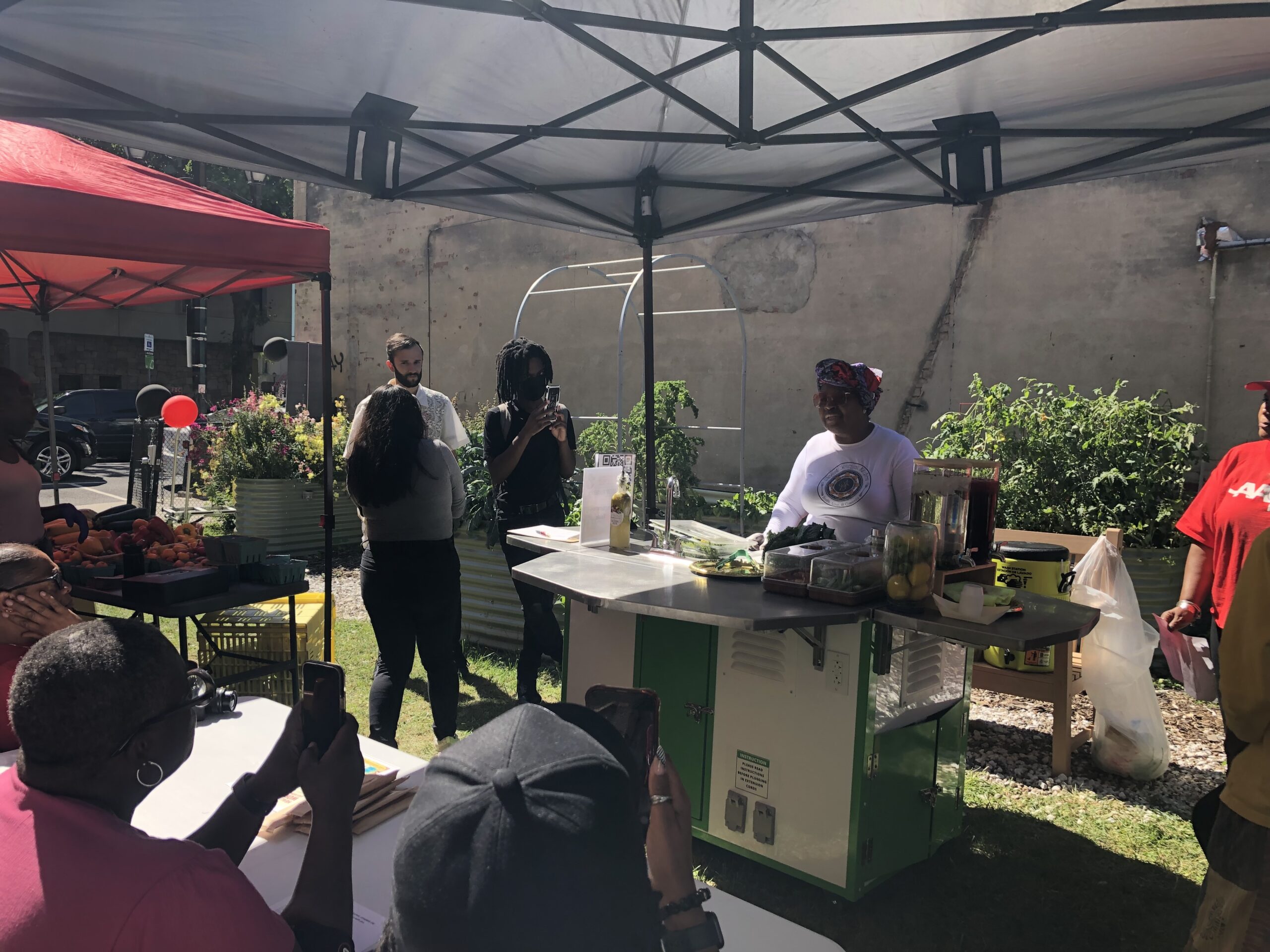
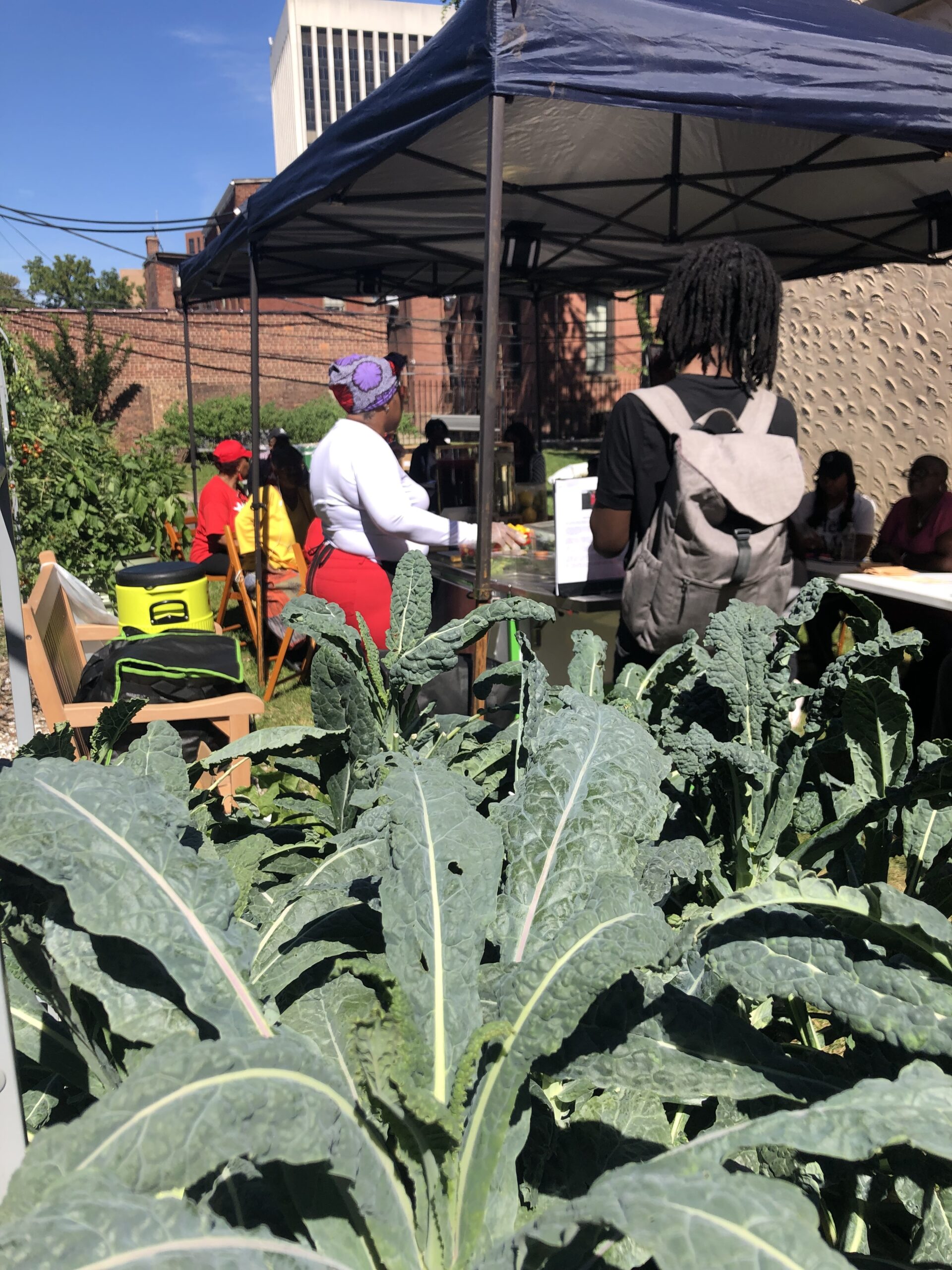
Accomplishments: The demonstration area was implemented in April 2023 for the initial workshops to start the program and continues to develop with the work of the gardeners. The workshops began in 2023 due to delays in approvals for the implementation of the garden and the time period and amount of workshops was expanded beyond the initial time period because it became that the farmers themselves started giving workshops to additional trainers including master gardeners as part of the program, using what they learned at the workshops as well as working with advisors to give workshops so they would have hands-on work training others. The additional workshops given by farmers included an average of 12-20 additional trainees for each workshop. During Fall 2024, they were able, with the advisors and Co-PIs Alex Chang and Emilio Panasci, to implement workshops on Sept 11 including information on raised bed farming, composting, and soil toxicity testing and assisted by farmer participant Keahi Butler-Williams; Sept 18 led by farmer participant Charlene Messer on farm to table to local entrepreneurship with a chef demonstration with vegetables she grew in the demonstration beds and assisted by farmer participant Keahi Butler-Williams; Sept 25 led by advisors Tobias Fox and Roxana Marroquin to expand on their initial workshop into hands-on product producing from farm to entrepreneurship with herbal remedies; and Oct 2 with artist andrea haenggi and on soil toxicity testing assisted by farmer participant Keahi Butler-Williams.
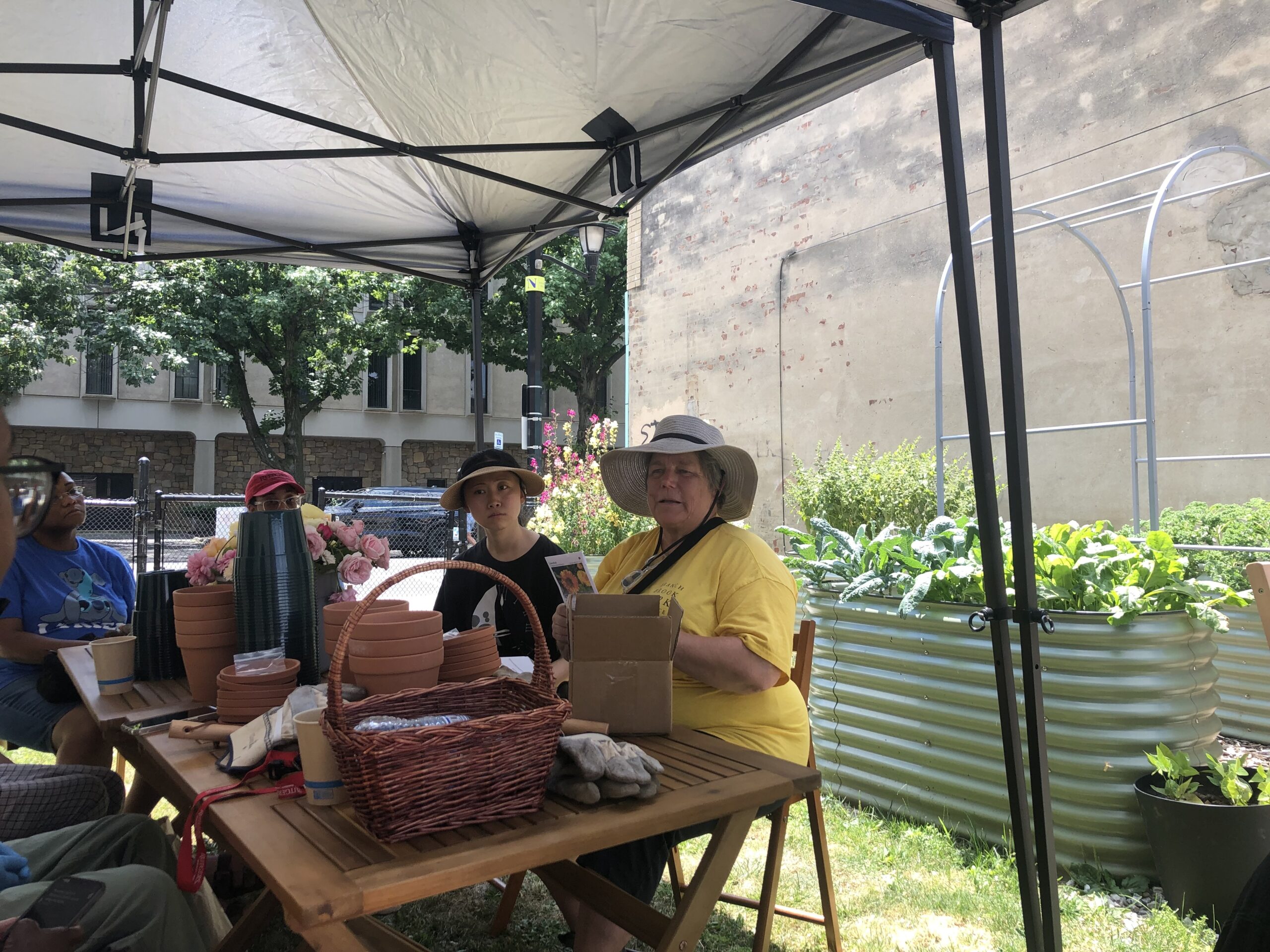
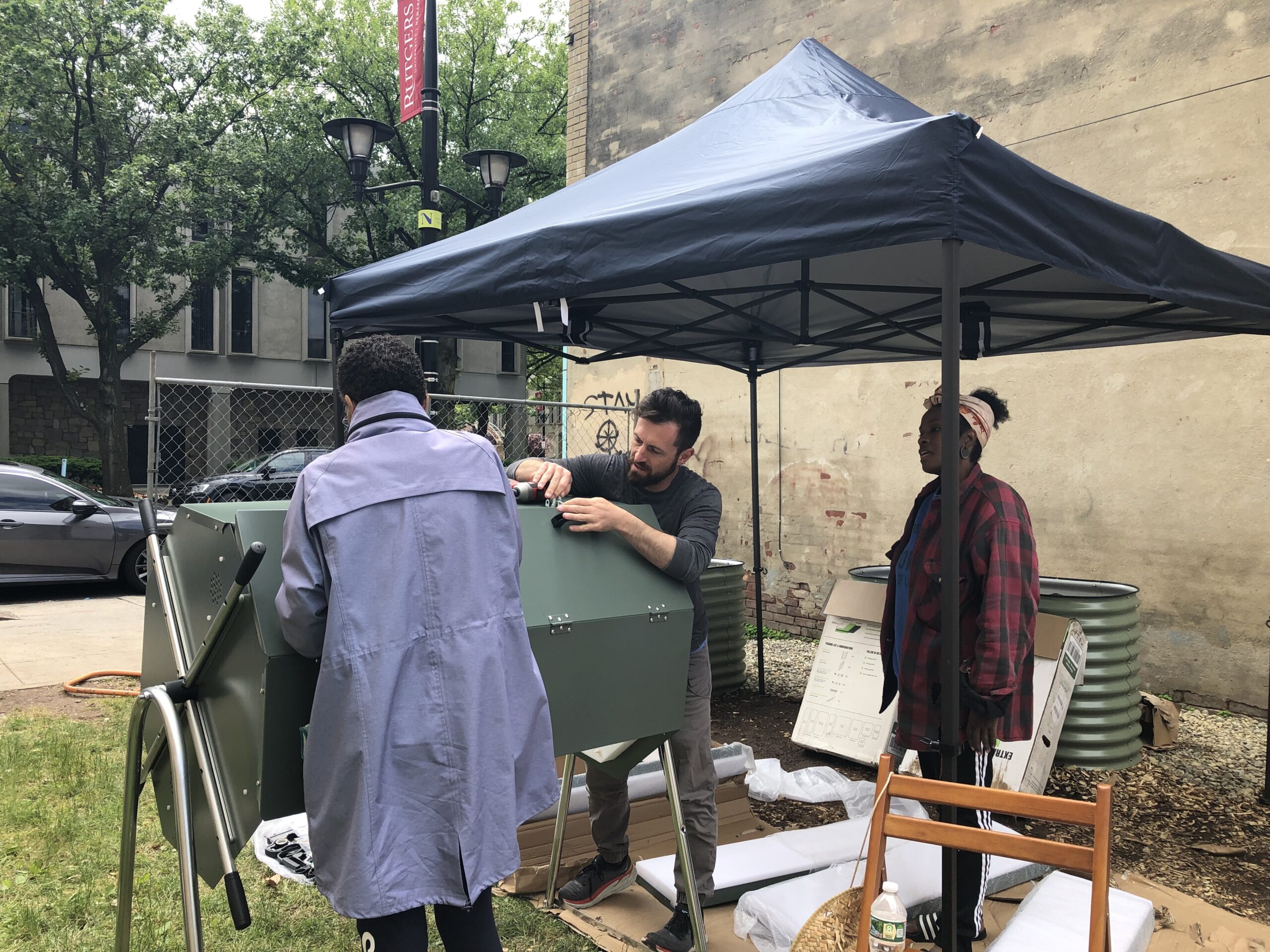
Project PIs and Landscape Architect/Designers met to go over and implement demonstration bed and demonstration area design and seating along with other advisors. This now includes a shaded area for teaching by implementing canopies, providing seating (moveable benches and chairs and tables) and raised beds, trellising, compost demonstration area, and outdoor tool storage. It was important to make sure that protocols were put into place in terms of using raised beds, and creating a barrier to the soil and the raised bed.
Recruitment:
May 2022-July 2022 — Applications open!
The program will allow 12 service providers to participate in six workshop intensives on Sustainable farming practices and develop their own demonstration projects specific to what they learn from the program and the ways they wish to adopt methodologies for their businesses/organizations. They will be recruited through the service providers and farmers with which we are partnering. Service provider organizations including Urban Agriculture Cooperative, Newark Science and Sustainability, Munsee Three Sisters Medicinal Farm, and Elevate Newark will work together along with advisors to disseminate materials including emails, online, and social media, as well as flyers, brochures, and postcards for outreach to potential participants. Additionally, there will be outreach to those we know who may have interest/benefit from such a program.
Status: Completed
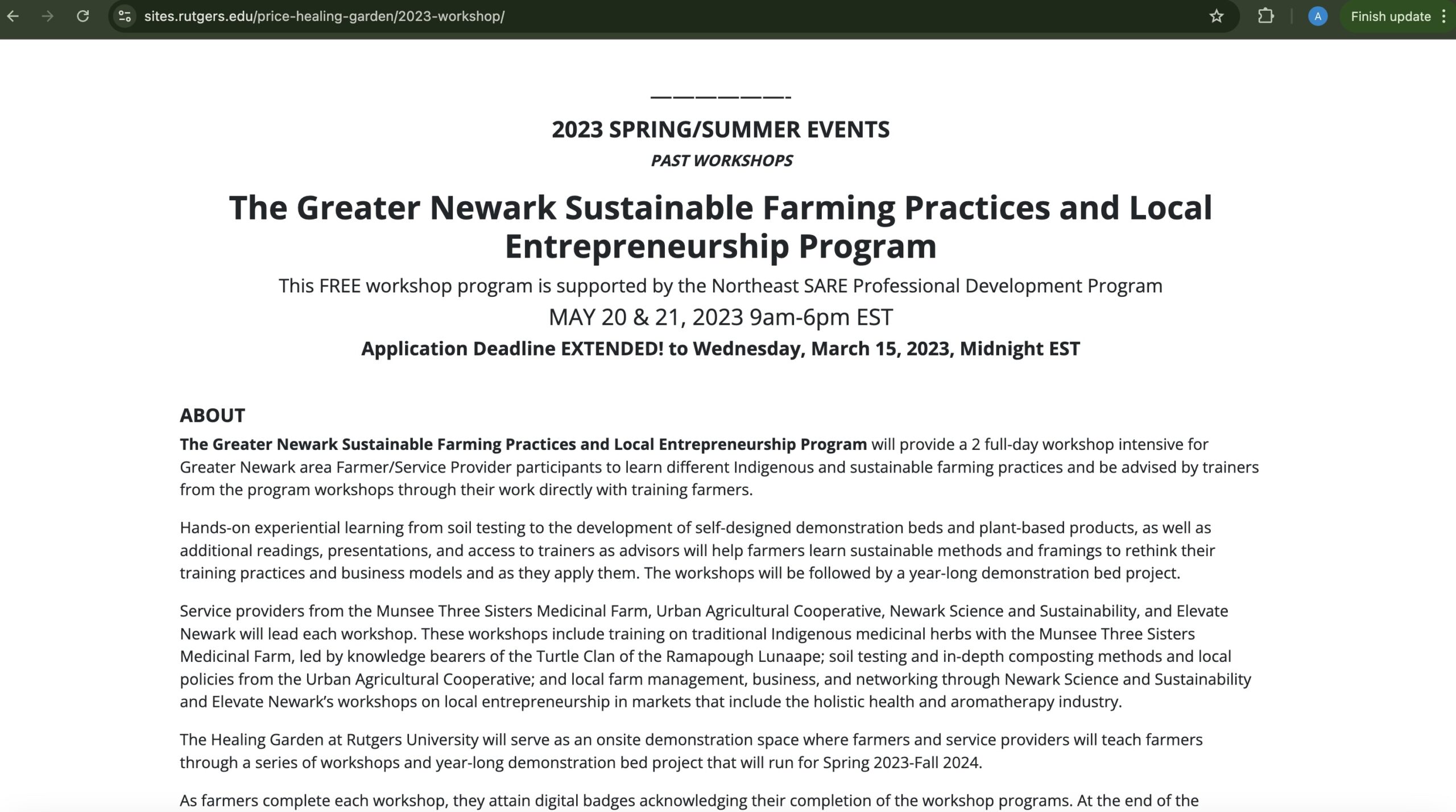
Accomplishments: Jan 31-Feb 28, 2023 — deadline extended to March 15 — Applications opened and a website was created to announce the applications
We extended the deadline to March 15th to allow for more applications. The program allowed for 12 service providers to participate in six workshop intensives on Sustainable farming practices and develop their own demonstration projects specific to what they learn from the program and the ways they wish to adopt methodologies for their businesses/organizations. They were recruited through the service providers and farmers with which we are partnering. Service provider organizations including Urban Agriculture Cooperative, Newark Science and Sustainability, Munsee Three Sisters Medicinal Farm, and Elevate Newark worked together along with advisors to disseminate materials including emails, online, and social media, as well as flyers and QR codes were created for outreach to potential participants. We found the flyer / QR code to be helpful, but also having information online on the website created for the program was very helpful to get out information. Also, e-list sharing with a local network of farmers was helpful. Additionally, there was outreach by advisors and Co-PIs to those we know who may have interest/benefit from such a program.
July 2022 — Participant verified for program!
The project PI and 2 Co-PIs and 5 workshop trainers will meet to discuss the participants and details for the workshops and logistics for the resources/materials needed for the trainings and the design of the training area. Orientation materials (including schedules) will be sent out via email to participants.
Status: Completed
Accomplishments: March 30 2023 — Participant verified for program!
The project PI and 2 Co-PIs and 5 workshop trainers met to discuss the participants and details for the workshops and logistics for the resources/materials needed for the trainings and the design of the training area. There were great applications. 12 Applicants were selected for participation in the program. Orientation materials (including schedules) sent out via email to participants. Any questions by participants were answered. In April and May, materials were prepared were ordered for the workshops. We met with the Price Institute staff to organize institutional spaces in additional to the garden for workshops in case of rain etc.
Learning:
September 2022-November 2024
Farmer/Service Provider participants will learn different sustainable farming practices and be advised by trainers throughout the multi-year program as they implement ideas into their business models.
Status: The programs were extended (see above) to workshops being taught in conjunction with the participants.
Accomplishments: see below
May 2023-June 2023
12 service provider participants will learn from peer workshop leaders who are also service providers and engage in six intensive 2-day workshops that will take place from 9am-3pm each day for 12 hours per workshop.
Digital Badges will be given out upon the completion of each training workshop.
Status: Complete
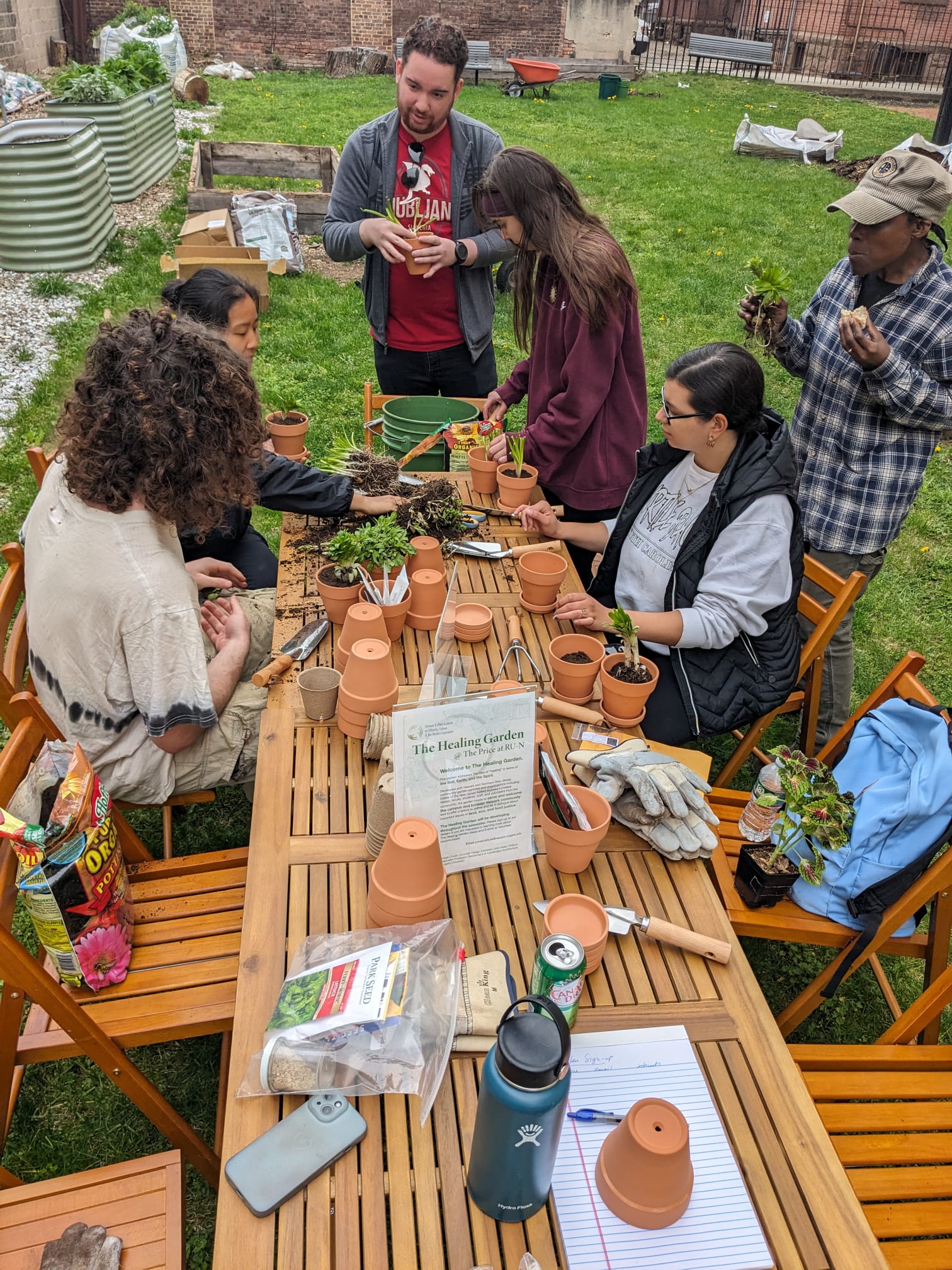
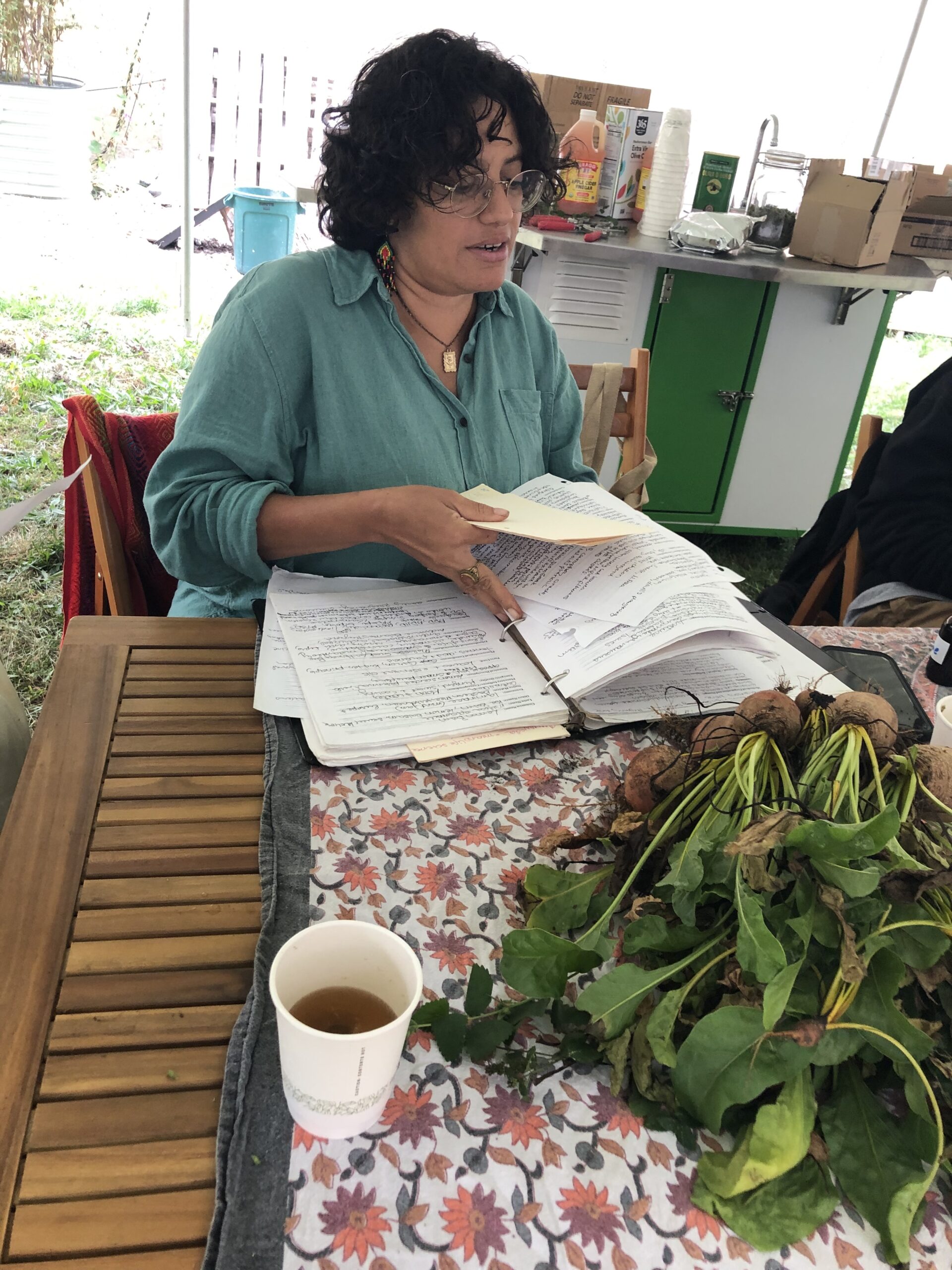
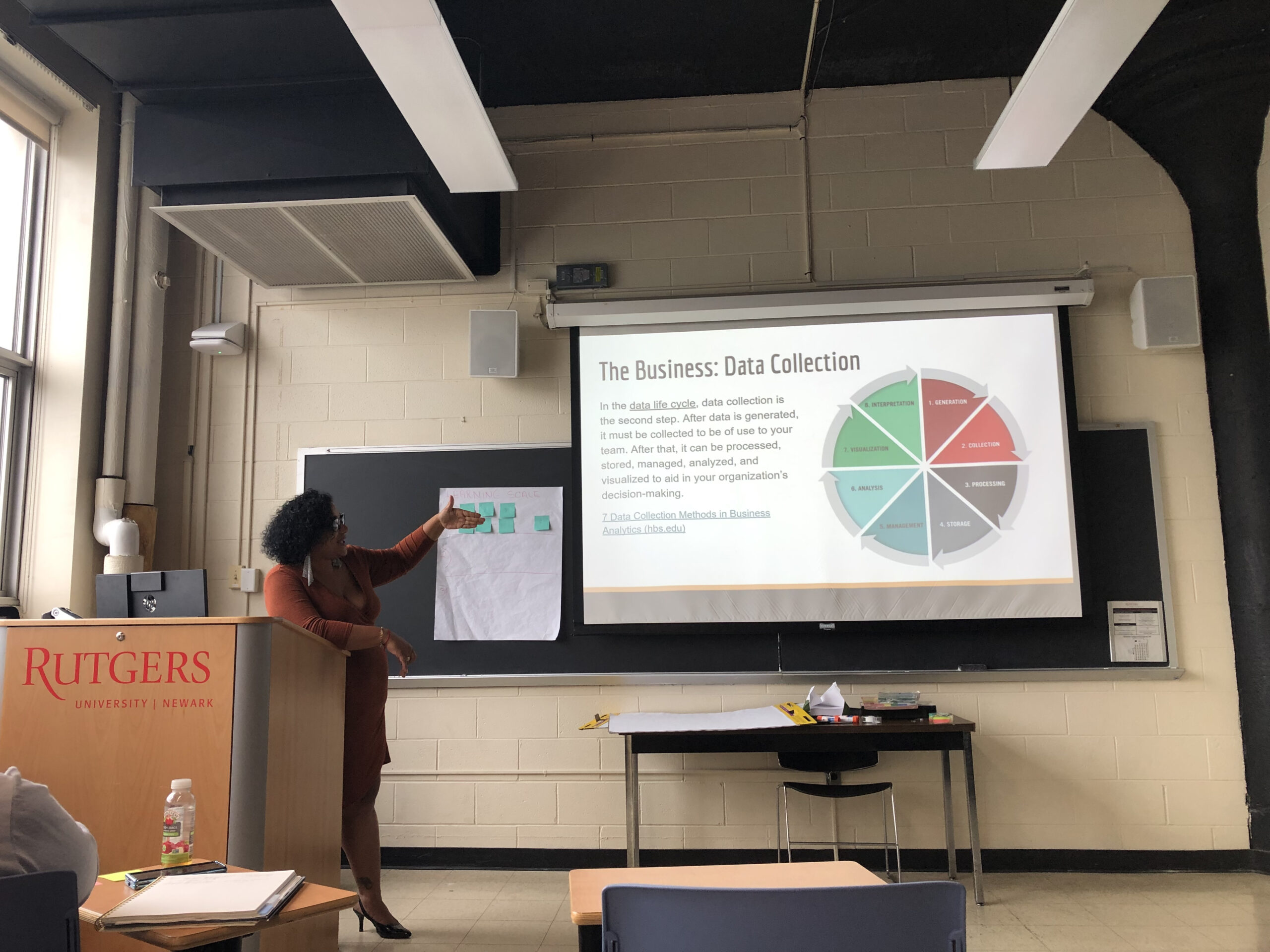
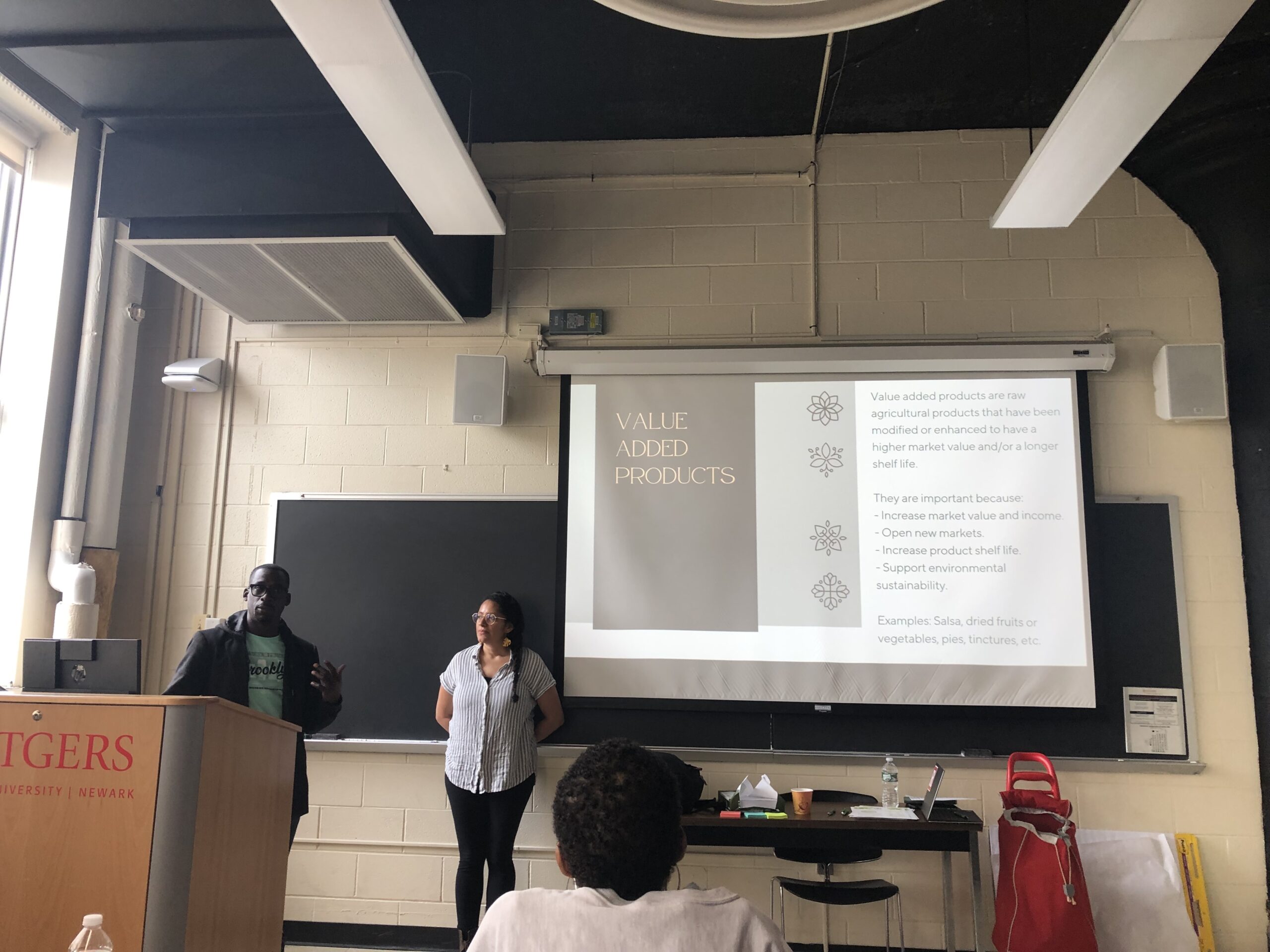
Accomplishments: May 2023-November 2024: 12 service provider participants learned from peer workshop leaders who are also service providers and engaged in six intensive half-day workshops that took place from 9am-5pm each day for 2-3 hours per workshop. Workshops varied in time period depending on subject and also were turned into half day workshops so that we could fit more workshops into the day to allow for all the workshops to happen during a single weekend. We found it hard for people to be able to come back again and again for the workshop and to concentrate it into one weekend was the best for the initial trainings. However, the trainings and additional workshops were added for soil toxicity testing and composting further in the summer and farmers continued to be in contact with the Co-PIs and each other throughout the planting season.
We extended the program so that some of the farmer participants were able to assist with and lead workshops with advisors and Co-PIs.
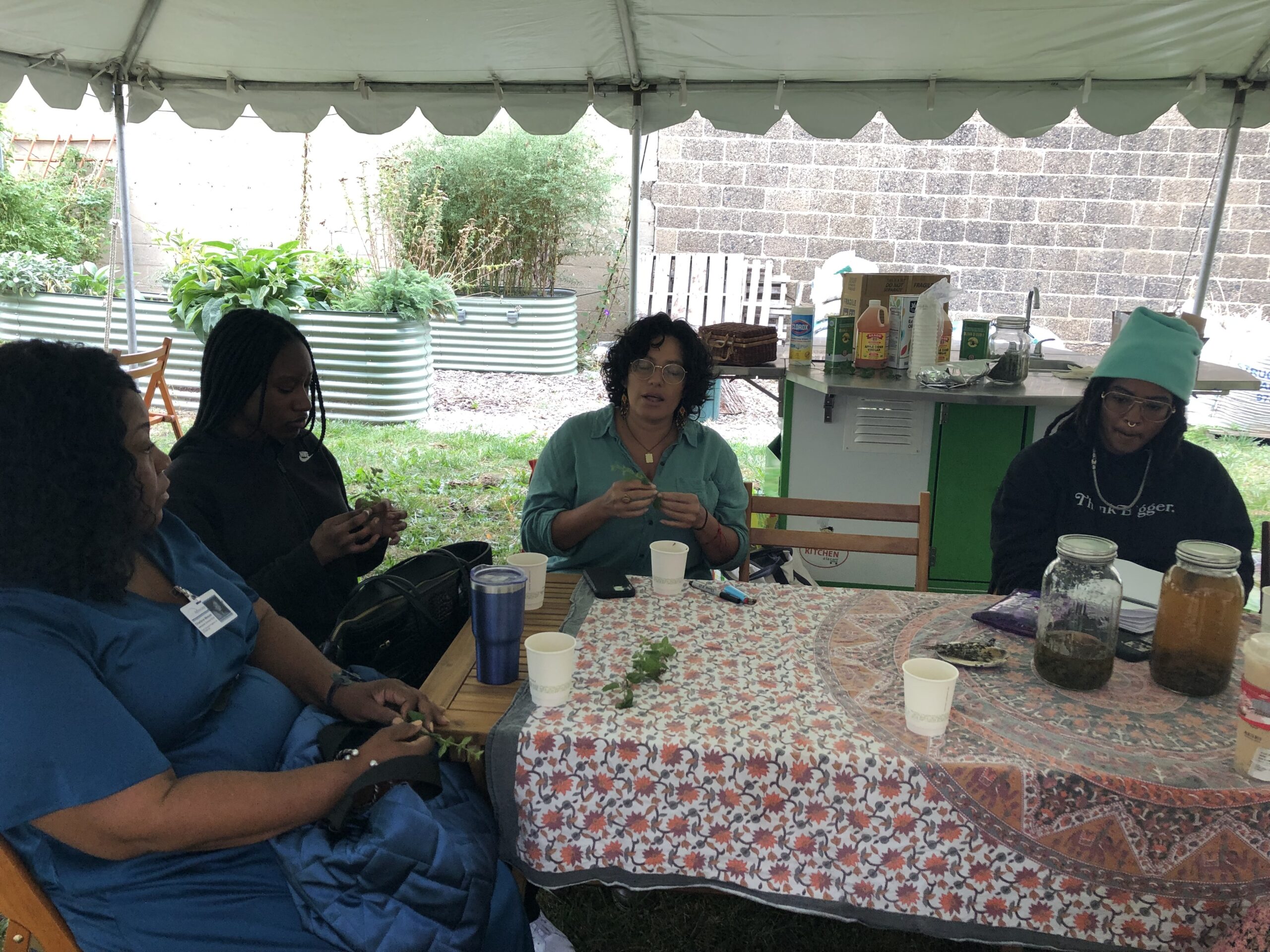
Farmer/Service Provider participants learned different sustainable farming practices and were advised by trainers throughout the multi-year program as they implement ideas into their business models. They also ran workshops themselves to have hands-on experience training other farmers. The workshops varied in attendance due to some gardeners who needed to come in at certain times due to other work. The workshops varied from having 6-50 attendees because the core group of participants also then taught workshops in the fall in order to work on training others. These trainings included trainings specific to master gardeners and farmers to being open to the public. The trainings that were for gardeners and farmers ranged from 6-12 persons, while there were more attendees for the public programs that the participant trainees gave, though there were gardener and farmers in the group — also approximately 6-8 persons who were farmers, that would come to those as well.
Instead of digital badges being given out, participants instead worked in the demonstration garden and interacted with and fielded other farmer's questions and created their own workshops and vended at programs at the Healing Garden demonstration space.
March 2023-May 2024
Demonstration Beds will be created by each of the 12 participants, allowing for hands-on experiential learning. The landscape architect, garden design/horticulture advisor and Co-PIs worked with the participants in a workshop and in the garden to design their garden beds. The Director of the Form Design Studio will meet with the trainees and work with them to design their garden beds and signage for their demonstration bed projects. Workshop trainers will be available for trainees to ask for advice during their year-long demonstration bed project.
Status: Complete
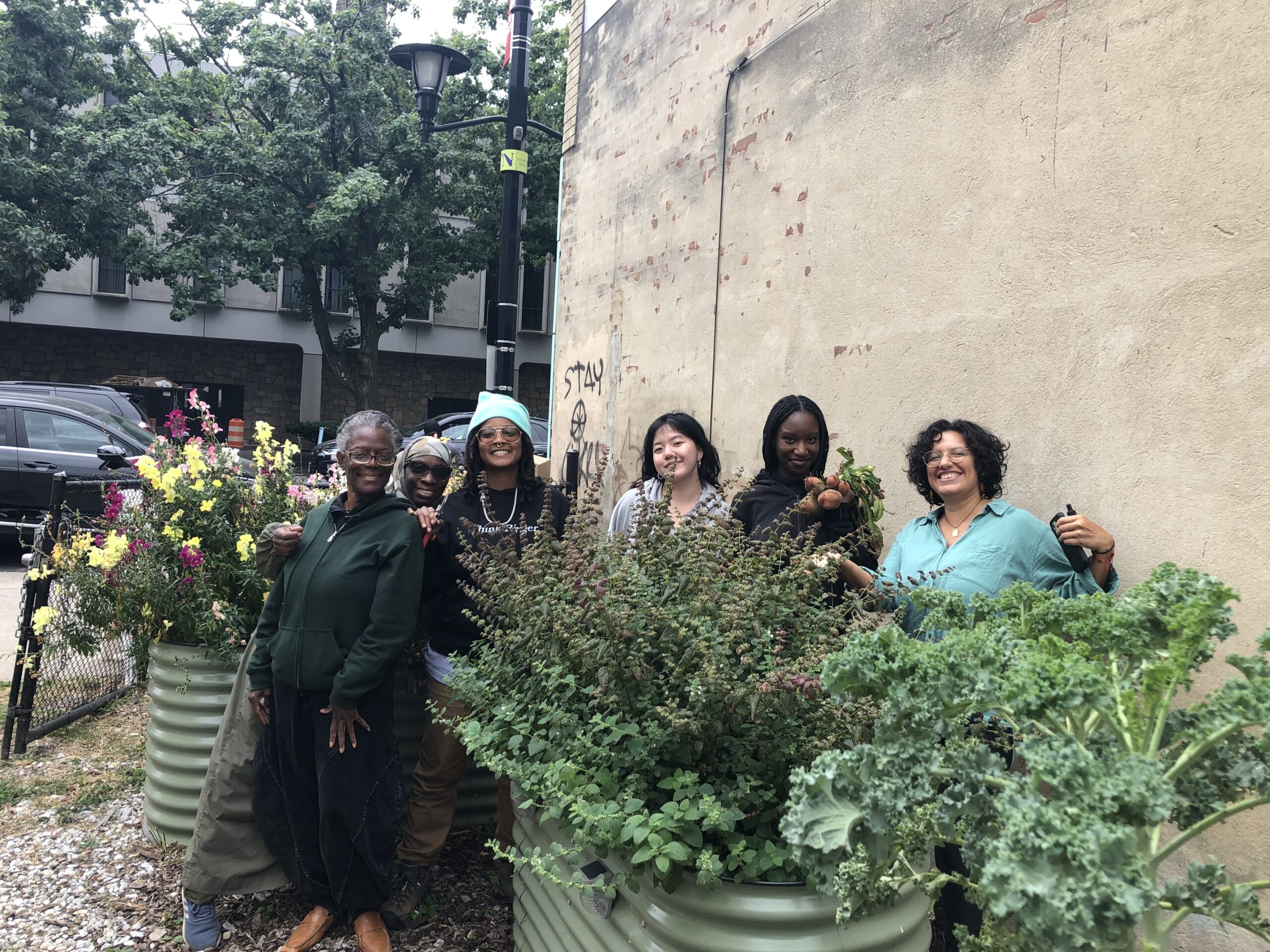
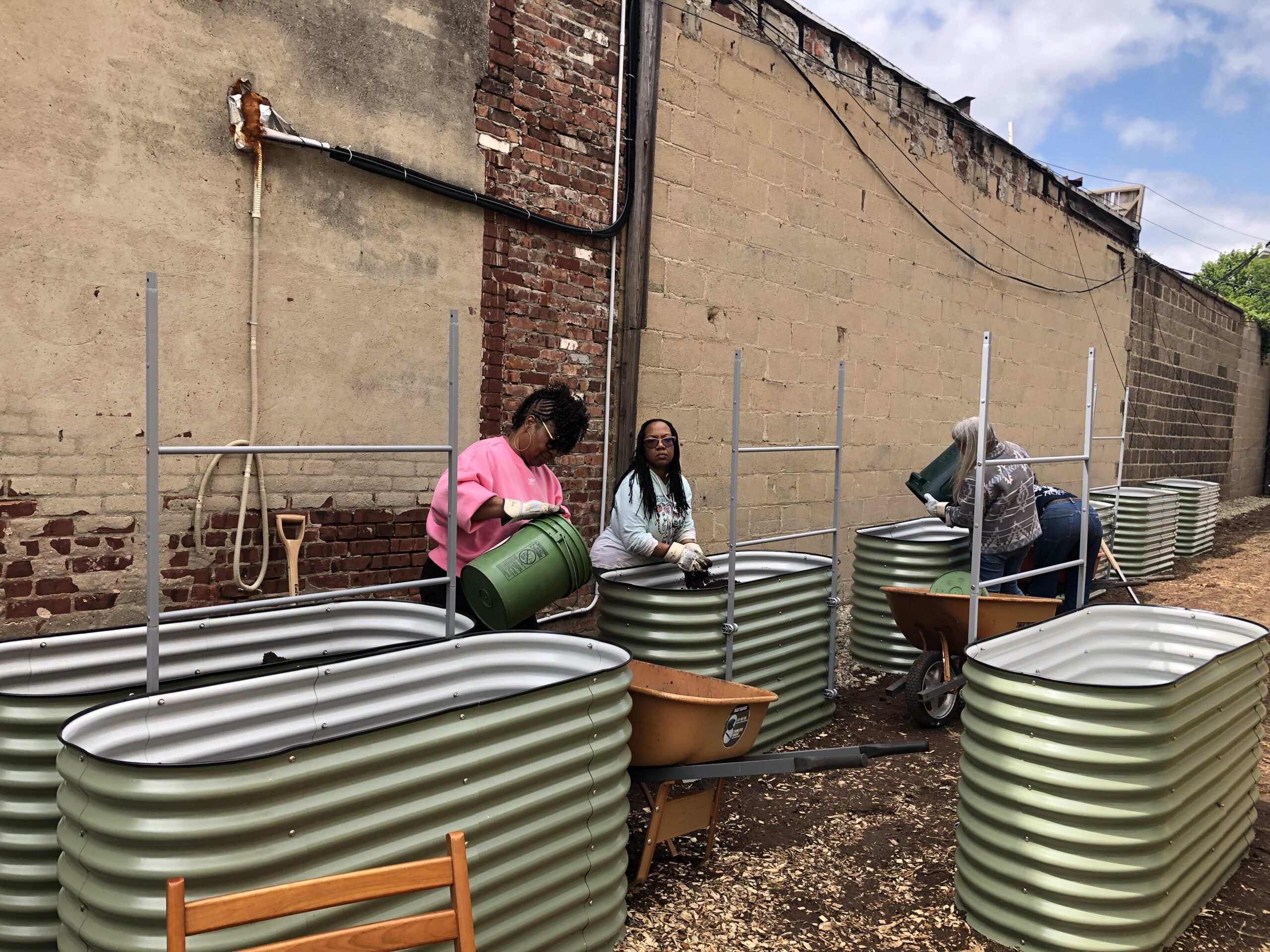
Accomplishments: We continued to work with trainees on their demonstration beds and developing the demonstration area as workshops continued in an extended format as described with the participants working on the workshops directly. The demonstration garden has become an amazing addition to the block and this year the demonstration beds have grown tremendous amounts of food and plants and was noticed by many in the neighborhood and beyond. There was great interest in the workshops going on in the space, and there were more workshops with farmers and their facilitators in the Spring through 2024. The project team worked with the Healing Garden to create signage for the land acknowledgement at the space (installed in Spring 2025).
November 2023 — the 12 demonstration beds will be cleaned and ready for next year for participant work in the garden.
Status: Complete
Accomplishments:
November 2023 — the 12 demonstration beds were cleaned and ready for next year to remain in the garden.
November 2024 — there are now 14 demonstration beds and they were cleaned and ready for next year. Farmers continue to work in the garden and it became clear that hands-on teaching/creating and implementing training/demonstration workshops along with advisors/Co-PIs was helpful for some of the participant farmers.
Engagement and Evaluation:
January 2024-October 2025
Throughout, participants will keep a journal based on their thoughts, experiences, and notes on what they have learned from the different workshops, during their creation of their demonstration beds, as well as during their planning and training process with farmers after the workshops. These journal entries will aid in their implementation of their training and help them think through new ideas for implementation. At the end of the program and after the trainers have had the opportunity to implement their training during the year after the trainings, PI and 2 Co-PIs will schedule personal debrief interviews with each of the 12 participants, asking them to fill out and discuss a survey of questions pertaining to which of the learned methods they have worked with and how they have been able to demonstrate and train others on these methodologies. Participants may wish to reference their journal entries. We will ask them how the training has impacted their businesses as well as farmers. We expect that the answers will be both verifiable through numbers as well as the thoughts of the participants themselves, which is important. Participants are invited to keep their demonstration beds at the garden for the future so that others can learn from them and they can use the space as a place to connect with community and their peers.
Status: complete.
Accomplishments: Participants were given a journal to work on their thoughts, experiences, and notes on what they have learned from the different workshops, during their creation of their demonstration beds, as well as during their planning and training process with farmers after the workshops. At the end of the year 2023 it was deemed that participants and workshops would continue into 2024. Farmer participants were able to start to have hands-on trainer opportunities. We were able to have participant farmers work to manage the demonstration garden two days a week during the summer, when they would water the demonstration beds and field other farmer's questions. Participants were able to work with faculty on workshops and also teach their own workshops at the Healing Garden, putting into action the actual practice of training others in the demonstration space. Participants are invited to keep their demonstration beds at the garden for the future so that others can learn from them and they can use the space as a place to connect with community and their peers.
At the end of 2025, we were really pleased that the demonstration beds were active far beyond the time we first had planned and that we were able to really have the space activated by the participants and faculty to continue workshops beyond those that were also initially planned.
We verified learning and teaching through the extended workshops assisted by and taught by the farmer participants in year 2024-2026 and through participant's answering of other farmer's questions on site while helping to manage the demonstration beds through watering and otherwise tending to the demonstration space during the period of two summers in 2024 and 2025.
While participants were given journals to write their thoughts, we didn't collect these as they didn't really use them except at the start of the process for their notes. What was used more was a Whatsapp for the gardeners to share their thoughts, when they would be at the garden space, any questions, and if they were going to be doing something specific. This became very active and continues to be used by this group and other farmers and service providers and faculty who came to work with them. There is a blog that was developed about the space that includes some participants work related to the space. Here is a link to a blog post about Charlene Messer. Some of this information will also become curated as the signage for the garden space to tell others about the work there in an AR mapping project that will be implemented after the renovation of the site in 2027. Co-PI Chang and Rutgers colleague Keary Rosen have worked with their curriculum last year to build the design and infrastructure for the AR map of the garden to include information about the demonstration beds that the participants created along with students in their classes.
Milestone activities and participation summary
Educational activities and events conducted by the project team:
Participants in the project’s educational activities:
Learning Outcomes
Performance Target Outcomes
Performance Target Outcomes - Service Providers
Target #1
12
Twelve service providers in the Greater Newark region will impact a total of 60 farmers through training in sustainable farming methods, including soil testing, composting, seed saving & exchange, and local entrepreneurship.
60
1 acre plus
6
36
12 acres plus
- 3 Curricula, factsheets and other educational tools
- 3 Consultations
- 3 On-farm demonstrations
- 1 Published press articles/newsletters
- 1 Tours
- 3 Webinars/talks/presentations
- 3 Workshops/field days
The performance target verification was through service providers/farmer trainers telling the PI about work they continued to do in relation to what they worked on as participants in the workshop as well as hands-on training that happened at the garden site with these farmers. There may be more farmers who took the online series of classes on Ecopreneurship and other workshops who didn't indicate the specific future programs that may be implemented. Please note that it is estimated conservatively how many farmers/service providers were trained by the service providers and farmers during their activities at three person per training; it is likely a greater number.
Six farmers brought the knowledge of creating demonstration beds, soil testing, small-scale composting, branding, and leading workshops to their work.
Performance Target Outcomes - Farmers
Target #1
6
6 plus acres.
Additional Project Outcomes
The working collaborations that have come out of this program include an ongoing collaboration with the Urban Agricultural Cooperative. The UAC staff work with us to produce vendors/farmers markets and workshops with the participants to allow them to practice local entrepreneurship with what they have learned from the SARE workshops at the Healing Garden.
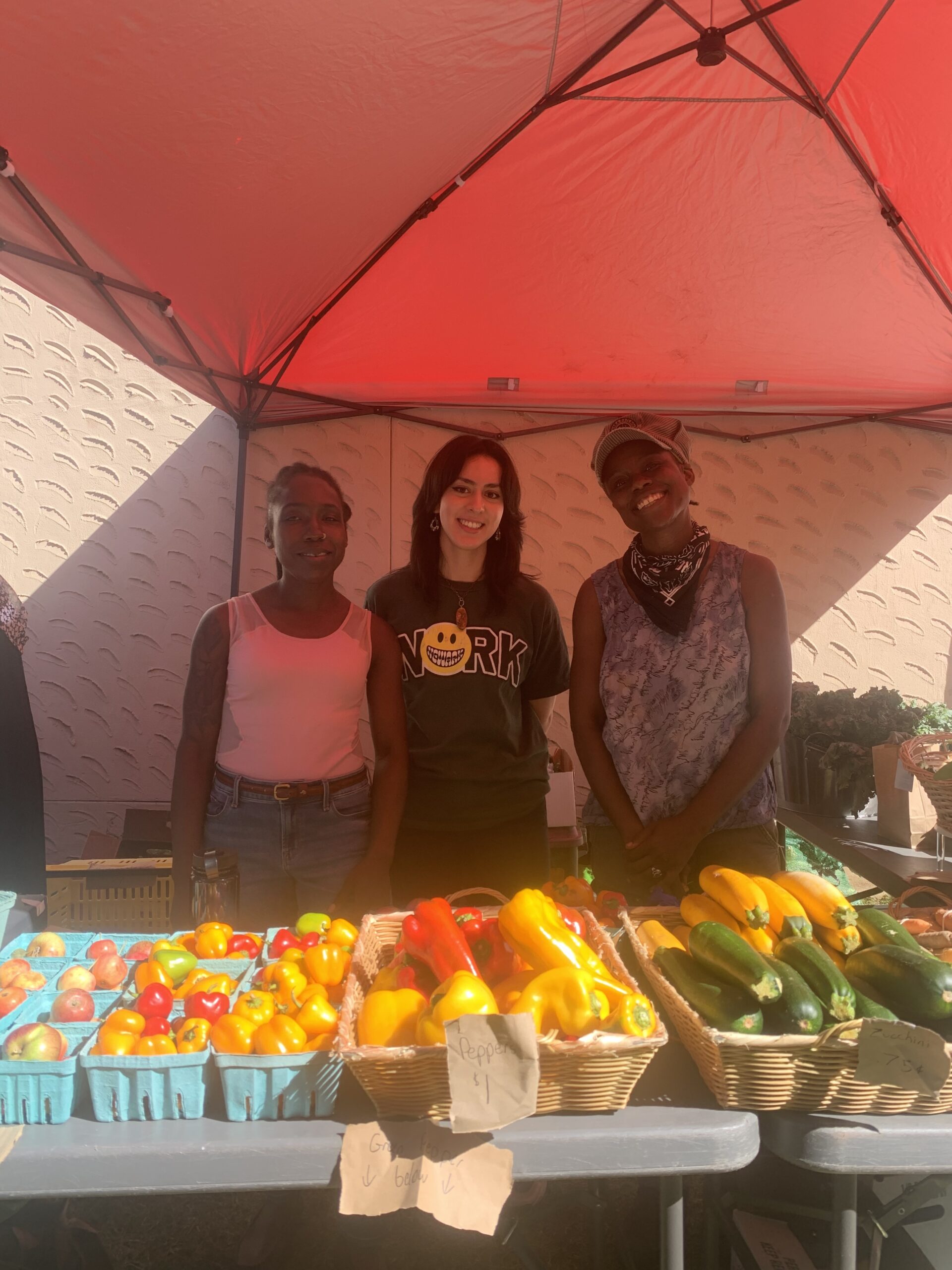
In addition, they have brought in other organizations to help with workshops including local compost company Java's Compost to run composting demonstrations.
In addition, we continue to work with the Branch Brook Park horticulturalist for trainings and to work on workshops with participants on demonstration beds including upcoming on phytoremediation and native plants.
We have been able to establish a partnership with Dr. Ashaki Routh at the Rutgers Earth and Environmental Sciences program to work further with us on Soil Toxicity testing and education on raised bed planting and soil history in Newark.
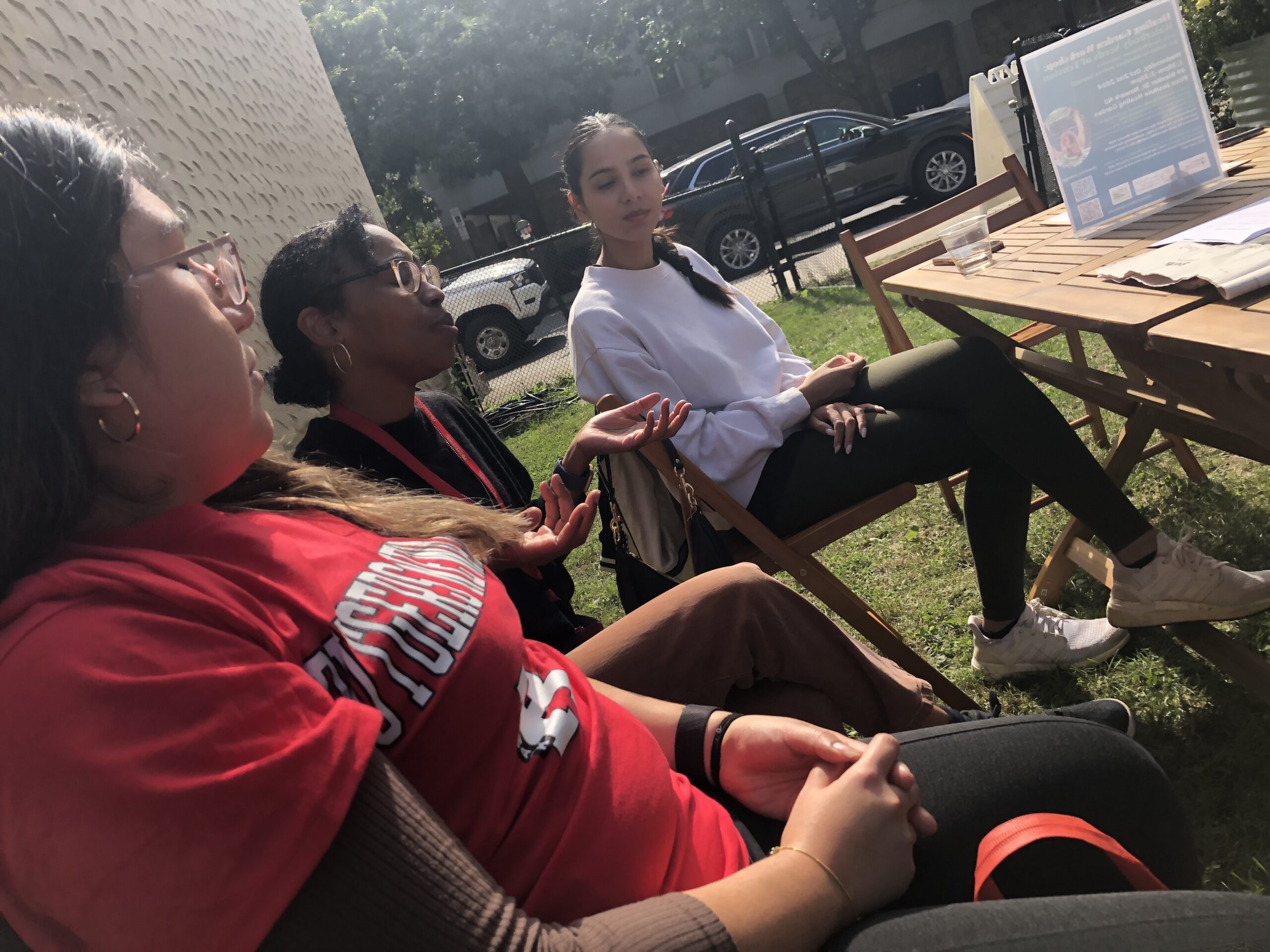
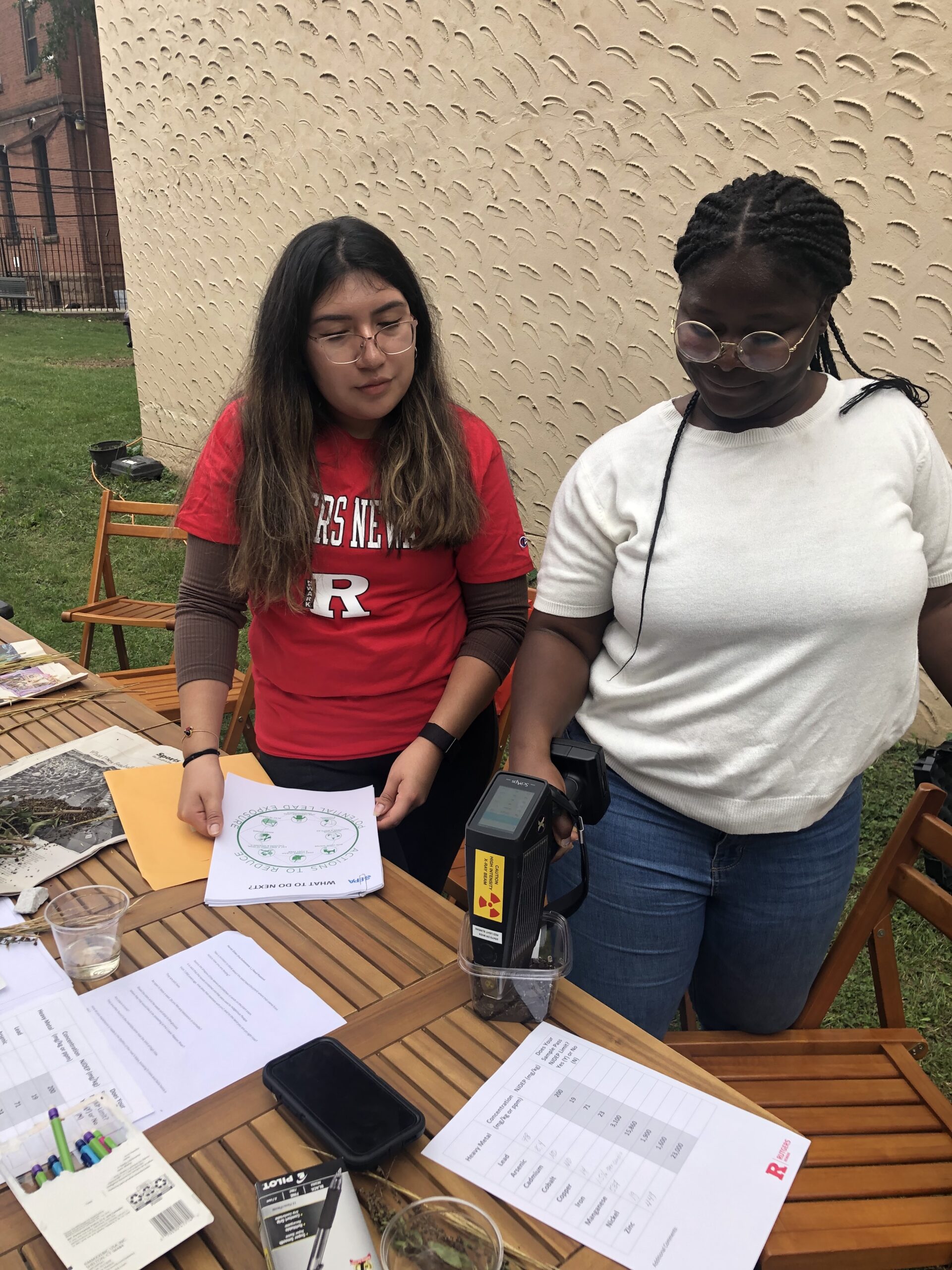
Participant trainee Charlene Messer has been able to work with us for workshops on sustainable herb and vegetable gardening and local entrepreneurship for other farmers and the public.
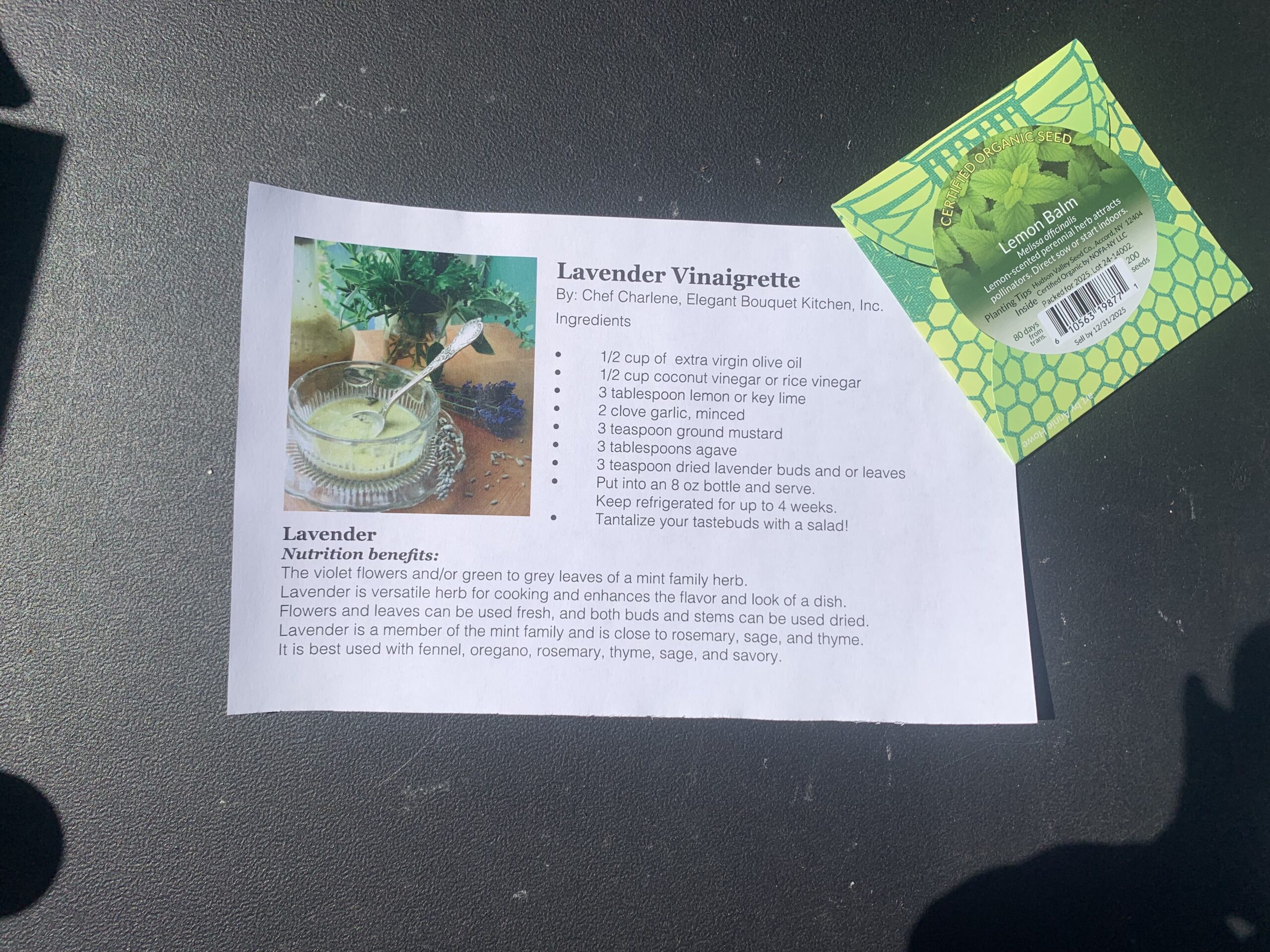
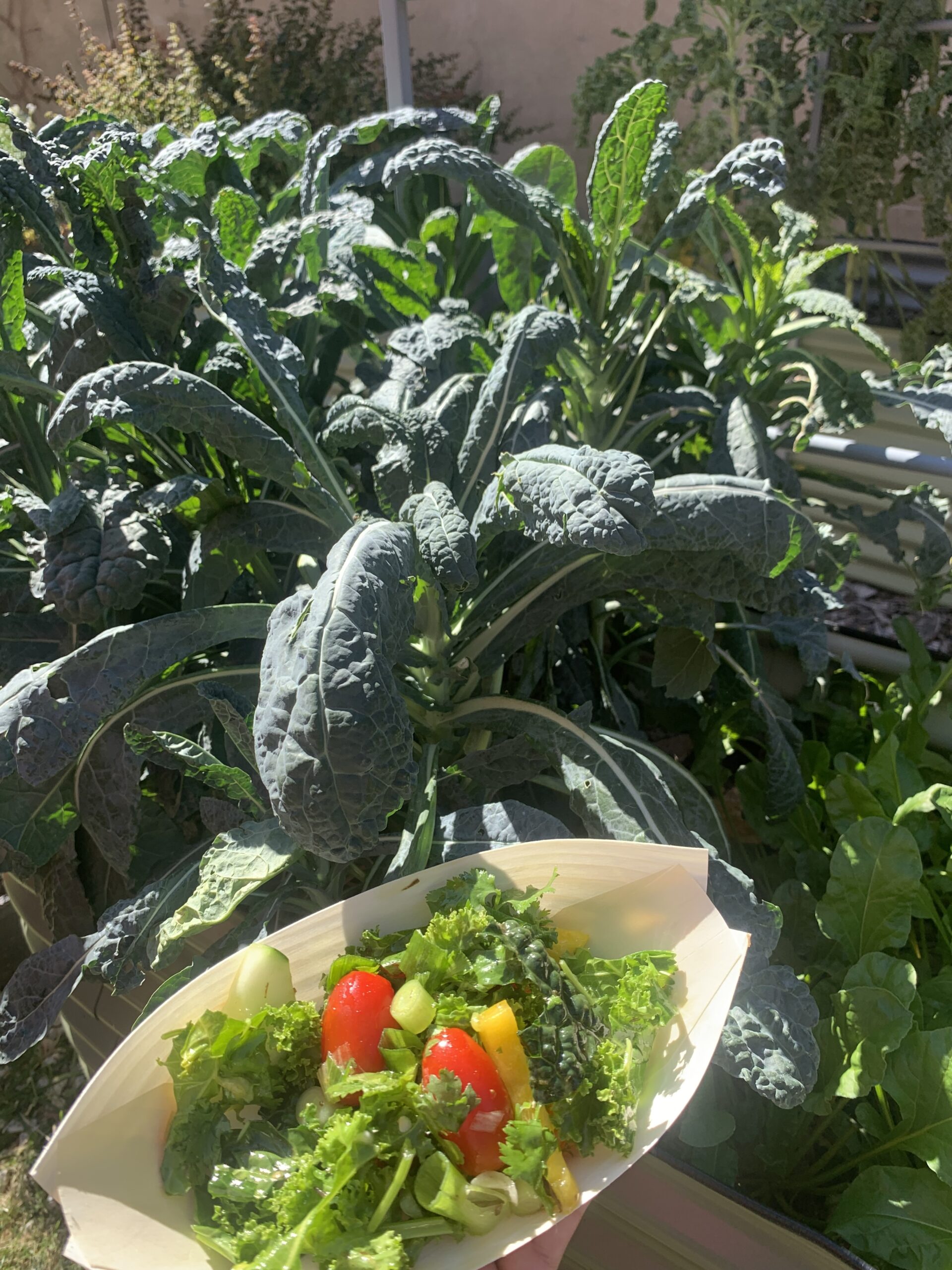
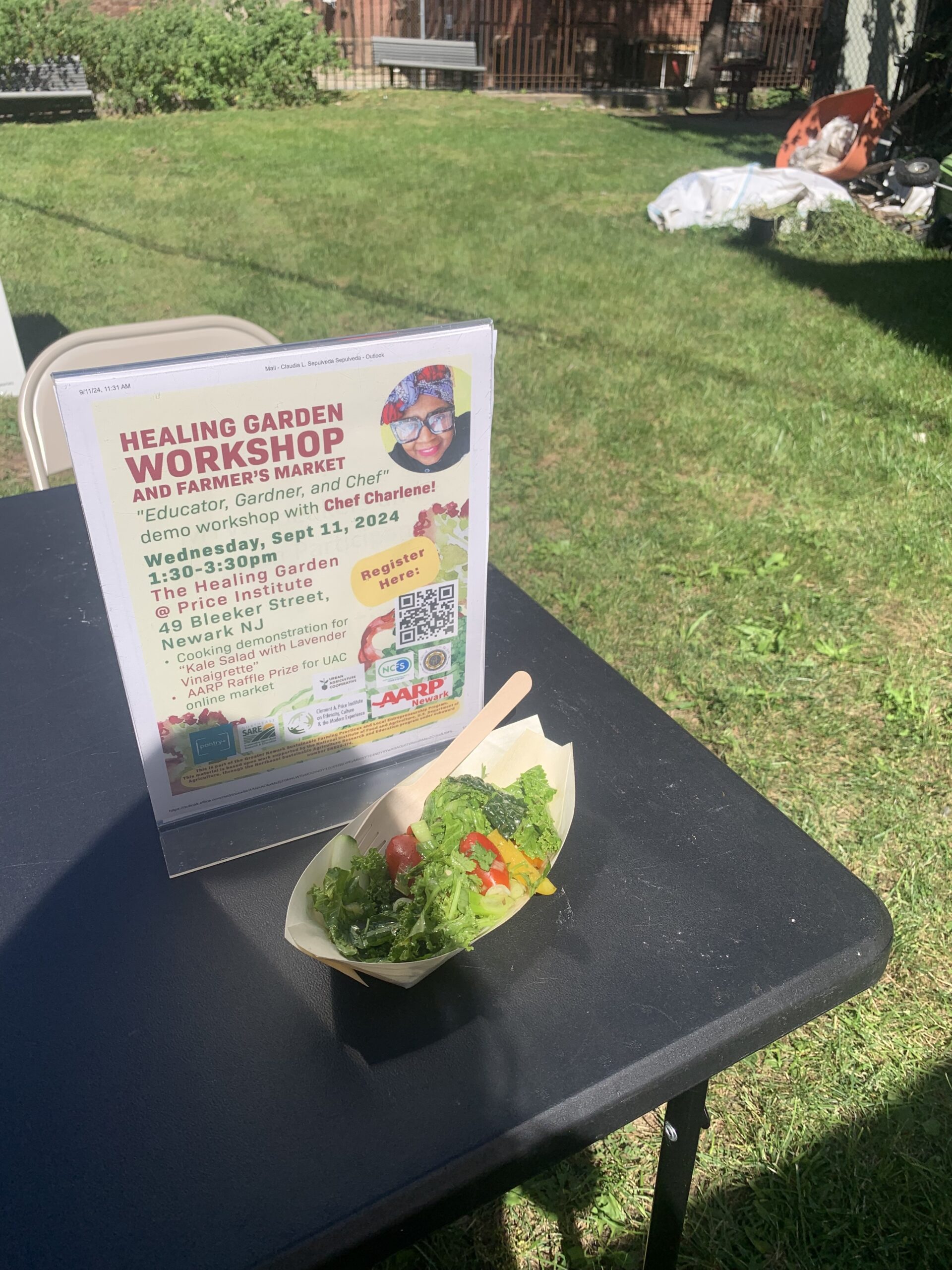
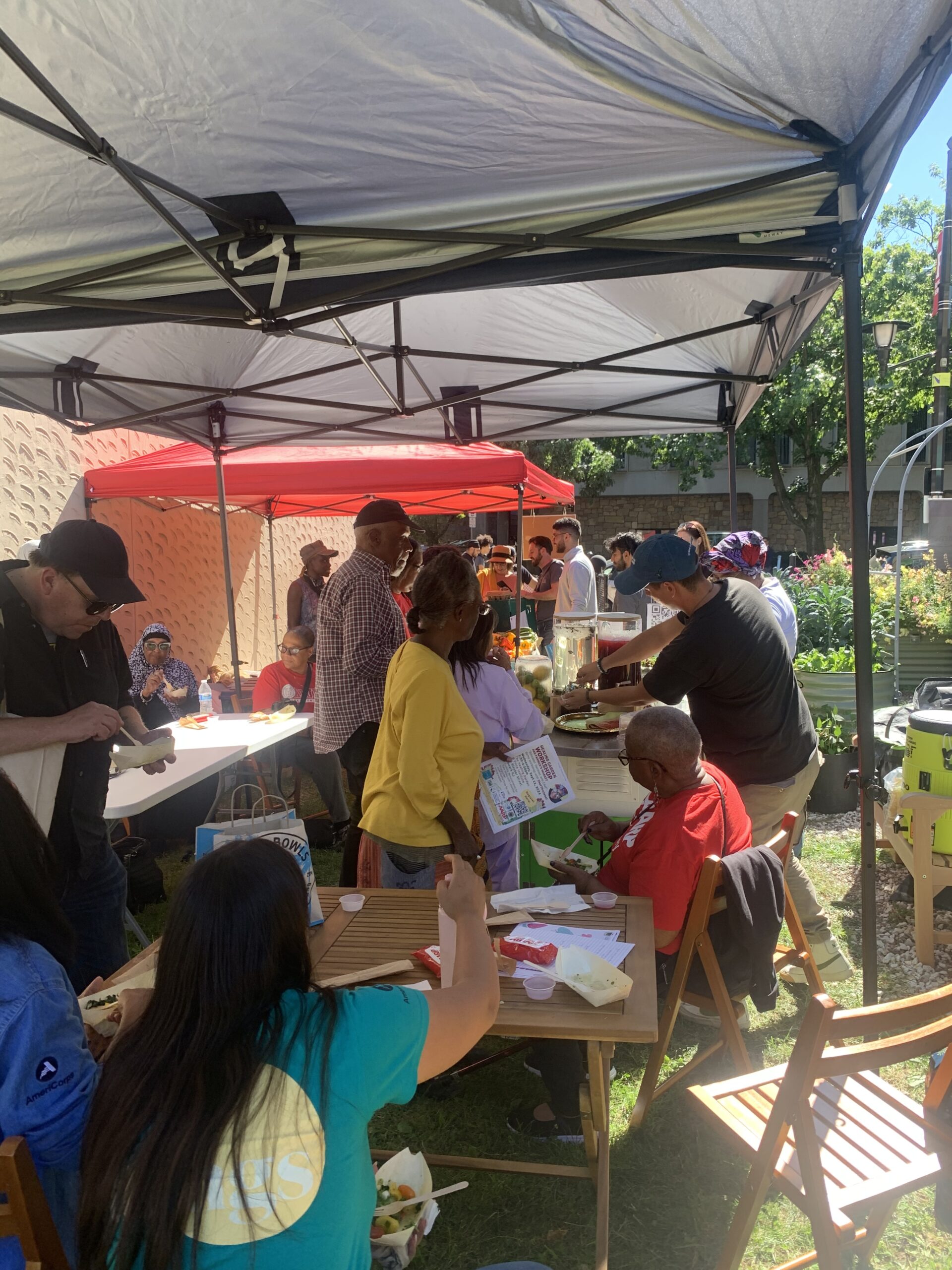
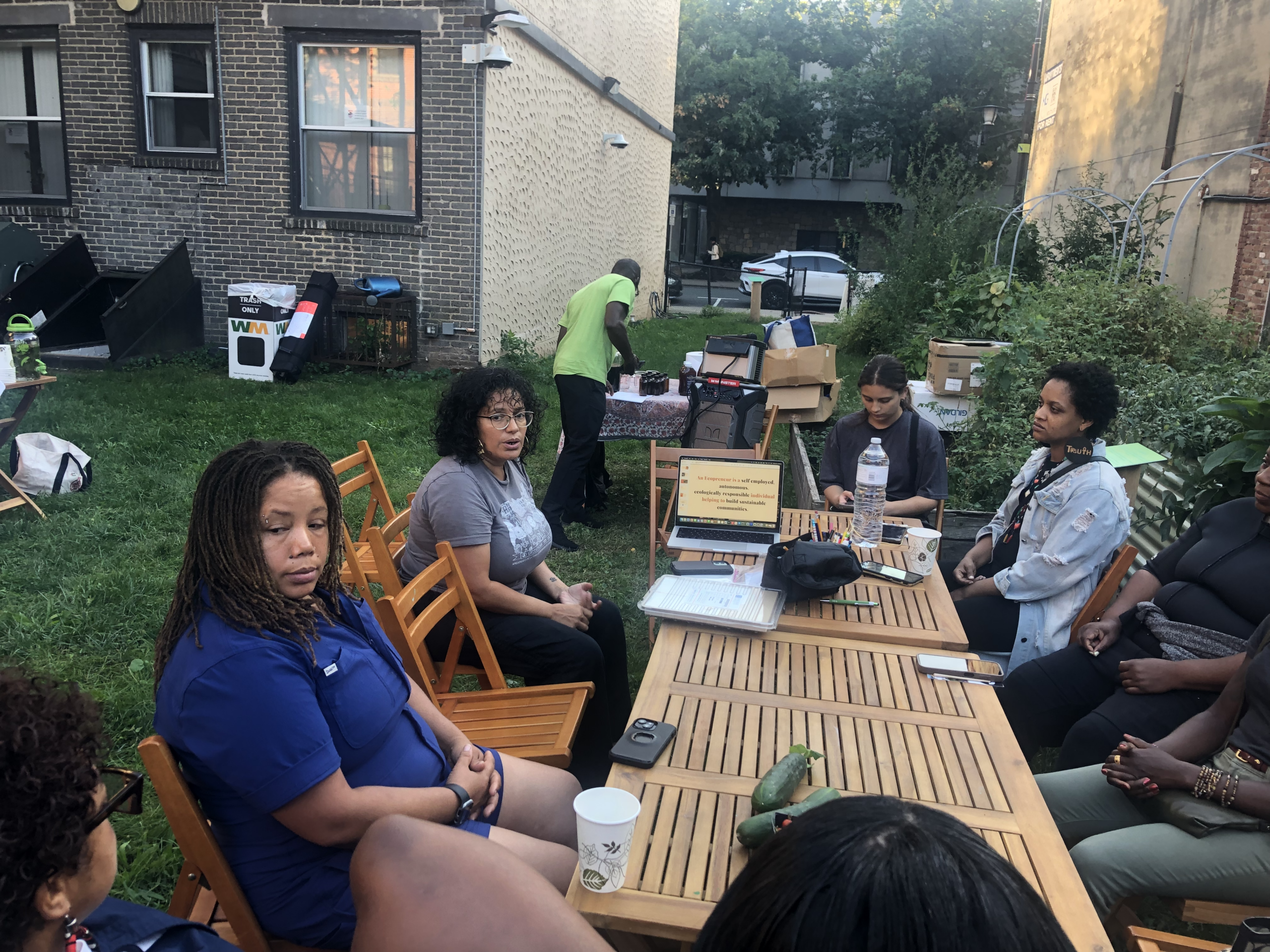
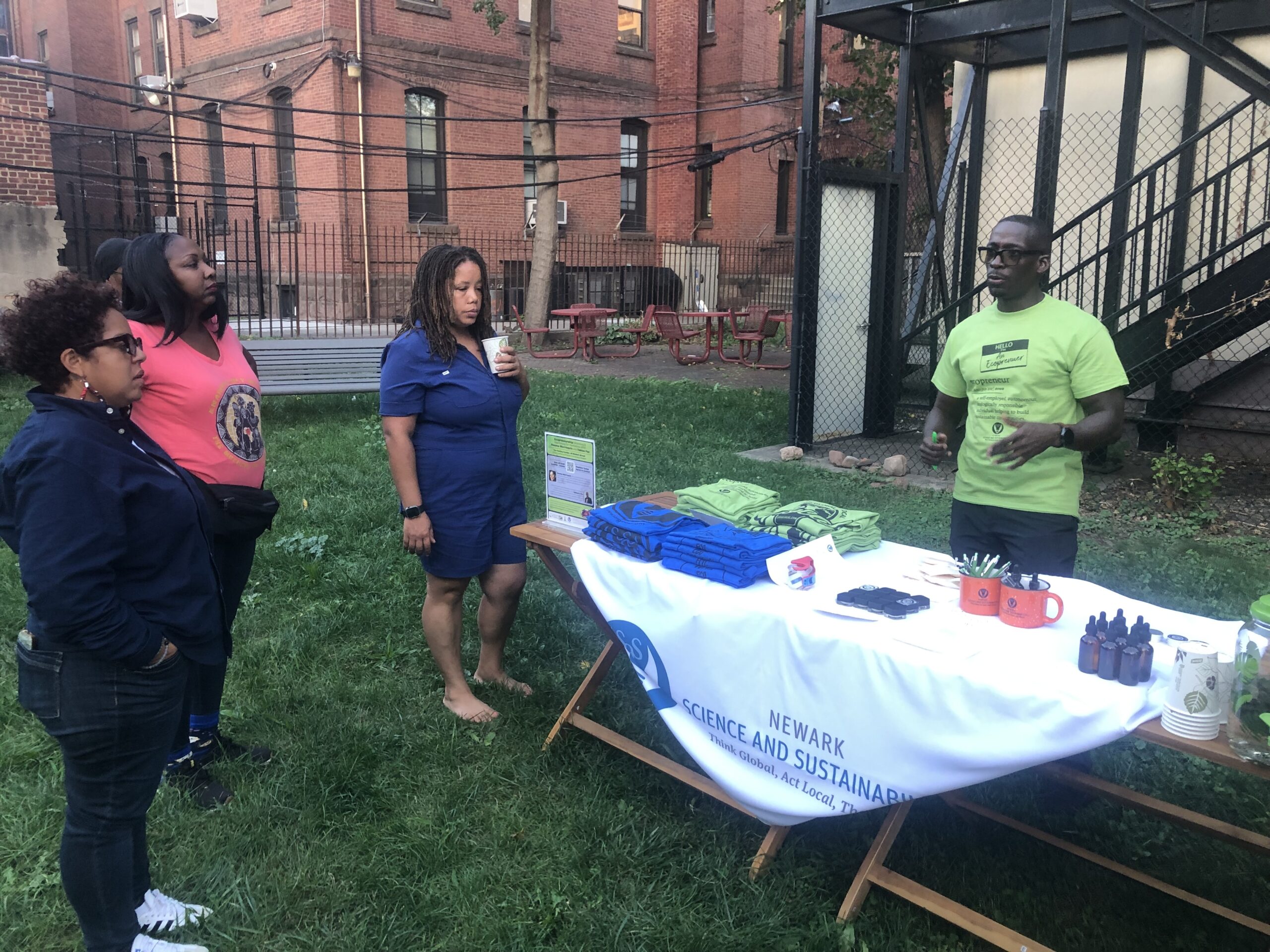
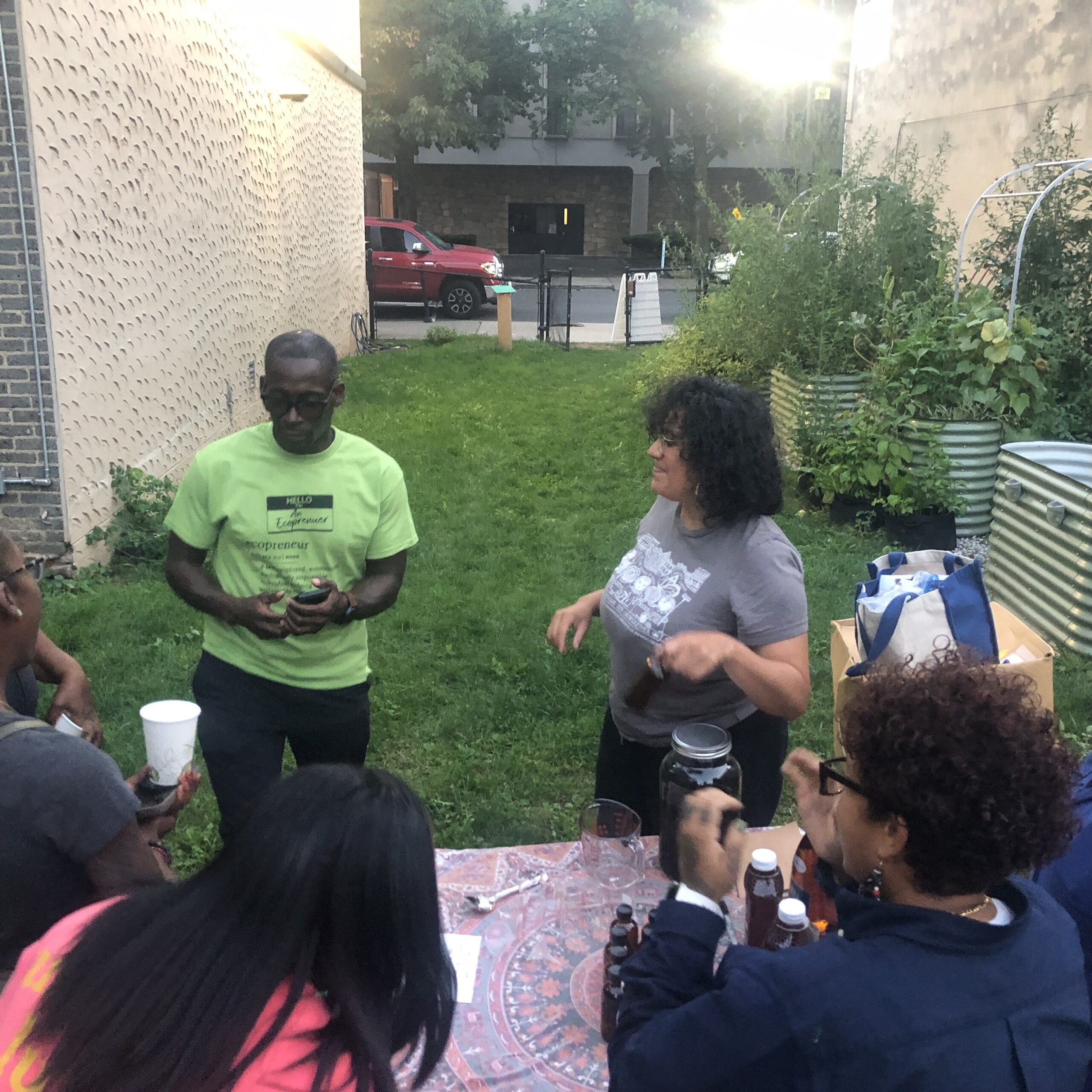
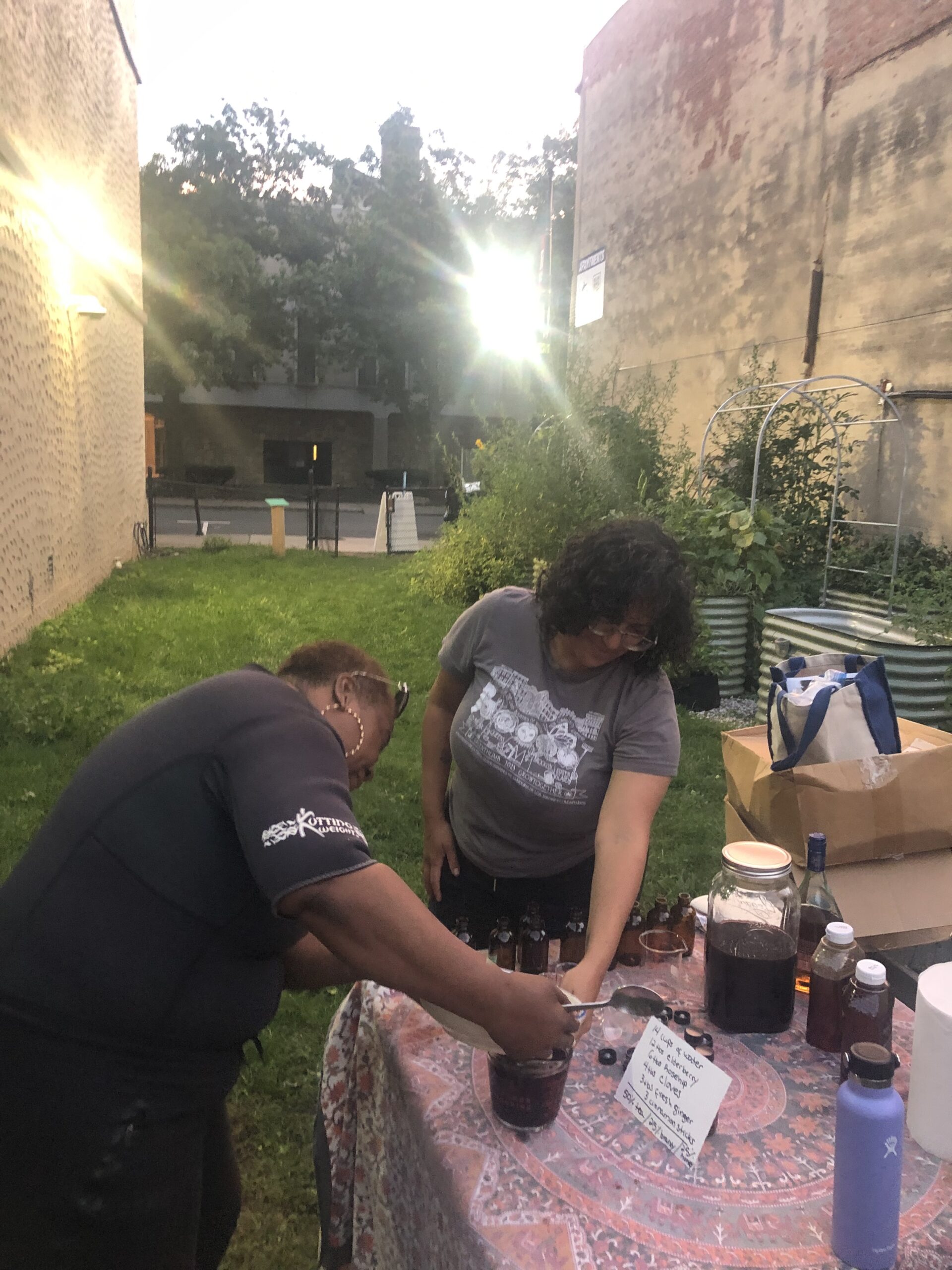
One of the Farmer participants, Charlene Messer, was able to meet and talk with Rutgers faculty and staff during garden workshops and is now a Master Gardener and we will be applying with her to have the Healing Garden become a Master Gardener site. She has also been able to teach two training workshops at the garden space and will included as faculty as part of a future Northeast SARE grant we are submitting.
Another two farmers were able to train to teach on site and spend two days out of the week during the two summers during the grant to plant demonstration beds and to field Healing Garden farmer's questions during those days.
A major story that came out of this program was the focus it gave to the workshops and community and that Rutgers University-Newark decided to invest into renovating the Healing Garden site so that it will be a green design site that we had hoped it would be and implement new permeable pavers to make the site more accessible and increase the footprint of the site considerably to about twice the size. Also it is planned to have rainwater catch reused in the space itself and a rain cistern with spigot installed as well for the demonstration bed area. The new renovations will be completed in May 2026. We are excited how this grant enabled the Healing Garden site and workshops to put a focus of the need for these kinds of training programs and demonstration spaces for sustainable farming practices and local entrepreneurship in the Greater Newark region.
We have found that the best approach has been to allow for hands on work at the garden paired with the talks and discussion sessions with the gardeners. While the gardeners learned a lot in terms of marketing, brand identity, and mission creation within the talks, having the gardeners in the garden working on the demonstration beds themselves was extremely important. We also found that having longer with the demonstration beds produced better results with the herbs and vegetables grown there, which then could be used for workshops. The change to include workshops facilitated by and with the participant trainees was extremely rewarding for the trainees and also helped them to further the visibility of the program as well as their local farm to local business work.