Final report for FNC24-1406
Project Information
I, Josh Combs, currently own and operate Combs Bee Farm located in central Ohio. I currently manage approximately 300 production colonies in central Ohio, approximately 150 mating boxes and I also sell packages, queens and nucs. I have assisted The Ohio State University bee lab research team in the past and present on research projects. I have been a county bee inspector for 5 years and have been working in the bee industry for over 10 years. This has been my sole means of income for the last 7 years.
My team members will consist of myself and the following:
Marcus Young is a beekeeper that has a small apiary in our county and has been keeping bees for 4 years. He has assisted me in the past with stocking and managing queen mating boxes.
Shannon Willer is a local beekeeper that manages approximately 15 colonies and has been keeping bees for 5 years. Shannon is also within the 3 mile radius that the research will take place.
Rebecca Pokorski has been keeping bees for about 5 years and has a small apiary of approximately 10 colonies within the research area.
All these beekeepers listed will be helping with all aspects of the research as they are all qualified and have the experience needed to carry out and assist with the tasks required to complete the research.
The Varroa Destructor mite and the dependency on commercially produced mite-a-cides are currently the biggest threats facing honey bee colonies. Currently, the treatments that are available to manage these mites are failing because the mites are starting to show resistance within colonies and the price of the theses treatments on the market are not cost effective. The fact that we could have to to treat up to 4 or 5 times a year is not sustainable considering the cost of labor, treatment, fuel and loss of honey production. Most commercial queen stock produced in the USA has little to no resistance to the varroa mites. The current method of selecting breeder queen traits that reduce varroa numbers is time consuming, expensive and very tedious work. The work is usually performed by a team of very skilled people, taking days to gather data to evaluate the colonies for resistance traits. Examples have shown that breeder queens that produce varroa resistant stock are currently very expensive, with some selling for hundreds of dollars. Inseminated queens have sold for as much as $1200 each which is not sustainable.
Our research project addressed the above listed problems by producing and sustaining a varroa and disease resistant queen breeding program with a new selection tool called UBEEO. All the research was conducted in real time dealing with beekeeping variables in multiple locations making our research and results more realistically able to be achieved in the field. In conclusion to the research , we will continue with our selection and breeding program to produce queens and queen cells to other beekeepers to promote varroa and disease resistant stock throughout the country. Local beekeepers, hobbyist and commercial, have used our queen stock from the project and are very pleased .
We are going to use UBeeO by Optera as our selection tool for this project. UBeeO is a rapid pheromone-based hygenic assay that measures and predicts mite and disease resistance based on a colony’s hygenic response to UBeeO pheromone mix when applied to and area of capped brood cells. This mix is synthesized based on unhealthy brood odors naturally produced by diseased or parasitized brood that can trigger patrolling nurses to perform hygenic behavior. Once the UBeeO mix is sprayed onto a small test area of capped brood cells, a colony has two hours to respond by uncapping treated cells in the test area. The more cells uncapped by the colony, the higher the UBeeO score. UBeeO scores are broken down into three categories: Low(0-39%). Medium(40-59%), High(60-100%). The current methods used to evaluate colony’s varroa and disease restance requires very skilled people taking days to gather and evaluate for resistant traits. We will use this assay to evaluate approximately 100 colonies in our operation to find the colonies that score the highest in resistance traits. We will then setup 125 queen mating boxes and cell builders with bulk bees purchased from another apiary that can supply bees earlier in the spring. These cell builders will be used to raise daughters to then be open mated from those selected queen mothers and requeen all of the satellite colonies in a 3 mile radius around the mating yard that we will use to produce the drones. We then will wait 7 weeks for the colony population to have the new traits from the new queen mother and then evaluate the colonies that have the first round of newly mated queens that we selected from the UBeeO assay. Then we will set up cell builders again with the queens that scored highest on the second assay and raise another round of queens and requeen all the colonies again in the 3 mile radius. We will then retest all the colonies again after 7 weeks using OBeeO and compare the scores to the first ones. We will also monitor the colonies through the season with alcohol washes and record mite counts and treatments as needed. We will repeat this process the following year and record the findings.
Our goal is to produce and sustain our own adapted queen stock within our operation that will need minimal if any varroa or disease treatments Therefore, reducing costly and sometimes ineffective mite treatments and having healthier bees to produce higher honey yields and eliminate the need for expensive breeder queens and to have the tools and ability to raise and maintain resistant stock within your own apiary. We also want to see how high of a UBeeO assay score average can be achieved in the time allotted for this research project in the research area.
Cooperators
- - Producer
- - Producer
- - Producer
Research
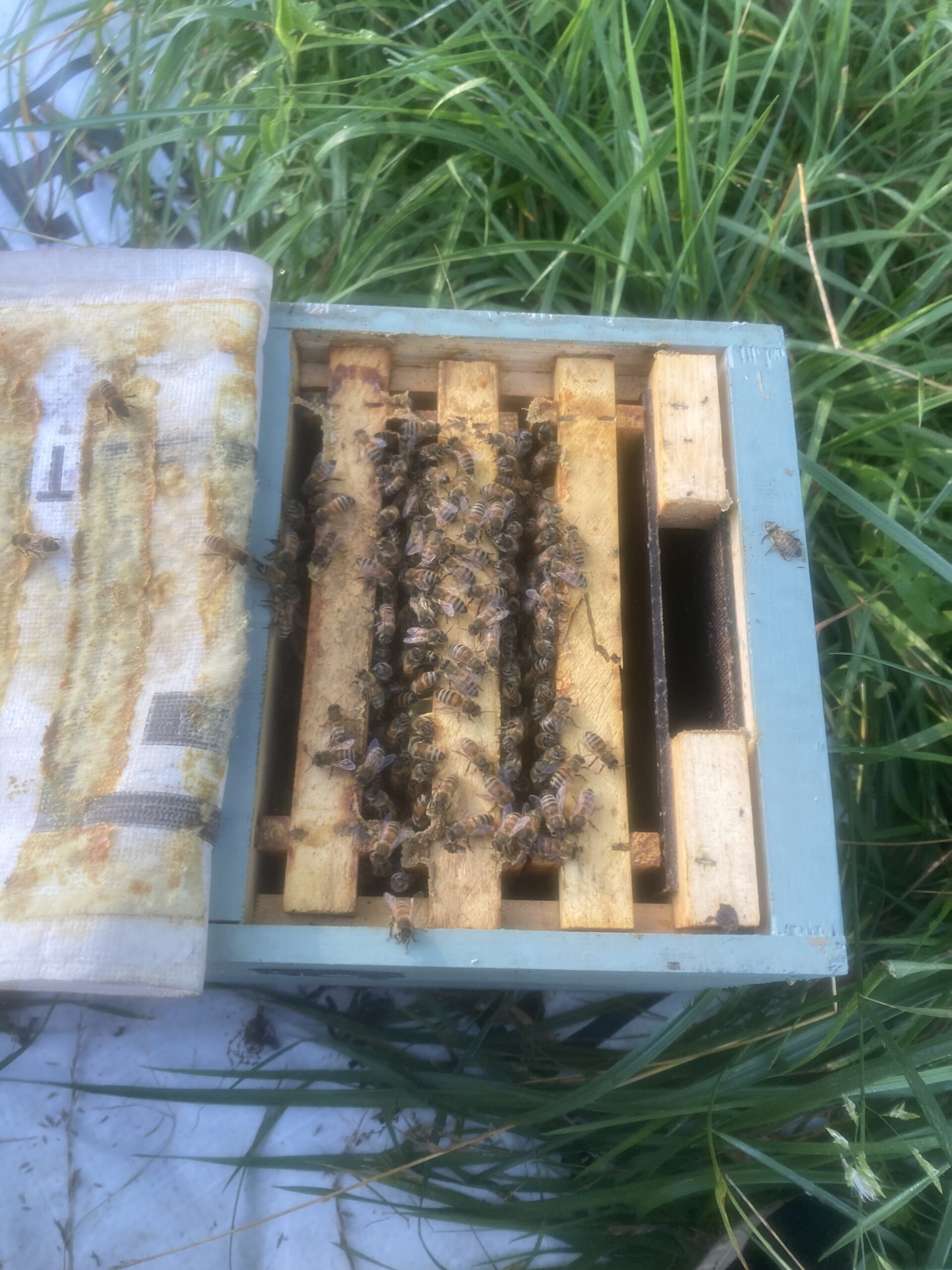
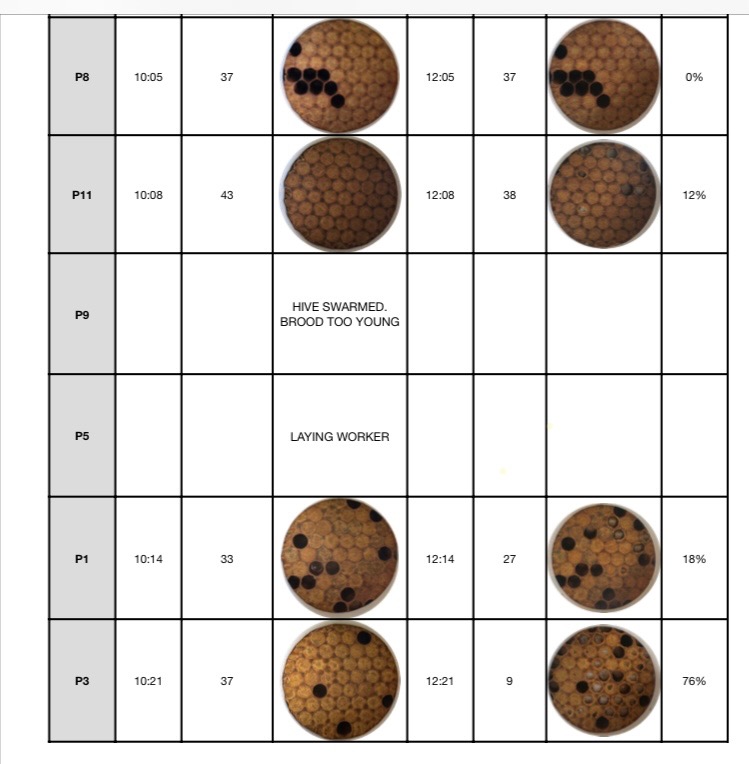
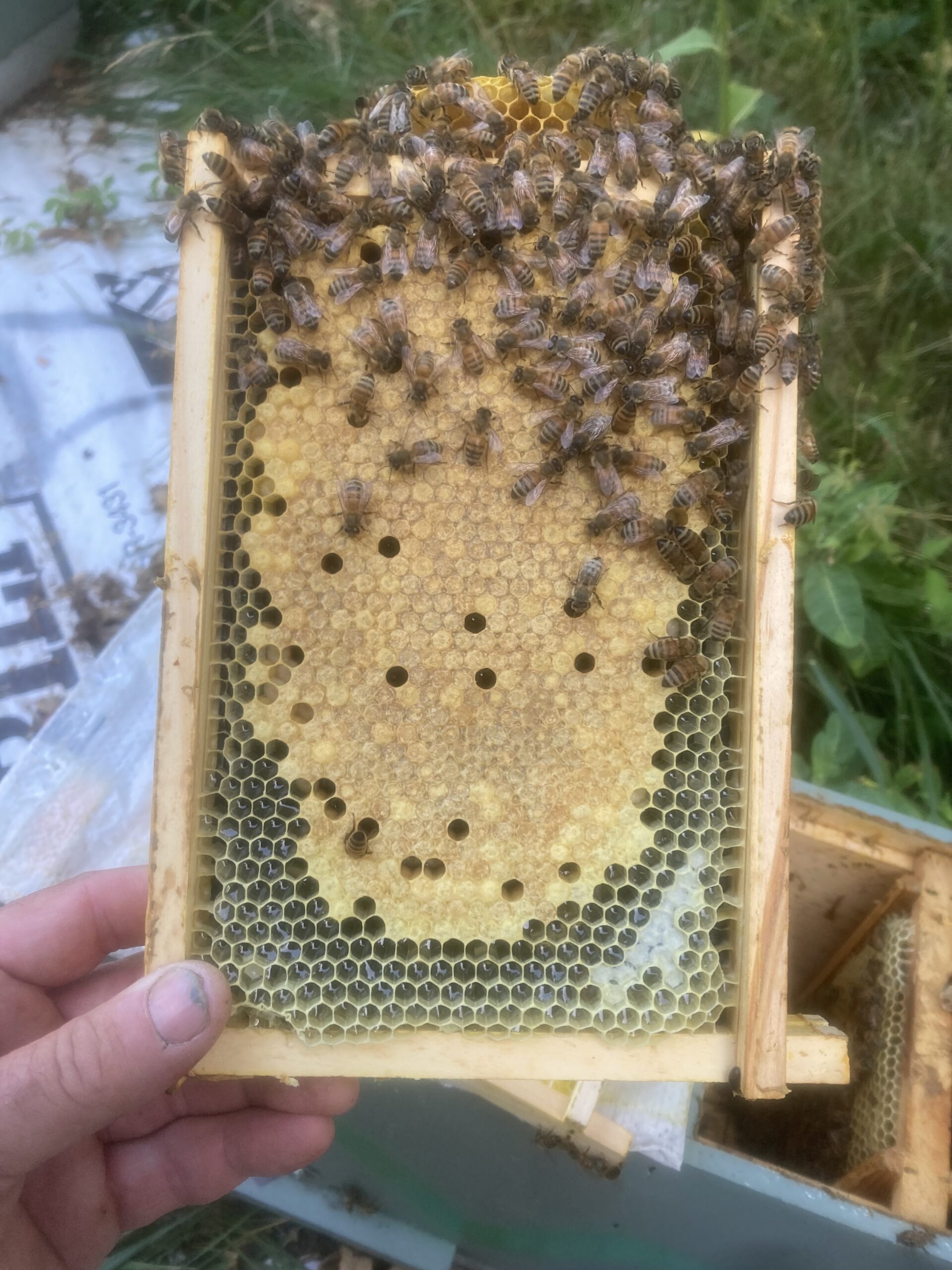
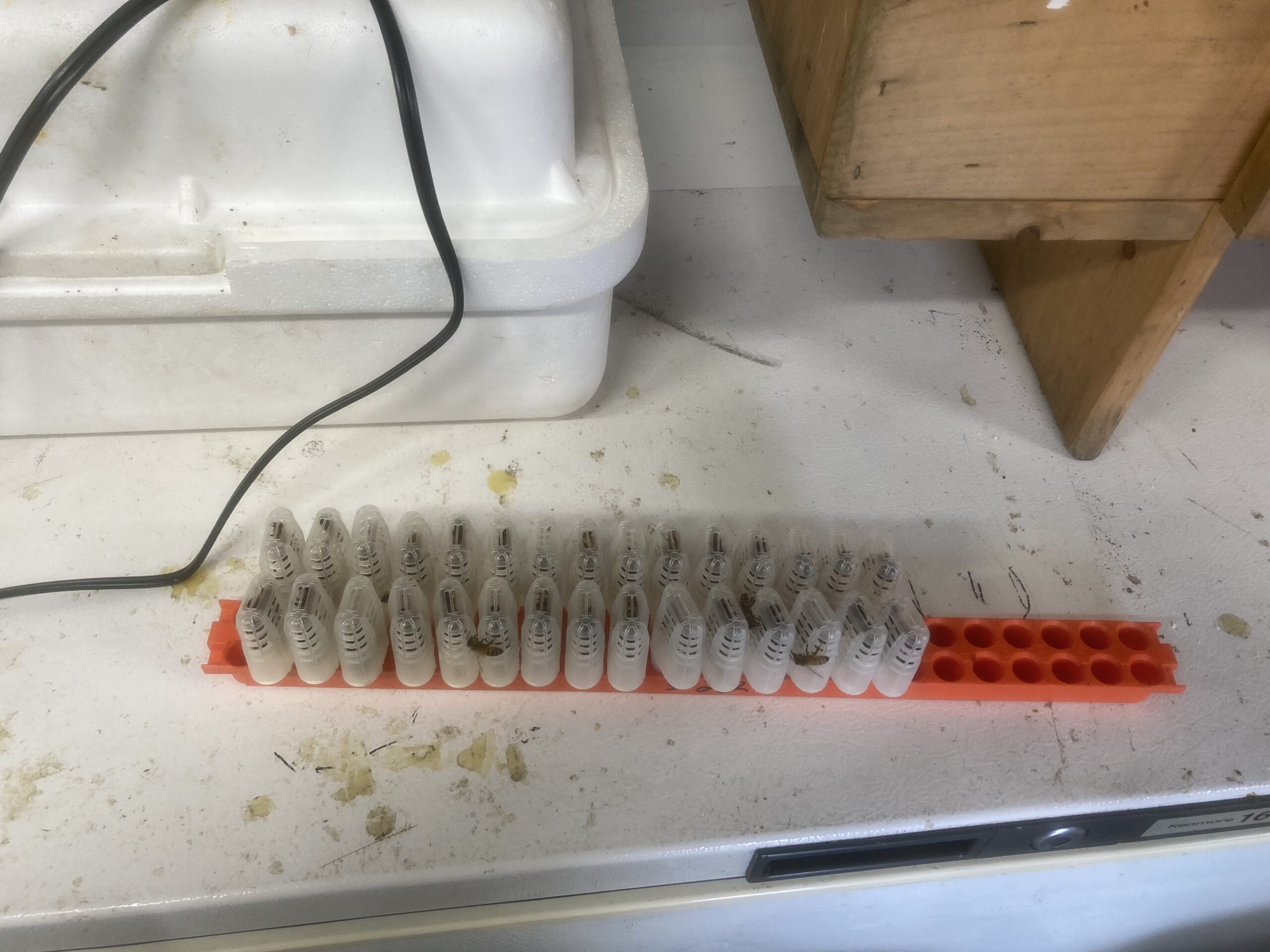
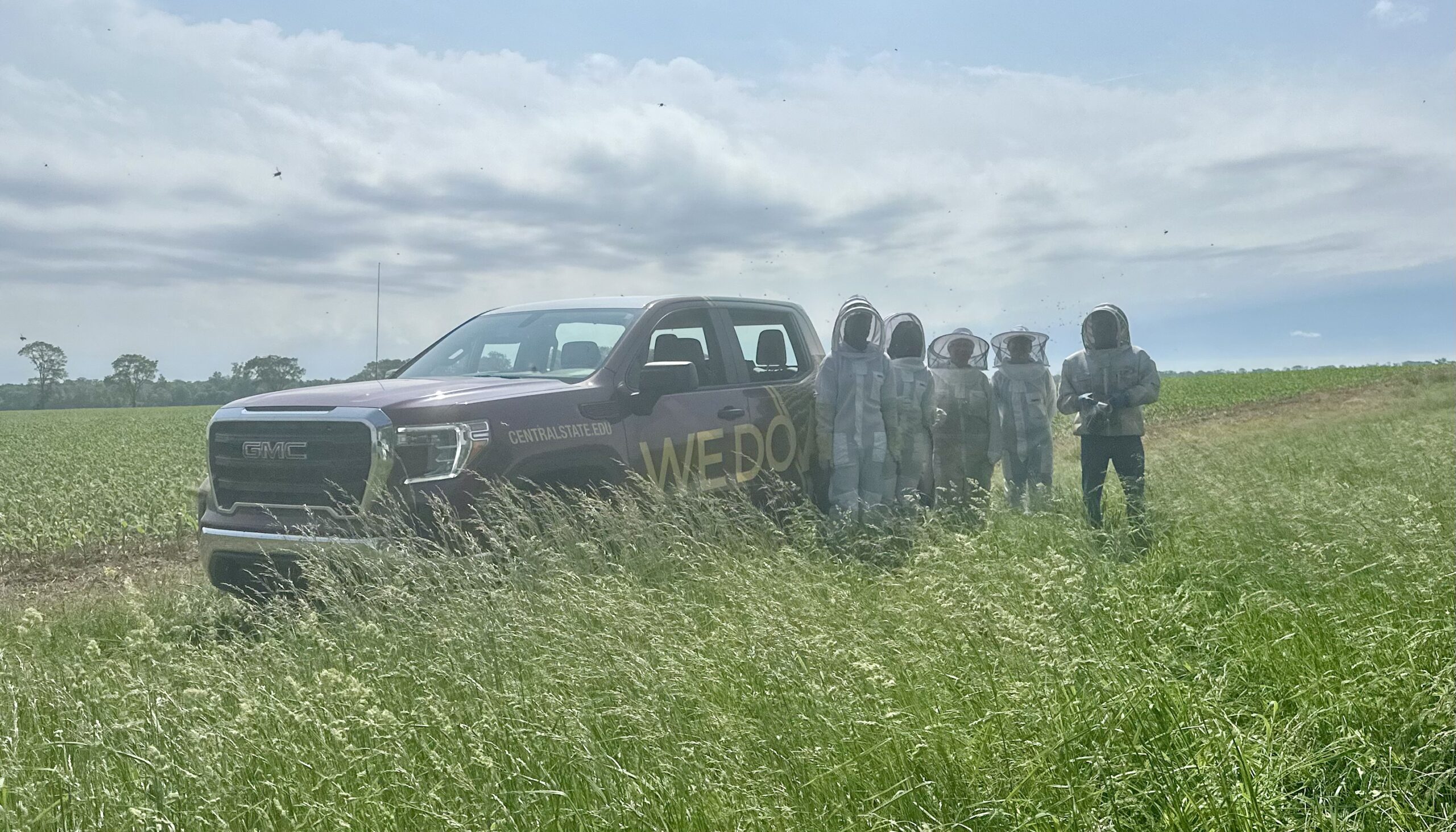
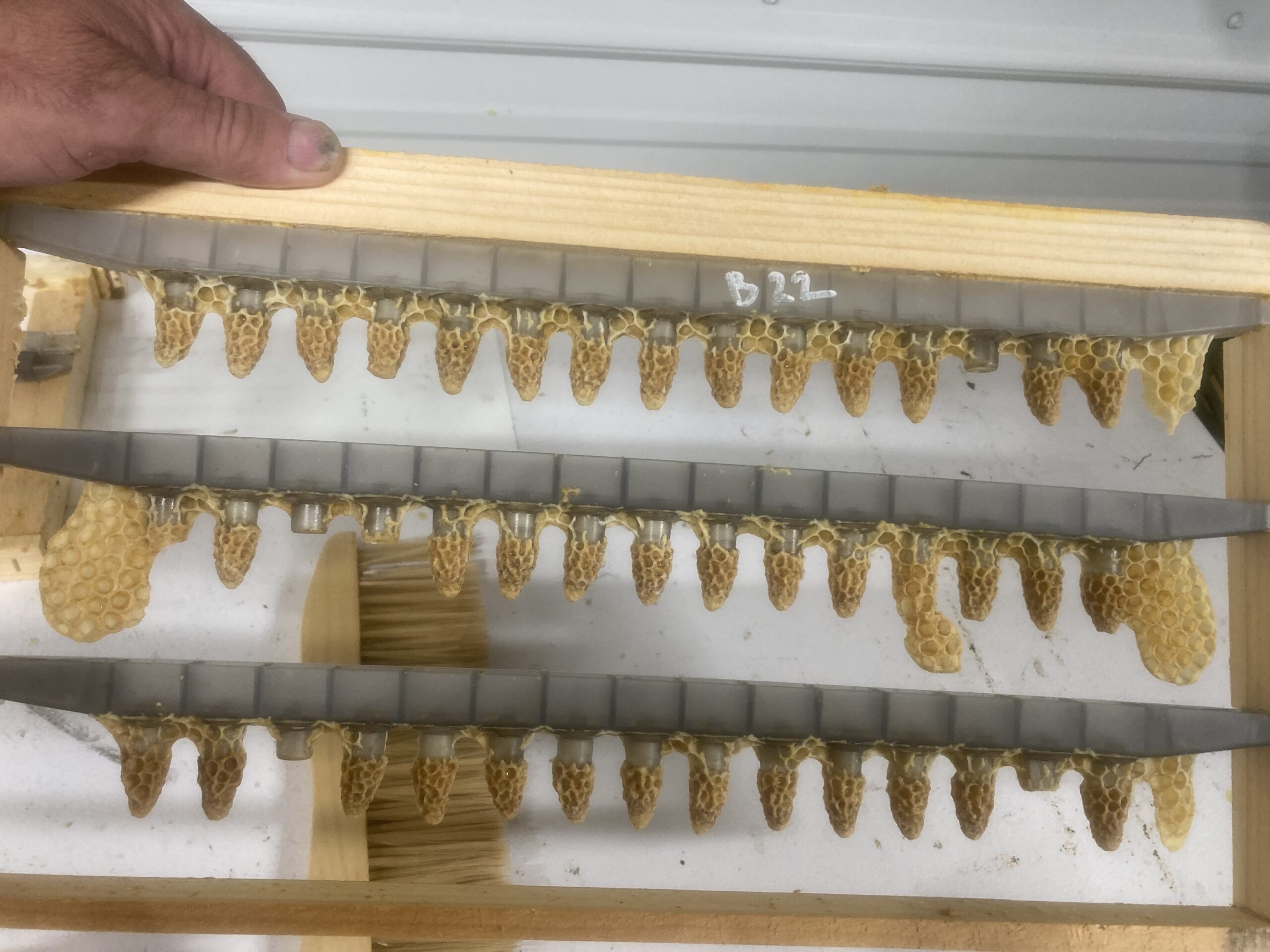
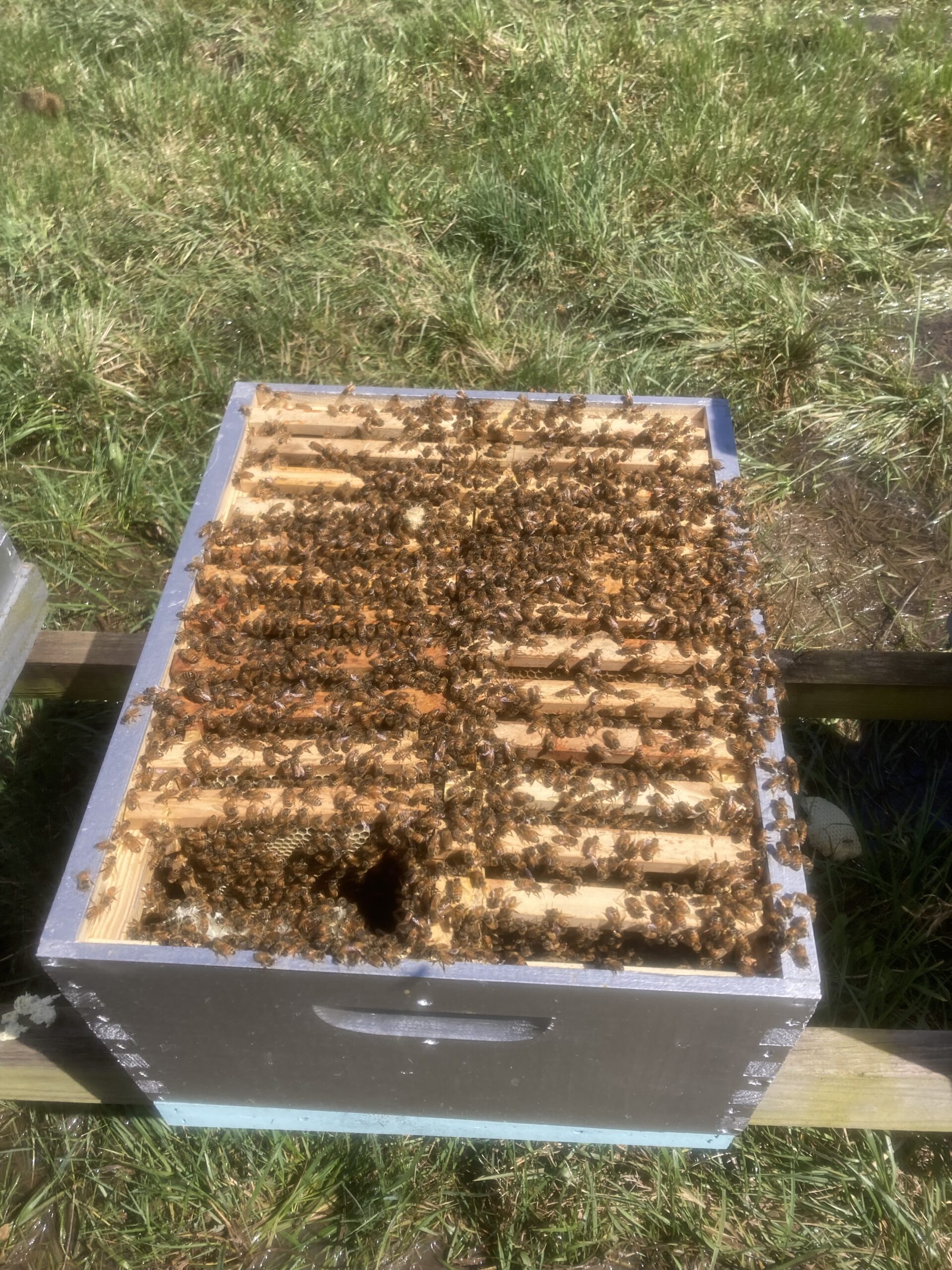
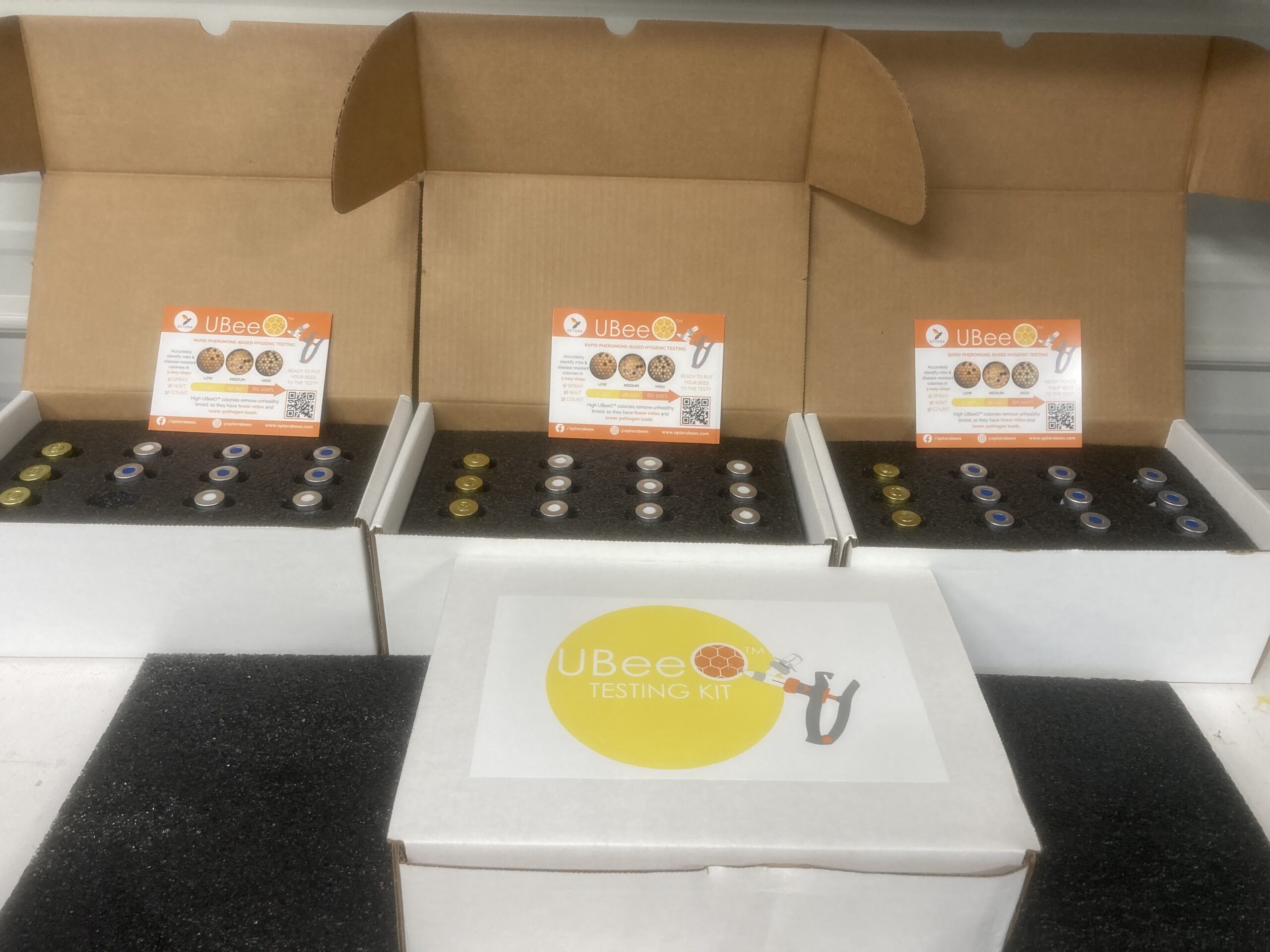
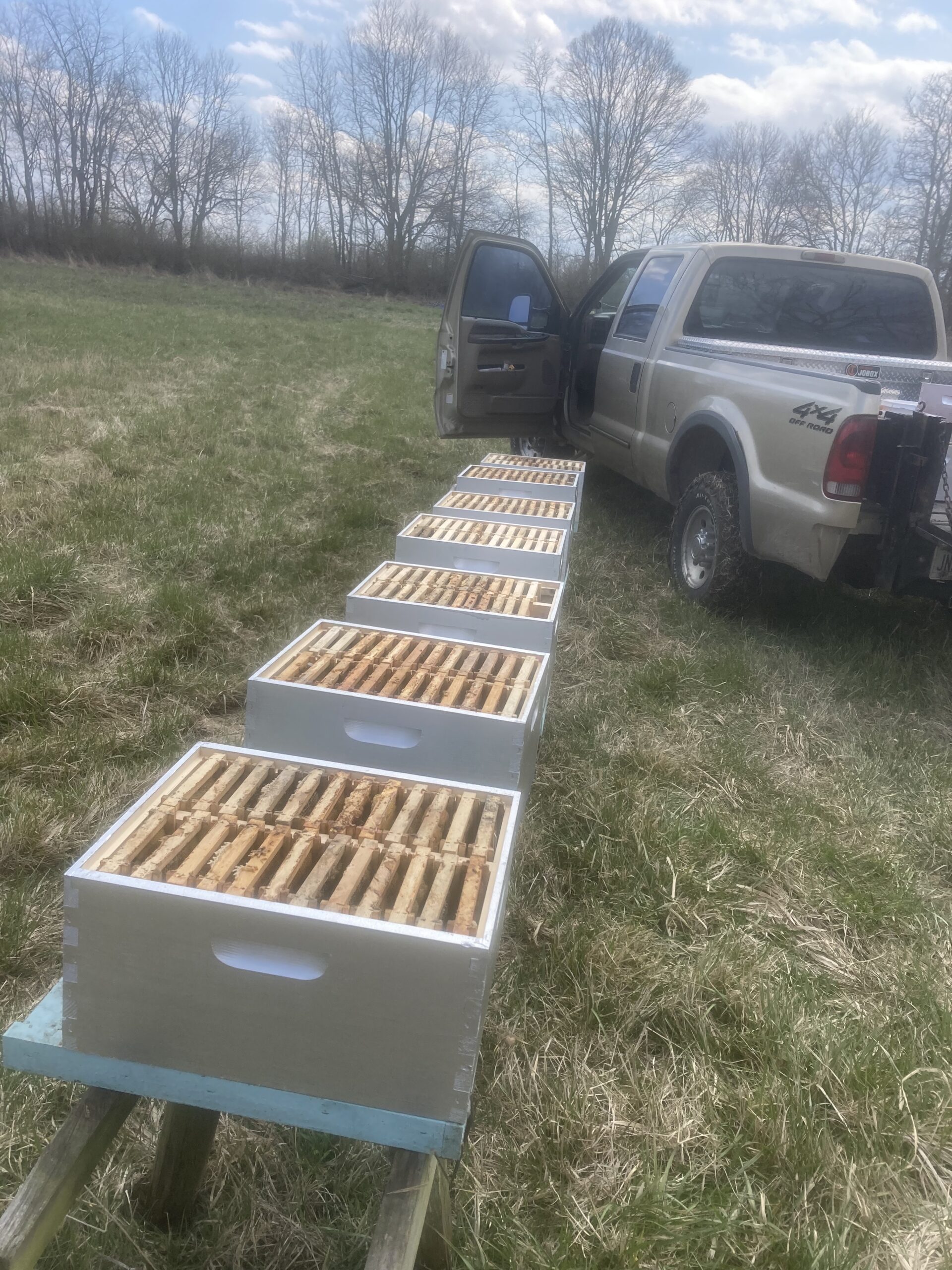
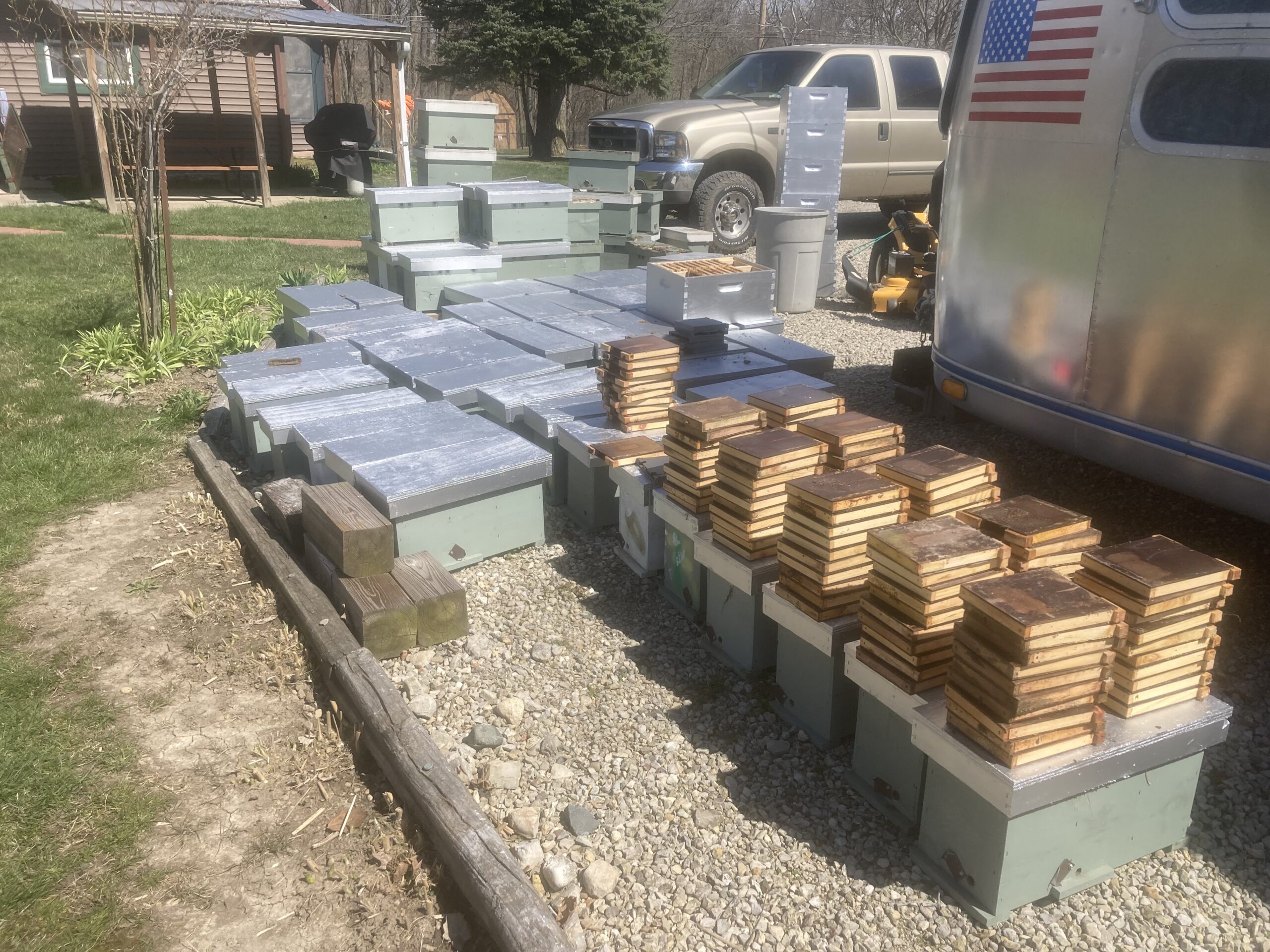
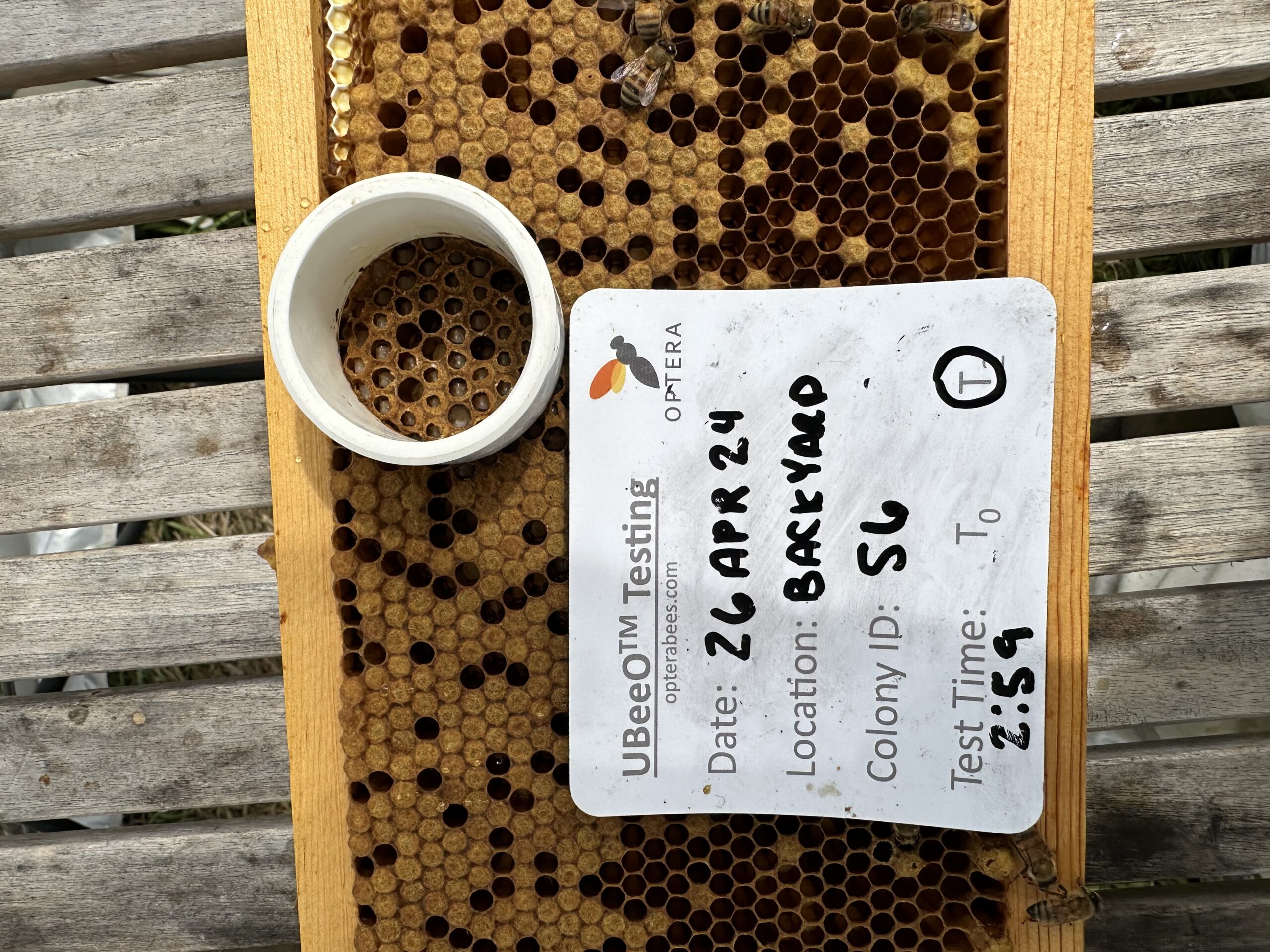
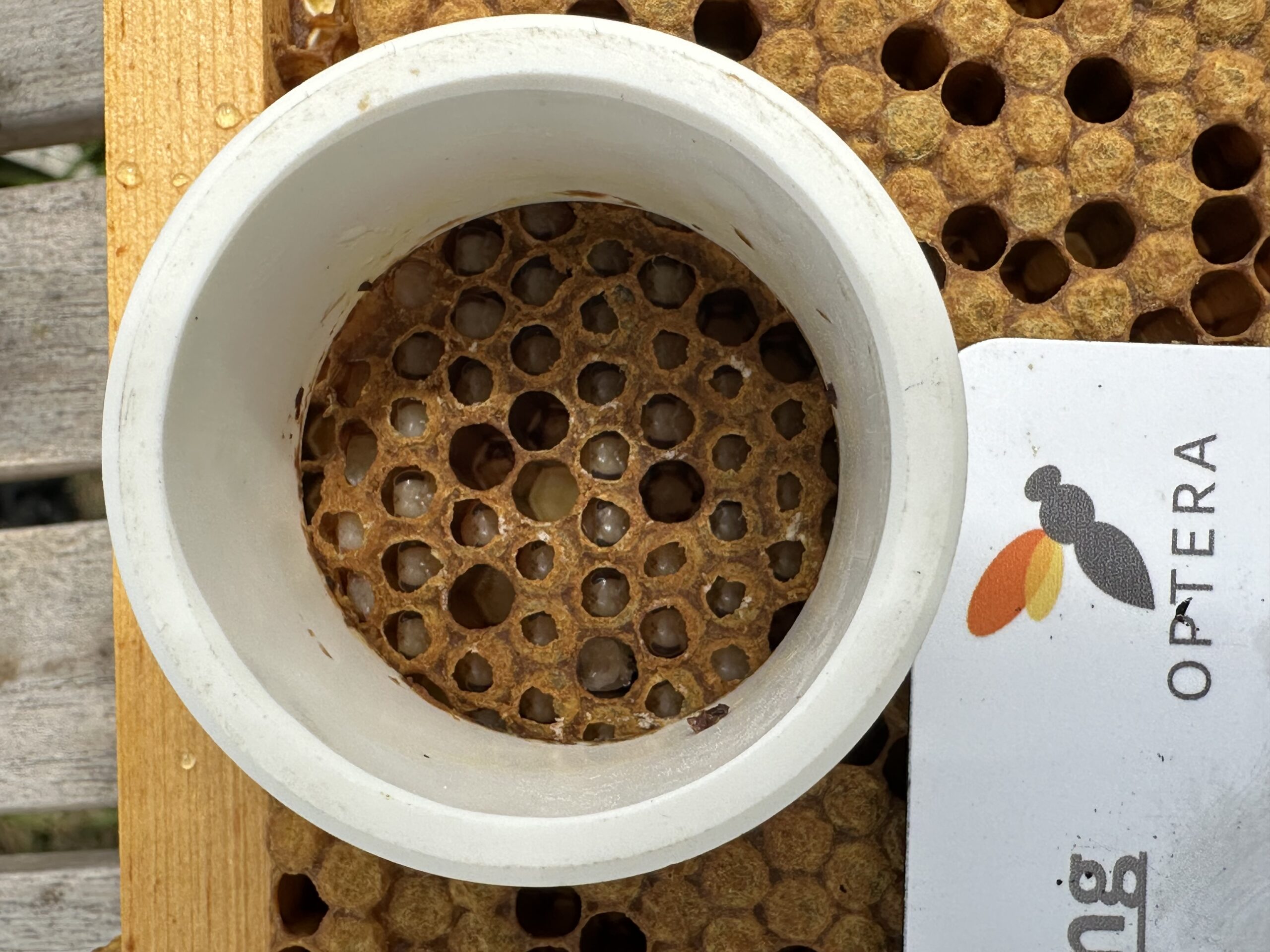
We set up a three mile radius around our queen yard with 100 bee hives in March of 2024. The first week of April we purchased packaged bees to establish and draw out the mating box combs to be transferred to the mating boxes later. We then tested the hives within the research area with UBeeo in April, 2024. Four of the highest scoring colonies (ranging in score from 60-100) and set them up in timing boxes to be used for breeder queens. We set up 180 queen mating boxes and 2 cell builders for starting and finishing queen cells. Weekly, we grafted from the breeder queens to stock the mating boxes with cells. Sixty ripe queen cells were installed in queen mating boxes every week from April 15, 2024 to August 15, 2024. We harvested the queens on a three week cycle, sixty at a time. The colonies in the research area were re-queened using queen excluders and making the colonies hopelessly queenless for seven days. A plastic queen cage with candy was used to introduce the new queen into the colony. We waiting a minimum of eight weeks and retested with the UBeeo assay, at the end of October 2024 the scores were recorded. We repeated the process in 2025 minus the final assays that we performed in June 2026 the complete the project.
2024 and 2025 Data:
The recordings from the initial UBeeo assay average was 22. The end of the year's findings produced an average score of 47. The colonies averaged a mite count of 1 - 25% in October obtained by the alcohol wash method.
We were in a drought most of the year, resulting in our honey production being down 30%.
Nov 2025 Update:
We were unable to complete the last round of assays in the project due to the queens shutting down early this year, due to dry conditions. Giving us an extension will allow us to complete the last round of assays and collect the data, and share during winter conference season.
June 2026 Update:
Final average Ubeeo score for the research project was a 45. Winter survival was 90% with no mite treatments for two full seasons. Average mite count June 2026 was 0.28 mites per 100 bees.
Educational & Outreach Activities
Featured on Inside The Hive Tv. Link below
Attended Ohio State Beekeepers Association Fall conference
Conducted PowerPoint presentations for 3 Ohio bee clubs
Posted upadates on research project Facebook page
Participation summary:
2024- We conducted UBeeo demonstrations for the research team at Centra State University in multiple bee yards within the research area.
Created a Facebook page , Combs Bee Farm Research Project . The page follows our weekly progress through the season on the project.
Here is a flyer with a QR code to our Facebook page: Sare Grant QR 121524
Featured on Inside the Hive TV, a youtube series run by beekeeper and bee researcher Dr. Humberto Boncristiani. Our episode has over 700 views already: https://www.youtube.com/watch?v=uMHZzC134hs
Attended the Ohio State Beekeepers Association fall conference as a vender to educate attendees.
Conducted two powerpoint presentations at local Bee Clubs.
Learning Outcomes
2024. We have learned the following so far;
- Using queen excluders during a drought contributed to robbing and reduced our queen acceptance
- Our two lowest scoring breeder queens succumbed to high mite levels which led to re-queening those colonies
- The colonies with a higher UBeeo score tend to uncap diseased or infested brood earlier in the life cycle compared to the colonies with a lower UBeoo score.
- Colonies that scored less than 20% typically did not uncap any diseased or infested brood until after 90% of the frame had hatched.
- When applying the UBeeo application to the brood, it is a good idea to be in a mobile screened enclosure
- Installing hive scales so that we can identify honey flow to accurately do the assay.
2024 Advantages
- We only had to treat 20% of the research colonies with miticides
- Isolating breeder queens in timing boxes allowed for us to get a better understanding of the timeline and reaction of bees toward disease and infestations.
2024 Disadvantages
- Time consuming
- Wet spring and summer drought had us re-queening the colonies at times when the hives were stressed due to weather conditions
Our current colony loss for 2024 is less than the state average and less than 20% of those colonies had varroa mite treatment.
2026 Advantages
No mite treatments were needed
Winter survival was 90%
Honey production was above average for 2026
Mite counts we’re .28 per 100 bees in late June using alcohol wash method
2026 Disadvantages
At this time I see no Disadvantages that were not previously stated