Final report for FNC24-1407
Project Information
Moses B.O Momanyi: moses.b.o.m@gmail.com
Moses co-owns the 20-acre organic certified Dawn2Dusk Farm in Cambridge, Minnesota. Currently he sells vegetables at Mill City & Kingfield farmers markets in Minneapolis and local food hubs. He is president of Kilimo Minnesota, a nonprofit farmer incubator, training 40+ African immigrant farmers in several rented sites across the Twin Cities including Frogtown. He is also president of African Growers and Producers Alliance, an umbrella organization for African farmers. Moses will be the overall team lead related to the research associated with Kilimo Minnesota farmers.
Nura Ahmed: nura5710@gmail.com
Nura is the coordinator for Feeding Frogtown, a non-profit created to support and strengthen families living in the Frogtown neighborhood. Nura has lived in Frogtown for seven years and serves on and volunteers for other neighborhood organizations. Nura also works with the Afrian immigrant farmers associated with Kilimo Minnesota. She will assist Moses in advancing the RootThru experiment with these farmers.
Keanue Driscoll-Cherland: keanue.dc@frogtownfarm.org
Keanue is the Farm Manager at Frogtown Farm, where he has worked for the past 4 years. He leads a team of farm workers in managing all field-based aspects of Frogtown Farm. He will be responsible for the implementation of the experiment throughout its duration. He will also be a central part of the field days associated with the experiment.
Randel D. Hanson, PhD: rhanson2@d.umn.edu
Randy has worked with Frogtown Farms for one year as a consultant to its Farm Manager and other issues as they arise for which his experience is useful. Randy taught agriculture and food systems at Arizona State University for a decade and the University of Minnesota, Duluth, where he founded and directed for a decade the UMD Land Lab, a 30 acre teaching and research-oriented organic farm. He has been active in regional and state community food systems development. Randy will assist in planning and implementation at Frogtown Farm of the experiment and field days.
Sam Wortman, PhD: sam@rootthrugarden.com
Sam serves as CEO of Sage Eco-Innovations, LLC. Sam has MS and PhD degrees in Agronomy and has worked as an agricultural and horticultural researcher, educator, and consultant for over 15 years.
Ignatius Kadoma, PhD: ignatius@rootthrugarden.com
Ignatius serves as CTO for Sage Eco-Innovations, LLC. Ignatius has M.S. and Ph.D. degrees in Chemical Engineering and has nearly 30 years of industry experience in sustainable product development.
Sam and Ignatius will serve as consultants related to experiment design and execution.
Problem Addressed:
Hand weeding vegetables is time consuming and back-breaking, particularly in narrowly spaced crops like leafy greens, carrots, and green onions. Many urban farmers and gardeners have full-time jobs off the farm and tend their crops in the evenings and on weekends, which makes the opportunity cost of hand weeding particularly severe. Common alternatives to hand weeding in these crops include stale seed bedding, flame weeding, and tillage with harrow and tine weeders; however, stale seed bedding displaces valuable time in an already short Minnesota growing season and flame weeding and tillage are time-sensitive, only partially effective, and can cause significant crop damage. For most of our crops, mulching is the most promising option for lasting weed suppression during the growing season, but traditional plastic mulch films and geotextile fabrics are not feasible for narrowly spaced crops because the number of planting holes required compromises the integrity and function of the barrier. In addition, plastic-based films and fabrics can contaminate soil and must be removed and landfilled at the end of their useful life. We need a viable biobased, mulching strategy to eliminate hand weeding in narrowly spaced crops on our farms.
Research Approach:
We used a mother-baby experimental design whereby there was one controlled, replicated “mother” trial at Frogtown Farm and at least 3 non-replicated “baby” trials at each farm. Baby trials were valuable for providing additional replication of treatments in the mother trial (additional validation) and for demonstrating the technology under real-life conditions (thereby improving the potential for farmer adoption). In the mother trials, RootThru was compared to a combination of mechanical and hand weeding across three replicated, randomized experimental plots.
Research Conclusions:
RootThru successfully suppressed weeds in narrowly spaced vegetable crops, as evidenced by growers' enthusiasm and anecdotal success, reducing the labor-intensive burden of hand weeding. While RootThru showed strong potential, cost-effectiveness compared to traditional methods (hand weeding, straw mulch) remains to be quantified. Future trials will need to assess economic viability for widespread adoption. One of the most effective and unexpected applications was the use of RootThru in farm walkways, where it nearly eliminated the need for weeding and significantly reduced non-productive labor required to maintain field access.
Farmer Adoption:
The mother-baby trial approach was valuable for both controlled testing and real-world demonstrations, enhancing credibility and farmer buy-in.
Toward the goal of eliminating hand weeding in narrowly spaced, high density vegetable crops, we will test the RootThru Weed Barrier in comparison to our current weed management practices. RootThru is a composite geotextile fabric made from two sustainable, 100% plant-based materials – paper and corn. RootThru is unique from other weed barriers because we can plant our seeds directly on the barrier and the seedlings grow and root through it; and yet, weed growth is effectively suppressed below the barrier. Unlike plastic-based weed barriers, RootThru is biobased and can be taken to a composting facility after field removal instead of the landfill.
RootThru is installed by following these four steps: 1) prepare the soil by removing weeds and creating furrows for seeds; 2) unroll the weed barrier onto the soil, form fabric into furrows, and secure the edges with soil or landscape staples; 3) plant seeds into furrows directly on the fabric or into a layer of weed-free compost or soil mix; 4) cover seeds with additional compost or soil mix and irrigate daily until seeds have germinated and rooted through the fabric. Once established, RootThru eliminates the need for hand weeding and frees time and energy to create value elsewhere on the farm.
We received free sample rolls of RootThru in July 2023 to test at Frogtown Farm and Kilimo Minnesota Farm in carrot, radish, turnip, sweet corn, jute, and collard greens. Results were promising and individual growers were enthusiastic about the product. Nura Ahmed, a long-time grower at Frogtown Farm said, “I couldn’t believe it, there are no weeds [in my jute crop] …that is really amazing!” Given the initial anecdotal success of RootThru, we would like to expand its use on our farms and quantify the potential benefits for our farms and share those results with other growers.
In 2024, we will establish field research and demonstration trials at Frogtown Farm and Kilimo Minnesota - Lino Lakes Farm to compare the RootThru Weed Barrier with existing farmer weed management practices (including straw mulching, hand weeding, and tine weeding). We will use a mother-baby experimental design whereby there is one controlled, replicated “mother” trial at Frogtown Farm and at least 3 non-replicated “baby” trials at each farm. Baby trials will be valuable for providing additional replication of treatments in the mother trial (additional validation) and for demonstrating the technology under real-life conditions (thereby improving the potential for farmer adoption). In the mother trials, RootThru will be compared to a combination of mechanical and hand weeding across three replicated, randomized experimental plots.
At the end of the experiment, RootThru will be removed from the field and delivered to a commercial composter, Specialized Environmental Technologies (SET) in Rosemount, MN. SET will also provide the compost necessary for the trials, demonstrating the full circularity and sustainability of the RootThru system (whereby compost produced from RootThru in one season can be used to grow crops in RootThru in subsequent seasons).
Data collection plans from these field trials are summarized in the “Measuring Results” section below.
Cooperators
- - Producer
- - Producer
- - Producer
- - Producer
- - Producer
- - Producer
Research
We did field research and demonstration trials at Frogtown Farm and Kilimo Minnesota - Lino Lakes Farm to compare the RootThru Weed Barrier with existing farmer weed management practices (including straw mulching, hand weeding, and tine weeding). We used a mother-baby experimental design whereby there is one controlled, replicated “mother” trial at Frogtown Farm and at least 3 non-replicated “baby” trials at each farm. In the mother trials, RootThru was compared to a combination of mechanical and hand weeding across three replicated, randomized experimental plots. Baby trials provided additional replication of treatments in the mother trial (additional validation) and for demonstrated the technology under real-life conditions (thereby improving the potential for farmer adoption).
Year 2:
In Year 2, the project shifted from controlled research trials to expanded, real-world application of the RootThru Weed Barrier across Frogtown Farm and with Kilimo Minnesota growers. Building on the results of the Year 1 mother-baby trial design, which demonstrated RootThru’s effectiveness compared to traditional weed management practices, Year 2 focused on validating performance across a wider range of crops, uses, and farm conditions.
RootThru was implemented using three primary approaches:
• Traditional weed barrier use with holes cut for transplanted crops, including tomatoes, eggplants, peppers, okra, cucumbers, squash, and select perennial herbs.
• Intended RootThru use as an underlayment beneath clean compost for direct-seeded and densely planted crops such as onions, carrots, radishes, beets, Swiss chard, cilantro, basil, and other leafy greens.
• Farm walkway applications, where RootThru was installed between rows and covered with wood chips to reduce weed pressure and improve field access.Installation methods varied by application. Traditional transplant use involved rolling out the barrier, securing edges with soil, and cutting holes at crop spacing. Intended use applications required shallow trenching, laying RootThru into beds, covering edges, and filling furrows with clean compost prior to seeding. Walkway applications involved rolling out RootThru and covering it with wood chips.
Data collection in Year 2 was primarily observational and comparative rather than fully quantitative. Growers documented weed incidence, labor inputs, crop performance, and harvest efficiency through direct field observations and comparison to areas managed without RootThru. This approach also reflected staffing transitions during the project period, which required adapting documentation methods while maintaining consistent on-farm implementation and evaluation.
The logic behind this approach was to assess how RootThru performs when integrated into everyday farm management decisions, including labor allocation, crop succession, and field navigation, rather than limiting evaluation to controlled research plots.
Results
1: We reduced weed incidents of all types and thus had to use far less labor hours to manage plots.
2. Crop production levels did not significantly change although less time was need to harvest given the lack of weeds.
3. We improved overall profitability of crop production due to less labor hours in managing weeds.
4. Improved quality of life for all farmers involved due to far less intensive needs for managing weeds.
5. In hindsight the use of RootThru improved weed management, stress management of farmers and greatly improved the enjoyment of farming.
Year 2:
In Year 2, we moved RootThru fully into production and used it the way working farms actually operate. Instead of formal trials, we paid close attention in the field—watching how it performed compared to our regular systems as the season unfolded.
RootThru consistently kept weeds down in transplanted crops like tomatoes, peppers, eggplant, cucurbits, and okra. It performed as well as—or better than—the woven landscape fabric we had used in the past. Weed breakthrough was minimal and manageable.
In direct-seeded beds (carrots, beets, onions, greens), laying RootThru under compost clearly reduced weed pressure. Beds without it needed several extra hand-weeding passes during peak season, while RootThru beds stayed noticeably cleaner.
In walkways, placing wood chips over RootThru made a visible difference. Perennial weeds were far less aggressive compared to wood chips laid directly on soil.
Over the course of the season, it was clear that we spent less time weeding in beds using RootThru. Installation took about the same amount of time as traditional fabric, but once crops were growing, the reduction in hand labor was noticeable—especially during the busiest stretch of summer.
Crop growth looked strong and consistent. Yields were comparable to, and in some cases slightly better than, previous seasons using woven plastic. We did not see any drop in production. Direct-seeded crops established well, and roots grew through the material without any obvious restriction.
Using RootThru in walkways improved field access, particularly during wet weather. There was less mud, fewer weeds to manage, and smoother movement for harvesting and general fieldwork.
Compared to woven plastic fabric and compost-only systems, RootThru:
It kept weed pressure equal or lower: it reduced in-season weeding; it maintained yields; and it improved walkway durability and field access
Overall, RootThru worked well under real farming conditions. It fit naturally into our diversified small-scale system and reduced labor pressure without sacrificing productivity.
Educational & Outreach Activities
Participation summary:
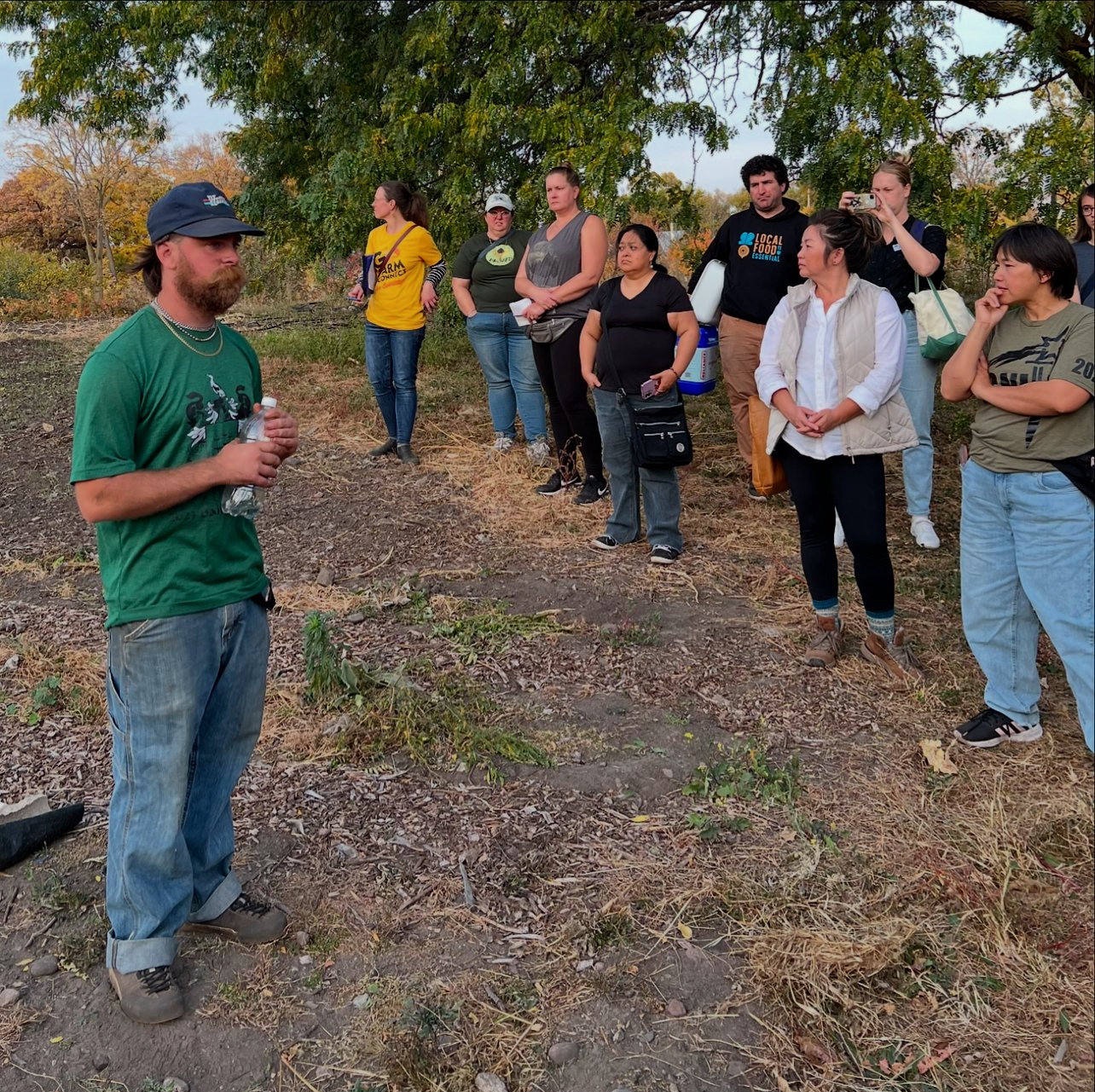
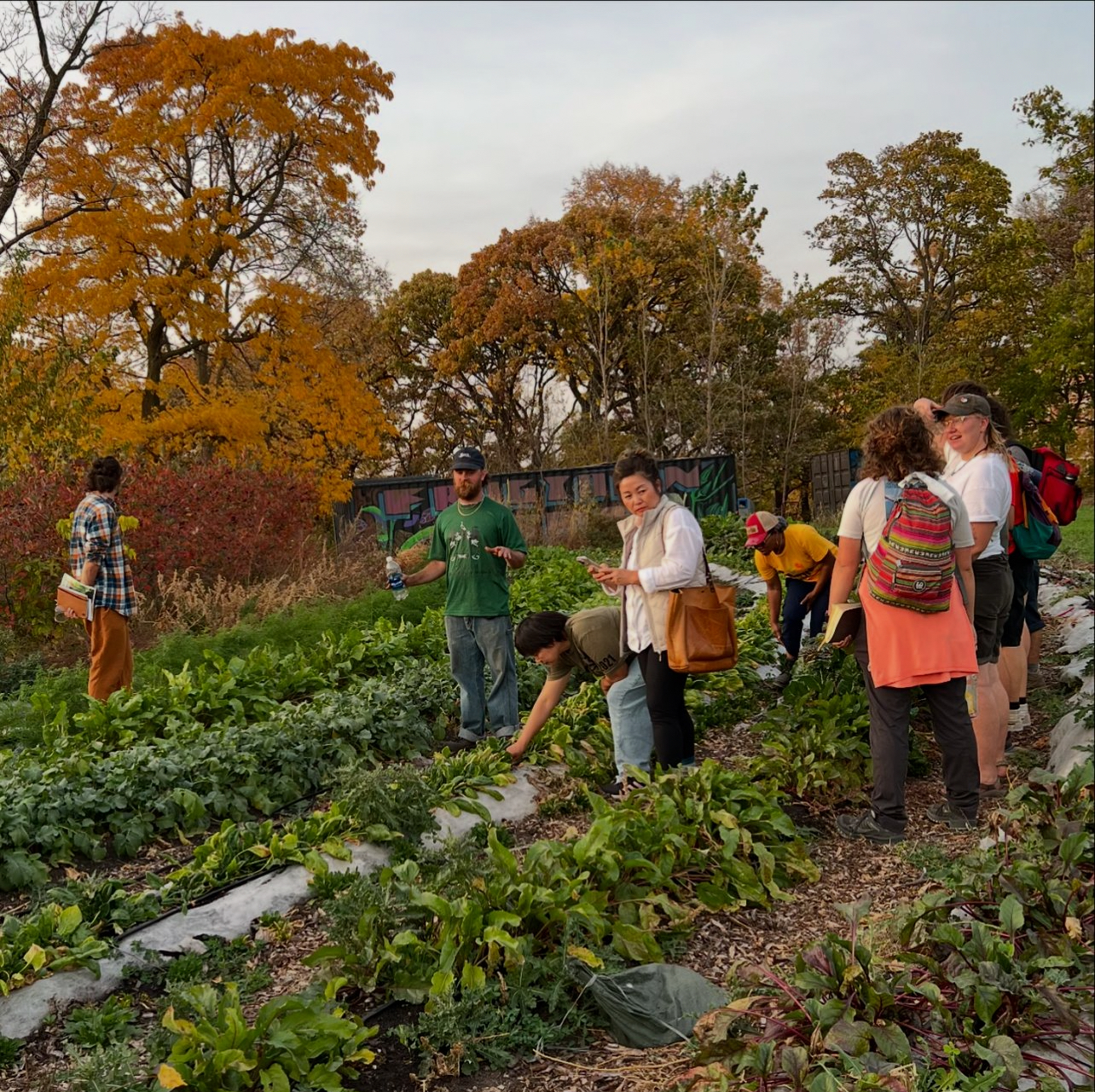
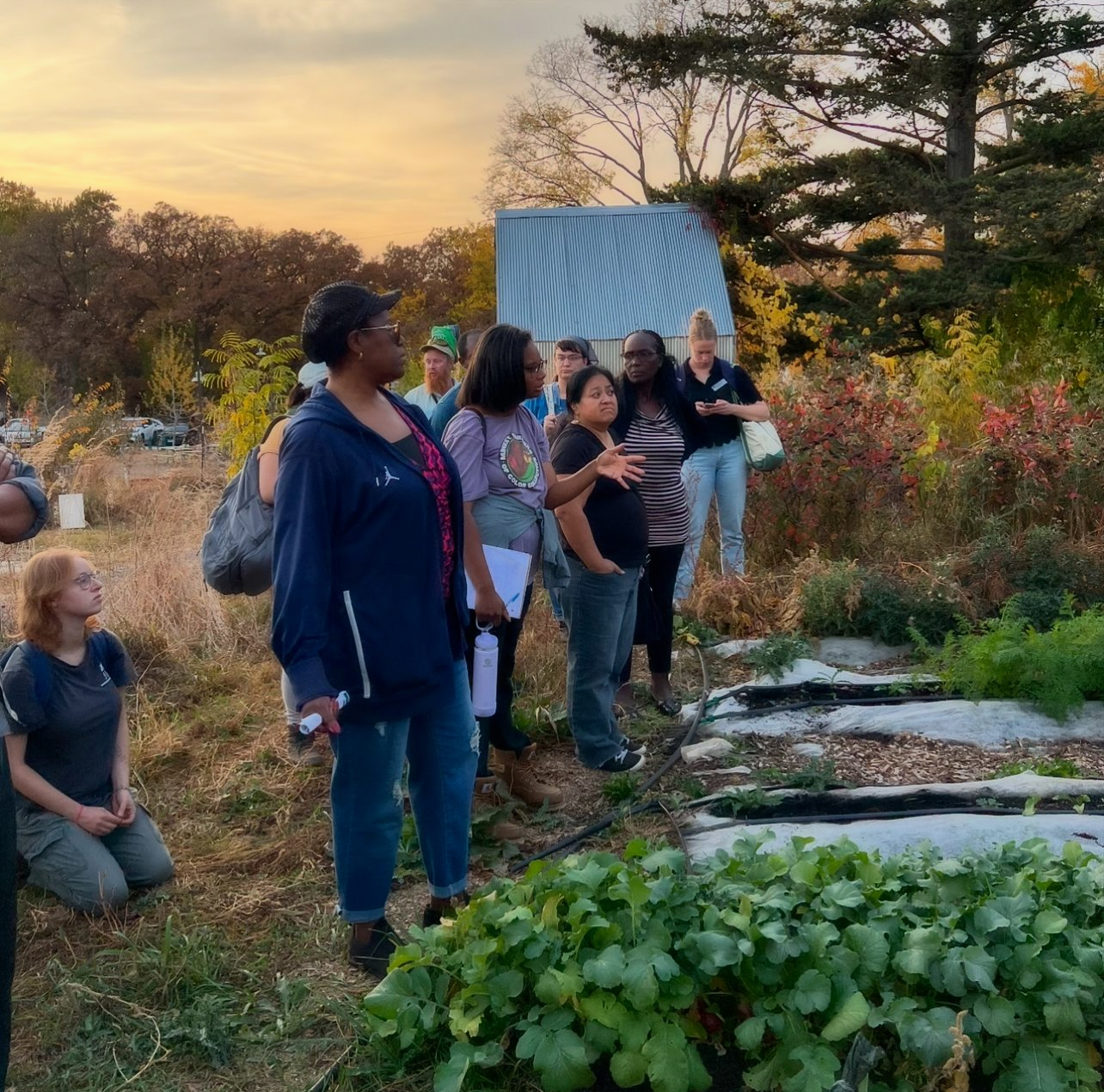
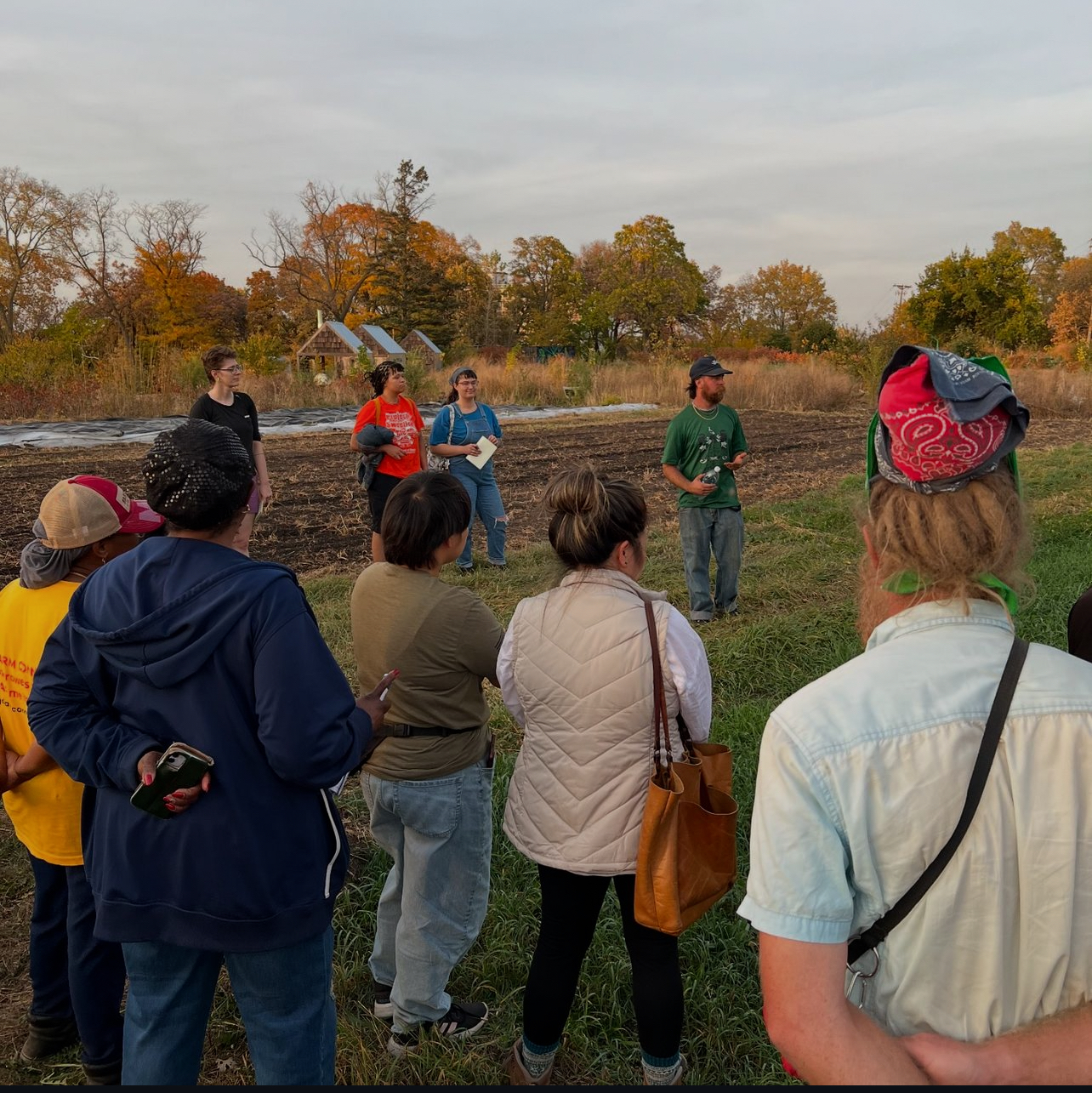
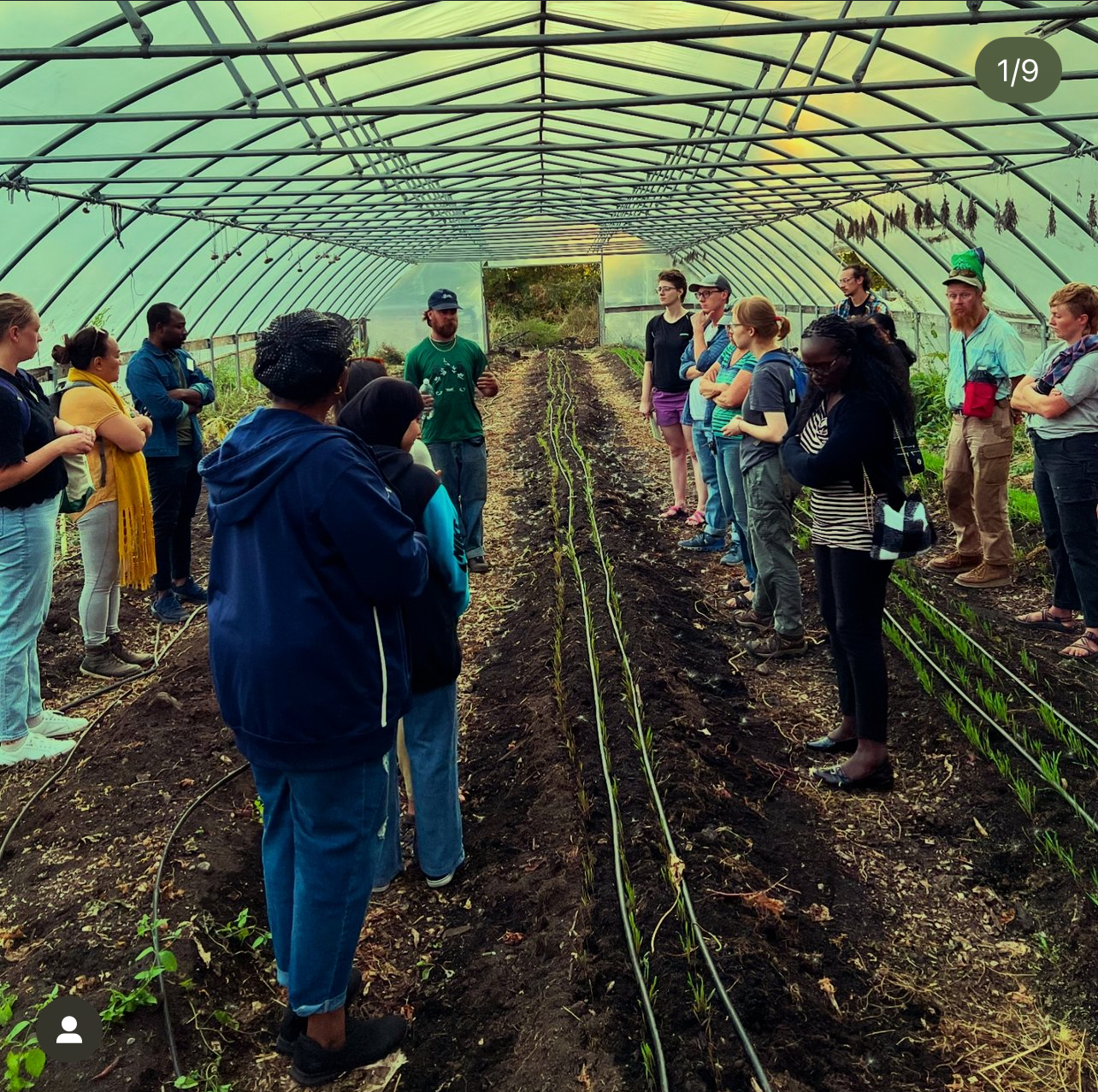
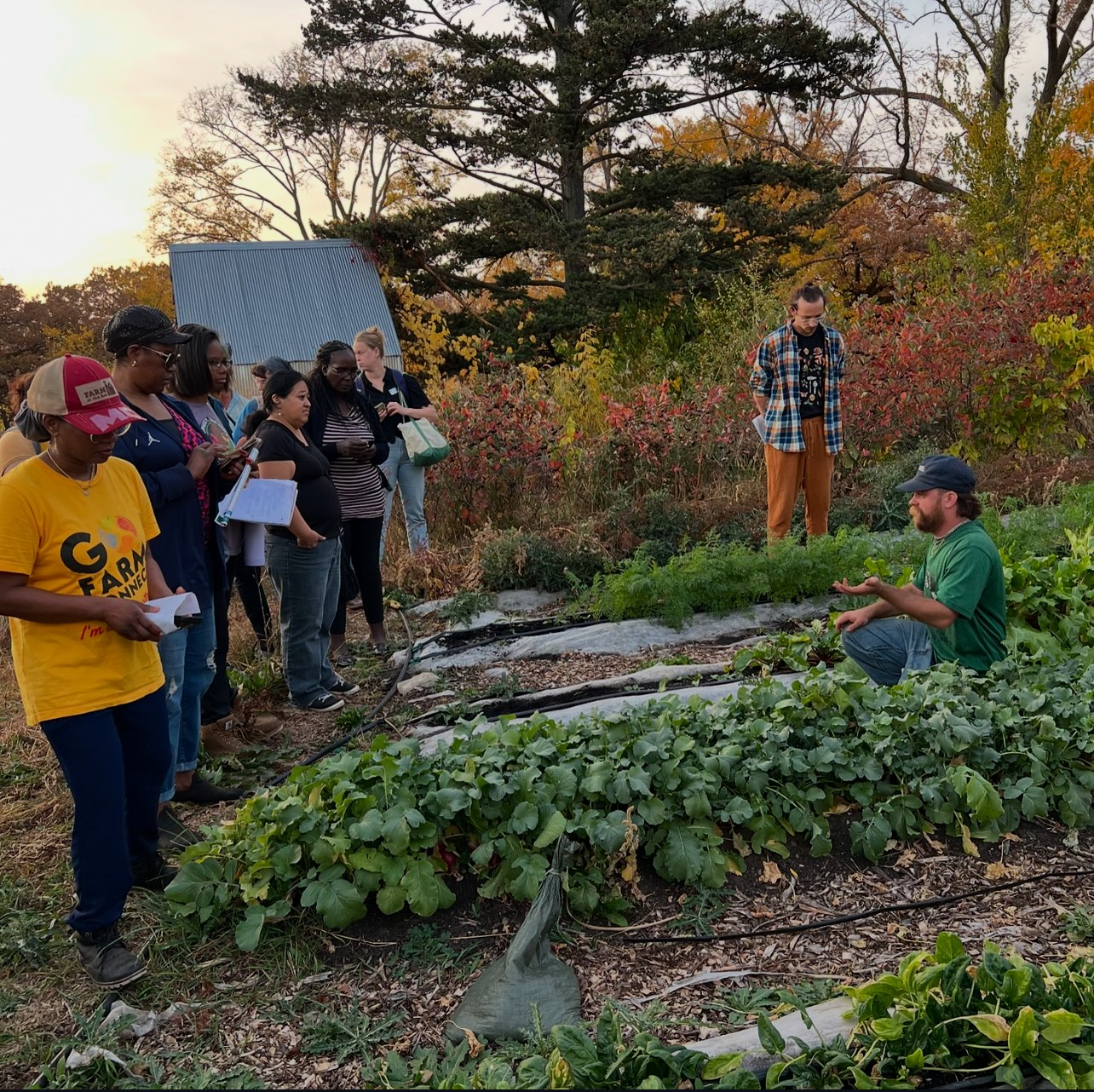
Across three events, a total of 44 attendees participated in urban agriculture programming at Frogtown Farm. The Go Farm Connect event on October 21 successfully connected local urban farmers and gardeners with resources from Frogtown Farm, USDA, and UMN Extension, while also gathering insights on growers’ needs for future support.
In addition, Keanue Driscoll-Cherland led two hands-on workshops focused on RootThru installation, engaging both local farmers and youth. Community outreach through social media and local networks contributed to strong participation across all events.
These events effectively increased awareness of urban agriculture opportunities and provided practical skills, laying the groundwork for expanded support and programming in the coming season.
Year 2:
In Year 2, formal outreach activities were limited as the project focus shifted to expanded on-farm implementation and observational evaluation of RootThru across multiple crops and farm uses. Learning continued through informal knowledge-sharing, field observations, and peer-to-peer discussion among participating growers and partners.
Collectively, these efforts increased awareness of biobased weed management strategies, supported grower decision-making, and laid the groundwork for future education and outreach based on the project’s findings.
Learning Outcomes
Lessons Learned from the RootThru Weed Barrier Project
Effectiveness in Weed Suppression – RootThru successfully suppressed
weeds in narrowly spaced vegetable crops, as evidenced by growers'
enthusiasm and anecdotal success, reducing the labor-intensive burden
of hand weeding.
Ease of Adoption and Application – The four-step installation process
was straightforward, making it feasible for farmers to integrate
RootThru into their existing practices without specialized training.
However, ensuring proper soil preparation and irrigation was key to
success.
Sustainability and End-of-Life Management – Unlike plastic-based
alternatives, RootThru’s biobased composition allowed it to be
composted at a commercial facility, closing the sustainability loop.
However, access to composting facilities may limit large-scale
adoption in certain regions.
Crop Compatibility and Growth Performance – Initial trials showed
promising results for crops like jute and collard greens, but further
research is needed to evaluate long-term performance across different
soil types and climates.
Scalability and Cost Considerations – While RootThru showed strong
potential, cost-effectiveness compared to traditional methods (hand
weeding, straw mulch) remains to be quantified. Future trials will
need to assess economic viability for widespread adoption.
Experimental Design for Broader Validation – The mother-baby trial
approach was valuable for both controlled testing and real-world
demonstrations, enhancing credibility and farmer buy-in. However,
additional replicated trials would further validate findings.
Year 2:
Year 2 use of RootThru showed that performance varied by how and where the barrier was applied. Where RootThru was used beneath clean compost for densely planted and direct-seeded crops, weed incidence was minimal for most of the crop cycle. Weed pressure increased primarily after beds were disturbed for additional harvests or succession planting.
When used in a traditional manner for transplanted crops such as tomatoes, peppers, eggplant, okra, and cucumbers, RootThru reduced weed pressure for most of the season. Some late-season weeds emerged at transplant holes and as the paper layer decomposed, but overall weed pressure remained manageable compared to non-barrier areas.
One of the most effective and unexpected applications was the use of RootThru in farm walkways, where it nearly eliminated the need for weeding and significantly reduced non-productive labor required to maintain field access.
RootThru also performed well for select perennial plantings, including thyme, where reduced weed pressure supported establishment and maintenance.
Overall, the primary learning from Year 2 was that RootThru is most effective when beds remain intact and when used in areas where reducing ongoing labor has the greatest operational benefit.