Final report for FNC24-1409
Project Information
Yves Doumen is the founder | Manager of the Motherland Community Project. Yves has worked.
with underserved families and communities in various roles for many years. In the past three
years, Yves has developed the Motherland project to increase access to healthy food among underserved communities in Springfield. Yves build a community garden of 80 raised beds and where his hard work over 3 full gardening years has yielded over 2000 lbs of fresh healthy vegetables, 10 lbs of fruits (apples and peaches) and 7 lbs of honey that has been distributed for free to the S 15th street communities and over. He is one of the 2023 recipients of The Outstanding Young Person of the Illinois Jaycees in the under 40 categories. Yves grew up in a farming family and has a passion and experience in sustainable urban agriculture and agroforestry. He holds a bachelor's degree in Geography, an Associate degree in Agriculture Business and is currently pursuing an undergraduate degree in government policy and Non-profit Management at the University of Illinois at Springfield. He also serves as a reserve soldier in the Illinois Army National Guard. Yves will oversee the implementation of the project, including managing staff and volunteers to successfully carry out the planned activities and completed reports and other managerial activities. Yves has developed a successful 6–8-week summer program named "From seeds to Table" to teach underprivileged K-12 students the basic of gardening, soils health and food processing, consumption and composting techniques.
Azeyah Thomas is a USA Marines veteran who has been deployed twice. He is currently.
enrolled in computer science at Lincoln Land Community College. He has been outstanding.
working alongside Yves as a garden program assistant specialist. He participated in the 6 weeks.
gardening summer program and was one of the reasons the program was successful. He is.
interested in farming and is being trained and mentored by Yves. Izeyah will be helping with the
summer programs that are going to be implemented by Motherland, assisting with the k12 program,
writing daily reports, setting up training shop as well as maintaining the gardens and the training
area.
Based on our experience working in Springfield from 2021-2024, we realized that BIPOC community (youth and adults), particularly Blacks, have limited knowledge in agriculture. Almost everyone I came to contact with indicated that they have never grown food in their life which makes it difficult for them to get involved in community garden to produce food. Even though Motherland reserves some of the land for the community to grow vegetables for themselves, there was no interest until the food shortage resulted from COVID-19 lockdown. Since then, there has been an interest in learning how to grow vegetables and how to prepare and consume them. We wanted to capitalize on this momentum and expose more people in the neighborhood to sustainable urban agriculture to grow a culturally relevant food in different. neighborhoods.
Our project provided training that focused on basic agricultural knowledge, including vegetable and specialty crops production. We reserved space in our 3 gardens for participants to practice and implement knowledge learned. We provided cooking demonstrations to taught people how to prepare vegetables and meals from scratch. All this was done with support of the University of Illinois Extension.
The training came in two forms:
- 1:1 mentorship and an incubator training program: Participants in the incubator program have learned a great deal, and many "graduates" are already farming on their own and/or purchasing land to farm on.
- Community garden growing space: Participants started with a very limited space, gained skills, and then expanded to grow more food.
Our objectives stem from our five-year strategic plan and are as follows:
1. Establish incubation program to inspire and train BIPOC communities/underserved communities on agriculture entrepreneurship as an alternative career to increase. employment and income.
2. Establish a 2 community gardens on the South and East sides of the City.
Approach:
Objective 1.
Establish sustainable agriculture incubation program to inspire and train BIPOC. communities on food entrepreneurship as an alternative career to increase employment. As part of inspiring BIPOC and underserved communities to develop interest and entrepreneurship in agriculture and local food, we plan to establish an incubation center in Springfield. Recently, motherland has secured one a partnership with a local farmer to use an acre of their farmland to train Underserved and BIPOC communities' members in the understanding of land access, getting involved in agricultural business, including learning and developing community supported agriculture (CSA) to provide healthy. food for their neighbors while earning income. One of the requirements of this new land is to use. conservation and sustainable agriculture production practices. This requirement is well aligned. with the Motherland philosophy and values of regenerative agriculture production. Beginning farmers will be trained in different techniques, including vegetables production and processing, compositing, mulching, crop rotation, integrated pest management, and no-till or minimal tilling as appropriate. In the next three years, we intend to enroll at least 10 beginning farmers from BIPOC and underserved communities, and immigrants interested in small-scale local food production and marketing. Participant will receive training in production, agricultural business development, including finding niche markets and to provide fresh food to their communities where grocery stores are lacking.
Objective 2.
Established community's gardens in the South and East sides of the City. The needs for accessing fresh healthy and affordable food are critical in Springfield. However, there are many empty plots city and county owned land, particularly in the Black neighborhoods. Motherland purchased its current land from the County and has established a good relationship. with the county officials. We will use these relationships to acquire more land and establish more community gardens in the eastern and northern part of the City where poverty and food insecurity are concentrated. According to the non-profit Feed America, 25 percent of the Black in Springfield is food insecurity compared to 15 percent Hispanic and 11.2 percent White. Most of the underserved communities are concentrated in the 62703-Zip code -east and north of the city, with the east side being predominantly Black. Motherland will use a similar approach. discussed above to inspire community members to learn how to grow food closer to their neighborhoods. This will address issues of transportation that affect low-income to participate in community gardens far away from the neighborhoods.
Research
The model we’re developing for incubation is critical because we’re in a community where people want to learn to farm, but there isn’t really a place to start. Our project is a place for them to get that start, whether it’s in a community space or on their own space or plot.
We focus on vegetable production because it has good value on the market, and culturally tied to our background.
Objective 1: Incubator Program
Our incubation is based on providing support from day one all the way through, on every topic. Participants know they have a place they can come at any point to ask a question or deal with doubts. To make beginning farmers successful - people who want to farm but don’t have the support system - it’s critical that they have the mentorship and support to motivate them to keep pushing. My role is to make the way easy, but they will have to work hard, be consistent.
For example:
-
The people in incubation, we’ve been doing a series of training to purchase their own land. One already has a lease, and three are buying land. They were growing on land that they rented at the garden, and now they feel very comfortable and confident to move to the next step. Here, most land sells at auction, so I’ve been training them on the process of bidding for land so they can buy it. One thing during the training, we provided training not just on maintenance of the gardens, but planning, harvesting, wash/pack, distribution. It’s important to teach them every step, not just growing - and that includes purchasing land because we want them to start.
-
When people are considering a property, they have to see if it will be easy to a water meter in the future. They must ask: when was the last time water was running there? When was the house (that was there before) torn down? Also, for water consumption, probably need to put a larger pipe (½” to 3/4”) access because your water demand might increase. It’s might cost a little bit more for installation and in winter, but it’s better to install the larger pipe all at this initial installation than pay to have it increased later. You will struggle if the water pressure is not sufficient, and remember you will need water for multiple things at once: irrigation, wash pack, etc. I’ve learned this in my journey. I’m transferring what I’ve learned.
Objective 2: Community Gardens
For the community gardens, we provide 1:1 guidance as well. These participants, just like incubator participants, are learning everything from scratch. For example:
-
We’re pushing water conservation. We encourage people to use wood chips and ground leaves to keep soil covered - and actually require it for everyone who rents beds through the community garden. I explain that they are saving themselves weeding time and keeping moisture in the ground. We also just have to talk them through how to water efficiently: when to fill a watering can versus using a hose. But these skills will go with them for good.
- We have to work together to deal with pests. We have groundhogs and other pests that are just a reality in an urban setting. For instance, we (and our neighbors) often have tree trimmings stacked in a corner, but groundhogs love that habitat. We’re asking our gardeners and neighbors not to keep stacks, to help fight these pests.
Objective 1: Incubation Program
Incubation program is going very well. In this short period, we are so happy with the participation and how people are keeping up with the training. Measuring Results:
Economic Stability - Increased business/enterprise opportunities, based on Number of trainees who have rented raised beds, purchased lands/lots, or gotten farm numbers.
In 2024, we had a core group of 12-15 people that we work with year round, from conferences to in-house workshops. There are 15-20 others that are participating seasonally, mostly March - November. So far, three have been able to get their FSA farm number and have their own plot of land.
In 2025, the incubation program is 6 people. We have additional people who come for specific workshops. They learn what they want and then they go. But the six are the ones we are working with 1:1, as mentees. And we have a few that have “graduated" that we are providing continued mentorship.
Economic Stability - Improved income or profitability - Farm Sales:
‘24 Total sales, including honey and produce: $2,000
‘25: $600 honey, and farm produce $2500 (and some still to go)
We also give away a lot of what we produce, sometimes on purpose and sometimes not. For instance, we had 200lbs of produce ready for sale on June 15, but the partner who was planning to purchase did not come through. And we give a lot of produce away on purpose. June-Sept, we give produce away twice per week, to the community. Now for the fall, we give produce once per week (every Wednesday).
Economic stability - Increased employment & labor opportunities: Number of persons trained in urban agriculture practices:
18 people have participated in the incubator program, which includes months of 1:1, in-depth support.
Objective 2: Community Gardens
We have one as of September 2025, on the South side. This is land that we reclaimed (it was an abandoned plot, owned by a nonprofit organization). We have been able to build 36 wooden raised bed gardens. It does not have water. We were able to put the fence up. Now we are struggling with the addition of water.
On the East side, we opted to use steel frame raised beds. We have seven 12’x4’ beds and eight 3’x6’ beds. At this site, we struggle with the Same thing, though: no water.
The system we use in Springfield to accessing water on growing spaces is to do a normal city water installation, or run water from a house on a property. We also use a giant white square tank, fill that, and use that. Where we don’t have more to install water, we make arrangement with neighbors and use a hose, and pay them in produce.
The goal is to have one gardener per bed, but our contract allows farmers to have more than one bed (no more than three). However, we have noticed that when someone is starting at the very beginning, the bigger the bed, the more likely they are to fail and end in weeds. It is better to start small, and have the space be productive and full of plants instead of weeds. We have people start with one bed and then, when they have the knowledge, skill, and capability to take care of larger spaces, they use those. This way they progress from one program to another.
We have had good luck enforcing that people use mulch to control weeds and reduce water consumption.
Measuring Results:
Improved Quality of Life - Increase in knowledge and participation in agriculture activities, cooking classes and fresh food consumption. Increase in neighborhood attractivity and overall environment.
We were not able to do the before/after survey of the community. We were supposed to have an intern do this work through the University, but that internship did not happen.
Improved Quality of Life - Value and weight of total produce aggregated, stored, processed, and sold. Quantities of fresh healthy and affordable produce sold/distributed to the communities.
See above.
Educational & Outreach Activities
Participation summary:
2024 Events:
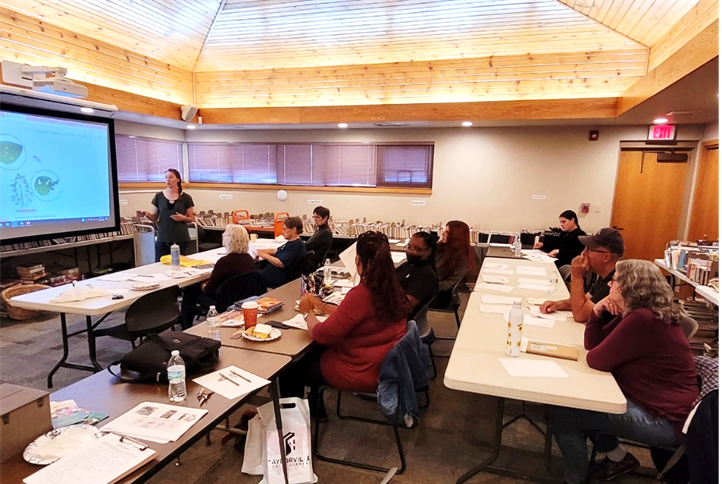
Three events at the garden, training beginning farmers:
- Composting: 120 in all, but probably 17-20 producers and 11 ag professionals
- Plant propagation: August was biggest of the year: 350, roughly 20-25 producers and 11 ag professionals
- Pest control: 25 total, with 10 producers and no ag professionals
These were hands-on events where people learned from older or more experienced growers and then got to try the techniques they learned. We had such a good turnout. People want a social connection. We had a really good partnership for these events with NRCS and Extension.


2025 Events:
- Composting: One issue we’ve run into is that we have so much compost that we need to turn it very often. We’ve developed an “Infinite Composter” where you add debris to the top and harvest compost from the bottom. You simply keep adding layers of debris, dirt, livestock manure. As you’re stacking, the microorganisms are doing the work for you. When you harvest, you sift it. Anything that gets sifted out, you put right back on the top of the compost pile. Workshop showed people how to use the new composting system.
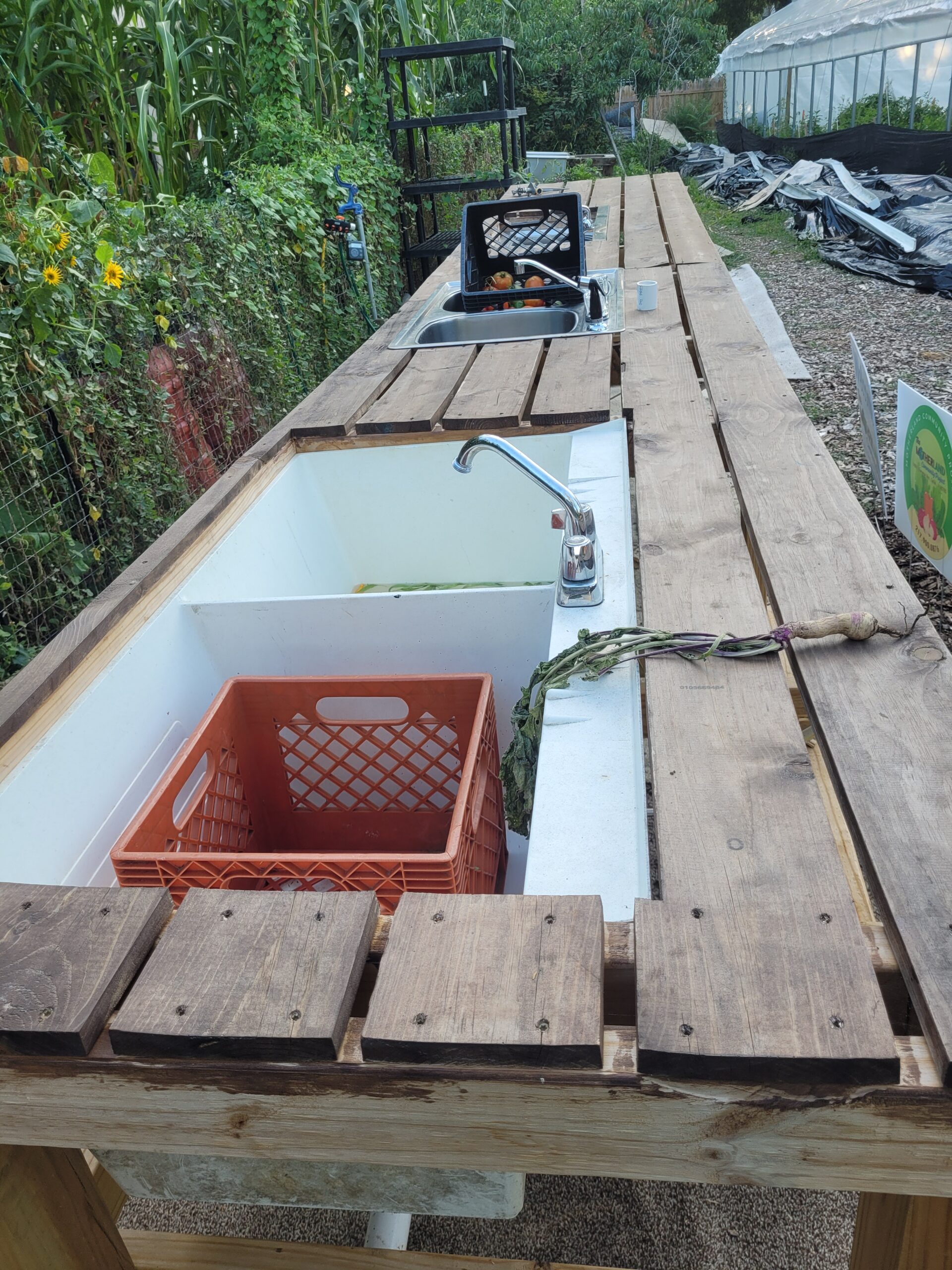
- Wash/Pack and Storage: We’re creating shared cold storage, because when you are a beginning farmer you do not have access to storage. We also have a shared wash pack that we have built and that incubator participants and community gardeners got trained on and get to use.
- Marketing and Sales: Participants learned about how to aggregate products and sell to customers. We have a contract to the hospital. They support our cause (our nonprofit). When we started realizing that as a farm, we need to generate income - if we want a loan, we have to be able to show that we are generating income (not grants or donations) - we knew we had to actually sell food, in addition to giving it away. We talked with the hospital, and created a voucher based system. The hospital give their patients a voucher and the patient comes here and gets food accordingly:
- When they screen a patient and find someone who is food insecure, maybe going into treatment and needs food support. The hospital provides that patient with the voucher. When patients pick up food, we include recipes and ways to use the food. We’ve integrated this voucher program with the hospital right away, and it’s working well. It means our incubator program has become a one-stop shop, from growing to marketing.

Learning Outcomes
We learned that as our growers advance, we must also increase learning opportunities and our infrastructure/support. For instance, many are ready to scale beyond hand production. I went to Mchenry Community College – 1 hour north of Chicago. They have a very good class there for training small farmers who are moving from human power to using small machines. I attended and am implementing it here: what kind of equipment do you need, and how do you maintain it? (Paper pot planter, tiller, walk behind tractor, etc.). The farmers here are going to start doing that training. The goal is that we acquire the equipment, train farmers on how to use the equipment, farmers pay a small rental fee, and we maintain the equipment.
We learned that when we shape the program to meet community need, the community engages.
We expect to learn more from our incubator program participants in the coming months. We worked with Extension, and they completed a 1:1 interview with each incubator participant, including:
- How has the training worked?
- How do you feel about being part of it?
We are still waiting on the results of the 1:1 interviews. This information will inform our strategic planning, to shape the organization to respond to need in the community, and how people want to engage. ‘
Project Outcomes
Our incubator program has been very successful. For instance:
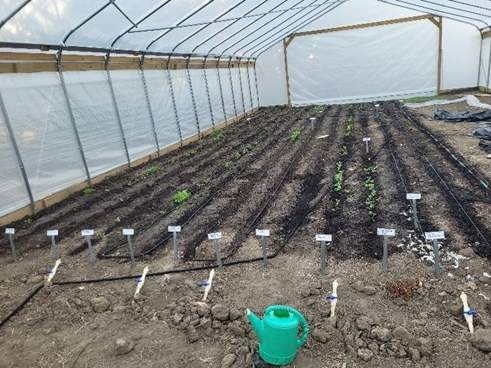
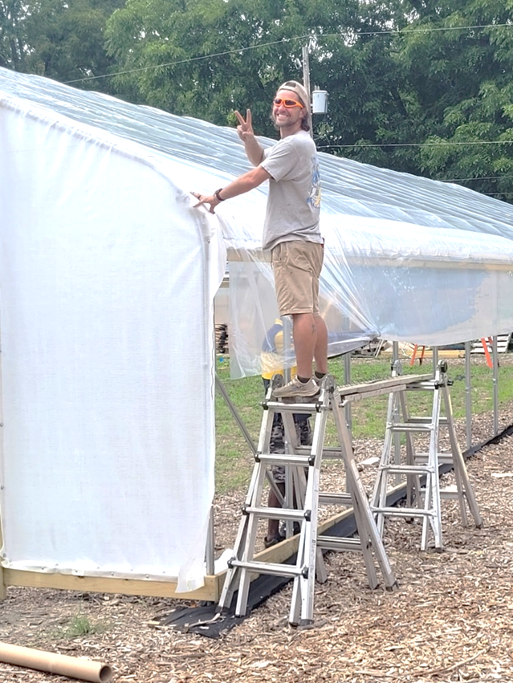
- One graduate of the incubator program, in a rural space, was able to get an NRCS EQIP contract this year, for 120’30 high tunnel. They’ve also added over 70 chickens as well as goats.
- Another one that graduated, in an urban space, is raising vegetables. He is next door.
- The herbalist is probably ready to graduate as well. She makes teas, oils, etc. from plants she plants here. She now has developed her packaging and materials, and is ready to sell her product. We are already working with her to sell it, but she is ready to launch on her own now.