Progress report for FNC25-1460
Project Information
Jeff Kanger: I am a first generation Historically Underserved farmer committed to the concept that agriculture and wildlife conservation are not adversarial, but complimentary. I own/operate Morning Sky Acres, a farm to table cattle and row crop operation in Eastern Nebraska. I have built the farm from the ground up having inherited nothing and with no family background in agriculture. I have been integrating cattle into my operation for 5 years. I have purchased low to moderate quality farm ground because that's what I could afford and I know livestock are critical to rebuilding the soil and enhancing economic viability. I sell direct to consumers to increase my margins on my animals. In addition to livestock I have successfully completed two EQIP projects on my farms. The first was a 3 acre wetland restoration and the second a 25 acre pasture restoration. Additionally, all my row crop acres utilize winter/spring cover crops. I have experience in all three areas of my grant; conservation, cattle and cover.
Dallen and Devin Jakub: The Jakub family has helped me get started. They are the local producers that help a new person. They have decades of experience with cattle. Devin also has his master's in Animal Science from UNL with experience establishing trials and studies. He and his wife run 80 cow/calf pairs near my farm. He has previously done some cover crop work with cattle. https://digitalcommons.unl.edu/animalscidiss/227/. Dallen has been integrating spring cover crops for years and backgrounds cattle. They both will help with cattle monitoring, movement between pastures and help getting the cover crop in the ground.
Kelsi Wehrman: She is the State Coordinator with Pheasants an Quail Forever in Nebraska. We've worked together for years on conservation projects. She also has a background in cattle. She has agreed to help with cash and in-kind support. A local PF Biologist will help with the wildlife monitoring. PF is also contributing game cameras for wildlife monitoring.
Nolan Lemna: Nolan is a young/beginning farmer that helps around the farm with the goal of establishing his own farm-to-table operation. He also works with the NE Department of Agriculture in promotions and beginning farmer programs. His goal is to build an organic produce operation and integrate livestock for fertility.
Economic viability is perhaps the most critical hurdle in the movement to regenerative agriculture. The current crop insurance model incentivizes producers and land owners to remove pasture and replace with marginal crop ground generating a higher lease payment than pasture rent. Can cattle and wildlife working together build an economic option to compete with the current row crop lease rates? Pheasants Forever in Nebraska offers a full season cover crop program that excludes grazing. Their payment rate is about 80% of row crop rental rates. If grazing were allowed, the total revenue may be sufficient to compete with conventional row crop producers, thus getting green cover back on highly erodible ground. Their program is good for Pheasants, but the soil is missing out on the regenerative enhancements cattle bring and the farmer misses out on additional revenue from cattle. Can we illustrate rotational grazing on their full season cover crop does not adversely effect their wildlife mission? If so, full season cover crops are more economically viable, more acres could benefit from cover crops, and regenerative producers may be more competitive bidding on ground to expand their operations and soil health practices.
Solution: Our trial will be conducted on 120 acres of leased ground. It is my neighbor's property and I have pasture and cattle facilities immediately adjoining. The 120 acres have been in a corn/soybean rotation for the last 5 years. This is my first year leasing his ground. He wants market rate on his ground, but is curious to see regenerative ag in action. Our first step is a soil grid sample and water infiltration test to baseline. In late March or early April we'll plant our full season cover crop. The blend, developed in consultation with Green Cover, Pheasants Forever and the Jakubs includes: forage peas, hairy vetch, cowpeas, mung beans, forage sorghum, cereal rye, radish, buckwheat, flax and sunflower at a rate of 35lbs/acre. We'll have a control strip for comparison. In year 1, 40 acres will not be grazed. The remaining 80 acres will be split into 40 acre paddocks grazed by 15-20 cow/calf pairs and rotated weekly. Grazing could begin in late June and continue thru September depending cover crop performance, rainfall received and wildlife counts. Wildlife in each grazed paddock will be measured with game cameras and whistle counts under the guidance of PF Farm Bill Biologist. We will be able to bench mark wildlife counts against our control pasture. The primary focus is the wildlife monitoring, secondary and tertiary objectives include measuring soil health benefits and animal performance grazing these crops. From a livestock standpoint, we will track calf performance based on weaning weight as well as cow breed back. We have previous herd performance data to compare. While cattle performance is not the primary objective of this grant, it is an important piece of the economic picture and should be tracked to potentially set up further research.
Once animals have been pulled from paddocks the cover crops will remain idle for the fall and winter, wildlife monitoring will continue. The second year will follow the same seed mix as the first year. If wildlife numbers are sufficient in year 1 the paddock layout may change in year 2 to help us see how much grazing can be supported. Of our 120 acres, 4-6 paddocks will be created. One will remain idle, the remaining paddocks will be grazed at different durations to determine threshold of upland game use. For example, one paddock may be grazed for a week another for two weeks and another for three weeks etc. All paddocks will again be monitored for wildlife. We will conduct a grid soil sample and water infiltration test at the end of year 2. Since we are applying as a partner grant we will have sufficient funds to run for 2 years. Pheasants Forever is providing matching funds and helping with seed expense and in-kind labor. If we can demonstrate satisfactory wildlife counts with aforementioned density subsequent research could focus more pointedly on the density and duration of cattle. To identify the optimal blend of cattle, grazing and livestock. Future studies focusing on cattle performance could utilize Nebraska Environmental Trust funds.
Objective: We hope to show light density rotational grazing can be integrated into conversation programs without adverse impacts to the wildlife those programs target, in this case pheasants and quail. Wildlife conservation is a $6-$8 billion a year opportunity. Unlocking some of this capital can help regenerative producers compete with conventional row crop and crop insurance operators as we bid for land leases. Together, we can build an economically viable alternative particularly with marginal or highly erodible ground that is ecologically and socially responsible.
Cooperators
- - Producer
- - Producer
Research
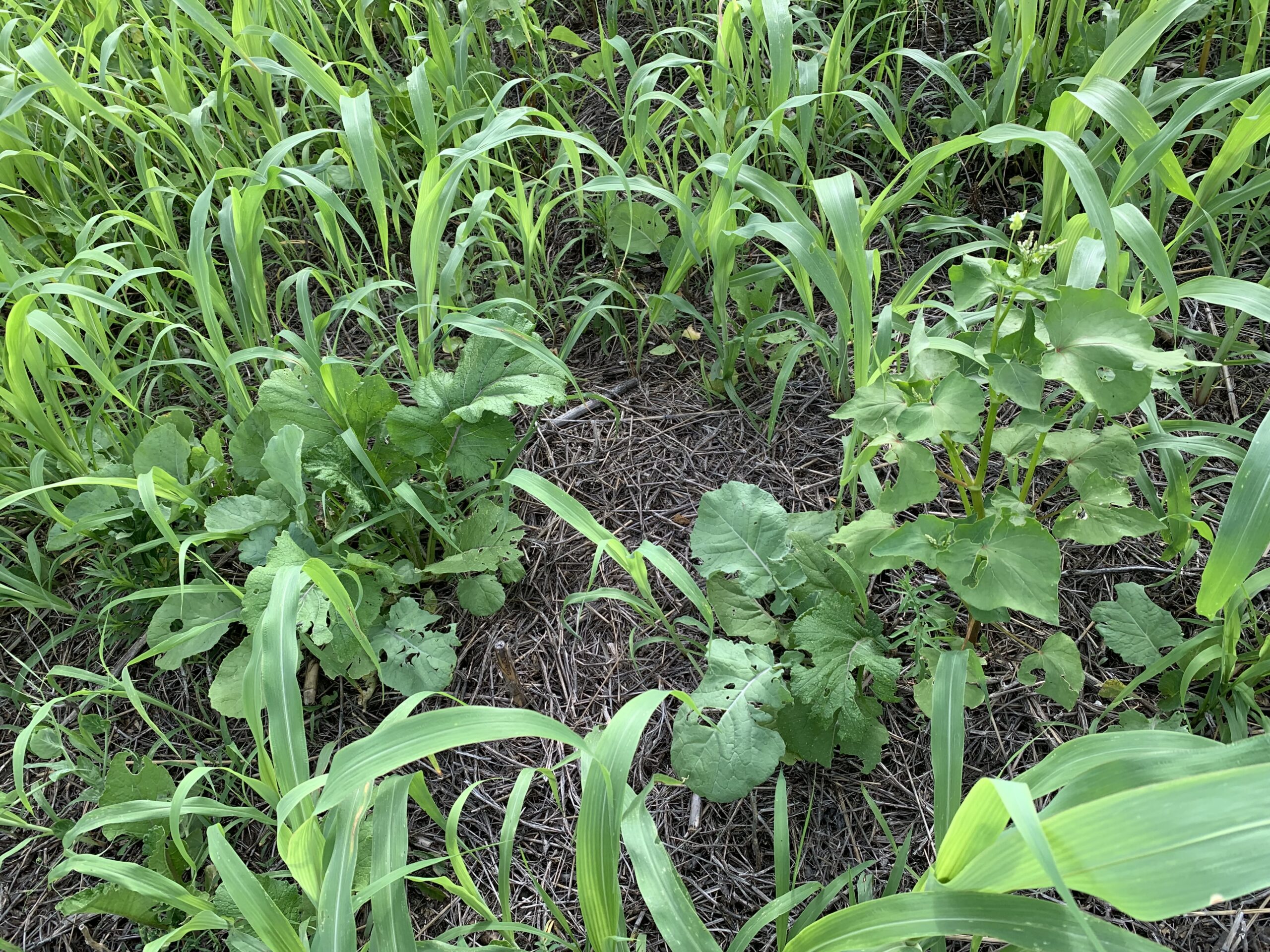
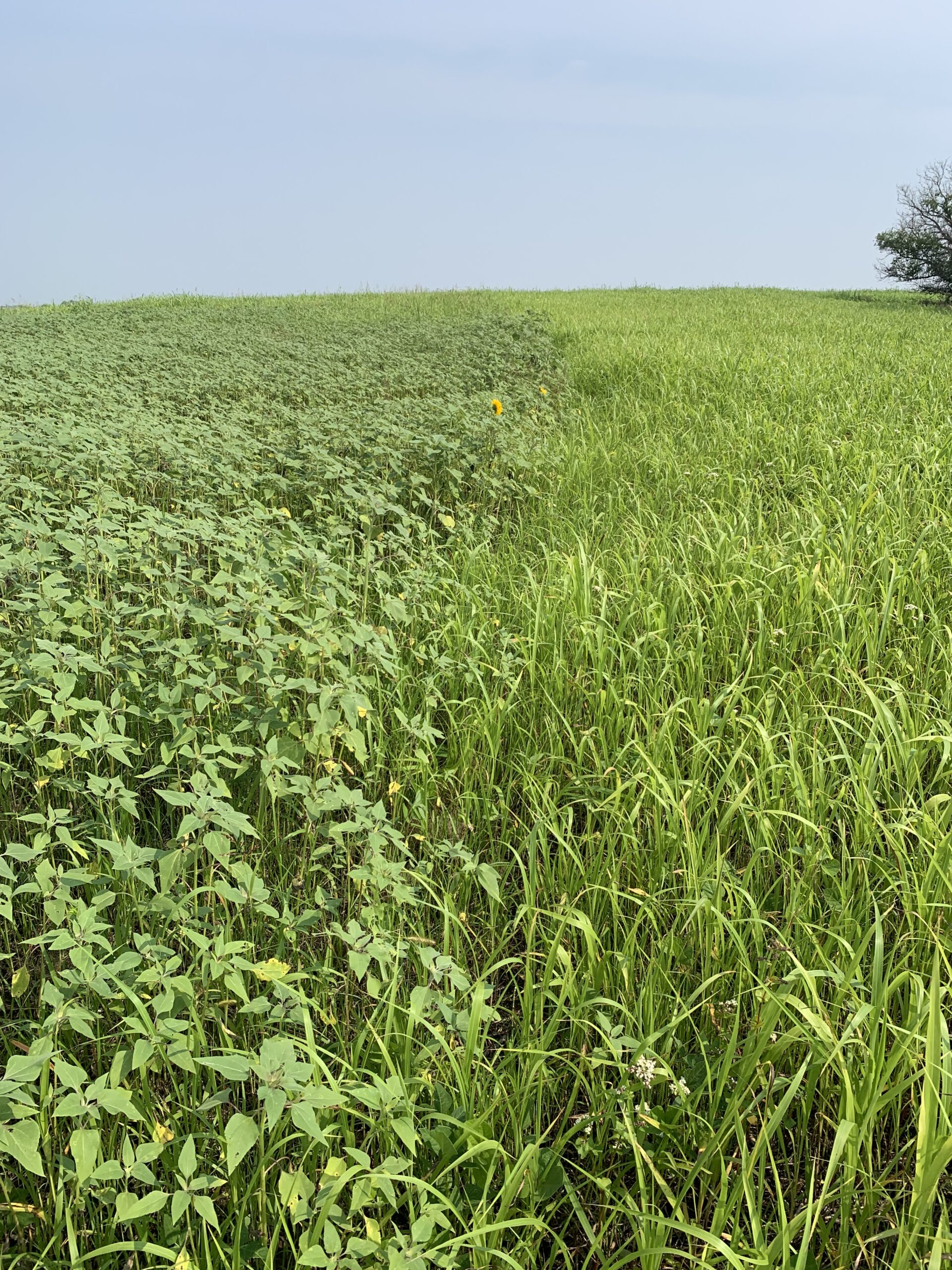
We drilled a 10 seed cover crop mix into a no tilled seedbed after a glyphosate burn down of early season weeds. The spray and weather delayed planting the cover crop until the last week of May. We also left a couple control strips to demonstrate what the field would have looked like without a burn down, We received timely rain and germination commenced immediately.
Pheasants Forever Placed 2 Audio Recording Units (ARUs) on the site May 15th, 2025. These units recorded bird calls in the morning and evening. One unit was centered on grazed areas and the other unit was away from grazing. The ARUs were pulled from the site when the cattle were removed October 24th. The University of Nebraska Lincoln is analyzing the data and we have not yet received the results. Anecdotally, 7 different bobwhite quail were documented whistling on 40 acres of the property in June by the operator.
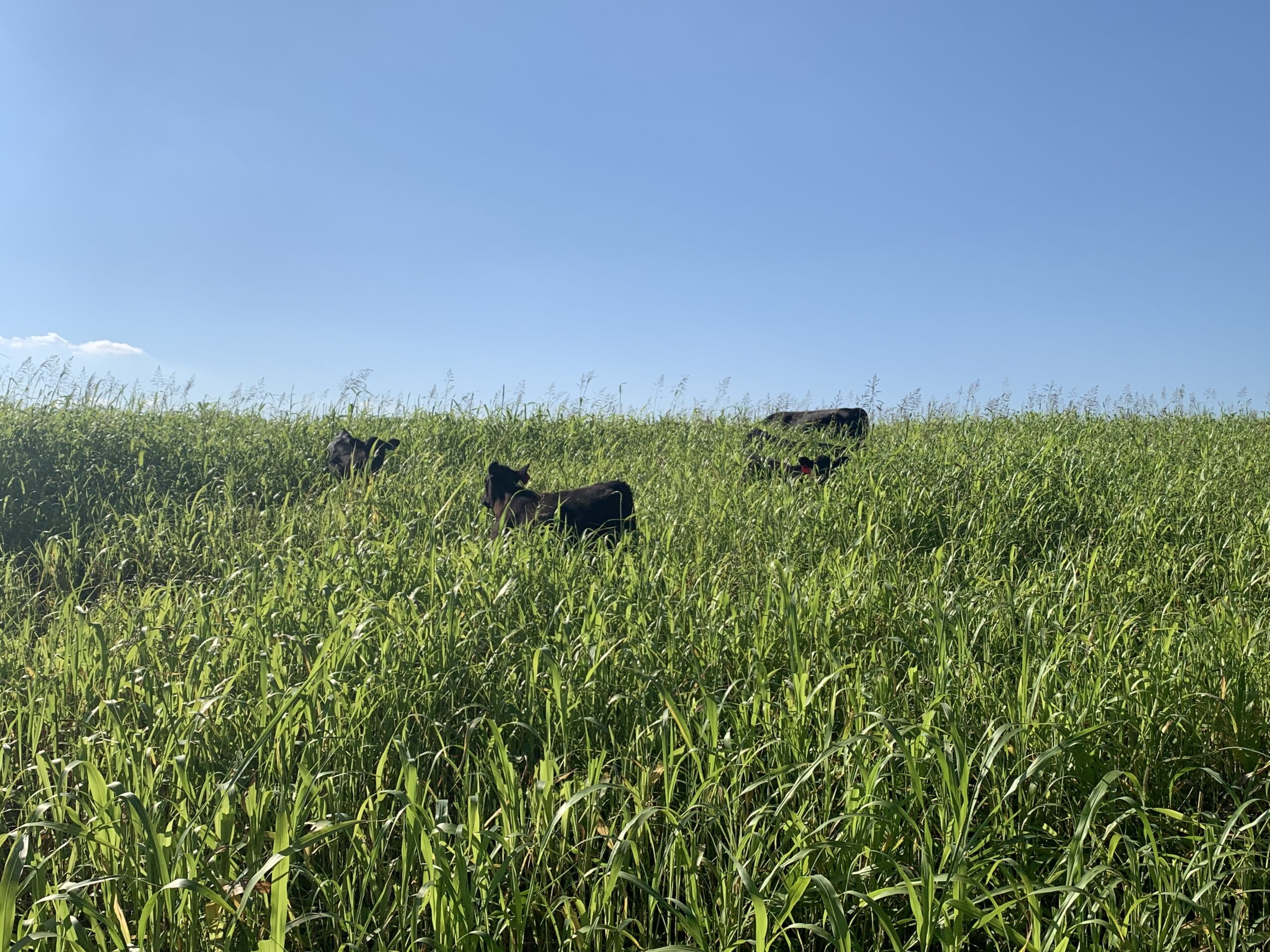
The cattle started grazing sections of the cover crop August 10th. We placed 15 cow/calf pairs and a bull. Very light density for the forage available. The grazing paddock was 22 acres of the available 120. We used a smaller paddock and less density in our first year to get our system down. We will be able to increase grazed acres and total pairs in summer of 2026.
We're also tracking how the cattle respond to grazing the cover crop. We were interested in the breed back success with animals on this forage and we achieved 100% breedback this year, the first time in the last 5 years for our operation. Additionally, animal health during the grazing season was exceptional. We had very low fly pressure and only one case of pinkeye. Calf weight gain was consistent with previous grazing years, but cow body condition and bull performance was exceptional.
Educational & Outreach Activities
Participation summary:
I hosted an on farm field Day August 29th. We had a diverse blend of farmers, conservationists, grant groups and beef customers. We advertised via e-mail and word of mouth. Pheasants Forever, Nebraska Game and Parks, Audubon Society, University of Nebraska Lincoln, Nebraska Environmental Trust were the groups represented as well as local operators and curious neighbors.
I will be presenting at the State Habitat Meeting in February and one of the project partners is presenting at the Nebraska Sustainable Agriculture Society Conference in winter/spring of 2026.
At the conclusion of the entire project and when we have ARU data available we will be able to give full scope presentations, but for now these are just conceptual and progress report presentations to educate people on the power of on farm research and partnerships.
Learning Outcomes
This is still in formation, however I did learn I could have grazed more acres in year 1. We reduced the planned paddock out of our conservative nature, but in hindsight we could have pushed things a bit more. The initial economic outcomes are promising, bolstered by elevated cattle prices. One variable we didn't take into account was governmental assistance on row crops. I didn't pencil that potential into my initial calculations.
All that said, we are still evaluating wildlife data and soil enhancements. I'm very excited for year two.