Progress report for FNC25-1463
Project Information
Mimi Kokoska, MD is the majority, woman of color owner of Koko Earth Farms, LLC with 180 acres of woodland, 80 acres of cropland in Parke County and 12 acres in Hamilton County. Both sites are enrolled in the Classified Forest and Wildlands program, Indiana Department of Natural Resources. Mimi was a clinician/researcher and tenured professor at the Indiana University School of Medicine. Koko Earth Farms’ operational personnel includes Mimi, her husband, Evan, farm hands, and a farmer partner, with current sales from cultivated shiitake mushrooms on logs, and no till corn, soybeans, and winter wheat. In addition to 2,001 inoculated truffle trees (NCR SARE FNC22-1334), more than 7,000 hardwood trees of various species were planted on both woodland farm sites. Over 100 Pawpaw, 125 Persimmon, 97 Fig, and 30 Honeyberry trees have been added for food and wildlife diversity. In 2023, small clusters of mature Ramps were transplanted from Friday family woodland as a preliminary test, with 100% survival at one-year follow-up, and lessons learned which are applicable to this proposed project. Dr. Kokoska’s roles in this project include planning and management, unearthing with weighing and bulb count, transportation and transplantation, soil samplings, watering, and monitoring of transplants and soil. She will serve as the primary educator and provide Ramp sampling on field days, Indiana small farm conference, and media events.
Sandy Friday, RN is the woman owner of Friday Farms. Her family's 6-acre woodland property of over 50 years in Porter County, Indiana where she has nurtured and harvested mature Ramps for product development and commercial sales, will be sold and developed. She has an additional smaller property in which she grows a variety of herbs, produce, fruits, and Ramps for consumption and sales. Sandy has educated other growers, farmers, and buyers on the health and culinary value of Ramps for over 25 years. She has a deep understanding of Ramps’ lifecycle and its ecologic role amid other living organisms through decades of observation and land management. Her interest is in medicinal and culinary plants, especially Ramps. She has observed the lack of competing vegetation and weeds in her Ramp woodlands and hypothesized that Allicin inhibits competitors. Sandy’s roles in this project includes co-management and planning, unearthing with weighing and bulb count, monitoring of sales, and soil sampling. She will serve as a co-educator and provide Ramp sampling on field days, Indiana small farm conference, and media events.
There has been little study of large-scale mature Ramp transplantation as a strategy for preservation of this high value ecological, cultural, and commercial native crop threatened by rapid loss of woodland habitats. Animal-resistant Ramps usually take up to 7 years to mature where they will support harvesting of outer leaves with flowering and seed production. There is no documented research quantifying the acceleration to woodland native habitat renewal and Ramp cultivation with transplanting of mature Ramps into a woodland habitat that is historically devoid of Ramps. Allicin, an organosulfur compound found in Allium species such as Ramps, garlic and onions, is thought to inhibit competing plants or weeds. There are no published studies comparing Allicin presence and concentration in soil adjacent to mature Ramps and in soil before and after Ramp transplantation, and correlating Allicin soil concentration with observation and recording of surrounding weeds, invasive or otherwise. Such information would help answer the question whether Ramps could be planted as a deterrent to invasive vegetation. Woodlands are being lost to development at alarming rates and invasive plants are increasingly and constantly threatening our woodlands. There have not been many sustainable strategies to help woodland owners solve these multitude of problems.
This project studies the outcomes from transplanting mature Ramps, a native desirable crop from a woodland that will be decimated to property development. Transplantation to a woodland that is devoid of Ramps is a highly promising model for ecological woodland restoration, high value woodland crop preservation, and invasive weed control. The trial combines research, demonstration, and education, as it measures the viability of transplanted decades old mature Ramps, quantifies any invasive and competing vegetation adjacent to Ramps, and compares Allicin concentration in the adjacent soil of mature Ramps and at baseline, 12 months and 22 months post-transplantation from the recipient site. Soil pH, minerals, and Allicin concentration, and signs of stress, including leaf discoloration or loss, disease, and lack of flowering or seeding, will be noted and photo documented. Soil will be sampled eight inches from the plant margin on the soil surface from eight different mature Ramp clusters, and the hand shovel will be cleaned between each sampling. A different clean hand shovel will be used to sample soil eight inches from the recipient site for the mature Ramp cluster before planting as the baseline specimen and again at eight inches from the plant margin on the soil surface at 12 months and 22 months post-transplantation. The soil samples were sent to Sure-Tech Laboratories for measurement of pH and minerals and additional soil and ramp samples were placed in a -4 F freezer and mailed on 12/21/2025 with dry ice and ice packs to the University of Missouri, Center for Agroforestry (Dr. Chung-Ho Lin, Dr. Sally Qasim, and Raelin Kronenberg) for Allicin quantification after their laboratory had Allicin standards to run assays. After unearthing of mature Ramp clusters, removal of excess soil, they were weighed. Each ramp cluster were otherwise left intact to preserve its integrity. The unearthed mature Ramps with bulbs and roots were wrapped in bags, transported, and transplanted within 24 hours, weather permitting to north facing woodland slopes, roots wetted without standing water. The Ramp clusters were planted by hand with site soil, compost to fill and cover to the surface for moisture retention in the recipient site at least 24" apart, labeled on a plot map, and watered. Monthly observations of the transplanted Ramps will be recorded with the expectation that Ramps are usually only visible above ground between March through November, but nonetheless will be checked monthly. Ramps themselves, photographs, and PowerPoint slides will be used to facilitate demonstration and education of their value in ecological woodland restoration, as a native woodland crop, and potential in invasive weed control. Active teaching through visual, smell, taste, and tactile senses by using Ramp plants and its products in conjunction with digital and/or printed photos and PowerPoint at Field Day(s), Indiana Small Farm Conference (planned for March 2027), and media events will support embedding memorable learning experiences.
Objectives:
- On-site research of Ramps’ transplant viability and effect on invasive vegetation. Mature Ramps transplanted from a 6-acre woodland (Friday family owned) destined to be decimated, to a 180-acre secure woodland (Koko Earth Farms owned and preserved in perpetuity) devoid of Ramps located 152 miles apart.
- Mature Ramp clusters were unearthed, excess soil removed, weighed, transported, wetted, and hand planted, maintained, monitored, and results documented to investigate sustainably and scalability in zones 6a, and soils evaluated for pH, minerals, and Allicin.
- Education to North Central farmers and community on Ramps in culinary uses, its marketability, and role in ecological restoration.
Solution: This project examines a sustainable solution for these problems by studying the outcomes from transplanting mature Ramps, a desirable native crop from a woodland that will be decimated to property development. Transplantation to a woodland that is devoid of Ramps is a highly promising model for ecological woodland restoration, high value woodland crop preservation, and invasive weed control. The trial combines research, demonstration, and education, as it measures the viability of transplanted decades old mature Ramps, quantifies any invasive and competing vegetation adjacent to Ramps, and compares Allicin concentration in the adjacent soil of mature Ramps and at baseline, 12 months and 22 months post-transplantation from the recipient site. Soil pH, minerals, and Allicin concentration, and signs of stress, including leaf discoloration or loss, disease, and lack of flowering or seeding, will be noted and photo documented monthly. Soil will be sampled with a hand shovel eight inches from the plant margin on the soil surface from eight different mature Ramp clusters, and the shovel will be cleaned between each sampling. A different clean hand shovel will be used to sample soil eight inches from the recipient site for the mature Ramp cluster before planting as the baseline specimen and again at eight inches from the plant margin on the soil surface at 12 months and 22 months post-transplantation. The soil samples will be sent to Sure-Tech Laboratories for pH and minerals and Purdue University for Allicin quantification at these scheduled intervals. The extraction and unearthing of mature Ramp clusters using hand tools will minimize trauma and excess soil will be removed, before weighing and labeling each specimen. Each ramp cluster will be otherwise left intact to preserve its integrity. The unearthed mature Ramps with bulbs and roots will be wrapped in bags, transported, and transplanted within 24 hours, weather permitting to woodland areas with shade and well-draining soil, without standing water. The Ramps will be planted by hand with leaf compost to fill and wood chips to the surface for moisture retention in the recipient site at least 24" apart, labeled on a plot map to track each Ramp cluster, and watered. Monthly observations of the transplanted Ramps will be recorded with the expectation that Ramps are usually only visible above ground between March through November, but nonetheless will be checked monthly. A soil moisture meter will be used weekly from March through November to determine if an ideal moisture range of 40% and 60% is maintained and monthly from December through February if feasible when the plant is dormant. Ramps themselves, photographs, and PowerPoint slides will be used to facilitate demonstration and education of their value in ecological woodland restoration, as a native woodland crop, and potential in invasive weed control. Active teaching through visual, smell, taste, and tactile senses by using Ramp plants and its products in conjunction with digital and/or printed photos and PowerPoint at Field Day(s), Indiana Small Farm Conference, and media events will support embedding memorable learning experiences.
Objectives:
1. On-site research of Ramps’ transplant viability and effect on invasive vegetation. Mature Ramps transplanted from a 6-acre woodland (Friday family owned) destined to be decimated, to a 180-acre secure woodland (Koko Earth Farms owned and preserved in perpetuity) devoid of Ramps located 152 miles apart.
2. Mature Ramps will be unearthed, excess soil removed, bulbs counted, weighed and labeled, transported, and hand planted, maintained, monitored, and results documented to investigate sustainably and scalability in zones 6a, and soils evaluated for pH, minerals, and Allicin.
3. Education to North Central farmers, including women, veterans, BIPOC on Ramps in culinary uses, its marketability, and role in ecological restoration.
Cooperators
- - Producer
- - Producer
Research
Mature ramp clusters were removed with shovels by hand during March 27, 2025 through May 18, 2025 in (May 17, May 13, May 8, April 27, April 23, Apirl 17, April 11, March 27 (first dig).
Therefore, the clusters were planted about 4-6 feet apart without separating the ramps within their clusters. 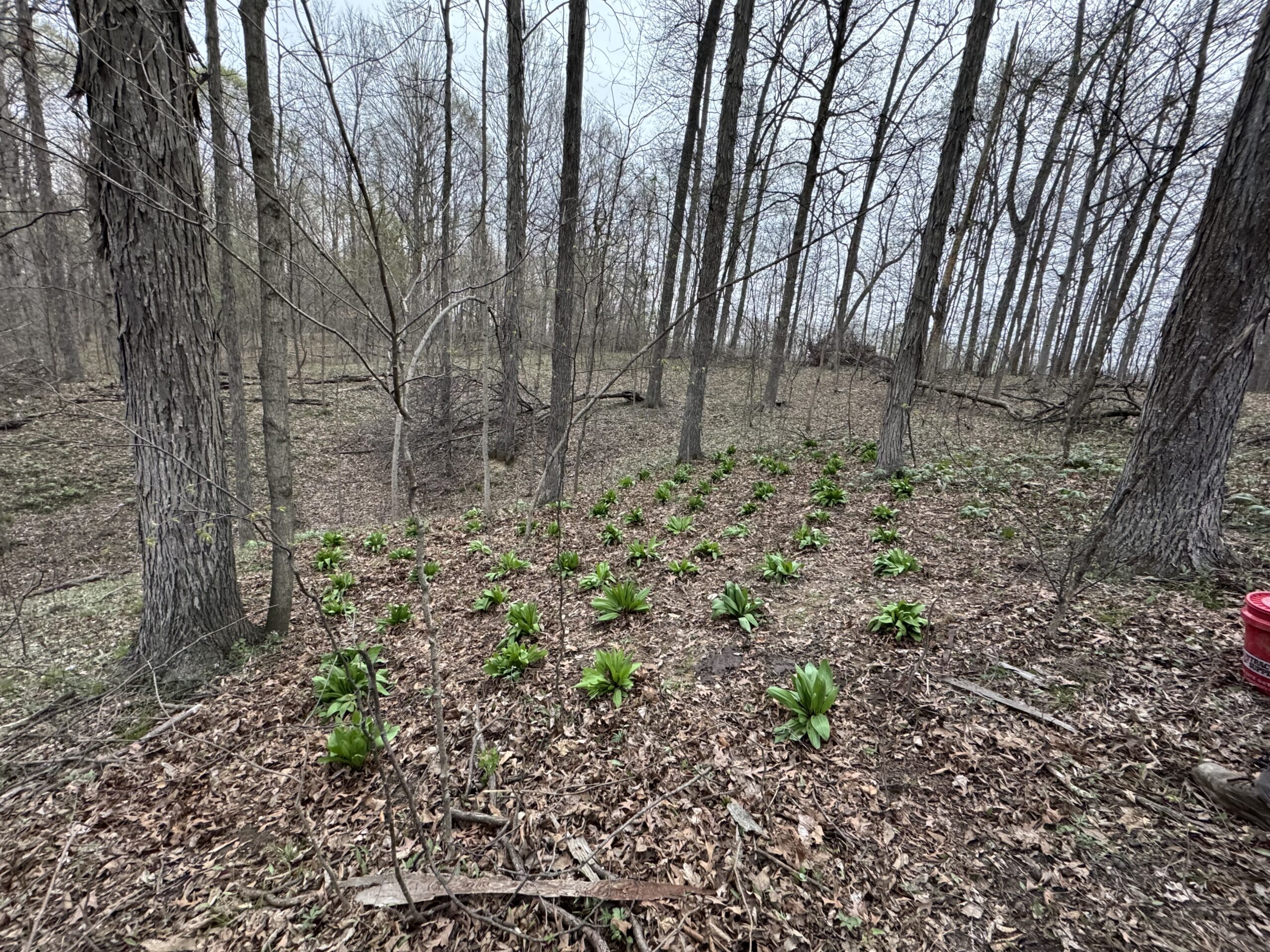 If any ramps separated from their cluster during excess soil removal and pre-watering of roots, they were regrouped into the peripheral contact to the cluster and planted with the innate soil at the recipient site, tamped down, and topped with leaf compost on the top soil. On May 17, 2025, about seven single ramp bulbs with their single leaf that were inadvertently separated from their clusters during harvesting of the cluster were placed into soil and taken to a hydroponic grower in Minnesota to test for hydroponic growing of ramps (see photograph
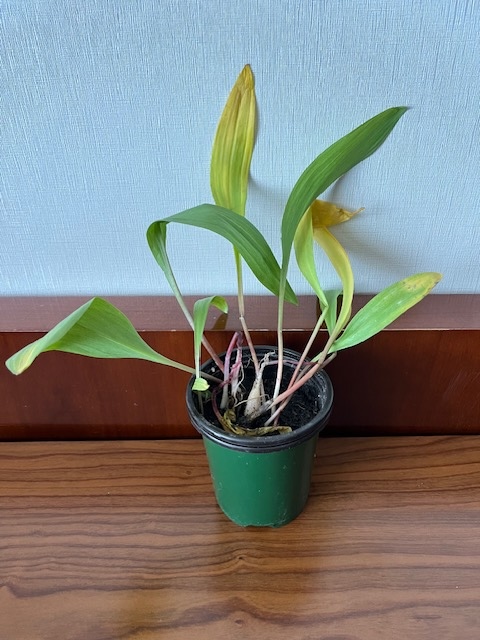 ). As the ramps were beginning to enter their dormant phase, the hydroponic growers were informed to expect the leaves to dry up and disappear but the bulbs should remain alive during dormancy.
1/27/26
A total of 500 lbs of Ramps (weighed after excess soil removal) in a series of seven digs and trips during March through May 2025 were transplanted from Porter County to Parke County, roots wetted and planted in Parke County woodlands within 24 hours. As of December 2025, some of the ramp plantings appear alive, but the viability entire plantings as a whole could not be assessed because dormancy will continue until March-April 2026 at which time a more detailed assessment will be done.
Several observations and learnings resulted from unearthing mature ramps, removing excess soil from roots, weighing, counting, labeling, and transplanting the clusters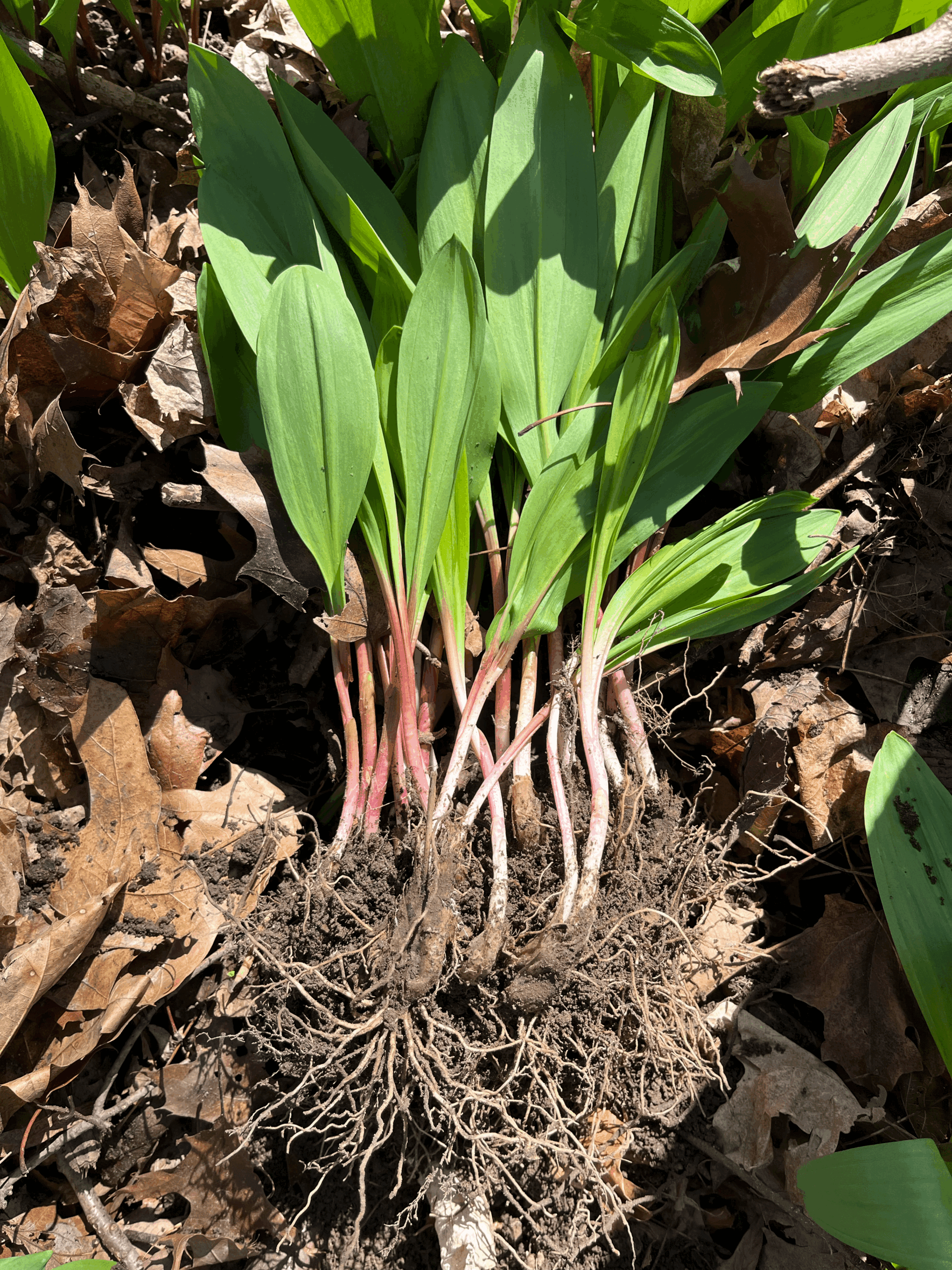 . Smaller (newer) ramps favored growing directly adjacent to the more mature larger ramp bulbs, resulting in clusters or family clusters. The “grandmother” (3 leaf plants
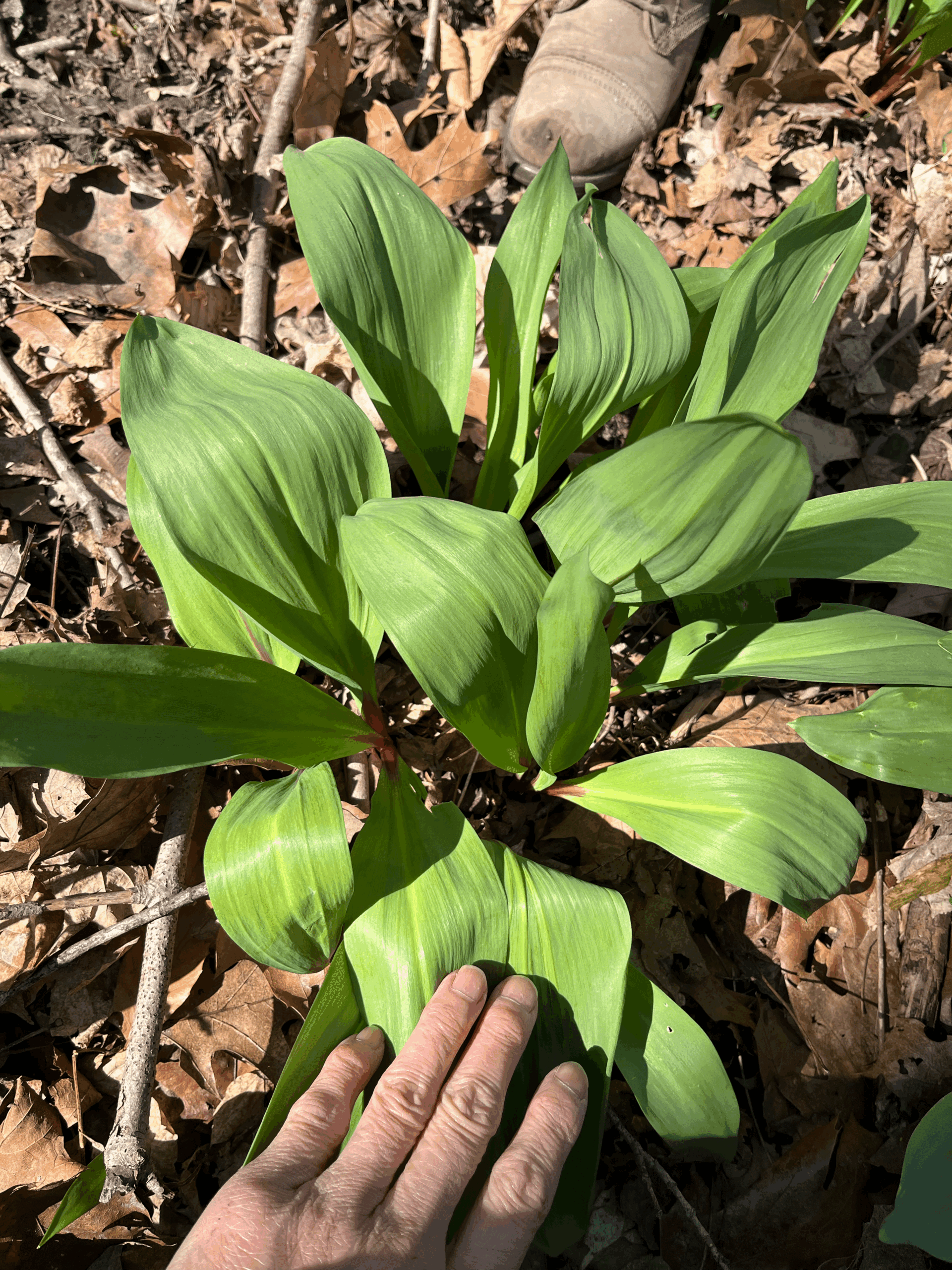 ) was commonly associated with double and single leaf ramps and less with another grandmother ramp in the cluster. Ramps prefer to grow in clusters, and not as single isolated individual bulbs and with neighboring clusters. It was rare or non-existent to see an isolated individual bulb. Therefore, the clusters were planted about 4-6 feet apart without separating the ramps within their clusters. If any ramps separated from their cluster during excess soil removal and pre-watering of roots, they were added to the original cluster and planted as one unit into the new site.
Moisture testing of soil at each site will begin in 2026 due to the extensive work of digging and transplanting in 2025. It became clear that moisture testing of soil was not going to be possible during freezing temperatures and not meaningful during rains. In addition, logistically sampling on the same day at distance sites (Porter and Parke Counties) is a challenge for consistency and therefore, we will obtain the same model soil moisture meter for each site and plan to measure on the same days and times in 2026.
Soil testing of both the sites of origin and transplantation indicates the soils where the native ramps flourish for decades in Porter County compared to Parke County have greater Cation Exchange Capacity (CEC) with an average of 8.65 (Parke County) compared to an average of 10.4 (in Porter County, the originating location in northern Indiana). Average % Organic matter 2.5 in NW field (Parke County) versus 3.36 from Porter County. The average pH was 5.5 in Parke County compared to 6.0 in Porter Count. On average, minerals (mg/kg) such as K (78 vs. 112), Ca (1,002 vs 1,467), Mg (165 vs. 174), S (6.9 vs. 7.9), Zn (7.0 vs. 7.8) were on average lower in Parke County location versus Northern IN. It remains to be seen if over time the soil in the recipient site (Parke County) will change because of the transplanted ramps to become more like the soils from which they originated. A synopsis titled, Cultivation of Ramps, J. Davis and J. Greenfield, North Carolina State Extension (https://content.ces.ncsu.edu/cultivation-of-ramps-allium-tricoccum-and-a-burdickii) summarizes that Ramps will grow in soils with pH 4.7-6.7 and prefer moist soils with high organic matter and calcium rich soils. The annual rainfall in Parke County tends to be less than that of Porter County, and the soils in Parke County on average appear to have a lower % organic matter and lower calcium concentration. These differences may affect the viability, germination and spread of new plants, and overall productivity of ramps grown in Parke County. However, based on the ongoing confirmation of viability in 2024 of prior ramp plantings into six test plots from 2023, these differences were not detrimental to their immediate survival. We will have an opportunity to assess a longer timeline in 2026 and 2027 of both test plots from 2023 and the current 2025 plantings under these different soil and moisture conditions.
Soil Sample Test Results (for pH, minerals, organic matter...) 4-4-2025, SureTech Laboratories. "Chesterton" is the Porter County site where the ramps originated and "P.C." is Parke County where the ramps are now located.
FNC25-1463 soil samples
FNC25-1463 Soil Samples Year 1
As of January 2026, Dr. Chung-Ho Lin’s laboratory at the University of Missouri, Center for Agroforestry has confirmed High Performance Liquid Chromatography with selective mass analysis (MS) and fragment ion detection (MS), HPLC-MS/MS was successfully developed for quantification of Allicin. A few Ramp plants, soil samples from Parke County woodland planting site, and soil samples from Porter County woodland site, were frozen in a -4F freezer on March 27, 2025, while awaiting Dr. Lin to signal his laboratory’s readiness with Allicin standards to run the HPLC-MS/MS on the samples. On December 21, 2025, the frozen samples were mailed in a dry ice and ice packs to Dr. Lin’s laboratory after he indicated his laboratory had HPLC-MS/MS successfully developed for quantification of Allicin. His laboratory confirmed receipt of the samples in proper temperature settings on December 23, 2025. As of January 27, 2026, the Allicin quantification in the soils and Ramp plant from these samples are still pending. Allicin quantification in soil and Ramp plants will be quite a novel accomplishment as opposed to qualitative evaluation in allium plants.
Educational & Outreach Activities
Participation summary:
3 Tours: Members (and Judges) of the Indiana Forestry and Woodland Owners Association toured Koko Earth Farms along woodland trails on August 8, 2025 and September 15, 2025; The State of Indiana Cooperative Invasives Management team toured the woodlands on September 16, 2025.A total of 15 Woodland farmers and owners attended the tours in August and September, 2025.
1 Presentation: The Indiana Forestry and Woodland Owners Association Conference and Award Banquet was held at Turkey Run State Park Conference Center on October 31 and November 1, 2025. There were approximately 200 attendees. The powerpoint presentation of the Koko Earth Farms by one of the member-judges, mentioned the Ramps plantings and project. Koko Earth Farms won the 2025 Charles Deam Forest Stewardship Award, which was shared on Facebook by the IFWOA and others, and on the IFWOA website https://www.ifwoa.org/indiana-
A presentation of the project at the Indiana Small Farm Conference is planned in March, 2027. An invitation to present the Ramps project at the March 5, 2026 conference was declined because of travel plans that were committed prior to the invitation to speak.
A field day in coordination with the Purdue extension educator is planned for April 2026 to coincide with ramp leaf growth. Visual, written, and verbal education regarding Ramps, their seasonal cycle, and culinary uses are planned as part of the walk and hike along woodland trails and planted plots.
Learning Outcomes
We learned the ideal time for transplanting mature ramps is March to early May at the latest, because the boundaries of each cluster is clearly visibly represented by the leaves. As the leaves turn yellow beginning in May and dessicate over the summer, the ramps are much more difficult to not only identify but the extent of the clusters are much less evident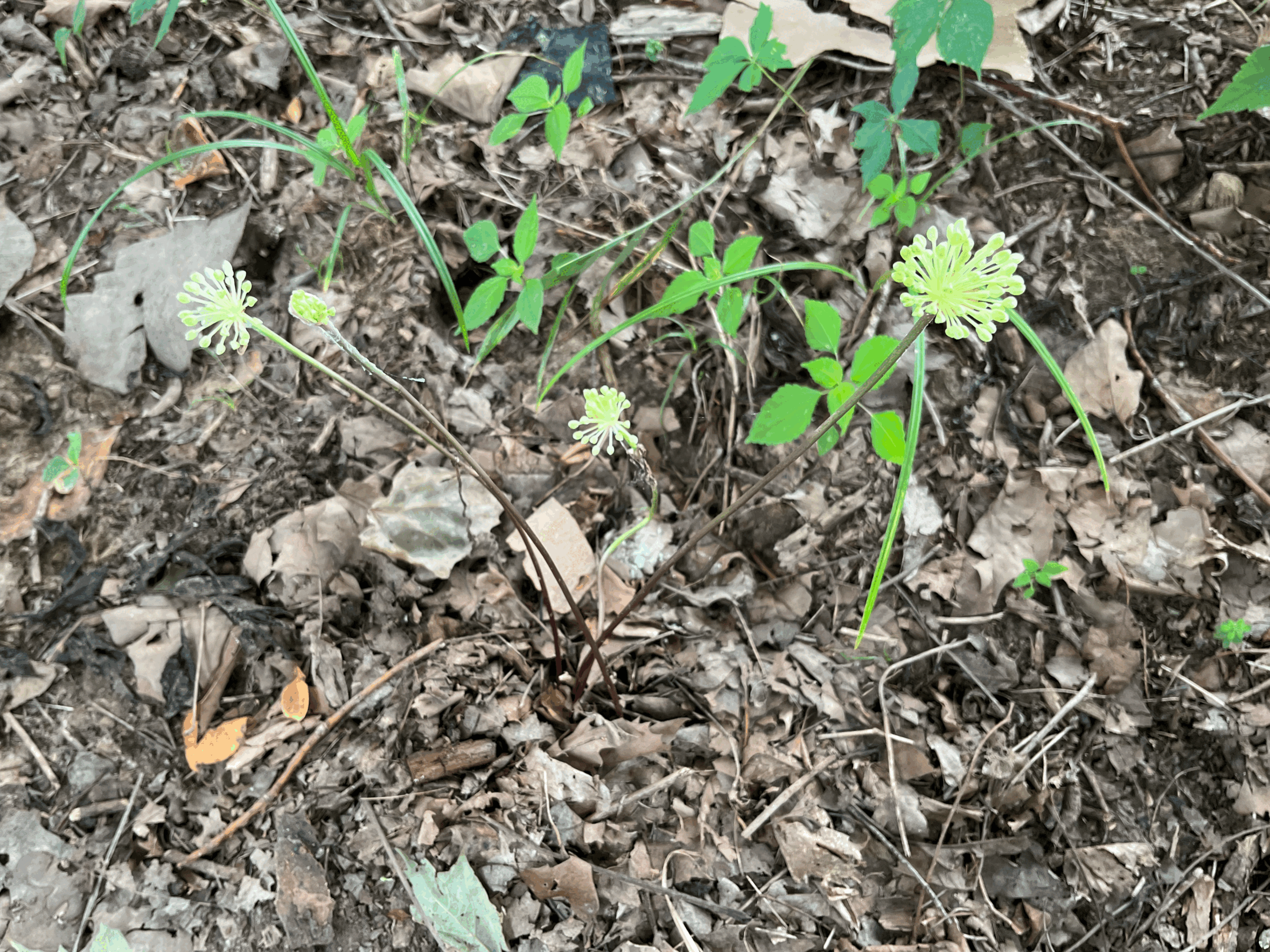 . The likelihood of injury to the plant bulbs and roots would be greater when the margins of the clusters are not evident. Mature Ramps for transplantation into a new site appear to do better when kept in a cluster as opposed to separating out individually for transplantation. There may be a ramp to ramp signaling or adjacent exchange that supports their mutual growth. This observation and the desire to minimize trauma to the plants and roots are why the clusters were planted as intact as possible. These speculations and modified planting techniques were based on observations and experience from the farmer collaborators (Mimi Kokoska and Sandy Friday). We learned the most strategic planting strategy for shade or stippled sun-loving Ramps is to place them on a north facing woodland slope and on the higher ground if possible so their round peppercorn-like seeds
 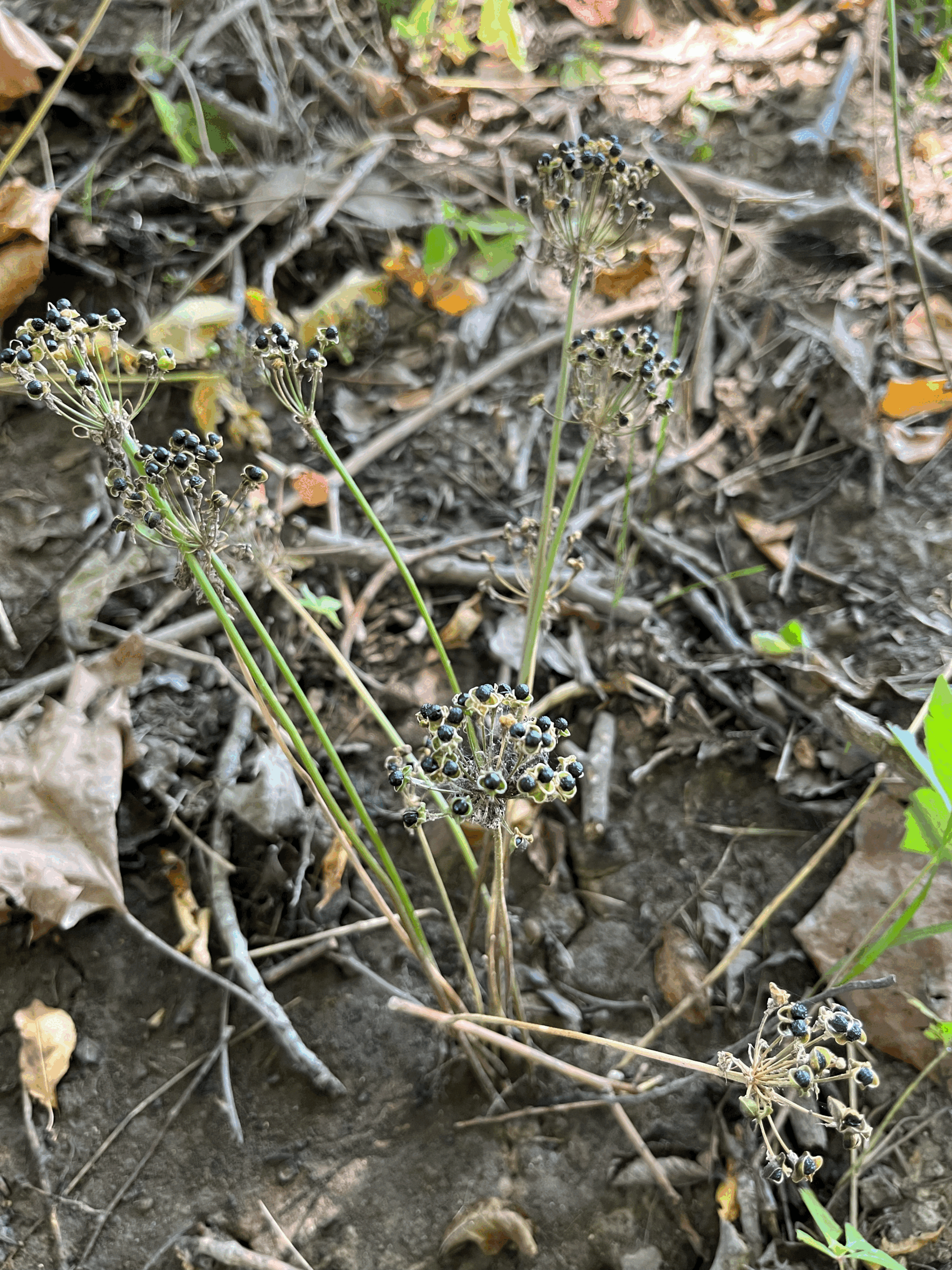 will naturally disperse and populate downslope, from conversations with other agroforestry farmers with experience in growing woodland crops, the literature, and observations where ramps have been noted to flourish (in Atherton Nature Preserve in Vermillion County, Friday Farm in Porter County
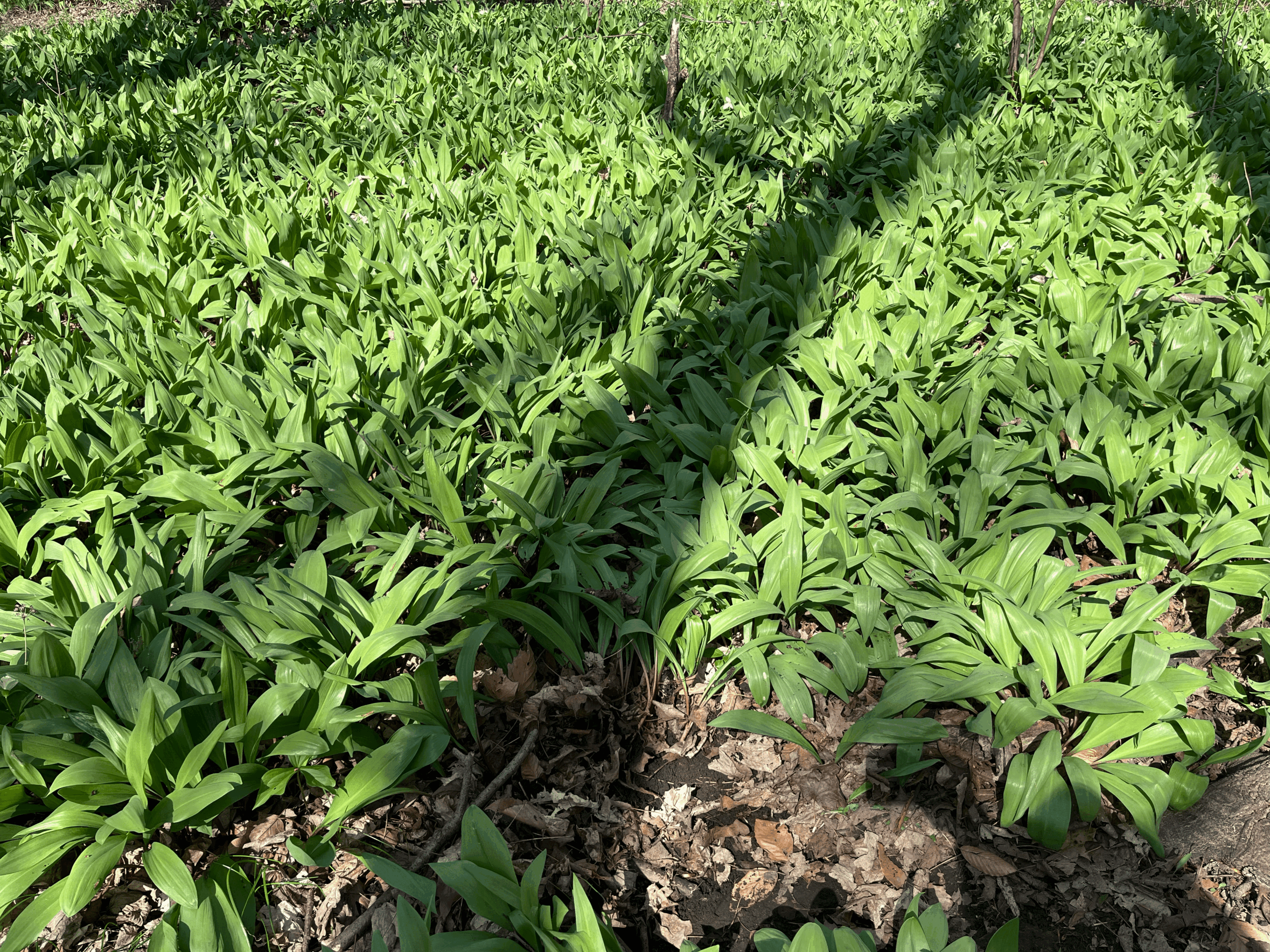 , and Eagle Creek Park, Marion County). The advantages of this project include preservation of a high-valued native forest crop by transplanting from a woodland destined for commercial development to a woodland that is highly likely to remain indefinitely protected and allowing the examination of Allicin in soils that have been previously naïve to Ramps and over time as Ramps are introduced. The assay for Allicin requires an experienced laboratory, which was quite difficult to identify. Numerous academic and commercial laboratories were contacted and the only laboratory and researcher willing and capable to assay for Allicin was the University of Missouri, Center for Agroforestry (Dr. Chung-Ho Lin’s laboratory). A recommendation for other farmers who may be interested in growing Ramps is to identify a source of mature ramps for transplantation and avoid transplanting singular bulbs or root plates which has been shown to have a very low to zero survival rate. Another advantage to this project is it allowed us to experiment with hydroponics for ramps. Ramps have a long dormant period and therefore, it may not be ideal for hydroponic growing, but then again the purpose of research is to test a hypothesis and since we had some additional ramp plants, and a willing hydroponic grower, it was a good opportunity. I would tell other farmers that research and innovations in growing native woodland plants is ripe for testing and improvement.
Project Outcomes
A seasoned forestry farmer and forester said "I'd never seen or heard of ramps before and I've been a forester for over 50 years." A neighboring farmer also had never seen or tasted ramps before, and after helping with the plantings, he said he became much more observant of his own woodlands and learning what is native and edible. An agricultural professional who was working on management of invasives, indicated he was fascinated by the concept of pest-resistant native chemical plant compounds such as Allicin may inhibit invasive plants.
As a result of participation in this collaborative Ramp project and their confirmation of that HPLC-MS/MS using Allicin standard is viable, Dr. Chun-Ho Lin, Dr. Sally Qasim, and Raelin Kronenberg at the University of Missouri, Center for Agroforestry have submitted a preproposal in partnership with agroforestry farmers (Mimi Kokoska, Indiana and Badger Johnson, Ohio) on “Companion Planting Effects on Growth, Pest Deterrence, and Soil Chemistry of High-value Medicinal and Culinary Herbs in Midwest Woodlands” to the 2026 NCR-SARE Research and Education Grant Program. This Research and Education Grant collaboration would further investigation and our understanding of how native allelopathic plants, such as Ramps and Goldenseal impact soil chemistry and growth of other high-value woodland plants such as Ginseng. It is encouraging that further understandings of soil chemistry, woodland crop productivity and economics, and native high value plant propagation are possible by building from our initial collaboration in the current ramp project.