Progress report for FNC25-1468
Project Information
Hello! My name is Ben Lardy and I operate 44 acres on the prairie coteau near Roslyn, South Dakota. I was raised in the suburbs of Minneapolis (Burnsville, MN) and grew up mostly void of real agricultural experiences as a child except for the small farm that remained in my dad’s family. Hunting, fishing and frolicking the prairie of South Dakota in my youth led me to enrolling at SDSU to become a professional conservationist. In 2011 I started as a private lands biologist for Pheasants Forever and spent most of my career in that realm. I jumped into small scale seed collection and harvest as a side hustle starting in 2014 and in 2017 I started my first production field on a marginal 17 acre rented field that was too small for other area farmers consider useful. It was a sizeable endeavor for me as a “New Farmer” without assets, equipment, or much help at all. I cleaned my seed out of a rented storage unit and applied to FSA for a beginning farmer loan when I had gained enough “real farm” experience. In 2020 we purchased our farm a few miles north of the field we still rent. In the spring of 2024 I realized I needed to spend more time on the land than a laptop and left my job to farm and consult full time. Currently we raise red wattle hogs, mixed grain, seed, and have a high tunnel for produce and native plant propagation. I am also a part time foreman for the local conservation district and provide private consultation to local landowners on various conservation projects. The other individuals involved are my wife Kelli, who helped grow this operation over the years from picking weeds to cleaning seed. Without Kelli I would never had the courage to take many steps of this journey. Second, is Calvin Meyer Biologist with SD GFP. Calvin is a native plant enthusiast who owns 10 acres near Webster who hopes to start his farming journey in the future. Calvin is a social grease gun, who has access to a deep bench of GFP interns, resource professionals, and community members that could be brought into this project to gain valuable hands on experience as we grow and learn together. Finally is Kristin Stoks longtime family friend who has helped with seed harvest last year for our farm.
The demand for native seed in the United States has rapidly increased due to several significant environmental and cultural trends. In 2020 the National Academies of Sciences, Engineering and Medicine conducted an assessment of the need for native seed and the current capacity for their supply, finding that the supply for native seed materials remains volatile and native seed shortages are still commonplace across the country, but particularly in western states. USDA has identified that recruiting new farmers, urban and rural, is crucial to ensuring food security, food safety, and the overall sustainability of agricultural communities. USDA states that high start up costs, and limited access to land are the two largest barriers to beginning farmers. If we hope to recruit new blood into agriculture we must identify and promote realistic and viable farming enterprises that can be done WITH limited access to land and capital. The goal of this project is to inspire and educate limited resource and beginning farmers in South Dakota and across the country of how native seed production can be a viable enterprise where patience, careful observation, and sweat equity can provide most of the tools you need to get started.
Solution:
Twelve species of flowering broadleaf plants native to northeast South Dakota will be planted in small production plots <1000 sq foot but no smaller than 150 sq feet depending on species. The size of the individual plots and the methods for planting will likely vary from species to species depending on the needs and characteristics of said species. Planting will occur in the early spring of 2025, selected seed will be procured before the project begins and will be cold stratified for the appropriate amount of time before spring planting. Species direct seeded will be planted using a modified dibble and dribble or hand trench method. Species planted by plugs will be planted into black weed barrier planted in a grid layout. The growing season of 2025 will be dedicated to the establishment of the plots by Ben, Kelli, and Kristen. If any species produce a viable crop in year one we will harvest and test data. In year two we aim to have a harvestable crop of most species we plan to trial. All plots will be hand harvested and processed using basic lawn and garden equipment. We intend to demonstrate various sustainable practices including mulching, no-till or limited till planting methods, and the implementation of an integrated pest management plan for weeds and insects that leans heavily on cultural control methods. Harvest dates will range from July through late September. All seed harvested will be weighed and subject to on farm germination tests.
Objectives: Below is a short timeline of key objectives for this project.
- Establish Plots Spring 2025
- Periodically collect photo and written documentation of all plots during establishment phase with bi-weekly monitoring for final guidance book
- Harvest test and determine economics of any plots in year 1 that may have a viable crop
- First farm tour in fall of 2025 to generate interest in the project
- Begin harvest and data collection July of second year.
- Complete harvest of all viable crops by September of second year
- Host second farm tour in October 2026 with preliminary results and data from early season crops to provide to prospective growers
- Compile data final data and field notes for all species and complete educational materials.
- Share results through speaking engagements, articles and social media outlets
Research
We initially selected 12 species of native prairie plants from the upper midwest. 9 species were direct seeded initially with 3 species to be grown from plugs and planted into plastic weed barrier as is common in the industry. Our planted plugs failed at the hardening off phase in early June before they had a chance to get into the ground. Due to the failure of these plugs we planted/adopted 3 additional direct seeded plots into the project to ensure we had enough data to share with other producers. We had opted to do a majority of our plots through heavy direct seed instead of plugs and plastic mulch due to the time, labor, and expense involved. We aim to demonstrate that wild harvesting bulk quantities of local plants for use as your source of foundation seed can be an extremely cost effective way of establishing small to medium sized production plots. We did make some phone calls to shop out the initial growing of plugs but the cost would have far exceeded our budget.
Plots were monitored bi-weekly to check for establishment and weed/pest pressure. During these visits, perennial weedy species (Absinthe wormwood, Canada Thistle, Common Alfalfa, Field Bindweed) were hand pulled from plots and at times spot treated with herbicide using a PVC kill stick. The plots were also mowed three times across the growing season to reduce annual weed competition. Rotary style mowers were used leaving 5-8 inches of stubble height.
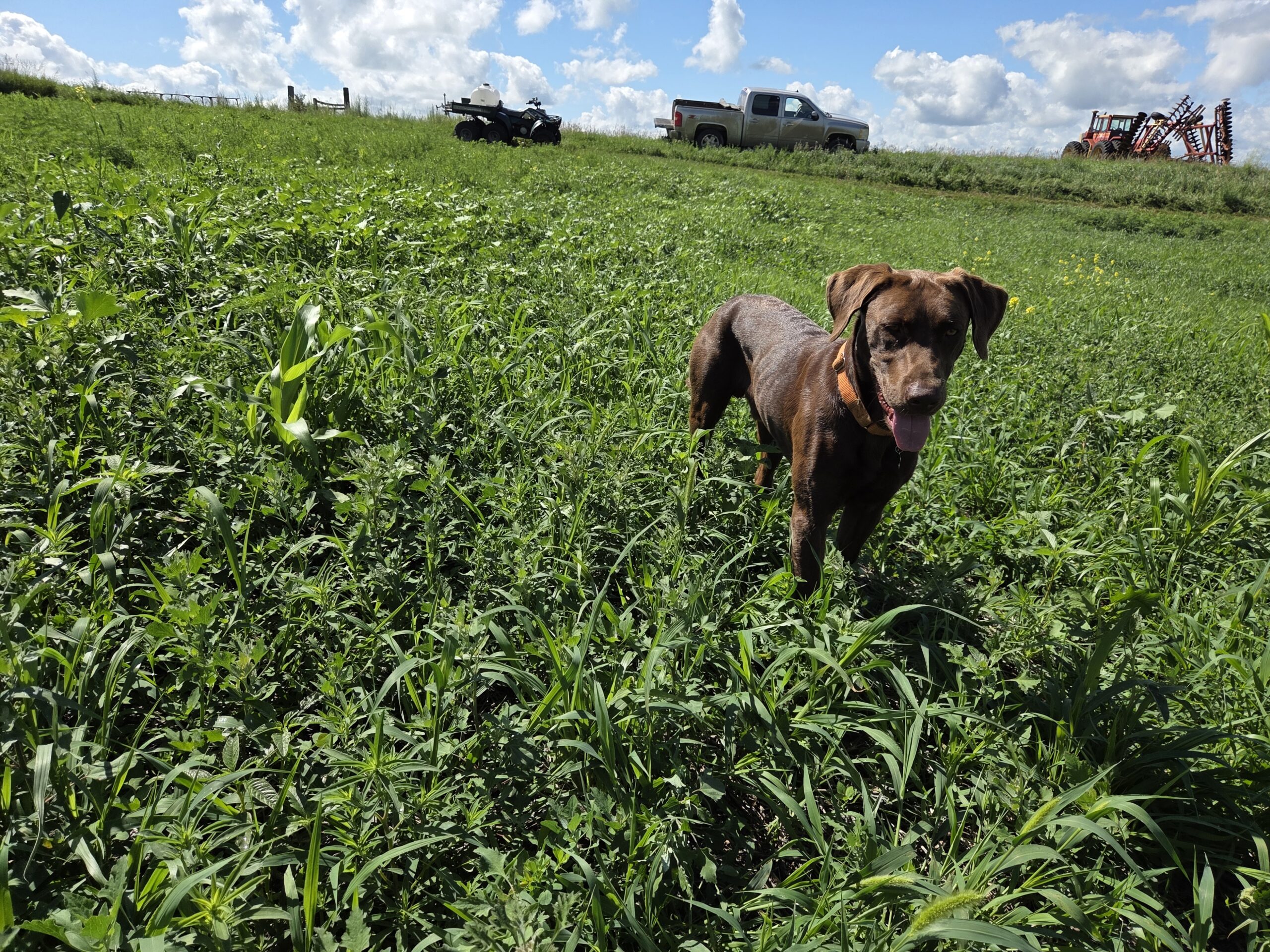
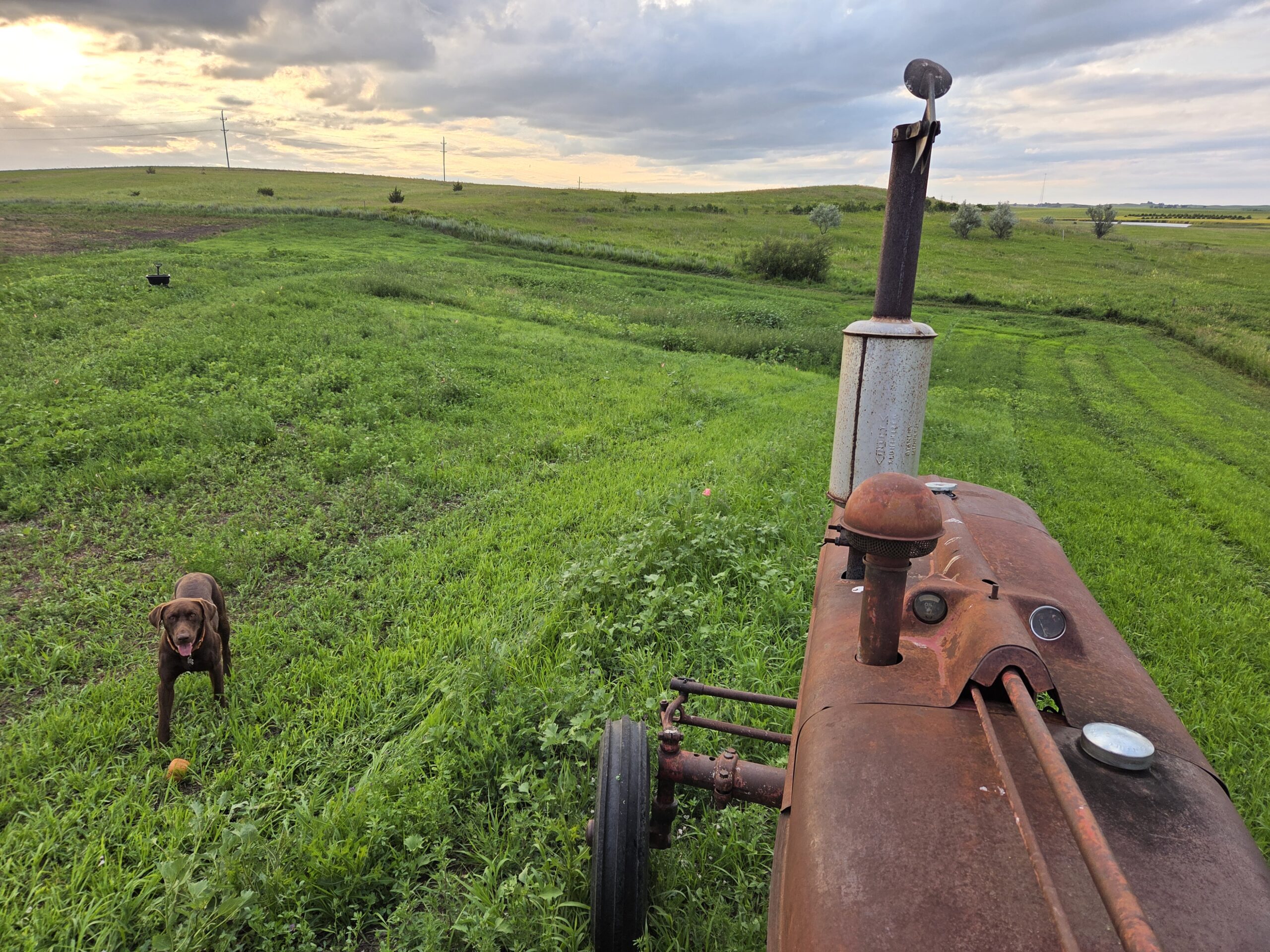
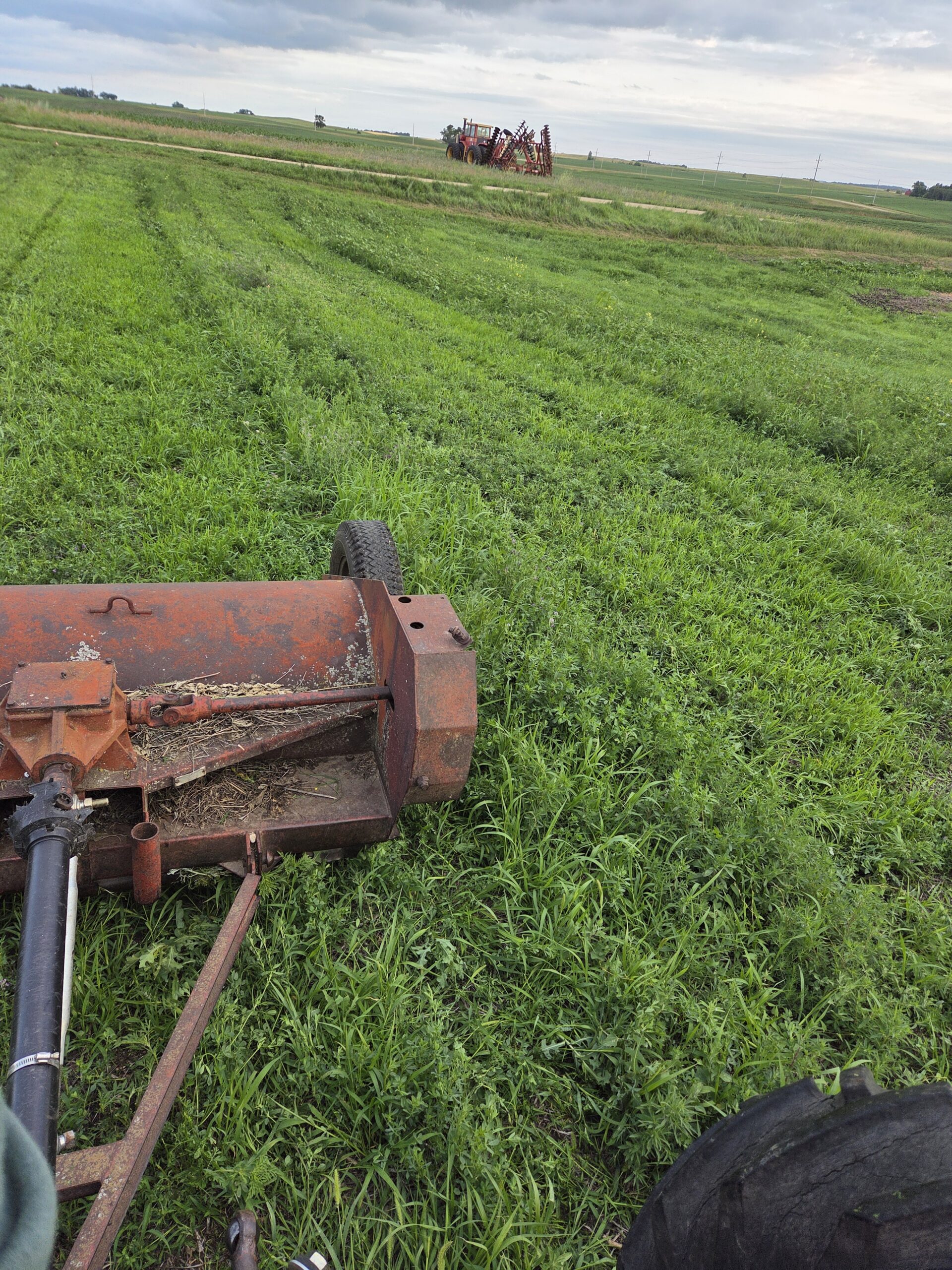
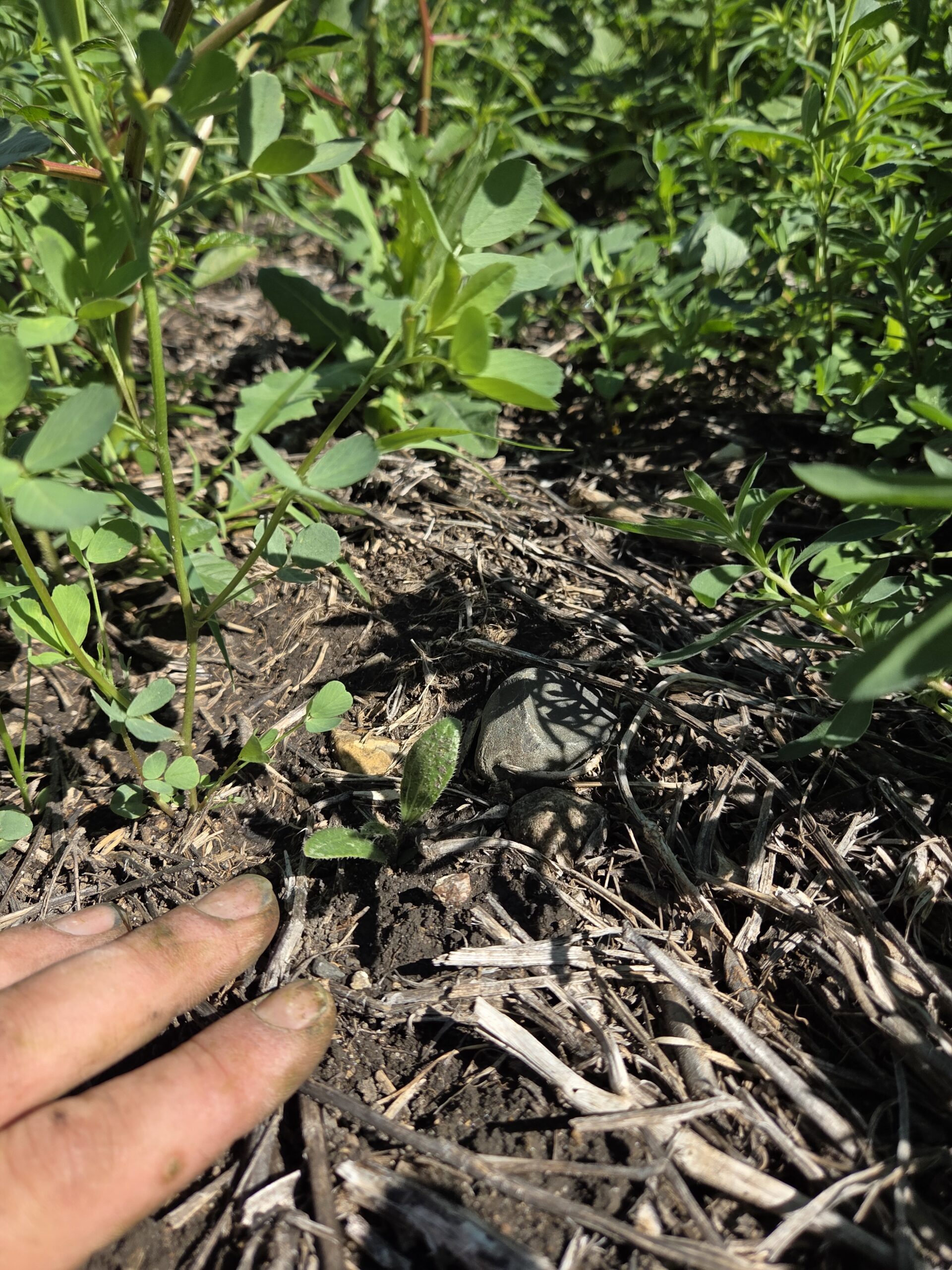
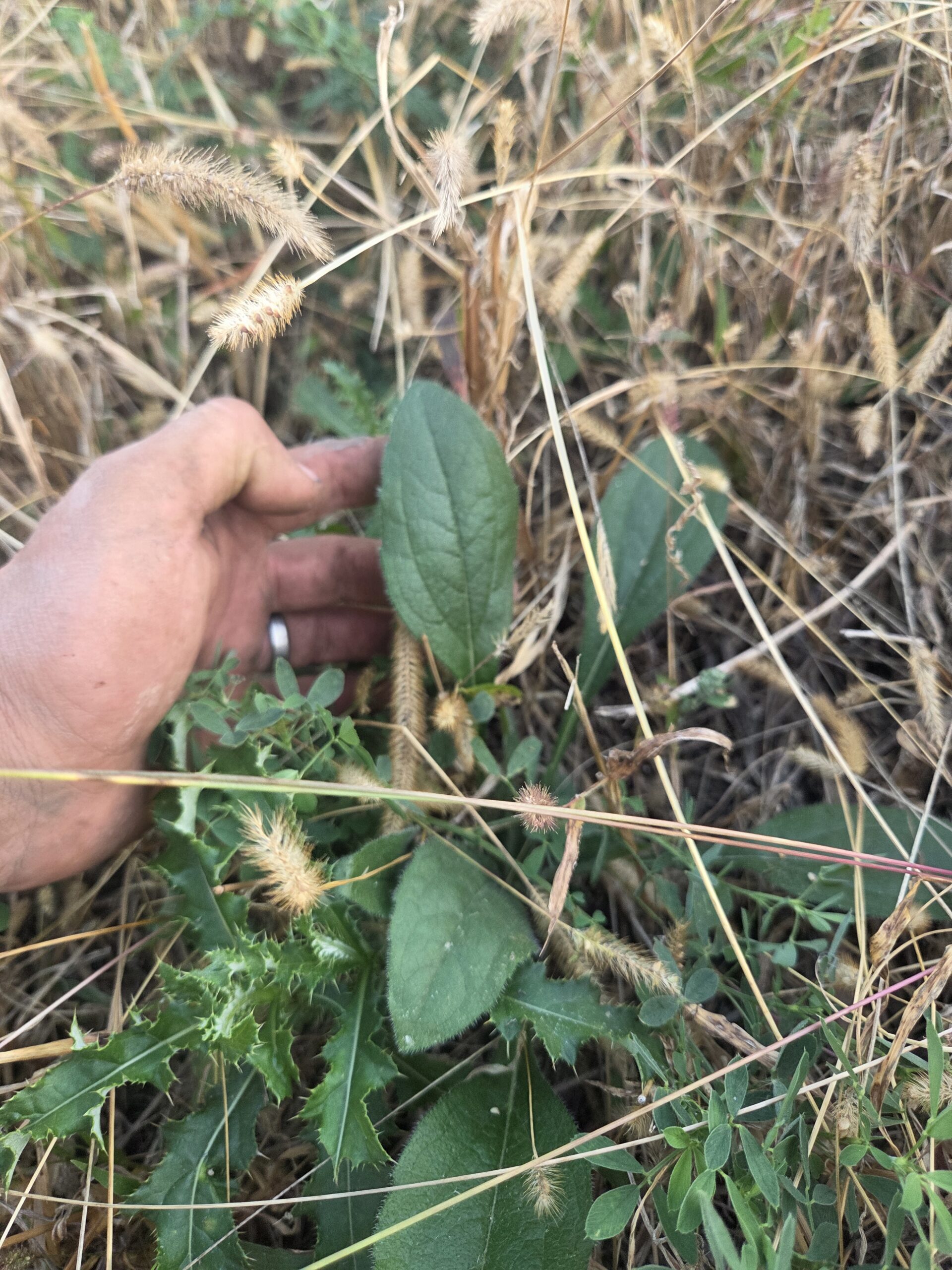
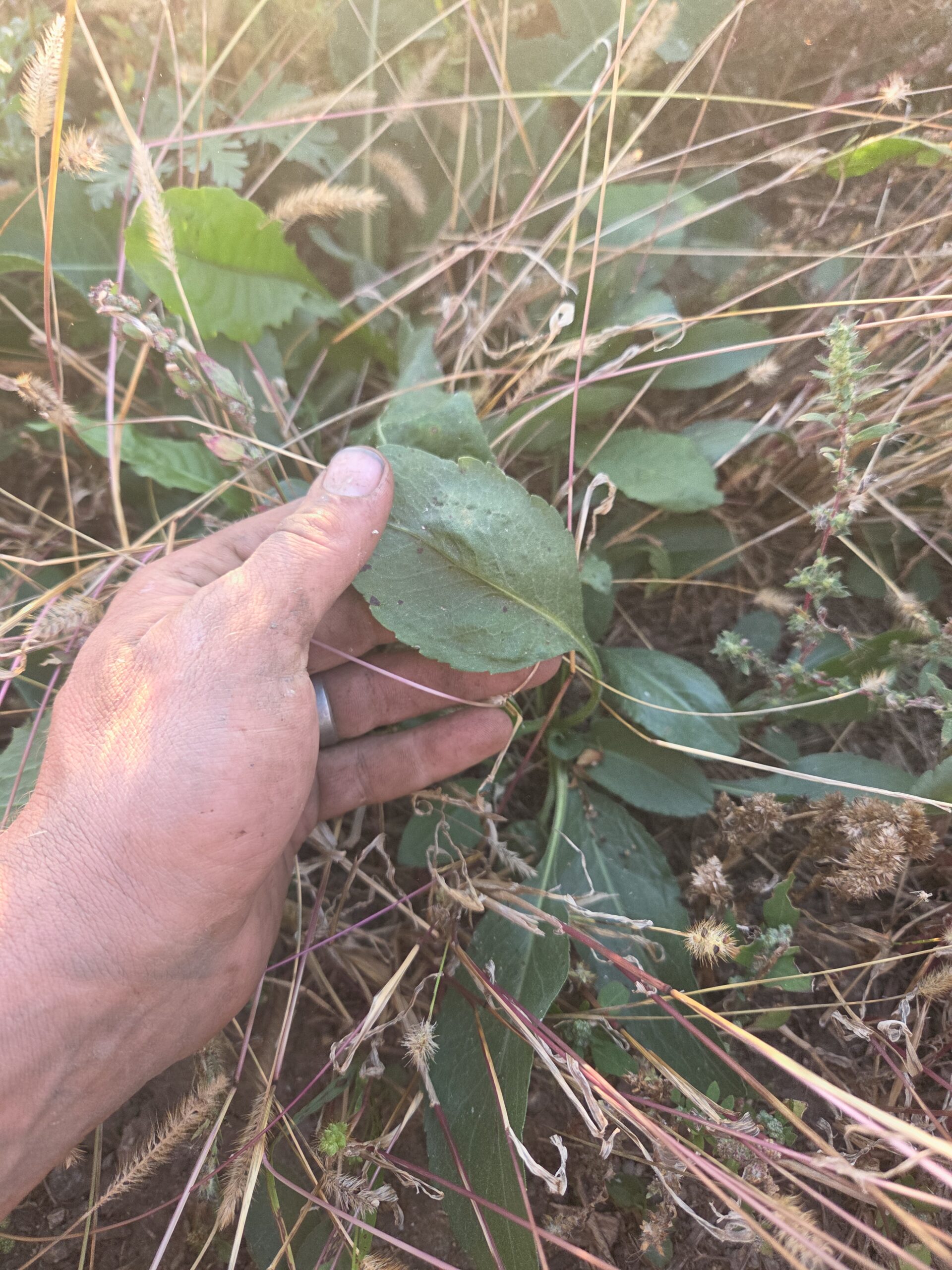
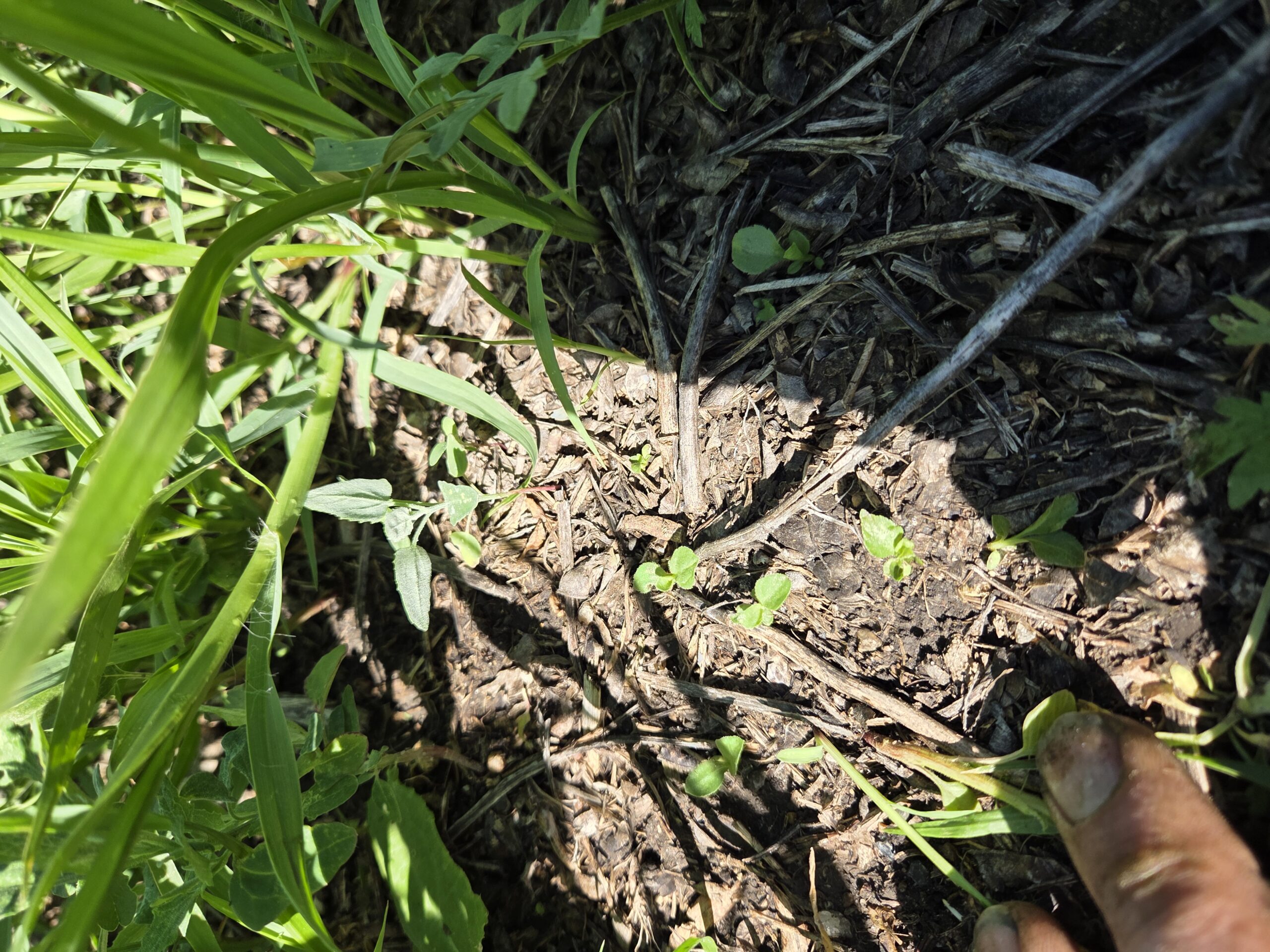
No plots produced viable seed or flower in year one (which was expected) but above average summer rain did ensure good to great germination for some species. (O biennis, R Triloba, R Pinnata, O Rigida) Seedling germination for others such as (P grandiflorus, D Arguta, P digitalis) were difficult to assess due to the seedlings demeanor. In our experience our plots are on par with many other direct seed attempts.
E. angustifolia, R. triloba, R pinnata, O. rigida seedlings
Educational & Outreach Activities
Participation summary:
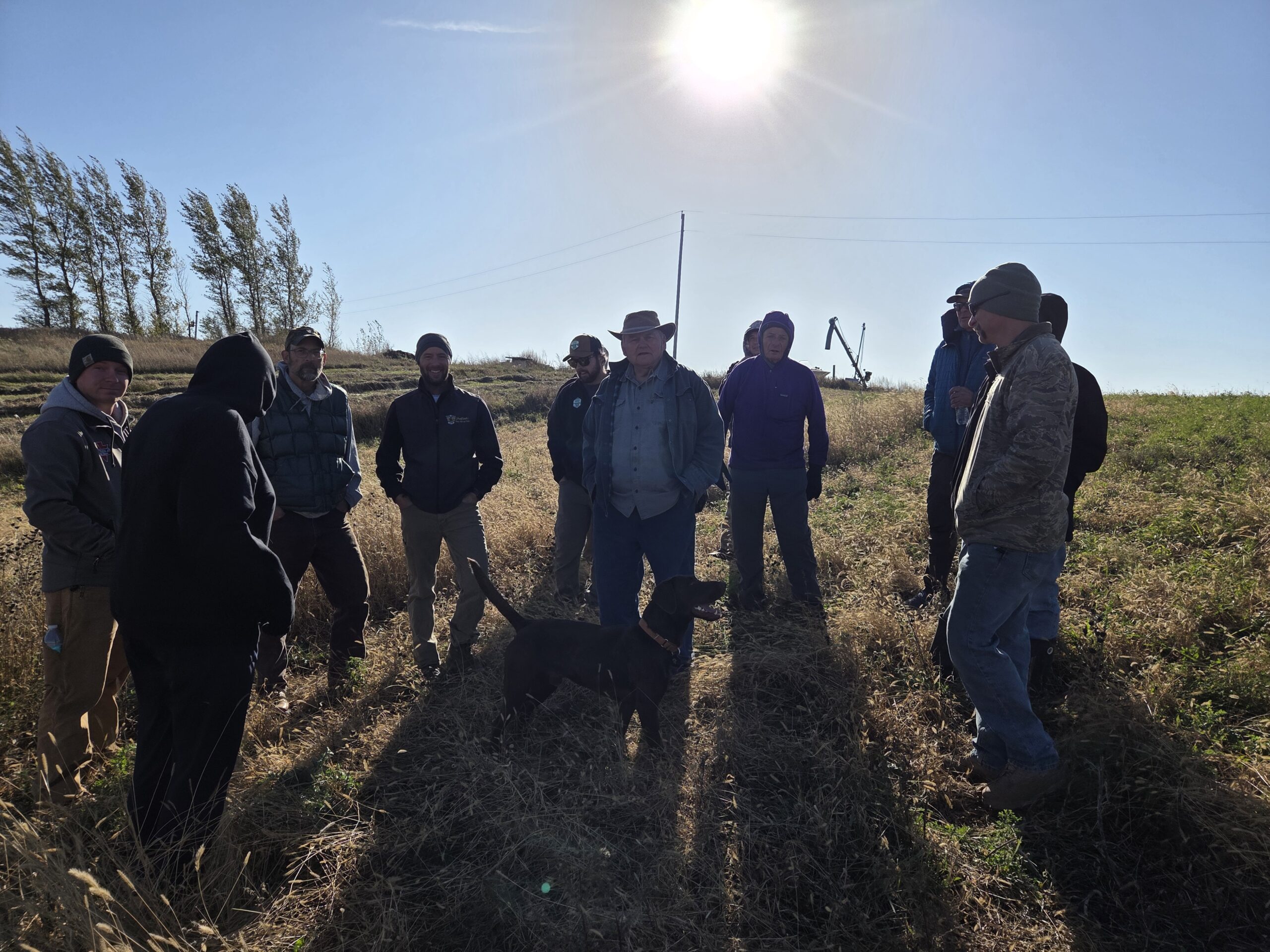
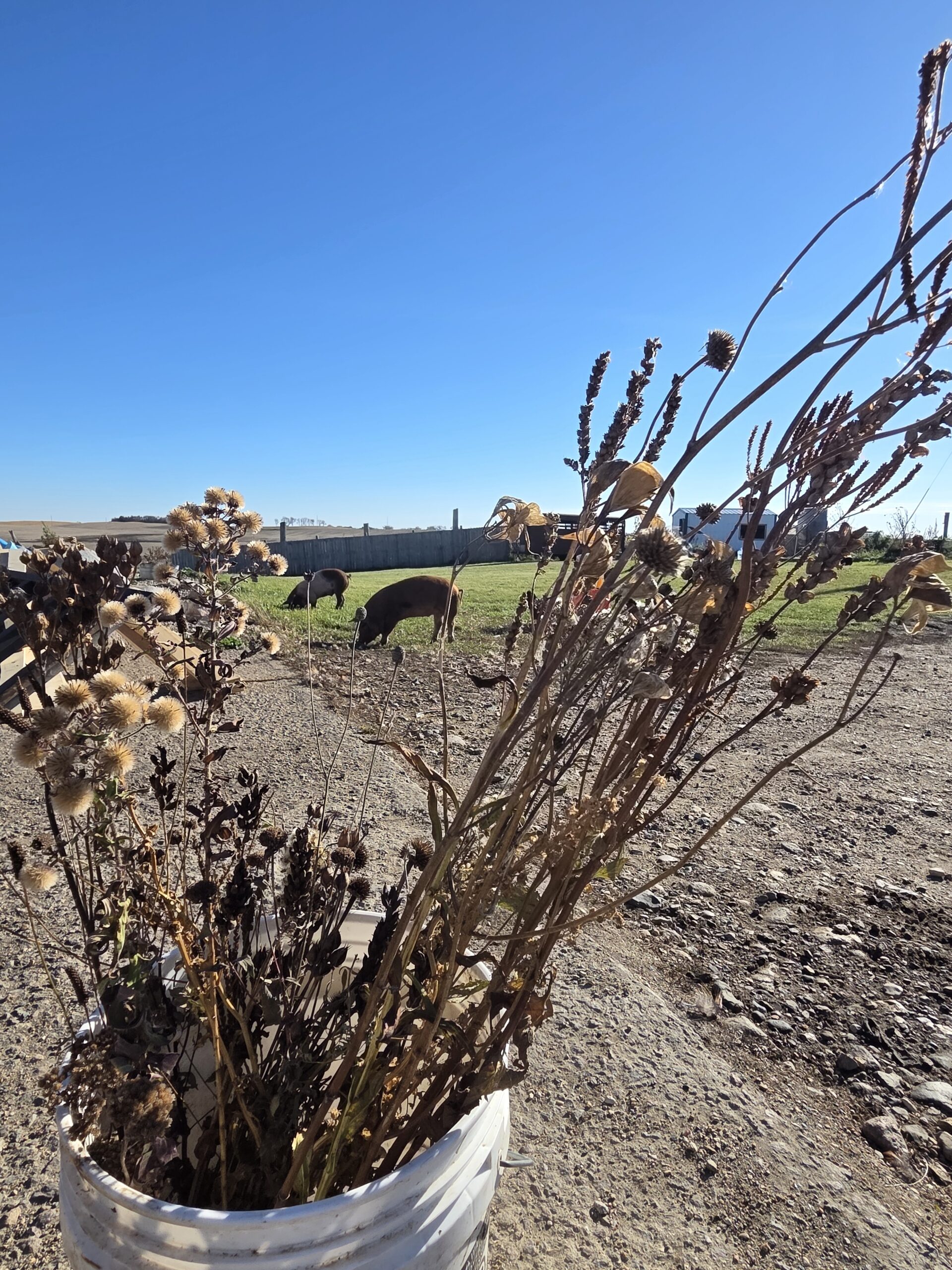
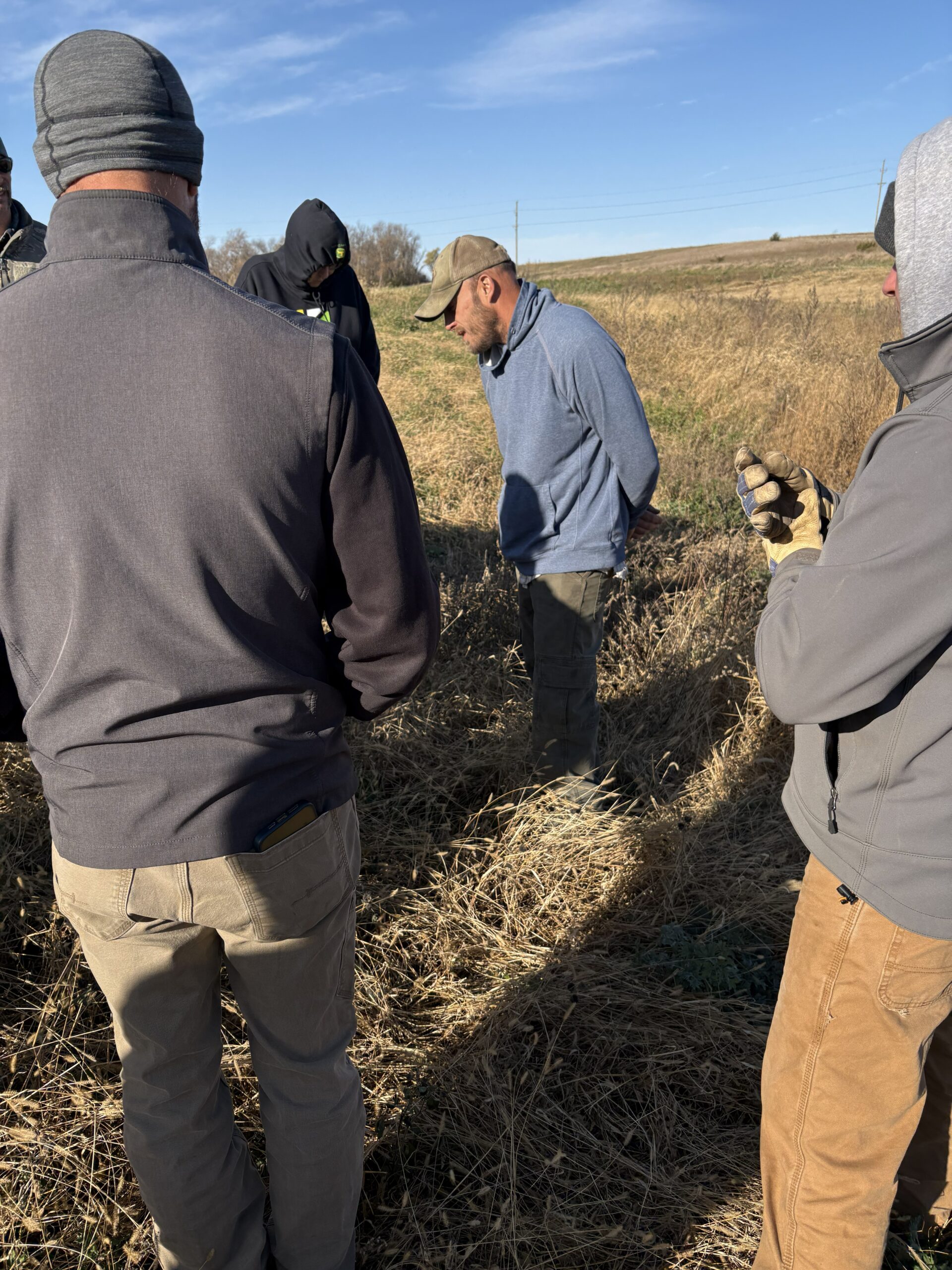
Our year one seed harvest workshop and plot tour was lightly attended but had a great cross section of attendees. Around a dozen flyers were posted up in the local area and a copy provided to the Sisseton newspaper. The flyer was also posted on the South Dakota Plants and Wildlife Facebook Page with over 10,000 followers. Personal invites were made via phone and email to several state, local, and federal government conservation and ag entities. The federal shut down had an impact on potential agency participants such as Pheasants Forever, NRCS, FSA, and USFWS. We were hopeful for about 20 participants but really appreciated the great mix of folks that showed.
Since our production plots were in the year one phase most of the workshop was classroom style discussing topics such as:
-Getting started harvesting/growing native seed
-Sourcing your own foundation seed
-Navigating the expenses of seed production
-Plant ID
-Establishment methods
It was a dreadfully cold day but the participants obliged to check out the seedlings in the direct seeded plots. We got some great feedback, words of support, and some caution! The small group fed off one another and the discussion was a treat to watch.
Feedback from the group asked for a tour earlier in the season and a greater diversity of speakers/topics. Folks seemed eager to come back next year to see flowering stalks and seed heads. Next year we will spend more effort planning the tour with some of the folks that showed up this year. Invite some back as speakers and try to host a late summer workshop.
This was not the first seed harvest workshop we have hosted at our farm and we usually try to hook people in with a seed harvest/giveaway. This was offered again in 2025 but the weather was just too cold for folks to stick around. If we can spend a little more time planning, work with warmer weather, and offer some unique opportunities I am confident we can draw a pretty nice crowd next year.

Learning Outcomes
- Growing plugs from start to finish is a significant undertaking both in time and money
- Direct seeding/overseeding species by hand can be accomplished with adequate seed to start
- Weed control methods must take an integrated approach (chemicals, fire, mechanical)
- Extended summer rains can be a real friend to encourage seedling germination
- Hail doesn't necessarily mean doom for perennial plants
- Events need 5x the promotion initially anticipated