Progress report for FNC25-1470
Project Information
Megan Mahoney is the owner of MaHoney Bees & Queens, a company specializing in instrumental insemination of honey bees and breeder queen production. Since founding her business in 2019, Megan has established and maintained a Carniolan bee breeding population using insemination methods. Her breeding efforts are part of a larger migratory beekeeping operation encompassing approximately 2,000 colonies based in Jamestown, North Dakota. Megan will serve as the lead cooperator for this project, providing Carniolan virgins, Carniolan drone semen, her expertise in the selection process, as well as being responsible for meeting objectives of this proposal and grant reporting.
Cory Stevens, owner of Stevens Bee Company, is a full-time beekeeper based in Southeast Missouri, specializing in the production of high-scoring Varroa Sensitive Hygiene (VSH) stock. Since 2016, Cory has been aggressively selecting (and hoarding) bees that are mite resistant. By employing instrumental insemination, and later adopting the widely recognized "Harbo assay" measurement, he is maintaining a reliable source of VSH stock, which he uses within his own business and sells as virgin queens, mated queens, and breeder queens. For this project, Cory will act as a co-cooperator by contributing VSH virgin queens, VSH drone semen, and his time, expertise, and organizational skills in the selective breeding process.
As both Megan and Cory are highly experienced in instrumental insemination and honey bee breeding, their collaboration significantly enhances the probability of success for this project.
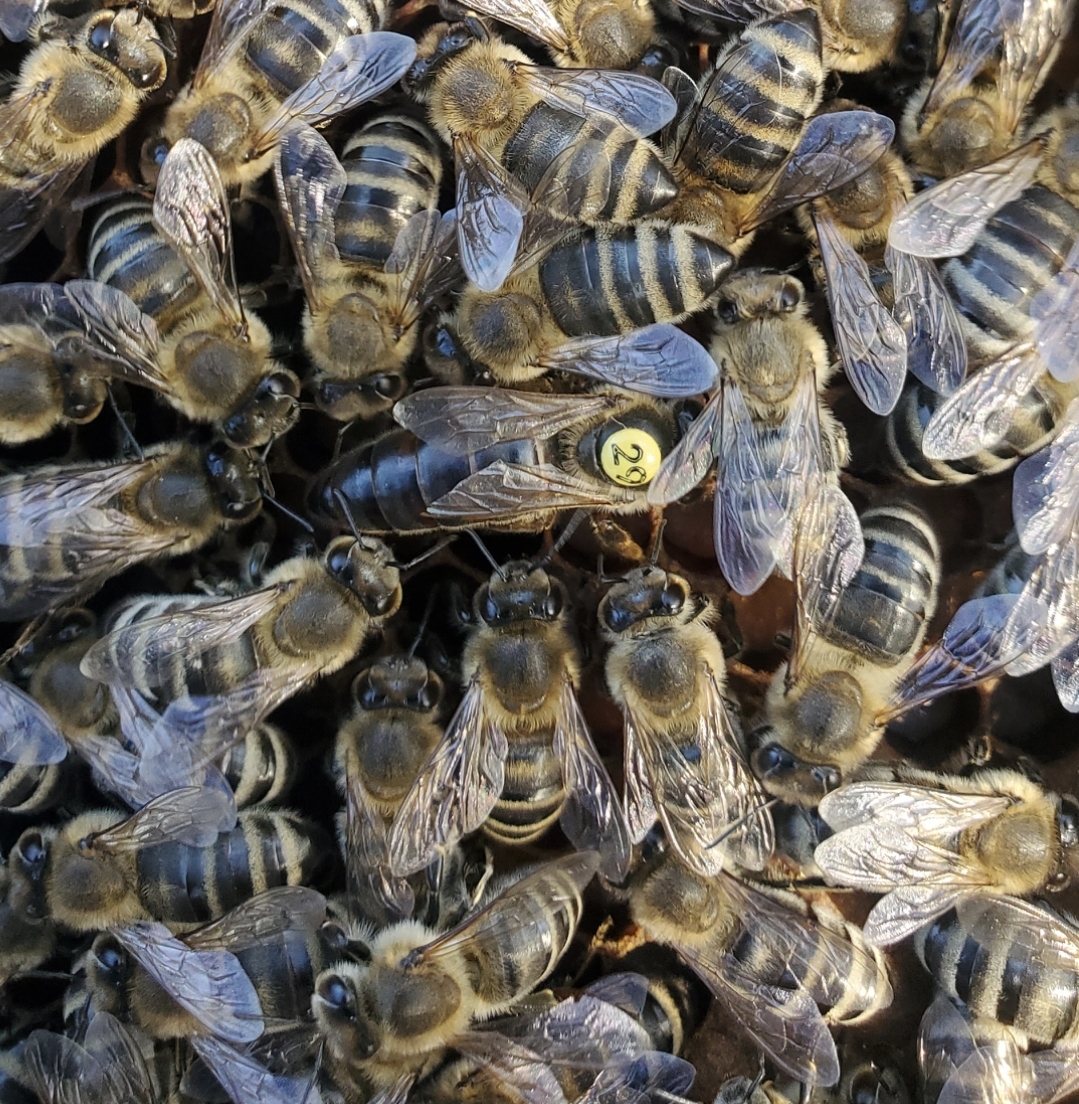
Carniolan honey bees are renowned for their gentleness, productivity, and winter hardiness, making them a popular choice for beekeepers worldwide. However, this population continues to suffer from varroa-related challenges, including colony losses, diseases, and weakened hive performance. Despite their widespread commercial use, little significant work has been undertaken to select for VSH traits within the Carniolan bee population, which are critical for varroa mite resistance and the sustainability of the subspecies as a whole. Additionally, there is considerable market demand for VSH Carniolan bees, and supply is not being met within the industry.
Solution and Objectives:
This project addresses the lack of varroa sensitive hygiene (VSH) traits within the Carniolan honey bee population. By working together, we aim to narrow this gap by both selecting for existing VSH traits within the Carniolan population in Megan’s operation, and integrating higher-level VSH traits with drone semen and virgin queen introductions from Cory’s operation. This will improve the overall health and sustainability of Carniolan honey bees, furnish a robust model for future breeding exchanges, and provide beekeepers with an option for obtaining VSH Carniolan stock.
Megan is currently treating her population for varroa mites at least 4 times annually, Cory is applying zero treatments.
Objective 1: Identify the Best Stock to Propagate Queens (graft) From
The first step involves identifying the most promising colonies within each of our existing breeding operations. Using performance metrics, including colony health, temperament, productivity, color and VSH scores, we will select the highest-quality colonies for grafting in the springtime. See attached Colony Performance Rubrics. Once identified, Megan and Cory will each share 30 virgin queens per year with one another, ensuring a diverse exchange of Carniolan and VSH genetics between operations. Queens will be shipped via UPS overnight shipping.
Objective 2: Instrumental Insemination of Virgin Queens
The virgin queens will be inseminated with selected drone semen to initiate crossbreeding between the Carniolan and VSH populations:
Megan's Virgins: These will be inseminated with the high-scoring VSH drones, that also express some Carniolan characteristics (gentleness, productivity, black in color) from Cory’s population. This strategy prioritizes the integration of high-level VSH traits into the Carniolan line while maintaining the unique grey-black color characteristic of Carniolan bees.
Cory's Virgins: Virgins exhibiting the most Carniolan-like traits from Cory’s VSH stock will be inseminated with semen from Megan’s Carniolan breeding population, ensuring the genetic integrity of the Carniolan line while introducing enhanced VSH traits.
This targeted insemination plan of action will help to ensure the genetic diversity of the queens while minimizing the risk of inbreeding.
Objective 3: Establish Colonies with Newly Inseminated Queens
The inseminated queens will be introduced into hives to establish new colonies. These colonies will be monitored to evaluate their viability over time and to ensure the original queens are still present.
Objective 4: Performance Tracking and VSH Testing
Acceptable colonies will undergo performance evaluation, including:
Productivity Metrics: Temperament, colony strength/build up, color, and disease prevalence will be monitored to ensure desirable Carniolan traits are retained.
VSH Testing (Harbo Assay): This testing will measure the degree of mite resistance by observing the colonies’ ability to identify and remove reproductively viable Varroa-infested brood. Cory will conduct Harbo assays on his colonies in early fall, while Megan will conduct testing on hers in early Spring. Each cooperator will travel to the other’s operation during this time period to assist in the testing and scoring process. Refer to attached rubrics for evaluation metrics.
Objective 5: Selection for 2026 Breeding Season
Based on the performance tracking and VSH test results, the highest-scoring colonies will be selected for grafting in the 2026 season. We will repeat this process for the 2026 breeding cycle, hopefully starting with a higher level of VSH than the previous year.
Objective 6: Outreach
Share findings and breeding protocols throughout the bee industry at in-person conferences, on social media, YouTube, and other meeting forums.
Goal: Augmenting the Carniolan Population with VSH Traits at the Population Level
By continually selecting for high-performing colonies in addition to measuring VSH scores, this project seeks to establish a population of Carniolan honey bees that are better equipped to thrive in the presence of Varroa mites.
Cooperators
- - Producer
- - Producer
Research
Using the "Colony Performance Rubric" from Objective 1, Megan and Cory each chose high scoring queens from 2024 to graft (propagate daughters) from and exchange with each other. Cory shipped a total of 30 VSH virgin queens over 3 separate shipments (2 in spring, 1 in fall), Megan shipped a total of 30 Carniolan virgin queens over 2 separate shipments (1 in Spring, 1 in Fall). Virgin queens were received successfully, "banked" in specialized virgin queen banks, and then instrumentally inseminated with selected germplasm (semen), from each respective operation (Objective 2). These newly inseminated queens were tagged with a unique number and color, and introduced into either full size, or nucleus colonies for further evaluation and scoring at a later time (Objective 3).
In Megan's case, the hive boxes themselves were also tagged and color coded, allowing the queens to be transported, tracked and placed in individual bee yards in North Dakota. Some of the queens that were introduced in Spring of 2025 were large enough and stable enough to be VSH counted, however the majority of queens that were inseminated in 2025 (especially those later in the season) will have to be VSH scored in 2026 (Objective 4). Our standard protocol for timing of the VSH counting/Harbo assay is at least 3 months from queen introduction, with adequate mite pressure in the environment to produce an accurate score. Colonies that are weak or undesirable for other reasons should not be scored.
Megan identified 12 colonies that were suitable for further evaluation using the VSH counting/ Harbo Assay in the fall of 2025 (Objective 4 partial). See example of the data sheets for low and high scoring colonies. VSH Data sheets low and high scoring. There were mixed results as expected, however using this assay for colonies provides insight as to their mite resistance traits. Megan's Carniolan breeding population has never been evaluated with this method previously, and we expect by adding this metric, a higher level of selection for varroa resistance will be possible next season (Objective 5). We anticipate more colonies headed by inseminated queens from this project will be eligible for this type of analysis by the summer of 2026. Additionally, Cory and Megan will repeat the stock exchange and inseminations this breeding season. More data to come in 2026.
In addition to the VSH counts scored during Cory's workshop, he was able score close to 100 colonies total in 2025!
For the final report at the end of this project time-line, we will consolidate this data into sharable and presentable form.
Educational & Outreach Activities
Participation summary:
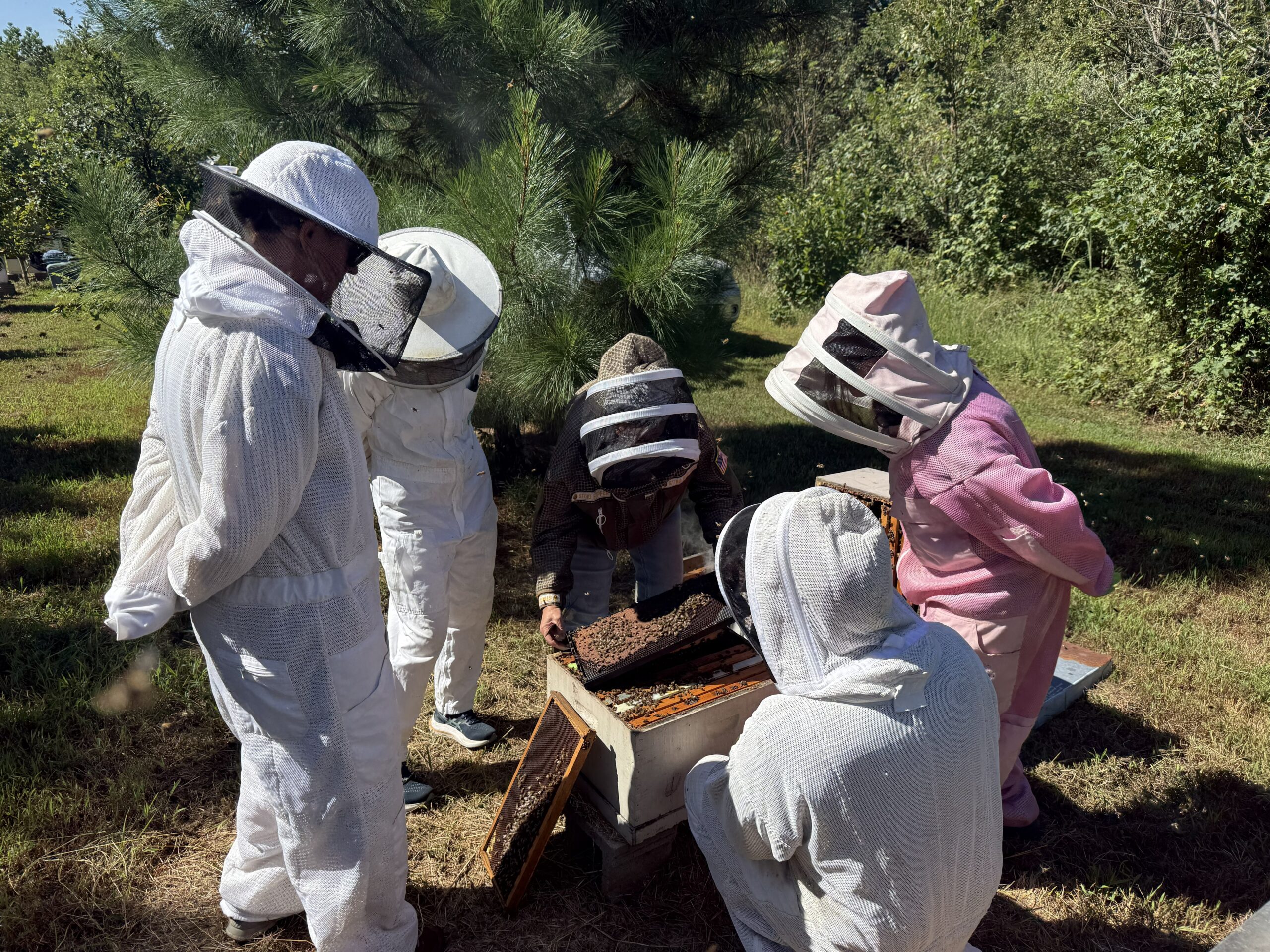
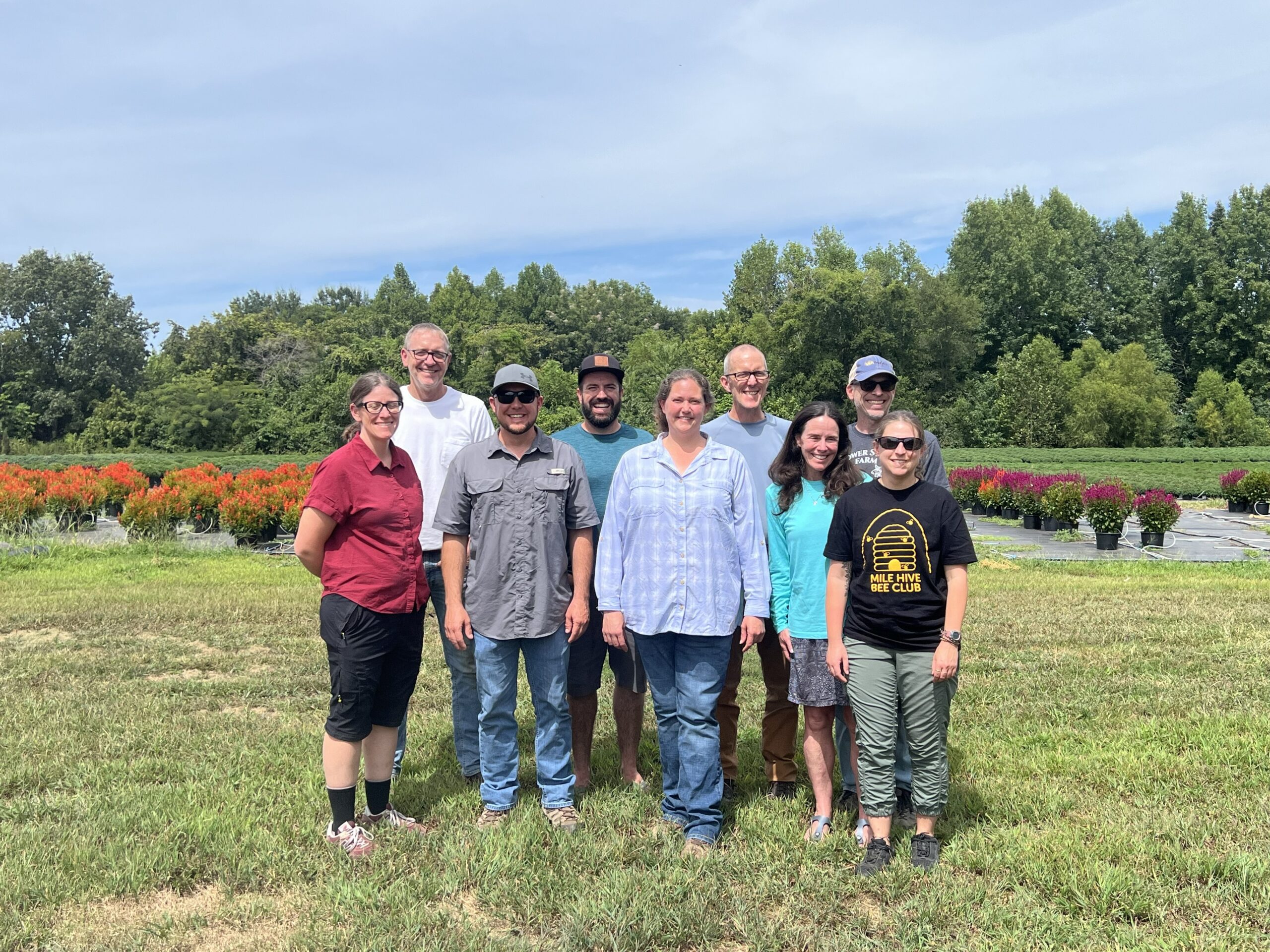
Cory Stevens (Stevens Bee Co) hosted a 2 day VSH counting workshop at his farm in Missouri August 26-27 2025 . (Objective 6)
Group Photo from VSH workshop
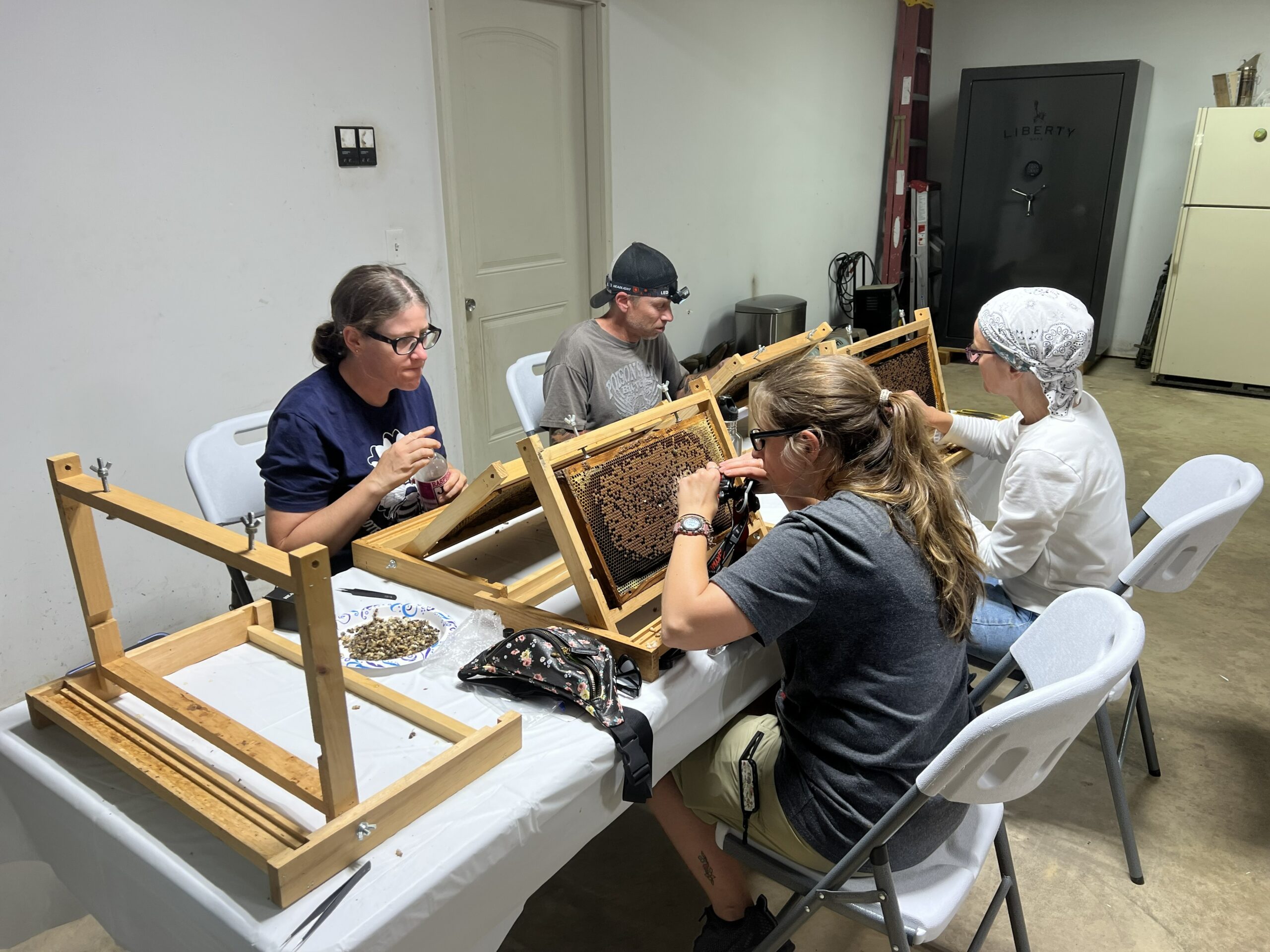
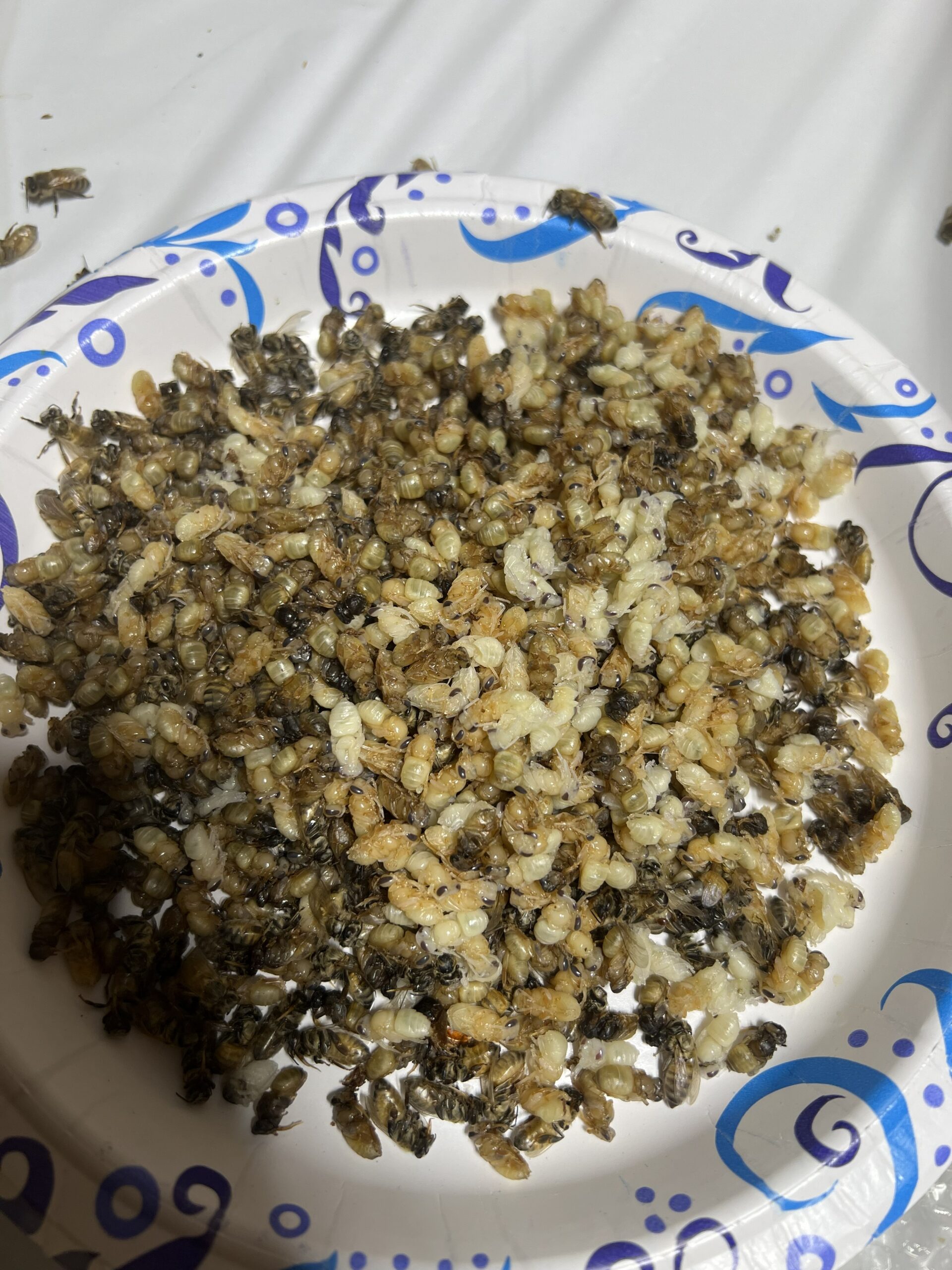
Cory trained 8 participants to identify the biological stages of varroa mites, and quantify their progeny as to if they were reproductive, or non-reproductive, resulting in a "Harbo Score." They "counted" 50 of colonies using the "Harbo Assay" over the course of 2 days!
Megan and Cory also recorded a live podcast discussing the project on "Patreon" in December 2025. 60 members logged on to view it. This podcast will be opened up to the public at a later date.
Cory and Megan attended numerous meeting this year and discussed/presented the project goals and methods.
North Dakota Beekeepers Association round table chat (Megan) 10 people
Texas Beekeepers Association, Ppt presentation on breeding for resistance VSH (Cory) 100 people
Colorado State Beekeepers Association, VSH measurement training (Cory) 75 people
American Beekeeping Federation Round table chat (Megan) 20 people
National American Honey Bee Expo, Panel Discussion on breeding for resistance VSH (Cory) 150 people
Learning Outcomes
This project has reinforced that integrating complex behavioral traits such as Varroa Sensitive Hygiene (VSH) into an established breeding population is a multi-year process with a steep learning curve. Beekeeping is hard, and bee breeding is harder. Even with experienced collaborators, significant challenges were encountered during the 2025 season.
In Spring 2025, an unexpectedly high number of Cory’s virgin queens perished in the queen bank, even when compared to other virgins of the same age that survived under identical conditions. As a result, Megan was unable to inseminate the desired number of queens. Later in the season, inseminations themselves proceeded well; however, a problem with insemination diluent that was not the correct pH (due to an error at the supplying laboratory) resulted in high mortality among newly inseminated queens. These events demonstrated that even seasoned specialists can encounter routine but very real challenges, and outcomes can hinge on seemingly small details.
Because of these setbacks, relatively few colonies were suitable candidates for VSH evaluation using the Harbo assay in 2025. Additional evaluations are expected in 2026 as surviving colonies mature and another round of insemination is scheduled.
Although the primary barrier—successfully integrating VSH traits into Carniolan stock—has not yet been overcome, meaningful progress has been made. Perhaps the most important lesson reinforced by this project is the importance of persistence: continuing to try, avoiding discouragement, and carrying out the work that needs to be done on a seasonal schedule.
Plans for the 2026 breeding season include another round of virgin exchange between collaborators in addition to Cory supplying breeder queens to Megan’s operation for grafting, with the goal of increasing the number of VSH virgins available for crossbreeding in critical time windows when the work can be preformed.
Project Outcomes
We expect to have much more impact with this project after we have more data to share (next year) with other farmers and ranchers. We currently have more collaborations and possible grants to expand this project in the pipeline.