Final report for FNE23-043
Project Information
We assembled a mobile seed cleaning trailer with a thresher, winnower, hand-scale cleaning equipment, and storage materials, allowing growers to take dry seeded crops from on the plant to ready for sale or long-term storage. Growers from 5 states were able to use the equipment, resulting in increased efficiency and cleaner seed. A handful of growers have already purchased threshers based on their experiences with the trailer. Growers from Massachusetts and New Hampshire are seeking to create shared-use seed cleaning equipment pools, and we will continue to increase access to this equipment and additional pieces in New York. Small-scale growers and community seed keepers found that it was as efficient to clean small seed lots using specialty screens and box fans.
This project seeks to provide vegetable seed growers with recommended seed processing equipment to improve their efficiency, safety, and profitability.
The mobile seed processing unit will visit a minimum of 4-5 sites throughout New York/New England per year, where 10-15 growers at a time will be trained on equipment usage and then allowed to use equipment to clean their own seed. The trailer will circulate in 2023 and 2024 as part of the NESARE grant, and will expand its range in 2025 and 2026 based on need.
In total, at least 65 commercial seed growers and 30 Indigenous seed keepers will have the opportunity to use the unit between 2023 and 2024. At least one event per year will be focused on community seed saving, and will allow smaller-scale growers to process seed.
Based on feedback from growers using similar seed processing units on the west coast, we expect growers to enjoy up to nine times faster seed processing, and a higher quality final product, as compared to hand cleaning of seed.
Recently NE-SARE awarded a Research and Education grant to train 65 commercial vegetable growers and 30 Indigenous seed keepers in the Northeast to better produce seed crops. This education will be essential to helping Northeast farmers grow better seed, but lacking equipment to process the seed will severely limit that amount of seed that growers are able to efficiently and economically clean.
Seed production is a relatively new industry to many vegetable farmers in the northeast, hence there is very little processing equipment available on farms and many growers are not yet at the point of committing to purchasing specialized equipment for this trial venture.
The equipment issue currently facing Northeast growers is not new to the seed industry; smaller scale growers on the west coasts of the US and Canada faced a similar bottleneck. The elegant solution employed by FarmFolk, CityFolk, a nonprofit in British Columbia, was to build a mobile processing unit which toured much of BC. The project has been so successful that they have built three additional trailers.
I reached out to the coordinator of the BC Seed Security Project, David Caztel, to find out what lessons they had learned about equipment selection and trailer logistics. He helped identify a very economical combination of equipment that will take seed from its dry form on the plant to marketable quality quickly and safely.
David spoke passionately of the impact this project has had on seed product, following up with the following quote about the project, along with some quotes from growers who used the trailers:
“As the manager of the BC Seed Security Program, I feel that the mobile seed cleaning trailers project has not only increased the quantity and quality of seed being produced in the region, it has also encouraged more farmers to either consider adding seed production to their crop plans, or increase the amount of seeds they produce. The equipment increases efficiency of cleaning, thus increasing profits to the farmer. It has also been an incredible opportunity to engage farmers and the public in seed production work. If you are able to access funding to build and share seed cleaning equipment, I am certain it will be well used and your funders dollars will be very well spent.”- David Catzel
“Our Experience with the Seed Trailer has been amazing. For a small farm like us it is hard to get all the equipment we need. To have access to all of the different seed cleaning equipment is a game changer for us… It makes our work so much easier and also improves the quality of the seed we offer…”- Simon, Seed grower from Good Earth Farms
“…Using the seed trailer's equipment, I only spent 1/10th of the amount of time which I would have spent otherwise working mostly alone processing my seeds. I loved the community aspect of the seed trailer, with community members coming together to process seeds. It felt like a true community harvest…” - Member of the Galiano Seed Library
Historically many farm equipment-sharing proposals fail because everyone needs the same equipment at the same time, or because equipment is large and challenging to transport. Seed processing for dry seeded crops, by contrast, can be done over a period of months as long as growers have a way to dry and then store the seed crop. Additionally, a great deal of seed equipment is quite small and relatively light, resulting in a very complete set of processing equipment fitting into a trailer that can be towed by a light duty truck or van.
In conclusion, I propose using the model of BC’s seed trailers to first reach the growers in the NESARE seed grant, and hopefully to expand the model from there. I expect 65 growers and 30 seed keepers to improve efficiency, profitability, and scale of their seed growing using the trailer. We also anticipate a higher rate of equipment adoption based on exposure and good training. I also expect better use of safety protocols such as PPE usage.
I founded Roxbury Farm in Kinderhook, NY, which I grew from 5 acres of vegetables into an integrated vegetable, beef, lamb, and pork farm on 450 acres of land. The primary market was a CSA that served up to 1500 families. My focus in farming has always been on pairing efficiency and economic viability with practices that nurture the land. During the last three years I have started to produce seed commercially, at Philia Farm, where we also grow vegetables for a CSA and farmers' market. I am keenly interested in mechanizing the seed cleaning process as I have other aspects of farming to make it more sustainable.
Cooperators
- - Technical Advisor
Research
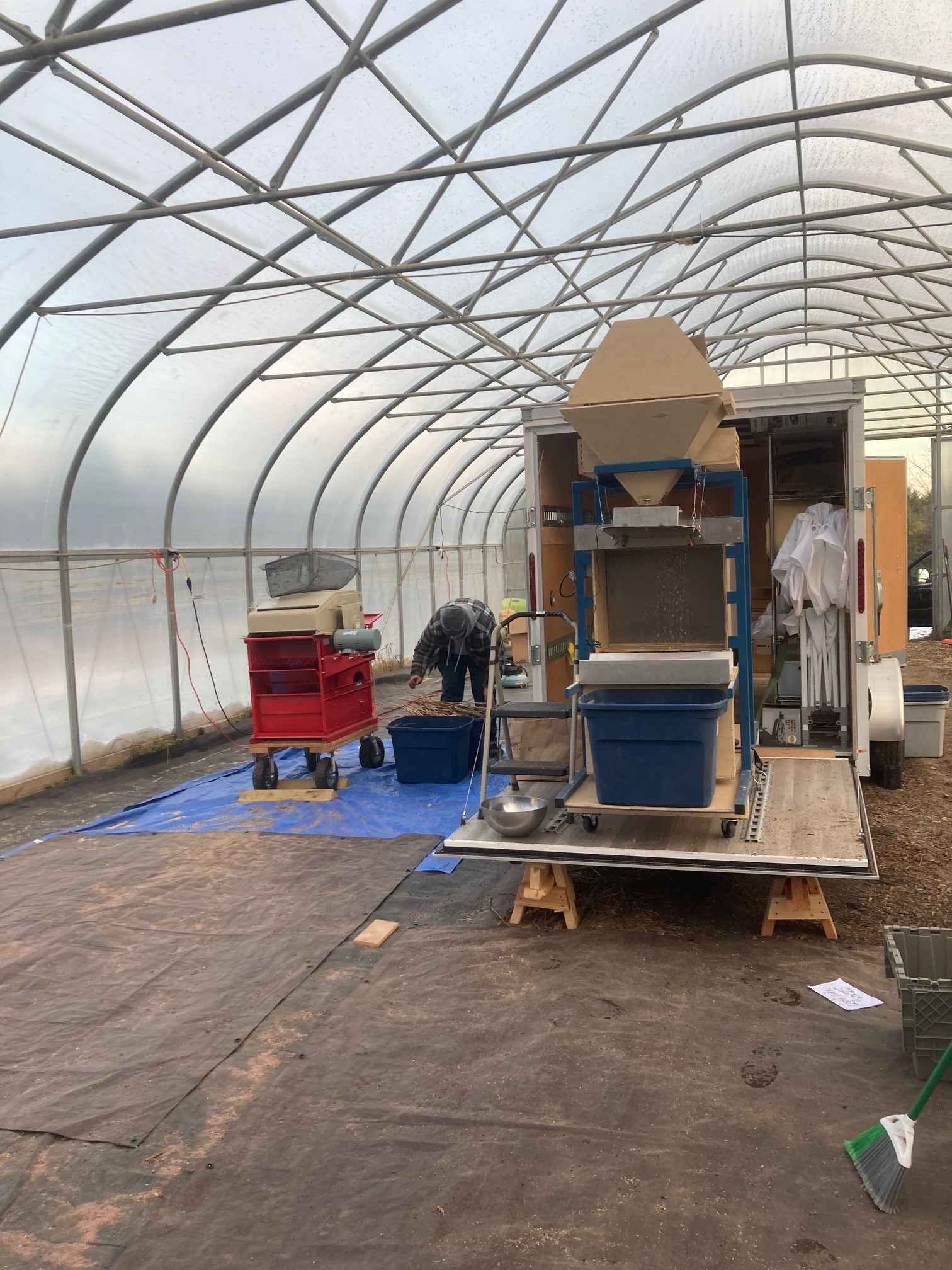
Construction of seed processing unit: The following equipment was purchased during 2023:
- Lightweight 12 by 6 foot enclosed trailer
- Sasagawa thresher to remove seed from stalks (safe, portable)
- Winnow Wizzard winnower to separate rough chaff from seed
- Specialty screens to size seed and for hand-separation
- Totes, buckets, tarps, grain moisture tester, scale, shop vac, and air compressor
- PPE (masks, safety glasses, hearing protection, gloves)
- Permanent rack and hanger system to secure equipment and keep organized
- Reverse Air Separator to remove lighter non-seed material
We quickly learned that importing equipment (in this case from Japan) can be both costly and time consuming. The Japan Import company rep's English was limited and he was not familiar with the equipment. He only acted as the broker, and we were not able to get in touch with the manufacturer. It was difficult to assess if we should buy the thresher with or without a motor installed. Thinking that the shipping cost would already be covered by shipping both, we opted to get the unit with an attached motor. Apparently, the motor was shipped separately and got lost. The broker replaced the motor and charged us for shipping a second time, which made us go over budget for this item. Once arrived and unpacked we were not able to connect the motor as the wiring diagram was in Japanese. We and our electrical contractor reached out repeatedly to Japan Import to no avail. Fortunately, friends of ours had hosted Japanese exchange students and provided us with contacts that were helpful in translating the wiring diagram.
We also learned that after translating the specs on the motor, Japan Import had sold us a capacitor motor which is not suitable to be used with a speed control unit. This winter we will have to purchase another electric motor suitable to be wired with a speed control.
Purchase of the trailer was successful, and it took a few days to install a solid floor (that can easily be cleaned and used to roll equipment on and off), install the straps to secure the equipment in transit, and organize all the supplies to provide a successful seed cleaning experience for the participants. Between the unforeseen overage on the cost of the thresher we also did not account for all the items that were needed. Some supplies had to be purchased out of the Philia Farm operating budget. One item in particular missing on our original budget was a moisture tester for seed samples ($191).
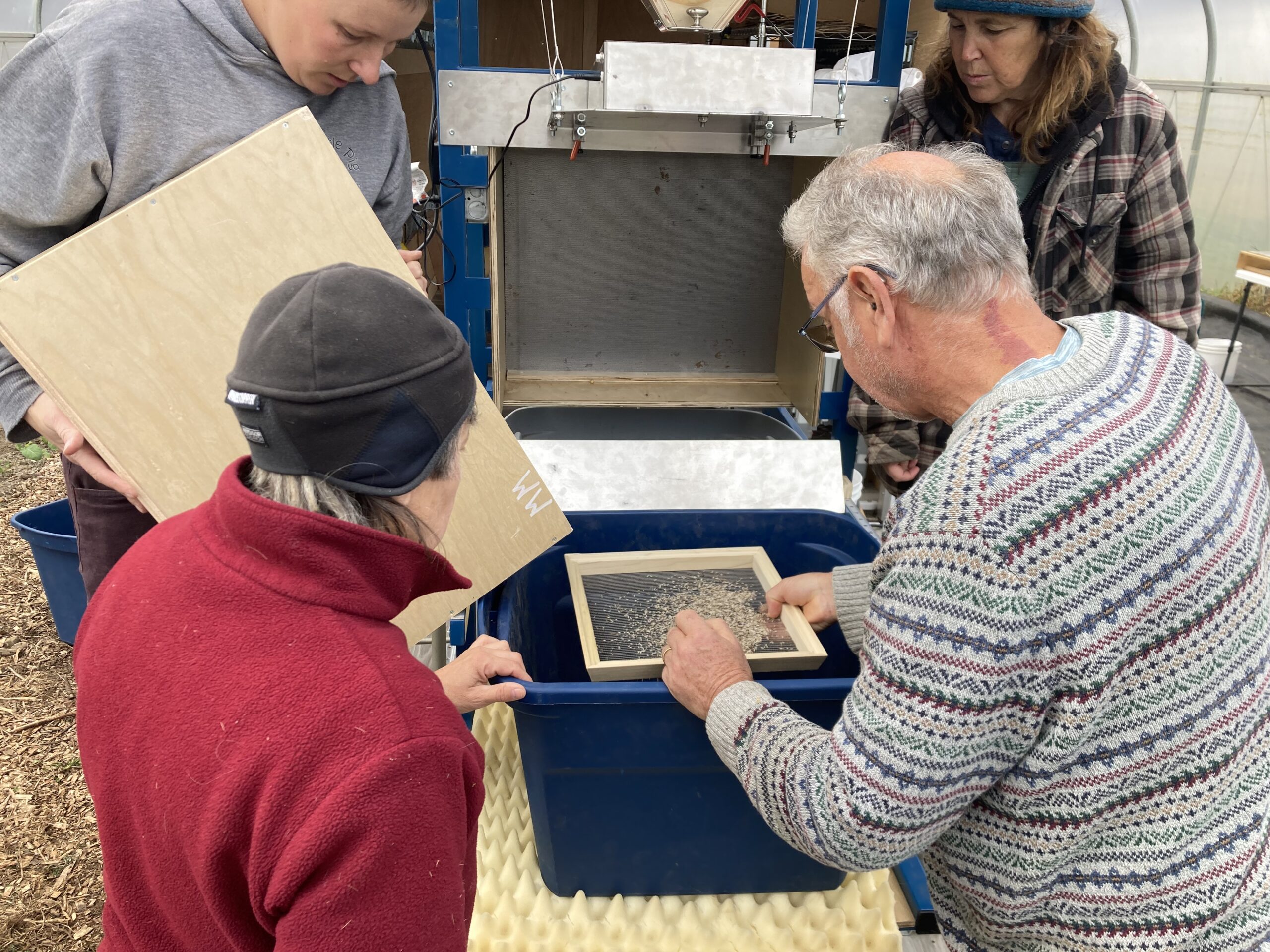
The Winnow Wizard arrived late in the season, and as soon as we had assembled it we were quickly able to produce very clean seed. The first job of the Winnow Wizard was to clean 25 lbs. of Siberian Kale seed we had grown in our high tunnel over the winter. It was clean in less than two hours.
Demonstrating the Winnow Wizard and the Sasagawa thresher to the seed producers was successful and many were amazed with the amount of time they were able to save. We advertised the trailer's availability through the Northeast Seed Production course, and had growers show interest in using the equipment in Massachusetts, Maine, Eastern NY, and Northern NY. Northeast Seed Trailer Road Show Flyer
Logistics of seed processing unit movement:
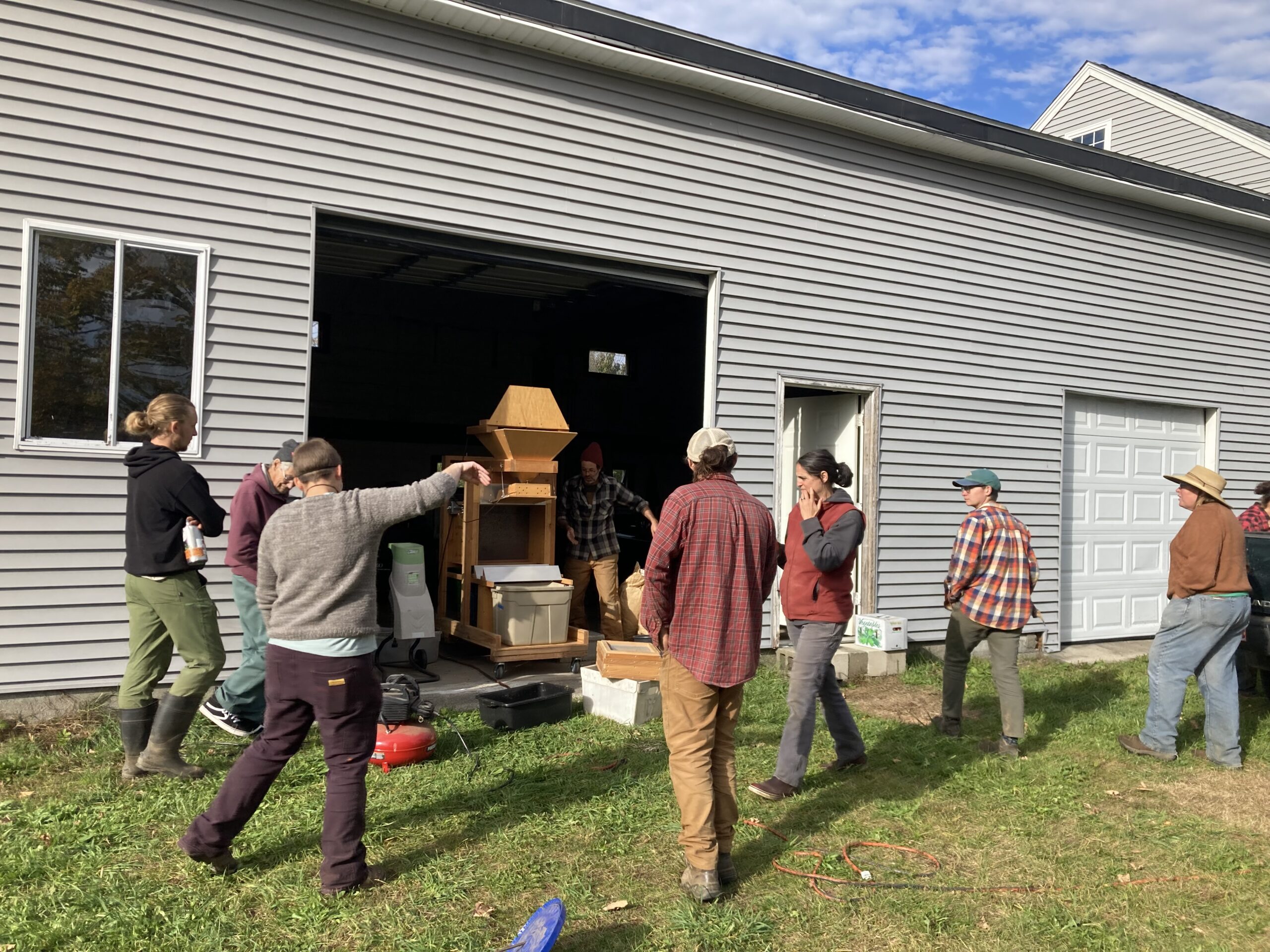
At each of the sites an in-depth training on all equipment was followed by supervised/supported equipment use.
Logistics of unit upkeep and liability:
Each grower who will use the seed processing unit on their farm will be asked to sign a simple contract indicating that they will return the trailer to the condition in which they found it, and providing full contact information. During this pilot phase, we will not ask growers to contribute towards equipment upkeep; when the project has gained traction and it is clear how equipment will be used, we will work with growers to determine use rates to pay for routine maintenance and eventually equipment replacement, plus trailer insurance. So far, no on has taken us up on this arrangement.
Record keeping for impacts:
Each grower was asked to record how much of each seed they processed using the trailer on clipboards provided. This helped track grant impacts and provide a sense of how much use equipment can sustain before needed repairs, etc. Mobile seed trailer use log
One of the first lessons learned during this project was that everyone needs the same equipment at the same time, so it is essential to do some pre-work to schedule growers on a staggered schedule so everyone has access to what they need without long waits. The next key takeaway was that none of this equipment is intuitive or easy to learn to use just from reading the manual, so in-person coaching on setup and usage is essential. Finally we quickly learned that this equipment is very difficult to use outside when the wind is blowing at over 5 miles per hour. It is possible to set up pop-up tents with sides for some protection, but working with low to no wind is better. Equipment can be set up indoors, but operation is quite dusty.
The transport of equipment can be tricky, with some damage occurring on rough roads. The equipment sustained minor scratches and dents from bumping during transport. Additionally, though we cleaned the equipment thoroughly, mice entered the trailer and made nests in the screens and ate all the wiring of the trailer, leading to an $800 repair. Mouse repellent has been used in the trailer since, and we are hopeful we won't see any repeat damage.
The usage of equipment from the trailer consistently saved growers time and effort in cleaning their seeds, particularly larger lots and hard to clean or thresh seed. Growers with smaller (1/4 to 1/2 lb) seed lots often opted to use screens and fans to clean, since these tools are quick and efficient at that scale. Threshing was particularly useful for crops such as lettuce, flowers, alliums, chenopods, and herbs, all of which can be difficult to remove from their talks or pods. Growers reported that using the thresher took half the time or less that hand removal would. Three farms who participated in trailer usage have already purchased threshers based on their experiences. The Winnow Wizard was particularly useful in removing chaff that was of similar size but different density from the seed. Crops such as alliums, lettuce, brassicas, beans, and small grains were run through this unit with great success. Not only did the Winnow Wizard take a fraction of the time of screening and using box fans, it also made it possible to be more precise in removal of chaff. It was able to separate flower pieces, split beans, and leaf and stem fragments that ran through screens.
In total, 1300 pounds of seed was run through the equipment during the project, and hundreds of growers in 5 states were able to learn first-hand about seed cleaning equipment. The bulk of the seed that was processed was heavy sorghum and bean seed, but much of the value that was processed was in light crops such as lettuce and herb seed. We have heard from growers in Massachusetts and New Hampshire of efforts to expand access to shared-use equipment based on their experience with this project, and are working on ways to continue to expand access here in New York as well, because access to the equipment makes growing seed crops more economically viable.
We sought to determine whether mechanizing seed cleaning was significantly enough more efficient to justify the cost. Equipment easily makes all seed cleaning at least twice as fast, and often many times faster than that. Some seed may be damaged by threshing, and small seed lots often have too much loss to justify using equipment. However, overall the increased speed and efficiency of equipment is a huge benefit. The cost of some equipment, particularly the Winnow Wizzard, is prohibitive for individual small scale growers. However, once seed is threshed and screened it is easy to transport, making shared use of a Winnow Wizzard very feasible. This year we processed approximately $8000 in seed at our farm, and every bit of it went through the equipment.
Our farm will continue to use all of our equipment for as long as we produce seed, and will continue to make it available to others to use as well.
Education & outreach activities and participation summary
Participation summary:
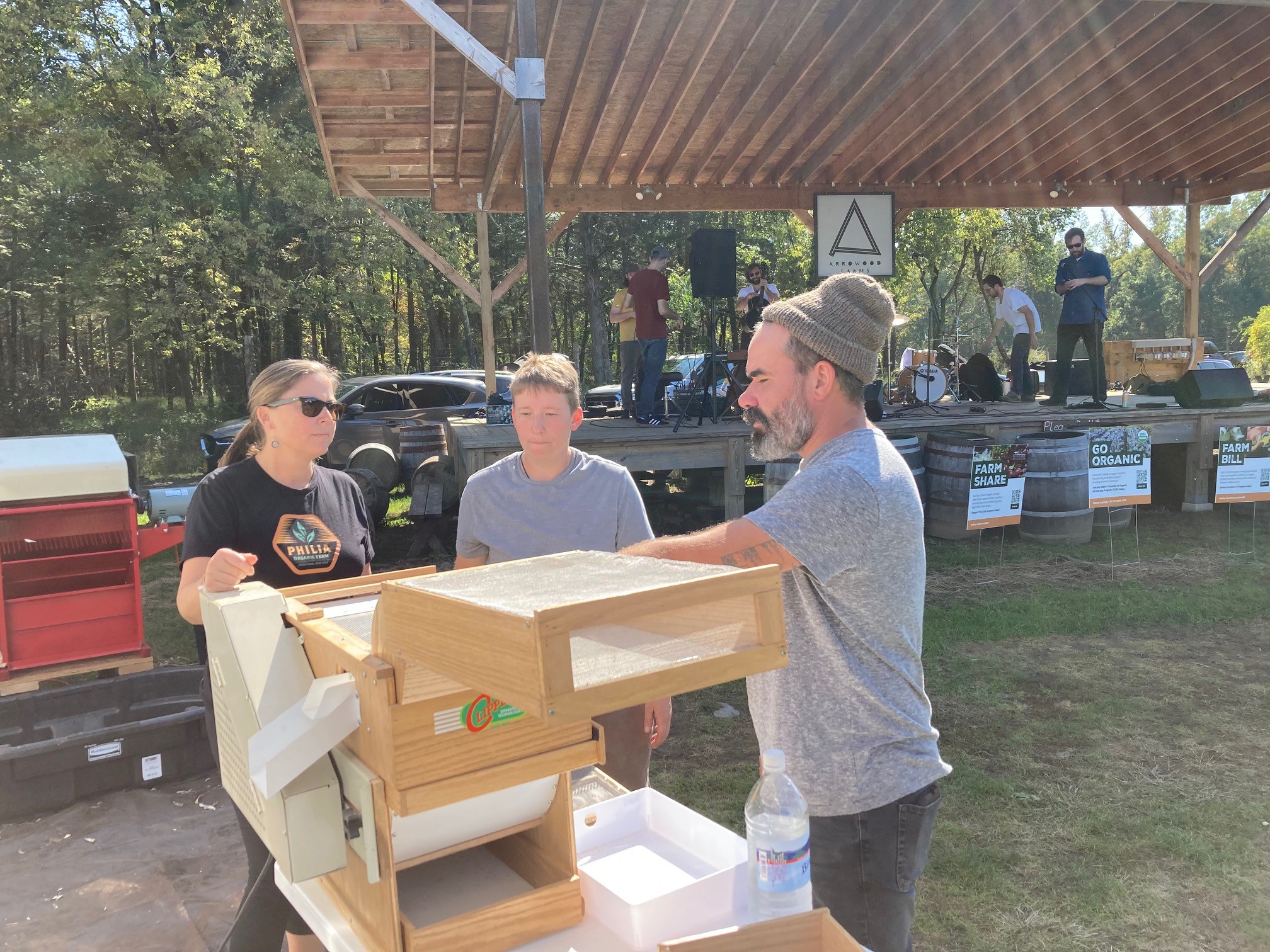
Based on advertisement of the seed trailer to the Northeast Seed class and the Indigenous Seed Keepers in 2023, 4 of the sites had enough interest to warrant bringing the trailer: the Hudson Valley in Eastern NY, Freed Seed Federation in Western Massachusetts, at the Intertribal Agriculture Councils' regional meeting at Akwesasne (northern NY), and at our farm in Eastern NY. A fifth site at the Maine Farmer to Farmer Conference convened growers but did not include the trailer, due to the the long travel distance and relatively small number of growers (4).
. 
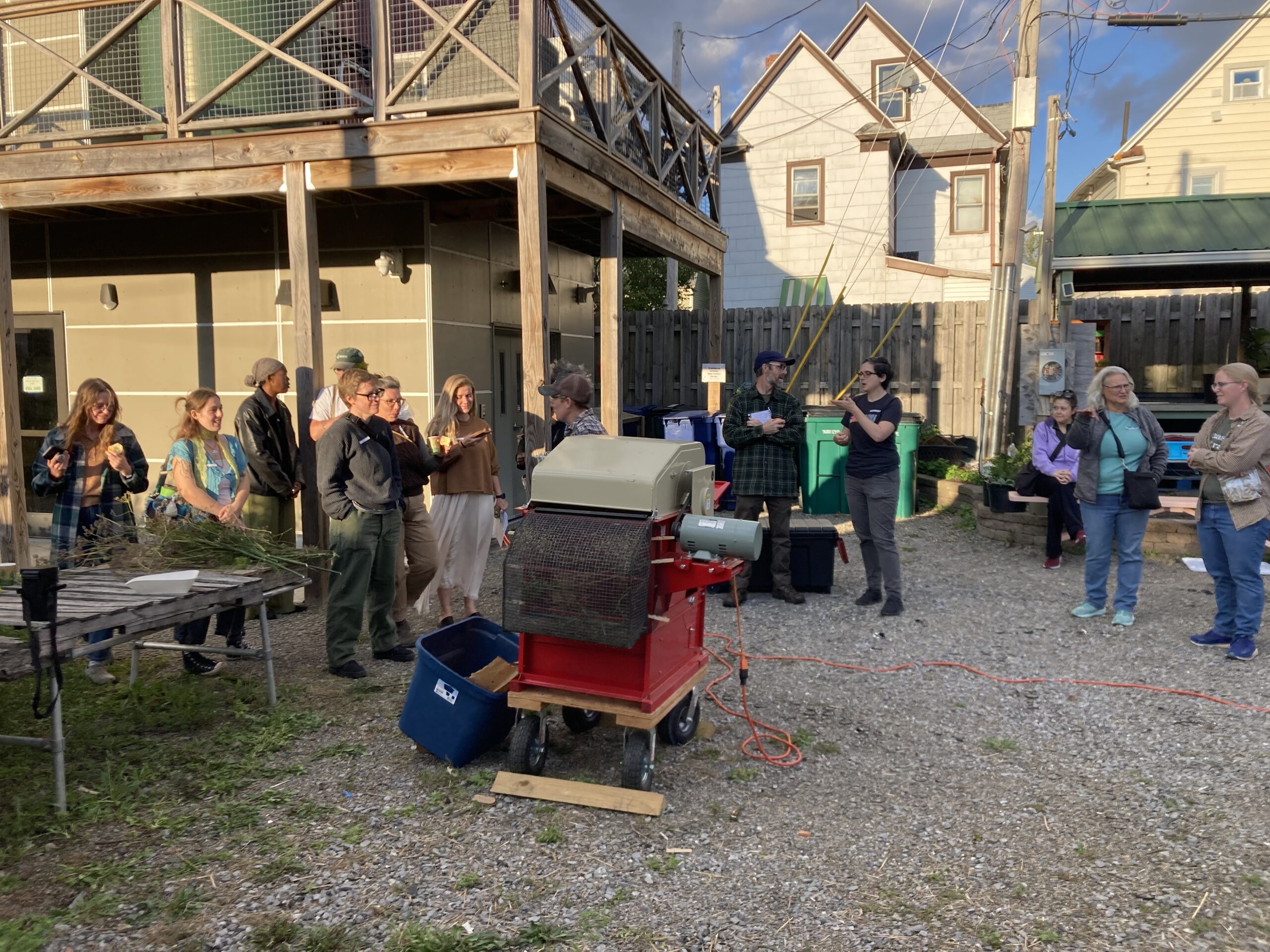
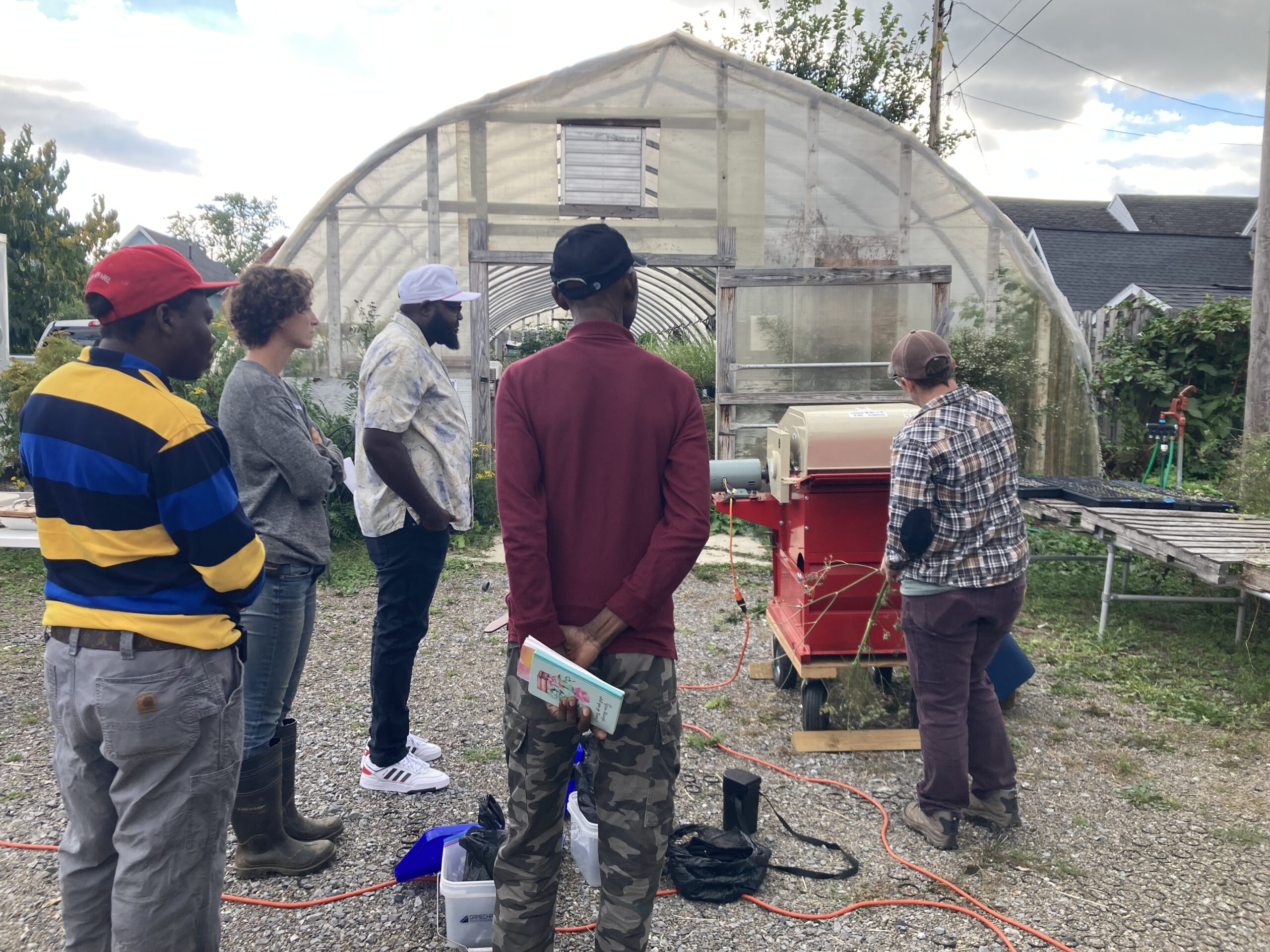
In 2024 the trailer traveled to Buffalo Seed Expo-5, back to the St. Regis Mohawk Reservation, and to two locations in the Hudson Valley of New York: Hudson Valley Seed Company for an open house weekend and to White Feather Farm for an extended use cleaning sorghum. The trailer was also discussed at a farmer-to-farmer session at the New England Fruit and Vegetable Conference in Manchester, NH in December.
Many of us had never been exposed to mechanized seed threshing or cleaning prior to this grant. We all learned that it is not only easy to use the equipment we selected but that it saves an enormous amount of time, cleaning out not only the chaff but also the smaller, less viable seeds.
We were both disappointed and at times pleasantly surprised with the quality of the thresher. It works very well on large seeds and on seeds that are embedded in a seed head. While we were hoping it would be able to thresh onion seed, it was not able to separate the seed from the umbel. In order to prevent other small seeds from flying out the back we made an improvised screen that catches everything the blower expels. So far it has worked well on a variety of small seeds including Rudbeckia and lettuce.
Demonstrating the Winnow Wizard and the Sasagawa thresher to the seed producers was successful and many were amazed with the amount of time they were able to save.
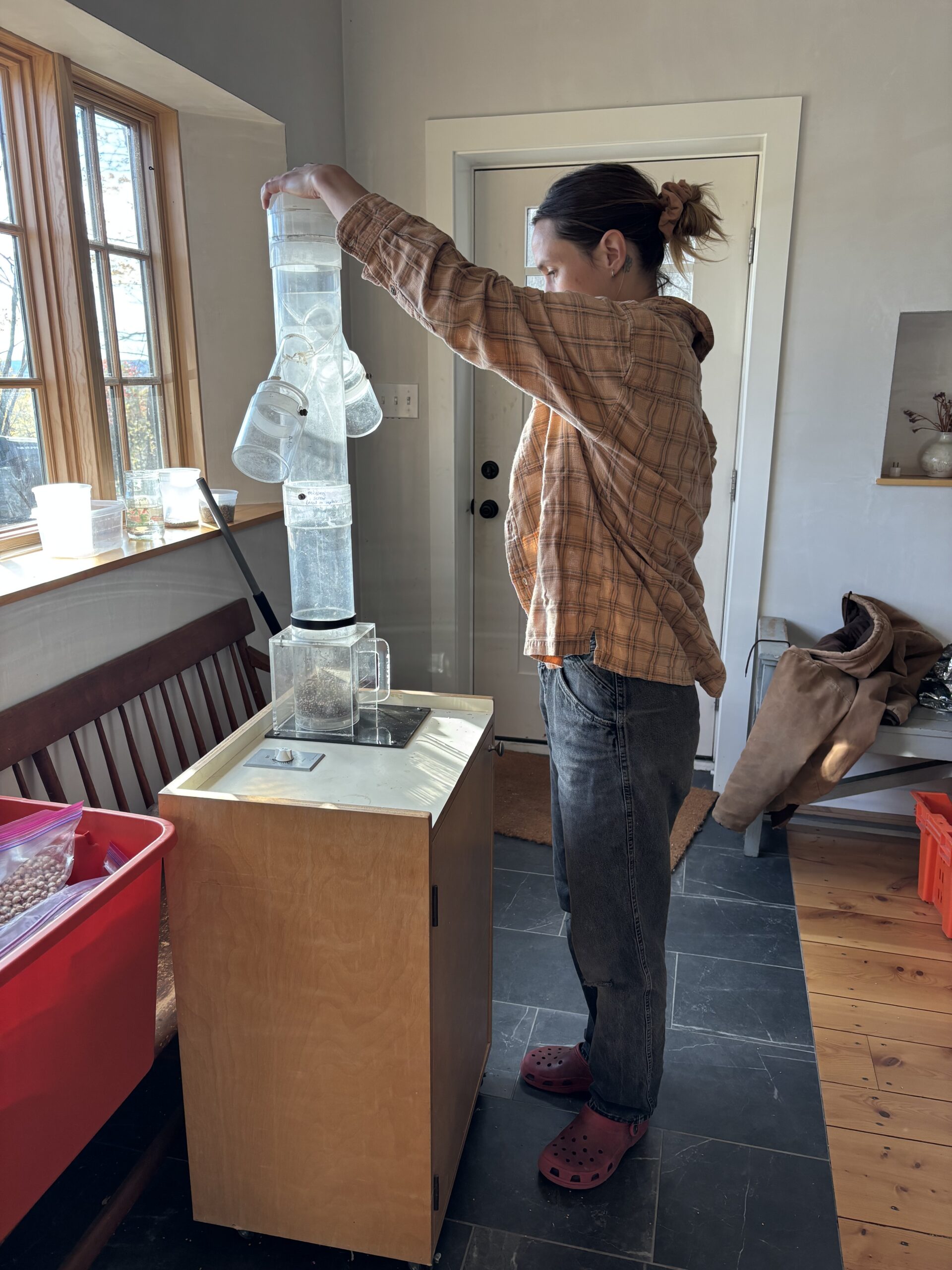
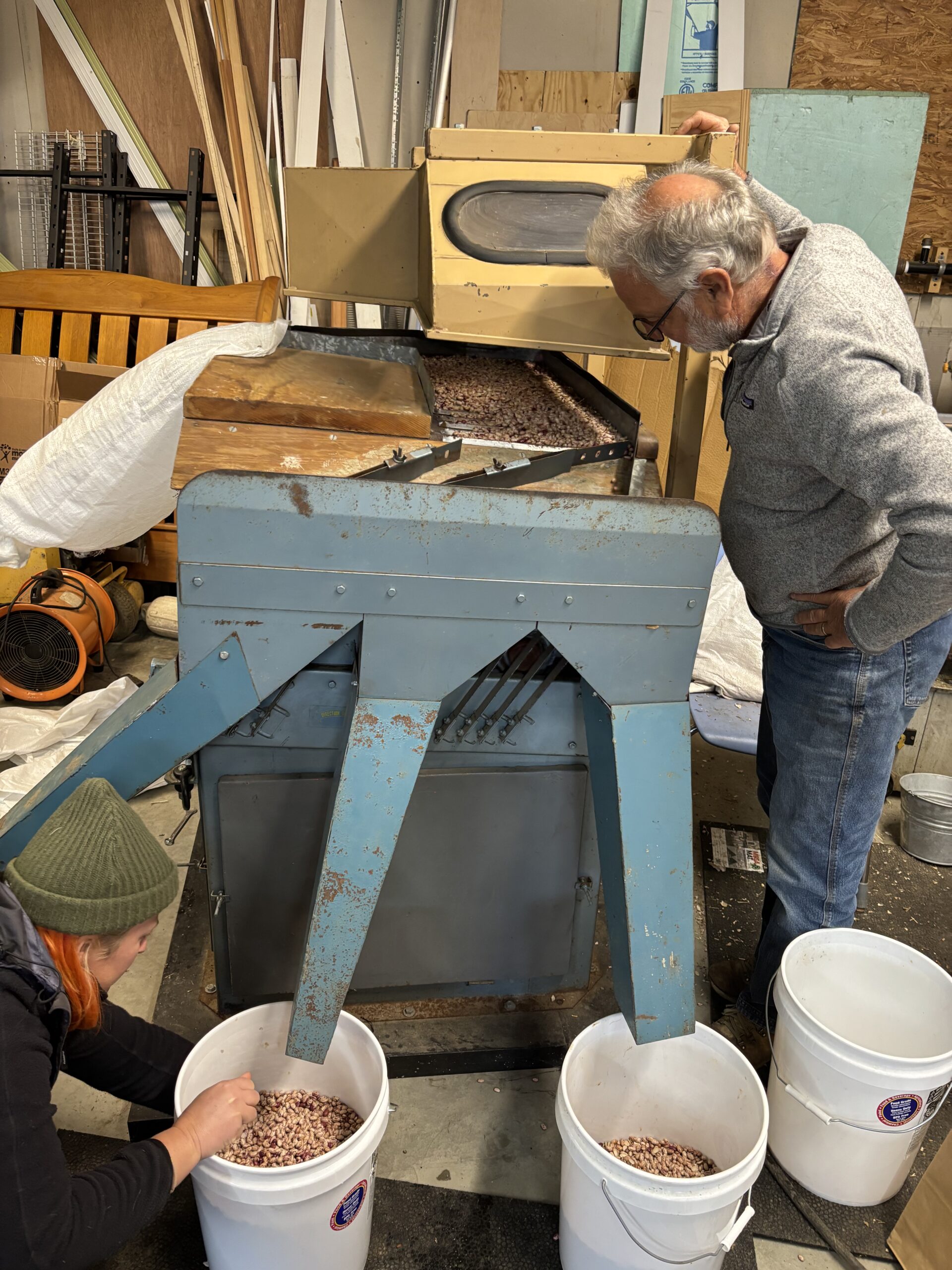
In 2025 the trailer traveled to Vermont to the UVM annual crop and soils field day, which attracts hundreds of growers. About 15 of them attended a breakout session which demonstrated the thresher and Winnow Wizard. Later in the season the trailer traveled to Salt City Harvest farm in Syracuse, NY for a seed celebration day which was attended by 65 people. The focus of this event was on community seed saving and using hand-scale tools such as screens and mason jars for wet-seed cleaning. Equipment was also used by commercial seed growers from the Hillfolk Seed Collective in Massachusetts and by larger sorghum and dry bean growers in New York. We added a few pieces of equipment that the farm procured this year.
Learning Outcomes
3 Farms, Hudson Valley Seed Company, Tuckaway Farm, and White Feather Farm have purchased equipment based on using it with the seed trailer.
15 farmers have reported that they will expand seed production based on increased confidence in processing it after harvest.
23 farmers reported increased understanding of what tools are available to process seed.
In general, farmers expressed an increased sense of community at the seed meetings.
Project Outcomes
As a result, two participants have ordered a Sasagawa thresher (Hudson Valley Seed Company, White Feather Farm). Folks in New Hampshire are working with NRCS on creating a shared use equipment pool, and folks in Massachusetts are exploring formation of a collective or cooperative that would include shared use equipment. Growers throughout the northeast have been excited by the prospect of using seed cleaning equipment to efficiently clean their seed. This project has increased the visibility of seed production.
In 2023, 11 commercial growers used the equipment to clean their seed.
In 2024, 9 commercial growers used the equipment to clean their seed, and an additional 20 came to see the equipment and learn about it at meetings.
In 2023 and 2024, 10-15 indigenous seed keepers used hand-scale equipment to clean seed at the St. Regis Mohawk Reservation, and over 45 people got to see the equipment working during the Intertribal Ag Council Regional Summit. The seed trailer was covered by Akwesasne TV here: https://www.facebook.com/AkwesasneTV/posts/pfbid02baE7DramEW1MmHw43t3NgiYBDnggeKhiKGPbLgNiQ7KRrM4Ai9ZmjCmsBVpYw4dxl?mibextid=YxdKMJ
In 2025, 10 commercial growers used the equipment to clean their seed and an additional 35 learned about it at a UVM field day. A community seed cleaning event was held in Syracuse, NY at Salt City Harvest farm, with over 65 in attendance.
On our farm, we have expanded our seed cleaning equipment beyond the grant to include a column air separator, a gravity table, and an additional thresher. We have increased seed production to include a larger diversity of crops including wet seeded crops and more chenopods and alliums, which are known to be difficult to clean. We are excited to continue sharing equipment with the seed cleaning community into the future.
The seed trailer was meant to show growers, including us, whether scaling up equipment made economic sense for growers. The range of scales from handheld screens to the Sasagawa thresher and Winnow Wizard gave growers a clear idea of what equipment worked best for them at their scale. We were quite pleased with how much use the hand screens got, and how empowered many growers were realizing that sometimes all they needed were a few specialty screens and a box fan to get seed quite clean.
We were challenged by taking the trailer long distances, and are pleased that other states are working on getting trailers of their own to reduce travel. We also haven't found a good way to orient people to the trailer without using it with them, which has been a barrier for a few people but not too many. We are looking forward to continuing to use the equipment ourselves and sharing it with our fellow seed farmers.
There is more work to be done in figuring out how to process wet seeded crops efficiently. The equipment for that is less mobile, but we would love to find a way for people to share wet seed extractors in the future.
This grant benefited vegetable growers who were interested in producing dry seeded crops.