Final report for FNE24-093
Project Information
This project sought to develop the final stage of green sea urchin aquaculture on our seaweed farm, from pre-harvest conditioning, to harvest, to marketing of new unique high-value sea urchin crops. To better understand seasonality of natural reproductive cycles on our farm, we sampled urchins throughout the year to determine gonadal development and correlated with seawater temperature. Uni quantity, measured as gonad index, was inversely related to water temperature, with gonad index increasing through fall and winter with decreasing temperatures, then decreasing after February to lows in summer months. Regular feeding regimes of sugar kelp, horsetail kelp, and dulse resulted in high quality uni with maximum gonad indexes reaching 39-42%, with overall farm gonad index values consistently higher than wild sampled urchins. Despite variability in flavor profiles between sampled urchins, all farmed uni sampled from fall to spring had good yellow-orange coloring with pleasant flavors. Alternative forms of feed were explored, with trials indicating that urchins prefer dried and fresh kelp, alaria, and dulse over frozen, and that dried forms are favorable sources of feed for both juvenile and adult urchins. New cage systems were developed for the suspended culture of urchins alongside longline culture of seaweed. Estimated stocking densities for different size classes, feeding regimes, and seasonality were determined for farm systems. These parameters will allow for the design of new sea farm systems for the integration of seaweed, sea urchin, and shellfish culture. Marketing efforts for farmed sea urchins indicate that live urchins can be a viable product, but will need more education and outreach to distributors and consumers, as customers are accustomed to a processed uni product. This project supported the development of new farming techniques, new strategies for integrating sea urchins into existing farms, and new approaches for marketing. We developed a variety of resources, including an overview of the project in the form of two posters, an updated sea urchin aquaculture resource guide through the Maine Seaweed Exchange, and a production model to evaluate the economic viability of commercial urchin aquaculture.
Objective 1:
Determine the patterns of reproduction and spawning of farmed urchins and correlate with environmental variables to better
understand seasonality.
Objective 2:
Develop a feeding regime that will ensure consistent high quality uni at harvest.
Objective 3:
Test three different specific seaweed species to determine unique flavor profiles to customize finishing diets.
Objective 4:
Develop harvest, post harvest handling, and marketing strategies for farmed sea urchins.
Once the fastest growing marine fishery in the US, the Maine green sea urchin fishery is another “boom and bust” cautionary tale. While Maine has had a small urchin fishery since the 1930’s, the fishery rapidly expanded in the late 1980’s, peaked in 1993 at 41 million pounds, then declined to the lowest levels yet in 2022, with less than 1 million pounds landed (DMR, 2022). Efforts at reseeding wild populations were unsuccessful due to high predation (Leland et al, 2001), and wild stocks have not recovered. The increasing demand for high quality uni (sea urchin gonads) has a global market of $400 million, and limited wild resource presents an opportunity for aquaculture, but urchin aquaculture represents less than 0.01% of worldwide production (James et al., 2016).
While various research trials have been conducted on urchin culture in Maine (CCAR, 2023), we are the first company to integrate green sea urchins as an diversification crop onto a commercial seaweed farm. Working in partnership with the University of Maine Center for Cooperative Research (CCAR), we have been growing hatchery-produced urchin seed in suspended lantern nets on our seaweed farm for the past 5 years, and now have several thousand urchins in different size classes that are ready or near ready for harvest. However, we need to develop the process to prepare, harvest, ship, and sell the market urchins at a higher price point than is typically received from wild harvested urchins. By providing a diet of select farmed seaweeds, we expect to develop an urchin farming system that will consistently produce the highest quality uni with optimal flavors, color, and texture. Consistency and control in uni yield and quality is unavailable in wild harvested urchins, and would allow for us to differentiate our product from existing markets and sell into premium markets.
Once we have established quality, consistency, and value of our farmed sea urchin crop, we will have completed the entire cycle of farming, from producing urchin seed in our hatchery, to growing the crop on our seaweed farm at sea, to preparing, holding, shipping, and selling our urchins. This will enable us to develop essential business plans for commercialization, and a preliminary economic feasibility report on the results of our work and current markets, to estimate potential economic viability of sea urchin farming. These business plans, reports, and farming techniques will be shared with the wider aquaculture community as a new diversification option.
Maine has recently experienced an increase in seaweed and shellfish aquaculture leases, with the majority of farms cultivating only one crop. Marine aquaculture leases are the most valuable asset to any ocean farmer. In Maine, the lease process can take several years, and represents a comprehensive process that requires considerable investment. By integrating new species into a farm, farmers can increase sustainability, profitability, and resilience of their farm business. Currently, there are only a few crop options for seafarmers, each presenting challenges. Seaweed crops lack sufficient processing and marketing infrastructure, and are very low value at the dock; shellfish can be closed from red tide biotoxin events, and can take several years to reach market size in the cold waters of Maine.
Standard commercial aquaculture leases in Maine are divided into two categories; non-discharge and discharge. Non-discharge aquaculture includes seaweed and shellfish aquaculture, where organisms obtain all their food from the surrounding environment, requiring no additional inputs. Finfish aquaculture is discharge, introducing feed into the environment, requiring a pollutant discharge permit and additional oversight by the Department of Environmental Protection. Globally, efforts to cultivate sea urchins have included use of a pelleted feed, which is often made with fishmeal, raising concerns about feed sustainability, nutrient loading in the environment, and off-flavors. To avoid the complications of the discharge category, eliminate the need for additional nutrient loading in the environment, and to build sustainability into the culture system, farmed seaweed produced on site can be used as a natural and effective feed for urchins. Both seaweed and sea urchins can be integrated into existing farms as alternative crops for diversification.
Springtide Seaweed, LLC, founded 2017, is the largest vertically integrated organic farming seaweed company in Maine, managing 55 acres of ocean farm leases, as well as a shore-based aquaculture facility, which houses an organic seaweed nursery, a sea urchin hatchery, greenhouses for drying, milling and packaging equipment, and certified processing space.
Cooperators
- - Technical Advisor
Research
Obj. 1: Our first objective was to determine the patterns of reproduction and spawning at our farm and to correlate patterns with environmental variables. This is important for understanding the reproductive cycles and some of the variables contributing to these cycles, to better predict natural cycles to optimize timing of enhancement and harvest.
Reproductive Cycles
Determine reproductive cycles through monthly urchin sampling. Sample monthly and bi-monthly from cages fed a mixed kelp diet to satiation (kelp always present in cages). Roe color, flavor, and texture estimated categorically by ranking. Gonad index (GI) calculated by, in wet weight: [(gonad wt / total wt)*100].
Environmental Data
Collect environmental data from farm site: extinction coefficient (Secchi disk), water temperature (onset data logger), salinity (refractometer), and photoperiod. Compare gonad index from sampling to environmental variables to determine seasonality of urchin gonadal development as correlated with environmental factors.
Obj. 2: Our second main objective was to develop a feeding regime that will ensure consistent roe at harvest. By providing a steady diet of optimized seaweed throughout the year, we expect that our farmed urchins will be consistent in roe quality and quantity, creating a new and superior product in contrast to the highly variable and inconsistent wild harvested urchins.
Consistent Feeding Regime Offer a diet of optimal mixed farmed kelp, sugar and horsetail kelp. Sampling of urchin roe will be accomplished in Obj. 1. In addition, we will collect data on urchin size, density, and feed input throughout the project. Urchin size and growth will be measured by regular sampling of urchins using calipers to measure test diameter.
Urchin Cage Design
Test an alternative urchin cage design. Lantern net cages are currently being used, but have a very short lifespan, as urchins can chew holes in the fabric netting. Test one or two urchin cage designs made with rigid plastic or coated metal mesh to try to find a better alternative to lantern nets. Build with rigid plastic mesh and stainless steel hog ties, zip ties, twine, and other materials available in the fishing/aquaculture industry. Test for ease of use, durability, and design out on farm by stocking with urchins and feed.
Kelp Farming
The two kelp species will be farmed on site near the urchin cages on suspended horizontal longlines. The kelp farming season typically takes place from September to June, with most of the kelp available from Feb-June. In the off season, July-Feb, we will utilize beach cast kelps, which are readily available locally after major storms, and frozen and dried farmed kelps if fresh kelp is not available.
Obj 3: Our third objective was to test specific seaweed species to determine unique flavor profiles to customize finishing diets. This information will help us determine enhancement strategies. If particular seaweed species lend specific desirable flavor profiles, we will better be able to control flavor at harvest.
Finishing Diets
We will test the most desirable seaweed species that we can grow on our farm, horsetail kelp (Laminaria digitata), sugar kelp (Saccharina latissima), and dulse (Palmaria palmata). Sampling will be done as in obj. 1 to determine GI, quality and flavor.
Seaweed Feed Production
Sugar kelp and horsetail kelp can be grown in abundance on longlines on our seaweed farm, as described in obj. 2. Dulse, a red seaweed, is morphologically much smaller than the kelps, with lower yields on longline systems. To ensure we have enough dulse for feeding experiments, we will cultivate dulse year round in tanks in our land based facility.
While fresh seaweed is preferred, there might be periods of low availability. We will test alternative forms by feeding fresh, dried, and frozen feed to urchins in tanks in our facility and monitoring feed consumption over time.
Obj 4: Our fourth objective will develop harvest, post harvest handling, and marketing strategies for farmed sea urchin.
Harvest and Handling:
When urchins are ready for harvest, transport in coolers from farm to land based facility, minimizing handling, exposure, or stress. Hold in fiberglas tanks with mixed kelp, ambient temperature seawater with aeration and low light until ready for shipping or sales.
Packing and shipping methods:
Seawater shipping methods: Trial shipping live urchins in seawater containers with gel packs. Determine best shipping practices and acceptable time frames. We expect that most urchins will require an overnight shipment, with immediate use, but will try to develop methods and systems to allow restaurants in Boston or New York to receive live urchins in good health after 48 hours. We will investigate alternative shipping options, including working with seafood distributors that can offer overnight shipping to a wider audience.
Marketing:
Meet with potential customers with urchins for feedback. Visit distributors and markets in Boston and Portland. Create a business plan and economic analysis based on findings and updated market information.
Initiate Project: Project final agreement was not executed until May 9th, 2024, 2 months after planned start date.
Year 1 Progress Report: Project Period Activities 5/9/24 to 1/15/25.
Year 2 Progress Report: Project Period Activities 1/15/25- 1/15/26
End of project: 5/2026
Obj. 1: Our first objective was to determine the patterns of reproduction and spawning at our farm and to correlate patterns with environmental variables. This is important for understanding the reproductive cycles and some of the variables contributing to these cycles, to better predict natural cycles to optimize timing of enhancement and harvest.
We sampled urchins from our farm for 18 months, from September of 2024 to March of 2026, collecting test diameter, total weight, uni weight, and uni observations. Gonadal index (GI) calculated by, in wet weight: [(gonad wt / total wt)*100], is a measure of the proportion of gonad weight to total body weight, where a GI index of 10-15% or higher is generally considered commercially acceptable.
Average gonad index increased through the fall and winter, then decreased after February to lows in June and July (Fig. 1). Gonad proportions in farmed samples were high, with maximum values from 10.7% (2024) to 26.9% (2025) in September, 20.3% (2024) to 26.3% (2025) in October, and over 30% in Nov, Jan, and Feb 2024 and Nov 2025 through March 2026 (Table 1). These values are higher than reported values of wild or enhanced green urchins, which typically reach 20-25% at their peak. Average GI values were also higher the second year of sampling compared to the first, which is probably the result of a more consistent feeding schedule during the summer of 2025.
Seawater temperatures were monitored with Hobo dataloggers on urchin cages, and additional temperature data was added from the nearby NOAA buoy. The data loggers collect water temperature and light intensity, but light sensors on loggers are quickly fouled and do not provide reliable light data. Average water temperatures are shown alongside gonad index in Fig. 1.
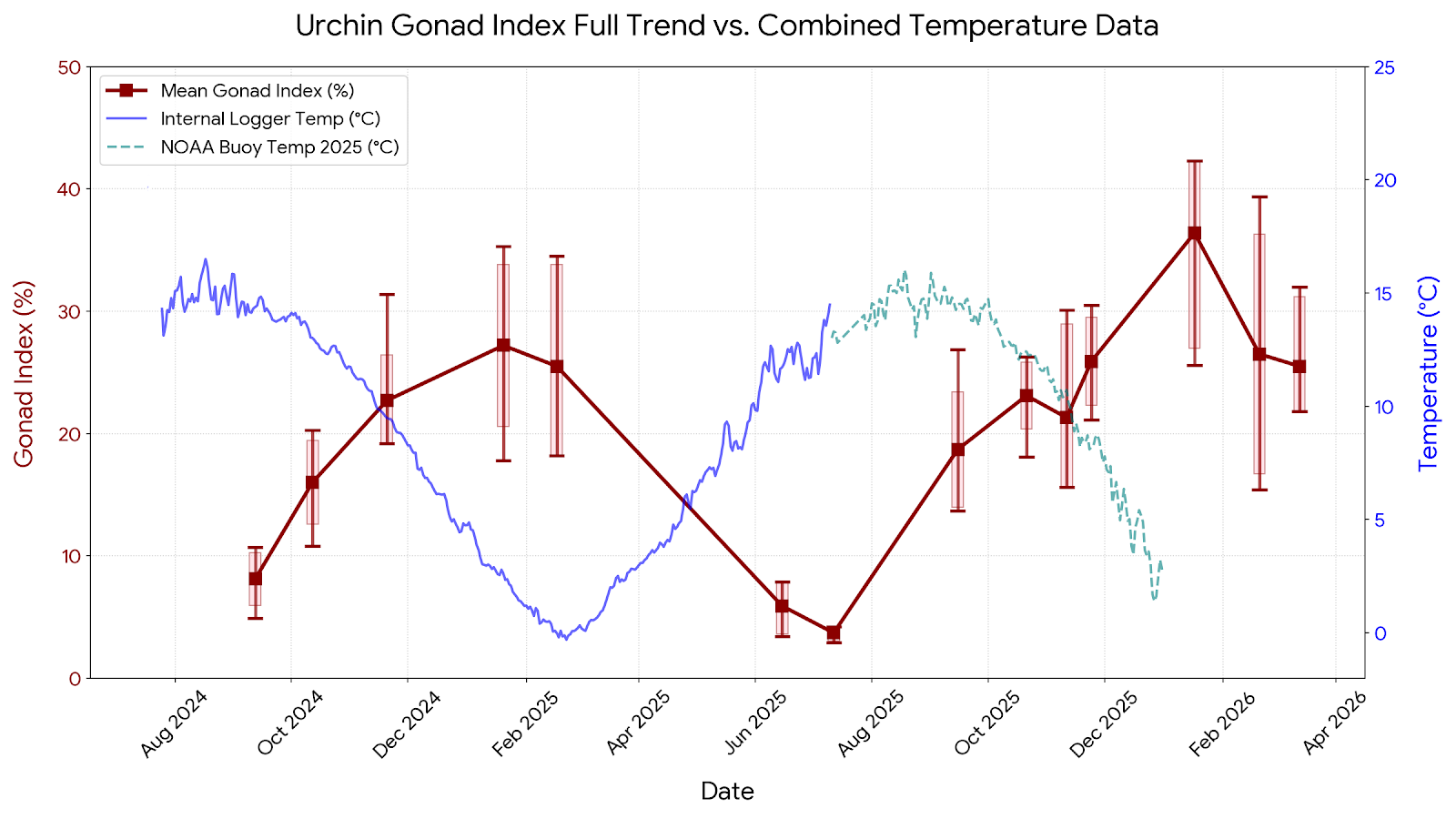
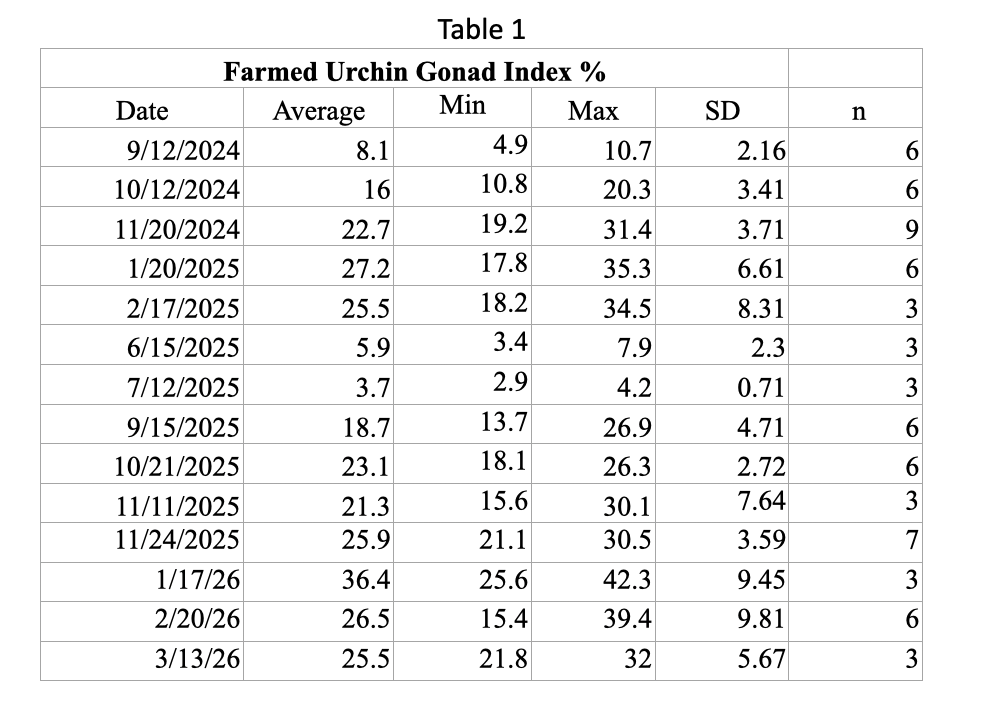
Comparison of Gonad Index of Farmed and Wild Urchins
Wild urchins collected locally by commercial divers were obtained for uni sampling to compare to Springtide’s farmed urchins in Jan and Oct/Nov 2025. Across all test periods, sampled farmed urchins yielded a significantly higher gonad index than wild urchins, with farmed urchins reaching a mean gonad index of 25.01% (±4.77%), peaking at an individual maximum of 35.3%. In comparison, wild urchins yielded a significantly lower mean gonad index of 16.46% (±2.40%), with a maximum observed yield of only 18.9%. Farming practices consistently produced an average gonad volume increase of roughly 8.5 percentage points over wild-harvested urchins. Farmed individuals also demonstrate a much higher ceiling for maximum market quality (35.3% vs 18.9%).
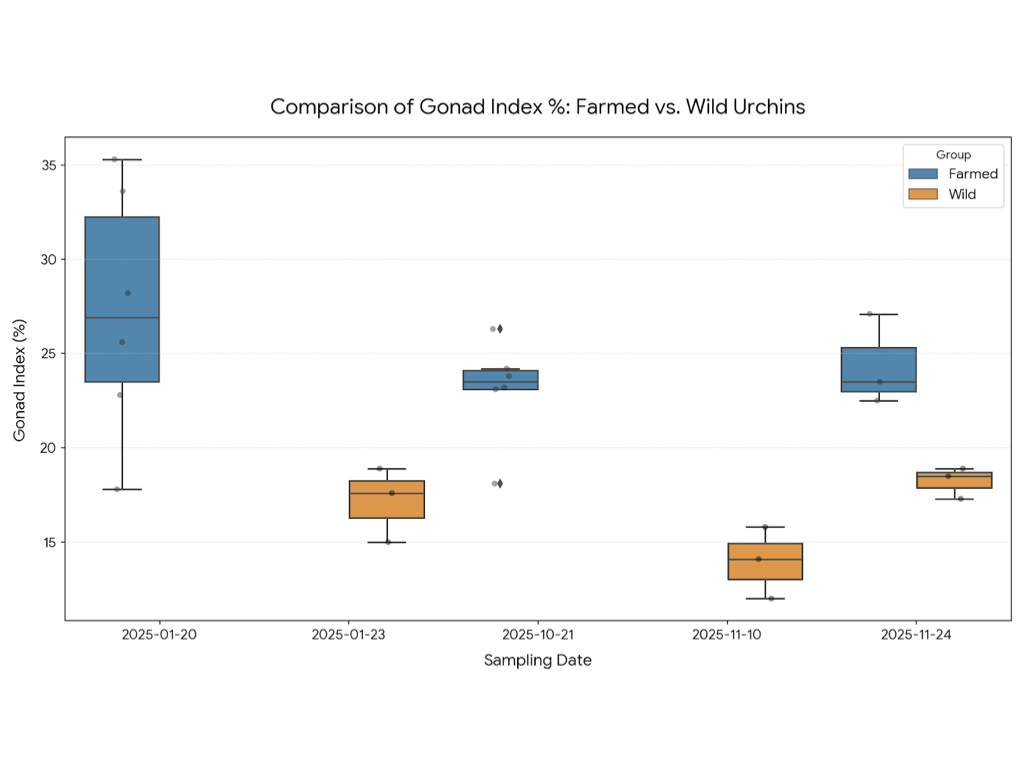
Uni Quality
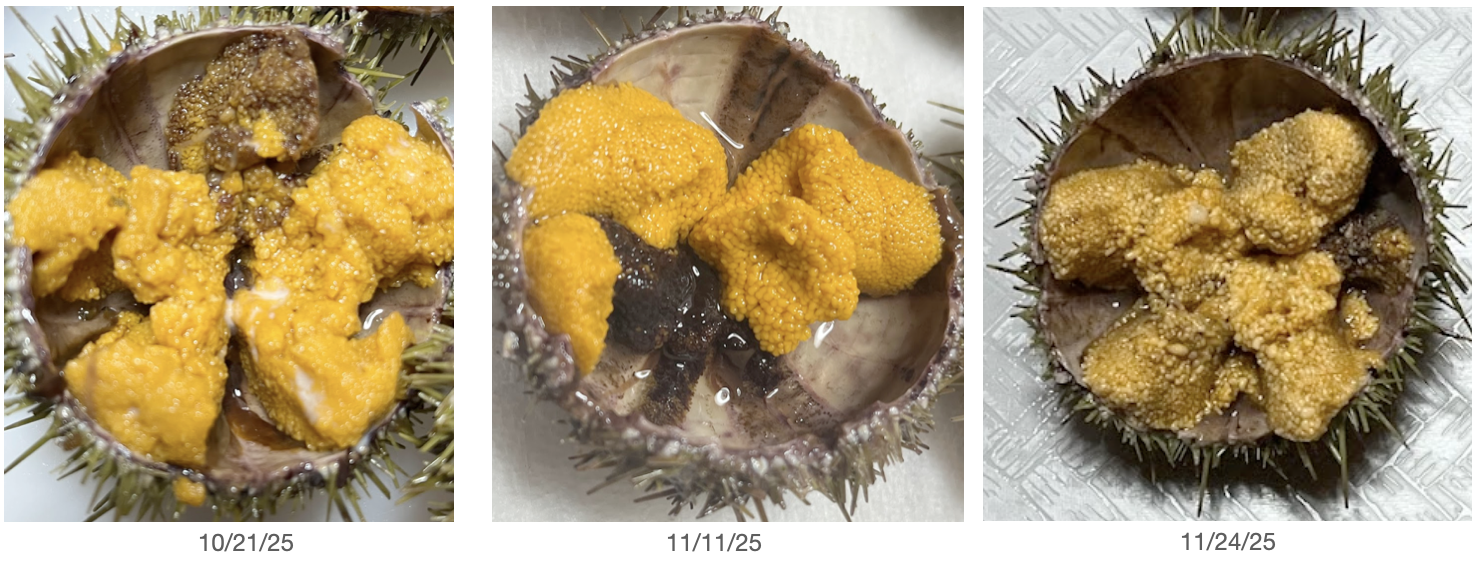
Farmed urchin samples were analyzed for uni quality and yield by both cracking in half with an urchin tool, and by cutting away the bottom half of the shells with shears. We adopted the removal of the bottom half of the shell for comparison purposes. Once shells were opened, the urchin was cleansed of internal organs with tweezers, rinsed with freshwater, soaked briefly in an seawater ice bath, and photographed (figure 3). Uni was removed and weighed, tasted, and analyzed for color and texture. All samples in fall and winter were of a yellow, yellow-orange, or orange color, ranging from bright orange to brown-orange, with pleasant flavors that were described as buttery, sweet, vegetal, briny, and creamy, with aftertastes of kelp, lobster, and clams, with occasional instances of astringency, iodine, or bitterness. Despite overall patterns in gonad index over time, there is a high degree of variability between individual urchins in uni flavor and texture, though nearly all uni had pleasant flavors and would be marketable.
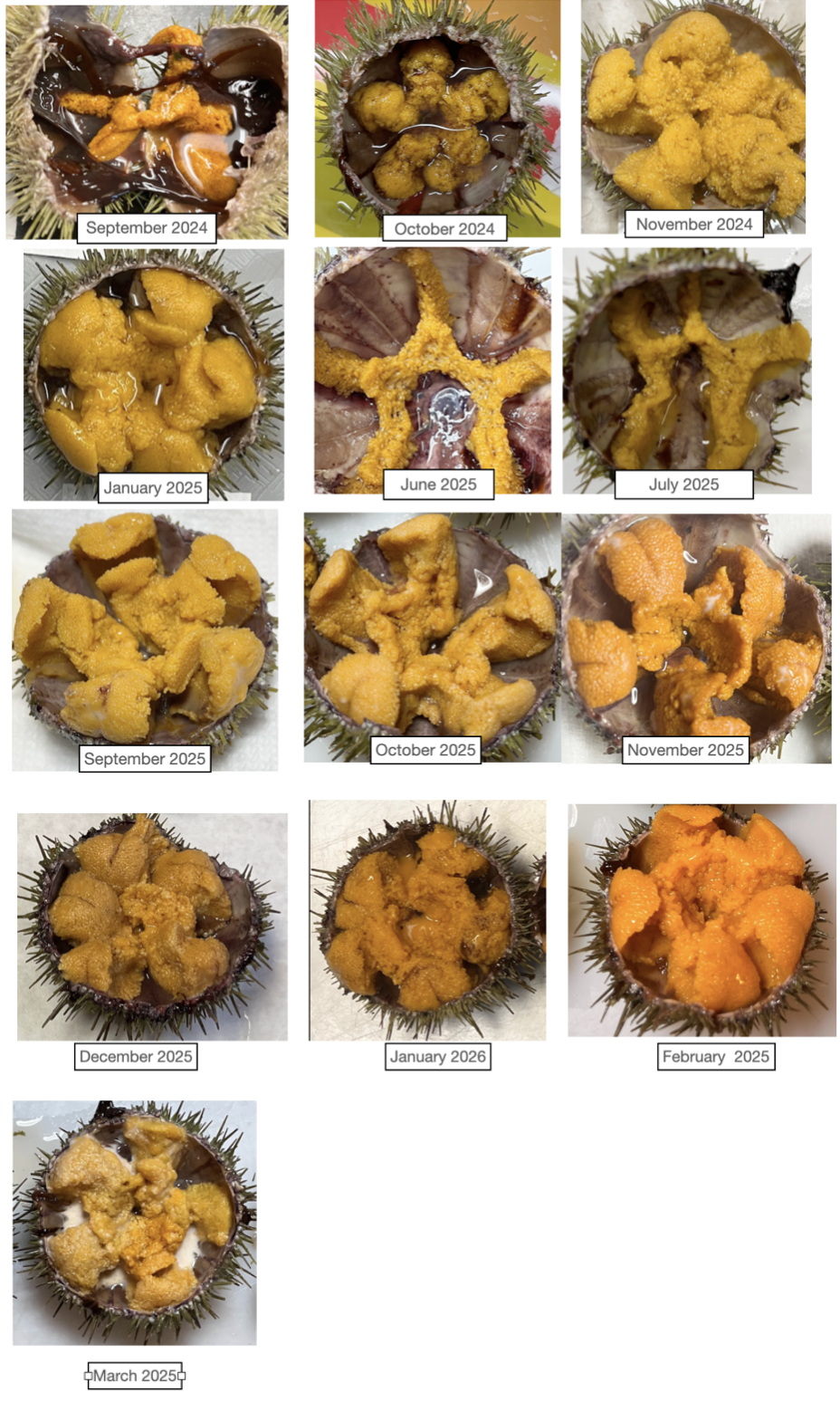
Uni was not tasted in June or July due to poor quality and very low Gonad Index, however, small amounts of eggs and sperm were released, and when mixed, formed some halos observed under the microscope, indicating that there is some level of reproductive potential occurring year round.
In 2025, there were a few instances of one or more lobes in an urchin being gray, shrunken, or discolored with a black or purplish tint (figure 4). Male uni was observed to be releasing milt during sampling nearly every month sampled, but with increasing occurrences from November on. Reproductive male uni was still edible and the flavor was consistent with other samples.
Obj. 2: Our second main objective was to develop a feeding regime that will ensure consistent roe at harvest. By providing a steady diet of optimized seaweed throughout the year, we expect that our farmed urchins will be consistent in roe quality and quantity, creating a new and superior product in contrast to the highly variable and inconsistent wild harvested urchins.
Urchin Cage Design
Upon inspection of existing urchin nets on farm at project initiation, it was discovered that all of the lantern nets in use were damaged, allowing significant numbers of animals to escape. Sea urchins chew holes in the mesh fabric, and the heavy bio-fouling on the mesh weakens and damages the Velcro and wire frames. It was therefore critical to secure urchins immediately by moving into new enclosures. The lantern nets formerly used were no longer available for sale, and the only available lantern nets were too small for our purposes, so we had to develop our own cage systems. Several different urchin cage designs were built and tested, utilizing different types of surface mesh and cage openings. All cages were based on a coated metal wire cylinder covered in a plastic mesh. We tried polypropylene deer netting (18mm mesh opening) and rigid plastic mesh (13mm, 9mm, 4mm), and built cages to hang vertically with shelves, and horizontally with and without shelves. We suspended cages from the center and from the sides. The final design is a horizontally suspended cage, with a flap on the end that opens for feeding and sampling of urchins. Each cage is suspended from a horizontal longline at about 10 feet depth in winter and 20 feet depth in summer, and held with one hardshell buoy at the surface. The new cages are easy to bring onto the boat for feeding, don't collapse, are resistant to urchin chewing, and foul less than lantern nets.
Biofouling on Cages
Macroalgal fouling on cages is heaviest in spring, and consist of a mixture seaweeds, including sugar kelp, red and green turf algae, green ulva, and red, brown, and green filamentous algae, as well as hydroids. Cages have to be scraped down on the outside with the edge of a knife to clear the macroalgae growth. Moving into summer, the dominant fouling organism is the invasive skeleton shrimp, thickly coating lines and cages. This usually starts to increase in June, to a high in September/October, and then decreases in the winter. To control, we sprayed cages with either white vinegar or freshwater, being careful to remove or protect the urchins with a covering of kelp. Spraying and brushing cages with a rigid deck brush reduced shrimp infestation on lines and cages. No or few sea squirts were observed on cages, however, suggesting that high loads of skeleton shrimp may prevent the settlement or development of sea squirts.
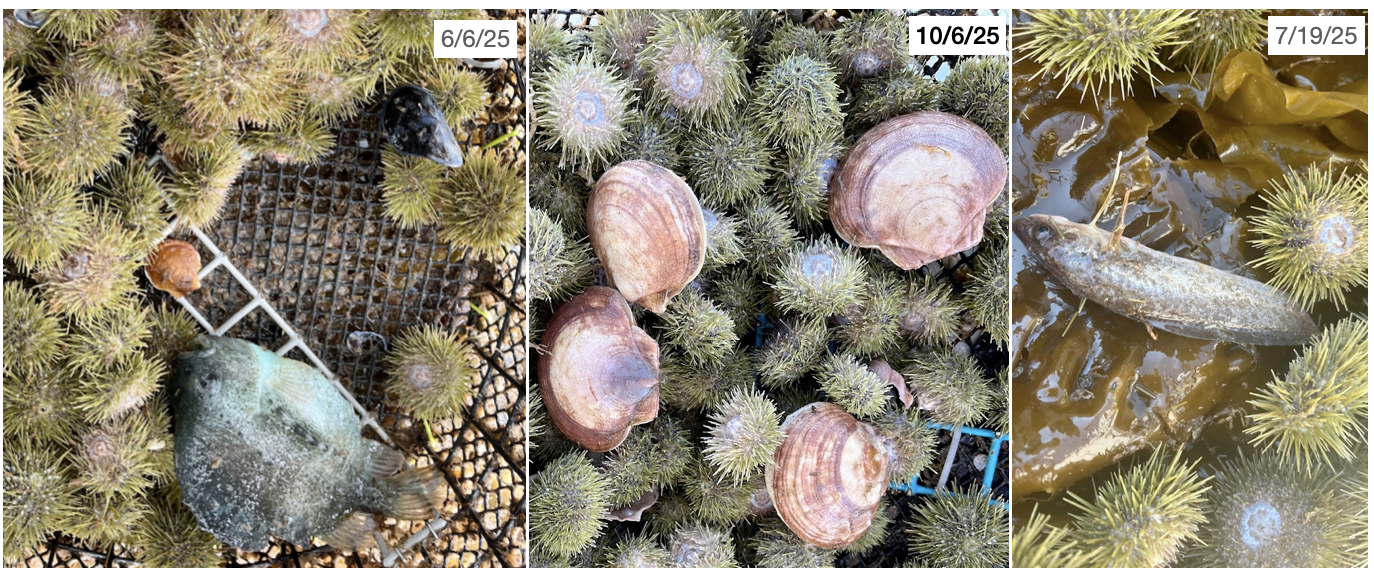
Lumpfish, Scallops, and other Visitors (figure 5)
Lumpfish (Cyclopterus lumpus) are a common wild visitor to farmed seaweed lines, and have been observed to be swimming around the outside of urchin cages, and are sometimes found inside cages as small juveniles. We added small lumpfish to cages to test if they would reduce the skeleton shrimp infestations in the summer months. The lumpfish resided in cages successfully for 8 months or more, and seem to help clean the insides of the cages.
Sea Scallops
Lantern cages had previously captured natural scallop spat in the area, so we have been cultivating these scallops with our sea urchins. When we moved all the urchins over to rigid cages, the scallops were all moved together in one cage with no urchins. High amounts of fouling in the form of barnacles and blue mussels were impeding the scallops, so some sea urchins were returned to the cages with the scallops to act as cleaners for the shells. Sea urchins are effective grazers for scallops, and keep shells clean.
Urchin Inventory
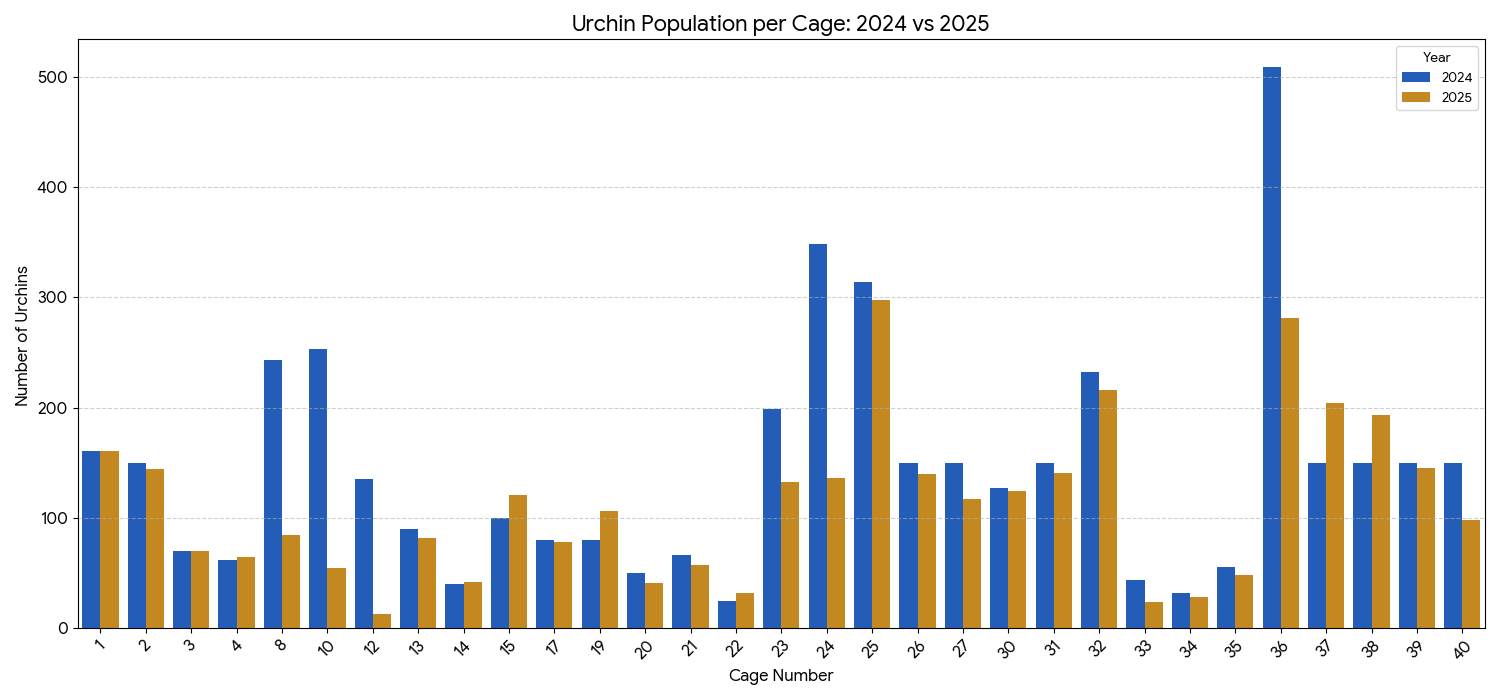
We collected initial data on urchin size and density as we moved all urchins into new numbered culture cages to create a full inventory, for a total of over 6,000 urchins in 40 cages in year 1. All cages were fed by filling with sugar kelp primarily, with variable amounts of other available seaweeds. Urchin size and growth were measured by sampling of at least 10 urchins from each cage by taking photos, and using calipers to determine test diameter. In Year 2, many of the new cages had been chewed open at the seams by urchins, resulting in more escapes. All of the cages had to be re-configured again with wire instead of twine, and a new full inventory was conducted and updated.
A full inventory of cages was made in 2024 and 2025 (fig 6). Due to cage design failure and large number of escapes, as well as some mortality, sampling, and urchin transfers, the change in cage density from 2024 to 2025 was highly variable. Eliminating cages that showed drastic decreases due to escapes or increases due to transfers, average loss was about 11% per year. New cage counts in 2026 with cage improvements will provide a better estimate of average losses due to natural mortality, but from this initial work, we can estimate average yearly losses of 10-11%.
Cage Densities
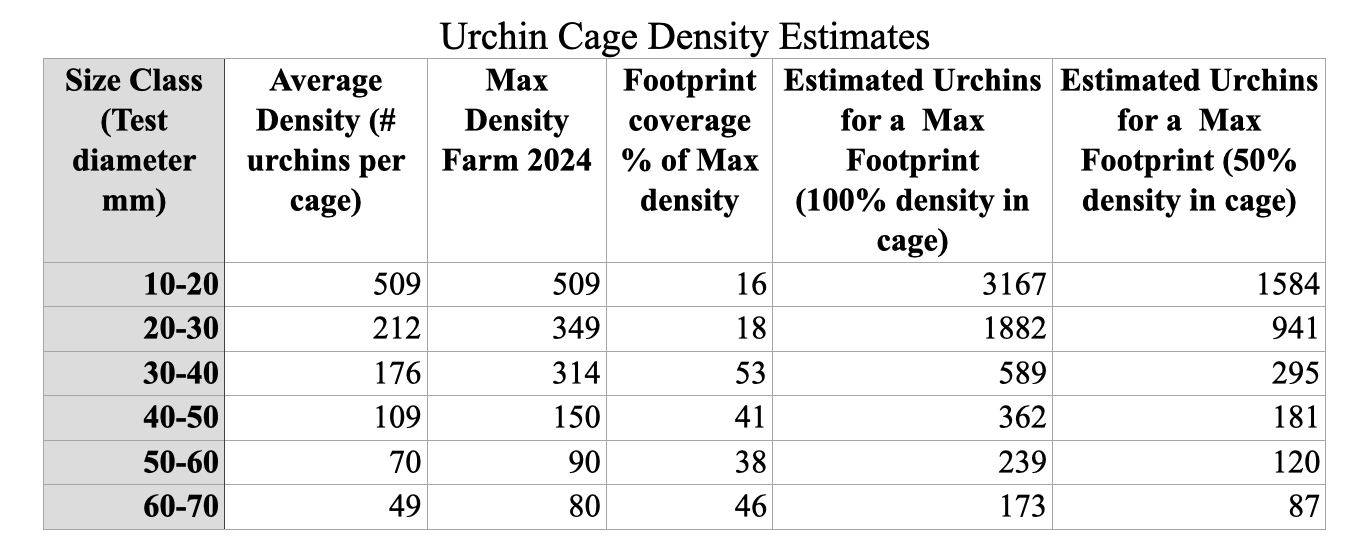
Cages from the farm inventory were analyzed for urchin densities per size class. Size classes were split into groups of ten, and sizes were determined using urchin test diameter (mm), measured with calipers on farm. Average densities on farm in 2024 decreased with increasing size, from 509 urchins in the 10-20 mm size class, to 49 for the 60-70 mm size class. (Table 2) The cylindrical cages have a total inside surface area 1.2m2. If the footprint of each sea urchin is calculated as total diameter including spines, a ratio of 1.45 can be added to test diameter, based on an average of measurements of seed urchins from sizes 5-30mm. Based on these calculations, average stocking densities on the farm ranged between 16 and 53% total surface area coverage, and we can utilize these numbers to estimate stocking densities at different levels of inside cage surface area.
Sea Urchin Growth
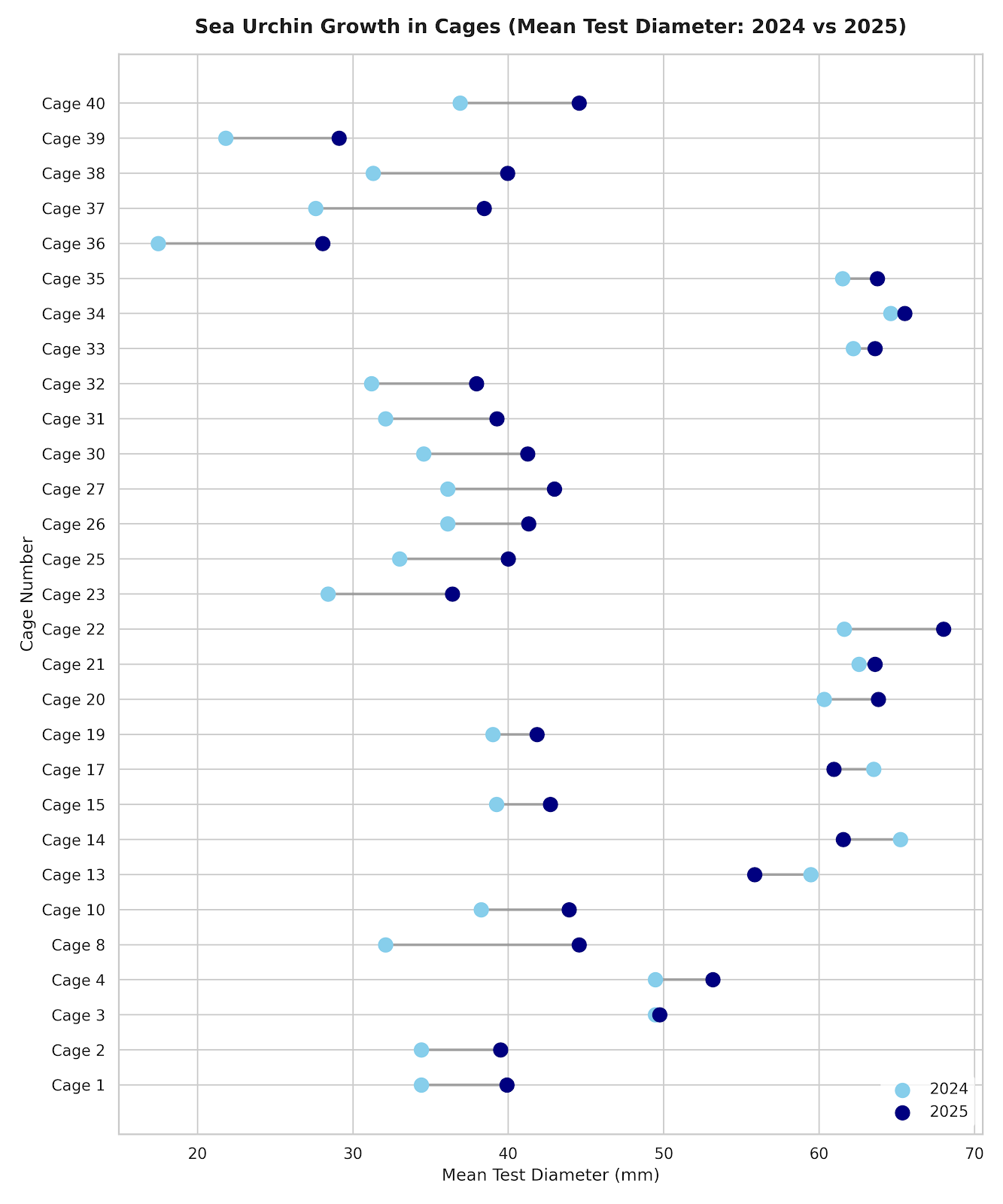
Test diameter of sea urchin samples from cages were measured in 2024 and 2025. Cages with data from both years and exhibiting positive growth were analyzed for growth patterns (fig 7). On average, the increase in test size was 5.7 mm, with a range of 12.45 to 0.2mm. This data may not represent a true estimate of growth over one year, as there were issues with gear, escapes, and transfers, and should better represent growth once gear and feeding regimes are stabilized. However, several cages exhibited growth of 10-12mm per year, which is the expected average growth rate of green sea urchins. Smaller urchins (under 45mm) grew at a much faster percentage rate compared to larger, more mature urchins (over 50mm).
Obj 3: Our third objective is to test specific seaweed species to determine unique flavor profiles to customize finishing diets. This information will help us determine enhancement strategies. If particular seaweed species lend specific desirable flavor profiles, we will better be able to control flavor at harvest.
Seaweed Cultivation
Sugar kelp and horsetail kelp were cultivated on longlines on the farm, and a smaller amount of dulse was cultivated on specialized suspended gear. While there is plenty of high quality kelp available for feeding from March-July, it is more difficult to obtain sufficient food the rest of the year. We tested growing tumble cultured dulse in cages at sea to reduce nursery costs of production, but growth was slow and by the summer, the plants were encrusted by bryozoans.
Feeding Regime
While we initially were able to offer a diet of optimal mixed farmed sugar kelp and horsetail kelp, it was difficult to provide an even mix consistently through the season based on availability and quality. Sugar kelp was the feed most consistently available throughout the year. While smaller urchins consumed feed more quickly than larger urchins, in general, a feeding regime of every 2 weeks will keep urchins satiated. This feeding schedule should be followed from spring to late fall to optimize uni production. Ideally, farmed urchins will be ready to market from September through December, as winter weather restricts access to the farm for harvest. Urchins can persist for long periods of time without feed, which gives some leeway to farmers if situations arise that disrupt feeding schedules.
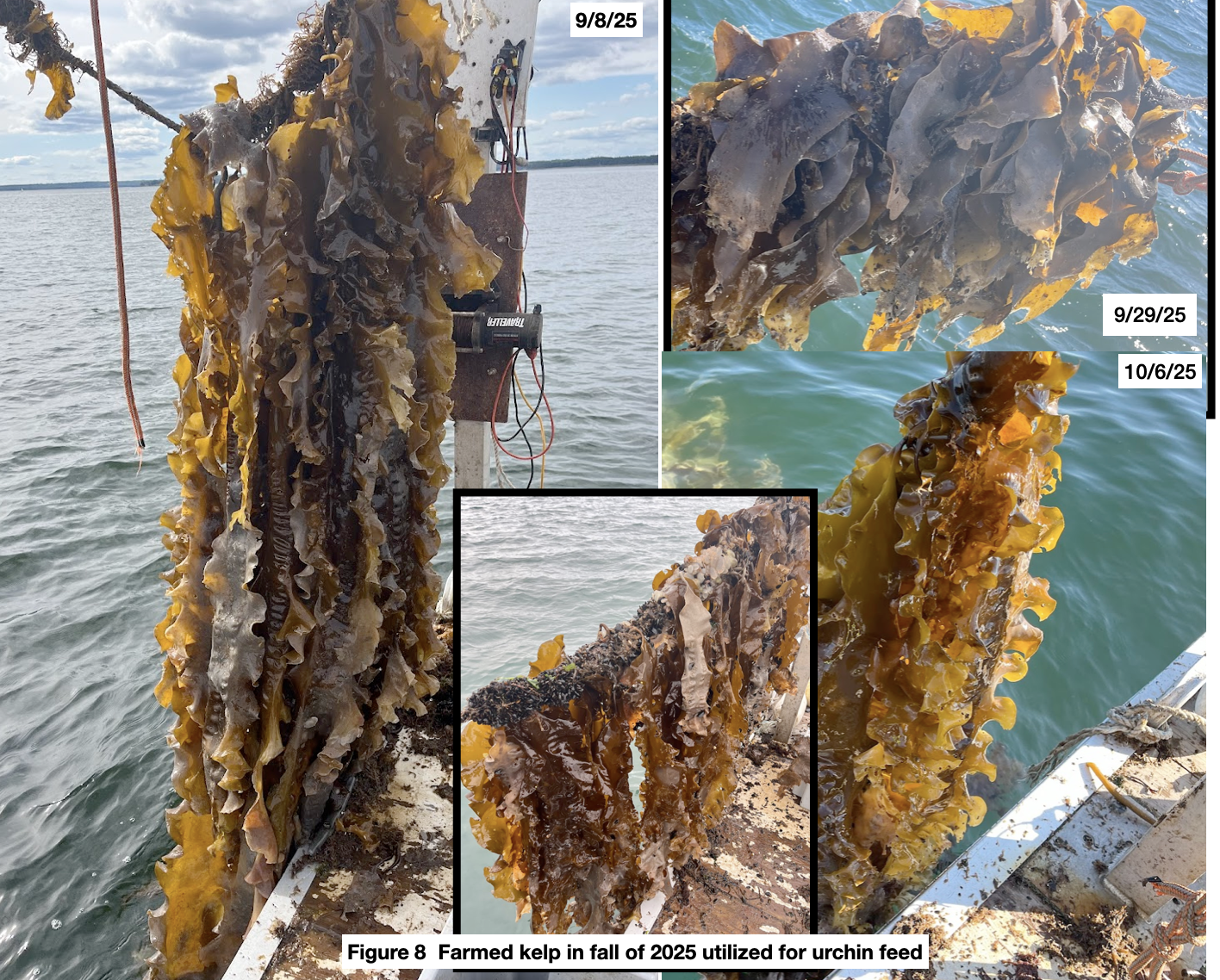
Biofouling is a major issue for seaweed feed production in the summer months. By the end of summer, the sugar and horsetail kelps can become so fouled with bryozoans and other organisms that it becomes mostly unusable, especially in the case of the horsetail kelp. However, lines that were left through the summer during this project started to show new growth in the fall and were utilized for urchin feed through the year (figure 8). There was a blue mussel seed set on the lines in late summer/early fall, which provided another source of feed for the urchins, provided that the mussels are small enough for the urchins to feed on. While urchins don’t seem to feed on skeleton shrimp, they were able to utilize the fouled kelp and consumed all that was placed in their cages. A freshwater dip can reduce the density of skeleton shrimp on the kelp, and we employed this method several times to provide cleaner feed. These seaweed lines provided critical feed for urchins through the summer and fall. It will be essential to improve feed availability throughout the year to produce enough food to supply urchins.
Feeding Trials
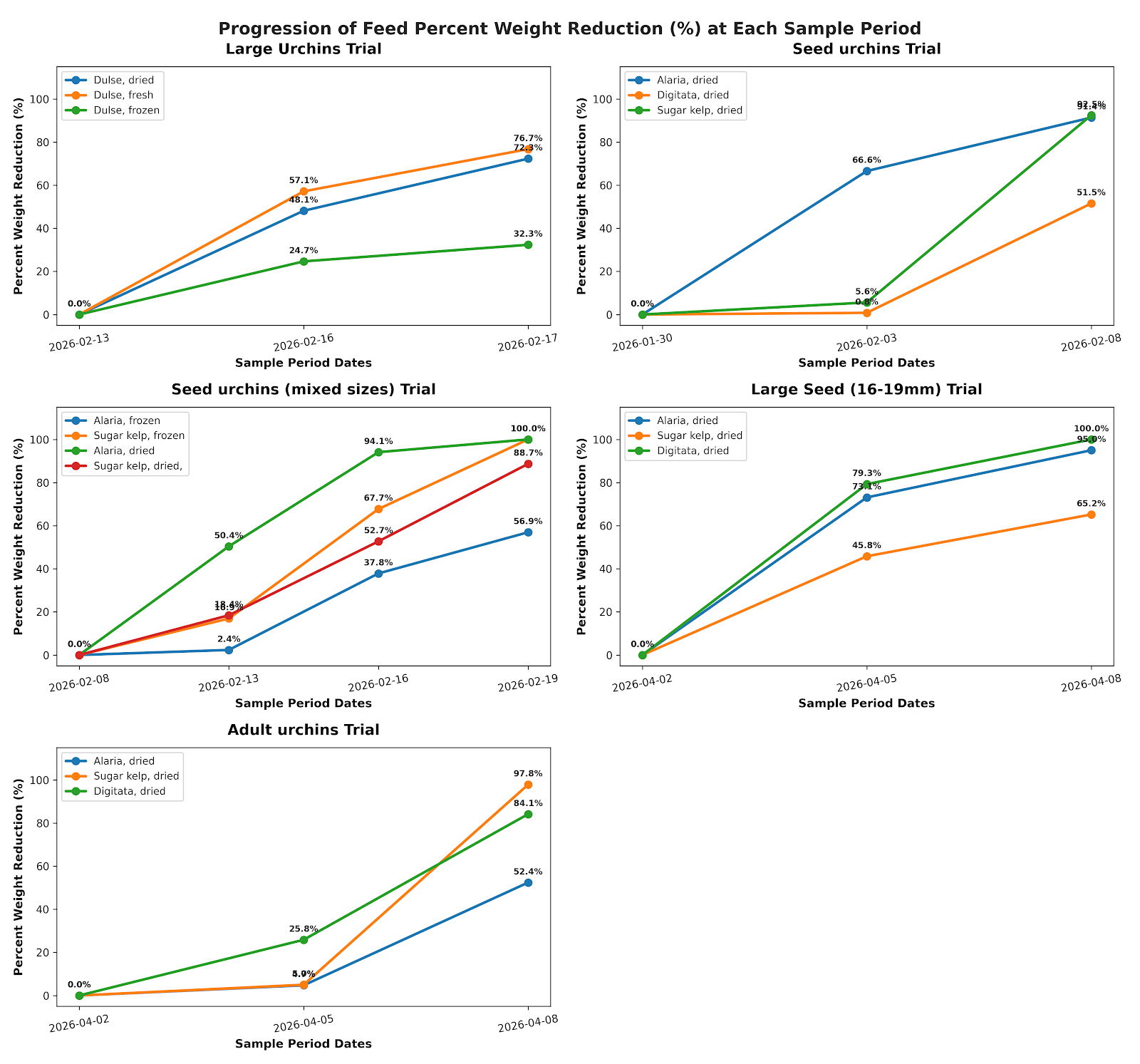
While fresh seaweed is preferred, there are periods of low availability. A variety of fresh, frozen, and dried seaweeds were fed to large adult urchins and smaller seed size urchins in tanks in our facility and monitored for feed consumption over time. All dried and frozen samples were re-hydrated in seawater for several hours before determining starting weight. Samples were removed every few days and weighed to determine feed rate and preference (figure 9). Adult urchins fed samples of fresh, frozen, and dried dulse preferred the fresh and dried forms over the frozen. Adult urchins fed a variety of dried farmed kelps consumed more Sugar kelp and Digitata than Alaria. When small juvenile seed urchins were fed dried kelps, there seemed to be a higher preference for Alaria, and variable consumption rates for Sugar kelp and Digitata, with all dried kelps consumed at 51-100% after 6-9 days. When juvenile urchins were fed samples of frozen and dried Sugar Kelp and Alaria, there was a clear preference for dried Alaria over frozen, and similar consumption rates for the dried and frozen Sugar kelp. A primary finding across the experiments indicates that processing methods influence palatability, with dried or fresh macroalgae consistently outperforming frozen treatments. The data suggests an age-dependent dietary preference of younger seed urchins for dried Alaria, and strong but variable consumption of sugar kelp and digitata. Adult urchins had higher consumption rates of dried Sugar kelp and Digitata over Alaria. These preliminary results suggest that dried kelps and dulse can be utilized to provide feed for urchins when fresh seaweed is limited, and that dried feed is preferable to frozen.
Kelp and Dulse Feed
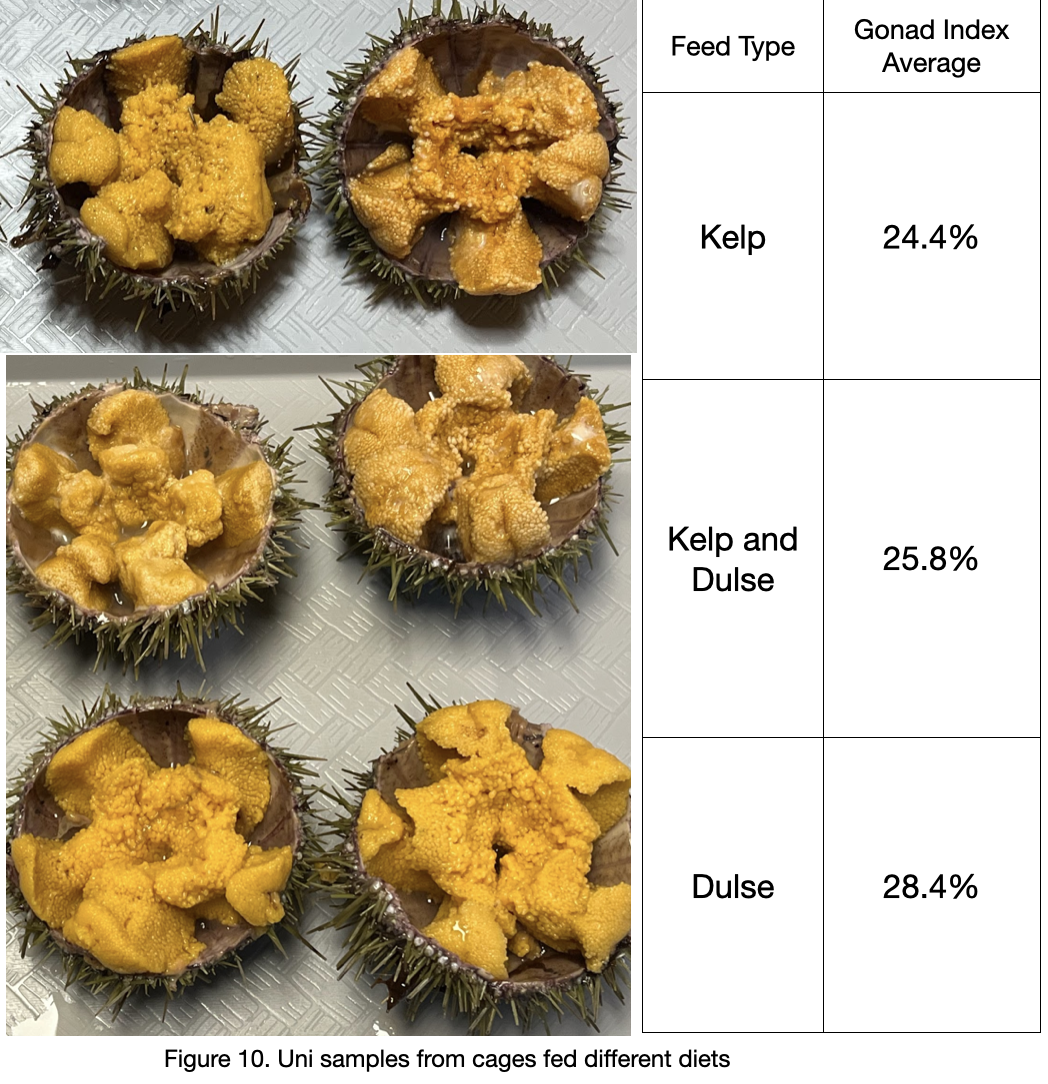
While we initiated separate cage trials using dulse and kelp as test feeds for finishing urchins, the seaweed supply was inconsistent so we simplified the approach and fed one cage dulse, one cage sugar kelp, and one cage a 50/50 mix of each, starting in September. After 2 months, urchins were sampled and photographed (figure 10). The cage fed dulse exhibited the best quality uni, with an average gonad index of 28.4%, and bright orange color, good texture, and a flavor that was sweet with an essence of red algae. While the flavors were somewhat variable between samples from the same cages, there was a distinct improvement in color and quality with the addition of dulse to cages.
Obj 4: Our fourth objective developed harvest, post harvest handling, and marketing strategies for farmed sea urchin.
Packing, Shipping, Marketing
We tested two different types of plastic bag for holding live urchins, an oxygen permeable bag utilized for live fish and a square bottom thick plastic bag. One live urchin with a few pieces of seaweed was placed in each bag with about .5 liter of seawater, tied at the top, and held in the refrigerator for several days. After 6 days, both urchins were still alive, though water was leaking through the permeable bag, and the water had a purplish hue. Both urchins were returned back to the holding tank after the 6 day trial. Rigid plastic containers were trialed in the refrigerator, in the same manner as described for the plastic bag trial, and held successfully in for 6 days, when they were returned alive to the holding tank. We offered live urchins for sale on our website, and sold to about 5 customers, 3 of which were pick up orders, and 2 which were shipping orders. We trialed shipping of the live urchins in rigid containers by sending a cooler with ice packs and live urchins to a customer in Minnesota through the US mail. Despite unexpected delays and below freezing weather, the package arrived intact with 4 out of the 6 urchins alive and in good condition after 6 days in the mail. We met with 3 major seafood distributors in New England, who were interested in the live farmed sea urchins, but were curious how they could be marketed differently than the existing wild processed sea urchin roe that is already available and sold from September through March. There was little to no understanding or experience with live sea urchins, as most customers experience uni after it has been processed and placed on a tray or piece of sushi.
This project sought to develop the final stage of green sea urchin aquaculture on our seaweed farm, from pre-harvest conditioning, to harvest, to marketing of new unique high-value sea urchin crops. To better understand seasonality of natural reproductive cycles on our farm, we sampled urchins throughout the year to determine gonadal development and correlated with seawater temperature. Uni quantity, measured as gonad index, was inversely related to water temperature, with gonad index increasing through fall and winter with decreasing temperatures, then decreasing after February to lows in summer months. Regular feeding regimes of sugar kelp, horsetail kelp, and dulse resulted in high quality uni with maximum gonad indexes reaching 39-42%, with overall farm gonad index values consistently higher than wild sampled urchins. Despite variability in flavor profiles between sampled urchins, all farmed uni sampled from fall to spring had good yellow-orange coloring with pleasant flavors. Alternative forms of feed were explored, with trials indicating that urchins prefer dried and fresh kelp, alaria, and dulse over frozen, and that dried forms are favorable sources of feed for both juvenile and adult urchins. New cage systems were developed for the suspended culture of urchins alongside longline culture of seaweed. Estimated stocking densities for different size classes, feeding regimes, and seasonality will allow for the design of new sea farm systems for the integration of seaweed, sea urchin, and shellfish culture. Marketing efforts for farmed sea urchins indicate that live urchins can be a viable product, but will need more education and outreach to distributors and consumers, as customers are accustomed to a processed uni product. There is opportunity to market urchins alongside oysters or other raw bar menu items.
Education & outreach activities and participation summary
Participation summary:
Project activities have been shared with our workshop participants at our Maine Seaweed Exchange classes (6/21/25, 8/14/25, 10/11-14/24), estimated 30 participants
1 college student intern gained experience in sea urchin cage development, sampling, and feeding urchins (2024), and 1 college student employed in seaweed cultivation assistance (2025).
Our own farm developed a culture system that protects urchins, eliminates escapes, reduces biofouling, and improved feeding efficiency.
1 seaweed farmer adopted new urchin cage design for her farm.
6 WWOFERS (Worldwide Opportunities on Organic Farms) participated in 2025 and 2026
2 part time employees fall/winter 2025/2026 employed in cage production
See information products.
Collaboration with Boothbay Sea and Science Center, an educational center for kids on the coast of Maine, gave a presentation to 2 groups of elementary aged children (60) summer 2025, gave a presentation to a group of public school teachers (60) fall 2025, provide kelp seed and juvenile sea urchins to program
Invited speaker at the Department of Marine Resources Green Sea Urchin Collaborative Forum 2025, 9/12/25, with researchers, policy makers, industry members (30)
Hosted a field trip at our facility for Downeast Institute Marine Program for School Teachers summer 2025 (9)
Poster presentation and Maine Seaweed Exchange Booth at the Northeast Aquaculture Conference and Expo (NACE) in Jan of 2026 in Portland ME, about 600 attendees.
Learning Outcomes
Sea urchin cage design and adoption, sea urchin sampling, sea urchin and seaweed feed seasonality
Project Outcomes
We held a three day aquaculture intensive workshop at our facility in October 2025, and sampled urchins with all the participants. This was an educational event, as we were able to get a wide range of sensory experiences and improved our uni sampling techniques. All of the participants were new farmers or people interested in becoming sea farmers, and sea urchin aquaculture was an area of great interest.
Our cages were also adopted by another seaweed farmer with a few experimental urchins in the fall of 2024.
Information Products
- Sea Urchin Commercial Production Model & VerusMarTM Fast Start Package
- NACE Conference. DEVELOPING AN INTEGRATED SEAWEED AND GREEN SEA URCHIN AQUACULTURE MODEL IN MAINE
- Poster 2 NACE Conference. DEVELOPING AN INTEGRATED SEAWEED AND GREEN SEA URCHIN AQUACULTURE MODEL IN MAINE
- Maine Seaweed Exchange Sea Urchin Resource Guide 2026