Final report for FNE25-135
Project Information
The purpose of this project was to evaluate the economic, ecological, and social impacts of urban agriculture at Eden’s Farm Cooperative in Newark, New Jersey. Using a mixed‑methods approach, data were collected between March and September 2025 on crop production, harvest weights, market pricing, soil health, irrigation efficiency, pest and pollinator activity, and community participation. Production data were recorded weekly across 16 garden beds, soil samples were analyzed by the Rutgers New Jersey Agricultural Experiment Station, irrigation systems were monitored for water usage, and participation was tracked through attendance logs and surveys.
Results showed that Eden’s Farm produced 76.65 pounds of marketable produce during the primary growing season, with culturally affirming crops accounting for 54.9% of harvest weight and 96.4% of total market value. Culturally relevant crops averaged $2.05–$3.49 per pound, outperforming non‑culturally significant crops in price competitiveness. Soil testing revealed high organic matter and nutrient levels but elevated lead concentrations in specific areas, leading to adaptive management through crop relocation and pollinator habitat conversion. Overall, findings confirm that urban agriculture can deliver measurable economic returns, environmental benefits, and community value when managed with intentional cultural and ecological practices.
Project findings were shared with urban growers, youth apprentices, nonprofit partners, and community members through farm‑based workshops, youth training programs, CSA distributions, and public tours, reaching local families, high‑school students, and regional urban agriculture stakeholders
-
Improve Soil Health on Urban Farms:
- Conduct baseline soil health assessments at Eden’s Farm and implement targeted soil amendments (e.g., compost, organic matter) based on the results.
- Monitor changes in soil pH, nutrient levels, and organic matter content over a 12-month period to determine the effectiveness of soil amendments in improving soil fertility.
-
Enhance Water Conservation through Efficient Irrigation Systems:
- Install EQIP-funded drip irrigation systems at Eden’s Farm.
- Track water usage and crop yield data over the growing season to assess the effectiveness of drip irrigation in reducing water waste and increasing crop productivity.
-
Implement Integrated Pest Management (IPM) Strategies:
- Apply IPM practices to control pests at Eden’s Farm, with a focus on reducing pesticide use.
- Document pest outbreaks, the efficacy of IPM strategies, and crop yield improvements over one growing season.
-
Support Pollinator Health:
- Create an additional 5 pollinator habitats, totaling 6, at Eden’s Farm, including planting native flowering species and reducing pesticide usage.
- Monitor pollinator activity and crop pollination rates to assess the impact of pollinator support on farm productivity and biodiversity.
-
Develop a Comprehensive Urban Agriculture Report:
- Collect and analyze data on crop production, soil health, water usage, pest management, and pollinator activity to produce a comprehensive annual report.
- Share the report with local farmers and stakeholders to promote best practices and further urban agriculture development in Newark.
In cities shaped by disinvestment, environmental exposure, and limited access to healthy food, urban agriculture has emerged as a practical and symbolic intervention. Community gardens and farms convert vacant land into productive green space, offering residents fresh produce while addressing broader public health, environmental, and social challenges. Research shows that urban agriculture can increase fruit and vegetable consumption, support physical activity, reduce stress, and strengthen neighborhood cohesion, particularly in communities impacted by food insecurity and environmental challenges (Armstrong, 2000; Soga et al., 2017; Al‑Delaimy & Webb, 2017).
Beyond individual health benefits, urban agriculture functions as a form of community development and environmental stewardship. Community gardens build social capital, foster intergenerational learning, and enhance residents’ sense of belonging and collective efficacy (Armstrong, 2000; Silverman et al., 2013). These spaces also serve ecological functions, contributing to urban biodiversity, moderating microclimates, and improving soil quality when managed with sustainable practices (Al‑Delaimy & Webb, 2017; Soga et al., 2017). As cities grapple with environmental shifts and land abandonment, urban agriculture increasingly operates at the intersection of public health, environmental planning, and social justice.
Municipal land access programs play a critical role in enabling urban agriculture. In Newark, New Jersey, the Adopt‑A‑Lot program facilitates temporary public access to city‑owned vacant parcels for gardening and urban farming, expanding from a small pilot to nearly 100 active sites within a decade (City of Newark, n.d.; Patch, 2014; Sustainable Newark NJ, 2014). These initiatives align with broader placemaking strategies that view interim land use as a means of stabilizing neighborhoods, activating public space, and building foundations for long‑term community stewardship (Project for Public Spaces, 2018). Case studies from New York City and Philadelphia demonstrate that, when supported by policy and community organizations, urban agriculture can contribute meaningfully to local food systems, environmental remediation, and neighborhood revitalization (Cohen et al., 2012; Silverman et al., 2013).
Despite growing recognition of these benefits, important gaps remain. Much of the literature emphasizes social outcomes or health correlates of gardening participation, while fewer studies quantify the economic value of urban agriculture labor, assess the market competitiveness of culturally relevant crops, or document ecological outcomes at the local scale. Moreover, limited attention has been given to how farms centered on culturally affirming foodways advance food sovereignty, workforce development, and environmental resilience within specific urban contexts.
Study Objectives:
- Quantify the economic investment in urban agriculture labor and associated workforce outcomes.
- Evaluate the market value and price competitiveness of culturally relevant crops produced at Eden’s Farm Cooperative.
- Assess ecological outcomes of sustainable practices, including soil health, irrigation efficiency, and pest/pollinator dynamics.
- Analyze social engagement patterns and community perceptions to understand participation, awareness, and program reach.
To address these aims, the present study uses a mixed‑methods approach—combining crop production tracking, price comparisons, soil testing, irrigation monitoring, pest and pollinator observations, and community engagement documentation—to produce empirical evidence of the multifaceted returns of urban agriculture in Newark. In doing so, it offers insights for urban growers, nonprofit organizations, and policymakers seeking to integrate urban agriculture into equitable, sustainable city development strategies.
Cited Sources: Al‑Delaimy, W. K., & Webb, M. (2017). Community gardens as environmental health interventions: Benefits versus potential risks. Current Environmental Health Reports, 4(2), 252–265. https://doi.org/10.1007/s40572-017-0148-2,
Armstrong, D. (2000). A survey of community gardens in upstate New York: Implications for health promotion and community development. Health & Place, 6(4), 319–327. https://doi.org/10.1016/S1353-8292(00)00013-7,
City of Newark. (n.d.). Adopt‑A‑Lot. NewarkNJ.gov. https://www.newarknj.gov/card/adopt-a-lot,
Cohen, N., Reynolds, K., & Sanghvi, R. (2012). Five Borough Farm: Seeding the future of urban agriculture in New York City. Design Trust for Public Space. https://www.designtrust.org/publications/five-borough-farm,
Patch. (2014, April 28). City of Newark’s Adopt‑A‑Lot program. Patch.com. https://patch.com/new-jersey/newarknj/an--city-of-newarks-adopt-a-lot-program
Project for Public Spaces. (2018). What is placemaking? https://www.pps.org/article/what-is-placemaking
Silverman, R. M., Taylor, H. L., & Crawford, C. (2013). The role of community-based organizations in brownfield redevelopment. Journal of Environmental Planning and Management, 56(4), 517–533.
Soga, M., Gaston, K. J., & Yamaura, Y. (2017). Gardening is beneficial for health: A meta-analysis. Preventive Medicine Reports, 5, 92–99. https://doi.org/10.1016/j.pmedr.2016.11.007
Sustainable Newark NJ. (2014, May 1). Newark’s Adopt‑A‑Lot program: Urban gardening and beautification. https://sustainablenewarknj.wordpress.com
Eden’s Farm Cooperative (EFC) is a local urban agriculture enterprise located in Newark, New Jersey, operating on formerly vacant city‑owned land accessed through the City of Newark’s Adopt‑A‑Lot Program. The farm has been actively producing food since 2020 and functions as both a community‑based agricultural operation and a food security initiative rooted in affirming foodways. EFC operates seasonally from spring through fall, with ongoing planning, education, and land stewardship activities conducted year‑round.
EFC specializes in the production of culturally relevant, nutrient‑dense vegetables, herbs, and ethnobotanical crops reflective of African diaspora, Caribbean/Latinx, African American, and South and South‑East Asian food traditions. Primary crops include collard greens, kale varieties, mustard greens, okra, peppers, tomatoes, bok choy, scallions, basil, cilantro, and other culinary herbs. During the 2025 growing season, the farm cultivated crops across 16 raised beds and multiple auxiliary planting areas, producing approximately 76.65 pounds of marketable produce between June and September, with additional production earlier in the season. Culturally affirming crops accounted for more than half of total harvest weight and over 90% of total market value, underscoring their centrality to the farm’s mission and economic viability.
The farm operates on a part‑time basis with a combination of paid staff, youth apprentices, and volunteers. Since 2020, Al‑Munir has invested $25,000 annually in farm staffing to ensure consistent labor, site management, and data collection capacity, totaling $100,000 to date. In addition, $10,000 has been allocated to youth stipends to support paid apprenticeships, workforce development, and equitable access to agricultural training for Newark youth. Youth participants engage in crop production, harvest tracking, value‑added processing, and community education activities throughout the growing season.
Eden’s Farm markets its produce primarily through community‑based distribution channels, including CSA partnerships, farm‑based distribution to local families, pop‑up farm stands, and educational programming. While gross sales remain modest, consistent with the farm’s small scale and food access mission, market analysis conducted as part of this project demonstrates that EFC’s produce is competitively priced—and often commands a premium—relative to conventional grocery outlets due to freshness, cultural relevance, and local sourcing. The majority of produce is distributed to Newark residents, schools, and community partners, prioritizing affordability and accessibility over volume‑driven revenue.
The farm employs sustainable and regenerative practices, including drip irrigation systems supported through the USDA Environmental Quality Incentives Program (EQIP), integrated pest management, organic soil amendments, and pollinator habitat preservation. Two drip‑irrigation towers support multiple bed zones and kitchen operations, dispensing approximately 2,500 gallons during the 2025 season. Soil health is routinely monitored through laboratory testing conducted by the Rutgers New Jersey Agricultural Experiment Station, informing safe crop placement and nutrient management decisions. Portions of the site with elevated lead levels have been intentionally repurposed for native plants and pollinator habitat to ensure food safety while maintaining ecological function.
Existing farm resources dedicated to this project include raised beds, irrigation infrastructure, calibrated harvest scales, data tracking tools, compost systems, and established partnerships with local nonprofits, schools, and municipal agencies. Previous and parallel funding—such as city workforce stipends and EQIP support—covers expenses related to labor and irrigation infrastructure not directly funded by SARE, allowing project funds to be leveraged efficiently toward research, evaluation, and knowledge‑sharing objectives.
Collectively, Eden’s Farm Cooperative operates as a small‑scale but high‑impact urban agriculture enterprise, integrating food production, workforce development, environmental stewardship, and applied research to strengthen Newark’s local food system.
Cooperators
- - Technical Advisor
- - Technical Advisor
- - Technical Advisor
- - Technical Advisor (Educator and Researcher)
- (Educator and Researcher)
- (Researcher)
- (Educator and Researcher)
- (Educator)
Research
Site and Study Design- This study employed a mixed‑methods, field‑based research design to assess the economic, ecological, and social impacts of urban agriculture at Eden’s Farm Cooperative (EFC) in Newark, New Jersey. Data collection occurred between March and September 2025, aligning with the primary growing season. The research site comprised 16 raised garden beds situated on city‑owned property accessed through Newark’s Adopt‑A‑Lot Program. Farm management practices emphasized sustainable and regenerative approaches, including drip irrigation, organic soil amendments, and integrated pest management strategies. Map of Farm 1048 in Morris, Bergen, Essex, Hudson, Passaic County, New Jersey
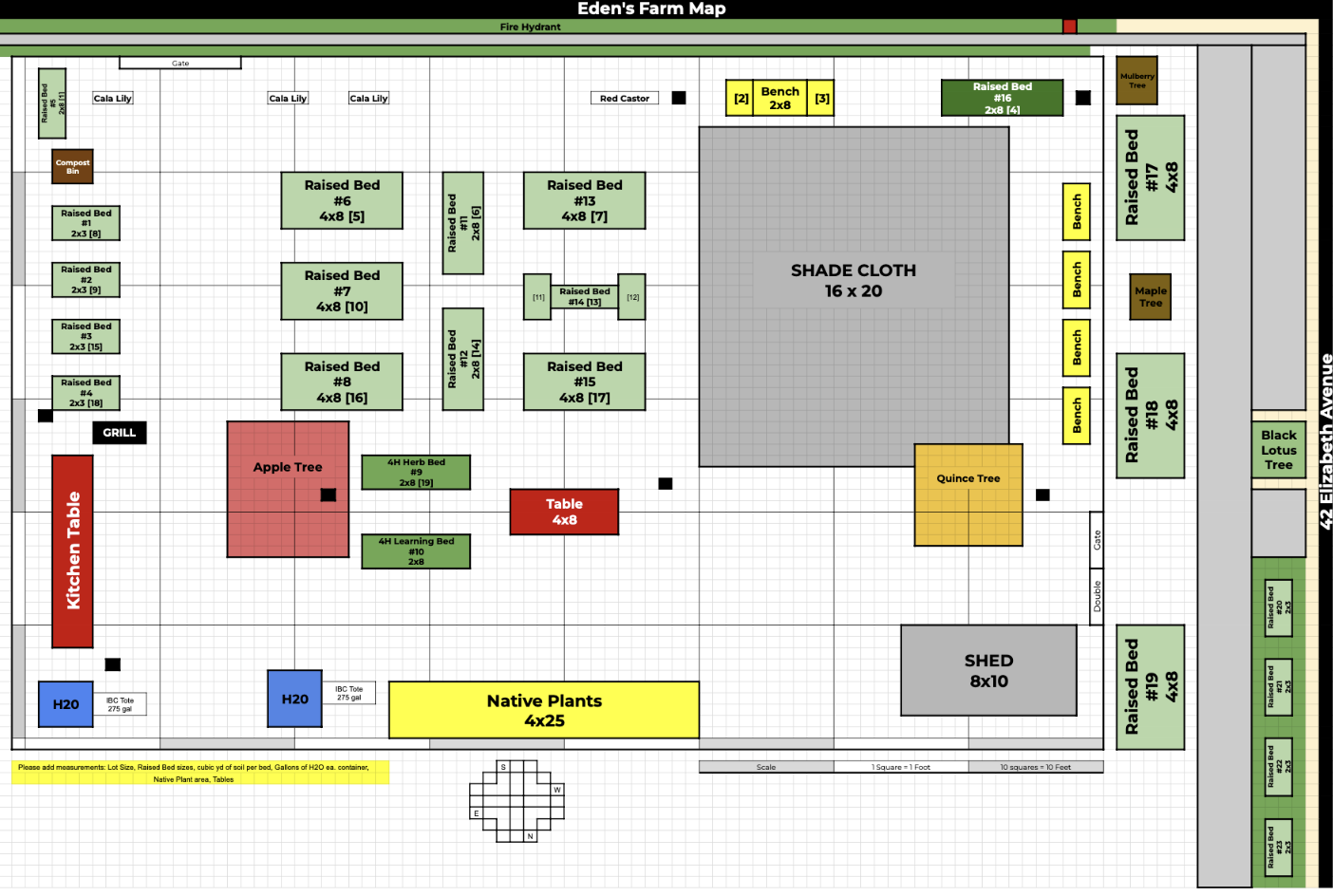
Farm resources included raised beds, compost systems, hand tools, two drip‑irrigation towers, and dedicated pollinator habitat areas. Harvest weights were measured using calibrated digital scales. Data were recorded through field logs and digital collection forms. Soil samples were analyzed by the Rutgers New Jersey Agricultural Experiment Station Soil Testing Laboratory. Pest and pollinator observations were documented using standardized observation sheets. Community participation data were collected through digital attendance forms and surveys accessed via QR codes.
Crop production data were collected weekly from May through September 2025. For each harvest event, farm staff and youth apprentices recorded crop type, bed number, harvest date, and total harvest weight in pounds. Marketable produce was separated from organic waste to ensure accurate economic valuation. Crops were categorized as either culturally affirming or other crops based on their relevance to African diaspora and other heritage foodways. Market price data were collected during peak harvest months (July–August 2025) from three sources: local grocery stores, farmers markets, and community‑supported agriculture (CSA) programs. Average price per pound for select crops was calculated to estimate total market value. Soil samples were collected in spring 2025 from multiple areas of the farm and tested for nutrient levels, organic matter, pH, and heavy metals. Areas with elevated lead levels were excluded from food production and converted to non‑edible plantings or pollinator habitat. Irrigation systems were monitored weekly between June and August 2025 to assess water usage and functionality. Total water distribution was recorded, and maintenance needs such as emitter clogs and pressure inconsistencies were logged. Soil moisture was assessed manually at multiple depths to evaluate irrigation effectiveness. Pest and pollinator activity were observed during routine site visits from June through September 2025. Visual scouting documented pest presence, plant damage, and pollinator species frequency across beds and habitat areas. Community engagement was tracked throughout the growing season using attendance logs completed during volunteer days, workshops, and garden tours. Surveys collected participant perceptions, awareness, and attitudes toward urban agriculture.
Quantitative data were analyzed using descriptive statistics, including totals, percentages, averages, and comparative ratios. Harvest distribution and market value were analyzed both inclusively and with high‑yield outlier crops excluded to assess proportional impacts. Graphical visualizations were used to display trends in production, value distribution, irrigation performance, ecological activity, and community participation. Qualitative observations were used to contextualize quantitative findings and inform adaptive management decisions.
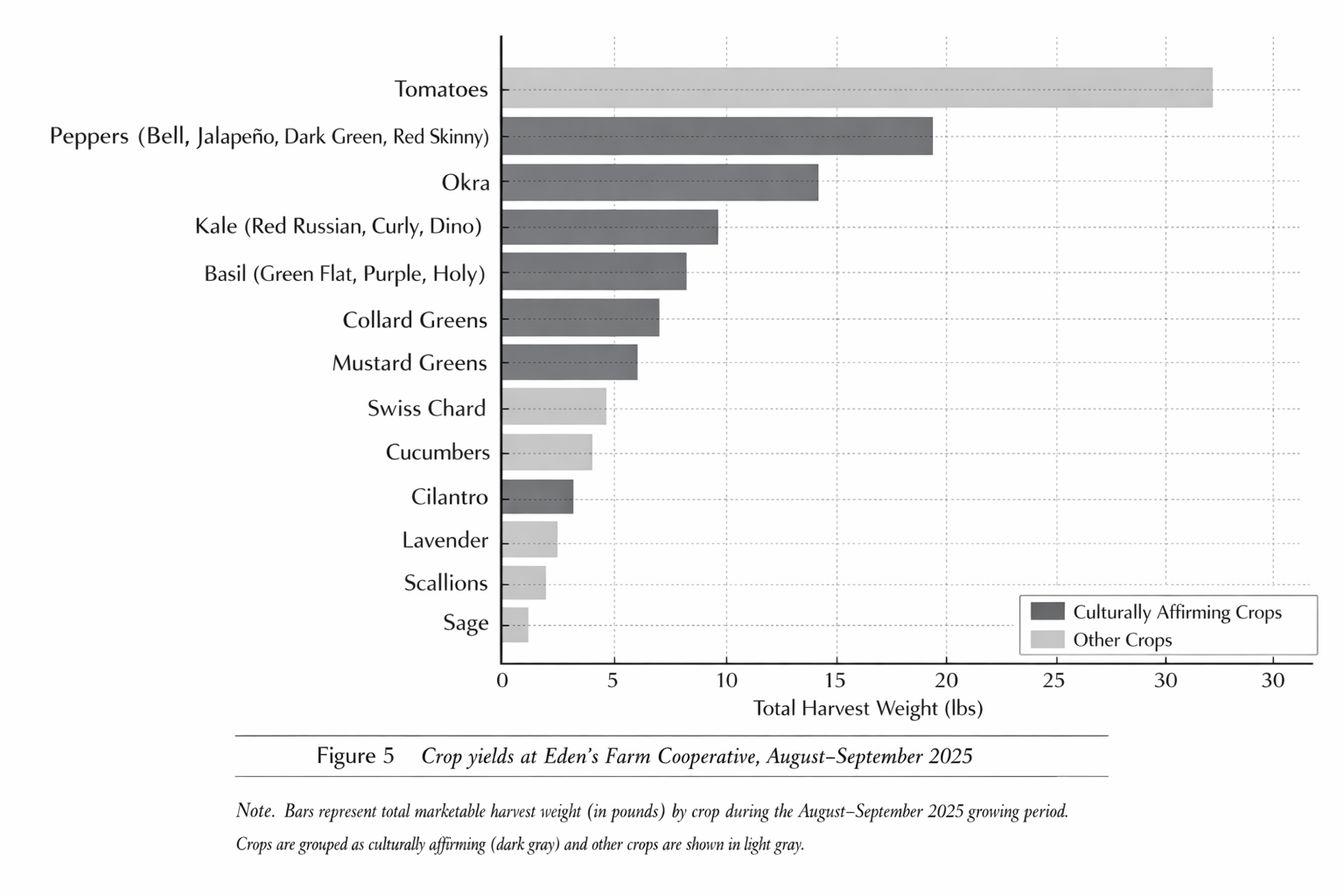
Market Value and Economic Outcomes- In July 2025, culturally affirming crops contributed 29.6–32.7% of harvest weight but represented a higher proportion of market value (32.1–37.6%), averaging $2.05 per pound compared to $1.65–$1.69 per pound for other crops depending on whether zucchini was included. During August–September, culturally relevant crops generated approximately $131.72, accounting for 96.4% of total market value, while all other crops contributed only $4.88 (3.6%).
High‑value items included okra (6.3 lb; $22.01; $3.49/lb) and collard greens (3.5 lb; $7.49; $2.14/lb), with tomatoes and peppers driving total value through volume and demand. Channel comparisons showed CSA programs offered the most consistent affordability for staple produce, farmers markets provided premium pricing for herbs and specialty items, and ShopRite offered the lowest cost for widely available greens. These results demonstrate that culturally affirming crops provide disproportionate economic returns relative to their share of total yield. Aligning crop selection with culturally relevant demand and appropriate market channels substantially increased revenue efficiency without requiring expanded acreage or labor inputs.
Soil Health and Site Conditions- Soil analysis conducted by the Rutgers New Jersey Agricultural Experiment Station indicated that soils in the curbside meadow and pollinator habitat area were sandy loam with a pH of 7.08, high organic matter, and elevated levels of phosphorus, potassium, calcium, and magnesium, eliminating the need for fertilization with these nutrients. Fertility management therefore focused on targeted nitrogen inputs. However, testing also revealed lead concentrations of 460 ppm, exceeding safe thresholds for edible crop production. As a result, food production was discontinued in this area and the site was repurposed for non‑edible native plants and pollinator habitat. These findings underscore the importance of soil testing and adaptive land use in urban agriculture. While soil quality supported productive growing conditions broadly, contamination risks required strategic modification to protect public health while maintaining ecological function. (Soil Test1 )
Irrigation Performance and Water Use- The two drip irrigation systems dispensed approximately 2,500 gallons during the growing season (1,250 gallons per tower). Tower 1 experienced intermittent disruptions due to clogging, timer malfunction, theft, and mowing damage, but was stabilized to serve native plant and herb beds (Beds 16–19 and 1–4). Tower 2 delivered an average of 11.5 gallons per functional bed per irrigation cycle but experienced a four‑week system failure affecting Beds 1–4 and 10. Repairs restored functionality in Beds 2–4, while Beds 1 and 10 remained inactive. Beds 5–9 and 11–16 remained consistently operational. Kitchen water usage was included in Tower 2 totals. Irrigation reliability emerged as a key determinant of crop performance. Beds with uninterrupted water delivery showed strong growth and yields, while prolonged outages corresponded with underperformance. Maintenance interventions reduced the need for manual watering later in the season, resulting in time savings and more consistent soil moisture.
Pest Pressure and Pollinator Activity-Pest observations indicated concentrated pressure in Bed 2, with recurring whiteflies and other pests, as well as beetles in Bed 4, green pest infestations in Bed 5, and aphids in Bed 8. Most other beds showed minimal pest presence . Pollinator monitoring documented high activity in flowering mint, basil, echinacea, and zinnias. Bumblebees accounted for 68 sightings, supplemented by sweat bees (11 sightings), leafcutter bees (8), mining bees (8), and a mason bee. Targeted integrated pest management limited crop damage without synthetic inputs, while robust pollinator activity supported improved fruit set in tomatoes, peppers, and squash. The establishment of pollinator habitat therefore contributed directly to both ecological health and crop productivity.
Community Engagement and Participation- Participation tracking from March through September revealed highest engagement in volunteering, farm tours, community service, and workshops, with low participation in maintenance and support activities. Community surveys indicated 69.8% of respondents were initially unaware of Eden’s Farm, yet 81.4% believed additional urban farms would improve neighborhood health and quality of life. Overall, 46.5% expressed clear support for the farm, while 37.2% were open to increased engagement. Youth apprentices provided weekly fieldwork support during the fall season, strengthening operational continuity and skill development
The purpose of this project was to evaluate whether hyperlocal urban agriculture at Eden’s Farm Cooperative (EFC) could produce measurable economic, ecological, and social benefits while advancing culturally relevant food production in Newark, New Jersey. To answer this question, the project examined crop productivity and market value, soil and water management outcomes, pest and pollinator dynamics, and community and workforce engagement during the 2025 growing season.
Overall, the findings demonstrate that hyperlocal urban agriculture is more than a means of growing food; it serves as a multifaceted strategy for building resilient, equitable, and culturally grounded communities. The project resulted in several tangible changes, including the prioritization of culturally affirming crops, targeted soil and irrigation management, and the expansion of pollinator habitat. These adjustments are projected to improve revenue efficiency per pound, reduce input costs, save staff time through improved irrigation maintenance, and strengthen the long‑term sustainability of the farm without requiring additional land.
The research also generated new questions and areas for future investigation. First, the strong performance and higher market value of culturally affirming crops raise important questions about optimal crop mixes for small urban plots, including how to balance cultural relevance, yield stability, and revenue potential. Second, irrigation interruptions were strongly associated with underperforming beds, suggesting the need for deeper study of water‑use efficiency, soil moisture thresholds, and the relationship between drip reliability and crop resilience in dense urban environments.
Soil testing results, including high lead levels in one area, highlight a broader need to explore soil remediation options such as compost amendments, phytoremediation, or alternative bed structures that reduce exposure risks while supporting long‑term soil health. Similarly, pest patterns varied across beds, indicating a need to understand how microclimates, crop selection, and irrigation stress influence pest outbreaks in small‑scale urban systems. Pollinator monitoring revealed diverse bee species and high visitation rates, prompting interest in more systematic study of pollinator–crop interactions, bloom timing, and habitat placement to optimize pollination services.
Finally, survey findings showed strong community interest but low baseline awareness, raising additional questions about effective outreach models that translate interest into ongoing participation. Collectively, these emerging questions demonstrate the value of continued farmer‑led research and position EFC to deepen its contributions to regional knowledge on urban agriculture, food sovereignty, and environmental welfare.
Education & outreach activities and participation summary
Participation summary:
Education and outreach were core components of this project and were designed to share research findings, build community capacity, and strengthen Newark’s urban agriculture network. Between March and September 2025, Eden’s Farm Cooperative (EFC) hosted a series of workshops, field days, youth training sessions, and collaborative community events that connected residents, students, service providers, and partner organizations to the farm’s research activities and sustainable practices.
Workshops and Field-Based Demonstrations- Throughout the growing season, EFC held hands‑on workshops focused on soil health, drip irrigation troubleshooting, crop monitoring, harvest tracking, and non‑chemical Integrated Pest Management (IPM). Participants were able to observe and practice skills using livefarm infrastructure, including soil testing interpretation, moisture assessment, and drip‑line maintenance. Pollinator habitat demonstrations highlighted the importance of native flowering species and the ecological reasoning behind converting the lead‑contaminated zone into a non‑edible pollinator meadow.

Youth Apprenticeships and Workforce Development- Through partnerships with Rooted in Da Foodture (West Side High School) and Green Thumb Club/Pedal Farmers (Weequahic High School), youth apprentices engaged directly with every phase of the research. Apprentices participated in planting, scouting, weighing and recording weekly harvests, monitoring irrigation failures, and working on value‑added products such as pesto through culinary collaborations. These activities advanced agricultural skills, data literacy, leadership development, and career exposure in the food system. Apprentices also participated in the Newark Farm and Garden Tour and helped host on‑farm educational sessions with visiting groups.
Community Events and Collaborative Learning Forums- EFC engaged community members through public farm tours, volunteer days, community service events, and intergenerational learning activities. The monthly “What’s Growin’ On!” forum, led with partners such as Plants & Ponds, convened growers, educators, and residents to discuss weather‑resilient crops, permaculture strategies, zoning challenges, and innovations in urban agriculture. These events elevated the project’s visibility across Newark and created a shared learning space around environmental well-being, sustainable land use, and cultural food traditions.
Technical Assistance and Peer Knowledge Exchange- Partner organizations—including Urban Seeds Grow, local educators, Rutgers Cooperative Extension contacts, and other Newark urban agriculture practitioners—received and provided technical insights throughout the season. The farm’s irrigation challenges, soil contamination findings, and pollinator observations served as real‑time case studies for troubleshooting and applying best practices in small‑plot urban agriculture.

Survey and Participation Tracking -
Community surveys collected at events captured awareness levels, perceptions of farm benefits, and interest in future involvement. Participation logs revealed strong engagement in volunteering, tours, workshops, and youth programming, guiding future outreach priorities.
Ongoing and Upcoming Outreach-
Infrastructure Upgrades: Plans to redevelop both farm properties into commercial growing facilities utilizing shipping containers and greenhouses for hydroponic/aquaponic production.
Active Volunteerism & Engagement: Al-Munir continues to invite community members to volunteer with site maintenance, including soil preparation, composting, and planting.
Youth Education & Job Training: The farms are currently training students, including the Weequahic High School Green Thumb Club, in urban agriculture, carpentry, and irrigation systems.
Food Distribution & Education: They are providing fresh produce and hosting workshops on herbalism, nutrition, and cooking to address food insecurity.
Upcoming and Planned Expansion:
FEED Grant Application: Urban Seeds Grow in partnership with Al-Munir LLC is applying for the New Jersey Economic Development Authority (NJEDA) FEED grant to expand commercial production, build on-site food processing facilities for small businesses, and develop value-added products.
Strategic Development: The partnership is focused on turning these sites into community-led hubs for food cooperatives, tourism, and cultural pride.
Learning Outcomes
1. Improved understanding of soil health and urban contamination risks.
Farmers gained clearer knowledge of soil nutrient status, pH, and biological activity through Rutgers NJAES soil test interpretation. The discovery of elevated lead levels increased awareness of contamination risks in urban environments and strengthened understanding of safe land‑use decisions, leading to the conversion of the affected area into a pollinator‑only zone.
2. Enhanced irrigation management and water‑use awareness.
Documenting drip system failures—including clogs, timer issues, and line damage—helped farmers develop stronger diagnostic skills and a deeper understanding of how water reliability directly affects crop performance. Farmers reported increased confidence in troubleshooting irrigation problems and adapting schedules using moisture observations and flow‑meter data.
3. Strengthened IPM observation and pest‑response skills.
Routine scouting improved farmers’ ability to identify pests (e.g., whiteflies, aphids, beetles) and recognize early signs of plant stress. This training increased awareness of how pest pressure interacts with irrigation interruptions and microclimate differences, reinforcing prevention‑focused IPM rather than reactive intervention.
4. Increased awareness of pollinator ecology and habitat value.
Farmers reported greater recognition of the role of diverse pollinator species—including bumblebees, sweat bees, and leafcutter bees—in supporting fruiting crops. Observations of species‑specific visitation patterns strengthened understanding of how habitat placement and flower diversity contribute to crop yield and ecological resilience.
5. Greater skill in crop monitoring, data tracking, and evaluating culturally affirming crops.
Bed‑level growth tracking, harvest logging, and market price comparison strengthened farmers’ analytical skills and deepened awareness of how culturally relevant crops contribute to both community food traditions and farm revenue efficiency. These insights increased motivation to refine crop planning and expand culturally significant offerings.
6. Expanded awareness of urban agriculture’s social and community impact.
Engagement with youth, volunteers, and community members reinforced farmers’ understanding of the farm’s role in education, neighborhood cohesion, and food sovereignty efforts. This contributed to a broader shift in attitudes about the importance of outreach, visibility, and shared leadership in sustaining urban agriculture in Newark
Project Outcomes
- Reducing environmental and health risks, particularly through the adoption of IPM for pest control and organic soil amendments.
- Improving productivity and income by optimizing crop production and irrigation.
- Conserving soil and water resources through regular monitoring and efficient irrigation.
- Enhancing employment and community health by expanding access to locally grown, culturally relevant produce.
Looking back, the mixed‑methods, participatory approach used in this project proved effective for evaluating the economic, ecological, and social benefits of hyperlocal urban agriculture at Eden’s Farm Cooperative. Weekly field observations, soil and irrigation monitoring, harvest tracking, pest and pollinator scouting, and community engagement activities offered a comprehensive view of how a small urban farm functions within the environmental and social realities of Newark. The participatory action research design was especially impactful because it allowed farmers, youth apprentices, and community partners to respond to emerging challenges in real time, grounding the research in the lived experiences of Newark residents and growers.
Several factors contributed to the project’s success. Consistent weekly monitoring enabled early detection of irrigation failures, pest pressure, and crop variability. The focus on culturally affirming crops strengthened community interest and demonstrated their economic viability. Integrating youth apprenticeships and community workshops helped translate research findings into accessible skill‑building experiences, reinforcing the farm’s role as both a production site and an educational hub. At the same time, the study faced challenges that informed meaningful methodological revisions. Repeated irrigation system failures revealed the need for more structured maintenance routines, spare parts, and improved moisture‑tracking methods. Soil testing uncovered elevated lead levels, prompting a methodological and land‑use shift toward non‑edible pollinator habitat in affected areas. Pest and pollinator observations proved valuable but would benefit from more standardized sampling protocols in future seasons.
The project successfully answered its central research question, showing that hyperlocal urban agriculture can generate measurable benefits while advancing culturally grounded food production. The practices tested—culturally affirming crop production, drip irrigation with improved maintenance, pollinator habitat expansion, soil safety monitoring, and non‑chemical IPM—will be continued and refined because they meaningfully increased productivity, reduced risks, strengthened ecological resilience, and deepened community participation.
The study also opened important new lines of inquiry, including evaluating water‑use efficiency in greater detail, exploring scalable soil remediation options for contaminated urban soils, understanding micro‑bed pest dynamics, and analyzing pollinator–crop interactions across culturally relevant crops. Future research should also assess how farms can convert strong community interest into sustained engagement and leadership.
The results of this project will be especially beneficial to urban growers and community organizations in Newark, who face similar constraints related to land access, contamination, and resource limitations. More broadly, farmers operating in Northeast urban centers, youth agriculture programs, Cooperative Extension educators, municipal planners, and nonprofits working to make food more accessible and promote environmental health can all apply these findings to support more resilient, culturally relevant, and community‑centered urban agriculture systems.