Final report for FW24-005
Project Information
California’s native oak population has declined because of long drought, goldspotted oak borers and other diseases, negatively impacting the local ecosystem. Some species, such as Engelmann Oak, have fallen into threatened status. While many acres of agriculture land are left idle due to high cost of farming and low produce prices, reforestation is not occurring naturally. Seedlings from oak acorns need deliberate effort to survive the initial years, including irrigation, protection from wild animals and weed control. We design a new agroforest system to bring income to farmers and locally produced delicacy to consumers and replenish the native oak forest. Our project will test the feasibility of introduction of black truffle fungi to roots of native oak seedlings and observe their development in local soils, which is the first step of setting up truffle cultivation with native oak trees. The black truffle fungi will provide extended root network for oak trees and help them fend off diseases. The black truffles produced from the replanted trees will become a high value crop and bring income to farmers, thereby making the reforestation effort financially sustainable with many benefits to the ecosystem. We will communicate with farmers and agriculture professionals nationwide and statewide with our results and host outreach activities in our local communities. We will also educate students and future farmers about the new agroforest system for truffle production.
- to optimize protocol and test the successful colonization of black Perigord truffle (Tuber Melanosporum) in the roots of native oak seedling after inoculation with truffle spores in the greenhouse condition during the first year.
- to work out soil amendment and irrigation schedule for planting the seedling in the ground and monitor the presence of truffle micro in the roots during the second year.
- to perform outreach to raise awareness of saving oak forest, to introduce a black truffle as a new local commodity among farmers, conservationists, chefs and consumers and educate students and next generation farmers about the sustainable agriculture practice.
| Date | Activities | Team member |
| July-Dec 2024 | Acorn germination, truffle spore prep, inoculation to roots of oak seedlings, greenhouse growth of seedling | PI (Charlie Chen) |
| Jan-June 2025 |
continuing growing of seedlign in greenhouse, observation of truffle in the root tip under microscope, Soil samples, field prep |
PI and TA (Gregg Cady) supports with soil sampling and field prep |
| July-Sept 2025 |
conduct first field day (July) continue monitoring truffle mycorrhizae formation in roots of seedlings planting successfully inoculated seedlings in the field |
PI and TA support irrigation setuo |
| October 2025-June 2026 |
manage the planted trees, record their growth compared to control; continue monitoring truffle mycorrhizae formation in root in the soil in the soils; report final results, conduct outreach activities. conduct second field day (June) |
PI and TA |
Cooperators
- - Technical Advisor
- - Producer
Research
The project is carried out on the grounds of our farm in Alpine CA.
- Choice of native oak trees
The survey of oak trees on our property was done in consultation with Fred Roberts, a Rare Plant Botanist from California Native Plant Society. There are Engelmann Oak (Quercus engelmanii), Coastal Live Oak (Quercus agrifolia) California scrub oak (Q. berberidifolia) and hybrids of them, clustering on the old streambed with many big trees died or dying. We collected mature acorns from these trees in October before they fall into ground. It is possible that different species of oaks have different inoculation efficiency by black truffles. We kept some acorns in a refrigerator for one month in case they need stratification to geminate, but we found that is not necessary for the native oaks as acorns kept at room temperature geminate ready once they are placed in a moisturized environment.
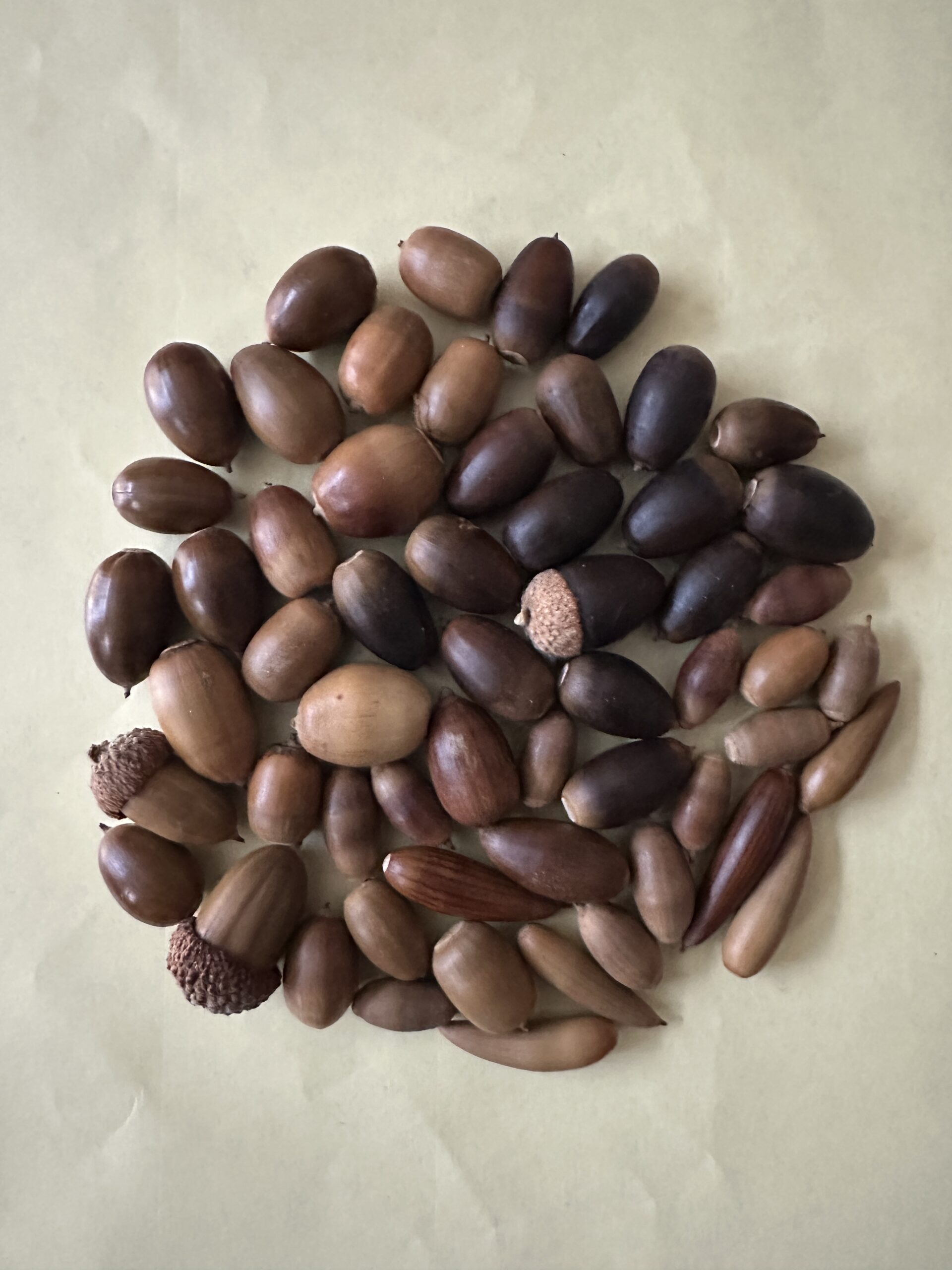
I have communicated with Dr. Charles Lefevre, the President and founder of New World Truffieres, who specializes in truffle cultivation and the controlled inoculation of oak and hazelnut seedlings for 20 plus years. We are in a stretch of coastal California land with Mediterranean climate and well-drained soil suitable for black truffle (Tuber melanosporum) cultivation. He pointed out that although Engelmann Oak has not been tried for truffle culture, it and Coastal Live Oak belong to a subgroup of oak trees as the European Holy Oak (Quercus ilex), which is the most common used oak tree for black truffle cultivation They would tolerate moisture condition in the roots, which is required for truffle growth. Native oak trees are best adapted to the soil, altitude and climatic conditions of our farm. They should have a growth advantage over European Holy Oak. Using Engelmann Oak and Coastal Live Oak will help restore the native oak population and avoid introducing non-native species to the local ecosystem. There are reports of black truffle (Tuber melanosporum) successfully colonized some indigenous Chinese and Mexican oak trees and promoted oak seedling growth (see citation list). So we should have a good chance of success with our native oaks.
- Method of inoculation:
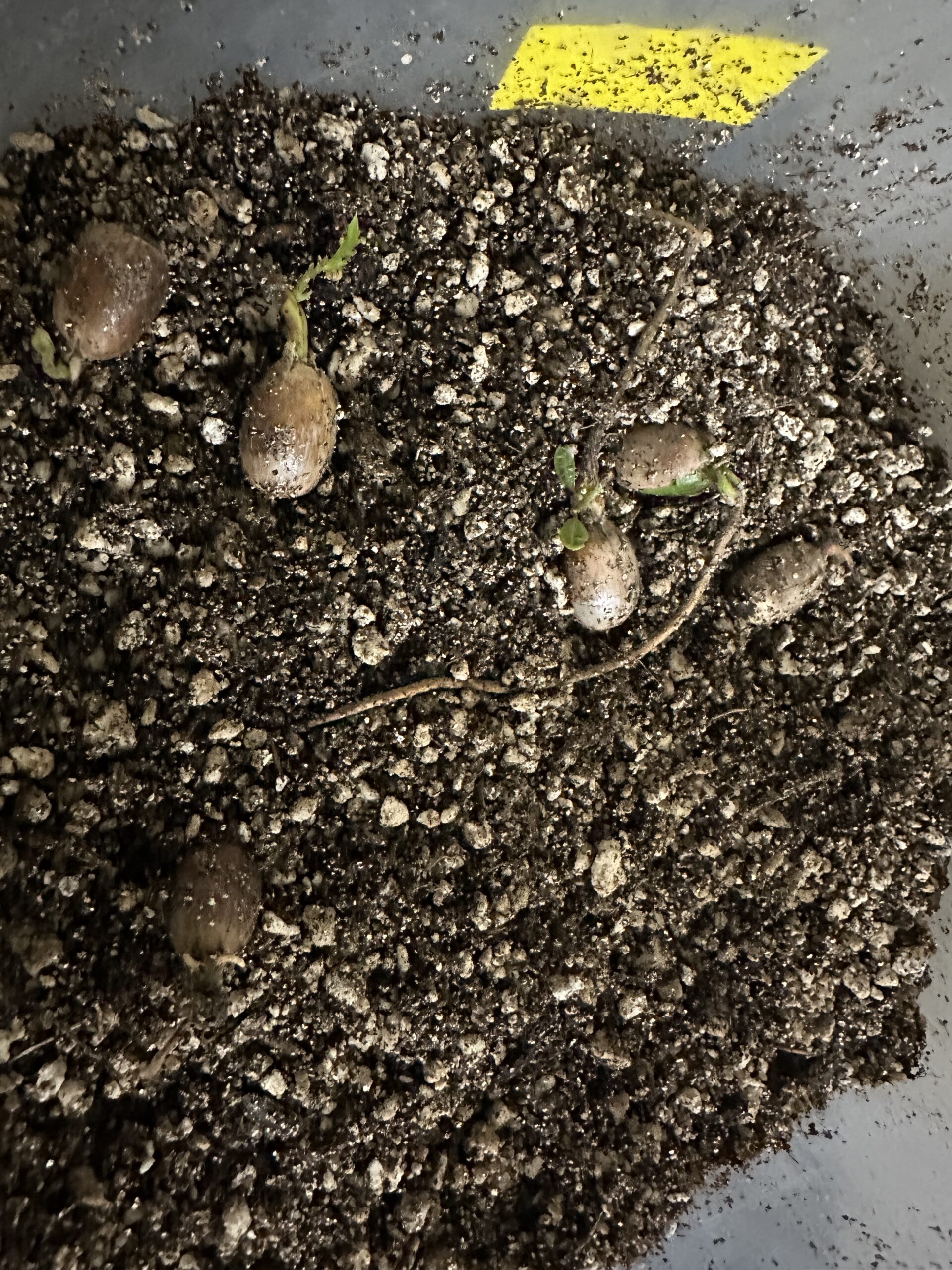
The acorns are selected by a submerging/floating test in water and all floating acorns are discarded. Before germination, acorns will be disinfected with 30% bleach for 15 minutes, 70% alcohol for 30 seconds, and rinse with sterile water for 30 seconds. Perlite and vermiculate media (1:1) plus 1 part of water were placed in filter-vented boxes and autoclaved in a pressure cooker for 30 minutes to kill existing fungi in them. The sterile condition gives truffle fungi the first comer competitive advantage over other fungi in the environment. The first fungi the roots exposed to is the black truffle. It took acorns 2-4 weeks to geminate and form seedlings.
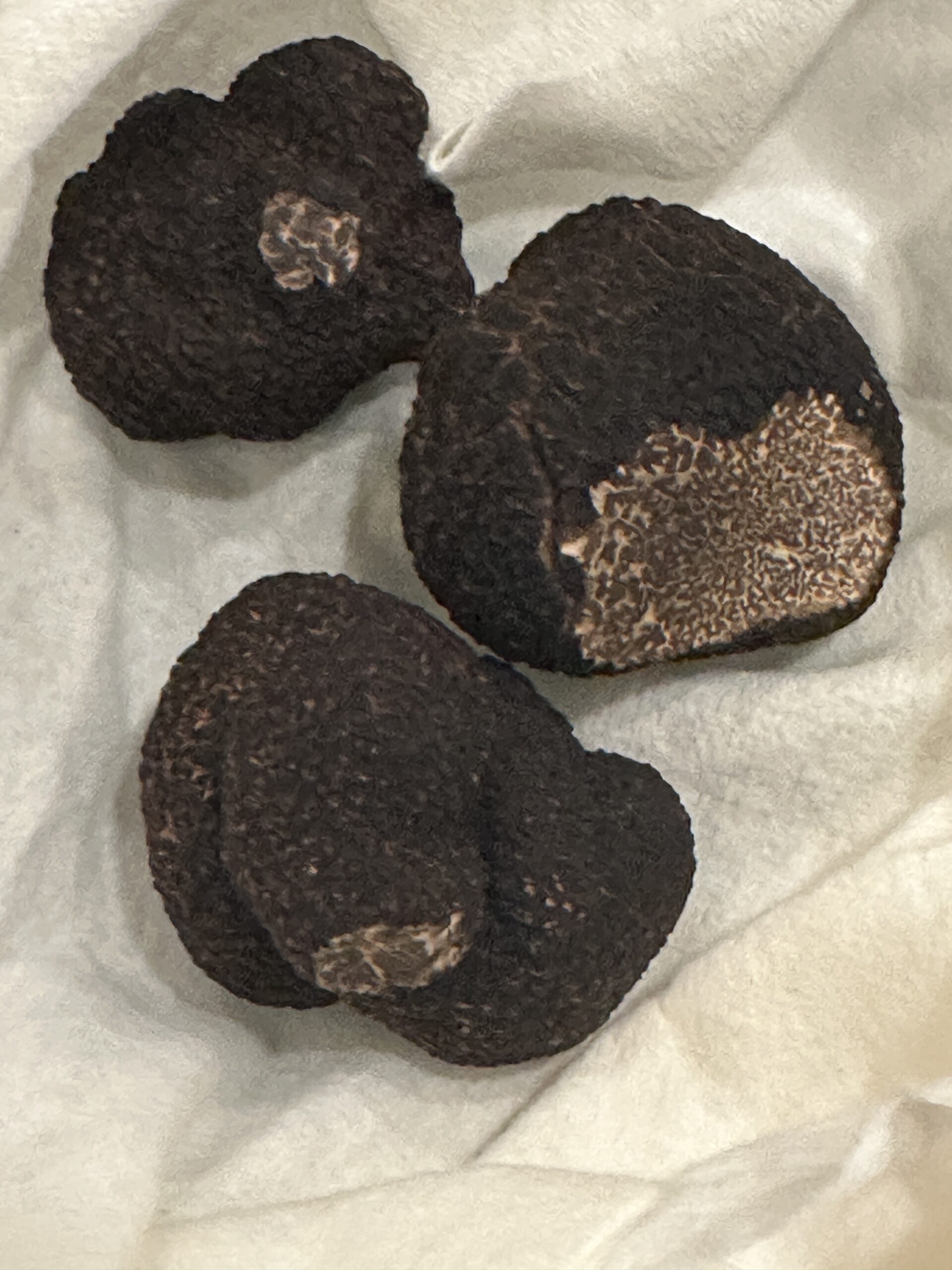
We obtained fresh Perigord truffle ascoma (fruitbody) from a farm in Oregon and freeze-dried truffle power (truffle spores can survive for years in dried condition) from Australia. The identity of the truffles was confirmed as Tuber melanosporum by PCR. Twenty grams of truffles were chopped into small pieces and grinded into a fine paste with a mortar and pestle to form a spore suspension in 20 ml water. The spiky shaped spores were observed under a microscope.
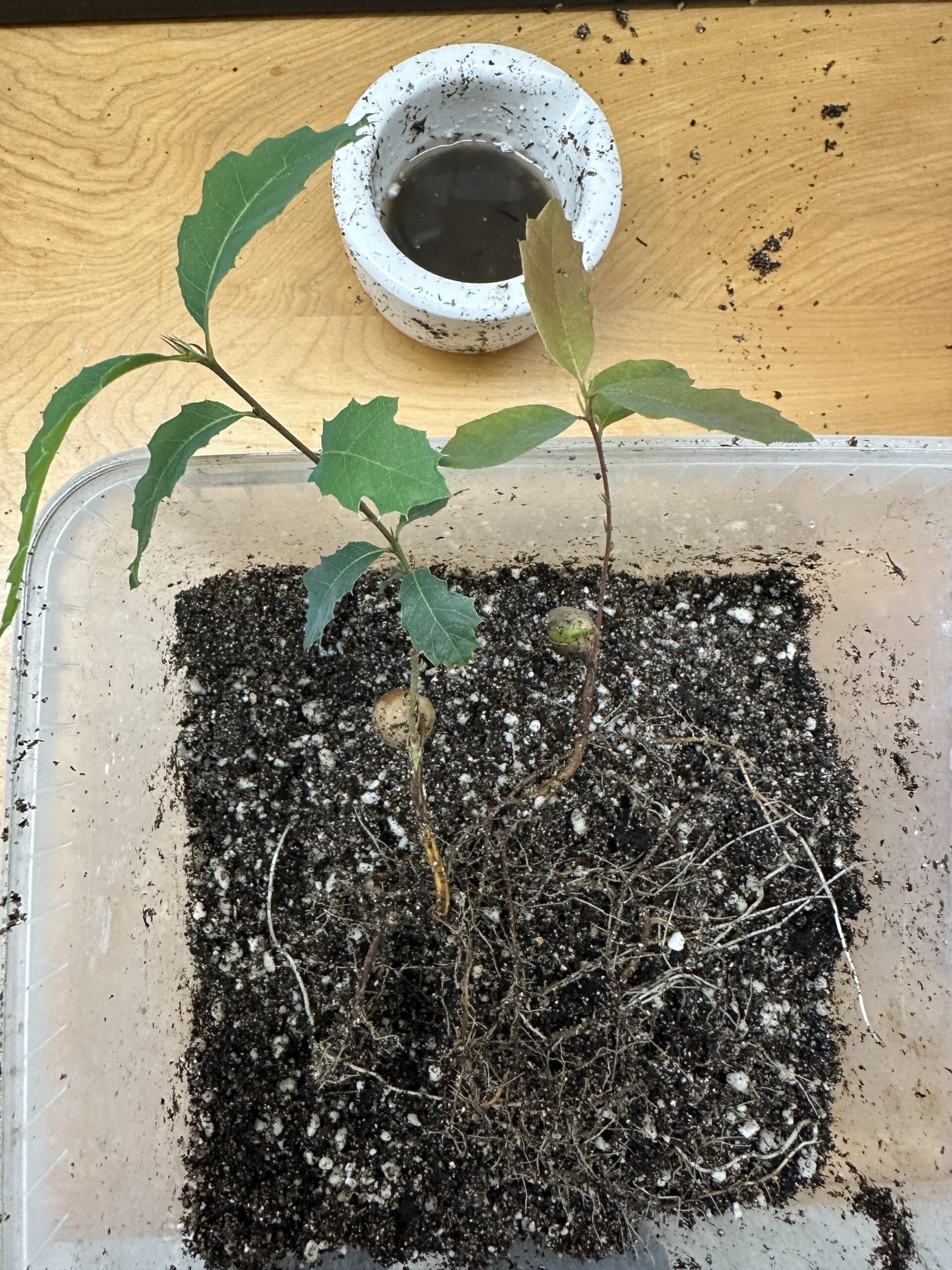
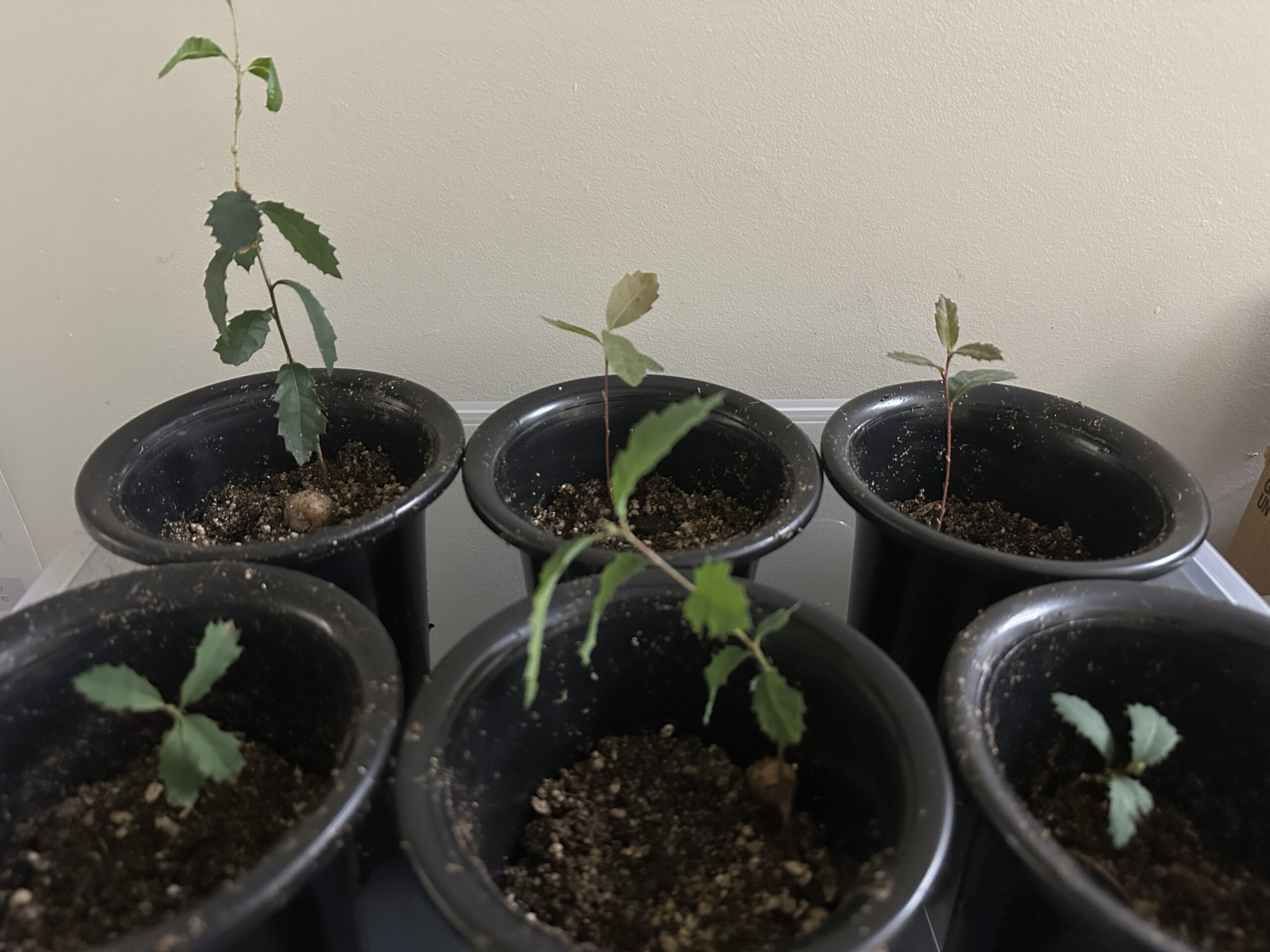
One month old seedlings were root-dipped in the truffle spore suspension and planted in autoclaved perlite, vermiculite, peat moss mix (1:1:1) in nursery pots in a greenhouse for the next 11 months, which is a semi-sterile condition away from soils.
Survey of roots was done under a dissection microscope six months after innoculation, looking for the tips of the rootlets with a swollen or inflated shape, and mycorrhizae formation, a hairy morphological characterization unique for black truffle Tuber melanosporum.
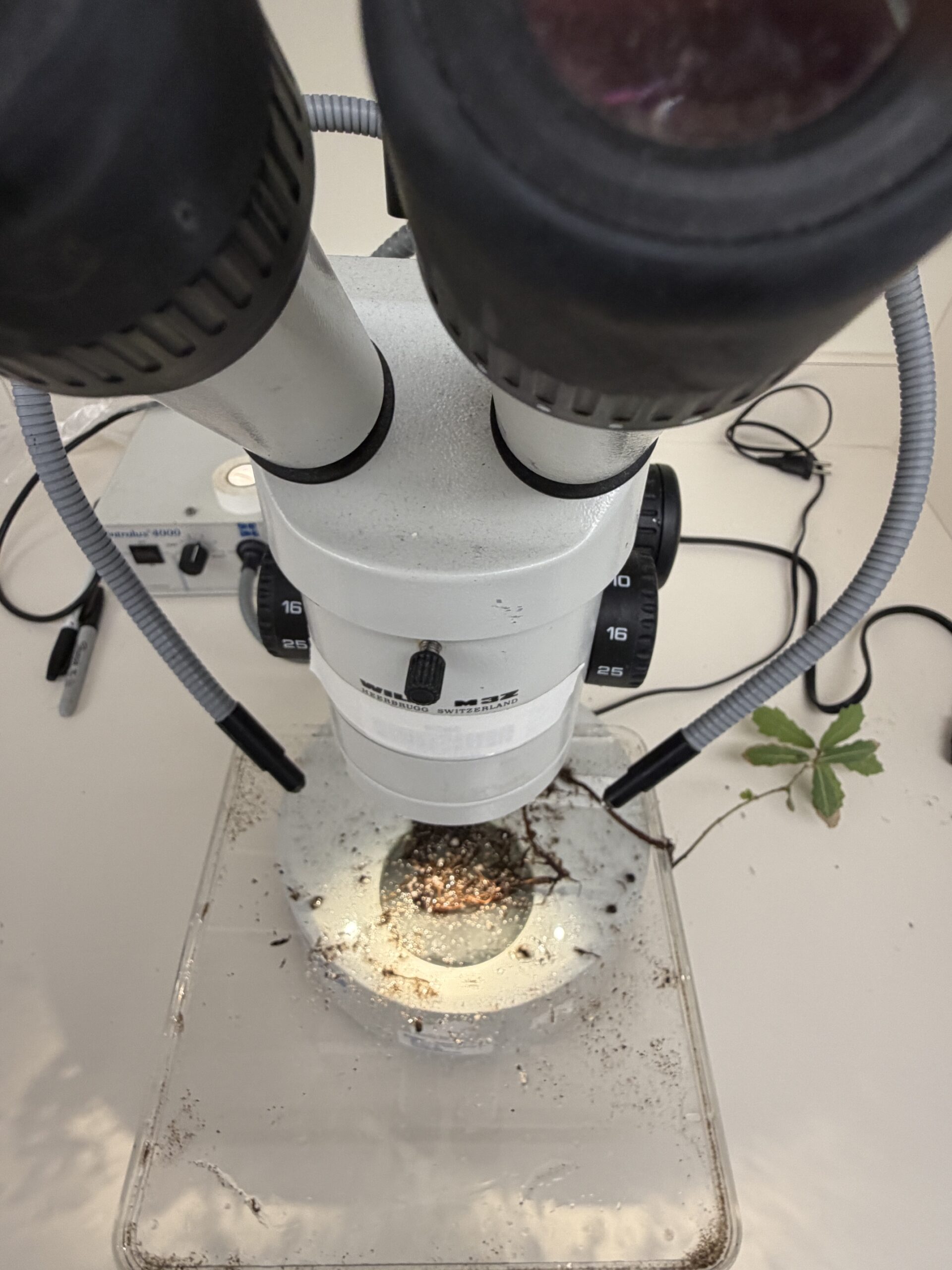
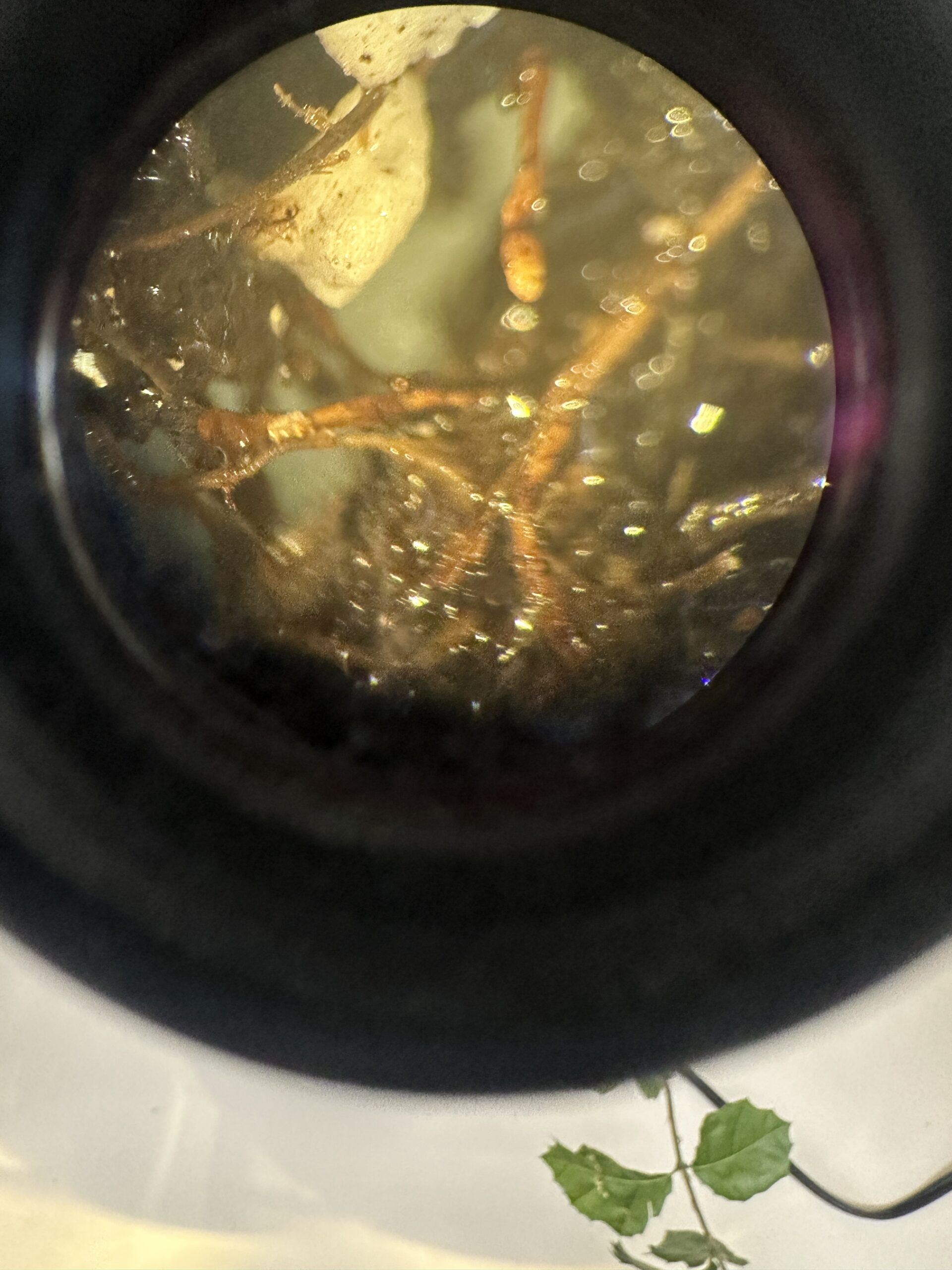
Only seedlings inoculated with free truffle pieces showed signs of successful colonization of truffle. Inoculation with freeze dry truffle powder was not successful.
- Planting into the field at the farm
Oak seedlings were first grown in a greenhouse for up to one year, then outside for 3 months to acclimate the outside condition before they were planted in ground. Only oak seedlings with positive black truffle mycorrhizae were selected for field planting.
Tree seedlings were planted 8 feet apart in a fenced field. Each planting site is prepared with addition of lime to adjust PH to 7.5-8.
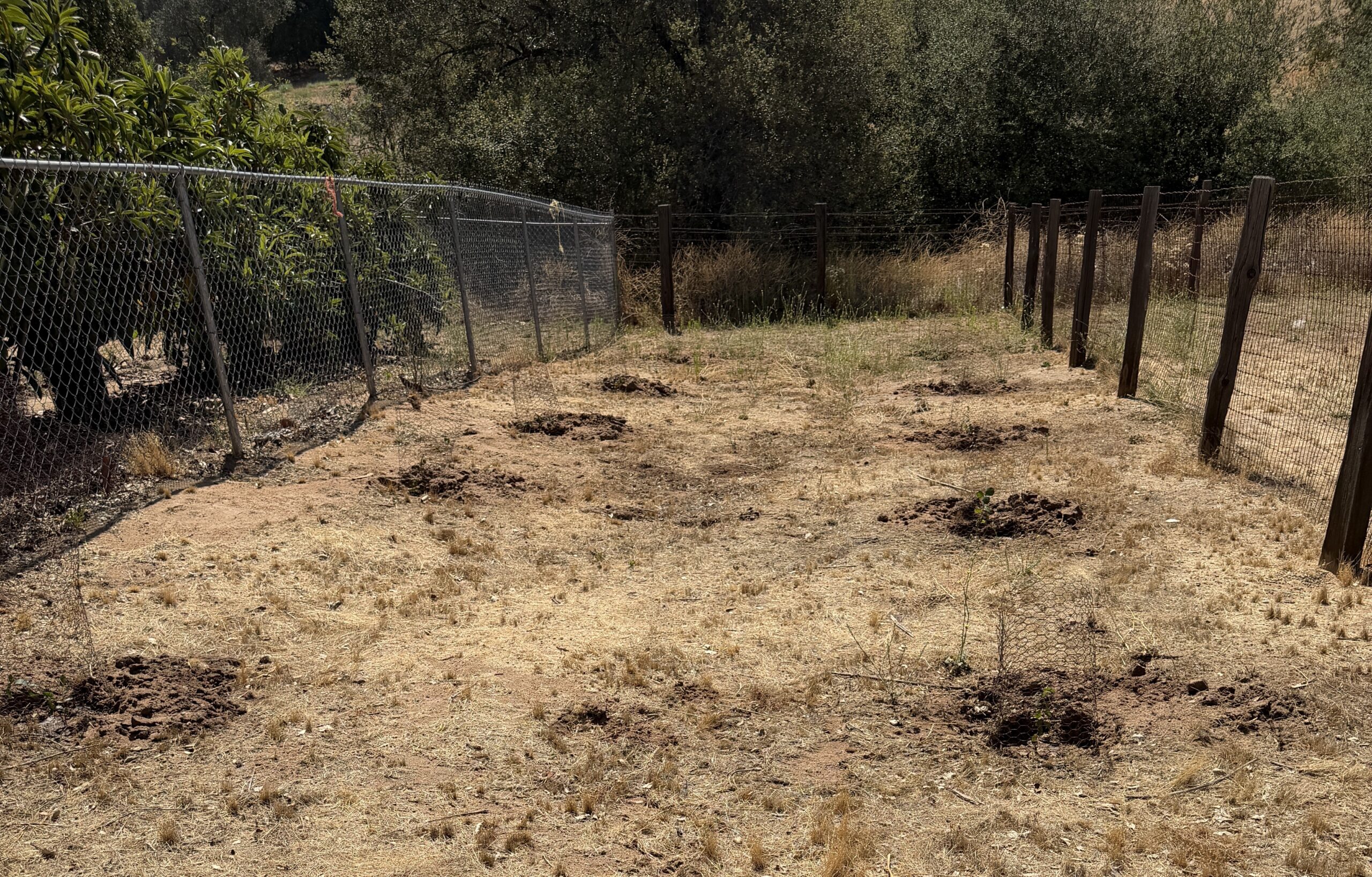
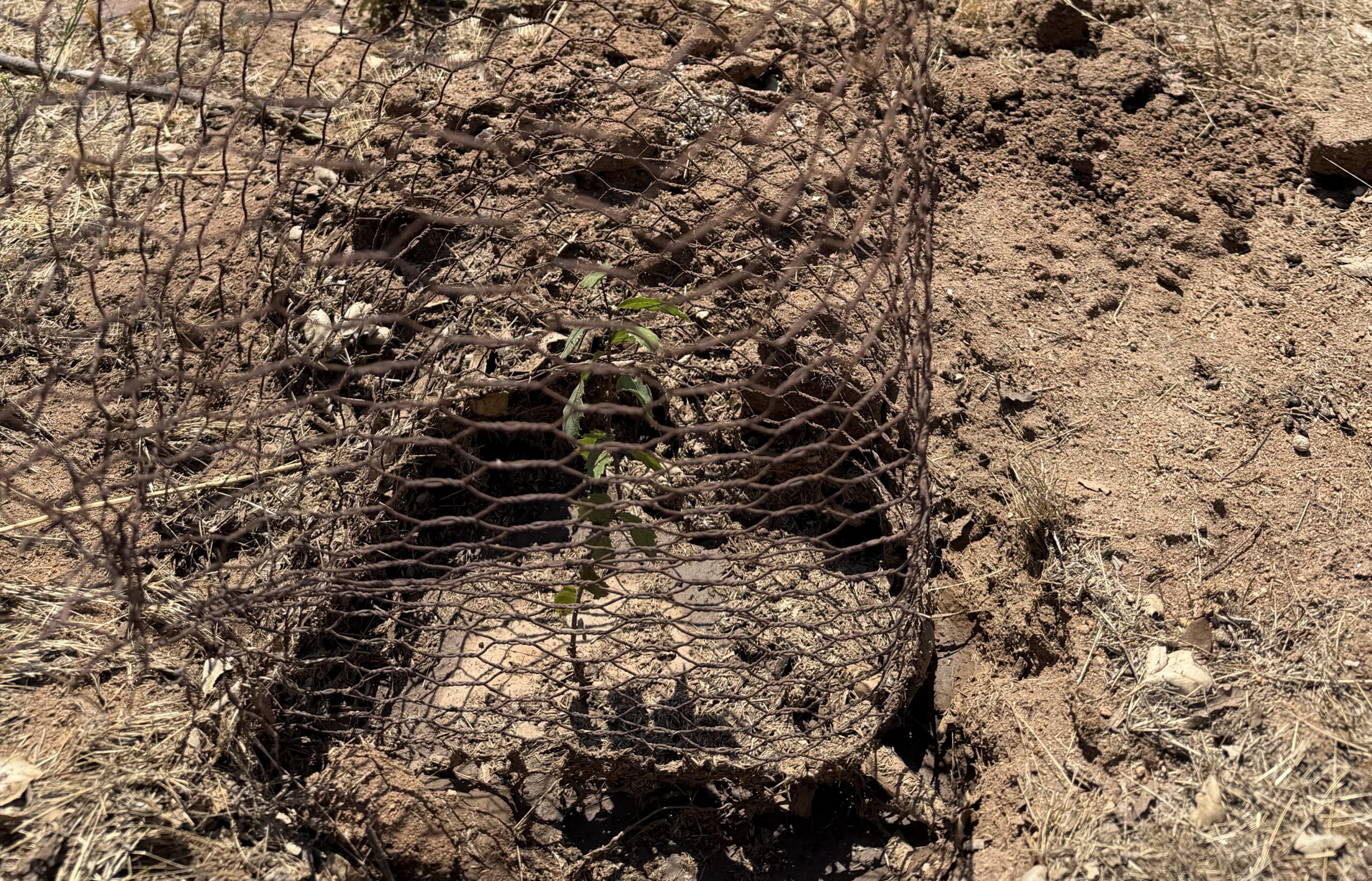
We set up individual sprinkler for each oak seedling controlled by a solar powered timer. We adjusted the watering schedule based on the soil moisture measurement in each month and observed the effect on plant growth.
We found that native oaks acorns germinate readily without stratification treatment. To keep them for later use, it is still better to keep them in a fridge because they may lose moisture content quickly at room temperature and fail the floating test, but when kept in a closed bag at room temperature, they can start to germinate spontaneously. Engelmann oak and Coastal Lively Oak were used in this research and both grow well into seedlings. The Coastal Lively Oak seems to grow more robustly.
Because of the scarce of the fresh truffles, we used rehydrated freeze-dried truffle powder to inoculate oak tree seedlings. But no colonization of truffle in the roots were observed. In contrast, we achieved a rate of about 50% successful inoculation of seedlings using minced fresh truffle fruit bodies. The rate probably can be further increasing the amount of truffles or performing another round of inoculation in the future.
The oak seedlings in the field absolutely need fence and wire to protect from pests such as rabbits and squirrels.
Research outcomes
Our study is the first report of inoculating native Engelmann oak with Périgord black truffle. We observed the formation of black truffle ectomycorrhizae on the root tips of inoculated seedlings and confirmed the presence of truffle DNA by PCR. Although truffle production may take several years after the inoculated oak trees are planted, we will be able to monitor the establishment and persistence of the truffle colonization through periodic root surveys using microscopy and PCR, rather than waiting blindly for truffle formation. Even if truffle production is ultimately unsuccessful, the project will still achieve the important goal of helping reestablish native Engelmann oak groves.
Education and Outreach
Participation summary:
We worked closely with staff at Resource Conservation District San Diego to plan our outreach activities and incorporated this project in the carbon farm plan. We hosted two field day events to demonstrate different species of native oak trees on our farm and the process to inoculate black truffle to oak tree seedlings. We attended San Diego fungi festival to connect with people interested in mushroom and truffle cultures. I also attended San Diego County Voluntary Conservation and Land Management Assistance Workshop to speak with agriculture professionals and farmers/ranches to spread words of our project.
We spoke with chefs about possible productions of local black truffles and they are extremely interested, as all truffles they use now are oversea import. We had vineyard owners contacting us after they heard about our project and some are even from Northern California. They considered converting some of their fields to truffle orchards and I recommended different oak trees to fit their climate.
The stakeholder of Evergreen farm which has over several large greenhouses in Campo, CA is interested in a joint venture of setting up a nursery to produce inoculated oak trees for other farmers.
I gave a presentation about growing truffles to students and volunteers at a local High School and Future Farmers of American club to introduce them a new farming commodity linking to oak tree regeneration.