Final report for FW24-011
Project Information
The purpose of this project was to determine whether grazing goats in timbered landscapes can control unwanted brush encroachment while not having a negative impact on the growth or mortality of desired coniferous tree species, primarily Douglas fir and Redwood. Additionally, the goats were confined to the test areas using the innovative technology of virtual fencing. The desired outcomes were to determine if goats could be utilized to reduce the use of herbicides to control unwanted vegetation and reduce the use of fossil fuel dependent, high-cost mechanical removal of unwanted vegetation.
The study sites included the following: 1) Oregon white oak and California black oak woodlands with heavy Douglas fir tree encroachment, where the fir trees were less than 5 years of age (the goal was to use goats to eat young Douglas fir trees where firs are unwanted); 2) timber ground with redwood trees that were less than 5 years of age threatened by brush encroachment (the goal was to use goats to eat brush but not harm young Redwood trees) and 3) Douglas fir trees under the age of 5 years and threatened by brush encroachment (the goal was to use goats to eat brush but not harm young Douglas fir trees).
Through this research, we found that in the timber ground, the goats do not cause significant damage to desired Douglas fir and Redwood trees but did cause significant damage to unwanted brush species. In the oak woodland with heavy Douglas Fir encroachment, we found that while there was some damage to young Douglas fir trees in areas where they are not desired, damage was not significant enough to have the desired impact. We also found that there was significant damage to the young Oregon white oaks and the young California black oaks. If our hypotheses are correct, timberland owners could use goats as an ecologically friendly method for treating brush encroachment.
This project provided information for producers on the value of virtual fencing. This showed reduced time and labor, allowing for an efficient and easy method of rotating goats.
The purpose of this project was to determine whether grazing goats in timbered landscapes could control unwanted brush encroachment while not having a negative impact on the growth or mortality of desired coniferous tree species, primarily Douglas fir and Redwood. Additionally, the goats were confined to the test areas using the innovative technology of virtual fencing. The desired outcomes were to determine if goats can be utilized to reduce the use of herbicides to control unwanted vegetation and reduce the use of fossil fuel dependent, high-cost mechanical removal of unwanted vegetation.
The study sites included the following: 1) Oregon white oak and California black oak woodlands with heavy Douglas fir tree encroachment, where the fir trees are less than 5 years of age (the goal was to use goats to eat young Douglas fir trees where firs are unwanted); 2) timber ground with redwood trees that are less than 5 years of age threatened by brush encroachment (the goal was to use goats to eat brush but not harm young Redwood trees) and 3) Douglas fir trees under the age of 5 years and threatened by brush encroachment (the goal was to use goats to eat brush but not harm young Douglas fir trees).
April 2024- Western SARE Grant Funds have been approved
May 2024- Three research sites were finalized on Lone Star Ranch by Lauren (PI) and Jeff (TA)
May 2025- Portable virtual fence towers were erected - Cody Sizemore
June 2025 – Measurements and pre grazing data collected by Lauren (PI) and Jeff (TA) on all three research sites
July/August 2025- Site 1 treated with goats by Lauren (PI)
August/September 2025- Site 2 treated with goats by Lauren (PI), site 1 post grazing data collected by Lauren (PI) and Jeff (TA)
September/August 2025- Site 3 treated with goats by Lauren (PI), site 2 post grazing data collected by Lauren (PI) and Jeff (TA)
October 2025- Site 3 post grazing data collected by Lauren (PI) and Jeff (TA)
November and December 2025- Data analyzed by Lauren (PI) and Jeff (TA)
November 24, 2025- Jeff (TA) presented at a UCANR Virtual Fencing Webinar
June 12, 2025- Lauren (PI) and Jeff (TA) hosted a field day
February 9, 2026- Lauren (PI) presented on a producer forum at the Society for Rangeland Management annual meeting
March 24, 2026- Lauren (PI) presenter in a Targeted Grazing short course Webinar, hosted by UCCE
May 2, 2026- Jeff (TA) presented to a group of forest landowners at College of the Redwoods
August 14, 2026- Jeff (TA) presented in an in-person workshop at the University of California Research and Extension Center in Hopland, California
August 2026- Final grant report by Lauren (PI) and Jeff (TA)
Cooperators
- - Technical Advisor
Research
3 research sites were chosen on the Lone Star Ranch, located in Kneeland, California.
Site 1 was approximately 2.5 acres in size. Existing virtual fencing technology was used to manage goats and keep them within the research site for the duration of this project, for approximately 8 days. 32 out of 51 mature does were equipped with virtual fencing collars. This site was an Oregon white oak and California black oak woodlands with heavy Douglas fir tree encroachment. The site was selected because it has a lack of other brush. The objective of this site was to observe and quantify the impact the goats had on the Douglas firs when they have no alternate brush to browse on. Prior to the goats being placed at the research site:
1) Pre-treatment photo documentation was taken at each of three transects.
2) Young Douglas firs were measured within each transect (height, width, presence/absence of browse, % of tree browsed, and a tree health score of 1-5) for each fir tree within each transect as well as photo documentation;
3) 32 out of 51 mature does were equipped with virtual fencing collars. Body condition score was recorded on all mature does;
4) virtual fences were created on the computer.
Post treatment protocols included:
1) post treatment photo documentation
2) previously marked Douglas fir trees were monitored following pre-treatment protocol, and
3) goat body condition score was reevaluated.
Site 2 was approximately 3.2 acres in size. Virtual fencing technology was used to manage goats and keep them within the research site for the duration of this project. This site is timberland with young Douglas fir and brush encroachment. The objective of this site was to observe and quantify the impact the goats had on the young Douglas firs and/or the unwanted brush. Prior to the goats being placed at the research site:
1) Pre-treatment photo documentation was taken at each of three transects
2) Young Douglas firs were measured within each transect (height, width, presence/absence of browse, % of tree browsed, and a tree health score of 1-5) for each fir tree within each transect as well as photo documentation.
3) Brush was measured within each transect (height, width, presence/absence of browse, % of plant browsed, and a health score of 1-5) as well as photo documentation for each unwanted brush species within each transect.
4) 32 out of 51 mature does were equipped with virtual fencing collars.
5) virtual fences were created on the computer.
Post treatment protocols included:
1) post treatment photo documentation;
2) previously marked Douglas fir trees were monitored following pre-treatment protocol
3) Unwanted brush was monitored following pre-treatment protocol;
4) goat body condition score was reevaluated
Site 3 was approximately 3.2 acres in size. Virtual fencing technology was used to manage goats and keep them within the research site for the duration of this project. This site was timberland with young Redwood and brush encroachment. The objective of this site was to observe and quantify the impact the goats had on the Redwoods and/or the unwanted brush. Prior to the goats being placed at the research site: 1) pre-treatment photo documentation was taken at each of three transects.
2) young Redwood were measured within each transect (height, width, presence/absence of browse, % of tree browsed, and a tree health score of 1-5) and photo documentation for each Redwood tree within each transect
3) Unwanted brush was measured within each transect (height, width, presence/absence of browse, % of plant browsed, and a health score of 1-5) as well as photo documentation for each unwanted brush species within each transect
4) 32 out of 51 mature does were equipped with virtual fencing collars. Body condition score was recorded on all mature does
5) virtual fences were created on the computer.
Post treatment protocols included:
1) post treatment photo documentation;
2) previously marked Redwood trees were monitored following pre-treatment protocol;
3) Brush and herbaceous plants were monitored following pre-treatment protocol
4) goat body condition score was reevaluated
Research objective: The purpose of this project was to determine if grazing goats in timbered landscapes can control unwanted brush encroachment without having a negative impact on the rate of growth, confirmation, or survivorship of desired species of confiner.
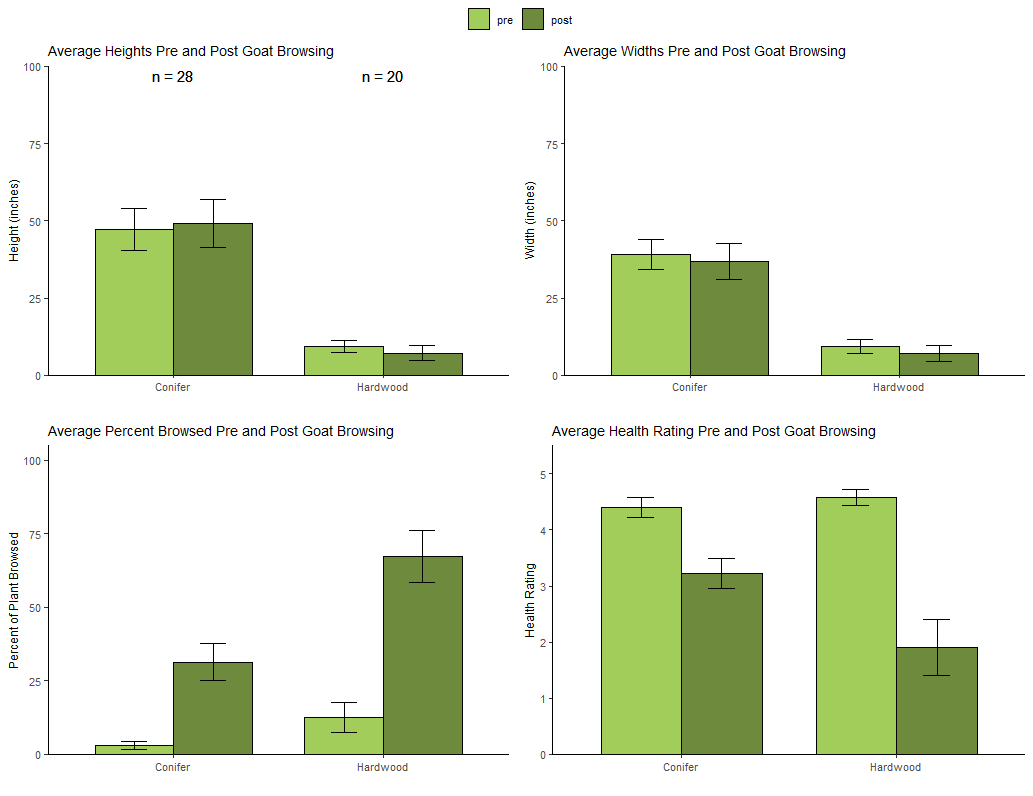
In evaluating the data set collected from site 1, it was determined that the goats did not have the desired impact on the height and width of the conifers. While the conifers were browsed, so were any young hardwoods, to a heavier extent than the conifers. Further assessment would not be needed to evaluate using goats as a solution to conifer encroachment on oak woodland.
Body condition scores were reevaluated on all mature does, however, BCS did not substantially change due to the short amount of time the goats were on each site. Further research with a longer time period would be needed to adequately determine how BCS is impacted.
This project successfully used virtual fencing technology on the goats to keep them within their allotted 2.5-acre boundary. During the research project, all goats equipped with a virtual fence collar were observed staying within their boundaries. This project had 100% containment on the goats equipped with virtual fencing collars. The goats that did not have virtual fence collars did go outside of the virtual fence boundaries at free will, however, were observed to come back to the virtually fenced goats to ruminate during the day and bed down at night. Further assessment in how far the uncollared goats traveled out of the virtual fence boundaries would be useful. It would also be useful to know what percentage of goats need to wear virtual fencing collars to maintain a goat herd within a desirable boundary area.
In evaluating the data set collected from site 2, it was determined that the goats did have the desired impact on the height and width of the brush and the brush was browed much heavier once goats had been introduced. The initial findings are promising. Further assessment on how the time of year could impact brush and young Douglas Fir would be needed to evaluate using goats as a solution to brush encroachment on timberland.
Body condition scores were reevaluated on all mature does, however, BCS did not substantially change due to the short amount of time the goats were on each site. Further research with a longer time period would be needed to adequately determine how BCS is impacted.
This project successfully used virtual fencing technology on the goats to keep them within their allotted 3.2-acre boundary. During the research project, all goats equipped with a virtual fence collar were observed staying within their boundaries. This project had 100% containment on the goats equipped with virtual fencing collars. The goats that did not have virtual fence collars did go outside of the virtual fence boundaries at free will, however, were observed to come back to the virtually fenced goats to ruminate during the day and bed down at night. Further assessment in how far the uncollared goats traveled out of the virtual fence boundaries would be useful. It would also be useful to know what percentage of goats need to wear virtual fencing collars to maintain a goat herd within a desirable boundary area.
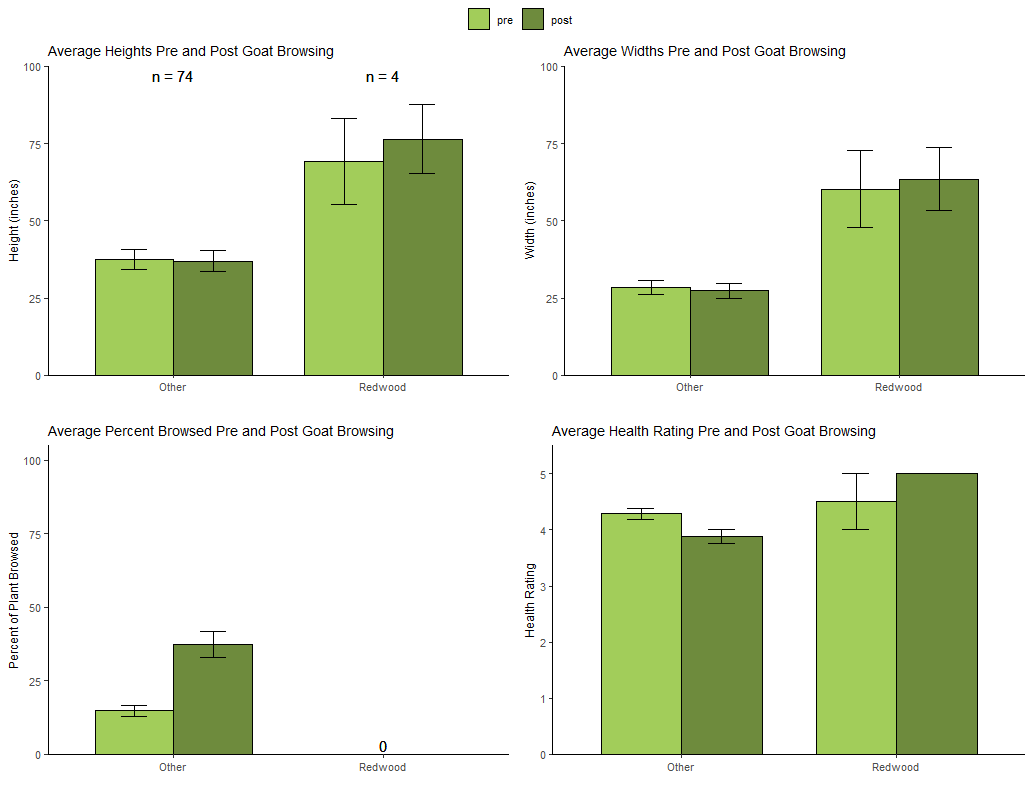
In evaluating the data set collected from site 3, it was determined that the goats did have the desired impact on the height and width of the brush and the brush was browed much heavier once goats had been introduced. The goats did not care for the redwoods and did not browse on the redwoods. The redwoods continued to grow and thrive during this project. The initial findings are promising. Further assessment on how the time of year could impact brush and young Redwoods would be needed to evaluate using goats as a solution to brush encroachment on timberland.
Body condition scores were reevaluated on all mature does, however, BCS did not substantially change due to the short amount of time the goats were on each site. Further research with a longer time period would be needed to adequately determine how BCS is impacted.
This project successfully used virtual fencing technology on the goats to keep them within their allotted 3.2-acre boundary. During the research project, all goats equipped with a virtual fence collar were observed staying within their boundaries. This project had 100% containment on the goats equipped with virtual fencing collars. The goats that did not have virtual fence collars did go outside of the virtual fence boundaries at free will, however, were observed to come back to the virtually fenced goats to ruminate during the day and bed down at night. Further assessment in how far the uncollared goats traveled out of the virtual fence boundaries would be useful. It would also be useful to know what percentage of goats need to wear virtual fencing collars to maintain a goat herd within a desirable boundary area.
WSARE Pre and Post picture
Research outcomes
This research shows promise for grazing goats in timbered landscapes to control unwanted brush encroachment while not having a negative impact on the growth or mortality of desired coniferous tree species, primarily Douglas fir and Redwood. By using the innovative technology of virtual fencing, the labor involved in browsing goats in these types of timberlands would be greatly reduced. This also could provide an alternative solution to controlling unwanted brush species without using herbicides. Further research projects could include how far the uncollared goats traveled out of the virtual fence boundaries as well as what percentage of goats need to wear virtual fencing collars to maintain a goat herd within a desirable boundary area. Further assessment on how the time of year could impact brush and young Douglas Fir and Redwoods would also be needed to evaluate using goats as a solution to brush encroachment on timberland. While labor was greatly reduced, it was not quantified within this study. Another project could be quantifying the amount of labor saved by using virtual fencing technology.
Education and Outreach
Participation summary:
On November 24, 2025 Jeff Stackhouse presented to a UCANR Virtual Fencing Webinar.
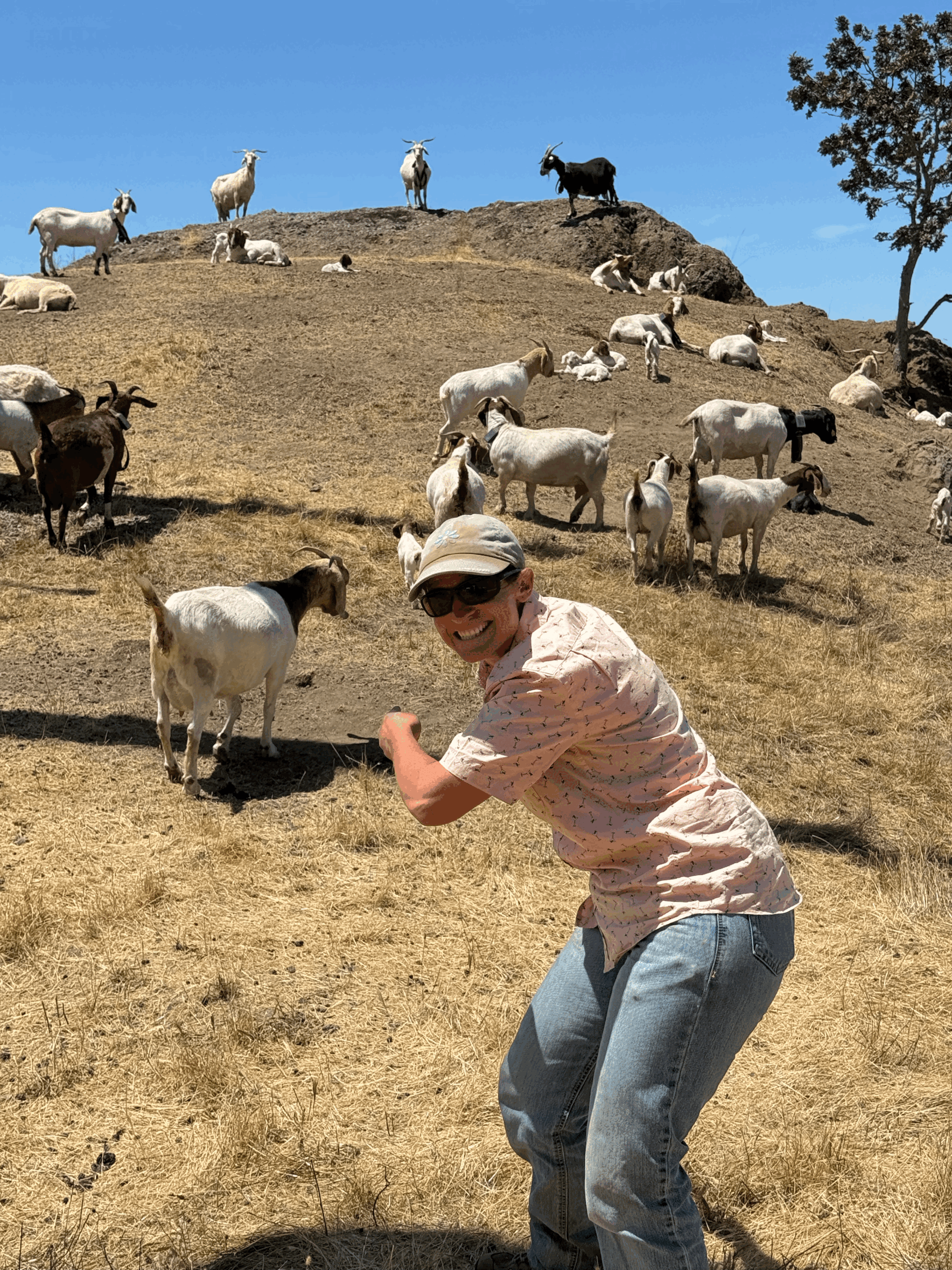
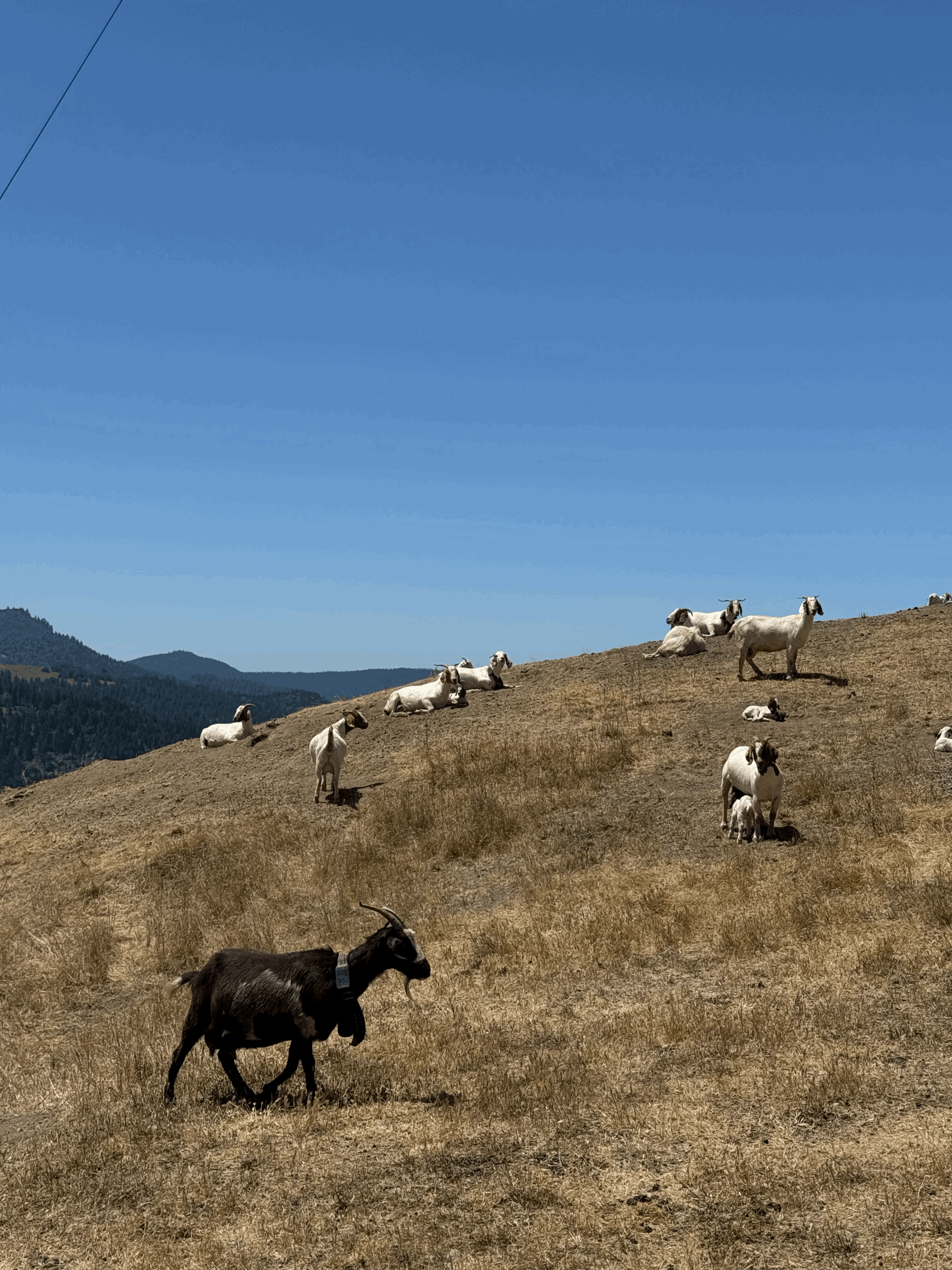
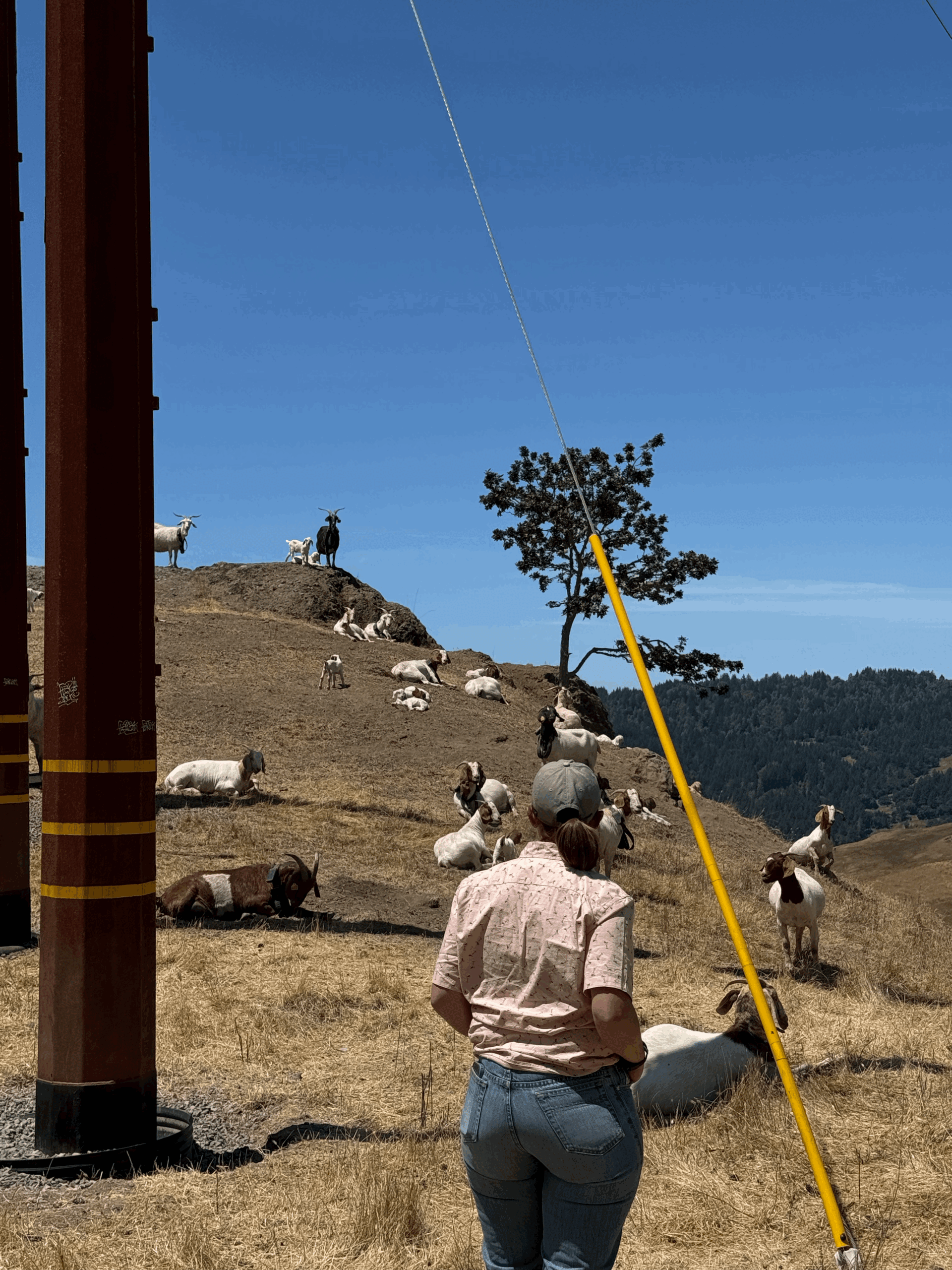
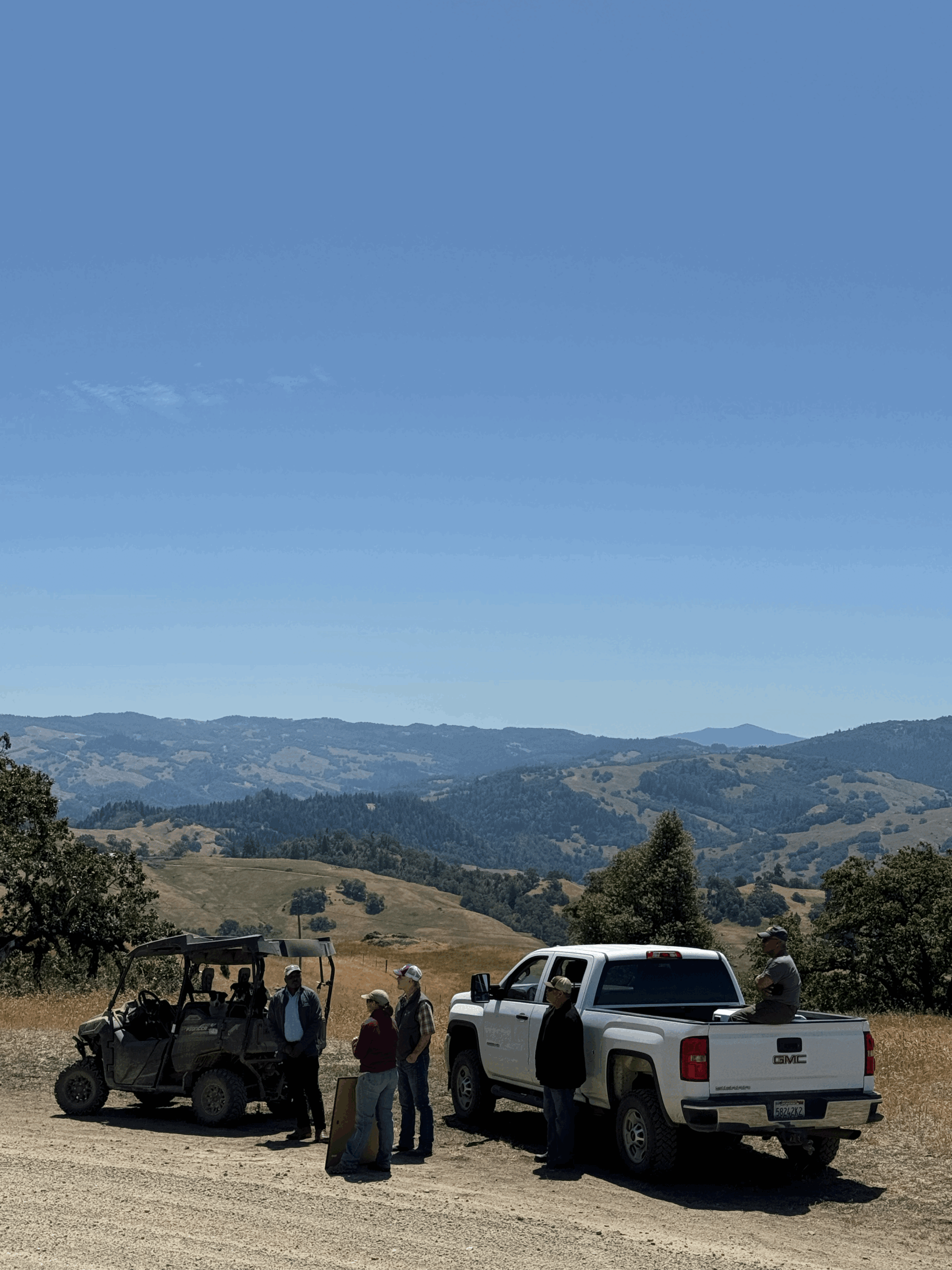
On June 12th, 2025, an all-day Field Day was hosted by Lauren Sizemore and Jeff Stackhouse on the Lone Satr Ranch. This was an in person, on the ground tour where it was demonstrated how virtual fencing technology was used to contain the goats in a specific area. The tour included all three research sites.
On February 9, 2026, Lauren Sizemore was a presenter on a producer forum titled Ranchers as a Keystone Species, hosted by Rick Knight, at the Society for Rangeland Management Annual Meeting held in Monterey, California.
On March 24th, 2026, Lauren Sizemore participated as a presenter in a Targeted Grazing Short Course Webinar, hosted by UCCE.
On August 14, 2026, Jeff Stackhouse presented data via an in-person workshop at the University of California Research and Extension Center in Hopland, California.
On May 2, 2026, Jeff Stackhouse presented to small forest landowners at College of the Redwoods.
On November 24, 2025 Stackhouse presented his slides and some of Sizemore’s slides to a UCANR Virtual Fencing Webinar. The title of this presentation was: North Coast Virtual Fence Experimentation. Stackhouse presented the data from this goat project and a previous trial at Lone Star Ranch using virtual fencing on beef cattle to build fire breaks. These data sets were very well received by the virtual audience.
Attached is a flyer for the virtual fence webinar:
A field day was held on June 12th, 2025 by Lauren Sizemore and Jeff Stackhouse. This was an in person, on the ground tour where we demonstrated how we used virtual fencing technology to contain the goats in a specific area. The tour included site one, where we observed and discussed the impacts goats had within the Oregon white oak and California black oak woodlands with heavy Douglas fir tree encroachment oak, where there were few other plant species for the goats to browse on. We discussed how the goats did not have the desired impact on the height and width of the conifers. While the conifers were browsed, so were any young hardwoods, to a heavier extent than the conifers. We also visited site two, where we observed and discussed that the goats did have the desired impact on the height and width of the brush and the brush was browsed much heavier once goats had been introduced. We then visited site three, where we observed and discussed goats did have the desired impact on the height and width of the brush and the brush was browed much heavier once goats had been introduced. The goats did not care for the redwoods and did not browse on the redwoods. The redwoods continued to grow and thrive during this project. This tour was an all-day event, held on the Lone Star Ranch, where all three sites are located. In addition to the tour stops at the WSARE demonstration/research project funded through these funds, we also included other stops in our tour agenda to include demonstrations and comparisons of:
- Virtual fence and utility of cattle grazing on rangelands.
- Past goat grazing and Rx fire efforts to control Himalayan blackberry
- Hack and squirt herbicide control for mature Tan Oak
- Mechanical Douglas fir restoration of deciduous oak woodlands
- Prescribed fire Douglas fir restoration of deciduous oak woodlands
- Traditional timber harvest and reforestation without goat grazing
The research sites on the Lone Star Ranch are located about an hour from the nearest town (Eureka), so lunch was provided so as to not break the continuity of the day’s educational event. During lunch, participants had the opportunity to mingle, create connections, and have robust conversations around goat grazing on timberlands.
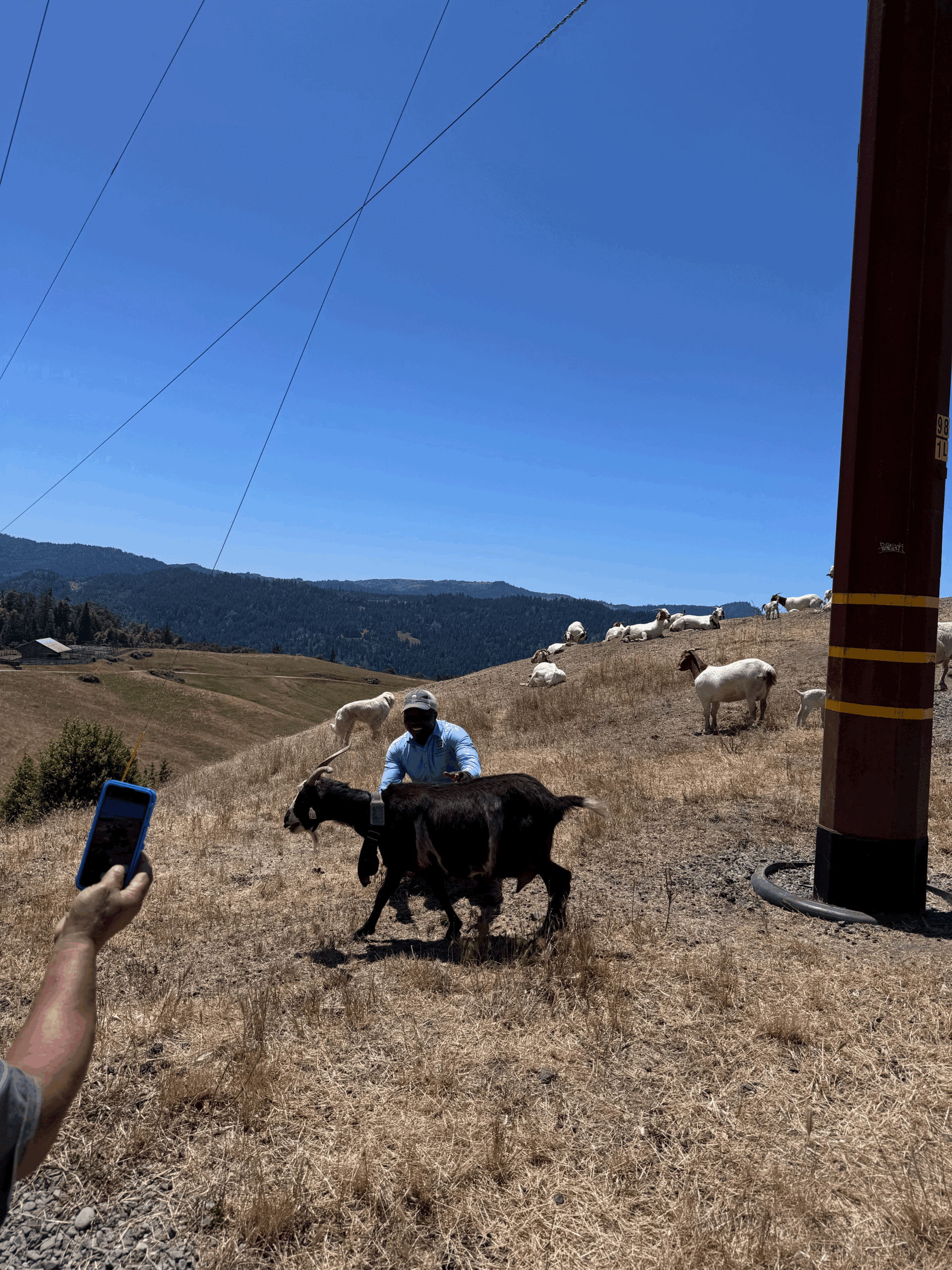
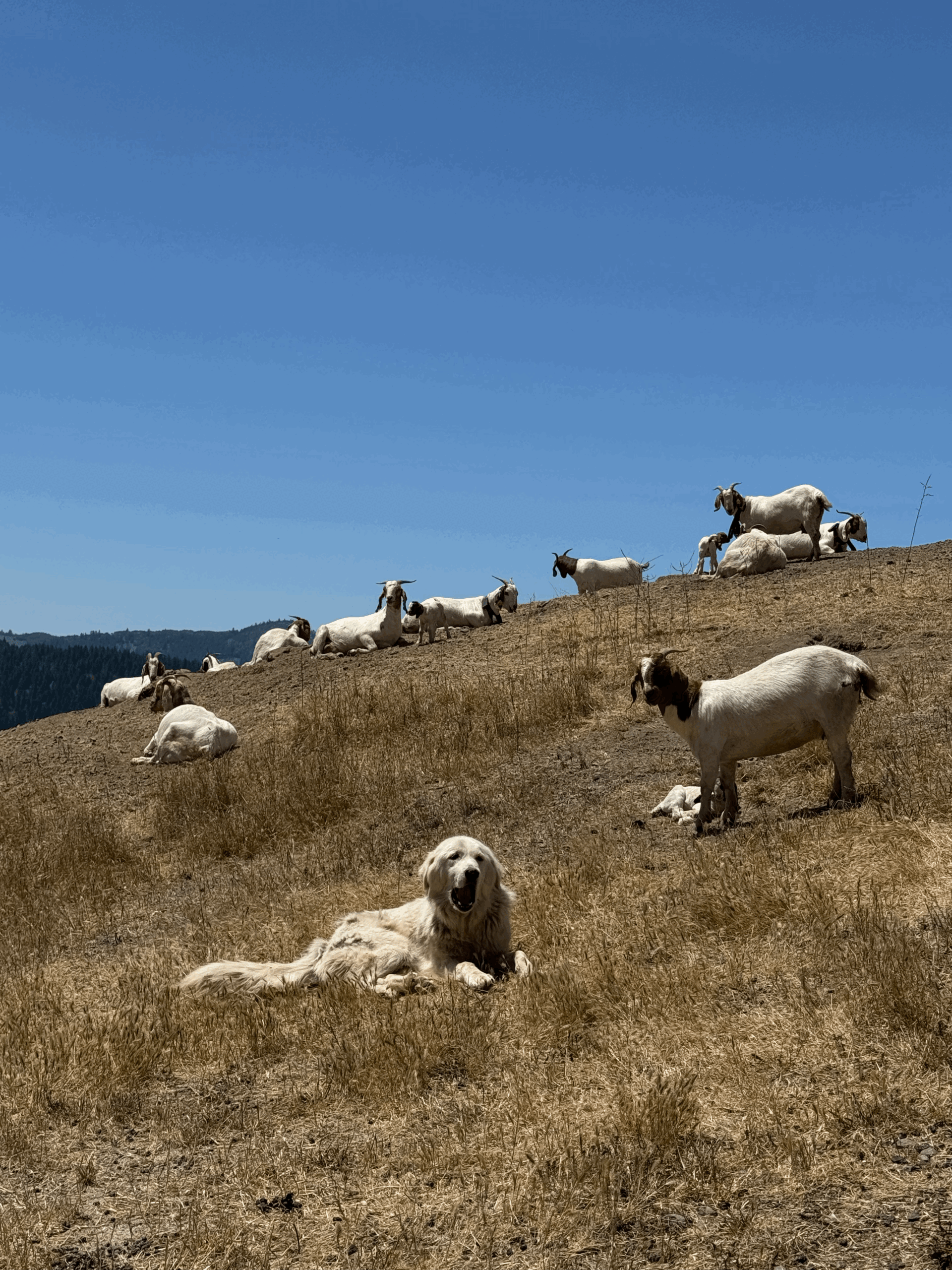
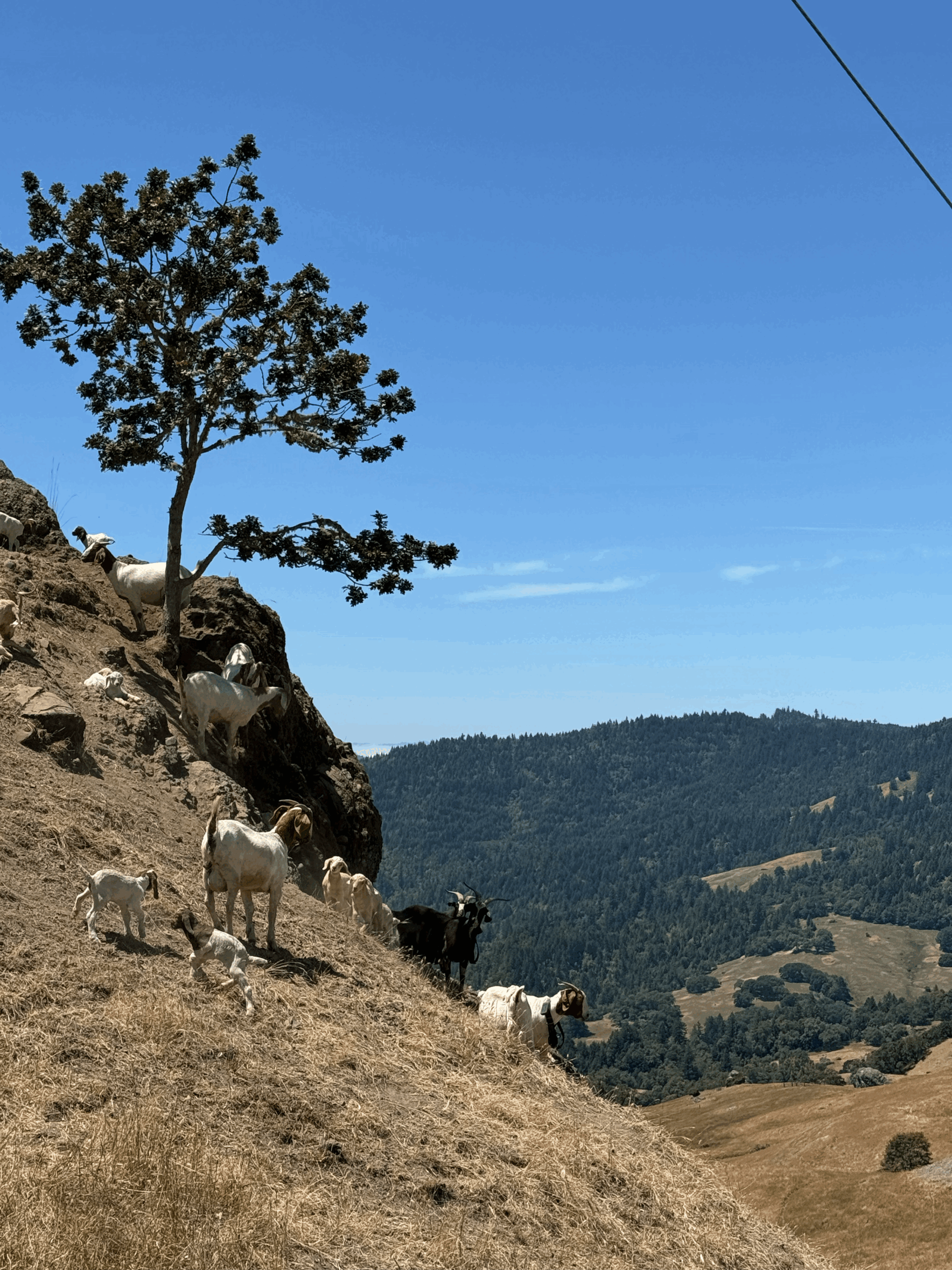
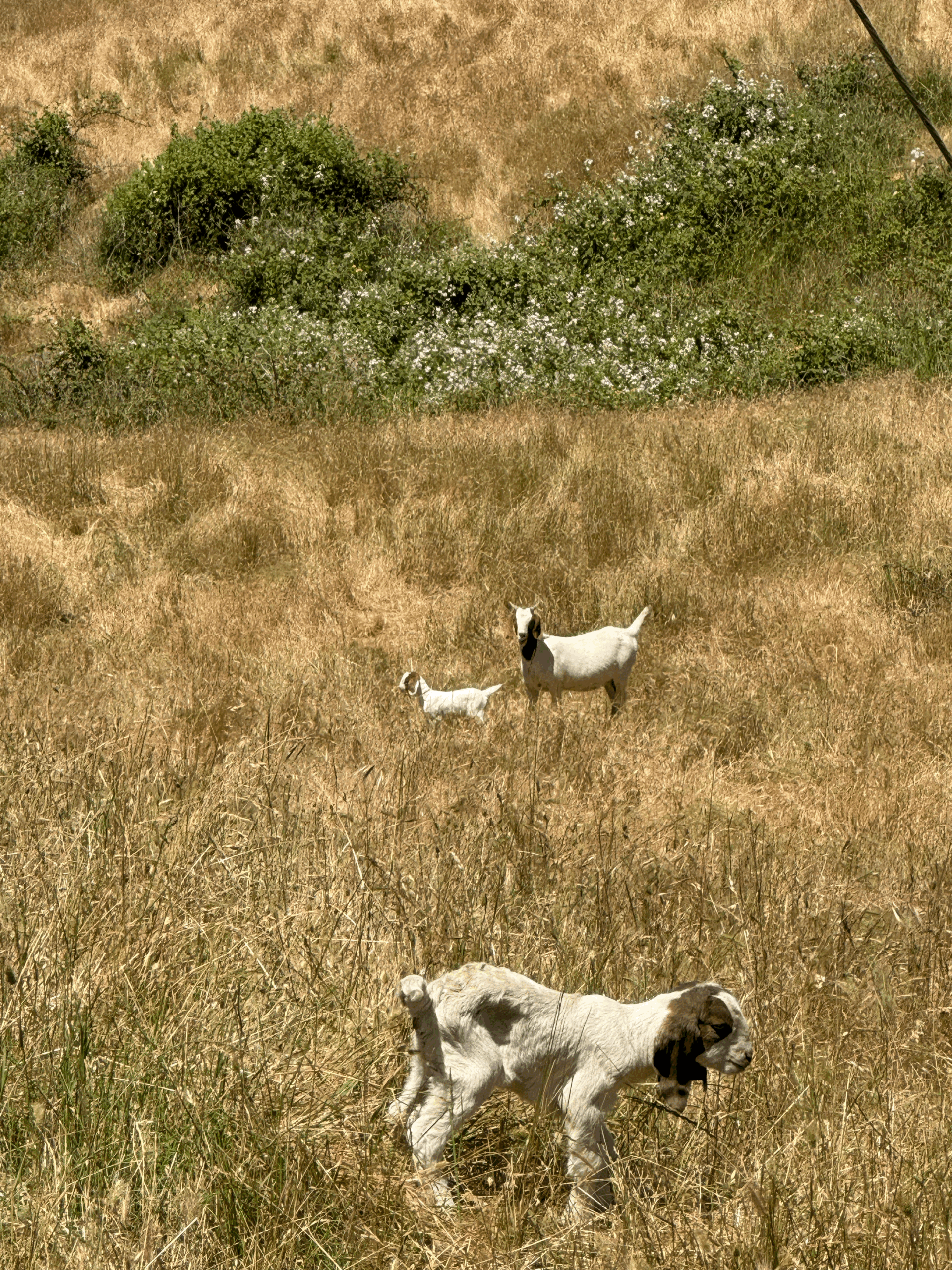
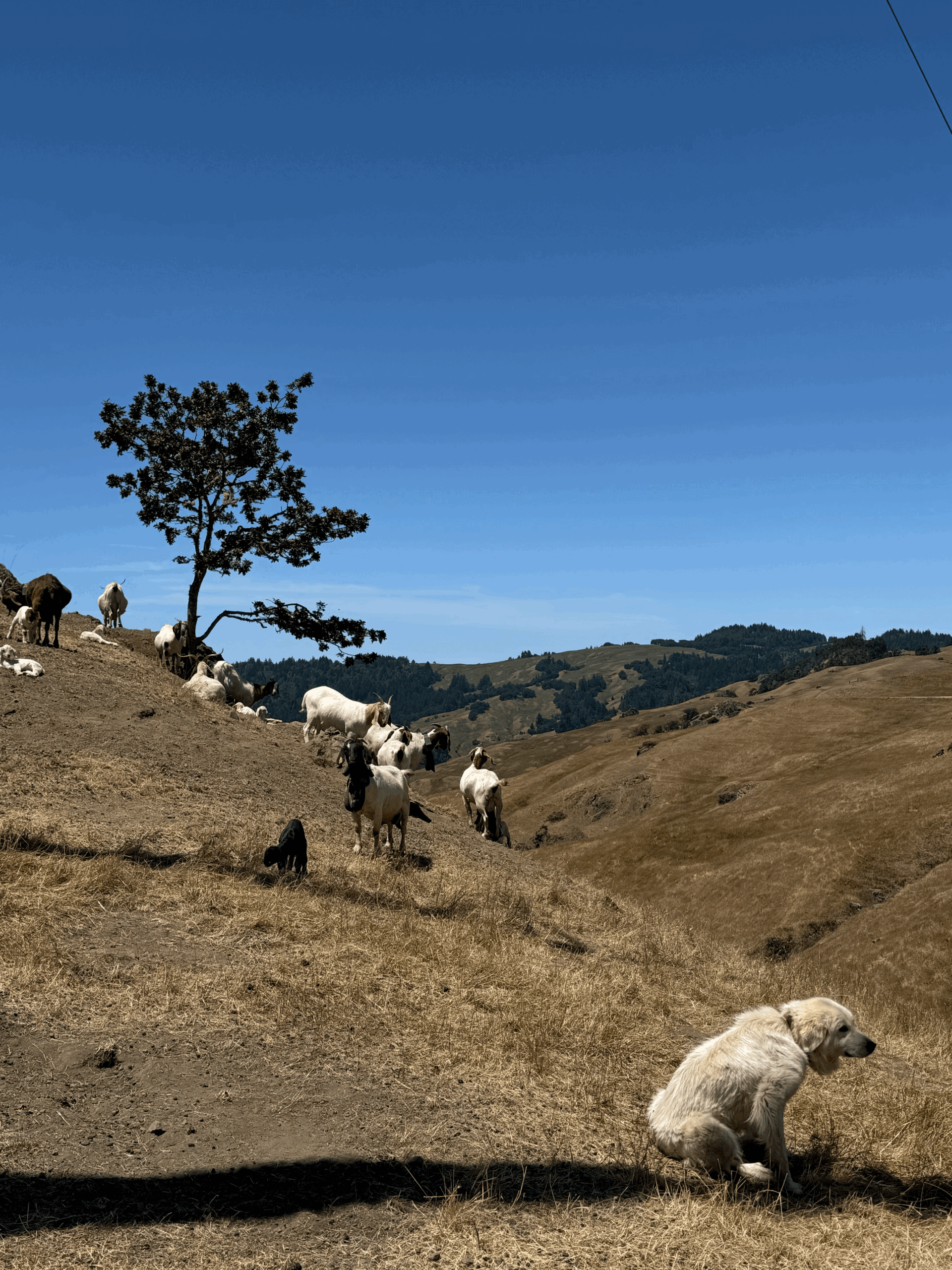
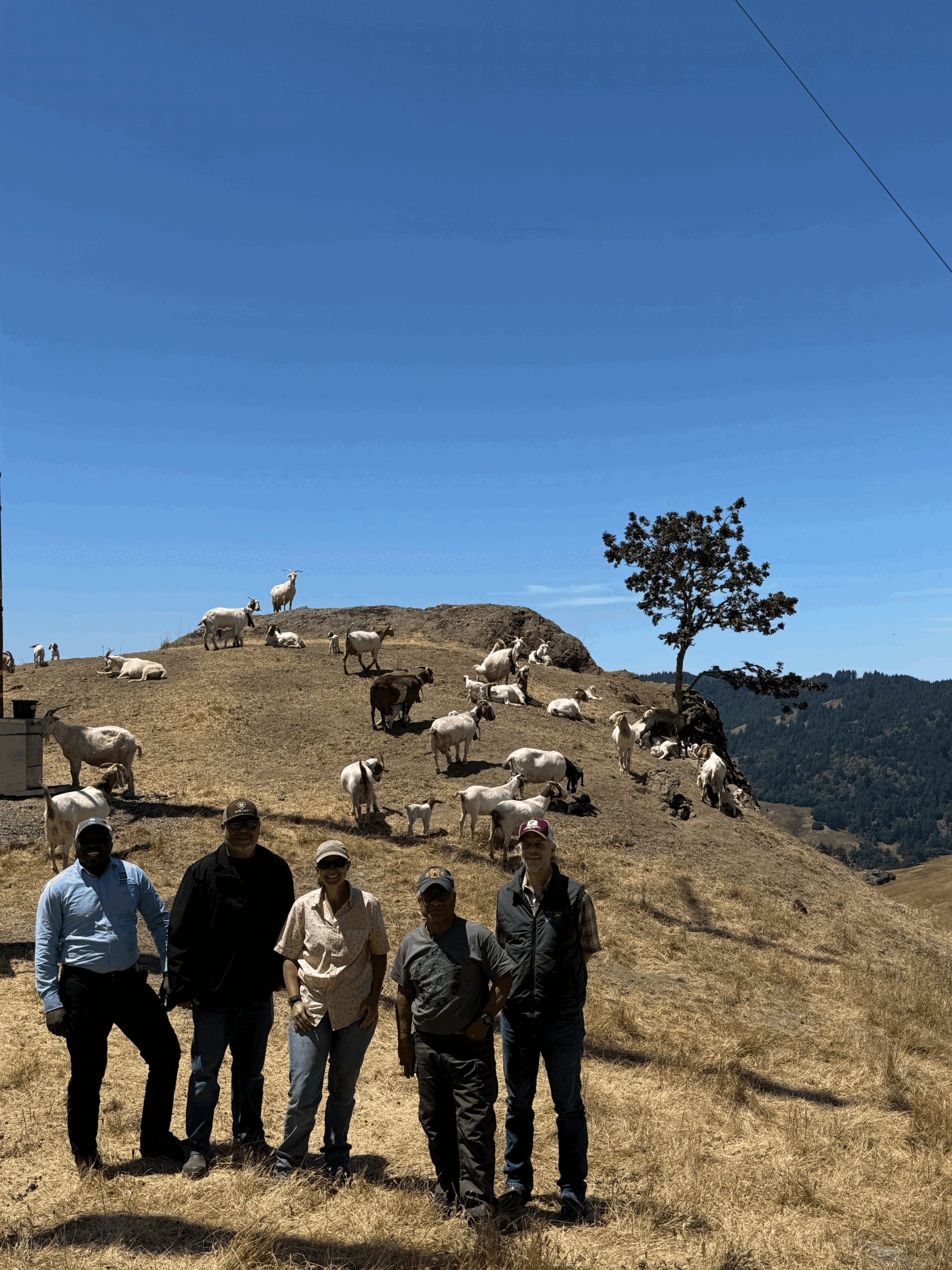
Attached are pictures of the Field Day.
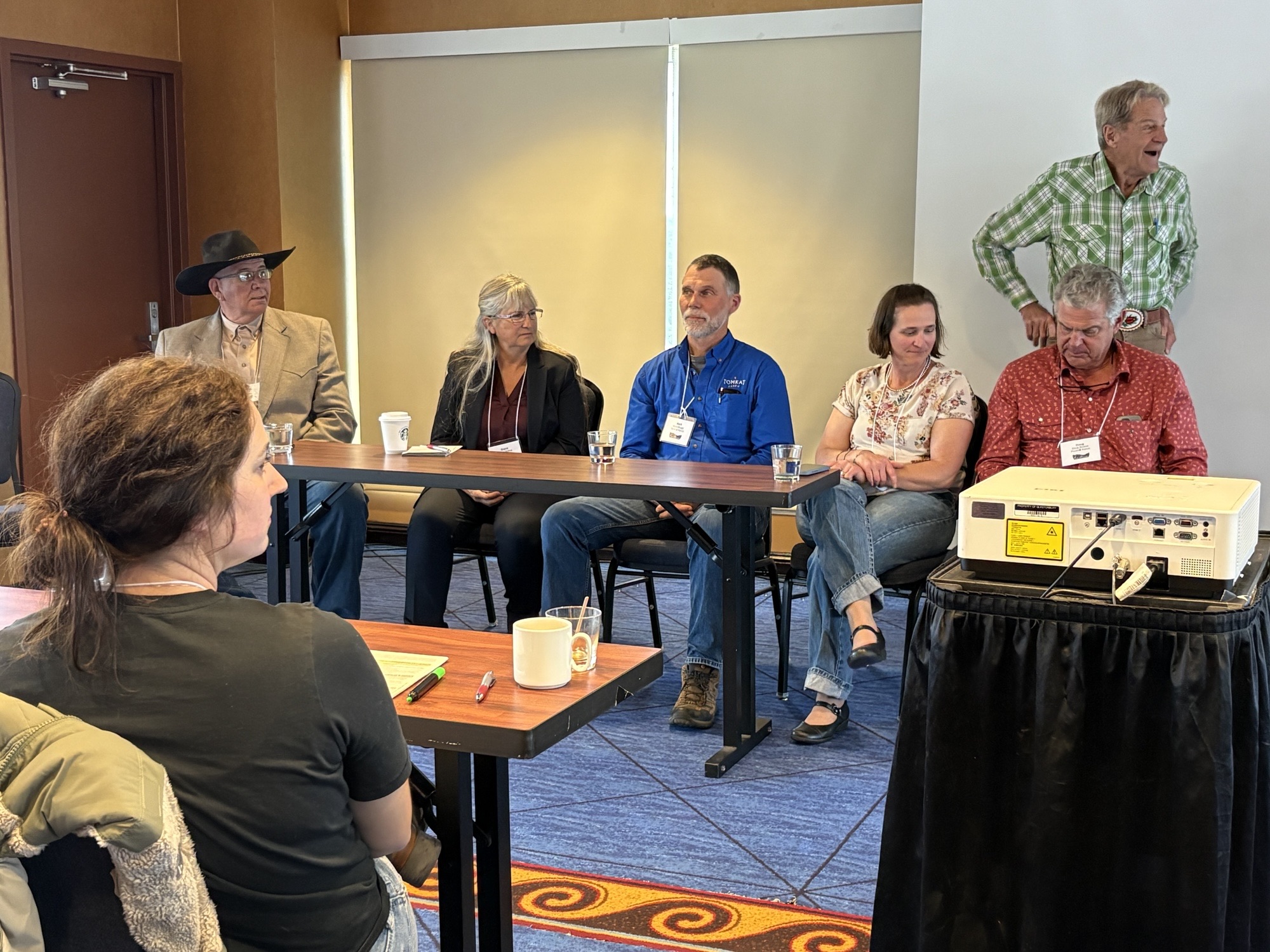
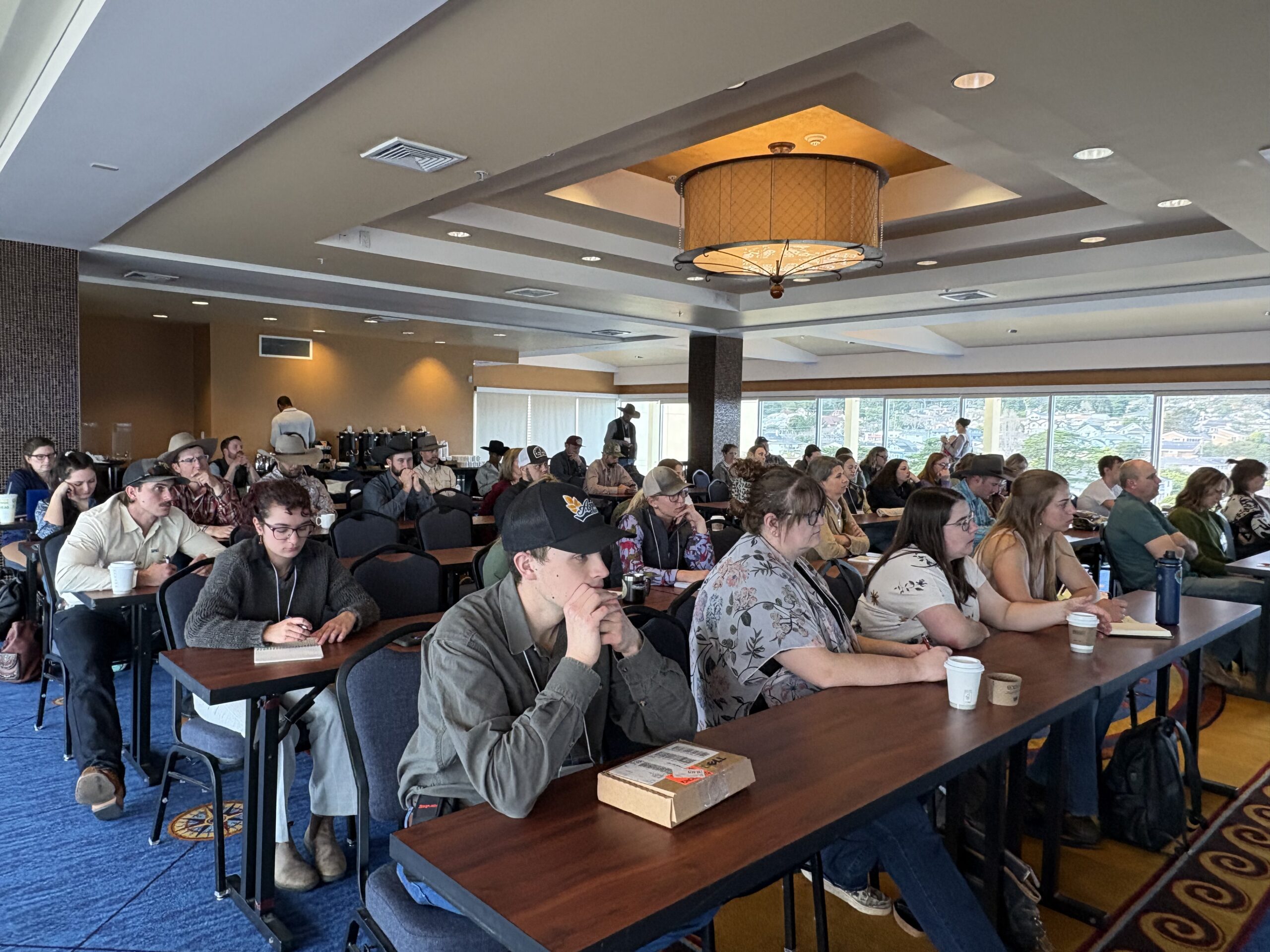
On February 9, 2026, Lauren Sizemore was a presenter on a producer forum called Ranchers as a Keystone Species, hosted by Rick Knight, at the Society for Rangeland Management Annual Meeting held in Monterey, California. During the producer forum, Lauren discussed the usage of virtual fencing technologies both on goats and cattle and the impacts this technology has had on the Lone Star Ranch. She also discussed while browsing conifers within the oakwoodland areas, that the goats did not have the desired impact on the height and width of the conifers. Lauren discussed site two and three, where the goats did have the desired impact on the height and width of the brush and the brush was browsed much heavier once goats had been introduced. During the discussion, Lauren also talked about the impacts virtual fencing has had on cattle grazing and management on rangelands, efforts to control Himalayan blackberry, using virtual fencing and goats, and general management practices for Lone Star Ranch. Attendees at the SRM Annual Meeting included: ranchers, producers, scientists, researchers, students, young professionals, agency personnel and conservationists. The SRM Annual Meeting was advertised through email listservs as well as social media platforms for California Rangeland Coalition (CRCC), California Grazing Lands Coalition, The California-Pacific Section of the Society for Range Management (Cal-Pac SRM) and California Rangeland Trust (CRT). Once the forum was complete, a social hour was then hosted by SRM to give presenters and attendees the opportunity to discuss in more detail about their topics. Many attendees were interested in the usage of virtual fencing technology on goats and discussions were held.
Attached is an Agenda for SRM Producer Forum:
On March 24th 2026, Lauren Sizemore participated as a presenter in a Targeted Grazing Short Course Webinar, hosted by UCCE. During the Webinar, Lauren discussed the usage of virtual fencing technologies on goats and cattle and the impacts this technology has had on the Lone Star Ranch. She also discussed while browsing conifers within the oakwoodland areas, that the goats did not have the desired impact on the height and width of the conifers. She also discussed site two and three, where the goats did have the desired impact on the height and width of the brush and the brush was browsed much heavier once goats had been introduced. During the Webinar, Lauren also talked about the impacts virtual fencing has had on efforts to control Himalayan blackberry, using virtual fencing and goats for the Lone Star Ranch. The Targeted Grazing Short Course Webinar was advertised via the UCANR Fire Network as well as to UCCE mailing lists that included: Vet Med Extension, Amador, Calaveras, El Dorado, Tuolumne, Alpine, Tulare, Kern, Napa, Solano, Yolo, Sacramento, and Hopland Research and Extension Center. In attendance were producers, staff from RCD as well as Fire Safe Council Staff.
Attached is the flyer for the Target Grazing Short Course:
2026_TargetedGrazingShortCourse_Flyer (1) (1)
Following is a link to the video of the Target Grazing Short Course Lauren Sizemore was a presenter in:
https://www.youtube.com/watch?v=ZEG80jcAyqg&t=3s
On August 14, 2026 Jeff Stackhouse presented data from this project via an in-person workshop at the University of California Research and Extension Center in Hopland, California. The title of his presentation was: Grazing Planning and Adapting it for Virtual Fence and Wildfire Preparedness. At this Virtual Fence workshop were ranchers and land managers. Approximately 30 people were in attendance and participated in this event.
Attached is a flyer for the in person workshop:
Aug 15 HREC Virtual Fence Workshop
On May, 2, 2026 Jeff Stackhouse presented this data to 7 small forest landowners and an additional 6 persons interested in becoming forest landowners. The title of this presentation was: Grazing for Vegetation Management. This event occurred at the College of the Redwoods in Eureka, CA. The people in attendance were very interactive and appreciative of learning about virtual fencing technology, which tree species the goats were consuming, and not consuming, and were very interested in learning more about livestock guardian dogs to protect their livestock.
Attached is a schedule for the presentation at College of the Redwoods:
Attached is a PowerPoint presentation used during multiple presentations:
Education and Outreach Outcomes
Through the presentations, webinars and tour, the research project objectives and results were disseminated to participants from all over the western United States. A broad range of participants were reached, including producers, ranchers, scientists, researchers, students, young professionals, agency personnel, conservationists, forest landowners and forest managers.
In person presentations created a lot of robust conversations post presentation regarding the use of virtual fencing on small ruminates. However, participants can be limited by the distance needed to travel to participate in the in-person presentation.
The in-person field day created deep meaningful conversations about the use of virtual fence technology on small ruminants as well as cattle. It not only gave the participants new ideas and knowledge, but Laurne Sizemore was also given new ideas and knowledge as well as feedback on ranch operations from discussions held. Seeing the technology in person and on the research sites was the most impactful way to disseminate the information for participants. However, field days can be limited by distance needed to travel by participants and field days take up a full day for participants.
The webinars are great for disseminating information to a broader audience. Travel is not necessary for presenters and attendees for webinars. Most webinars are short and easy to fit into participant’s schedules. However, there is not the opportunity for participants and presenters to have robust conversations after the webinar is over.
Virtual fencing and its use on small ruminants
Virtual fencing can be successfully used to graze goats in commercial timber settings
Labor savings on using virtual fencing and small ruminants