Final report for FW25-019
Project Information
Sonoma County is a vibrant agricultural region with extensive diversity of microclimates and topography, lending itself to a great array of agricultural growing. Local food continues to be in high demand, but despite a burgeoning, mixed local food scene, there is lack of local access to heritage crops of the Asian diaspora. Myoga, a perennial herb also known as "Japanese Ginger," is a nutritious crop consumed. A member of the ginger family, it is often grown in cold valleys and slopes of Japan and also found in Korea and China with ability to be grown down to USDA growing zone 6 with year-round in-ground growing in greenhouses, but often allowed to go dormant in winter with some rhizome protection. It prefers semi-shade as myoga is often naturally found growing under trees in East Asia - leaves may scorch in sun. It is unlike common ginger in that it is grown for its rosey flower buds, considered a culinary delicacy, spiritual symbol, and highly nutritious. Buds have a distinctive flavor, crunchy texture, and diverse applicability in culinary dishes.
It has gained some recognition in the west, especially in the culinary landscape, but there is lacking research. Anecdotal conversations with local Japanese elders and a handful of chefs prompted the interest to explore growing Myoga locally. This research investigated the following questions 1) What are the ideal growing conditions of Myoga that make it a viable crop? 2) What is the demand of market outlets to assess Myoga's economic viability as a specialty crop? and 3) Does the current local Asian specialty crop (ASC) production lend itself to Myoga becoming in demand that would also increase interest in more diverse crops of the Asian diaspora?
The research was carried out by comparing different growing conditions between in-ground and raised boxes inside a hoophouse. Observations and tracking was captured via quantitative field notes with careful climate tracking, plant health metrics, as well as labor hours, and cost of production. Secondly, we conducted surveys on market interest to assess demand and sales outlet opportunities. Lastly, we conducted surveys of local farmers experience in bringing Asian specialty crops to market and analyze their hurdles and strategies to overcome market challenges.
The research outcomes demonstrated myoga is a viable, economically beneficial crop when marketed and distributed to specialty buyers with either previous knowledge of the crop or familiarity in working with other Asian Specialty crops. It's value per square foot combined with it's low labor growing needs makes it of interest to other growers in general, but selling of myoga will need to continue via specialty channels. The research, events, and promotion of myoga in the 2025 served to build up a greater interest base, thus creating a more strategic marketing and distribution plan for the 2026 season.
- Compare in-ground vs. boxed production of Myoga to assess effects on crop production and associated costs.
- Assess several market outlets for selling myoga and ascertain the crops economic viability in a small-farm diversified vegetable operation.
- Survey the current farmer experience in marketing and selling Asian crop options in order to assess any hurdles as well as strategies they used to overcome market challenges.
Due to federal grant freezes that were in limbo until June of 2025, I focused my limited financial means on the actual growing, treatment and infrastructure of the myoga. Surveys were originally strategically planned for the late winter and early spring when regular farm production is slower and therefore my and other farmers availability windows are more suitable. Since funding was stalled, I could not afford to divert time to these surveys with unconfirmed capital. Once funding was confirmed in June, the adjusted strategy was to spread the surveys over the ensuing months of peak production season which resulted in delayed data collection through January. At the end of the myoga growing season (end of November), focus was on data review and analysis of quantitatve growing data, which led to compunding delays in addressing Objective 2 and 3. An extension was requested in order to accommodate the delayed timeline and unique myoga growing condition needs that are outside of the original WSARE granting timelines. The adjusted timeline was sent in March 2026: WSARE - Myoga Updated Timeline as of 3-15-26
|
Total Project Timeline: April 1, 2024 - April 1, 2025 |
|
|
April 2025 |
Establish field growing location and install infrastructure (hoophouses, drip lines, raised boxes, climate and soil sensors, data loggers). Begin research and enterprise analysis on current myoga market availability and demand. |
|
May 2025 |
Plant myoga with straw mulch and row covers. Begin recordkeeping and data tracking. |
|
May 2025 - September 2025 |
Monitor growth, continue record keeping and data logging, photo documentation, Conduct chef and grower surveys |
|
September - November 2025 |
Myoga harvest season - weigh and count harvest material. |
|
September 2025 - December 2025 |
Organize, compile, digitize growings seasons records and survey data. Begin initial report writing |
|
October 2025 |
Host Field Day and research updates to farmer community |
|
November 2025 |
Create video highlight reel for website and social media. |
|
January 2025 - February 2025 |
Finish report. Craft blog post for UCCE. Craft Project Summary Report outreach material. |
|
February 2025 |
Outreach and project outreach materials sent to chefs and restaurants in preparation for 2026 season purchasing conversations and soliciting new clients. |
|
April 2025 |
Host field day for ag community and organizations. |
Cooperators
- - Technical Advisor
Research
Objective 1: Compare in-ground vs. boxed production of Myoga to assess effects on crop production and associated costs.
Research Question: Is growing Myoga more profitable in the ground or in boxes in terms of production and associated costs?
Treatments: (1) In-Ground production vs. (2) Boxed production
Methods: Measured effects of growing location on soil moisture and soil temperature, plant height, yield weight, and sprout count. Soil moisture data was collected via installed soil probes connected to a digital data logger. Soil temperature was taken manually once per week over the growing season with a temperature probe. Plant height was measured every other week and sprout counts began in August and recorded once per month with specific recording of what plots produced the first sprouts. Data was collected on all associated labor and material costs for both Treatments to compare. We did not measure myoga rhizome spread as plant's can not be disturbed until the following year. Air temperature and humidity data was collected inside and outside of the hoop house using digital, wireless data loggers for complementary information about environmental controls and shifts over time. The outside temperature and humidity logger had a malfunction in July and so a new one was bought. Whenever the hoophouse was ventilated and/or open or closed for temperature needs, that was recorded in an activity log.
This trial was conducted within one 14'x50' hoop house to control for weather variables and hold them consistent across all plots. Both treatments, In-Ground and Boxes, used the same field soil to ensure soil characteristics are consistent and do not confound results. Boxes were built with redwood measuring at 16" W x 8" H x 8' L and gopher wire at the base and buried into the soil bed. Myoga rhizomes were all sourced from farm's prior season plantings and therefore consistent across all plots, as well. New drip irrigation line was installed across all beds. Prior to planting, but after plot creation, soil test samples were taken on 5/10/2025.
Field Trial Design: We used a Randomized Complete Block Design. The 2 treatments were randomized across 4 Blocks for a total of 8 Plots (two Plots of each Treatment per Block). The same number of rhizomes were planted in each plot in a single line to be able to measure rhizome spread over time in each Treatment. It was 8 rhizome 5" rhizome cuttings planted to a 1-2" depth at 12" spacing, making for 8 total cutting per plot. Plots were mulched with straw mulch for moisture retention, temperature stabilization, and weed repression, then thinned down in early August once stalks could provide shade for weed management and more light would reach ensuing buds. A shade netting was installed over all plots from end of May to beginning of August to reduce direct sunlight as young myoga buds can be sensitive and scald.
Trial Design: the two rows in the table below represent two 32’ rows of Myoga within the same hoop house. The original goal was 50' beds, but due to the unknown amount of splits that can be divided from the original rhizome plantings, we were more conservative with estimates. Each row contains two Blocks. Each Block contains one of both Treatments.
Objective 2: Assess several market outlets for selling myoga and ascertain the crops economic viability in a small-farm diversified vegetable operation.
Research Question: What is the current market availability and demand for myoga and other Asian specialty crops in Sonoma County?
Methods and Materials: Surveys using the Likert Scale and open-ended descriptive questions. An enterprise analysis was applied. (these surveys did not gather personal, demographic or other identifying information).
The objective was investigated first through research of current myoga producers, markets and purchasing opportunities that Sonoma County buyers have access to. Then we used surveys to assess the interest of the local culinary landscape of chefs and grocers within our local food region. Surveys asked qualitative questions to garner information on current interest of existing farm clients and potential clients that include restaurant chefs and specialty groceries. Due to myoga being an Asian specialty crop, chefs working in Japanese and Asian centered restaurants were prioritized for surveying. And specialty grocers were selected based on if they have any Asian product offerings as these are the most suitable and likely to incorporate myoga into their inventory. All surveys (four) were conducted in-person with a set of qualitative questions where answers were recorded using pen and paper and/or laptop if logistically possible with detailed note-taking and ample time for extended conversations. Questions included their current knowledge and use of myoga or ASC, frequency of use, desire to integrate, the significance of Asian specialty crops to their business, importance of sourcing and access, and pricing. A follow up digital Likert survey were emailed in order to obtain quantitate data on appropriately similar questions. Findings were digitized and analyzed using thematic development to develop a richer understanding of the complex experiences and perspectives of these purveyors.
Objective 3: Survey the current farmer experience in marketing and selling Asian crop options in order to assess any hurdles and barriers as well as strategies they used to overcome market challenges.
Methods and Materials: Surveyed farmers using questions with a Likert Scale and open-ended descriptive questions. (These surveys will not gather personal, demographic or other identifying information). A thematic analysis was used to identify key themes.
This objective was explored first through interviewing the current farmers growing Asian produce within Sonoma County as a qualitative research method to review their experiences selling and marketing Asian produce. The goals were to analyze their experience as a grower of Asian crops interacting with market opportunities of selling Asian crops and how they navigated successfully or unsuccessfully bringing those crops to market. The majority of surveys were conducted in-person (6) or over the phone (1) with a set of qualitative questions where answers were recorded using pen and paper and/or laptop if logistically possible with detailed note-taking and ample time for extended conversations. A follow up digital survey was emailed in order to obtain quantitate data on appropriately similar questions. Questions included inquiry on their current crop growing of myoga or ASC, challenges in growing, reasons for crop selection, marketing strategy opportunities and challenges, trends on demand of ASC produce, and pricing experiences. We used thematic development to develop a richer understanding of the complex experiences and perspectives of these farmers.
Objective 1
Compare in-ground vs. boxed production of Myoga to assess effects on crop production and associated costs.
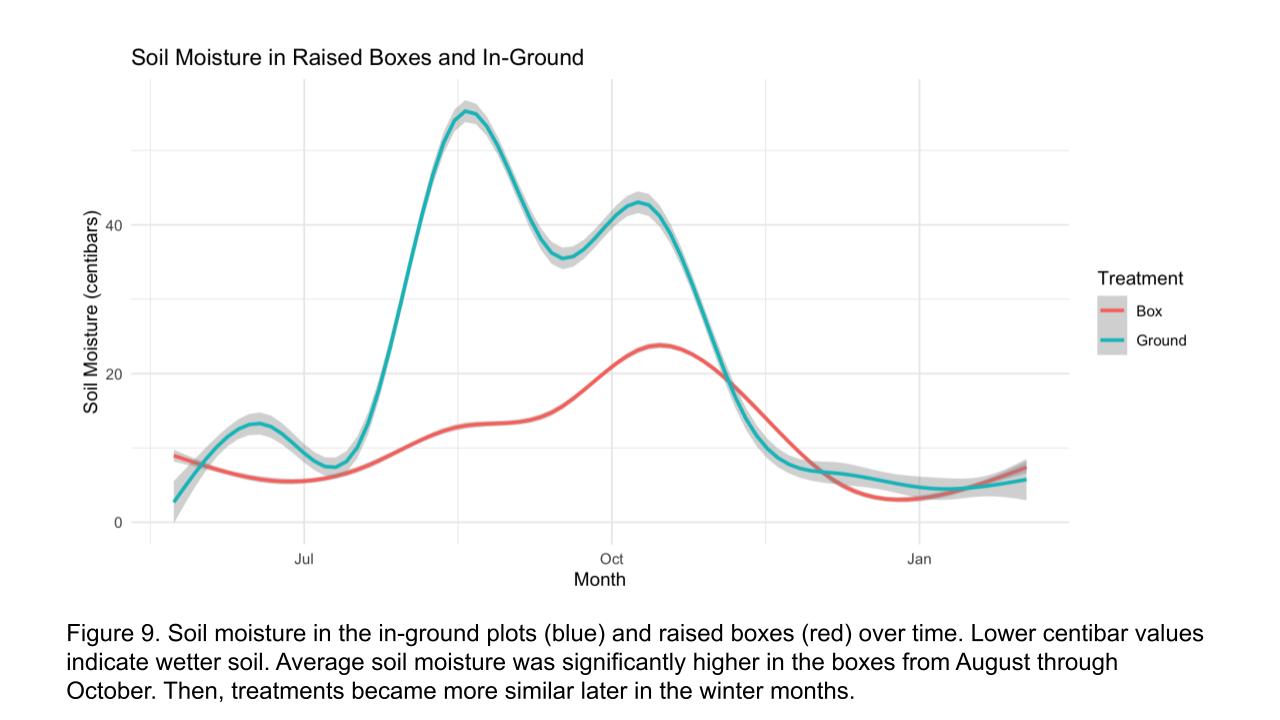
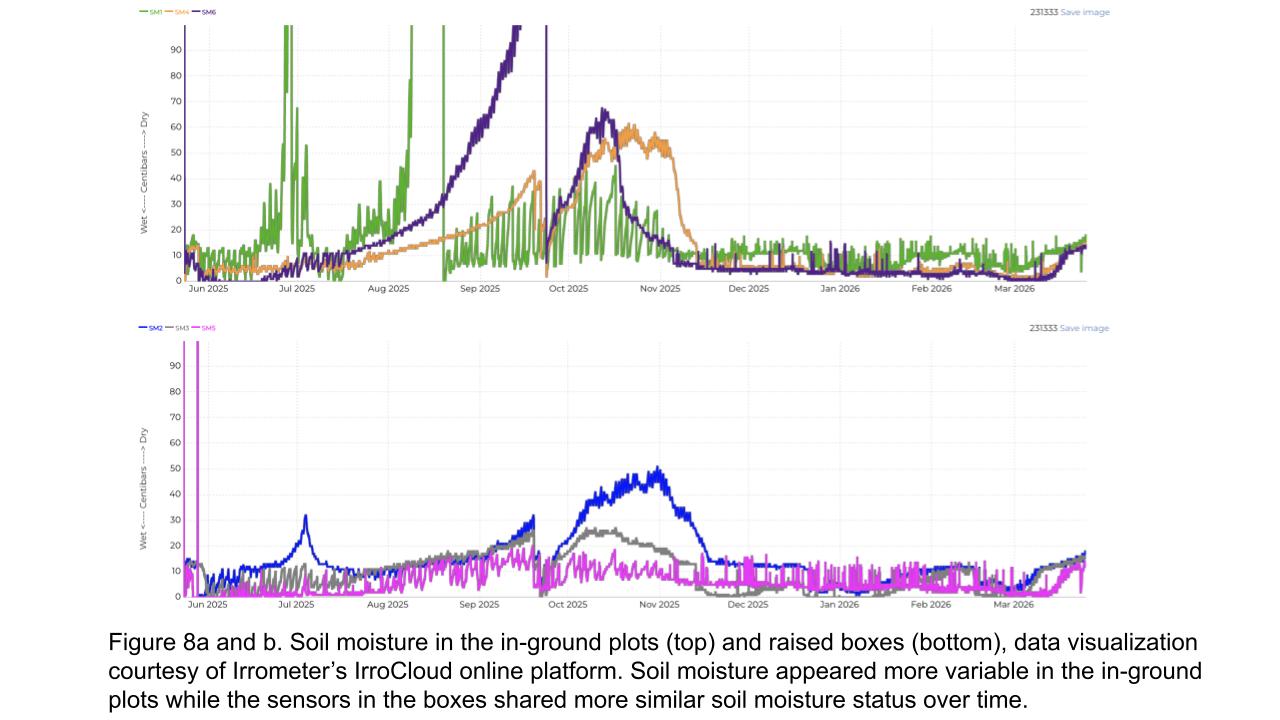
Soil Moisture Results - Soil moisture was significantly higher in boxes from Aug-Oct (Fig. 9), then became more similar in winter months. Boxes showed more similar moisture status over time than the in-ground which was more variable (Fig. 8a and 8b)
Soil Temperature Results
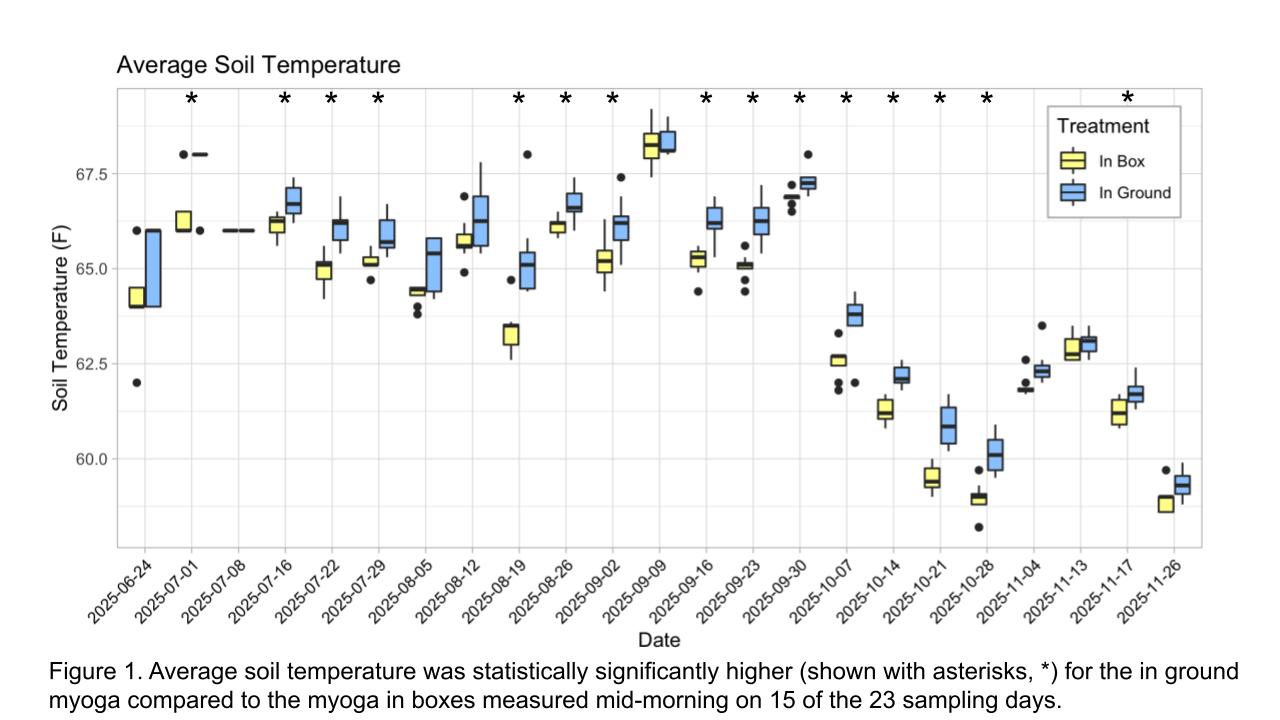
Fig. 1 shows soil temperature was significantly higher for in-ground myoga plots. This was not expected. Soil temperature readings were taken once per week consistently around mid-morning and this result could be related to the timing of the temperature reading being mornings - readings may have been of greater value and insight if taken closer to the afternoon after a day's worth of weather exposure. Next time it would behoove us to do a morning and afternoon measurement to compare results better.
Myoga Plant Height Results
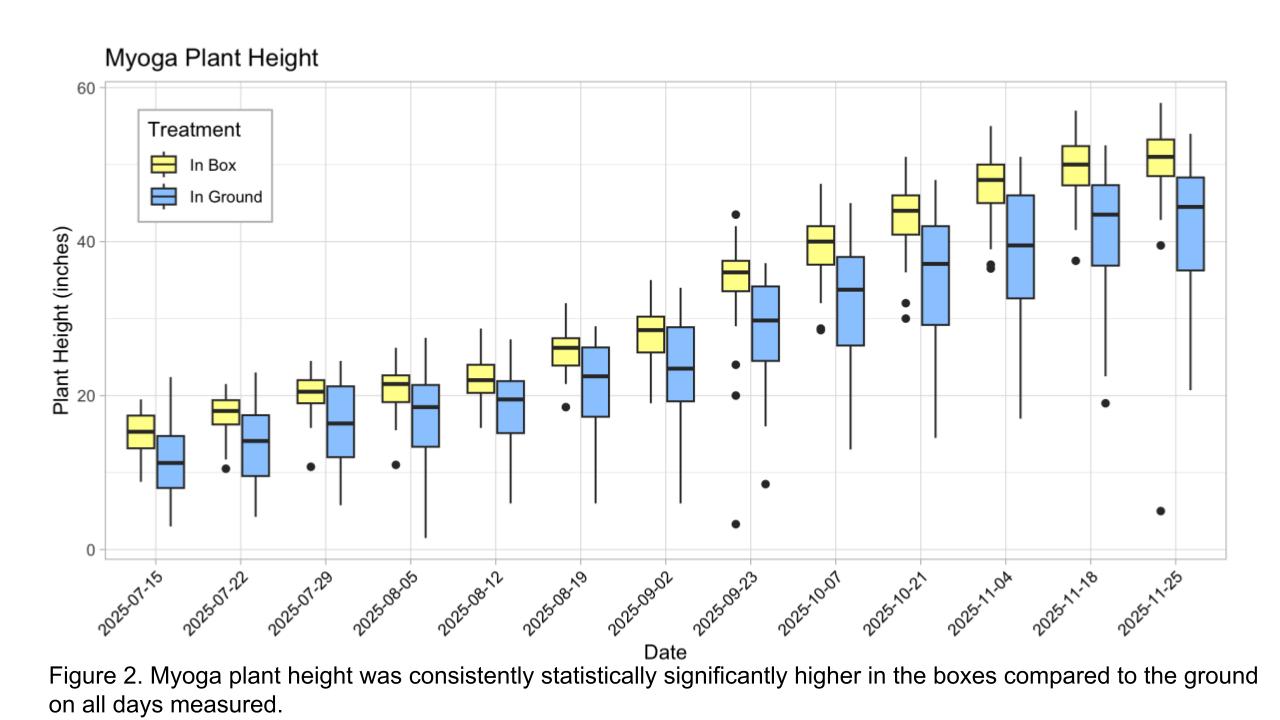
Myoga plant height (Fig. 2) was consistently higher in the boxes on all sampling days, showcasing a preferred growing environment.
Myoga Sprout Count Results
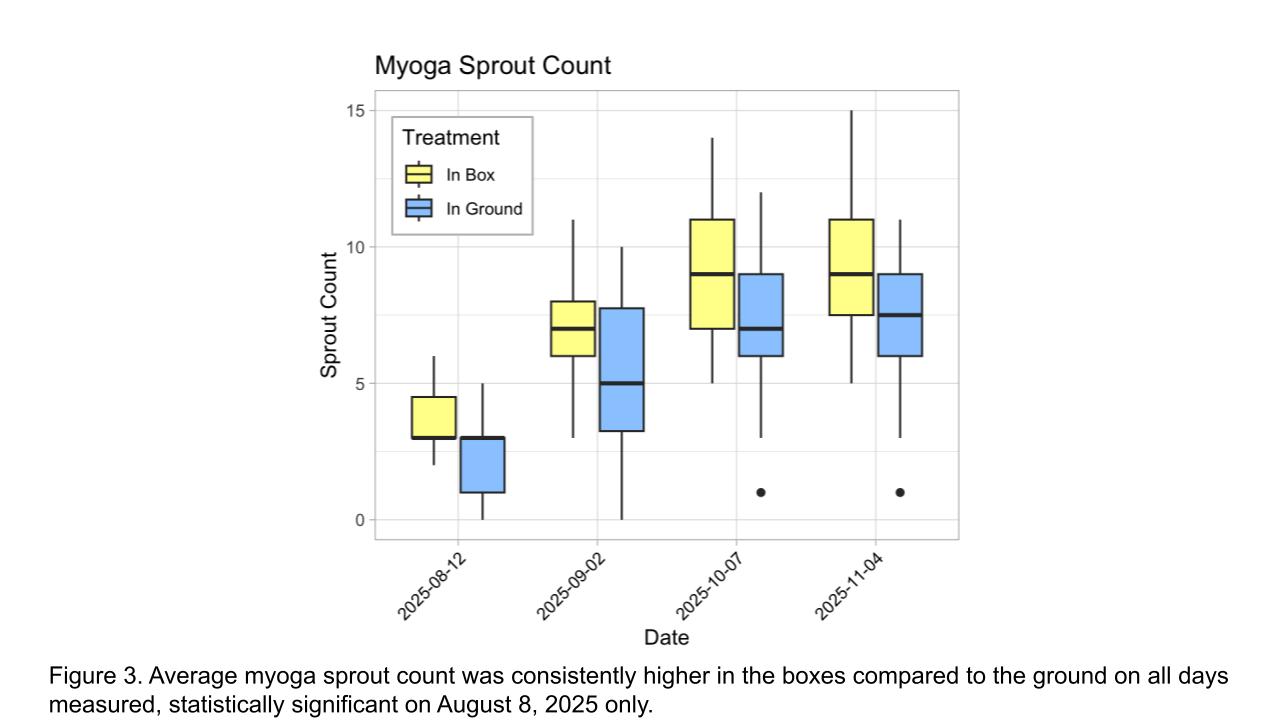
In Fig. 3, the boxes demonstrated a consistently higher sprout count in the boxes. Also noteworthy was the first sprout count conducted (i.e. when they just started to appear), the box plots produced 63% more sprouts, possibly also indicating growing conditions were more favorable to arrive earlier than the in-ground plots.
Myoga Harvest Weight Over Time (Fig 4a and 4b)
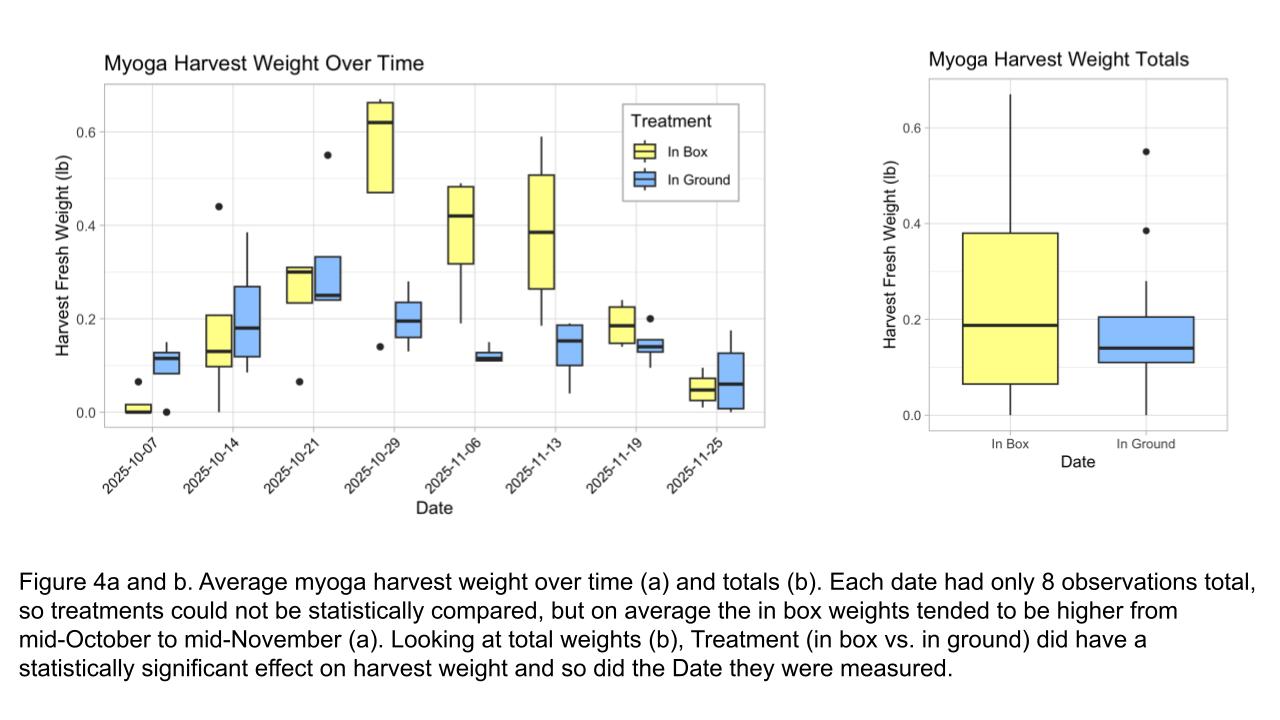
Eight weekly harvests were recorded from mid-October to mid-November. Myoga generally only has a 2 month growing season and discussions with other myoga growers relayed that their harvest windows were actually Sept-Oct. Myoga buds of all sizes were harvested, weighed, photographed from each plot. Eight harvests means the treatments could not be statistically compared, but the average harvest yield tended to be higher in the box plots. Conversely, when the first buds of the season emerged (i.e. the first harvest), the in-ground plots had the highest weight amount. Date in which the weight was measured also showed a statistically significant higher weights in box plots in the apex weeks of harvest - Oct 29, Nov 6, and Nov 13 harvests. During this timeframe, indoor hoophouse temperatures had declined more into the 60 degree range average. And due to increased risk of frost in October in my area, I began opening and closing the hoophouse almost daily (depending on predicted lows). This combination of seasonal temperature levels with increased consistency and longevity in indoor temperatures through the night perhaps created the most ideal growing conditions. Generally speaking it was a cooler summer on average, but I had kept the hoophouse vented early on until beginning of September when I realized the cooler temperatures had likely been too cool for the myoga. This could explain my later harvest window compared with other growers.
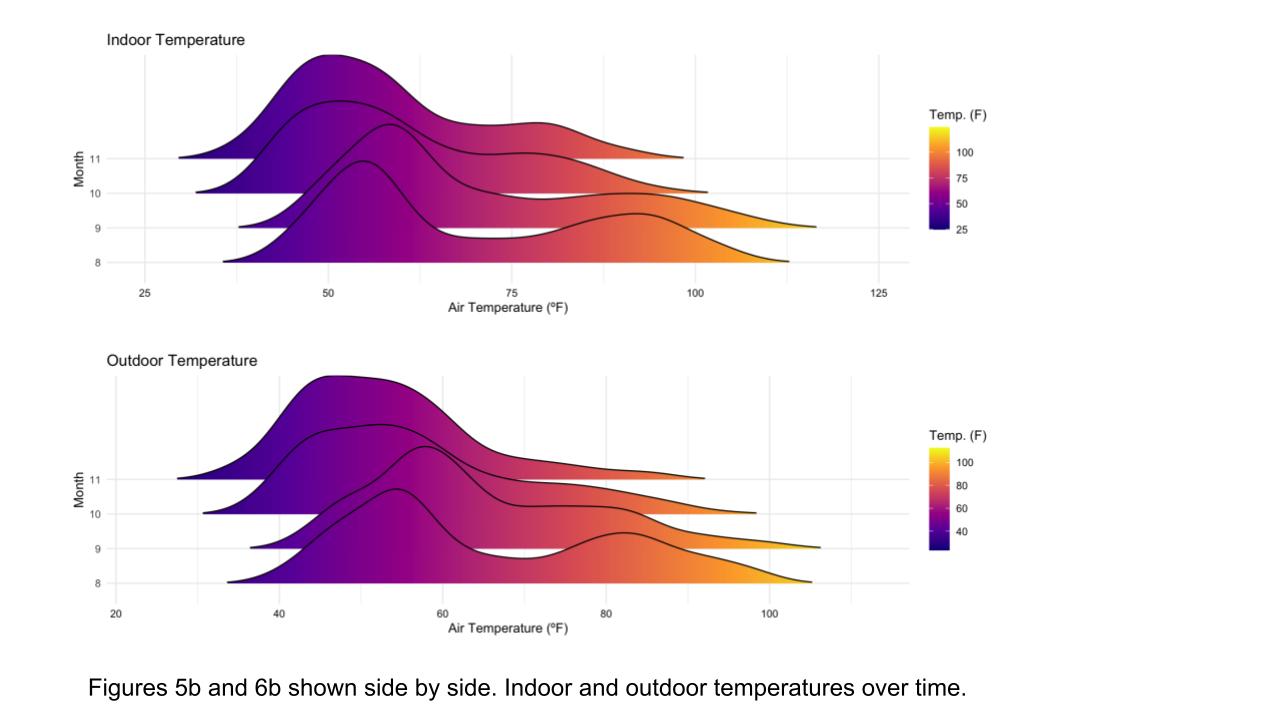
Indoor and Outdoor Temperature Results Comparison (Fig. 5a and 5b))
Soil Sample Results - Only the pre planting soil tests were taken. A post-growing season sampling was not conducted because it was learned myoga can stay planted without rhizome separation for another year for more robust growth and harvest potential. Sampling rhizomes before then would disturb the shallow rhizomes and there is very limited sampling area. This would be recommended to be done in year 2 when rhizome separation timing is ready.
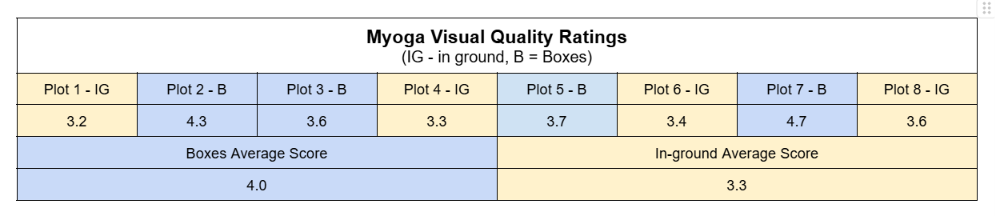
Harvest Bud Quality (Fig. 6) - Harvested myoga buds were cleaned and laid out per plot for documentation. Photos were taken and then a quality rating of 1-5 (1 being low, 5 being highest quality) were assigned, then averaged out. Then a toatl average score was assigned for the plots under the boxed method and the plots under the in-ground method. Boxed myoga buds scored higher in quality.
Fig. 6 Myoga Visual Quality Rating
Objective 2
Assess several market outlets for selling myoga and ascertain the crops economic viability in a small-farm diversified vegetable operation.
The four chef and culinary interviewees each held varying business models (i.e. specialty grocer, fast-casual, fusion grocer, and high-end farm-to-table restaurant) which dictated variable market opportunities. The interviewees' relationship to myoga and ASC was determined more by this than by their personal enthusiasm for myoga and ASC which was the most consistent theme across all interviews. Likert scales were used as a quantitative assessment, but due to varying business models causing variability, these results were not helpful in assessing patterns as compared to the interviews where a thematic analysis was applied. Here are the main themes:
Adoption is most dependent on a seller’s concept and price point - Higher end dining is willing to take on higher-value crops as it’s not only a reflection of the labor for these specialty crops, but also builds into a dish’s value story, something fine dining, farm-to-table entities center in their business concept. Below fine dining and especially grocery stores, a desire to foray into more specialized crops is expressed by owners, but does not match with the current customer environment nor justify input costs. But price reception by customers can be variable - the more expensive, the more it imparts its unique and desirable characteristics, which triggers desirable novelty in customers. Another owner described keeping a dish accessible and fair value was key to maintaining customer interest. This variability and uncertainty of buyer behavior therefore makes it risky to take on, but also incurs a requirement to educate and promote buyers.
Buyer Education is a Consistent Requirement and Ongoing Labor - All interviewees described the challenge of introducing new or specialized crops to Sonoma County customers as requiring repeated, active engagement and education. That comes in the form of newsletters, in-store signage, staff training, etc and is conducted o on-repeat after launch which makes promotion and education an on-going operating cost. Besides introducing a new crop, there is the added demand of relating and familiarizing customers with descriptions, flavors, understandable descriptors to ignite interest as well as better understanding (such as calling it “Japanese Ginger” instead of Myoga so buyers can relate it to something more familiar).
Reliable Sourcing is Easier for the Well-Connected - A few interviewees spoke to the access of the Bay Area for sourcing ASC as easy access and increased opportunity for bundling specialty products with large orders. But to maintain seasonality and locality, important principles of these sellers, it can be tough to source very specialty goods without an established farm relationship or specialty distributor. Higher end restaurants can base their business concept on adapting menus frequently, something only afforded to this tier of retailer with these relationships and the ability to leverage crop uniqueness to justify price point. That reliability is key for planning and creating novely and unique experiences for customers. All valued increasing local sourcing as a desire for them, but economic, seasonality constraints, and consumer learning curve can slow demand potential.
Objective 3
Survey the current farmer experience in marketing and selling Asian crop options in order to assess any hurdles and barriers as well as strategies they used to overcome market challenges.
Myoga or ASC Adoption is Farmer Identity Driven First, Market Demand Second - Seven farmer interviews, four grew myoga and other ASC, three grew ASC. The majority of farmers describe starting and adopting myoga or specialty crops because of a personal or other connection, not because of a market gap. This personal connection also resonated with certain customer bases. Farmers prioritize the personal significance of the crop over its revenue-generating viability - a farm model based solely on those numbers would understate the value of these types of crops. These crops lend to the farmer’s image and reputation, but were also best supported by specific demographics and sales channels that the farmer either sought out specifically or built over time.
Diverse Sales Channels are Key to Success, but Farmers Create Special Client Bases - Growers emphasized the need to do direct-facing channels to sell these crops. While local channels are preferred for sales, many growers consistently signaled their need to reach further to Bay Area sales channels to make the bulk of their revenue for these crops. Demand needs to increase in Sonoma County for individual growers to sell more locally, but more significantly growers pointed to the need for a local specialty crop aggregator that would meet the market gap for these goods to be accessed by buyers. It is less about demand and more about the ease of a collective sales channel. They feel demand is there from the right cohorts of buyers. Farmers established relationships with buyers that both connected with their story, but also the specialty crop. This allowed the farmer to form a special client base. It may take some time and continued diverse sales strategy and reliance on the Bay Area channels, but farmers felt optimistic about there only being opportunity for it to grow. And they also feel it a significant personal goal of there’s to ensure it.
Marketing is Informal & Relationship Based - More than half the farmers named Instagram as their primary marketing tool, but clarified that the platform was best suited as a relationship-building and visibility tool, not a direct sales channel. This platform allowed not just a wider audience reach, but the ability to source specific, highly interested demographics that seek out these products or have limited access to them. Instagram aligned with farmers reporting direct, connective conversations and word-of-mouth opportunities that built into the formation of farmer-crafted client based that became more reliable than broader sales channels. Evidence of a client driving from Modesto and a multi-year waitlist suggests that once a reputation is established, demand may outstrip supply, as well as bottleneck capacity. Farmers mention that while some outlets have high demand, the labor and logistics of meeting certain clientele doesn’t justify the sale.
Farmer Initiative, Farmer Imparted Value - More often than not, the majority of farmers chose what crops to grow based on personal interest and the desire to bring a crop in they didn’t see locally. They found specific sales channels or built a unique client base over time. Farmers found the most success and consistency here due in large part to customers resonating with farmer narrative for growing these crops, shared identities and backgrounds, desire to support bringing more of these crops locally, or had adventurous palettes. Many mentioned community members, business owners, and chefs as instrumental in idea sharing, support for their farm, and avenues to promote their products. Again, it did not thwart farmers that the demand wasn’t present - they took initiative and responsibility to grow, educate, and create their demand and market. The majority spoke to how a unique crop peaks buyer attention and separates them from others.
Myoga Specific Farmer Feedback - The Likert scale below shows farmers who grow myoga varied across the board on a number of questions, so similar to the culinary interviews this seemed to be caused by variation in business model and sales channels. They all agreed the most on their positive outlook on the future of myoga demand. Currently many expressed the ability to sell more, but faced other constraints such as the 2 year return time on optimal harvests and the desire to stay small and maintain its unique crop availability window and small quantities.
Myoga and Asian Specialty Crop Survey - For Growers of Myoga (4 growers) (Fig. 7)
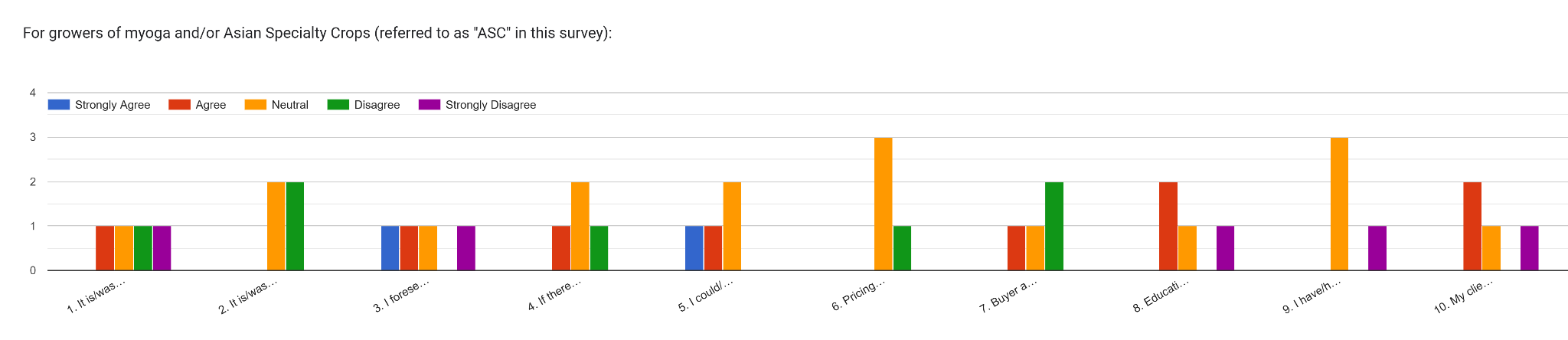
- It is/was challenging to find buyers for myoga
- It is/was challenging to market, distribute, and sell Asian specialty crops
- I foresee a growing demand for myoga
- If there was more demand for myoga, I would grow/would’ve grown more.
- I could/could have sell/sold more myoga, but other variables keep me from expanding them as a crop
- Pricing myoga is/was easy
- Buyer awareness about ASC is low
- Education and outreach is/was a necessary component selling myoga.
- I have/had strong marketing channels
- My clients are/were generally welcoming of new crop introductions
Research outcomes
Objective 1
The boxes planting method is the stand out preferred practice, providing the most ideal conditions for optimal myoga growing. Soil moisture seemed to have the strongest impact on harvest weight and sprout count, given the boxes ability to hold moisture longer, which myoga thrives more in. The fact sprouts arrived earlier and in higher quantities in boxes also indicated preferred growing conditions. Regulating greenhouse temperature better (i.e. adjusting for the cooler 2025 summer) so as to keep a warmer indoor climate would likely improve growing and yield outcomes and potentially encouraged the more normal harvest window of Sept-Oct as experienced by other regional myoga growers. Oher varibales that decided the value of growing myoga:
- Time: Expect a multi-year investment horizon for myoga specifically. Interview data points to 2 years before plants reach full productive maturity; this should be modeled as a startup/establishment cost. However incorporating the box growing method was a clear way to optimize first year’s harvests.
- Costs: The boxes ranked better in both harvest yield weight and quality. A specialty crop as small as this and with a high price point necessitates the need for consistency in quality and size. Insitituing a box method for one 40' bed cost $303 for wood and hardware cloth. Total harvest poundage for the in-ground myoga was 5.19 lbs where the boxes summed to 7.80 lbs. With myoga retail pricing averaging $133/lb, that's a $347 difference which more than covers the cost of box materials. The hoophouse is a worthy investment as a permanent home for myoga and key to regulating an optimal growing environment for this tropical crop. Minor but important additions like shade cloth and straw mulching were minimal costs.
- Labor: The intial planting of myoga (rhizome separataion and box construction and digging) is somewhat more time consuming than most vegetable crops. However, once in ground, myoga sprouts easily and is fairly hands-off in the initial stages. It's requires little to no nurtritional supplements and does not require pre-sporuting (in stark contrast to common ginger). Straw mulching for protection for early starts was affordable and warranted - it can be removed with maturity. Venting and closing/opening of the hoophouse is one of the more laborious tasks, with the latter requiring vigilance of spring frosts. Automated venting is highly recommnded for this perennial crop. Insects were of little to no issue. The box method was also meant to be a deterrent for roden pressure, however no crop loss or attacks were evident all season. The low insect and rodent pressure increases the value of growing this crop.
- Added Revenue Building Opportunity: Myoga rhizomes can be divivded by year 2 and re-planted to easily increase stock. This is also an opportunity to sell rhizomes to other growers. My experience navigating the commercial sales market in 2025 revealed a large demand for rhizomes as many outlets were selling out within 1-2 weeks of being listed in April. And only one outlet was a western states based grower (and only sold the sprouted plant), the others were in the east coast (I chose not to source abroad, but instead discovered a local grower in my county who shared rhizomes, so they were also well adapted to our climate). Selling myoga rhizomes is another farm revenue outlet and way to continue to educate consumers about this specialty crop.
- Specialty Crop Research Significance: Considering there was little to no western or english-based formal research on growing myoga, the tested growing parameters and variables explored in this project provide instruction on cultivating this for optimal growth here in the U.S., especially in Northern California where our climates are suitable for diverse growing. Growers who are wanting to explore more unique varieties in the ginger family or particualrly those accostomed to more warm, tropical settings, this growing method can help set growers up for success.
Objective 2 and Objective 3 Outcomes - Implications for Economic Viability in Small Diversified Operations
Interview Cross-Cutting Themes:
Across the two types of interviewees, we see similarities in education cost and repeated education or promotion to solicit and maintain consumer interest. Both point to the same mechanism of farmer personal identity, community, and seasonality narrative that justifies pricing as well as elicits interest from buyers. All commented on high personal interest in these crops that are separate from wider consumer demand. Specifically, Japanese cuisine was described as an “ easy elevator” of flavor, no matter the cuisine.” Sellers mentioned the relative easy access of Asian products and recognized the local growers cultivating fresh ASC produce, but the main lever to increase consumer awareness was education on what it is and how to use it. Sellers commented customers are generally adventurous and enjoy the novelty of something new, but it takes the seller continued efforts until these items can become more regular and familiar.
While this sentiment was also true for farmers, more farmers leaned on finding their own committed buyers and more direct sales channels as the more consistent and significant sale for them, as restaurant buyers could be inconsistent or low volume or entities like an aggregator for ASC don’t exist yet. For farmers overall, instead of focusing on one successful strategy to bring myoga and ASC to market, the interviewees responses demonstrated that a multi-outlet strategy should be considered which should be based on your business concept. Overall, the onus of promotion and success of these crops is currently leaning on farmers and motivated sellers until consumer awareness and education heightens. However this can be elevated with special local partnerships and coordinated promotional campaigns which helps source additonal consumers.
Market Outlet Assessment for Farmers :
- Direct to chef/fine dining/farm-to-table restaurants - Can get highest price, but slow to access and establish consistency. Best outlet for establishing myoga’s premium positioning and story early.
- Direct-to-Consumer - Best for face-to-face education that all interviewees said was necessary, allows pricing flexibility and experimentation, direct feedback and opportunity for added value products to further increase revenue.
- Wholesale Specialty Aggregator/Cooperative - May be best long-term scaleable channel and the one interviewees say is an emerging demand if not a gap. Most successful if it is a collective specialty crop aggregator that brings in other similar producers. Will require more consistent volume, might still be tough to sell specialty goods like myoga when there is low volume in early production years.
- Value-Added Products - An opportunity to de-risk the fresh market volume especially in initial introduction of a new crop to market channels. This is especially applicable to myoga given its narrow harvest window. Value-add extends crops like myoga’s promotion and selling window, which is helpful for new or short harvest window crops.
Recommendations to Optimize Myoga as Viable Crop: Myoga has the potential to be a viable crop of interest for growers. Keys to sustainable production of myoga reside in diverse sales channel options, value-add opportunities, and recognizing education and promotion not just as an ongoing cost, but key to securing consumer long-term interest. There is a start-up period to establishment, but the ease of perennial management of mature myoga and rhizome division selling opportunity are valuable attributes. These recommendations can be applied to similar ASC for growers wanting to integrate into crop plans.
- Size the crop to available labor, not to demand. Demand appears to outstrip several growers’ capacity already (waitlists were mentioned along with cross-region customers). The binding constraint in this data set is consistently labor and owner bandwidth related to the farm as a whole, not lack of buyers. A viability plan should budget for hired labor before scaling acreage on specialty crops. It should also be noted that scaling up specialty crops may be less of a priority compared to maintaing diversity of other specialty crops that's contributes to farm uniqueness.
- Multi-channel sales reduce risk and match the crop’s dual nature. No grower in this data set relies on one channel; a mix of direct-to-chef (premium, low volume) and farmers market/community (moderate price, education-friendly, immediate cash flow) is the pattern most consistent with sustained operations. But a more local collective aggregator to sell would mean more stable farmers can participate in specialty crops sales and reliable distribution. Cross-promoting and cross-educating with wholesale buyers or specific community groups with access to interested consumers can assist in several of these channels.
- Budget explicitly for buyer/consumer education as an operating cost. Farmers-market conversation time, tastings, educational signage, and relationship-building with chefs are not optional extras in this data — they are described as the actual mechanism of sale on both the farm and restaurant side. Farmers working with chefs have more success if they maintain an agreeable, long-term restaurant relationship, while others prefer direct sales as the preferred method to manage the promotion themselves and reap more of the value (both monetarily and in personal interest).
- Consider value-added product lines to extend a short fresh season. Given myoga’s narrow harvest window and small per-unit fresh value, pickling or other processing may offer better unit economics and reduce the risk of a glut/waste during peak harvest. It also extends time to keep promoting the product.
- Naming/marketing clarity is a low-cost, high-leverage fix. Given the unfamiliarity consumers in Sonoma County may have with specialty crops like myoga, considering leaning into familiar-cuisine anchoring (i.e. titling Myoga Japanese Ginger), could meaningfully lower the consumer education cost that both chefs and farmers cite as their biggest recurring friction.
Future Myoga Research Growing Opportunities: A second year of research to accommodate the 2 year establishment needed for myoga would be helpful in assessing nutrient requirements (i.e. taking a soil sample at the time of rhizome separation). It is also worth addressing the oddity of soil temperatures being lower in the boxes by measuring in the afternoon. It's also possible the soil is more aerated in boxes and a bulk density and penetration resistance test would assist in further insights. From a market standpoint, researching strategies and success of ASC as added value products would lend further insights into furthering the economic potential of specialty crops like these - many farmers comment on this as a revenue boost to their farm. Lastly, researching the added economic opportunity of rhizome division selling on the west coast (and for other specialty crops) would offer insight into the residential garden hobby grower of which there can be a large market interest.
Education and Outreach
Participation summary:
Education and Outreach Methods and Analyses:
These research findings can assist current and new farmers who face similar aspirations and goals to incorporate and increase Asian specialty crop options on their farm in ways that increase economic profitability and grow awareness of the diverse crop options that can be grown locally here in Sonoma County. Holding workshops and events that invite in this wider community as well as farmers and aspiring farmers is key to building a strong support cohort.
Understanding the optimal growing conditions of crops like myoga can instill confidence in other growers in their unique crop endeavors. And introducing and raising awareness of myoga to the culinary and wider consumer community will hope to stimulate more interest in greater Asian crop diversity and create collaborative relationships between buyers and sellers. Sharing the growing practices and marketing opportunities and pitfalls with the farming community and agricultural partners was key to encouraging more participation and support for specialty crop production. The following outreach objectives were accomplished through outreach activities that supported one or all of the objectives.
- Objective 1: Share findings with the agricultural community, and farm organizations, and nonprofit farm-based organizations, who have a vested interest and mission around promoting farmers of color and diverse crop options.
- Objective 2: Share findings with other farmers.
- Objective 3: Share research and findings with current and prospective culinary and grocery clients.
Outreach Activity: Create Summary Report and Share with Applicable Groups
A 2 page executive summary report was created to showcase the project and highlight major outcomes. The summary acts as a teaser to encourage audience members to visit the WSARE site and read the full report. The summary is in an easy, accessible format that will be used in partner organization newsletters who agreed to send out that are timed to go out during myoga harvest season (Sept - Nov 2026). This is meant to bring in interested customers and promotion of the myoga harvest as well as time with the published report on WSARE site. Listed are the following distribution channels that includes dissemination to farmers, community groups, agricultural partners, and project participants:
-
Yagi Sisters Farm website
-
The Kansha History Project - newsletter
-
Agroecology Commons - newsletter
-
Asian American Pacific Islander Coalition of the North Bay (AAPIC)
-
UCCE Sonoma County: Technical Advisor Ellie Andrews will disseminate as well as host on UCCE blog site in fall 2026
-
Attendees of the Nov 9 Myoga Workshop and the April 8th Farmer StoryCorps Event
A 4 Page Myoga Detailed Summary was created specifically for language translations. A more brief but still detailed version of the report was considered helpful as it's more concise yet digestible, could be sent as a PDF through distribution networks instead of navigating the WSARE site, and points farmers to the WSARE report page if farmers want to dive deeper. Often a simpler truncated version suits busy farmers. This was submitted for translation into the three top languages of the Bay Area to ensure access that this information is available to all who can benefit from this project. The Executive Summary will direct readers to these alternative language publications to the Yagi Sisters Farm webpage hosting info on the myoga project. Translation work is still in progress, but will be timed to post to website when myoga season arrives so as to align with the unique small harvest window.
Outreach Activity: Hosted a Field Day with farmers and Conducted University Presentation
An in-person field day is generally a more intimate, connective and therefore impactful experience for farmers. It also allows us to create an engaging, secure, and potentially collaborative environment to discuss shared experiences and possibly identify opportunities for collaboration and/or education. The farm hosted a field day on Nov 9, 2025 to showcase the growing operation and share initial research findings. Farmers, chefs, and ag professionals were invited as priority attendess so as to make for a robust community discussion on myoga and ASC viability in Sonoma County. Outreach was conducted specifically via word of mouth, direct email, through newsletter and contact networks through UCCE, AAPIC, and Agroecology Commons; farmers growing ASC were targeted primarily, but all were welcome. November was an optimal time to host as Myoga was still budding. An introduction circle was held to meet each other and introduce the project. Then a farm tour that brought farmers to the myoga growing area where I detailed the growing practices research using a field-friendly presentation board with photos and preliminary result graphs to help farmers see the phases of the research process. Farmers walked through the myoga beds and harvested some buds. Mmy Technical Advisor could not make it, but shared a prepared statement on her perspective of the research project, its meaning, and benefits of programs like WSARE. Lastly, we gathered back around and I led a discussion circle around both the central research questions of challenges and opportunities of growing Asian Specialty crops, what support would be helpful in their own growing of these crops, and what their feedback for me on how I was navigating the myoga market. At the end, farmers enjoyed a tasting of myoga and their feedback was also incorporated. Participants were anonymously surveyed on educational impacts of their experience using a modified version of the approved WSARE survey that was sent digitally. A presentation board was created to use on the field tour along with print outs of the research summary from the WSARE website.
On April 8th, 2026 Sonoma State University's (SSU) Center for Just Food Systems and Agroecology Garden hosted an Asian American Farmer StoryCorps Day where I presented with two other local farmers. SSU is working with the AANHPI Student Achievement Program Director to bring more students out to the SSU garden and support with some programming. Attendees learned from local farmers about their farm, farming practices, and the importance and meaning behind our work growing crops and plants that are significant in local communities. Other farmers were invited as well as members of the North Bay AAPIC organization. My presentation introduced my farm, farm history and centered on my myoga growing and WSARE research.
Outreach activity: A guest farmer blog post for the UCCE website will incorporate the report findings, photo reel, a link back to the farm website, and WSARE project portal. This will occur when Technical Advisor Ellie Andrews returns from leave in the fall of 2026.
Outreach Activity: Created a highlight reel capturing photo highlights of the myoga growing timeline, research practices, and related community engagement activities. This is hosted on the Yagi Sisters Farm website and will also be shared with the report to the distribution list mentioned above.
Outreach Activity: An additional outreach event was held at one of my client's farmstand businesses on Nov 15th, 2025. I wanted to obtain more consumer feedback of myoga interest as well as share my research project with the general public. I brought the workshop presentation board created, a one page myoga recipe list with photos, and a short summary of myoga's history and cultural significance to showcase. My client shared the event on her social media and I cross-promoted on my social media. The event brought many curious buyers who had never heard of myoga before and excited people to buy (the myoga sold out). A few customers actually drove from the Bay Area upon hearing about it on Instagram to come up and buy. A new connection with a chef was made that has future interest in buying myoga raw.
Nov 9th Myoga Workshop
15 registered - a mix of 13 area farmers, nonprofit representatives, and ag professionals actually attended. This workshop captured many fruitful discussions with attendees, with many farmers in particularly engaged by the myoga growing methodology comparisons and it's successes. This was because many expressed trying to grow common ginger with poor outcomes, but explained they were interested in adding more diverse, high value crops like the gingers to their operations. Attendees had many questions on the technology used for the research and wanted my opinion on usefulness, price, and adaptability. Sharing preliminary results with attendees about the growing boxes proving more fruitful for soil warmth, harvest and height was an interesting surprise to them. In the final discussion circle addressing barriers and challenges of growing these crops, farmers were supportive and helpful in providing alternative avenues in promoting myoga and this information was written down. Their advice also prompted me to alter my promotion and selling strategies for the next season. So the workshop was as much an education and collaborative brainstorm for me as for other farmers.
Findings in the cirlce discussion reinforced interview themes. Participants commented on the need for deep engagement with buyers through storytelling and stressting the value of locality on marketing. Chef's consistency culture, price point limits and quantities was identified as a potential barrier to increased restaurant ineterest, but added that these are common repeated issue and much of that can be due to lacking consumer education. Farmers also suggested paid workshops and U-picks as an avenue for consumer and chef education (and alternative revenue).
Digitized surveys that integrated the WSARE survey, but was modified to better suit my workshop goals, were sent post workshop, 9 responses were received. Survey questions asked respondents about growing their own Asian Specialty Crops (ASC), their knowledge of the topic before and after, if they learned about new skills, and whether they plan to integrate any of their experience from the event. Results of those questions are provided below. To summarize, a little over half have grown ASC before and a little less than half sell or plan to sell. Attendees showed a stark difference in knowledge and awareness of the topic before and after the workshop, with majority strong responses (i.e. "good" and "comprehensive") when it came to improving their awareness of the topic, acquiring new knowledge and skills, and positively influencing them to consider a change in practices and/or high likelihood of integration of experience learned from the event. Attendees will recieve the executive summary and link to WSARE project page.
Myoga Workshop 11-9-25 Survey Results (1)


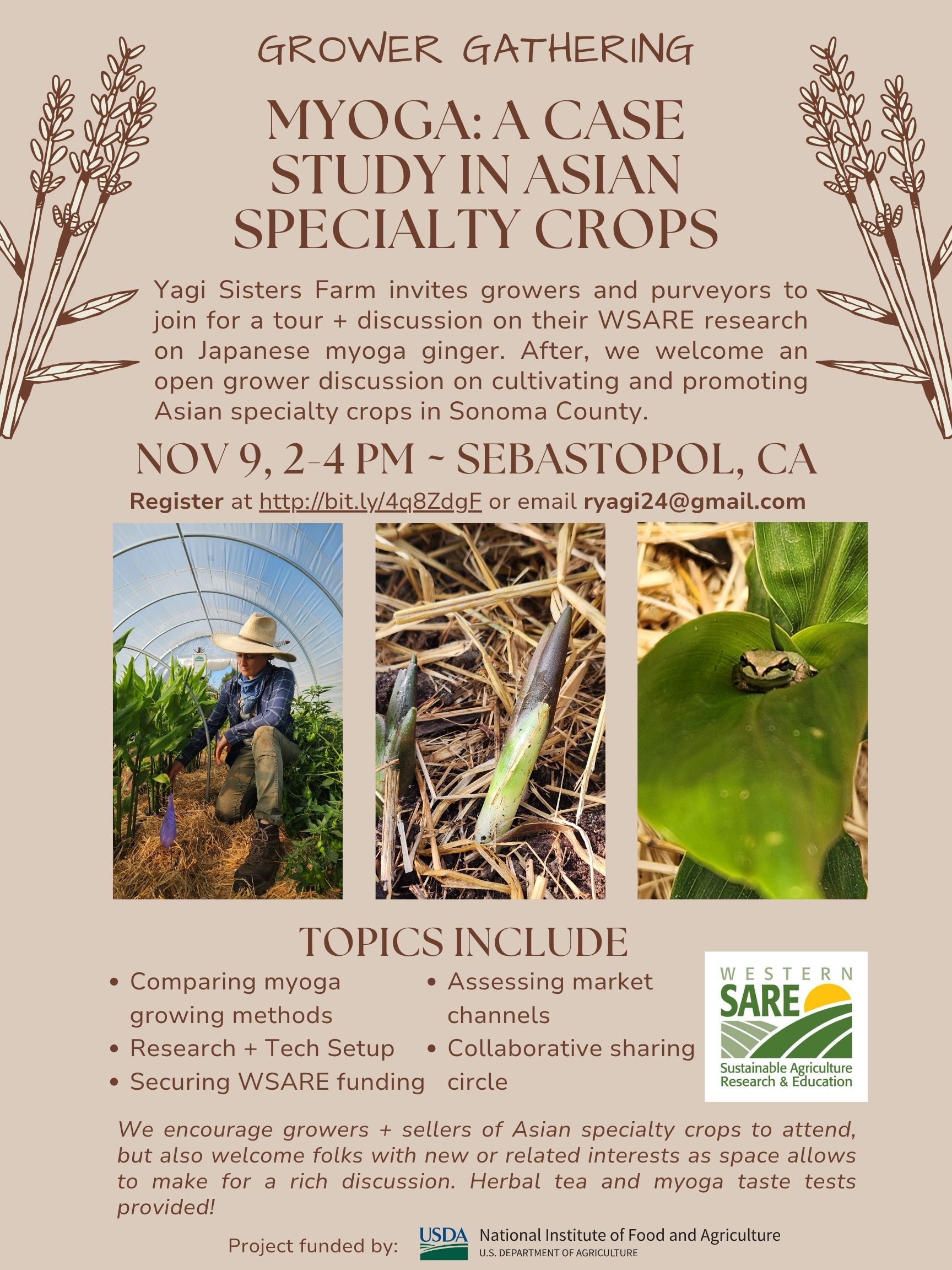
Pop-Up Educational Event 11-15-2025
This resulted in a successful event and selling of myoga. My client's social media post (see below) of it attracted clients as far as the Bay Area who explained their high interest in finding fresh, local myoga. Two chefs also reached out to me after seeing the social media post to inquire about the myoga. I brought 25 myoga buds and sold out. Customers were intrigued by the background, the research project and mostly the unique qualities of the ginger. People were educated on the unique growing practices and comparison as well as the integration of myoga in their cuisines. This was proof of success of integrating another diverse sales channel if not also a way to secure new clients. However it should be repeated to assess consumer's long-term interest.


AANHPI Farmer StoryCorps - April 8, 2026
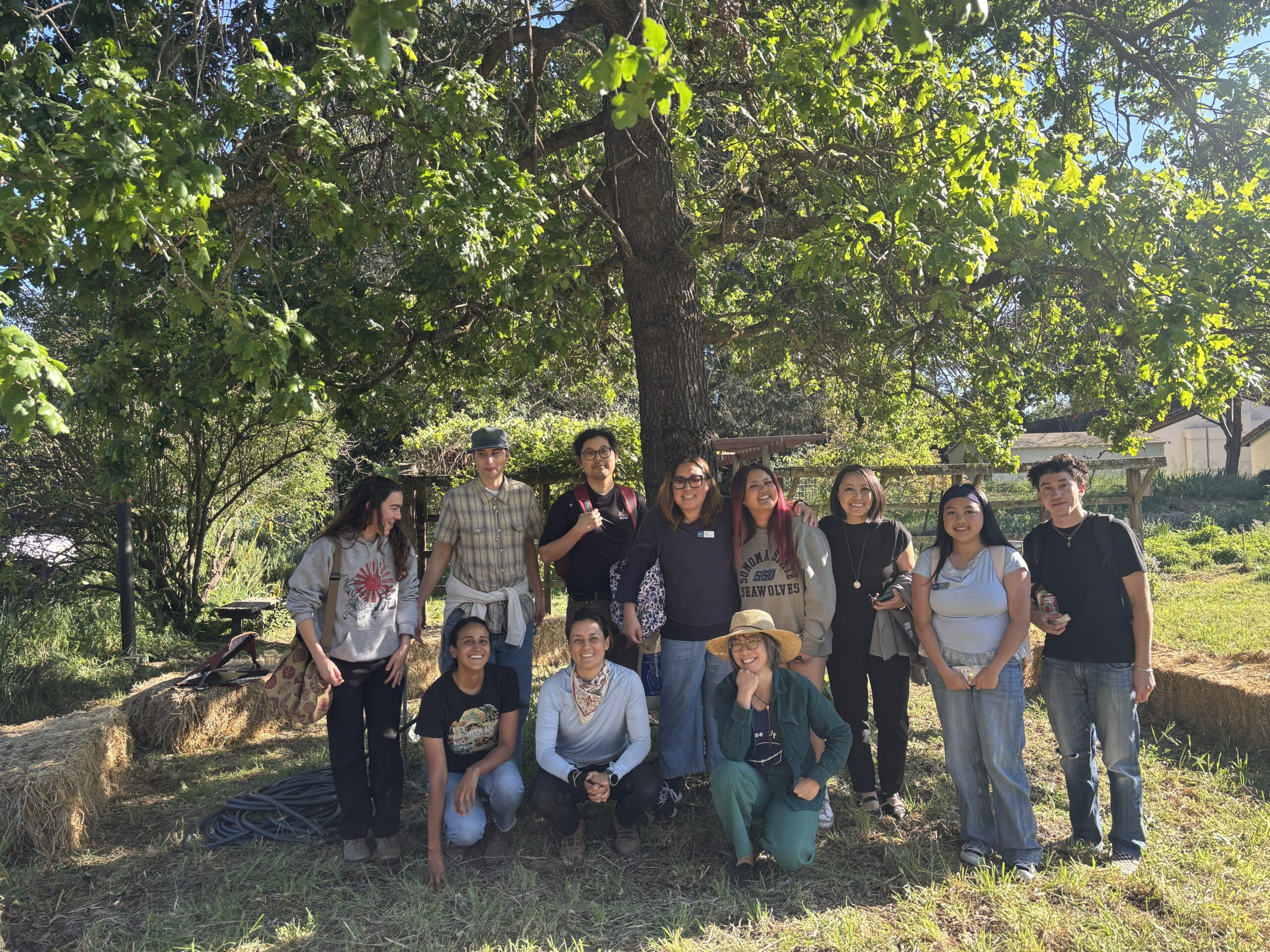
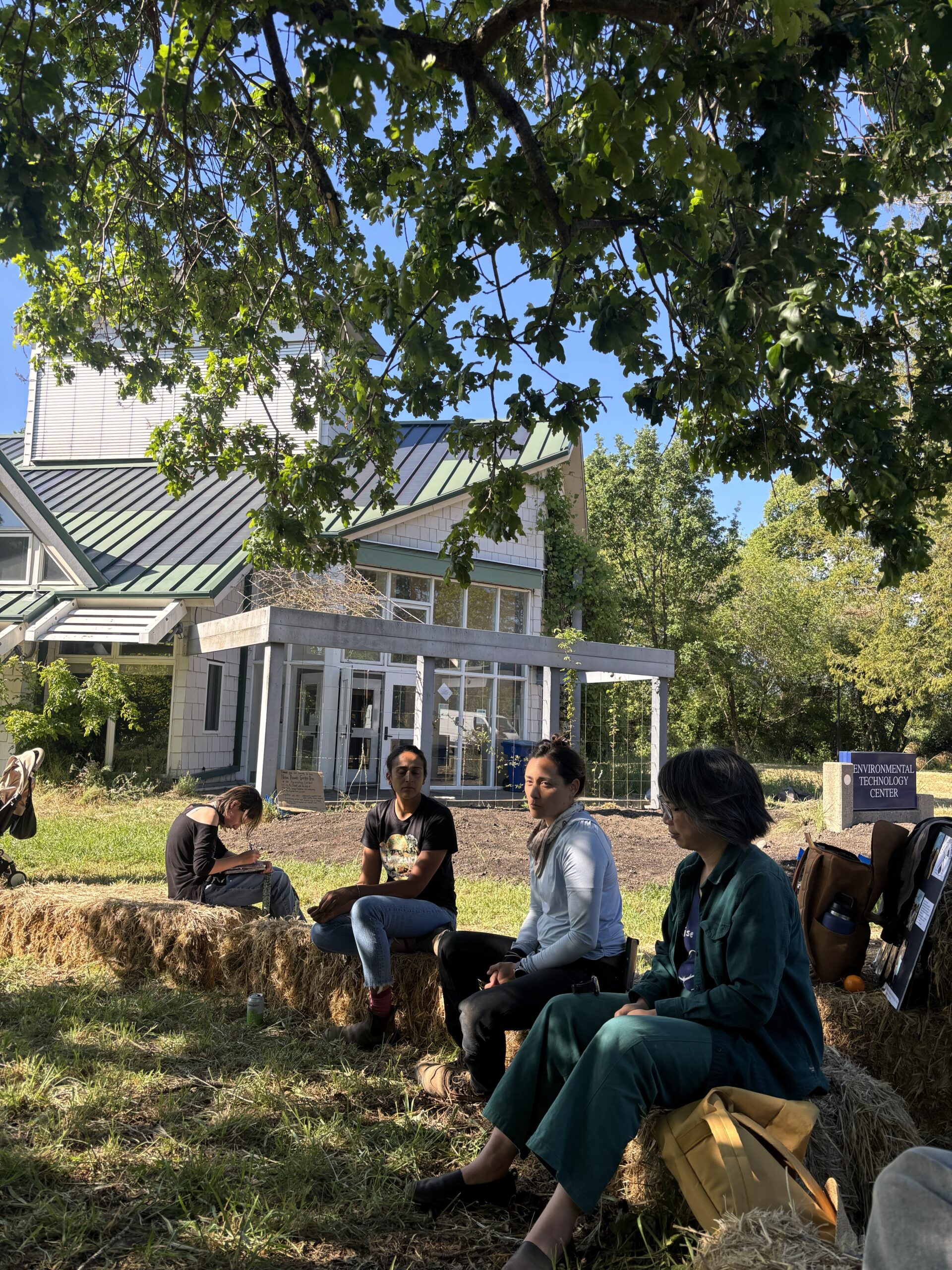
15 attendees included students, Food System and Garden Educator, board member of Asian American Pacific Islander Coalition of the North Bay, SSU Business Department Head, and us three local farmer speakers. The event's timing and synchronicity with not just other local area farmers, but also other collaborative groups made this an ideal event to engage greater networks. Co-presenting farmers learned of WSARE project and research opportunities while also compqring and sharing their experience with specialty crops. I utilizied the same presentation board from the Nov 9th workshop. Students engaged in round-table discussions, shared their perspectives on crops and food that are important to the community, and asked questions about growing practices and farming motivations. The storytelling theme resonated with students and elicited their own stories of significant food in their lives. Students were asked about any specialty crops they wished to see locally. Attendees will recieve the executive summary and link to WSARE project page.

Outreach Recommendations:
- Partnering with clients, student organizations, and diverse local ag professionals was key in strategically sharing about specialty crops and sourcing new interest. These groups helped elevate this project's significance and ensured exposure to key audiences.
- Similarly, diverse outlets of materials distribution is key to meet the most interested populations of this content, layered with multi-lingual publication ability which creates access for all. This is further important because little to know western research or instruction on myoga growing.
- Farmers interest in strategic growing methods and applied technology is high as they wish to apply to similar crops and asses cost-benefit of these practices;; hearing that directly from a farmer in practice is of most value.
- Farmer-focused circles to brainstorm marketing strategies was very effective and insightful for me as a new specialty crops grower, allowing me to hear trial stories and get connected with other opportunities.
Education and Outreach Outcomes
11/9/25 Workshop
In person on-farm workshops are key for farmers to learn new skills and practices. Creating a well-timed (i.e. in November post harvest season and the myoga was ready for harvest and tasting), multi-faceted, interactive workshop was key to engagement. Farmers were interested in the grant funded research mechanism to support this work and also shared their similar experiences in growing challenging crops. Farmers learn from workshop leads as much as from each other at these gatherings so it was key to prioritize growers in the outreach, promotion and registration of the event. This was not meant to be public so it took more effort to strategically outreach. Farmers were most engaged about the outcome of the two growing conditions as a few had trialed regular ginger and many were fascinated by the outcome of the box-growing being the most successful. Ending the workshop with a discussion on promotion and marketing challenges was critically helpful in developing a strategy, network, and options for preparing for the 2026 season - both farmers and non-farmers offered significant insight. They underscored deep engagement through storytelling, directing that into pop-ups and/or paid educational workshops partnering with local chefs or food groups. Overall, attendees were firm on not compromising value and effort of crop and underscoring cultural relevance and appreciation.
Myoga Pop Up
The Pop-Up was an opportunity to engage directly with the public and discuss their interest, questions, and observations about buying and using myoga. This was a test event to assess viability of pop-up market stands through one of my clients. Collaborating on social media posting proved to be a big variable in the success of selling out and receiving some online inquiries from potential clients. Much like the 11-9-25 workshop, more educational, client and selling opportunities were sourced from this event.
4/8/26 Farmer StoryCorps Event
Recommendations:
- Co-promoting your farm and farm specialty produce with local communtiy partners is advantageous to reach new audiences (and access partner networks). Similarly, partnering with existing farm clients was key to directing buyer attention to my new specialy crop and leverage their exisiting support for my produce into this new endeavor. Partners like a client an easily cross-promote for the farmer and often receive a benefit of increased exposure for their entity - it's a very symbiotic relationship.
- Go to existing supportive spaces to not just aquire more direct potential interest, but also act as platforms to elevate on-farm research and make important community connections.
- Agricultural partners and organizations provide direct connections to the wider farming network to learn about this unique crop and new research. These networks value farmer-led research and conversely validate farmer projects with their outreach backing.
- Similar to partnering with community groups, providing alternative language translation is important in reaching all who can benefit from this work and other farmer-led research.
- Much live having diverse sales channels, having diverse education and outreach channels is key to reaching this smaller demographic throroughly and with partner resources and support.
Adopt one or more of the practices shown (3 farmers)
Increase networking with other producers (3 farmers)
Research more on the production and/or selling of ASC and
Consider new or alternative ways to share, collaborate, educate or promote ASC were both checked by 2 farmers.