Final report for GNE24-328
Project Information
Egg production is an important animal industry in the Northeast region such as Pennsylvania and New York. However, egg farmers, particularly small-scale local farmers, often face challenges including marginal profits, avian influenza outbreaks, and disrupted supply chain. Feeding alternative feed proteins such as hempseed meal and microalgae in laying hens to produce health-promoting and low-carbon eggs is one innovative strategy to improve the economic resilience and social sustainability of egg production. Both ingredients are byproducts of industrial productions, and the cultivation processes can sequester carbon from the atmosphere. Containing high levels of omega-3 polyunsaturated fatty acids (n-3 PUFAs), previous research reported successful egg n-3 PUFA enrichments when supplemented hempseed meal or microalgae independently. Such eggs can be marketed as specialty eggs to improve profitability of farmers and nutrition status of the public. Our preliminary research found promising results on reducing manure ammonia (NH3) production associated with the supplementations. However, with complementary n-3 PUFA compositions, potential synergistic effects of combined supplementation have not been investigated. Therefore, the objectives of the proposed work were to reveal the maximal potentials of feeding laying hens with an optimal combination of hempseed meal and microalgae on egg n-3 PUFA enrichments and manure NH3 reduction.
In this study, 40 laying hens were assigned to one of the four dietary treatment groups: Control, 10% hempseed meal supplementation, 10% microalgae supplementation, and the Combination of both (n = 10 in each treatment). We found that overall animal health and egg production in laying hens were not impacted by any of the four dietary treatments, although plasma concentrations of glucose and uric acid were lowered in the 10% hempseed meal and 10% microalgae groups. The 10% hempseed meal supplementation individually or in combination with microalgae significantly elevated egg yolk n-3 PUFA (particularly DHA) depositions while the microalgae supplementation did not lead to significant differences. Additionally, manure samples from the two groups with microalgae supplementation produced significantly more NH3 but less CO2 when compared with the two groups without microalgae supplementations. Results from this study provided evidence on the safety of these two alternative feed protein ingredients and the efficacy on egg yolk n-3 PUFA depositions. Findings on manure CO2 and NH3 production contribute towards promoting sustainability and resilience of the egg industry while further research on the molecular mechanisms would be required.
1. To investigate the enrichment levels of n-3 PUFAs and DHA in eggs through singular or combined supplementations of
hempseed meal and microalgae in laying hens.
Justification: Alongside the sustainable agriculture initiative, the added nutritional benefits of egg enrichments with n-3 PUFAs was another compelling aspect of supplementing hempseed meal in laying hens’ diets. However, previous research and our preliminary trial have reported that the most enriched n-3 PUFA was alpha-linolenic acid (ALA, C18:3n-3) with minimal enrichments of very-long-chain (VLC) n-3 PUFAs like eicosapentaenoic acid (EPA, C20:5n-3) and docosahexaenoic acid (DHA, C22:6n-3) due to the fatty acid compositions of hempseed meals. On the contrary, supplementations of microalgal biomass with high concentrations of EPA and (or) DHA in laying hens could successfully biofortify such very long-chain n-3 PUFAs in the eggs accordingly. Therefore, the strategy of co-supplementation of hempseed meal and microalgae (Nannochloropsis oceanica) with complementary n-3 PUFA compositions was proposed to explore the optimal supplementation regime to maximize egg n-3 PUFA enrichments, which would provide added nutritional benefits to consumers and economic returns to poultry farmers.
2. To explore the impacts of hempseed meal and microalgae supplementations on the metabolism of laying hens and manure ammonia production.
Justification: Due to their rich concentrations of fatty acids, antioxidants, and other bioactive compounds, supplementations of hempseed meal and microalgae might influence the metabolism of laying hens as well as modulate their gut microbial compositions (Ekmay et al., 2015; Neijat et al., 2020; Mishra et al., 2024). Governed by microbiome, the enteric fermentation process in poultry produces short-chain fatty acids as well as ammonia (NH3), which the gas could be detrimental or dangerous to animals and farmers when exposed to moisture and became ammonium (Gilbert et al., 2018; Mi et al., 2019; Sun et al., 2021). Our previous research have shown encouraging results of reducing manure NH3 productions when supplemented hempseed meal and microalgae individually in broiler chickens and laying hens. Hence, the proposed work would examine the potential synergistic effects when both were supplemented concurrently in diets of laying hens for the health of animals and farm workers.
References
Ekmay RD, Chou K, Magnuson A, Lei XG. Continual feeding of two types of microalgal biomass affected protein digestion and metabolism in laying hens. J Anim Sci. 2015;93(1):287-297. doi:10.2527/jas.2014-7506
Gilbert MS, Ljssennagger N, Kies AK, van Mil SWC. Protein fermentation in the gut; implications for intestinal dysfunction in humans, pigs, and poultry. Am J Physiol Gastrointest Liver Physiol. 2018;315(2):G159-G170. doi:10.1152/ajpgi.00319.2017
Mi J, Chen X, Liao X. Screening of single or combined administration of 9 probiotics to reduce ammonia emissions from laying hens. Poult Sci. 2019;98(9):3977-3988. doi:10.3382/ps/pez138
Mishra P, Das R, Chaudhary A, Mishra B, Jha R. Effects of microalgae, with or without xylanase supplementation, on serum immunoglobulins, cecal short-chain fatty acids, microbial diversity, and metabolic pathways of broiler chickens. Poult Sci. 2024;103(2):103325. doi:10.1016/j.psj.2023.103325
Neijat M, Habtewold J, Li S, Jing M, House JD. Effect of dietary n-3 polyunsaturated fatty acids on the composition of cecal microbiome of Lohmann hens. Prostaglandins Leukot Essent Fatty Acids. 2020;162:102182. doi:10.1016/j.plefa.2020.102182
Sun B, Hou L, Yang Y. The development of the gut microbiota and short-chain fatty acids of layer chickens in different growth periods. Front Vet Sci. 2021;2:8:666535. doi:10.3389/fvets.2021.666535
The purpose of this project was to explore the maximal potentials of feeding laying hens with an optimal combination of hempseed meal and microalgae as a sustainable regime to produce health-promoting eggs enriched with n-3 PUFAs and to reduce manure NH3 production.
Within the Northeast region, Pennsylvania was the 4th and New York was the 17th largest state of the U.S. for egg production totaling over 10 billion eggs produced in 2022.[1] Egg production is the third largest animal industry in Pennsylvania after dairy and beef cattle and the second largest in New York after dairy cattle.[2,3] With recent passage of the 2018 Farm Bill, there have been increasing interests in incorporating industrial hemp (Cannabis sativa L.) byproducts in animal agriculture like dairy cattle and poultry, for its promising sustainable agriculture initiative.[4,5] However, using hempseed as animal feed had not been officially approved by the U.S. Food and Drug Administration and state governments due to lack of scientific evidence for the safety of animals and food at the start of this project.[5,6] Therefore, further research was warranted to investigate the implications of feeding hempseed as a sustainable feed alternative. Furthermore, the value-added nutritional and environmental benefits provided by this practice necessitated further evaluation to empower egg farmers with the economic viability and holistic stewardship contributing to the Northeast SARE’s outcome statement.
Hempseed meal is a byproduct after the hemp heart processing and oil extraction.[7] It is a nutritious ingredient with high levels of protein, dietary essential amino acids, fatty acids, and antioxidants.[8-11] It can be a great substitute to the widely used soybean meal in the poultry industry, particularly when the U.S. production of soybean was predicted to decrease by 3.0% in 2036 compared with 2016 due to the changing climate.[12] Previous research has indicated that supplementing hempseed meal in broiler chicks and laying hens at relatively low inclusions (i.e., <20% of diets) did not affect animal health as well as meat or egg production.[13-17] Being an excellent source of n-3 PUFAs like ALA, hempseed meal supplementations can modulate fatty acid compositions in animal products. Eggs produced from laying hens supplemented with hempseed meal were reported to contain noticeably higher concentrations of ALA as well as VLC n-3 PUFAs via endogenous fatty acid biosynthesis, such as EPA and DHA.[17-19] The use of microalgae from biofuel production in poultry diets has been comprehensively researched as a sustainable ingredient to replace corn and soybean meal. Influenced by the species, strains, and cultivating conditions, microalgae can be rich sources of VLC n-3 PUFAs; therefore, supplementations of such microalgae can enrich eggs with VLC n-3 PUFAs like EPA and DHA without negative effects on animal health, egg production, and egg characteristics.[20-23] However, studies investigating the potential synergistic benefits of combined supplementations of hempseed meal and microalgae have been lacking despite their complementary n-3 PUFA compositions.
Environmentally, hemp cultivations can absorb carbon dioxide (CO2) from the atmosphere and sequester carbon through biochar creation.[24,25] Agronomically, hemp is also a great candidate for crop rotation with a legume like soybean to improve soil fertility and suppress growth of weed, infectious agents, and nematodes.[25] Distinct from conventional feedstuff, microalgae are photosynthetic organisms inhabiting aquatic environment. The cultivation enables CO2 sequestration and mitigates the land-based food-feed competition, thereby rendering it an economically and environmentally sustainable process.[26-27] When supplemented in poultry diets, our previous research have suggested promising potentials of reducing NH3 emissions in broiler chicks and laying hens.
Repurposing hempseed meal and microalgae from byproducts to animal agriculture as valuable feed ingredients is a holistic practice that can reduce agricultural waste, decrease the food-feed competition, and promote sustainability and resilience of local small-scale egg farms. The proposed work would contribute to current research on hempseed and microalgae meaningfully by providing insights into animal health and egg enrichments of n-3 PUFAs, while also examining the potential climate benefits from reduced manure NH3 productions. Given the heightened awareness of the health benefits of n-3 PUFAs in the population, increased market values and demand for the enriched eggs may offset the extra cost associated with hempseed and microalgae supplementations. Therefore, it could improve the economic resilience and viability of egg farmers.
References
- United States Department of Agriculture, National Agricultural Statistics Service. 2023. Egg production by state number produced, million eggs, 2022. https://www.nass.usda.gov/Charts_and_Maps/Poultry/eggmap.php (Accessed Apr-02, 2024)
- United States Department of Agriculture, National Agricultural Statistics Service. 2022-2023 Agricultural statistics annual bulletin, Pennsylvania. https://www.nass.usda.gov/Statistics_by_State/Pennsylvania/Publications/Annual_Statistical_Bulletin/2022-2023/2023_PA_Annual_Bulletin_Book.pdf (Accessed Apr-02, 2024)
- United States Department of Agriculture, National Agricultural Statistics Service. 2021-2022 Agricultural statistics annual bulletin, New York. https://www.nass.usda.gov/Statistics_by_State/New_York/Publications/Annual_Statistical_Bulletin/2022/2021-2022_NY_Annual_Bulletin.pdf (Accessed Apr-02,2024)
- Association of American Feed Control Officials (AAFCO). 2021. Hemp and hemp byproducts in animal food: AAFCO position and call to action. https://agi.alabama.gov/agcompliance/wp- content/uploads/sites/7/2022/04/AAFCO_HempUpdate-9-13-21.pdf (Accessed Nov-09, 2023)
- Congressional Research Service. 2019. Defining hemp: a fact sheet. https://crsreports.congress.gov/product/pdf/R/R44742 (Accessed Nov-09, 2023)
- The New York State Senate. 2023. Senate Bill S6326. https://www.nysenate.gov/legislation/bills/2023/S6326 (Accessed Jan-23, 2024)
- Kaur, G., Kander, R. The sustainability of industrial hemp: a literature review of its economic, environmental, and social sustainability. Sustainability. 2023;15(8):6457. doi:10.3390/su15086457
- Bailoni, L., Bacchin, E., Trocino, A., Arango, S. Hemp (Cannabis sativa L.) seed and co-products inclusion in diets for dairy ruminants: a review. Animals. 2021;11(3):856. doi: 3390/ani11030856
- Montero, L., Ballesteros-Vivas, D., Gonzalez-Barrios, A.F., Sánchez-Camargo, A.P. Hemp seeds: nutritional value, associated bioactivities and the potential food applications in the Colombian context. Front Nutr. 2022;9:1039180. doi:10.3389/fnut.2022.1039180
- Rodriguez-Leyva, D., Pierce, G.N. The cardiac and haemostatic effects of dietary hempseed. Nutr Metab. 2010;7:32. doi:10.1186/1743-7075-7-32
- Burton RA, Andres M, Cole M, Cowley JM, Augustin MA. Industrial hemp seed: from the field to value-added food ingredients. J Cannabis Res. 2022;4:45. doi:10.1186/s42238-022-00156-7
- Beckman J, Ivanic M, Nava NJ. Estimating market implications from corn and soybean yields under climate change in the United States (Report No. ERR-324). 2023. U.S. Department of Agriculture, Economic Research Service.
- Skřivan M, Englmaierová M, Taubner T, Skřivanová E. Effects of dietary hemp seed and flaxseed on growth performance, meat fatty acid compositions, liver tocopherol concentration and bone strength of cockerels. Animals. 2020;10(3):458. doi: 3390/ani10030458
- Stastnik O, Pavlata L, Mrkvicova E. The milk thistle seed cakes and hempseed cakes are potential feed for poultry. Animals. 2020;10(8):1384. doi:10.3390/ani10081384
- Fallahi S, Bobak Ł, Opaliński S. Hemp in animal diets-cannabidiol. Animals. 2022;12(9):2541. doi:10.3390/ani12192541
- Neijat M, Gakhar N, Neufeld J, House JD. Performance, egg quality, and blood plasma chemistry of laying hens fed hempseed and hempseed oil. Poult Sci. 2014;93(11):2827-2840. doi:3382/ps.2014-03936
- Gakhar N, Goldberg E, Jing M, Gibson R, House JD. Effect of feeding hemp seed and hemp seed oil on laying hen performance and egg yolk fatty acid content: evidence of their safety and efficacy for laying hen diets. Poult Sci. 2012;91(3):701-711. doi:10.3382/ps.2011-01825
- Neijat M, Suh M, Neufeld J, House JD. Hempseed products fed to hens effectively increased n-3 polyunsaturated fatty acids in total lipids, triacylglycerol and phospholipid of egg yolk. Lipids. 2016;51(5):601-614. doi:10.1007/s11745-015-4088-7
- Fabro C, Romanzin A, Spanghero M. Fatty acid profile of table eggs from laying hens fed hempseed products: A meta-analysis. Livest Sci. 2021;254:104748. doi:10.1016/j.livesci.2021.104748
- Lum KK, Kim J, Lei XG. Dual potential of microalgae as a sustainable biofuel feedstock and animal feed. J Anim Sci Biotechnol. 2013;4:53. doi:10.1186/2049-1891-4-53
- Manor ML, Derksen TJ, Magnuson AD, Raza F, Lei XG. Inclusion of dietary defatted microalgae dose-dependently enriches ω-3 fatty acids in egg yolk and tissues of laying hens. J Nutr. 2019;149(6):942-950. doi: 1093/jn/nxz032
- Kim J. Magnuson A, Tao L, Barcus M, Lei XG. Potential of combining flaxseed oil and microalgal biomass in producing eggs-enriched with n - 3 fatty acids for meeting human needs. Algal Res. 2016;17:31-37. doi:10.1016/j.algal.2016.04.005
- Kalia S, Lei XG. Dietary microalgae on poultry meat and eggs: explained versus unexplained effects. Curr Opin Biotechnol. 2022;75:102689. doi:10.1016/j.copbio.2022.102689
- Adesina I, Bhowmik A, Sharma H, Shahbazi A. A review on the current state of knowledge of growing conditions, agronomic soil health practices and utilities of hemp in the United States. Agriculture. 2020;10(4):129. doi:10.3390/agriculture10040129
- Visković J, Zheljazkov VD, Sikora V, Noller J, Latković D, Ocamb CM, Koren A. Industrial hemp (Cannabis sativa L.) agronomy and utilization: a review. Agronomy. 2023;13:931. doi:10.3390/agronomy13030931
- Dineshbabu G, Goswami G, Kumar R, Sinha A, Das D. Microalgae–nutritious, sustainable aqua- and animal feed source. J Funct Foods. 2019;62:103545. doi:10.1016/j.jff.2019.103545
- Kusmayadi A, Leong YK, Yen HW, Huang CY, Chang JS. Microalgae as sustainable food and feed sources for animals and humans – Biotechnological and environmental aspects. Chemosphere. 2021;271:129800. doi:10.1016/j.chemosphere.2021.129800
Cooperators
- (Researcher)
Research
Project objective 1: To investigate the enrichment levels of n-3 PUFAs and DHA in eggs through singular or combined supplementations of hempseed meal and microalgae in laying hens.
Study Design. A 6-week laying hen feeding trial with a 2-by-2 factorial design was conducted at the Cornell University Poultry Research Farm (Ithaca, NY). The animal research protocol was approved by the Institutional Animal Care and Use Committee of Cornell University. In this work, a total of 40 Shaver-White laying hens was recruited from Cornell University Poultry farm (Ithaca, NY) and randomly assigned into one of the four dietary treatment groups (n = 10 per group): 1) the corn-soybean meal basal diet as control (Control), 2) the basal diet supplemented with 10% hempseed meal (IND HEMP, LLC., Fort Benton, MT; 10% HSM), 3) the basal diet supplemented with 10% defatted microalgae Nannochloropsis oceanica (Cellana, Kailua-Kona, HI; 10% NO), and 4) the basal diet supplemented with 10% hempseed meal and 10% defatted microalgae Nannochloropsis oceanica (HSM + NO). All diets were formulated to be isocaloric and isonitrogenous meeting the nutrient requirements of laying hens per National Research Council’s guideline.[1] The supplementations of hempseed meal and microalgae in the treatment diets were to largely replace the inclusion of soybean meal accordingly. The diet and nutrient compositions of the experimental diets are presented in Table 1.
Table 1. Ingredient compositions and nutrient profiles of experimental diets.
| Ingredient, g/kg | Control | 10% HSM | 10% NO | HSM + NO |
| Corn | 605 | 577 | 600 | 571 |
| Soybean meal | 268 | 207 | 174 | 114 |
| Hempseed meal | 100 | 100 | ||
| Defatted microalgae Nannochloropsis oceanica | 100 | 100 | ||
| Corn oil | 19 | 8.5 | 16.5 | 6.0 |
| Dicalcium phosphate | 2.5 | 0.0 | 0.0 | 0.0 |
| Calcium carbonate (limestone) | 90 | 91 | 91 | 91 |
| Sodium chloride | 2.0 | 2.0 | 2.0 | 2.0 |
| Sodium bicarbonate | 3.0 | 3.0 | 0.0 | 0.0 |
| DL-methionine | 2.3 | 2.3 | 2.3 | 2.3 |
| Diatomaceous earth | 4.6 | 5.6 | 10.6 | 10.1 |
| Vitamin and mineral premix1 | 3.5 | 3.5 | 3.5 | 3.5 |
| Phytase2 | 0.1 | 0.1 | 0.1 | 0.1 |
| Calculated nutrient profile | ||||
| Metabolizable energy, kcal/g | 2.86 | 2.79 | 2.87 | 2.80 |
| Crude protein, % | 17.2 | 17.2 | 17.2 | 17.2 |
| Crude fat, % | 4.25 | 4.22 | 4.24 | 4.21 |
| Calcium, % | 3.58 | 3.57 | 3.58 | 3.57 |
| Phosphorus, % | 0.39 | 0.40 | 0.34 | 0.39 |
1The vitamins and mineral mix contained (per kg): vitamin A, 4500 IU; cholecalciferol, 2000 IU; vitamin E, 25 IU; vitamin K, 0.75 mg; biotin, 0.15 mg; choline, 1.6 g; folacin, 0.38 mg; niacin, 15 mg; pantothenic acid, 3.0 mg; riboflavin, 3.8 mg; thiamin, 1.1 mg; pyridoxine, 3.8 mg; cobalamin, 0.006 mg; copper, 12 mg; iodine, 0.05 mg; manganese, 30 mg; zinc, 53 mg; selenium, 0.15 mg; and iron, 68 mg.
2The phytase supplementation (5000 FTU/g of supplement) was added to deliver 1000 FTU per kg of diet.
Animal husbandry and data collection. The laying hens were housed in a temperature-controlled facility with free access to feed and water under the same husbandry conditions as previously described.[2] During the 6-week study, animal health status was inspected daily by the Research Farm staff and the graduate students. To determine the impacts of hempseed meal and microalgae supplementations on egg production and characteristics, eggs production was recorded and collected daily, and egg components were measured at the end of weeks 0, 3, and 6, including total egg weight, albumin weight, yolk weight, eggshell weight, and eggshell thickness. The body weight and feed intake of each hen were recorded weekly. At weeks 0, 3, and 6, blood samples were collected through brachial wing veins. Upon centrifugation, the plasma samples were used to analyze health biomarkers, including glucose, uric acid, and inorganic phosphorus. At the end of week 6, 5 representative birds within each treatment were humanely euthanized via CO2 asphyxiation per IACUC’s guideline for sample collections of liver, duodenum, jejunum, ileum, kidneys, ovary, and cecal contents. Samples were stored in -80℃ freezer for additional analyses in the future should it be necessary, such as scenarios when plasma biomarkers suggesting potential hepatic damages or compromised metabolisms.
Fatty acid analysis. Freeze-dried egg yolk samples from baseline, week 3, and week 6 were extracted for lipid following the Folch method as previously described.[3,4] Briefly, approximately 0.10 g of dried egg yolk powder were homogenized in Tris-EDTA buffer and followed by two subsequent extractions with 2:1 (v/v) chloroform-methanol and 4:1 (v/v) chloroform-methanol. Fatty acids were methylated with methanolic sulfuric acid (1%). Methylated samples (i.e., fatty acid methyl esters; FAMEs) were dried under nitrogen gas evaporator and re-suspended in hexane for quantification. The FAMEs were quantified using a gas chromatography system (Agilent 6890N; Agilent Technologies) with a flame ionization detector and a fused-silica capillary column (CP-Sil 88, 100 m × 0.25 mm inner diameter, 0.2 µm film thickness; Agilent Technologies). The oven temperatures were programed per Agilent’s recommendation.[2] Each FAME was identified based on their respective retention times against the standard Supelco 37 Component FAME Mix (CRM47885; Sigma-Aldrich) and corrected using the internal standard tridecanoic acid (C13:0).
Project objective 2: To explore the impacts of hempseed meal and microalgae supplementations on the metabolism of laying hens and manure NH3 production.
Resting metabolic rate. To determine the impacts on animal metabolism, at weeks 3 and 6, 5 representative birds were randomly selected from each dietary treatment group for respiratory CO2 production analysis using our respiration chamber for poultry (0.25 m × 0.25 m × 0.30 m). Briefly, one bird at a time was placed inside the chamber for 10 min, which a portable CO2 detector (CM-505; CO2Meter) was connected to the chamber to record the CO2 production of the bird every 2 seconds. Total respiratory CO2 production (ppm) was corrected with the animal’s metabolic body weight (g).
Fecal CO2 and NH3 production. At the end of weeks 3 and 6, fecal samples (approximately 100 g) from individual hens were collected for CO2 and NH3 measurements. Fecal samples were stored in airtight plastic containers allowing microbial fermentations, and samples were quantified for CO2 and NH3 production immediately after original sampling, after 1 week of storage, and after 3 weeks of storage. The entire container with the fecal sample was placed in the same acrylic airtight box (from respiratory CO2 measurement) with a CO2 and a NH3 detector (FD-90A-NH3; Forensics Detectors) for 10 minutes. The CO2 readings were measured and automatically recorded in 2-second interval, while the NH3 readings were manually recorded at 1-minute interval.
Statistical analysis: Data were analyzed by two-way ANOVA to test for main effects of diets (i.e., hempseed meal, microalgae, and their interaction) and the Tukey’s HSD test for mean comparisons using the emmeans package in RStudio (R Foundation for Statistical Computing, Vienna, Austria). If any assumptions for two-way ANOVA were not met, the non-parametric Kruskal-Wallis test was performed. Each cage (hen) was the experimental unit. Statistical significances were declared at P < 0.05 with trends being declared at P < 0.10.
References
- National Research Council. Nutrient Requirements of Poultry. 9th ed. National Academies Press: Washington, DC; 1994.
- Ou KJ, Magnuson AD, Sun Z, Kalia S, Sun T, Lei XG. A triple enrichment of three bioactive nutrients in eggs of laying hens elicited moderate interactions on related gene expression. Precis Nutr. 2023;2(2):e00034. doi:10.1097/PN9.0000000000000034
- Manor ML, Derksen TJ, Magnuson AD, Raza F, Lei XG. Inclusion of dietary defatted microalgae dose-dependently enriches ω-3 fatty acids in egg yolk and tissues of laying hens. J Nutr. 2019;149(6):942-950. doi: 1093/jn/nxz032
- Folch J, Lebaron FN. The chemistry of the phosphoinositides. Can J Biochem Physiol. 1956;34:305–319.
Animal health and egg production
Overall, feeding laying hens 10% HSM, 10% NO, or the combination of both did not affect the body weights, egg production, or feed intake of the laying hens during the 6-week study (Figure 1). Nonetheless, it was noteworthy that the two groups with microalgae (i.e., 10% NO and HSM + NO) showed seemingly decreasing signs in egg production during the first two weeks of the study; in particular, the 10% NO group reported a 22% lower trend (P < 0.10) in egg production when compared with the Control in week 2 (Figure 1B). The characteristics of eggs (i.e., whole egg weight, albumin weight, yolk weight, and eggshell thickness) produced at week 6 were not impacted by any of the four dietary treatments (Table 2). In our previous studies with inclusions of novel dietary supplements or alternative ingredients in laying hens, the drop in feed intake and (or) egg production has been occasionally reported, which we conjecture that it was most likely due to the transition from a commercially manufactured pelleted feed to custom-formulated diets mixed in house for the laying hens and less likely attributed to the hempseed meal or microalgae specifically. The decrease in feed intake or egg production, if any, would usually return to baseline normal levels after two weeks of accustomization.
Figure 1. Effects of dietary supplementations of 10% hempseed meal, 10% microalgae Nannochloropsis oceanica, or both on the body weight, egg production, and feed intake of laying hens during the 6-week study.
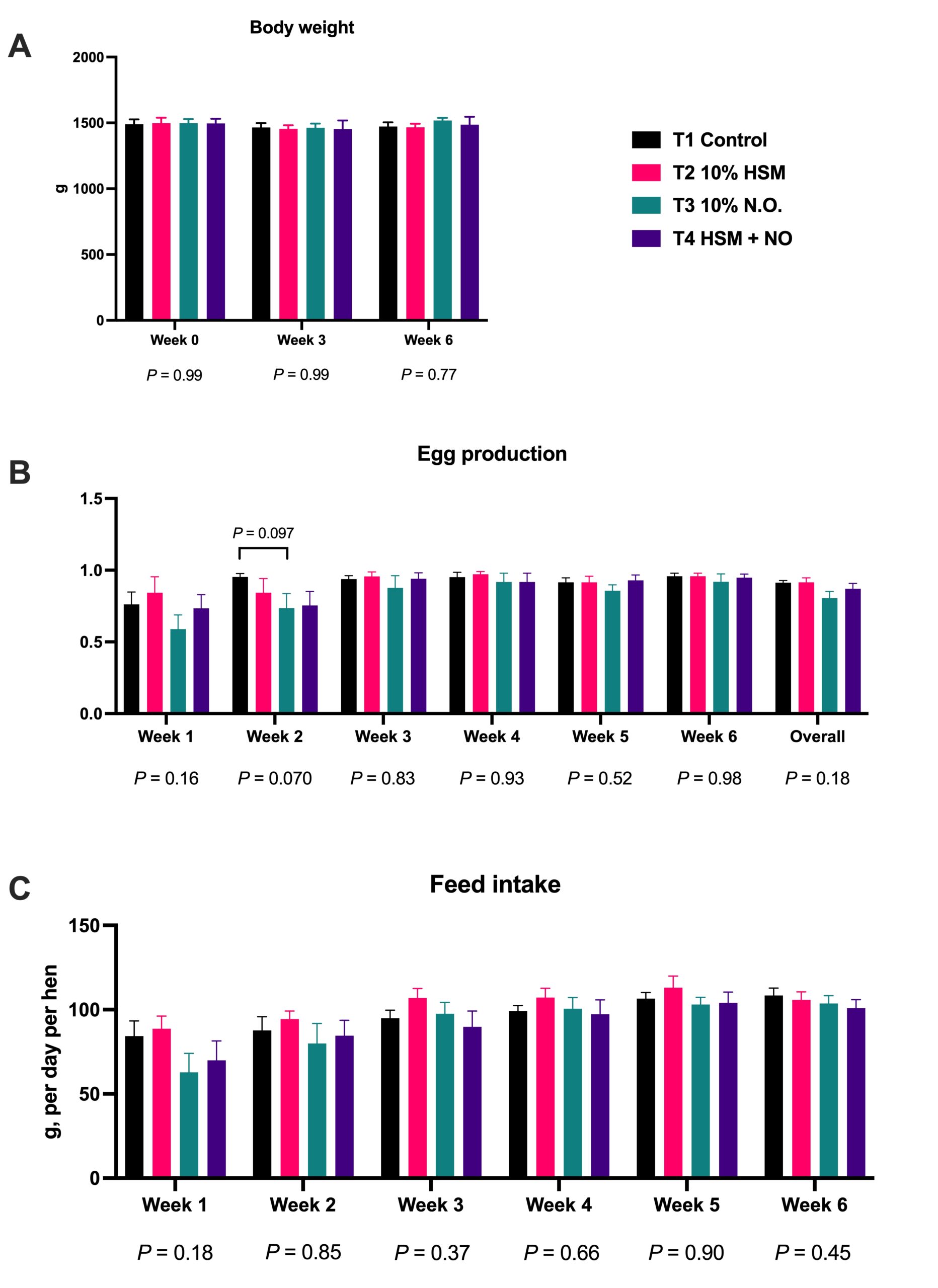
Table 2. Effects of dietary supplementations of 10% hempseed meal, 10% microalgae Nannochloropsis oceanica, or both on the characteristics of eggs produced at week 6.
| P value (Two-way ANOVA) | ||||||||
| Control | 10% HSM | 10% NO | HSM + NO | SEM | Hempseed | Microalgae | Interaction | |
| Whole egg, g | 62.9 | 61.1 | 63.3 | 61.3 | 0.77 | 0.23 | 0.85 | 0.96 |
| Albumin, g | 37.2 | 35.5 | 37.9 | 35.7 | 0.61 | 0.32 | 0.26 | 0.29 |
| Yolk, g | 17.2 | 17.6 | 16.7 | 17.5 | 0.22 | 0.24 | 0.49 | 0.62 |
| Eggshell thickness, mm | 0.50 | 0.49 | 0.50 | 0.49 | 0.0049 | 0.23 | 0.78 | 0.93 |
Plasma health biomarkers
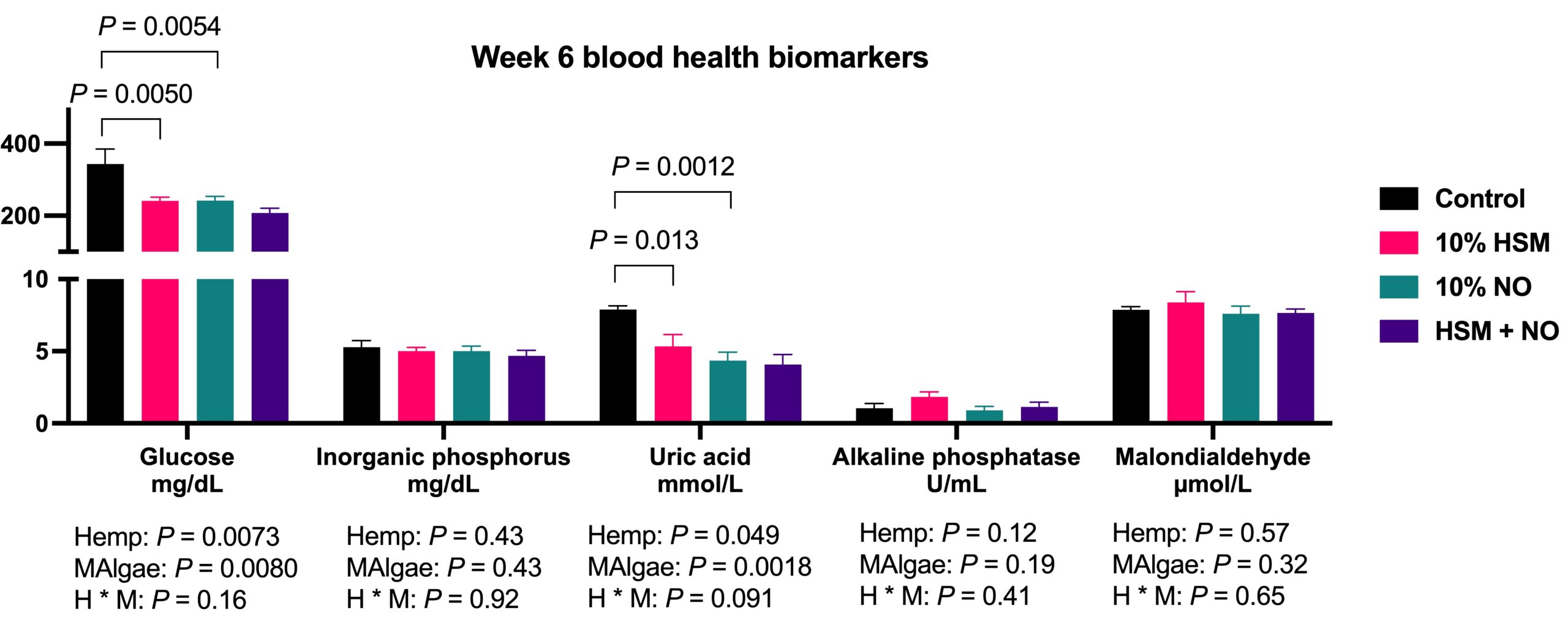
The dietary supplementations of 10% hempseed meal and 10% microalgae Nannochloropsis oceanica individually or in combination significantly altered the plasma concentrations of several health biomarkers (Figure 2). Particularly, the plasma levels of glucose were 29.7% and 29.5% lower (P < 0.01) in the 10% HSM and 10% NO groups, respectively, than the Control group; the HSM + NO group with both supplementations was not statistically different than either the 10% HSM or 10% NO group. Similarly, the plasma concentrations of uric acid were decreased in the 10% HSM (P < 0.05) and 10% NO (P < 0.01) groups by 32.4% and 44.9%, respectively, when compared with the Control group, while the HSM + NO group was not statistically different than either the 10% HSM or 10% NO group. Plasma concentrations of inorganic phosphorus, alkaline phosphatase enzyme activity, malondialdehyde were not impacted by any of the dietary treatments in the study.
Hempseed meal and other hempseed byproducts have been reported to contain high levels of phytate-bound phosphorus, which would decrease the bioavailability of the mineral when fed to monogastric animals like chickens. Such bound phosphorus would remain largely undigested in the digestive tracts of the animals and secreted in feces, which may become a concern for environmental run-off into water bodies. In our pilot study where gradient inclusions of hempseed meal were supplemented in laying hen diets, we found that plasma levels of various phosphatases were altered in the treatment groups. Traditionally, an inorganic source of phosphorus (e.g., dicalcium phosphate) would be supplemented to provide adequate amounts of phosphorus to animals. In this study, we intentionally included phytase in the diets, an enzyme supplement that helps release the bound phosphorus and therefore increase its bioavailability. Through this approach, we aimed to reduce the use of phosphorus supplements as well as the amounts of phosphorus excreting from animals and entering into the environment. Another unexpected but promising finding in this study was that the dietary supplementations of 10% hempseed meal or microalgae either individually or in combination significantly lowered the plasma concentrations of glucose and uric acid of the laying hens. Although we were unclear the mechanisms leading to such changes, they remained encouraging considering the potential benefits in human health and warrants further investigation.
Figure 2. Effects of dietary supplementations of 10% hempseed meal, 10% microalgae Nannochloropsis oceanica, or both on plasma concentrations of glucose, inorganic phosphorus, uric acid, alkaline phosphatase enzyme activity, and malondialdehyde of laying hens at week 6.
Egg yolk fatty acid profiles
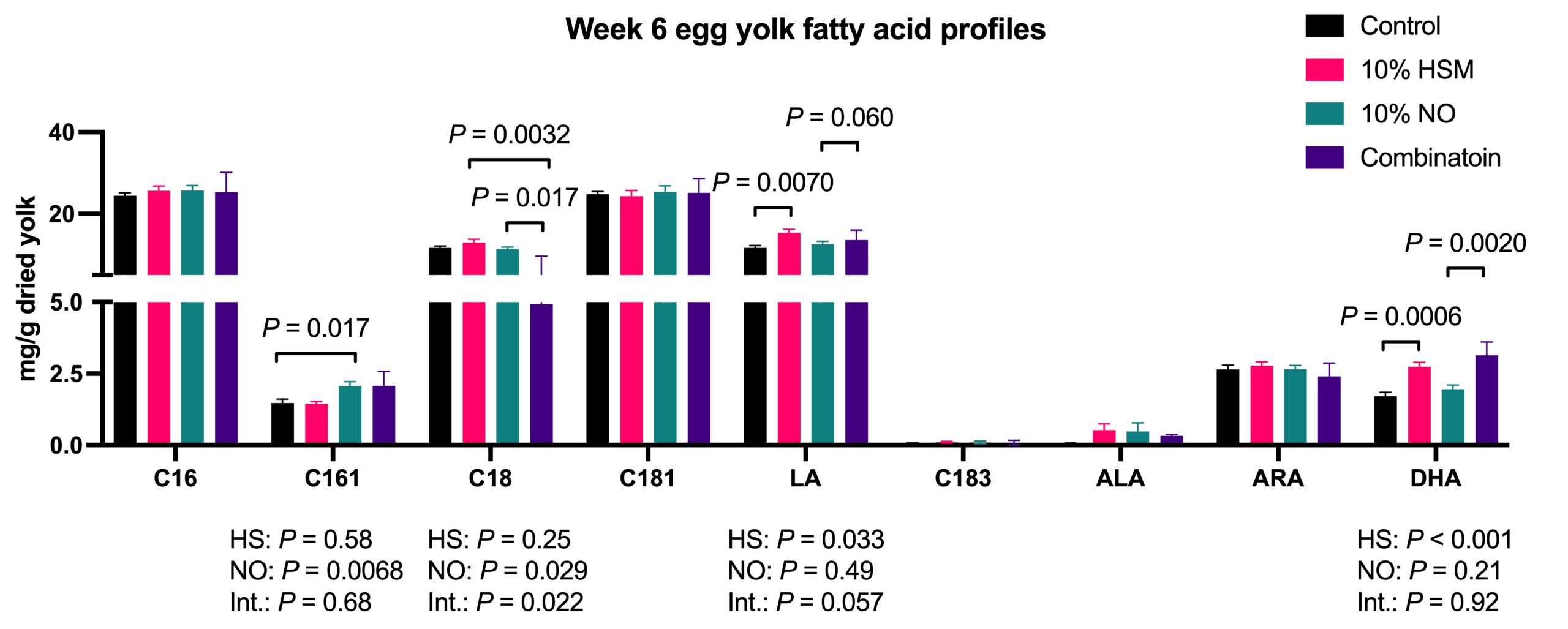
The dietary supplementations of 10% hempseed meal or 10% microalgae individually or in combination systematically altered the fatty acid profiles of egg yolks at the end of the 6-week study (Figure 3). Particularly, the egg yolk levels of DHA were 60.8% higher (P < 0.001) in the 10% HSM group than the Control and 51.0% higher (P < 0.01) in the Combination group than the 10% NO group. The two-way ANOVA analysis revealed that the supplementation of hempseed meal might be the primary driver of the increase in DHA while the supplementation of microalgae (P = 0.21) or the interaction effects (P = 0.92) of both were not statistically significant. This was an unexpected result as we originally hypothesized that with hempseed meal containing high levels of ALA while microalgae Nannochloropsis oceanica containing high levels of EPA, the compliment fatty acid profiles of the two alternative feed proteins would further increase the DHA deposition in the eggs. One potential explanation behind the low efficacy of the microalgae supplementation might be that the microalgae biomass had been produced and stored at room temperature for a prolonged period of time, and VLC n-3 PUFAs like EPA and DHA with multiple double bonds in their chemical structures tend to susceptible for oxidation and lose their potency.
Besides DHA, the egg yolk levels of linoleic acid (LA, C18:2n-6) were similarly increased in the 10% HSM group by 32.1% (P < 0.01) when compared with the Control group. Additionally, the egg yolk concentrations of palmitoleic acid (C16:1n-7) were 39.9% higher (P < 0.05) in the 10% NO group than the Control group, while the egg yolk levels of stearic acid (C18:0) were 12.4% and 48.3% lower in the 10% NO (P < 0.01) and Combination (P < 0.05) groups, respectively, when compared with the 10% HSM group.
Figure 3. Effects of dietary supplementations of 10% hempseed meal, 10% microalgae Nannochloropsis oceanica, or both on selected egg yolk fatty acid profiles of laying hens at week 6.
Animal respiratory CO2 production and manure CO2 and NH3 production
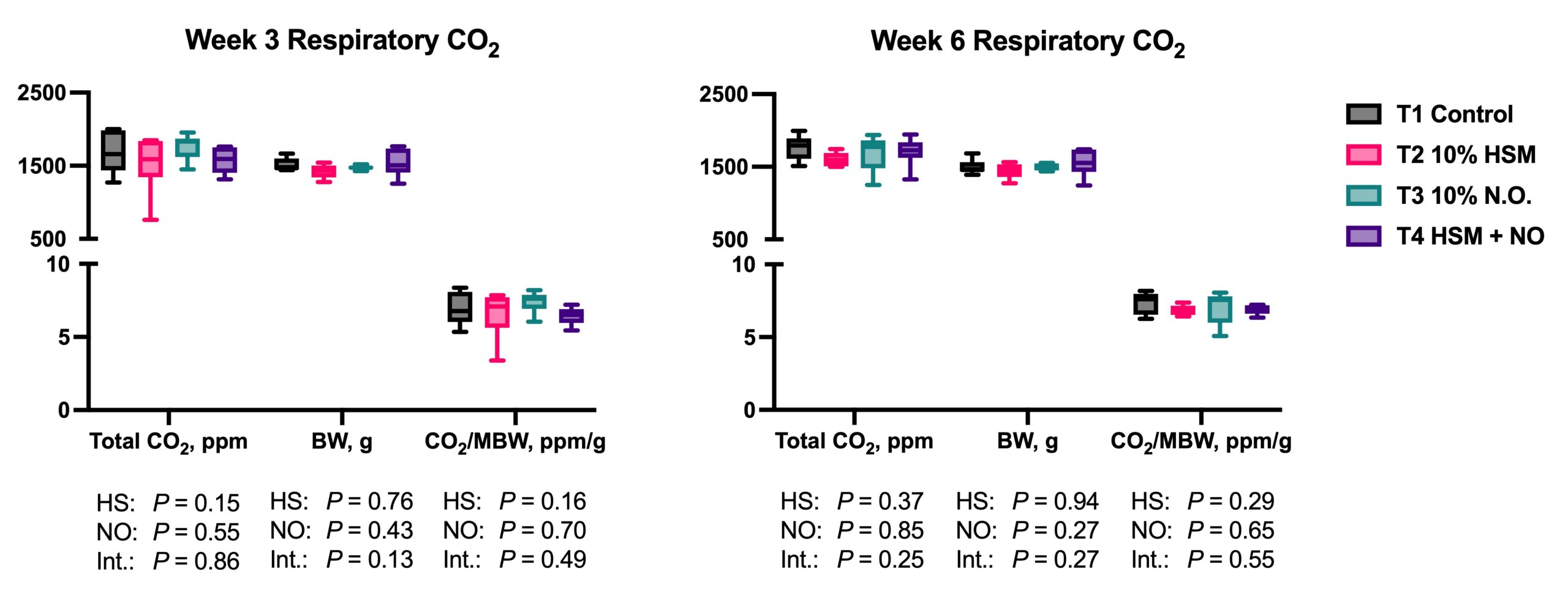
As a model to the respiratory chamber used in human nutrition research, quantifying respiratory CO2 and O2 production and consumption of the animals may gain insights into the animals' energy metabolism. However, due to the abundance of O2 in air and the extreme sensitivity of instrument required to detect the subtle changes in O2, we were only able to measure the CO2 fluctuations from the laying hens' respiration. Overall, the total respiratory CO2 production of the laying hens as well as the CO2 production when corrected to the animals' metabolic body weight (BW0.75) were not impacted by any of the four dietary treatments in this study (Figure 4).
Figure 4. Effects of dietary supplementations of 10% hempseed meal, 10% microalgae Nannochloropsis oceanica, or both on the respiratory CO2 production of laying hens at weeks 3 and 6.
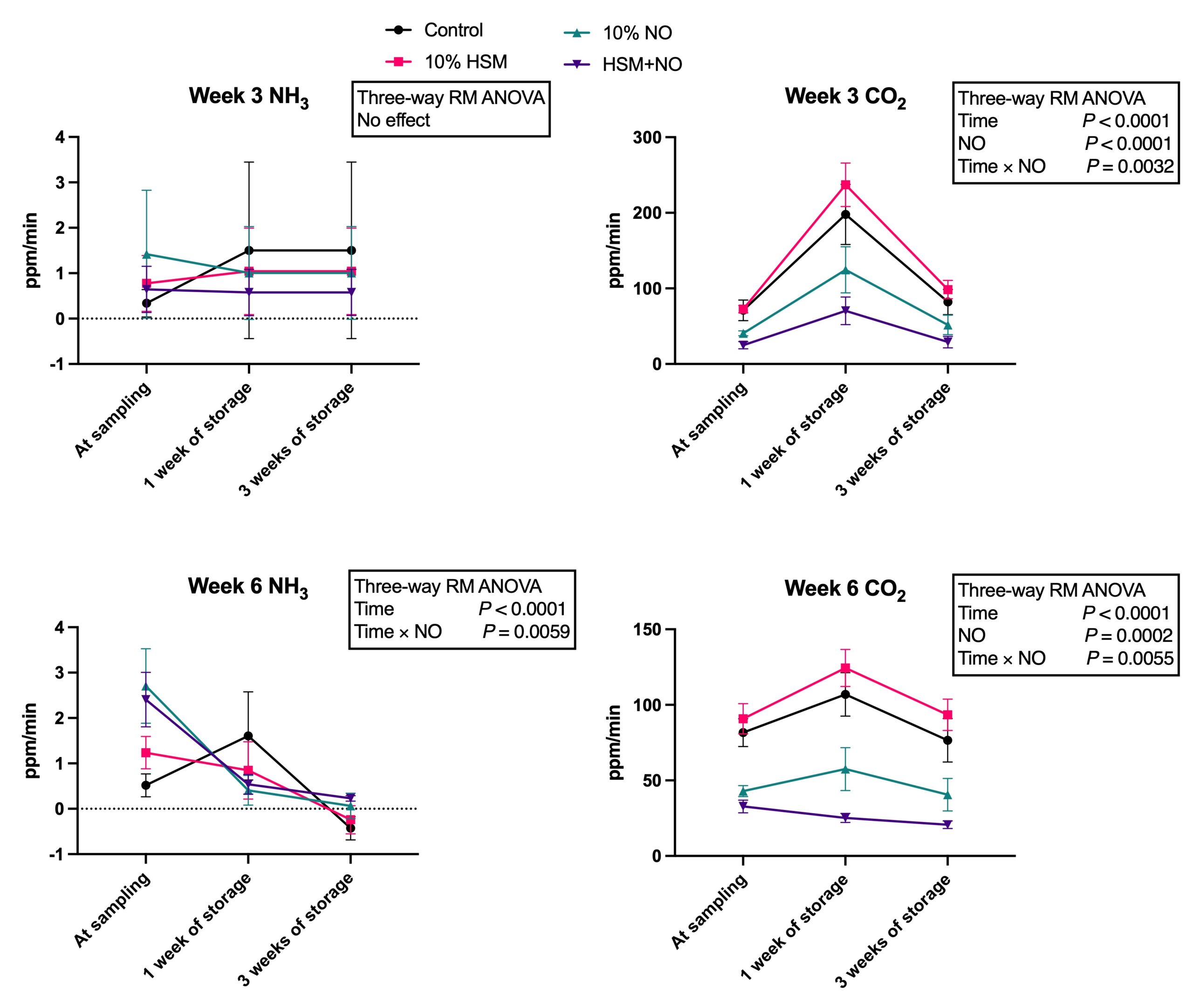
For manure NH3 production, samples collected at the end of week 6 reported significantly higher (P < 0.01) manure NH3 production at sampling in the two groups with the microalgae supplementations (i.e., the 10% NO and Combination groups) by 4.2- and 3.7-fold, respectively, than the Control group (Figure 5). Nevertheless, the significant differences in manure NH3 production were diminished when the samples were measured again after 1 and 3 weeks of storage at room temperature. On the contrary, manures from the two groups containing the 10% microalgae supplementation produced significantly less CO2 than their counterparts (i.e., the Control and 10% HSM groups). Specifically, manure samples from the 10% NO and Combination groups at week 3 produced significantly lower (P < 0.001) CO2 levels by 42.8% and 64.8%, respectively, when compared with the control at sampling. Despite the temporal changes affecting all treatment groups when the manure samples were stored for 1 and 3 weeks, the significance in lower manure CO2 production in the 10% NO and Combination groups sustained at all measurement time points. Manure samples collected at the end of week 6 of the study showed similar results. Manure CO2 production from the 10% NO group at week 6 was 45.9%-47.4% lower (P < 0.001) than the Control group at all measurement time points, while manure CO2 production from the Combination group at week 6 was 63.9%-99.7% lower (P < 0.001) than the 10% HSM group.
Figure 5. Effects of dietary supplementations of 10% hempseed meal, 10% microalgae Nannochloropsis oceanica, or both on the manure CO2 and NH3 production from laying hens at weeks 3 and 6 measured at sampling and after 1 and 3 weeks of storage.
This project was originally designed with two overarching objectives to investigate the potential benefits when hempseed meal was supplemented in laying hen diets individually or in combination with defatted microalgal biomass Nannochloropsis oceanica, two of the prominent alternative feed protein candidates in poultry production.
In objective 1 where we explored the egg yolk enrichment levels of n-3 PUFAs (such as ALA and DHA) through the dietary supplementations, we found that overall animal health and egg production were not impacted throughout the 6-week study, suggesting that both ingredients were safe to be included in laying hen diets at 10%. Our previous poultry studies revealed that supplementing either ingredient singularly at up to 20% did not impact animal health and egg or meat production. More importantly, plasma concentrations of glucose and uric acid were significantly decreased by the supplementations of hempseed meal and (or) microalgae. The exact mechanisms leading to such promising phenomenon remain unclear, but future studies may focus on the profiles of diverse bioactive and health-promoting compounds that hempseed meal and microalgae possess and how they may contribute towards animal and human health. Similar to our hypothesis, feeding the ALA-rich hempseed meal individually or in combination with the EPA-rich microalgae Nannochloropsis oceanica resulted in significant egg yolk DHA depositions. Surprisingly, the supplementation of microalgae alone did not lead to statistically significant increase in egg yolk DHA levels when compared with the Control; similarly, the Combination group reported to comparable DHA levels with the 10% HSM group.
In objective 2 of this study, we applied an innovative approach in quantifying respiratory CO2 and manure CO2 and NH3 output. There was no evidence to suggest that the animals' metabolism was impacted because total respiratory CO2 production as well as CO2 production corrected with metabolic body weight were not impacted in any of the treatment groups. However, we revealed that the manure samples from the two groups with 10% microalgae supplementation produced significantly more NH3 but less CO2 compared with the two counterpart groups without microalgae supplementation. As the alternative feed proteins might influence protein/nitrogen metabolism of the animals and hence NH3 production in the digestive tract, further investigations looking at the gene expressions of key intestinal amino acid and fatty acid transporters via qPCR are being conducted as follow-up.
Education & outreach activities and participation summary
Participation summary:
To promote the buy-in from the poultry as well as hemp industries on our research, we have shared our preliminary trial results at multiple venues and advertise our upcoming SARE experiment. Keith presented at the 2024 Cornell Nutrition Conference (Syracuse, NY) during the Graduate Student Research Spotlight session on Oct-24, 2024 entitled "Nutritional benefits of feeding hempseed meal to laying hens as a sustainable feed protein alternative" and received the Leonard A. Maynard Graduate Student Award. The preliminary results were also available in the form of a conference abstract. With approximately 450 attendees at the CNC this year, animal nutritionists and livestock sector stakeholders attending the event showed great interests in the hempseed as a protein ingredient and how it could be used beyond the poultry industry. Keith also presented at the Cornell Cooperative Extension's Agriculture, Food & Environmental Systems In-service on Nov-19, 2024 for the poultry session and talked about the preliminary trial with local New York poultry farmers and extension educators and specialists. On Apr-25, 2025, Keith delivered a similar presentation entitled "Nutritional benefits of feeding hempseed meal to laying hens as a sustainable alternative feed protein" at the Hemp Research Updates Webinar hosted by the Hemp Feed Coalition incorporating preliminary results from this SARE study. Additionally, on Sep-11, 2025, Xuedan presented her research progress on the supplementations of hempseed meal in broiler chickens at the 2025 Grain and Fiber Hemp Field Day hosted by Cornell AgriTech (Geneva, NY) on behalf of Dr. Xingen Lei.
In the upcoming months, results from this study will be presented by Xuedan Zhu, a M.S. student in the lab who performed some of the research in study as part of her thesis. Additional to Xuedan, two undergraduate students at Cornell University were involved in conducting this study and trained in poultry nutrition research; one of them who was a graduating senior then has progressed and started his veterinary school at Cornell University. Keith will be attending the biennial symposium of the Comparative Nutrition Society in July 2026 and presenting this research. A journal article is currently being prepared by Keith and Xuedan for submission.
Project Outcomes
With the global population continues to grow in future decades, the demand for animal-sourced proteins, particularly poultry products like chicken meat and eggs that are nutritious, affordable, and sustainable, will continue to increase. Currently, commercial poultry production is resource-intensive, requiring a significant amount of corn and soybean meal in feed, which may exacerbate the food-feed competition and food security concerns. Substituting soybean meal with alternative feed proteins like hempseed meal and microalgae investigated in this study could promote the use of byproducts from other agricultural sectors and therefore contributing towards circular economy and sustainable agriculture. Since the start of this project, the Association of American Feed Control Officials (AAFCO) has officially approved the use of hempseed meal in laying hen feed at no more than 20% due to growing evidence confirming the safety of this novel ingredient. The approved use may open the untapped potential of this byproduct from hemp oil production in animal agriculture. Nonetheless, the use of hempseed meal or other hemp byproducts in other livestock species (e.g., broiler chickens, dairy or beef cattle, pigs, etc.) has not been approved and warrants future studies. This project provided the foundation for a funded grant where we (Cornell University) partnered with New York State government and Foundation for Food & Agriculture Research (FFAR) to investigate the inclusions of hempseed meal in other livestock species, including broiler chickens in our lab.
During the Cornell Nutrition Conference as well as the Cornell Cooperative Extension for the poultry session, Keith's presentations had gathered considerable amount of interest from not only local poultry farmers in New York State but also dairy farmers and agricultural services providers regarding what the updates in legality of hempseed byproducts as well as the promising potentials of n-3 PUFA (e.g., ALA and DHA) could contribute to their industries. Further research with an interdisciplinary approach involving experts and stakeholders in fields like agricultural economics, marketing, sociology, and policy decision-making would be essential to explore economic and social benefits for farmers. For example, the use of hempseed meal and microalgae (or other agricultural byproducts) may reduce feed costs and the subsequently produced "specialty" eggs biofortified with health-promoting nutrients like n-3 PUFAs may be sold at a premium price to increase profits. The availability of such biofortified eggs would also contribute towards increasing the nutrient intake of the general public promoting public health.
During the course of this project, we have gained significant insights into the potential benefits of hempseed meal supplementation individually or in combination with microalgae (two important agricultural byproducts with great untapped potentials in animal agriculture) in diets of laying hens. Through interactions with different stakeholders, we have extended our horizon and understanding of hempseed meal beyond its use in poultry nutrition and into its potential comprehensive impacts in the realm of sustainable agriculture. Xuedan Zhu, a M.S. student who joined our lab as this project was funded and planned, participated and conducted part of the research as her training to become a poultry nutritionist and researcher. She was also the lead graduate student in the broiler chicken study with hempseed meal funded by the aforementioned NYS & FFAR grant building upon results from this study. When performing this research, we successfully recruited two undergraduate researchers at Cornell University who were sincerely interested in the poultry research and entering into the poultry industry as their careers. They were trained by the graduate students leading this research and learned the basic aspects of egg production in a commercial setting as well as fundamental research principles and techniques in the lab for their interests in graduate or veterinary schools after their undergraduate study. The results from this study became a significant part of Xuedan's M.S. thesis and are currently in preparation to be submitted as a journal article.
When performing the outreach of this project, we interacted with industry experts in the hemp production (where they actively explore and research potential inclusions of hemp byproducts in animal agriculture since the updates in its legal status) as well as local farmers and animal nutritionists of various species. During the presentations as mentioned above, we not only shared our results found in this study when hempseed meal was supplemented individually or in combination with microalgae in poultry production but also engaged in in-depth discussions with experts in other livestock sectors (e.g., dairy cattle) regarding how our results could be applied there considering the different nutritional physiology of the livestock species.