Final report for GS24-302
Project Information
Potato (Solanum tuberosum) is a major commodity in Northeast Florida (NEF), producing up to 66% of United States winter potatoes. Among many pests of potatoes, sting (Belonolaimus longicaudatus) and stubby-root nematodes (Nanidorus minor and Nanidorus obtusus) are important in NEF. A cropping sequence of continuous winter potato followed by summer sorghum-sudan grass (Sorghum x drummondii) cover crop is typical in NEF, but both crops increase sting and stubby-root nematodes. Therefore, chemical nematicide application is the main nematode management tactic in the area. This project focuses on assessing various summer and fall cover crops as an alternative method for managing sting and stubby-root nematodes as well as their effects on and free-living nematodes (beneficial, non-parasitic) in potatoes. We will conduct a field trial where we will plant summer cover crops, sorghum-sudan grass and sunnhemp (Crotolaria juncea), followed by fall cover crops, arugula (Eruca sativa) and caliente mustard (Brassica juncea), before potatoes. We will compare cover crops to weedy fallow with or without the fumigant nematicide 1,3-dichloropropene (1,3-D). We will assess sting, stubby-root, and free-living nematodes regularly during the trial. The field trial is a continuation of work done in 2022/23 that needs to be repeated for validation. Further, we will do repeated greenhouse experiments to assess the host suitability of sting nematodes to different cover crops. These studies will provide potato growers with important information on efficacy of selected summer and fall cover crops for reducing sting and stubby-root nematode damage and maintaining beneficial nematodes.
The overarching goal of this project is to improve sting and stubby-root nematode management in potato production by using effective summer and fall cover crops combinations while minimizing negative impacts on soil populations of free-living nematodes.
The specific objectives of this project are to:
1) Evaluate summer cover crops, fall cover crops, and their combinations in field potato production for:
- Management of sting and stubby-root nematode populations
- Influence on potato yield; and
- Impact on beneficial, free living nematode communities.
2) Test the host suitability of sting nematodes to fall and summer cover crops in greenhouse conditions.
Research
Our primary objective was to assess the effectiveness of various combinations of summer and fall cover crops in managing sting and stubby-root nematodes in potato production. Greenhouse and field trials were conducted to meet this objective
Methods (Field): The field trial is being conducted at the University of Florida Hastings Agricultural Education Center (HAEC) in Northeast Florida. The experiment was a randomized complete block design (RCBD) in split-plot arrangement with 8 treatments (2 summer main plot x 4 fall split-plot treatments). Summer cover crops treatments included 1) sunnhemp (cv. Crescent Sunn) and 2) sorghum-sudan grass (cv. Defiance). Fall treatments included 1) caliente mustard (cv. Rojo), 2) arugula (cv. Nemat), 3) weedy fallow, and 4) weedy fallow followed by 1,3-D fumigation. There were six replications for each treatment in a block for a total of 48 plots.
Summer cover crops (sunnhemp and sorghum-sudan grass) were already established in April 2024 and a previous cycle of the field trial was conducted in 2022-23. Any activities occurring before September 2024 were not funded by this grant based on the funding cycle, but are included to give a full description of the broader project. Summer cover crops were planted with a single drill line on raised beds, each in 4 rows of 26 m long plot spaced 102 cm apart, which are standard practices in Northeast Florida. We terminated these summer cover crops after about 4 months using a mechanical chopper and incorporated the residues into soil. Prior to cover crop termination, we took biomass of cover crops and weeds around cover crops using two 1 m2 quadrats per plot to measure fresh and dry biomass of cover crops.
Approximately 5 weeks after summer cover crop termination, we planted fall cover crops; caliente mustard and arugula in the selected plots with remaining plots left as weedy fallow. We terminated caliente mustard and arugula after about 2 months and took fresh and dry weight of each species at their termination. A week later, one of the fallow treatments was injected with 1,3-D (Telone II®) @ 66.2 kg a.i/ha. into the soil (approximately 25cm deep) with one shank per bed. Then 5 weeks later (mid-January) we planted potato seed pieces (Red Lasota) on the raised bed.
Soil nematode abundances were quantified: (1) at summer cover crop termination, (2) at fall cover crop termination, (3) potato midseason, and (4) at potato harvest. Midseason was approximately 6 weeks after potato planting. Potato yield was measured by mechanically digging tubers from approximately 7 meters of the central 2 rows of each plot.
Methods (Greenhouse)
The objective of greenhouse experiment was to test host suitability of sting nematode to different summer and fall cover crops. For this, we selected 5 different crops 1) caliente mustard (cv. Rojo), 2) arugula (cv. Nemat) 3) carinata (cv. NUJET 400) 4) sunnhemp (cv. Crescent Sunn) and 5) sorghum-sudan grass (cv. Defiance) for their ability to reproduce in sterilized soil inoculated with same amount of sting nematodes. Caliente mustard and arugula are selected as potential fall cover crops, and carinata could serve as a winter cover crop. The relationship of all these cover crops with sting nematode is yet to be established. Sunnhemp is selected because it is a non-host crop and sorghum-sudan grass is a good host of sting nematode. Each treatment were replicated 6 times using RCBD for a total of 30 pots. Two greenhouse trials (Trial I and Trial II) were completed.
Greenhouse Culture set up: The pure culture of sting nematode was established in greenhouse using the species obtained from a naturally infested field at HAEC. This culture was used as an inoculum for greenhouse experiments.
Greenhouse Experiment: We grew all the cover crop seeds in a 15-cm-diameter pot containing sterilized soil in a greenhouse at the UF Entomology and Nematology Department in Gainesville, FL. Clay pots with a 15 cm diameter were filled with 1000 cm³ of the autoclaved soil. Six seeds were initially planted in each pot, but two weeks later the seedlings were thinned to one per pot. Sting nematodes were inoculated into the pots 18 days after planting (DAP) in Trial I and 25 DAP in Trial II. For sting nematode inoculation, four holes of 2.5 cm deep were made around each plant, and the nematode inoculum was evenly distributed into the holes using a pipette. Each pot received a total of 100 sting nematodes in 4 mL of solution. Plants were maintained and terminated at 60 days for Trial I and 58 days for Trial II. For all tested plants, sting nematode abundance was quantified by extracting nematodes from 100 cm³ of soil per pot which is an important variable for this greenhouse study. From soil abundance of sting nematode, reproduction factor (RF) was calculated to verify the host status of cover crops tested. Other supporting data on plant height and growth stage (number of leaves) were recorded 30 days after nematode inoculation and again at trial termination. Fresh shoot and root biomass were measured at termination.
Greenhouse study
In the greenhouse study, data were analyzed separately by trial because most variables had trial-by-treatment interactions (ANOVA, P ≤ 0.05). One-way ANOVA was performed for all the variables to determine the differences among treatments. For each variable, if the treatment effects in ANOVA were significant (P ≤ 0.05), Tukey’s HSD test was conducted to separate the means (α=0.05).
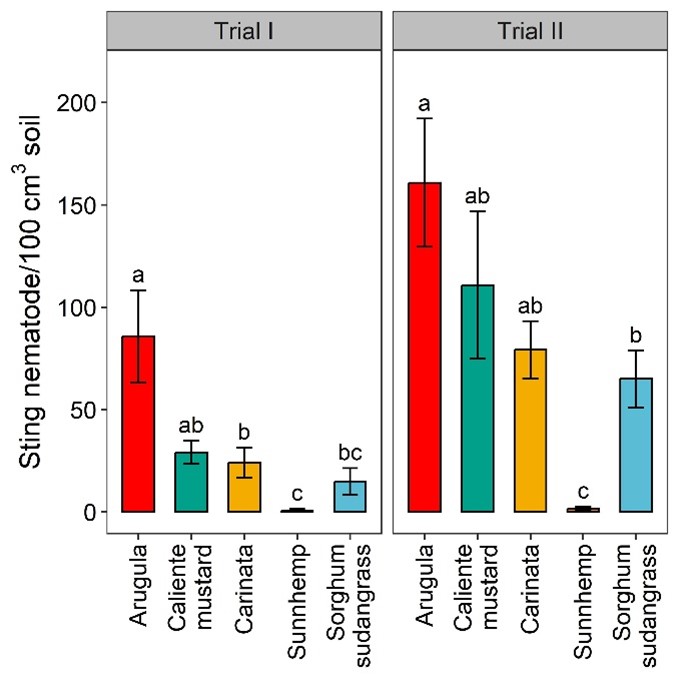
In both trials, sting nematode soil abundances were significantly higher for arugula compared to sorghum-sudangrass and sunn hemp (Figure 1). Sorghum-sudangrass is currently the most common cover crop in the region, although a few farmers have adopted sunn hemp. Caliente mustard and carinata also supported higher sting nematode populations than sunn hemp but were similar to sorghum-sudangrass. Among the brassica crops, there were no significant differences, except arugula supported higher populations than carinata in Trial 1. Sunn hemp had the lowest sting nematode abundances in both trials, except it was similar to sorghum-sudangrass in Trial 1.
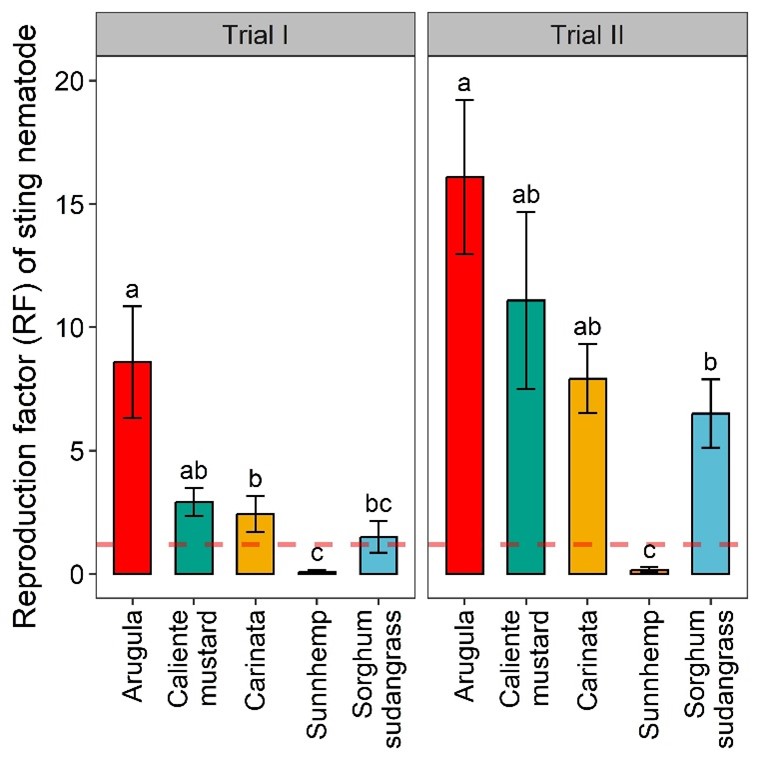
Reproduction factors (RF) of sting nematode (ratio of final population to initial inoculated population) followed a similar trend as that of sting nematode soil abundances (Figure 2). The reproduction factor (RF) was > 1 for all the brassica crops and sorghum-sudangrass, which indicated that they were good hosts of sting nematode. Sunn hemp had RF<1 indicating a poor sting nematode host.
Field study
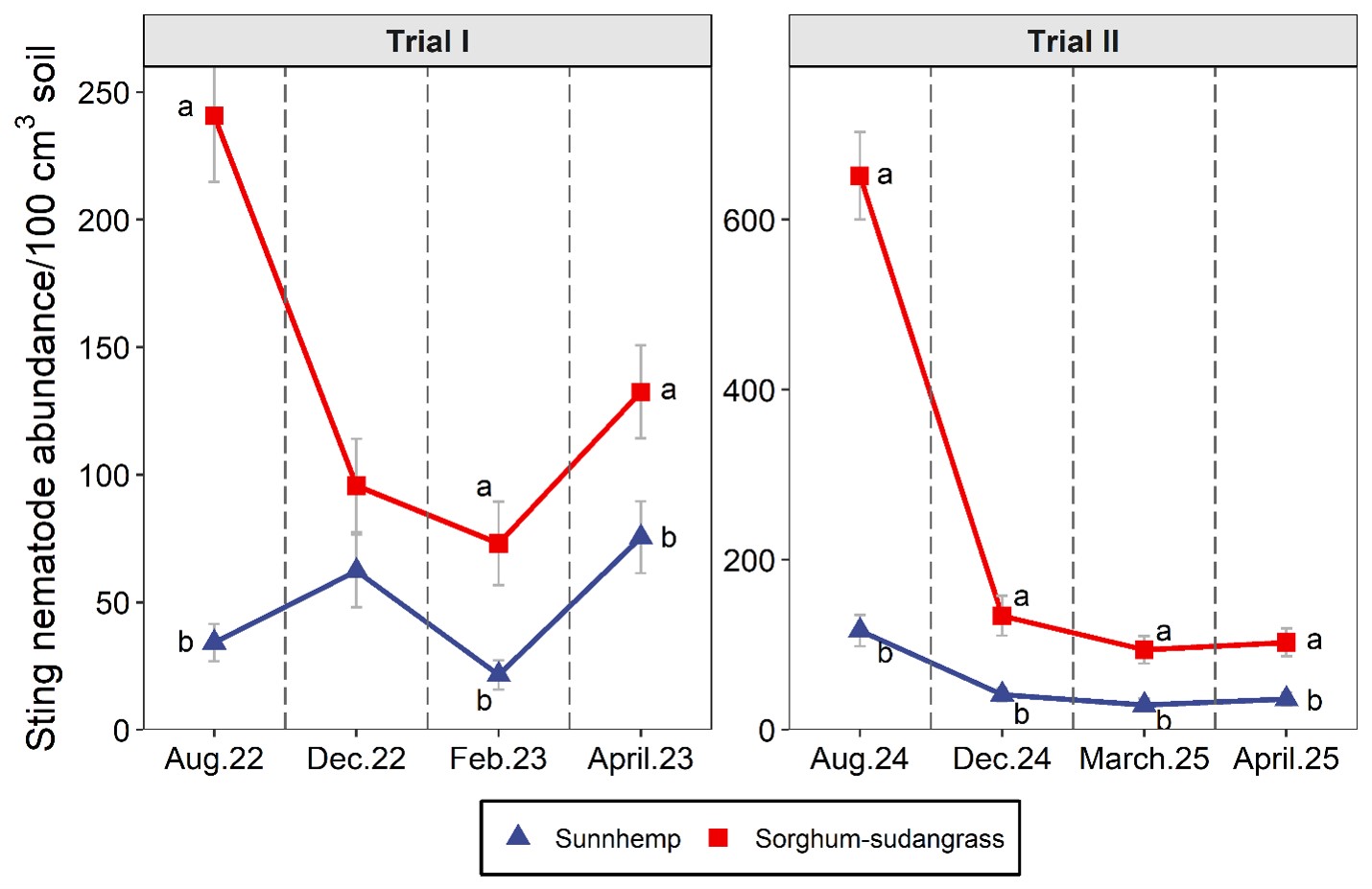
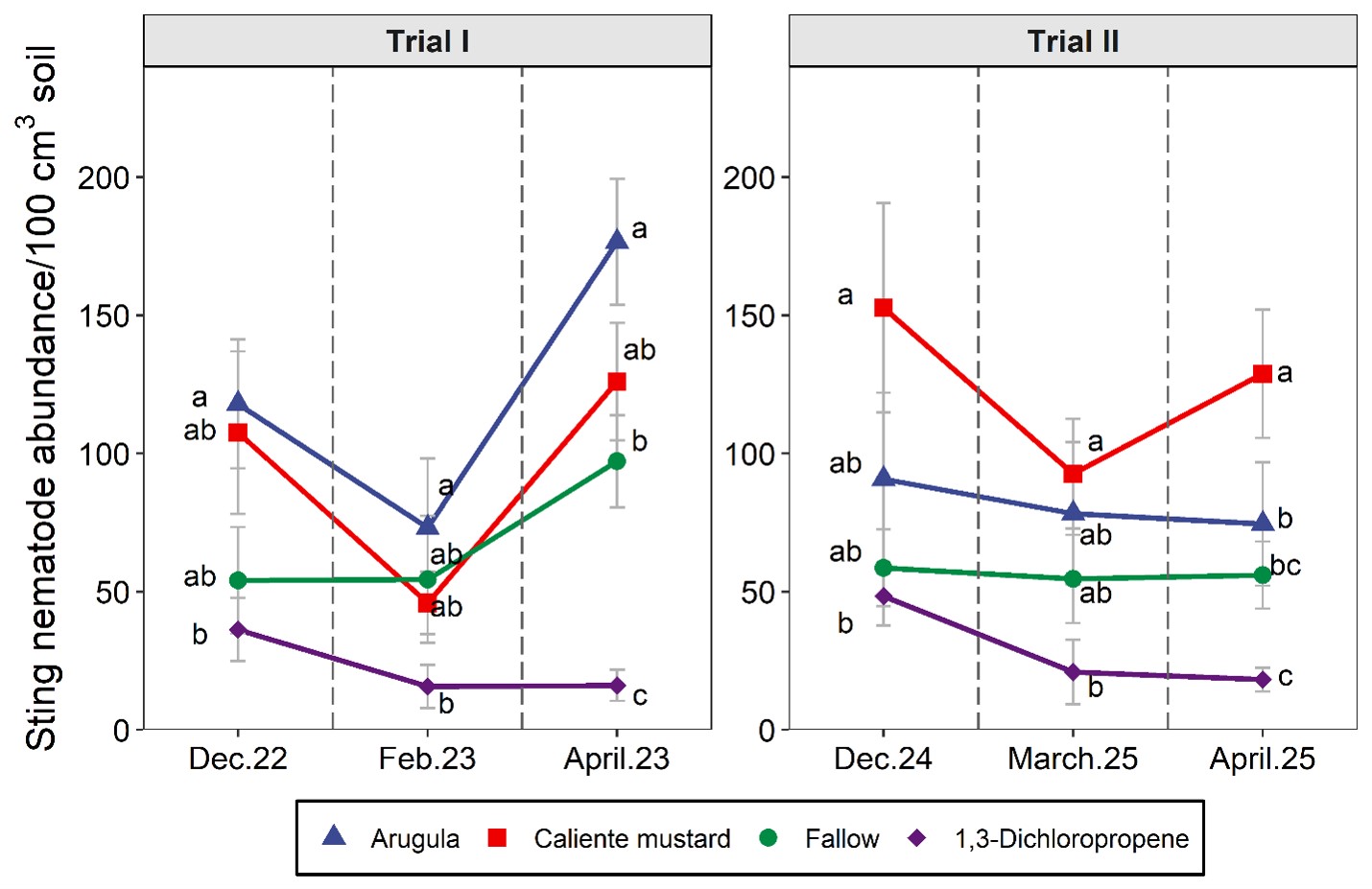
Consistently during the field study, sunn hemp reduced sting nematode soil abundances relative to sorghum-sudangrass (Figure 3). In contrast, Brassicas tended to increase sting nematode soil abundances at fall cover crop termination, especially arugula in 2022 and caliente mustard in 2024 (Figure 4). Brassicas did not manage sting nematode abundances better than fallow (without fumigation) at any point during the study. Fumigation with 1,3-D generally managed sting nematode abundances during potato production.
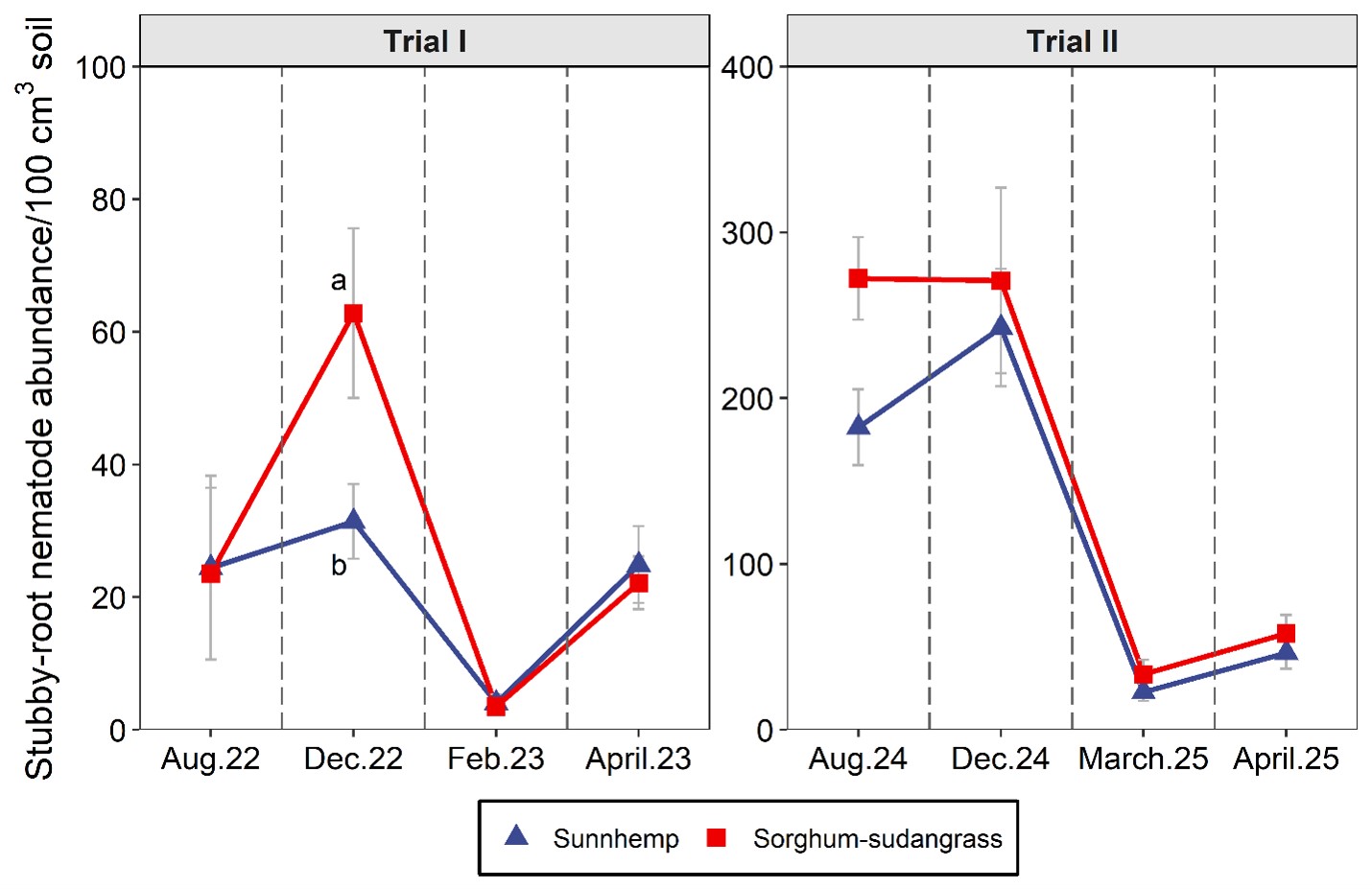
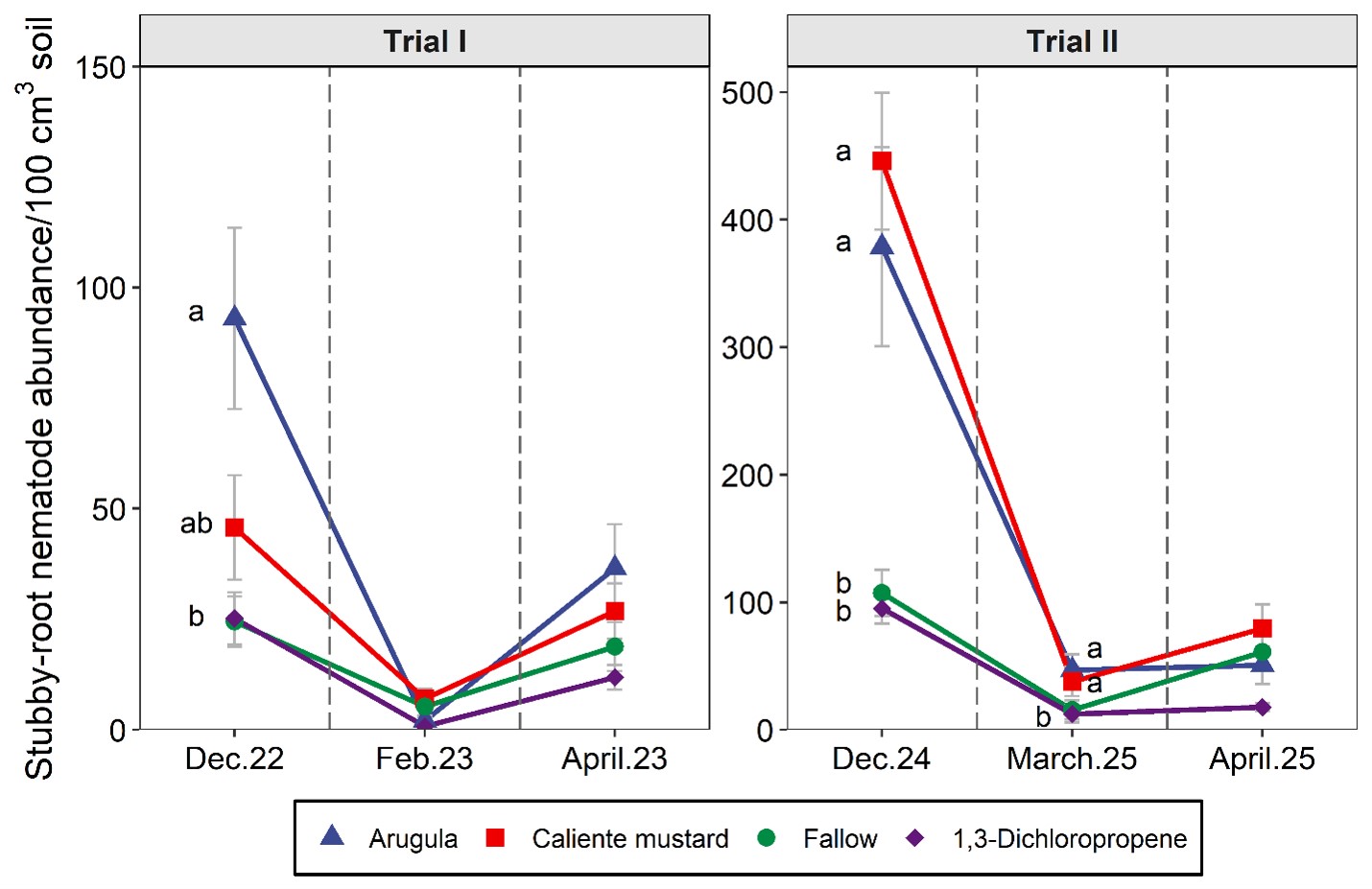
Stubby-root nematode soil abundances were generally not affected by summer cover crops, but were significantly reduced by sunn hemp at fall cover crop termination in 2022 (Figure 5). Arugula increased stubby-root nematode abundances in soil relative to fallow in fall 2022 and both Brassicas increased stubby-root nematode in fall 2024 (Figure 6). Fumigation did not consistently manage stubby-root nematode, which is similar to prior studies.
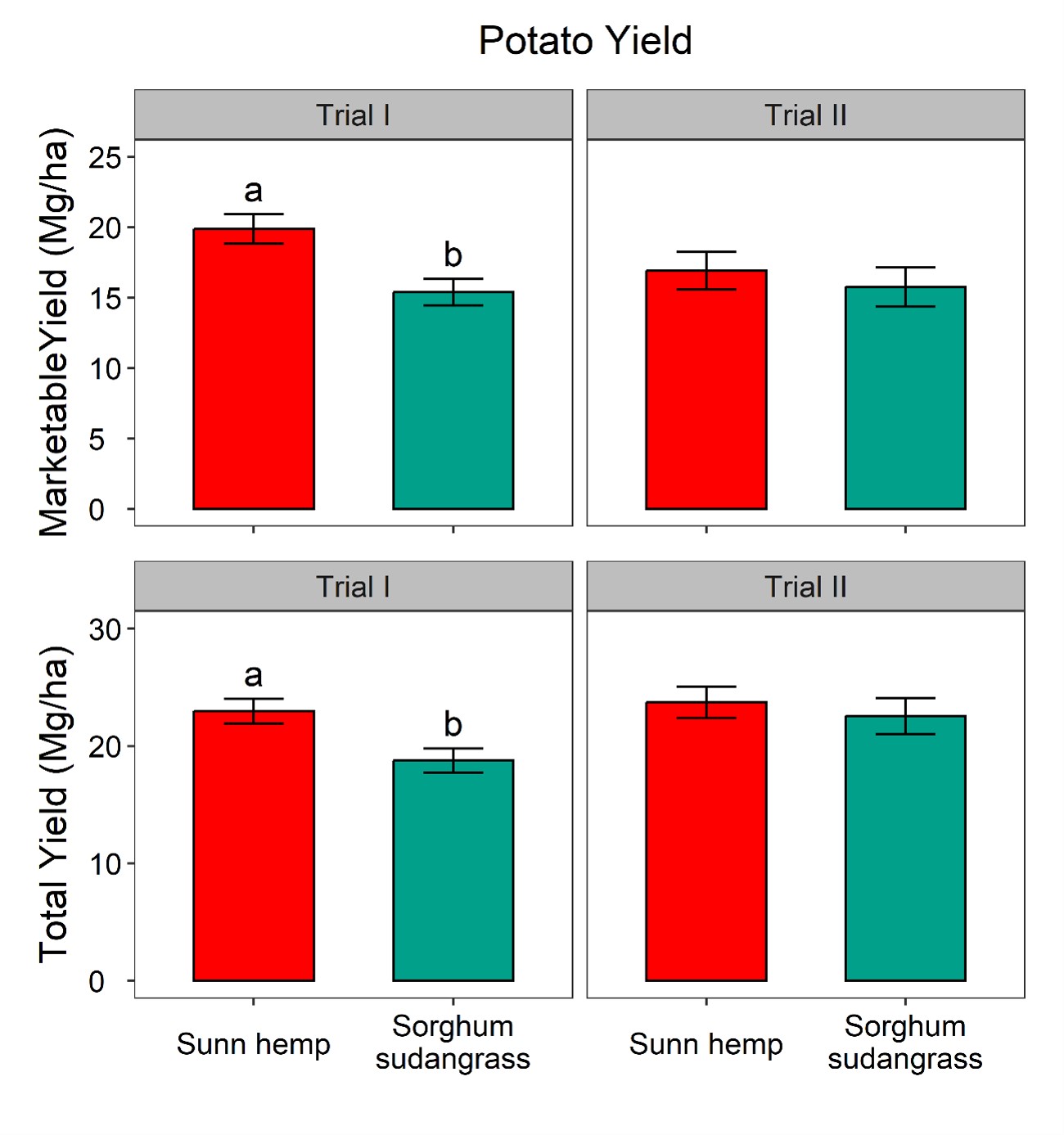
Sunn hemp increased yield in 2023 (Trial I), but not 2025 (Figure 7). Summer cover crop establishment was sporadic during the study, which may be one reason for inconsistent yield responses. The production system in this study is region-specific (bareground raised beds, subsurface irrigation, following potato monoculture, sandy soils with high water tables) and can be challenging for establishing cover crops based on observations in this and other trials. A focus of future research is trying to improve cover crop production methods in order to more consistently establish a robust cover crop in this system. Success with this is important if cover crops are to be leveraged for nematode management in this system.
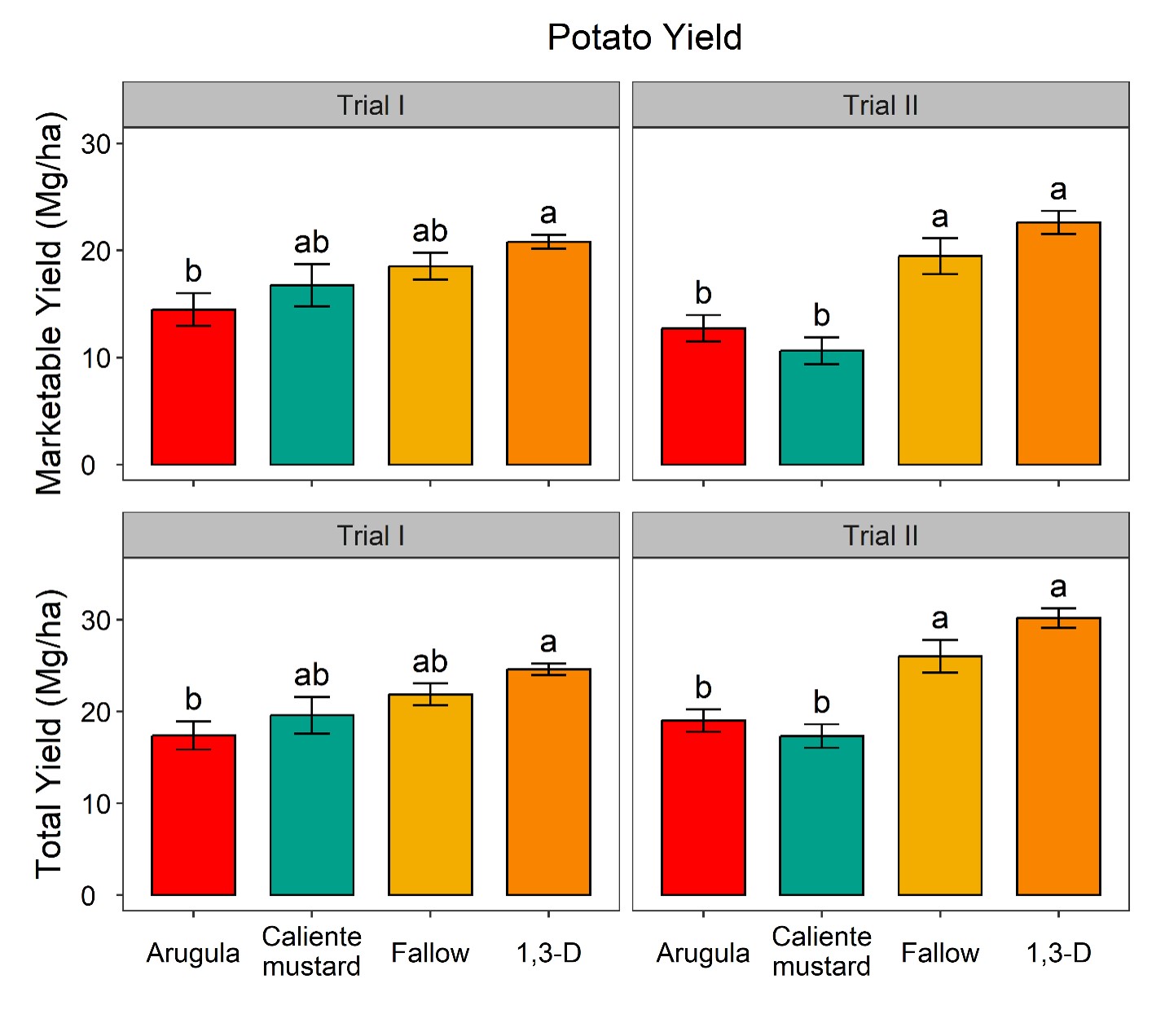
Following Brassicas, potato yield was no better than following weedy fallow and often worse (Figure 8). Fumigation using 1,3-D produced the numerically highest yields, but was not significantly better than weedy fallow (Figure 8).
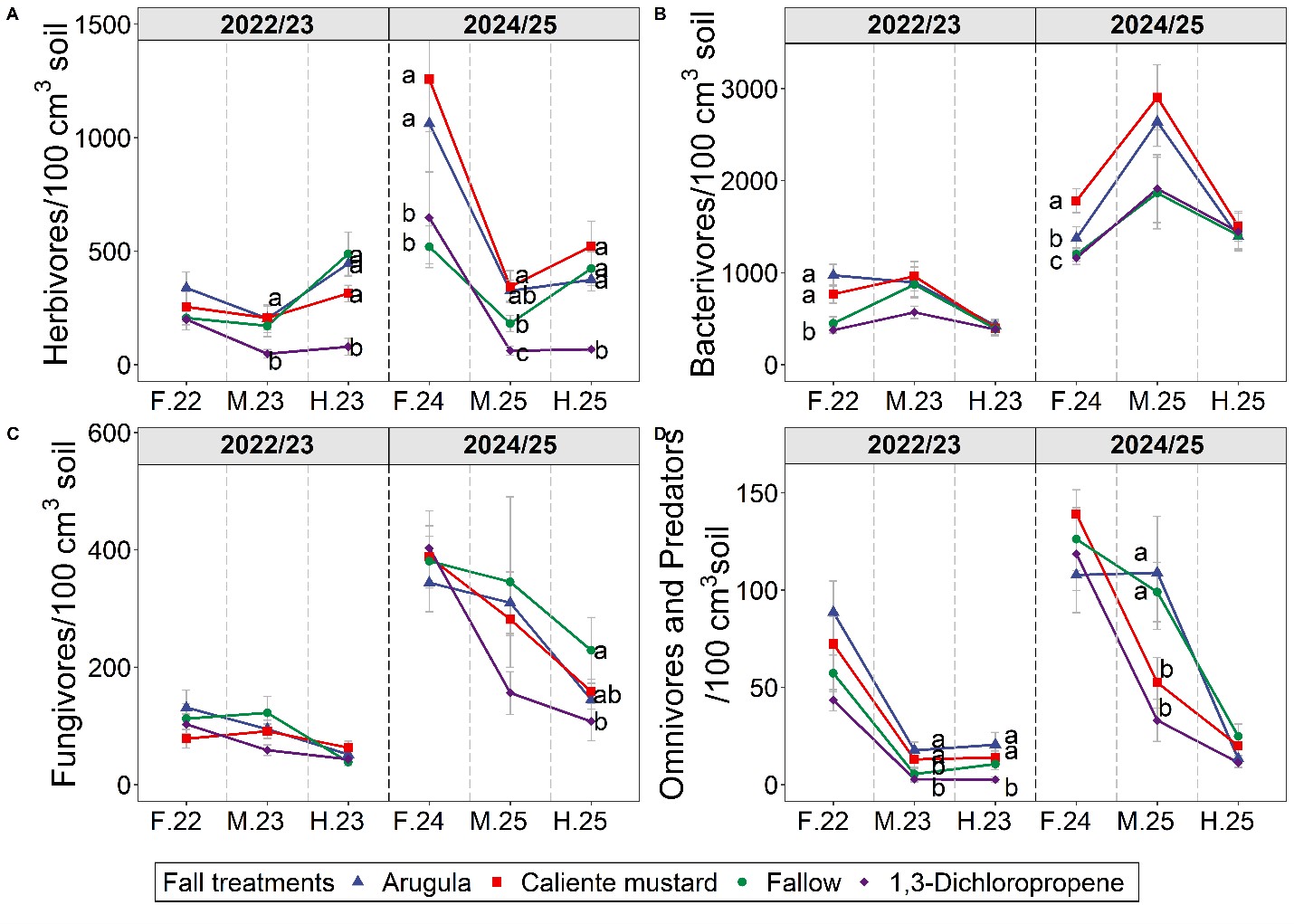
Summer cover crops did not significantly affect free-living nematodes (data not shown). Fall Brassica cover crops consistently increased bacterivore abundances at fall cover crop termination, but this did not continue during the season (Figure 9). Cover crop effects on fungivores and omnivores/predators were inconsistent (Figure 9). Fumigation with 1,3-D consistently reduced omnivore/predator abundances relative to fallow and also reduced fungivore abundances at potato harvest in 2025. Overall, cover crops were positive and fumigation was negative for free-living nematodes, but specific feeding groups were sensitive to each practice.
Summary
From this study, summer sunnhemp cover crop is a promising practice for managing sting nematode in Florida potato production, but more agronomic work is needed to ensure this cover crop can consistently establish well. Brassicas were not a successful option for sting or stubby-root nematode management and are not a good fit in this system. Fumigation continues to be an effective way to manage sting nematode, but it carries negative, non-target effects on bacteria-feeding nematodes. None of the practices in this study managed stubby-root nematode and alternative practices to manage this pest continue to be needed. While Corky Ringspot disease was not detected in this study, management of stubby-root nematode (which vectors the virus that causes ringspot) is important when ringspot is present.
Greenhouse study figures are adapted from Budathoki and Grabau (2026). Field study figures are adapted from Budhathoki and Grabau (in-press).
Educational & Outreach Activities
Participation summary:
We presented our findings from this project at the 2025 and 2026 Hastings Potato Field Days. Results have also been presented at two grower-oriented meetings: A Frito-Lay Global Forums webinar and Frito Lay Southeast Grower Summit. Additionally, Sabina presented her research at the 2025 Potato Association of America conference in Madison, WI. One peer-reviewed publication from this project has been publication with another in-press:
Budhathoki, S., & Grabau, Z.J. (2025). Host suitability of Brassicaceae crops for Belonolaimus longicaudatus in greenhouse conditions. Journal of Nematology, 57(1). https://doi.org/10.2478/JOFNEM-2025-0029
Budhathoki, S., & Grabau, Z.J. (2026). Efficacy of Summer and Fall Cover Crops at Managing Sting and Stubby-root Nematodes in Florida Potato Production. Plant Disease. In-press. https://doi.org/10.1094/PDIS-02-26-0280-RE
Project Outcomes
Based on the work in this project, we are collaborating a new project to investigate methods to improve summer cover crop production in NE Florida. This is a small project funded by St. John's County and is lead by Dr. Peter Dittmar, a weed scientist at UF. In this project, we are testing different cover crop seeding methods (drilling, broadcast, etc.) to see if any method improves stand and production on the bareground raised beds used in this system. Depending on the results of this project, we plan to pursue larger projects to test how different seeding methods affect cover crop growth, weeds, nematodes, and potato production. The agronomist Dr. Lincoln Zotarelli is also involved in this project.
This project has the potential to contribute to sustainable agriculture by managing sting and stubby-root nematode problems in potato farming. Based on the field and greenhouse study of this project so far, using cover crop species like sunn hemp in rotation can help minimize sting nematode issues in potato. Adopting this sustainable approach will help farmers manage sting nematodes and may be a step toward reducing reliance on fumigant nematicides for management, which is common now. This can help support beneficial organisms such as free-living nematodes which play a role in maintaining soil health. The improved soil quality can result in higher potato yields and better-quality of potatoes. This can also lead to improved economy of the growers and enhance consumer satisfaction, which supports the social well-being of the consumers.
The team described in the grant above is a new partnership and this interdisciplinary team has the potential to work together to troubleshoot barriers limiting adoption and efficacy of cover crops in the region.
During the course of this project, our understanding of sustainable agriculture has improved. We’ve gained some useful insights and understanding about how cover crops can help manage plant-parasitic nematodes (PPNs) like sting nematode and how certain cover crops can actually make the problem worse. We also saw that while certain cover crops enhance beneficial nematodes like bacterivores, they can also increase PPN population, which is something to keep in mind when making management decisions. This project has also enhanced our perspective on the practical challenges growers could face when adopting sustainable practices such as growing cover crops and establishing them properly.
As discussed in a few places in this grant, in the Northeast Florida region, more effective methods for consistently growing vigorous summer cover crops is needed. This issue needs to be addressed in order to advance work on other areas of cover crops like mixtures, combined effects on nematodes and weeds, etc.