Final report for LNC23-487
Project Information
Achieving consistent crop loads of high-quality fruit is extraordinarily challenging. Apple producers rely heavily on thinning compounds to reduce their fruit set and meet their target crop level. Both under- and over-thinning have serious economic consequences. Furthermore, organic apple producers have very few labeled thinning compounds at their disposal; thus, expensive labor costs associated with hand thinning are required. There are numerous benefits associated with over-the-row netting systems, including but not limited to, exclusion of pests, hail protection, sunburn control, improved water use efficiency, and reduced chemical use. For these reasons, many US apple producers have recently adopted netting systems; however, we have recently demonstrated that nets can also be used to solve critical fruit set and crop load management issues. Achieving ‘target’ crop load via nets would substantially mitigate or eliminate cost-prohibitive and/or chemically-intensive thinning methods required to abscise superfluous fruit. Providing Midwestern apple producers with an alternative crop load management tool may also facilitate a transition to more sustainable, organic production given the dearth of options for thinning fruit. More broadly, netting can decrease chemical and insecticide applications and increase grower profitability for conventional and organic producers alike.
Over the past 5 years, we have demonstrated that netting can effectively produce commercial crops of apples in modern, high-density, tall spindle apple trees without the need for supplemental thinning on both commercial and University farms. Over this timeframe, we have optimized the timing of net enclosure, based on the percentage of open king bloom, for the high-value cultivars ‘Gala’, ‘Honeycrisp’, ‘Fuji’, and ‘SweeTango’. Netting canopies from pink to full bloom produced a positive yield response and generated commercial crops of high-quality fruit. The next step toward stakeholder adoption is to scale-up experiments to assess the practical use of netting and demonstrate reduced insect pressure and horticultural/crop production benefits. We propose to optimize and demonstrate net use on a commercial scale in our proposal entitled, A Sustainable, Non-Chemical Thinning Method for US Midwestern Apple Producers: Novel Use of Anti-Hail, Insect-Exclusion Netting. To achieve this, we have engaged commercial famers to collaborate with a research team on the design and implementation of nets to reduce crop load on diverse farms (both geographically and in management). With our commercial partners, we expect to demonstrate the benefits of netting on insect/pest populations and profitability and communicate and disseminate these findings to stakeholder and scientific audiences in a variety of forums.
We intend to investigate the economic and environmental impacts of netting on Midwestern apple production, and to provide stakeholders with recommendations based on commercial-scale trials.
Producers will learn how to apply new production-system technologies to manage pests, hail and crop load and gain invaluable understanding of pollination processes and fruit set biology under controlled environment systems.
Growers will learn to use nets to manage fruit set and crop load, protect against biotic and abiotic stresses, reduce chemical and pesticide use, and increase their profitability. Organic producers will have an efficacious and reliable method at their disposal to reduce thinning pressure.
Over-the-row anti-hail, insect exclusion nets directly impact grower profitability. First, nets enhance crop productivity, yield security, fruit quality, and uniformity due to their ability to modify the microclimate. Key microclimate modifications reduce canopy temperatures and improve water use efficiency. Second, nets reduce crop loss by protecting fruit from environmental stress caused by excess temperatures and radiation, wind, and hail resulting in sunburn, fruit surface blemishes and partial or total crop destruction, respectively. Third, net usage (including regulation of fruit set) will reduce or eliminate costs and stress associated with thinning and insect pressure. Importantly, this effort seeks to expand organic production by overcoming multiple production challenges that currently preclude or severely restrict organic apple production in the Midwest. Despite these important benefits, the use of netting systems in orchards remains an expensive proposition; therefore, in order to return the investment of nets, growers need to maximize their use to solve multiple management challenges.
Over-the-row, anti-hail, insect exclusion nets provide an environmentally clean method to adjust fruit set and yield in addition to managing key insect pests of apple (codling moth, plum curculio, and brown marmorated stink bug). The potential for fewer insecticidal applications reduces environmental risks associated with drift and/or surface runoff and surface water contamination. Reduced risk of chemical toxicity to humans, fish, birds, and non-targeted plants enhances biodiversity and improves the quality of life of farmers and society, as a whole.
Cooperators
Research
We hypothesize that over-the-row anti-hail, insect-exclusion netting, when deployed at specific bloom phenologies (33% and 66% king bloom), will enhance sustainable apple production by improving fruit quality, optimizing crop load, and reducing pest pressure and chemical inputs, without negatively impacting vegetative growth or return bloom. We expect these benefits to be consistent across multiple cultivars and production systems in Michigan. Specifically, we anticipate that netted trees will exhibit improved fruit retention, reduced pre-harvest drop, and enhanced fruit quality (including color, firmness, and internal composition) at harvest and after storage. Netting is also expected to lower pest incidence (e.g., Brown Marmorated Stink Bug, Plum Curculio, Codling Moth) through physical exclusion, thereby reducing the need for insecticide applications and associated tractor use. Ultimately, we project that these improvements will lead to higher net returns per acre and support environmentally sustainable orchard management practices without compromising return bloom or inducing biennial bearing.
Experiment start date:
January 1, 2024
Experiment end date:
December 31, 2025
Plant Material:
Three high-value apple cultivars with different bearing tendencies will be identified in three disparate production regions of Michigan: two commercial orchards (Almar Orchards Organic, Flushing, MI & Schwallier's Country Basket, Sparta, MI) and MSU Clarksville Research Center (CRC). These two farmers have played an integral role in designing the experiment to fit their unique production needs and are hosting 2/3rd of the trials. At each trial site, the research team will evaluate the effects of nets on horticultural performance, crop production, and insect populations and pest pressure. This is an integrated and systematic approach that utilizes grower expertise within unique farming systems in collaboration with tree physiologists and tree fruit production researchers and entomologists.
Experimental design:
We will use randomized complete block designs with three treatments and five replicate rows per treatment comprising a minimum of 50 trees per row. Treatments will include two efficacious net timings based on our previous research (33% and 66% open king bloom) and a non-netted control.
Netting material:
Alt-carpo, 10% shading, 2.8 mm x 4 mm weave, Helios® antihail systems, Bergamo, Italy.
Experimental procedure:
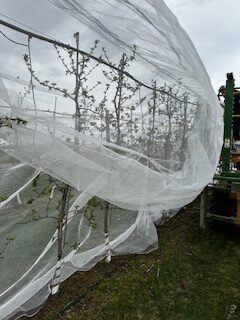
Nets will be implemented in orchards by early April (e.g., the average full bloom date in Michigan is May 9, cultivar and region dependent). King bloom will be monitored daily by counting open flowers on preselected branches in replicates of all cultivars. Net enclosure for a specific treatment will commence when the target bloom percentage is achieved. Nets will remain enclosed until harvest. All other horticultural management practices will be applied by our commercial collaborators according to commercial standards, with the exception of thinning agents which will be withheld from netted trees.
Measurements:
Vegetative growth measures will be conducted on a subset of trees from each replicate to include trunk diameter (converted to trunk cross-sectional area in order to derive individual tree crop load and yield efficiency), canopy spread (height and width), and annual extension shoot growth. Reproductive measures include bloom ratings, fruit set (at June drop) and total percent fruit drop prior to harvest, individual tree yield and fruit number, and fruit quality attributes; individual fruit weight, shape, surface color (optical sorting line), fruit firmness (penetrometer), starch (starch pattern index), total soluble solids (refractometer), titratable acidity (titration), and seed content. Fruit quality will be measured at harvest and after a three-month commercial postharvest storage period in regular air. The following spring will assess return bloom.
Pest Monitoring: Brown Marmorated Stink Bug (BMSB), Plum Curculio (PC), and Codling Moth
Method of investigation: Use of traps and fruit assessments to evaluate the net effects on pest populations.
Procedure:
Traps: Traps will be implemented with species-specific lures along wooded edges of orchard blocks to assess farm level pest populations. Passive trapping (sticky traps without lures) will also be used to assess relative abundance/activity given that they do not artificially increase pest abundance; this is especially true of BMSB. Passive traps will provide additional information regarding other pest species and presence of beneficial insects. Monitoring/inspecting traps will be performed at bi-weekly intervals to identify species.
Fruit assessments: A sample collection of 25 fruit per replicate for all treatments and all three sites will be analyzed around 35-40 days after full bloom (~preceding June drop) and again at pre-harvest. Fruit will be transferred to the lab and assessed for the presence of pests based on the distinctive damage caused by each.
Chemical use and economic data:
Detailed records of chemical applications, tractor use, and profitability (based on yield, fruit size and surface color using commercial returns per quality class) of netted and non-netted trees will be calculated and projected on a per-acre basis to estimate the environmental impact and cost of each system.
Final Project Report: Efficacy of Over-the-Row Anti-Hail, Insect- Exclusion Nets in Michigan Apple Orchards
Locations: Almar Orchards (Flushing, MI), Schwallier's Country Basket (Sparta, MI),
MSU Clarksville Research Center
- Horticultural Findings
Experimental Overview: Three high-value apple cultivars, Liberty’, Honeycrisp’, and ‘Gala’ were evaluated across three sites [two commercial orchards (one organic and one conventional) and one University research center] using insect-exclusion anti-hail netting systems installed at pre-selected, target bloom percentages (30% and 60% of open King Bloom) and compared to a non-netted control. The impact of netting was assessed on fruit set, yield, vegetative growth, leaf physiology, fruit quality, and hail injury.
Crop Load Regulation: Fruit Set and Yield Response (2024–2025)
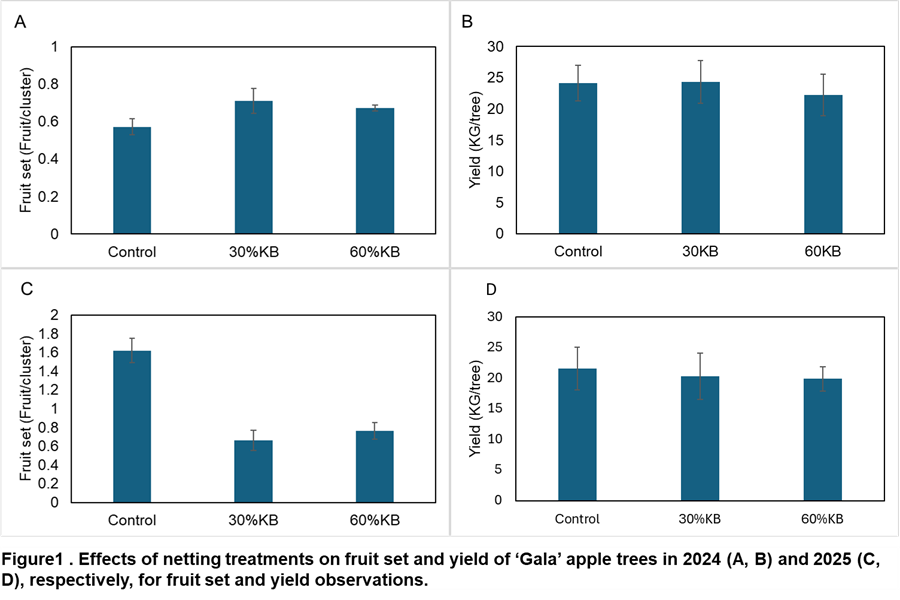
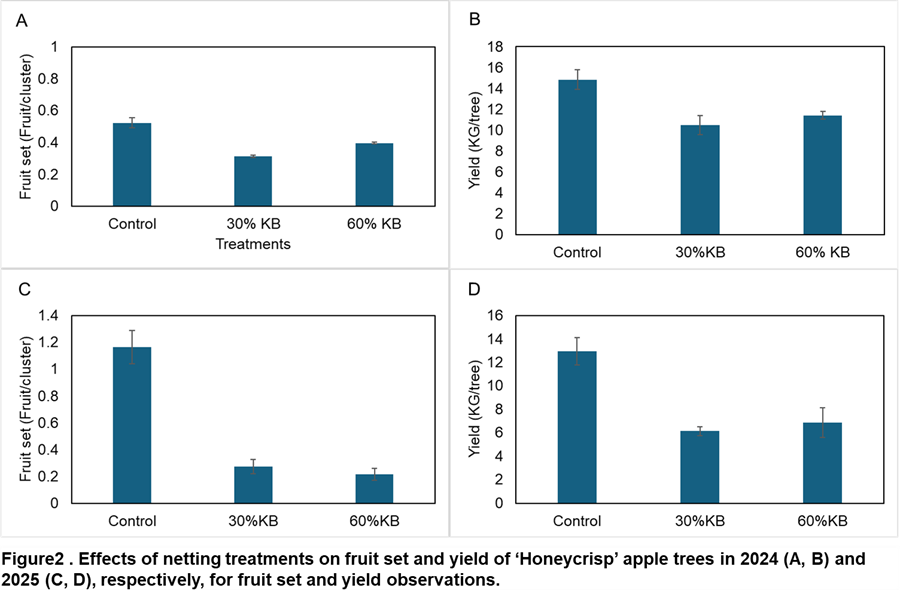
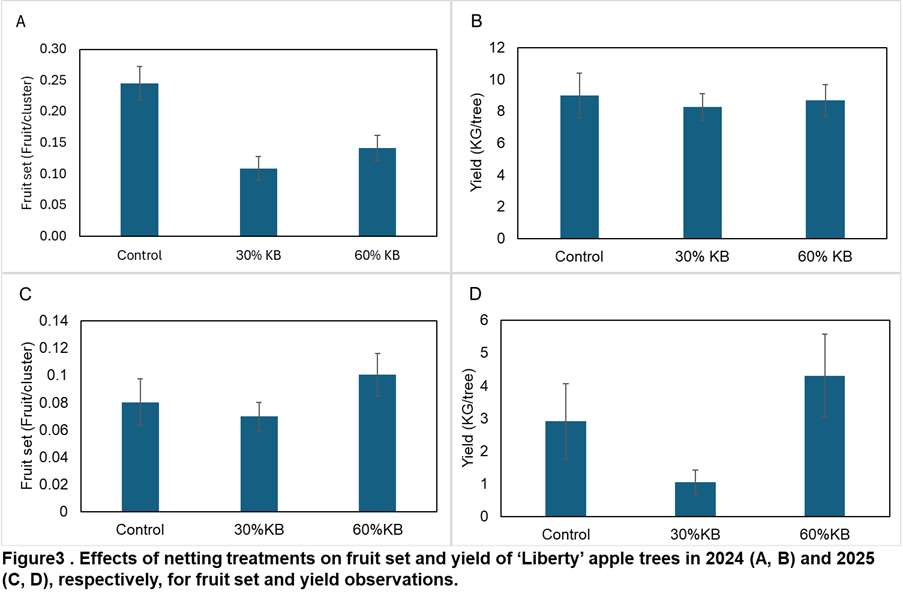
Fruit set and yield responses to over-the-row netting varied by cultivar and season but consistently demonstrated the ability of netting to moderate crop load without causing severe yield penalties (Figures 1–3).
Gala
Across both years, fruit set of netted trees (applied at 30% and 60% of open King Bloom) remained stable at approximately 0.6 fruit per cluster, irrespective of the timing of canopy enclosure. In contrast, the control (non-netted, chemically thinned with 10 ppm NAA and 1 quart of carbaryl at 12 mm fruitlet diameter) trees averaged approximately 1.2 fruit per cluster and 1.6 fruit per cluster in 2024 and 2025, respectively.
Despite this reduction in fruit set under netting, yield was comparable between treatments in both seasons. In 2024, netted trees produced yields similar to the chemically thinned control. In 2025, yield under netting remained within commercial range despite the higher fruit set observed in the non-netted, chemically thinned control. These findings indicate that netting stabilized crop load across years and prevented excessive fruit set while maintaining productivity (Figure 1). These results support our previous findings from small-scale, preliminary netting experiments on Gala that early net timings can eliminate the need for thinning.
Honeycrisp
Honeycrisp exhibited a strong and consistent fruit set response to netting. Netted trees averaged approximately 0.4 fruit per cluster in both 2024 and 2025, with very little differences between net enclosure timings, despite 1 to 3 days occurring between the 30% and 60% timings in 2024 and 2025, respectively. In comparison, the control (non-netted, chemically thinned) trees in 2024 averaged approximately 0.6 fruit per cluster, while the control (non-netted, non-chemically thinned) trees in 2025 averaged approximately 1.2 fruit per cluster.
In 2024, netted trees produced approximately 2 kg less yield per tree compared to the chemically thinned control. In 2025, netted trees yielded approximately 6 kg less than the non-netted, non-chemically thinned control. This difference is a reflection of not having thinned the control trees; however, netted tree yields were below commercial levels even though they contributed to improved crop balance and potential return bloom benefits (Figure 2). Based on these results, we would suggest that netting of ‘Honeycrisp’ should be applied later in the bloom period when open king bloom reaches ~80% and possibly 100% (but before side blooms have sufficiently opened).
Liberty
In 2024, netted trees exhibited reduced fruit set relative to the control (non-netted, chemically thinned) treatment, yet yield remained similar among treatments, demonstrating effective crop load regulation without a yield penalty.
In 2025, treatment effects were limited due to a significant frost event in early May at the Flushing site. Consequently, low fruit set and yield was observed irrespective of treatments (Figure 3).
Fruit Quality Attributes
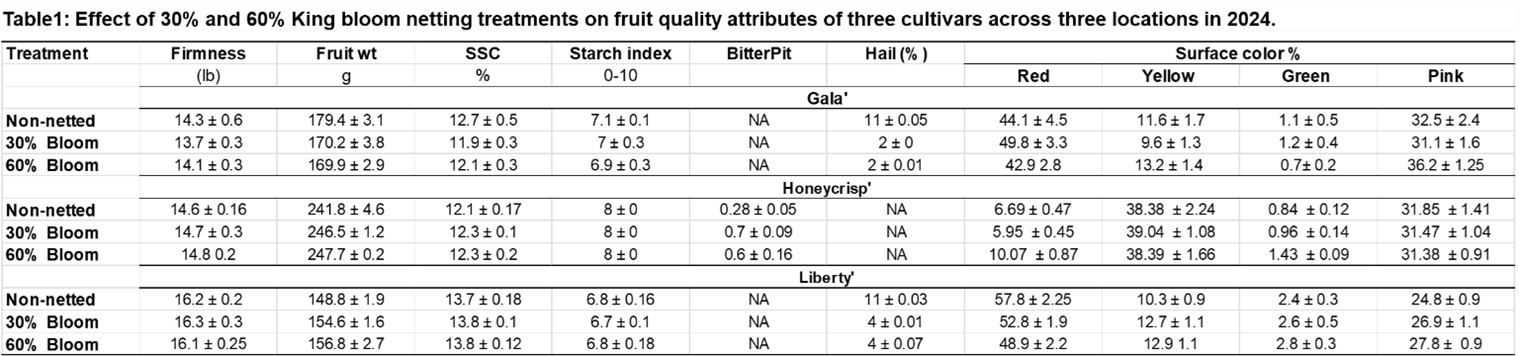
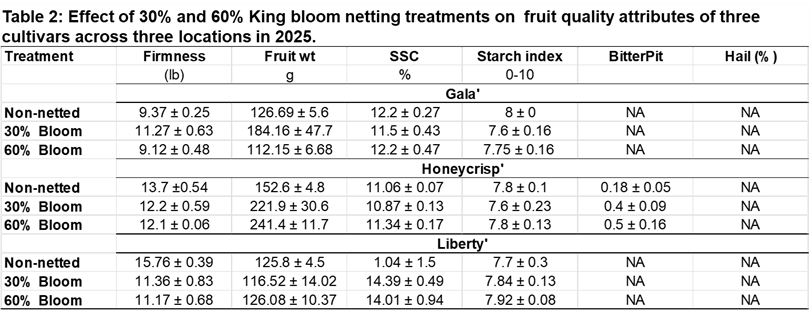
Across cultivars and years, key postharvest fruit quality parameters—including fruit firmness, fruit weight, surface coloration, soluble solids concentration (°Brix), and starch pattern index—were consistently unaffected by netting treatments (Tables 1 and 2).
In 2024 and 2025, no statistically significant reductions in fruit firmness, soluble solids, or maturity indices were observed in netted trees compared to the respective control treatments. Control trees of ‘Gala’ and ‘Liberty’ were chemically thinned in both years, while ‘Honeycrisp’ control trees were chemically thinned in 2024 but not in 2025. Despite these differences in thinning practices, fruit quality parameters remained comparable between netted and control treatments across cultivars and seasons. Fruit weight and surface coloration similarly remained within commercial standards across all treatments when nets removed two to three weeks prior harvesting.
Importantly, netting did not negatively impact marketability. Fruit from netted trees met industry quality benchmarks at harvest and after storage evaluations, confirming that bloom-stage enclosure and subsequent canopy microclimate modification did not compromise postharvest performance.
These findings indicate that netting can regulate crop load and reduce chemical inputs without degrading fruit quality, an essential consideration for commercial adoption.
Hail Protection
Natural hail events at two sites in 2024 (Almar and Clarksville) provided a real-world assessment of hail protection: Netted rows sustained no damage, preserving 100% of marketable yield while non-netted rows exhibited approximately 10% yield loss due to hail-induced blemishes.
Vegetative Growth
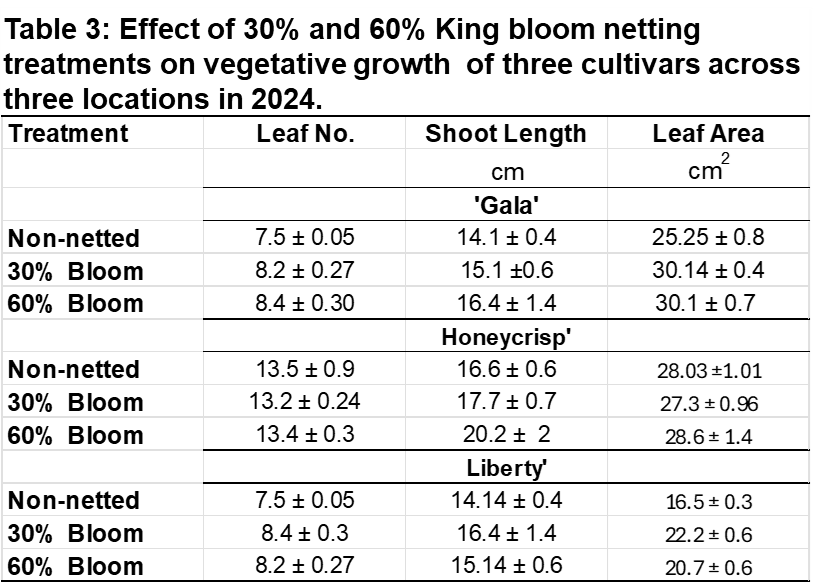
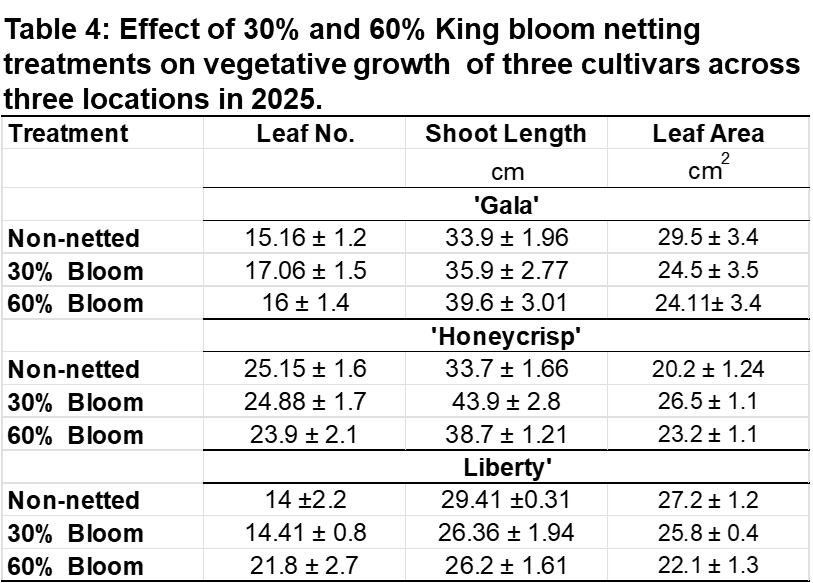
Vegetative responses to netting varied by cultivar and year (Tables 3 and 4). After harvest, six shoots were sampled from each of five trees per replicate across three canopy heights. Collected shoots were measured for shoot length, total leaf area, and leaf number.
Leaf Area: In 2024, total leaf area was significantly increased in netted trees across cultivars, suggesting that nets moderated the canopy microclimate and promoted greater vegetative growth. In contrast, during 2025, no consistent differences in total leaf area were observed between netted and non-netted treatments in most cultivars. This reduced vegetative response in 2025 was likely influenced by increased aphid pressure under nets for Gala and Libertys. Notably, Honeycrisp netted trees were treated for aphids, and increased leaf area under nets in Honeycrisp was consistent across both years, indicating that when pest pressure was managed, vegetative enhancement under netting was sustained. Increasing leaf area may be desirable for increasing total photosynthetic potential under nets. This is important since netting had a negative effect on individual leaf photosynthesis. One way to limit this would be to increase total leaf area (within reason).
Shoot Growth: Netted ‘Honeycrisp’ trees exhibited significantly greater shoot length compared to controls, consistent with enhanced vegetative vigor under moderated microclimatic conditions. In ‘Liberty’ and ‘Gala’, shoot elongation under nets showed occasional increases; however, these differences were not consistently statistically significant between years.
2025 Return Bloom
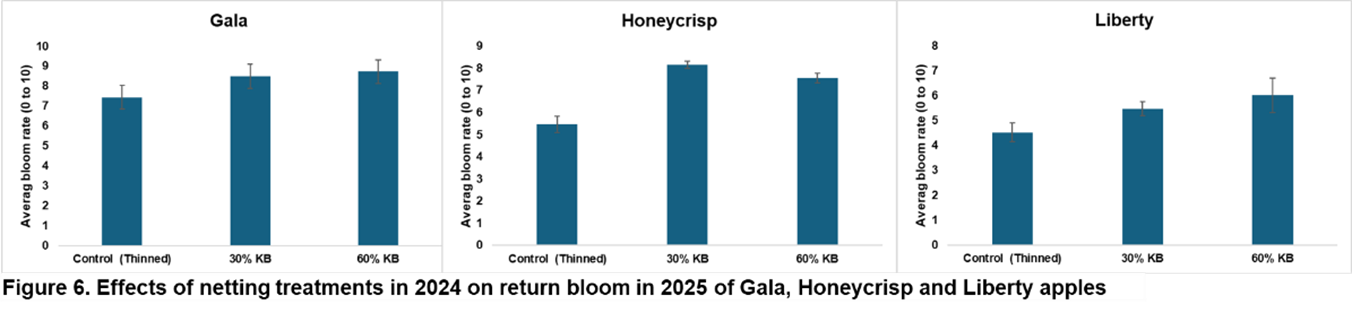
Netting had a significant effect on return bloom of Liberty and Honeycrisp but not Gala (Figure 6). The latter cultivar is annual bearing, thus improvements in return bloom are not necessary; however, Liberty and Honeycrisp are both highly prone to biennial bearing. Because netting reduced the number of pollinated and fertilized flowers, nets produce similar results as bloom thinning on increasing return bloom.
Canopy Microclimate and Physiological Responses (2025)
Light Distribution and Spectral Quality
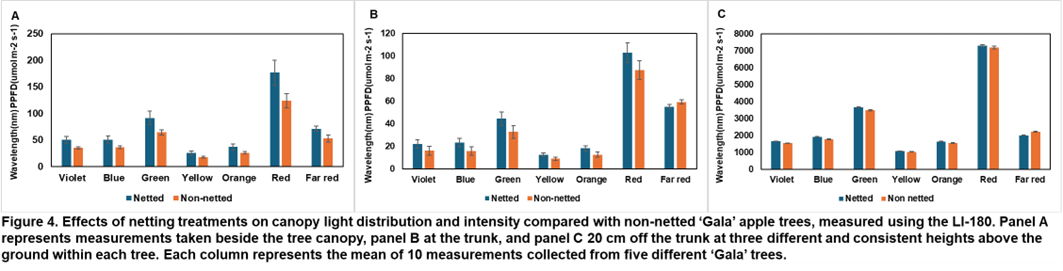
Canopy light intensity and spectral distribution were quantified in 2025 using an LI-180 Spectrometer (LI-COR Biosciences, Lincoln, NE, USA) to characterize how over-the-row netting modifies the orchard radiation environment. Measurements were collected at three canopy positions: (A) on the edge of the tree canopy, (B) at the trunk, and (C) at three vertical heights within the canopy. Each bar represents the mean of replicated measurements collected from multiple trees per treatment (Figure 4).
Across all measurement positions, netted trees exhibited reduced total irradiance compared to the control (non-netted) trees. The attenuation was most pronounced in the red and far-red spectral regions, particularly at the canopy periphery and trunk positions (Figure 4). Within the interior canopy, light intensity remained moderated but sufficient to sustain normal physiological activity.
The observed shift in spectral composition—especially reductions in red and far-red wavelengths—suggests altered phytochrome-mediated signaling and modified canopy light penetration under nets. These changes likely contributed to the moderated fruit set observed in 2024–2025 and the vegetative growth responses documented in Tables 1 and 2. Importantly, despite reductions in peak radiation during the growing season, fruit quality parameters—including firmness, soluble solids, coloration, and maturity indices—were maintained, indicating that light attenuation under netting did not negatively impact commercial fruit development. It is important to note that all nets were removed approximately two weeks prior to harvest, allowing full light exposure during the final maturation period, which may have contributed to the maintenance of fruit coloration and overall quality.
Leaf Gas Exchange Responses
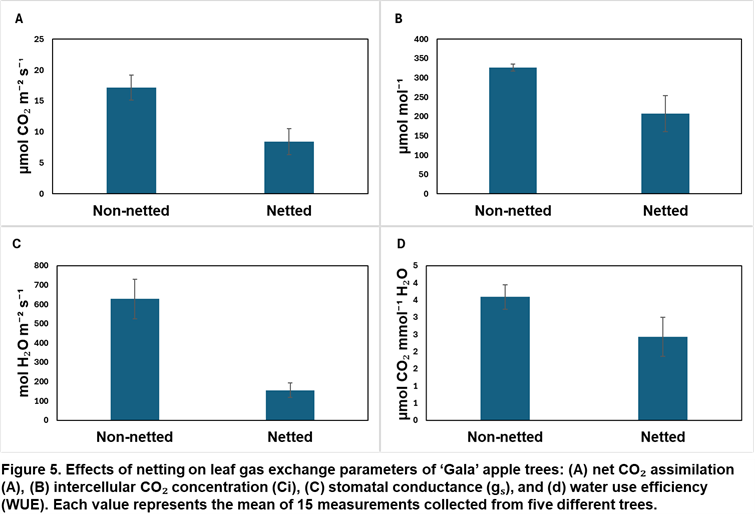
Leaf-level physiological responses were assessed in 2025 using a CIRAS-3 Portable Photosynthesis System (PP Systems, Amesbury, MA, USA) equipped with a broad-leaf cuvette. Measurements included net CO₂ assimilation (A), stomatal conductance (gs), transpiration (E), intercellular CO₂ concentration (Ci), and intrinsic water use efficiency (WUE) (Figure 5).
Relative to the control (non-netted) trees, netted trees exhibited:
- Significantly reduced photosynthesis
- Significantly lower stomatal conductance (gs)
- Significantly lower intercellular CO₂ concentrations (Ci)
- Lower water use efficiency (WUE)
The reduction in stomatal conductance and transpiration under netting is consistent with a moderated canopy microclimate characterized by reduced radiation load and buffered environmental stress. Although carbon assimilation was highly reduced under nets, this did not translate into yield penalties via reduced fruit growth, though in some cases yield was reduced by nets compared to controls. Single leaf gas exchange penalties from netting could have been slightly altered by having greater canopy leaf area.
Collectively, these gas exchange measurements indicate that netting influences canopy physiology through both light attenuation and microclimate buffering. The physiological moderation observed under nets provides mechanistic support for the reduced fruit set, improved crop load regulation, and enhanced return bloom documented in this study.
- Integrated Environmental and Economic Impacts of Reduced Spray Applications
Application equipment and operations
All orchard spray applications were made using a tractor-driven Rears 500-gallon air blast sprayer.
Two-year outcomes (per acre)
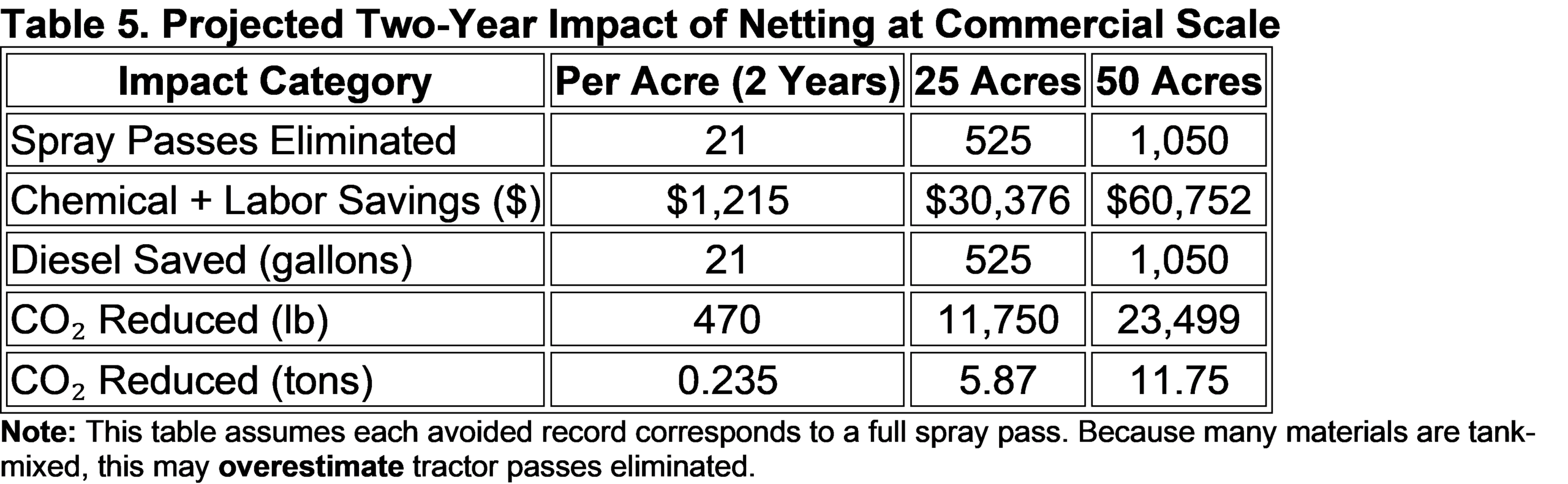
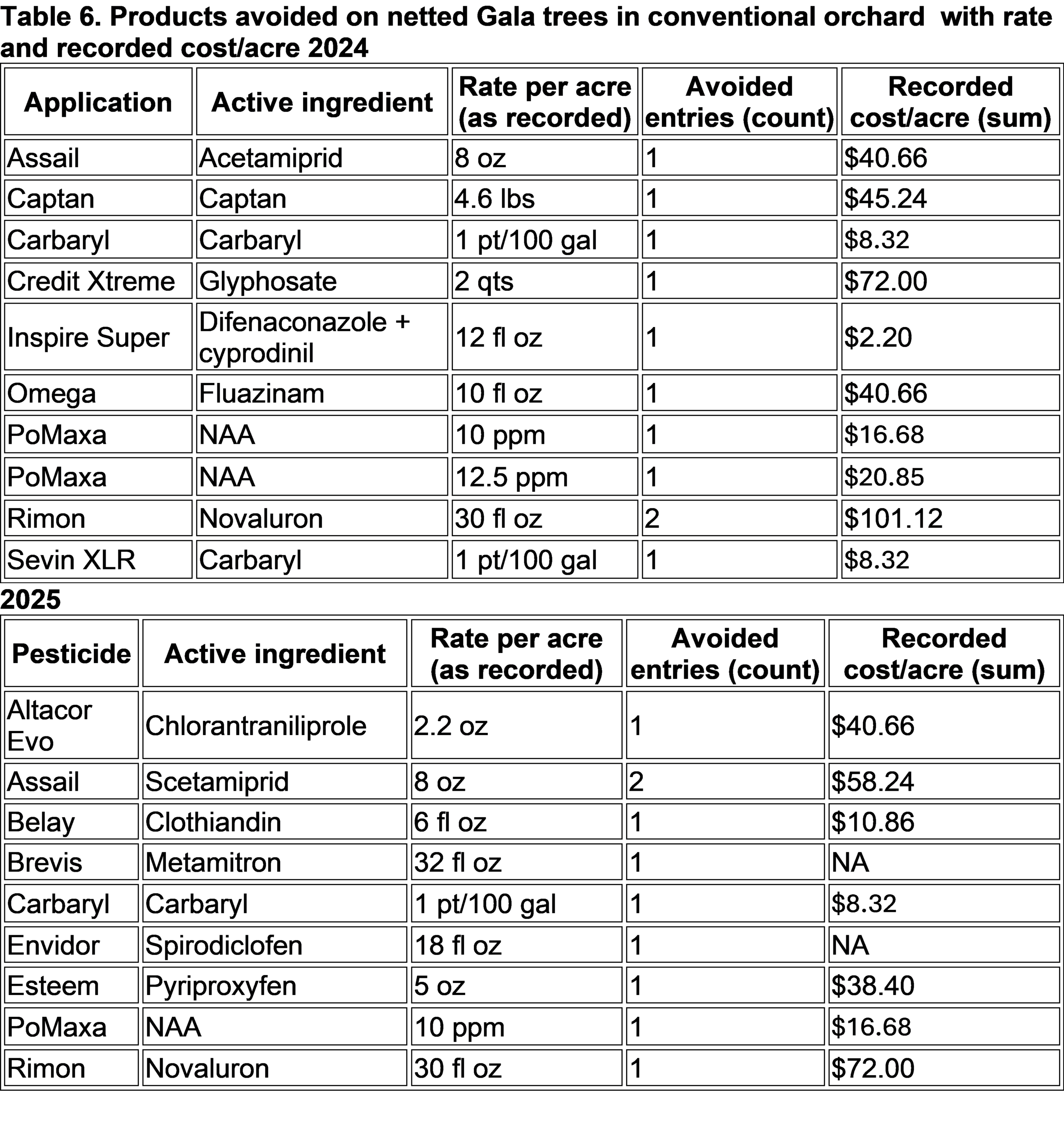
From 2024 and 2025, spray records in Michigan State University: Clarksville Research Center (conventional orchard) show multiple pesticide and thinning-related products that were not applied on “Gala” netted trees. These avoided inputs produced measurable economic and environmental benefits (Tables 5&6):
- Direct chemical cost savings (recorded):
- 2024: $301.88 per acre
- 2025: $220.16 per acre
- Two-year total: $522.04 per acre
- Labor savings: using an estimated $33 per acre per spray (mixing/loading/operation/cleanup).
- Important note (tank mixes): many insecticides were tank-mixed with other products. Therefore, “avoided products” do not always equal “fully avoided spray passes.”
- As a transparent way to report this, we present labor/fuel/emissions as a range:
- Conservative estimate: based on dates where no products were applied to netted trees (fully eliminated spray events): 6 spray events total across both years → $198/acre labor saved.
- Upper-bound estimate: if each avoided entry represented a separate pass (not always true with tank mixes): 21 → $693/acre labor saved.
- Fuel and CO₂ reduction: assuming ~1 gallon diesel/acre per spray pass and EPA factor 22.38 lb CO₂ per gallon diesel (U.S. EPA, Emission Factors for Greenhouse Gas Inventories).
- Conservative: 6-gal diesel saved → 134 lb CO₂/acre avoided
- Upper-bound: 21-gal diesel saved → 470 lb CO₂/acre avoided
- Entomological Findings
Monitoring Protocol
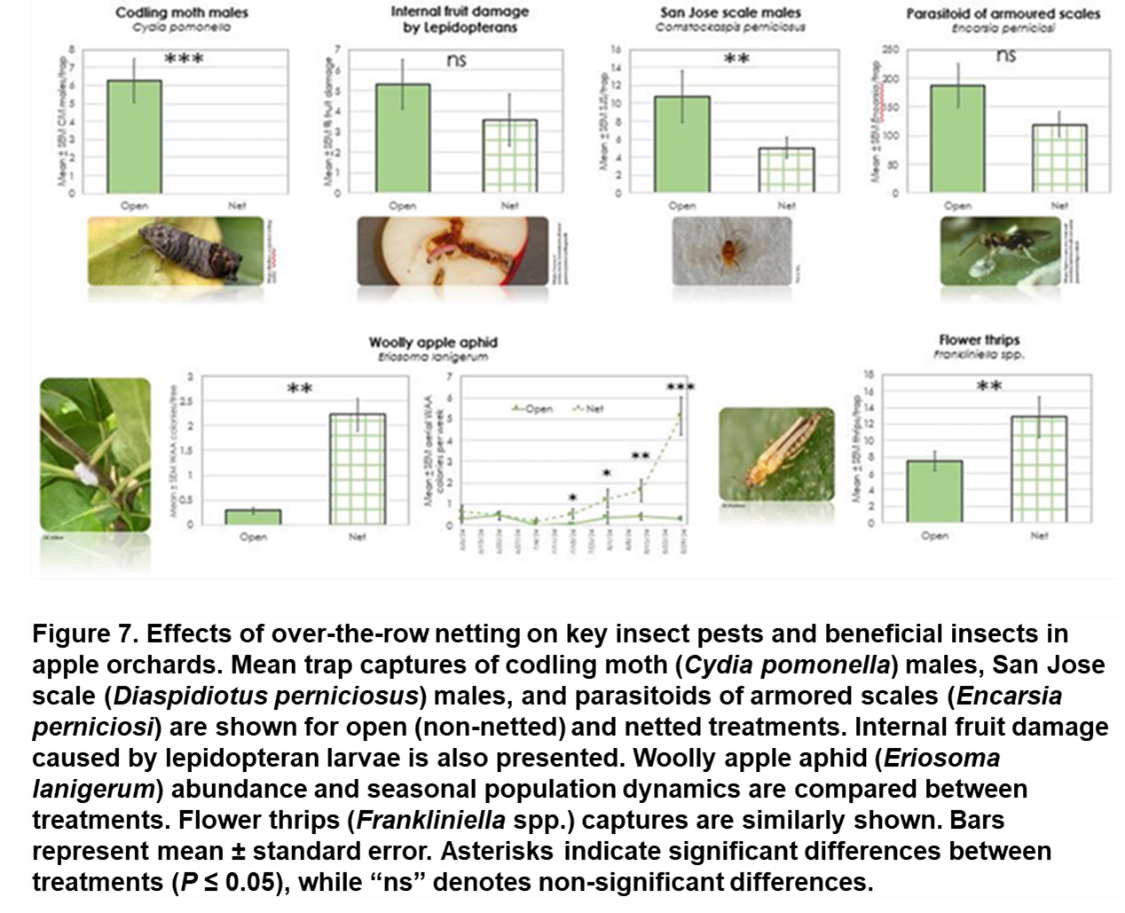
Bi-weekly trap assessments were performed using: 1) traps baited with species-specific lures for codling moth (CM), San Jose scale (SJS) and its parasitoid, Encarsia pernisiosi; 2) passive (sticky) traps for other natural enemies and thrips; 3) aerial colony counts of woolly apple aphid (WAA); and 4) pre-harvest fruit inspections for internal lepidopteran feeding, surface damage by apple maggot and plum curculio, and fruit deformity due to thrips feeding. In 2025, we added rosy apple aphid deformities as a category given the abundance of rosy apple aphid colonies found in the 2025 growing season.
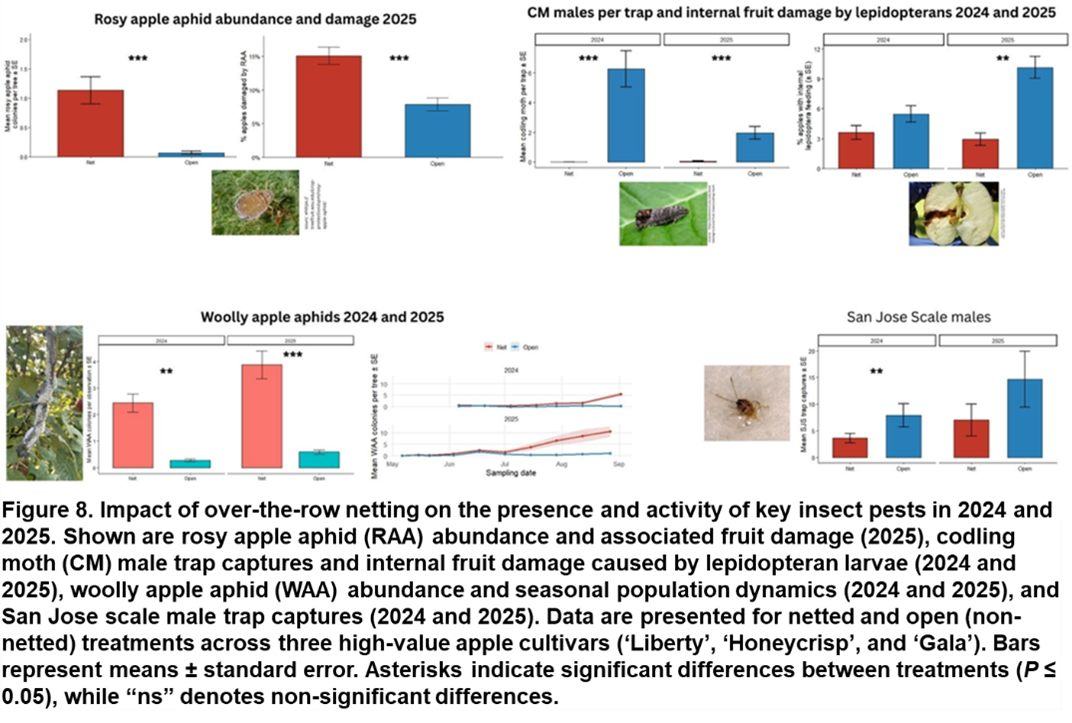
Codling Moth (CM): Exclusion-netting was highly effective at excluding CM males, with trap counts near-zero inside netted blocks. In 2025 we found 3 male moths under exclusion-netting traps. It is likely given low abundance of codling moth under nets that the internal lepidopteran feeding may be from other moths.
San Jose Scale (SJS): Fewer male SJS were captured in traps in netted trees and no SJS scale was detected on fruit from any netted treatments in 2024. In 2025, we had minor San Jose scale damage ~2%, but it did not show any significant difference between nets and open. In addition, fewer of its natural enemy, the parasitoid Encarsia perniciosi were caught under the nets suggesting the nets may inhibit natural pest suppression.
Woolly Apple Aphid (WAA): Incidence of aerial WAA colonies was significantly higher under nets. Woolly apple aphids are not direct fruit pests as they feed on woody tissue. Over time, high populations can impact future yields.
Rosy Apple Aphid (RAA): Incidence of RAA colonies was significantly higher under nets. Rosy apple aphids are both a direct and indirect pest on apples. They can cause fruit deformities in addition to causing branch die off. At one site, 40% of apples assessed under nets had rosy apple aphid damage.
Flower Thrips on passive traps: Although more flower thrips were caught on traps under the nets than in the unnetted plots, no cosmetic damage to fruit was observed in 2024 or 2025. Other natural enemies (e.g., predators and other parasitoids) were rarely caught on passive traps under the nets.
Plum Curculio and Apple Maggot: Pest pressure was extremely low across all sites for these species. Pre-harvest inspections of 200 fruits per plot revealed negligible evidence of stings (plum curculio) or larval feeding (apple maggot).
- Environmental significance
Netting provided two notable environmental benefits:
- Reduced chemical inputs, especially insecticides and some thinning-related products, decreasing pesticide loading and potential non-target exposure.
- Reduced tractor traffic, lowering diesel consumption and associated greenhouse gas emissions, while also reducing equipment wear and field traffic.
Discussion
This two-year, multi-site evaluation demonstrates that over-the-row anti-hail, insect-exclusion netting functions as an integrated crop regulation, risk mitigation, and environmental stewardship tool in Midwestern apple production systems. The results consistently show that bloom-stage net enclosure can moderate fruit set, reduce reliance on chemical thinning and insecticides, and maintain commercially viable yields in Gala, and to a lesser degree in Liberty, but not in Honeycrisp without compromising fruit quality. Beyond horticultural performance, netting also generated measurable environmental and economic benefits, reinforcing its value as a climate-smart orchard management strategy.
Crop load responses were cultivar-dependent but biologically consistent. ‘Honeycrisp’ exhibited the strongest and most consistent fruit set reduction under netting across both years, indicating high sensitivity to pollinator exclusion and modified bloom microclimate, but will need to be netted later to ensure commercial level yield. ‘Liberty’ responded similarly in 2024, while treatment effects in 2025 were partially confounded by an early May frost event. ‘Gala’ exhibited more moderate fruit set regulation but demonstrated greater year-to-year stability under netting compared to control trees, particularly when control trees were not chemically thinned. These responses suggest that netting can serve as a biologically based crop load regulator, with cultivar-specific deployment strategies optimizing outcomes.
Importantly, reductions in fruit set did not translate into yield penalties. Yield remained within commercially acceptable ranges across cultivars and seasons, demonstrating that netting can effectively balance crop load rather than simply suppress production. This compensatory response suggests improved assimilate allocation and crop uniformity, indicating that moderated fruit set may enhance orchard efficiency.
The 2025 light and physiological measurements provide mechanistic insight into these outcomes. Spectral measurements using the LI-180 spectrometer confirmed that netting reduced total irradiance and altered red and far-red light composition within the canopy. These spectral modifications likely influence phytochrome-mediated signaling and reproductive development during bloom, contributing to the observed fruit set regulation. Concurrently, gas exchange measurements revealed reduced stomatal conductance and transpiration under nets, consistent with a buffered microclimate. Although net CO₂ assimilation rates were markedly reduced, this did not negatively affect yield or fruit quality at the production levels observed, suggesting that netting promotes physiological balance rather than stress. Together, these findings indicate that microclimate modification under netting supports stable productivity while reducing reliance on chemical inputs.
Vegetative growth responses further support this interpretation. Increased total leaf area in 2024 and consistent shoot elongation in ‘Honeycrisp’ indicate that moderated radiation and temperature conditions under nets can enhance canopy development. However, the elevated aphid pressure observed in 2025 highlights an important management consideration: physical exclusion systems can alter pest and natural enemy dynamics. While rosy apple aphid populations and damage were significantly higher under nets, and woolly apple aphid populations increased in certain cultivars, these effects did not translate into immediate economic fruit injury during the study period. Nevertheless, prolonged woolly apple aphid infestations could impact fruiting wood health over time, underscoring the need for adaptive integrated pest management within netted systems.
The environmental and economic impacts of netting were substantial. Across two seasons, netted blocks eliminated multiple insecticide and thinning applications. Direct chemical savings exceeded $500 per acre over two years, with additional labor savings depending on tank-mix assumptions and spray pass reductions. Reduced tractor passes lowered diesel fuel consumption and associated greenhouse gas emissions, reinforcing the climate-smart value of the system. Because most avoided products were insecticides, pesticide loading and potential non-target exposure were meaningfully reduced, enhancing environmental stewardship. Although the installation of netting systems represents an upfront investment—estimated at approximately $3–5 per tree depending on orchard density—the expected lifespan of the netting (approximately 10 years) allows costs to be amortized over multiple seasons. When spread over this operational lifespan, the combined benefits of reduced chemical inputs, labor savings, yield protection from hail, and improved crop stability strengthen the long-term return on investment for growers.
Complete protection from natural hail events at two sites further strengthens the economic resilience argument. Preventing approximately 10% yield loss in unprotected rows demonstrates that netting simultaneously addresses weather risk, pest management, and crop load regulation within a single integrated system. This multifunctional benefit significantly improves long-term risk management for growers in increasingly variable climatic conditions.
Finally, improved return bloom in ‘Liberty’ and ‘Honeycrisp’ suggests that moderated crop load under netting may reduce biennial bearing tendencies. This potential long-term stabilization effect could further enhance grower profitability, orchard consistency, and system sustainability beyond the two-year evaluation window but only if net coverage is delayed to later bloom stages to take advantage of the additional bloom.
Collectively, these findings position over-the-row netting as a multifunctional production tool that integrates crop regulation, pest exclusion, weather protection, economic savings, and environmental benefits within a single system. Continued refinement of cultivar-specific deployment timing and aphid management strategies will further optimize the agronomic and sustainability potential of this approach.
Recommendations for Growers and Future Implementation
Based on the two-year evaluation, the following recommendations are proposed:
- Bloom-Stage Deployment
- Install netting at 30% to 60% open King Bloom to effectively moderate fruit set while maintaining yield potential for Gala and eliminating the need for thinning.
- Adjust timing to more advanced bloom stages between 70% to 90% open King bloom for ‘Honeycrisp’ and ‘Liberty’.
- Aphid Monitoring and Targeted Management
- Implement early-season monitoring for rosy apple aphid and woolly apple aphid in netted blocks.
- Develop targeted aphid suppression strategies compatible with netted systems, including selective insecticides or biological control approaches.
- Monitor fruiting wood health in multi-year netted systems to prevent long-term structural damage.
- Integrated Pest Management Adjustments
- Recognize that physical exclusion may alter natural enemy dynamics.
- Adapt IPM programs under netting rather than eliminating monitoring altogether.
- Continue trap monitoring to detect unexpected pest shifts.
- Economic Planning
- Account for reduced insecticide and thinning costs when evaluating net return.
- Consider both direct chemical savings and indirect labor and fuel savings.
- Factor hail protection and crop stability into long-term economic calculations.
- Environmental Stewardship and Climate-Smart Adoption
- Use reduced spray frequency to document diesel savings and carbon reduction benefits.
- Highlight pesticide reduction in sustainability reporting and marketing.
- Explore scaling projections (25 to50-acre systems) to demonstrate commercial viability.
- Future Research Needs
- Long-term evaluation of aphid population dynamics under multi-year netting is necessary to determine how detrimental these populations can be in netted systems and to explore efforts to mitigate them (sprays in conventional systems and optimization of biological control strategies within netted systems.
- Economic modeling incorporating yield stability, hail protection, and reduced chemical inputs for both organic and conventional systems.
- Evaluation of additional cultivars and regional environments to characterize optimum timings to enclose trees.
Project Summary:
Our project aimed to evaluate the efficacy of over-the-row anti-hail, insect-exclusion nets in Michigan apple orchards, focusing on their impact on yield, fruit quality, vegetative growth, and pest management in three high-value cultivars: ‘Liberty’, ‘Honeycrisp’, and ‘Gala’. We installed nets at 30% and 60% bloom across three sites (two commercial orchards and one research station).
What We Did:
We assessed the impact of netting on fruit set, yield, fruit quality, vegetative growth, hail protection, and pest pressure. Entomological monitoring included key pests like codling moth, San Jose scale, and woolly apple aphid.
Results and Objectives Met:
Despite minor reductions in fruit set in ‘Liberty’ and ‘Honeycrisp’, yields across all cultivars were statistically similar between netted and non-netted trees, meeting our productivity objective. Fruit quality met market standards, and vegetative growth showed a favorable response under nets. Netting fully protected marketable yield from hail at two sites, avoiding a ~10% loss in unnetted rows. Pest exclusion was highly effective against codling moth and San Jose scale, eliminating the need for insecticide sprays at two locations. Organic growers reported labor savings (~2 hours/week) by eliminating trap monitoring and reactive sprays. Additionally, netting improved return bloom in ‘Liberty’ and ‘Honeycrisp’, suggesting potential for mitigating biennial bearing.
Adopted Change and Impact:
Netted systems were maintained at the cooperating organic site, Almar Orchards, which now avoids insecticide use on netted blocks and saves ~80 hours of labor annually. The 10% increase in marketable yield due to hail protection and reduced pest damage translates to a projected additional income of $1,200–$1,500 per acre, based on current market prices. These figures support exclusion netting as a viable, climate-resilient strategy with both short- and long-term agronomic and economic benefits.
Education
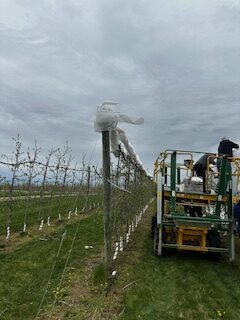
The core educational approach of this project centers on hands-on, collaborative learning with growers, who actively participated in the design and on-farm implementation of the netting systems. By working side by side with researchers to construct and manage the nets, growers gained direct experience with the technology, including timing, deployment, and in-season adjustments. This participatory method fostered practical understanding, encouraged peer-to-peer knowledge exchange, and empowered growers to evaluate the system's fit within their unique production models—ultimately enhancing adoption of sustainable practices through experiential education.
Project Activities
Educational & Outreach Activities
Mokhles Elsysy.
Great Lakes Expo
Elsysy, M.*, Aspinall, R., & Einhorn, T. A Sustainable, Non-Chemical Thinning Method for US Midwestern Apple Producers: Novel Use of Anti-Hail, Insect-Exclusion Netting.
Participation summary:
Journal article:
Elsysy, M., Ebrahimi, A., & Einhorn, T. (2025). Wind Pollination of Apple Flowers Under Insect Exclusion Nets Questions the Insect-Dependent Pollination Model of Modern Apple Plantations. Plants, 14(8), 1196. https://doi.org/10.3390/plants14081196
On-farm demonstrations:
Mokhles Elsysy. A Sustainable, Non-Chemical Thinning Method for US Midwestern Apple Producers: Novel Use of Anti-Hail, Insect-Exclusion Netting. Organic Apple Orchard Tour at Third Leaf Farms - TOPP Partner event.
Organic Apple Orchard Tour at Third Leaf Farms - TOPP Partner event
October 9, 2025, 4:00PM - 6:00PM 4 to 6pm ET
https://www.canr.msu.edu/events/organic-apple-orchard-tour-at-third-leaf-farms-topp-partner-event
Wilson, Julianna (Feb 2026) Insect update: from ambrosia beetles and spotted wing drosophila, to woolly apple aphids and codling moth—we have it covered! Southwest Horticultural Days, Benton Harbor, MI (35 attendees)
Wilson, Julianna (Jan 2026) Insect update: from ambrosia beetles and spotted wing drosophila, to woolly apple aphids and codling moth—we have it covered! Northwest Orchard & Vineyard Show, Acme, MI (100 attendees)
Wilson, J., J. Huang, H. Leach, A. DeVisser, and M. Brubaker-Salcedo. (Jan 2025) Investigations into Ambrosia Beetles and Woolly Apple Aphids. Northwest Orchard & Vineyard Show, Acme, MI (75 attendees)
Published press articles, newsletters:
GOOD FRUIT GROWER
Controlling crop load with nothing but nets?
How nets can manage organic crop loads.
https://goodfruit.com/controlling-crop-load-with-nothing-but-nets/
Tours:
Organic Apple Orchard Tour at Third Leaf Farms - TOPP Partner event
October 9, 2025, 4:00PM - 6:00PM 4 to 6pm ET
Webinars, talks and presentations
Great Lakes Fruit Workers Conference, Nov 17–19, 2025
Elsysy, M. (2025). Application of Whole-Tree Netting Systems Reduce Pollination and Fertilization, Eliminate Thinning, and Facilitate Crop Protection of Midwestern Apple Orchards.
International Symposium on Plant Bioregulators in Fruit Production, Chicago, Jun 2025.
Elsysy, M.A.* and Todd Einhorn. A Sustainable, Non-Chemical Thinning Method for US Midwestern Apple Producers: Novel Use of Anti-Hail, Insect-Exclusion Netting.
American Society for Horticultural Science 2025 Annual Conference
Elsysy, M., & Einhorn, T. (2025, July). Rethinking Pollination and Crop Load Management: Multi-Year Evaluation of Insect-Exclusion Netting in Apple Orchards. In HORTSCIENCE (Vol. 60, No. 7). 113 S WEST ST, STE 200, ALEXANDRIA, VA 22314-2851 USA: AMER SOC HORTICULTURAL SCIENCE.
Workshop / field days
Mokhles Elsysy. A Sustainable, Non-Chemical Thinning Method for US Midwestern Apple Producers: Novel Use of Anti-Hail, Insect-Exclusion Netting. Organic Apple Orchard Tour at Third Leaf Farms - TOPP Partner event.
Organic Apple Orchard Tour at Third Leaf Farms - TOPP Partner event
October 9, 2025, 4:00PM - 6:00PM 4 to 6pm ET
https://www.canr.msu.edu/events/organic-apple-orchard-tour-at-third-leaf-farms-topp-partner-event
Wilson, Julianna (Dec 2025) Trends and Management Updates on Key Apple Pests. Great Lakes EXPO, Grand Rapids, MI (234 attendees)
Wilson, J., J. Huang, H. Leach, A. DeVisser, and M. Brubaker-Salcedo. (Dec 2024) What’s Bugging Apples? All the tiny things! Great Lakes EXPO Apple II Session, Grand Rapids, MI (375 attendees)
Brubaker, Martin, Heather Leach and Julianna Wilson (Dec 2025) Woolly Apple Aphid: a pest that keeps us guessing. [Poster] Great Lakes EXPO, Grand Rapids, MI
Brubaker-Salcedo, M., H. Leach, A. DeVisser, and J. Wilson. (Dec 2024) What we’ve learned about woolly apple aphids in Michigan in 2024. Great Lakes EXPO Poster Session, Grand Rapids, MI
Other educational activities
Growing Fruit. Michigan Garden Clubs Gardening School. September 2025
Mokhles Elsysy.
Great Lakes Expo
Elsysy, M.*, Aspinall, R., & Einhorn, T. A Sustainable, Non-Chemical Thinning Method for US Midwestern Apple Producers: Novel Use of Anti-Hail, Insect-Exclusion Netting.
Learning Outcomes
- How whole-tree anti-hail, insect-exclusion netting systems influence pollination and fertilization in apple orchards.
- Bloom-stage timing strategies for regulating crop load using physical exclusion methods.
- Integration of netting systems as a non-chemical alternative to conventional thinning practices.
- Economic and practical considerations for installing and managing over-the-row net systems.
- Multi-functional benefits of netting systems (insect exclusion, hail protection, reduced pesticide reliance).
- Impacts of netting on fruit size, quality, and overall orchard productivity.
- Climate-resilient orchard management approaches for Midwestern apple production.
- Organic production applications of physical crop regulation tools.
Project Outcomes
Adoption of whole-tree anti-hail, insect-exclusion netting systems during bloom to regulate pollination and crop load.
Reduction or elimination of chemical thinning applications following bloom-stage net deployment.
Integration of multi-functional netting systems for combined insect management, hail protection, and crop load control.
Trial implementation of net-based bloom exclusion on limited acreage as an alternative to conventional thinning strategies
Success Story 1
An organic apple grower in western Michigan implemented whole-tree exclusion netting during bloom on a portion of their orchard after participating in this project. The grower reported that fruit set was significantly moderated without the need for chemical thinners, while simultaneously reducing codling moth pressure and hail damage. The grower expressed increased confidence in reducing chemical inputs and plans to expand net use to additional acreage.
Success Story 2
A conventional apple grower in southwest Michigan collaborated in multi-site trials and observed that bloom-stage net deployment reduced crop load variability compared to previous seasons. The grower noted improved fruit size uniformity and reduced thinning costs. Following the project, the grower indicated plans to integrate net timing adjustments into long-term orchard management strategies.
This project demonstrated that whole-tree anti-hail, insect-exclusion netting systems can effectively regulate pollination and fertilization, reduce or eliminate chemical thinning, and provide integrated pest and hail protection benefits in Midwestern apple orchards. However, several important areas warrant further investigation:
Cultivar-Specific Responses
Future studies should evaluate how different apple cultivars respond to bloom exclusion in terms of fruit set, size distribution, return bloom, and biennial bearing risk.
Pollinator and Ecosystem Impacts
Investigating how temporary bloom exclusion affects pollinator activity patterns and broader orchard ecosystem dynamics would provide valuable sustainability insights.
Scalability and Infrastructure Adaptation
Research should examine structural adaptations, labor efficiency strategies, and mechanization options to improve practicality for large-scale commercial orchards.
Integration with Climate-Resilient Orchard Systems
Given increasing weather variability in the Great Lakes region, further study should evaluate how netting systems interact with microclimate modification, heat stress mitigation, and extreme weather events.