Final report for LNE22-447
Project Information
To compensate for the high annual losses of honey bee colonies, beekeepers purchase hundreds of thousands of queens and honey bee colonies (packages) from southern and western states annually. This annual mass importation dilutes the genetics of regionally-adapted lines of bees and results in colonies that either lack the resilient traits required or are maladapted for Northeastern climates. This cycle can be stopped or slowed by empowering beekeepers through education and training.
With this grant we improved honey bee husbandry by training beekeepers in colony assessment, queen rearing, and artificial insemination. We provided long-term learning opportunities, including regular Lunch-and-Learn sessions from July 2022 through August 2024, in-person workshops, one online course and written informational documents. A group of 225 beekeepers participated in queen rearing education, while a select sub-group of 19 participants received training and equipment (as needed; 13 participants) that continue to enable them to provide insemination services. Participation resulted in improved regional genetic traits over the long-term, increased survivorship of honey bee colonies, and a number of self-supported queen producers with enhanced skills for genetic selection, queen production and sales. There is also now one trained individual in each of the states covered by NESARE with the education and equipment needed to provide instrumental insemination of honey bee queens.
Queen rearing will be practiced by 65 beekeepers throughout the Northeast, resulting in the production of 100 queens per beekeeper annually (approximately 20,000 queens over 3 years). Thirteen beekeepers will practice artificial insemination of queens. By the end of the project, there will be 5-10 new queen producers in each state providing open-mated queens for sale, plus 1-2 artificial insemination service providers producing artificially-inseminated breeder queens. Queen production and insemination services will provide savings and increased profits to the beekeepers that learn the necessary skills.
Problem or Opportunity and Justification:
Honey bees are essential to the pollination of agricultural crops in the northeast and beekeeping is an increasing hobby industry. Over 40% of honey bee colonies die each winter in NE SARE states, as honey bees are susceptible to parasites and pathogens as well as multiple environmental influences which threaten the sustainability of apiculture. To compensate for such losses, beekeepers purchase hundreds of thousands of queens and honey bee colonies (packages) from southern and western states annually. This annual mass importation dilutes the genetics of regionally-adapted lines of bees and results in colonies that either lack the resilient traits required or are maladapted for Northeastern climates. This cycle can be stopped or slowed by empowering beekeepers through education and training.
A queen honey bee, the sole reproductive female, engages in a high degree of polyandry during natural mating, whereby she mates with dozens of males (drones). Establishing isolated breeding areas is impossible due to the high density of beekeepers in the region; thus controlled mating is only possible through instrumental insemination.
Solution and Approach:
The solution to improving regional genetic lines is to train and educate beekeepers on how to select for and introduce resilient traits through controlled breeding. With this grant we improved honey bee husbandry by training beekeepers in colony assessment, queen rearing, and artificial insemination. We provided long-term learning opportunities, including regular Lunch-and-Learn sessions from July 2022 through August 2024, in-person workshops, one online course and written informational documents. There are many management practices that are inherent to breeding and novel to most beekeepers, which we will cover in our in-person training workshops. A group of 225 beekeepers participated in queen rearing education, while a select sub-group of 19 participants received training and equipment (as needed; 13 participants) that continue to enable them to provide insemination services. Participation resulted in improved regional genetic traits over the long-term, increased survivorship of honey bee colonies, and a number of self-supported queen producers with enhanced skills for genetic selection, queen production and sales.
Cooperators
- (Educator)
Research
Education
Engagement:
We engaged Northeastern beekeepers via articles in newsletters issued by beekeeping associations in the region, posting information on social media sites, and via Cooperative Extension marketing. An application process was integral to choosing which individuals were invited to participate and was based on an applicant’s beekeeping experience and goals, with an eye on geographic location to ensure coverage throughout the Northeast. Thus, a cohort of beekeepers was invited to participate at the beginning of the project (June 2022) and was retained until the end of the active portion of the project (September 2024). Thereafter, as our cohort of beekeepers became established, we actively supported each other in our efforts to learn about and rear queens. In our bi-weekly Lunch-and-Learn sessions, participants were encouraged to share stories of problems and successes for discussion to enhance the learning of everyone involved. In addition, participants reported on their activities via questionnaire, indicating the numbers of queens produced and/or inseminated, and any successes or failures they have experienced. Members of the cohort were invited to the hands-on workshops. A few individuals were invited to participate in instrumental insemination workshops; participants were made to understand that their devotion to learning about and practicing queen rearing and cooperation throughout the project were important factors in choosing who to invite. Thus, they had incentive to remain engaged and active. In addition, we produced downloadable, printable fact sheets for reference and an online course called “Honey Bee Breeding Program Design.” These educational outputs provide long-term support, additional impact by educating beekeepers outside of the cohort, and are distributed by Penn State Extension. Robyn and Kate also attended Susan Cobey’s International Insemination and Cryopreservation Conference in July 2022 to disseminate information about this project and garner interest in a future larger-scale effort to impact honey bee genetics and queen production nationally.
Learning Goals:
- Through written educational materials, online classes and virtual Lunch-and-Learn group discussions, 100 participants will learn about and implement assessment and documentation protocols for evaluating and selecting colonies to breed from. ACHIEVED
- Through written educational materials, online classes, virtual Lunch-and-Learn group discussions, and hands-on workshops, 100 participants will learn about and implement the practices and skills necessary to rear and manage robust, vigorous northern queens. ACHIEVED
- Participants (100) will adopt practices that enable them to add or increase queen production and sales to their beekeeping operations. ACHIEVED
- Through written educational materials, online classes, virtual Lunch-and-Learn group discussions, and hands-on workshops, up to 16 select participants will receive training and necessary equipment to artificially inseminate honey bee queens. ACHIEVED
- Participants (100) will integrate what they have learned about stock evaluation, queen rearing practices, and artificial insemination to rear queens for sale in the Northeast region. ACHIEVED
- Beekeepers in the northeast (~40,000) will be aware of the benefits and availability of northern-bred queens. ACHIEVED
- By using the skills and network provided, 100 participants will experience lower colony losses, improved queen production, and increased profitability. ACHIEVED
- Up to 16 trained individuals will add insemination services to their business models. ONGOING
Topics covered include:
- Queen Rearing Basics
- Honey Bee Queen Biology
- How to make and maintain a cell builder colony
- Queen Cell Production via Grafting
- Data Collection for Colony Selection
- Selection of Colonies for Breeding
- Banking Virgin Queens
- Rearing, Marking, and Banking Drones
- Mating Nucs and Queen Castles
- A Queen Producer’s Year
- Introduction of Open-Mated Queens
- Introduction of Artificially Inseminated Queens
- Evaluation of Artificially Inseminated Queens
- How to Maintain Breeder Queens
- How to Collect, Store, and Ship Germplasm
- Insemination Equipment Basics
- Proper Maintenance and Cleaning of Insemination Equipment
- Single- versus multiple-drone insemination
- Economics of Queen Breeding
- How to Manage an Insemination Service Business
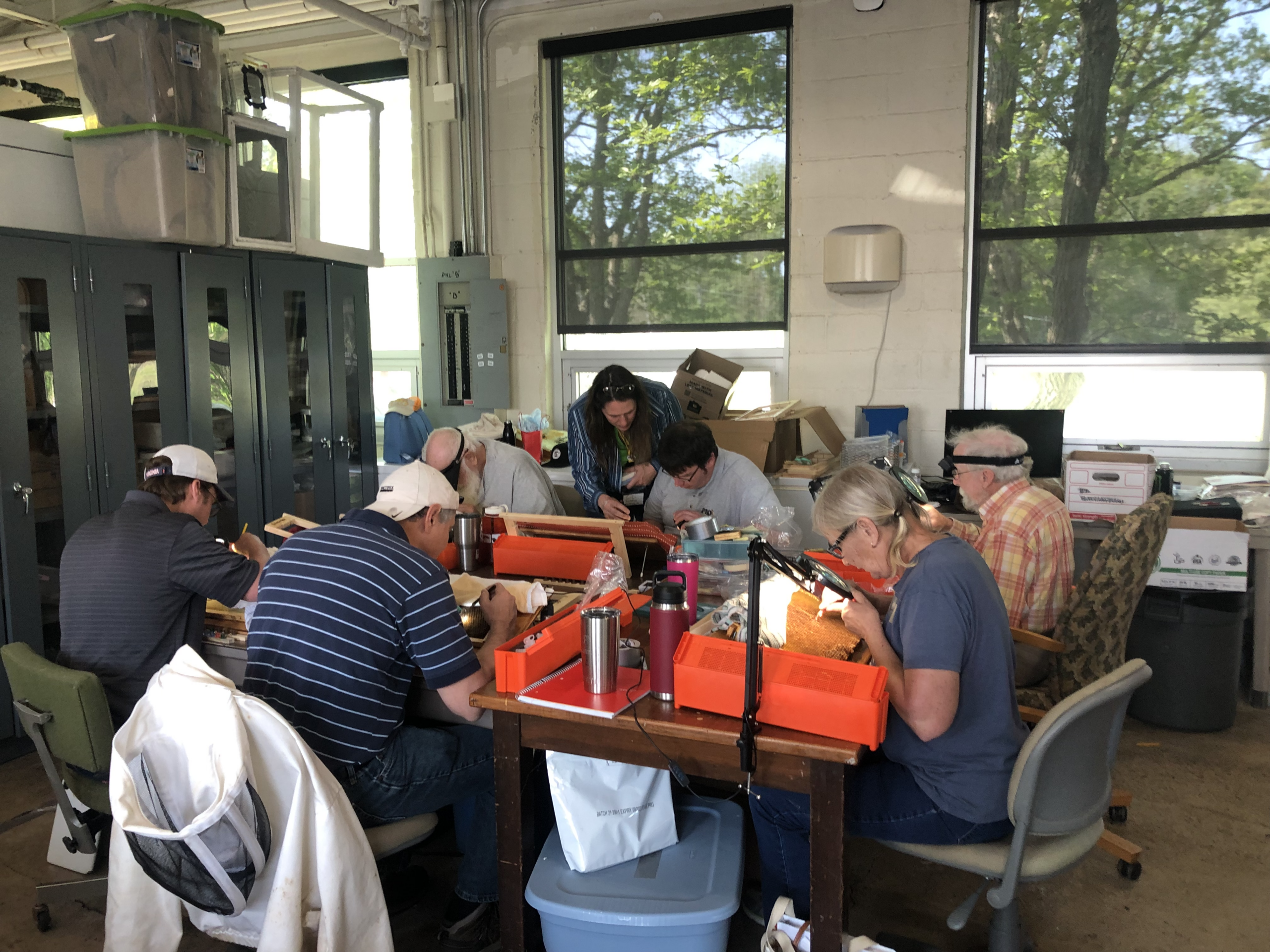
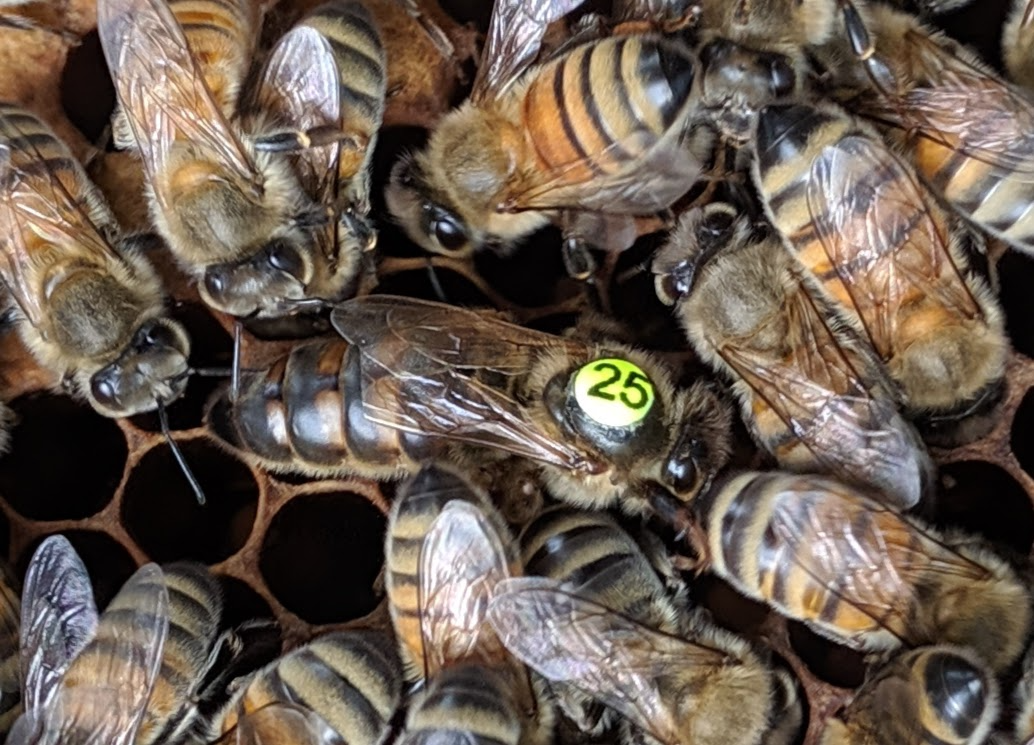
The pictures below show: (right) A picture from one of our workshops, (center) honeybees with a labelled queen, and (left) a participant from one of the project workshops.
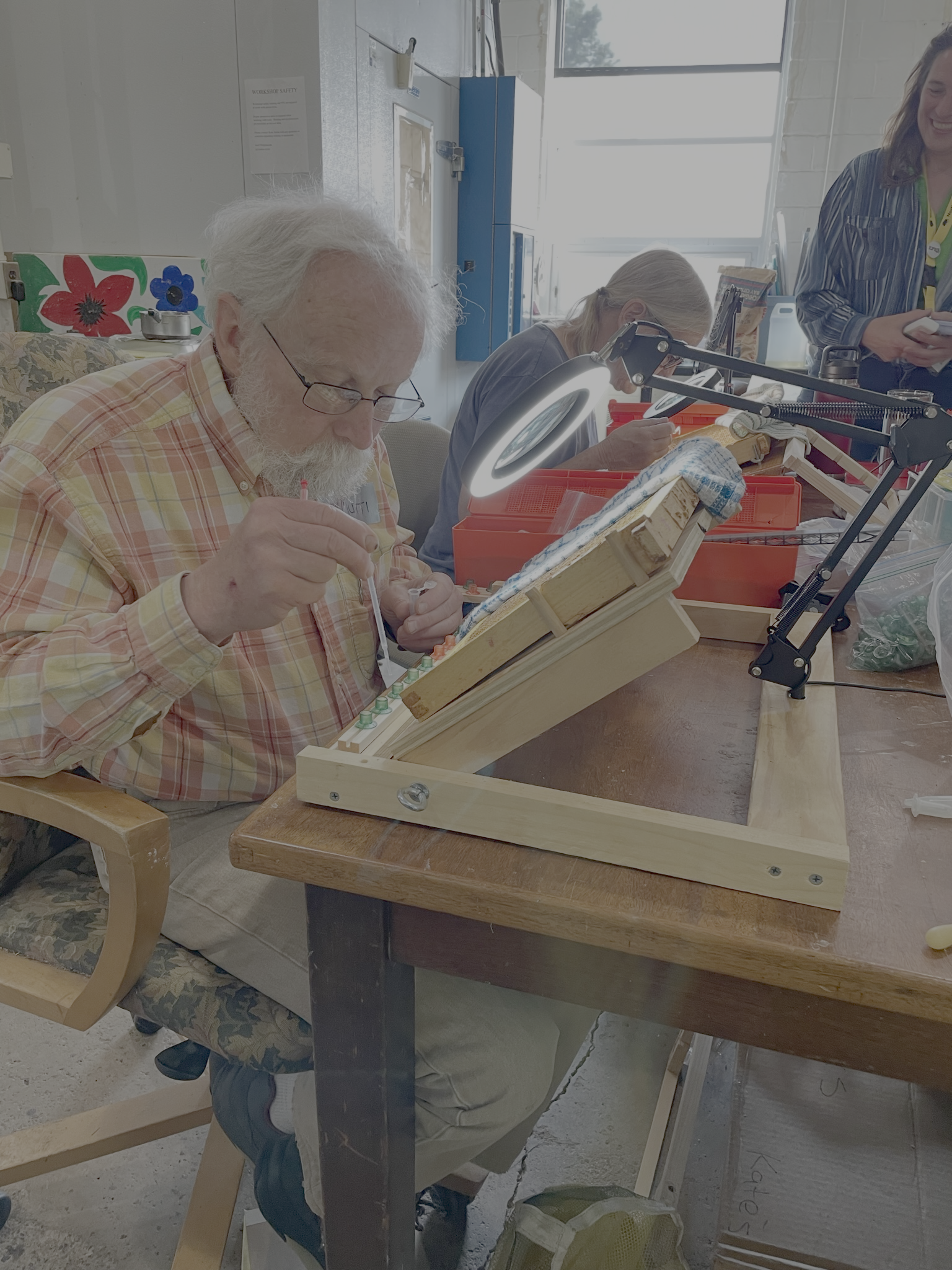
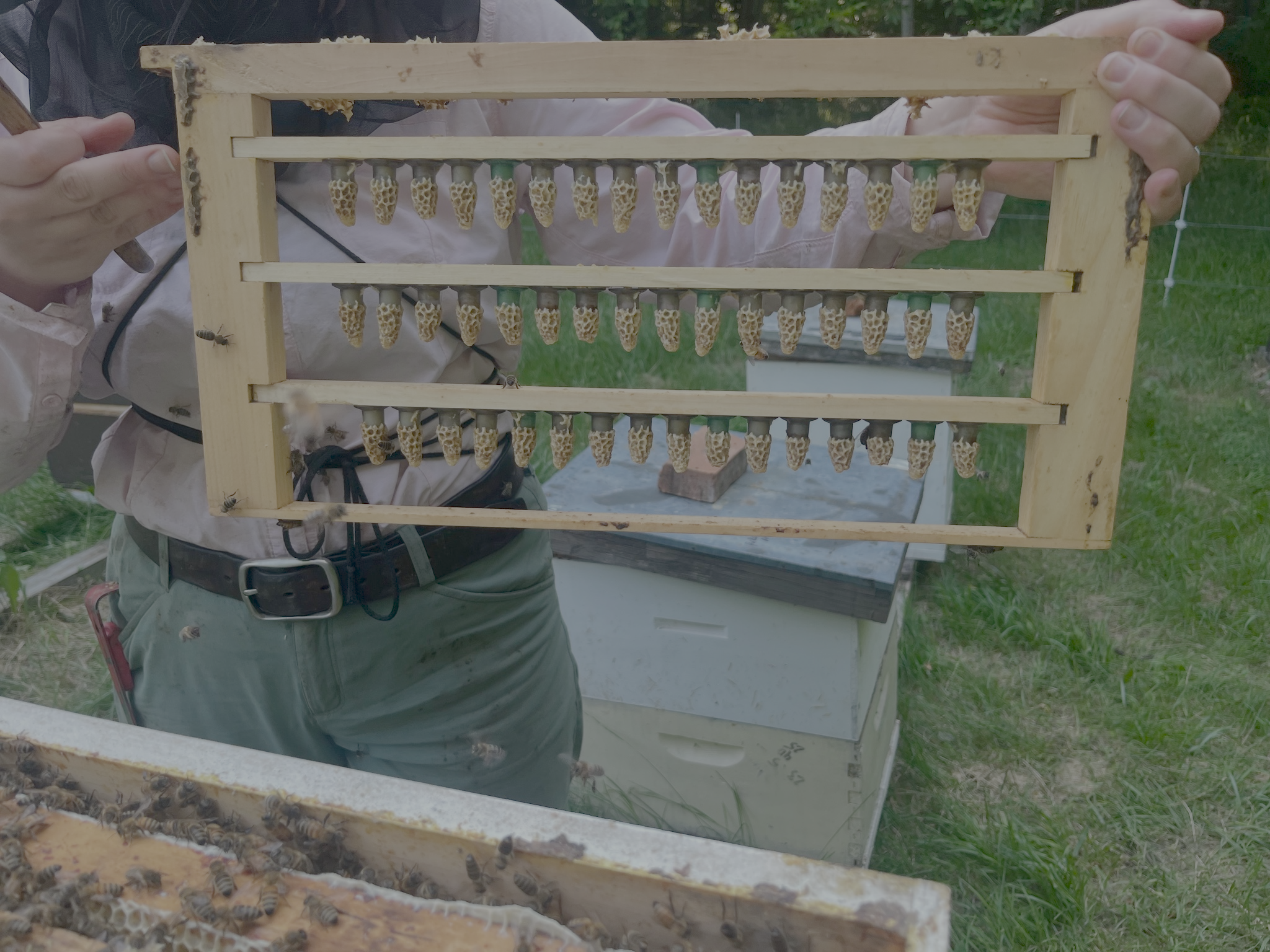
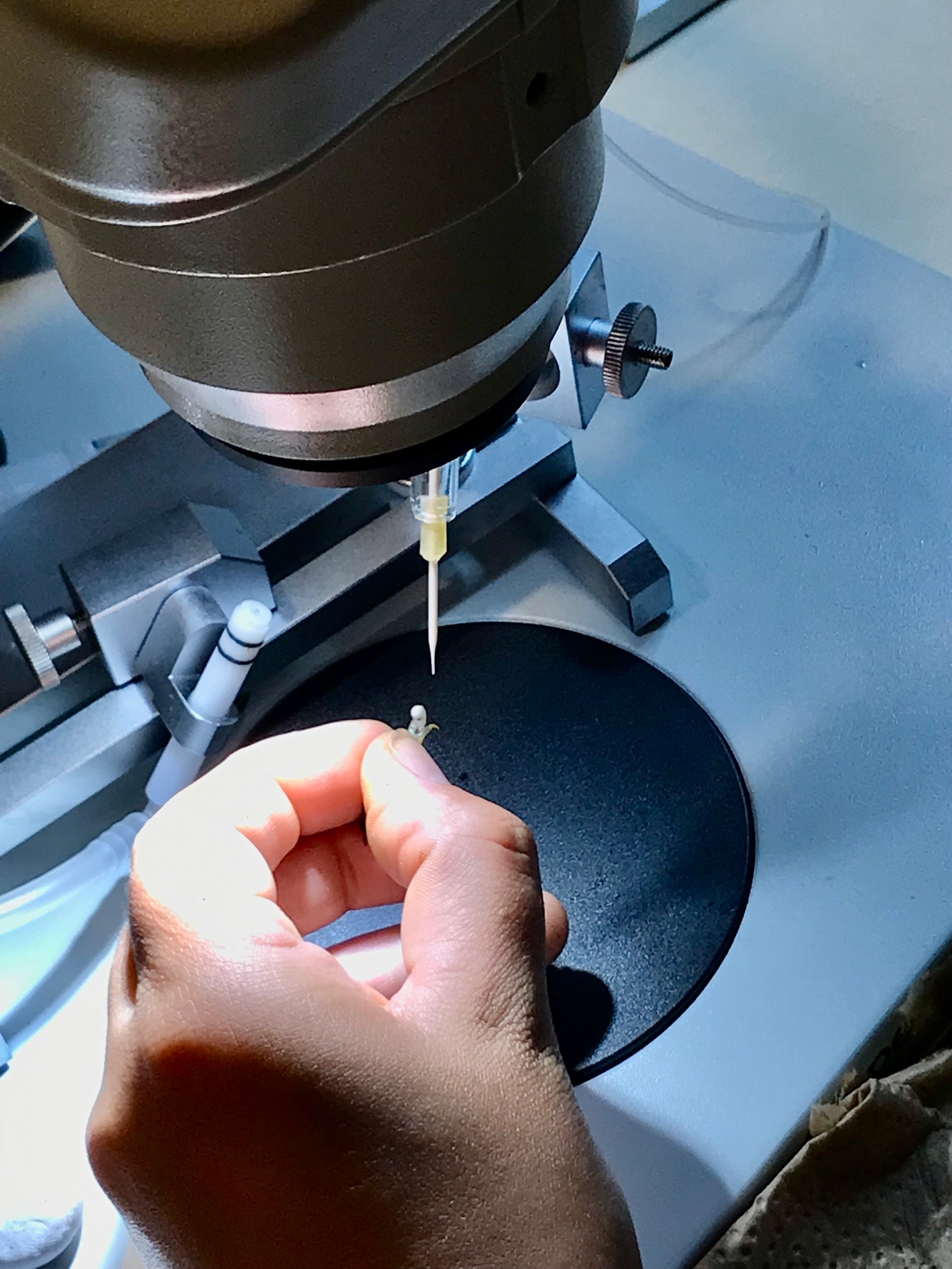
The following pictures show health queen cells (right) and honey bee drone semen collection (left).
Evaluation:
A survey was given to participants as they joined the project to assess their incoming knowledge, skill levels and practices. Participants were asked to track and report their personal progress with mastering each aspect of queen rearing (and instrumental insemination). After each workshop, the participants were asked to fill in a survey specific to that workshop to ensure that the learning objectives were achieved and the workshop was run properly. At the end of the program, participants were again asked to assess their knowledge, skill levels, and practices to determine how much these have changed as a result of participation.
Milestones
Milestone 1 (engagement). Create a cohort of participating beekeepers who attend bi-weekly Lunch-and-Learn virtual sessions. This group of up to 250 beekeepers will form in the first few months of the project and meet continuously throughout the duration of the project. Robyn and Kate will provide materials ahead of each meeting and will lead the discussions during these meetings. During these 50 sessions, we discussed each aspect of the queen rearing and instrumental insemination processes in detail.
COMPLETE: The application was distributed in March and April 2022. We received 551 applications. We chose and invited 249 applicants to join the program. Bi-weekly lunch and learn sessions began on June 7, 2022, with 185 individuals attending the first session. Sessions continued on a bi-weekly basis. Throughout 2023, we had approximately 85 consistent participants who remained with the program. At the end of the program, August 27, 2024, approximately 65 participants attended each session.
Milestone 2 (learning). We created fact sheets, videos, class modules and an online course. Topics covered each aspect of the queen rearing and artificial insemination processes in detail.
COMPLETE: Thirteen fact sheets have been published. Fifty online class modules were completed as part of milestone 1. Three short videos were created and posted. One online course entitled "An Introduction to Honey Bee Breeding Program Design" was produced.
Milestone 3 (learning). A total of five 2-day hands-on queen rearing workshops were offered. Groups of 20 participants (100 total) attended each workshop to gain hands-on experience with the technical aspects of queen rearing. Three workshops will take place at Penn State University, one in New England, and one in Maryland.
COMPLETE: One queen rearing workshop was conducted in August 2022. Four queen rearing in-person workshops were conducted in 2023; 1. April 2023 in Maryland, 2. May 2023 in Pennsylvania, 3. May 2023 in New Jersey, and 4. June 2023 in Vermont.
Milestone 4 (learning). A total of four 5-day hands-on artificial insemination workshops will be offered in groups of 6-7 participants. One set of equipment will be provided to each state (total of 13) along with a $500 travel stipend (for all 32 participants).
COMPLETE: Two insemination workshops were conducted in 2023 and two insemination workshops were conducted in 2024. We also participated in a field day of the Heartland Honey Bee Breeders Association in June 2023. Seven sets of equipment were distributed in 2023. Six more sets were distributed in 2024. Participants' skills and progress continue to be monitored.
Milestone 5 (evaluation). Each fact sheet, class, and workshop was evaluated by the participants/users. Evaluators critiqued the content, presentation style, and usefulness of each item. Changes were made accordingly.
COMPLETE: Evaluation of the fact sheets, videos and course were completed within three months of their completion. Feedback was obtained and used to improve the materials.
Milestone 6 (evaluation). Participants tracked and reported their personal progress with mastering each aspect of queen rearing (and artificial insemination) by recording time spent mastering each aspect of the process, number of queens reared, sold, and inseminated, survival, productivity, and mite resistance of resulting queens, and income generated by these practices via a monthly questionnaire.
COMPLETE: Here are the results.
|
Strongly agree |
Somewhat agree |
Neither agree nor disagree |
Somewhat disagree |
Strongly Disagree |
Total |
|
|
Increased beekeeping knowledge |
65 (69.9%) |
24 (25.8%) |
4 |
0 |
0 |
93 |
|
Improved beekeeping practices |
58 (62.4%) |
24 (25.8%) |
10 |
1 |
0 |
93 |
|
Adopted new practices |
51 (54.8%) |
33 (35.4%) |
7 |
1 |
1 |
93 |
|
Better able to manage diseases |
25 (27.2%) |
36 (39.1%) |
25 |
4 |
2 |
92 |
|
Improved assessment of quality of colonies |
50 (53.8%) |
26 (28.0%) |
15 |
2 |
0 |
93 |
|
Improved understanding of honey bee biology |
61 (65.6%) |
23 (24.7%) |
8 |
1 |
0 |
93 |
|
Improved understanding of queen production |
68 (73.1%) |
17 (18.3%) |
6 |
2 |
0 |
93 |
|
Increased productivity of my operation |
36 (39.1%) |
33 (35.9%) |
19 |
4 |
0 |
92 |
|
Helped connect to other beekeepers |
37 (39.8%) |
31 (33.3%) |
19 |
5 |
1 |
93 |
|
Improved ability to understand scientific research |
24 (25.8%) |
44 (47.3%) |
18 |
6 |
1 |
93 |
In addition, Robyn and Kate held one-one-one individual evaluation meetings with the insemination trainees. During the meetings, the participants evaluated their skills, indicated the time spent practicing their skills, and outlined their plans for success into the future. Additional one-on-one meetings will be scheduled, as needed, for as long as is necessary.
Milestone activities and participation summary
Educational activities:
Participation summary:
Learning Outcomes
Performance Target Outcomes
Target #1
65
Participants will improve their knowledge of and attention to nutrition, drone quality and populations, and parasitic mite control. They will begin or increase record keeping and data collection. They will begin or Increase queen production via grafting and produce
high quality queens based on data. Participants will use quality queens to begin or increase drone production. They will eliminate manipulations of natural queen cell production as a way to produce queens. They will alter their methods for testing hygienic behaviors and mite resistance and eliminate potentially harmful synthetic varroa mite treatments (eg. amitraz). They will implement the use of alternative queen rearing equipment. Participants will also apply knowledge gained to local beekeeping education. Select individuals will begin practicing instrumental insemination.
20,000 honey bee queens
Participants will produce higher quality queens. They will also produce more queens, making them available for sale in the local area. Queen breeders will advance their breeding efforts, seeing changes in the frequency of desired traits in their operations.
93
Participants improved and applied their knowledge of and attention to nutrition, drone quality and populations, and parasitic mite control. They improved or began record keeping and data collection. They began or increased queen production via grafting. They stopped using natural queen cells, in favor of controlled queen production. Participants began or increased production of high quality drone bees.
Participants began testing colonies for mite resistance traits, such as hygienic behavior, mite biting and varroa sensitive hygiene. They learned how to and practiced parasitic mite control with a lot of attention paid to eliminating the use of synthetic miticides and timing treatments around rearing efforts.
Select individuals began practicing instrumental insemination. While this skill takes years to develop, some individuals excelled and are already using this skill and the provided equipment in their operations. Others are still working on honing their skills, with plans to use instrumental insemination in the future.
See also the evaluation of the program in the table above.
6,700 honey bee queens
Many reported producing larger, more productive queens. Others reported that they decreased queen production due to spending time improving their practices. These individuals reported hope that the time they spent learning and practicing would lead to future increases in high quality queens.
From our evaluations (see milestone 6), we learned that, for example, 90.2% of participants adopted new practices while 88.2% improved their practices. In addition 81.8% of participants improved their ability to assess colonies. 75% of participants increased the productivity of their operations. In general, we feel that the program was a great success.
Participants in the program were anonymously polled. They were asked:
- Since the start of the EPIQ program in June 2022, have you changed any of your beekeeping practices? a. Yes, I have already implemented changes, b. No, but I plan to implement changes, c. No, I have not and will not implement changes
Result: 90.2% of participants adopted new practices while 88.2% improved their practices
2. Please briefly describe the changes you have or plan to make as a result of the EPIQ program
Example results:
I greatly improved my record keeping and data collection as I learned how important it is and was shown methods that work for me.
I established criteria for my breeding program. I learned how to use the data I collect to make selections to improve my breeding efficiency.
I began to improve the health and populations of drones in my operation using the techniques that were discussed. Previously, I had assumed my colonies were making enough, high quality drones. However, the program taught me that drones need specific attention.
I really benefitted from the various voices that were represented throughout the program. It was especially beneficial to hear from experienced queen producers about their techniques and equipment. This gave me the knowledge and confidence to try new things on my own.
I began the program as a complete novice and ended it as a confident queen producer. I am still small-scale but I plan to continue to practice and grow.
I have seen my queens’ mating success improve. I attribute this improvement to my learning and improving my overall program to include healthier queens and more drones.
After learning about the impacts of synthetic pesticides on queens, I have completely eliminated their use in my operation. I was glad to learn that there are safer alternatives.
3. Please describe how the changes you have made or will make will impact your operation. If applicable, describe the change in number and quality of queens you will produce.
I am excited to be able to produce local queens to distribute in my area. I am tired of relying on imported queens from Georgia and California. Selling queens will not only improve the profits of my operation, but will also help out fellow beekeepers.
The sheer size of the queens that I make now is truly impressive. With some simple targeted changes in my practices I have seen vast improvement. My customers are raving.
I ended up decreasing the number of queens I produced this year. I spent time and energy making a few outstanding queens rather than a large number of simply adequate queens. I have seen these queens produce strong, healthy colonies and my overwintering survival has improved.
Additional Project Outcomes
As a spinoff to this program, which was all about queen honey bees, we applied for and received funding to conduct a similar program all about drone honey bees. We are now teaching beekeepers about rearing and care for the male honey bees to help improve outcomes of honey bee breeding and queen production. This idea came from this SARE-funded project as we realized the males are generally not a focus of beekeeping education or activities.
Story #1
A beekeeper from Vermont was especially pleased with her experience in the EPIQ (Education about Production and Insemination of Queens) program:
"Through EPIQ we received a top quality queen breeding education. This was an amazing program for farmers and was a fun and practical way to learn after college age. If students participated in their assignments and attended classes they were amply rewarded. I was fortunate enough to have put in that effort and was given the opportunity to travel to Penn State for an in-person workshop. During the workshop we were trained by an internationally recognized bee breeder (and farmer) in instrumental insemination. I was able to go home with my new information and tool to begin work immediately. Our breeding program has benefitted immensely from that experience, as well as the mountain of education that came with two years in class. I learned proper reading of scientific articles, different queen rearing methods, and what it really takes to run a proper breeding program. There were also several exceptional teachers who were brought in to add to our education. Robyn and Kate did an outstanding job of pulling together resources and information and sharing it all with the class. Our farm definitely matured through this education and we are so thankful.”
Story #2
The SARE-funded EPIQ (Education about Production and Insepmination of Queens) program led by the Penn State Extension team was actually epic for me. The program was to teach all the attendees about queens and raising queens and rear better queens during the process. It totally increased the quality of queens I was rearing. On top of that, we also were able to make contacts within the honey bee industry and were able to work with and propagate queens with Varroa Sensitive Hygiene (VSH) traits. Currently in the beekeeping world this is a breakthrough to have genetic traits in bees to kill and suppress mite reproduction to limit the affect of varroa mites on our honey bee colonies without the use of chemicals (or at least reduced chemicals).
I personally have been able to give my reared queens away to many folks within my local area. The amount of queens I produce doesn’t actually keep up with the requests for queens but, that being said, I have distributed more than 2,000 queens to local beekeepers. The response I often get back is very positive. One of my mentees was actually sick for a period of time and could not get to do mite checks on her bees. She asked one of her mentees to perform the checks to know if she needed to do a potential mite treatment. Her counts were a little more than normal on most of her colonies and very high on a few. But there was one within her apiary that was zero. The mentee from my understanding actually tested it twice as she did a few colonies first and didn’t expect a zero count. After bringing data back, the apiary owner called me and stated that the queen she got from me was the one that scored zero out of all the colonies in the apiary.
Overall just the size of the queens makes a difference in performance. The strategies taught to us by EPIQ allowed us to create larger queens overall. If I’m on my game the queen cells don’t even fit in standard queen cell protectors that are sold by beekeeping equipment suppliers. I can fit most in a larger cell protector that is only sold by one vendor but at this point I need to find a supplier that carries larger protectors to protect queens I give to beekeepers for transport and introduction.
I know the other members of the EPIQ group had similar results as I am able to keep in touch with many of them throughout the year at conferences and meetings. This program was one of those programs that had very direct results on practical beekeeping across multiple states and continues to do so.
Russell Sprangel, EAS Master Beekeeper, MD
Story #3
When we began the educational program, 249 people were invited (out of a list of about 500 that applied). The number quickly decreased as participants realized the depth of education being provided and their need to commit to the program. This was, at first, disheartening, as we wanted to reach many beekeepers. However, in time, we came to realize that the program was just not a good fit for those people. Those that remained in the program were serious, regimented, and dedicated. They were rewarded by their efforts and came out the other side with new knowledge, skills and confidence. They also found kindred spirits in the network of lifelong learners that continued participating over the long-term. I think it is important to allow many people to have the opportunity to learn, but realize that not everyone will stick it out. In addition, the fact sheets, videos, and course we created will broaden the audience from this program. Those that did not commit to the program and other beekeepers will benefit from these outputs for years to come.
For this program, we used google classroom as a platform for providing resources to the participants. This free online classroom was sufficient for the program, but it lacked many features. For our new spinoff program, we opted to use Canvas instead, which is proving to be a better choice.
Information Products
- An Intoduction to Honey Bee Breeding Program Design
- Varroa mite resistance: testing for varroa sensitive hygiene
- Honey bee genetics basics
- Varroa mite resistance: testing for hygienic behavior
- Honey bee insemination: ergonomics
- Varroa mite resistance: testing for mit biting behavior
- Honey bee insemination: drone banking cages
- Queen Cell Production: Grafting and Graft-Free Methods
- Beekeeping: Cell Builder Basics
- An Introduction to Queen Honey Bee Development
- Beekeeping 201: Honey Bee Breeding Program Design
- Honey Bee Insemination: Installing a Queen Using a Push-in Cage
- Honey Bee Insemination: Laying Queen Introduction
- Honey Bee Insemination: Pre-laying II Queen Introduction