Progress report for LNE25-495R
Project Information
Project Focus
The project addresses the growing interest among tree fruit growers in Pennsylvania and the Northeast in adopting drone-based spraying systems for high-density apple and peach orchards. Pennsylvania ranks among the top producers of apples in the U.S., with over 14 million bushels harvested annually. Many farmers are seeking alternatives to their traditional aging air-blast sprayers, which often experience frequent breakdowns and inefficiencies. A 2024 survey of 63 growers revealed that 95% were eager to explore drone spraying technology. Growers highlighted the ability of drones to spray during nighttime conditions, offering advantages such as reduced wind speeds and lower risk to pollinators. Additionally, drone spraying is seen as a more viable option for irregularly shaped and steep orchard sites, which are less accessible to traditional equipment. Despite the potential benefits, farmers have expressed concerns about optimal water volumes, spray coverage, and the efficacy of plant growth regulators applied with drones. These regulators, typically applied with higher water volumes, are crucial for managing crop loads in orchards. Farmers also seek more information on maintenance, troubleshooting, and the cost-effectiveness of drone technology. This project aims to bridge these knowledge gaps and support growers with a wide range of perspectives.
Solution and Approach
The project proposes a series of field trials and demonstrations to optimize drone-based spraying systems for high-density fruit orchards. These trials will focus on determining appropriate water volumes, flight parameters, and the efficacy of plant growth regulators applied with low water volumes. A side-by-side comparison of drone spraying with traditional air-blast sprayers will provide critical data on spray coverage and economic viability. The research will result in best-practice guidelines for drone applications, helping farmers adopt this technology while reducing chemical use, labor costs, and environmental impact. To engage the farming community, the project will involve farmers directly in research and demonstration efforts. Eight growers across Pennsylvania will host on-farm demonstrations, providing real-world insights into the technology's effectiveness. Outreach efforts will include workshops, field days, webinars, and video tutorials. Research findings will be shared through industry publications, presentations at key conferences, and local meetings, reaching over 1,000 growers in Pennsylvania, New York, and Maryland. By addressing farmers' concerns and providing accessible, practical solutions, the project aims to promote widespread adoption of drone-based spraying technology, leading to more efficient, sustainable, and economically viable fruit production in the Northeast.
- Conduct trials on drone-based spraying systems in Northeast tree fruit orchards, with a specific focus on optimizing spray techniques for high-density apple and peach systems. This includes assessing coverage efficiency, determining the appropriate water quantity, and evaluating the effects of plant growth regulator sprays with low water volumes.
- Generate new knowledge on best practices for drone applications in tree fruit orchards, addressing key challenges and providing clear guidelines.
- Document drone sprayer benefits such as reduced chemical and water use, and lower operational costs through more efficient and precise application methods, leading to improved environmental and financial outcomes.
A general needs assessment survey conducted in early 2024 at winter tree fruit schools across Pennsylvania identified significant interest in drone-based spraying technology. Many growers, dealing with frequent breakdowns of aging air blast sprayers, were actively seeking newer alternatives. In a follow up survey of growers during the 2024 harvest season, we received 63 responses and 95% of these growers were interested to learn more about drone spraying technology for tree fruit orchards.
The 63 growers also identified some of the reasons as to why they wanted to learn more about drone spraying technology. Almost 70% of the growers mentioned that increased efficiency and time saving (can also spray in the night) was the most significant economic benefit from adopting drone spraying. Drone spraying technology, once mapped and calibrated, can be effectively used at night, benefiting from lower wind speeds, cooler temperatures, and reduced risk to pollinators. In apple orchards, where the timing of chemical applications for crop load management or fire blight protection is crucial, especially before rain events during bloom, drones offer the advantage of rapid and precise coverage within these narrow windows. 40% of growers also mentioned cost savings on labor as lesser manpower is needed for drone applications. Some farmers also mentioned improved soil health, pest and disease management, and reduced chemical use. One grower also mentioned that drones would be more efficient at spraying irregular shaped and steep field sites which are less accessible using a traditional tractor pulled air blast sprayer. It was interesting to note that farm workers and operators specifically mentioned that it would improve worker safety and reduce tractor related problems such as fuel costs, flat tires, and maintenance.
Despite identifying the benefits of drone spraying technologies, growers expressed the need for more detailed information on optimal water volume, flight parameters and adequate spray coverage. They also had concerns about the efficacy of plant growth regulators such as auxins and cytokinin, which are typically used with high water volumes, when applied with drones that use lower volumes. They also had questions about maintenance and troubleshooting, and shelf-life of the drones. Addressing these issues, along with increasing the number of field demonstrations and trials, will encourage broader adoption of drones for orchard spraying. This project is designed to serve all sizes of tree fruit orchards in Pennsylvania and beyond. It supports NE SARE's outcomes by reducing energy and labor demands, improving soil quality, decreasing chemical and water usage, enhancing orchard sustainability and longevity. Further the costs of the existing system and the suggested replacement are quite similar and range from $15,000- $30,000, hence it is accessible to a range of farming groups. Every year, drones with more capabilities are being developed and are constantly decreasing in price, so we anticipate that in the coming years, drones will be considerably more affordable than an air-blast sprayer.
Research
The experiment was conducted in Ridgetop Orchards, Fishertown, Bedford, PA (40.122216, -78.605561) in October 2025 [Figure 1]. The fruit trees were “Ultima Gala” varieties planted in high density orchard management system. The spraying operation was done with a DJI AGRAS T50 UAV (DJI, China) [Figure 2]. A water-soluble fluorescent dye Brilliant Sulfaflavine (BSF) (MP Biochemicals, Inc., Aurora, OH) at 2.0 gL-1 concentration was used in the spray solution to access spray deposition.
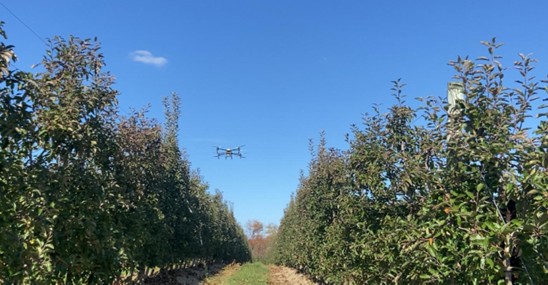
Figure 1: Drone spray application in Ridgetop Orchards, Bedford, PA
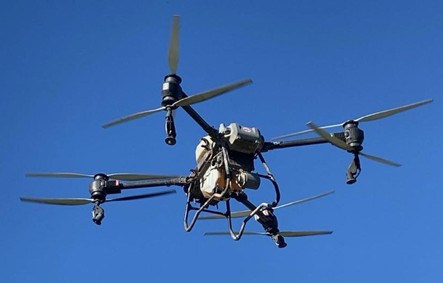
Figure 2: DJI Agras T50 used for the experiment
27 configurations were tested based on various combinations of operating parameters (i) three flight height (ii) three speed of flight (iii) three application volume [Table 1].
Table 1: Different parameters used in the spray trials
|
Height |
Speed |
Volume |
|
1.52 m |
4 ms-1 |
46.76 lha-1 |
|
2.28 m |
7 ms-1 |
70.15 lha-1 |
|
3.08 m |
10 ms-1 |
93.54 lha-1 |
Three trees were randomly selected in each treated panel as target trees for sampling. The tree was divided into three layers: the upper, middle, and lower layer based on canopy height. At each canopy layer, a 38-mm diameter stainless steel (SS) screen (MacMasterr-Carr, Elmhurst, IL) were placed [figure 3]. The spray concentration from the SS screen was determined following the procedure outlined by You et.al., (2019) and Salcedo et al., (2021) using a fluorometer (Turner Designs, Inc., San Jose, CA).
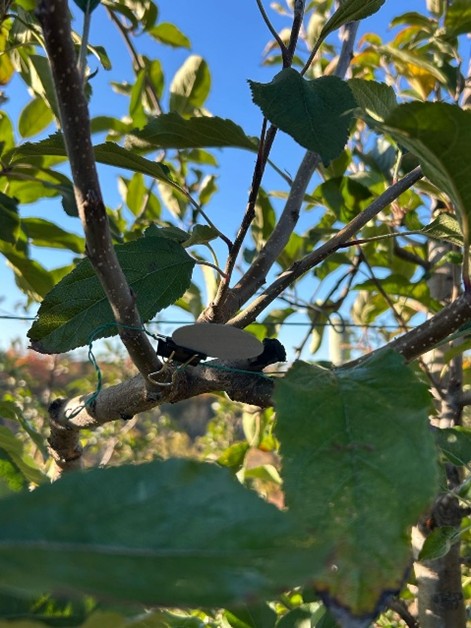
Figure 3: Stainless Steel Screen placed in tree canopy
A total of 10 water-sensitive papers (76 × 26 mm, WSPaper, São Paulo, Brazil) were placed on upper, middle and bottom canopy uniformly through outer and inner canopy for both abaxial and adaxial side of the leaf [Figure 4]. The WS papers were allowed to dry, after which they were placed in labelled coin envelopes. The WS paper was scanned using an ESPON V19II scanner at 600 dpi resolution. The scanned images will be analyzed using DepositScan (USDA, Wooster, OH, USA) to evaluate the spray deposition parameters such as percentage coverage, droplet density and volume mean diameter (VMD).
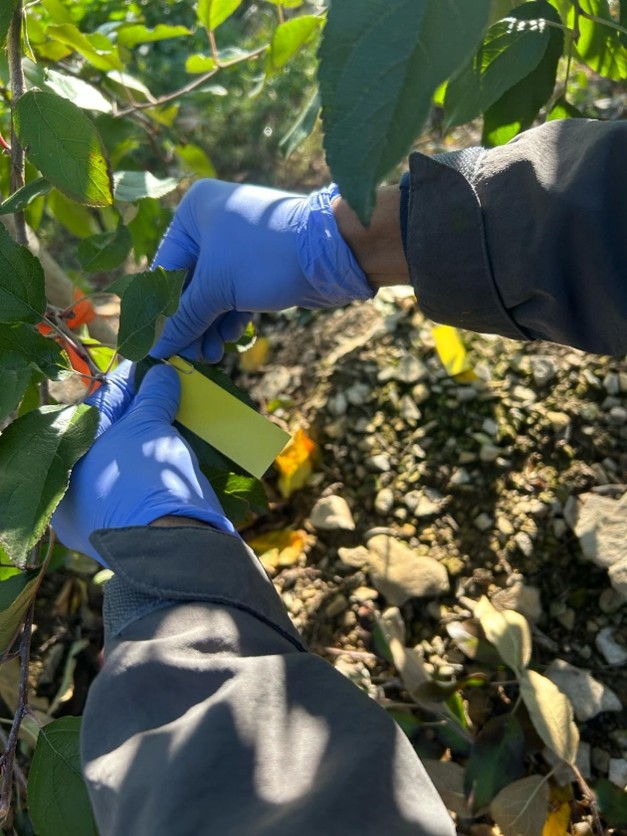
Figure 4: Water sensitive paper placed at outer bottom canopy
Results from the SS screen:
Spray concentration on the stainless-steel screen was analyzed using a Gamma generalized linear model with a log link. The model included a full factorial interaction among flight height, speed and spray volume whereas canopy position was included as an additive effect. The results from our regression analysis indicate:
- A significant three-way interaction between flight height, speed and spray volume was observed, suggesting that spray concentration is affected by complex interactions between drone operation parameters.
- The spray deposition was significantly different across different canopy layers, with highest spray deposition at top canopy and lowest deposition at middle canopy [Figure 5].
Pairwise comparison of estimated marginal means, averaged across all height, speed and volume treatments, indicated significant difference at 1% level of significance, with the top canopy exhibiting highest spray concentration, followed by bottom canopy and middle canopy exhibiting lowest spray concentration [Table 2; Figure 6). Since drone spray takes place over the tree canopy, it is expected that the spray deposit is highest at top canopy. The penetration of droplets to the middle or bottom canopy can be influenced by interaction of drone flight, speed with downwash generated by rotors. Poor deposition in middle canopy could be due to interaction of rotor downwash and canopy shielding.
Table 2: Pairwise comparison of spray concentration at different canopy layers
|
Contrast |
Estimate |
SE |
p-value |
|
Bottom ~ Middle |
0.233 |
0.0608 |
0.0004 |
|
Bottom ~ Top |
-0.182 |
0.0608 |
0.0082 |
|
Middle ~Top |
-0.414 |
0.0608 |
<0.0001 |
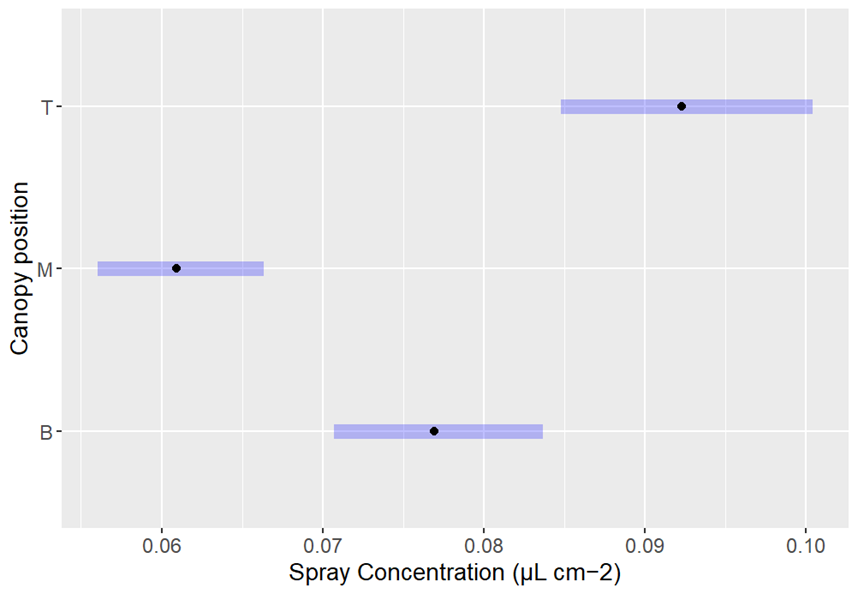
Figure 5: Estimated marginal means comparison showing significant differences in spray concentration across top, middle and bottom canopy
Expected Outcomes from WS Paper
The WS paper was uniformly placed throughout the tree canopy at upper, middle and bottom layers. For middle and bottom layers, the WS paper were placed at outer canopy (away from the trunk) and inner canopy (close to the trunk). As such, analysis of WS paper would provide insight into spray penetration across the vertical axis of tree canopy as well as along the horizontal depth of the tree canopy. Also, comparison between WS paper placed at abaxial and adaxial side would provide further insights on spray effectiveness. Quantitative estimates on percentage coverage, droplet density and volume mean diameter (VMD) will be obtained across different canopy positions and drone operation parameters.
The current study evaluated spray deposition across different canopy levels for various drone operation parameters using stainless steel screens and water-sensitive paper. The preliminary results from the SS screen indicated significant interaction between flight height, speed and spray volume. Further analysis of the WS paper, using Deposit Scan and subsequent analysis, will be important to understand the impacts of operational parameters on the efficiency of spraying.