Progress report for LNE25-497R
Project Information
Project Focus: The proposed project engages with farmers across New England, specifically targeting beginning forest farmers and urban farmers. Forest farming, a practice that involves cultivating crops under a forest canopy, is an expanding practice in New England. The farming community has expressed a strong interest in forest farming as evidenced by the rapid growth of the Northeast Forest Farmers Coalition (NFFC), which has grown to over 800 members in just three years. However, farmers face significant challenges due to the lack of region-specific guidelines for selecting appropriate planting sites. Current guidelines, developed primarily for different climatic and edaphic conditions, do not adequately address the unique conditions in the Northeast. This knowledge gap has been identified by farmers as the greatest barrier to adopting forest farming practices. The need for this project stems from the farmers’ desire for reliable data to guide site selection for high-value medicinal crops such as ginseng, goldenseal, and bloodroot, which can provide substantial economic benefits and diversify their income streams.
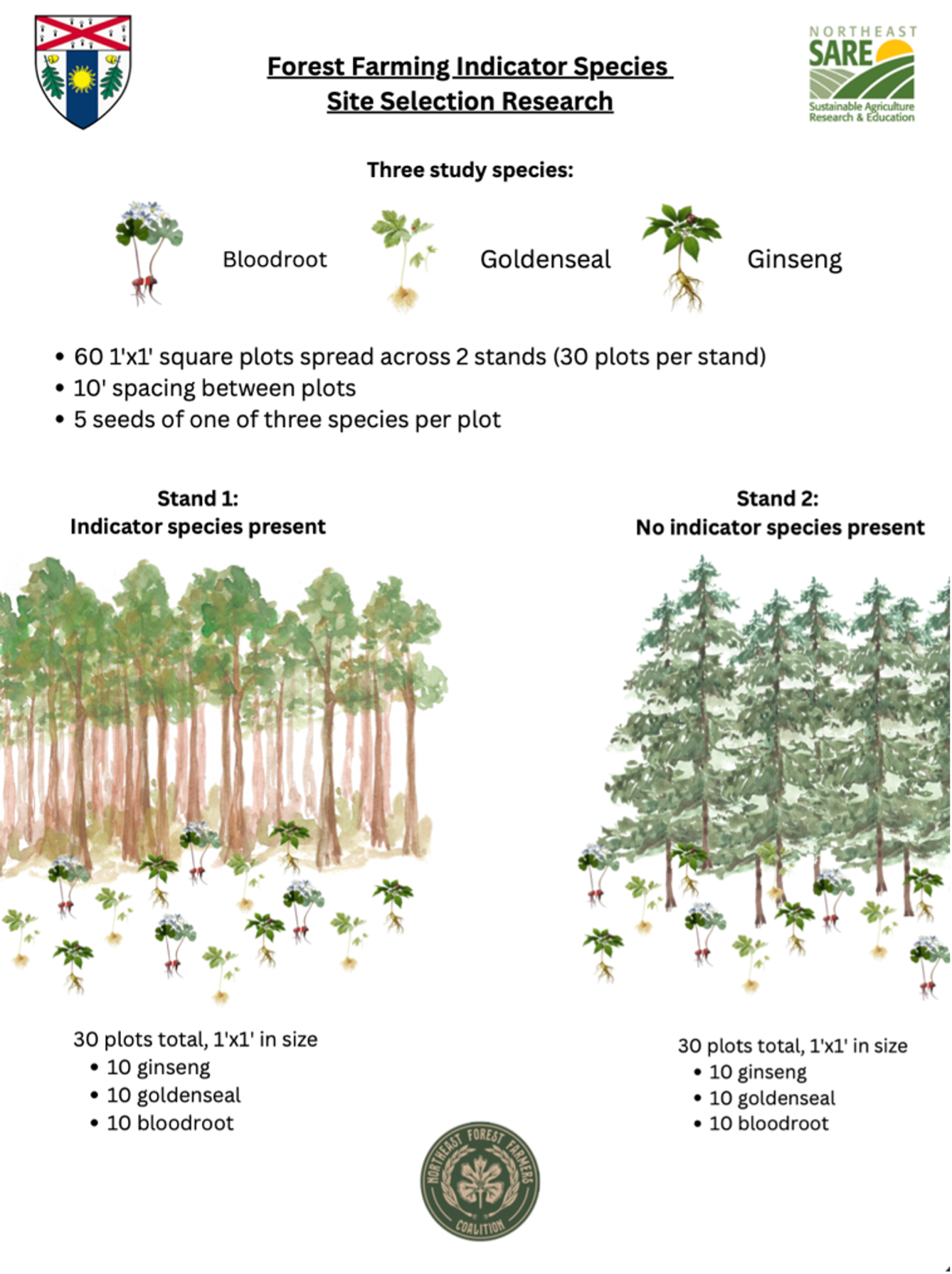
Solution and Approach: The project aims to fill the knowledge void by systematically evaluating the feasibility and productivity of forest farming in New England by examining the feasibility of utilizing second-growth and urban forest as planting sites for three high-value forest farmed crops (ginseng, bloodroot, goldenseal). The research strategy involves collaborating with farmers to identify and select diverse forest sites across New England and will focus on two main questions: Q1: Whether "indicator species" can successfully guide site selection in second-growth forests, and Q2: Whether "degraded" forests, including urban fragments, can support the cultivation of forest farming crops.
For Q1, the research will compare establishment success and yield in plots with and without indicator species by planting identical replicates of ginseng, goldenseal, and bloodroot in each. For Q2, the study will test different management intensities (control, seeding only, medium intervention, and high intervention) on "degraded" sites to determine the best practices for establishing forest farming on urban farms and fragmented farm woodlots. Engaging farmers in both the research and dissemination phases, the project will provide practical, region-specific guidelines for site selection, thus empowering farmers to make informed decisions on establishing and expanding their forest farming operations.
Research outcomes will be shared through various channels, including peer-reviewed publications, farmer-friendly summaries, workshops, and webinars, ensuring broad accessibility and applicability. By addressing the critical site-selection challenge and providing actionable insights, this project will support the adoption of forest farming practices, promoting ecological resilience and economic sustainability among northeastern farmers
Interest in forest farming in New England is expanding rapidly, and farmers are looking for guidance on establishing these crops. This study will fill a knowledge void by identifying and examining feasibility and productivity of appropriate sites for establishing high value medicinal forest farming crops (e.g., ginseng, goldenseal, bloodroot). We will provide quantitative comparative assessments of viability of different sites and land for forest farming operations not included in current guidance. These new data will give northeast farmers critical site-selection guidance as they choose sites for these crops, which can diversify their marketable products and add an additional income stream.
Forest Farming-growing commercially-valuable crops under a forest canopy-is one of the five main agroforestry practices defined by the USDA. Forest farming relies on existing forest structure, blending active farming with natural forest dynamics. This creates opportunities for farmers, but also challenges, specifically selecting appropriate sites. The northeastern United States is heavily forested; 28.5% of the 26 million farm acres in the region are woodlots1. Many of these forested acres are underutilized by farmers2, therefore forest farming holds the potential for farmers in the Northeast to expand marketable crops to 7.4 million additional acres already within their land tenure.
Integrating forest-farmed crops into northeastern farms provides opportunities for farmers to tap into growing markets and diversify their income streams while improving the ecological resilience of their land3,4. Furthermore, the Northeast is heavily populated, with roughly one million urban and peri-urban forest fragments5. Urban farming is rapidly increasing due to a variety of positive social and environmental impacts, and the northeast region is home to a significant percentage of these farms6,7.
The rising interest in medicinal herbs and natural products supports a reliable and expanding market for high-value forest-farmed products8. While market prices vary, forest-farmed medicinal crops can provide high profits; wild-simulated ginseng can bring $1300 per pound9; bloodroot $90 per pound10; and goldenseal up to $100 per pound11, with direct online sales often much higher. Beyond profits, farmers across the region are interested in forest farming for other reasons, including diversifying seasonality of harvest and income, environmental stewardship, etc. (NFFC unpublished data). Due to these various incentives, farmers in the region frequently request guidance on whether their land is appropriate for forest farming from technical service providers (TSPs), foresters, and extension agencies (NFFC unpublished data).
Expanding forest farming offers a significant opportunity for both historical land stewards and beginning farmers alike. The species in this proposal are all native, with a long history of cultivation and stewardship. Forest farming offers economic opportunities for farmers and supports rematriation of culturally important plants. Meanwhile, the goals, backgrounds, and challenges faced by urban farmers are diverse and varied13, but all urban farmers lack access to late-successional forestland with intact native flora fitting current forest farming recommendations. Forest farming on urban forest fragments holds the potential for economic opportunities and crop expansion, as well as ecological restoration and community benefits for urban farmers.
Cooperators
- (Educator and Researcher)
- (Educator and Researcher)
- (Researcher)
- (Educator)
Research
Year 1 update
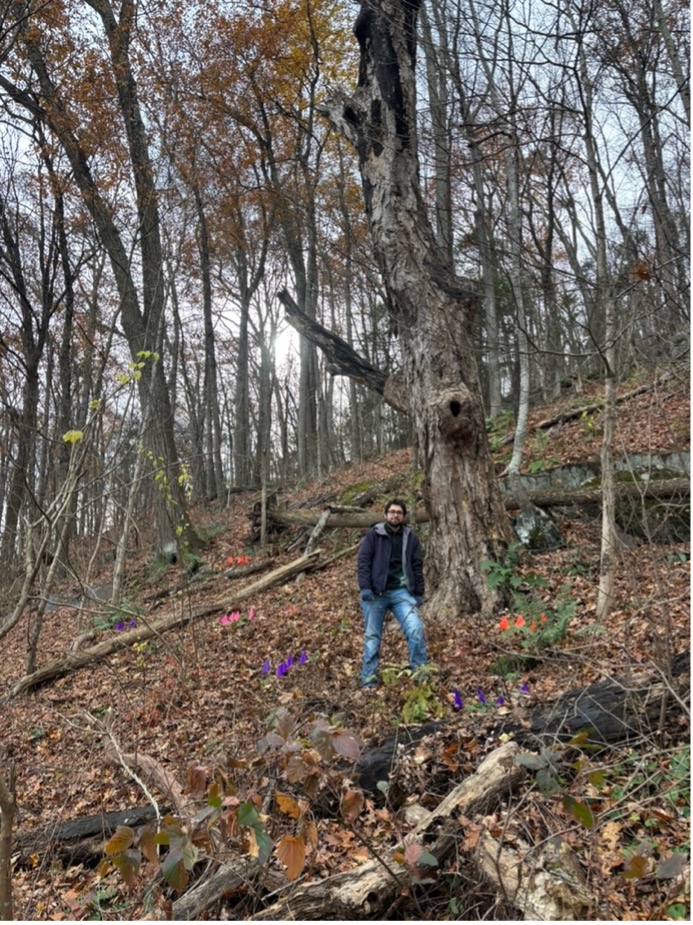
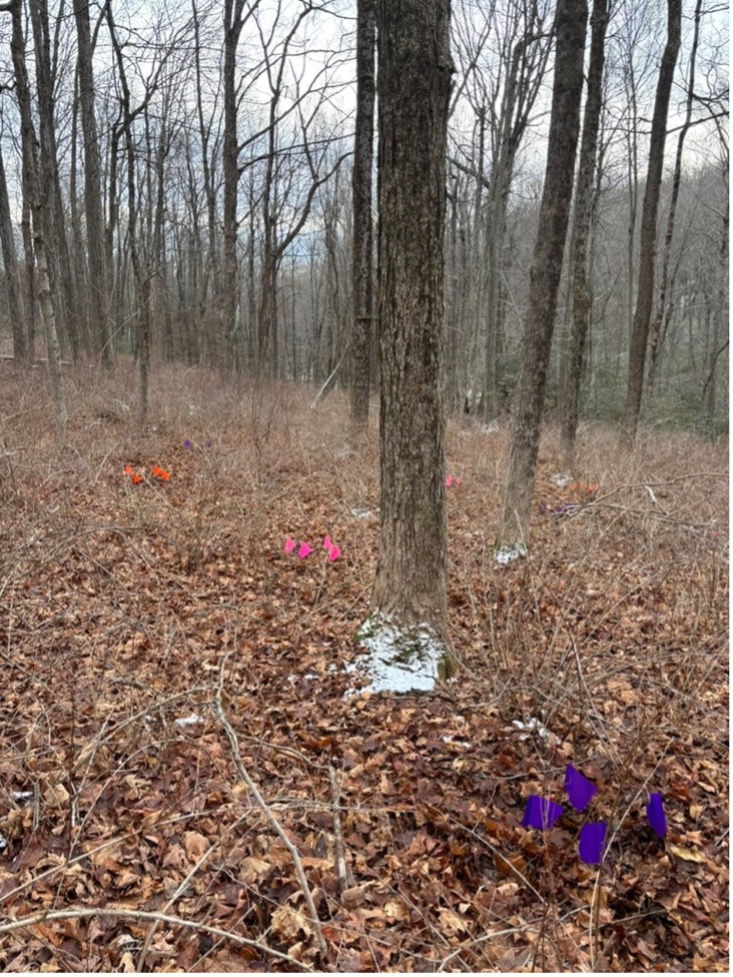
At the end of Project Year 1, we have planted research plots for two separate research questions at farms across New England, working with farmers and land stewards to identify sites that will function as forest farming demonstration plantings following the completion of this project. We planted research plots in 18 stands at 9 farms (9 pairwise comparisons) for Q1 (“Are ‘indicator species’ useful for identifying successful sites for planting forest farming crops in second growth forests of New England?”) and research plots in 8 stands at 7 farms and forests across New England for Q2 (“Can ‘degraded forests’ and urban fragments successfully be used to grow forest farming crops?”).
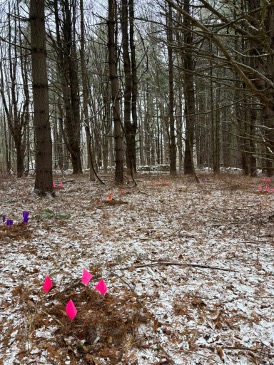
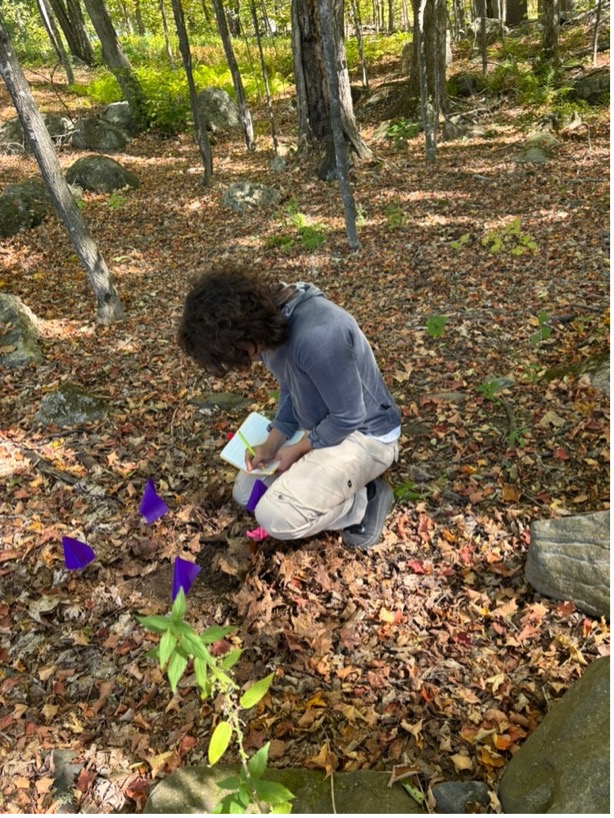
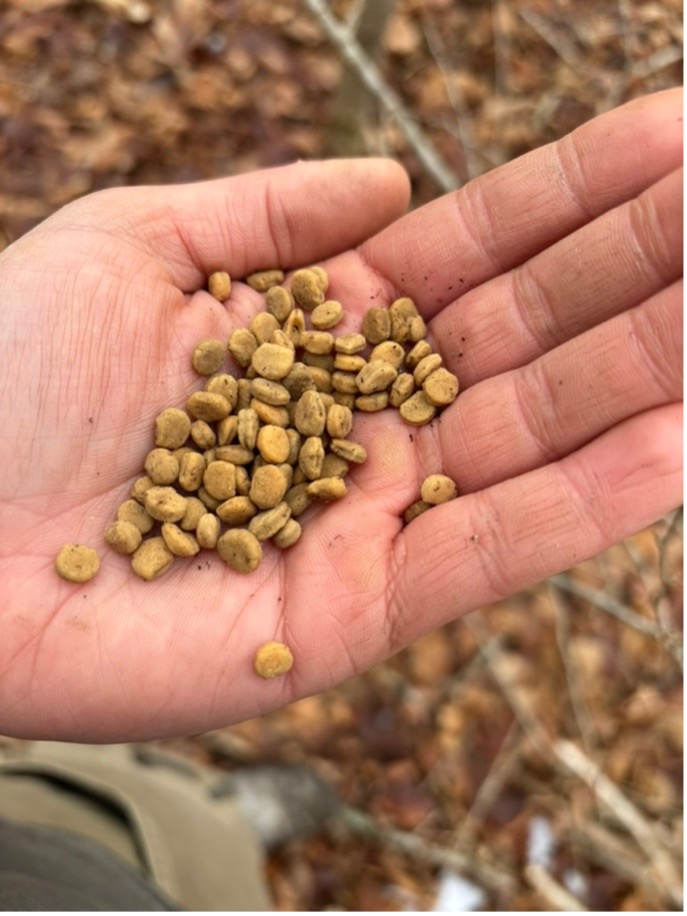
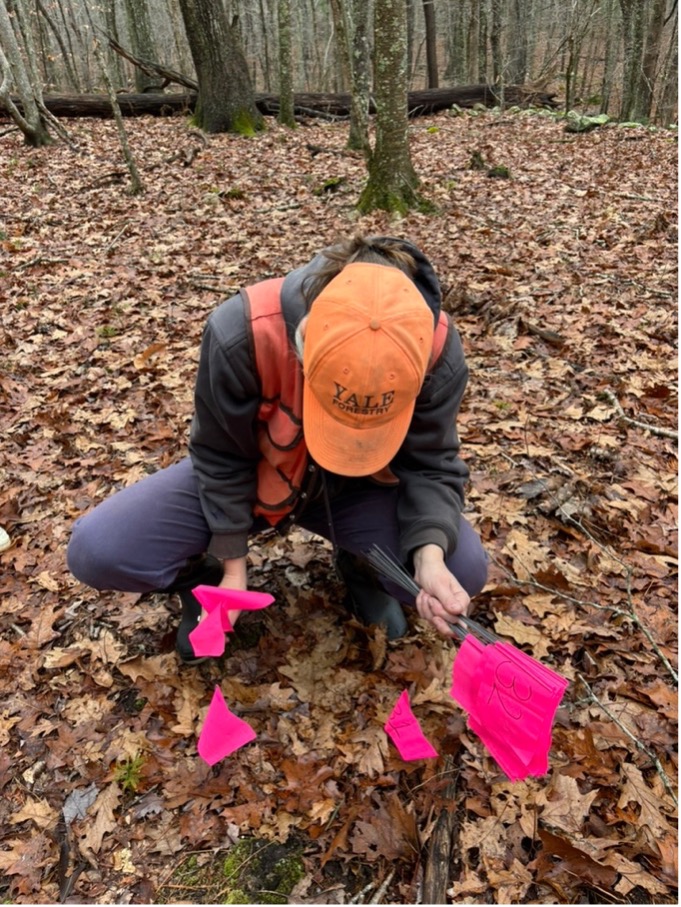
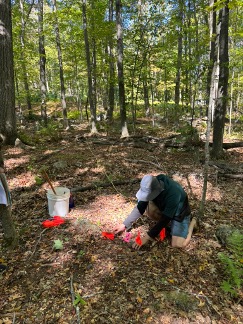
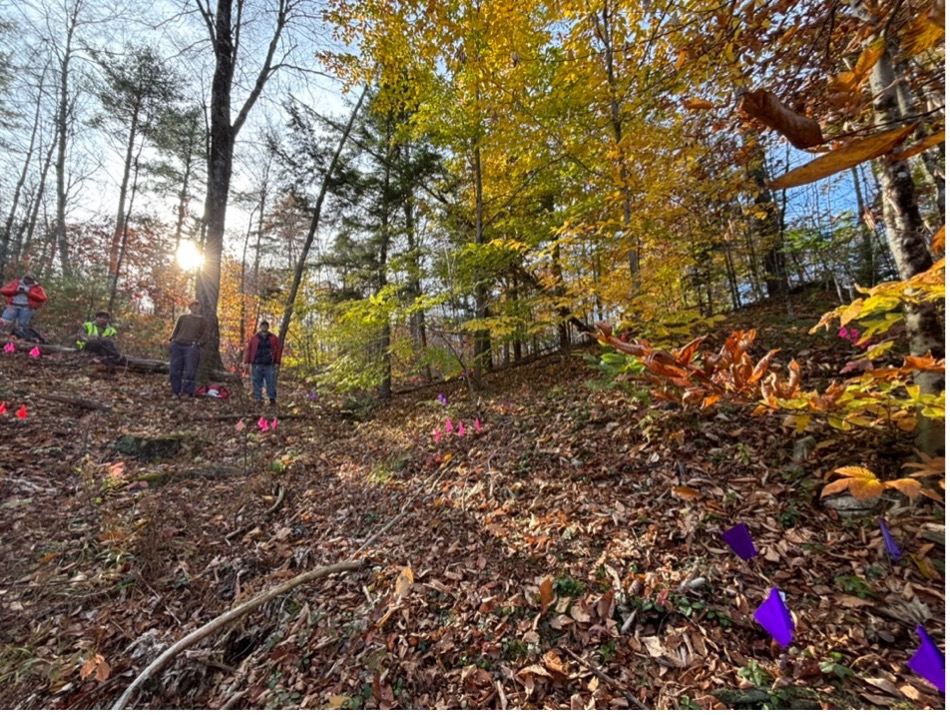
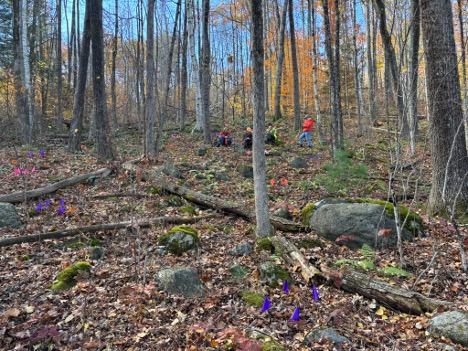
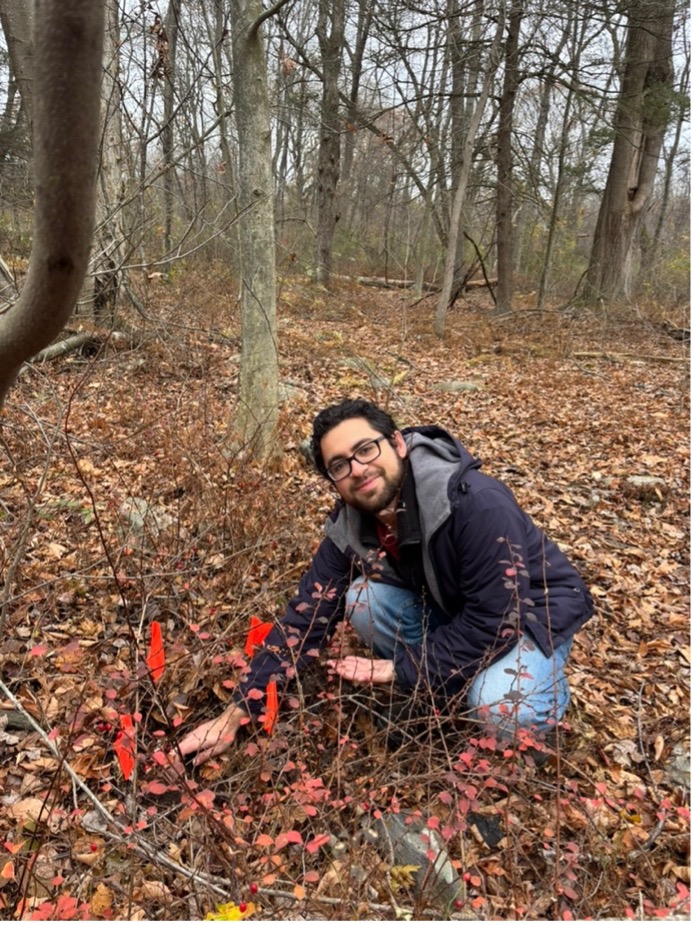
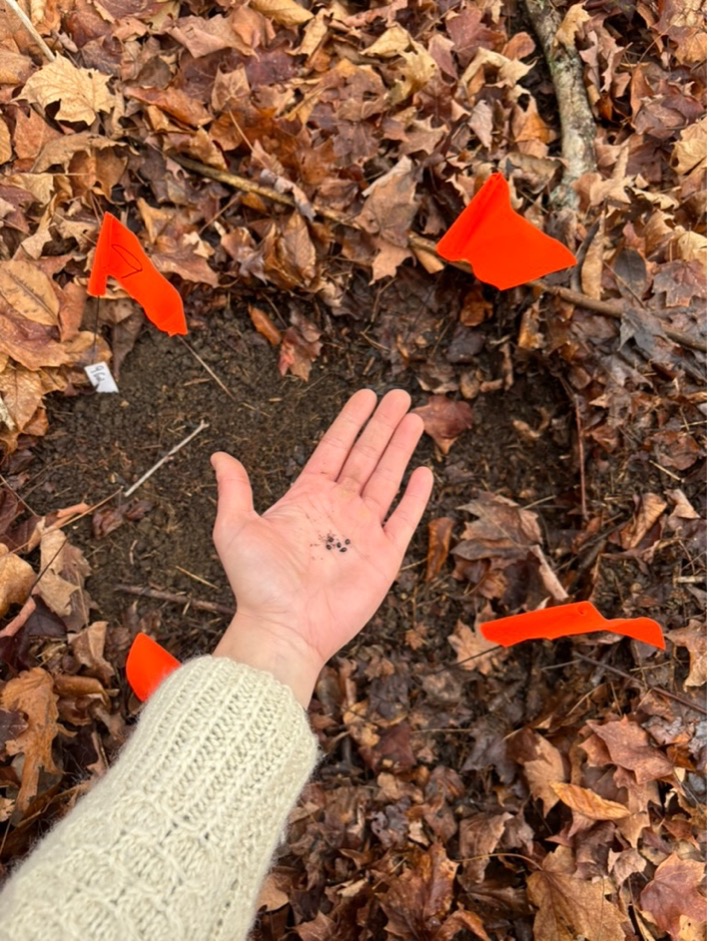
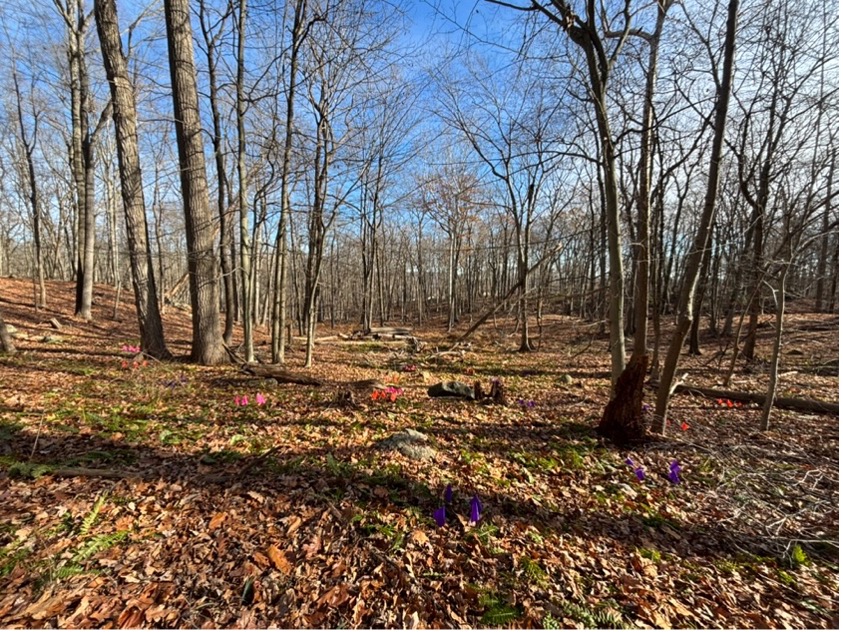
In the summer of 2025, we conducted outreach to build relationships with farmers participating in research by having plots sited on their land. We purchased ginseng, goldenseal, and bloodroot seed from sustainable nursery and forest farming operations, using locally sourced seed wherever possible. Starting in September and until December 2025, we planted 1’ x 1’ square plots of ginseng, goldenseal, and bloodroot on working farm and forestlands, and in urban parks and degraded forest fragments ridden with invasive plants like Japanese barberry. In total, we planted over 500 individual plots of the three study species across five states in New England. We marked plots with labelled pin flags and plant tags, collected GPS coordinates for individual plots, and recorded environmental variables like associated species in the canopy and understory.
In Project Year 2, starting in Spring 2026, we will return to each participating farm site to record early season associated understory species, light levels in the forest, and other environmental variables. We will count germination rates for ginseng plots because the seed is stratified and is thus expected to germinate after one winter. Upon returning to each site, we will protect seedlings germinating in research plots from deer browse and other herbivory with woven wire coverings to ensure the collection of accurate data on germination rates.

Education & outreach activities and participation summary
Participation summary:
Year 1 update
We collaborated with farmers interested in establishing forest farming plantings and using these research sites to educate other farmers and visitors about forest farming practices. Participating farmers used existing knowledge or learned about forest farming in order to help select sites on their land ideal for planting research plots, and farmers were involved in planting research plots. Part of the education and outreach included updating research design for both treatments to incorporate feedback from project advisory committee members and participating farmers, improving the overall relevance and application of future results for forest farmers in New England. Participating farmers learned about forest botanicals, sourcing and propagating planting stock, crop markets, and the current research around indicator species for site selection.
At workshops hosted by the Northeast Forest Farmers Coalition and in NFFC newsletter articles and social media posts, we engaged workshop attendees and our online networks in gaining a nuanced understanding of site selection and forest dynamics for forest farming systems, including discussing species composition, forest succession, soil type, invasive species management, and land use history as factors to consider in site selection. Establishing these research plots enabled us to engage with more than 20 farmers to broaden the scope of site selection considerations in Project Year 1 alone.