Final report for LS22-365
Project Information
The purpose of this study was to evaluate the effectiveness of common trellising techniques used in small-scale, sustainable high tunnel cucumber production. Downy mildew (Peronospora sparsa) and powdery mildew (Ascomycotaphylum) are the primary diseases affecting cucumber production, with limited organic control options available (McGrath, 2013). High tunnels can be used to mitigate some disease pressure by reducing leaf wetness, while simultaneously extending the growing season. Trellising is essential for successful cucumber production in high tunnels. However, there is very little research on which trellising types are better at controlling diseases in the Southeast.
While trellising in high tunnel cucumber production was widely accepted as a best management practice, research had not yet quantified the benefits of different techniques on southeastern farms. This study utilized two trellising methods—drop line and netting—on six cucumber varieties representing common market types (pickling, slicer, and European) in a randomized complete split-plot block design.
Research was conducted at five sites: the Carolina Farm Stewardship Association’s (CFSA) Elma C. Lomax Research and Education Center in Concord, North Carolina, and four commercial farms located across the Mountains, Piedmont, and Coastal Plains of North and South Carolina.
An economic analysis was conducted for each trellising system, evaluating labor inputs and system implementation costs in relation to crop revenue. This analysis helped identify the profitability of each trellising method and cucumber variety.
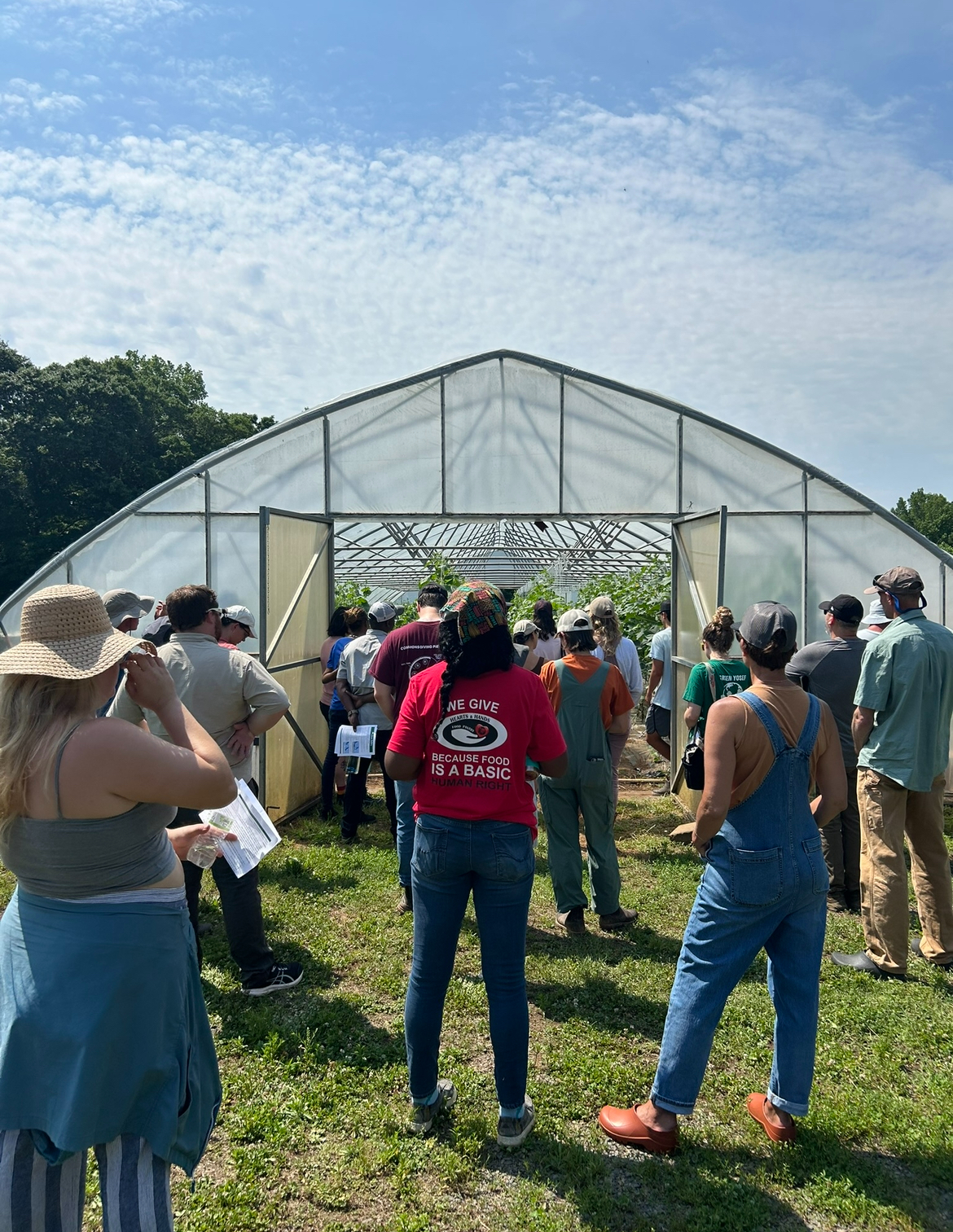
Field days were held annually at the Lomax Research Farm to provide training and demonstrations on high tunnel management, cucumber production, trellising techniques, and soil health in high tunnels. Additionally, three participating farms hosted a field day to demonstrate the effectiveness of trellising in sustainable farming systems.
Research results were disseminated at CFSA’s Sustainable Agriculture Conference in 2023 and 2024, through CFSA’s electronic newsletter, and on the organization’s website. In the final year of the project, a High Tunnel Cucumber Production Guide was developed and published online.
This project generated quantitative data to support organic and sustainable vegetable growers in the Southeast with decision-making regarding high tunnel management, trellising systems, and cucumber variety selection, considering cost of implementation, labor requirements, disease management, marketable yield, and projected market value.
1. Evaluate the performance of two common high tunnel cucumber trellising systems (drop line and netting) on six cucumber varieties on one research station and five farms.
- 1.1 Utilize six cucumber varieties grown in a high tunnel on two commonly used trellising systems at one research station in the Southeast region. Each cucumber variety will represent a specific type of cucumber.
- 1.2 Conduct small-scale trials at farms located in North and South Carolina using specific combinations of established trellis systems and chosen varieties to assess their performance across the region.
2. Conduct an economic analysis of each trellising system to provide growers with the information they need to determine which trellising technique is best suited for their operation.
- 2.1 Determine the best trellising system for each variety of cucumber to determine the most appropriate use within high tunnels throughout the Southeast.
- 2.2 Assess the performance of all cucumber varieties and the suitability of each to be grown in high tunnels in the southeast region.
- 2.3 Conduct an economic analysis of inputs, labor, and yield data to better inform farmers in the Southeast when making trellising and varietal decisions for cucumber production in high tunnels.
3. Disseminate research results and provide technical information to farmers on high tunnel cucumber production and trellising systems best suited for different variety types grown in different regions of North and South Carolina in different types of high tunnels.
- 3.1 Conduct Field Days at Lomax Farm in project years two and three and at each cooperating farm once during the project period to demonstrate trellising systems and provide training on high tunnel management, variety selection, and vegetable crop production (105 attendees).
- 3.2 Create and publish Seasonal High Tunnel Production: Organic Cucumber Guide via CFSA’s website. This guide will include best management practices on high tunnel production of organic cucumbers, an economic evaluation of different trellising systems, and research results from this project.
- 3.3 Submit article(s) to peer-reviewed, open access journals.
- 3.4 Present research results at CFSA’s Sustainable Agriculture Conference during project years two and three (30 participants).
- 3.5 Conduct 15 one-on-one consultations with area North and South Carolina farmers on integrating trellising techniques and maximizing high tunnel production (15 participants).
- 3.6 Conduct two high tunnel workshops to deliver study information in regions not reached via study location field days (30 participants). Participate in two non-CFSA events or conferences to deliver study information (30 participants).
- 3.7 Conduct monthly regional high tunnel meetings, in-person or virtual, for all project years. (360 participants).
Cooperators
- - Producer
- - Producer
- - Producer
- - Producer
Research
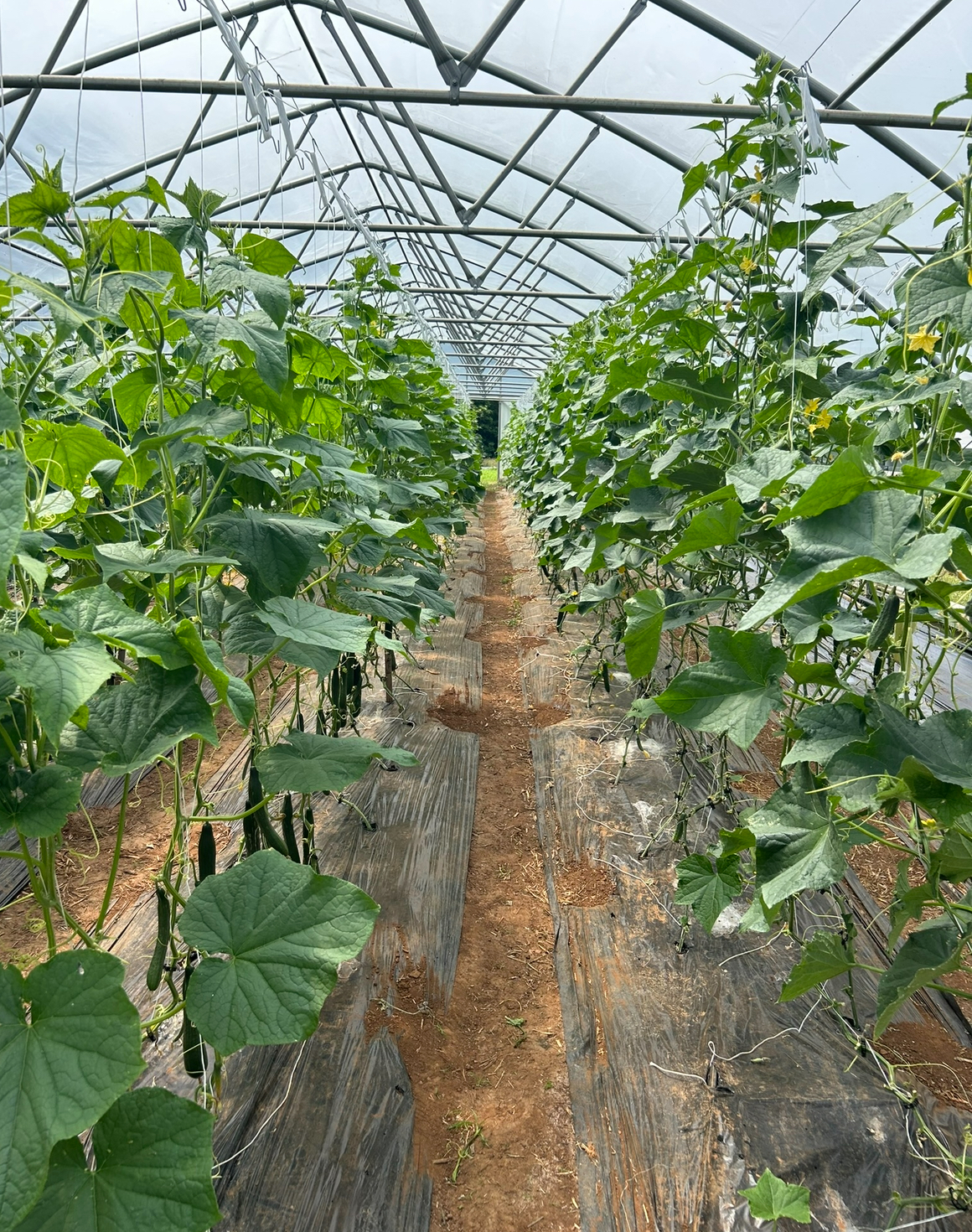
This study was conducted during the 2023 and 2024 growing seasons in a 30’ × 96’ high tunnel located at the Elma C. Lomax Research and Education Farm (Lomax) in Concord, North Carolina. Two commonly used high tunnel trellising systems were evaluated: a drop-line trellis using Tomahooks and a vertical trellis using Hortonova netting. Both systems were suspended from a pre-installed overhead wire positioned 6–8 feet above ground level. The wire was anchored to the tunnel end walls using eye bolts and 6-inch turnbuckles with hooks. For the Hortonova netting system, vertical support was provided by T-posts placed at 15-foot intervals along the row.
A randomized complete block split-plot design was employed with two trellising treatments, drop line (Tomahook) and vertical netting (Hortonova), and six cucumber (Cucumis sativus) cultivar sub-treatments. Cultivars included Poniente and Socrates (European slicers), Excelsior (American pickling), Picolino (cocktail), and Shintokiwa and Itachi (Asian slicers).
A winter cover crop of mustard, oats, and winter peas preceded cucumber production and was planted on October 18, 2022, and November 3, 2023. The cover crop was terminated using a flail mower on February 17, 2023, and March 3, 2024. Beds were tilled with a rotovator, then covered with black plastic mulch and irrigated using a single drip line.
Cucumber seedlings were started in a greenhouse on March 7, 2023, and March 9, 2024. Transplanting occurred on April 1, 2023, and April 7, 2024, into six raised beds measuring 90 feet in length and 30 inches in width. Plants were arranged in two rows per bed with an in-row spacing of 24 inches.
Ripe fruit was harvested weekly, sorted as marketable, unmarketable (diseased, cracked, or poorly shaped fruit), and then counted and weighed. Disease severity was assessed monthly using a 10-point scale, where a score of 1 indicated that approximately 10% of plants within a treatment were affected by disease, and a score of 10 indicated that approximately 100% of plants were affected by disease.
Yield and disease data were analyzed in R version 4.4.2 (R Core Team, 2025). Marketable and unmarketable fruit were analyzed separately. Differences among treatments were tested using a Linear Mixed Effects Model ANOVA (package lmerTest), with block and year as random effects and grafting and variety as fixed effects. Means were separated using Estimated Marginal Means (package emmeans).
Results
Powdery mildew (Podosphaera xanthii) was observed beginning in mid-April of the first year and appeared again in April during the second year. However, its impact on plant health and yield was minor. Early in the season, the disease was primarily confined to lower leaves in humid microclimates, but its prevalence declined as temperatures increased later in the season. Downy mildew (Pseudoperonospora cubensis) was not detected in the high tunnel during either growing season.
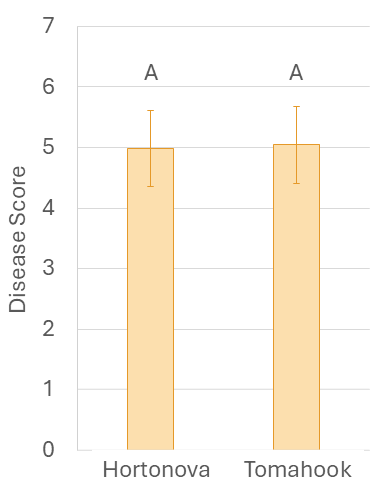
In contrast, black rot (Guignardia bidwellii) and gummy blight (Didymella bryoniae) caused substantial damage during the first year of the study. Among the six cucumber cultivars, Shintokiwa exhibited the lowest disease severity, while Itachi, Picolino, and Poniente had the highest severity scores. The remaining cultivars had intermediate levels of disease (Figure 1). There were no statistically significant differences in disease severity between the two trellising systems (Figure 2).
Figure 1. Disease scores by variety using a 10-point scale, where a score of 1 indicated approximately 10% of plants within a treatment were affected by disease, and a score of 10 indicated approximately 100% disease incidence. Different letters indicate significant differences among cultivars (p < 0.05).
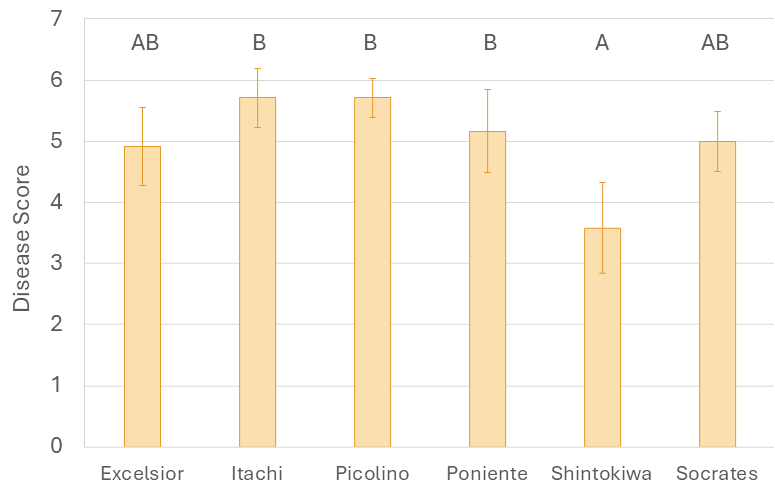
Figure 2. Disease severity by trellis type using a 10-point scale, where a score of 1 indicated approximately 10% of plants within a treatment were affected by disease, and a score of 10 indicated approximately 100% disease incidence. Different letters indicate significant differences among trellising systems (p < 0.05).
Disease management strategies included rotating applications of Bacillus subtilis (Serenade®), Milstop®, and Carb-O-Nator®, which were applied preventively and curatively throughout the season.
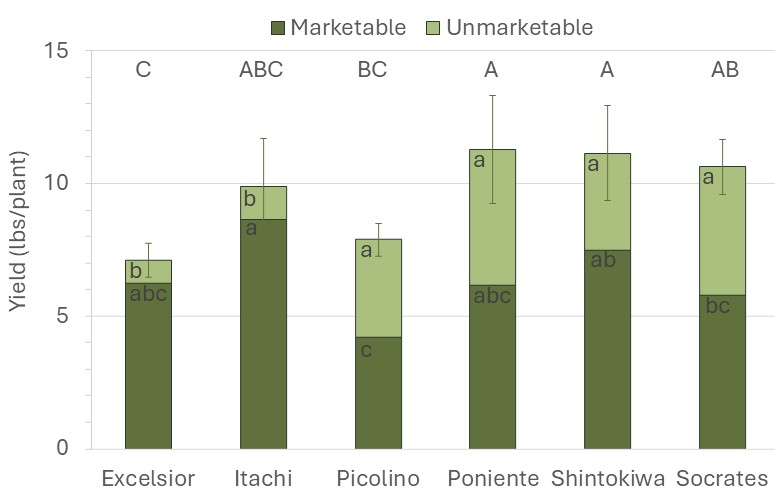
Excelsior and Itachi produced a significantly higher proportion of marketable fruit relative to unmarketable fruit, followed by Shintokiwa. In contrast, Socrates, Poniente, and Picolino had a lower percentage of marketable fruit (Figure 3) despite being among the highest overall yielders (Figure 4). These results suggest that Socrates, Poniente, and Picolino may be more susceptible to fruit blemishes and deformities. However, with improved pest and disease management, as well as enhanced sanitation practices, these cultivars have strong potential for high-quality yields. The least productive varieties were the pickling types, which, while prolific, produced smaller fruits and, therefore, lower yields per pound.
Figure 3. Marketable fruit as a percentage of total fruit harvested. Different letters indicate significant differences among cultivars (p < 0.05).
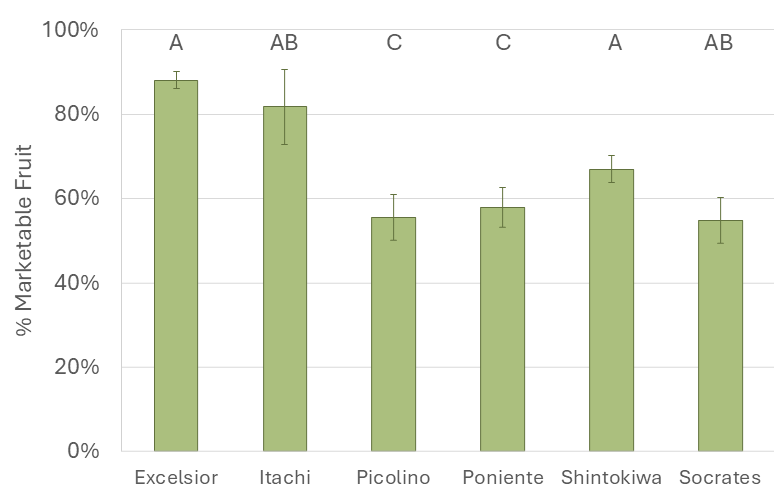
Figure 4. Total marketable and unmarketable fruit by variety. Different letters indicate significant differences among cultivars (p < 0.05). Upper case letters refer to total yield, while lower case letters refer to marketable or unmarketable yield.
When comparing trellising systems, the Hortonova netting system yielded slightly higher overall results than the Tomahook drop-line system. The quantity of unmarketable fruit was nearly identical between the two trellising types; however, Hortonova produced more marketable fruit overall (Table 5).
Figure 5. Total marketable and unmarketable fruit by trellising system. Different letters indicate significant differences among trellising systems (p < 0.05). Upper case letters refer to total yield, while lower case letters refer to marketable or unmarketable yield.
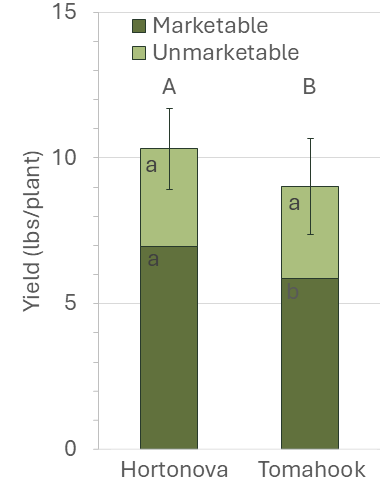
Cucumbers grown using the Hortonova trellising system yielded a 32% higher net profit than those grown with the drop-line system (Table 1) due to slightly lower setup labor costs and a higher volume of marketable fruit.
Table 1. Estimated Economic Analysis for Two Types of Trelissing Systems, drop-line and Hortonova, in a 30’ by 96’ High Tunnel.
|
Item |
Drop-line |
Hortonova |
|
Trellising |
||
|
Supplies |
$675 |
$685 |
|
Labor1 |
$1,718 |
$1,425 |
|
Return |
||
|
Marketable Fruit (lbs) |
7,325 |
9,290 |
|
Revenue2 |
$21,975 |
$27,872 |
|
Net Profit |
$19,582 | $25,762 |
1 Calculated at a rate of $15 per hour based on time valued by local farmers.
2 Calculated an average rate of $3.00 per pound for organic cucumbers sold directly to consumers.
Discussion
Over the two growing seasons, disease pressure varied by pathogen, cultivar, and trellising system. While powdery mildew was present early in the season, it remained minor due to rising temperatures, and downy mildew was never detected. Black rot and gummy blight were the most damaging diseases, particularly in the first year. Shintokiwa had the lowest disease score among the cultivars, while Itachi, Picolino, and Poniente had the highest. The trellis type did not significantly affect the disease score.
Excelsior and Itachi consistently produced the highest proportion of marketable fruit, followed by Shintokiwa. Although Poniente, Socrates, and Picolino had high total yields, they also had a lower percentage of marketable fruit, likely due to greater susceptibility to blemishes and deformities. These findings suggest that high-yielding cultivars could yield better marketable outcomes with improved pest and disease management, as well as enhanced sanitation.
Though unmarketable fruit percentages were similar between trellising systems, the Hortonova performed slightly better than the Tomahook system in total and marketable yield. Pickling types were the least productive in total yield due to their smaller fruit size. Cultivar selection and trellising methods significantly influence productivity, with disease management and postharvest quality playing crucial roles in determining marketable yield outcomes.
Cucumbers grown using the Hortonova trellising system achieved a significantly higher net profit than those grown with the drop-line system, driven by slightly lower setup labor costs and an increase in marketable fruit volume.
Education
This SARE project used a diverse, farmer-centered educational approach that combined individualized support, peer learning, and accessible resources. Direct consultations provided one-on-one technical assistance, while virtual meet-ups and multiple on-farm demonstrations created interactive spaces for farmers to exchange knowledge and strategies. Educational tools, including fact sheets, production guides, and research reports, were developed and widely shared in farmer-friendly formats. Workshops, field days, and presentations offered hands-on and in-person learning opportunities. Together, these efforts blended technical expertise with farmer-to-farmer learning, ensuring that information was both practical and directly applicable to on-farm decision-making.
Educational & Outreach Activities
Participation summary:
Educational and Outreach Description
Consultations
Providing direct technical assistance to 28 farmers. Topics included: variety selection, fertility and nutrient management, pest and disease management, trellising techniques, general high tunnel management, and construction and best management practices.
Curricula, factsheets or educational tools
Created the Secondhand High Tunnels: Purchasing, Dismantling, & Rebuilding fact sheet. 23 individuals have reviewed the factsheet.
On-Farm Demonstrations
- Wild Hope Farm, May 4, 2023. Chester, SC. 7 participants
- New Ground Farm, Pembrook, NC, May 11, 2023. 7 participants
- Seven Seeds, Burnsville, NC, June 7, 2024. 10 participants.
Online Trainings
Conducted 23 virtual meet-ups with 122 participants, covering fertility and nutrient management, pest and disease management, production planning, irrigation, weed management, trellising, soil preparation, crop and variety selection, niche crops, and tunnel construction. These sessions provided technical information and allowed farmers to share experiences, challenges, and practical strategies, fostering valuable farmer-to-farmer learning and peer support.
Published Press Articles, Newsletters
Published the research report Evaluation of Cucumber High Tunnel Trellising Systems on our website, presenting the study’s findings in a clear, farmer-accessible format. 68 individuals have viewed the report.
Published the Seasonal High Tunnel Production: Organic Cucumber Guide on our website. 142 individuals have viewed the guide.
Published an expert tip, Techniques to Improve Winter High Tunnel Production in our monthly electronic newsletter. 26 individuals have viewed the tip.
Webinars, talks, presentations
- High Tunnel 101, March 28, 2025. Oxford, NC. 27 participants.
- Trellising High Tunnel Cucumbers, March 3, 2025. Greensboro, NC. 23 participants.
- Trellising High Tunnel Cucumbers, February 19, 2025. Asheville, NC. 11 participants.
- Trellising High Tunnel Cucumbers, Nov. 12, 2023. Durham, NC. 20 participants.
Workshop/Field Days
- Lomax Field Day, May 28, 2025. Concord, NC. 12 participants.
- Lomax Field Day, May 23, 2024. Concord, NC. 35 participants.
- Lomax Field Day, May 18, 2023. Concord, NC. 15 participants.
Learning Outcomes
High tunnel construction
Purchasing a high tunnel
Maximizing high tunnel productivity
Trellising options for cucumbers grown in high tunnels
Pest/Disease management
Fertility/nutrient management
Weed Management
Project Outcomes
This SARE project has made a significant contribution to agricultural sustainability by combining on-farm research with effective outreach and education. The project reached a broad and diverse audience of farmers, educators, and service providers across the region through consultations, demonstrations, trainings, and publications.
Direct technical assistance was provided to 28 farmers, supporting changes in practices related to variety selection, nutrient and fertility management, pest and disease management, trellising systems, and overall high tunnel management. Additionally, three on-farm demonstrations and three field days provided 69 participants with hands-on exposure to sustainable production practices. These events, combined with 23 online trainings involving 122 participants, created opportunities for farmer-to-farmer learning and strengthened regional knowledge networks.
Educational resources, including a fact sheet on purchasing and rebuilding secondhand high tunnels and two farmer-friendly research publications, extended the reach of this work to over 128 unique readers. At the same time, four formal presentations engaged an additional 81 participants. These activities encouraged the adoption of improved production methods, increased farmer confidence in high-tunnel management, and expanded the capacity for sustainable vegetable production. As a result of these efforts, 120 farmers have adopted or modified practices based on project findings, ranging from cultivar and trellising choices to improved fertility and disease management.
By combining rigorous applied research with practical education, this project supports the three pillars of sustainability. Economically, it improves farm viability by increasing marketable yields and lowering production risks. Environmentally, it promotes better disease and pest management, more efficient trellising systems, and reduced waste from unmarketable fruit. Socially, it built peer support and knowledge exchange networks that will continue to benefit farmers beyond the project period.
Future outreach efforts should evaluate the long-term adoption of trellising and cultivar practices to quantify the economic benefits over multiple seasons. Additional farmer-participatory research on postharvest handling, disease sanitation, and cost-effective high tunnel construction (including the use of secondhand structures) could further enhance profitability and resilience. Building on the success of virtual trainings, hybrid models that integrate online and in-person peer learning may expand access and deepen impact across diverse farming communities.