Progress report for ONC24-158
Project Information
Culturally specific African crops include a multitude of vegetables such as heritage greens, okra, southern peas, amaranth, waterleaf, peppers, eggplant, basil, and others with specific tracings to Africa. These crops were brought to America by Africans hiding and carrying homeland seeds during the African Diaspora. Since their introduction to American agricultural farmlands, much effort has been given to saving seeds and maintaining the quality of these crops as viable food sources, however, locating and purchasing them are limited.
This project will test the viability/sustainability of these crops in Ohio climates and soil types. With CSU Extension, four Ohio African American urban farmers in two cities will grow between 2-10 African heritage crops per farm. Productivity will determine the overall success of these crops and their potential to allow Ohio farmers to market and profit from, and consumers of African descent to have a local source of these beloved crops.
The two-year trials will take place at Ohio urban farm locations in Cincinnati and Columbus, the CSU Research Farm in Wilberforce with second-year trialing to also take place at CSU’s Botanical Garden. Results will be shared with farmers and customers and will also inspire permanent heritage garden at the Botanical Garden.
- Field test African culturally specific crop viability in Ohio.
- Develop planting schedules for production harvests /project crop yields.
- Promote the purpose of culturally specific crop production.
- Create a Black Heritage-focused garden (12’ X 45’) within the CSU Seed to Bloom Botanical and Community Garden to emphasis African heritage crops.
- Use data gathered to develop educational programs on how African Americans influenced Agricultural practices currently in use in America.
- Utilize Ohio African American urban farmers with culturally specific crop production / seed saving.
- Develop a sustainable marketing and seed business model collaboratively with growers.
Cooperators
- - Technical Advisor (Researcher)
Research
Our farming partners had the option to select 2-10 African Heritage crops to trial. They will start crops from seed and monitor through the growing season to report the progress of how these crops perform in the Ohio climate.
Research beginning with growing season 2025.
On Wednesday, 11/5/2025, a round table discussion was held with the farmers and the CSU Researcher to review challenging issues such as changing weather conditions, seed germination/ direct seeding, soil conditions and pests. For the 2026 growing season, we opted to provide mini-green houses and heat mats to assist with seed starting, and to provide soil tests to measure nutrient levels.
Educational & Outreach Activities
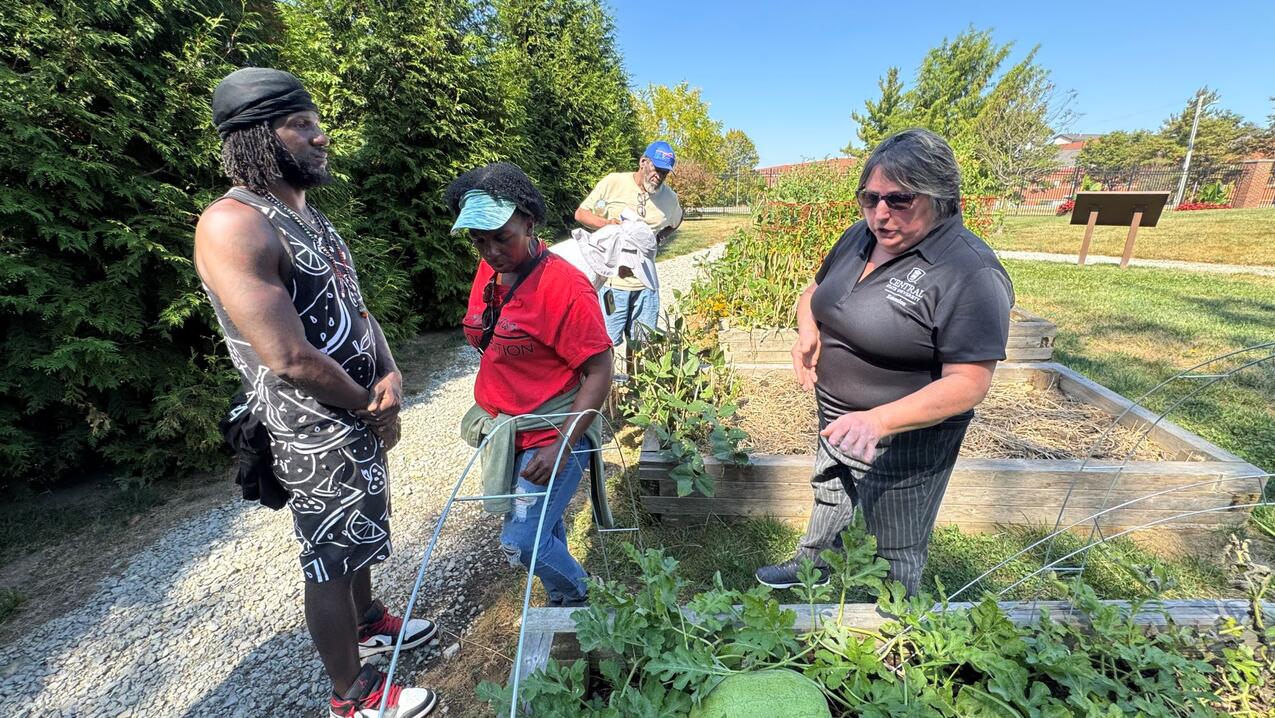
9/19/2025 BIPOC Food & Farm Network (BFFN) - Black Farmers Conference tour and African Heritage Crops dicusssion
Participation summary:
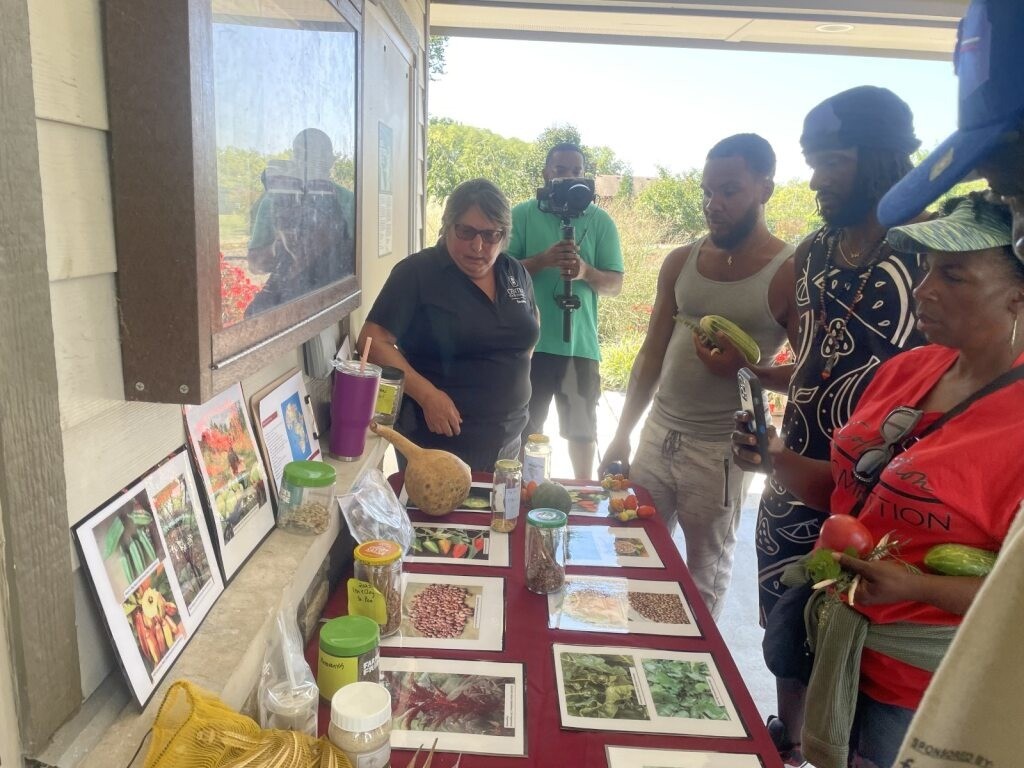
Reviewing successful African Heritage crops
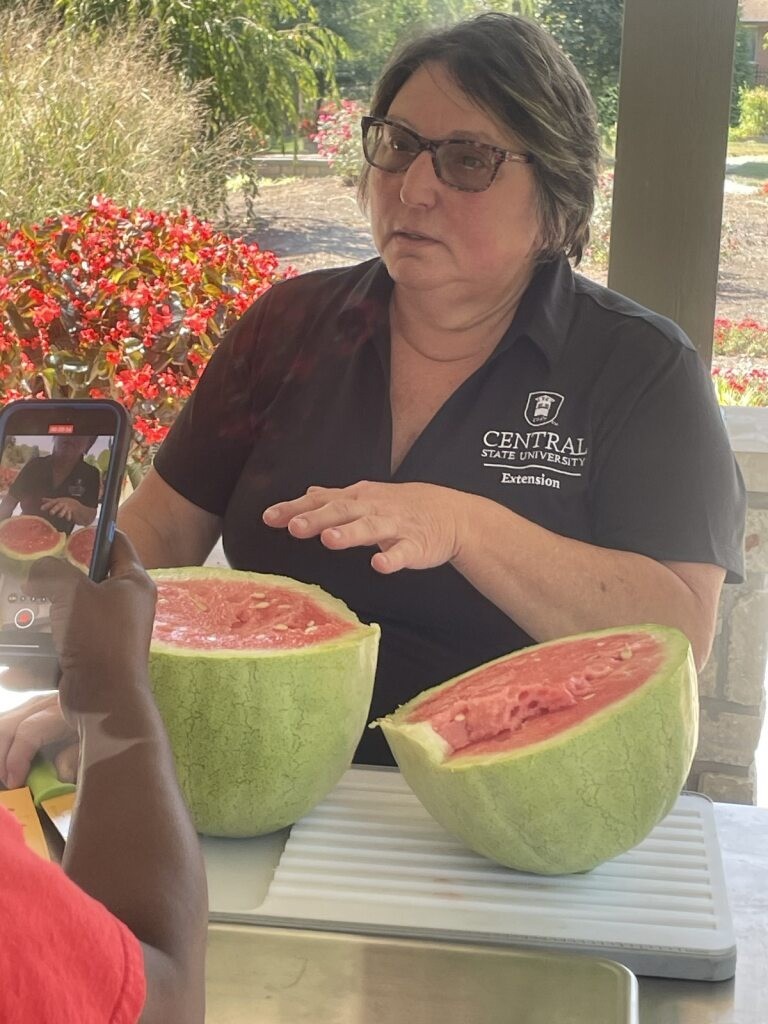
Cutting watermelon for tasting

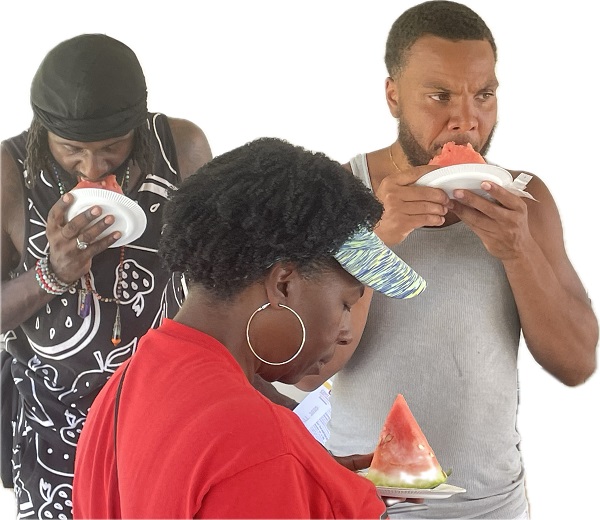
Best I've ever had
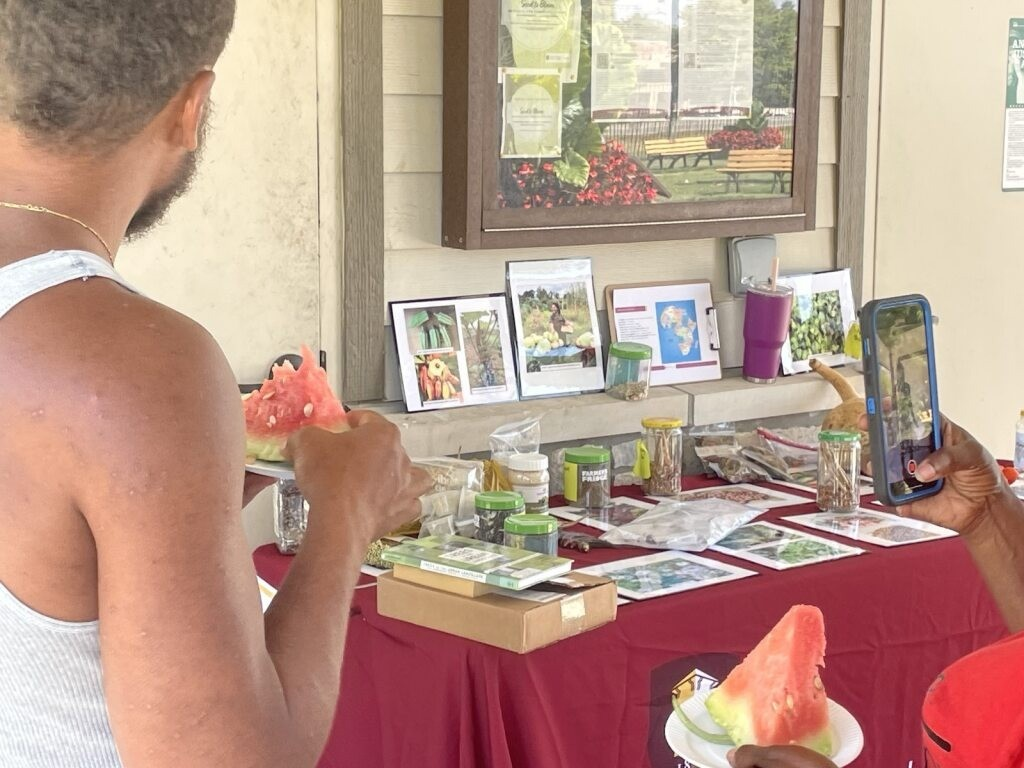
Reflecting on the project
Learning Outcomes
Research beginning 2025 growing season
Seed Germination - creating a timetable based on targeted transplant dates
Transplanting schedule - based on weather conditions and other conditions.
Weed control
Pest Control
Weather conditions
Harvest dates
Seed Saving
Project Outcomes
Research beginning growing season 2025.
NIFA Report: (https://nidb.landgrantimpacts.org/impacts/show/8
2025 CSU Research Farm: OHIO AFRICAN HERITAGE CROP PROJECT, Central State University Garden
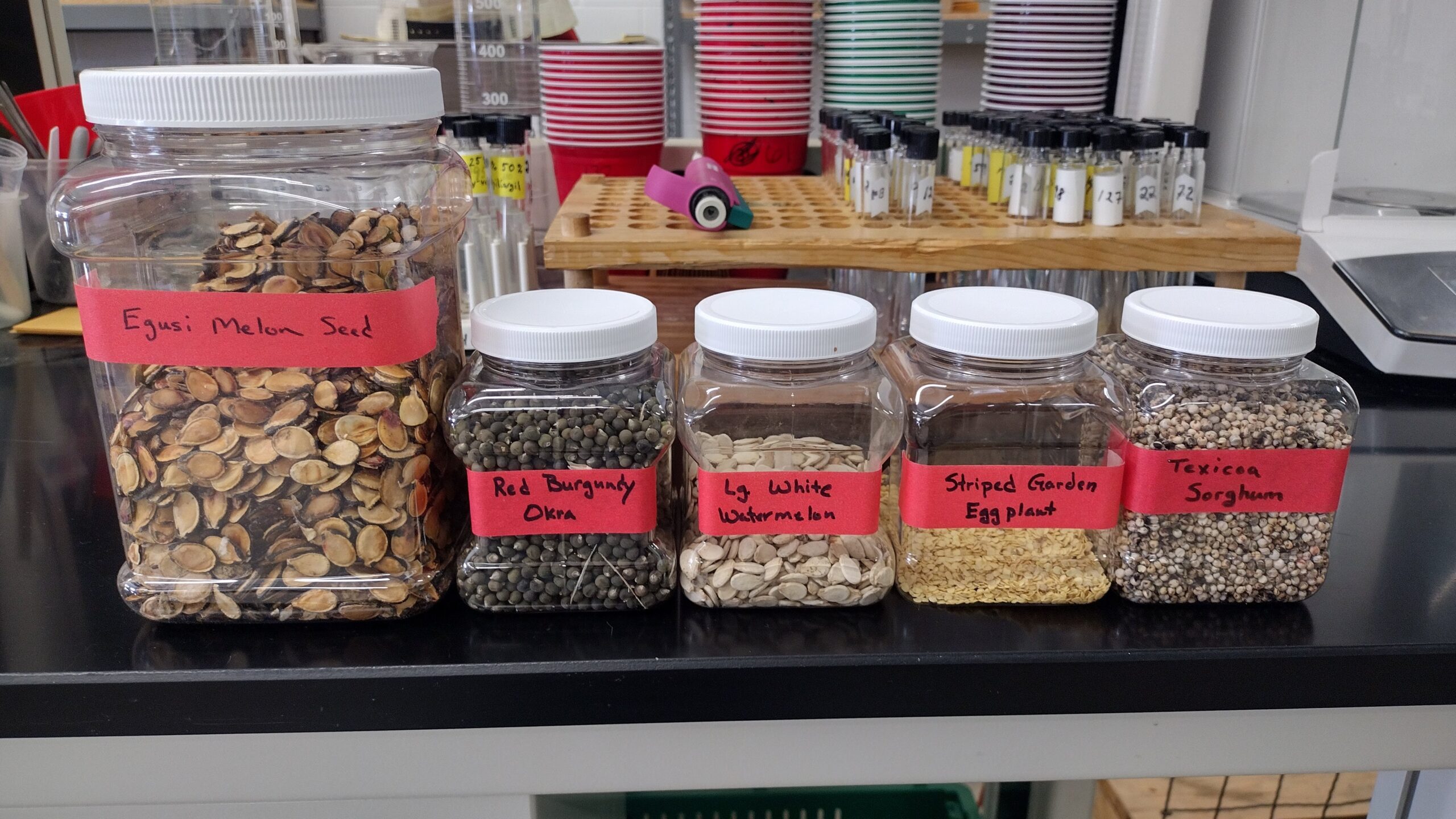
We grew seven different varieties of heritage crops at the Central State’s Garden. Those varieties were Red Burgundy Okra, Iron and Clay Southern Pea, Odell’s Large White Watermelon, Texicoa Sorghum, Striped Garden (Toga) Eggplant, Speckled Swan Large Gourd, and Egusi Melon. Five of these varieties were started in the greenhouse and then transplanted into the garden. Those were the eggplant (started 5/8), okra (started 5/26), watermelon (started 5/29), gourd (started 5/29), and the melon (started 6/2). Each was watered as needed to keep the soil moist. The pea and sorghum were direct seeded into the garden.
On June 20th all trays of plants were moved to the aquaponics building and allowed to harden off for several days before transplanting. All the transplants were planted on June 23rd and the direct seeding was done on June 24th. After planting all plants were watered by hand. Although drip tape irrigation was set up it was never used due to an issue and main water supply. Luckily enough rain accumulation occurred (Table 1.) to keep the garden well-watered. To suppress weeds an organic weed killer solution made up of 1 gallon of vinegar, 1 cup of salt, and 1 tablespoon of dish soap was sprayed on the weeds. Four applications (7/7, 7/11, 7/21, and 8/6) were made throughout the growing season.
Flowers began to show around mid-July with the watermelon, melon, and gourds flowering first. The okra was next to flower. In the later stage of the garden, it was hand watered using large 500-gallon tanks equipped with a garden hose. The garden was hand watered three times (8/12, 8/29, and 9/12). This was enough water to help the crops finish production. Unfortunately, deer came into the garden and damaged the Iron and Clay Southern Pea and the Odell’s Large White Watermelon. Because of this there were no pea or watermelon harvested from the CSU garden. Some damage occurred to the Red Burgundy Okra, but there were enough plants not damaged that production was not affected.
Harvest began on September 12th and continued till the end of October. Crops were harvested as they became mature. As crops were harvested, they were brough into the lab where they were spread out and allowed to dry down until seed collection was done. Currently we have 65 g. of watermelon seed, which came from another location on CSU’s campus, 20 g. of eggplant seed, and 294 g. of okra seed. Additional okra and eggplant have been harvested and are drying down for seed collection. Melons have been harvested and split to allow seed to be collected, and gourds have been harvested and are drying down in the lab now.
This season was very successful in my view. The crops that were selected grew very well in the environment and conditions we had this season. The transplanted took off after transplanting and the direct seeded crops grew extremely fast after planting. Mother nature supplied us with enough water to get plants growing and maintain that growth. And we only needed to supplement the plants with water a few times in the end. There are only a few things that I feel will need to be changed for next season. A way to deter the deer from entering the garden will need to be established. Also, I feel more applications and an earlier start to the application of the organic weed killer will help in suppressing the grasses and weeds that grew around the garden.
For better germination of crops: 1) mini-greenhouses should be used when starting seeds indoors if no existing greenhouse/ high tunnel. 2) Soil testing should be conducted to know the soil nutrients levels and how to best fertilize for better success in production, harvesting and seed saving. 3) Always practice crop rotation to prevent disease and nutrient depletion. 4) Look into deterrents like deer fencing, wire fencing to exclude deer, groundhog and other pests. 5) Be prepared with insect control methods.
Growing Season 2026 will used saved seeds from 2025 for germination to test viability for production purposes and continued seed saving for future growing seasons.
Information Products
- Central State to Supervise the Growning of African Heritage crops in Ohio.
- Traditional Ecological Knowledge
- Central State University Receives Grant to Test African Heritage Crops in Ohio
- Educators are bringing Africa to Ohio
- African Heritage Watermelon Tasting by Extension Staff
- Ohio African Heritage Crops Project