Final report for ONC24-159
Project Information
This project consisted of five field days across the North Central region followed by one-on-one consultations. Traditional sheep breeds and management systems have relied solely on phenotypic selection. Recent developments in breeding technology have demonstrated that genetics provide a more accurate way to improve the sustainability of sheep operations and the resources they utilize. Seedstock breeders use the National Sheep Improvement Program (NSIP) to generate estimated breeding values (EBVs) for a variety of traits, such as growth, litter size, parasite resistance, and carcass merit. This technology has been proven to work in other livestock species across the world. However, the US sheep industry has been slow to adopt this technology. Thus, to increase awareness and adoption, we will host five field days spread across the North Central region at innovative sheep farms to demonstrate how to couple genetics with phenotypic selection and management to optimize their flock to fit their environment. After the field days, SDSU extension sheep specialists will offer one-on-one consultation for a personalized experience in determining which data to collect and how to accurately utilize the genetic information returned. Deliverables will also include a fillable data management checklist and calendar.
This proposal addresses 4 major objectives:
1. Educate sheep producers on how to capture and utilize emerging genetic technologies to improve animal health and performance for their unique operation.
2. Educate sheep producers on how to match genetic potential of sheep and sustainable flock management strategies, such as multispecies grazing, targeted nutrition, selective deworming, rotational grazing, and flock performance data management, to optimize the entire farming system.
3. Demonstrate genetic technologies and production practices that have been successfully applied by farmers throughout the North Central region.
4. Increase the level of use by sheep producers of available genetic information for flock improvement.
Cooperators
Research
No research conducted
Educational & Outreach Activities
Participation summary:
July 11, 2024 Newell, SD - Hosted at Flying O Sheep Company in Newell, SD, utilizing virtual fencing for sheep was demonstrated to 12 industry professionals and producers. Virtual fencing uses cutting-edge technology to graze areas that benefit the sheep and the landscape. Dave Ollila, owner of Flying O Sheep Company, uses virtual fencing to graze sweet clover. This plant can quickly take over pastures but provides a high level of nutrition for sheep. Participants included NRCS and BLM employees seeking solutions to support producers with grazing opportunities in the Black Hills. Dave discussed his use of Rambouillet sheep for their adaptability and superior ability to gain and reproduce on rangeland.
April 14, 2025 Pierre, SD - Lambing success is also influenced by maternal genetics. During a lambing field day at Chambliss Merinos, udder structure and milk/colostrum quality are heritable traits that were discussed as culling tools that promote lamb survival. Participants also learned hands-on lambing skills such as giving vaccinations, docking, and body condition scoring. There were great discussions about disposition, structure, wool quality and other genetic factors that improve the flock and promote long term success.
June 13, 2025 Sturgis, SD - The "Virtual Fencing and Rangeland Management Field Day" highlighted virtual fencing for cover crop systems and basics of rangeland management. The SDSU West River Research Farm conducted a multi-year project converting a plot to organic production and utilized sheep and virtual fencing to graze the summer cover crop. Twenty-two sheep producers learned about the project, how virtual fencing can fit into their operation, and what options are available to cost-share through NRCS. After a lamb lunch, Dave Ollila, SD Soil Health Coalition Consultant, and Emily Helms, NRCS State Rangeland Management Specialist, demonstrated water infiltration testing, plant ID, and the value of biodiversity on rangeland for ecosystem health. A local producer also discussed his experience grazing leafy spurge in the Black Hills. After the workshop, one producer worked with Jaelyn to refine his grazing system and continues to work on finding ways to implement rotational grazing on a small acreage to improve his pastures and promote soil health.
November 22, 2025 Brookings, SD - Increasing the number of lambs born is a common goal amongst sheep producers to improve profitability, but it also increases nutrient demand and labor requirements. Conducting ultrasound during pregnancy allows for producers to precisely manage ewes based on litter size and pregnancy status. At the SDSU Sheep Unit, 17 sheep producers learned why ultrasound is a valuable tool and how to detect pregnancy and fetal count. Prior to this training, an ultrasound factsheet and chute side tool were developed as visual aids for the course. These deliverables a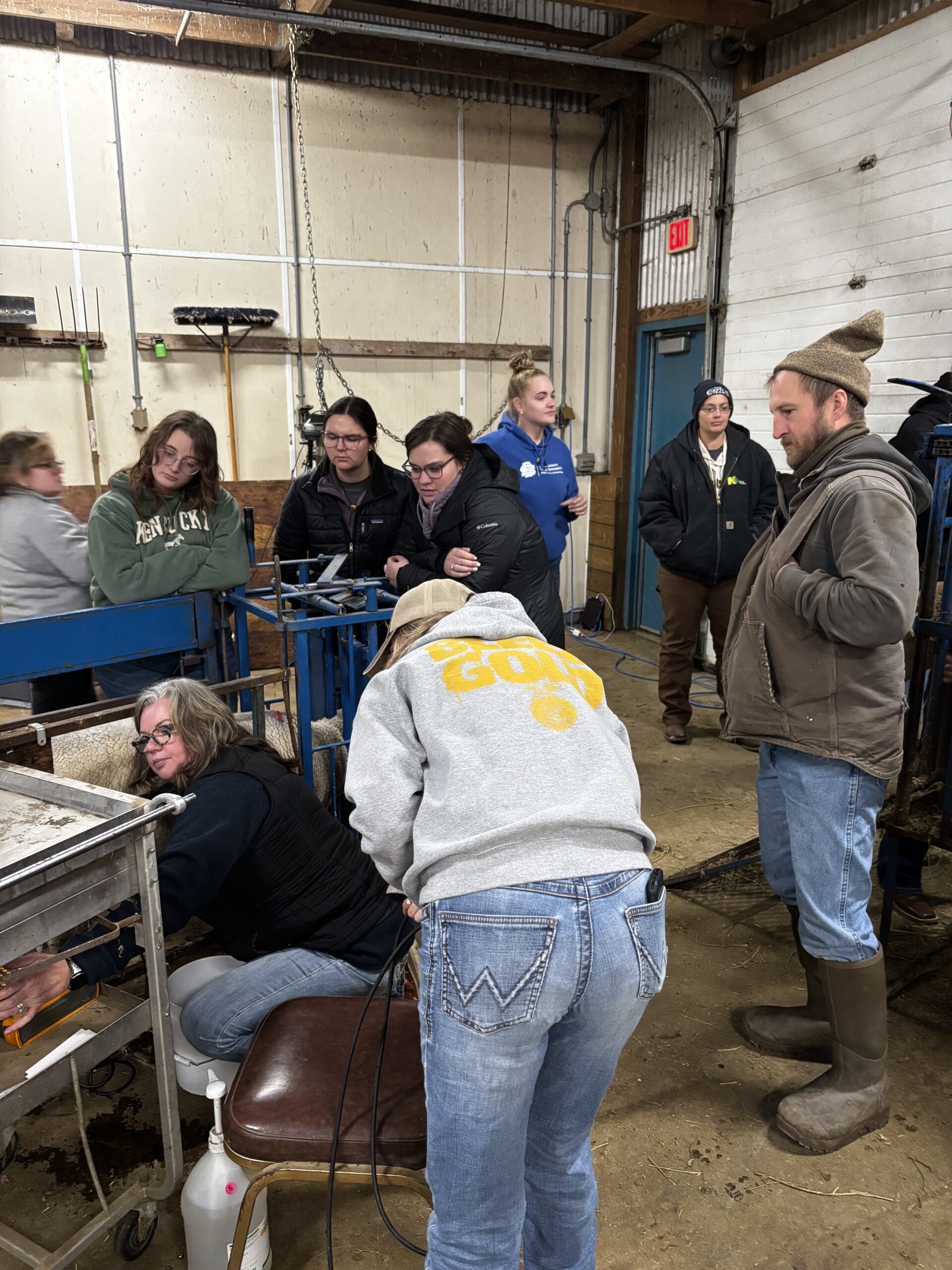 re also available on the SDSU Extension Website. The chute side tool has been distributed to 21 producers from 7 states and 1 other country.
March 7, 2026 Ward, SD - Sturdy Post Ranch, Justin and Crissa Fruechte, use superior genetics to raise seedstock Katahdin hair sheep. After touring their operation, 6 sheep producers discussed the use of NSIP Estimated Breeding Values (EBV) to improve animal resiliency to internal parasites. By utilizing fecal egg count EBV, sheep operations can produce more resilient sheep thus reducing the use of dewormer drugs. Dewormers have been shown to have negative effects on insect populations and resistance to these drugs continues to grow. After the farm tour, participants toured the SDSU Sheep Unit to learn how to body condition score and manage orphan lambs. One producer reported implementing a number of genetic and management strategies to improve their hair sheep flock and orphan lamb success as a result of these tours.
June 11-12, 2026 Belle Fourche and Newell, SD - A two-day field day was held for beginning sheep producers. Day one included a tour of Newell Sheep Yards and Center of the Nation Wool to discuss market opportunities for lamb and wool. The 4 participants also received individualized consultation with Jaelyn on using a production calendar and tracking key performance indicators. The key performance indicator worksheet will also be posted on the SDSU Extension webpage fall 2026. The day concluded with a tour of a sheep dairy; a growing industry within sheep production. The second day, another ranch tour was hosted at Flying O Sheep Company, Dave Ollila. Similar topics were covered as the 2024 and 2025 rangeland and virtual fence tours. However, in 2026, we also discussed alternative uses for low value wool. Wool pellets are rapidly gaining popularity among home gardeners as a sustainable option to improve soil nitrogen and water holding capacity. Beginning sheep producer and Rangeland Management Specialist for the Nature Conservancy, Lori Brown, discussed how wool dams can be used in wetland restoration. Ollilas have been working with the Nature Conservancy and World Wildlife Fund to take their lower quality wool to create dams in lowland areas that had previously been washed away by erosion. 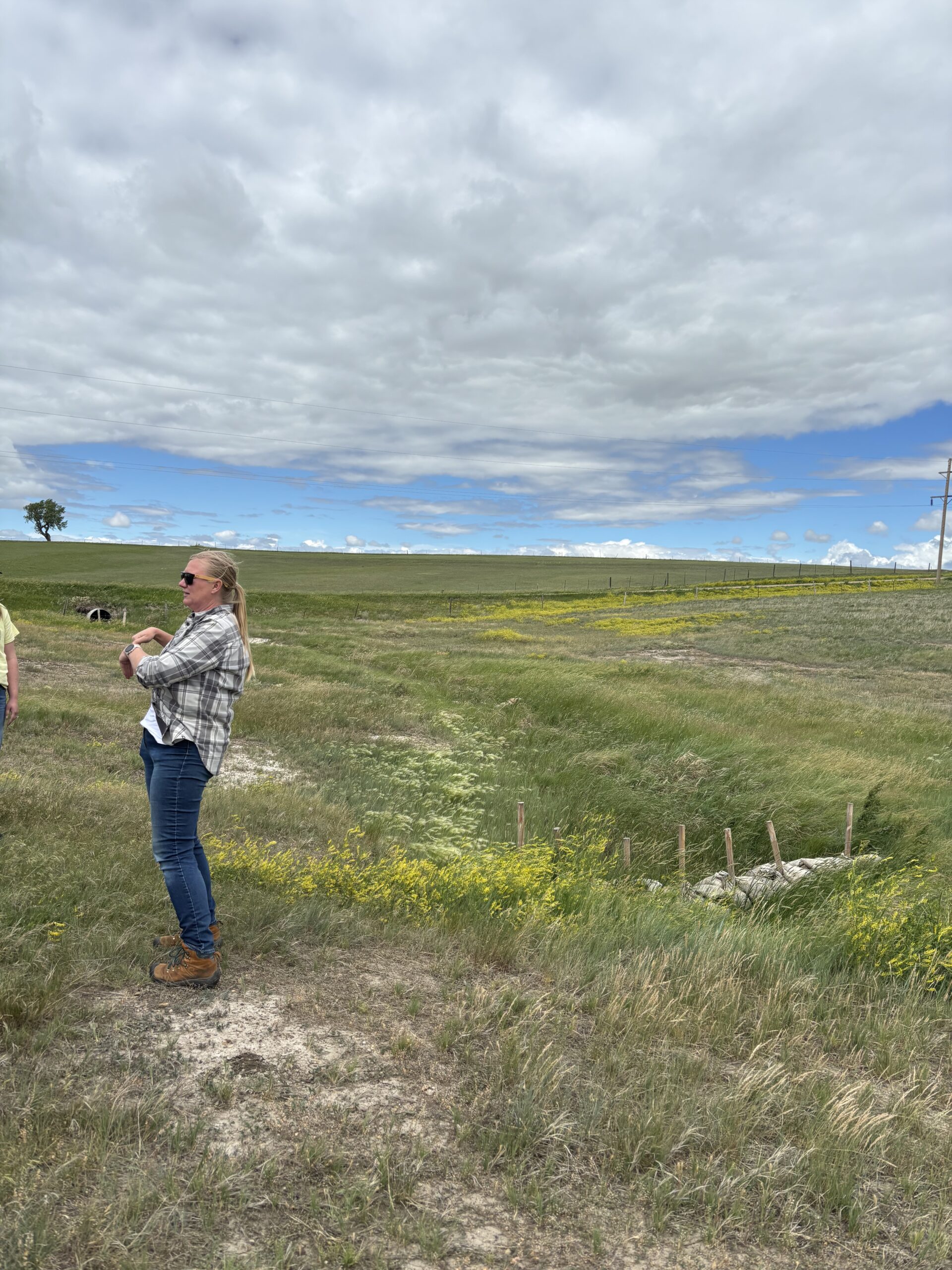
July 18, 2026 Huron, SD - A workshop called "Profit-Driven Sheep Management: Budgets, Lenders & Smart Changes" was held in conjunction with the National Targhee Show at the SD State Fairgrounds. There were 13 sheep producers from 5 states (WY, MT, SD, MN, WI) in attendance. Laurie Johnson with Farm Credit Services of America discussed enterprise budgets and how to be prepared when talking with a lender. Jaelyn Whaley continued the discussion with an example enterprise budget. She also provided a partial budget tool to attendees and covered how to use it to assess the profitability of making a change within an operation. Throughout the program, Laurie and Jaelyn provided tips to improve the economic sustainability of an operation and gave real examples of how producers have been successful. Prior to this program, Laurie also spoke on a webinar for beginning sheep producers diving deeper into enterprise analysis and strategies to set their operation up for financial success.
Learning Outcomes
Sheep grazing behavior
virtual fence technology
Key management for lamb survival
Body condition scoring
How to pregnancy ultrasound
Application of estimated breeding values
Rangeland management
Sheep industry market opportunities
Budgeting and financial management strategies
Project Outcomes
This project equipped sheep producers with diverse skills and knowledge that supports their operational success. The basis of agricultural sustainability is the individual producer's ability to have a economically resilient operation. Precision management of all operational inputs determines the profitability generated by outputs. By learning skills like pregnancy ultrasound, body condition scoring, and enterprise analysis, sheep producers can make better financial and management decisions. Beyond the individuals, sheep provide a unique opportunity for small acreage food and fiber production. According to the most recent USDA Agriculture Census, 93% of sheep producers own less than 100 head meaning that many sheep producers are feeding and clothing the world on minimal resources. Sheep health and productivity is reliant on their nutrition. Strategically grazing sheep benefits not only the animal but also the rangeland. By utilizing targeted grazing and virtual fencing technology, sheep producers can target graze unwanted forages that are a detriment to the landscape but highly nutritious for sheep. Virtual fence technology is also being evaluated as an option for producers to contract graze areas that require vegetation management. Many of these landscapes, including urban lots, overgrown shrublands, solar farms, and public lands, provide benefits that extend beyond the sheep producer. Therefore, utilizing sheep to deliver ecosystem services and maintain healthy rangelands is critical to long-term sustainability.
Two young men have been advocating for the continuation and expansion of their family's sheep flock in northeast South Dakota. These young men along with their mother attended two of the workshops supported by this project and have received multiple one-on-one consultations with Jaelyn. Prior to these workshops, this operation struggled with lamb survival, particularly orphan lambs, and flock health. After applying some of the skills and knowledge from these workshops, they reported, "We have no orphans. We've successfully grafted several lambs. Much healthier." During phone conversations it was also mentioned that they have significantly reduced their use of anthelmintics. The boys are also implementing a fall lambing group to support their annual cash flow. Their mother recently reached out and said, "Thanks again for all you have done for us. We will continue to ask for help."