Progress report for ONE24-439
Project Information
This project brought together the experts at the non profit organization, Compost For Good, and three flowers farms in the Northeast with high volume, in-vessel composting machines to learn the processes involved in training for the operation of these machines, the usefulness of inputs readily available on their farms, the production of compost for use in farming, analysis to check for the elimination of pathogens, and finally, a determination of the practical uses of compost products they made. This project sought to discover specific compost input "recipes" but found that each farm's seasonal, available flower farm green wastes serve to build temperatures consistent with pathogen mitigation (with the exception for the hydroponic winter season at the project host's farm). A written guide has been produced to help other farmers source, site, and adapt these machines (which were originally designed for the disposal of poultry carcasses or community food waste composting programs) to practical use on cut flower farms. Media outlets and industry conferences have been notified of the project outcomes and the farms hope they will be able to share their results through those outlets and others in the coming year. During the course of this project, the host farm also developed a mentoring relationship with the Maine Department of Corrections, which seeks to build it's own machines and integrate them into inmate vegetable farming programs. We were grateful for the support of SARE for this project.
This project seeks to establish best practices for use of in-vessel composters on cut flower farms in the Northeast, including
- installation and site guidelines
- recipes for use (i.e., ratio of “green” and “brown” inputs)
- ideal temperatures for pest and disease elimination
- testing recommendations and results
- information on using resulting compost in containers and on cut flower beds
This project aims to develop best practices for using high-volume, in-vessel composters on cut flower farms in the Northeast. These composters, originally developed by the livestock industry to compost poultry mortalities, have the potential to solve many problems faced by cut flower farmers in the region (outlined below). Additionally, new funding including through the NRCS makes these composters more affordable for farmers than ever before. However, many farmers are not aware of the advantages of these composters and best practices around how to use these composters on cut flower farms do not currently exist. Linda D’Arco of Little Farmhouse Flowers, a cut flower farmer, bulb importer, and farm educator, is one of the only cut flower farms in the Northeast currently utilizing this composting technology. This grant project will enable her, in her role as farm educator, to train partnering farms on using these composters for maximum benefit on their farms.
Most cut flower farms in the Northeast rely heavily on peat-based soilless mediums for seed starting and planting bulbs, which are often grown in containers such as bulb crates on flower farms. For example, at Moonshot Farm in NJ, the farm used over 35 cubic yards of peat-based medium for planting their 2024 crate-grown tulips alone, at a cost of over $8000. Use of peat moss by farms is contributes to environmental stres, as well as a significant expense for farmers.
Many cut flower farmers in our region, including Fivefork Farms and Moonshot Farm, the collaborating farmers on this project, utilize windrow composting methods to compost organic materials such as spent flower stems, crate medium, and flower bulbs, from their farms. Windrow composting is labor-intensive and easily mismanaged, leading to disease buildup, weed infestations, and poor quality compost. Many small farms don’t have the staff or time to properly manage compost piles and monitor them for the correct carbon to nitrogen ratio. As a result, most buy in both potting medium for containers and compost for their field beds. Neither Fivefork Farms nor Moonshot Farm currently re-use their farm-made compost in plug trays or container plantings due to concerns around disease. In 2023, Fivefork Farms spent over $12,0000 buying compost to topdress their high tunnels and amend a new field. The compost expense on both Farms will continue to rise as both Farms’ production grows.
The use of high-volume, in-vessel composters aims to resolve many of these issues. Rather than putting spent peat-based medium and used bulbs into windrow compost piles, Fivefork Farms and Moonshot Farm will be able to put these materials into the in-vessel composter, which gets reliably hot enough to kill pest and disease, while being less labor-intensive than their current composting systems. They will then be able to use the resulting compost in future container plantings, as well as a source of organic matter in flower beds. The result will be a greatly reduced reliance on peat-moss and purchased soil mediums, significant cost savings, and improved resistance to pest/disease.
While both Fivefork Farms and Moonshot Farm have already received funding to build the actual composting facility and infrastructure, they now need guidance on how to most effectively utilize the composter on their farms. This grant will enable Linda D’Arco of Little Farmhouse Flowers to train these farms on composting best practices, develop recipes for the in-vessel composter, test the resulting compost, and trial using it both in container plantings and on farm beds. The result will be a set of guidelines that can be used by flower farms across the Northeast region to reduce their reliance on peat moss and create their own potting soil and field amendments, without contributing to build up of pests, diseases, or weed seed. Ultimately, there will be a reduction of environmental and risks in agriculture and conservation of soil due to farms using less peat moss and composting their own waste. This will lead to improved productivity, reduction of costs and/or increase of net farm income as these farms will be able to spend less money on purchasing compost, planting medium, and soil amendments.
Cooperators
Research
By Jan 15, 2025:
Our team of 3 collaborating farmers with support from the non-profit organization, Compost for Good, meets to discuss questions, share outcomes, and receive advice from our consultant about all things related to the set up of 20ft in-vessel, rotating drum compost machines.
Collaborating farms began to add nitrogen and carbon rich inputs to their machines, while learning how the vessels accept materials and how much staffing and what duration of labor is required during these feeding sessions.
We have developed and shared a log that is used to track the progress of our work once the spring thaw comes and all three machines are operable again. (2 of the 3 machines entered the winter without enough momentum in their inputs to remain unfrozen.) This log tracks the labor hours used, the kinds of inputs used, the quantity of those inputs, and the temperatures we're able to reach at about 4ft depth from the entrance to the vessel drum, and additional notes from farmers. The log will be used as a "recipe book" of recommended compost input for flower farming operations using these large in-vessel rotating drum machines- content that is not available currently.
All three farms procured in vessel, rotating drum compost machines from Actium Resources in Canada. We are all working with their "Classic" rotating drum composter. These machines were cited on concrete slabs at Moonshot Farm and Five Fork Farms and on a packed gravel pad with 4x4 lumber "feet" with a shed style roof at Little Farmhouse Flowers as pictured here: 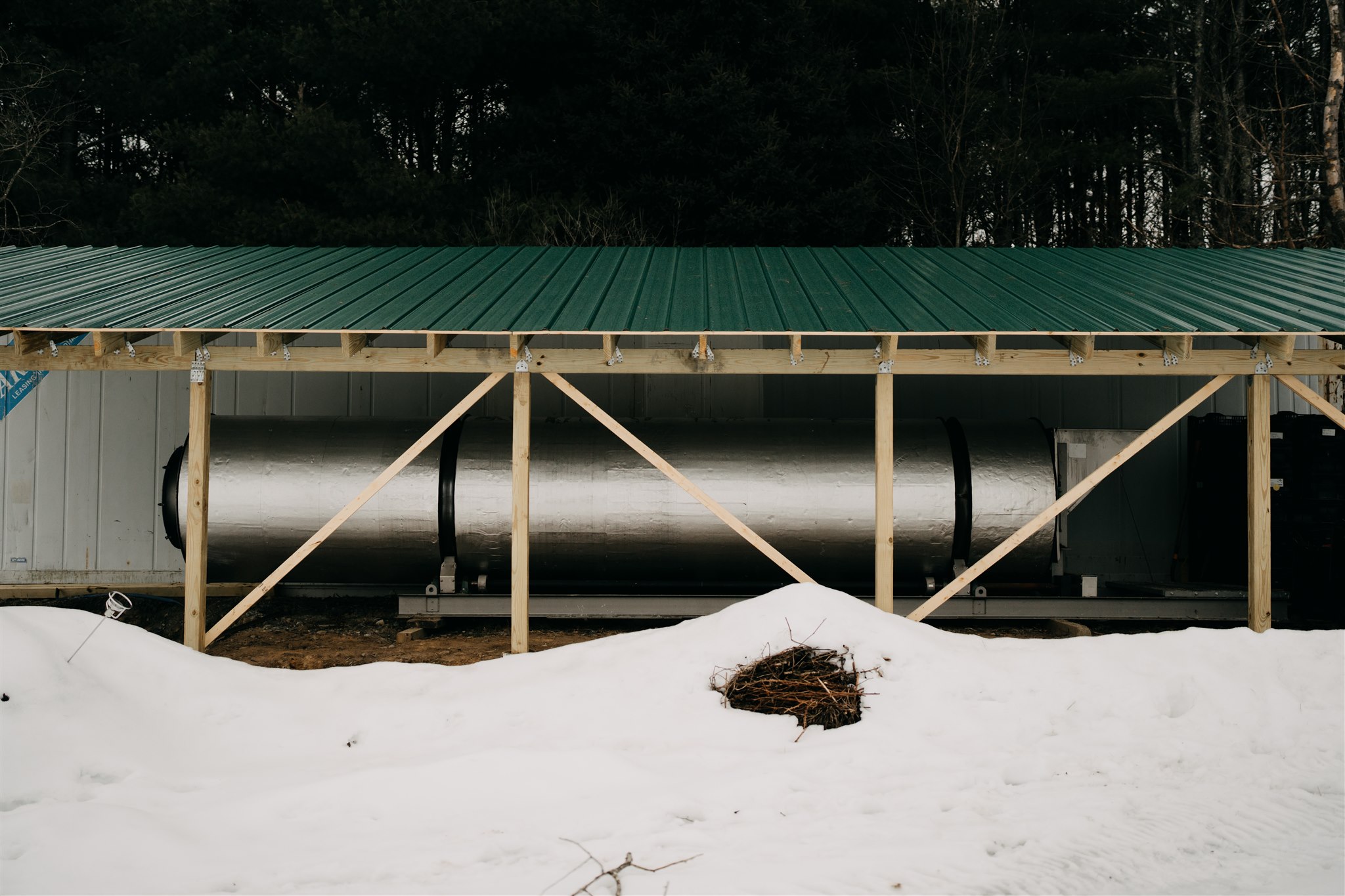 and here:
 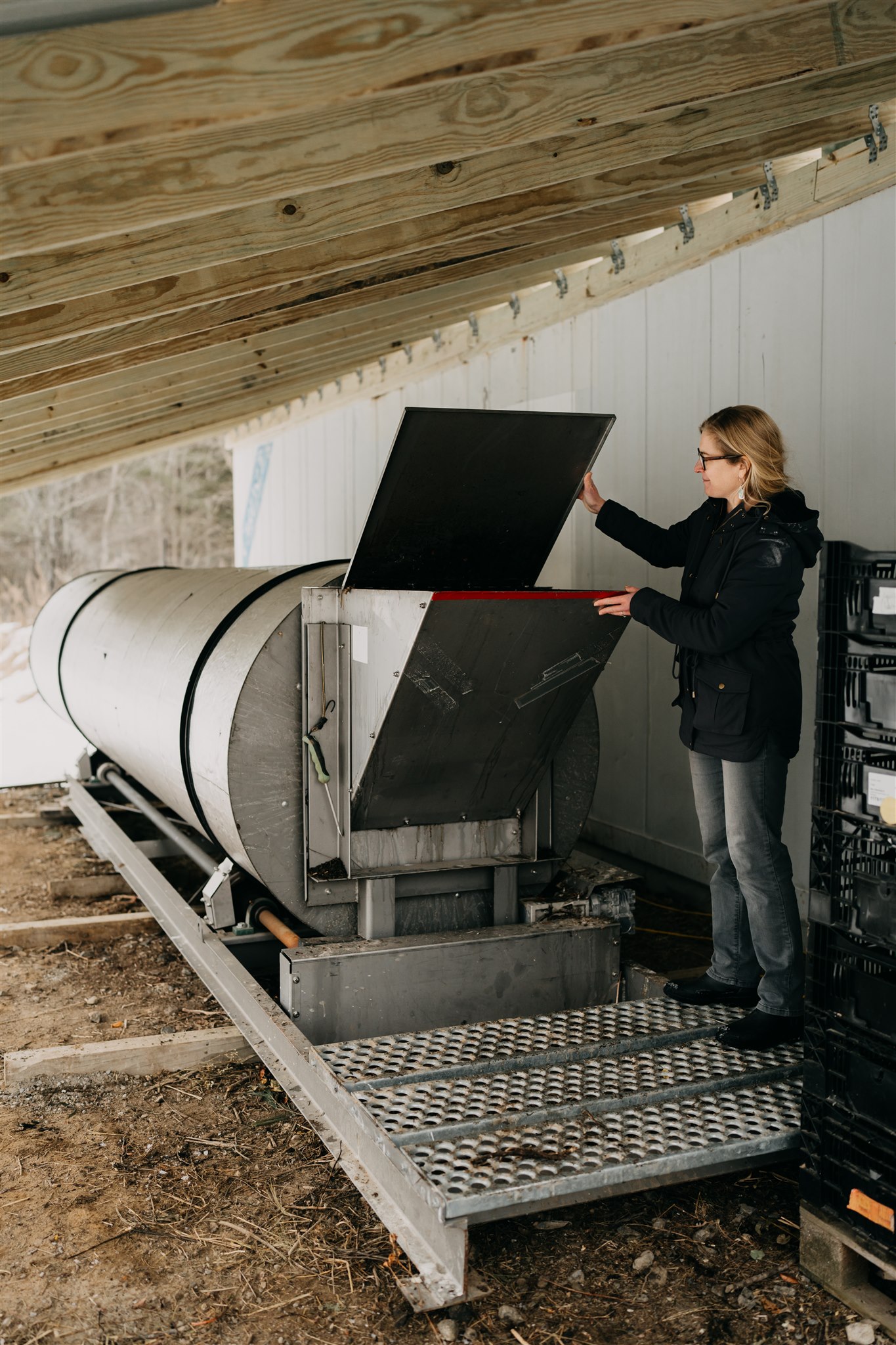 . In the second image you can see the 4x4 lumber under the composter. The farm is using that lumber to make adjustments for leveling as needed becuase the gravel can sink over time. A concrete pad performs better, but in the absence of funds for that foundation, the packed "1's and dust" and an annual check with small adjustments for leveling seem to work fine. Once in place, farm jacks or a tractor can be used carefully to lift one end of the machine at a time to make changes to the footings. All composters had to be offloaded with large machinery (crane or other suitable machine) from flatbed delivery trucks on arrival, and that is something any potential adopter must be aware of. There can be little notice of the delivery and arrangements must be made ahead of time to have the proper equipment for moving the machines into place. If the final location for the machine is not accessible by large machine or a large machine is not available to move the composter from one location to another, a skid steer or tractor and round poles or logs can be used to move a composter as seen below. The machine was moved to a permanent location several months after delivery. The permanent site had to be prepared by demolishing an old shed, preparing a gravel pad, and receiving a shipping container that would serve as the farm's walk in cooler. The cooler had to be placed first before the composter was rolled into place alongside it.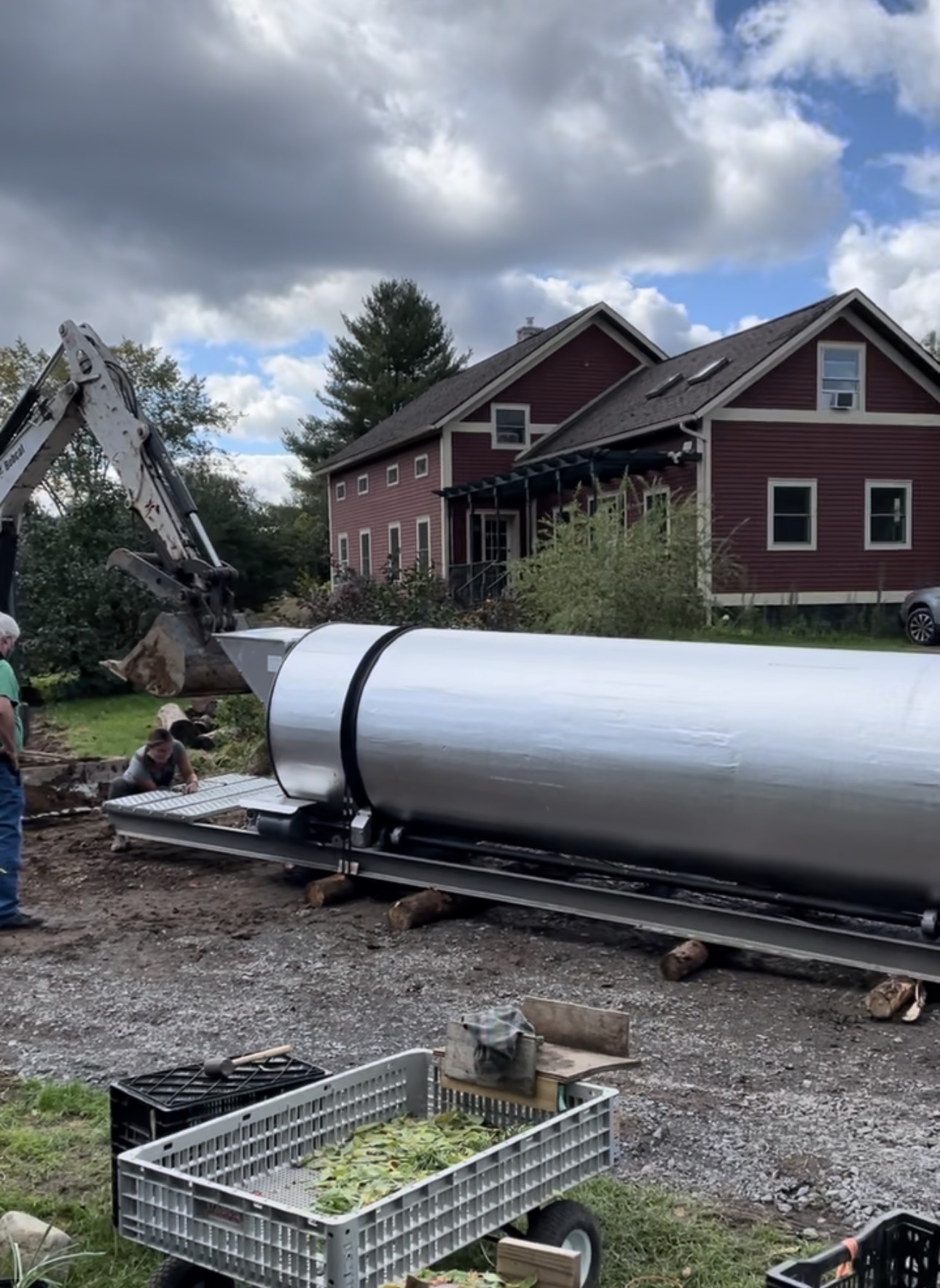
The farmers at Little Farmhouse Flowers in northern New York State have found in previous seasons that the build up of ice on the tracks of the drum can lead the drum to slip and prevent it from turning over properly in the winter time when it is full and heavy with compost. Thus, a shed roof was added, attached to a shipping container beside the composter. The existing shipping container serves as a walk in cooler for the farm for cut flower and bulb/root storage. If it had not already been in place, 4x4in posts would have supported the roof, although an added benefit of the siting next to the shipping container is a reduction in windchill on the vessel.
By Jan 15, 2025:
Our three farmer collaborators and the consultants at Compost for Good have met 3 times to discuss the delivery, set up, and beginning stages of feeding new in-vessel rotating drum composting machines. Each farm's available compost "feeds" (nitrogen rich and carbon rich materials) are different at any given point in the year, so we spent our meeting time talking over suggested compost recipes with Compost for Good and asking questions about the materials that are available to us and how best to leverage them (in quantities fed to the machines) to achieve the temperatures required for pest and disease mitigation in our compost.
All three farms achieved hot temperatures (150F+) in the fall in the immediate weeks following the arrival of the machines. As Moonshot and Fiveforks began experimenting with the materials on hand, they experienced some setbacks, including the cooling of their composts to undesirable temperatures. This sort of learning curve is not unexpected, as team members are learning how the machines work and which inputs work best for them. With help from Compost for Good, the farms set goals to maintain temperatures of at least 131F to 155F for at least 3 consecutive days during the following main growing season.
Temps colder than 131F are too cold to kill off disease and weed seeds. Temps warmer than 158F can damage healthy bacteria. We used 4ft long composting thermometers to monitor the temperatures at the from and rear ends of the vessel. Once a temperature of 131F is achieved within the front 4ft of the composter, users can be assured that consistent management (staying the same course) will ensure that high temps are maintained throughout the drum, as the materials generally take about 21 days to transit the vessel when it is fed daily or every other day.
Compost for Good also provided suggestions for monitoring the temperatures inside the drums with reporting sensors. Without the proper recipes and training fully dialed in for the start of winter, the compost in those two farm's machines froze. We are waiting for the spring thaw to resume our work together when their machines are operable again.
Spring to fall, 2025:
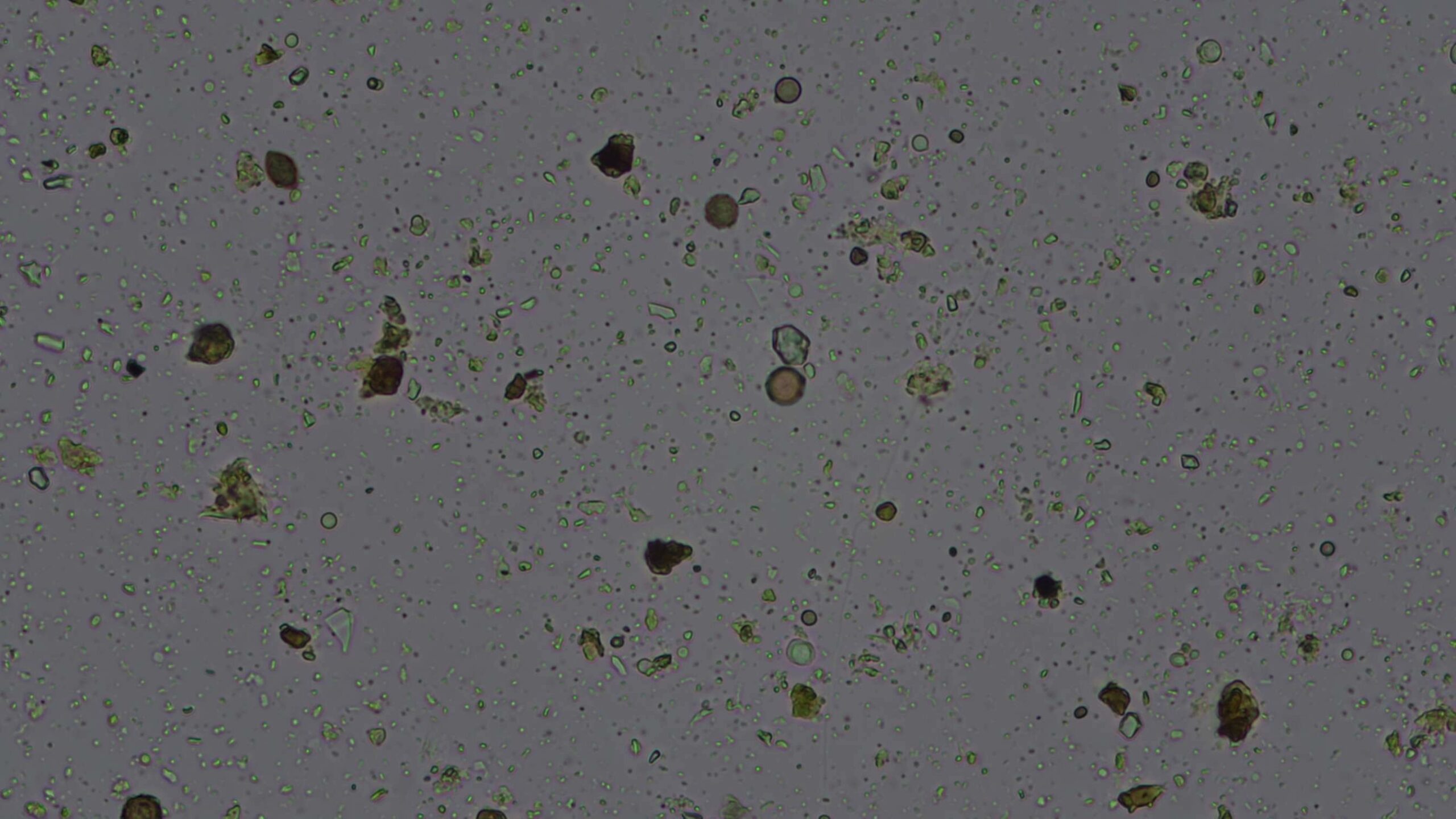
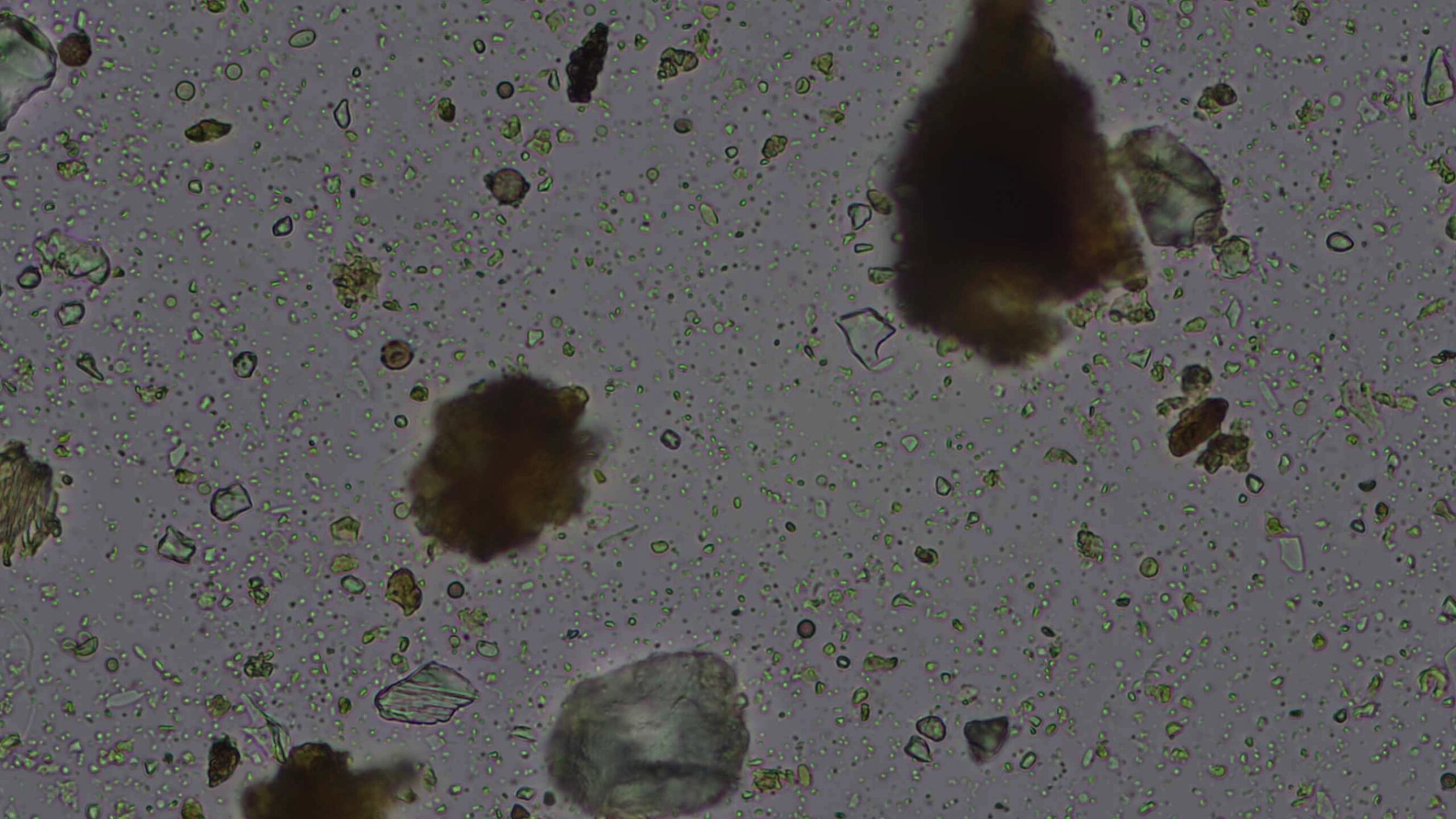
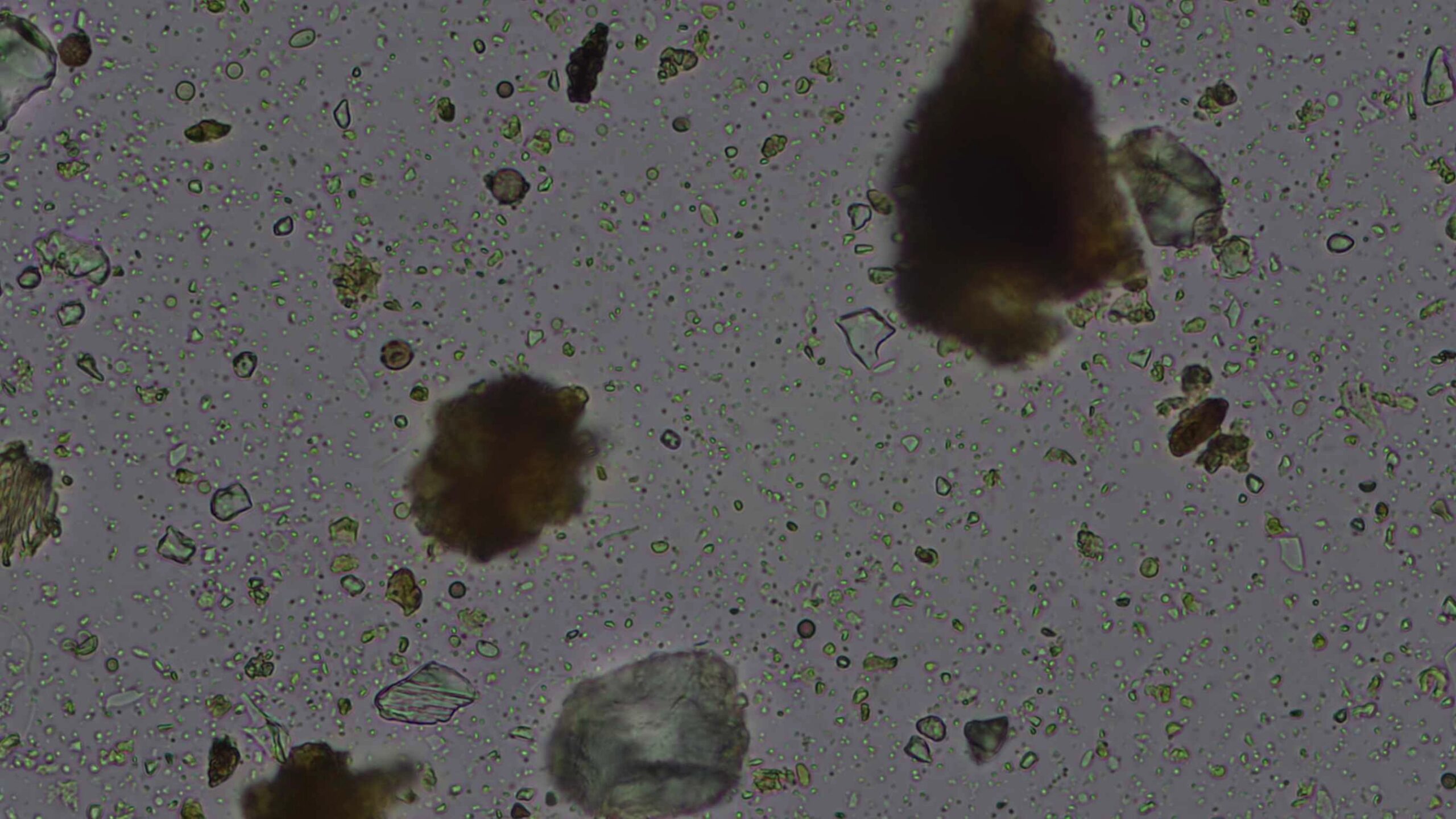
Through the 2025 growing season from spring to fall, the partner farms worked to maintain regular and regimented composting programs at their respective farms with routine material additions to their machines. The compost inputs from Little Farmhouse during the coldest months include nitrogen rich green waste from their hydroponic tulip forcing operation (wet green material like leaves and ground tulip bulbs that are processed with an apple grinder plus dry carbon-rich materials like wood chips, straw, and dried grasses/weed and potting medium from the previous warm growing season. During the warm season, the materials composted at Little Farmhouse are primarily flower farm field waste materials. Unsold flowers, plant, shrub and tree trimmings, leaves stripped from stems during flower processing, and weeds make up the bulk of the content going into the composter and the team there also adds food waste that is collected from the community at a roadside stand, as it is available. The summer green/brown field waste alone, however, has been found to achieve productive, hot temperatures in the machine of 150F. The addition of food waste is not necessary at Little Farmhouse Flowers, however the Pollution Prevention Institute (PPI) grant from NYS and RPI that assisted with the purchase of the machine dictates that the machine will be available and used for the purpose of sequestering food waste from the community free of charge. Little Farmhouse Flowers is happy to provide this service and has found that in their rural community a reasonable amount of food waste is submitted (they are not overwhelmed by donations). The vessel inputs for Little Farmhouse Flowers are listed here on the log: SARE In-Vessel Composting Time Sheet - LFF. The material that comes out of the machine after about 3 weeks is a mulch-like product. It is allowed to accumulate into a pile at the end of the machine for about two weeks. Then, the pile is moved nearby by tractor and the content is turned in the process. It is covered with plastic greenhouse film to further solarize and continue to heat/decompose for a week or two. It is typically turned once or twice more before being spread on beds at the farm as an amendment. Analysis from Compost for Good confirms that the compost-mulch material produced at Little Farmhouse Flowers is best suited to top dressing initially and that further decomposition in piles that are turned mechanically a couple of times in the following weeks produces material that is suitable for planting into. Microscopy Observation-LFF - Sheet1 and imagery from Compost for Good. We are not able to share videography due to the file size limit.
 .
.  .
.  .
. 
Five Fork Farms' compost inputs are described in the composting log: SARE In-Vessel Composting Time Sheet - Fivefork and its successful recipes are listed in our conclusion section. An analysis of the Five Fork Farms compost by Compost for Good is pending and the farm will be able to use that analysis to it's benefit this spring.
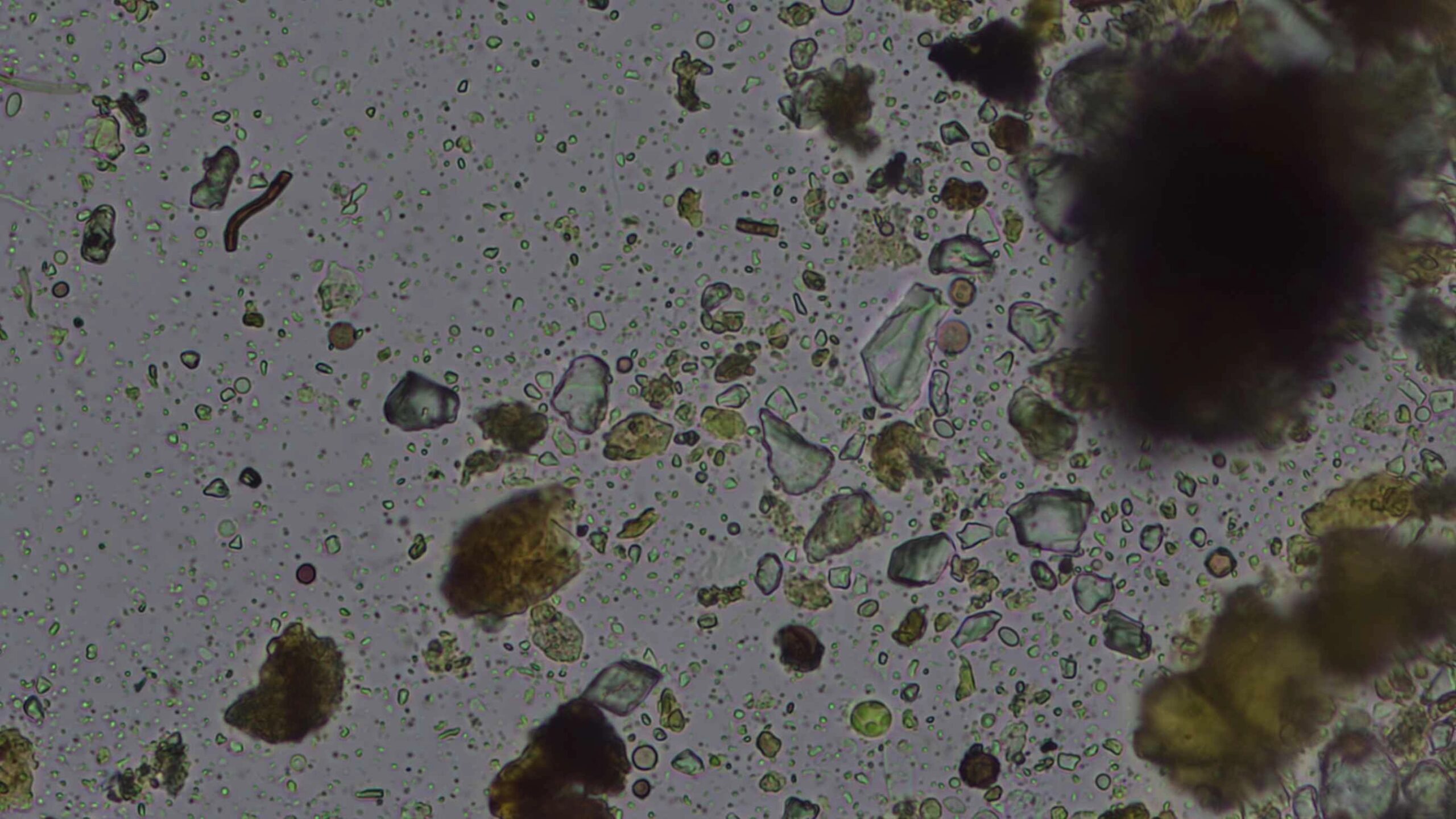
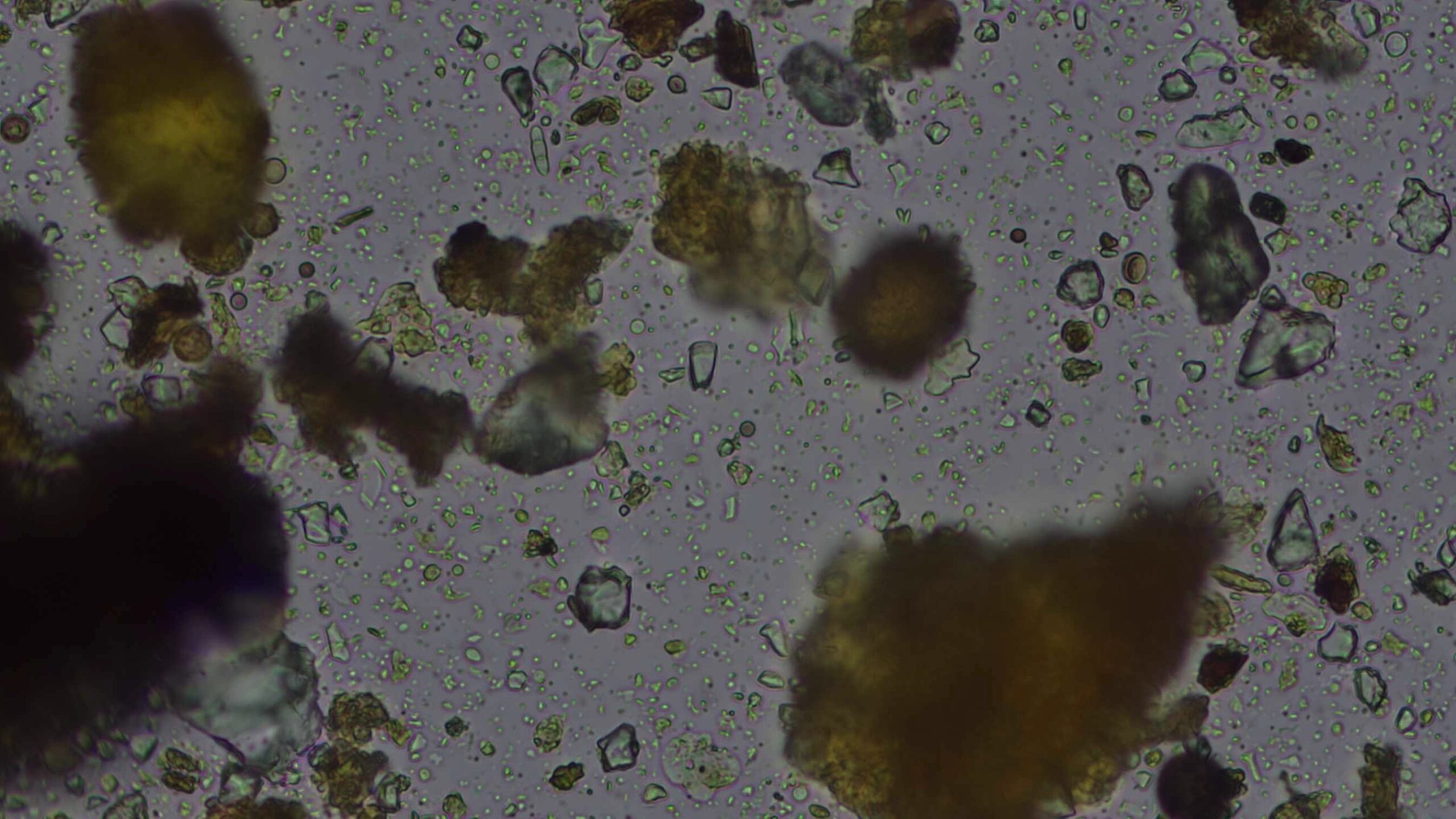
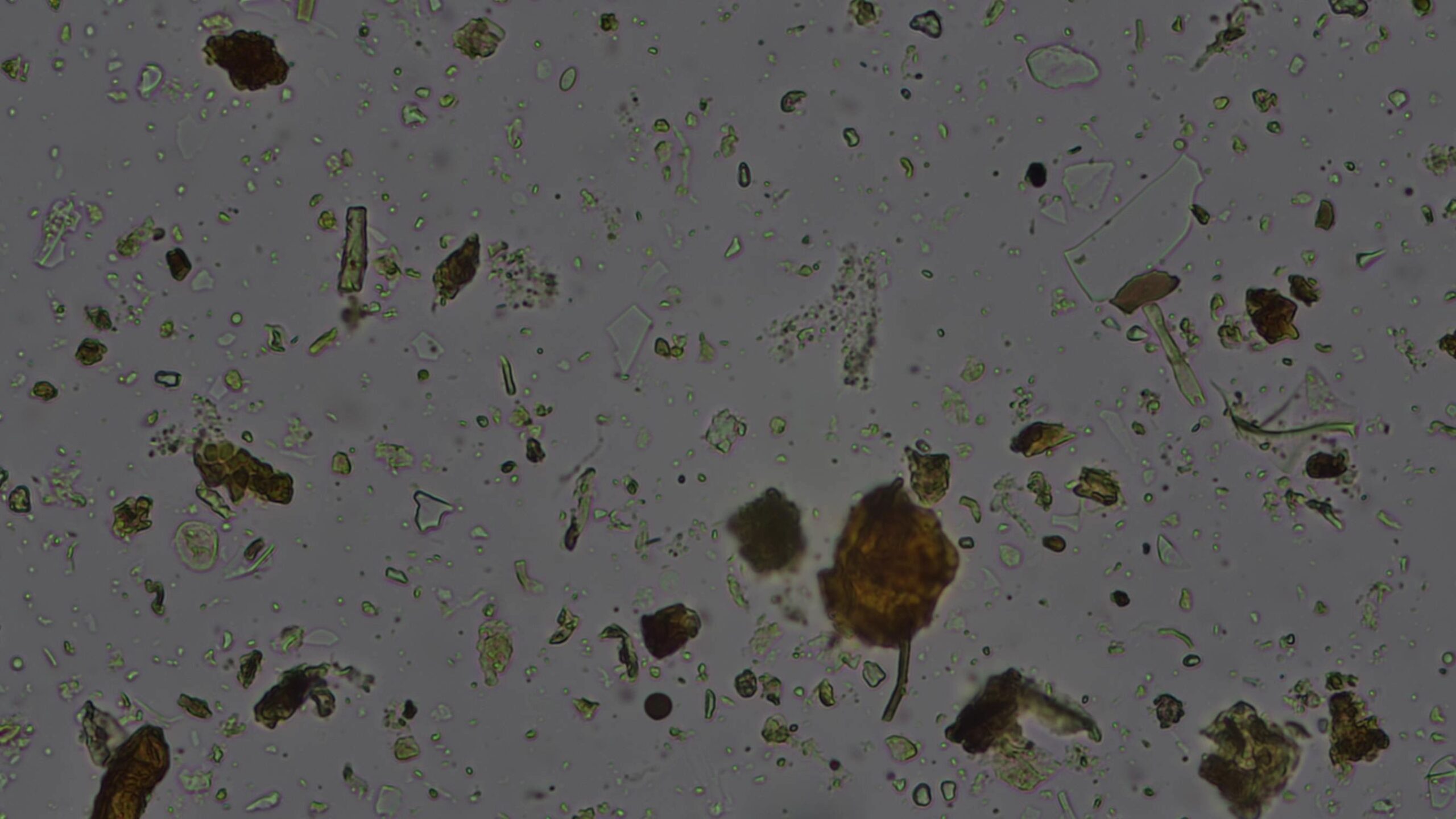
Moonshot Farm's compost was analyzed by Compost for Good. It's inputs are details here on it's log: SARE In-Vessel Composting Time Sheet - Moonshot . Here is the analysis: Microscopy Observation- Moonshot Farm . Compost for Good also shared images and video of their microscopy work. Here are some of the images received back for the Moonshot Farm samples. We had difficulty uploading the video files to the media library due to the file size limit. 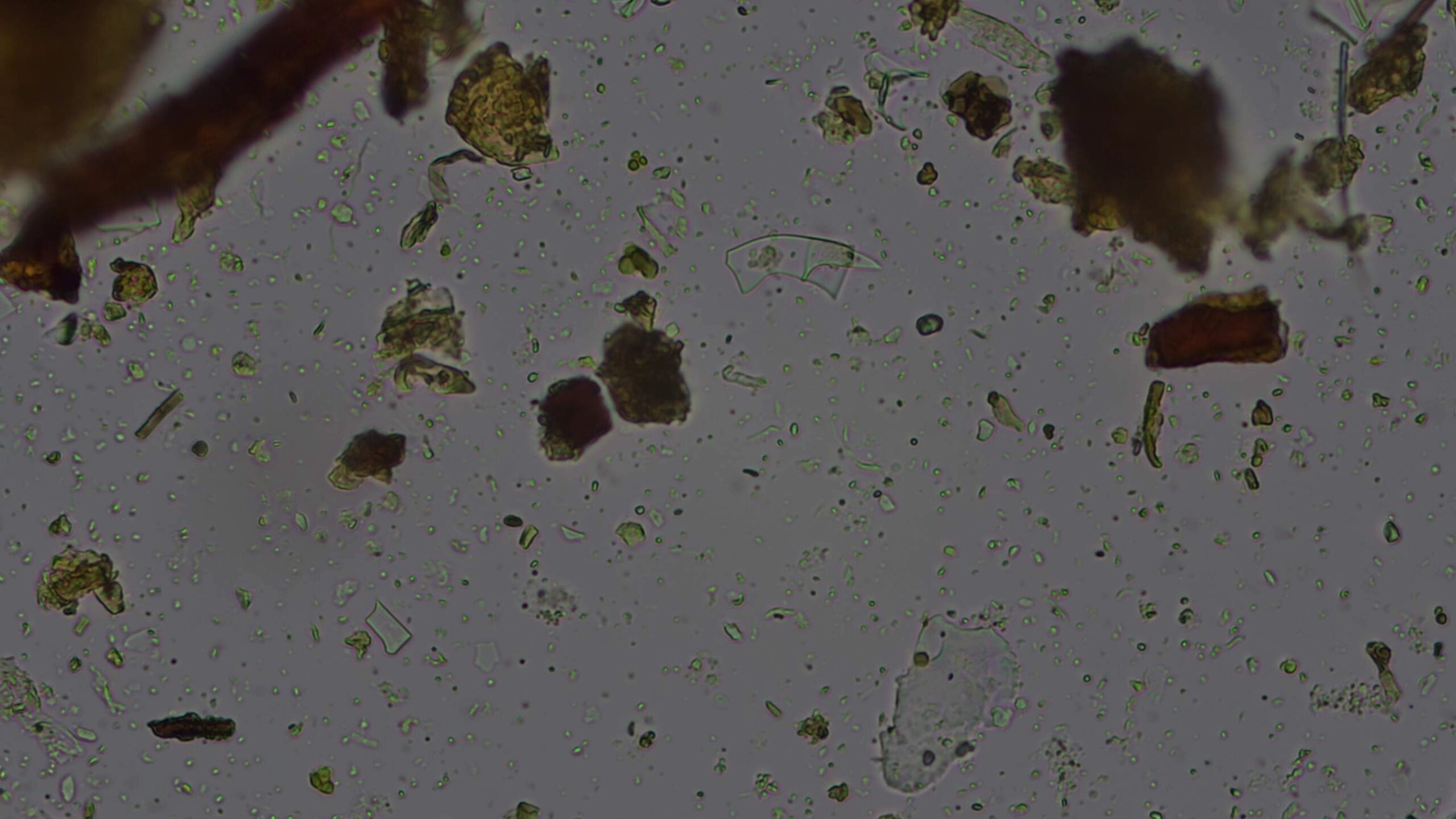
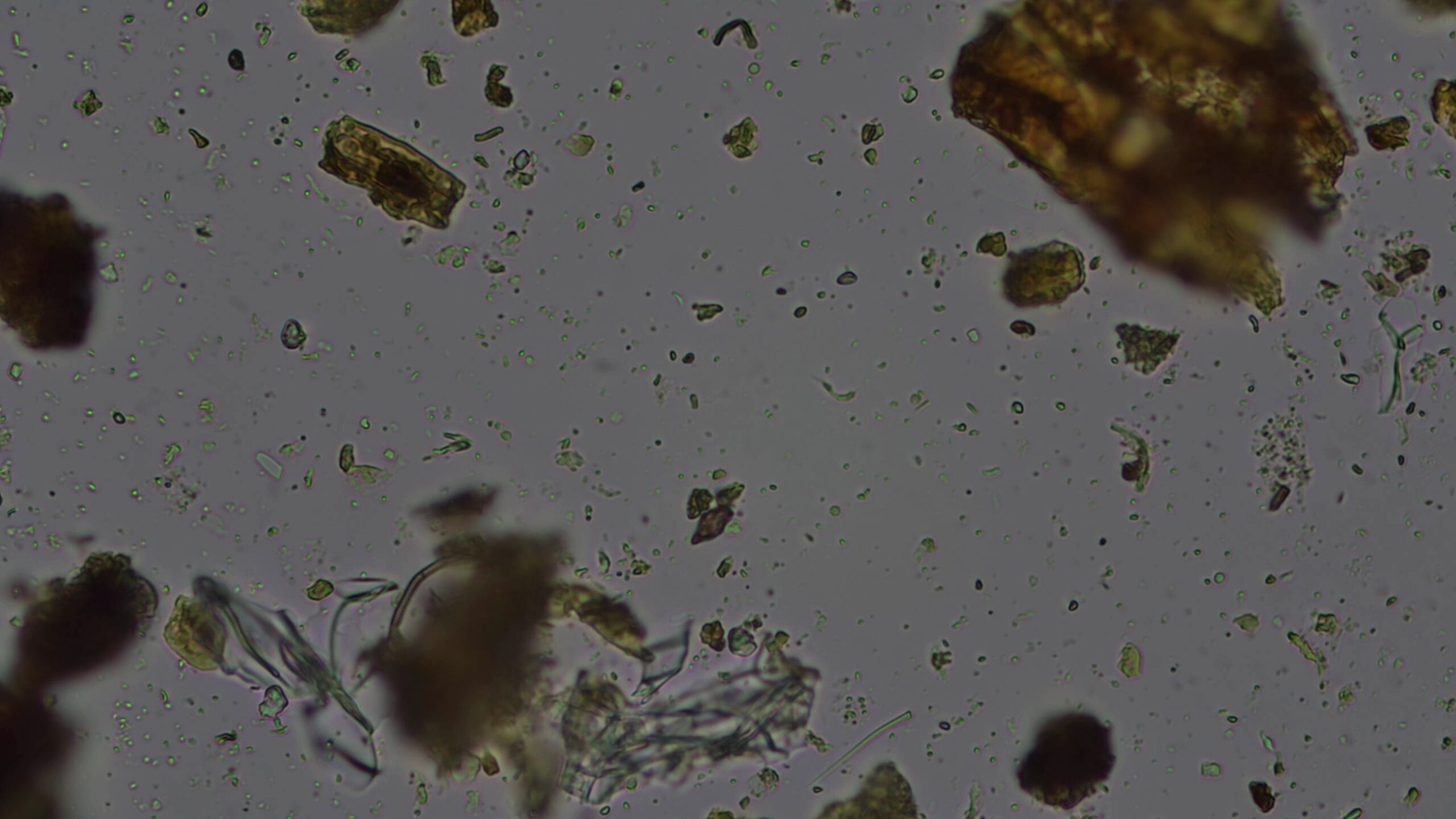
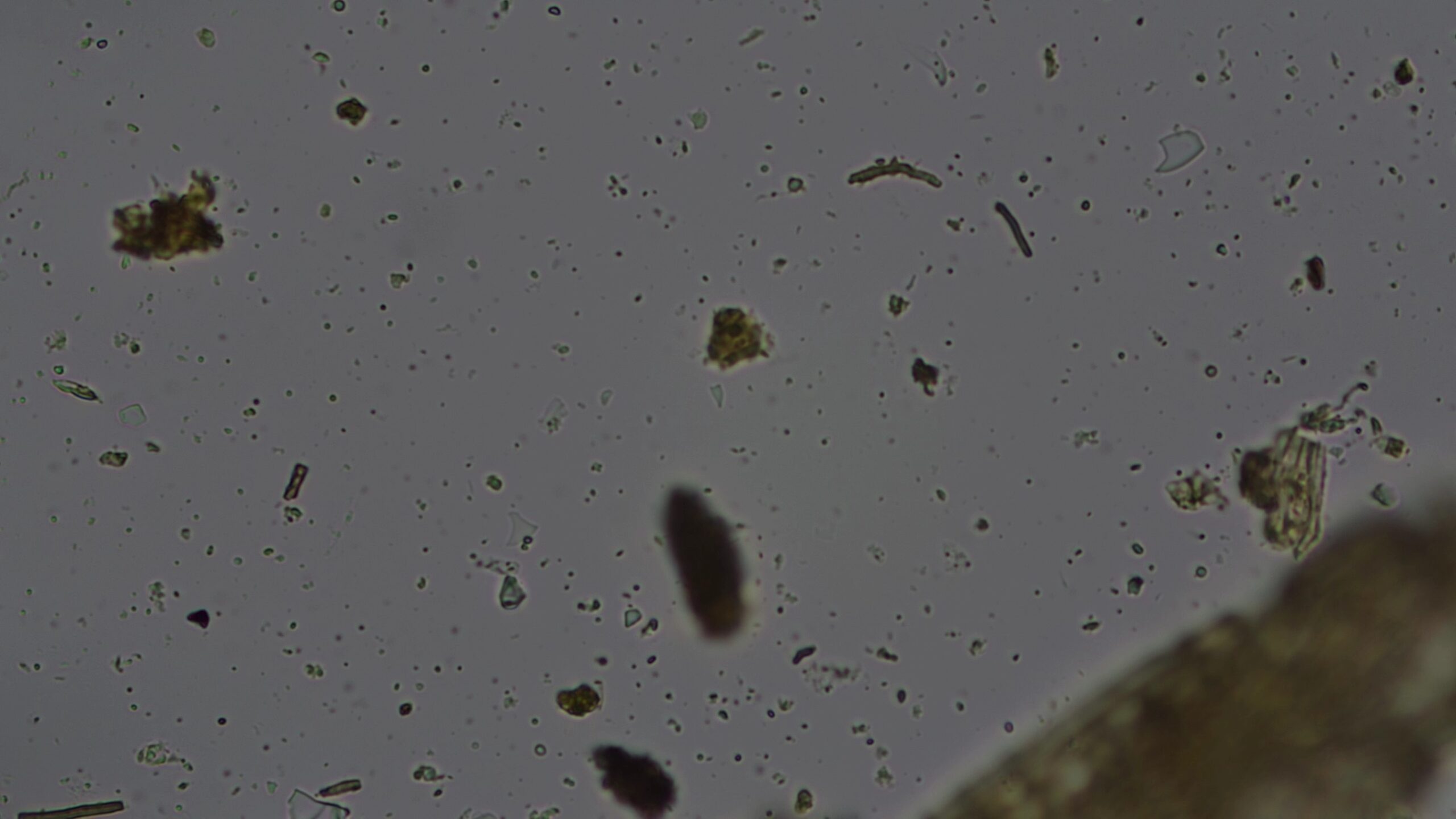
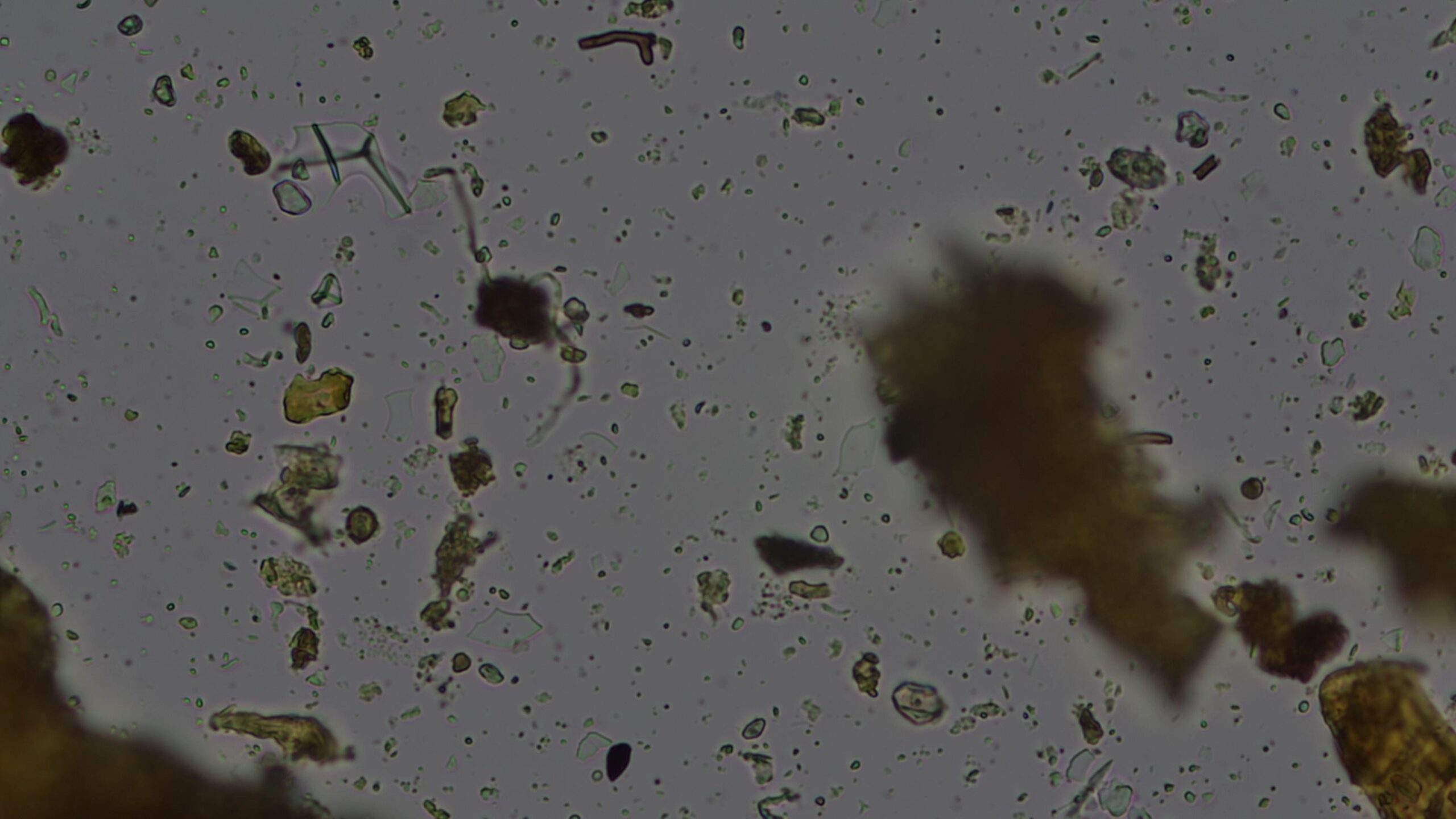
 .
.
The primary take aways from this project are that in vessel, rotating drum compost machines can provide valuable, clean compost for cut flower production, with low instance of disease. The vessels, when managed properly are able to maintain high temperatures year round and provide labor hours for farm workers (keeping money at the farm, as opposed to sending it away for the purchase of compost). Managing the machine is a daily or almost daily responsibility in order to ensure the mediums are oxygenated through the turning. It takes time, and the machines should not necessarily be seen as time savers, but rather as adding value and credibility to composting ventures at farms seeking to ensure that the compost they produce is free of weed seeds and disease. During the coldest months of the year, when snow, ice, sleet are prevalent, farmers in the Northeast will find it advantageous to construct a roof over their machines to prevent the build up of ice and snow.
Little Farmhouse Flowers is interested in lowering the frequency of touch points on the machine, especially in the winter months, by adding a timer that will automatically switch the machine on for a few minutes each day at a given time - just enough time to rotate the drum and turn the compost, but not enough time to empty the much of the contents. We believe that input frequency to the machine can be lessened without lowering the quality of the output if the drum is rotated for just a couple minutes daily, and we believe that can be achieved remotely with the assistance of a timing device.
Each farm was pleased find that the materials readily available to them on their farms were enough to produce compost and that the Compost For Good analysis of the compost produced at Moonshot and Little Farmhouse is disease-free. Five Fork Farms' analysis is pending. Thoughtful care to inputs was not a significant concern or task, with the exception of the hydroponic winter season at Little Farmhouse, when all the materials the farm is producing are very wet and high in nitrogen. At that time of the year, dry materials like wood chips or dried weeds, and old nursery pot soilless mix from discarded potted plants can improve the body of the compost and help ensure it is balanced in composition. The farms learned to look for the balling up of compost materials into round forms as a sign that their inputs are too wet. It takes some time for materials to process through the machine (about 21 days) in order to discover this problem and adjust for it. This can be a common mistake new users make out of fear of not adding enough nitrogen-rich material.
To understand the frequency of inputs and the breadth of materials that the machines successfully composted at temperatures hot enough to kill disease, please view each farm's input logs: SARE In-Vessel Composting Time Sheet - LFF SARE In-Vessel Composting Time Sheet - Fivefork SARE In-Vessel Composting Time Sheet - Moonshot . The soil analysis for two to the farms is here: Microscopy Observation-LFF - Sheet1 and here: Microscopy Observation- Moonshot Farm .
Education & outreach activities and participation summary
Participation summary:
During the period of the project, each farm provided tours upon request for parties interested in learning about high volume, in vessel, rotating drum compost machines. These visits are typically from fellow farmers who are looking to purchase or build their own machine. In the case of visitors who would like to build their own machines, we recommend they contact Compost for Good and/or visit https://www.adkaction.org/project/compost-for-good/, which provides support and open source plans. During the period of the project, Little Farmhouse Flowers provided a detailed facility tour and field demonstration with the Department of Corrections from the State of Maine, who seeks to build and implement it's own in vessel rotating drum compost machine for the purpose of diverting food waste from prisons and turning it into compost for on-campus inmate farming projects.
The project participants also took time individually to respond to inquiries received by each farm into their machines and practices. Because our program has recently tied up, we have not yet seen our work published, but we hope to do that and plan to provide presentations/webinars in the coming year as outlined in our application. A slide presentation and talk about in vessel, rotating drum have been designed to share with audiences. Composting presentation . Content suggestions for sharing our information more widely have been made to the Flowering in the North Conference in coordination with the University of Maine. And our participant Grace Lam at Five Fork Farms is now on the board of The Association of Specialty Cut Flowers. Grace will be able to share our project with that association. They recently completed their annual conference and are planning for the coming year's programs. Rebecca Kutzer-Rice at Moonshot Farm is now a write for Growing for Market Magazine .
Learning Outcomes
The areas in which the three farms gained knowledge were:
- Learning how compost input frequency affects the temperatures reached and efficiency of the machines.
- Learning how input materials should be added to the machine. It is important that machines are not overfilled. There needs to be space for the compost to rise up the wall of the drum and fall back down.
- Learning the appropriate range of temperatures for eliminating weed seeds and diseases that affect cut flowers.
- Understanding the breadth of compost inputs that that can lead to healthy outcomes when using a rotating drum machine. These input varied much more than the test group anticipated they would. We entered this project thinking that each farm would adapt to specific "recipes" and that a "recipe book" of sorts would be complied, but what we found was that the waste materials produced by each farm are able to achieve desirable temperatures. These materials include a mix of nitrogen-rich "green" plant material and dry, carbon rich materials like dried weeds leaves, used soilless mix. The most significant deviation from adding the usual cut flower farm waste was for the hydroponic tulip program at Little Farmhouse Flowers. In that case extra "dry" materials are reserved from the summer months, or accepted as donations from tree service companies (wood chips)
- Learning how to interpret and apply compost analysis from an expert (Compost for Good).
Project Outcomes
This project led to working relationships between each of the partner farms and the organization, Compost for Good, as a consultant for proper use of the machines and for analysis and support related to findings from our compost testing. The partner farms have lowered or eliminated their dependency on compost from other sources. Little Farmhouse Flowers is able to keep all budgeted funds ($12,000) annually for compost within her farm and the other farms, in time, will be able to reach that level of competency with their production. This savings supports a part position at Little Farmhouse Flowers and can create opportunities at other farms as well.
Looking back, we feel the project approach and methods were fairly successful. We feel it would have been beneficial to have visited each other's farms in person to provide guidance and support in a hands on manner, especially when the composters first came into use. That could have prevented the freezing of the machines in the first winter. Alternatively, it would have been helpful to have either Little Farmhouse or Compost for Good provide a video demonstration/lesson about getting started with the composter for the other participants. Some elements of the getting started process are hard to describe by phone consultation. For the future we think the next program like this should include the development of some kind of video as a teaching tool. Or - used as a learning tool. Videos could be periodically taken and shared with the consultant for feedback and suggestions on adding inputs to the machines. We would also like to see participant farms more closely log temperatures in the drums. The participants in this study focused on achieving the temperatures they needed to achieve for healthy compost, but did not record temperatures as part of their log. With compost thermometers of the same length and readings taken from the front of the drum, comparative temperature data could be collected.