Progress report for ONE24-461
Project Information
This project seeks to:
- Monitor canopy vigor and insect-caused fruit damage of apple cultivars during the growing season.
- Assess fruit injury caused by insect pests and quality traits of apple cultivars at harvest.
- Determine apple cultivar-specific and cross-cultivar relationships among canopy conditions, fruit quality traits, and insect prevalence.
A large pest complex spanning the entire growing season continues to challenge apple production in the Northeast with estimated worth of over $350 million (USApple Industry Outlook, 2023). Variability in long-standing weather patterns coupled with shifting regulations have reduced reliability of long-standing integrated pest management (IPM) practices. Plum curculio (PC), a native weevil ranging throughout Eastern North America, has become a more serious pest due to multiple generations per year and fewer labelled insecticide options (Lampasona et al., 2021). The invasive brown marmorated stink bug (BMSB) remains a destructive pest since the 2010 outbreak (Leskey and Nielsen, 2018), and mating disruption technology for codling moth (CM) and oriental fruit moth (OFM), is not widely adopted due to restrictive guidelines for deployment (Charmillot, 1990; Knight et al., 1995).
Northeastern apple growers typically have plantings of multiple cultivars in the same or nearby blocks within the same orchard to diversify and increase market opportunities. However, for these type of production systems, inherent differences among cultivars can result in difference in insect prevalence within an orchard, adding to the challenges for managing the pest complex while producing marketable apples. For example, following winter dormant pruning, differences in natural tree growing habits among apple scion cultivars contribute to variations in canopy density and microclimatic conditions, which likely influence insect phenology and their presence in apple orchards. In addition, fruit physiochemical properties associated with cultivars also play a role in insect host preference. In a preliminary study, we surveyed ‘CrimsonCrisp’, ‘Enterprise’, and ‘GoldRush’ apple on ‘Bud.9’ rootstocks within the same research block for insect damage at the USDA-ARS Appalachian Fruit Research Station (AFRS), Kearneysville, WV. Despite receiving the same insecticide program, fruit injury caused by BMSB, San Jose scale (SJS), PC, CM, and OFM, respectively, was significantly different among the three apple cultivars (Supplemental Materials). Our results reflect the difficulty in managing insect pests in orchards with multiple apple cultivars due to significant differences in how insects interact with them.
Thus far, little is known about specific pest-cultivar associations and how to best manage them in the Northeastern. Although there have been a few studies investigating the preference of insect pests for apple cultivars in the orchard agroecosystem, the trials were conducted more than a decade ago. Shifts in phenology of both insects and apple trees due to changing weather patterns in the recent years can introduce changes in cultivar-dependent insect prevalence and thus warrant new research. Additionally, several apple cultivars included in the previous reports are no longer the most produced cultivars in the Northeast at present because of changes in market demand. It is of note that a number of cultivar-specific physiological disorders appear only in apple produced in the Mid-Atlantic area, including poor fruit set in ‘CrimsonCrisp’, cork spots in ‘WineCrisp’, and poor fruit coloring and finish issues in many new cultivars developed in other regions with distinct climate conditions. Tools to mitigate these problems are extremely limited as the internal causes in connections with localized climates and unique cultivar genetic backgrounds are not well understood.
Our proposal aims to determine cultivar-specific prevalence of insect-caused fruit injury in mixed apple orchards with at least one of the current top cultivars (e.g. Gala, Fuji, Cripps Pink) and new premium varieties. We also propose to systematically document cultivar-dependent canopy density, fruit disorders, and fruit physiochemical properties of apple trees grown in the Mid-Atlantic. This research will generate new information that is fundamental to developing innovative IPM strategies for individual apple cultivars of economic importance in the Northeast, thereby reducing grower input and increasing profitability as well as promoting ecological sustainability. Furthermore, findings from the research efforts will identify correlations of insect prevalence, canopy condition, fruit disorder, and fruit quality traits across cultivars, which will help develop optimized cultural practices, such as matching pruning techniques and/or plant growth hormone applications with apple cultivars for altering canopy microclimates, to reduce insect pest prevalence while maintaining superior fruit quality. This proposed research addresses the following aspects of sustainable agriculture: improved productivity, reduction of costs and/or increase of net farm income, and reduction of environmental and/or health risks in agriculture.
Cooperators
Research
Apple trees of two partner farmers’ commercial orchards, containing mixed cultivars, located at Smithburg (Farm 1) and Woodbine, Maryland (Farm 2) were used in this study. In both farms, we included current top cultivars, including Honeycrisp, Gala, and Fuji, as well as new premium varieties, such as WineCrisp (only at Farm 2) and MAIA-1. In 2024, when individual apple cultivars reached commercial harvest standards, 20 fruit were sampled from each of the ten exterior trees and ten trees located in the interior of the block (20 fruit/tree; 400 fruit/cultivar) and transported to the USDA-ARS Appalachian Fruit Research Station (AFRS), Kearneysville, WV within the same day. The harvest dates of cultivars of interests were listed in Table 1. One exception was ‘Honeycrisp’ fruit, which were sampled from 15 interior and five exterior trees in Farm 1 and 20 exterior trees at Farm 2 due to the layout of trees in the orchard blocks.
| Apple cultivar | 2024 harvest date |
| Honeycrisp | Aug 9 |
| Gala | Aug 23 |
| WineCrisp (Farm 2) | Oct 4 |
| MAIA-1 | Oct 18 |
| Fuji | Oct 18 |
At the ARFS, half of the fruit (i.e., 10 fruit/tree) were visually and destructively assessed for damage caused by common orchard insect pests including brown marmorated stink bug (BMSB), San Jose scale (SJS), plum curculio, oriental fruit moth (OFM), and codling moth (CM). The incidence of fruit symptoms, such as bitter pit, water core, core rot, and cork spot, was also recorded during fruit cutting. The other half of collected fruit (i.e., the other 10 fruit/tree) were analyzed for the following quality-related traits. Individual fruit size was expressed in fresh weight quantified by an electronic balance. Surface red color of fruit skin was measured using a colorimeter (CR400 Chroma Meter; Konica Minolta Sensing, Osaka, Japan), and the percentage of blush coverage was estimated based on the four fruit quadrants. Skin background color, or chlorophyll content [(i.e., index of absorbance difference (IAD) of 670 and 720 nm], which is an indicator of physiological maturity, was measured by scanning the two sides of fruit with a visible-near infrared sensor (DA-Meter; T.R. Turoni, Forlì, Italy). Flesh firmness of fruit was determined by a digital penetrometer fitted with a 11-mm probe (FR-5120, Lutron, Coopersburg, PA). After dissection at the equator and applied with iodine solution, each fruit was rated for the starch pattern index (SPI), with a scale from 1 to 8 indicating 100% to 0% stained starch according to the Cornell starch-iodine index chart. For each tree, one wedge from each of the 10 fruit were pooled for juice extraction using a heavy-duty juice extractor (6001C; Waring, Stamford, CT) with a replaceable paper filter; approximately 45 mL of filtered juice was stored in a 50-mL conical tubes at -20 °C until the analyses of total soluble solids (TSS) concentration (or sugar content) and titratable acidity (TA). In spring 2025 (project year 2, the frozen juice samples collected in the previous season were thawed at 4 °C and measured for TSS and TA at room temperature (~25 °C). While TSS was quantified with a digital hand-held refractometer (PAL-1, Atago, Tokyo, Japan), TA was determined using an automatic titrator (HI 902 Potentiometric Titrator equipped with HI 921 Autosampler; Hanna Instruments, Woonsocket, RI) with 0.1 N sodium hydroxide solution to an end point of pH 8.2.
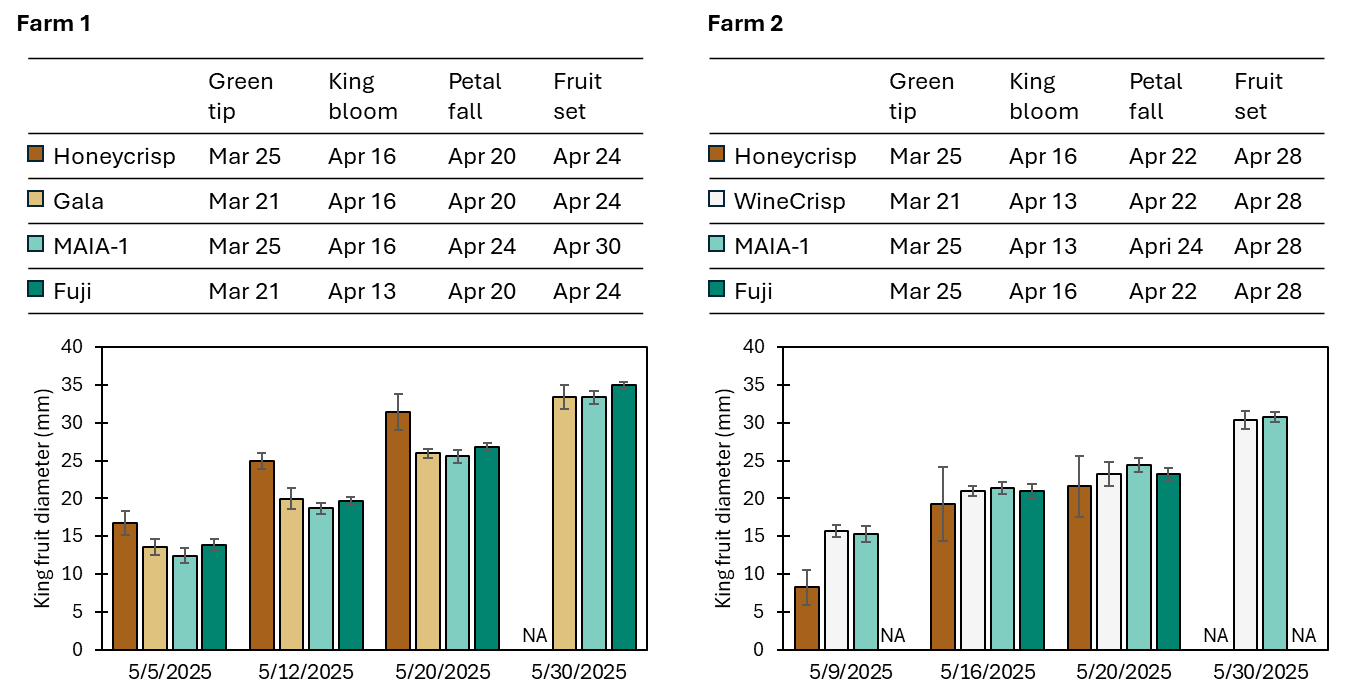
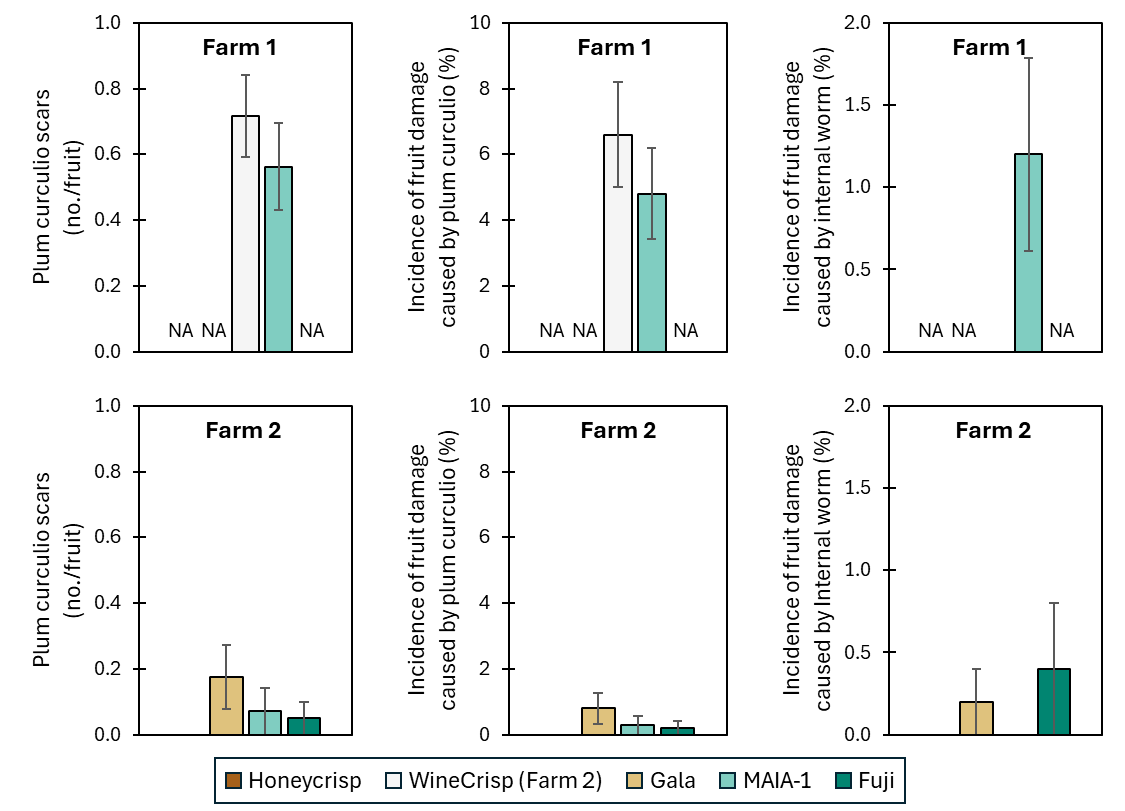
Starting in late March 2025, flowering phenology was tracked using five trees per cultivar of interest. Dates of key stages of apple flower bud development, including green tip, king bloom, petal fall, and initial fruit set, were documented during weekly inspections. To compare early fruit development (enlargement) among cultivars, transverse diameter of individual king fruit (15 fruit/tree; 5 trees/cultivar) was recorded weekly from the first to fourth week of May. However, there were fewer than 15 king fruit per tree for ‘Honeycrisp’ in Farm 1 and all cultivars except MAIA-1 in Farm 2 due to poor fruit set. In early June 2025, early season evaluations of insect damage to fruit were performed. For these assessments, 20 trees per cultivar were randomly selected at each farm; all four cultivars of interest were assessed at Farm 1 while only ‘MAIA-1’ and ‘WineCrisp’ were evaluated at Farm 2 due to poor fruit set in other cultivars. For each tree, 25 representative fruit were inspected on the tree for plum curculio injury (presence of oviposition scars and number of scars per fruit) and externally visible damage by internal worms (codling moth or oriental fruit moth). A total of 500 fruit per cultivar per farm were evaluated. Unexpectedly, abnormally low crop load was observed in trees of ‘Honeycrisp’ and ‘Fuji’ at both farms. Therefore, to avoid skewed data analysis, mature apple fruit were not sampled for the evaluation of quality-related traits, insect-caused injury, or physiological disorder symptoms in 2025 (project year 2). Fruit collection is projected to resume in summer/fall 2026.
Data of fruit quality evaluation and insect injury incidence were compared among apple cultivars grown in the same farm by first fitting to linear mixed models, in which apple cultivar was a fixed factor and tree location (exterior/interior) was a random factor; when the fixed effect (cultivar) was significant (P < 0.05), means were separated using the Tukey’s HSD test. It should be noted that fruit size data obtained in 2025 were not subjected to statistical analysis due to the low number of fruit (subsamples) per tree in certain cultivars mentioned above but still presented in this report.
Evaluation of fruit quality-related traits
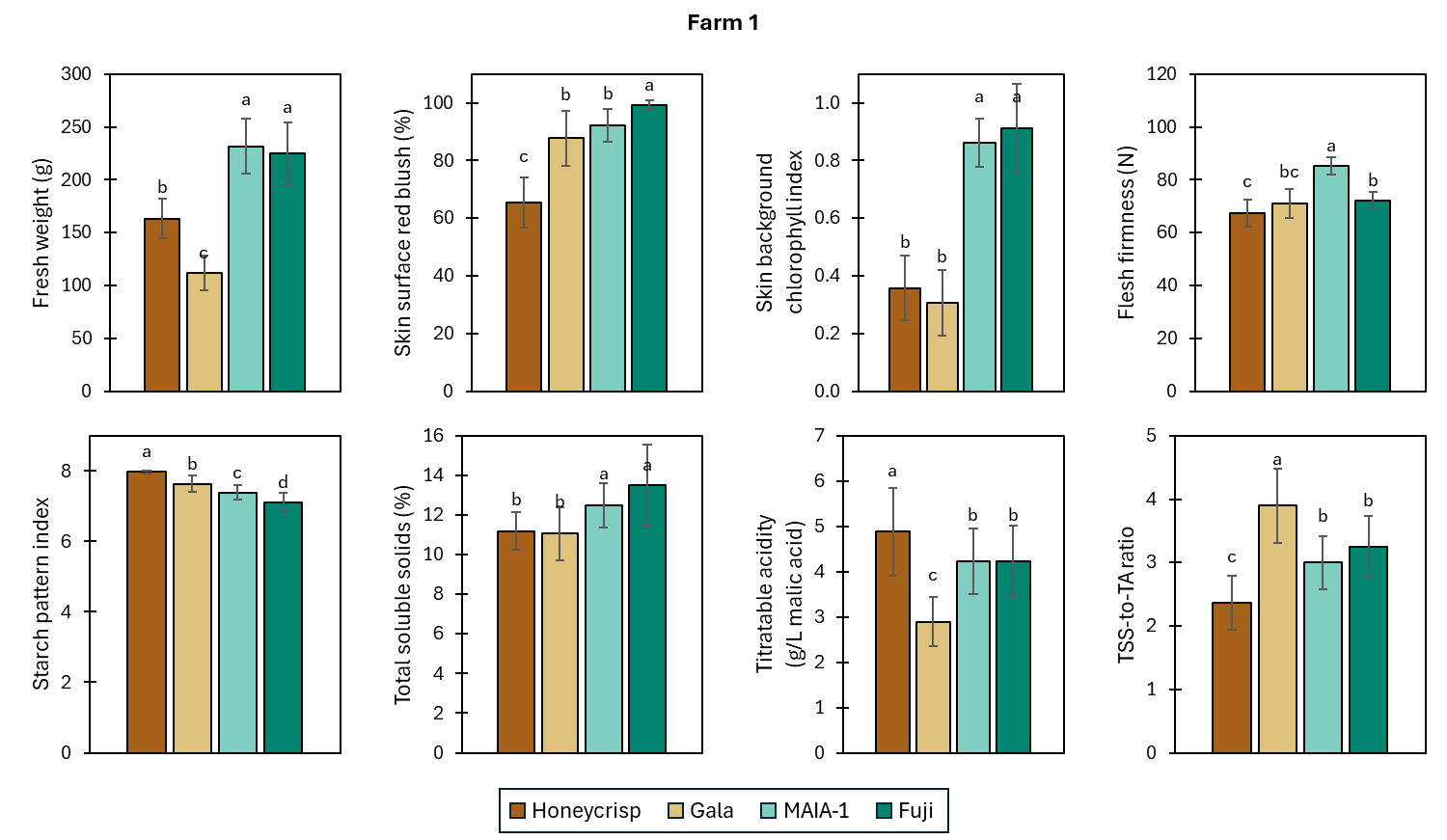
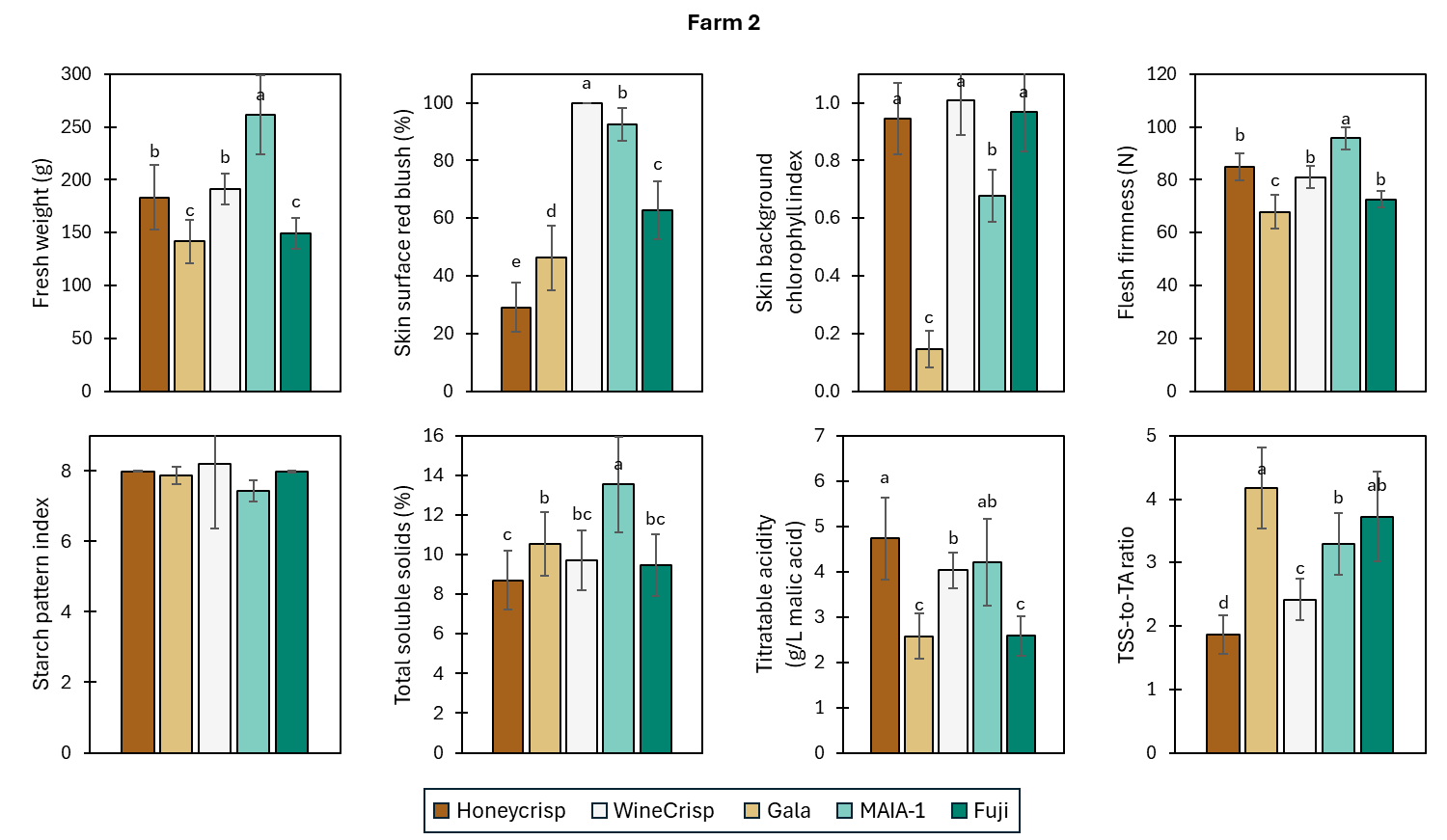
In 2024 (project year 1), the apple cultivars of interest, Honeycrisp, Gala, WineCrisp, MAIA-1, and Fuji, were harvested on August 9, August 23, October 4, October 18, and October 18, respectively; fruit samples were collected on the same day of commercial harvest. The fruit quality-related traits, including size (as fresh weight), skin surface and background colors, flesh firmness, and starch content, TSS, TA, TSS-to-TA ratio, varied among the cultivars within each farm. Overall, ‘Gala’ fruit were the smallest and ‘MAIA-1’ fruit were the largest in the group. The skin blush percentage of ‘Honeycrisp’ apple was significantly lower compared to other cultivars in both farms, indicating poor red coloration, which is one of the top issues of this cultivar in the mid-Atlantic region. Between the two farms, there was no consistent pattern across the apple cultivars for the index of chlorophyll in skin background color, flesh firmness, or starch pattern index, which are typically used in combination to determine the maturity of apple fruit. The index of chlorophyll in skin background color indicates the level of greenness on the fruit and is typically inversely correlated to fruit maturity. Based on this index, ‘Honeycrisp’ and ‘Gala’ were more ripen than ‘MAIA-1’ and ‘Fuji’ apple in Farm 1, but the maturity of ‘Honeycrisp’ was similar to that of ‘WineCrisp’, ‘MAIA-1’, and ‘Fuji’ in Farm 2. Despite the differences in fruit flesh firmness between cultivars, the values of all fruit obtained at the two locations were in the same recommended range for long-term storage (> 66.7 N, or 15 lb). The index of starch pattern corresponds to level of starch degradation in fruit, which occurs as fruit maturation progresses. Even though the apple cultivars exhibited differences in the starch content at Farm 1 and no difference at Farm 2, the values of starch pattern index of all fruit were greater than 7, a criterion recommended for fresh market apple.
While ‘MAIA-1’ had the greatest TSS content at both farms, there is no apparent trend among the other cultivars. Interestingly, ‘Honeycrisp’ and ‘Gala’ had the greatest and lowest TA levels, respectively, at Farms 1 and 2; as a result, TSS-to-TA ratio was the highest for ‘Gala’ and lowest for ‘Honeycrisp’. It is expected that TSS-to-TA ratio, which is strongly associated with the consumer perception of sweetness, was cultivar-dependent in this survey as extinguishable fruit flavor is one of top priorities of apple breeding programs. In addition, the variation in the genetic backgrounds among cultivars likely contributes to varying tree growth habits and physiology that can in turn affect fruit development and maturation leading to the differences in fruit physiochemical attributes observed in this report. We will continue to investigate the association between apple tree growth and fruit traits in the following growing season, and correlate these to insect and fruit symptom incidences.
Quantification of disorder symptoms in mature fruit
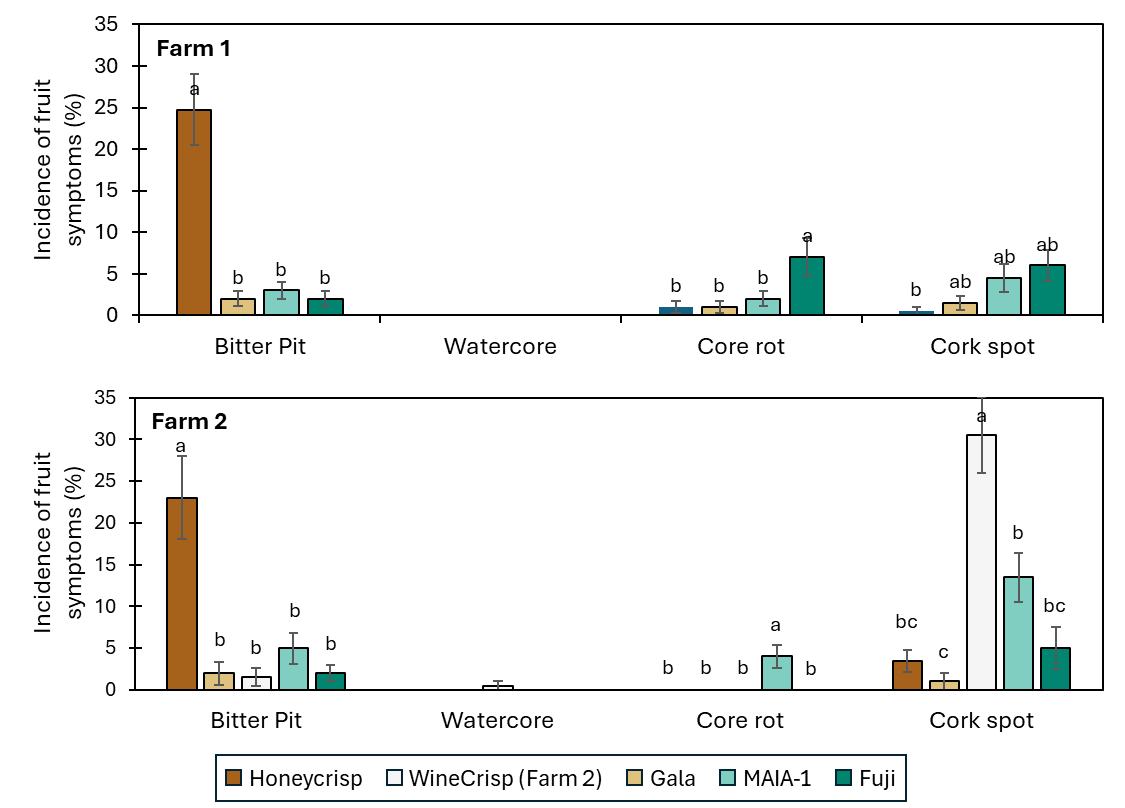
The results of our survey demonstrated that the incidence of bitter pit symptoms was the greatest in ‘Honeycrisp’ apple among the group at both farms. This is consistent with the consensus among apple growers and researchers that bitter pit is a common physiological disorder for ‘Honeycrisp’ apple due to the imbalance of calcium and potassium. Although a number of research reports have suggested that ‘Honeycrisp’ and ‘Fuji’ are susceptible to water core, we observed very low to no incidence of water core symptoms, such as water-soaked or translucent tissue in fruit, of all cultivars in either Farm 1 or 2. In general, all apple cultivars in Farm 1 had relatively low incidence of cork rot and cork spot symptoms (< 10%). Nevertheless, 31% ‘WineCrisp’ and 14% ‘MAIA-1’ apple displayed symptoms of cork spot, significantly greater than the rest of the cultivars in Farm 2. Between the two farms, the patterns of incidence of cork rot and cork spot symptoms, respectively, were not consistent across the apple cultivars.
Assessment of insect-caused injury in mature fruit
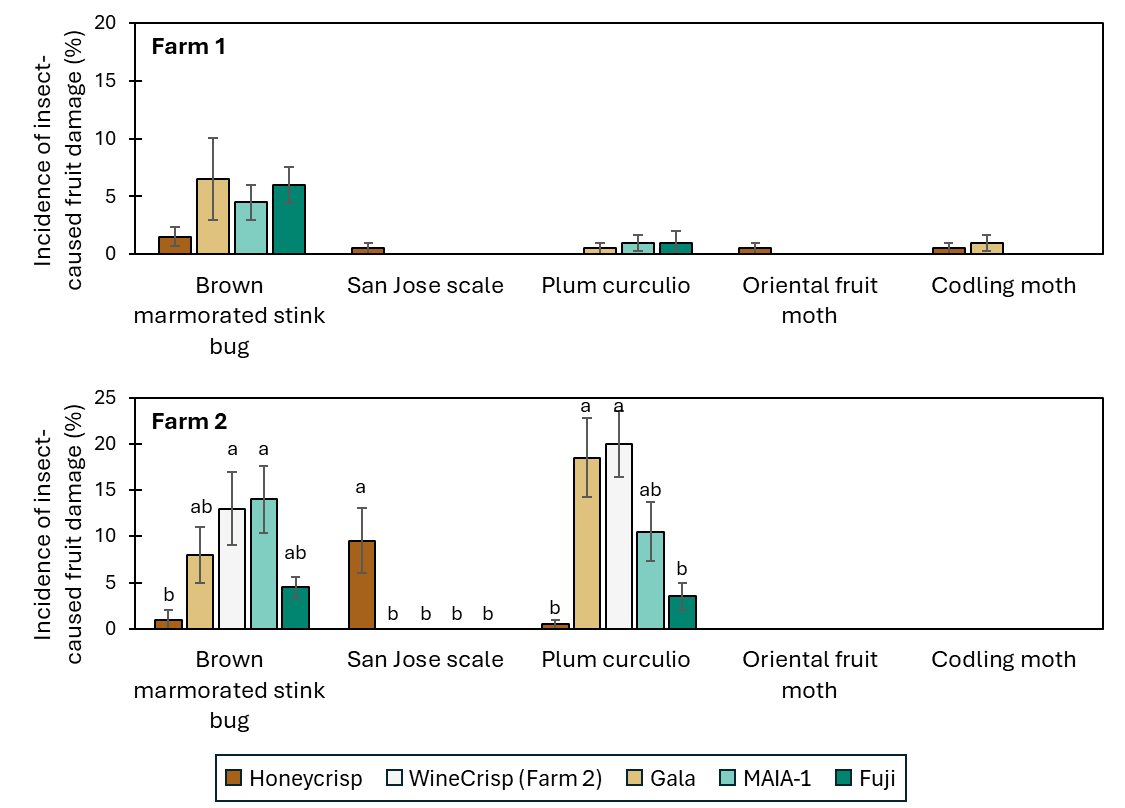
At Farm 2, cultivar had a significant effect on the incidence of injury caused by BMSB, SJS, and plum curculio. ‘Honeycrisp’ apple had the lowest incidence of both BMSB feeding injury and plum curculio oviposition scars. Honeycrisp is the earliest developing variety in this study and therefore early season fruitlets are likely too large for plum curculio to preferably oviposit in; this also indicates that the early developing phenology does not align with BMSB’s heaviest feeding periods throughout the season. In contrast, Honeycrisp was the only cultivar with SJS damage across both farms and both OFM and codling moth damage at Farm 1. These could be associated with plant biochemistry differences between cultivars affecting attraction and repellence of these insects. It is worth noting that, although there were no significant differences among cultivars at Farm 1, the pattern of damage is the same between both farms. Anecdotal evidence from growers suggests that Fuji generally has high BMSB damage, however, this was not consistent across both farms in this study.
Flowering phenology and early fruit development
In spring 2025, each of the key stages of flower bud development, including green tip, king bloom, petal fall, and initial fruit set, occurred within the same week among apple cultivars within the same farm. This suggests that flowering phenology is generally in sync between cultivars of interest in this survey. Although the observation of phenology of all trees was made through initial fruit set (when fruitlet became visible at the base of flower), fruit set was abnormally unsuccessful for ‘Honeycrisp’ and ‘Fuji’ at Farm 1 and ‘Honeycrisp’, ‘WineCrisp’, and ‘Gala’, and ‘Fuji’ at Farm 2. Anecdotally, similar phenomenon was also reported for ‘Honeycrisp’ and ‘Fuji’ by other fruit producers in Maryland and Pennsylvania during the same crop season, but the causes remain unclear. The poor fruit set at the partner farms led to low numbers of fruit on the experimental tree and thereby impeded us from comparing early fruit growth (enlargement) between apple cultivars of interest using statistical analysis. Nevertheless, the existing data suggested that ‘Honeycrisp’ fruit size might increase at a greater rate than others during early fruit development (~3-5 weeks after king bloom) at Farm 1; in contrast, such a trend was not observed at Farm 2.
Evaluation of early season insect damage to fruit
At Farm 1, no insect damage (plum curculio or internal worm) was recorded on ‘Honeycrisp’ fruit. ‘Gala’ had the highest plum curculio injury, and some low internal worm damage. ‘MAIA-1’ had low plum curculio injury and zero internal worm damage, and ‘Fuji’ had low percentages of both damage present. Farm 2 had overall higher incidence of plum curculio injury and internal worm damage than Farm 1, ‘MAIA-1’ and ‘WineCrisp’ both had 4.5 to 7% fruit injured by plum curculio, and ‘MAIA-1’ had an average of 1.2% of fruit with internal worm damage whereas ‘WineCrisp’ did not have any internal worm damage.
The results of the survey with mature apple fruit in summer 2024 demonstrated differences in fruit quality-related traits, disorder symptoms, and insect-caused damage among apple cultivars of both farms. For individual insect pests, cultivar-specific damage appeared to exhibit varying trends across the two farms in 2024. The differences in the genetic makeup of cultivars likely contribute to the variations in fruit physiochemical composition, leading to differences in the fruit quality traits and possibly their susceptibility to physiological disorders and insect injuries. To account for the year-by-year variability, assessment of mature fruit for fruit quality, insect-caused injury, and common disorders will be continued for another crop season in 2026.
In spring 2025, each key stage of flower bud development occurred at a similar time (within 7-day difference) for the apple cultivars of interest, suggesting flowering phenology being synchronized, in some degree. Preliminary data suggest that early fruit growth rate might vary between cultivars, with ‘Honeycrisp’ having relatively larger fruit during the 3 to 5 weeks after king bloom. However, additional data collection is necessary and will be carried out in 2026 to identify important developmental events in apple that are cultivar-dependent. Although the early-season insect damage data from 2025 was more limited in scope due to abnormally poor fruit set in many of the evaluated cultivars, these data confirm some findings from the assessment of mature fruit in 2024. There is a distinct difference in insect damage levels between the two farms, this could be due to differing locations and management practices. Additionally, 2024 data showed ‘Honeycrisp’ had very low incidence of insect damage and ‘Gala’ had high plum curculio injury.
Education & outreach activities and participation summary
Participation summary:
The findings from the 2024 mature apple assessment for fruit quality, insect damage, and physiological disorders were presented at the Western Maryland Fruit Meeting (February 2025, Keedysville, MD), which is a well-attended fruit grower-facing meeting hosted by the University of Maryland Extension. The research results were also disseminated at the Cumberland-Shenandoah Fruit Worker Conference (December 2025, Martinsburg, WV), which was attended by university researchers, extension personnel, government scientists, and industry representatives working with temperate tree fruits and berries.
After data collection and analyses are completed in summer/fall 2026, we will present synthesized results at major meetings targeting fruit growers, including Mid-Atlantic Fruit and Vegetable Convention (February 2027, Hershey, PA), Western Maryland Fruit Meeting (February 2027, Keedysville, MD), and West Virginia Ag Safety Days (February 2027, Kearneysville, WV). In addition, research findings will be disseminated at the Stakeholder Focus Group Meeting (March 2027) and Field Day (July 2027) hosted by the AFRS, Kearneysville, WV. The annual AFRS Focus Group Meeting garners 40 attendees, comprised of agricultural researchers, regulatory officials, grower and commodity stakeholders, industry representatives, and Extension personnel. The AFRS Biennial Field Day attendance has ranged 150-200 people in previous years, this captures a wider array of stakeholders, researchers, and other agricultural personnel. These events are predominantly attended by individuals throughout the Northeastern area, although the reach extends to national and international collaborators.