Final report for OS24-172
Project Information
Introduction
The U.S. food supply is endangered by declines in honeybees and a lack of possible pollinators in the future. Compounding the problem is a loss of native pollinator habitat, global climate change, pollution, and the need to boost agricultural production.
The best alternative to honeybees is the native bees already present in the environment. With nearly 3500 species in North America alone, the diversity of different forms, pollen-strategies, and behaviors of native bees provides a wide range of use for agricultural operations. Relying on several native bee species with varying behaviors and adaptations is a solution to varying climate conditions resulting from global climate change.
Past research suggests two main methods of boosting native bees in agricultural areas: (a) providing nesting habitats and (b) providing additional floral resources (particularly during periods of low food availability).
Based on current studies of Eastern Central Georgia (e.g. coastal plain areas with sandy well-drained soils), 3 main habitat enrichments that need boosting are: (1) a season-long food supply, (2) water, and (3) additional nesting areas.
The farm in this experiment grew blueberries and cucurbits (cucumbers, watermelons, and pumpkins), allowing native bee activity to be measured over the whole growing season. These crops provide a range of flowering times: blueberries (March-April), cucumbers (June-July), watermelons (July), and pumpkins (July-August). May was a period of no crop flowers.
Habitat Enrichment Corridor
The first resource added to the habitat enrichment corridor was a season-long food supply. The corridor was seeded with different wildflower species. The most beneficial wildflower plants identified were (1) Indian Blanket (Gaillardia pulchella) (2) Black-eye Susan (Rudbeckia hirto), (3) Tickseed (Coreopsis lanceolata) and (4) Spotted Bee Balm (Monarda punctata). Several additional wildflower plants were also tested (e.g. asters, mints, coneflowers).
The second resource added to the habitat enrichment corridor was water. Current climate patterns in Central Georgia impacted by global climate change indicate very hot summers with few days of rainfall. The lack of water may keep native bees from certain agricultural areas. It should be noted that managed bees, like honeybees, are provided with additional food and water resources at their hives by their beekeepers.
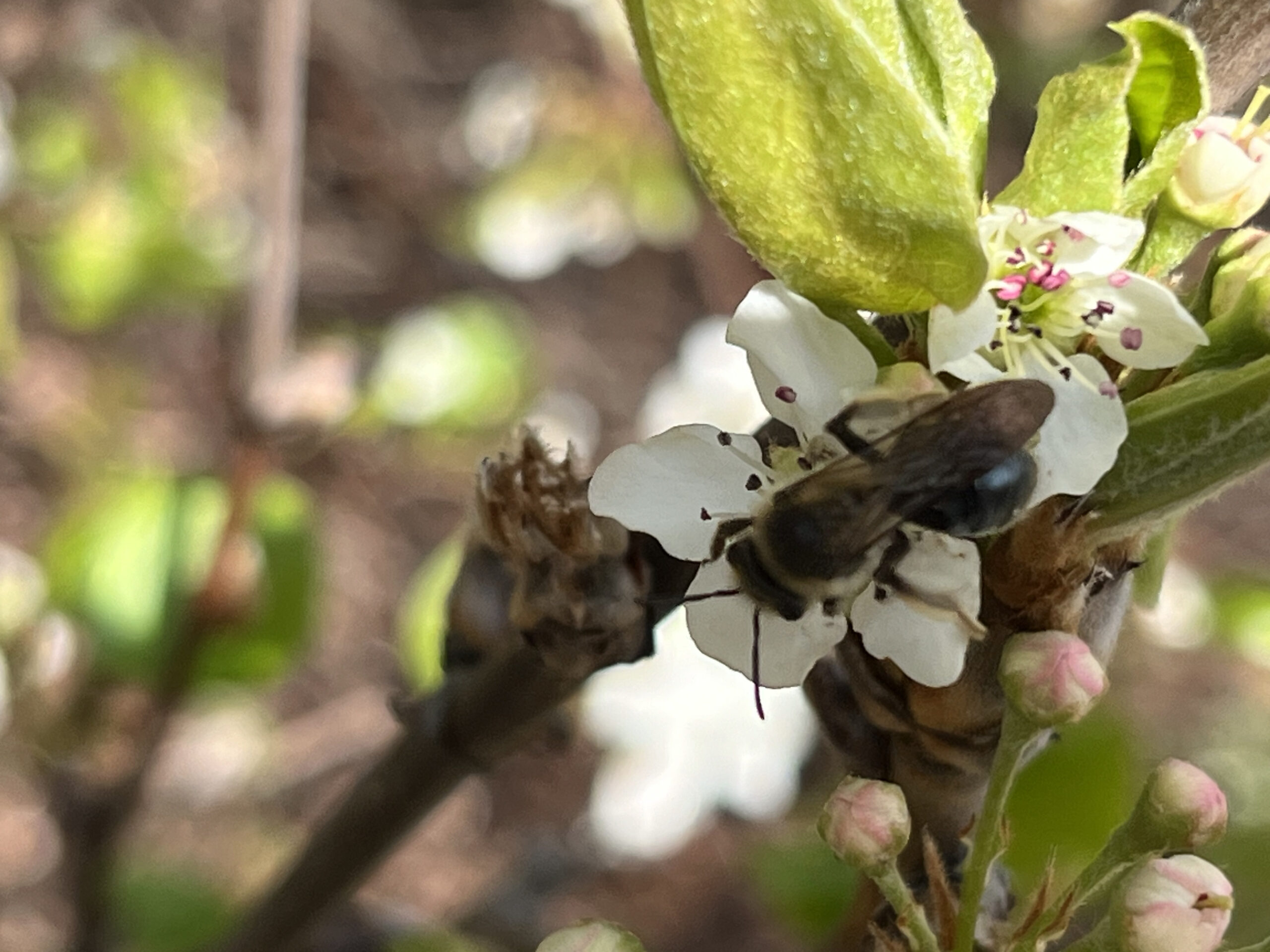
The third resource added to the habitat enrichment corridor was nesting habitat. In the Southeastern U.S. region, the most useful native bees are ground nesting bees that could also nest in the wildflower corridors. These ground nesting native bees include Southeastern Blueberry Bees (Habropoda laboriosa), sweat bees (Genera: Augochlorella, Halictus, Lasioglossum), and bumble bees (Genus Bombus). However, cavity nesting bees such as Mason Bees (Genus Osmia) may play a role in early season pollination, while leaf cutter bees (Genus Megachile) may also play an important role in pollenating summer flowering crops. Bee houses with nesting tubes were added to the corridors for cavity nesting bees.
Studies show floral enhancements on the edges of orchards and farms have a significant effect in recruiting or bringing in more native bees. Now, scientists need to explore what is really going on in the wildflower patches during each major period of the growing season. Specifically, we need to know what is going on during the (1) pre-bloom period, (2) bloom period of the target crop, and (3) post-bloom period/summer dearth period (period of few floral resources).
The main purpose of the proposed study was to assess the habitat enrichment corridors to boost native bees and beneficial wasps over the whole agricultural season.
(1) Which wildflower species are the best at recruiting native bees pre-bloom and during bloom of the blueberries? (Spring period, March -April)
(2) Which wildflower species best support bee populations during bloom of cucurbits (cucumbers, squash, watermelon, and pumpkins)? (Summer/Fall period, May-September)
(3) Which wildflower species are the best at maintaining native bees during post- bloom (a time of no flowers) of cucurbits? (October)
These answers will assist in the development of an ideal wildflower mix that will boost target native bee abundances by providing the correct wildflower resources. These resources will both increase native bee pollination activities within the farm during the current season and will promote greater offspring production, leading to higher abundances of native bees in subsequent seasons.
Each region of the U.S. varies in farming conditions, bloom times, and variety of native bee species available for pollination activities. Regional studies such as the proposed study are essential in gathering accurate information on which wildflower species have the best native bee recruitment characteristics.
Past research of Georgia’s native bees has focused on the northern apple producing areas of Georgia. This will be one of the first studies of native bees in Eastern Central Georgia (e.g. coastal plain area with sandy well-drained soils). Thus, the study’s results will also allow a comparison of native bees’ seasonal diversities and abundances between native bees in Northern Georgia (clay soils) versus Eastern Central Georgia (sandy soils).
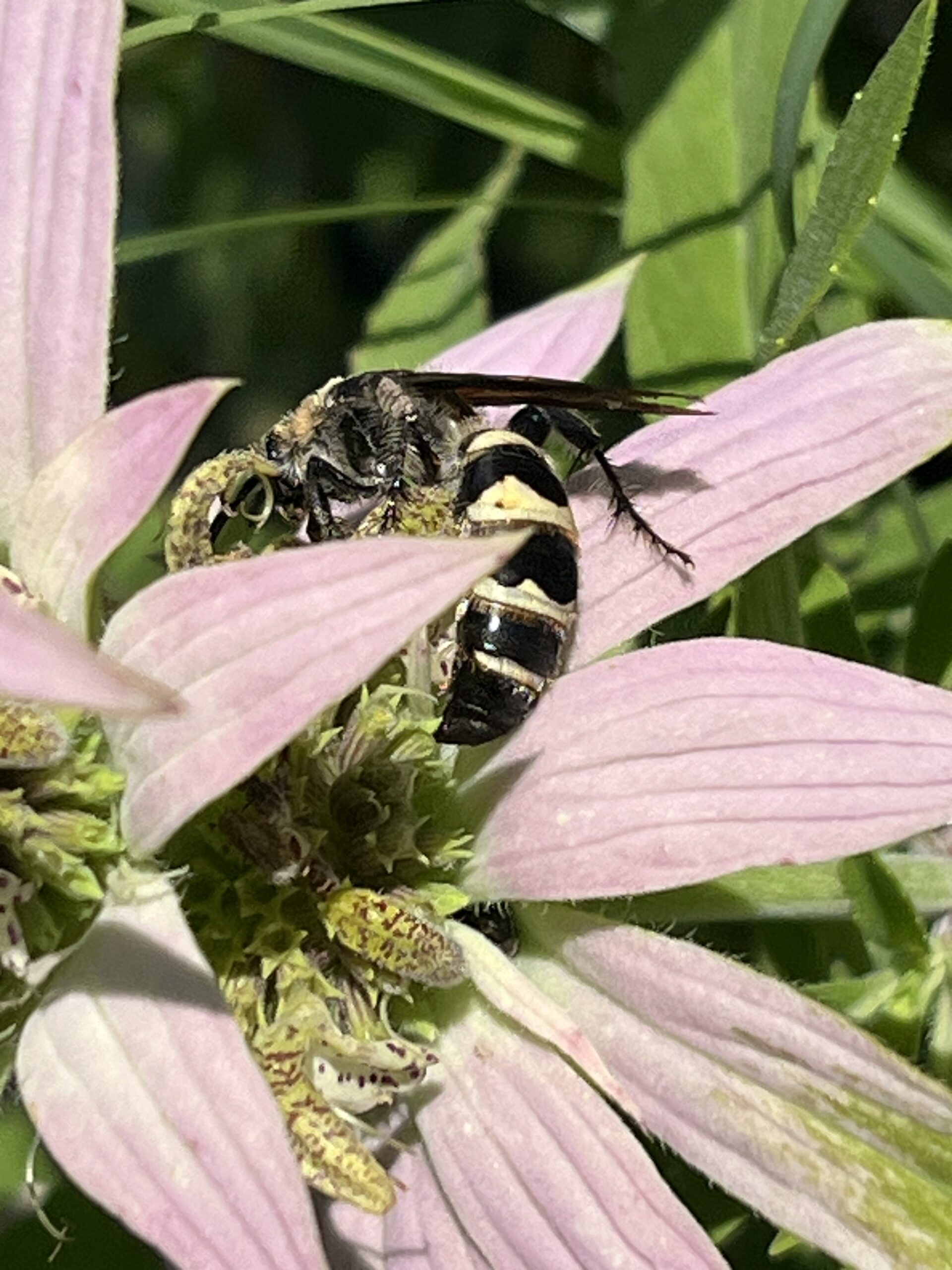
Other pollinators (such as pollinating wasps, flies, and butterflies) could benefit from the addition of pollinator-friendly habitats. Hairy flower wasps (Family Scoliidae) have been observed to occur in large numbers at several different farms in coastal plains areas of Georgia.
Scoliid wasps are beneficial predators of pest scarab beetles (e.g. Japanese beetles) and provide pollination of numerous flowers. This study also investigated the effect of wildflower enrichment on increasing Scoliid wasp abundance in agricultural areas.
The following key questions were addressed in the project:
(1) Do habitat enrichment corridors stocked with food, water, and nesting areas increase native bee abundance and diversity?
(2) Which wildflower species are best at recruiting different target native bee groups?
(3) Do habitat enrichment corridors stocked with food, water, and nesting areas increase other beneficial insects (e.g. hairy flower wasps)?
To measure the effectiveness of habitat enrichment corridors, we will monitor native bees and beneficial insect abundance and diversity from March to October. This study was conducted at Pinefield Eco Farm, located in Hephzibah, Georgia. Two years of baseline data (2022-2023) was gathered on native bee abundance and diversity at this farm. The current study gathered two additional years (2024-2025) of data used to answer the objectives.
Five objectives were examined during the project.
Native Bee Objectives:
Objective 1: Measure native bee abundance in blueberry and cucurbit plots during each of the 4 major periods of the growing season.
Objective 2: Assess the success of each type of enrichment in the habitat enrichment corridor.
Objective 3: Determine which target bee species is present on specific wildflowers in each of the major periods of the growing season.
Scoliid Wasp Objectives:
Objective 4: Measure Scoliid wasp abundance in blueberry and cucurbit plots during each of the 5 major periods of the growing season.
Objective 5: Determine which specific wildflowers in each of the major periods of the growing season best recruited and increased Scoliid wasp abundance.
Cooperators
- - Producer
Research
Study Location
Pinefield Ecofarm in Hephzibah, Georgia was the site of the on-farm research experiments.
Blueberry Plots (Blueberries flower March – April)
On the farm, there were six plots of blueberry bushes surveyed (3 control blueberry plots and 3 experimental blueberry plots). The three blueberry “experimental” plots consisted of 5 rows of blueberry bushes roughly 1500 ft2 (50 x 30 feet) with an adjacent habitat enrichment corridor roughly 400 ft2 (50 ft x 8 ft). The three blueberry “control” plots had the same layout but lacked the habitat enrichment corridor. The blueberry experiment and control plots are separated by an open field and small forest (more than 2000 feet across). Wildflower patches of perennial and annual wildflowers were introduced to the experimental blueberry plots in the summer of 2022 (after the blueberry bloom).
Cucurbit Plots (cucumbers, squash, watermelon) (Cucurbits flower June-August)
On the farm, there were three cucurbit “experimental” plots consisting of 3 rows: 3 cucumber, 3 squash, and 3 watermelon (roughly 1200 ft2 (50 x 24 feet), with an adjacent habitat enrichment corridor roughly 200 ft2 (50 ft x 8 ft). The three cucurbit “control” plots had the same layout but lacked the wildflower enrichment corridor. These summer flowering plants (cucurbit plots) were added to the farm in summer of 2023. Insect sampling began in 2024.
Wildflower species seeded in the wildflower strips were: Cosmos Sensation (Cosmos bipinnatus), Lance Leaf Tickseed (Coreopsis lanceolata), Plains Coreopsis (Coreopsis tinctoria), Purple Coneflower (Echinacea purpurea), Siberian Wallflower (Erysimum allionii), Buckwheat (Fagopyrum esculentum), California Poppy Orange (Eschscholzia californica), Indian Blanket Flower (Gaillardia pulchella), Sunflower Lemon Queen (Helianthus annuus), Gayfeather (Liatris spicata), Sweet Alyssum Tall White (Lobularia maritima), Wild Perennial Lupine (Lupinus perennis), Bee Balm (Monarda didyma), Spotted Beebalm (Monarda punctata), Baby Blue Eyes (Nemophila menziesii), Evening Primrose (Oenothera biennis), Red Corn Poppy (Papaver rhoeas), Lacy Phacelia (Phacelia tanacetifolia), Mountain Mint (Pycnanthemum muticum), Yellow Prairie Coneflower (Ratibida columnifera), Black-eye Susan (Rudbeckia hirto), New England Aster (Symphyotrichum novae-angliae), and Crimson Clover (Trifolium incarnatum).
Each experimental day at the farm (12-14 per year; March – September), bee observers watched wildflower patches for up to one hour per day. Wildflower effectiveness was defined as a floral visit by a native bee. Video cameras were used to measure bee visitations. However, in-person bee-flower counts yielded much higher counts of bee- flower interactions. Observers had a wider field of view than fixed video cameras. It is not recommended to use video cameras to accurately measure bee or wasp visitation rates.
Bees were sampled using blue, yellow, and white bowl traps, yellow and blue vane traps, malaise traps, and timed (60 minutes) sweep netting.
The Habitat Enrichment Corridor (Water, nesting, and food enrichments)
The habitat enrichment corridor was seeded with 20+ wildflower species. The poor sandy soils present at the farm and the coastal plain of Georgia impacted the success of wildflower germination. The 10 best germinating wildflowers were: Cosmos Sensation (Cosmos bipinnatus), Lance Leaf Tickseed (Coreopsis lanceolata), Purple Coneflower (Echinacea purpurea), Buckwheat (Fagopyrum esculentum), Indian Blanket Flower (Gaillardia pulchella), Wild Perennial Lupine (Lupinus perennis), Spotted Beebalm (Monarda punctata), Baby Blue Eyes (Nemophila menziesii), Evening Primrose (Oenothera biennis), Black-eye Susan (Rudbeckia hirto) and Crimson Clover (Trifolium incarnatum).
In the center of each habitat enrichment corridor, 2 bee houses with 6 – 9 mm diameter natural reed clusters were placed. Spring bees (e.g. Mason Bees) and Summer Bees (e.g. Leaf Cutter bees) used this nesting resource. Nest boxes were placed 4 feet above the ground on planters.
In the center of the habitat, 4 bee watering stations were placed next to the nest boxes. The watering stations were zip tied to 2 stacked cinderblocks for stability.
Objective 1: Measure native bee and beneficial insect abundance in blueberry and cucurbit plots during each of the 5 major periods of the growing season.
To gather the data needed to test this objective, we used a range of sampling methods proven to accurately sample native bee abundance and diversity in North Georgia Apple Orchards, based on a modified Bee Inventory Plot Design.
Each plot was passively sampled using a total of 6 sets of bowl traps (each set consists of 1 UV blue bowl, 1 UV yellow bowl, and 1 white bowl), 2 vane traps (blue and yellow), and 1 malaise trap. In addition, active sampling was performed by timed sweep netting of 30 minutes in each plot.
In each plot, the bowls were laid out in an “X” formation from the plot’s site corners. One vane trap was placed on one side of the plot, and the other vane trap placed on the opposite side of the plot. The malaise trap was placed on the edge of the plot in the middle row.
All bee samples collected were stored in 95% ethanol and taken back to Georgia Gwinnett College for insect sorting and identification.
Results
The current study addresses the third and fourth season (2024 and 2025) at Pinefield Ecofarm; however, the results for 2022 (control year) and 2023 (annual wildflower only year) are provided for reference. The research project started on the blueberry farm in 2022.
The number of bees significantly increased in 2024 and 2025 compared to previous years (Table 1). The study showed both increases in bee abundance and shifts in the bee community species makeup. The shift favored bee species of larger physical size.
Year 1 of the study (2022) was the control year without wildflowers. Neither the experimental nor control plots had wildflowers. In year 1, 590 bees were collected. Most of these bees (89.5%) were the very small sweat bees (Lasioglossum species).
Year 2 of the study (2023) had experimental plots with wildflowers and control plots. Only annual wildflowers were present. There was a significant shift in the bee community. Large-size bees (e.g. Bombus and Xylocopa) and medium-size bees (e.g. Andrena and Habropoda) significantly increased in abundance. For example, mining bees (Andrena species) sampled went from 1.7% (2021) to 7.3% (2022) to 18.8% (2024).
Year 3 of the study (2024) had experimental plots with wildflowers and control plots. Both annual and perennial wildflower were present. Bee abundance showed a significant increase, and significant shifts in the bee community continued. Year 3 (2024) saw a significant concentration of perennial wildflowers appear (e.g. Spotted Bee Balm). Once again, large size bees (e.g. Genera Habropoda and Andrena) made up a greater percentage of bees in the sample (Table 1).
Year 4 of the study (2025) had experimental plots with wildflowers and control plots. Both annual and perennial wildflowers were present. Bee abundance showed a significant increase, and significant shifts in the bee community continued. Year 4 (2025) was significantly affected by Hurricane Helene, which struck eastern Georgia in September 2024. The hurricane resulted in significant damage including uprooting trees, damage to insect nesting areas, and significant ecosystem damage. Animal populations (e.g. deer) were observed to decline in impact areas. While 2025 did have fewer bees than 2024, the plots exhibit higher bee diversity and abundance than in 2022 and 2023, indicating the wildflower enrichment corridors assisted in maintaining pollinator population even during natural disasters. Large size bees (e.g. Genera Habropoda and Andrena) made up a greater percentage of bees in the sample compared to control year (Table 1).
Each year of the study, the experimental plots with wildflowers had more than double the native bees compared to the control plots (Figure 1). As noted above, the increased numbers in native bees came from recruiting large numbers of medium-size and large-size native bees. These larger bees are known to be some of the most effective pollinators in agricultural areas.
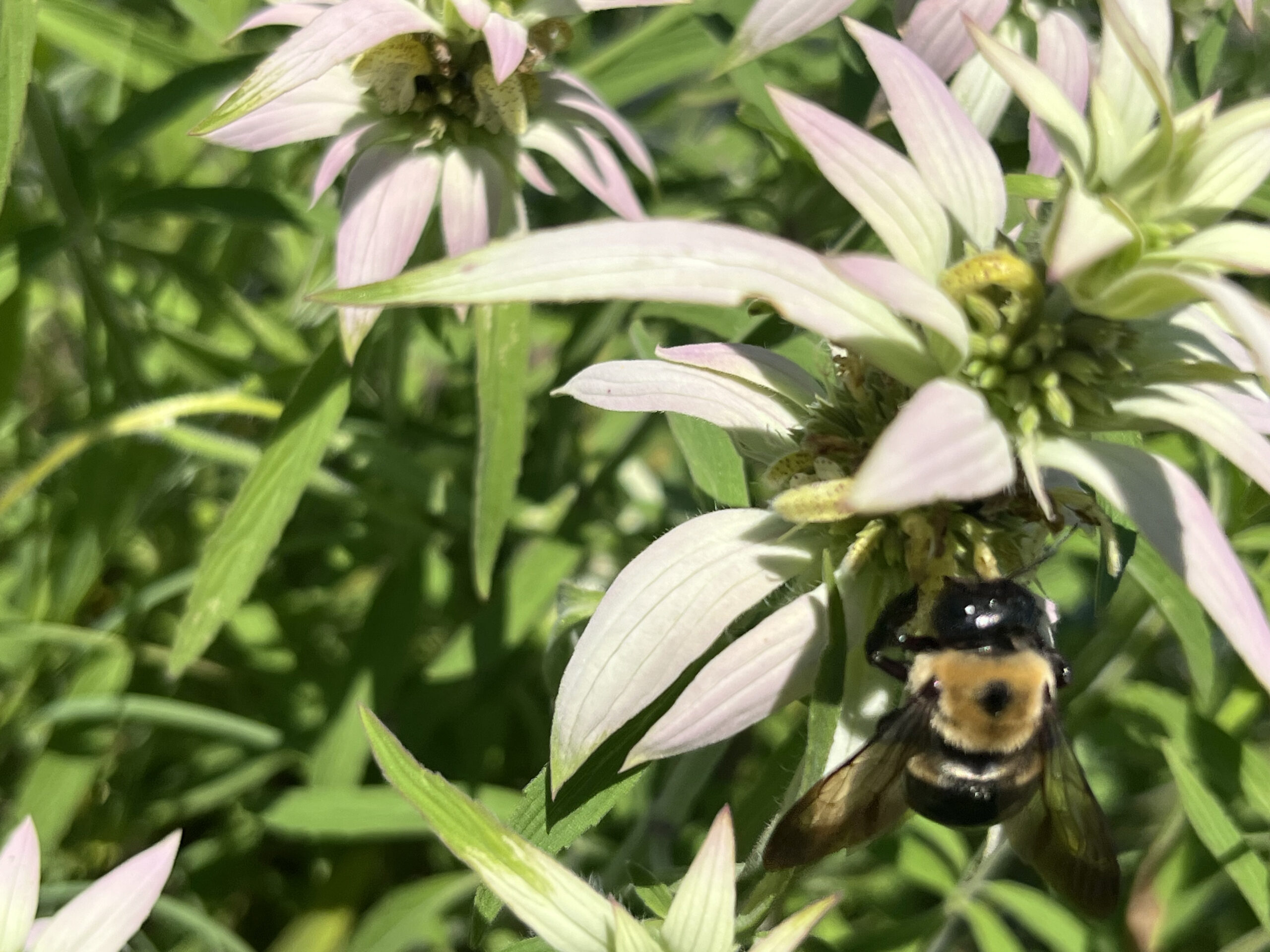
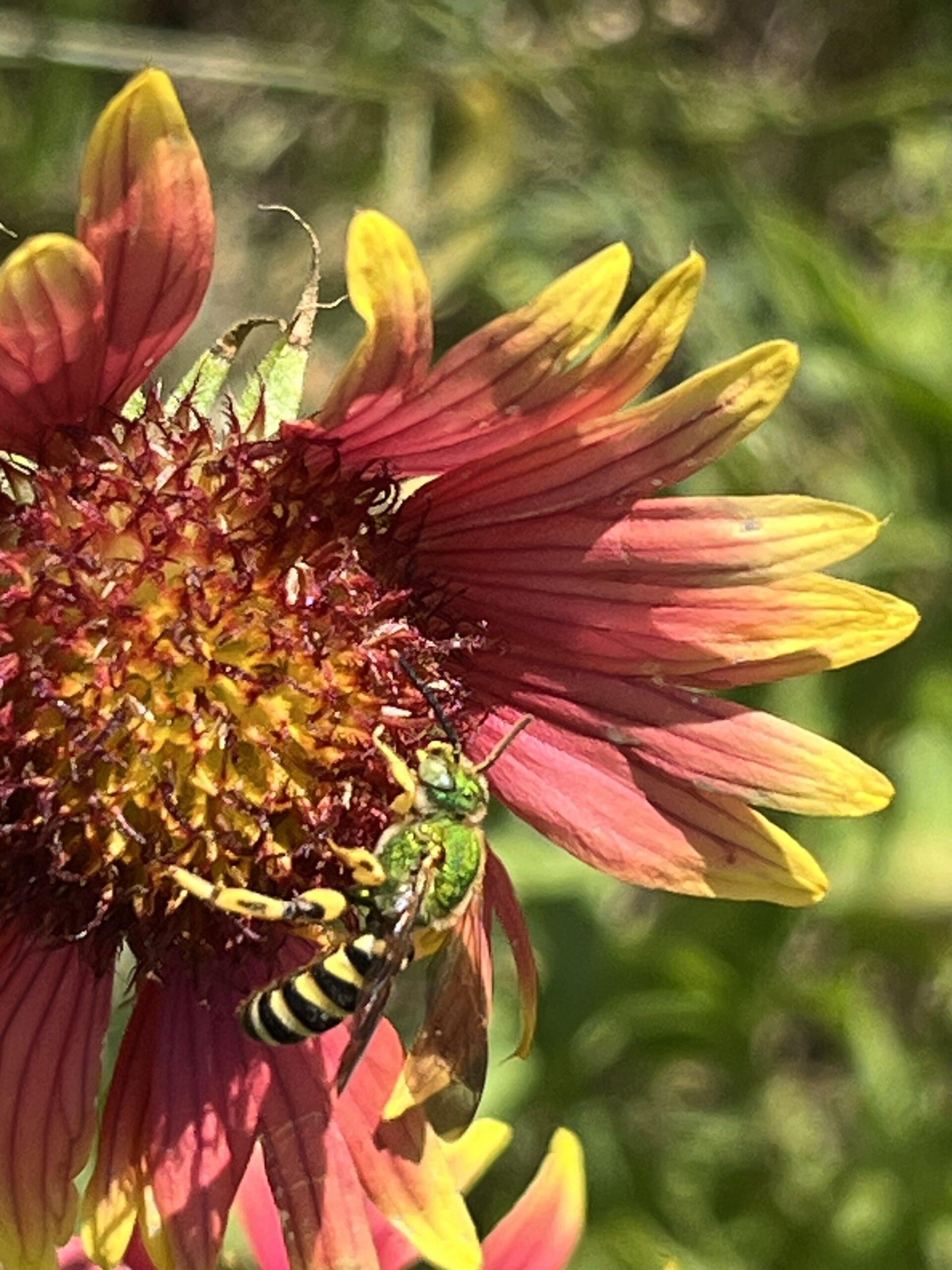
The most important bee groups (genera) that were Agapostemon (large green sweat bees), Andrena (mining bees), Bombus (bumble bees), Eucera (long horn bees), Habropoda (Southeastern blueberry bee), Halictus (large sweat bee), Lasioglossum (small sweat bee), Megachile (leaf cutter bee), Osmia (mason bee), and Xylocopa (carpenter bee). The presence and abundance of each group did significantly change over the growing season. Table 2 illustrates the abundance of each bee family over the growing season. The results of this study indicated certain native bee genera are more useful pollinators in certain times of the season.
Objective 2: Assess the success of each type of enrichment in the habitat enrichment corridor.
Wildflower Assessment
The success of the wildflower enrichment was measured by doing a bee visitation count. Each experimental day at the farm (12 per year; March – September), bee observers watched wildflower patches for up to two hours per day. Wildflower effectiveness was defined as a floral visit by a native bee. Video cameras were also used to measure bee visitations. However, in-person bee/flower counts yielded much higher counts of bee- flower interactions.
Results
The wildflower enrichment strips significantly increased the number of native bees at the farm. Each year of the study, the experimental plots with wildflowers had more than double the native bees compared to the control plots (Figure 1). As noted above, the increased numbers in native bees came from recruiting large numbers of medium-size and large-size native bees. These larger bees are known to be some of the most effective pollinators in agricultural areas.
Not all planted wildflowers thrived at the farm. The soils of the Hephzibah area are very sandy (coastal plain of Georgia) and temperatures get quite hot (up to 100°F in the summer). The top ten wildflowers that attracted native bees were Cosmos bipinnatus (Cosmos Sensation), Coreopsis lanceolata (Lance Leaf Tickseed), Echinacea purpurea (Purple Coneflower), Fagopyrum esculentum (Buckwheat), Gaillardia pulchella (Indian Blanket Flower), Lobularia maritima (Sweet Alyssum), Lupinus perennis (Wild Perennial Lupine), Monarda punctata (Spotted Beebalm), Nemophila menziesii (Baby Blue Eyes), Rudbeckia hirto (Black-Eye Susan), and Trifolium incarnatum (Crimson Clover). Table 3 shows the seasonal availability of these 10 most abundant wildflower species used in the agricultural area.
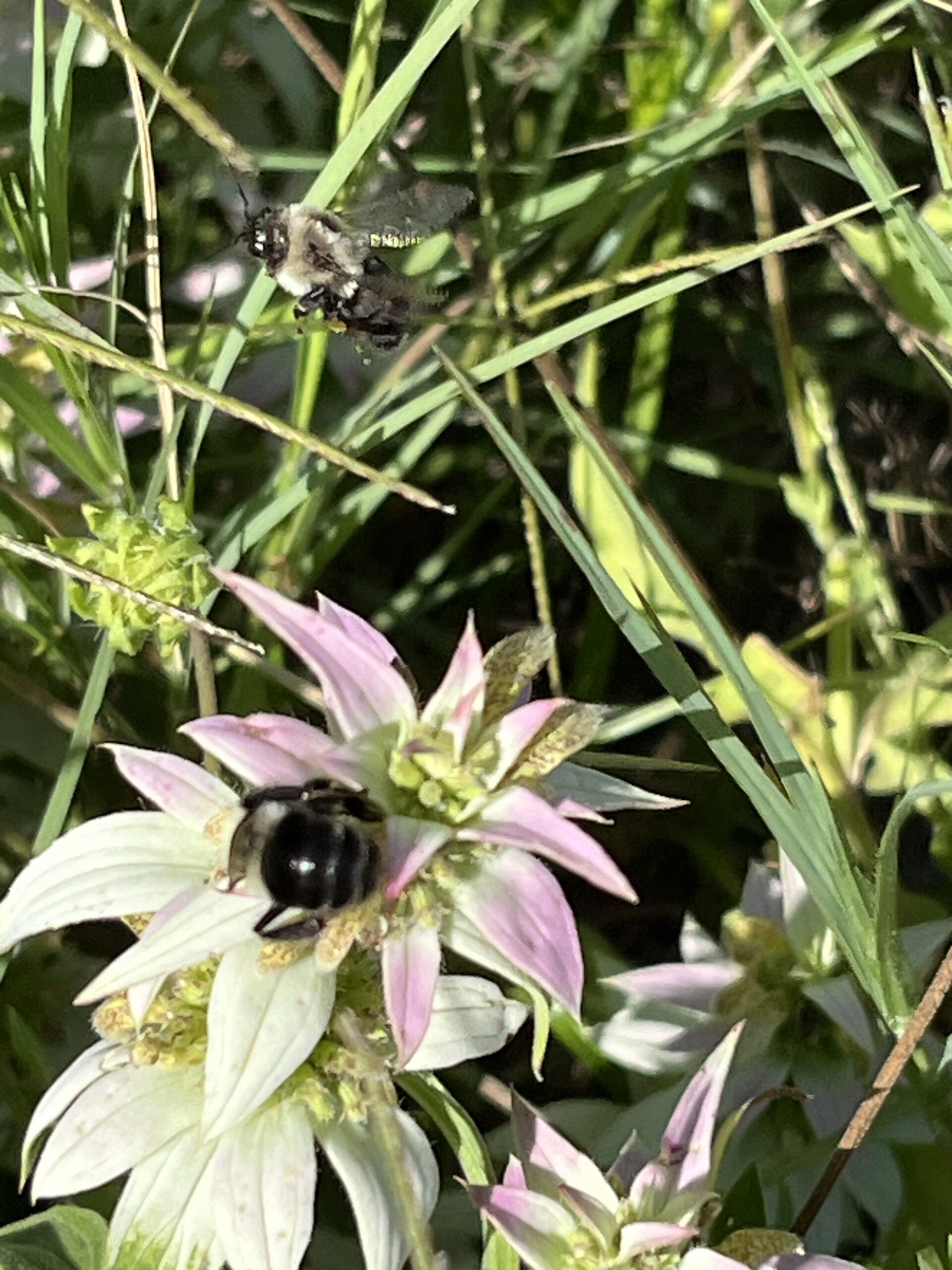
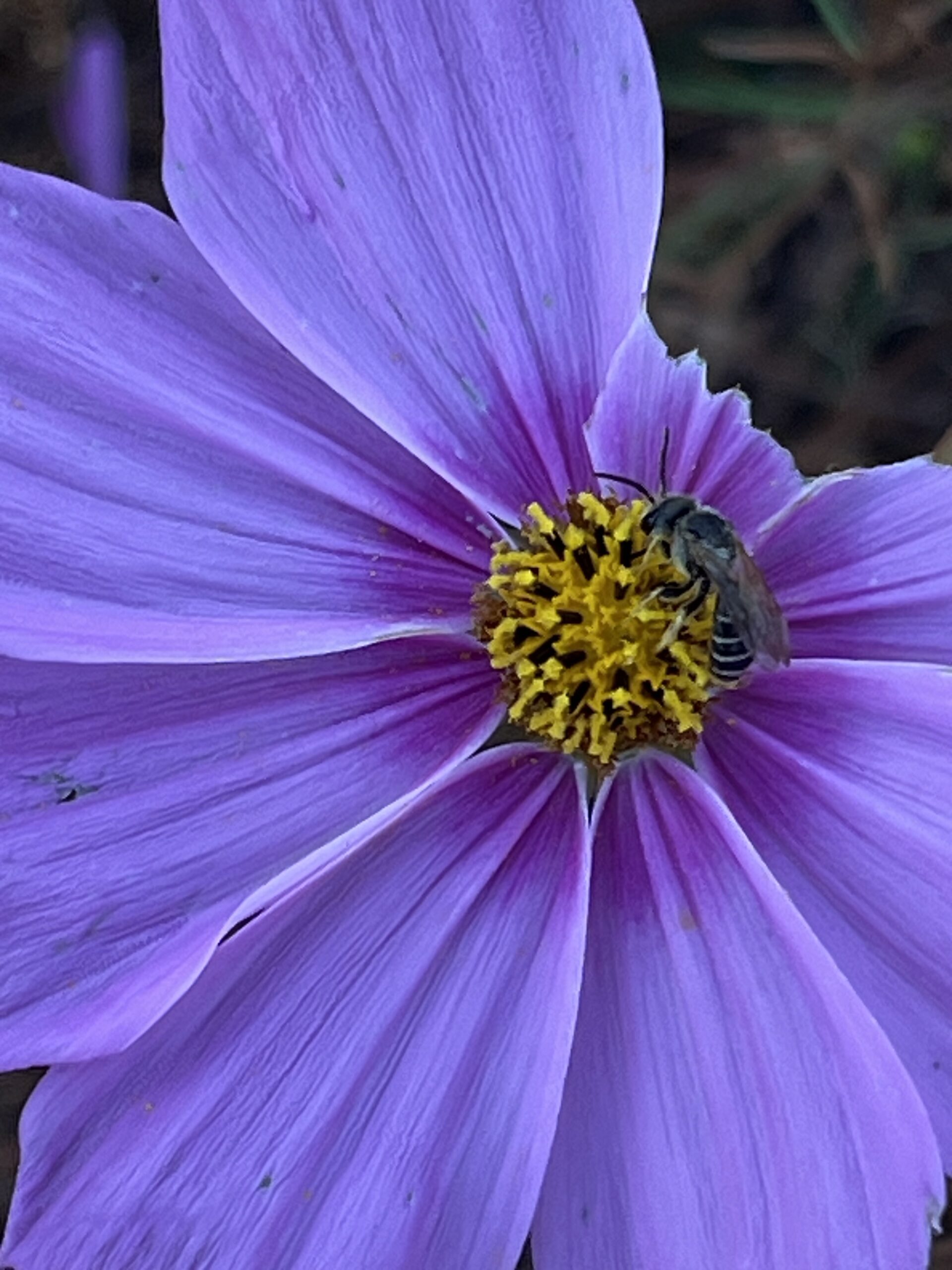
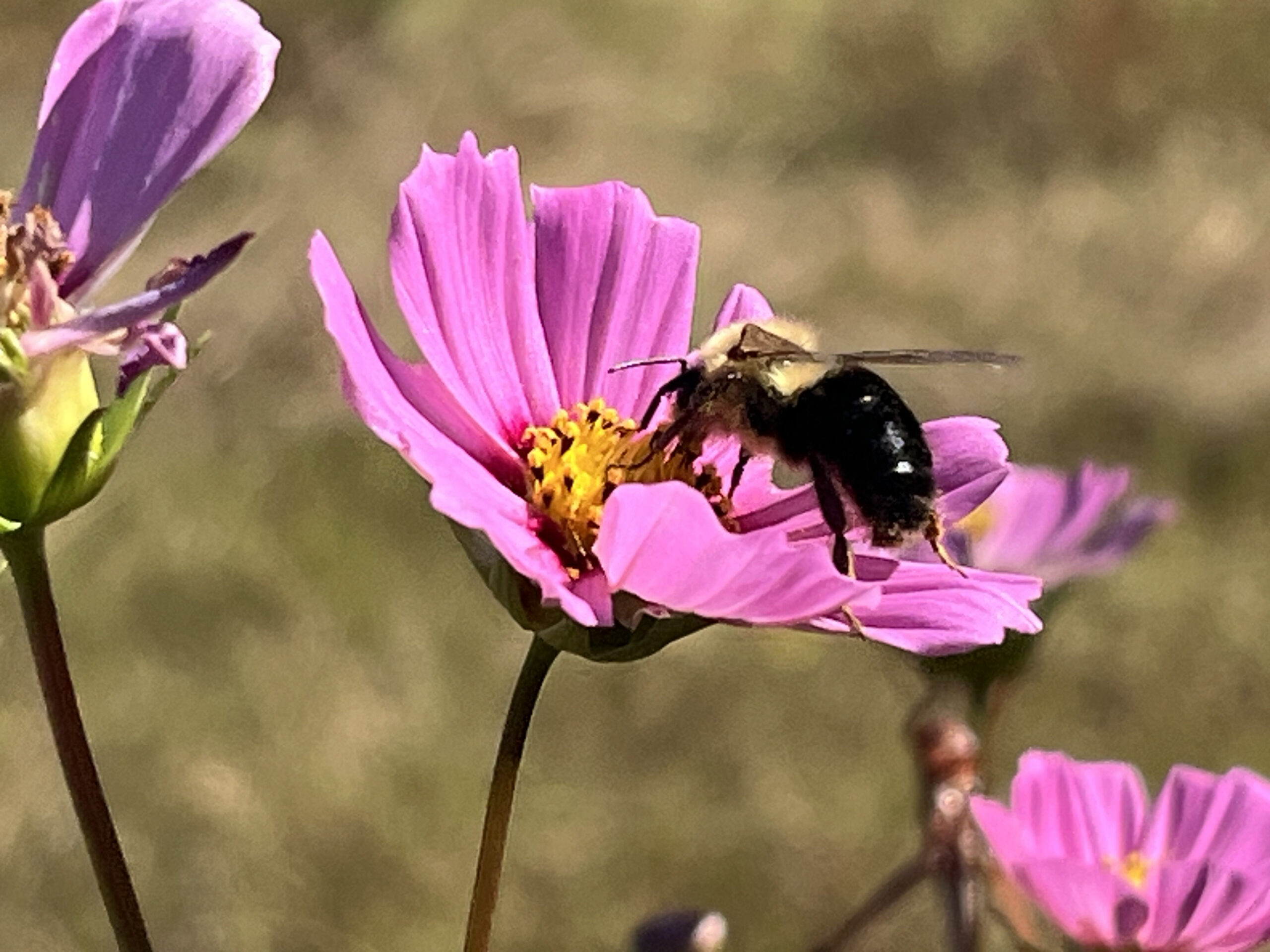
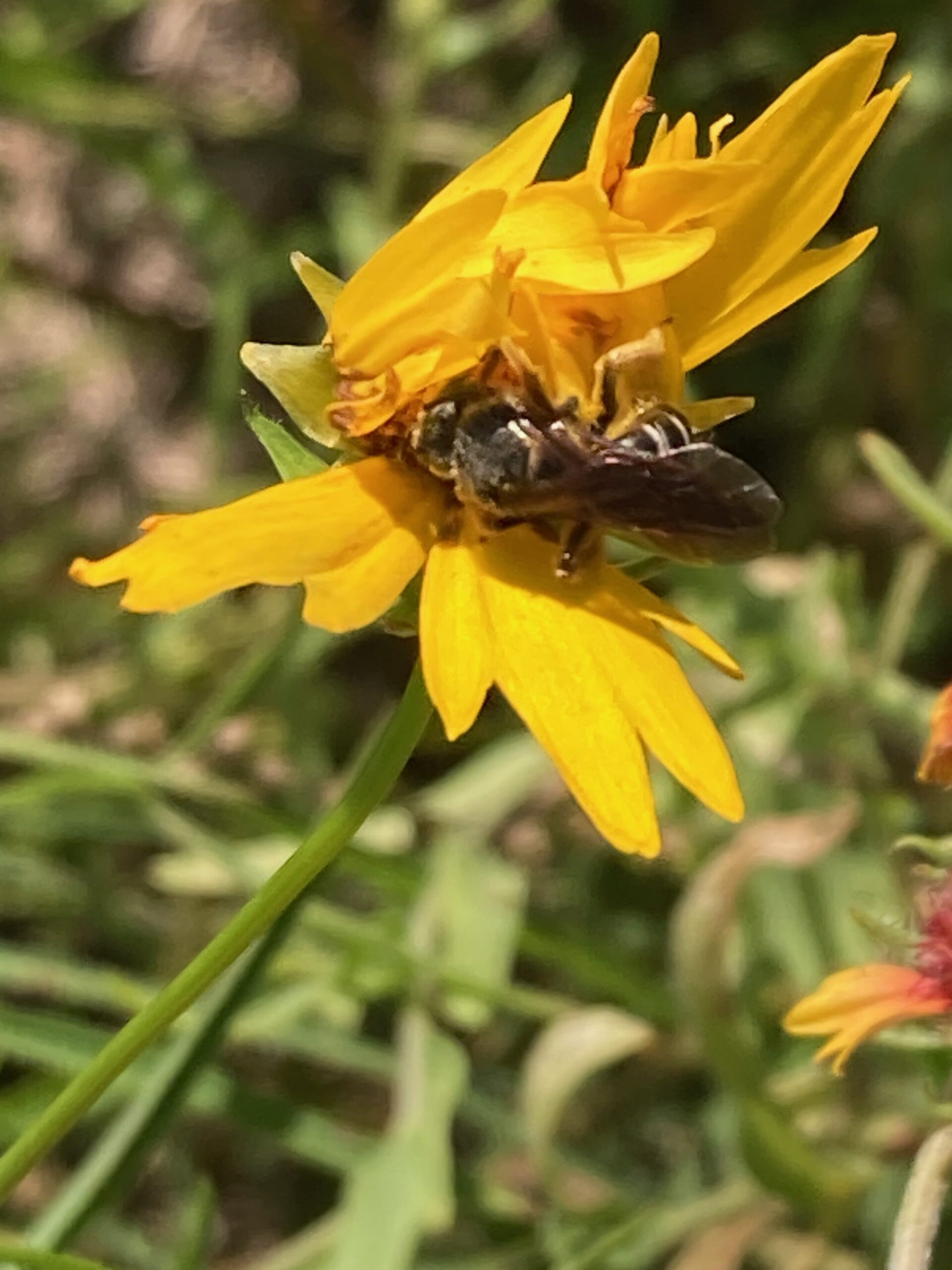
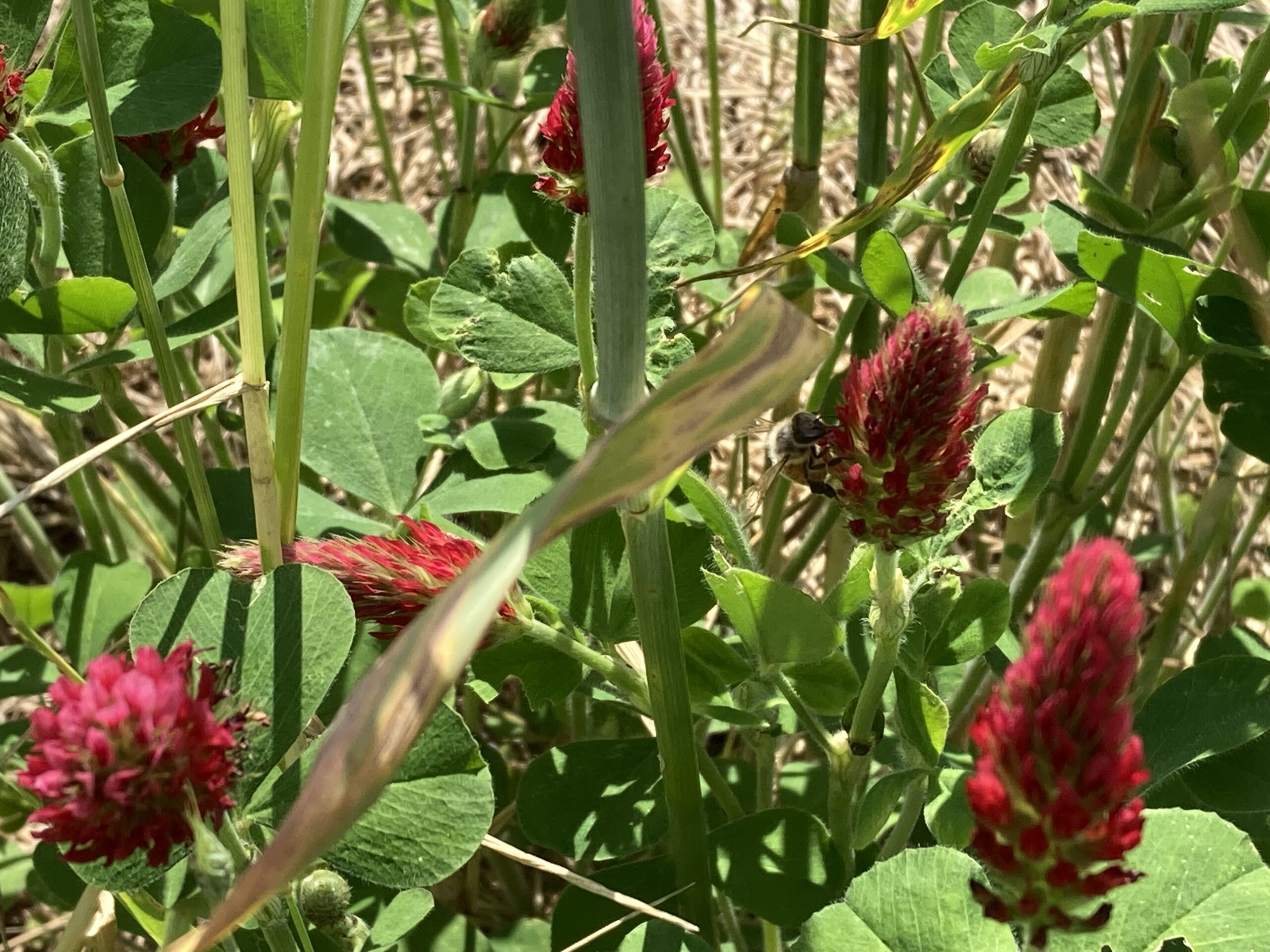
There were five species of wildflowers that attracted the most native bees (Table 4). Monarda punctata (Spotted Beebalm) was the most effective at recruiting the large bees (bumblebees, carpenter bees, blueberry bees). While Cosmos bipinnatus (Cosmos Sensation), Coreopsis lanceolata (Lance Leaf Tickseed), Gaillardia pulchella (Indian Blanket Flower), and Trifolium incarnatum (Crimson Clover) attracted all bee sizes.
Nesting Assessment
Bee houses with 6 – 9 mm diameter natural reed clusters (300 reeds per enrichment corridor) were placed in each plot. In October, we assessed which diameter size reed worked best by measuring the reed diameter size of each reed and determining if stem nesting bees used the reeds for nesting. Stem nesting bees such as mason bees (Osmia) and leaf cutter bees (Megachile) are the primary groups targeted by these enrichments.
Results
The bee houses appeared to be the most effective in boosting Megachile (leaf cutter bee). In 2023 (before the installation of the bee houses), the number of leaf cutter bees was 9 (1.5% of the bee sample). After the installation of the bee houses with nesting tubes, leaf cutter bees dramatically increased to 97 (6.8 % of the bee sample) in 2024 and to 39 (5.3 % of the bee sample) in 2025. Note: In 2025, the overall bee sample and observations were reduced due to the destructive effects of Hurricane Helene.
Mason bees (Osmia) only showed a small improvement in number. In 2023 (before the installation of the bee houses), the number of leaf cutter bees was 8 (1.5% of the bee sample). After the installation of the bee houses with nesting tubes, the number of mason bees was 7 (1 % of the bee sample) in 2024 but did show an increase to 20 bees (2.7 % of the bee sample) in 2025.
Visual inspection did show successful nesting in the nesting tubes. Seven of the tubes were nested in in 2024, and 10 tubes were nested in in 2025.
Water Assessment
The effectiveness of watering stations was evaluated on their bee visitation rates. Students observed and recorded native bees that visited the water stations. It was hypothesized that the addition of water resources in the agriculture areas of the coastal plain of Georgia (e.g. Pinefield Ecofarm) with high temperatures (up to 100°F) and dry conditions would be a useful habitat enrichment for native bees.
Results
Watering stations were not an effective habitat enrichment. Bees generally avoided the watering station. It is believed that native bees get the water they need from nectar sources. A small number of sweat bees (Lasioglossum) were observed to use the bee water stations. The most common insect to visit the watering stations in the summer were predator wasp species. Bee watering station are not recommended as a habitat enrichment for native bees.
Objective 3: Determine which target bee species is present on specific wildflowers in each of the major periods of the growing season.
There are four major periods of concern: (1) Pre-bloom/Bloom of Blueberries (March-April), (2) Post-Bloom (May) (Poor food availability in farms – no flowering crops), (3) Summer Cucurbit Bloom (June, July, August) and (4) Post-Bloom (September-October).
Researchers used cell phones and video cameras to monitor flowering wildflower species. Cameras recorded each bee that landed on a targeted wildflower species. After performing the bee visitation count (objective 2), students and researchers walked through the habitat enrichment corridor, attempting to photograph and/or collect the bees.
Results
The most important bee groups (genera) that were Agapostemon (large green sweat bees), Andrena (mining bees), Bombus (bumble bees), Eucera (long horn bees), Habropoda (Southeastern blueberry bee), Halictus (large sweat bee), Lasioglossum (small sweat bee), Megachile (leaf cutter bee), Osmia (mason bee), and Xylocopa (carpenter bee). The presence and abundance of each group did significantly change over the growing season. Table 2 illustrates the abundance of each bee family over the growing season. The results of this study indicate certain native bee genera are more useful pollinators in certain times of the season.
For early flowering crops (e.g. blueberries and apples) in March or April, the most effective native bee pollinators are Andrena, Bombus, Habropoda, Lasioglossum, and Osmia. Due to their greater abundance and pollination ability, the Andrena (mining bees) and Habropoda (Southeastern blueberry bee) were the most effective pollinator of blueberries on the farm. This conclusion is based on both bees collected and pollination observations at the blueberry flowers.
For summer flowering crops (e.g. cucumbers, squash, watermelons) in June-August, the most effective native bee pollinators are Agapostemon, Bombus, Eucera, Lasioglossum, and Megachile. Due to their greater abundance and pollination ability, the Agapostemon (large green sweat bees) and Megachile (leaf cutter bee) were the most effective pollinators of cucurbits on the farm. This conclusion is based on both bees collected and pollination observations at the cucurbits’ flowers.
Lasioglossum (small sweat bees) were commonly found from (February – October) at the farm. They contribute to the pollination of all flowers (crops, native plants, and wildflowers). Their small pollen loads due to their very small size are why they do not make significant contributions to commercial agriculture. However, some bee researchers believe that their much higher abundances compared to other native bee groups may still significantly contribute to pollination in agricultural fields.
SCOLIID WASPS (Hairy Flower Wasps)
An Additional Pollinator of Interest: Scoliid Wasps
Beneficial insects are organisms that providing natural pest control and plant pollination. Over 1,700 species of beneficial insects are used to help manage crop pests, regulate herbivore populations, and provide pollination services in the USA. Most species usually functional as either a pest control agent or as a flower pollinator. However, a few species, like Scoliid wasps, do both.
Studies have documented Scoliid wasp usefulness as both pollinators and predators of pest insects (e.g. beetle larvae). Natural enemy insects are beneficial predators of agricultural pest species. Scoliid wasp target pest beetles like Japanese beetles. They lay their eggs in the soft body of the larvae of the beetle, which results in the production of more Scoliid wasps and the death of scarab beetles.
The sandy soil of the Coastal Plain of Central Georgia has large numbers of the Scoliid wasps. These wasps are active pollinators that nest near flower patches. These wasps were observed interacting with both the wildflowers, blueberry flowers, and cucurbit flowers (cucumbers, squash) .
High abundance, large size, and the beneficial behaviors of Scoliids could have significant impacts on target crops.
Objective 4: Measure Scoliid wasp abundance in blueberry and cucurbit plots during each of the 4 major periods of the growing season.
To gather the data needed to test this objective, we used the same methods outlined above for the bee sampling. Scoliid wasps and native bees were collected at the same time.
There were 44 Scoliid wasps collected in the sample in 2022 (control year), 108 Scoliid wasps in 2023, and 408 Scoliid wasps in 2024. The addition of wildflower plots is likely to have increased (10x) the abundance of these large pollinating wasps at the farm. Even after Hurricane Helele, in 2025, 199 Scoliid wasps were collected. These wasps were observed interacting with both the wildflowers and blueberry flowers.
Scoliid wasp’s abundance numbers were about 25% of the native bee abundance. They were more abundant than all bee groups except the small sweat bees (Lasioglossum).
The most common species (over 90% of the Scoliids in the sample) was Campsomeris plumipes fossulana (Figure 3). It is recommended that this species be investigated more to determine its value in commercial agricultures as both a beneficial predator and pollinator.
Objective 5: Determine specific wildflowers in each of the major periods of the growing season which best recruited and increased Scoliid wasp abundance.
The same five species of wildflowers which attracted the most native bees also attracted the most Scoliid wasps. (Table 4). Monarda punctata (Spotted Beebalm) was the most effective at recruiting the Scoliid wasp. When Monarda punctata (Spotted Beebalm) was present, about 90% of the Scoliid wasps were found at this plant. Cosmos bipinnatus (Cosmos Sensation), Coreopsis lanceolata (Lance Leaf Tickseed), Gaillardia pulchella (Indian Blanket Flower), and Trifolium incarnatum (Crimson Clover) also attracted the Scoliid wasps.
Monarda punctata (Spotted Beebalm) is also be known as “wasp balm”. It also appeared that Scoliid wasps were attracted to blue colors, based on pan trap and vane trap data. High nectar producing blue color wildflowers (e.g. mint family) are the most effective in recruiting Scoliid wasps to an agricultural area.
SIGNIFICANCE:
Why should the public care about boosting native bee populations in agriculture?
Increasing the number of wild bee pollinators in commercial agriculture may result in: (1) lower production costs (e.g. fewer honeybee hives rented), (2) increased food production, and (3) lower food costs for the general public.
Food security will also be improved by recruiting wild bees and other native pollinators to agricultural areas. One-third of the human food supply will no longer be completely dependent on the honeybee. We will have alternatives.
Table 1. The abundance and diversity of native bees collected at Pinefield Ecofarm - Hepzibah GA
Table 2. Bee groups over the season
Table 3. Common wildflower species over the season
Table 4. The number of bee visits at each species of wildflower
Figure 1. This graph show the difference in bees collected in the control and experimental plots
Figure 2. Campsomeris plumipes (Hairy Flower Wasp) on the wildflower
Educational & Outreach Activities
Participation summary:
The study’s insect and wildflower data was shared with other researchers working in the same southeastern United States region. Dr. Schlueter and GGC students have presented multiple poster and oral presentations sharing the study’s results to a wide scientific audience.
The study’s results and information were presented at 1 national and 4 regional scientific conferences. Results and information were also shared at Georgia Gwinnet College’s in-house scientific conferences (STARS and CREATE). Moreover, the results of the study were also directly presented to local farmers during an on-farm workshop (Pinefield Ecofarm) on May 30, 2025.
Conferences
2024
Annual Meeting of the Southeast Branch of the Entomological Society of America. Augusta, Georgia. March 17-20, 2024.
Redman, Z. and M.A. Schlueter. 2024. Selecting the best wildflowers for enrichment patches in the Coastal Plain of Central Georgia to boost the abundance of target native bees and pollinating wasps. 2024 Southeastern Branch Meeting of the Entomological Society of America. Augusta, Georgia. March 17-20, 2024.
Schlueter, M.A., 2024. Boosting native pollinator abundances using wildflower enrichment patches in the coastal plain of Central Georgia. 2024 Southeastern Branch Meeting of the Entomological Society of America. Augusta, Georgia. March 17-20, 2024.
2025
Annual Meeting of the Association of Southeastern Biologists. Myrtle Beach, South Carolina. March 12-15, 2025.
Schlueter, M.A. 2025. The effectiveness of wildflower habitat enrichment in boosting wild bee abundance in the coastal plain of Georgia. Association of Southeastern Biologist Annual Meeting. March 12-15, 2025. Myrtle Beach, South Carolina.
Annual Meeting of the Entomological Society of America. Portland, Oregon. November 9-12, 2025.
Schlueter, M. 2025. Transforming a pollinator poor hayfield into a pollinator abundant blueberry farm using wildflower enrichment strips. Entomological Society of America Annual Meeting. Portland, Oregon. November 9-12, 2025.
2026
Southeastern Branch Meeting of the Entomological Society of America. Hilton Head, South Carolina. March 8-11, 2026.
Schlueter, M. Transforming a pollinator poor hayfield in the Georgia coastal plain in a pollinator abundant farm using wildflower habitat enrichments. Southeastern Branch Meeting of the Entomological Society of America. Hilton Head, South Carolina. March 8-11, 2026.
Redman, Z. and M. Schlueter. A multi-year study examining the positive impact of wildflower habitat enrichment strips on boosting wild bee abundance in agricultural areas in the central Georgia coastal plain. Southeastern Branch Meeting of the Entomological Society of America. Hilton Head, South Carolina. March 8-11, 2026.
Annual Meeting of the Georgia Academy of Science. Lawrenceville, Georgia. March 27-28, 2026.
Schlueter, M. An overview of wild bee pollinators present in the agricultural areas of Georgia. Annual Meeting of the Georgia Academy of Science. Lawrenceville, Georgia. March 27-28, 2026.
Schlueter, M. Enhancing beneficial insects in agricultural fields through wildflower habitats: a case study of Scoliid wasps. Annual Meeting of the Georgia Academy of Science. Lawrenceville, Georgia. March 27-28, 2026.
James, M.J., and M. Schlueter. Wildflower preference of Scoliid wasps in the coastal plains of eastern Georgia. Annual Meeting of the Georgia Academy of Science. Lawrenceville, Georgia. March 27-28, 2026.
Kenney, K., and M. Schlueter. The impact of wildflower habitat enrichments on boosting the wild bee abundance in agricultural areas. Annual Meeting of the Georgia Academy of Science. Lawrenceville, Georgia. March 27-28, 2026.
Osias, W., and M. Schlueter. Investigating the role of color in attracting wild bees to wildflowers. Annual Meeting of the Georgia Academy of Science. Lawrenceville, Georgia. March 27-28, 2026.
Rodriguez-Rangel, D., and M. Schlueter. Wildflower enrichment strips significantly increase Scoliid wasp abundance in the Georgia coastal plain. Annual Meeting of the Georgia Academy of Science. Lawrenceville, Georgia. March 27-28, 2026.
Hussain, S., and M. Schlueter. A four-year study of the impact of wildflower habitat enrichments on boosting the wild bee abundance and bee diversity in agricultural areas of coastal Georgia. Annual Meeting of the Georgia Academy of Science. Lawrenceville, Georgia. March 27-28, 2026.
Workshops
Zane Redmen (farmer cooperator) and Mark Schlueter (P.I.) led a pollinator and wildflower workshop for regional farmers at Pinefield Ecofarm on May 30, 2025. There were 30 local farmers and participants and 2 instructors for a total of 32 people at the workshop. The workshop lasted for roughly 90 minutes. Water and snacks were provided.
At the workshop, we discussed the region’s common native bees and other beneficial insects. We discussed the benefits of boosting native bees and beneficial insects near their farms. We shared the results of our SARE project with this regional farmer community.
Website
The website Bees of Georgia (https://native-bees-of-georgia.ggc.edu/) will be used to share the results of this study with farmers and the general public. The website is designed to be used by local farmers and the public (e.g. reduced scientific jargon). The website contains: (1) a picture identification key of the naive bees found in Georgia; (2) a list of all the native bees previously identified in Georgia; (3) references to previous work at North Georgia orchards; and (4) links to other native bee identification websites.
Fact sheets based on the results of the study will be posted to the website. The fact sheet will provide farmers a list of the most advantageous wildflowers to plant that attract bees first to the wildflowers and then to the target crops in their orchard or farm.
Learning Outcomes
Pollinators
Habitat Enrichment