Final report for OW22-375
Project Information
For 25-30 years, Guam has struggled to collect data from locally produced farm products. WSARE PDP program has worked with Farmer’s Cooperative Association of Guam (FCAG) for a decade in developing their penetration into local markets. Now, wholesale operations handle the farmer's output, and buyers need more accurate farmer production reporting and monthly harvest projections. The FCAG needs a central production monitoring and near-term (1-2 month) harvest projection in the house system. To be easily maintained by the FCAG, such a system should be spreadsheet-based. UOG developed a similar system for the regional departments of Agriculture between 1996 and 1998 under the ADAP Market Information System. It started as a series of spreadsheet templates with crop and fruit-specific local and regional production data (yield, plant spacing, time to harvest, length of harvest, etc.) Unfortunately, Guam DoAG stopped monitoring farmer production monthly in 1999. This project will utilize the data from this effort but develop a custom set of spreadsheets for the FCAG and its seventy members' needs to manage production data, identify proven yields, and enable monthly harvest estimates. The project will utilize local agricultural professionals (and pay honorariums) to assist in developing the system and training FCAG members in reporting and the FCAG Board of Directors and Staff in system data entry and maintenance. The 3 years of accumulated data from the 70 farms will be compiled and compared to the estimated yields from the 2016 UOG Guam Crop Charts publication to revise these Extension Publications.
- Determine the opportunities and barriers in running a farmer production monitoring system for member farmers.
- Determine the yields of the 10-plus core Guam crops monitored under this project to improve the FCAG's monthly harvest estimates.
- Teach the core farmer management team the use and maintenance of the production monitoring system.
- Conducted farmer training for member farmers on field production monitoring, yield documentation, and reporting.
On May 25, 2023, Typhoon Mawar, a category 4 typhoon, hit Guam. Agricultural crops were destroyed. It took nearly 8 months for Guam to recover from the damage caused by Typhoon Mawar. As the farmers started planting crops again, the University of Guam Extension & Outreach (UOG/E&O) team coordinated a farmer workshop at UOG on February 28th, 2024. The meeting included inviting the 5 FCAG farmers/producers to reintroduce them to the process for collecting harvest data on their farms.
The E&O team presented an incentive program to encourage farmers to keep and report crop production data. The incentive program paid a $100.00 honorarium to each farmer each month (5 months, March–July) for production data ($500.00 total). Each farmer was given the option of either an Excel sheet (hard copy) to fill in the information themselves or a Google document to complete online. The hard copy required them to call FCAG and the University of Guam UOG team to report the crop's progress, whereas the Google document automatically uploads the information. The incentive also included a $250.00 honorarium for hosting a farm workshop (2 farm workshops) on their farm. The workshops served as a mentorship program that focused on the importance of monitoring production and collecting and reporting the crop's actual yield at harvest.
UOG/E&O leveraged a peer education model to reach 70-100 workshop attendees. In 2022, the team coordinated 3 FCAG meetings at the Farmers Co-op in Dededo, attracting 16 people (10 FCAG members and 6 UOG/E&O team members). In 2023, the E&O PI and the UOG Project manager facilitated a mentorship process, coordinating 4 farm workshops at 4 of the initial 5 FCAG farm sites. The UOG PI and Project manager demonstrated to the farmer how to collect harvest data. The 4 workshops were conducted over 4 months. (17 people attended).
In 2024, the team coordinated a farmer workshop at UOG, inviting the 5 FCAG farmers/producers to reintroduce them to the process for collecting harvest data on their farms. 8 people attended (5 farmers and 3 UOG/E&O team members). From 2023-2025, the UOG/E&O team coordinated 7 farm workshops, attracting 59 participants (30 producers and 29 UOG/E&O team members). From 2022 to 2025, the WSARE 5 Future Trainers project attracted 83 attendees who learned the basics of recording field yield data.
Unfortunately, the FCAG was unable to provide a project manager and 1 employee to assist E&O in coordinating training, compiling production data, and developing educational materials. The UOG E&O was able to develop a (draft) short fact sheet on how to collect yield data on locally grown crops and yield data for 10 crop cycles. 1. 3 Chili pepper cycles (10 to 21 weeks) 2. 2 eggplant cycle (8 weeks) 3. 2 tomato cycles 8 weeks) 4. 2 Yard-long bean cycles (4 weeks) 5. 1 Leafy lettuce cycle. The yield data collected from 2023-2025 will be used to update the 2016 UOG Guam Crop Charts publication. This is the list of the information collected:
- Crop and variety.
- Date of planting/estimated day of harvest
- Number of plants planted per row/distance between each plant.
- Expected harvest/per 100-foot row/per Acre.
- Actual harvest/per 100-foot row/ Acre
- Duration of harvest
The 6 original farmers on the WSARE grant (Ernie Wusstig, Katherina Reyes, Jeff Kosaka, Joseph Paulino, Mike Aguon, Thomas Camacho) remain inactive on the grant. As of June 2026, the UOG team had recruited 3 new farmers. 1. Farm to Table 2. Kenan Quinata 3. Glenn Takai. The 3 farmers have consistently reported and monitored the crops they are growing. Only one farmer, Glenn Takai, has conducted three on-farm workshops focused on maintaining crop yields.
UOG E&O paid honoraria to two farmers who agreed to be interviewed for a short 2–3-minute video that demonstrated to other farmers how they collect production data and the benefits of doing so. UOG E&O has produced the draft video and will eventually post it on the UOG website and other social media platforms. The short 2-3-minute video will also help to reach more established and future farmers who cannot attend the on-farm workshops.
The 3 trained farmers/producers and the short 2-3 video will help train and mentor farmers who wish to participate in the coming years. The accumulated data from the participating farms will be compared to the estimated yields from the 2016 UOG Guam Crop Charts publication. Comparing the two data sets will enable the FCAG and producers to make more accurate harvest projections in the future.
In the coming months, UOG E&O will collaborate with FCAG and its members to disseminate the fact sheet and a short video on how to collect yield data for locally grown crops to the Guam Department of Agriculture, the Guam Hotel and Restaurant Association, and the Guam Economic Development Agency.
Establishing production monitoring and harvest projections for crops on a farm offers many benefits, as the knowledge gained from the practice enables the farm/organization to adequately plan for price stability and expansion into new markets. The above reasons are why UOG and FCAG teamed up in 2021 to find WSARE grant funding.
The UOG E&O team encountered numerous barriers throughout the WSARE project. The first problem was that the farmers enlisted at the onset of the grant are not currently active.
- Mike Aguon (FCAG Southern Farmer) - No farm activity (2023, 2024, 2025).
- Joe Paulino (FCAG Southern Farmer) – Stopped farming.
- Katherina Reyes - FCAG Project manager (FCAG Northern Farmer) No farm activity (2023, 2024). Stopped farming.
- Ernie Wusstig (FCAG Northern Farmer) - Inconsistent reporting (2023, 2024, 2025).
- Thomas Camacho (FCAG Northern Farmer) - Inconsistent reporting (2023, 2024, 2025).
- Jeff Kosaka (FCAG Southern Farmer) – Inconsistent reporting (2023, 2024)
Even though the “5 Future Trainers Grant” lost the six initial farmers, the three new farmers, Glenn Takai, Farm to Table, and Kenan Quinata, were able to provide us with 10 actual harvest yields from 5 crops: 1 Pepper (Chili), 2 Eggplant, 3 Tomatoes (cherry and grape), 4 Yard-long beans, and 5 Leafy lettuce. Because the sample size is small, more data is needed to make any real change to the yield data we are following now. The “5 Future Trainers Grant” could not collect data for 10 crops as originally planned, but the grant-funded efforts trained 83 attendees from the workshops over the three-year grant period on how to collect harvest data in the field.
Timeline 2022-2023
E&O will develop year 1 Quarter 1 (Q1) (June-August 2022) Methodology on how and what to collect. PI and FCAG Project Manager will conduct site visits to assess and discuss the timelines, crops, size of the fields, and crop planting cycles.
Year 1 Q2 (September-November 2022), E&O will ensure that the crops at each of the 5 FCAG farm sites are planted. The project Manager will implement a monitoring process.
In Year 1 Q3-4 (December 2022 - May 2023), the E&O PI and FCAG Project manager will facilitate a mentorship process, coordinating three farm workshops at the 5 initial FCAG farm sites. Producers will demonstrate how they collect harvest data. The three workshops will be conducted over six months.
Year 2 Q1-2 (June - November 2023), E&O and the FCAG Project manager will coordinate a 2-workshop series, 1 at a farm in the North and 1 at the FCAG Dededo Facility. The 5 FCAG Producers will train 20 FCAG and non-FCAG members.
Year 2 Q3-4 (December 2023 - May 2024), E&O and the FCAG Project manager will coordinate 2-workshop series, 1 at a farm in the South and 1 at the UOG Inarajan Research & Education Center. The 5 FCAG Producers will train 20 FCAG and non-FCAG members.
Year 3 Q1-2 (June - November 2024), E&O and the FCAG Project manager will coordinate 2- workshop series, 1 at a farm in the North and 1 at the FCAG Dededo Facility. The 25 FCAG Producers will train 25 FCAG members and any non-FCAG.
Year 3 Q3-4 (December 2024 - October 2025), the FCAG Project manager and E&O will coordinate the gathering of production data. E&O will work with FCAG to disseminate data to the Guam Department of Agriculture, Guam Hotel and Restaurant Association, and Guam Economic Development Agency.
Timeline 2023-2024
May 25th, 2023
Typhoon Mawar, a category 4 typhoon with sustained winds of 140 mph, made a nearly direct landfall in Guam on the early morning of Thursday, May 25, 2023. The typhoon delivered solid winds and rain over the island for hours, causing destruction and knocking out most of the island’s power and water for weeks. Due to this natural disaster, the planned activities for the “5 Future Trainers” WSARE grant for Year 2 Q1-2 (June - November 2023) and Year 2 Q3-4 (December 2023 - May 2024) were not accomplished.
In Year 2 Q3-4 (December 2023 - May 2024), the farmers we identified as collaborators spent 6 – 8 months recovering from the damage caused by Typhoon Mawar.
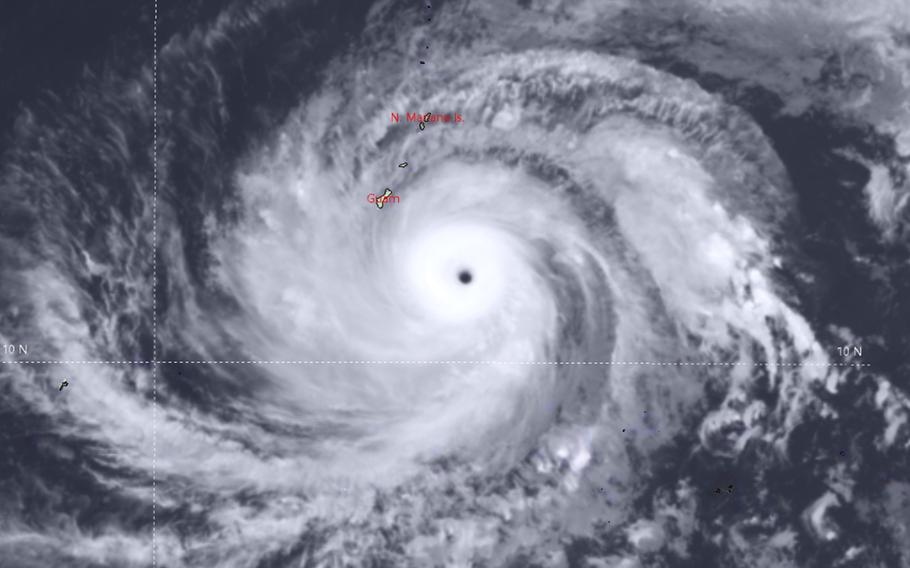

Year 2 Q1-2 (June - November 2023). On May 25, 2023, Typhoon Mawar devastated the Guam Agriculture Industry. After the typhoon, the agriculture community took 6 - 8 months to recover from the damage.
Year 2 Q3-4 (December 2023 - May 2024)
1. The E&O team coordinated a farmer workshop at UOG on February 28th, 2024. The meeting included inviting the 5 FCAG farmers/producers to reintroduce them to how they will collect harvest data on their farms.
2. The first farm workshop was conducted on the Takai farm in the village of Talofofo on March 26th, 2024. Farm manager and collaborator Glenn Takai invited 5 producers to his farm to discuss the importance of production monitoring.
3. In the second year, E&O and the 5 FCAG trained members will mentor and train 20 farmers/producers on collecting and reporting the crop's actual yield at harvest.
In year 3 Q1-2 (June 2024- November 2024), E&O and the FCAG Project manager will coordinate a 9 workshop series. The workshops will be conducted at the 5 collaborating farms of the farmers/producers identified in the “5 Future Trainers” WSARE grant. The goal for the 5 Farmers/Producers will be to train at least 20 farmers/producers (FCAG members or non-FCAG members) on the importance of collecting harvest data on their farms.
In year 3 Q3-4 (December 2024 - May 2025), the 20 trained farmers/producers will mentor and train the remaining FCAG members and non-members who wish to participate. The accumulated data from the participating farms will be compared to the estimated yields from the 2016 UOG Guam Crop Charts publication. Comparing the two data sets will allow the FCAG to make a more accurate harvest projection in the future.
In Year 3 Q3-4 (December 2024 - May 2025), E&O will help coordinate two workshops that the FCAG board and project manager will conduct. The two workshops will present the results of the yield data collected and the 2016 UOG Guam crop chart publication. They will be held at the University of Guam Agriculture and Life Science building and the FCAG Dededo Facility.
Year 4 Q1-2 (June 2025 – October 2025), the FCAG Project manager and E&O will coordinate the gathering of production data. E&O will work with FCAG to disseminate data to the Guam Department of Agriculture, Guam Hotel and Restaurant Association, and Guam Economic Development Agency.
E&O and FCAG producers will research, develop, and write new educational materials about developing a production yield data system for tropical island crops. The materials will include PowerPoint presentations, Extension publications, and resource lists. The secondary producer group will provide feedback on the educational materials, which will target beginning—to intermediate-level farmers.
Cooperators
- - Producer
- - Technical Advisor (Educator and Researcher)
- - Producer
- - Producer
- - Producer
- - Producer
Research
This project has three applied research questions.
What are the opportunities and barriers to a farmer run production monitoring and harvest project system based on simple month farmer planting reports and past month verified yield information?
What are the actual field yields for the primary crops (10+) consistently produced by FCAG farmers? Note current estimates used by ag professionals on Guam come from a variety of source but not from multiple farmers actual yield reporting. This project potential biggest contribution to knowledge is this applied approach to cooperatively develop this information with the farmers of FCAG.
Will improved market information increase FCAG's institutional and wholesale sales?
The FCAG needs current agriculture planting and yield data to stabilize the market expectations that they have developed. If successful this improved information should increase their sales and ultimately the farmers agriculture production of its 70 members. This will increase the local produce's share in Guam import dominated markets. We believe that establishing a comprehensive and up-to-date data collection system over a 3-year period can benefit not only the FCAG but the island consumers who prefer fresh local produce. The initial plan is to use the skills and knowledge local agriculture professionals working with a core 5 of the 70 FCAG members who offer years of growing experience, operate individual farms, and have a vested interest in the success of the FCAG and the agriculture industry in Guam to develop and pilot this system. E&O will train the 5 selected FCAG farmers on how to collect important planting and harvest data. Then operated the system for several months and test the harvest projections accuracy. Once the system has operated for several months E&O and the 5 FCAG trained members will then train the other 65 members. The accumulated data from the 70 farms will be compared to the estimated yields from the 2016 UOG Guam Crop Charts. The comparison of the two data sets will allow UOG CE&O to update their publications. Meanwhile the FCAG will utilize these harvest projection in their marketing efforts with their customers. When the agriculture production monitoring and harvest project program is developed it can be shared other interested groups among the islands in the region. We will attempt to address three questions.
Establishing production monitoring and harvest projections for crops on a farm offers many benefits, as the knowledge gained from the practice enables the farm/organization to adequately plan for price stability and expansion into new markets. The above reasons are why UOG and FCAG teamed up in 2021 to find WSARE grant funding.
The UOG E&O team encountered numerous barriers throughout the WSARE project. The first problem was that the farmers enlisted at the onset of the grant are not currently active.
- Mike Aguon (FCAG Southern Farmer) - No farm activity (2023, 2024, 2025).
- Joe Paulino (FCAG Southern Farmer) – Stopped farming.
- Katherina Reyes - FCAG Project manager (FCAG Northern Farmer) No farm activity (2023, 2024). Stopped farming.
- Ernie Wusstig (FCAG Northern Farmer) - Inconsistent reporting (2023, 2024, 2025).
- Thomas Camacho (FCAG Northern Farmer) - Inconsistent reporting (2023, 2024, 2025).
- Jeff Kosaka (FCAG Southern Farmer) – Inconsistent reporting (2023, 2024)
Even though the “5 Future Trainers Grant” lost the six initial farmers, the three new farmers, Glenn Takai, Farm to Table, and Kenan Quinata, were able to provide us with 10 actual harvest yields from 5 crops: 1 Pepper (Chili), 2 Eggplant, 3 Tomatoes (cherry and grape), 4 Yard-long beans, and 5 Leafy lettuce. Because the sample size is small, more data is needed to make any real change to the yield data we are following now. The “5 Future Trainers Grant” could not collect data for 10 crops as originally planned, but the grant-funded efforts trained 83 attendees from the workshops over the three-year grant period on how to collect harvest data in the field.
Research outcomes
Even though the “5 Future Trainers Grant” lost the six initial farmers, three new farmers agreed to supply UOG/E&O with crop yields. The three new farmers provided us with 10 actual harvest yields from 5 crops. Because the sample size is small, more data is needed to make any real change to the yield data we are following now. Going forward, future crop yield data grants must include how the grant can encourage and maintain farmer collaboration. The issue of getting farmers to collaborate on data collection of any sort related to farm activity has always been problematic.
The first step we addressed was to create a fact sheet on how to collect yield data for crops grown on the farm. The second way we overcame the lack of participating farmers was to offer paid honoraria to farmers who agreed to be interviewed for a short 2–3-minute video that demonstrated to other farmers how they collect production data and the benefits of doing so. UOG/E&O produced the draft video that will eventually be posted on the UOG website and other social media platforms. The short 2-3-minute video will also help to reach more established and future farmers who cannot attend the on-farm workshops.
The short 2-3 video and fact sheet will help train and educate farmers who wish to participate in the coming years. In the coming months, UOG/E&O will collaborate with FCAG and its members to disseminate the fact sheet and a short video on how to collect yield data for locally grown crops to the Guam Department of Agriculture, the Guam Hotel and Restaurant Association, and the Guam Economic Development Agency.
Education and Outreach
Participation summary:
“5 Future Trainers” is a 3-year demonstration education project that will help FCAG develop an agriculture yield production program for Guam, leveraging a peer education model and projecting to reach 70-100 workshop attendees. The FCAG will use the skills and knowledge of the 70 FCAG members who offer years of growing experience, operate individual farms, and have a vested interest in the success of the FCAG and the agriculture industry in Guam. The FCAG will provide a Project manager and 1 employee to help E&O coordinate training, compile production data, and develop educational material.
Year 1 Quarter 1 (Q1) (June-August 2022)
After receiving WSARE funding in 2022, the methodology was developed by the UOG/E&O team on how and what to collect in the farmers’ fields. The PI and FCAG Project Manager conducted site visits to assess and discuss the timelines, crops, size of the fields, and crop planting cycles.
Information collected at the farms.
- Crop and Variety
- Date of planting/estimated day of harvest
- Number of plants planted per row/distance between each plant
- Expected harvest/per 100-foot row/per Acre
- Actual harvest/per 100-foot row/per Acre
- Duration of harvest
Year 1 Q2 (September-November 2022)
The UOG/E&O team attended the September FCAG 2022 board meeting and introduced the team members to the FCAG. In that September meeting, the 5 FCAG farmers were informed that UOG/E&O was awarded WSARE money to train them on how to develop an agriculture yield production program, which will eventually be run by the FCAG. In November 2022, the UOG/E&O team and the FCAG farmers discussed what crops they were going to grow and the type of information UOG/E&O needed to develop an agriculture yield production program.
This is a list of the FCAG farmers and their crops identified in the initial grant.
- Mike Aguon (FCAG Southern Farmer)
No farm activity for Year 1
Quarters 1, 2 and 3, 4
- Joe Paulino (FCAG Southern Farmer)
Crop A-3 field
Cucumber (35-45 days before harvest)
- Crop and variety- Cucumber (Fountain)
- Date of planting - December 17th
Estimated day of harvest - January 21st (35-45 days before harvest)
- a. Number of plants per row - 81 plants/row
- distance between plants in a row – 2 feet
- 11 rows = 891 plants
- 162 feet long rows
- Expected harvest/per 100-foot row/per Acre – 10 lbs /plant
Expected Harvest
- 810 pounds / 162 feet row
- 8,910 pounds for the 11 rows
- Actual harvest/per 100-foot row/per Acre – crop failed
- Duration of harvest - January 21st – February 11th
Field failed because of rain: Date planted: December 2022
Crop A-4 field
Long Beans (55-60 days before harvest)
- Crop and variety- long beans (local)
- Date of planting - December 1st, 2022
Estimated day of harvest - January 25th, 2023 (55 - 60 days before harvest)
- a. Number of plants per row - 64 plants/row
- distance between plants in a row – 30 inches
- 10 rows = 640 plants
- 162 feet long rows
- Expected harvest/per 100-foot row/per Acre – 3 lbs/plant
Expected Harvest
- 192 pounds / 162 feet row
- 1,920 pounds for the 10 rows
- Actual harvest/per 100-foot row/per Acre – crop failed
- Duration of harvest - January 25th – February 25th
Field failed because of rain: Date planted: December 1st, 2022
- Thomas Camacho (FCAG Northern Farmer)
Crop A field
- Pepper (Chili) (60-70 days before harvest)
Planted September 2022 - No harvest data
Crop B field
- Crop and variety- Watermelon (Shiny Boy)
- Date of planting – March 25th, 2023 (70 - 75 days before harvest)
- a. Number of hills per row – 80 hills x 2 plants/hill
80 hill x 2 plants per hill= 160 plants/row
- distance between plants in a row - 5 feet
- 12 rows = 1,920 plants
- 400 feet long rows
- Expected harvest/per 100-foot row/per Acre – 20 lbs/plant
Expected Harvest
- 800 pounds / 100-foot row
- 3,200 pounds / 400 feet row
- 32,400 pounds for the 12 rows
- Actual harvest/per 100-foot row/per Acre –
Estimated day of harvest – June 8th, 2023
- Duration of harvest – 2 weeks
- Katherina Reyes - FCAG Project manager (FCAG Northern Farmer)
Crop B field
- Crop and variety- Cucumber (Korean) (35-45 days before harvest) B field
- Date of planting - January 9th, 2023
Estimated day of harvest – February 13th, 2023 (35-45 days before harvest)
- a. Number of plants per row - 200 plants/row
- distance between plants in a row – 1 foot
- 9 rows = 1800 plants
- 200 feet long rows
- Expected harvest/per 100-foot row/per Acre – 10 lbs /plant
Expected Harvest
- 2,000 pounds / 200 feet row
- 18,000 pounds for the 9 rows
- Actual harvest/per 100-foot row/per Acre – crop failed
- Duration of harvest - three weeks
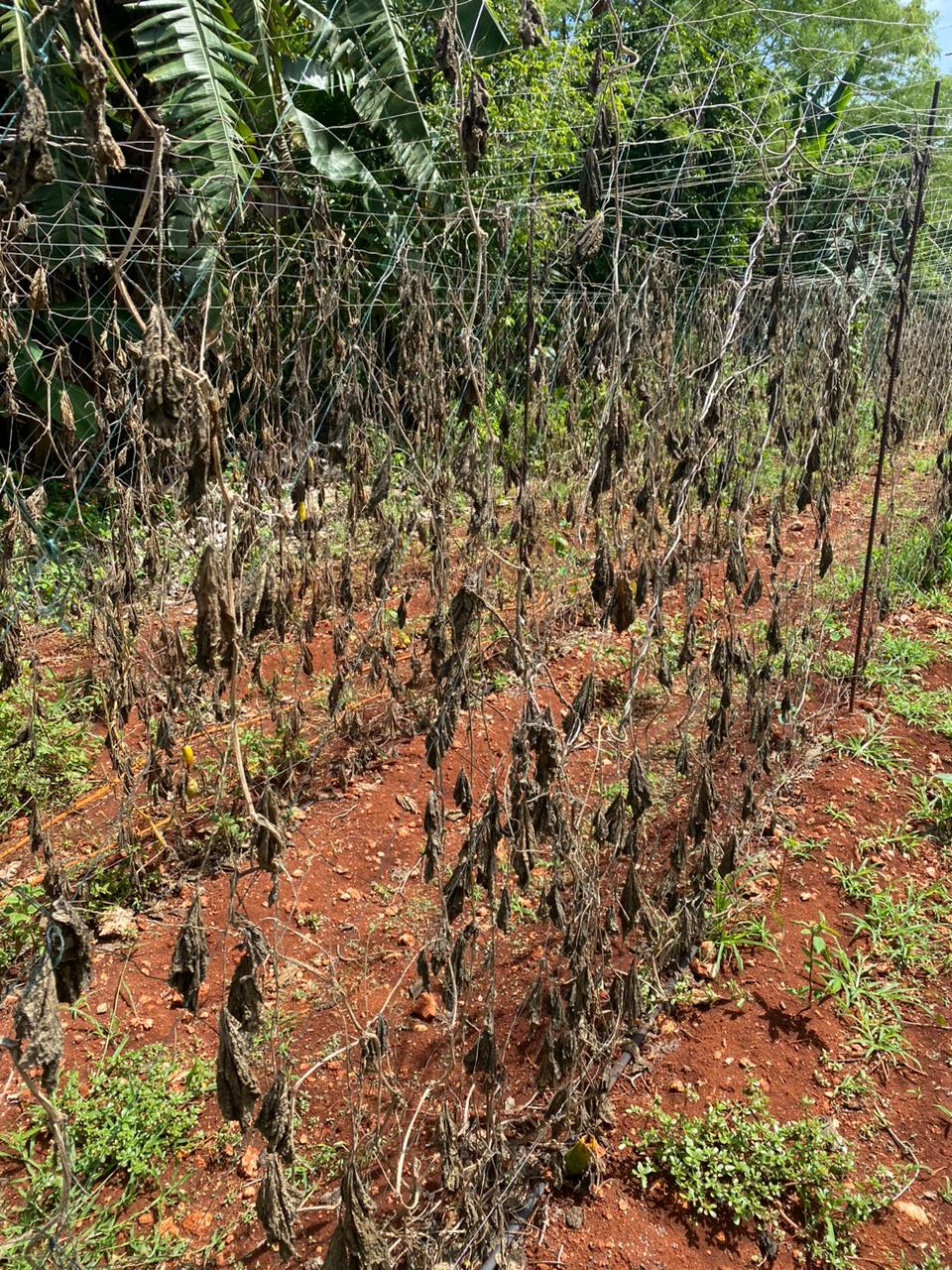
The field failed because of rain.
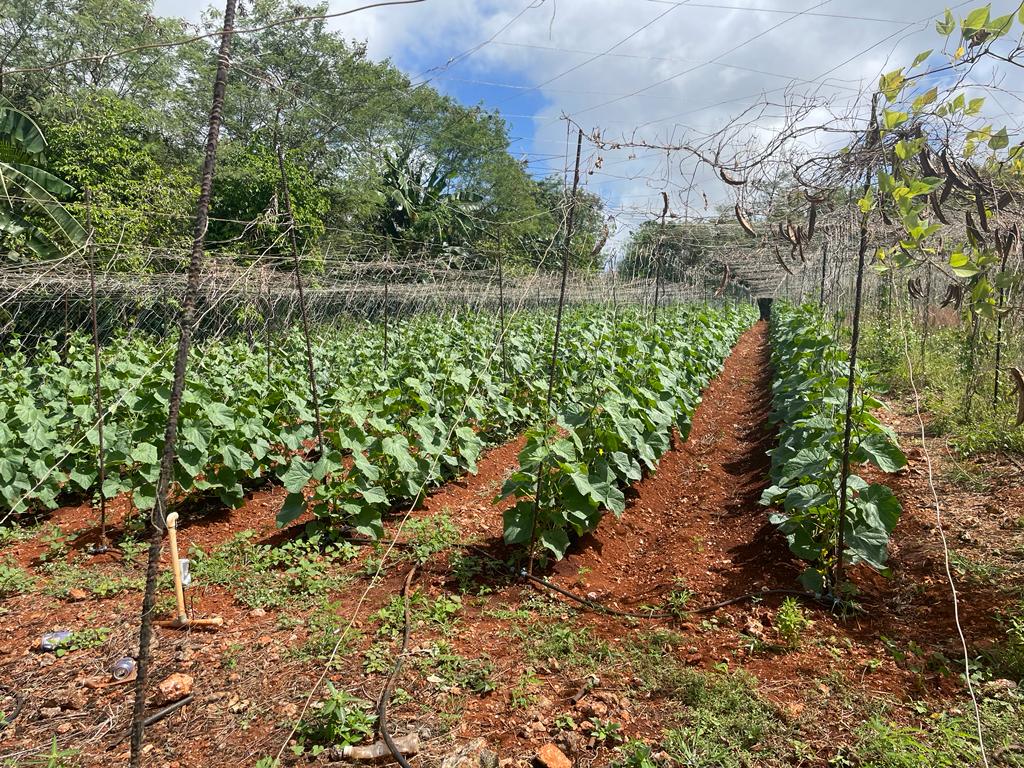
Crop A-5 field
- Crop and variety – Eggplant (Ideal) (55-65 days before harvest) A-5 field
- Date of planting - February 22nd, 2023
Estimated day of harvest – April 12th, 2023 (55-65 days before harvest)
- a. Number of plants per row - 50 plants/row
- distance between plants in a row – 3 feet
- 6 rows = 300 plants
- 150-foot-long rows
- Expected harvest/per 100-foot row/per Acre – 8 lbs /plant
Expected Harvest
- 400 pounds / 150-foot row
- 2,400 pounds for the 9 rows
- Actual harvest/per 100-foot row/per Acre –
- Duration of harvest - twelve weeks
Crop A-6 field
- Crop and variety - Long Beans (Local) (55-60 days before harvest) A-6 field
- Date of planting - February 9th, 2023
Estimated day of harvest – April 13th, 2023 (55-60 days before harvest)
- a. Number of plants per row - 200 plants/row
- distance between plants in a row – 1 foot
- 14 rows = 1800 plants
- 150 feet long rows
- Expected harvest/per 100-foot row/per Acre – 10 lbs /plant
Expected Harvest
- 2,000 pounds / 200 feet row
- 18,000 pounds for the 9 rows
- Actual harvest/per 100-foot row/per Acre – crop failed
- Duration of harvest - three weeks
The field failed because of rain.
Crop C-2 field
- Crop and variety- Cucumber (Korean) (35-45 days before harvest) C-2 field
- Date of planting - February 22nd, 2023
Estimated day of harvest – March 29th, 2023 (35-45 days before harvest)
- a. Number of plants per row - 244 plants/row
- distance between plants in a row – 1 foot
- 9 rows = 2,196 plants
- 244 feet long rows
- Expected harvest/per 100-foot row/per Acre – 10 lbs /plant
Expected Harvest
- 2,440 pounds / 244 feet row
- 21,960 pounds for the 9 rows
- Actual harvest/per 100-foot row/per Acre –
- Duration of harvest - three week
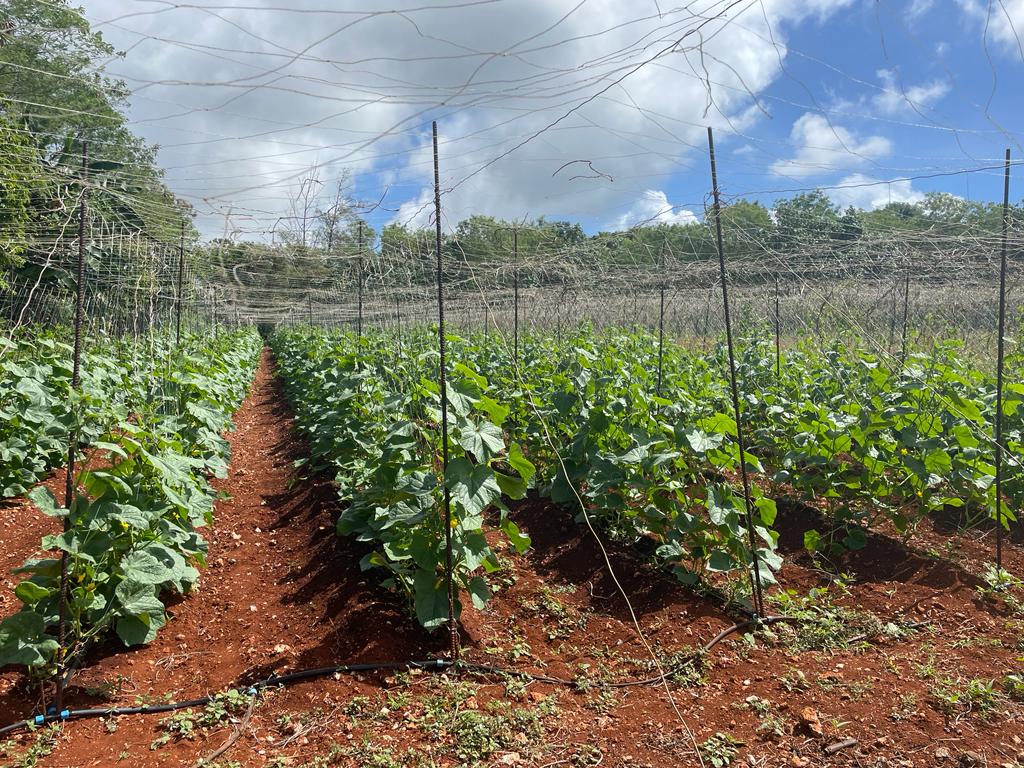
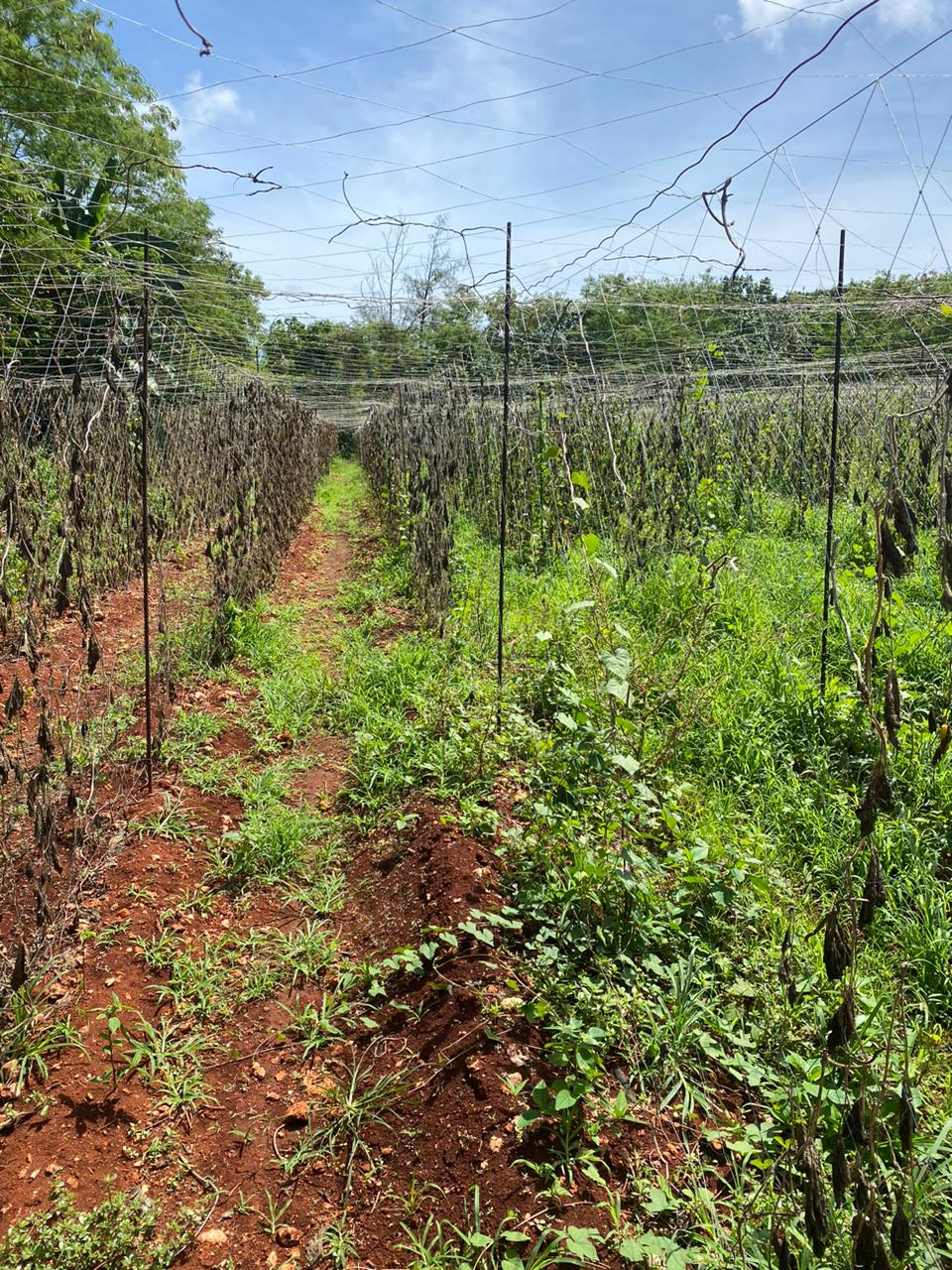
- Ernie Wusstig (FCAG Northern Farmer)
Crop A-1 and A-2 field
1. Crop and variety - sweet corn (Super sweet) (60-70 days before harvest)
- Date of planting - December 26th, 2022
Estimated day of harvest – February 18th, 2023 (60-70 days before harvest)
- Field A
- 524 feet long rows
- distance between plants in a row – .9 inches
- 698 plants / per 524 ft. row
- 14 rows = 9,772 plants
Field B
- 521 feet long rows
- distance between plants in a row – .9 inches
- 636 plants / per 521 ft. row
- 14 rows = 8,904 plants
Total for Field A (9,772) + B (8,904) = 18,676 plant
- Expected Harvest
Field A
- 698 plants / 524 feet row x .6 lbs per ear = 418 lbs
- 418 lbs / row x 14 rows = 5,863 lbs
Field B
- 636 plants / 521 feet row x .6 lbs per ear = 381 lbs
- 381 lbs x 14 rows = 5,342 plants for the 28 rows
- Expected harvest 18,676 plants x .6 lbs /plant = 11,205 lbs
18,676 ears = 11,205 lbs
- Actual harvest= 10,278 pounds of sweet corn
- 10,278 pounds / .6 pounds per ear= 17,130 ears
- Duration of harvest – 6 days (2-18 to 2-23-2023)
In Year 1 Q3-4 (December 2022 - May 2023), the E&O PI and FCAG Project manager will facilitate a mentorship process, coordinating 3 farm workshops at the 5 initial FCAG farm sites. Producers will demonstrate how they collect harvest data. The three workshops will be conducted over 6 months.
From August 2022 to February 2023, Guam received an unusual amount of rainfall. The Climatology Data took the rainfall data for Guam Area, GU (ThreadEX), August 2022 - March 2023. Table 1
Month Year Normal monthly rainfall Actual rainfall
August 2022 17.66 in 9.15 in
September 2022 15.77 in 13.74 in
October 2022 12.73 in 17.12 in
November 2022 8.29 in 5.66 in
December 2022 5.30 in 9.32 in
January 2023 5.34 in 14.02 in
February 2023 4.15 in 5.69 in
March 1st-21st 2023 1.94 in 3.83 in
In Guam, the average yearly rainfall is about 95 inches, and most of it happens during the wet season (July to November). While growing crops from July to November is done, the production output and the loss of whole fields are usually affected by heavy downpours that can cause fruit and leaf disease.
The traditional growing months on the island are December to June, considered the dry season. The dry period accounts for 15% of Guam’s annual rainfall. During the seven months of dry weather, growers can irrigate and fertilize the crop uniformly. The dry weather conditions equate to less disease pressure, and maximum sunshine makes the dry season the most productive agriculture month for local growers.
Unfortunately, the rainfall Guam received from September 2022 to March 2023 impacted the planting cycles of all but one of the FCAG farmers participating in the “5 Future Trainers” 2022 WSARE project. Ernie Wusstig harvested 10,278 pounds of sweet corn from February 18th to 23rd, 2023.
Because of the lack of production caused by the unusual rain, a sixth FCAG member was added to Year 1 Q3 (December 2022-May 2023). Glenn Takai was able to harvest cucumber from his 2023 field successfully.
- Glenn Takai (FCAG Southern Farmer)
- Pepper (Chili) (60-70 days before harvest)
Crop C field
- Crop and variety- Cucumber (Fountain) (35-45 days before harvest) B field
- Date of planting - January 17th, 2023
Estimated day of harvest – February 21st, 2023 (35-45 days before harvest)
- a. Number of plants per row - 55 plants/row
- distance between plants in a row – 2 feet
- 5 rows = 275 plants
- 110 feet long rows
- Expected harvest/per 100-foot row/per Acre – 10 lbs. /plant
Expected Harvest
- 550 pounds / 110 feet row
- 2,750 pounds for the 5 rows
- Actual harvest/per 100-foot row/per Acre – crop failed
- Duration of harvest - three weeks
Actual Cucumber Harvest
Date Pounds
2-17-2023 20
2-20-2023 34
2-25-2023 32
2-27-2023 37
2-28-2023 86
3-3-2023 86
3-4-2023 73
3-8-2023 79
Total 447 lbs
The cucumber harvest for this field was drastically affected by Guam's rainfall from January to March 2023. Anthracnose, a leaf fungus, hampered the optimum potential for cucumber fruit production.
Crop A field
- Crop and variety – Eggplant (short purple) (55-65 days before harvest) A-5 field
- Date of planting - February 26th, 2023
Estimated day of harvest – April 16th, 2023 (55-65 days before harvest)
- a. Number of plants per row - 14 plants/row
- distance between plants in a row – 6 feet
- 10 rows = 140 plants
- 80-foot-long rows
- Expected harvest/per 100-foot row/per Acre – 8 lbs /plant
Expected Harvest
- 112 pounds / 80-foot row
- 1,120 pounds for the 10 rows
- Actual harvest/per 100-foot row/per Acre –
- Duration of harvest - twelve weeks
Because of the unforeseen weather that plagued Guam in Year 1 Q3-4 (December 2022 - May 2023), I want to start Year 2 Q1-2 (June—November 2023) with the E&O PI and FCAG Project manager, facilitating a mentorship process and coordinating three farm workshops at the 5 initial FCAG farm sites. Producers will demonstrate how they collect harvest data. The three workshops will be conducted over six months. The timeline for the remaining project will stay the same.
During Year 2 Q1-2 (June - November 2023), E&O and the FCAG Project manager will coordinate a 2-workshop series, 1 at a farm in the North and 1 at the FCAG Dededo Facility. The 5 FCAG Producers will train 20 FCAG and non-FCAG members.
Year 2 Q3-4 (December 2023 - May 2024), E&O and the FCAG Project manager will coordinate 2-workshop series, 1 at a farm in the South and 1 at the UOG Inarajan Research & Education Center. The 5 FCAG Producers will train 20 FCAG and non-FCAG members.
Year 3 Q1-2 (June - November 2024), E&O and the FCAG Project manager will coordinate 2- workshop series, 1 at a farm in the North and 1 at the FCAG Dededo Facility. The 25 FCAG Producers will train 25 FCAG members and any non-FCAG.
Year 3 Q3-4 (December 2024 - October 2025), the FCAG Project manager and E&O will coordinate the production data collection. E&O will work with FCAG to disseminate data to the Guam Department of Agriculture, Guam Hotel and Restaurant Association, and Guam Economic Development Agency.
Year 2 March 30th, 2023
May 25th, 2023
Typhoon Mawar, a category 4 typhoon with sustained winds of 140 mph, made a nearly direct landfall in Guam on the early morning of Thursday, May 25, 2023. The typhoon delivered solid winds and rain over the island for hours, causing destruction and knocking out most of the island’s power and water for weeks. Due to this natural disaster, the planned activities for the “5 Future Trainers” WSARE grant for Year 2 Q1-2 (June - November 2023) and Year 2 Q3-4 (December 2023 - May 2024) were not accomplished. The farmers we identified as collaborators spent 6 months recovering from the damage caused by Typhoon Mawar.
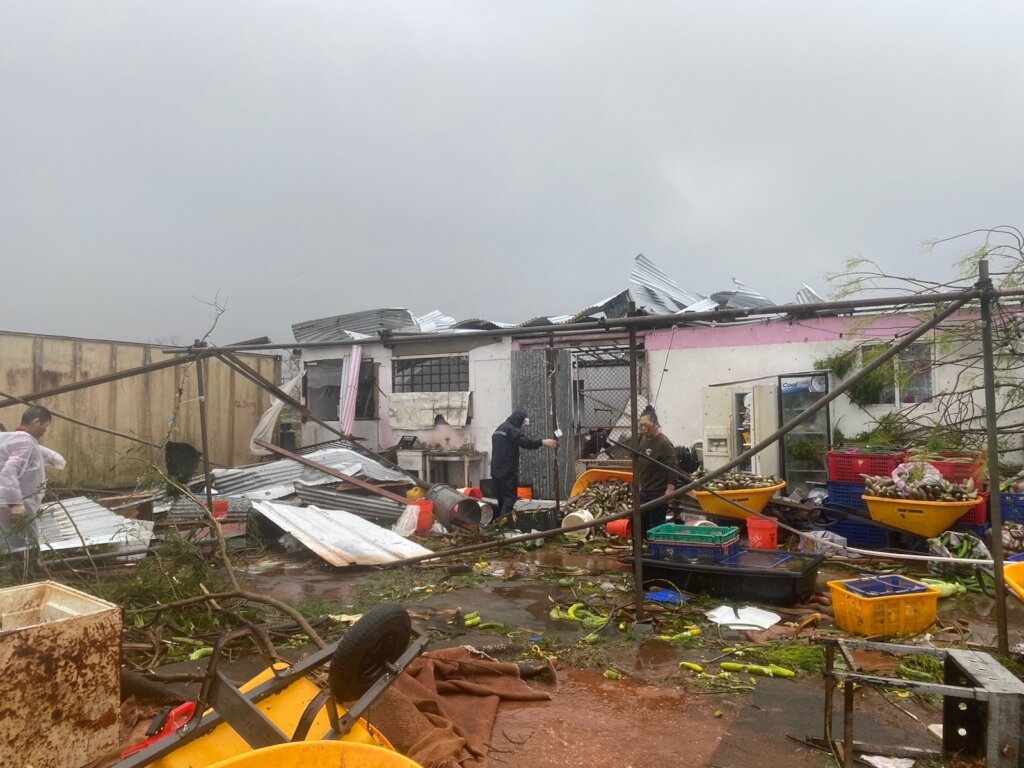
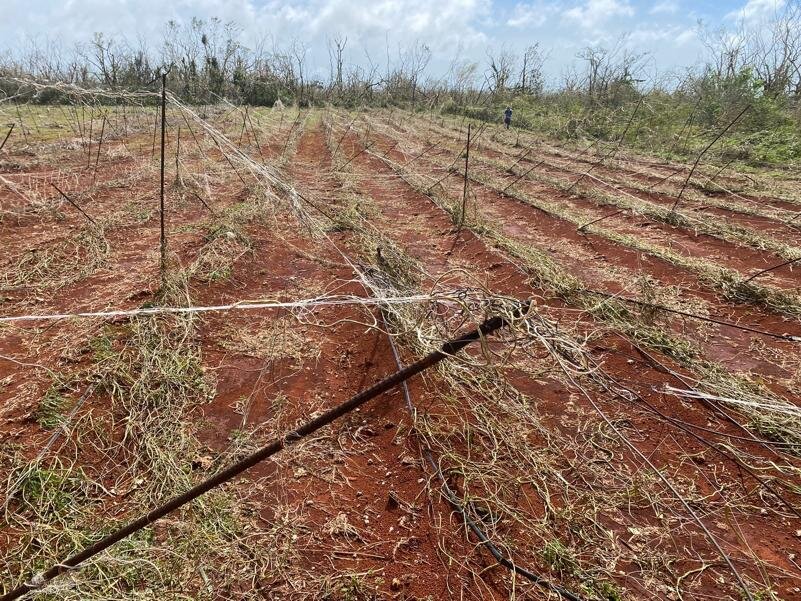
The situation of the Farmers
- Two farmers are still recovering from Typhoon Mawar
- Mike Aguon
- Joe Paulino
- Three farmers are now starting to farm.
- Glenn Takai
- Tom Camacho
- Joe Kosaka
- One grower is not farming.
- Katherina Reyes
- We added one more farmer.
- Joe Kosaka
- One farmer is not reporting.
- Ernie Wusstig
This is a list of the FCAG farmers and their crops identified in the initial grant.
1. Mike Aguon (FCAG Southern Farmer)
No farm activity for Year 2 Q1-2 (June - November 2023)
Crops destroyed by Typhoon Mawar
- Joe Paulino (FCAG Southern Farmer)
No farm activity for Year 2 Q1-2 (June - November 2023)
Crops destroyed by Typhoon Mawar
- Thomas Camacho (FCAG Northern Farmer)
Crop 1 2023
- Crop and variety- Watermelon (Shiny Boy)
- Date of planting – March 25th, 2023 (70 - 75 days before harvest)
- a. Number of hills per row – 80 hills x 2 plants/hill
- 80 hill x 2 plants per hill= 160 plants/row
- distance between plants in a row - 5 feet
- 12 rows = 1,920 plants
- 400 feet long rows
- Expected harvest/per 100-foot row/per Acre – 20 lbs/plant
Expected Harvest
- 800 pounds / 100-foot row
- 3,200 pounds / 400 feet row
- 32,400 pounds for the 12 rows
- Actual harvest/per 100-foot row/per Acre –
Estimated day of harvest – June 8th, 2023
Duration of harvest – 2 weeks
Crops destroyed by Typhoon Mawar
Crop 1 2024
- Crop and variety- Watermelon (Shiny Boy)
- Date of planting – March 3rd, 2024 (70 - 75 days before harvest)
Estimated day of harvest – June 2024 (70-75 days before harvest)
- a. Number of hills per row – 115 hills x 2 plants/hill
115 hill x 2 plants per hill= 230 plants/row
- distance between plants in a row - 2 feet
- 18 rows = 4,140 plants
- 230-foot-long rows
- Expected harvest/per 100-foot row/per Acre – 20 lbs/plant
Expected Harvest
a.1000 pounds / 100-foot row
- 4,600 pounds / 230 feet row
- 82,800 pounds for the 18 rows
Actual harvest
|
CROP/VARIETY: |
DATE PLANTED: |
SIZE OF FIELD: |
NUMBER OF ROWS: |
LENGTH OF ROWS: |
PLANT SPACE IN ROW: |
EST. NUMBER OF PLANTS: |
|
Date of Harvest |
Total Harvest |
Total Marketable |
Comments |
|||
- Actual Harvest/per 100-foot row/Acre – 20 lbs/plant
- Per plant =
- Per 100-foot row =
- Per Acre =
- Duration of harvest = weeks
Crop 2 2024
- Crop and variety- Pepper (Chili) (50-60 days before harvest)
- Date of planting - March 2nd, 2024
Estimated day of harvest – (May-June 2024) (50-60 days before harvest)
- Number of plants per row - 25 plants/row
- Distance between plants in a row - 2 feet.
- 15 rows = 375 plants
- 50-foot-long rows
- Expected harvest
- Per plant = 3.00 lbs.
- Per 100-foot row = 100-200 lbs
- Per Acre = 7,000-22,000 lbs.
- Actual harvest
|
CROP/VARIETY: |
DATE PLANTED: |
SIZE OF FIELD: |
NUMBER OF ROWS: |
LENGTH OF ROWS: |
PLANT SPACE IN ROW: |
EST. NUMBER OF PLANTS: |
|
Date of Harvest |
Total Harvest |
Total Marketable |
Comments |
|||
- Per plant =
- Per 100-foot row =
- Per Acre =
- Duration of harvest = weeks
- Katherina Reyes - FCAG Project manager (FCAG Northern Farmer)
She no longer farms.
- Ernie Wusstig (FCAG Northern Farmer)
Crop 1
1.Crop and variety - sweet corn (Super sweet) (60-70 days before harvest)
Year 2 Q1-2 (June - November 2023) Crops destroyed by Typhoon Mawar
Not actively reporting data
- Glenn Takai (FCAG Southern Farmer)
Crop 1
- Crop and variety- Pepper (Chili) (50-60 days before harvest)
- Date of planting – September 11, 2023
Estimated day of harvest – December 2023 (50-60 days before harvest)
- a. Number of plants per row - 40 plants/row
- Distance between plants in a row – 3 feet
- 5 rows = 200 plants
- 120-foot-long rows
- Expected harvest
- Per plant = 3.00 lbs.
- Per 100-foot row = 100-200 lbs
- Per Acre = 7,000-22,000 lbs.
- Actual Harvest
FIELD INFORMATION
|
CROP/VARIETY: |
DATE PLANTED: |
SIZE OF FIELD: |
NUMBER OF ROWS: |
LENGTH OF ROWS: |
PLANT SPACE IN ROW: |
EST. NUMBER OF PLANTS: |
|
Date of Harvest |
Total Harvest |
Total Marketable |
Comments |
|||
|
01/15-01/21 |
26 |
26 |
numbers are only a fraction of the field because of different planting dates |
|||
|
01/22-01/28 |
30 |
30 |
||||
|
01/29-02/04 |
30 |
29 |
||||
|
02/02/24 |
19 |
19 |
||||
|
02/05-02/11 |
18 |
18 |
||||
|
02/12-02/18 |
20.5 |
20 |
||||
|
02/19-02/25 |
35 |
35 |
||||
|
02/26/-03/03 |
44.5 |
44 |
||||
|
03/04-03/10 |
32.5 |
32.5 |
||||
|
03/11-03/17 |
18 |
18 |
||||
|
Total |
273.5 lbs. |
271.5 bs. |
||||
Actual harvest as of 3-17-2024
- Per plant = 1.36 lbs.
- Per 100-foot row = 45 lbs.
- Per Acre =
- Duration of harvest =11 weeks
Crop 2
- Crop and variety – Eggplant (short purple) (55-65 days before harvest)
- Date of planting - February 26th, 2023
Estimated day of harvest – April 16th, 2023 (55-65 days before harvest)
- a. Number of plants per row - 13 plants/row
- distance between plants in a row – 6 feet
- 10 rows = 130 plants
- 80-foot-long rows
- Expected harvest
- Per plant = 8 lbs. x 130= 1,040 lbs
- Per 100-foot row = 200-270 lbs.
- Per Acre = 15,000-29,000lbs.
- Actual Harvest
|
CROP/VARIETY: |
DATE PLANTED: |
SIZE OF FIELD: |
NUMBER OF ROWS: |
LENGTH OF ROWS: |
PLANT SPACE IN ROW: |
EST. NUMBER OF PLANTS: |
|
Date of Harvest |
Total Harvest |
Total Marketable |
Comments |
|||
|
01/15-01/21 |
32 |
29 |
numbers are only a fraction of the field because of different planting dates |
|||
|
01/22-01/28 |
55 |
52 |
||||
|
01/29-02/04 |
131 |
125 |
||||
|
02/02/24 |
51 |
|||||
|
02/04/24 |
54 |
|||||
|
02/05-02/11 |
69 |
67 |
||||
|
02/12-02/18 |
77 |
75 |
||||
|
02/19-02/25 |
191 |
163 |
||||
|
02/26/-03/03 |
251 |
18 |
||||
|
03/04-03/10 |
125 |
107 |
Thrips infestation affects more than 50% of the field. Missed treatment spray due to off island |
|||
|
03/11-03/17 |
134 |
105 |
||||
|
Total |
1,065 lbs |
1,170 lbs. |
||||
Actual harvest as of 3-17-2024
- Per plant= 9 lbs. x 130 =1,170 lbs.
- Per 100-foot row=
- Per Acre =
- Duration of harvest - twelve weeks
Crop 3
- Crop and variety- Yardlong bean (Galante long beans) (55-60 days before harvest)
- Date of planting – January 1st, 2024
Estimated day of harvest – March 2024 (55-60 days before harvest)
- a. Number of plants per row - 40 plants/row
- Distance between plants in a row – 3 feet
- 4 rows = 200 plants
- 120-foot-long rows
- Expected harvest
- Per plant = 3.00 lbs.
- Per 100-foot row = 300-400 lbs
- Per Acre = 7,000-22,000 lbs.
- Days during harvest = 4 weeks
Actual harvest
|
CROP/VARIETY: |
DATE PLANTED: |
SIZE OF FIELD: |
NUMBER OF ROWS: |
LENGTH OF ROWS: |
PLANT SPACE IN ROW: |
NUMBER OF PLANTS: |
|
Date of Harvest |
Total Harvest |
Total Marketable |
Comments |
|||
|
02/19-02/25 |
4 |
4 |
||||
|
02/26-03/03 |
21 |
21 |
||||
|
03/04-03/10 |
18 |
17 |
||||
|
03/11-03/17 |
50 |
40 |
||||
|
Total |
93 lbs. |
82 lbs. |
||||
Actual harvest as of 3-17-2024
- Per plant= .59 lbs. x 156 plants =93 lbs.
- Per 100-foot row=
- Per Acre =
- Duration of harvest - four weeks
7. Jeff Kosaka (FCAG Southern Farmer)
Pepper (Chili)(Guifi) (50-60 days before harvest)
- Date of planting – October 20th, 2023 (50 - 60 days before harvest)
- distance between plants in a row – 2 feet
- 10 rows = 100 plants
- 20 feet long rows
- Expected harvest.
Per plant = 3.00 lbs.
per 100-foot row = 100-200 lbs
per Acre = 7,000-22,000 lbs.
Actual harvest
|
CROP/VARIETY: |
DATE PLANTED: |
SIZE OF FIELD: |
NUMBER OF ROWS: |
LENGTH OF ROWS: |
PLANT SPACE IN ROW: |
EST. NUMBER OF PLANTS: |
|
Date of Harvest |
Total Harvest |
Total Marketable |
Comments |
|||
|
03/14/24 |
1.5 |
1.5 |
expected day of harvest - January |
|||
|
Total |
1.5 |
1.5 |
||||
Actual harvest
- Per plant= .015 lbs. x 100 plants = 1.5 lbs.
- Per 100-foot row=
- Per Acre =
- Duration of harvest – 1 week
Year 2 Q3-4 (December 2023 -May 2024)
It took almost eight months for Guam to recover from the damage caused by Typhoon Mawar. As the farmers began planting crops again, the E&O team organized a workshop for farmers at UOG on February 28th. The meeting involved inviting 5 FCAG farmers/producers to reintroduce them to the process of collecting harvest data on their farms.
The E&O team presented an incentive program to encourage the farmers to keep and report production monitoring of the crops they are growing. The incentive program will pay $100.00 honorarium to each farmer every month (5 months March – July) for production data ($500.00 total). Each farmer will be given an option of an Excel sheet (hard copy) that requires them to fill the information in themselves or a Google document that can be done online. The hard copy requires them to call FCAG and the UOG team to report the crop's progress, while the Google document will upload the information automatically. The incentive also includes a $250.00 honorarium for hosting a farm workshop (2 farm workshops) on their farm. The workshops will start the mentorship program that the 5 FCAG members will pass along to FCAG members and non-members. The 10 total farmer workshops will target between 30 and 50 FCAG members, non-members, and gardeners. The workshop will focus on the importance of production monitoring and how to collect and report the actual yield of the crop at harvest.
Workshops
Year 1 Q2 (September-November 2022)
- The UOG/E&O team attended the September FCAG 2022 board meeting, where the team members were introduced to the FCAG. At that meeting, the 5 FCAG farmers were informed that UOG/E&O was awarded WSARE money to train them on developing an agriculture yield production program, which the FCAG will eventually run.
- In November of 2022, the UOG/E&O team and the FCAG farmers discussed what crops they would grow and the type of information UOG/E&O needed to develop an agriculture yield production program.
Year 2 Q1-2 (June - November 2023)
On May 25, 2023, Typhoon Mawar, a category 4 typhoon, hit Guam. Agriculture crops were destroyed, and Guam farmers spent 6 - 8 months recovering.
Year 2 Q1-2 (December – May 2024)
- The E&O team coordinated a farmer workshop at UOG on February 28th, 2024. The meeting included inviting the 5 FCAG farmers/producers to reintroduce them to how they will collect harvest data on their farms.
- The first farm workshop was conducted on the Takai farm in the village of Talofofo on March 26th, 2024. Farm manager and collaborator Glenn Takai invited five producers to his farm to discuss the importance of production monitoring.


The first farm workshop was conducted on the Takai farm in the village of Talofofo on March 26th, 2024. Farm manager and collaborator Glenn Takai invited five producers to his farm to discuss the importance of production monitoring. Nineteen people attended the Talafofo farm workshop: six commercial farmers, seven producers, two students, and four E&O team members.


Walking the field with the farmer

Farmer Educating Other Farmers during the Workshop


Farmer Educating Other Farmers during the Workshop
- Final report for the WSARE 5 Future Trainers Grant (2023-2025)
The WSARE 3-year demonstration education grant was designed to help FCAG develop an agriculture yield production program for Guam by leveraging a peer education model to reach 70-100 workshop attendees. The initial plan was to tap into the FCAG's skills and knowledge, drawing on the 70 FCAG members who offer years of experience, operate individual farms, and have a vested interest in the FCAG's and the agriculture industry's success in Guam.
The grant was designed for FCAG to provide a Project manager and 1 employee to help the UOG/E&O PI coordinate training, compile production data, and develop educational materials.
In 2022, 5 FCAG members were identified to participate in the initial grant to help develop an agriculture yield production program for Guam.
2022
- Mike Aguon (FCAG Southern Farmer) - No farm activity (2023, 2024, 2025).
- Joe Paulino (FCAG Southern Farmer) – 2022 crops failed due to abnormal rainfall (Cucumber, Long Beans). - Stopped farming.
- Katherina Reyes - FCAG Project manager (FCAG Northern Farmer)- 2022 crops failed due to abnormal rainfall (Cucumber, Eggplant, Long Beans).- No farm activity (2023, 2024). Stopped farming.
- Ernie Wusstig (FCAG Northern Farmer) - Inconsistent reporting (2023, 2024, 2025).
- Thomas Camacho (FCAG Northern Farmer) - 2022 crops failed due to abnormal rainfall (Watermelon). Inconsistent reporting (2023, 2024, 2025).
2023, 2024, and 2025 farmers
- Glenn Takai (Southern Farmer)
- Pepper Chili (Guåfi) Date of planting – September 11, 2023
Expected harvest
- Per plant = 3.00 lbs.
- Per 100-foot row = 102-204 lbs.
- Plants per 100 ft row = 34 plants
- Duration of harvest = 12 weeks
Actual Harvest
- Per plant = 1.36 lbs.
- Per 100-foot row = 45 lbs.
- Plants per 100 ft row = 33 plants
- Duration of harvest =10 weeks 1/15/24 – 3/17/24
- Eggplant (short purple) Date of planting – February 26, 2024
Expected harvest
- Per plant = 8.00 lbs.
- Per 100-foot row = 208-272 lbs.
- Plants per 100 ft row = 26 plants
- Duration of harvest = 12 weeks
Actual Harvest
- Lbs. Per plant = 9.00 lbs.
- Lbs. Per 100-foot row = 144 lbs.
- Duration of harvest = 8 weeks 1/15/24 – 3/17/24
- Yard-long beans (Galante) Date of planting – January 1st , 2024
Expected harvest
- Per plant = 3.00 lbs.
- Per 100-foot row = 303-453 lbs.
- Duration of harvest = 4 weeks
Actual Harvest
- Per plant = 0.59 lbs.
- Lbs. Per 100-foot row = 19.66 lbs.
- Duration of harvest = 4 weeks 2/19/24 – 3/17/24
- Jeff Kosaka (FCAG Southern Farmer) – Inconsistent reporting (2023 and 2024).
- Kenan Quinata (Southern Farmer)
- Pepper Chili (Guåfi) Date of planting – January 1, 2025
Expected harvest
- Per plant = 3.00 lbs.
- Per 100-foot row = 102-204 lbs.
- Plants per 100 ft row = 34 plants
- Duration of harvest = 12 weeks
Actual Harvest
- Per plant = 3.77 lbs.
- Per 100-foot row = 75.5 lbs.
- Plants per 100 ft row= 20 plants
- Duration of harvest =7 months 2/28/25 – 9/21/25
- Eggplant (short purple) Date of planting – May 2, 2025
Expected harvest
- Per plant = 8.00 lbs.
- Per 100-foot row = 208-272 lbs.
- Plants per 100 ft row = 26 plants
- Duration of harvest = 12 weeks
Actual Harvest
- Lbs. Per plant = 3.21 lbs.
- Lbs. Per 100-foot row = 78.1 lbs.
- Plants per 100 ft row= 25 plants
- Duration of harvest- 8 weeks 6/15/25 – 8/05/25
- Cherry tomatoes Date of planting – May 19, 2025
Expected harvest
- Per plant = 8.00 lbs.
- Per 100-foot row = 208-544 lbs.
- Plants per 100 ft row= 26 plants
- Duration of harvest= 5 weeks
Actual Harvest
- Lbs. Per plant = 8.19 lbs.
- Lbs. Per 100-foot row 163.8 lbs.
- Plants per 100 ft row= 20 plants
- Duration of harvest = 8 weeks 4/7/25 – 6/05/25
- Glenn Takai (Southern Farmer)
- Pepper Chili (Guåfi) Date of planting – December 7, 2024
Expected harvest
- Per plant = 3.00 lbs.
- Per 100-foot row = 102-204 lbs.
- Plants per 100 ft row= 34 plants
- Duration of harvest = 12 weeks
Actual Harvest
- Per plant = 6.70 lbs.
- Per 100-foot row = 221.1 lbs.
- Plants per 100 ft row= 33 plants
- Duration of harvest = 20 weeks 2/22/25 – 7/2/25
- Farm to Table
- Grape tomatoes/Juliet Date of planting – December 13, 2024
Expected harvest
- Per plant = 10-15 lbs.
- Per 100-foot row = 250 lbs.
- Plants per 100-ft row= 25
- Duration of harvest = 6-8 weeks
Actual Harvest
- Per plant = 1.08 lbs.
- Lbs. Per 100-foot row = 43.39 lbs.
- Plants per 100 ft row= 40 plants
- Duration of harvest = 8 weeks 4/7/25 – 6/16/25
- Yard-long bean Date of planting - March 3, 2025
Expected harvest
- Per plant = 3.00 lbs.
- Per 100-foot row = 300-400 lbs.
- Plants per 100 ft row= 50 plants
- Duration of harvest = 4 weeks
Actual Harvest
- Lbs. Per plant = 0.1 lbs.
- Lbs. Per 100-foot row = 6.79 lbs.
- Plants per 100 ft row= 50 plants
- Duration of harvest = 3 weeks 4/8/25 – 4/28/25
3 Leafy lettuce Date of planting – November 6, 2024
Expected harvest
- Per plant = 0.20 lbs.
- Per 100-foot row = 20 lbs.
- Plants per 100 ft row= 100 plants
- Duration of harvest = 1 week
Actual Harvest
- Lbs. Per plant = 0.1 lbs.
- Lbs. Per 100-foot row = 6.79 lbs.
- Plants per 100 ft row= 50 plants
- Duration of harvest = 1 week 1/13/25 – 1/20/25
Workshops
2022
- The UOG/E&O team attended the September FCAG 2022 board meeting and introduced the team members to the FCAG. At that September meeting, the FCAG board of directors was informed that UOG/E&O was awarded WSARE funds to train them to develop an agricultural yield production program, which the FCAG will eventually run. 8 people attended.
- In November 2022, the UOG/E&O team and the FCAG farmers discussed what crops they would grow and the type of information UOG/E&O needed to develop an agriculture yield production program. 8 people attended.
- In December 2022, the UOG/E&O team and the FCAG farmers picked the 5 farmers to begin the yield production program.
2023
The E&O PI and the UOG Project manager facilitated a mentorship process, coordinating 4 farm workshops at 4 of the initial 5 FCAG farm sites. The UOG PI and Project manager demonstrated how to collect harvest data. The 4 workshops were conducted over 4 months.
- Joe Paulino (FCAG Southern Farmer) – 2022 crops failed due to abnormal rainfall (Cucumber, Long Beans). 4 people attended.
The producer stopped farming in 2023.
- Thomas Camacho (FCAG Northern Farmer) - 2022 crops failed due to abnormal rainfall (Watermelon). 4 people attended.
The producer was inconsistent in reporting.
- Katherina Reyes - FCAG Project manager (FCAG Northern Farmer)- 2022 crops failed due to abnormal rainfall (Cucumber, Eggplant, Long Beans). 5 people attended.
The producer stopped farming in 2023.
- Ernie Wusstig (FCAG Northern Farmer) 4 people attended.
The farmer was inconsistent in reporting.
- Jeff Kosaka (FCAG Southern Farmer) – No workshop.
Inconsistent reporting (2023, 2024)
2024
Active farmers 1. Glenn Takai 2. Farm to Table 3. Kenan Quinata
- The E&O team coordinated a farmer workshop at UOG on February 28th, 2024. The meeting included inviting the 5 FCAG farmers/producers to reintroduce them to the process for collecting harvest data on their farms. 8 people attended.
- The first farm workshop was conducted on the Takai farm in the village of Talofofo on March 26th, 2024. Farm manager and collaborator Glenn Takai invited five producers to his farm to discuss the importance of production monitoring. A total of 9 people attended.
2025
- The second farm workshop was conducted on the Takai farm in the village of Talofofo on April 8th, 2025. Farm manager and collaborator Glenn Takai invited five producers to his farm to discuss the importance of production monitoring. Seventeen people attended.
- The third farm workshop was conducted on the Takai farm in the village of Talofofo on April 17th, 2025. Farm manager and collaborator Glenn Takai invited five producers to his farm to discuss the importance of production monitoring. Sixteen people attended the Talafofo farm workshop: three commercial farmers, 13 students, and four E&O team members.
Education and Outreach Outcomes
Y1 Q1-4
- Because of the lack of agricultural production caused by the weather (rain), the education and outreach components will be addressed at the end of Y2 Q1-2.
- The one outcome that all six farmers agree upon is that they all have a better understanding of the importance of reliable harvest data.
Y2 Q1-2
1. Typhoon Mawar hits Guam- Because of the destruction caused by Typhoon Mawar Y2 Q 1-2 education components were not addressed.
Y2 Q3-4
- The E&O team coordinated 2 workshops in February and March 2024.
Y3 Q1-2
- We plan to coordinate a series of 9 farm workshops to reach more agriculture producers in Guam.
10