Final report for SPDP23-018
Project Information
Alabama ranks 8th in the United States for the number of registered beef farms, with cattle and calf production representing an important component of the state’s agricultural economy. Beef producers across Alabama operate under diverse production systems and face challenges associated with improving herd management, production efficiency, calf value, and access to competitive marketing opportunities. The Tuskegee University Cooperative Extension Program (TUCEP) provides research-based education, technical assistance, and outreach to livestock producers to strengthen production practices, profitability, and long-term sustainability.
Value-added calf production requires coordinated implementation of recommended management practices related to animal health, nutrition, forage management, recordkeeping, and marketing. Individual beef cattle operations may face challenges in implementing these practices and assembling sufficient numbers of uniform calves to take advantage of value-added marketing opportunities. This project aims to establish four demonstration sites to provide participating producers and agricultural extension agents with practical experience in producing and marketing value-added calves. Participating producers will coordinate selected production and marketing practices to improve efficiency, calf quality, market readiness, and potential economic returns.
The demonstration program will involve four mentor producers working collaboratively with agricultural extension agents. At each demonstration location, mentor producers and agents will participate in multiple training sessions addressing forage production, animal health and management, value-added calf production, recordkeeping, and marketing. The demonstrations will provide practical, field-based learning opportunities that can be applied across beef cattle operations in Alabama.
- Objective 1: Train mentor producers and agricultural extension agents on the importance of herd health, genetics, and a 60-day calving season.
- This objective will be completed with four on-farm demonstrations on common management practices that could potentially result in a value-added calf across the Black Belt of Alabama. Additionally, the mentor producers will be trained in reducing their calving season overtime at each of these workshops. Finally, the benefits of artificial insemination (AI) will be presented to peak their interest in condensing their breeding season and improving their genetics. This training will focus on creating community leaders that could potentially assist other producers in forming more calf pools across the state of Alabama.
- Objective 2: Train mentor producers and agricultural extension agents on a forage-based approach to cow-calf production that has a focus on regenerative agriculture which could reduce the dependency on supplemental feeds.
- Feed cost is the most significant expenditure for all livestock producers; this cost can be reduced by utilizing legumes and cover crops to help meet the needs of the animals. Soil conditions across the Black Belt of Alabama are often lacking in organic matter (Bosarge et al., 2015). Using mixtures of cover crops and legumes can improve the quality of the soil while decreasing dependency on synthetic fertilizers. At each of the four training locations, demonstration plots will be planted utilizing combinations of cover crops and legumes. Before planting, a workshop for the mentor producers and agents will be completed on soil and pasture preparation to ensure the greatest amount of seeds germinate. After the pastures have been established, another round of workshops/ field days will be planned to show local producers the biomass and forage sample collection process allowing us to have the greatest impact. At this stage, mentor producers and agricultural extension agents will be taught how to interpret the results of the forage sample, determine if supplemental feeding is required, and determine the correct rate. Finally, the third round of workshops will be conducted to evaluate the end soil sample results to demonstrate the differences in organic matter and nitrogen requirement. If the forage stage of the demonstrations is successful, more producers will be working together to rent grain drills and prepare pastures for planting. Mentor producers at the four demonstration sites will serve as calf pool leaders and community contacts for more sustainable cow-calf production. At the conclusion of the study, the impact of planting these forages will be demonstrated to producers and published in a how-to manual.
- Objective 3: Train the mentor producer and agents on the importance of a weaning period (e.g., 60 days) before marketing the calves. The weaning period will demonstrate the importance of calf health and nutrition.
- One of the essential steps to creating a value-added calf is to wean the calf crop for 60 days. This weaning period is necessary to reduce stress, allow the animal to gain additional weight (2 lbs/day), increase immunity from effective vaccination, and increase animal performance in the next stage of production from the synergistic effect of the previously listed reasons. It is essential for the weaning period to be profitable. The weaning period should be forage-based with some supplementation to train the animal to feed and drink water from troughs. One weaning lot will be set up at one of the four sites to demonstrate the weaning process via the pool concept. If successful, we will see an increase in the clientele marketing weaned, value-added calves in the service area of the TUCEP utilizing the pool marketing concept.
- Objective 4: Demonstrate the improved returns to participants on calves marketed by all cattle producers in Alabama.
- Finally, a mentor producer and agricultural extension agent training session will be conducted to close out the training program. At this event, we will have an agricultural economist and marketing specialist present the data of the four producers compared to the more traditional production and marketing practices of all participating producers. It is expected after evaluating each step of the value-added calf production process that mentor producers will be more inclined to change their management practices to make their operations more sustainable. Tuskegee University Cooperative Extension will continue to provide consultation and assistance and support for those interested in working with others. Additionally, “How-to manuals” and videos will be prepared as a result of each step of this project. These resources can be distributed to future producers.
Cooperators
- - Producer
- - Producer
Education
- After receiving funding, a survey will be distributed across the Black Belt of Alabama utilizing online software to evaluate the producers that could be selected to serve as a mentor producers. This survey will assess the willingness to work with other producers, genetic potential, and breeding season. The PD and CO-PDs on this project will serve as the selection committee. Before breeding, all animals will be vaccinated for various clostridial, respiratory, and reproductive diseases as part of a herd health hands-on demonstration for the mentor producers and agricultural extension agents. Animals will be bred utilizing fixed-time artificial insemination. Pregnancy confirmation will be completed 1-month post-fixed-time artificial insemination via enzyme-linked immunoassay. During this entire process, workshops, videos, and publications will be created explaining the importance of herd health for all animals (i.e., cows, bulls, and calves), artificial reproductive technologies, and pregnancy diagnosis.
- Three months after parturition, all calves will be ear-tagged with customized T.U. ear tags indicating they are candidates for the value-added marketing weaning lot which will be at at one of the four demonstration sites. Additionally, each producer will have a unique color assigned to their calves. At this time, all bull calves will be castrated and implanted with growth-promoting implants following the requirements of all of the commercially advertised value-added marketing programs. Additionally, all calves will be vaccinated utilizing a clostridial vaccine to protect them from a disease commonly referred to as "Blackleg." Calves will also be treated for internal and external parasites giving them the best opportunity to perform optimally. Calves will be provided with a 14% crude protein, creep feed commercially available to increase the average daily gain and animal performance before weaning. Cows will begin being rebred utilizing fixed-time artificial insemination.
- Two months before weaning, calf weight will be recorded, and calves will be vaccinated with a modified live vaccine for various reproductive, respiratory, and other diseases associated with shipping and stress. Two months later, the calves will be weaned at one of the four sites, which will primarily be forage-based with different annual grazing forages and supplementation at .5-1% body weight to train the animals to the feed bunk. The selected forages will combine cover crops, legumes, and grasses to improve soil quality and health while improving animal performance, a regenerative approach. Each animal should gain an average of two pounds per day. The size of the calves will determine the length of the weaning period. The weaning period will be 60 days. Fourteen days before marketing, the steer calves will be revaccinated to ensure a quality immune response and adequate protection. A marketing plan will be designed to meet the unique circumstances of our pool.
- Finally, the equipment purchased for the fixed-time AI will remain available to producers that undergo training in Reproductive Management Program at TU.
- This entire process will rely on the assistance of mentor producers, agents, undergraduate, graduate, and professional students. These participants will receive training in working with producers, creating value-added calves, marketing, cattle nutrition, and herd health. Additionally, programs like this allow participants to see different production scenarios, increasing the diversity in agriculture, academia, and veterinary medicine. Developing a passion in students for serving those producers has not been accomplished by any land grant university, providing Tuskegee University the opportunity to set an example for other 1890 institutions to follow.
- All results from this project will be published in a “Calf Pool: How to Manual for the Producer” along with a series of training videos.
Education & Outreach Initiatives
Objective 1
Producers increased their knowledge and practical skills in herd health and reproductive management through hands-on demonstrations conducted in collaboration with the College of Veterinary Medicine. Participants learned recommended herd-health practices and observed artificial insemination (AI) techniques, including how these techniques can improve genetics, calf quality, reproductive performance, and economic returns. Peer-to-peer learning was also strengthened as producers attended demonstrations hosted at other farms and exchanged experiences about management practices.
Farms visited: 20
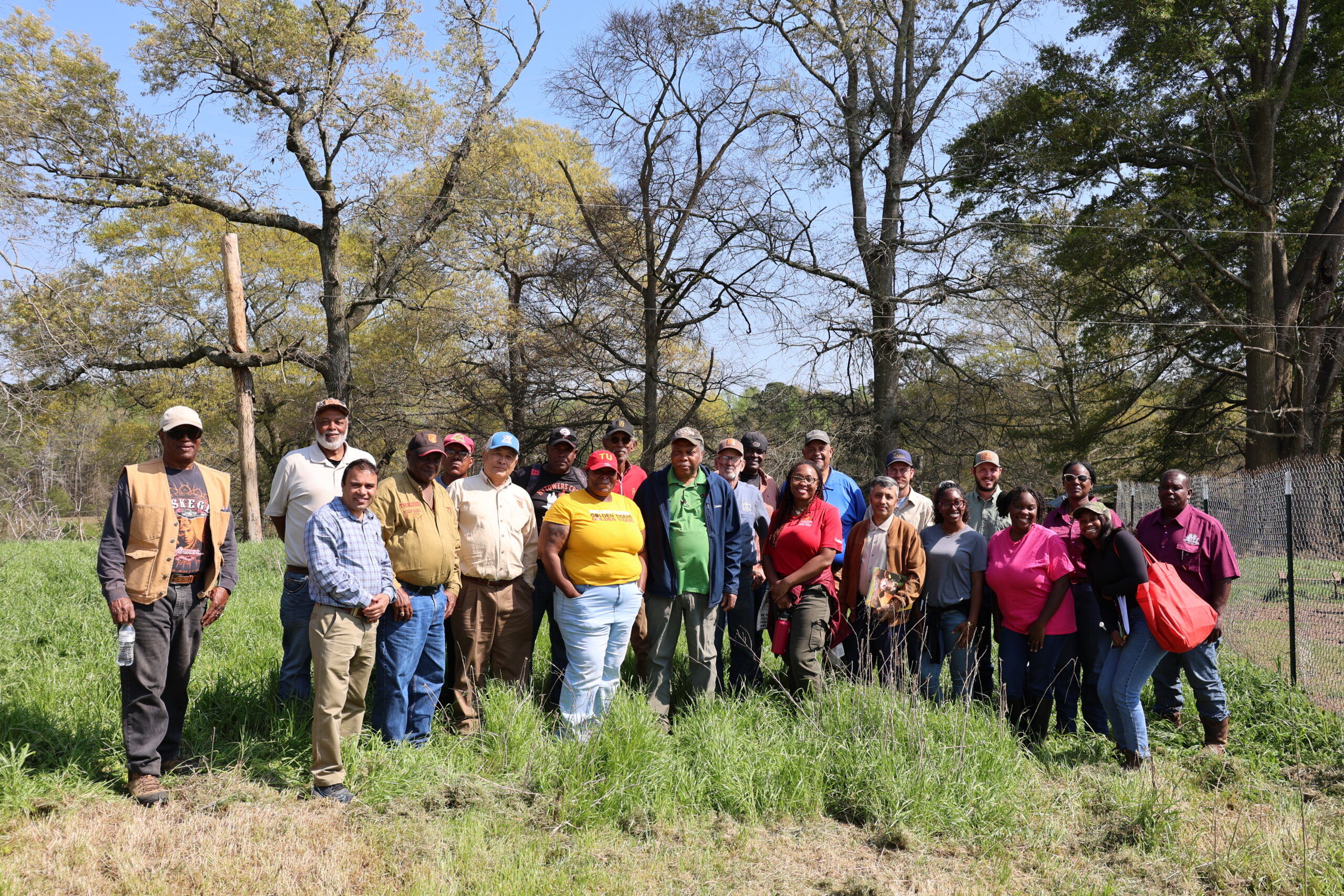
Producers are increasingly prepared to independently adopt demonstrated herd-health and reproductive-management practices on their own operations. Three demonstration farms were established to provide continuing hands-on training and producer-to-producer learning. Participating demonstration farms received AI services to demonstrate the practical and economic benefits of improved reproductive management. In the coming year, these farms will serve as training sites where additional producers can observe the results, assess potential cost savings and improvements in calf quality, and apply appropriate practices within their own herds.
Educational & Outreach Activities
Participation summary:
Learning Outcomes
Project Outcomes
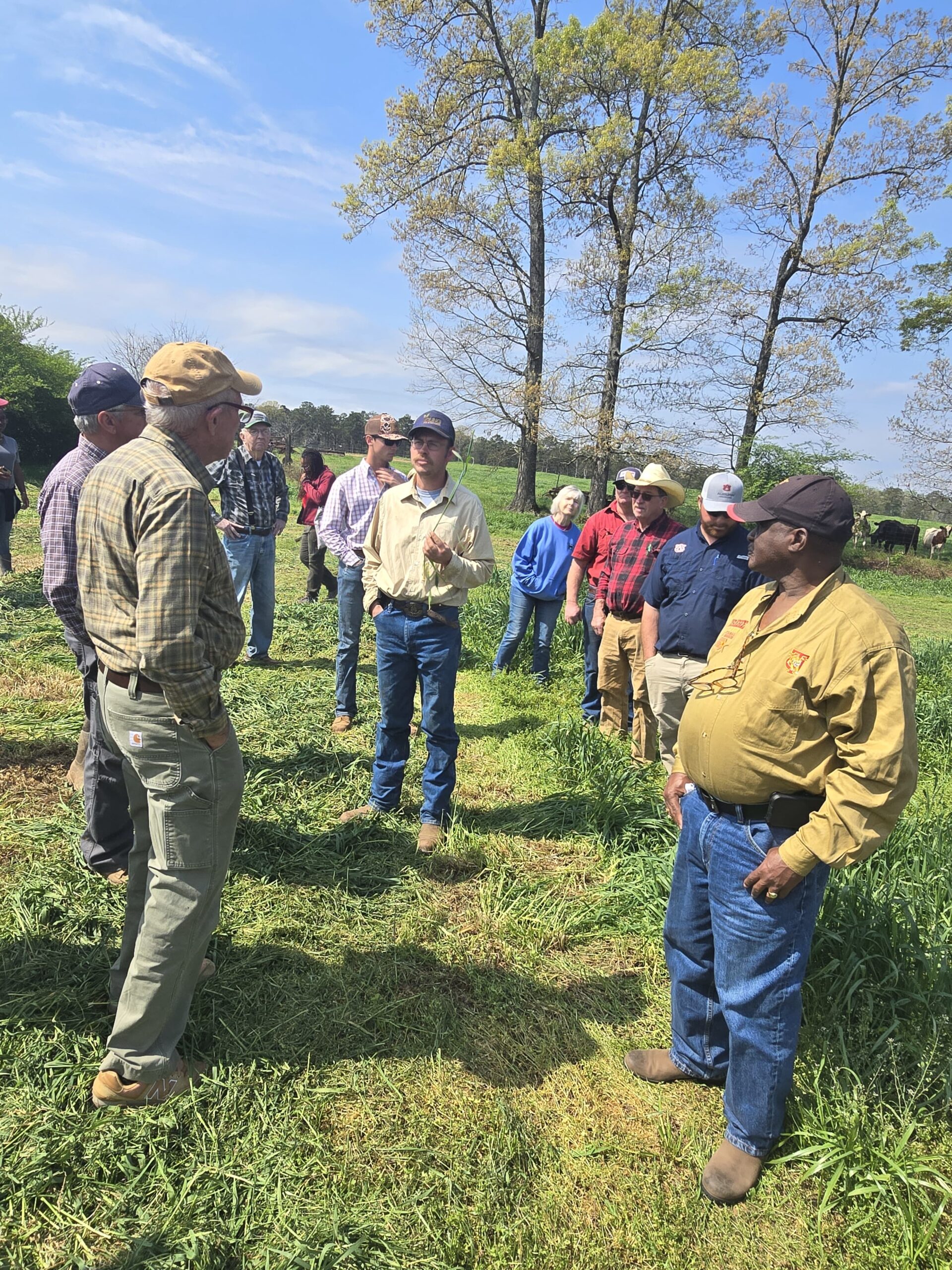 The project strengthened producers’ knowledge and confidence in herd health, nutrition, controlled breeding, defined calving seasons, preconditioning, and forage-based regenerative management. Participants gained practical skills in soil and forage assessment, feeding decisions, and evaluating the economic benefits of improved calf management.
Around 86% of farmers participating in the field demonstration events reported confidence in applying the knowledge gained, while 90% believed preconditioning could increase income, and 78% considered it economically viable. Producers are better prepared to adopt improved nutrition, preconditioning, forage, and marketing practices that support healthier calves, reduced production losses, greater marketability, and improved long-term farm profitability.
- Adopt integrated preconditioning and herd-health practices: Implement timely vaccination, weaning, nutrition, mineral supplementation, and improved forage management to produce healthier, higher-quality calves and reduce production losses.
- Track costs, performance, and market returns: Maintain simple farm records to evaluate the economic benefits of preconditioning and identify marketing opportunities that can improve calf value and overall farm profitability.