Progress report for YENC25-232
Project Information
The Vernon Township Junior Green Thumbs project is an opportunity for young children and their parents to learn about sustainable agriculture together. Vernon Township and Purdue Extension Hancock County will provide two rounds of four week courses on sustainable agriculture practices that they can use at home and in their lives. One class will be offered for kindergarten and first grade students, while the other will be designed for second and third grade students. Each class will detail a different sustainable agriculture practice while providing hands-on experiences, gardening education, and take home kits for families to utilize.
- Participants will define sustainable agriculture, its use in the community, and how it can be used at home. Students will explain how sustainable agriculture creates positive changes for the environment, the economy, and for the future.
- Students will gain a basic knowledge of growing plants and gardening while protecting the Earth in which they are growing.
- Families will be exposed to agricultural practices that will save them money, resources, and improve their quality of life.
- Children will learn alongside their parents and share their knowledge with others in order to bridge the generational gap and create interest for future participants.
Cooperators
- (Educator)
- (Educator)
- (Educator)
- (Educator)
- (Educator)
Educational & Outreach Activities
Participation summary:
We worked with the local newspaper, Greenfield Reporter and our 3 elementary schools to promote the program.
One of our Jr Green Thumb participants, "the professor" created educational videos which we will release this spring in conjunction with our Summer 2026 program.
In April, I will present the program to the Hancock County Master Gardeners and they are considering modeling the program in our neighbor community of Greenfield.
The local farmer's market is interested in having educational programs and Jr Green Thumb Day this summer.
- Series of short videos and/or social media posts
Learning Outcomes
Awareness of how plants grow and the life stages.
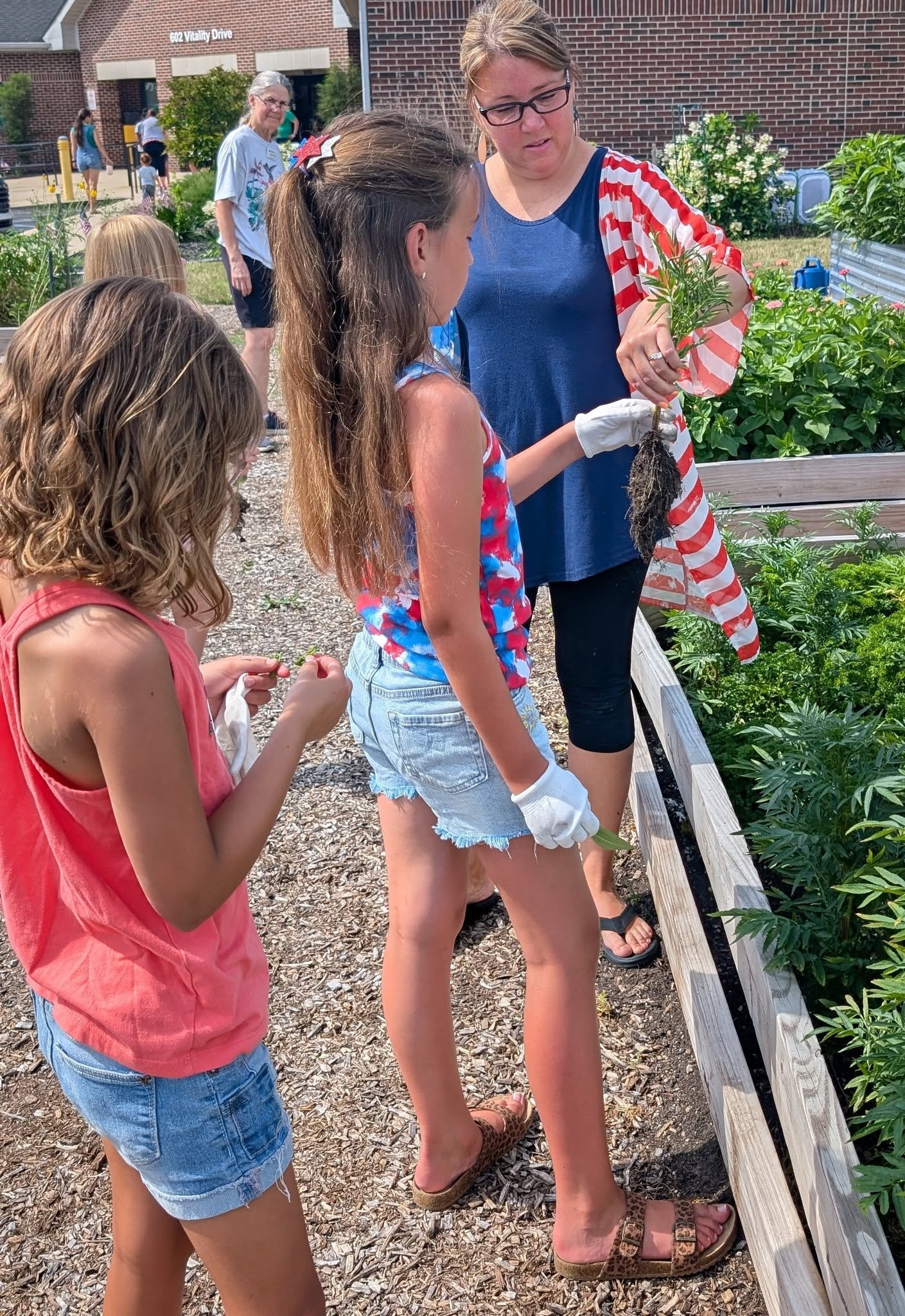
Familiarity with best soil for plants. Difference between dirt and soil.
Learn about pollination and native plants.
Learning about agriculture sustainability and garden activities.
We had two summer session with 4 classes each. Jr. Green Thumb 2025 (13)
Each class was divided into 2 groups based on age. Our two teachers were supported by 12 Master Gardeners and our library staff every Friday morning. The program was in the Vernon Township Training Center and Community Garden. Online registration was used to sign up participants and gather waivers.
Our classes included:
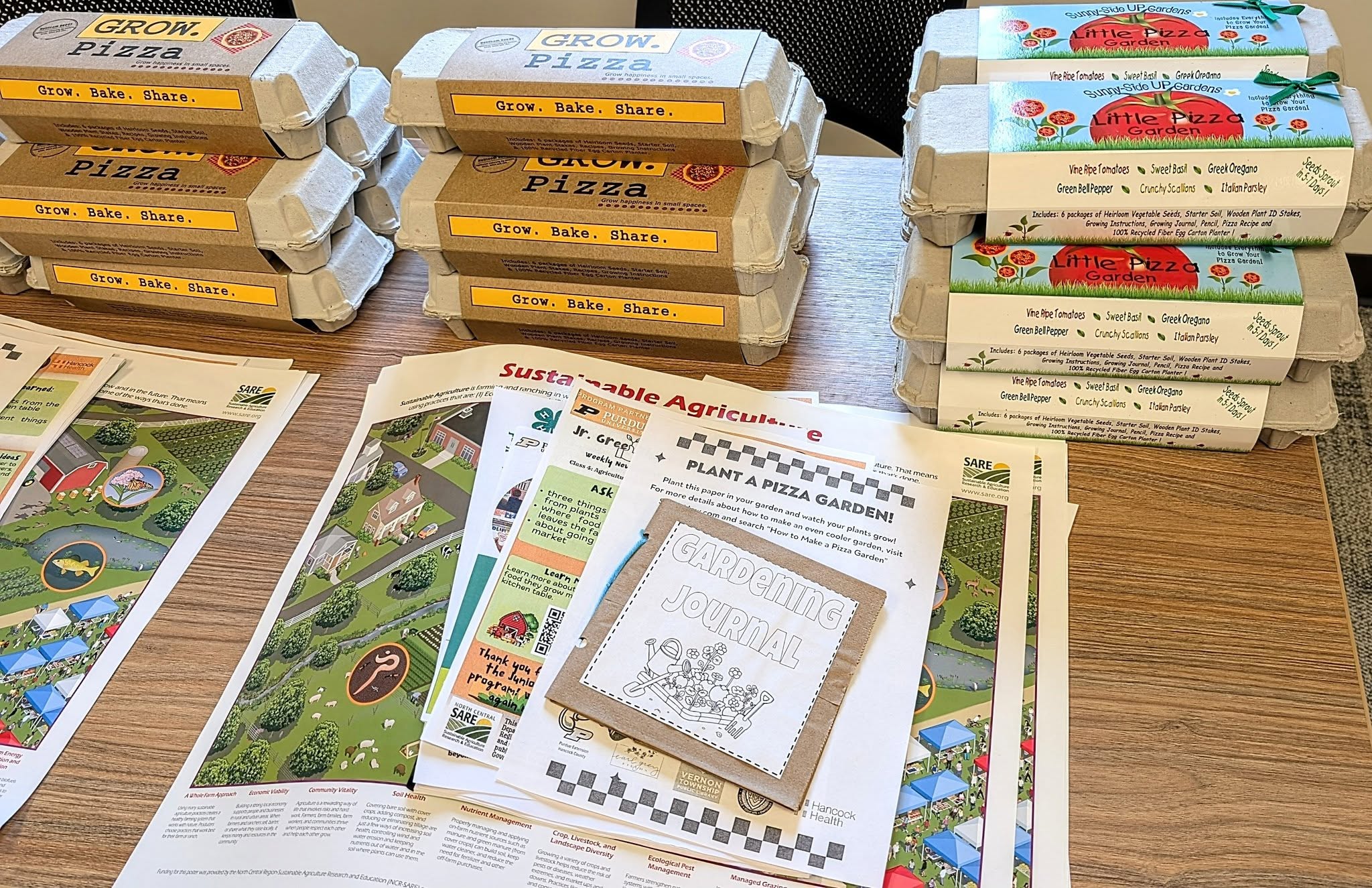
1- Plant Parts, Needs and Life Cycle. They made model flowers and identified the parts. They took home tomato plants, packet of zinnia seeds and also received a garden journal to track the growth of their plants. The participating children engaged fully and many parents stayed to assist. This class was well received by both groups in each summer session. One session was on July 4th and we were concerned no one would show up but the class was full!
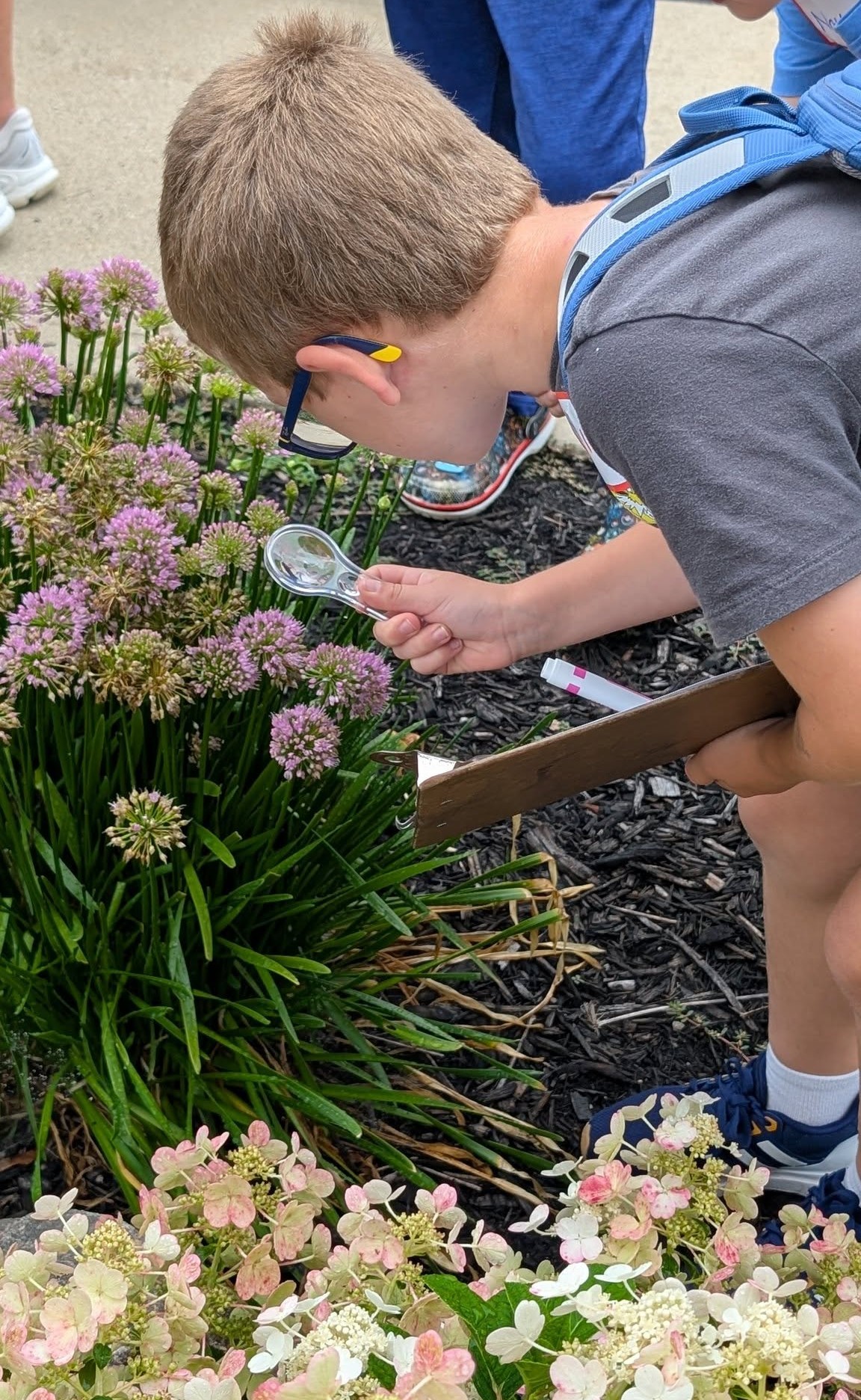
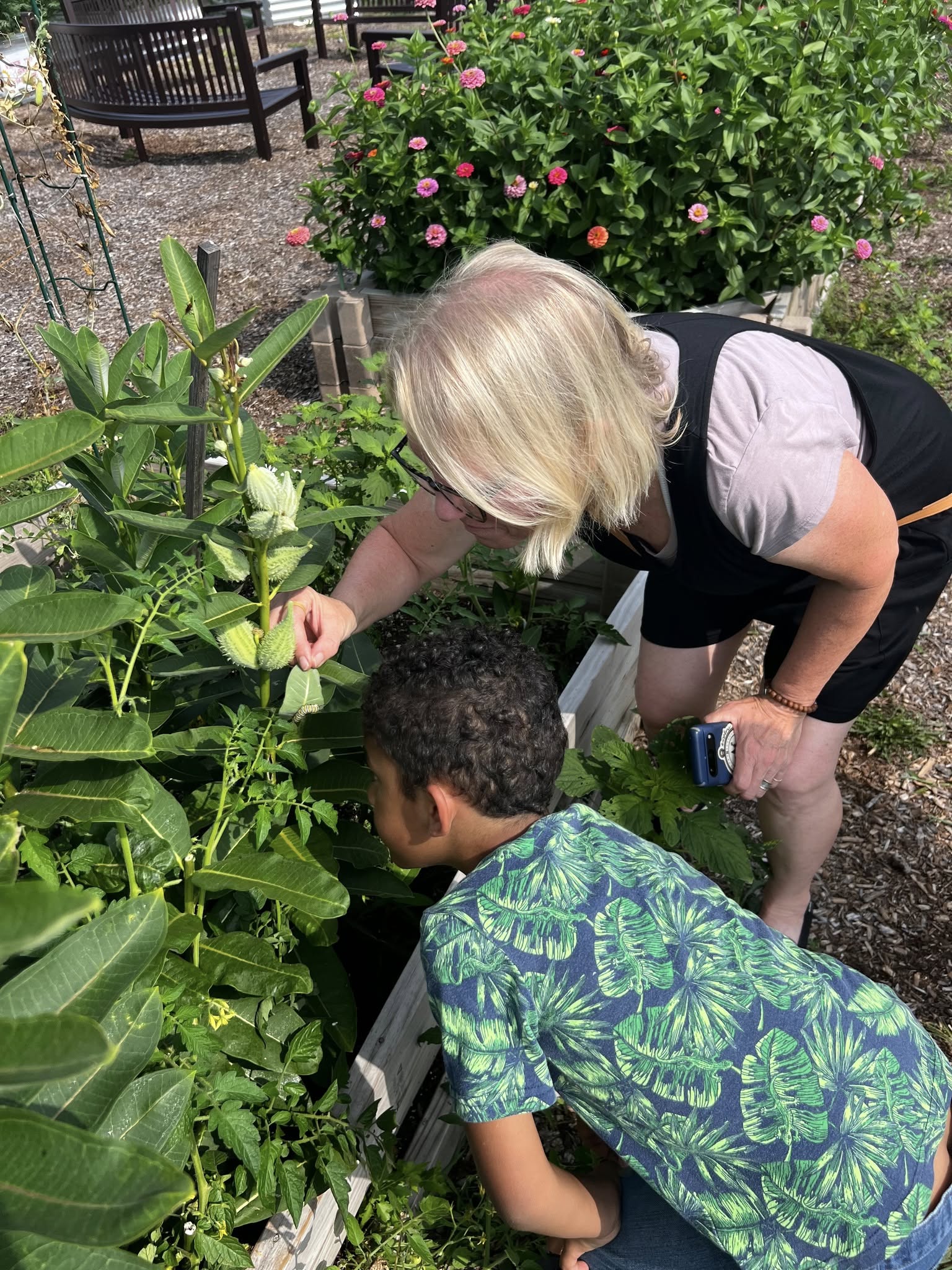
2- Beneficial Insects and Pollination - The classes visited the pollinator garden and our resident bee hives. They really enjoyed spotting bees and caterpillars. We had a large number of monarch and swallowtail caterpillars in our milkweed, parsley and dill. We also set up butterfly enclosures so they could watch the development cycle from cat to chrysalis to butterfly. They made seed "bombs" and took home a bee hotel.
3- Soil Health. We were disappointed that our soil health instructor was laid off but our Master Gardener Soil Squad stepped up to help. They knocked it out of the park! We had multiple stations: Vermiculture Bins (take home), 2 Soil experiments, Native Plant Tour and adding greens/browns to the garden compost bins. Very popular Snack was "dirt" pudding with a gummy worm.
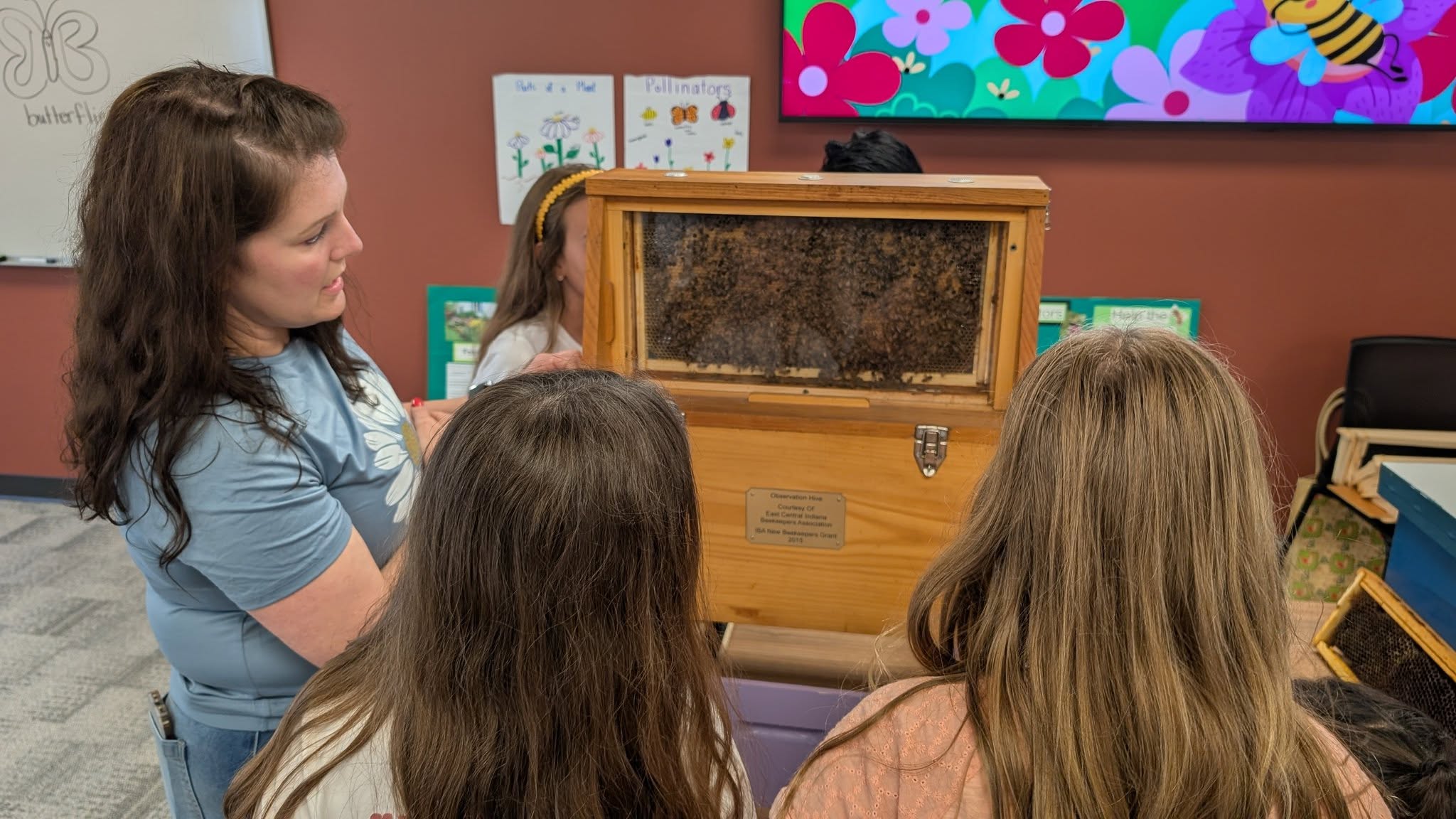
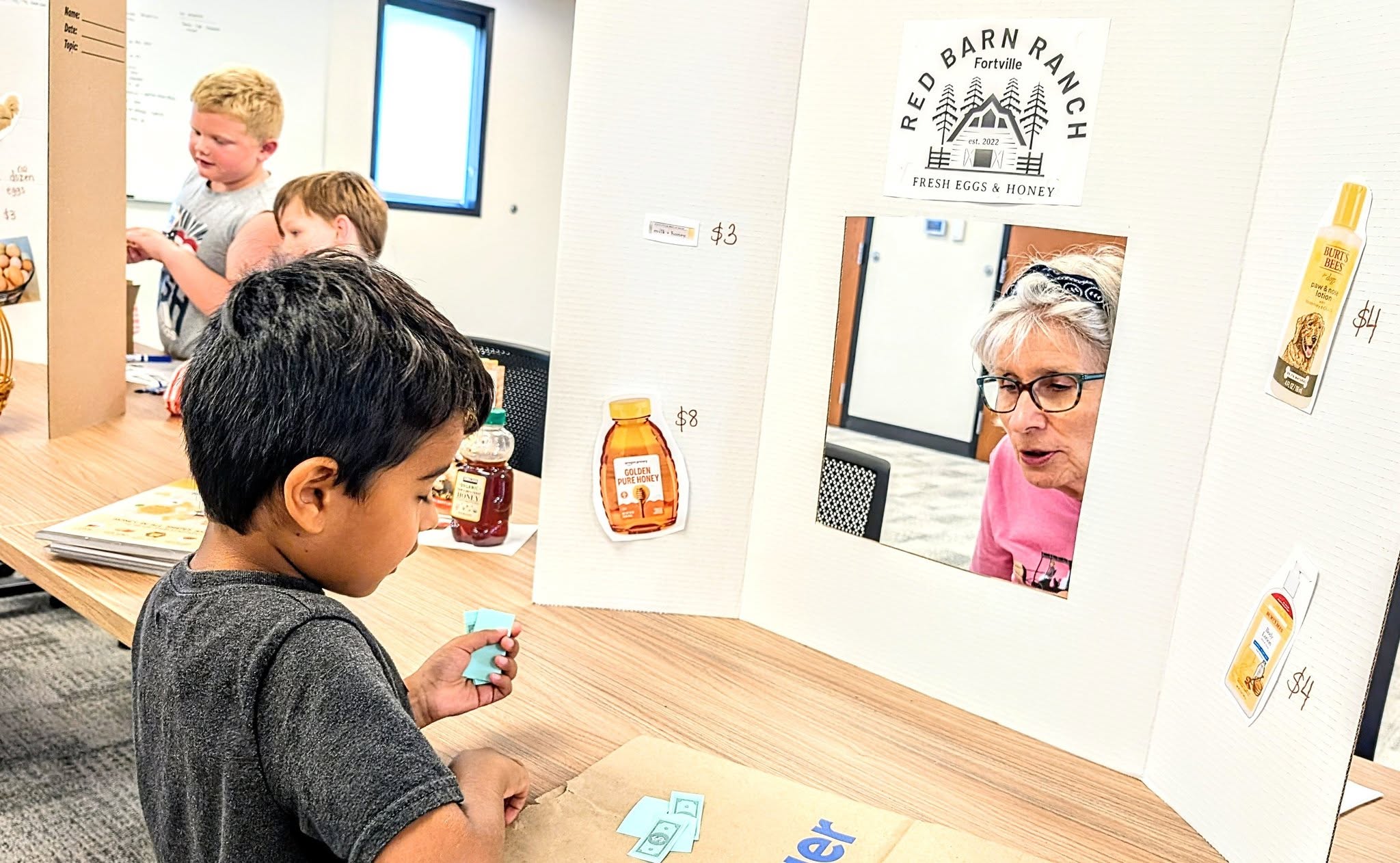
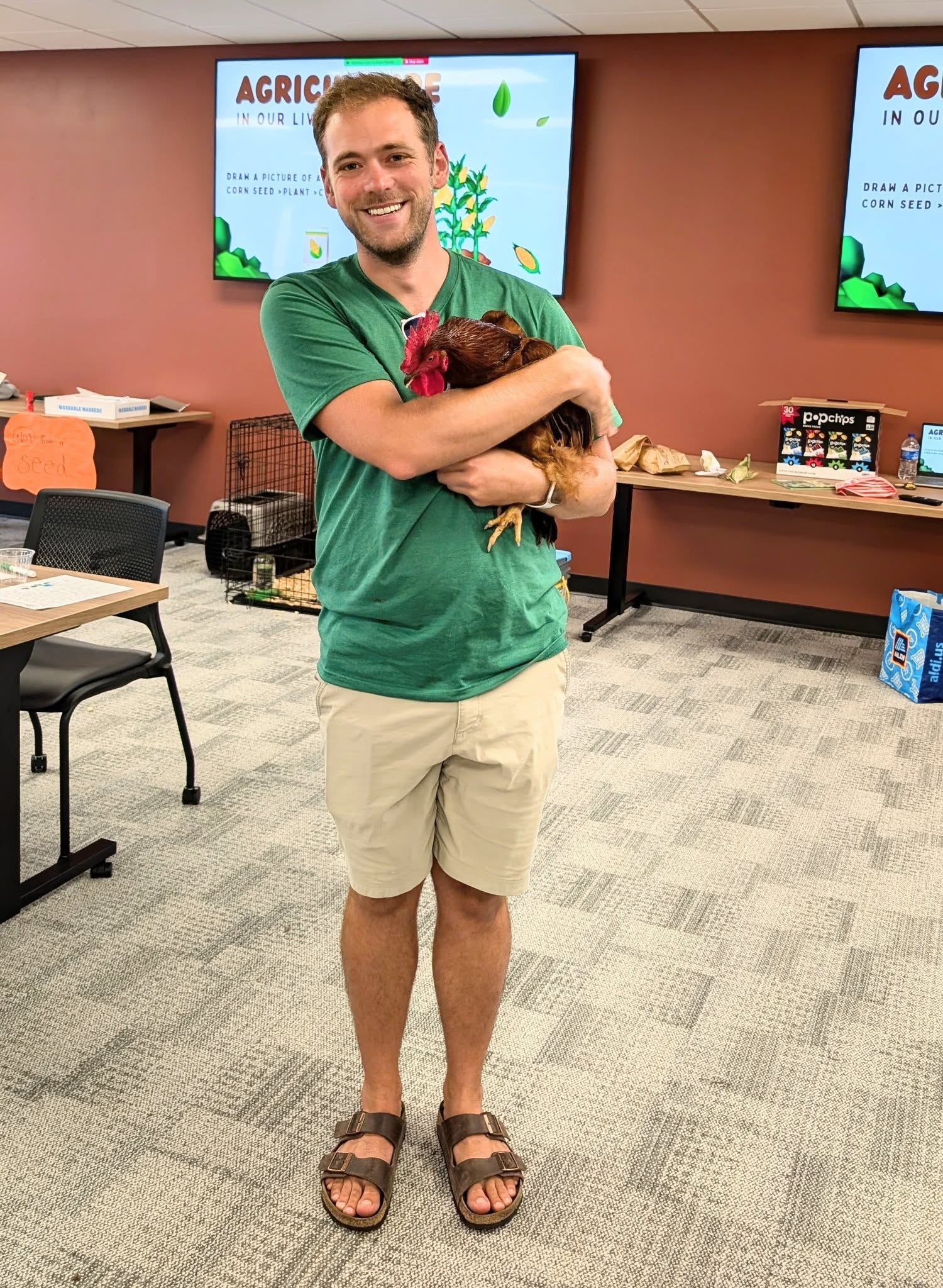
4- Agriculture in our Lives. We used the SARE farm sustainability poster. We had a Red Ranch beekeeper presentation with beehive enclosed in glass and honey on hand. And a Two Good Boys Chicken Farm presentation with Chicken, Hen and eggs. We also had a farmers market setup and the older kids managed the market and the younger kids shopped with real shopping bags and monopoly money. The entire program was excellent and really engaged the kids fully. We were not certain the market would work but the kids didn't want the market to end in either summer session.
Overall results. a. There was a waiting list for the June class and July was also full. b. The survey results were very good to excellent in all categories c. The two Mt Vernon teachers were exactly what our program needed. We had previously run the class with Master Gardeners teaching and it was a little dry in the delivery. We compared 2024 and 2025 surveys. Some of the questions were different but it was evident that the teachers were the tipping point! The teachers worked extremely well with the Master Gardeners acting as Teaching Assistants. d. We had very few issues. Two planned speakers didn't work out due to 1- a layoff and 2- availability but fortunately we had talented speakers available to step in. We only had one bad weather day but we adjusted to indoor activities. We were able to expand both summer sessions with additional things happening in the garden. I put pictures in the report. We have hundreds of pictures!
We used the JMG- Junior Master Gardener handbook which we borrowed from the Hancock County Extension Office. Supplemented with Learn, Grow, Eat & Go for both gardening and food tasting ideas. jmgkids.us
We highly recommend the JMG materials. We were aggressive in including so many projects and activities. I don't think the amount of activities we included each day would be realistic for most groups. We were fortunate to have a large number of Master Gardener Volunteers and two very talented teachers.
Project Outcomes
Our first year of Jr Gardening program was good but the SARE grant allowed us to hire teachers which increased everyone's enthusiasm and the quality of the program delivery. The SARE grant substantially improved the quality of our summer program!
The parents in 2025 program were exceptional. They fully engaged in most of the activities at home. They were excited about planting the tomato plants, milkweed seed bomb and the zinnias. The only activity that we had a little push back on was the vermiculture bins. Not all the parents wanted to take home the worm composting kits but all the kids fully engaged in the activity. We were encouraging :-)
Several parents told us in person and in our survey that their children were excited to come to the Jr Green Thumb class each Friday. And at least one parent told us this class was the only time during the week that their three children who participated weren't begging for screen time. She said I hope you offer it again next year.
The parent surveys were given out at the end of each class. It was so exciting to share the stellar 2025 results with our teachers and master gardeners. It was heartening to see that we had learned so much from our first 2024 Jr Gardener program and that we were able to go from Good to Great with the support of SARE.
Our farmer's market manager was so impressed with the program that he wants to have a market day for the Jr Green Thumb kids in Summer 2026.
We definitely want to evolve the program further this summer! Thank you for your support!
We are going to expand our partnership with our farm community in 2026!
If we are able to claim the remaining 25% of our grant then we will bring back the teachers!