Project Overview
Commodities
- Animals: bovine, goats, poultry, sheep, swine
Practices
- Animal Production: animal protection and health
- Crop Production: agroforestry
- Production Systems: agroecosystems
- Soil Management: soil quality/health
Proposal abstract:
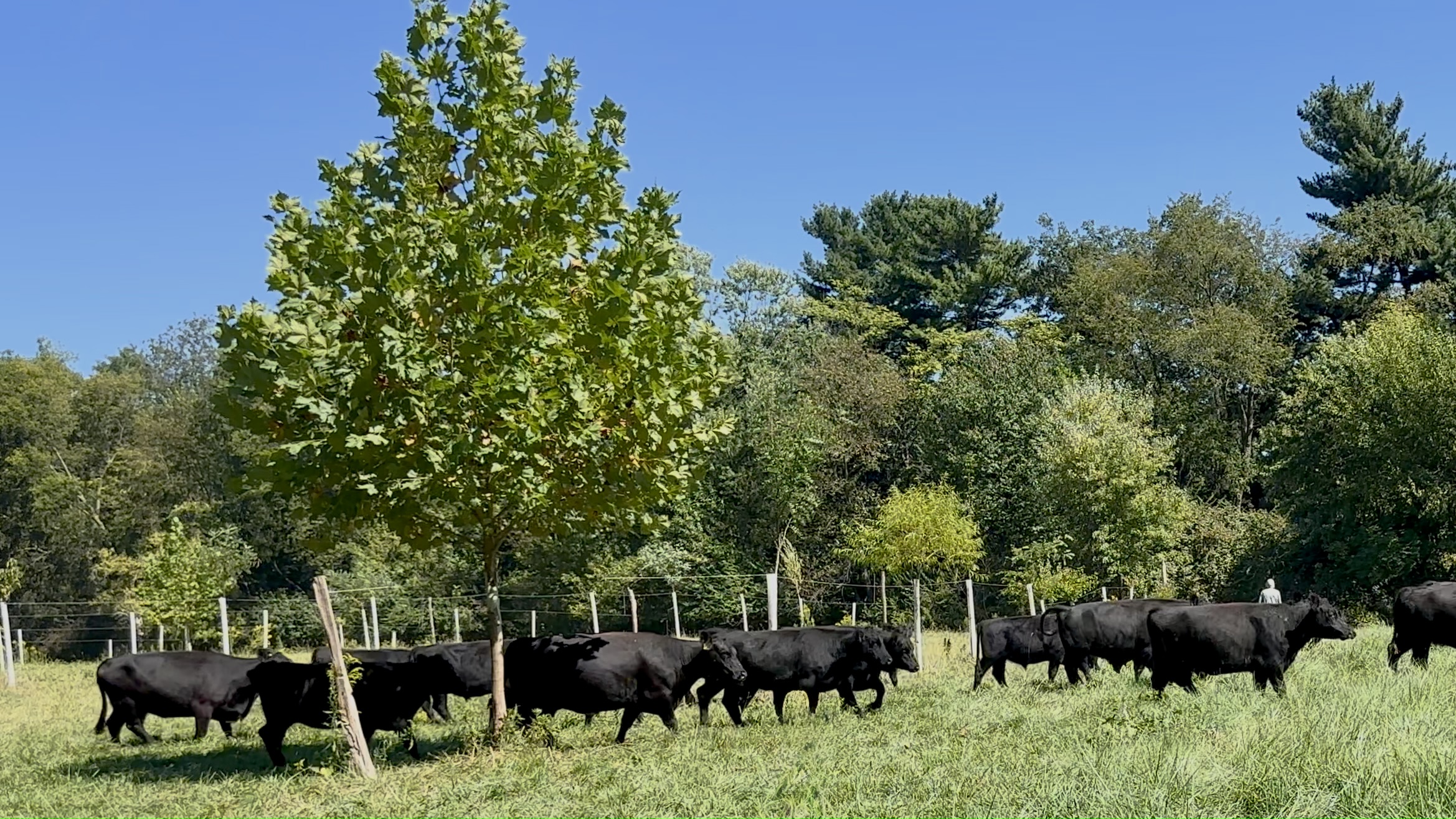
Silvopasture has broad appeal to farmers across the United States and provides numerous ecological, economic, and human benefits. Silvopasture fills the needs that many farms have to increase the productivity, adaptability, and variety of their operations and is applicable to farms of all sizes and types. However, silvopasture has been slow to be adopted in various regions of the country due to the lack of living examples, trained agricultural educators, and simple, reproducible systems for establishing trees in actively grazed pastures. This project will take the silvopasture suite of knowledge, skills, and systems to the educators, TSPs, & farmer-leaders of the North Central Region in a series of 2-day trainings specifically designed to build capacity to plan and implement silvopasture.
The 9 trainings proposed for Ohio, Indiana, Illinois, Iowa, & Missouri will each include classroom presentations, in-field practice, and individual (or small group) projects to fill the knowledge and skills gap with a complete silvopasture curriculum. The trainings will provide educators, TSPs, & farmer-leaders with practical, tested silvopasture planning and implementation skills. The objective is to enable TSPs to confidently assist farmers and other consultants in planning and executing silvopasture, in turn spurring the adoption of the practice. Due to the extensive, practical experience we have planning, implementing, and maintaining silvopasture projects in our region, we can significantly flatten the learning curve and build confidence and capacity to jumpstart silvopasture in the North Central Region.
Project objectives from proposal:
Our project purpose is to organize and offer trainings in nine locations throughout the North Central region, building on our four years of experience training silvopasture professionals in Pennsylvania. The outcome we strive for is to train 180 people through the 9 trainings in 3 years with about 20 participants in each training. Our ideal breakdown would be for our participants to consist of roughly one-third conservation / soil & water district staff, one-third agricultural educators, and one-third farmer-innovators (roughly 60 participants from each constituency).
For the farmer-focused pasture walk, we aim to attract an additional 15 farmers to each event (for a project total of 135 farmers). We anticipate that the farmer portion of each training will lead to productive silvopasture partnerships between educators & farmers and farmers & farmers sparking silvopasture funding, planning, and implementation of pilot projects in the region.
Conducting these trainings will leverage the wide range of educational materials we have been able to develop through our NE SARE grant, introducing more people to resources like comprehensive silvopasture-focused species lists, return-on-investment calculators, and the updated edition of The Grazier's Guide to Trees.
180 participants will be trained.
135 farmers will be engaged in the field portion of the trainings.
9 silvopasture pilot projects will be planned and implemented.
Although we would like to see silvopasture planted on many farms, we do not want to evaluate our success by sheer number acres of silvopasture established. There are multiple reasons for this including the following:
- We recommend starting soon, but starting on a small-scale in order to learn along the way. Our standard recommendation is to add silvopasture in phases. Small plantings that can be carefully planned, planted, observed, and maintained will be the seeds for more plantings.
- Some farms are well-served by one or two strategic silvopasture plantings while keeping the rest of the farm open for hay or crops if needed. Not every farm needs to implement silvopasture. The land context, livestock needs, and farm management need to be understood first.
- Not all grazing farms need silvopasture plantings as they may have existing natural resources or infrastructure to address their livestock needs for shade, windbreaks, fodder, etc.
- Small acreages of silvopasture can serve larger acreages of open pasture. Strategically-located silvopastures on farms can be enough to help livestock through summer heat waves. More silvopasture is not the goal or driving force.
For these reasons and more, acreage would not be a valuable metric for the proposed trainings.