Project Overview
Commodities
Practices
Proposal abstract:
Cucurbits are one of the most common vegetables grown on Midwest vegetable farms. While this crop group is diverse and highly valuable (>$300 million USD in the Midwest); crop members suffer from similar pest complexes that include cucumber beetles, squash bugs, squash vine borers and melon aphids. Importantly, surveys conducted in 2022, small- and large-scale growers identified 'cucumber beetles' as significant pests on their farm that warrant high levels of chemical intervention. However, two promising pest management techniques in cucurbit production are seldom used in Midwest production. Both the use of bio-stimulants and trap cropping are non-chemical pest management approaches that have been shown to reduce the prevalence and severity of pests without harming yield. In this proposal, we will evaluate both tactics independently and in combination under different user-friendly applications to maximize the utility and potential adoption of these pest management approaches. The aim of this project is to develop a robust multifaceted IPM program to effectively manage cucurbit pests in Midwest cucurbit production that improve crop resiliency. We will integrate cultural control (trap cropping), biostimulants and gustatory stimulants to create a comprehensive pest management plan that is predicated on prevention rather than prophylactic action (Fig. 1). To ensure that these experiments are reasonable, we have created a grower advisory panel that will allow for open and organized communication. We expect our alternative management practices (combining trap cropping with biostimulants) to improve pest management and yield. We will connect stakeholders with our project findings through on-farm demonstration trials, survey assessments and easy-to-use extension resources.
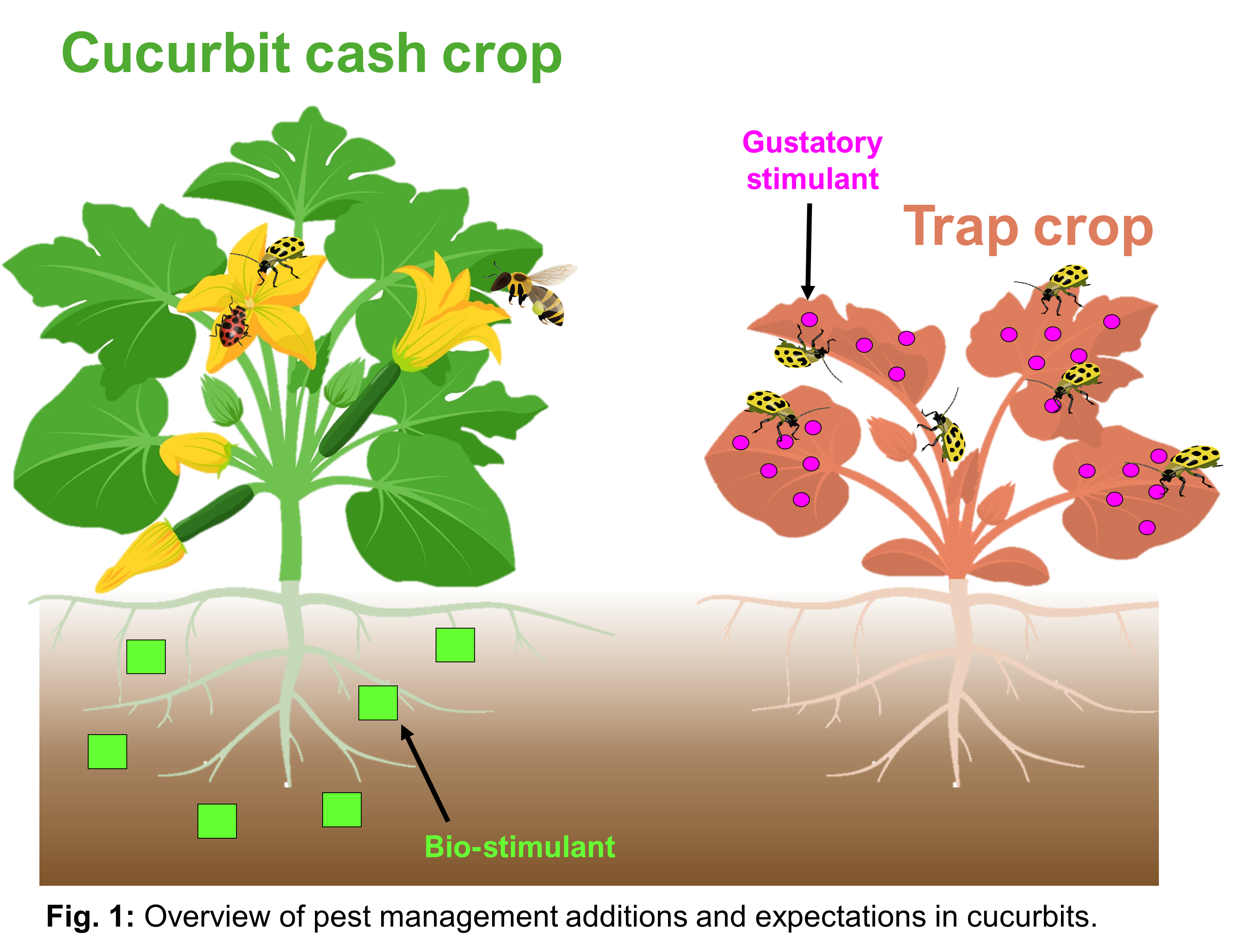
Project objectives from proposal:
We expect increased understanding in trap cropping orientations (1) and bio-stimulants (2) and combinations of both practices (3) to suppress pest outbreaks in cucurbit production. We also anticipate increasing knowledge of arthropod-mediated ecosystem services (4) within different bio- stimulant and trap crop contexts.
Action Outcomes
We expect Midwest cucurbit growers to use trap cropping and bio-stimulants in combination to suppress pest populations without compromising yield.
System outcomes
Midwest cucurbit production is more resilient to pest outbreaks, thus becoming more economically viable, while also increasing beneficial insects on the farm that supply pollination and biocontrol services.