Project Overview
Commodities
Practices
Proposal abstract:
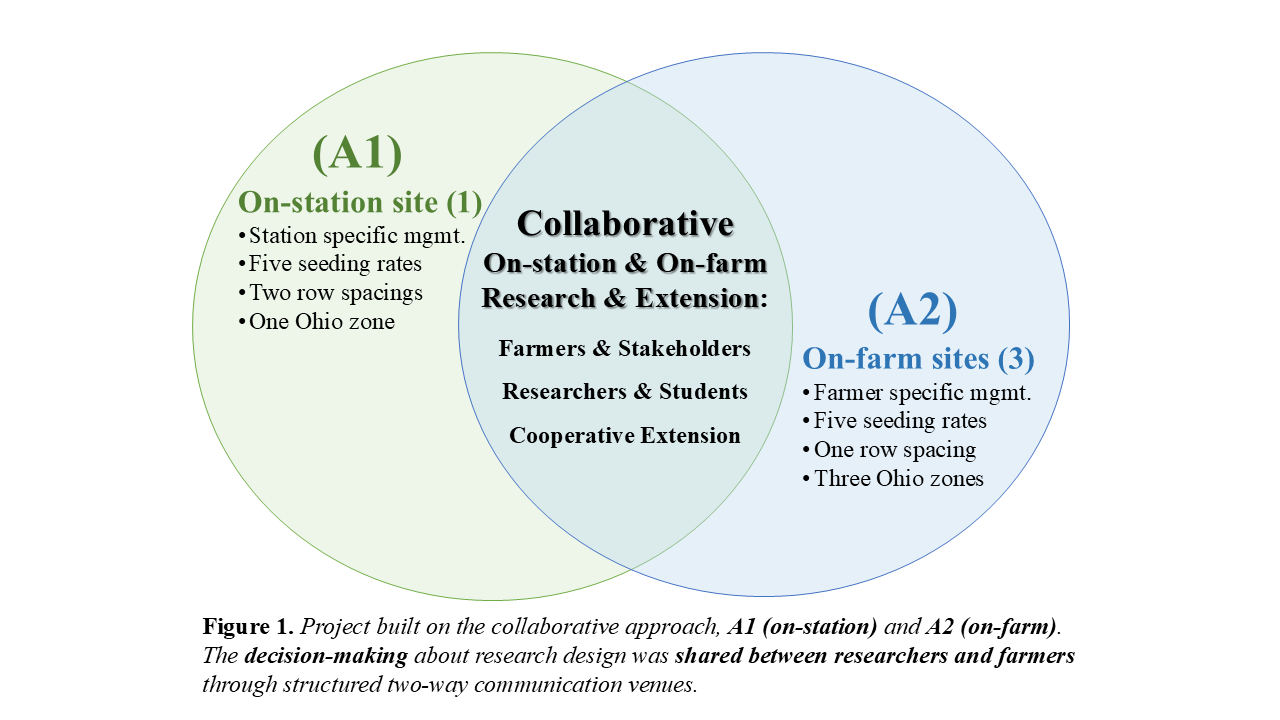
Improving weed management and optimizing purchased inputs are the top two production challenges reported by U.S. organic growers. Engagement with Ohio organic farmers has repeatedly identified weed control as a critical need. A growing number of farmers have identified seeding rate optimization as a cultural practice that can improve weed management in organic corn production, with questions about how seeding rates interplay with row spacing and crop yield. Peer-reviewed research in the literature has reported seeding rate effects on other organic crops but virtually no work on organic corn. The long-term goal is to generate empirically based recommendations for optimal seeding rates and row spacing to enhance productivity, improve weed management, and increase profitability for organic corn growers. We will implement collaborative on-station and on-farm research trials (Figure 1) to better understand how seeding rate and row spacing influence plant growth, weed pressure, yield, and economic outcomes (Objective 1). We will test the utility of traditional and emerging precision tools for on-station and on-farm weed monitoring (Objective 2). We will partner with farmers to interpret results and develop extension/outreach programming through farmer-led in-person events and deliverable products such as extension articles, factsheets, and peer-reviewed work (Objective 3). This project will integrate observations, methods, and knowledge of experienced farmers into scientific studies. The outcomes include a reduced need for mechanical weed management while maximizing economic yields in organic corn systems. By integrating scientific research with farmer experience and robust farmer-led outreach efforts, this project will ensure that results are widely disseminated, leading to improved organic corn production practices in Ohio and the region. By involving farmers in all project phases, we aim to increase the application and perceived relevance and value of research results. This project will continue overarching efforts to expand a participatory space where researchers and farmers collaborate to deploy research with high scientific merit and practical outcomes for economic viability, environmental stewardship, and enhancing the quality of life.
Project objectives from proposal:
Objectives
- Understand how seeding rate and row spacing influence organic corn yield, weed pressure, and economics.
- Quantify the effects of management tactics on weed populations (in-row and inter-row) using traditional sampling and emerging precision technologies.
- Integrate farmer experiential knowledge and scientific research to implement collaborative outreach and extension programs for organic corn growers.
Outcomes
- Integrate observations, methods, and knowledge of experienced farmers into scientific studies.
- Develop knowledge, outreach, and extension programs to improve weed management, productivity, and profitability.
- Reduce weed pressure and mechanical weed management needs and stress while increasing corn yield and profits.
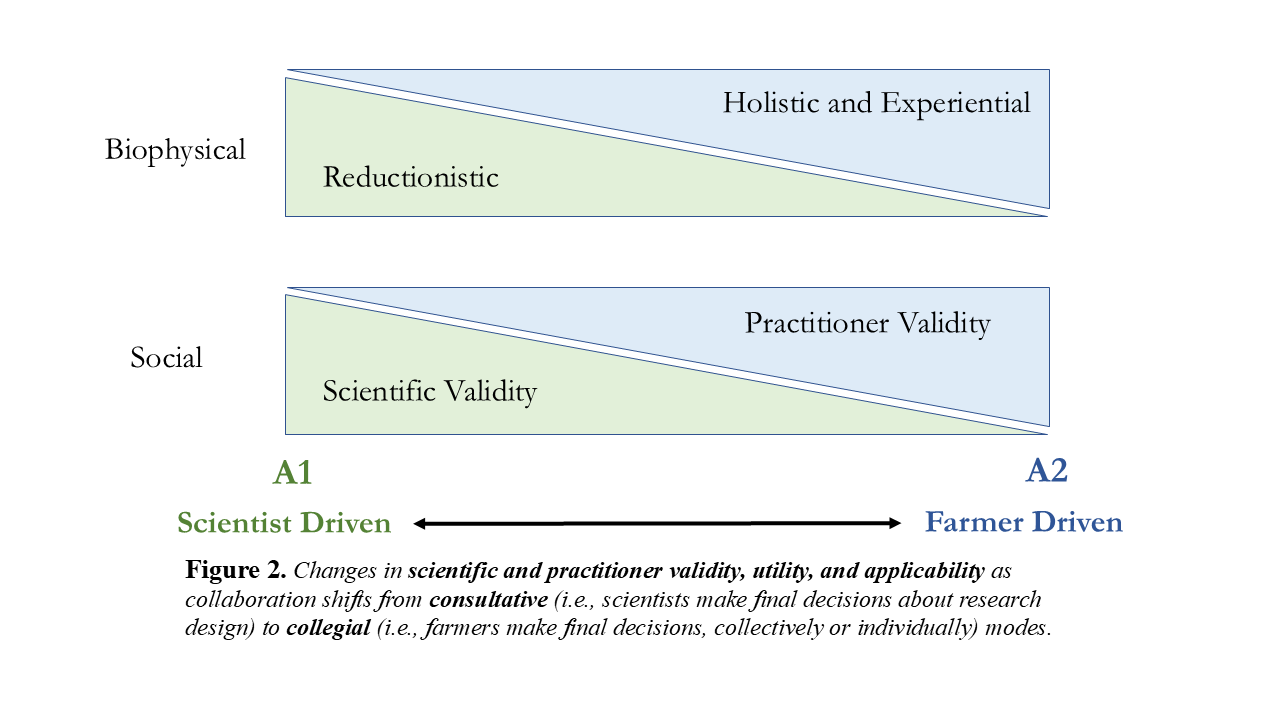
- Strengthen the collaboration between farmers, researchers, and extension specialists, leading to improved knowledge exchange and problem-solving in organic corn production systems (Figure 2).