Final report for EDS23-047
Project Information
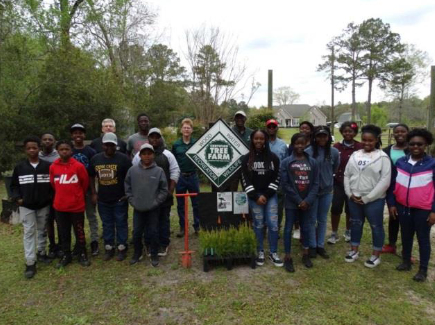
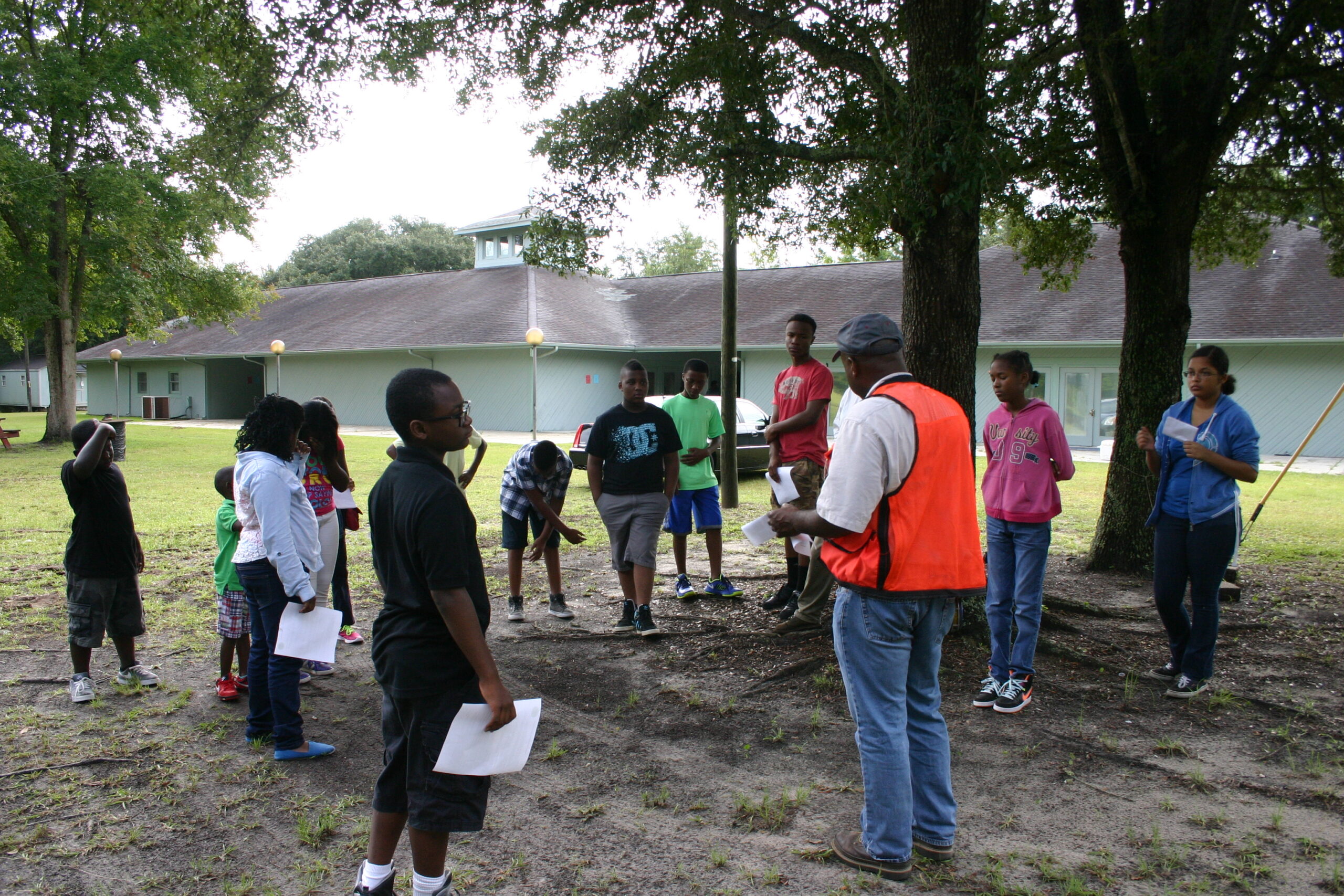
The program involves two one week summer camps and a Saturday camp held quarterly will be conducted during the grant period. In late 2018, the Center for Heirs’ Property Preservation (CHP) received a 25-acre donated tract of land in Berkeley County from Lord Berkeley Conservation Trust. The goal of CHP is to utilize this land as a tangible example of how forestry may be used to dramatically increase the value of one’s land and expose youth to sustainable forestry. This tract embodies many of the issues facing landowners in our forestry program. Consequently, this property will be an outside classroom –a demonstration forest—for landowners with whom CHP works. The instructors will include the CHP Forestry team, SC Forestry Commission, and USDA SC NRCS, and the teachings will mirror the conversations and technical assistance that they have with landowners. They will implement many of the approaches it often recommends to its landowners such as harvesting, planting/reforestation, and the associated benefits of longleaf pine. The youth will be instructed on basic forestry concepts including tree identification, forest products, forest measurements and compass/GPS to encourage their interest in careers in natural resources. These youth will be solicited from neighboring schools. Notice of these camps will be disseminated at project outreach events.
Ultimately, the youth will increase their knowledge and understanding that there are certain best management practices (BMP) which are fundamental to both high value products and healthy forests. In addition, this program will assist in establishing the youth’s role in the family landownership, their critical importance, and bring awareness to the wide range of environmental career opportunities open to them. Also, these youth will see CHP foresters on staff in action in the field, which may provide an ‘AHA' moment for some youth and provoke them to seek forestry as a career.
|
OUTPUTS & RESPONSIBLE STAFF |
OUTCOMES/RESULTS |
|
[Forestry Events Coord., Forester & Outreach Coord.] |
50 youth will increase their knowledge of forestry and natural resources Increase understanding that there are certain Best Management Practices (BMP) which are fundamental to both high value products and healthy forests 3) Establish the youth’s role in the family landownership and their critical importance 4) Bring awareness to the wide range of environmental career opportunities open to them.
|
|
Milestones for Deliverables/Subtasks |
||||||||
|
Activity |
2023 - 2024 |
2024 - 2025 |
||||||
|
|
Apr-Jun |
Jul-Sep |
Oct-Dec |
Jan-Mar |
Apr-Jun |
Jul-Sep |
Oct-Dec |
Jan-Mar |
|
Visit local schools and attend PTA meetings to make students/parents aware of the camp. |
X |
|
|
X |
|
|
|
|
|
Review applications/select students |
X |
|
|
X |
|
|
|
|
|
Prepare demonstration forest for students |
X |
|
|
X |
|
|
|
|
|
Partners meet to develop curriculum & outline program |
X |
|
|
X |
|
|
|
|
|
Finalize program curriculum. |
X |
|
|
|
X |
|
|
|
|
Secure training materials and supplies |
X |
|
|
|
X |
|
|
|
|
Conduct a one-week Forestry Camp |
X |
|
|
|
X |
|
|
|
|
Conduct field trips to other land sites |
|
X |
|
X |
|
X |
|
X |
|
Conduct 3 in-person camp sessions |
|
X |
X |
X |
|
X |
X |
X |
|
Conduct evaluation of Youth Camp with program participants |
|
X |
|
|
|
X |
|
|
|
Conduct evaluation of full project |
|
|
|
|
|
|
|
X |
|
Partners meet to review project evaluations |
|
X |
|
|
|
X |
|
|
Cooperators
Education
The Young Tree Farmers Camp included 66 youth participants ranging from age 5 - 16 years of age, over the course of the project. The educational approach was unique in terms of ensuring that each age group concluded the camp with gained knowledge and learned skills of farming and forestry practices and an awareness of careers in natural resources. This program focused on utilizing various hands-on activities, demonstrations, field trips and exploration opportunities. Foresters presented on sustainable forestry and farming practices through learning sessions, field study, and providing a direct connection to the natural resources in their communities.
Educational & Outreach Activities
Participation summary:
Providing education and access to information is at the core of the work of CHP; providing legal and forestry education and services for under-resourced landowners. The building of trust has been essential to CHP's success because of the long-held fear and distrust among these landowners to speak about their land. Too often, when they sought the help of the authorities or the legal system, they lost their land. To overcome the distrust and fear of these landowners, CHP decided to work with those already trusted in the community – the pastors and local, civic leaders. With their imprimatur, CHP routinely held education seminars in rural churches and community centers and gradually these landowners no longer feared that CHP was trying to “get their land.” Due to this proven outreach method with our legal and forestry education, the established relationships with local community groups and leaders would be utilized in promoting the Young Tree Farmers Camp and encouraging youth participants. CHP will also utilize the Forestry team and Outreach liaisons that also have established relationships with landowners. Both teams will provide awareness of the educational opportunity for youth via word of mouth and at forestry workshops, presentations, and other outreach events. The outreach and forestry teams will also establish relationships with area schools for recruitment of participants. CHP established relationship with the SC USDA NRCS will also be beneficial in performing outreach and promoting the Young Tree Farmers Camp.
CHP held the Young Tree Farmers Camp July 17-21, 2023. Students were exposed to many forestry areas and learned more about careers in forestry. CHP Staff foresters facilitated the camp session and provided 14 student participants with a 0verview of sustainable forestry practices, as well as hands on experience conducting the following activities:
- Performing safety measures while in a forest.
- Measuring trees.
- Utilizing compasses.
- Surveying.
- Marking boundary lines.
- Taking soil samples.
CHP foresters conducted a drone demonstration and educated the participants on the use of technology, such as GIS, websites, and phone apps, as a forester. Moreover, the participants were equipped with practical skills and knowledge in other land management practices, such as silviculture. They gained a deeper understanding of forest genetics and its role in cultivating faster-growing trees. The CHP forestry team also shared insights on the importance of a forest management plan, a valuable tool for tree farmers to effectively manage their land.
The camp also provided unique opportunities for personal interactions and real-world exposure. A representative from the SC Forestry Commission shared insights on forest health and protection, fire prevention, and prescribed burning, and the management of insects and diseases. A representative from the SC Natural Resources Conservation Service discussed career opportunities in natural resources. The students also had the privilege of meeting a landowner, a participant in CHP's sustainable forestry program. The landowner generously shared their land and the practices implemented, highlighting the benefits and advantages of tree farming, including the acquisition of new skills and the potential for generational income for families.
The students also experienced other outdoor activities, such as a nature walk at the Old Santee Canal State Park, and enjoyed a day at a local zoo, Bee City Zoo, and learned more about bees and bee farming.
The last day included a wrap-up of the week and a recognition/graduation ceremony led by CHP CEO Dr. Jennie Stephens.
Winter 2023 newsletter (this newsletter is an annual CHP publication. There is an article about the Young Tree Farmers Camp in the newsletter.
IMG_1938 3 (video)

Reporting Period 04.01.24 - 03.31.25
Project Update
During this reporting period (4/1/24 – 3/31/25), CHP continued efforts to identify organizations to partner with for camper participants. The partnership with Lowcountry Youth Services (LYS), led by ReZaun Lewis, ED, for the 2023 Young Tree Farmers Camp, unfortunately came to an end. We were informed by Mr. Lewis that LYS is no longer able to provide campers for our program.
CHP forestry obtained two new partnerships with local community groups to host the summer 2024 Young Tree Farmers Camp. The first group, Peter Smith Farms, in Dorchester, SC held a week-long camp that included sessions on farming and healthy food preparation. During the week of camp CHP held our youth camp for two days, July 8-9, 2024. A total of (20) youth camp participants were recruited from the local community. Participants ranged in age from pre-school to middle school. CHP Forestry and other Center staff educated youth campers about forestry and natural resources. Activities included instruction in basic forester skills such as pacing and the use of a compass, education about how trees grow, understanding soil properties, and a scavenger hunt for nature items. The second day included a walk through the working farm by Peter Smith Sr. who has been farming for most of his life.
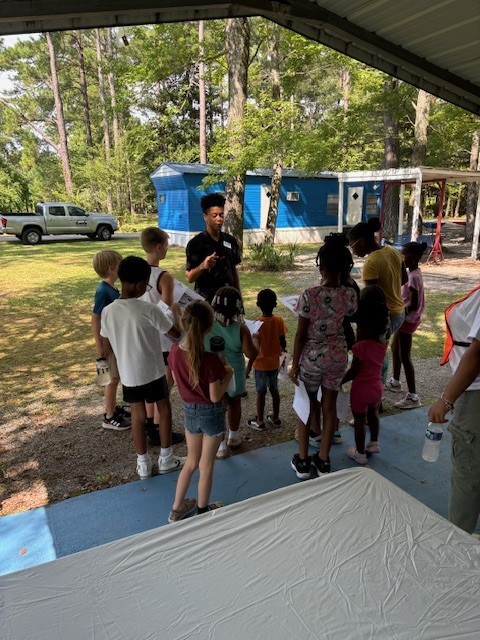
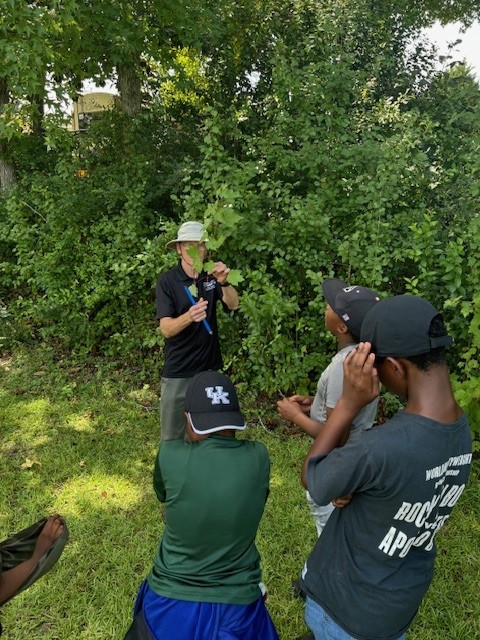
The second two-day camp was hosted by Johnny Murdaugh in Orangeburg, SC on July 24-25, 2024, with a total of (12 of the 20) youth campers. The first day of camp was held at Johnny Murdaugh’s pond and included the SC Forestry Commission’s entomologist, David Jenkins, who taught the campers about insects. Campers learned basic forestry skills like tree identification, pacing, using a compass, and how trees grow. The second day included additional forestry instruction. The camp was a success.
CHP reached out to Lauren Herterich (ED) of Kids on Point in Charleston, SC in February 2024, and Cane Bay High School (Berkeley County) faculty in April 2024, who currently has a natural resources program that includes forestry. Discussions of future partnerships in coordinating young forestry camps are ongoing.
Reporting period 04.01.25 - 03.31.26
The 2026 Young Tree Farmers Camp focused on agriculture and Forestry essentials offering hands on experience in sustainable farming and forest management. Participants explored vital links between pollinators, water ecology, and various landscapes to understand how to support both our environment and food systems.
Day 1 focused on the foundations of farming and planting. The participants gained knowledge of basic farm safety and infrastructure and participated in a setup and planting demonstration. Each participant received starter plants to take home and were encouraged to continue planting and caring for crops with their families. The day ended with a barbeque and smores camp social at Peter Smith Farms.
Day 2 focused on ecological systems and wildlife. The participants went on a field trip to Bee City where they analyzed wildlife habitats and animal adaptations. CHP Forester Asija Rice presented on connecting pollinator health to consistent access to nutritious foods. Each day the participants returned to Peter Smith Farms for additional planting instructions and plant care guidance, and reflection.
Day 3 focused on water ecology and the variety of life form within the forest ecosystems. The participants toured Edisto Memorial Gardens and explored the wetlands. CHP Forester Asija Rice taught a lesson on ecosystem. Camp gear backpacks were distributed to the participants, which included garden tools, flashlights, and portable tech that they could take home. The day ended with a field trip to The Max for lunch and more fun activities.
Learning Outcomes:
The youth participants achieved the following core concepts over the three-day educational camp:
- How to manage environmental resources
- What’s required for fruit and vegetable production
- Safety tips for outside forestry/farming work
- The beneficial relationship between insects and flora
- How stable ecosystems support both wildlife and humans
- Strategies for maintaining balance between working farms and natural spaces
- How flowing water sustains trees, wildlife, and human communities
- The importance of varied species—from Loblolly pines to Cypress wetlands—in stabilizing the environment
- Practical methods for water conservation and pollinator support in residential spaces.
Learning Outcomes
Agriculture and forestry essentials/practices; farm and forestry management.
Practical Planting Skills: Participants learned how to properly plant vegetables like tomatoes, peppers, and watermelons, developing hands-on skills in planting techniques. They also learned about prescribed burning and fire safety.
Broader Perspective: Participants learned that farming involves science and technology, and that sustainable farming practices are essential for healthy food production and environmental conservation. They utilized technological tools for forestry- GIS, apps, and drones.
Environmental Awareness: Participants gained a deeper understanding of the importance of soil health, water, and sunlight for healthy plant growth. Participants learned about ecological systems and wildlife.
Understanding Plant Origins: Participants gained a deeper understanding of where fruits and vegetables come from and understand the full growth process of plants, from seed to harvest.
New Outlook on Farming: Participants learned that farming is more than just working in the field—it's caring for the soil, managing water resources wisely, and using technology to improve farming practices. The hands-on activities included taking soil samples and measuring trees.
Project Outcomes
The Young Tree Farmers Camp program introduced youth to the outdoors, exposed them to natural resources and sustainable forestry, and allowed them to learn about the wide range of environmental career opportunities open to them. After completion of the program, students shared information with their family members and others about best practices to manage land. Students learned how to measure tree diameters, identify plants, and learned about the management of forestland.
The education goals of the Young Tree Farmers Camp included forest health and reforestation, compass and GPS skills, and wildfire risk and prevention. Through these lessons, students reinforced their math, reading, writing, and language skills. Students learned how to measure and record forest attributes such as tree species, height and diameter, and risk of fire. These learned skills and knowledge of forestry lay a foundation for future tree farmers and healthy stewards of land and the environment. Students received a deeper appreciation for the forest and its ecosystems.
Lastly, students were given the opportunity to form relationships with CHP foresters and were introduced to other professionals in natural resources such as USDA SC NRCS conservationists and foresters with the SC Forestry Commission.
Reporting Period (04.01.24 - 03.31.25)
Project Outcomes Update:
As stated in the Agreement, the initial outcomes for the Young Tree Farmers Camp included:
- Visit local schools and attend PTA meetings to make students/parents aware of the camp.
- Review applications/select students
Due to obtaining a partnership with Lowcountry Youth Services, CHP was able to secure youth participants in the 2023 Young Tree Farmers Camp. Therefore, CHP moved forward with these participants and did not reach out to local schools to select students.
Upcoming Plans & Remaining Outcomes
The remaining outcomes for this project included:
- Conduct 2 field trips to other land sites
- Conduct 3 in-person camp sessions
- Conduct evaluation of Youth Camp with program participants
- Conduct evaluation of full project
- Partners meet to review project evaluations.
CHP Foresters are currently in strategic planning sessions to close out the Young Tree Farmers Camp project with a final 3-day youth camp. Discussions are taking place with potential partners, including The Saxmore Foundation and Woodlands Nature Reserve, to determine whether dates, timeframes and further logistics would be feasible for all parties. In-house discussions to finalize camp location, agenda, materials, and possible field trip locations are also taking place. The camp is set to take place during the school year, as temperatures will be cooler for the campers to gain the full experience of the program without the challenges of discomfort due to extended heat exposure. The opportunity to continue to work with local youth, providing forestry education, offering hands-on activities, and possibly sparking new interest in a field that many young people may not have had the opportunity to gain a deeper knowledge in is a rewarding experience for both the campers and Foresters. CHP appreciates the financial support to partner with the local community on such a project as the Young Tree Farmers Camp.
Reporting Period 04.01.2026 - 03.31.2026
The remaining outcomes for this project included:
- Conduct 2 field trips to other land sites
- Three (3) field trips were conducted during this reporting period. The participants visited Bee City, Edisto Memorial Gardens and The Max
- Conduct 3 in-person camp sessions
- Three in-person camp sessions were held at Peter Smith Farms, through The Saxmore Foundation, where primary instruction and demonstrations were conducted.
- Conduct evaluation of Youth Camp with program participants
- While a written evaluation of the Youth Camp with program participants was not given, a verbal evaluation was conducted at Peter Smith Farms with both the participants and their parents regarding the overall experience of the program of the final day of the camp.
-
The youth participants expressed a positive camp experience and exhibited and appreciation for the education, learned skills and camp activities. The camp leaders emphasized the positive impact of the youth participant having hands-on learning activities and connecting nature to food. The campers were engaged and gained knowledge and skills that they were able to take back to their communities, as well as an awareness of possible career options in Forestry.
-
Conduct evaluation of full project.
-
Full evaluation of the project is included below.
-
- Partners meet to review project evaluations.
-
Partners including parents and campers of the 2026 sessions expressed how beneficial they thought the camp was for the participants. They urged the organizers to offer additional similar opportunities. This multi-year experience provided through the SARE grant has helped instructors identify activities, learning sessions that seemed to work the best for this particular age range, and observe the youth’s receptiveness of gaining knowledge about fields of study that directly connects them to their communities. Although not specifically surveyed, middle school students appeared to be the most receptive age to the experiences the Young Tree Farmers Camp provided.
-
Full Project Evaluation:
The primary outcome of this project was that it successfully introduced campers to the importance of natural resources and the people who manage these resources. Many of the youth participants had little previous exposure to forestry and no knowledge about careers in natural resources. They gained a better appreciation of our environment and the critical need for conservation, as well as hands-on experience with tools and techniques used by farmers and foresters. They listened to natural resource managers share their experiences about their jobs and the types of educational training they will need to have fulfilling careers in related fields of work. Over the course of this grant, we worked with 66 campers ranging in ages from 5 to 16 years of age.
The biggest challenge of this project was finding a way to get interested campers into the camps. It was apparent that there is a need for this type of educational opportunity for under-resourced individuals. It was an unexpected challenge in finding partners who could attract students willing to commit time in the summer for a camp and then continue with weekend activities during the school year, which was the desired outcome of this project. The intent was to assess how deeply students could develop their understanding of natural resources if they were provided with educational opportunities for an extended period, with the hope that some of them would choose to pursue a career in natural resources.
Achieving this goal posed a challenge as we were unable to connect with partners who could provide the consistency of program participants. This was particularly true for youth participants in our first summer camp. The following year CHP attempted to partner with a local high school that had a natural resource curriculum. After discussion of the project and its scope, the faculty members were not able incorporate our project into their program. The following summer we worked with two community leaders who brought in local youth for two-day camp sessions. The participants represented a wide range in ages which posed another challenge to maintain contact throughout the school year. For the final year, CHP reached out to a different middle school that had an agricultural program that one of our community leaders, Peter Smith, was involved in. Peter Smith is the Executive Director of The Saxmore Foundation who was instrumental in the second-year camps. He was able to connect with a group of students interested in participating in field trips involving outdoors education during the school year.
Despite the varied ways these Young Tree Forester Camps were implemented and the range in ages, the outcomes were similar. Most campers were eager to learn and willing to actively participate in field exercises. It was apparent that providing educational opportunities to increase awareness of natural resource conservation and related career options is a worthwhile endeavor. Mixing in fun activities and getting the campers actively involved in learning are essential to keeping the participants engaged. In the Young Tree Farmers camps the youth participants fished, canoed, navigated around a course after learning to use a compass, picked vegetables and fruit, and met at a fun park, which they took advantage of after several hours of learning activities.