Final report for FNC24-1442
Project Information
Ronnie Trey Williams (Trey) and Aharone Ben Keymah, farmers situated 2.1 miles apart, are jointly seeking the SARE Farmer Rancher Grant to enhance community well-being and promote environmental, economic and social sustainability in the Mt. Pleasant, Kinsman, Union-Miles, and Buckeye-Woodhill neighborhoods. Our comprehensive approach includes (1) broadening access to gardening, farming, and beekeeping practices, (2) enhancing the environmental sustainability of the target neighborhoods by creating a network of interconnected pollinator gardens and migration stations, and (3) conducting a study on the impact of bee exposure on volunteers, residents and local farmers community members through hands-on pollinator garden installations and bee bed therapy.
Trey, a farmer and beekeeper, partnered with friend Sam Booze to initiate a community farm project centered on Social and environmental education for Cleveland's residents. Trey's commitment led him to enroll in classes with the Greater Cleveland Beekeeper Association, where he acquired knowledge on honeybee biology, beekeeping techniques, equipment requirements, site selection, best management practices, and bee diseases.
In 2020, Trey established Hood Honey, an urban farm in Cleveland's Mount Pleasant neighborhood. Hood Honey not only produces local raw honey and beeswax-based products but also cultivates crops like tomatoes, cucumbers, zucchini, various squash, and other fruits and vegetables for sale. Trey actively engages with the community, educating both children and adults on beekeeping and sustainable farming practices.
Aharone, a farmer and educator based in the Kinsman neighborhood, founded THE U.A.I. (Teaching Humanity Excellence Urban Agriculture Initiative) in 2016. Through this initiative, Aharone assists community members in establishing and maintaining their gardens and farms while advocating for a holistic lifestyle. Aharone believes that empowering residents to make informed food choices strengthens the local economy and contributes to vibrant communities.
Context:
Between 1826 and 1921, Mt. Pleasant thrived as rural farmland owned by local farmers. Over the subsequent century, urbanization has led to the migration of Cleveland's wildlife to suburban areas from Downtown and the urban areas, resulting in a dearth of biological diversity in the corridor between these two zones. Mt. Pleasant's diverse native flora habitat has experienced a steady decline, exacerbated by a notable decrease in the population of native pollinators.
Our project aims to address this ecological challenge by focusing on enhancing the presence of native pollinators and native flora in the region. We will explore the impact of increased native flowers to see if we can increase the sightings of native pollinators, contributing to the restoration of ecological balance in the Kinsman corridor.
Additionally, the region surrounding our farms faces economic challenges, with low household incomes and prevalent mental and physical health issues among residents. As educators in urban beekeeping and farming, we've observed the positive impact of our educational programs on participants like ourselves. Sharing this experience with the community at large and studying the effects of being in close quarters of honeybees and other pollinators, we aim to measure the benefits experienced by community members engaging in the project.
Summary:
- Problem, low pollinator diversity and high stress/anxiety environment in inner city Cleveland. Our solution involved adding pollinator gardens to residents' front and back yards to provide more food for pollinators through out their lifecycles. We added Apitherapy beds to provide residents with an experimental treatment from Eastern Europe used to easy stress and anxiety.
- Our research on the Apitherapy beds showed that all but one of our participants' levels of Anxiety, Stress and Tension where charted lower by them after each of their three visits. Each participant took a survey of how they felt before coming in to the apitherapy beds. After the experience another survey was given about their experience during and after. We will update project on studies with pollinators and people. Pollinator gardens will be installed in 2026.
- Our research conclusions on apitherapy beds are positive and straight forward. Participants almost always showed lower stress, anxiety and tension levels. Next we believe that more research should be conducted to see if Apitherapy beds and Apitherapy in general should be taken seriously and used here in America alongside mainstream Medicine.
- About 1/4 of our participants are local farmers within 2 miles of our Apitherapy beds, all 9 of are gardeners and farmers are signed up to participate in regularly occurring Apitherapy visits to Hood Honey in 2026.
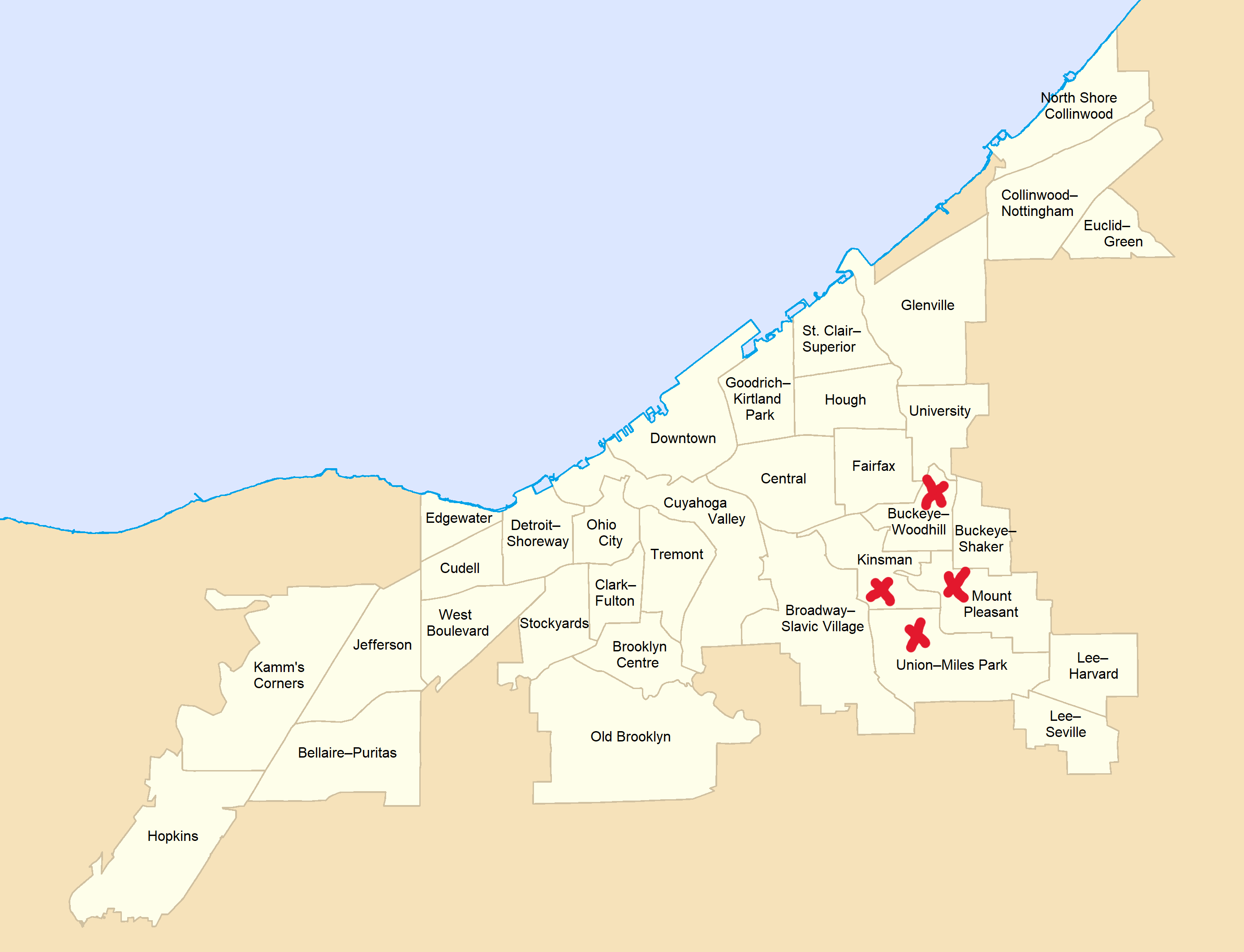 Solution:
Our collaborative project, led by farmers Trey Williams and Aharone Ben Keymah, aims to address the environmental challenges in the Mt. Pleasant, Kinsman, Union-Miles and Buckeye-Woodhill neighborhoods through sustainable agriculture practices. Our two-fold approach encompasses expanding access to sustainable gardening and positives social activities for residents through interconnected pollinator garden installations. We then educate the participants on pollinator identification to encourage them to spend time in the garden observing their insect neighbors.
On the other side of this project, we invite the volunteers and residents along with other local farmers and people in the food system to participate and relax in our bee beds on a regular schedule. The impact of close exposure to Honeybees for our residents, volunteers and especially local farmers may help lower stress levels and increase the economic vitality of their personal projects. This type of therapy is comparable to treatment with horses, dolphins, etc., but is simpler, because sleeping on a bed is easy.
1. Improving Environmental and Social Sustainability:
- Pollinator Gardens and Migration Stations: Our project involves strategically establishing native pollinator gardens and migration stations across the target neighborhoods. This network will create corridors for wildlife and contribute to the overall health of the regional environmental ecosystem.
- Community Engagement: Through planned cohorts and volunteer opportunities, community members will actively participate in creating and maintaining these green spaces. This engagement not only supports the environment but also fosters a sense of community ownership and responsibility. We will encourage participants to start a garden club in the area after or during the project.
2. Studying the Impact of Bee Exposure: - Research Design: We will implement a research study to analyze the effects of bee exposure on volunteer community members. This will involve documenting experiences before, during and after bee bed therapy opportunities.
- Bee Bed Therapy Sessions: Integrating therapeutic sessions involving bee beds, we aim to explore the potential mental health benefits for participating volunteers, residents and local farmers by engaging with bees. This unique approach connects sustainable beekeeping practices with wellness, fostering a holistic understanding of the environment's impact on community health possibly leading to less stress and improved efficiency in the participants lives.
- Data Collection: Gathering qualitative and quantitative data on mental health, stress levels, and overall well-being, we aim to identify potential positive impacts on individuals engaging with bees regularly.
Objectives:
(1) Increase honeybee and general pollinator population within the Mt. Pleasant, Union -Miles, Kinsman, and Buckeye-Woodhill neighborhoods by planting 20 pollinator gardens within the 23-month project period,
(2) Educate approximately 50 neighborhood residents and volunteers on how to grow their own pollinator gardens through two 6-month cohorts (April - Sept),
(3) decrease the barrier to access by providing access to all tools and resources to cohort participants, including but not limited to seeds & seedlings, garden hand tools, containers, labor, etc.,
(4) install 1 bee bed structure with 4 hives for the purposes of wellness therapy studies.
Research
2024/2025 So far, this project has been fun and a big learning opportunity for us. Aharone and I are the leads on this project. We decided to build our Apitherapy beds first because we received our funds later than everyone else. The season was over, and it was getting cold. Aharone took the lead, and we got that structure built over the winter, as you can see in the video.
We then learned that most experts on the subject lived in Eastern Europe. Basically, nowhere near Cleveland, Ohio. We needed to learn as much on our own until we could join an international class from the expert Stefan Stangaciu. Until then, we learned about apitherapy from the YouTube videos and articles he posts regularly. Clean equipment at all times, minimal use of plastics, using all bee product and prioritizing honeybee health to name a few. Only by doing that would we be able to effectively test the apitherapy without an expert near us. We would have to learn to be the experts over time.
The next step was adding sliding trays for the honeybees and adding them to our apitherapy house. We accomplished this on June 5th and 6th of 2025. Check out our videos on installing them.
We made a mistake by not adding the furnishings of the apitherapy to our budget, so we supplemented this by asking participants to bring pillows or other items to help them feel comfortable while participating.
We tested using one apitherapy bed over 4 weekends with 33 participants, including Aharone and me. We started July 24th weekend, then on August 15th, August 22nd, and September 19th. Those results are in the results and discussion.
The weather was not friendly to the bees this year. Weeks of rain followed by weeks of drought.
Our next subject of research in this project involves pollinators and native plant gardens at our neighbors' houses in our area. We will be looking for pollinators
36 Chambers of Apiwellness preliminary - Copy of Copy of Copy of Group pre Bee bed 9_19 36 Chambers of Apiwellness preliminary - Copy of Copy of Group pre Bee bed 8_22 36 Chambers of Apiwellness preliminary - Copy of Group pre Bee bed 8_15 36 Chambers of Apiwellness preliminary - Group pre Bee bed weekend of 7_24
2024: So far no results but that's because we started in the off-season.
2025: We began testing our apitherapy beds, which we call the "36 Chambers of apiwellness."
results are attached. We gathered 33 participants who were farmers, gardeners or residents who lived on our side of town. The ages varied from 7 years old to 83 years old. We asked ten questions. Three before entering the Chamber and seven questions when exiting to document their experience.
Pre-stress levels, Pre-tension levels, pre-anxiety levels. We used a number scale of 1-10 with 1 being little to none and 10 being the highest feeling.
We defined stress as mental strain short term or long term.
We define tension as some sort of physical pain, short term or long term. Examples being headache for short term and sciatica for long term.
We define anxiety as a feeling of fear, dread, unease, and/or restlessness,
Results varied based on the weather, honeybee activity and the sounds of the city. This kept us from having consistent variables, yet we continued on
What we noticed.
People mentioned feeling stress leave their body. One mental health professional mentioned that the bee beds reminded him of EDMR Therapy.
Eye Movement Desensitization and Reprocessing (EMDR) is an evidence-based psychotherapy designed to treat PTSD, anxiety, depression, and trauma by helping the brain reprocess traumatic memories, reducing their emotional charge.
Most people fell into a light sleep, some went to a deeper sleep. Some participants mentions firework like dreams or day dreams similar to a light trance.
Educational & Outreach Activities
Participation summary:
As mentioned above, we started late, so no workshops or articles have been made yet. We have made three educational sheets that we will give our participants who choose to receive native plants, a guide on three things. 1 The plants they are receiving 2 How to care for a garden of native plants 3. Pollinators, they may see. This Spring and Summer we will be able to educate so many residents in our area on our most important neighbors, native pollinators.
We told others about our project using social media including our Youtube Page and word of mouth. We held several tours of our farm, specifically highlighting the testing we did and letting people know that 2026 would be the year we open it up for the public.
We also partnered with the City of Cleveland and impart 216 to host a garden party at our farm, where we collaborated with artists and other community members to inform people of an upcoming mural and to display the 36 Chambers of Apiwellness.
In 2026 we will be more open to the public about our findings and allow open houses to help others gain.
Learning Outcomes
In this grant, we learned that with our small group test of 33 people, bee beds (the 36 Chambers of Apiwellness) do produce some kind of effect on people, particularly when we talk about dreaming and reduced anxiety. Participants almost always reported lower stress, tension, and anxiety post-behavioral therapy. We believe that bee therapy, along with other bee products, should be further tested.
Pollinator gardens will be added to residents' properties in 2026 to end this project. We will be looking for which pollinators visit which flowers with the help of residents. We will also study the effects that residents feel while interacting with pollinators at their property gardens and at the 36 chambers of Apitherapy
Going forward, we are working with professionals in massage and mental health. They can help us bring together mainstream health care and alternative health care. Having Apitherapy at our farm allows for everyone to enjoy time before work to meditate or even to nap during lunch and heal over honeybees safely.
The barriers we are working to overcome in our area concerning mental health are getting lower because we are hosting a therapy that potentially is gentler on the human body. Pollinator gardens will be installed this year and we will be able to report on those pollinators
The advantages of this project are amazing. Having Apitherapy beds and services at our farm means that we have a way to decompress from the stress of farming daily. Even though it a labor of love, stress is still a part of the job and needs to be managed. It also may allow another stream of income if it is invested in properly.
The disadvantages of this project are yet to be seen. But has been hard to build the Apitherapy house because of the fluctuating cost of equipment and the constraints of the grant. We got it built but it took our own personal funds to furnish the Apitherapy house.
If other ranchers are interested in our project or are looking for more information, I would guide them to Stefan Stangaciu in Romania for information on bee therapy and apitherapy beds. You can watch us grow on our YouTube channel. Here is a link to our video with a guest who visited https://youtu.be/LAdw4Kfatsk?si=MneCu5zFQoDcJCDD