Final report for ONC24-140
Project Information
Financial and systemic stressors experienced by small-scale, sustainable farmers can be eased when they are provided with upfront financial support, advanced training, and tailored consultation services. Across the United States, the number of farms continues to decline each year; however, in Iowa, growth in the number of producers and small-sized farms are challenging this national trend. Most of Iowa’s small, sustainable farmers aren’t able to sell at a profit, but we can help remedy this by acquiring information from farmers, then using data to research, implement, and widely disseminate solutions.
This research-focused study, conducted in partnership between the Sustainable Iowa Land Trust (SILT) and the North Central Region Sustainable Agriculture Research and Education (NRC-SARE) program, used data from four small Iowa producers to determine the needs, gaps in knowledge, opportunities, and challenges experienced on their operations. In this partnership, SILT leveraged its diverse network of trusted farmers to perform a needs-based assessment on under-studied table food farms of varied sizes and locations across Iowa.
The four participants documented a full growing season, including inputs, outputs, profits, losses, opportunities, and challenges regarding growing, harvesting, marketing, farmers’ markets, processing, wholesale, safety, equipment, certifications, storage, and preservation. Data was gathered from participants using intermittent surveys, document submissions and farm visits. Educational materials and connections to agricultural consultants were then arranged and shared to fill gaps identified from the responses.
From assessing these four participants, SILT identified that action reinforcing farmers’ strengths is required to improve the future of Iowa’s local food systems. Findings supported that farmers’ growth and viability was constrained by labor shortages, high initial financial risk, climate uncertainty, and limited access to specialized business and infrastructure support. Based on these findings, three out of four participants received personalized consultations and access to resources that they cited improved their farm and business efficiency.
- Perform 4 needs-based operation and market evaluations of SILT farms
- Determine at least 5 specific, actionable gaps in farmers’ skills, practices, knowledge, awareness, and attitudes
- Develop at least 3 new online/print educational packets for farmers that respond to these gaps
- Share new material with at least 2,500 Iowans, including 100 farmers
- Organize 3 training sessions with partner organizations specializing in business operations
- Host at least 25 farmers/agricultural professionals at each training session
- Write and publish 1 white paper on the study
- Develop at least 1 meaningful partnership in each Iowa quadrant that contributes to a sustainable food network
Cooperators
- (Researcher)
Research
The Farm Coordinator contacted small farmers within SILT’s wide circle of producers to gauge interest in participating in the study. This was essential because land access is one of the largest initial barriers to farming, so SILT ensured operations had already overcome this overwhelming challenge, whether they rented or owned the land. In this way the study could give a more detailed look at problems that occur after acquiring land. Other qualities sought were farms that used regenerative, organic, or non-commercial farming practices to produce edible food. Participants were chosen based upon the range of diversity in production, scale, and location provided to cover the wide spectrum of “small” and sustainable farming. The farmers chosen operate on land ranging from 2 acres to 170 acres. They will be referred to as participant A, B, C, and D, and all attributes described here are detailed in an attached Table. Participant A is a landowner while the other three are renters. Participants A – C are farming various small crops of fruits and vegetables. Participant B farms livestock including highland cattle, grazing sheep. Location and climate were also considered, with farmers selected from Northern, Central, Southeast, and Southwest Iowa.
This table provides basic information on each of the four participants, including what part of Iowa they are in, what products they produce, the acreage of their farm, how many full-time workers they have, how long they have been farming, and the duration of time they have been on their specific operation. *Participant B and C have recently moved or expanded the areas that they farm on. Participant B now has a total of 170 acres. **Participant C was able to acquire a second full time farmer while the study was under way.
| Participant A | Participant B | Participant C | Participant D | |
| Region | Central | Southwest | Northeast | East Central |
| Farm Product | Fruits, Vegetables, Chickens | Highland Cattle, Sheep | Flowers, Vegetables | Vegetables |
| Acres | 80 | 60 -> 170* | 17.5+* | 2 |
| Land Status | Owner | Renter | Renter | Renter |
| Years Farming | 15 | 4 | 5 | 6 |
| Years on Operation | 4 | 2 | 3 | 2 |
| Full Time Workers | 2 | 1 | 1+1** | 1 |
Along with an initial farm visit on site of their operation, participants provided data in three survey forms at the beginning, mid point, and end point of the study via Google Forms. Pictures were also taken on farm visits or provided by the participants when possible. The initial survey contained 14 questions and was sent out on April 20th, 2024. The six-month survey contained seven questions and was sent out on September 30th, 2024, and the final survey contained eight questions and was sent out on November 24th, 2025.
Survey questions asked satisfied four general categories:
• Background/Demographics - Asked for general information about their operation, i.e. how long they have been farming, certifications, what they produce, and sustainable implementation.
• Market Evaluation - Asked about their business plan, where they sell their products, how they market them, and their financial outlook.
• Farmer-Identified Challenges - Questions directly asking what participants struggle to acquire/achieve in their daily operations.
• Farmer-Identified Opportunities - Questions directly asking what participants find successful about their farms and what they cite would support this success.
The participants did not request guidance on farming skills, so we determined that the education and outreach to be conducted would focus on sharing information with a greater community of agricultural professionals. Based on the feedback from the surveys, we put together a two-part series of webinars where agricultural organizations could present and disseminate awareness and resources on how they can aid farmers on the most pressing topics specified. We also created a printed pamphlet that summarized the webinars’ information.
As farmers multiple seasons into their experience, the participants showed more interest in individualized and specialized assistance, so we determined that their needs would be more effectively addressed that way than in a one-size-fits-all training session. Participants cited services and consultants that they wanted to utilize to improve their operation, and the increased stipend we provided helped secure each service for them.
List of Questions from Each Survey
One Month SARE Survey Questions & Responses
Six Month Survey Questions & Responses
Final Survey Questions & Responses
A component we’d like to discuss first is that Participant D was unable to continue farming for a multitude of reasons. They primarily grew produce for a local restaurant chain, where they farmed on land owned by the same owner of these restaurants. They cited a lack of support from the landowner and subsequent underutilization of produce grown for consumers as the main inhibitor to continuing. The participant was the only full-time worker on the farm and would occasionally have two to three volunteers help with weeding, planting, and harvesting. In addition to the restaurants, this farmer sold their produce at the Iowa City Farmer's Market, but a combination of a lack of consistent labor and underuse of product by the landowner made selling a majority of it improbable. Participant D’s data for the first six months of research is included in these results.

According to previous studies, a small farmer’s first five years is the time their operation is most likely to exit production before the 40-year mark (Katchova, 2017). All four participants’ operations are within this initial window, and it is notable that one of the four was a part of this production exit statistic. Although Participant D was in a more unique land use situation than the other participants, attributes of their operation align with established studies on farm survival and failure, where growing most of their produce for an intermediary entity and being a farmer in a marginalized social group, as well as being in the second growing season on the operation all may have influenced their exit from farming (Key, 2022).
Participant D specifically cites the causes for leaving as a lack of labor, dependence on sales that were not direct to customers, and general lack of support while experiencing overwhelming difficulties. This instance highlights how detrimental these challenges can be to an operation and how essential it is for these farms to have stable and clear access to land and more than one dependable worker outside of occasional volunteers to help ease the burden of labor.
Farmer Identified Challenges
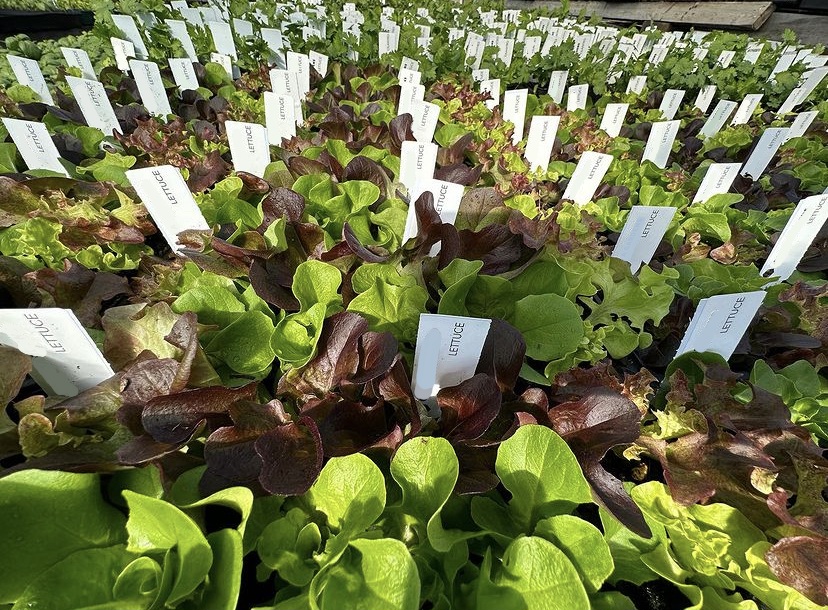
The most recurring issue amongst participants was the amount of time and labor they must invest in their operations. The fruit and vegetable growers use low to no till practices, and the livestock farmer uses rotational grazing. These practices are important to the participant’s values and the high quality of their products; however, they are deeply involved processes as a result. This is why labor is cited by multiple participants as the most troublesome issue when asked “What has been most difficult this growing season?”.

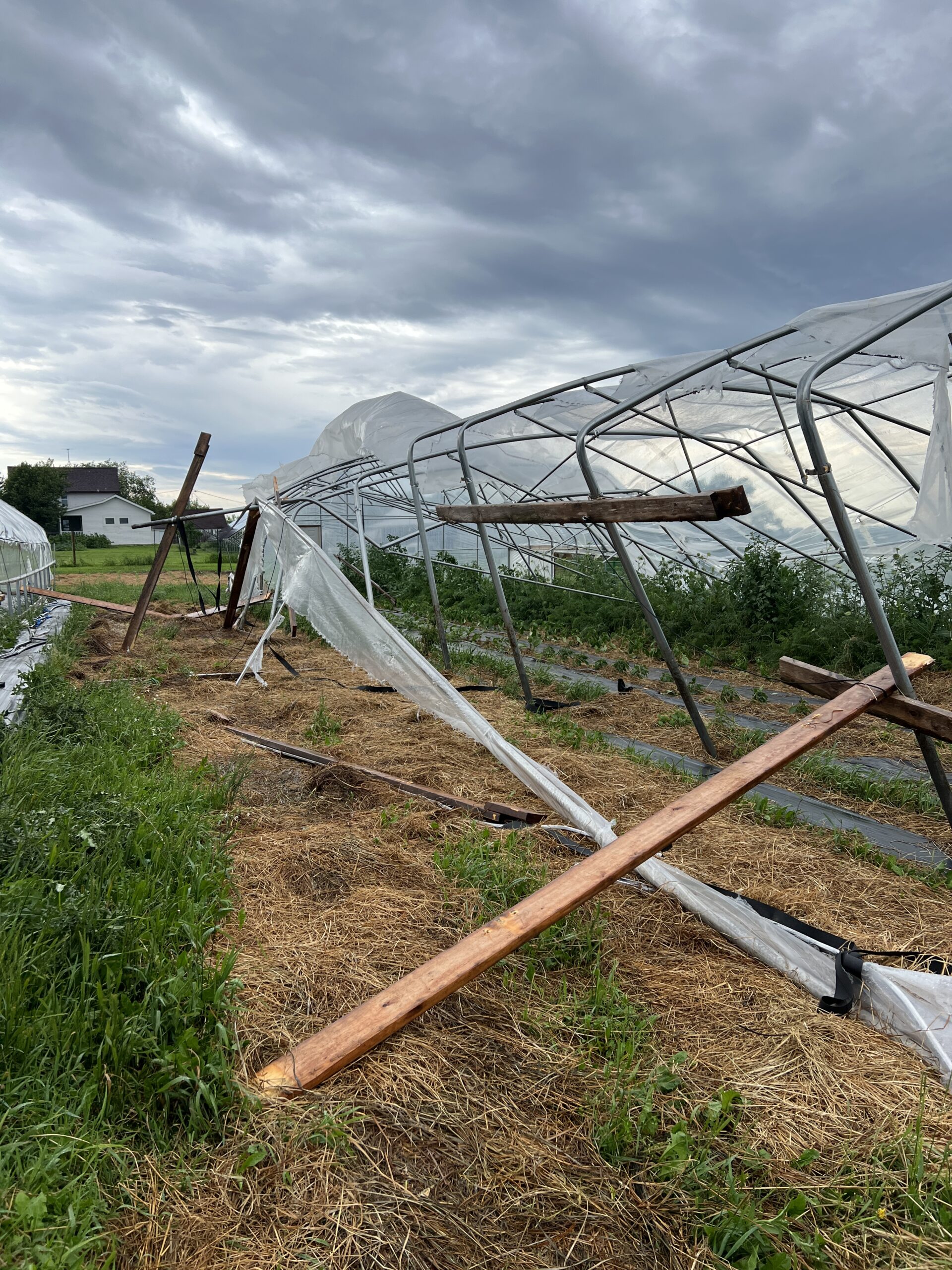
Some participants cited being beholden to weather and unpredictable climate conditions as a constant setback to be mindful of. For the growing season within the duration of this study, Participants B and C significantly altered their operation due to unexpected or abnormal weather conditions, and Participants A and C reported being able to recover from weather-related delays with minimal negative impact
Market Evaluation Questions
When asked about why they are dedicated to farming sustainably, all four participants reported a certain pride and peace of mind in producing food for their families and community along with the positive impacts it has on people and the climate at large. Regarding official certification of their practices, Participants A and C are Certified USDA Organic, but there were varying levels of interest in the value of being certified. Participants A, B, and D all expressed that USDA Organic Certification is not of great importance, suggesting other types of certification that may be more beneficial. Participant C’s USDA Organic Certification helps them with wholesale.
In inquiring about market trends and business plans, all participants reported that they update their business plans often, and most were interested in improving skills in business software and seeking financial advising. Direct to customer sales are the most popular method of sale among participants. Participants A through C primarily use social media (Facebook and Instagram) to market their farm and products, along with their own websites.
By the six-month survey, every participant reported steady or improving business traffic for the season. Participant C saw a 47% increase in farmer’s market sales compared to the previous season due in part to moving to a bigger farm and securing an additional person to work full-time instead of just one. Each participant recorded their income and expenses in different forms, where some incorporated outside income in their reports while others did not. This made a standard way of evaluating the farms complex as they don’t all account for the same kinds of information. Participant C uses Quickbooks, and others are interested in training on the software but cite time as a difficulty in getting there. From the financial documents the participants shared, it was observed that all farms experienced small profit margins due to high expenses. The participants’ operations started making profit from a range of three to six years after starting, with Participant D not yet profiting in the operation’s second year.
When asked how much time and money participants were reinvesting into their operation for upkeep and goal attainment, Participants A through C expressed that most, if not all, of the profit they make goes back into the farm. The most common areas of investment were cover crop seeds and fertility.
Farmer Identified Opportunities –
Specialized Development & Professional Consultation
After initial data collection, it was determined that individualized assistance tailored to the participants' needs would be more effective than a one-size-fits-all training session. There were a variety of ways each participant wanted to learn new skills and information, with some preferring in person and hands on experiences, while others preferred having online resources they could reference at any time and access while multi-tasking. Materials such as the webinars that SILT hosted were cited as great tools to help beginning farmers, but as farmers multiple seasons into their experience, the participants needed “deep dives into particular techniques” especially those that were business related (Participant C). In citing an exact need, each participant requested assistance that SILT helped secure. The results of this study align with other agricultural research in observing how upfront financial investments are utilized by farmers, which may provide justification for future dedication of such funds.
On the topic of equipment, the participants shared that they have obtained most of the tools they need for everyday processes, and the only notable implements that could be upgraded are cold or drying storage and processing spaces that require a large upfront investment.
Discussion
A recent Journal of Agriculture and Applied Economics study suggests that a farm’s success is indicated by growth and survival for its first five seasons, where a farmer’s failure is more likely if they (a) did not receive funding from agricultural programming, (b) did not sell products directly to customers,(c) produced only niche commodity goods, and (d) were a part of a marginalized social group (Key, 2022). Our results are in line with these findings, as the challenges our participants cited have little to do with access to tools or generalized farming knowledge and more to do with financial input and sales capacity.
By surveying four small, sustainable farmers around the state of Iowa, this study determined that major challenges they all experience center around:
• Reasonable investment of time and labor in their operation.
• Easing the high financial cost of running their operation.
• Accessing specialized training and consultation on business operations.
Major opportunities for improvement and reinforcing success are found in the general increase in demand and business traffic in direct to customer and wholesale operations. Where local demand for their produce is exceeding small operations’ capacity to produce, a suitable way to accommodate this growth is funding to expand the operation physically or improve production efficiency. Even though large commodity
operations receive the majority of federal benefits, direct payments from agricultural programs still contribute to small farms’ growth, as it is found that they are more likely to continue operation if they receive some funding.
Educational & Outreach Activities
Participation summary:
Based on the information gained from the four participants’ initial one month survey, SILT held two 1.5-hour webinars featuring presentations from various agricultural organizations and professionals in Iowa to disseminate information that would be useful to a wider audience of farmers.
The first webinar was held on October 5th, 2024, and featured 5 speaker presentations about services available to small and sustainable farmers on a variety of topics from business product differentiation to urban agriculture. General information on services provided by different organizations was presented by the Center for Energy & Environmental Education (CEEE) at University of Northern Iowa, Eat Greater Des Moines, Healthy Harvest of North Iowa, LSI Global Greens, and Iowa Valley RC&D. There was also a presentation from a guest farmer, Brady Folkestad, who focused on what markets and business model he operated with.
The second webinar was held on March 26th, 2025, and had a more specific focus about methods of food hub value chain coordination, you-pick harvesting, and locating funding sources. It featured longer presentations by three presenters: Kim Andersen of Blueberry Bottom Farm, Beth Romer, a Program Director of Choose Iowa, and Teresa Wiemerslage from the Iowa Extension Food Hub Managers Working Group.
Both recordings of the webinars are posted on SILT’s Youtube channel and have garnered a combined 162 views at the time of submission. These recordings were shared with those who registered and the presenters’ organization networks. The first webinar had 68 live attendees and the second webinar had 35 live attendees, with 27 individuals who registered, but could not attend. The recordings were also shared via the SILT monthly newsletter, which has over 2500 subscribers.
Print material was created by compiling resources beneficial to beginning farmers into a pamphlet utilizing information from both webinars. 500 copies of the pamphlet were printed and distributed at summer farmers markets and events from June to September 2025 by collaborator and SILT State Coordinator, Katie Das. Events included the Valley Junction Farmers Market in Valley Junction, In Harmony Farms in Earlham, the Women in Agriculture Conference in Ankeny, LSI Global Greens Farmers Market, and the Iowa Farmers of Color Cookout event.
A white paper detailing the background, analysis, results, and discussion from this study was written to present the information comprehensively for public reception. It is intended to inform agricultural professionals and organizations on the state of small, sustainable farms in Iowa based on the four participants' survey data and previous studies.
The webinars, pamphlet, and written paper are all attached to the Information Products section of this report.
Learning Outcomes
Improved analytical marketing strategies
Value of self-evaluation of their operation beyond this project
Improved grazing methodology for sheep and cattle
Project Outcomes
- Participant A expects their water use efficiency to improve because of the sprinkler system purchased in service of this project.
- Participant B expects their soil and pasture quality/longevity to improve due to the information and connections they have obtained on grazing techniques from a consultation facilitated by this project.
- Participant C utilized the Magic Marketing Machine, a marketing strategy service, to purchase an email audit for analyzing customer subscriber interaction. They cited that it was helpful in getting the operation organized.
- The webinars we hosted are available for reference for future farms beginning a sustainable operation and offer insight even as resources evolve, because the agricultural professionals involved provided program contact information in their presentations and can provide updated information.
- The White Paper produced as a result of this project provides context on the social standing of our participants as small, sustainable farmers in Iowa and their experiences. From its conclusions, programming and resources can be reinforced or created to improve the experiences of sustainable farms in the future.
All educational material created and consultations utilized contribute to increasing the chances of operating farms for the long term, for our group of participants and farmers that received outreach.
- Participant A, a vegetable farmer in Central Iowa, noted this about the project and survey process: “It’s always good to dive in to the numbers and think about some of these questions. The financial support to growers is also very helpful! Finding creative ways to help growers get the resources and extra assistance is always helpful!”
- Participant B, a livestock farmer in Southwest Iowa, stated, “I think this has been a great way to actually look at my costs and compare to what I actually need to start profiting in order to succeed as a business. It also connected me to Grazemaster which will be a useful tool going forward.”
Further research should be conducted to replicate and refine this study’s outcomes with more farmers, possibly in other locales. Utilizing our findings alone, many projects aimed at supporting farmers can be organized. One potential direction could have the objective of creating a centralized, regularly updated online database of funding programs, grants, and support services within the state of Iowa. Another future research direction could investigate where farmers currently find their volunteers and employees and improve upon the process.