Final report for ONE24-440
Project Information
This project evaluated the occurrence of Clostridium spp. and mycotoxins in total mixed rations (TMR) and corn silage on dairy farms in Maryland and assessed feeding management practices associated with contamination risk. The goal was to generate applied, farm-level data and provide actionable feedback to improve feed management, animal health, and farm sustainability.
A comprehensive needs-assessment survey was mailed to all registered Maryland dairy farms (n = 293), resulting in 56 completed responses. Survey data were analyzed using descriptive statistics and multivariate approaches to identify statewide trends and producer segments related to feed management and contamination awareness. Based on survey responses and producer interest, 30 dairy farmers participated in on-farm engagement, which included two farm visits and collection of TMR and corn silage samples. Samples were analyzed by a commercial laboratory for chemical composition, Clostridium, and mycotoxins.
Results revealed substantial variability in feeding practices, feed quality, and contamination risk across farms, confirming that visual feed assessment alone does not reliably identify microbial or mycotoxin-related risk. Individualized benchmarking reports allowed producers to compare their results with aggregated statewide data and identify specific management practices associated with elevated contamination risk. Farmers reported increased awareness of feed safety issues, improved confidence in interpreting laboratory results, and greater attention to feed handling, storage, and feed-out management practices.
The project demonstrated that combining a statewide survey with targeted on-farm sampling and individualized reporting is an effective Extension approach for identifying feed contamination risks and supporting informed management decisions. The results were considered useful by participating producers and agricultural service providers, as they translated complex laboratory data into practical, farm-specific recommendations.
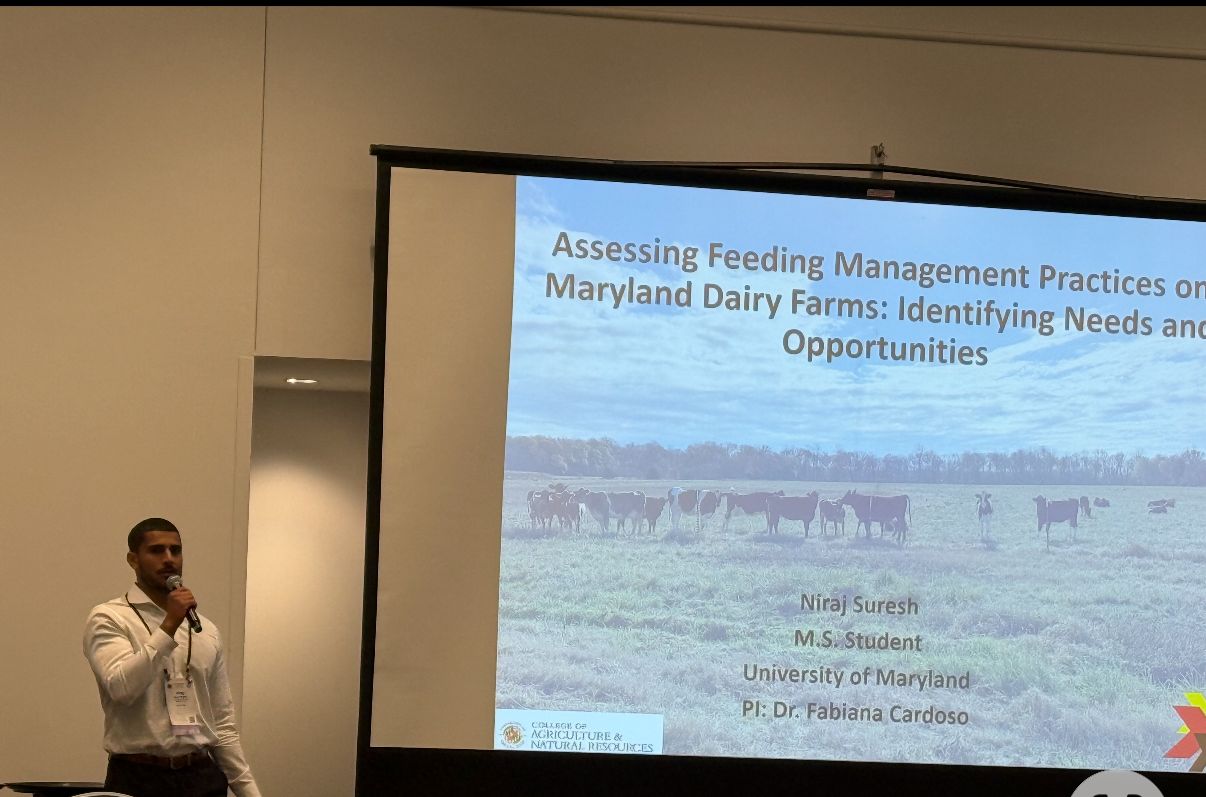
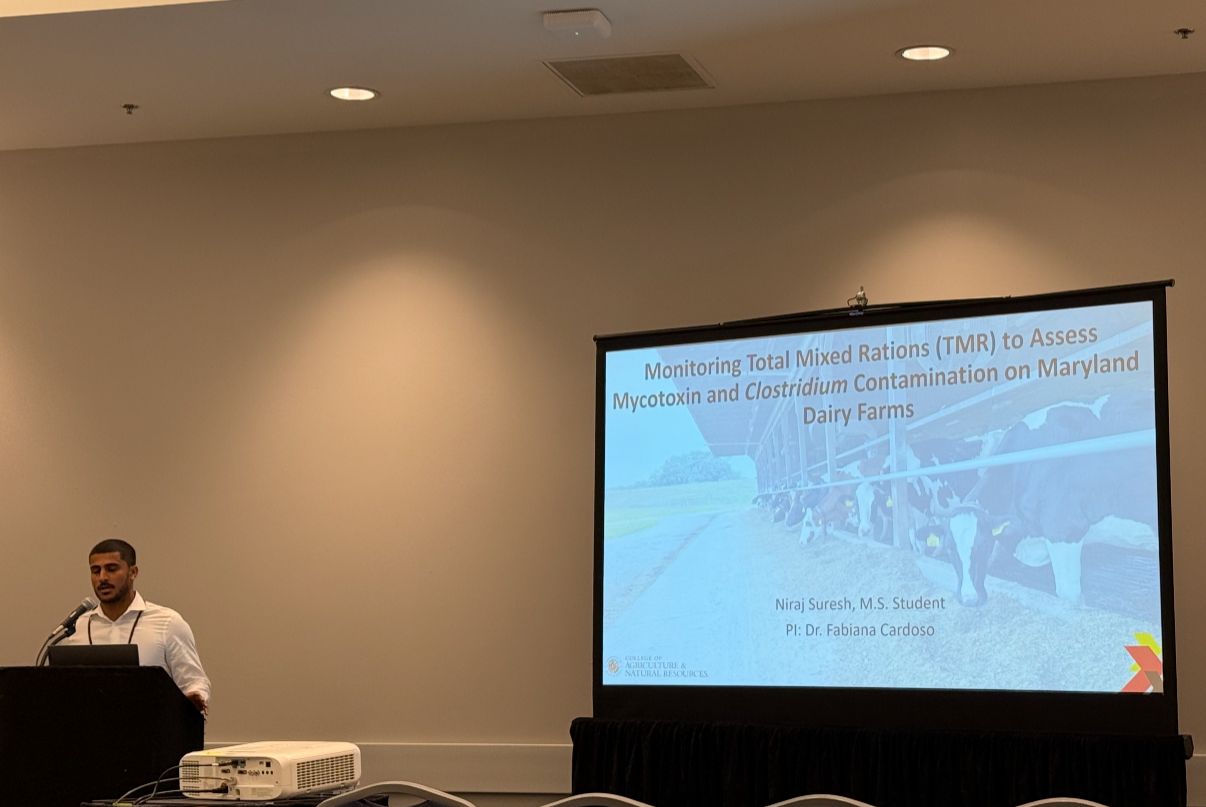
Outreach activities reached dairy producers and agricultural service providers through individualized farm reports (30 farms), Extension publications including an article in The Delmarva Farmer, presentation of results at the University of Maryland Cornerstone event, submission of conference abstracts, and invited professional presentations, collectively reaching local, regional, and international audiences.
This project seeks to address the problem of mycotoxins and Clostridium contamination in TMR samples through a comprehensive research and outreach strategy. We aim to: (1) Assess Occurrence of Clostridium and Mycotoxins in TMR: We hypothesize that the source of contamination of Clostridium and mycotoxins in TMR is due to the conditions and management practices adopted on the farm. The project will involve visiting 30 commercial dairy farms in Maryland to collect TMR samples. The selection of farms will be based on a survey identifying those experiencing challenges with Clostridium or mycotoxin contamination. From these farms, TMR samples will be collected and analyzed to determine the presence and levels of Clostridium and mycotoxins, providing crucial insights into the extent of contamination in dairy cow diets; (2) Establish Effective Forage and TMR Management Practices: Based on the findings from the analysis, the project will work towards establishing effective forage and TMR management practices for controlling Clostridium and mycotoxin contamination. This may involve recommendations for proper harvesting techniques, storage practices, and the use of mycotoxin binders to mitigate risks to animal health and safety; (3) Understand Impact on Animal Health, Performance and Reproduction: By analyzing the collected TMR samples and correlating them with health, performance, and reproduction data gathered from the farms, the project aims to follow the farms over the course of the project (years 1 and 2) to be able to associate the level of contamination with the performance and health status of animals.
Clostridium contamination is a reality in feeds used for animal diets and in the farm environment (March et al., 2018). The occurrence of Clostridium in dairy farms is a concern for dairy producers because their spores can contaminate the soil, animal feed, TMR, and feces (Bermúdez et al., 2016a), which could contaminate raw milk (Borreani et al., 2013). When spoiled silage is included in the TMR, it contributes mostly to the increase in spore content of TMR and consequently increases animal's exposure to Clostridium (Borreani et al., 2019). Consumption of clostridia and its products in poor quality fermented feeds have been reported to negatively impact the rumen environment and dry matter intake (Driehuis et al., 2018; Zucali et al., 2014). One of the most prevalent bacteria detected in dairy farms is C. perfringens, (March et al., 2018). Under certain conditions and predisposing host factors, certain species (spp.) can produce potent toxins and cause disease (Songer, 1996). Managing Clostridium prevalence in animal feeds is important to prevent its negative impacts on animal health, performance and reproduction.
Similarly, forages can be contaminated with several mycotoxins in the field pre-harvest, during storage, or after ensiling during feed-out. Exposure to dietary mycotoxins adversely affects the performance and health of livestock and can compromise human health. These toxins, produced by molds such as Aspergillus and Fusarium, can cause health issues in dairy cows, including reduced feed intake, decreased milk production, and even acute illness (Ogunade et al., 2018). Addressing this problem requires implementing strategies like proper harvesting techniques, monitoring feed ingredients, and using mycotoxin binders to ensure the safety of dairy cow diets and protect both animal and human health.
Top of Form
To address this issue, our project aims to select farmers that are facing Clostridium and or mycotoxins challenge and provide support by offering comprehensive analysis services for detecting Clostridium and mycotoxin contamination. These services are often expensive and inaccessible to many farmers, so offering them will help farmers identify and address contamination issues on their farms. By analyzing farm records, we will gain insights into how the prevalence of Clostridium and mycotoxins may affect dairy cows’ health, performance, and reproduction, allowing us to implement management strategies to mitigate contamination effectively. By identifying potential sources of contamination and establishing effective management practices, the project will contribute to the resilience and sustainability of dairy farming in the Northeast region. Working closely with farmers, we will develop and implement best management practices to reduce Clostridium and mycotoxin contamination in animal feeds. In addition to implementing best management practices, we will disseminate educational materials to promote accessibility and equity in agricultural knowledge and resources. This outreach effort will empower farmers with the tools and information they need to address contamination challenges effectively and ensure the sustainability and economic viability of their operations. This approach will involve analyzing TMR samples (Dry Matter, Clostridium, Enterobacteria count, mold and yeast count with ID, Basic Mycotoxins (AFL/DON/T2/ZEA), Starch, in situ 7 hour Starch Digestibility , and NIR measures for the comprehensive nutrition package), collecting data records (milk yield, milk components, feeding management, stock rate, percent of herd pregnant by 150 days in milk (DIM), percent of heifers bred and percent pregnant at 15 to 17 months old, percentage of abortions in heifers and cows, and health parameters), and engaging with the farming community to raise awareness and promote sustainable agricultural practices. Ultimately, our project aims to improve the safety and quality of animal feeds, leading to enhanced livestock health and productivity while reducing the risks associated with contaminated feeds in Maryland's dairy farming industry.
The agricultural industry needs effective solutions to address Clostridium and mycotoxin contamination in animal feeds. Farmers face significant losses due to decreased productivity, veterinary expenses, and potential market rejections of contaminated products. Potential results from our project could improve feed production practices and benefit farmers in several ways. Quantifying the economic, social, and environmental impacts of these potential results is crucial for demonstrating the significance of our research. For instance, reducing feed contamination can lead to higher livestock productivity, decreased veterinary costs, and increased market acceptance, resulting in improved farm incomes and profitability.
Expected Impact on Sustainable Agriculture: Our proposed solution aligns with the goals of sustainable agriculture in the Northeast region by addressing two aspects of sustainability: (1) Reduction of Environmental and Health Risks: By mitigating Clostridium and mycotoxin contamination in animal feeds, our project aims to protect animal and human health and decrease feed waste. This contributes to the overall sustainability of agricultural practices by promoting safer and more environmentally friendly feed production methods; (2) Improved Productivity and Cost Reduction: By enhancing feed safety and quality, farmers can expect improvements in livestock productivity and health, leading to reduced costs associated with veterinary treatments and losses due to contaminated products. This increase in efficiency and profitability contributes to the economic viability of farming operations. By advancing current knowledge and developing effective mitigation strategies, we seek to promote sustainable agriculture in the Northeast region, aligning with the goals of Northeast SARE's outcome statement.
Cooperators
Research
|
Time Period |
Activity |
Duration |
||||
|
March 2024 |
Develop Survey: Electronic survey was created to assess dairy producers' concerns and interest in the program. |
Completed |
||||
|
April 2024 |
Distribute Survey: Send out electronic survey to dairy producers via Maryland Extension email lists and social media channels. |
Completed |
||||
|
May 2024 |
Survey Analysis: Analyze survey responses to identify farms experiencing challenges with Clostridium or mycotoxin contamination. |
Completed |
||||
|
June 2024 |
Selection of Farms: Choose 30 commercial dairy farms in Maryland based on survey results to participate in the project. |
Completed |
||||
|
August 2024 |
Meet with partner farmer and TMR Collection (First farm visit): Visit selected farms to collect TMR samples. |
Completed |
||||
|
August 2024 |
TMR Analysis (First farm visit): Ship TMR samples to testing facility for analysis of Clostridium and mycotoxin contamination. |
Completed |
||||
|
October – January 2025 |
Data Analysis (First farm visit): Analyze TMR analysis results and correlate with management, health, reproduction, and performance data gathered from farms. |
Completed |
||||
|
February 2025 |
Educational Materials: Develop and distribute educational materials on Clostridium and mycotoxin management to participating farms. Abstract submission for ADSA meeting to present partial data |
Completed |
||||
|
June 2025 |
TMR Collection (Second farm visit): Repeat TMR collection process at the same 30 farms. |
Completed |
||||
|
June- April July |
TMR Analysis (Second farm visit): Ship TMR samples to testing facility for analysis of Clostridium and mycotoxin contamination. |
Completed |
||||
|
July - August 2025 |
Data Analysis (Second farm visit): Analyze TMR analysis results and correlate with management, health, reproduction, and performance data gathered from farms. |
Completed |
||||
|
August 2025 |
Educational Outreach: Disseminate project findings and provide training on effective management practices. |
Completed |
||||
|
September - October 2025 |
Report Preparation: Compile final reports summarizing project findings and recommendations for participating farms. |
Completed |
||||
|
November 2025 |
Report Distribution: Provide final reports to participating farms and other stakeholders. |
Completed |
||||
| January 2026 | Finalized and submitted all required project documentation and reports and completed a comprehensive evaluation of project outcomes. | Completed |
Results and discussion
What we measured, observed, and uncovered
1) Needs assessment: statewide survey of Maryland dairy producers
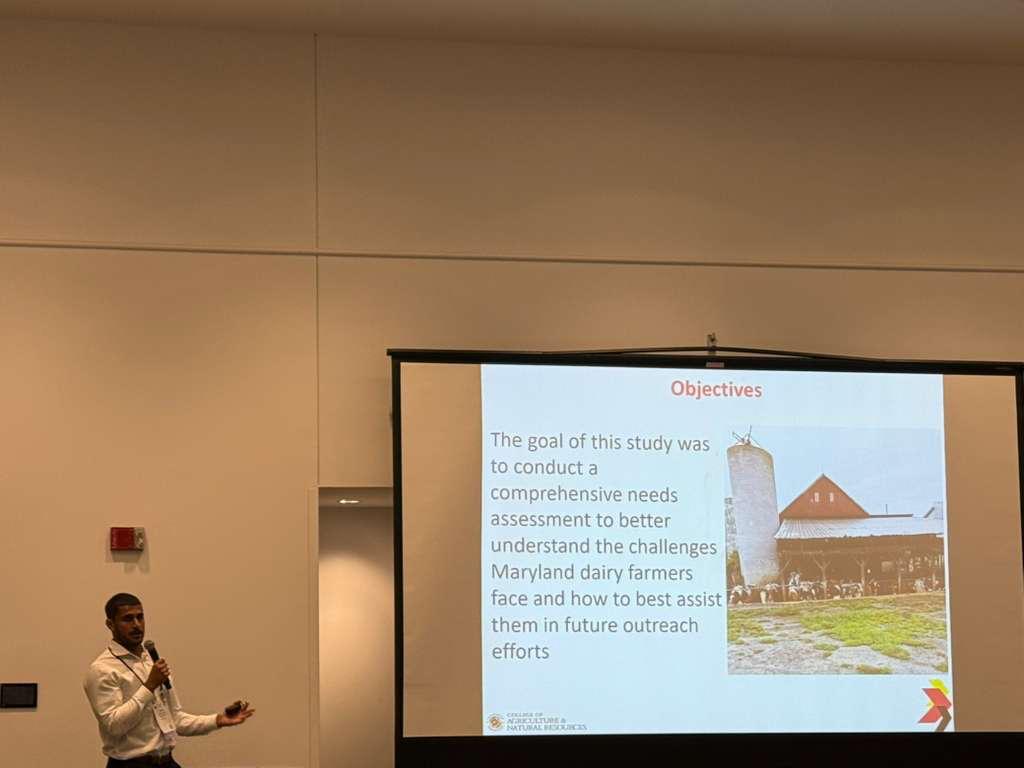
To understand how Maryland dairy farms manage feed and where the highest Extension needs exist (with emphasis on mycotoxins and Clostridium risk in silage/TMR), we conducted a statewide mailed survey using a structured needs-assessment framework.
What we measured (survey design and reach)
-
Population and delivery: The survey was mailed to all registered Maryland dairy farms (n = 293) on June 7, 2024, using a mailed invitation, a six-page survey instrument, and a prepaid return envelope, followed by a reminder letter to non-respondents.
-
Survey content (key domains): Questions captured (i) herd and production context, (ii) feeding/forage and TMR management, (iii) producer knowledge and experience with mycotoxin and Clostridium contamination, (iv) perceived needs/opportunities, and (v) willingness to participate in follow-up sampling (TMR for mycotoxins/Clostridium and corn silage for composition).
-
Responses: We received 58 completed surveys (39 from the first mailing + 19 after the reminder).
-
Data handling: Responses returned by mail were manually entered into Qualtrics and analyzed in R.
How we analyzed the survey data
Because the goal of this project was needs identification (not hypothesis testing), we used descriptive multivariate analytics to reveal patterns across farms:
-
Principal Component Analysis (PCA) and Hierarchical Clustering on Principal Components (HCPC) were used to identify groups of farms with similar management profiles and feed-safety awareness.
-
Clusters were differentiated primarily by knowledge/concern about mycotoxins and Clostridium and silage quality perceptions, with supporting associations for variables such as breed and education.
-
Importantly, results were interpreted as patterns of association appropriate for exploratory needs assessments, rather than formal significance-threshold-driven inference.
Key observations from the survey (needs and opportunities)
-
Wide variability in feed-safety awareness: The clustering results showed a clear gradient from farms with low knowledge/concern to farms with high knowledge/concern about contamination; Cluster 1 reflected the lowest awareness and engagement, while Cluster 4 reflected the highest.
-
Forage and silage management are central across farms: Corn silage was used broadly among surveyed farms that were not exclusively grass-fed.
-
Current practice adoption suggests leverage points for Extension: A majority of producers reported using silage inoculants (67%), indicating strong openness to management tools, while simultaneously reinforcing the need to align inoculant use with feed hygiene and contamination prevention.
Together, the survey results documented that (1) contamination awareness is not uniform across the state, (2) farms differ substantially in readiness to adopt/maintain best practices, and (3) Extension efforts benefit from segmentation (tailoring education and technical assistance to distinct producer profiles).
2) On-farm engagement: farm visits, sampling, and producer reporting (mycotoxins and Clostridium focus)
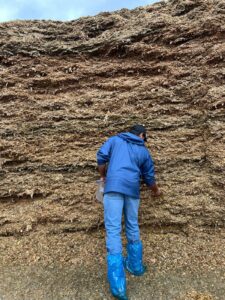
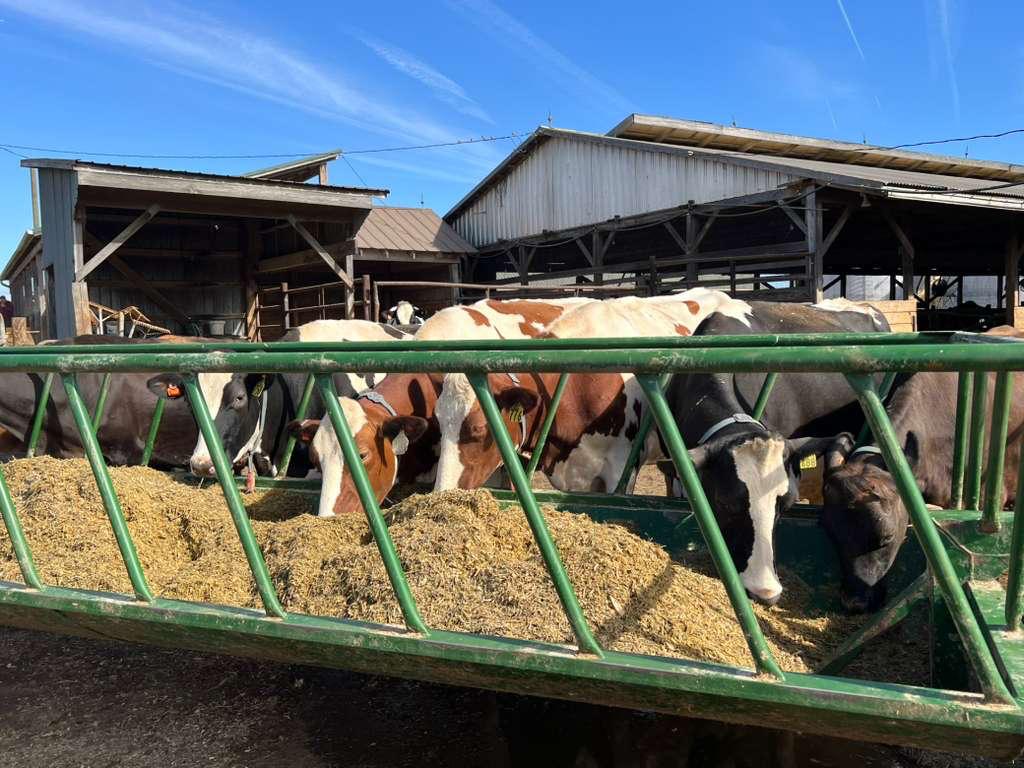
Following survey-based identification of needs and producer interest in sampling, we conducted two on-farm visits engaging 30 Maryland dairy farmers total, with a focus on practical feeding management, contamination risk points, and farmer decision-making.
What we measured (field + lab components)
-
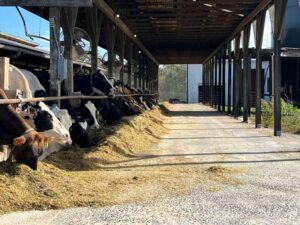
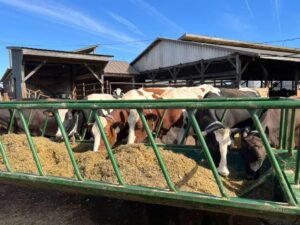
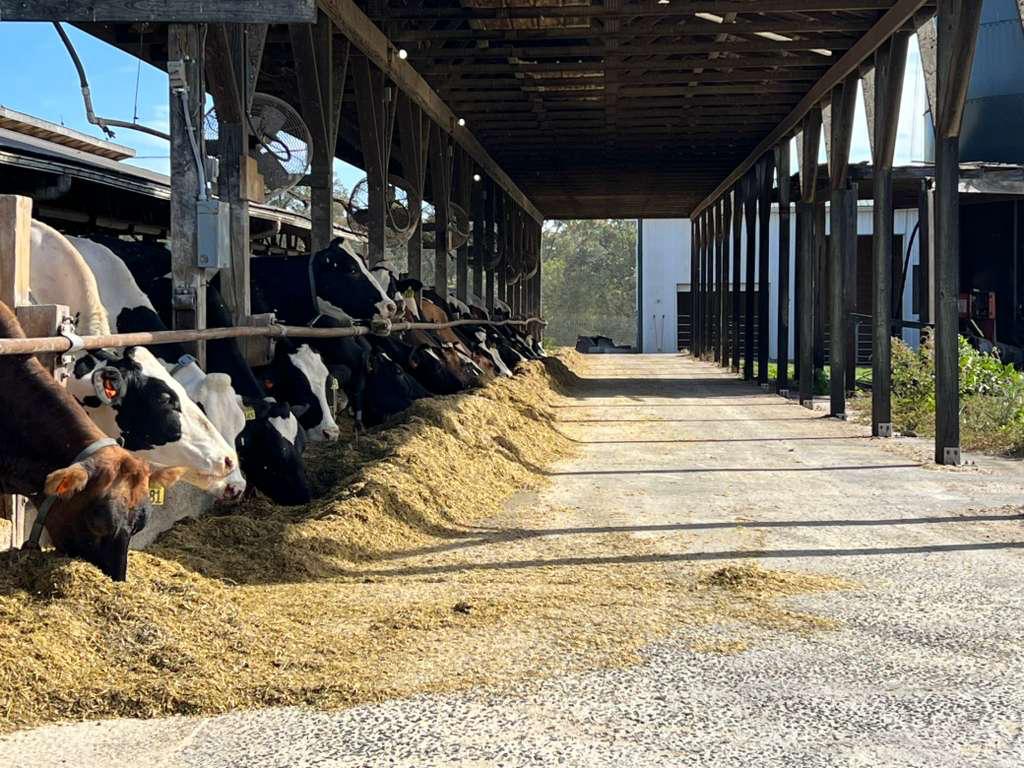
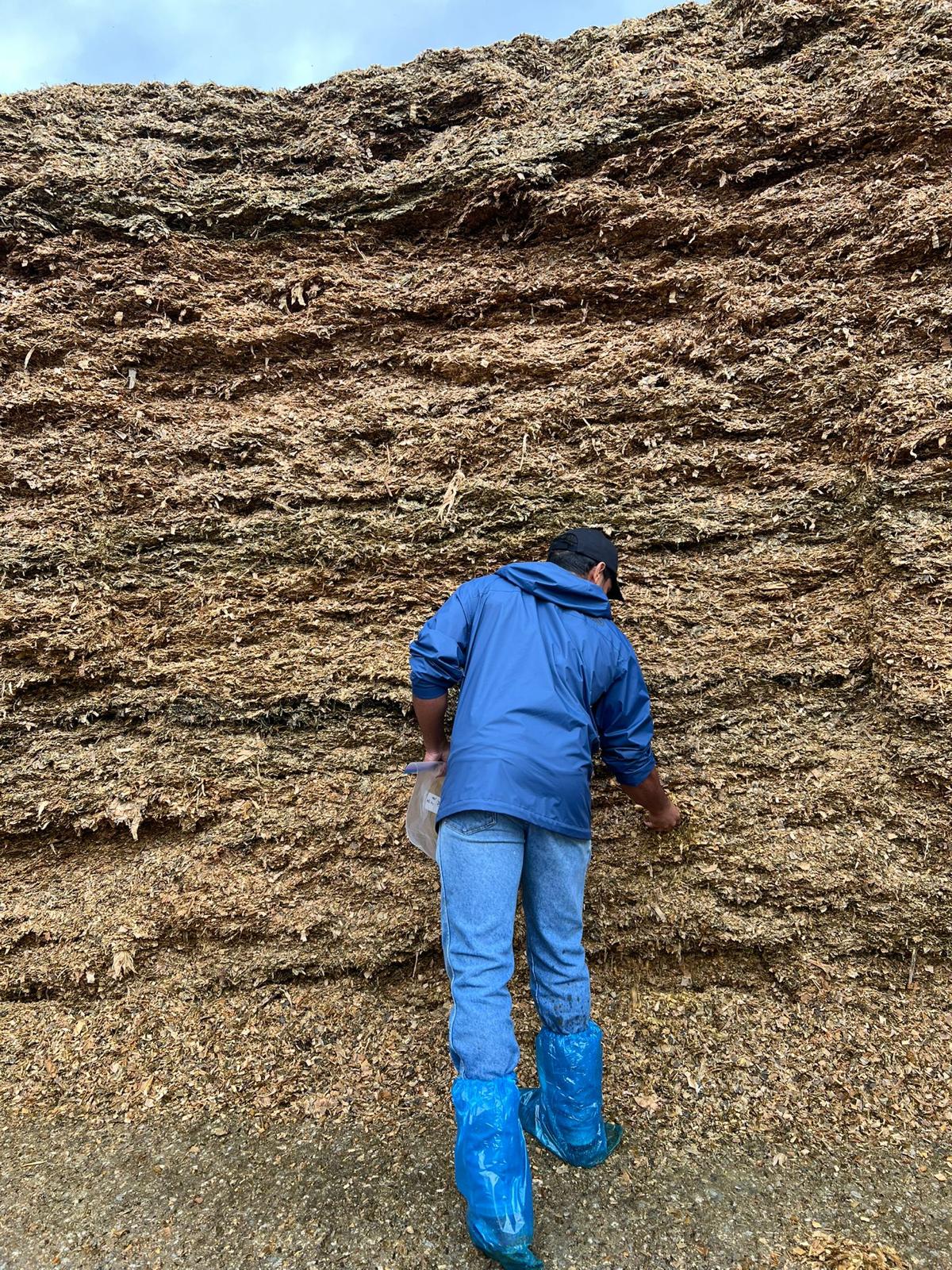
Farm management practices (direct observation + producer interview): During visits, we documented feeding routines, TMR handling, storage conditions, and points where contamination risk is most likely to occur (e.g., feed-out face management, refusals handling, equipment hygiene, and bunker/bag practices).
-
Sample collection:
-
TMR samples were collected for chemical composition and analysis of mycotoxins and Clostridium (including targeted indicators relevant to feed hygiene and potential animal health risk).
-
Corn silage samples were collected for chemical composition to contextualize ration inputs and forage quality.
-
-
Laboratory testing: All samples were submitted to a commercial laboratory for standardized analysis, enabling consistent benchmarking across farms.
What we observed during farm engagement (practical, “real-world” findings)
-
Producers were highly receptive to the sampling-and-feedback model, especially when results were translated into actionable steps (e.g., what to change tomorrow, what to monitor weekly, and what to test seasonally).
-
The visits reinforced what the survey showed: some farms already actively monitor risk, while others primarily rely on visual appraisal and “historical experience,” underscoring the need for practical, non-burdensome monitoring tools and clear decision triggers.
Farm reports
-
Reporting format improvements: We refined the producer report format to be more user-friendly (e.g., clearer structure, stronger emphasis on “top priorities,” and visuals with figures), to ensure results were usable by producers.
-
Expanded educational materials beyond farm-specific feedback: While the plan centered on individualized reports, we also developed broader educational outputs to extend benefit to non-participating farms and industry stakeholders, consistent with Extension best practice for scaling impact.
Project-specific conditions that affected outcomes
-
Diversity of farm types and producer contexts: Survey responses included a range of farm sizes and management styles, including traditional operations and communities with distinct approaches to recordkeeping and education engagement. This influenced communication strategy and reinforced the value of tailored outreach.
-
Perceived silage quality vs. contamination experience: Many producers rated silage quality positively while still reporting prior issues with mycotoxins/spoilage, highlighting that visual appraisal alone can miss underlying risk and that objective testing plus management coaching is valuable.
Measured and projected farm-level changes (profit, costs, time, inputs, and related outcomes)
Because this project was designed around needs assessment + benchmarking + technical feedback, the most immediate impacts are best captured as risk reduction, management efficiency, and improved decision-making, with economic outcomes projected based on known pathways:
Measured outcomes (project deliverables completed)
-
Completed a statewide needs assessment with full data entry and analysis using PCA/HCPC to identify producer segments and priority needs.
-
Completed on-farm visits and delivered producer-facing interpretation through individualized feedback and a statewide summary report (per your project completion note).
-
Produced Extension scholarship aligned with the project, including a manuscript under second-round review in the Journal of Extension (R2).
-
Disseminated practical guidance through Extension media, including producer-facing publication(s) on contamination risk and mitigation approaches.
Projected farm changes (based on observed needs + feedback delivered)
-
Reduced feed waste and spoilage losses: Improved management of feed-out and hygiene reduces the probability of spoilage events and shrink, supporting better feed efficiency and ration consistency.
-
Time savings through clearer decision triggers: Farms benefit when they have a simple, consistent decision framework (when to test, what to look for, and what corrective action to take), reducing “trial-and-error” time and preventing repeated issues.
-
Improved advisor–producer alignment: Benchmark-style reporting improves communication between producers, nutritionists, and Extension by giving shared reference points (what is typical statewide, where this farm sits, and what priority changes are most likely to matter).
Education and outreach products that supported results
-
Extension publication: “Reducing Contamination in Dairy Feed,” translating contamination concepts into practical steps and mitigation options.
-
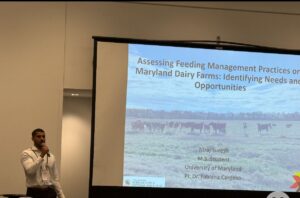
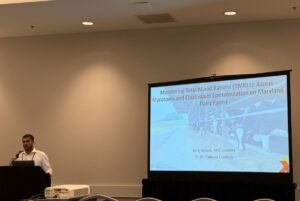
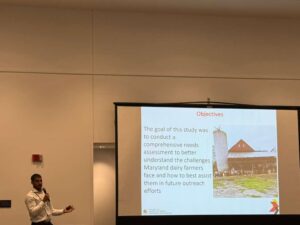
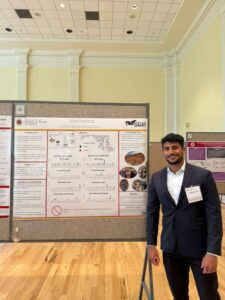
Conference/Extension dissemination: Survey findings were analyzed and used to guide program direction and broader outreach (project-aligned presentations and Extension scholarship).
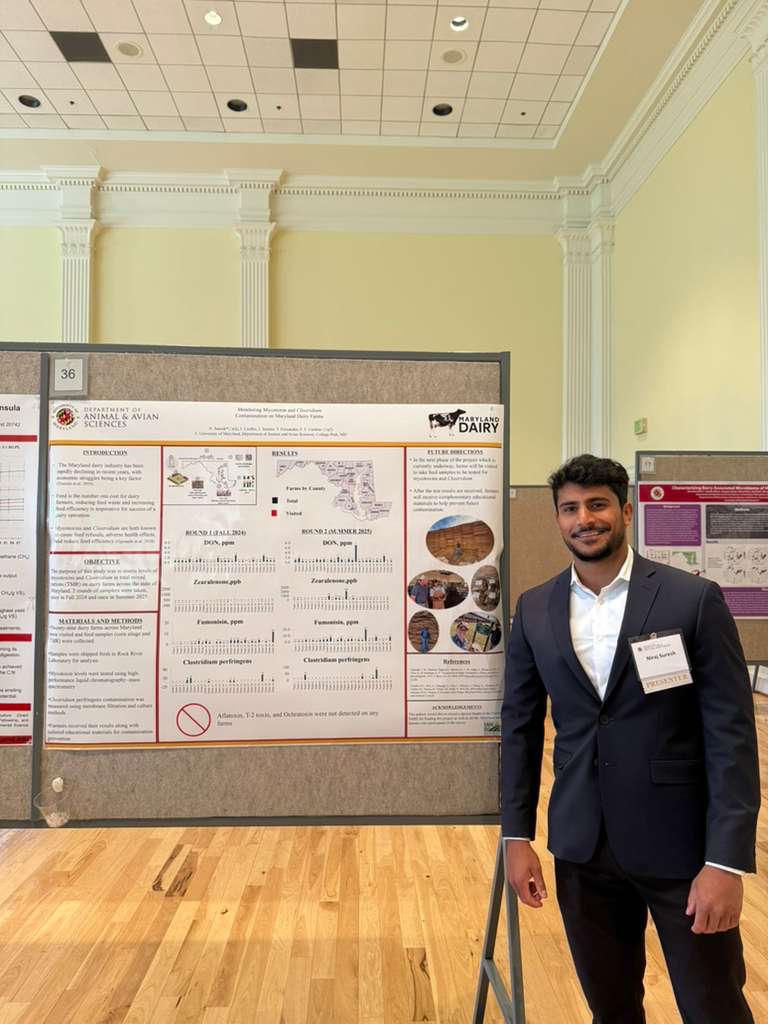
Education & outreach activities and participation summary
Participation summary:
The outreach plan for our project on mycotoxins and Clostridium contamination in TMR samples is designed to effectively disseminate the project results and engage dairy farmers in Maryland. Our team plans to achieve this through: (1) Electronic Survey Distribution: We are currently distributing an electronic survey to dairy producers via Maryland Extension email lists and social media platforms. This survey will assess farmers' concerns regarding forage and TMR quality, as well as their interest in participating in a program focused on mitigating the negative effects of Clostridium and mycotoxins on their farms. By reaching out to farmers directly, we aim to gather valuable insights into their specific needs and challenges; (2) Results Dissemination: Once the survey results are collected and analyzed, we will disseminate the findings to the farming community through various channels. This may include presentations at agricultural conferences, webinars, newsletters, and publications in relevant journals. By sharing the results widely, we aim to raise awareness about the prevalence of Clostridium and mycotoxins in TMR samples and their potential impact on animal health, performance and reproduction; (3) Educational Materials: We will develop educational materials, such as fact sheets, guides, and videos, to provide farmers with practical information on managing Clostridium and mycotoxin contamination on their farms. These materials will be distributed electronically and made available on our project website for easy access; (4) On-Farm Field Days: To provide hands-on learning opportunities, we will host two on-farm field days at select dairy farms in Maryland. These events will allow farmers to see firsthand how effective management practices can mitigate Clostridium and mycotoxin contamination. We anticipate approximately 50 participants for each on-farm field day, providing a valuable opportunity for networking and knowledge exchange among farmers; (5) Collaboration with Extension Agents: We will collaborate closely with Extension agents from the University of Maryland Extension to ensure a comprehensive approach to addressing the challenges related to Clostridium and mycotoxins on dairy farms. Extension agents will help disseminate project information to their networks and provide additional support to participating farmers; (6) Compensation for Participants: Farmers participating in our program will be compensated through the provision of free analysis for Clostridium and mycotoxins, as well as gaining valuable knowledge and insights into managing these challenges on their farms. This incentivizes participation and ensures that farmers receive tangible benefits from their involvement in the project.
By implementing these outreach strategies, we aim to empower dairy farmers in Maryland to effectively manage Clostridium and mycotoxin contamination in their TMR samples, ultimately improving animal health, productivity, and food safety on their farms.
Learning Outcomes
Knowledge
Farmers demonstrated increased knowledge regarding the occurrence and risks of Clostridium spp. and mycotoxins in total mixed rations (TMR) and corn silage. The project increased producer awareness that visual assessment of feed quality alone is insufficient to identify microbial or mycotoxin-related risks, highlighting the value of laboratory testing and systematic monitoring.
Attitudes
Participation in the project positively influenced producer attitudes toward feed safety and contamination prevention. Farmers expressed greater confidence in the importance of proactive feed management and were more receptive to adjusting management practices to reduce contamination risk. The collaborative, Extension-based approach increased trust in data-driven decision-making and reinforced the value of working with Extension and agricultural service providers to address feed quality challenges.
Skills
Farmers improved practical skills related to identifying critical control points within their feeding systems. These skills included recognizing management practices that increase contamination risk, interpreting laboratory results related to feed quality, and applying benchmarking information to compare their operations with statewide trends.
Awareness
The project increased producer awareness of statewide variability in feed quality and contamination risk among Maryland dairy farms. Through individualized reports and benchmarking, farmers gained a clearer understanding of how their operations compared with others in the state. Awareness of the economic and animal health implications of feed contamination also increased, reinforcing the connection between feed management, animal performance, and farm profitability.
Project Outcomes
Project Outcomes
As a result of this project, participating dairy farmers demonstrated measurable improvements in knowledge, awareness, and decision-making related to feed safety, with specific emphasis on Clostridium spp. and mycotoxin contamination in total mixed rations (TMR) and corn silage.
Changes in Practices and Behavior
Following receipt of individualized laboratory results and benchmarking reports, cooperating farmers reported increased attention to feed handling, forage storage, and feed-out management practices identified as potential contamination risk points during on-farm visits.
Benefits and Improvements for Participating Farms
The primary benefits observed were improvements in management efficiency and decision-making capacity rather than immediate structural changes. These benefits included:
-
Increased understanding of how feeding and forage management practices influence microbial contamination and mycotoxin risk.
-
Improved ability to identify critical control points within feeding systems.
-
Reduced uncertainty when making decisions related to feed testing, feed handling, and corrective actions.
These outcomes support long-term improvements in feed utilization, animal health, and farm profitability by reducing the likelihood of feed spoilage, inconsistent rations, and contamination-related production challenges.
Broader Impacts Beyond Participating Farms
In addition to farm-level outcomes, this project contributed new applied data on feed contamination risks in dairy feeding systems, addressing an identified gap in region-specific information related to Clostridium spp. and mycotoxins. Project findings were disseminated through Extension publications, professional conference abstracts, and invited presentations, including international outreach activities. The work also led to professional recognition through invitations to contribute to scholarly synthesis efforts (e.g., review-type publications), demonstrating the relevance of the findings to a broader audience of researchers, Extension professionals, and agricultural service providers.
Overall, the project successfully strengthened producer knowledge, awareness, and confidence related to feed safety and feeding management, while contributing applied data and insights that are relevant beyond the immediate project farms.
Overall, the project approach was effective in addressing the primary objectives of assessing Clostridium spp. and mycotoxin risks in total mixed rations (TMR) on Maryland dairy farms and translating findings into actionable Extension outcomes. The combination of a statewide needs assessment, targeted on-farm engagement, laboratory analysis, and individualized producer feedback proved to be a strong and appropriate methodology for this applied Extension-focused project.
Assessment of Methods and Key Factors for Success
One of the key strengths of the project was the use of a statewide survey to establish baseline knowledge, management practices, and producer concerns prior to on-farm sampling. This approach ensured that farm visits and laboratory analyses were informed by producer-identified needs rather than assumptions. The use of exploratory multivariate analyses (e.g., clustering) allowed identification of distinct producer profiles, which strengthened interpretation and informed Extension messaging.
Another important factor contributing to project success was direct on-farm engagement. Farm visits provided critical context for interpreting laboratory results and allowed producers to connect analytical findings with real-world management practices. Farmers were more engaged and receptive when results were explained in relation to their own feeding systems, which enhanced the practical value of the project.
Challenges and Revisions to Methodology
A limitation was the number of farms that could be sampled in depth due to resource constraints. While the sample size was sufficient for identifying trends and Extension needs, broader sampling across seasons would strengthen future assessments.
Did the Project Answer the Original Question?
Yes. The project successfully documented the occurrence and variability of Clostridium spp. and mycotoxins in dairy feeding systems, identified management-related risk factors, and confirmed that producer awareness and practices vary widely across farms. The project answered the original questions and provided clear evidence that targeted Extension education and benchmarking are effective tools for improving feed safety decision-making.
Rationale for Continuing to Promote the Practice
The integrated approach of needs assessment, on-farm sampling, laboratory analysis, and individualized feedback proved effective and will continue to be promoted. This model supports informed decision-making, reduces uncertainty, and encourages proactive feed management without imposing unnecessary costs or burdens on producers.
Areas for Further Study
Additional work is needed to:
-
Expand sampling across a larger number of farms and multiple seasons to capture temporal variation in contamination risk.
-
Quantify economic impacts more precisely, including reductions in feed waste and health-related costs.
-
Evaluate long-term adoption of recommended practices and sustained changes in management behavior.
-
Integrate feed contamination data with animal performance and health outcomes to strengthen impact assessment.
Who Would Benefit Most from These Results
The results of this project are most relevant to dairy producers in the Mid-Atlantic region, particularly those using corn silage–based feeding systems. Agricultural service providers, including Extension educators, nutritionists, veterinarians, and feed consultants, would also benefit from this information, as they play a critical role in disseminating and implementing feed safety practices. Because feed contamination challenges are common across dairy systems globally, these findings are also relevant to dairy regions beyond Maryland where similar feeding practices are used.