Final report for OS24-178
Project Information
Mastitis is an inflammation of the mammary gland typically caused by bacterial infection and is a significant animal health and economic issue for the dairy industry. It is estimated to cost the US dairy industry over $2 billion per year in reduced milk production, discarded milk, early cow culling, veterinary services, and treatment costs (Hogeveen et al., 2011). In addition to the economic impacts, mastitis causes pain and suffering in affected cows, leading to suboptimum animal welfare (Peterson-Wolfe et al., 2018), all of which contribute to reduced sustainability in the dairy farms.
Traditionally, antibiotic therapy has been the primary treatment for mastitis. However, there are concerns about the overuse of antibiotics contributing to antibiotic resistance in bacteria. The development of antibiotic-resistant bacteria is a threat to both animal and human health. In addition, USDA organic-certified dairy producers face further challenges treating mastitis because of the restricted use of antibiotics in these operations (Reugg, 2009). There is a need for effective alternative therapies to treat mastitis in dairy cows while reducing reliance on antibiotics.
The proposed solution is to evaluate the efficacy and cost-effectiveness of using AHV compounds as an alternative to antibiotics for treating mastitis in dairy cattle. This will be accomplished through a controlled field trial at a commercial USDA certified organic dairy farm, comparing udder health, milk quality, dairy cow performance, and economics between an AHV treatment group and non-treated control group.
This study evaluated the impact of plant-derived bolus supplementation in organic dairy cows with subclinical mastitis. The bolus supplementation demonstrated its effectiveness in reducing somatic cell counts, particularly in late lactation cows and in cows infected with contagious pathogens. Additionally, supplementation increased milk yield and water intake in cows infected with contagious pathogens. These findings suggest that the plant-based antibiofilm bolus has the potential to support cows with subclinical mastitis in organic dairy farms.
The objective of this study was to evaluate the efficacy of a plant derived rumen bolus supplement for the treatment of subclinical mastitis in dairy cows managed under certified organic management conditions. This study included naturally occurring cases of subclinical mastitis, defined as somatic cell count (SCC) >200,000 cells/mL, in 218 quarters from
218 multiparous lactating Holstein cows in a commercial organic dairy farm in central Texas were enrolled in the study. One affected quarter per cow was sampled and included in the analysis. Cows were assigned randomly to treatment (TRT; n = 104) and control (CON; n = 114) groups. The TRT group received plant-derived commercial bolus supplementation regimen (AHV Rapid® and AHV Extend®; AHV, CA, USA) orally, while CON cows were subject to the regular farm health protocol. Quarter-level milk samples were collected on day 0 (before-treatment) and day 30 (after-treatment) for SCC and bacterial culture. Cow level daily milk yield (kg/d), daily rumination time (min/d), and daily water intake (L/d) were evaluated from 7 days before to 30 days after treatment using Afimilk® and Smaxtec® systems available at the farm. Statistical analyses were performed in SAS using PROC MIXED for continuous outcome variables and PROC GLIMMIX for the binary outcome variable (the bacteriological cure). Our results indicate that TRT had significantly lower linear scores of SCC (LSSCC) than the CON group at 30 d after treatment (5.8 ± 0.17 vs 6.8 ± 0.16), particularly in late lactation cows (6.4 ± 0.27 vs. 7.3 ± 0.21) and in cows infected with contagious pathogens (5.7 ± 0.19 vs 6.9 ± 0.18). Bacterial growth (logcfu) was not statistically different between groups at 30 d after-treatment. Treatment cows infected with contagious pathogens had significantly greater daily milk yield and water intake compared to CON (21.5 ± 0.55 vs. 20.0 ± 0.52 kg/d, and 94.6 ± 1.06 vs. 91.1 ± 0.97 L/d, respectively). We conclude that plant-derived bolus supplementation has the potential to improve udder health in cows with subclinical mastitis in organic dairy farms, particularly against contagious pathogens.
The expected key project outcomes are:
- Determination of AHV regimen efficacy based on somatic cell count reduction, bacterial inhibition, and clinical mastitis rate compared to non-treated cows
- Economic analysis indicating potential or lack of return on investment for AHV therapy under real-world conditions
- Documentation of impacts on milk production, cow health, and retention to provide a comprehensive assessment of AHV therapy
- Identification of any practical limitations or areas needing refinement for on-farm AHV use
- Scientifically-validated evidence to support or reject further research and adoption of AHV compounds as a non-antibiotic mastitis treatment
Cooperators
- - Producer
Research
Research site and animals
The study was conducted at USDA-certified organic commercial dairy farm that milked around 3,500 cows in central Texas. Cows were housed in free stall barns with sand bedding topped twice weekly. Cows were milked three times a day in the rotary milking parlor with 60 stalls. Based on the somatic cell counts (SCC) from the monthly DHI (Dairy Herd Improvement) test prior to enrollment, 218 mixed parity lactating Holstein cows with SCC greater than 200,000 cells/mL (Schukken et al., 2013) and one quarter diagnosed with naturally occurring subclinical mastitis using the California Mastitis Test (score greater than Trace) were enrolled in the study, within 10 days of DHI test dates on a rolling basis. The temperature humidity index (THI) for the study period ranged 45-70. The sample size was calculated using the OpenEpi tool using a 40% bacteriological cure rate in the control group and a 60% bacteriological cure rate (Tomazi et al., 2021) in the treatment groups at a 0.05% level of significance with a desired level of power 80%. This yields 99 samples in each treatment group with a total of 198 required samples. We enrolled 208 cows to meet this requirement and to account for the high removal rate of organic dairy cows due to mastitis. An additional 10 cows were enrolled in the control group as a precaution to ensure adequate control cows at day 30. Overall, 24% of cows were primiparous, 17% were in parity 2, 59% in parity 3 and more whereas, 47% of cows were in early lactation (≤ 100 DIM), 28% cows in mid lactation (>100 to ≤ 200 DIM), and 25% in late lactation (>200 DIM).
Treatment allocation and sampling
A total of 218 cows with naturally occurring subclinical mastitis confined to a single quarter were enrolled in the study. Cows with more than one affected quarter based on a California mastitis test (score higher than Trace) were not eligible for inclusion. One hundred and four cows were assigned to the treatment (TRT) group, and 114 cows were assigned to the control (CON) group using simple randomization based on randomly number generated numbers (Microsoft Excel, RAND function). Cows in the TRT groups were supplemented with two commercial plant-based antibiofilm boluses (AHV Rapid and AHV Extend) orally, according to the protocol suggested by the manufacturer (AHV® CA, USA). The AHV boluses comprise proprietary blends of dried chicory root, guar gum, bentonite with minerals: Calcium (4.05% - 4.55%), Phosphorus (0.49% in minimum), Sodium (0.01% - 0.51%), and Magnesium (3.35%). The cows in the control (CON) group were monitored using an on-farm protocol for monitoring clinical signs and did not receive any bolus. All treatment and animal handling protocols for this study were approved by the Texas A&M AgriLife Animal Care and Use Committee [AACUC #2022-026A].
After cleaning the teat ends thoroughly using a cotton pad soaked in alcohol (70%), two sets of quarter milk samples were collected from one subclinical diagnosed quarter of 218 cows on day 0 (before treatment), and on day 30 (after treatment). Milk samples were submitted immediately to the Texas DHIA laboratory (Stephenville, TX), for the evaluation of somatic cell counts (SCC) via a Bentley Fourier Transform Spectrometer and flow cytometer (Bentley Instruments, Chaska, MN). The other set of samples was transported to Texas A&M Dairy system lab in an ice box and transferred to -20°C before the bacteriological analysis. Bacterial culture, identification, and counts of the CFU of bacteria present in the milk sample were conducted at Texas A&M Veterinary Medical Diagnostic Laboratory (TMVDL). For isolation and quantification of bacteria, milk samples (n = 434; 2 missing samples) were streaked onto 5% sheep blood agar, phenylethyl alcohol agar, and tergitol agar (Hardy Diagnostics, USA) plates and incubated aerobically with 10% CO2 at 37°C for 48 hours. All the culture plates were read at 24 hours and 48 hours for isolation of bacteria. Initial identification of different bacteria was based on colony morphologies on plates, and different biochemical test results including oxidase, catalase, coagulase, indole, carbohydrate fermentation, and Gram staining. Identification of different bacteria up to genus or species level was based on matrix-assisted laser desorption-ionization time of flight mass spectrometry (MALDI-TOF MS; Bruker Daltonics, Germany) score results. A score of 2.3 to 3.0 is considered a highly probable species identification and a score of 2.0 to 2.299 is considered a secure genus identification and probable species identification. The final identification of all bacterial isolates is based on the agreement between biochemical and MALDI-TOF MS results.
Daily yield of milk (kg/d) from 7 days before-treatment to 30 days after-treatment was obtained from the Afimilk ® MPC milk meters installed at the milking parlor of the dairy farm. Additionally, daily rumination time (min/d) and daily water intake per cow (L/d) were monitored from 7 days before-treatment to 30 days after-treatment using SmaXtec® rumen-based bolus sensors in all cows.
Bacteriological cure analysis
The bacteriological cure was evaluated at 30 days after treatment. A quarter was considered bacteriologically cured when the bacterial species identified in the milk sample before treatment were not identified in the sample after treatment. The samples with the result of bacterial culture available for both before- and after- treatment were only included in the evaluation of bacteriological cure.
Statistical analysis
Statistical analyses were performed in SAS (version 9.4; SAS Inst., Inc., Cary, NC). The somatic cell count values were log transformed to obtain linear scores of SCC (LSSCC) by using the equation LSSCC= log2(SCC/100)+3 (Schukken et al., 2003). Bacterial counts (cfu) were log-transformed by using the equation logcfu = log10 (cfu+1) to account for the zero cfu counts (Tomazi et al., 2021). For the bacterial culture analysis, samples with ≥ 3 isolates were considered contaminated and not included in the analysis (Tomazi et al., 2021; Svennesen et al., 2023). The continuous outcome variables, including LSSCC, bacterial counts (logcfu), and daily yield of milk, rumination time, and water intake of cows, were analyzed using the mixed linear regression models (PROC MIXED) with Satterthwaite approximation to determine the denominator degrees of freedom for the tests of fixed effects. Cow was considered the experimental unit for all analysis. The effect of treatment on continuous variables was also analyzed to identify the effect when stratifying cows in different groups, including lactation stage: early (≤100 DIM, TRT: n = 113, CON: n = 58), mid (>100 to ≤ 200 DIM, TRT: n = 47, CON: n = 89), and late (>200 DIM, TRT: n = 48, CON: n = 81) lactation, and involvement of mastitis-causing pathogens: environmental (TRT: n = 45, CON: n = 50) and contagious (TRT: n = 144, CON: n = 164) pathogens. Assumption of the normality and homoscedasticity of residuals were assessed with the UNIVARIATE procedure and considered normally distributed (Shapiro-Wilk test, W ≥ 0.90). The model statement included the fixed effects of treatment, day, their interaction, parity, and DIM at enrollment. The before-treatment data of milk yield, rumination time, and water intake were averaged and used as an independent covariate in the model. Data were analyzed using cows within treatment as random variable. For these repeated measurements, the specified term for repeated statements was day with cow (treatment) as the subject for the models. The compound symmetry covariance structure was used for the models based on the smallest Akaike Information Criterion. Tukey’s honest significant test for multiple comparison was used in the model. The categorical variables, including bacteriological cure, and their odds were analyzed using binary logistic regression analyses (PROC GLIMMIX). The models were fitted using a logit link function, and least squares means were back-transformed to the probability scale using the inverse logit (ILINK) option.
Cows in this study were followed for 3 months after treatment to assess the impact of the treatment on cow survival within the herd. Based on the culling and death records of animals obtained from herd management software, the survival curves between treatment groups were compared using Kaplan-Meier survival curves using PROC LIFETEST in SAS. Results for continuous outcomes (daily milk yield, rumination time, and water intake) were reported as least square means or covariate-adjusted least square means. The results of binary outcomes (bacteriological cure) were reported as odds ratios along with model-adjusted predicted probabilities using the inverse logit function. The significance of the effects was tested at P ≤ 0.05 and the tendency at 0.05 ≤ P < 0.10, obtained from Type III tests of fixed effects.
LSSCC (Somatic cell count)
The analysis of LSSCC from milk samples collected on day 0 (before-treatment) and day 30 (after-treatment) of treatment indicated that TRT group had significantly lower LSSCC (P < 0.001) after treatment when compared to cows in the CON group (Figure 1 A). In agreement with our result, Walkenhorst et al. (2020) reported the supplementation of multiherbal feed additives containing 27 different plants with chicory, rosemary, stinging nettle, fennel, and fenugreek as a major herbal components decreased (P < 0.05) the SCC as compared to the control counterparts showing the beneficial effects of plant based products to control bovine mastitis. Hashemzadeh-Cigari et al. (2014) also supplemented phytobiotics-rich herbal mixture composed of cinnamon bark, turmeric roots, rosemary leaves, and clove buds in diets to cows with high initial SCC, which decreased SCC in the milk as compared to the non-supplemented control cows. Salem et al. (2019) reported that supplementation with an oil mix (black seed oil , chamomile oil, and oregano oil) reduced (P < 0.05) somatic cell counts in Friesian cows, compared to the control diet with no supplementation. Cho et al. (2015) found that intramammary treatment with 0.9 ml oregano essential oil ointment for subclinical bovine mastitis caused by Staphylococcus aureus and Escherichia coli significantly (P < 0.05) reduced somatic cell counts compared to both the saline-treated negative control and the antibiotic ointment-treated positive control. This demonstrates the efficacy of plant-based products in lowering SCC, consistent with our findings, although the product was used topically compared to our approach of dietary supplementation.
When stratifying the study population into groups, cows in the late lactation had lower LSSCC (P < 0.05) in the TRT group compared to the CON group; however, no significant difference in LSSCC was observed between the treatment groups for cows in early and mid-lactation (Figure 1 B, C, D). Based on the involvement of mastitis causing pathogen, cows infected with environmental pathogen did not differ in LSSSC between the treatment groups on 30 days after treatment (Figure 1 E); however, cows infected with contagious pathogen had lower LSSCC (P < 0.05) in the TRT group than in the CON group on 30 days after treatment (Figure 1 F). These findings suggest that the supplementation of plant-based antibiofilm bolus was effective in reducing the somatic cell count (a proxy of the inflammation of mammary gland tissues) in late lactation cows and in mastitis events due to contagious pathogens.
Bacterial growth and count
Gram-positive bacteria were identified in 27% of the culture samples, whereas 0.4% were gram-negative, and 6% of the samples had no growth of bacteria (Table 1). Staphylococcus aureus (13%), Staphylococcus chromogenes (5%), and Streptococcus dysgalacticae (3%) were the top three most isolated pathogens from the milk cultures. Overall, cows in the TRT groups tended to have lower cfu counts (3.3 ± 0.05 vs 3.4 ± 0.05, P = 0.06) than CON groups. However, both groups have an increment (P < 0.05) in the number of bacteria on day 30 compared with day 0 (Figure 2 A). Cows grouped in early, mid, and late lactation did not differ in bacterial counts between the groups after- treatment (Figure 2 B, C, D). We were not able to identify a statistically significant difference in bacterial counts on day 30 when cows were stratified into environmental and contagious pathogens (Figure 2 E, F). These results suggest that although the treatment was effective in reducing inflammation in the mammary gland, as reflected by lower SCC, it did not significantly reduce the free-living bacterial population. The plant-based bolus may modulate immune responses and alleviate udder inflammation, yet it lacks strong local bactericidal activity against the pathogens. This is consistent with the hypothesis that the main action of the boluses is to reduce the virulence of bacteria, including their biofilm forming capacity. Thus, the active ingredients facilitate ‘unsheltered’ and ‘disarmed’ bacteria, allowing the cow’s immune system to deal with them, rather than being directly bactericidal. While this is likely to result in reduced clinical signs, it may not lead to the total removal of bacterial burdens.
Bacteriological cure at day 30 after treatment
The odds of bacteriological cure at day 30 were 44% higher in the TRT group compared with the CON group, however, this difference was not statistically significant (OR=1.44; 95% CI: 0.68-3.04) (Table 2). We observed no statistically significant effect (P > 0.05) of treatment on the bacteriological cure when cows were stratified into early, mid, and late lactation. Similarly, no effect of treatment (P > 0.05) was observed in cows infected with environmental and contagious pathogens. The treatment was not able to reduce the number of mastitis-causing bacteria, showing no differences in bacteriological cure. The current study found a bacterial cure rate of 38% using the plant-based bolus supplementation which is comparable to other studies using plant-based options to treat mastitis through intramammary administration. The intramammary treatment with PhytoMast® (botanical preparation composed of extracts of Thymus vulgaris, Gaultheria procumbens, Glyrrhiza uralensis, Angelica sinensis, and vitamin E) resulted in a bacteriological cure 42% compared with 29% for no treatment at day 14 (Pinedo et al., 2013). In another study, the application of Cinnatube® (herbal teat sealant composed of Calendula, Cinnamomum spp., Eucalyptus gobulus, Melaleuca alterniflora, beeswax) as teat sealant resulted bacteriological cure rate of 34%, application of PhytoMast as intramammary treatment resulted cure rate of 46%, and the use of Cinnatube and Phytomast in combination in organic dairy farms resulted the bacteriological cure rate of 41% with no difference compared to the control (cure rate: 41%) (Mullen et al., 2014). However, studies have identified that bacteriological cure rate varies depending on the causative agent, time, and type of treatment (Pinedo et al., 2013). Previous studies evaluating the use of antibiotics reported bacterial cure rates ranging from 44% to 90% depending on the type and dosage of the antibiotics used for mastitis treatment (McDougall, 1998; Wilson et al., 1999; Owens et al., 2001; Tomazi et al., 2021; Svennesen et al., 2023). Our result was closer to the result of Wilson et al. (1999), who reported the bacteriological cure of 44% for the pirlimycin when treated intramammarily, considering the definition of the cure rate. While we expected the plant-based antibiofilm bolus to achieve a higher bacteriological cure rate compared to the control, our goal was not to compare the efficacy with antibiotics, which are the gold standard for treatment. While the active compounds present in the bolus may exhibit bactericidal activity at higher doses, at the investigated concentrations our results primarily demonstrate low efficacy in reducing bacterial growth and increasing bacteriological cure incidence.
Daily milk yield
Daily milk yield was not different between the overall treatment groups (Figure 3 A), nor when stratified into early, mid, and late lactation groups (Figure 3 B, C, D). Although milk yield in TRT cows was numerically higher than that of the CON after day 5 of treatment, we were not able to detect statistical significance in this study. The cows infected with the contagious pathogens had higher milk yield (P < 0.05) in TRT group than in the CON group (Figure 3 F), however, the mastitis events associated with environmental pathogens did not differ in milk yield between the groups (Figure 3 E). This suggests that the plant-based bolus may reduce the negative impact of contagious pathogens on milk yield, demonstrating the treatment's effectiveness against these pathogens. Herrema et al. (2023) evaluated the effect of the AHV product used in this study on milk production over a ten-year period (2013-2023) in the Netherlands, reporting a 1.6% increase in average milk yield per lactation in cows treated with the bolus. While the treatment may cumulatively affect milk production in the long term, we were not able to identify the difference in the short term. As most of the contagious pathogens observed in the study were gram-positive, the positive effect of treatment against this group of bacteria may be due to the difference in the structure of the cell wall, as gram-negative bacteria exhibit lipopolysaccharides anchored in the outer membrane of the cell wall, which restricts the diffusion of hydrophobic compounds (Burt, 2004; Nazzaro et al., 2013) .
A significant treatment-by-day interaction was detected for rumination time (P < 0.01; Figure 4A). In the TRT group, daily rumination time demonstrates an increase after day 6 up to day 23 of treatment whereas no such pattern was observed on the CON group. Rumination time has been used as an indicator of the mammary health status in dairy cattle (Pahl et al., 2014; Paudyal, 2021). Although the average rumination time of TRT cows appeared higher than that of CON cows after approximately 10 days of treatment, these differences were not statistically significant on any individual day. This indicates that the interaction effect reflects differences in the overall pattern of rumination over time rather than statistically significant differences on individual days, likely due in part to the adjustment for multiple comparisons using Tukey’s method. Similar to our finding, the supplementation of Scutellaria baicalensis extract on short term (5 days) or long term (60 days) did not result in a difference in rumination time as compared to the control groups (Olagaray et al., 2019). However, Wang et al. (2025) supplemented poly-herbal mixture composed of Astragalus root, Codonopsis root, Angelica sinensis, Rehmannia root, tangerine peel, oriental arborvitae leaves, Atractylodes rhizome, licorice root, sichuan lovage rhizome, ophiopogon root, white peony root, hawthorn fruit, radish seeds, rhubarb root, oriental wormwood to the dairy cows and reported increased in rumination time than non-supplemental group. The difference in proportions of bioactive compounds in the herbal mixture may be attributed to the difference in effects. The average daily rumination time observed in this study for TRT group and CON group was 477.04 ± 3.3 min/d and 475.67 ± 3.1 min/d respectively which is higher than reported by the study of Paudyal et al. (2018) for the cows with mastitis (378.18 ± 11.5 min/d) in conventional dairy farms. The difference in rumination time of cows might be due to the difference in the production system, as the cow in organic production system had higher rumination time compared to conventional production system (Pereira and Heins, 2019). Similar treatment × day effects were observed (P < 0.05) in cows in early lactation where the temporal pattern of rumination time differed between treatments, although no daily differences between treatments were detected. In contrast, no effect of treatment on rumination time was observed between the cows in mid and late lactation groups (Figure 4 B, C, D). We did not detect a statistically significant overall effect of treatment on rumination time in cows associated with environmental pathogens. However, a significant treatment by day interaction was observed in cows associated with contagious pathogens (P < 0.05), where the TRT group showed a trend toward higher rumination time after approximately day 12 of enrollment (Figure 4 E, F), although no daily differences between treatments were detected. While we identified that supplementation with the plant-based bolus would improve rumination time in some groups, the treatment did not have any negative effects on rumination in any cows, although it was lodged in the rumen locally.
The analysis of the water intake data indicated no statistically significant difference in the water intake between the overall treatment groups (Figure 5 A). This indicates that the supplementation of plant-based bolus does not significantly improve or impair the water intake of cows. The result showed a numerical increase in water intake in TRT compared to the CON after day 5 of treatment, however the difference was not statistically significant. The cows in early lactation tended to have higher (P = 0.06) water intake in TRT group than in CON group (Figure 5 B) whereas no effect of treatment was observed in cows in mid and late lactation (Figure 5 C, D). The cows infected with contagious pathogen had higher (P < 0.05) water intake in TRT group than in the CON group (Figure 5 F) however, the effect was not observed in cows infected with environmental pathogen (Figure 5 E). This supports the higher milk yield in the cows in the TRT group infected with a contagious pathogen than in the control group, as increased milk yield is associated with increased water intake (Kume et al., 2010). Meyer et al. (2004) reported that the production of each liter of milk increased the demand for 1.3 liters of drinking water in a dairy cow. The average water intake for cows in TRT group (95.2 L/d) and CON group (91.4 L/d) in this study was higher as compared to the water intake of cow reported by Meyer et al. (2004) (81.5 ± 19.1 L/d) and Cardot et al. (2008) (83.6 ± 17.1 L/d), however the comparison of water intake of cows between these experiments need to be done cautiously. Factors like ambient temperature, dry matter intake, health status of the cows, and diet impact the intake of drinking water (Meyer et al., 2004; Cardot et al., 2008; Lukas et al., 2008).
Survival in the herd
No difference in the survival curves within the follow-up period of 90 days was observed for the TRT group and CON group (log-rank test = 0.33) when analyzed using Kaplan-Meier survival estimates. The overall cumulative incidence of removal from the herd (culling or death) due to mastitis was 0.9% for CON and 0% for TRT group, that is, no cows were removed from the herd due to mastitis in the TRT group.
Economic evaluation
The partial budget analysis utilizes a milk price of $28.00/cwt, reflecting a conservative yet realistic benchmark for the US organic dairy market (USDA-ERS, 2025; Zadoks & Fitzpatrick, 2009). While the high upfront cost of the plant-derived bolus kit results in a short-term net deficit of –$80.22 per cow, the long-term benefit over a 305-day lactation is significant. This benefit is driven by a sustained milk yield increase of 3.31 lbs./day (1.5 kg/day) and the elimination of discarded milk costs, as the organic bolus requires zero milk-withhold (Petrovski et al., 2006). In organic systems, the true economic value is found in herd longevity; avoiding a single culling event, often valued at over $1,000, far outweighs the initial treatment investment (Hagnestam-Nielsen, 2009; Tommasoni et al., 2023).
|
Category |
Description |
30-Day Value ($) |
305-Day Value ($) |
|
A. Negative Economic Impact |
|||
|
1. Additional Costs |
|||
|
Bolus Kit |
AHV Rapid + Extend (Commercial Kit) |
$250.00 |
$250.00 |
|
Labor |
0.5 h for administration @ $10.00/h |
$5.00 |
$5.00 |
|
Diagnostics |
Culture and SCC screening |
$15.00 |
$15.00 |
|
2. Reduced Revenue |
|||
|
Discarded Milk |
$0.00 (No milk-withhold for bolus) |
$0.00 |
$0.00 |
|
Total A |
Total Negative Impact |
$270.00 |
$270.00 |
|
B. Positive Economic Impact |
|||
|
3. Additional Revenue |
|||
|
Milk Yield Increase |
3.31 lbs./d increase @ $0.28/lb. |
$27.78 |
$282.41 |
|
Quality Premiums |
SCC reduction benefit |
$12.00 |
$122.00 |
|
4. Reduced Costs |
|||
|
Culling Risk |
Avoided replacement/death loss risk |
$150.00 |
$150.00 |
|
Total B |
Total Positive Impact |
$189.78 |
$554.41 |
|
Net Change (B - A) |
Net Economic Impact per Cow |
-$80.22 |
+$284.41 |
Educational & Outreach Activities
Participation summary:
Objective of the Outreach Plan. The outreach plan is an integral component of this project. In addition to the research conducted at the Postmus dairy Farm, the treatment system will be demonstrated and disseminated at different locations.
Primary Outreach Goal: To educate and engage livestock producers, agricultural stakeholders, and the broader community about the benefits and implementation of nonantibiotic mastitis treatment system.
Secondary Outreach Goals: To promote sustainable agriculture practices and support underserved producers in the region.
Primary Audience: Dairy farmers (organic and conventional) in Texas.
Key Messages. AHV systems can help to manage mastitis in organic dairy farms. This system can be used in conventional dairy systems to minimize the use of antibiotics.
PROJECT ACTIVITIES
Outreach Tools and Channels.: The project team published an extension article in Texas A&M AgriLife extension portal. (Non-antibiotic-management-of-mastitis-in-dairy-cattle_March-2024.pdf)
We utilize the existing network of TAMU Organic extension program to disseminate our findings. Bob Whitney serves as Regents Fellow & Extension Organic Specialist for Texas A&M AgriLife Extension service (Agrilifeorganic.org). Articles and updates related to the project will be posted on this website on a regular basis.
The Texas Organic Agriculture Program routinely publishes blog posts that discuss organic agriculture. The blog has 1042 followers that receive the information upon publication. This outlet will be utilized to inform the organic stakeholders in the state about our research findings. Texas Organic News is a newsletter distributed by the Texas Organic Agriculture program which will be used to share the project related news. It is delivered to 394 email subscribers and is posted online at the Texas Organic Agriculture website where it is accessible for download and viewing by the public. We published this blog related to our research project . (Non-Antibiotic Management of Mastitis in Dairy Cattle – Texas A&M AgriLife Organic)
On farm consultations: We visited around 12 dairy farmers to discuss the non antibiotic treatment of mastitis in dairy cows.
Journal Article: One journal article is currently submitted for publication at Journal of Dairy Science. The article is currently under peer review for publication.
1 on farm demonstration was conducted at Posthmus dairy farm.
workshops/ field days: This project was presented at Two field days. Texas A&M AgriLife Dairy Extension program hosts an annual field day called Southwest Dairy Day. The event is hosted at a Texas dairy operation and regularly draws around 400 attendees annually. The project was october 9, 2026 and presented by Dr. Paudyal. Bob Whitney also presented at organic grower’s conference and East Texas DOPA training. Around 200 organic and non organic producers were reached in total.
Community event: We participated in organic get-together in Brownfield, TX in Feb 21 2025. This is community event to discuss non antibiotic approaches applied in dairy farms. https://agriliferollingplainsagronomy.org/2025/09/03/2025-organic-get-together/
Learning Outcomes
To educate and engage livestock producers, agricultural
stakeholders, and the broader community about the benefits and implementation of
nonantibiotic mastitis treatment system.
Project Outcomes
Submiting to USDA OREI program
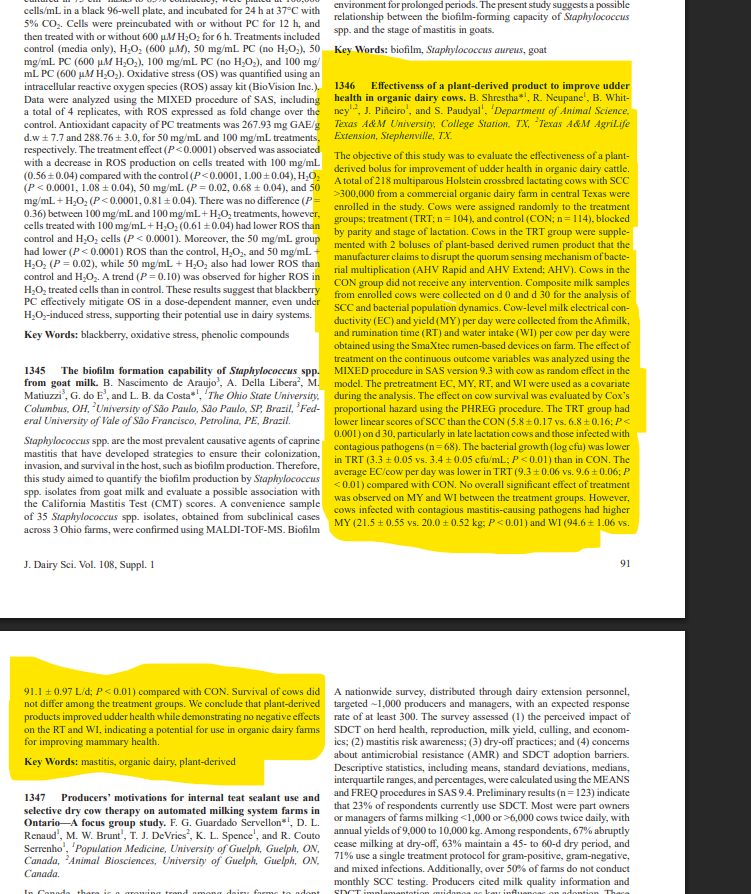

Published peer reviewed abstract : B. Shrestha, R. Neupane , B. Whitney, J. Piñeiro , and S. Paudyal. 2025. Effectiveness of a plant-derived product to improve udder health in organic dairy cows. J. Dairy Sci. Vol. 108, Suppl. 1 PP: 91-92.
Suggest a longer-term and larger study to validate the results we observed.