Final report for SW23-949
Project Information
Vineyard producers are rapidly adopting regenerative production models to address sustainability challenges arising from input based conventional production. Integrating livestock onto cropland is a key practice in regenerative agriculture, providing opportunities to meet sustainability goals by building soil health, reducing input and labor costs while creating new markets and added value1–5 . Integrated sheep vineyard systems (ISVS) are gaining traction in the coastal regions. However, the lack of systems level data from working farms and knowledge sharing platforms for producers integrating grazing across a co-management gradient (conventional-regenerative) limits our understanding of best management guidelines, as well as the full scope of the potential benefits and tradeoffs associated with ISVS 6,7. With grape systems in California approaching 1M acres (CA’s third highest grossing crop), the need for sustainability impact assessments, best management practices (BMP) guidelines and economic return planning tools for integrated systems is growing. California is also confronting decline in forage with the current drought and vineyards’ understories represent an increasingly important source of forage. The proposed 3-yr study is based on extensive consultation with growers, sheep operators, and previous work by the team to provide a systems level comparison of ISVS practicing winter season grazing (ISVS_WG), winter and summer season grazing (ISVS_WSG) and non-grazed vineyard systems (NG). Our objectives are to 1) establish a landscape scale on-farm participatory research platform to 2) quantify the impacts of grazing and grazing intensities on vineyard soil health, biodiversity, vine health, yields, berry quality, forage quality and input use. This data, along with farmers interview will be used to 3) analyze the economic performance of these viticulture systems and develop a cost-return planning tool. We will 4) identify benefits and potential tradeoffs by evaluating interactions between the chemical, physical, biological, and economic components of vineyards and 5) disseminate results to producers in English and Spanish via field days, presentations, a BMP guide, and social media. The recently published report on Nature based Climate Solutions (NbCS)8 emphasizes the critical need for studies such as these that engage in on-farm research investigating the stacking of sustainable farming practices, while considering the inherent variability of landscapes, soils, resource availability and production goals. Our network of commercial vineyards will consist of vineyards with medium to long term grazing legacies (+3 years minimum) to vineyards with no history of grazing. This diverse network will facilitate the collection of real-world information on management strategies, input use, soil health and crop yield outcomes as a function of edaphoclimatic conditions underlying potential benefits and tradeoffs 8. By providing empirical assessments of integrated systems across the three pillars of sustainability, we hope to improve the profitability and natural resource base of vineyards and grazing operations, while increasing the quality of life in farming communities.
Research Objectives
Obj. 1: Establish a participatory research network across California comprised of 45 commercial vineyards with current management legacies along a grazing gradient: Non-Grazed (NG), Integrated Sheep Vineyard Systems (ISVS) with Winter Grazing (ISVS_WG) and extended Winter and Summer Grazing (ISVS_WSG) (n = 15 per treatment over the 3-yr study).
Obj. 2: Measure the impacts of grazing intensities and co-management practices on vineyard soil health, species biodiversity, vine health/nutrition, yield, berry quality, and input and labor use.
Obj. 3: Determine the economic performance of ISVS and conventional viticulture systems.
Obj. 4: Integrate socio ecological and economic outcomes to identify the benefits and tradeoffs of grazing vineyard understories and inform the development of best management practices.
Outreach Objectives
Obj. 1: Create a Best Management Practice (BMP) guide in English and Spanish synthesizing grower knowledge and research results.
Obj 2: Generate a cost-return planning tool to assist producers seeking to integrate grazing into their operations.
Obj. 3: Share project results and best management practice guidelines to a minimum of 150 producers via 3 in-person on-farm field days and 3 workshops. The effects of ISVS on soil health, biodiversity, yield and grape quality and cost and expected returns will be presented. The benefits of sheep for meat and fiber markets, as well as ecosystems benefits, such as fire load management will be included.
Obj. 4: Disseminate research results, field day demonstrations, workshops, our BMP guide, and the cost-return tool to an extended audience using podcast interviews, industry publications, Facebook live streams, twitter, and other social media outlets handled by the team’s outreach specialists.
Obj. 5: Produce 3 academic journal articles and present findings at local and national conferences.
Cooperators
- - Producer
- - Producer
- - Producer
- - Producer
- - Producer
Research
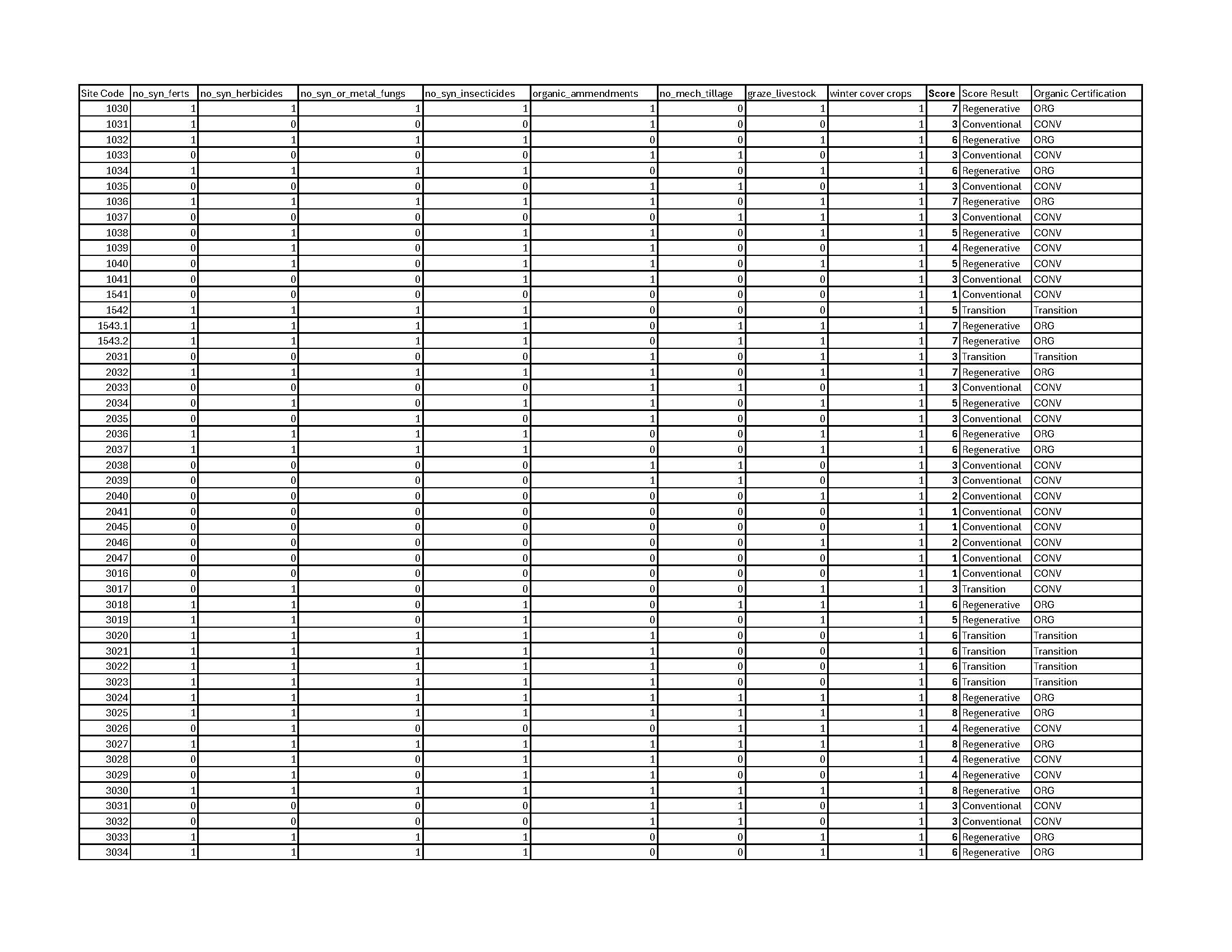
Obj. 1: Monitoring was conducted on triads of commercial vineyards across a management gradient. The geographic region spanned three main regions of California: North (Mendocino, Lake, Sonoma, Napa) Central Valley(San Joaquin and Solano), and Central Coast (San Benito County). These three regions also aligned with the field day locations outlined in the outreach section. A total of 49 vineyards (grazing, n= 26 ; no grazing, n =23) were identified and strategically selected to fall along a regenerative-conventional co-management gradient9. The gradient was from Fenster et al. (2021) and it utilizes rankings derived from a character matrix of 8 different practices that were considered as regenerative or conventional (Table 1). Engaging in a regenerative practice or abstaining from a conventional practice resulted in the vineyard getting a score of 1 for that matrix category. Utilizing a conventional practice or abstaining from a regenerative practice entailed the vineyards receiving a score of 0 for that matrix category. Hence, the maximum regenerative score a vineyard could receive is 8 and the lowest is 0. Table 1 displays where each vineyard falls along this gradient and the management practices contributing to this score.
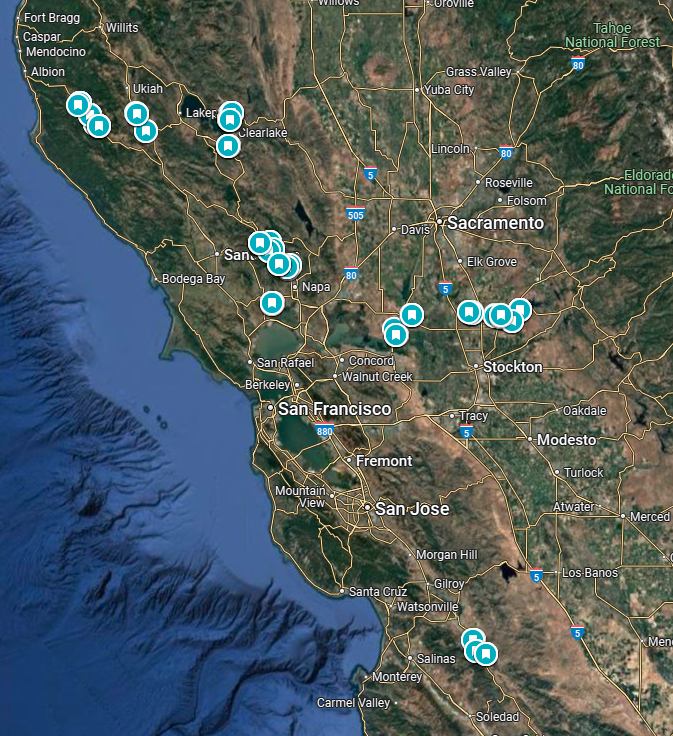
Each pairing was located within 20 km of each other, on a similar soil type, the same rootstock and variety, and under the same management practices except for the grazing treatment. Vineyards wwere sampled for one field season at three key phenological stages (bud break, 50% veraison, and harvest). Data was collected from 15 vineyards in 2022, 15 vineyards in 2023, and 19 vineyards in 2024 during budbreak, veraison, and harvest spanning all metrics described in objectives 2 and 3. Figure 1 displays a map of the 49 vineyard blocks sampled to over the course of the study.
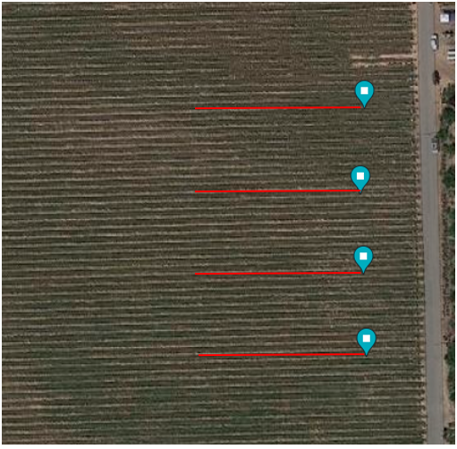
Obj. 2: Four, 50-meter transects at least 20m apart (Figure 2) were established in each vineyard. Vines and forage development and composition were monitored throughout the growing season. We also quantified soil health metrics and species biodiversity (plant, invertebrate and avian). Leaf petiole nutrient profiles were determined at 50% veraison and yields and berry quality at harvest. We used general additive models, machine learning, and multivariate analyses such as Principal Component Analysis, and normalized indexes to explore the relationship between grazing and different combinations of management practices on systems outcomes. Input use was recorded for each vineyard as part of the grower intake survey described in Obj 3 and results were analyzed considering input levels to determine shifts in productivity.
0-60cm soil metrics (budbreak sampling trip, Regen Ag Labs; Pleasanton, NE): pH, total soil carbon (TSC), soil organic carbon (SOC), mineral associated organic carbon (MAOC), particulate organic carbon (POC), total soil nitrogen(TSN), NO3-N, PO4-P, S, K, Ca, Mg, Na, Cation Exchange Capacity (CEC), Base Saturation percentage, H % saturation, Ca % saturation, Mg % saturation, Na % saturation, Gravimetric soil moisture percentage, and available water holding capacity (AWHC).
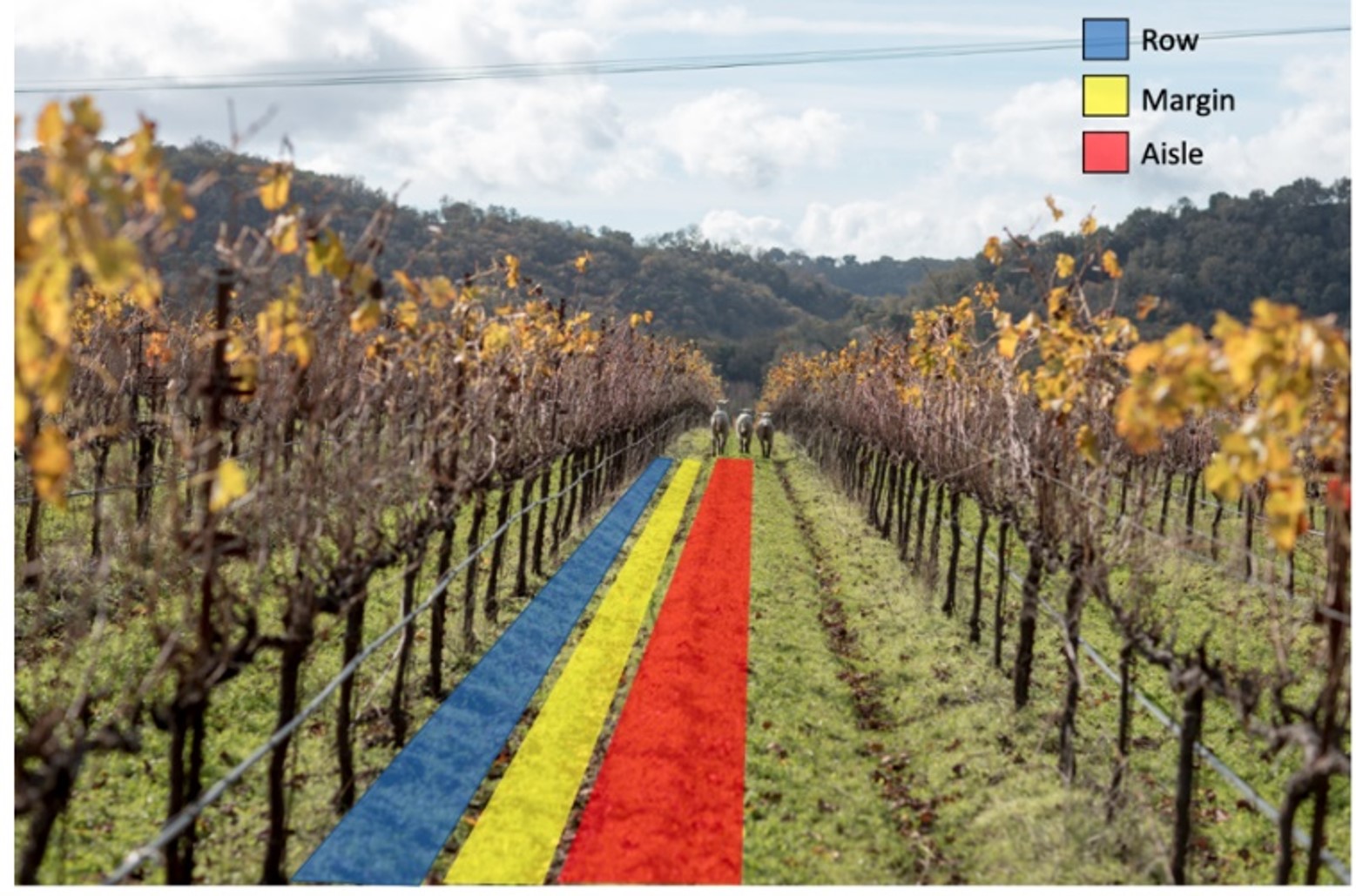
Four 0-60cm soil cores were taken in each transect at the 0m (Aisle), 15m (Margin), 30m (Row), and 45m (Aisle) marks (Figure 3). In the field the cores were cut into 0-5cm, 5-10cm, 10-15cm,15-30cm, and 30-60cm increments. The soil for each depth zone was composited at the transect level (4 transects/vineyards). Soils were analyzed at Regen Ag Labs for the above analyses where they were conducted via standard lab procedures. Soil carbon and nitrogen stocks on a per hectare basis were determined via dry combustion and elemental analysis combined with the equivalent soil mass protocol24. These soil samples were then analyzed for their sand, silt, and clay percentages using the hydrometer technique27.
Following the completion of the above analyses, Regen Ag Labs returned the remaining soil to the Gaudin Lab at UC Davis for measurement Mineral Associated Organic Carbon and Particulate Organic Carbon by dispersion via the Par + Den5 methodology outlined in Poeplau et al 25.
Soil classification and bulk density (Budbreak sampling trip). Bulk density (BD) samples were collected at the 25 m point of each transect, following the protocol outlined by the NRCS26.
Water infiltration rates (Budbreak sampling trip). Water infiltration rates were measured at the 25m mark of each transect, following the NRCS protocol, where 444 mL of water will be poured into a sheet-metal ring (15.2 cm diam, 13.5 cm tall) hammered 6.5 cm into the soil28.
Unsaturated hydraulic conductivity (Budbreak sampling trip). The mini disk infiltrometer (Meter Group- Pullman, WA) was used to calculate unsaturated hydraulic conductivity at the 25m mark of each transect.
Soil microbial community and Haney soil health metrics (Budbreak sampling trip). In each transect twelve 0-15cm soil cores were taken every 4 m (4-48m), following an aisle, margin, row sampling pattern (Figure 3). The samples were composited at the transect levels and placed in coolers before being shipped to Regen Ag Labs for analysis of Phospholipid fatty acid profiles29 to determine microbial diversity, abundance of major microbial groups and biomass and Fungus and bacteria.
Water extractable organic C and total N (WEOC and WEON) (Teledyne-Tekmar Torch C:N analyzer), mineralizable C (IRGA-Li-Cor 840A, LI-COR Biosciences, Lincoln NE), and soil nutrient levels using H3A extracts (organic root exudates, lithium citrate, and two synthetic chelators-DTPA, EDTA) 30 were also quantified.
Plant community (budbreak and veraison sampling trips). Percent ground cover and composition in each of the transects were recorded during the budbreak and veraison sampling trips. Understory biomass was assessed during the budbreak sampling trip using quadrats (0.1 m2) placed at the 0m (aisle), 25m (margin), and 50m (row) marks of each transect. At these marks the Canopeo app was used to determine the percent green cover in the quadrat. A visual scaled assessment was conducted to assess total ground cover in the quadrat. Species richness and functional diversity of the plants in the quadrat was recorded (grasses, forbs, forb brassicas, forb legume, native, non-native, major agronomic weed). Every 5m a falling plate meter (0.1m2) was used to estimate biomass31. At the 25m mark of each transect, the vegetation was severed at the soil line and bagged. Vegetation was dried and weighed to calibrate the falling plate meter and estimate biomass at each vineyard31. Vegetation was then be sent to Regen Ag Labs for a standard feed/forage analysis (forage quality, dry matter, and protein content).
Invertebrate community (budbreak and veraison sampling trips). The epigeal invertebrate communities were sampled during the budbreak sampling trip using a 15 cm tall 0.25 m2 sheet metal quadrat6,12,32. The invertebrate communities were collected from the soil surface and top 2 cm of the soil with mouth-operated aspirators over 15 min and were preserved in 70% ethanol.
The understory invertebrate community was sampled using sweeps during the bud break and veraison sampling trips. 25 sweeps were performed along a path which parallels the 25m mark of each transect.
The vineyard canopy invertebrate community was sampled using yellow sticky traps during the veraison sampling trip. This sampling was added in 2023 (year 2) A yellow sticky trap was hung on on each of the 30m flagged vines (4 per vineyard) in 2023 and on the transect 1 and 4, 30m vines in 2024 ( 2 per vineyard). The yellow sticky traps were collected during the harvest sampling trip approximately 3 weeks later. Thus sampling methodology focused on overall biodiversity, the leafhopper pests their associated parasitic wasps and generalist predators. These variables were normalized by number of days the sticky traps were hung.
The biomass of the invertebrates per 0.25 m2 was weighed to the nearest 0.0001 g. Invertebrates were identified to the morphospecies level and placed into functional groups. Voucher specimens are all housed in the Mark F. Longfellow Biological Collection at Blue Dasher Farm, Estelline, SD, USA.
Avian community (budbreak sampling trip). The avian community in each vineyard was assessed (abundance, species diversity, functional diversity) during the morning hours in each vineyard at budbreak. An Ecdysis ornithologist walked the vineyard, recording the time spent walking the vineyard (~ 1 hour) as well as the distance walked (~1 mile). The number of birds and the bird species were counted via visual and auditory identification.
Petiole nutrients (veraison sampling trip). 100 Petioles were sampled from each transect at 50% veraison from recently matured leaves opposite clusters. The petioles were placed in paper bags, dried, and sent to Regen Ag Labs for: NO3-N, Total -N, P, K, Zn, Mn, Na, B, Ca, Mg, Fe, Cu.
Yield and grape quality sampling (harvest sampling trip).
In each transect the vines at the 15m, 30m, and 45m transect marks were sampled for yield, equating to 12 vines per vineyard. Clusters were clipped, counted, and weighed in the field.
Across each transect 300 berries were sampled on ~ 115 vines. The berries were placed in a cooler in the field. ½ of the berries will be stored at 2 C and processed within 72 hours for primary chemistry quality analysis. The other ½ of the berries were stored at -20 C until secondary quality analysis. The samples were weighed to determine mean berry weight. The following primary chemistry analyses were performed: brix, total titratable acidity, pH, yeast assimilable nitrogen. The following secondary chemistry analyses were performed on the red varieties: total anthocyanins, polymeric anthocyanins, tannin, polymeric tannin index, quercetin glycosides (n = 45) at ETS Laboratories (St. Helena, CA, USA). A portion of these berries also underwent Carbon 13 isotope analysis (water use efficiency).
Obj. 3: We assessed the total costs (operating) and returns associated with ISVS based on data collected from the growers in the study via a survey detailing management practices and input use. Data for this practice will be added to the costs and returns studies already available at UC Davis for conventional viticulture systems. Since no tool currently exists for integrated systems, we developed a new spreadsheet tool which incorporates operating costs, overhead costs, and revenues associated with integrating sheep to facilitate context-based cost and return studies.
Obj. 4: This systems-level approach allowed us to quantify the interactions occurring among the chemical, physical, biological, and economic components of vineyard systems. We hypothesized that the integration of grazers would result in reduced mechanical and chemical disturbances and an enhanced resource base. This would lead to stronger linkages among the biological communities and soil health metrics, revealing a significant relationship between enhanced biodiversity and the delivery of ecosystem services, such as pest control34,35, soil fertility 6,36and input use. Principal Component Analysis and machine learning were used to assess these relationships. Further, because the vineyards in the study were in their established systems from a minimum of three years to as many as 25 years, the study explored the relationship between time under management to the ecological and environmental metrics collected6.
Field work for this project was completed in October of 2024. Lab work and all analyses have been completed.
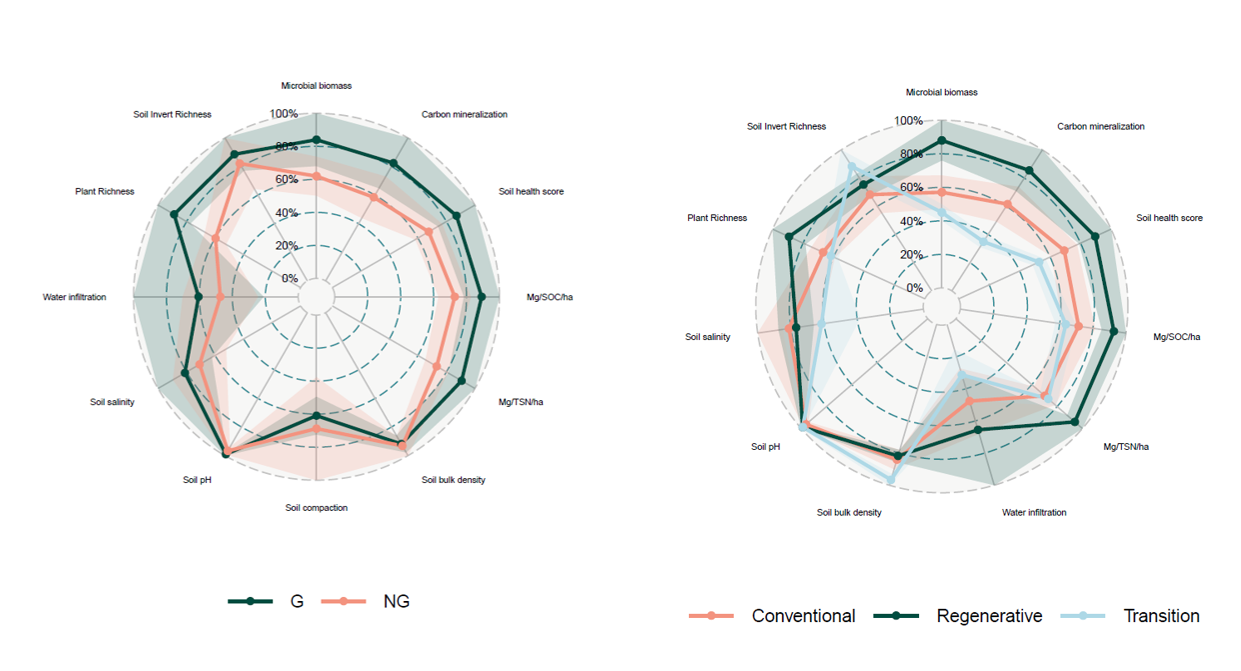
From observing the preliminary data presented in Figures 4 and 5 there was a statistically significant trend towards grazing and regenerative management being associated with enhancing soil health and biodiversity metrics. It is important to note that both figures 4 and 5 are visualizations that do not account for key covariates such as soil texture and latitude/longitude. When these covariates were included in the general additive models (GAM) the differences observed were enhanced. In the GAMs analyzing the effect the individual management practices comprising the regenerative matrix had on sustainability outcomes, grazing consistently appeared as one of the most significant management practices. Additionally, in some of these GAM models grazing performed better than a vineyard's regenerative-conventional designation in predicting sustainability outcomes. For other metric's a vineyard's regenerative designation served as a better predictor. These analyses suggest that grazing is a keystone management practice for improving soil C and N dynamics, microbial biomass, as well as other biodiversity variables. Simultaneously, these analyses highlight the importance of stacking sustainable practices to create regenerative vineyard systems.
Soil Organic Carbon (SOC)
All vineyard management systems accumulated SOC over time, but regenerative practices accelerated those gains. Conventional ungrazed vineyards gained 0.17 Mg SOC ha⁻¹ yr⁻¹. Regenerative ungrazed vineyards gained 0.34 Mg ha⁻¹ yr⁻¹ — roughly twice as much — and regenerative grazed vineyards gained 0.55 Mg ha⁻¹ yr⁻¹, about three times the conventional ungrazed rate. Compared to the conventional ungrazed baseline, regenerative grazed vineyards showed the largest and only statistically significant increase in accrual rate (+0.38 Mg ha⁻¹ yr⁻¹, p = 0.006). Geographic location and soil calcium saturation were the dominant site-level factors shaping SOC accumulation across vineyards.
Total Soil Nitrogen (TSN)
Grazing was the primary driver of TSN gains. Conventional ungrazed vineyards showed little change in soil nitrogen over time (0.01 Mg TSN ha⁻¹ yr⁻¹, p = 0.162), while all other systems accumulated TSN at significantly higher rates: conventional grazed (0.07 Mg ha⁻¹ yr⁻¹), regenerative ungrazed (0.02 Mg ha⁻¹ yr⁻¹), and regenerative grazed (0.05 Mg ha⁻¹ yr⁻¹). Regenerative grazed and conventional grazed vineyards performed similarly to one another, suggesting that grazing itself, regardless of broader management system, is the key factor driving nitrogen accumulation. As with SOC, geographic location and calcium saturation were significant spatial covariates.
Plant-Available Nitrogen (PAN)
Management had a clear effect on plant-available nitrogen. Conventional ungrazed vineyards showed no trend in PAN over time, while all other systems showed meaningful positive gains relative to that baseline: regenerative grazed (+0.94 kg PAN ha⁻¹ yr⁻¹, p = 0.004), regenerative ungrazed (+0.48 kg ha⁻¹ yr⁻¹, p = 0.019), and conventional grazed (+1.49 kg ha⁻¹ yr⁻¹, p = 0.046). Grazed vineyards showed the strongest responses regardless of management system, highlighting the importance of integrated grazing for building nitrogen availability in vineyard soils.
Grazing and non-grazing vineyards had similar amounts of inorganic N, but grazing vineyards have significantly more organic N. Of this organic N the grazing vineyards had significantly more water extractable organic nitrogen (WEON), which is the pool of readily mineralizable N. While grazing vineyards had increased levels of C and N, both grazing and non- grazing vineyards had similar ratios of SOC:TSN (11:1) as well as WEOC:WEON (12:1), suggesting that N was not immobilized in either system. This is synthesized by the higher Haney soil health scores observed in Figure 4.
Grazing and Management Regimes
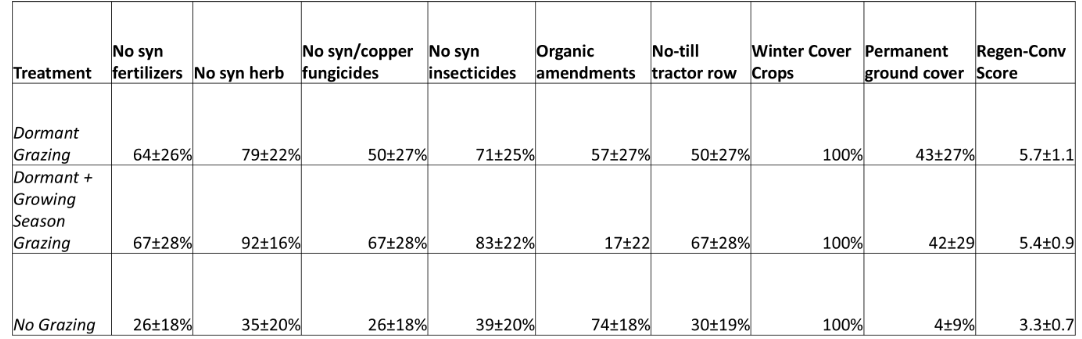
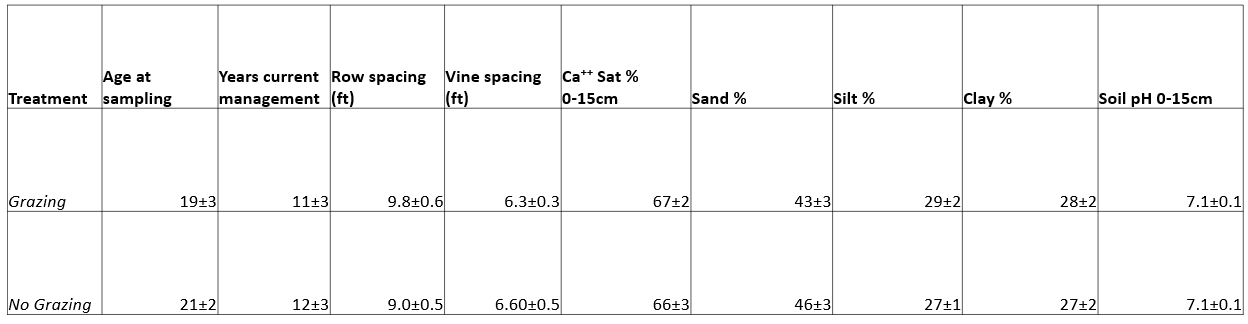
From observing table 1, one will notice that vineyards integrating grazing as well as forming regenerative systems are a mix of certified organic and conventional farms. Table 2 highlights that vineyards with grazing trended towards less usage of organic amendments and tractor row tillage, with the grazing vineyards utilizing less synthetic inputs, particularly herbicides and fertilizers, while following grazing best practices of minimizing bare soil. Further, table 2 suggests that dormant + growing season grazing (ISVS_WSG) can play a key role in further reducing synthetic herbicides, tractor row tillage, and the need to bring in offsite organic amendments. Table 3 displays the variables the study is aiming to control for, with the results suggesting the study is doing a good job in controlling for these variables. Regarding, specific costs are highly variable depending on where a vineyard is located and management goals. Therefore, we developed a Cost Benefit tool for integrating sheep in vineyards where growers can estimate potential cost savings or tradeoffs with utilizing sheep grazing in their vineyards.
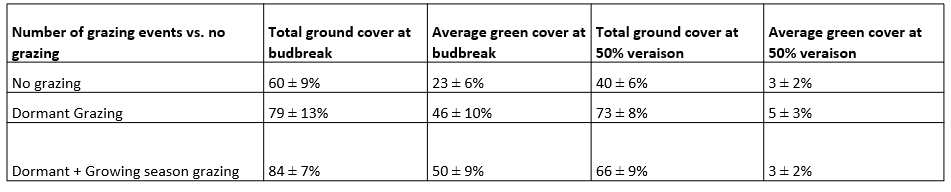
One of our research goals was to determine if increasing the number of prescribed grazing events (adding post-bud break grazing events-ISVS_WSG) over the course of growing year has a negative, positive, or neutral effect on soil health metrics and the delivery of associated ecosystem services. In table 4. we present some basic data on the ground cover composition of the non grazing vineyards, ISVS_WG and ISVS_WSG vineyards. Table 4 suggests that the grazing being utilized in the vineyards aligned with prescribed grazing best practices, with grazing increasing the total ground cover and total green/living ground cover at budbreak. Additionally, both grazing treatments had greater total cover at 50% veraison than the non-grazing vineyards suggesting that grazed vineyards were minimizing the amount of bare soil and aligning with prescribed grazing best practices. Regarding the green cover present at 50% veraison there was no difference among the treatments, suggesting that while grazing was associated with increased residue/ground cover that protects the soil it did not lead to increased vineyard floor green cover later in the growing season, which could increase transpiration and reduce water available to the vines. Further, the GAMs run to date suggested no differences in soil health metrics between vineyards utilizing ISVS_WG or ISVS_WSG, with grazing in general outperforming non-grazing sites. A post-hoc power analysis indicated that our sample size was not large enough to detect differences between the different grazing treatments. Hence, why for most analyses ISVS_WG and ISVS_WSG were grouped together as grazing.
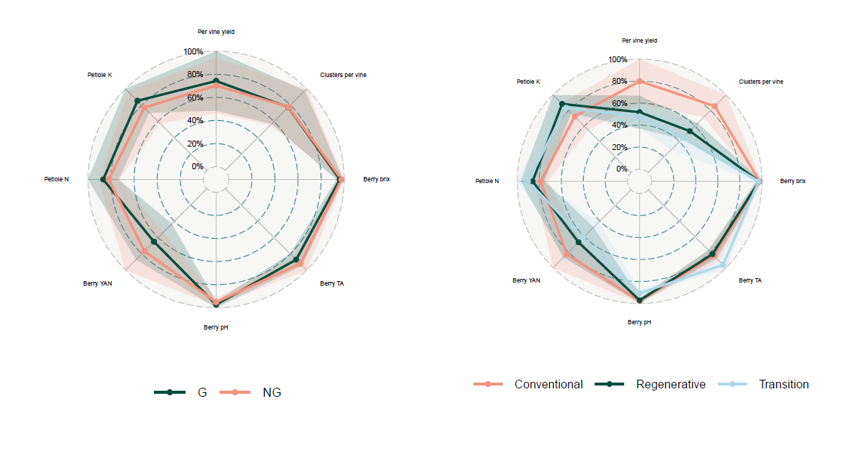
From observing the preliminary data presented in Figure 5 there appeared to be no relationship between grazing and regenerative management being associated with enhanced yield or berry quality metrics. However, when we accounted for the environmental variables accounting for terroir there was a significant positive relationship between increasing regenerative score and berry quality, suggesting that the environmental variables are potentially masking the effects of management on berry quality. There was no difference in yield between regenerative and conventional systems when accounting for wine growing regions in the model.
Overall, these results suggest that both organic and conventional vineyard systems enhance their sustainability outcomes and reduce their usage of off-site inputs and tractor work by integrating grazing and stacking other sustainability practices, while not experiencing a tradeoff to yield and berry quality metrics.
Research outcomes
Regarding research outcomes we have completed field work and lab analyses. Most statistical analyses have been completed. Currently, our results on the effect of grazing and regenerative management on accrual in the carbon and nitrogen pools is undergoing revisions in the journal Carbon Balance and Management - Grazing within Regenerative Perennial Systems Accelerates Soil Carbon and Nitrogen Accrual. The manuscript, Grazing and Regenerative Co-Management in Perennial Systems Enhance the Delivery of Ecosystem Services Without Tradeoffs to Yield and Quality, is currently being reviewed by co-authors and will be submitted by August 1, 2026. However, because the results from this work is still under peer review, a this time all data, insights, and recommendations are preliminary.
In this research we have made an explicit effort to work with vineyards and graziers that follow prescribed grazing best practices as outlined by the NRCS. At this time it appears that vineyards can support prescribed grazing prior to budbreak as well as during the growing season. However, if vineyards do not utilize prescribed grazing best practices, resulting in over or under grazing it would seem likely that the benefits observed to date would not translate. Therefore, it is imperative that vineyards integrating grazing work with graziers to ensure the grazing regimes are following the optimum stocking rates, grazing duration, and necessary rest periods. As these can change year to year based on weather, cover crop composition etc., it is necessary for vineyard managers and graziers to work together to adapt the grazing management to the present conditions. Vineyards with high-wire trellising systems present the most immediate opportunity for increasing grazing events and have the opportunity to also ease management logistics for graziers (i.e. there may still be sufficient cover crop/forage, but bud break starts and all the sheep must go).
Overall, vineyards that integrate prescribed grazing and stack sustainable practice can enhance their sustainability outcomes without seeing a drop in production metrics. Vineyards that integrate grazers appear to be reducing the number of tractor passes (~2-3 per growing season) they utilize for managing ground cover, while reducing their synthetic and fertilizer and herbicide usage.
Future Research
Future research should include longitudinal monitoring to resolve lagged and nonlinear responses, targeted experiments varying grazing timing and duration within otherwise comparable systems, and controlled studies designed to isolate the effects of regenerative management on berry quality. Research should also explore how higher trellis systems, rootstock and scion selection, and other agroecological practices can be synergized with grazing to enhance soil ecosystem functioning and livestock health, thereby improving farm resiliency. Hierarchical modeling would further help disentangle the relative contributions of direct management effects, input reduction, and landscape-mediated pathways to the delivery of ecosystem services and multifunctionality.
While controlled plot trials are necessary to understand the mechanisms driving potential benefits and tradeoffs of ICLS, research on working commercial operations is equally important to determine whether these findings translate to real-world conditions at scale. On-farm research also enables space-for-time substitution to model long-term biological, physical, and chemical effects — particularly valuable given that the benefits of ICLS can take years to manifest and long-term funding is difficult to secure. Critically, on-farm research fosters partnerships between researchers and producers, ensuring that hypotheses are grounded in farmer observations and that findings remain relevant and actionable. Ideally, future efforts will combine controlled plot trials with commercial-scale on-farm research to bridge mechanistic understanding with practical application. Carrying this work forward will require participatory, interdisciplinary collaboration among researchers, producers, industry, and government — with systems-level approaches that address both the agronomic and socio-political barriers to broader adoption of integrated crop-livestock systems.
Education and Outreach
Participation summary:
Education Plan
Our outreach goals were to create Best Management Practices (BMP) guidelines for growers and sheep operators while implementing a multipronged outreach plan to share results on feasible and innovative sheep grazing practices. Additionally, by highlighting the role of sheep in regenerative systems we hope to help expand the market for CA sheep-based products (meat and fiber). The outreach objectives were designed to reach English and Spanish speakers. The team members have extensive experience producing meaningful and effective outreach alongside their research. The target audience for all the outreach activities was viticulturists and sheep operations, with the secondary audience consisting of farmers in other perennial cropping systems, those involved with the winemaking industry, and consumers of wine and sheep-based products. The timeline for achieving these outreach objectives can be found in the associated Gantt chat. Our specific objectives are listed below. In the bullet points below each objective we state how we accomplished that objective.
Obj. 1: Create a Best Management Practice (BMP) guide in English and Spanish synthesizing grower knowledge and research results.
- The team has created a one-pager. The team has also completed the full versions in English and Spanish. The English guide lives here and the Spanish guide here, where they are free for anyone to download. We printed 200 copies of each version, which we have been distributing at events.
- ISVS one pager
- English Grazing Sheep in Vineyards BMP
- Spanish Grazing Sheep in Vineyards BMP
Obj 2: Generate a cost-return planning tool as part of the cost-return study to assist producers seeking to integrate grazing into their operations.
Obj. 3: Share project results and best management practice guidelines to a minimum of 150 producers via 3 in-person on-farm field days and 3 workshops. The effects of ISVS on soil health, biodiversity, yield and grape quality and cost and expected returns will be presented. The benefits of sheep for meat and fiber markets, as well as ecosystems benefits, such as fire load management were included.
- Field Days
-
- BIFS: Cover Cropping and Livestock Grazing for Regenerative Viticulture
- 12/5/2023
- Lodi, CA
- Attendees: 65
- Survey responses: 48
- This was a field day and also an on-farm demonstration, since it took place in the vineyards block where sheep were grazing to take advantage of the post-harvest residue
- Link to news article about the field day
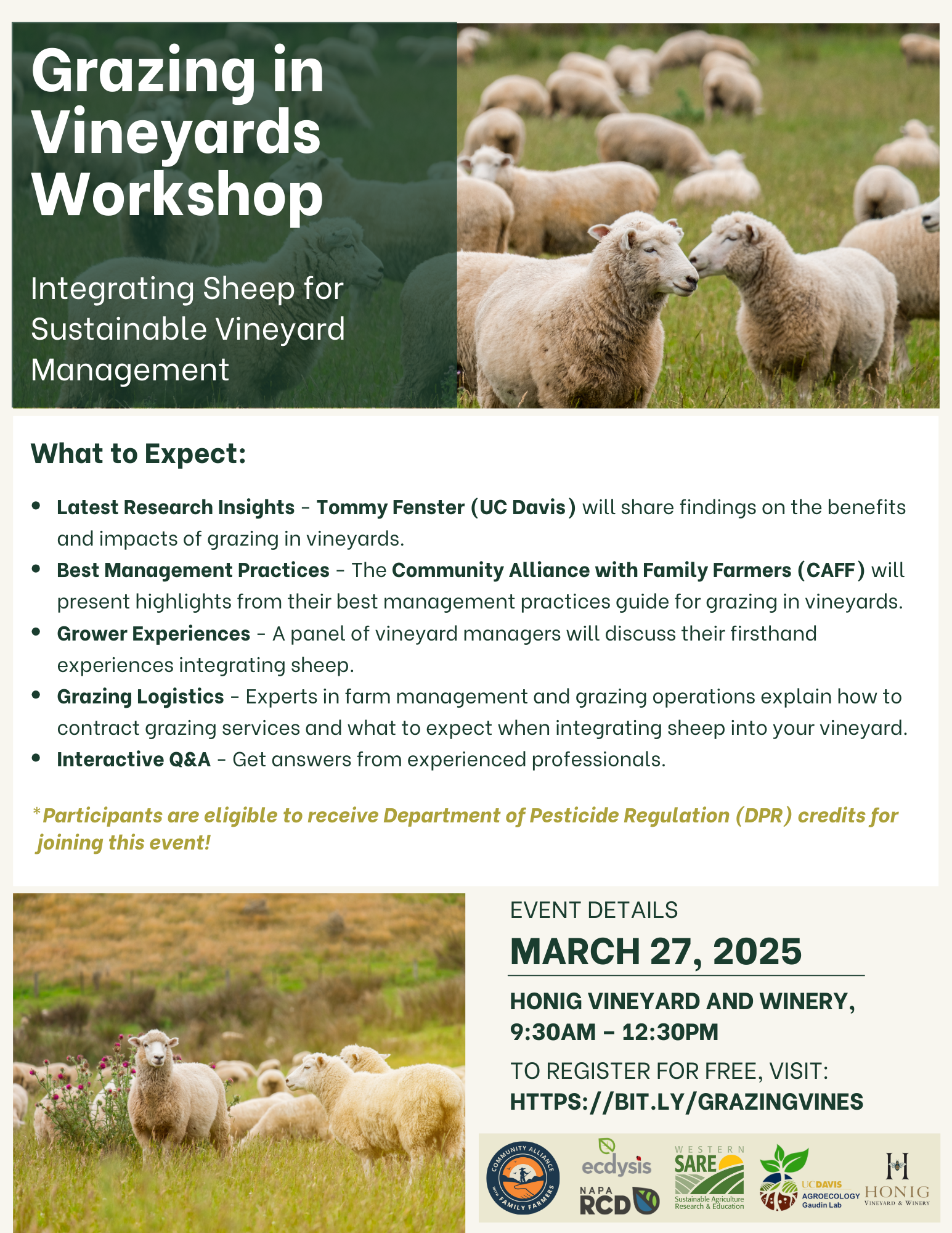
- Napa Grazing in Vineyards Field Day at Honig Vineyard and Winery
- 3/7/2025
- Napa, CA
- Attendees: 20
- Survey responses:7
-
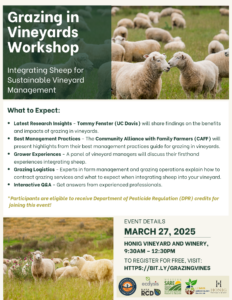
Napa grazing in vineyards flyer
- Paicines Ranch Grazing in Vineyards Field Day
- 07/17/2025
- Paicines, CA
- Attendees: 25
- Survey responses: 25
- BIFS: Cover Cropping and Livestock Grazing for Regenerative Viticulture
-
- Workshops
- Wild Farm Alliance Field Day at Paicines Ranch
- Presentation on integrating livestock into vineyards and other perennial cropping systems
- 6/1/2023
- Paicines, CA
- Attendees: 60
- Napa Green Grazing in Vineyards Workshop
- Presentation on potential ecosystem services of integrating sheep into vineyard systems
- 2/27/2024
- Calistoga, CA
- Attendees: 45
- News article on workshop
- Cultivating Biodiversity, Soil Health, and Community in North Coast Vineyards
- Stacking regenerative practices and the importance of grazing for enhancing soil health and biodiversity in vineyards
- 4/2/2025
- Medlock Ames Winery, Sonoma, CA
- Attendees:65
- Event information
- Wild Farm Alliance Field Day at Paicines Ranch
- Regenerative Viticulture Foundation Sonoma County 1-Block Challenge Kick off
- Regenerative Viticulture- Rethinking Systems
- 04/16/2026
- Sonoma, CA
- Attendees: 60
- Data reports for growers
- Data reports summarizing the results for each vineyard that was sampled were shared with each grower at the end of the growing season.
Obj. 4: Disseminate research results, field day demonstrations, workshops, our BMP guide, and the cost-return tool to an extended audience using podcast interviews, industry publications, Facebook live streams, twitter, and other social media outlets handled by the team’s outreach specialists.
- Popular press articles in addition to those listed above
- May 2023 Wine Business Monthly Issue
- Grazers and trailblazers
- Found on page 46
- Grape and Wine Magazine
- Tommy was guest on the Beyond Organic Wine Podcast.
- 3/17/2025
- Grazing in vineyards: opportunities for soil health and multifunctionality. Nutshell talk to the US Agroforestry network
- March 2025
- May 2023 Wine Business Monthly Issue
Obj. 5: Produce 3 academic journal articles and present findings at local and national conferences.
- 49 of 49 vineyards have been sampled. Data analyses has begun. Materials and method sections have been written. Goal is to begin submitting articles for publication in Summer of 2025 and present the final findings at the 2025 Ecological Society of America Conference.
- Preliminary findings have been presented at the following conferences
- ASA, CSSA, SSSA International Annual Meeting
- 10/30/2023
- St. Louis, Missouri
- Attendees: 50
- Unified Wine and Grape Symposium
- 1/24/2024
- Sacramento, CA
- Attendees: 100
- CA Plant and Soil Conference
- 2/6/2024
- Fresno, CA
- Attendees: 100
- EcoFarm Conference
- 1/21-1/24/2025
- Asilomar, CA
- Attendees: 75
- Napa Green RISE Symposium
- Workshop 2: RISE Results: Herbicide-Free Trials at Chimney Rock + Benefits of Woolly & Flying Worker
- 5/1/2025
- St. Helena, California
- Attendees: 40
- CANVAS Crop, Agronomic, Environmental, and Soil Sciences Societies Conference
- Integrated Sheep Vineyard Systems: Soil Carbon and Nitrogen Accrual Potential in California
- 11/11/2025
- Salt Lake City, UT
- Attendees: 50
- Sustainable Ag Expo
- Regenerative Viticulture and Grazing as a Keystone Practice
- 11/12/2025
- San Lois Obispo, CA/webinar
- Attendees: 50
- Embracing Hybrid Grapes Conference
- Hybrid Grapes and Regenerative Management
- 1/26/2026
- Davis, CA
- Attendees: 200
- CAFF Small Farms Conference
-
- Grazing and Regenerative Management in Vineyards Enhances Ecosystem Services
- 2/22/2026
- Webinar format
- Attendees: 38
-
- ASA, CSSA, SSSA International Annual Meeting
Obj. 1: Create a Best Management Practice (BMP) guide in English and Spanish synthesizing grower knowledge and research results.
Obj 2: Generate a cost-return planning tool to assist producers seeking to integrate grazing into their operations.
Obj. 3: Share project results and best management practice guidelines to a minimum of 150 producers via 3 in-person on-farm field days and 3 workshops. The effects of ISVS on soil health, biodiversity, yield and grape quality and cost and expected returns were presented. The benefits of sheep for meat and fiber markets, as well as ecosystems benefits, such as fire load management were included.
- Survey from the 1st, second, and third field day attached below.
- LangeTwins Field Day Survey Responses
- WSARE_Grazing in Vineyards Field Day Surveys Mar 27 2025
- Paicines Grazing Vineyards Field Day Jul 17 2025 Surveys
Obj. 4: Disseminate research results, field day demonstrations, workshops, our BMP guide, and the cost-return tool to an extended audience using podcast interviews, industry publications, Facebook live streams, twitter, and other social media outlets handled by the team’s outreach specialists.
- 1,043 people were engaged via in-person outreach events and online workshops/webinars (3 field days, 4 workshops, 9 conferences/webinars ).
- CAFF shared 1 Instagram post to promote the 12/5/2023 field day, receiving 103 likes.
- Napa RCD shared 1 Instagram post to promote the event (29 likes) and 1 Instagram post after the event (54 likes).
- Tommy was guest on the Beyond Organic Wine Podcast.
- Paicines Ranch Shared an Instagram post highlighting the 07/17/2025 field day and study results (167 likes)
Obj. 5: Produce 3 academic journal articles and present findings at local and national conferences.
- We are the lead authors for the book chapter. The science and practice of agroecology: Pathway to sustainable food systems. Integrated crop-livestock systems: productive potential and ecosystem services. Has been accepted for publication and will be published September 22, 2026.
- Grazing within Regenerative Perennial Systems Accelerates Soil Carbon and Nitrogen Accrual. Submitted to Carbon Balance and Management 04/07/2026. Currently addressing revisions.
- Grazing and Regenerative Co-Management in Perennial Systems Enhance the Delivery of Ecosystem Services Without Tradeoffs to Yield and Quality. Undergoing pre-submission revisions with co-authors. Will submit to journal by August 1, 2026.
- To date preliminary findings have been presented at 4 conferences, reaching 325 people at those conferences
Education and Outreach Outcomes
Over the course of the grant we presented organized 3 field days and presented at 4 workshops. At the three workshops we were guest presenters and not the organizers, so we did not collect surveys. However, at all of these events we have had multiple conversations with growers, answering their questions, exchanging contact information, and establishing relationships. Qualitatively, it seems that in-person events are invaluable for furthering adoption of sustainable agricultural practices.
Regarding future efforts there should be workshops around helping farmers rethink their overall system. Valuable outreach events should explore the synergies and potential trade-offs between on-farm management practices for soil health, trellising systems, rootstocks, varieties, and dry-farming.
- Implementing grazing in vineyards
- Benefits of integrating grazing in vineyards
- Costs and equipment associated with integrating grazing in vineyards
- Financial and funding opportunities for integrating grazing in vineyards
Implementing grazing in vineyards
Benefits of integrating grazing in vineyards
Costs and equipment associated with integrating grazing in vineyards
Financial and funding opportunities for integrating grazing in vineyards