Progress report for ENE25-196
Project Information
Project Focus: The Northeast agricultural sector faces a significant opportunity to adopt biochar technology - a proven soil amendment that sequesters carbon, improves soil health, and offers potential revenue streams through carbon credits and value-added products. However, many small to midsize farmers lack access to practical knowledge about biochar production and application. Five nonprofit farm educators in New York State have expressed strong interest in integrating biochar education into their existing farmer training programs, which serve new and emergent farmers. These service providers currently lack the hands-on experience and educational resources needed to effectively teach biochar systems to their farmer networks.
Solution and Approach: White Feather Farm will establish a Biochar Learning Network connecting five nonprofit farm educators through a comprehensive three-year education and implementation program. The project will provide each partner farm with a biochar demonstration system, hands-on training, and ongoing support from White Feather Farm's Director of Biochar and Sustainability. Through regular site visits, peer-to-peer learning exchanges, and collaborative workshops, service providers will gain practical experience in biochar production, application, and teaching methods. The project will develop essential resources, including farm-specific curricula, an educational website featuring case studies from each demonstration site, and a practical guidebook for Northeast farmers. By the project's end, the five partner farm educators will be equipped to incorporate biochar education into their farmer training programs, collectively reaching at least 300 small to midsize sustainable farmers. This initiative will advance Northeast SARE's outcome statement by making sustainable farming practices more accessible while addressing improved soil health, and waste management practices.
White Feather Farm's Director of Biochar and Sustainability will serve as the project's primary service provider and create a comprehensive Biochar Learning Network (BLN). This network will develop an educational resource website and a practical booklet for Northeast farmers. Our director will collaborate with five neighboring nonprofit farmer educators to integrate biochar education into their curricula, providing hands-on training in biochar system design, operation, and maintenance and enabling these educators to effectively teach their visiting farmer networks (six service providers total).
Over three years, our director will conduct regular site visits to each partner farm, providing and installing their own biochar demonstration systems, offering ongoing support, shared learning, and strategic feedback on biochar production and application as a soil amendment. By the program's end, the five partner farm educators will incorporate biochar education into their farmer training programs. Collectively, we aim to educate at least 300 small to midsize sustainable farmers in the Northeast, providing them with the knowledge and skills to understand and potentially implement biochar systems. This initiative will improve soil health, better waste management practices, and energy production opportunities.
Educational approach
ENGAGEMENT
As a nonprofit educational farm and innovation hub, White Feather Farm has secured partnerships with five other nonprofit farms that share our commitment to education and outreach, totaling six service providers for this project. We targeted farms with solid programming and established networks to maximize impact. Our selection criteria focused on each farm's capacity to integrate biochar education into their existing farmer networks and community programs, ensuring a broader reach of knowledge gained through our partnership. Our Director of Sustainability will guide the project, offering consultation on and construction of a biochar demonstration site, bi-annual site visits, expert advice on implementing biochar programs, help develop farm-specific biochar curricula and support in building a community of practice. This long-term engagement will keep partners invested, allowing them to see tangible results and growth over time.
LEARNING: EDUCATIONAL CONTENT & APPROACH
This educational content is structured as a progressive learning journey that builds on established biochar research and practices validated by institutions like Cornell University, American Farmland Trust, and the US Biochar Initiative. The curriculum develops service providers' expertise through three key phases:
-
Foundation Knowledge and Skills: Service providers will first develop core competencies in: Biochar production fundamentals (pyrolysis process, equipment operation, safety protocols), Application methods and rates based on soil type and crop needs, Monitoring and data collection techniques for soil health indicators and best practices for system maintenance and troubleshooting.
2. Implementation and Adaptation: As service providers gain confidence with their demonstration systems, and learn from others in the network, they'll develop the ability to assess farm-specific opportunities for biochar integration, skills in optimizing biochar systems for different scales and purposes, expertise in mixing biochar with compost and other amendments, capacity to evaluate and document system performance and most importantly, methods for teaching hands-on biochar skills to others.
3. Educational Leadership Development: The final phase focuses on building service providers' capacity to design effective biochar education programs for diverse audiences, create practical educational materials and resources, lead demonstrations and field training sessions, evaluate learning outcomes and program impact, and share knowledge through peer networks.
EVALUATION: EDUCATION IMPACTS AND DEMONSTRATION SITE DATA
The Biochar Learning Network will implement a comprehensive evaluation strategy that follows service providers from initial engagement through their development as biochar educators. Beginning in March 2025, we'll establish baseline measurements through initial knowledge surveys and site documentation to understand each service provider's starting point and specific goals. Please see the Milestones section for more specific date-based evaluation information.
Biannual site visits and biannual virtual meetings by the Project Leader and WWF staff will document physical progress through photographs, system measurements, and direct observation. Service providers will maintain activity logs recording their biochar production, application rates, and teaching activities, creating a continuous record of implementation and challenges overcome.
Our Project Leader will verify service providers' demonstration of practical biochar skills by attending their workshops and taking notes. He will review educational materials they develop and feedback from farmers attending their workshops.
The Project Leader will also measure concrete outputs, such as the volume of biochar produced and the number of farmers reached through workshops and consultations. Annual evaluations will assess progress toward key milestones and document the growing expertise of service providers. Year two will build upon this foundation, focusing on system maintenance and optimization.
The final project evaluation in 2028 will culminate in the BLN's case-study resource website. The Director will guide the development of a biochar case study online resource for farmers, synthesizing the collective knowledge gained over the project. We'll also publish an accessible booklet for wide dissemination. Throughout this year, final quantitative (survey) and qualitative (interview) evaluations of the biochar systems will be conducted, providing valuable data on long-term impacts and best practices.
By project end, partner farm educators will be proficient in operating biochar systems and teaching diverse audiences, including peers, about biochar's multifaceted benefits. This comprehensive learning plan ensures lasting impact, fostering a community of biochar experts capable of driving sustainable agricultural practices in their respective networks.
Milestones
Learning: May, 2025. 5 Service providers participate in an initial orientation workshop at White Feather Farm, learning about biochar basics and the project goals. Attendance and pre-workshop knowledge surveys will be used for evaluation.
Status: Complete
Accomplishments:
White Feather Farm successfully launched the Biochar Learning Network during Year 1 with a comprehensive kickoff meeting and individual site visits to all five partner farms.
On May 21, 2025, four of the five partner organizations attended an initial orientation at White Feather Farm. Participants included Ryan Surrano (Agroforester) from Wally Farm, Jared Bueno (Director of HV Research Lab) from Cornell HV AgriTech Lab, Steffen Hyder (Property Director) and Matthew Ball (Agriculture Product Manager) from Glynwood, and Jasmine Wood (Education Director) from Seed Song. The kickoff meeting included introductions, a Biochar 101 presentation, a question and answer session, and a comprehensive farm tour. During the tour, participants experienced four different types and scales of on-farm biochar kilns, including two different sizes of Kon-Tiki kilns, a barrel gasification kiln, and a TLUD stove (top lit updraft stove). The group concluded by discussing the types of feedstock and equipment that might be best suited for each farm.
We ended the kickoff meeting with a tour of NY Carbon - a medium scale biochar manufacturing facility next door that is attached to Rothe Lumber a 3rd generation Lumber Mill. NY Carbon utilizes the waste material from the mill to make it's biochar and supplies farms in NY, MA, CT and southern VT.

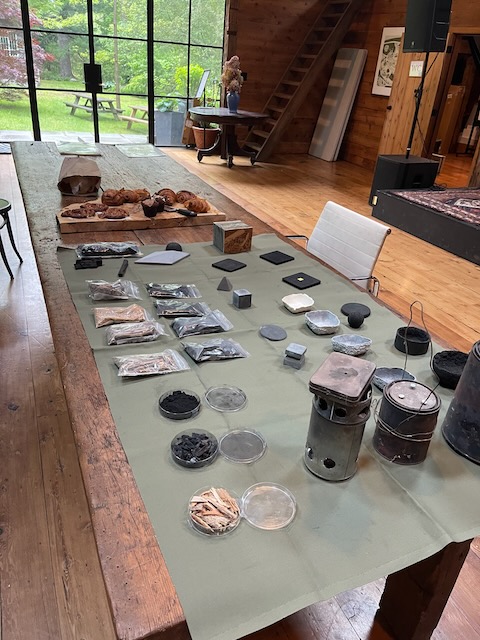


Learning: May 31 - June 31, 2025. Bill Hilgendorf visits all five partner farms for initial biochar site assessment and on-farm education planning. Bill will begin the monitoring process for each farm and begin installing pyrolyzers on the farms that are ready.
Status: Complete
Accomplishments:
Following the kickoff meeting, Bill Hilgendorf completed individual site visits with all five partner farms between May and July 2025. During these visits, Bill assessed each site's specific production capacity and potential, identified residues or other biomass available on-farm for biochar production, discussed implementation strategies for kiln acquisition, and identified potential locations for kiln activation and storage.
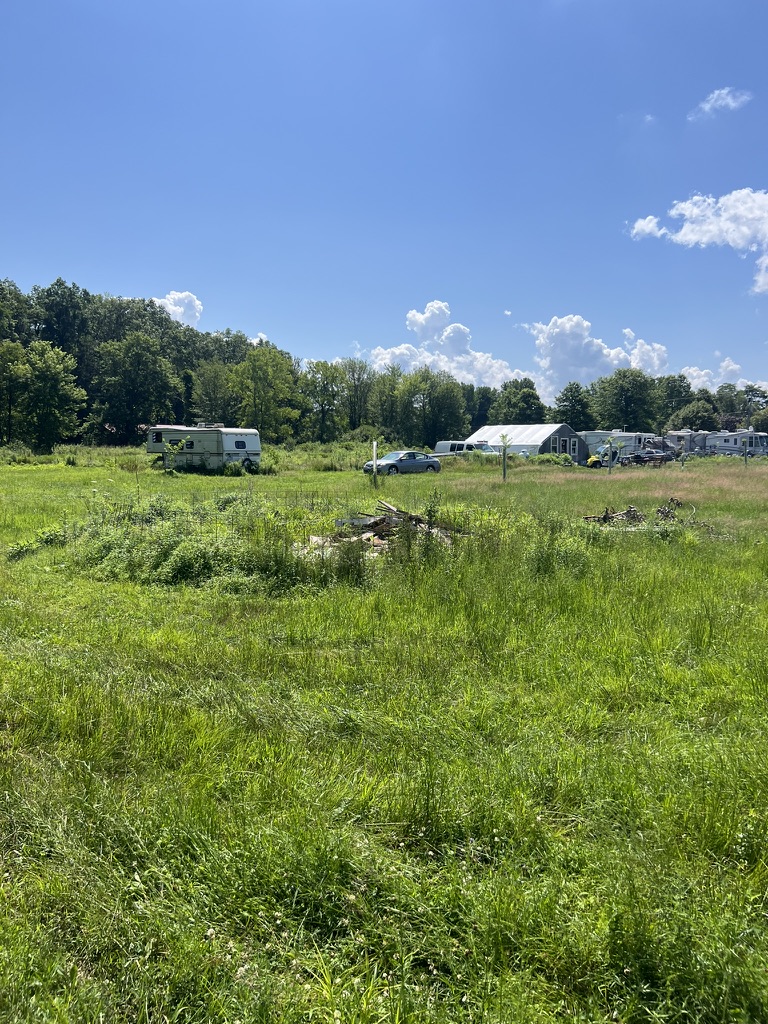
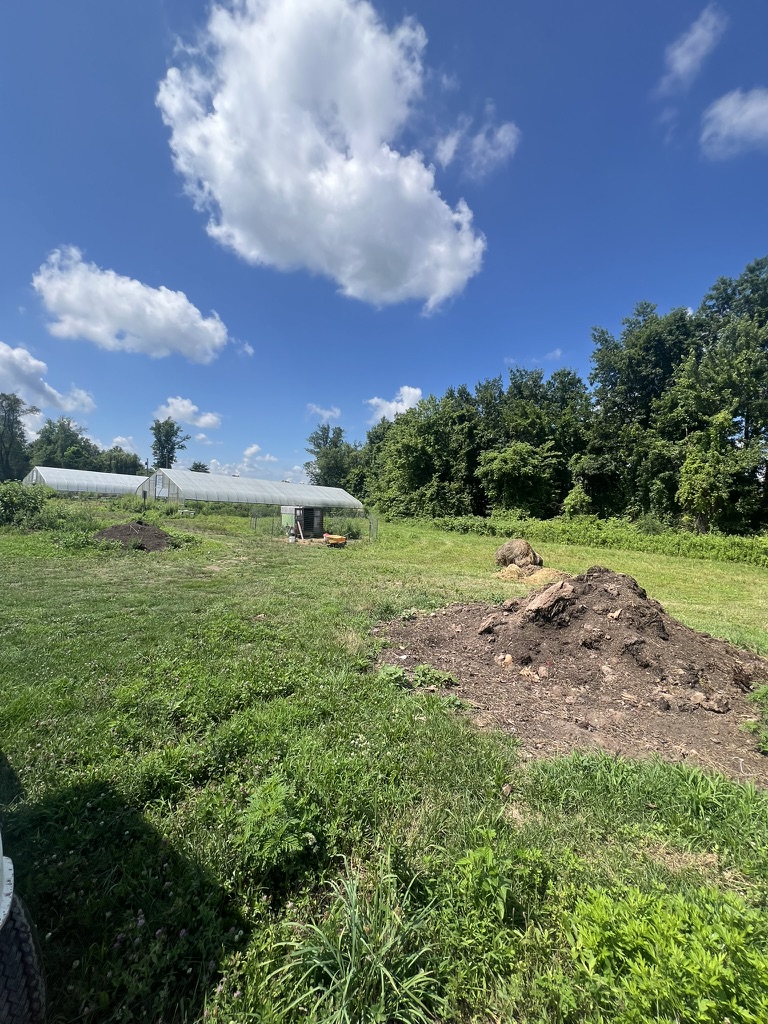
At Wally Farms (May 7 and May 19, 2025), Bill met with Megan Lerner and Ryan Surrano to tour their property of over 1,000 acres. They identified woody biomass as the primary feedstock since the farm manages over 800 acres of woods. The preferred kiln location was identified near the greenhouse where residue had already been collected and stored.

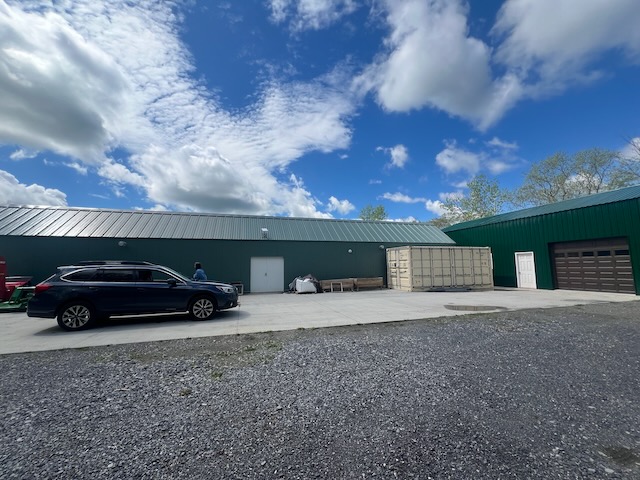
At Cornell HV AgriTech Lab/Hudson Valley Research Lab (July 2, 2025), Bill met with Jared Bueno and Sean O'Hehir to discuss their specified research that coincides with participating in the SARE grant. Their research focuses on biological pathogens from cuttings of apple orchards and vineyards, testing what amount of DNA remains post-pyrolysis of that material. The lab had already purchased a Kon-Tiki kiln and a Ring of Fire kiln, the two kiln types that Bill had identified as options for all participants. Hilgendorf and Bueno also discussed equipment that would help them grind their material.


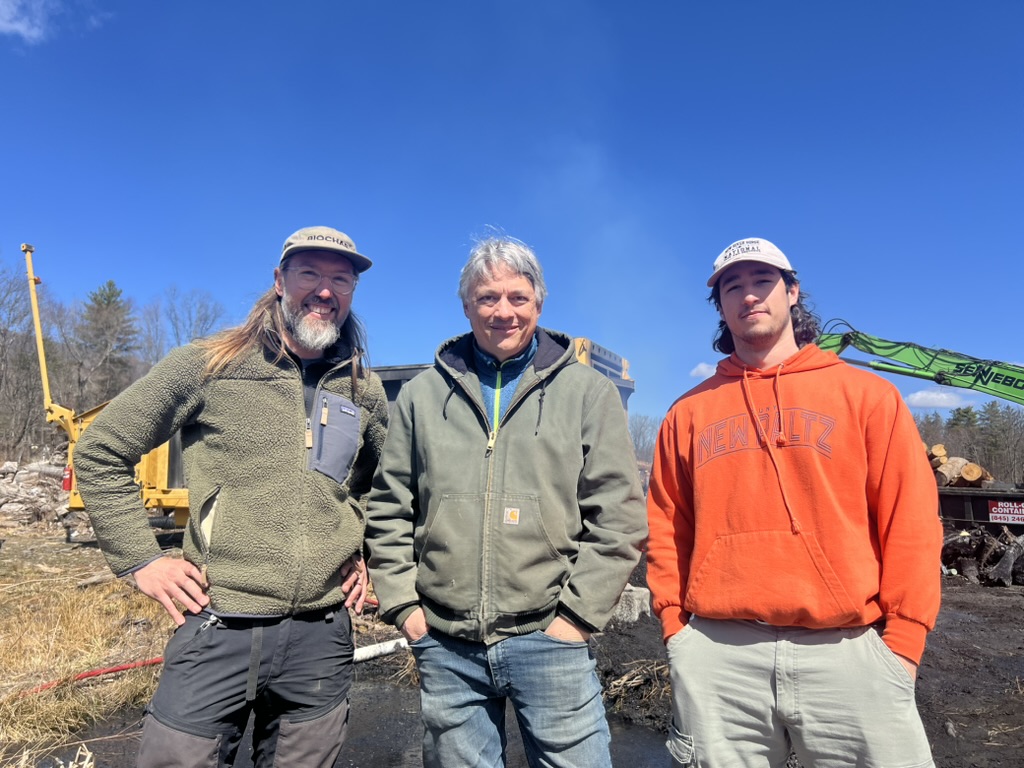
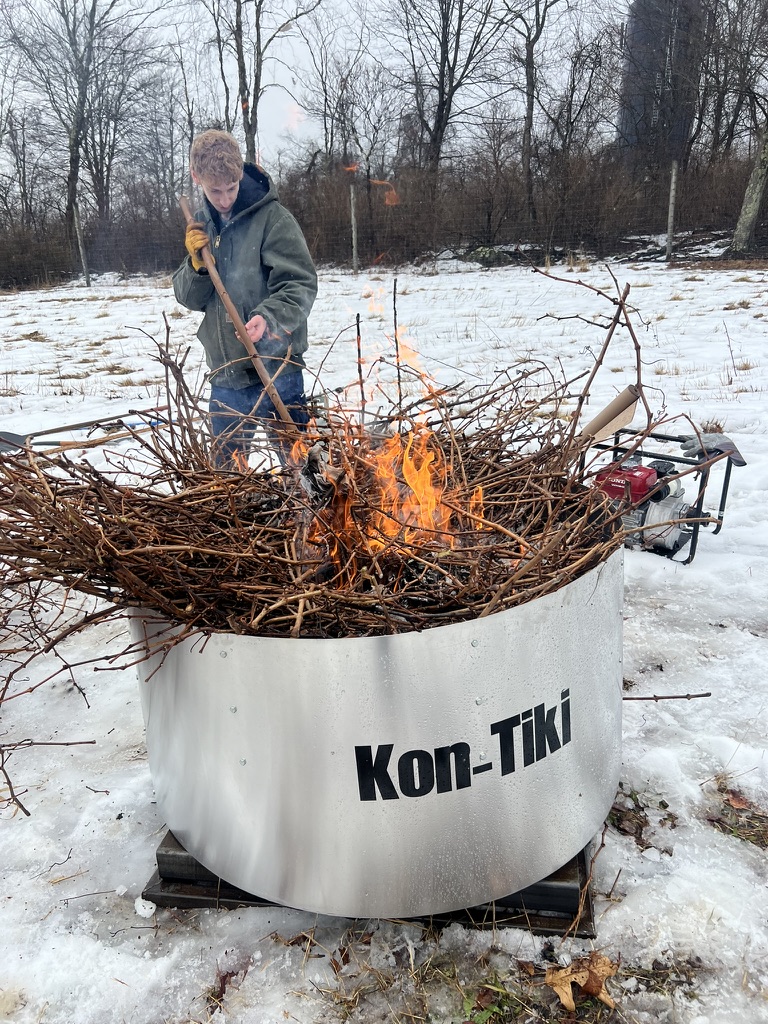
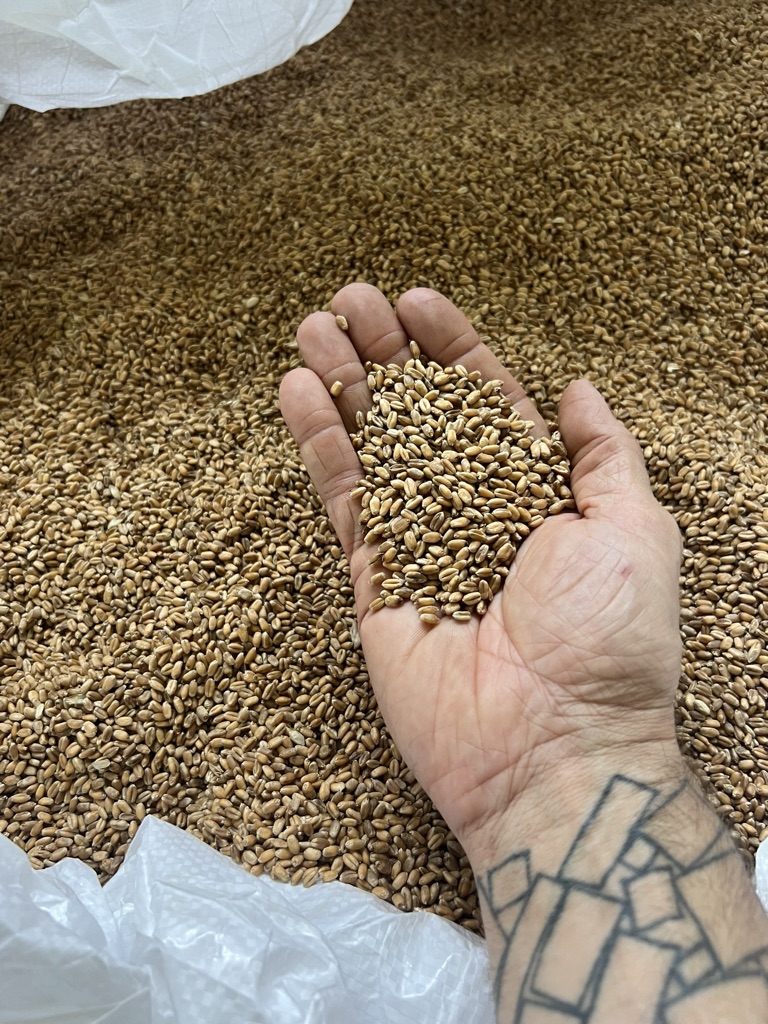
At HV Farm Hub (July 8, 2025), Bill met with Andrew Castner and Taylor Reinman to introduce biochar concepts and discuss potential feedstock sources and equipment locations. They identified grainery residue as the most viable feedstock due to its consistency and quantity. Future collaboration with Community Compost or Hudson Soil Company for biochar compost blends was also discussed.
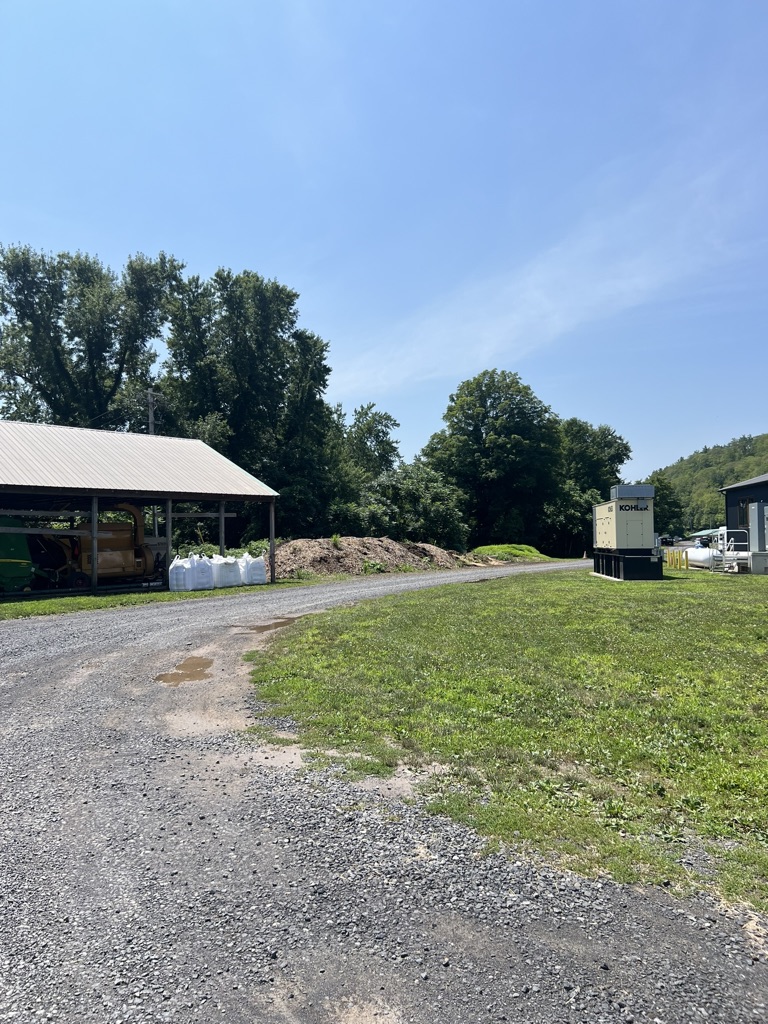
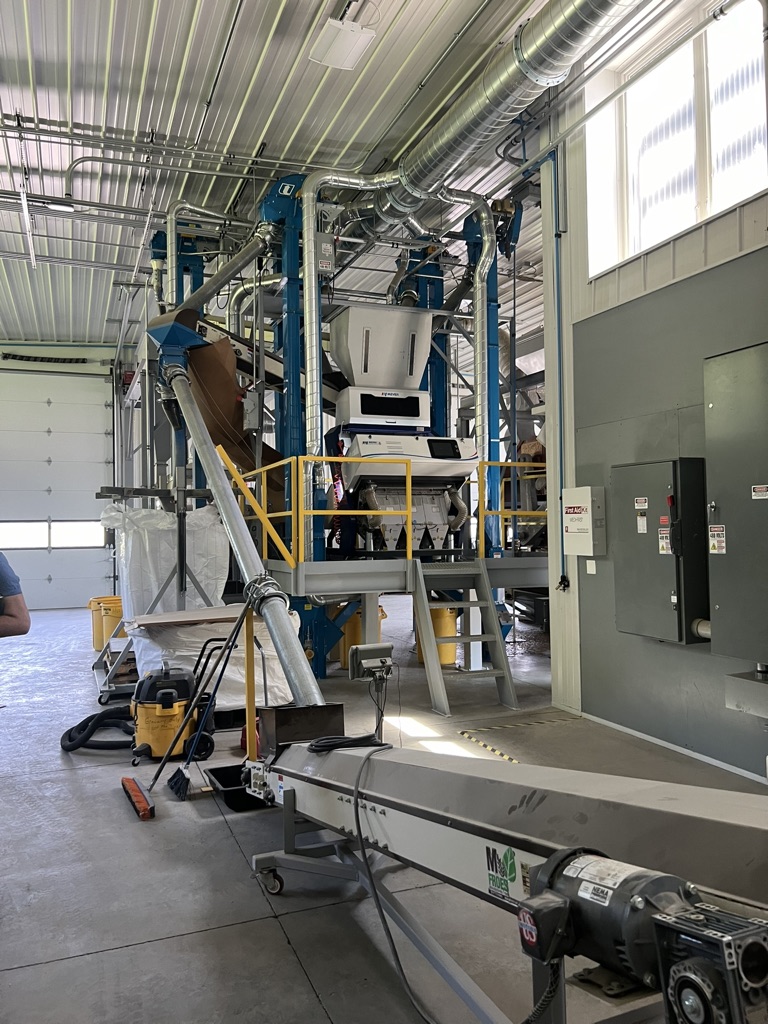
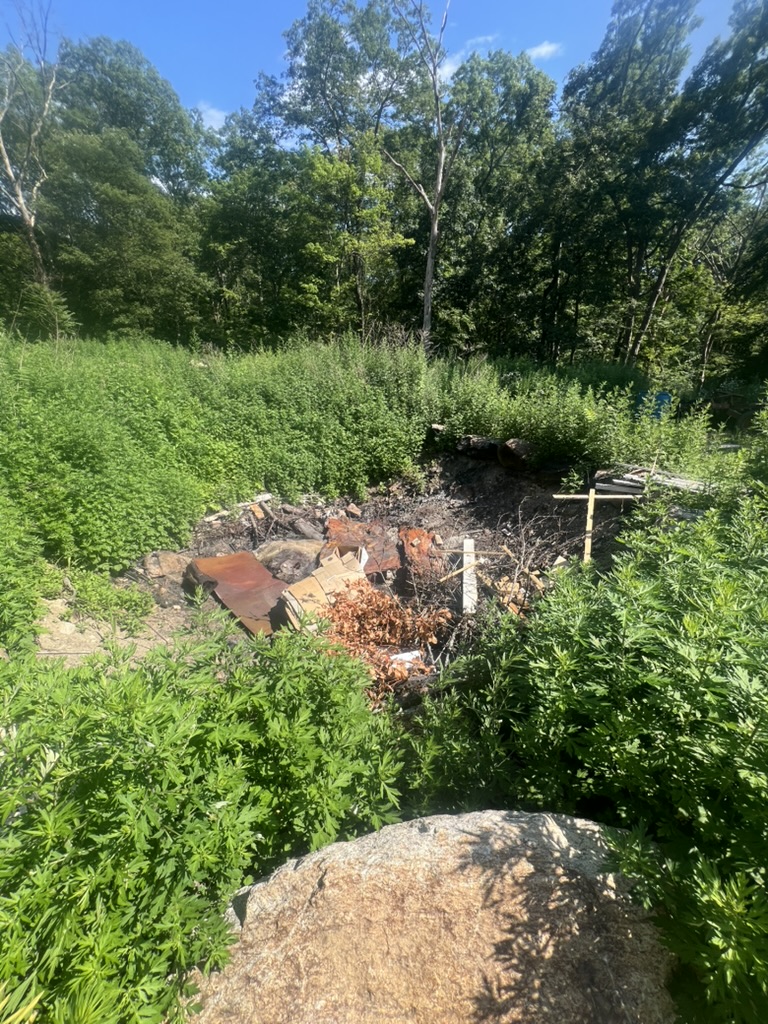
At Glynwood (July 8, 2025), Bill met with five farm staff members including Megan Larmer (Director of Education), Matthew Ball (Agriculture Project Manager), and Steffen Heyden (Grounds Manager) Brian Kissane (Grounds crew). Bill received an overview of the 250-acre farm, which includes a farm store, CSA, and various agricultural programs including food access and farmer training, as well as events, weddings, and photoshoots at the restored mansion house overlooking the farm. Bill identified potential biochar feedstocks including animal waste, invasive plants, and orchard prunings, and pinpointed an existing burn pit as an ideal location for a biochar setup. Glynwood expressed interest in co-composting biochar with existing compost and exploring its use for stormwater remediation and nutrient absorption in a pond. Next steps involve purchasing and delivering a Ring of Fire kiln to Glynwood for a sample burn. Glenwood has a well established burn pit for organics and will be diverting most of the material that would go in there to make biochar. (Pit shown below. 25' diameter and 10' deep)
At Seed Song (July 16, 2025), Bill and Farm Manager Eric Murphy discussed potential biochar kiln sites, with a preferred spot on the north side of the farm near residences and an alternative location near the compost operation. Bill planned to re-engage with Executive Director Creek Iversen and Education Director Jasmine Wood for future planning and to consider coordination with their agroforester. Bill also planned to integrate a biochar demonstration into their fall community cleanup day.
Engagement: July, 2025, 2026, 2027. 5 Service providers conduct annual biochar information sessions at their respective farms, conducting biochar-making demonstrations. The goal is to reach a total of 100 farmers each year (300 total). Sign-in sheets and post-session surveys will be used for evaluation.
Status: In process
Accomplishments:
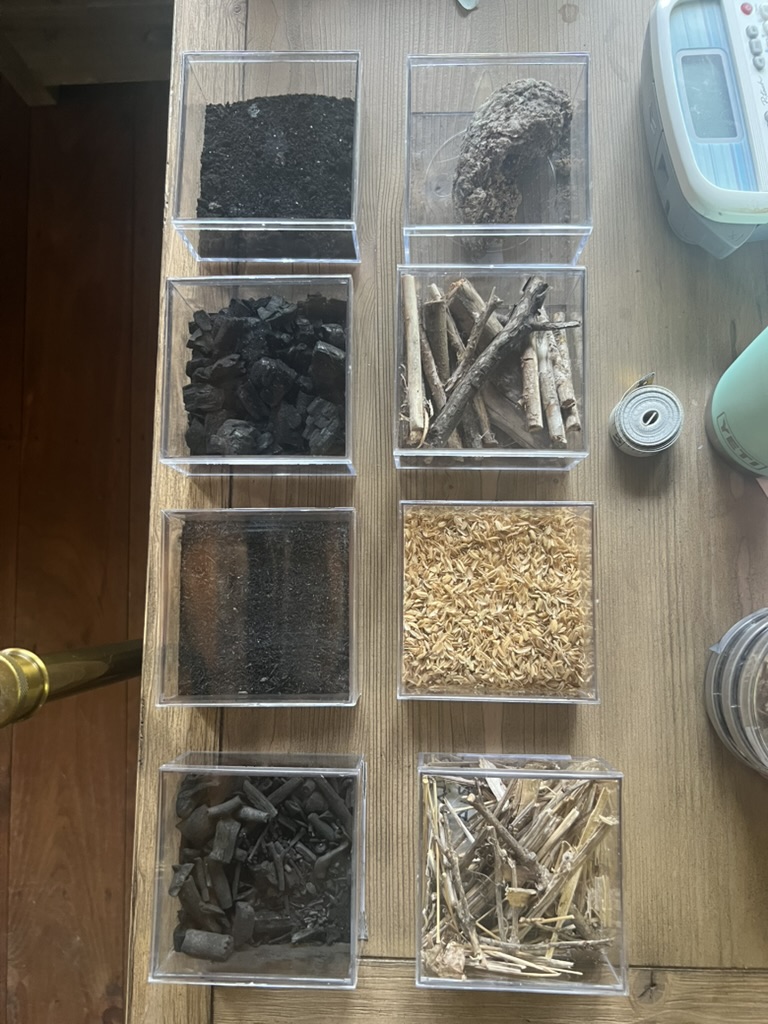
During Year 1, service providers began developing foundational knowledge and skills in biochar production. Through site visits and demonstrations, participants received training in feedstock assessment, ideal moisture content and feedstock size, kiln operation (including loading, startup, and shutdown), and safety protocols. The Foundation Knowledge and Skills phase remains in progress as kilns have not yet been delivered to three partner farms (Seed Song, Glynwood, and Wally Farm).
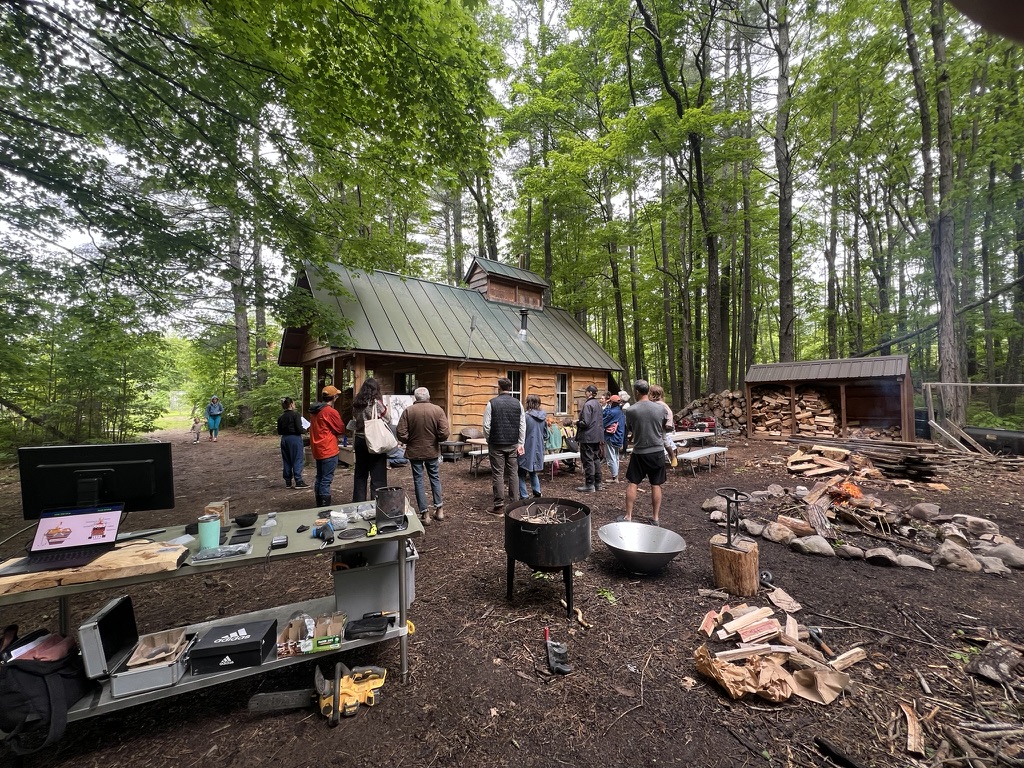
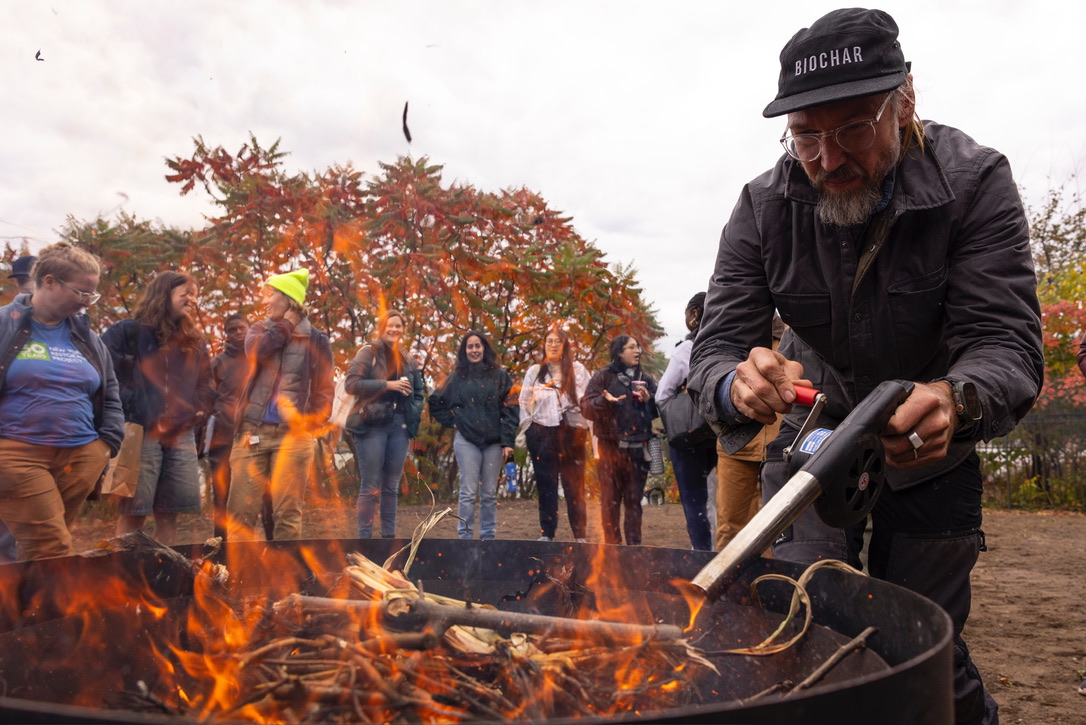
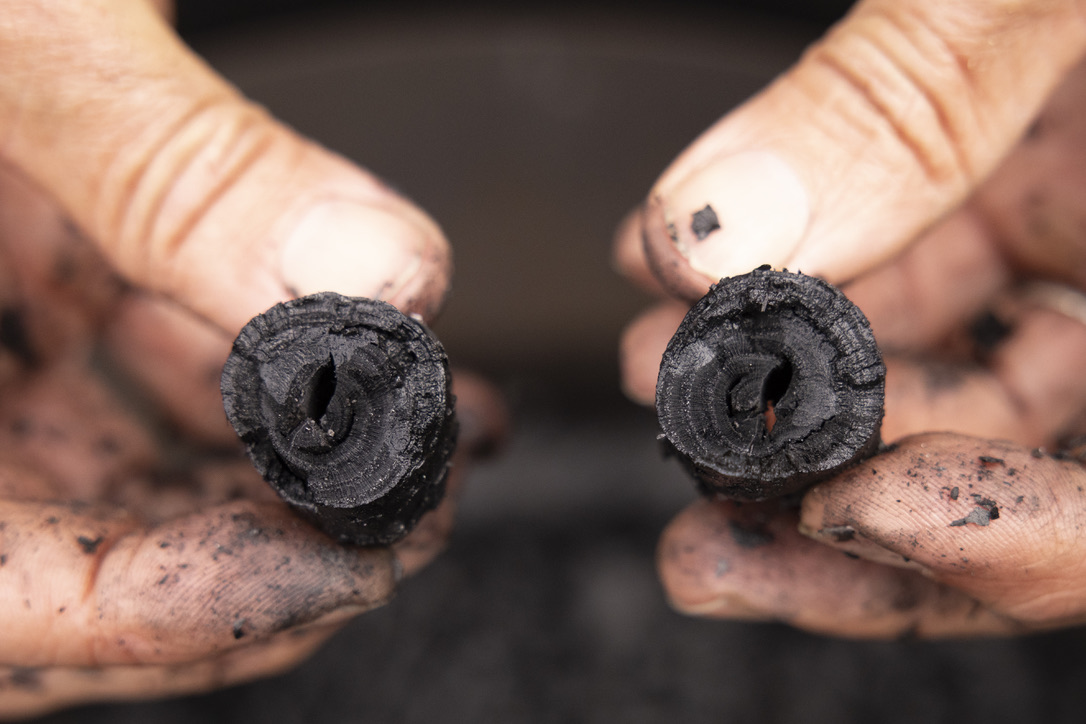
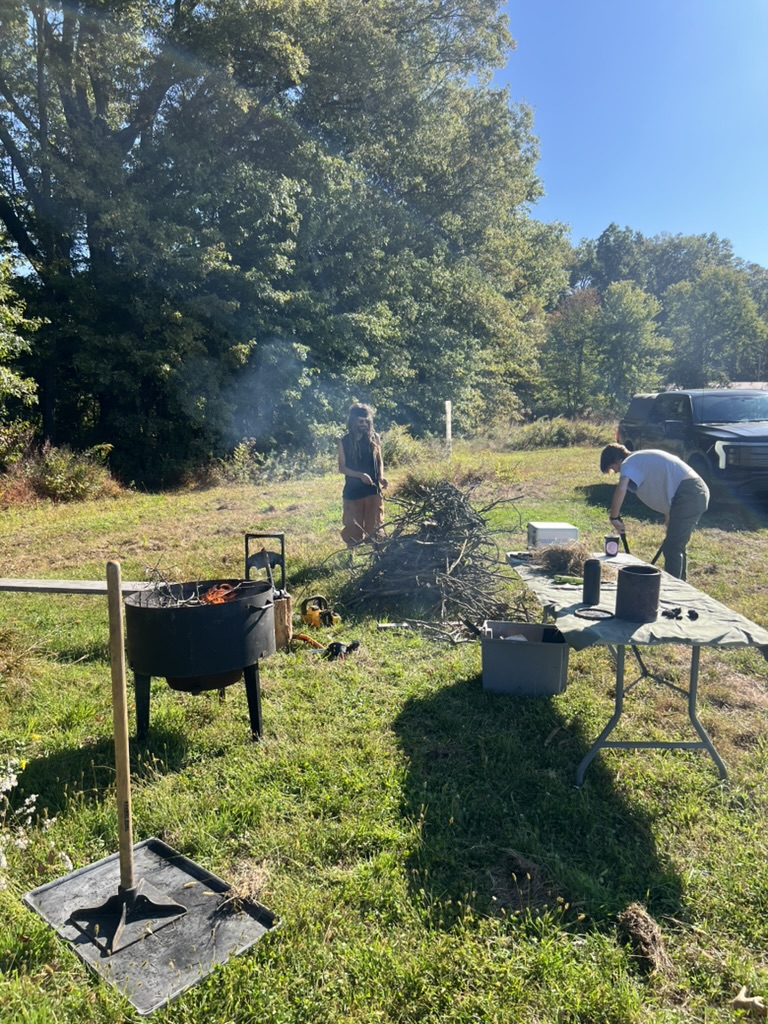
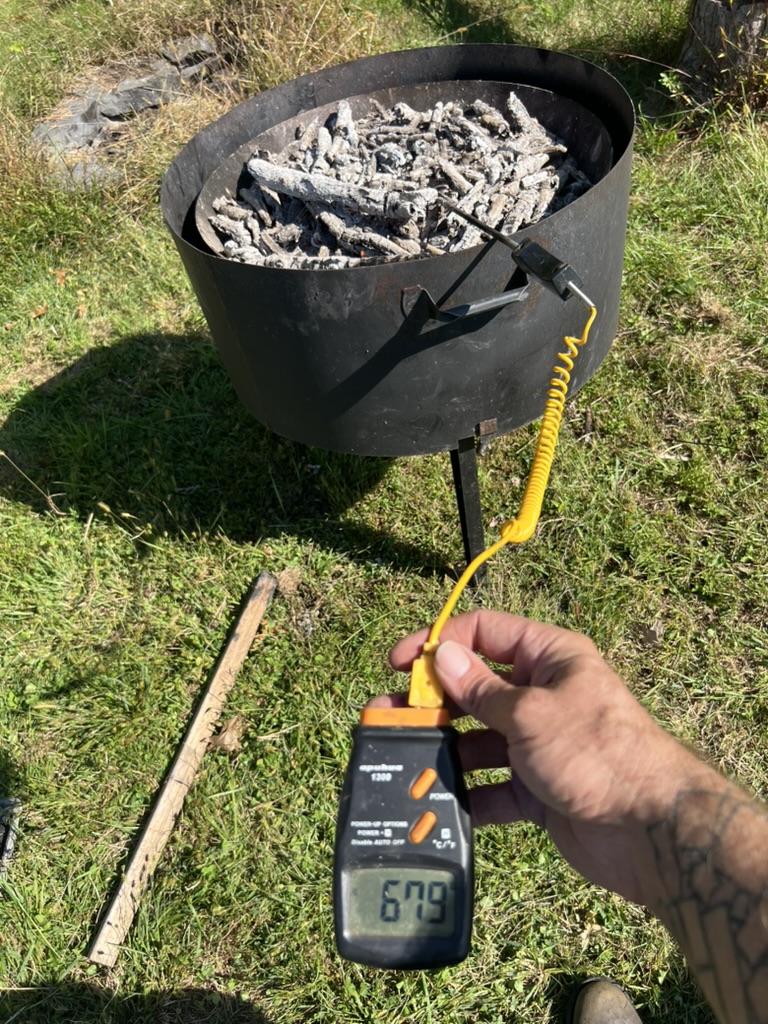
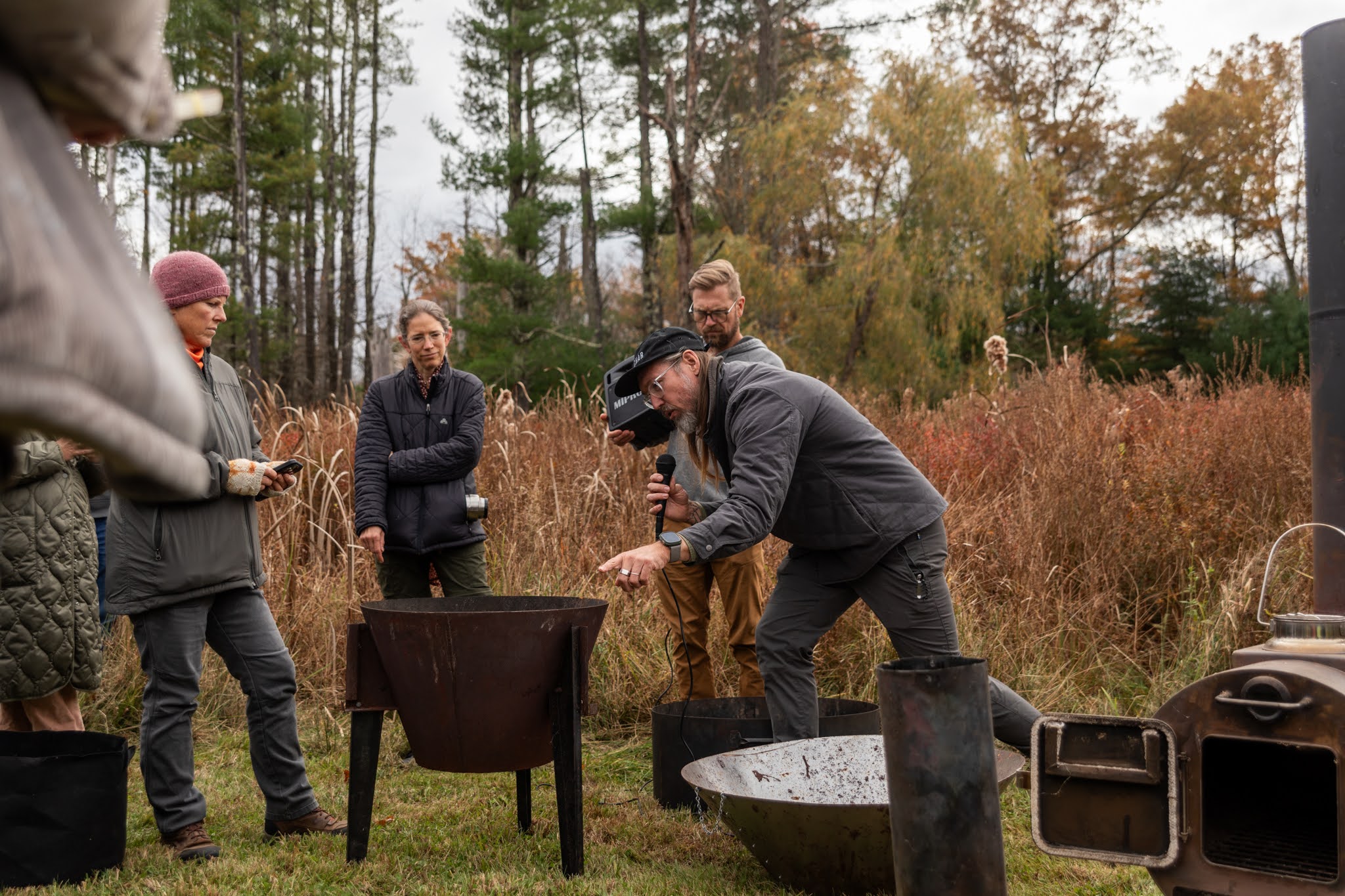
Four biochar demonstrations were conducted during Year 1. White Feather Farm hosted two on-site demonstrations: one during their Open House on May 24, 2025, with approximately 150 visitor participants, and another at Soil Fest on July 26, 2025, with approximately 150 participants. Partner farm demonstrations included one at Seed Song Farm on October 8, 2025, attended by two community members plus farm staff, and one at Cornell AgriTech Lab on December 9, 2025, which demonstrated the Ring of Fire kiln for five Cornell Lab staff members.




Learning: July 31, 2025, 2026, 2027. 5 Service providers (now the Biochar Learning Network) participate in annual summer field days at White Feather Farm, learning about biochar application techniques, monitoring methods, and trading information.
Status: 2025 Complete
Accomplishments:
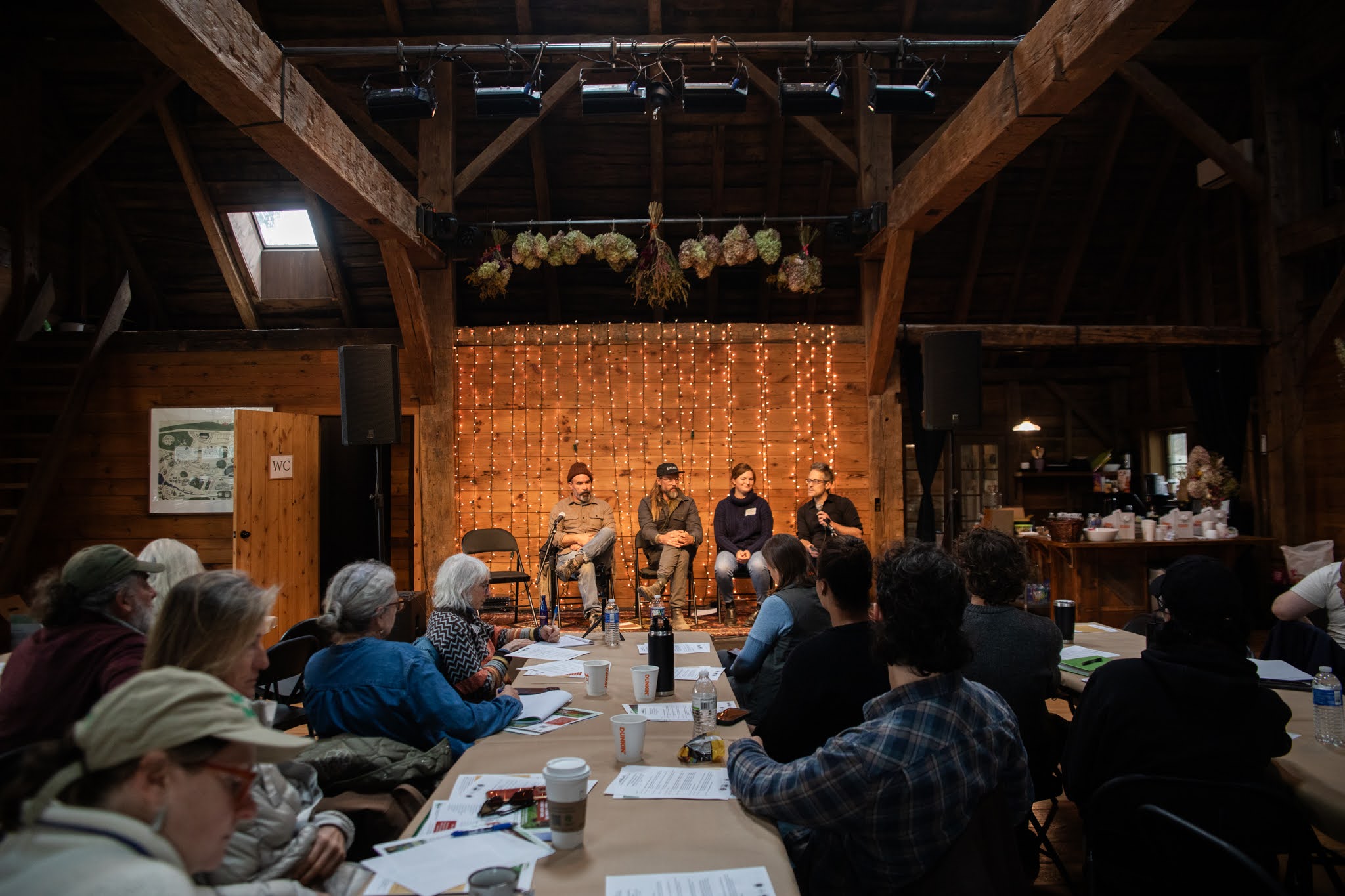
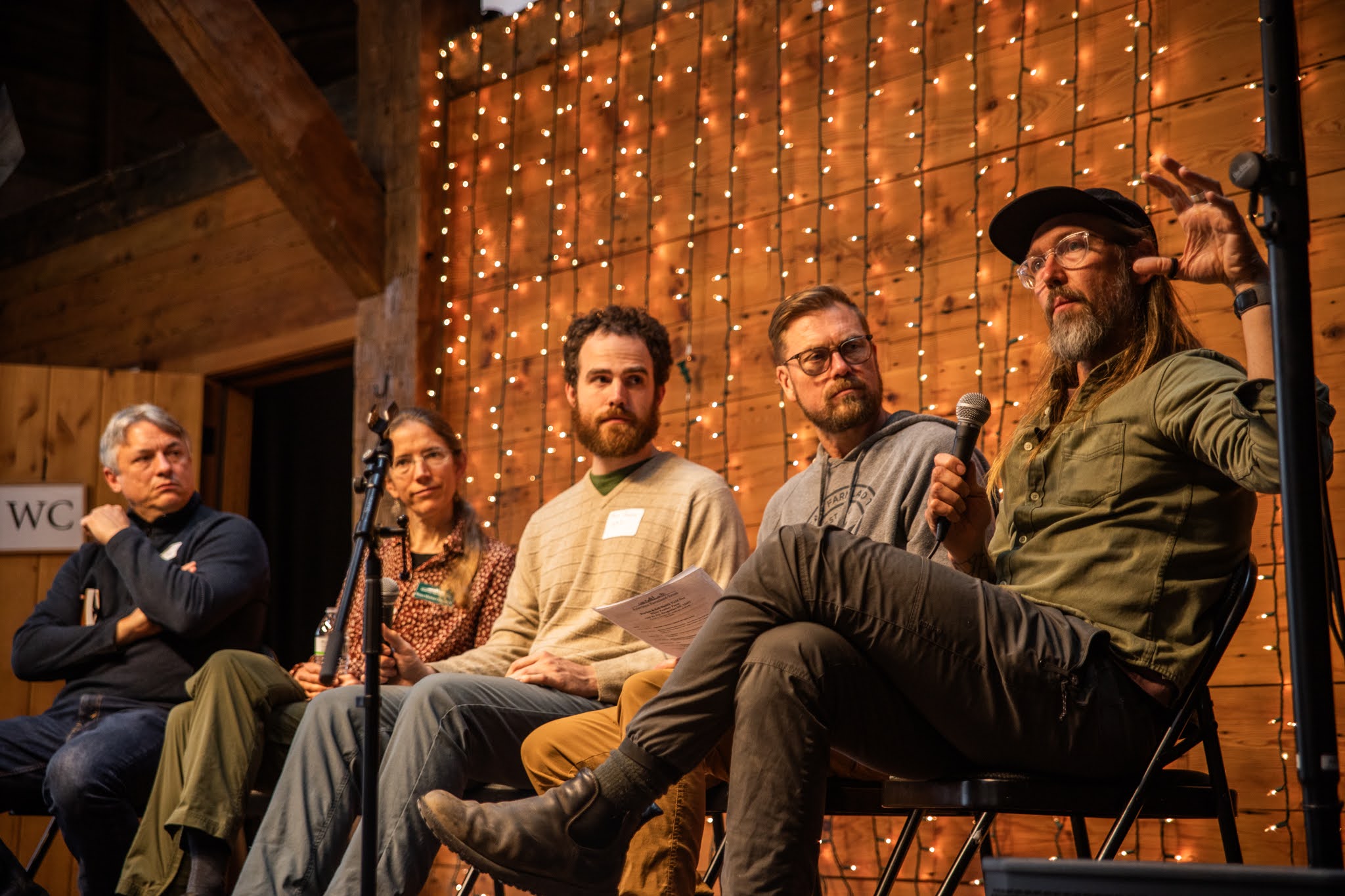
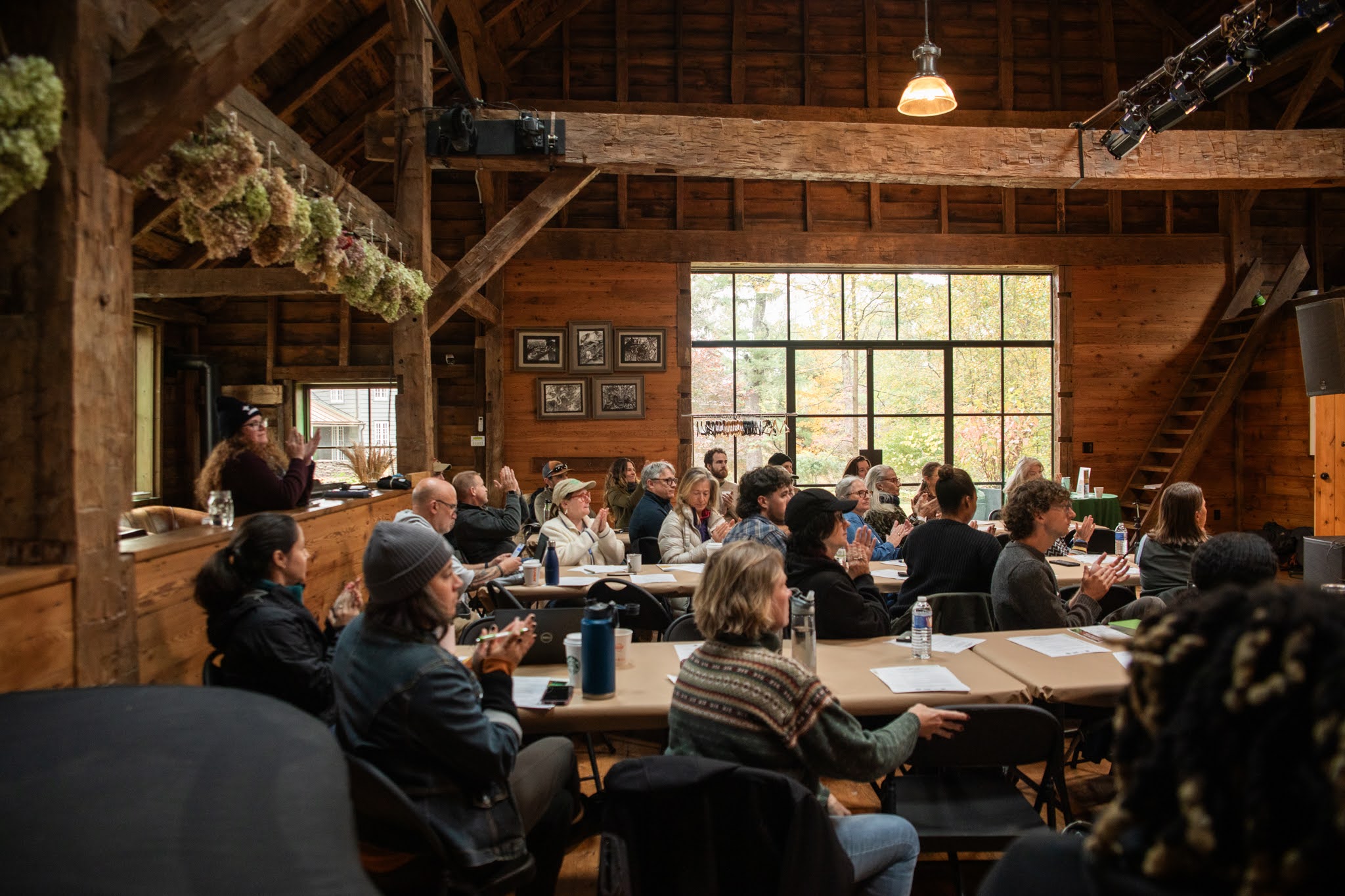
White Feather Farm hosted an American Farmland Trust Biochar Field Day on October 23, 2025, which was attended by Biochar Learning Network partners including Seed Song, Glynwood, Farm Hub, and Cornell AgriTech. The BLN was presented to the larger group of 50 attendees and provided additional learning opportunities from experts including Bianca Moebius-Clune (Climate and Soil Health Director for American Farmland Trust) and various panel discussions on biochar-related policy and implementation.
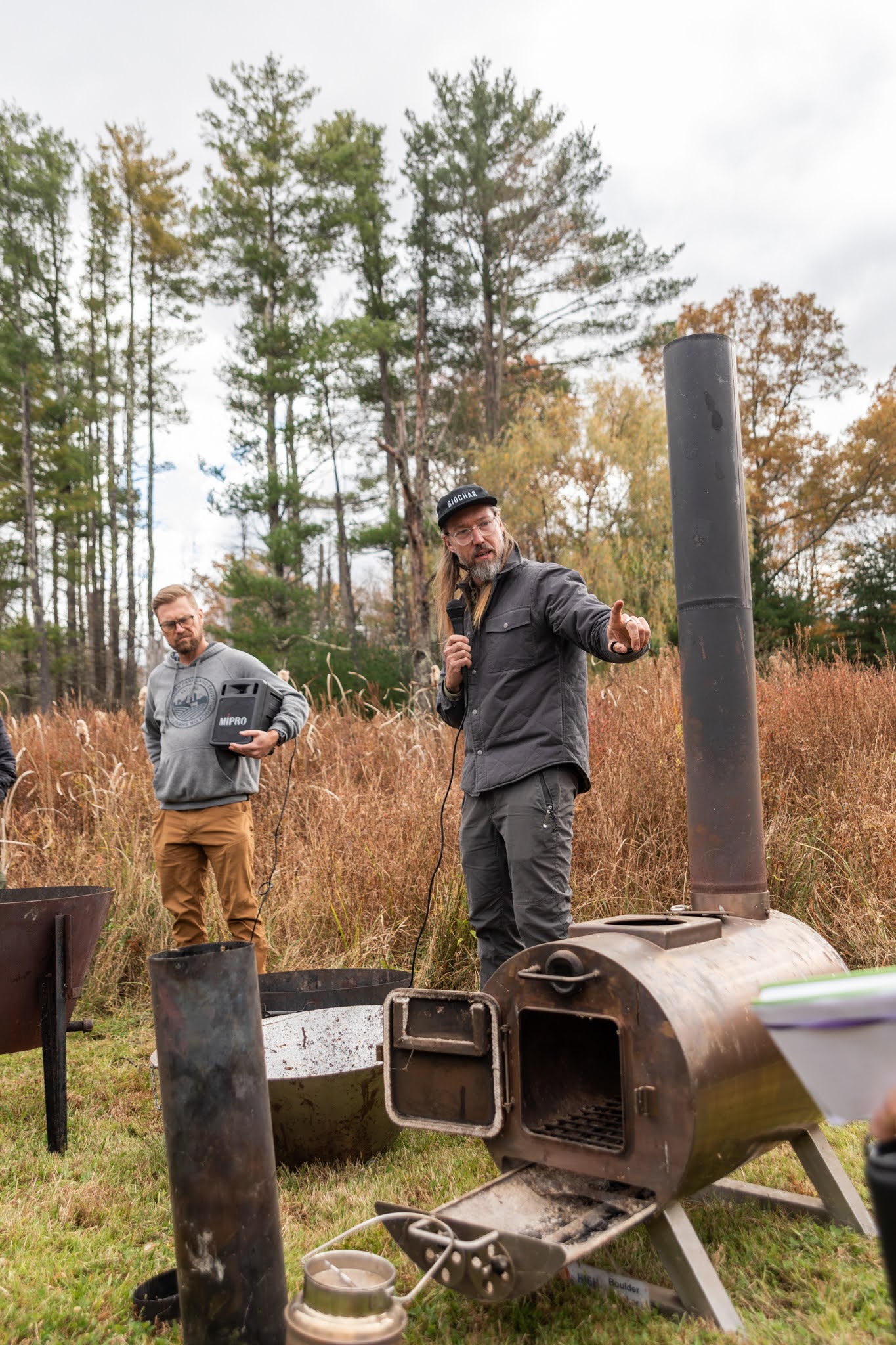
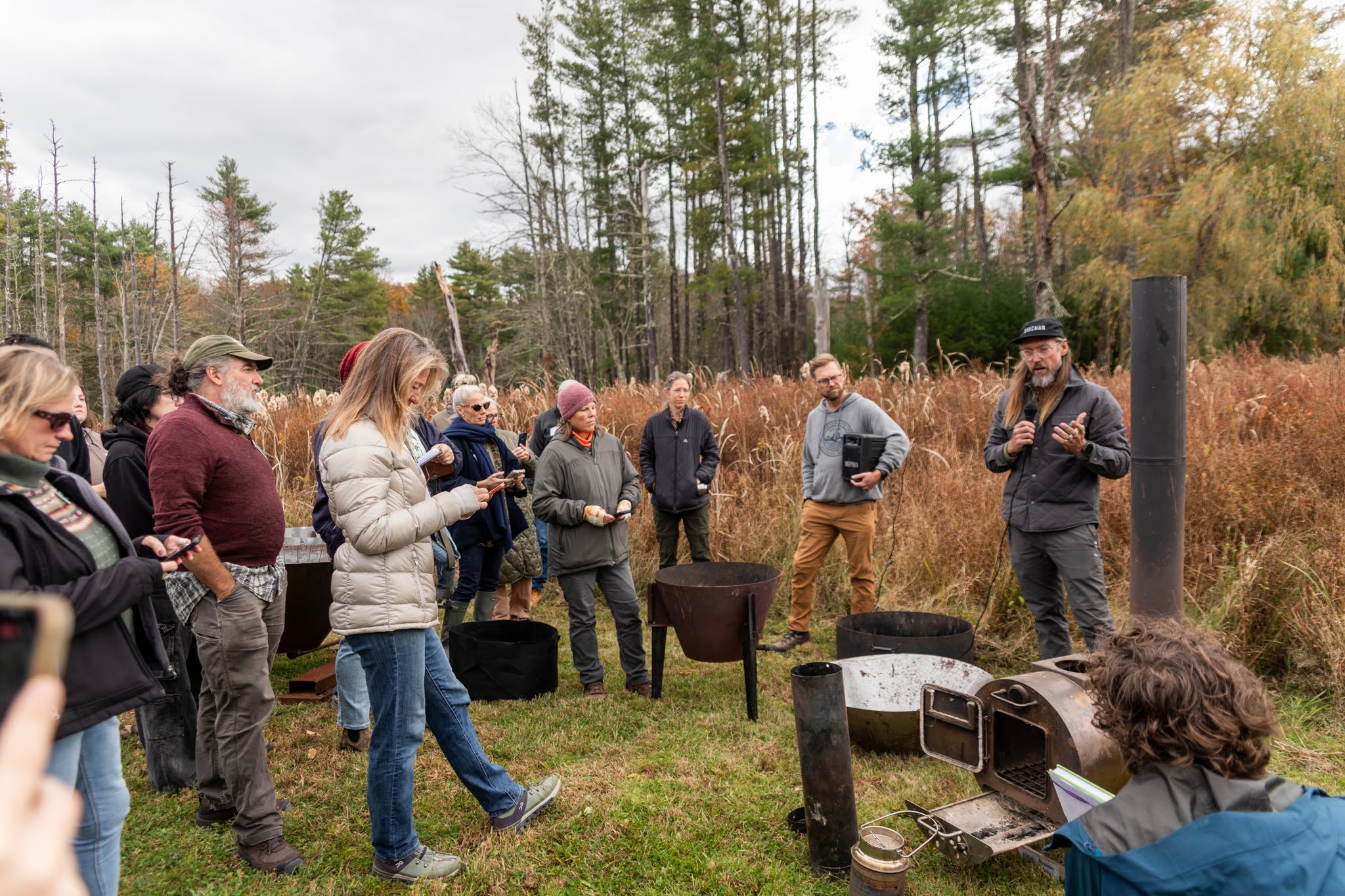
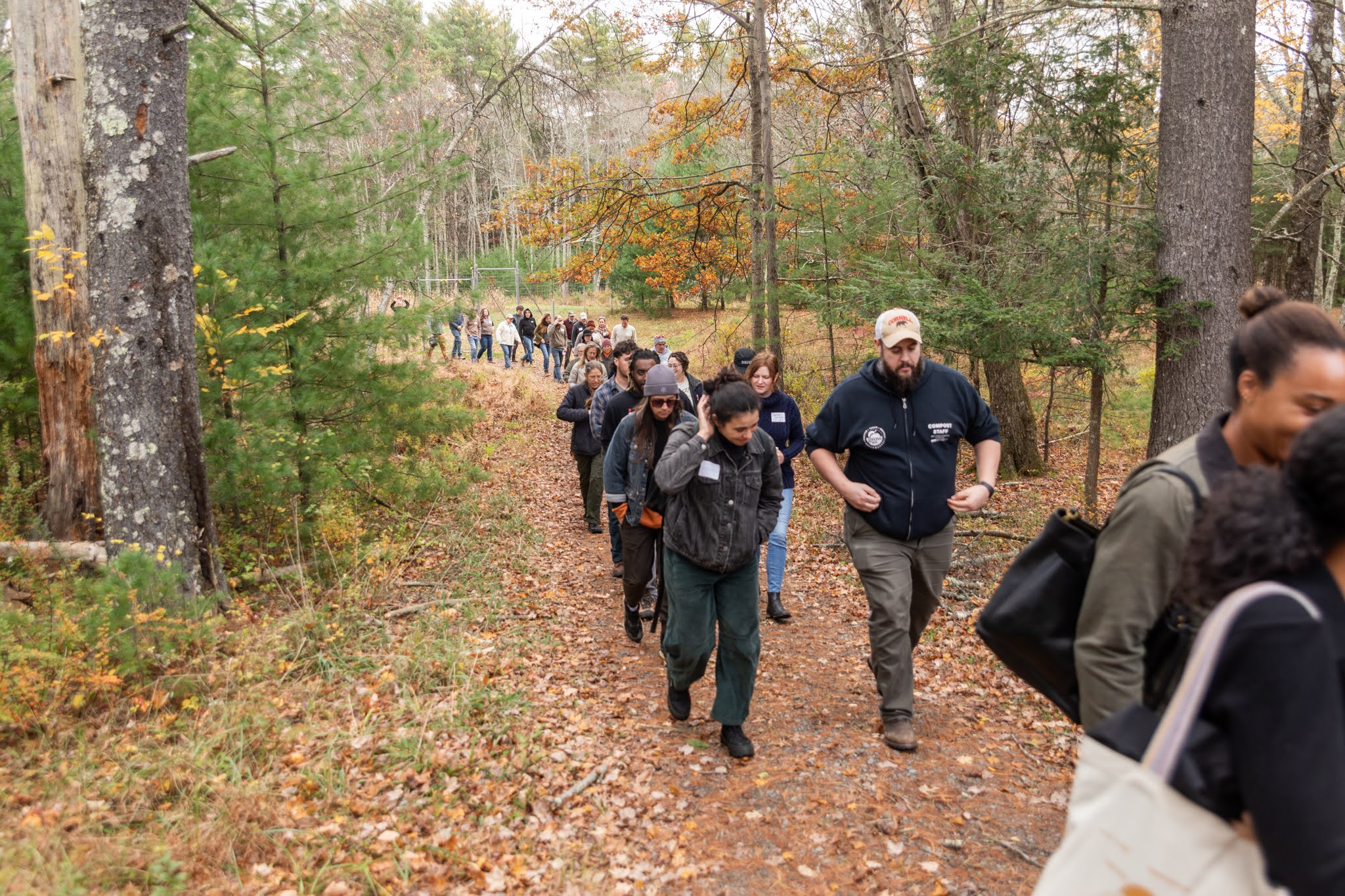
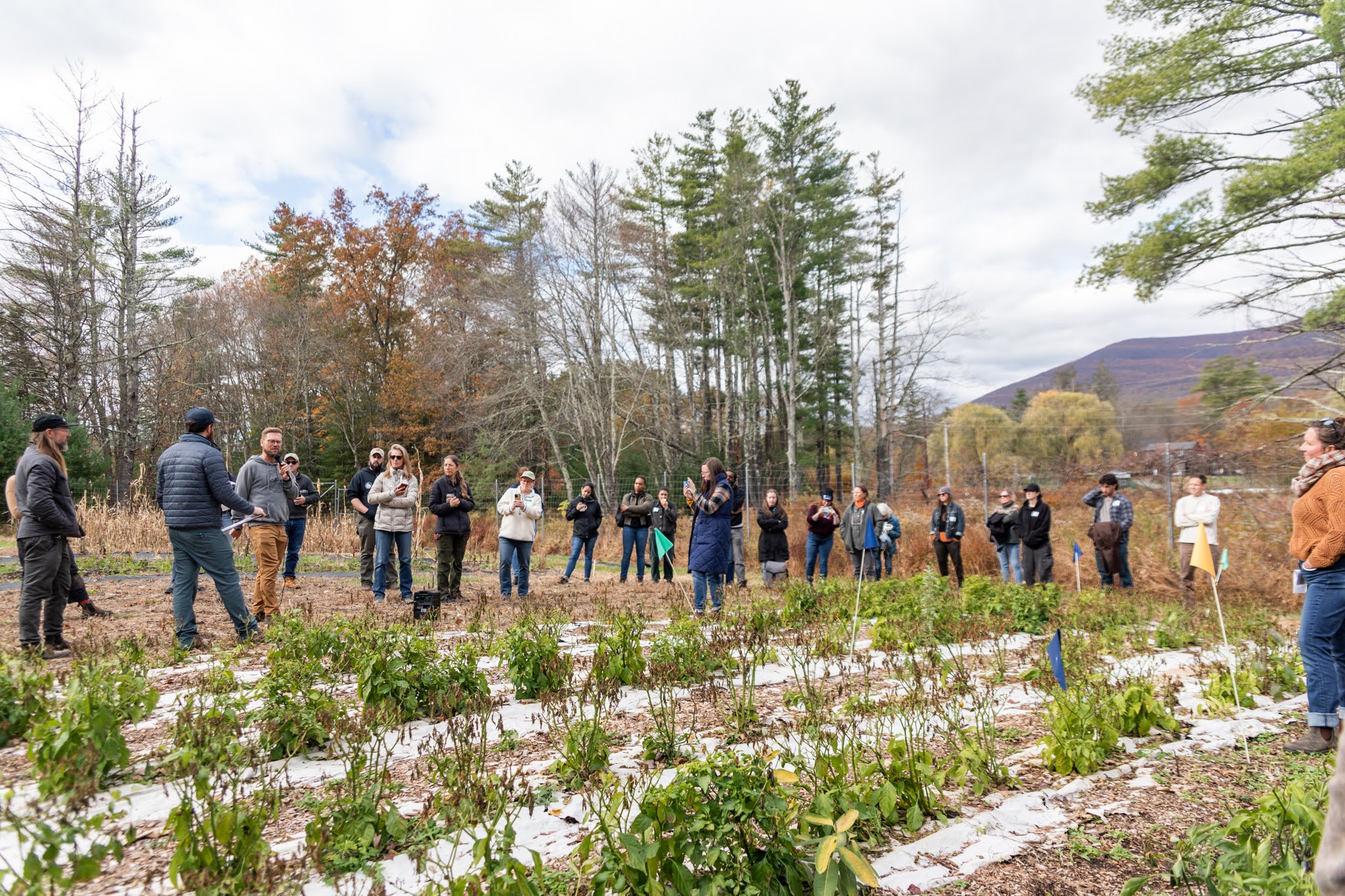
Educational materials developed during Year 1 included a Biochar 101 presentation, which is located in the Information Products section of this report.
Evaluation: August 31, 2025, 2026, 2027. 5 Service providers submit annual reports on their biochar education activities and farmer engagement. Bill Hilgendorf will review reports and provide feedback.
Status: In Process
Accomplishments:
Engagement and Evaluation: October 31, 2025, 2026. 5 Service providers host on-farm biochar demonstration days for 50 farmers each year (100 total), showcasing their implemented biochar systems. Farmer attendance and feedback surveys will be used for evaluation.
Status: In process - moving to Year 2
Accomplishments: Evaluation activities during Year 1 focused on establishing baseline knowledge and documenting initial implementation progress. Bill Hilgendorf conducted individual meetings with each partner rather than bi-annual virtual group meetings. Activity logs have not yet been implemented at all farms as it is still early in the process. However, Cornell AgriTech is keeping specific records based on their individual research project. More comprehensive evaluation activities, including service provider activity logs and formal knowledge assessments, will be implemented in Year 2 as partners move from the foundation phase into active implementation and adaptation.
Learning: November 30, 2025, 2026. 5 Service providers participate in annual peer-to-peer learning exchanges, visiting each other's farms to share experiences and best practices. Notes will be taken by WWF staff.
Status: Not begun - moving to year 2
Accomplishments:
Evaluation: December 31, 2025, 2026. Project team conducts annual review meetings with all service providers to assess progress, challenges, and plan for the following year. Meeting minutes and action plans will document outcomes.
Status: Not begun
Accomplishments:
Learning: January 31, 2027. Service providers participate in a workshop on developing biochar educational materials for farmers. Each participant will create a draft educational resource for evaluation.
Status: Not begun
Accomplishments:
Engagement and Evaluation: February 28, 2027. Service providers and advisory committee members present their biochar program results at a regional sustainable agriculture conference, reaching 200 additional agricultural professionals. Presentation feedback forms and audience Q&A sessions will be used for evaluation. Dr. Marcos Stafne will coordinate conference participation and moderate the session.
Milestone activities and participation summary
Educational activities and events conducted by the project team:
Participants in the project’s educational activities:
Learning Outcomes
Performance Target Outcomes
Performance Target Outcomes - Service Providers
Target #1
5
five partner farm educators will incorporate biochar education into their farmer training programs. Collectively, we aim to educate at least 300 small to midsize sustainable farmers in the Northeast, providing them with the knowledge and skills to understand and potentially implement biochar systems.
300
3060 acres
5
87
- 1 Curricula, factsheets and other educational tools
- 5 Consultations
- 2 On-farm demonstrations
- 5 Online trainings
- 2 Published press articles/newsletters
- 2 Tours
- 2 Webinars/talks/presentations
- 2 Workshops/field days
- 2 White Feather Farm Open House and Soil Fest biochar demonstration for the public (which included farmers and agriculture providers)
The verifications for this phase of the project were general attendance to activities above. For this introductory phase, evaluation that would clarify further intent was not solicited. Further evaluation will be completed after year 2 of project when service providers have equipment in place. Unexpected successes include attendance of service providers at the American Farmland Trust's Biochar Field Day showed that interest and hunger for biochar knowledge is growing.