Final report for LNC21-458
Project Information
This project addressed a critical gap in ergonomic design for farming tools and small-sized farming equipment that are not ergonomically designed for diverse users, particularly women farmers, leading to musculoskeletal disorders (MSDs), fatigue, and reduced productivity. The project pursued two solutions: (1) development of ergonomic auxiliary handles for hand tools, and (2) evaluation and redesign of electric walk-behind tillers to improve safety, usability, and efficiency.
The research used a holistic and interdisciplinary approach with a repeated-measures design. We started the research by collecting intensive inputs from farmers, extension specialists, industry representatives and professionals in farming sector through surveys, focus group meetings, on-farm demonstrations and workshops/meetings. Computer designs and prototypes were tested by women users and producers through scientific experimental designs. Digital sensors and artificial intelligence (AI)-enabled algorithms were used to assess the ergonomic features of each developed tool and equipment. Research outcomes including physiological load (heart rate, energy expenditure), posture (video-based motion analysis), vibration, noise, and soil performance were analyzed and used to develop next-generation tools. Peer-reviewed research papers were published and available to broad audience.
An educational approach complemented the research through farmer demonstrations, hands-on trials, and simplified training materials on posture, tool fit, and safe equipment use. Farmers reported improved understanding of how ergonomics affects comfort, injury risk, and efficiency.
Results showed that ergonomic-designed tools can improve usability and reduces strain. Auxiliary handle attachments significantly reduced trunk flexion during stall-cleaning tasks among female agricultural workers, though this improvement was accompanied by increased elbow flexion. Physiological differences were directionally favorable but statistically inconclusive. Ergonomic modifications redistributed musculoskeletal demand rather than uniformly reducing joint risk. The rear-tine tiller provided the best balance of soil performance and low workload, while the electric auger tiller minimized vibration and noise. Front-tine tillers imposed the highest ergonomic burden. Adjustable and user-centered designs consistently improved posture and reduced wrist and hip strain.
Farmers began adopting improved practices, including selecting tools based on body fit, adjusting handle positions, and showing strong interest in low-vibration and adjustable equipment. Prototype auxiliary handles were positively received during demonstrations.
Beneficiary Outcome Story
During a field demonstration, one woman farmer shared that she often experienced wrist and lower-back pain after prolonged shoveling. After testing the ergonomic auxiliary handle, she immediately noticed improved grip comfort and reduced bending. She reported that the tool felt “lighter and easier to control,” and she was able to work longer without discomfort. This experience increased her confidence in using modified tools and influenced her decision to adopt ergonomic practices on her farm.
This project aimed to address the challenges in safety, health, and usability associated with farm tools and small-scale equipment used by women farmers. The supporting objectives were pursued and refined based on project implementation:
- Identify key ergonomic challenges in farm tools and equipment
This objective was addressed through farmer surveys, observational studies, and technical evaluations of commonly used tools (hand tools and walk-behind tillers as models). The goal was to understand sources of discomfort, injury risk, and inefficiencies in current designs. - Design and evaluate ergonomic and user-centered solutions
The project developed and tested ergonomic auxiliary handle prototypes and evaluated different tiller designs (rear-tine, front-tine, and electric auger). Engineering approaches included ergonomic design principles, adjustable features, and integration of vibration and performance assessments to improve usability and safety. - Improve farmer awareness and knowledge of ergonomic practices
Educational activities, including demonstrations, hands-on trials, and simplified training materials, were used to teach proper tool use, posture, and equipment selection. These efforts aimed to help farmers reduce strain and adopt safer work practices.
There are few studies having been conducted to investigate the critical issues of farm tools and equipment related to the safety and health of women farmers, nor have there been efforts from the public and private sectors to provide solutions to address these issues. There is a pressing need to investigate these issues and provide necessary knowledge and solutions to improve the safety and health for women farmers, who are the key contributors to sustainable agriculture. A research team from the University of Missouri and collaborative institutions with multiple disciplinary backgrounds, including engineers, health and safety specialists and extension and education specialists will collaboratively work together to address such issues.
We believe that the issues of equipment and tools for women farmers can be addressed by increasing their awareness and knowledge to properly operate farm tools and equipment, and by accessing right tools and equipment that fit to their body conditions. Through this project, we expect to collect sufficient information on the essential issues regarding farm tools and equipment used in different types of agriculture production (e.g., cattle beef, dairy, swine, goat, and crops). We will conduct ergonomic assessments to evaluate the safety and efficiency of tools and equipment, which will provide baseline information for developing education programs and next-generation tools using the latest technology standards. We hope to develop education programs, provide sufficient resources for women farmers to access alternative and next-generation farm tools and equipment by collaboratively working with farmers, engineers, occupational and physical therapists and university extension specialists.
Cooperators
Research
Women farmer's safety and health could be improved through optimizing their farming tools and equipment.
Research conducted in 2022:
The project will be conducted using an interdisciplinary method with close collaboration of Researchers, Cooperators, Advisory Committee farmers, Extension specialists and their networks. The project will be conducted with the following four tasks to meet the project goal and objectives.
Task 1. Conduct surveys to identify essential issues of farm tools and equipment used by women farmers
We will collect demographic information of farmers, their farms, major tools and equipment used, essential safety and health issues (injury, illness, chronic conditions, disability or death), their dream tools and other related questions. Survey questions will be carefully designed for different groups based on their interests and extent of participation. Surveys will be updated based on needs and experience learnt as the project going. Different survey methods will be used to maximize the participants of women farmers, including in-person or video interview, online survey (social media), focus group discussion, direct mail survey and conference survey. Using survey methodology of both written and oral questionnaires will enable us to ask different types of question, collect precise answers with higher rates of responses. In addition, focus groups will be used to synergize and get clarity on the everyday real-world issues with farm tools and equipment that need to be adapted from the survey results.
The methods of online survey and direct mail will be the primary and the most promising method to reach a large number of women farmers in all NCR states. We will use commercial online survey tools (e.g., Qualtrics, Survey Monkey), social media (e.g., Facebook or Tweeter) and project website to interact with women farmers. Survey emails, notifications or mails will be directly delivered to target women farmers. We will select target audiences from our identified in-network women farmers and then extend to a large population in all NCR states. We will utilize the strong extension networks of the University of Missouri, including different programs working with local and regional women farmers to connect target audiences for this project. In addition, extension field specialists will also help this project to get connected with women farmers. We will attend regional or national grower meetings, such as Great Plains Growers Conference, Western Farm Show to reach a wide range of audiences.
In-person interviews and focus group meetings are the more reliable methods to collect information and directly interact with women farmers. We have identified a strong network for conducting surveys, including project Cooperators, Advisory Committee and collaborators who are women farmers or regional field specialists. The collaborators will provide leadership in organizing focus group meetings or field demonstrations to provide opportunities for in-person interactions with farmers at local or regional areas. The identified collaborators cover different productions , such as (1) beef production (Carey Portell, Brenda Schreck/Susan Jaster), (2) dairy production (Kendra Graham, Reagan Bluel) and (3) small animal production (Corinne Bromfield, Susan Butterfield). Although we will focus on animal and dairy production, we will also include a small portion of vegetable production (Liz Graznak, Christy Green). We will closely work with extension specialists and other organizations (see Support Letters) who will remotely participate in discussions. In addition, Co-PDs Funkenbusch and Shannon have long-term collaborations with many extension specialists and farmers in NCR through other projects, such as Pearls of Production, Women in Dairy, Annie’s Project, USDA Beginning Farmers and Ranchers Development Program, USDA State-level AgrAbility program and USDA 2501 Program.
The surveys will be primarily conducted in year 1 and continue in year 2 and year 3. Revisits will be planned in the third year of this project to collect their feedbacks. Our goal is to reach an average of approximate 1,000 women farmers each year in the 12 NCR states. We expected to receive responses from around 400 women farmers each year. All survey results will be collected in a timely manner (< 6 months), and analyzed using methods of the University of Missouri Extension evaluation procedures. Statistical results will be weighted based sample size with margin of error (95% confidence interval) and sampling response rate (>30%). A complete report will be generated to provide details on the issues of safety and health for women farmers due to farm tools and equipment. The survey results will provide baseline information for taking corresponding actions to improve the safety and health of women farmers in using farm tools and equipment.
Task 2. Evaluate the efficiency, safety and health features of farm tools and equipment widely used by women farmers. (Led by Zhou, Funkenbusch, Shannon)
Based on preliminary survey, the responses of different famers to the issues of tools and equipment were not consistent. Therefore, it is needed to understand the reasons of the safety and health hazards caused by farm tools and equipment. We will conduct ergonomic assessments on selected farm tools and equipment using the popular ergonomic assessment methods, such as Rapid Entire Body Assessment (REBA), Rapid Upper Limb Assessment (RULA), Posture, Activity, Tools, and Handling (PATH) and Ovako Working-posture Analysis System (OWAS). We will work with collaborative farmers and cooperators to conduct the field evaluation.
Women farmers or volunteers will be recruited to conduct the assessment of the selected tools and equipment. Instrument will be used monitor their heart rate, blook oxygen level, stress level and other needed body indicators. Video cameras will be used to record their activities and methods to use the tools and equipment. Data will be analyzed to evaluate the safety and health features of the tested tools and equipment. Recommendations on how to use them properly and improve the efficiency and safety will be documented and published. In addition, the assessment results will also provide baseline information on how to adapt and develop next-generation tools and equipment, and provide recommendations for the industry standard communities and associated industries for referencing.
The ergonomic assessment will also be conducted for some new tools to identify a list of alternative tools that are suitable for women farmers. We will work with tool manufacturers, experienced farmers and field specialists to develop guidance for the identified tools and equipment. Based on assessment results and survey, a collective set of farm tools and equipment will be labeled into different categories for different farm activities according to their features. Such information will be included in an online information center (database) to be developed as part of our project website and will be available to public. The online information center will provide a convenient space for women farmers and related stakeholders to select right tools and equipment for their farm operations. We expect the online information database will include sufficient and latest resources about the farm tools and equipment for different agricultural productions. The website will keep updating with the project moving forward and afterward. To generate broader impacts, we will also publish our research findings in professional websites, including National Agricultural Safety and Health eXtension Community of Practice (see Support Letter), NIOSH and Occupational Health and Safety Administration (OHSA).
Task 3. Develop education programs and conduct extension activates for women farmers to select and use tools and equipment properly. (Led by Funkenbusch)
We will develop education programs and conduct extension activities to deliver knowledge to women farmers through workshops, webinars, on-farm demonstrations, publications (paper and videos), targeted social media outlets, and online tutorials.
A series of workshops will be conducted in Missouri and other NCR states through collaborators and extension network to provide women farmers trainings on how to use tools and operate equipment safely. We will also provide scholarships to cover the expenses for some participants to attract more women farmers to participate in our hands-on, face-to-face women-led workshops. Pearls of Production and the Women in Dairy programs will be key efforts when establishing educational workshops (see Budget Justification). We will work with Cooperative women farmers and farmers from an Advisory committee to organize on-farm demonstrations. All aspects of farming will be utilized such as beef cattle handling, animal movement, feeding of animals, and small equipment operations. These farming tasks will vary depending on the season of the year or stage of animal production.
This project is endorsed by experts from multiple institutions in NCR states (see Support Letters), including the Upper Midwest Agricultural Safety and Health Center at University of Minnesota, Great Plains Center for Agricultural Health at Iowa State University, Central States Center for Agricultural Safety and Health at the University of Nebraska Medical Center, regional and state AgrAbility programs. We will closely work with the collaborative experts and institutions to organize workshops, develop curricula for education programs and distribute our research results to a wide range of women farmers in NCR.
A project website will be developed as a platform for interaction with women farmers, industries and related stakeholders. It will be used to announce events, access training materials and demonstration videos on operation of tools and equipment. We will also setup a YouTube channel and add our work to the eXtension, U.S. Agricultural Safety and Health Centers, and NASD: National Ag Safety Database.
Task 4: Develop next-generation tools and equipment for women farmers using ergonomic, engineering, automation and smart technologies. (Led by Zhou)
This project will develop two layers of solutions, i.e., “simple solutions” and “comprehensive solutions”, to make daily used tools and equipment safer and more efficient using ergonomic and engineering technologies. We will follow the concept developed in one of the most successful and influential publications titled Simple Solutions: Ergonomics for Farm Workers, published by NIOSH in 2001. The booklet provides some “simple ergonomic solutions” that farms have tried out and are potentially to be adapted in other farm operations to make work safer or easier. It also includes some tools invented by UC Agricultural Ergonomics Research Center and other institutions. Since the procedures and solutions developed in this booklet were widely accepted by farmers and educator, this model will help the success of this project.
We will develop “simple solutions” for women farmers using the updated technologies in ergonomics, engineering, automation and digital technologies following two basic rules: (a) cost-effective and result in quick savings, and (b) should improve safety and health for women farmers. We will also develop “tip sheets” with illustrations on how to operate the tools and equipment properly, and how to modify existing ones to reduce the risks. Some examples include adaption and adjustment of off-the-shelf devices. Some potential yet simple solutions that farmers and industries can do themselves will be developed based on the results from Task 1 and Task 2. The developed simple solutions are expected to be easily used by women farmers and provide “immediate” impact on improving the safety and health for women farmers. The validated solutions will be introduced to women farmers through focus group meetings, workshops, YouTube videos and extension and journal publications to generate more impact.
In addition, we will explore comprehensive solutions that will address more than one issues and add additional safety and health features through developing next-generation farm tools and equipment using ergonomic, engineering, automation and smart technologies. We will collaborate with engineers and local machine shops to develop prototypes. We will carefully document all creative work during the design and ideas exploration. Invention disclosures and patents will be filed through the University of Missouri to seek the potential of commercialization. The research results will be used to apply additional grant support, such USDA Small Business Innovation Research Program (SBIR) and other related funding opportunities, so that the project can be after the completion of this funding cycle.
In addition, we will actively involve in the professional and standard communities in agriculture sector to revise or develop industrial standards that include sufficient information regarding safety and health for women farmers. PD Zhou, Co-PDs Shannon and Funkenbusch are already members of some communities, such as NCERA 197: Agricultural Safety and Health Research and Extension, International Society for Agricultural Safety & Health (ISASH), and Agricultural Safety and Health Council of America (ASHCA). We will continuously create more impacts through close collaborations with the professional communities.
Research conducted in Year 2023:
Introduction:
Agricultural work frequently involves manual tools such as shovels and pitchforks, which pose significant risks of musculoskeletal disorders (MSDs), particularly among women (Freivalds, 1986a; McPhee, 2005). Traditional tool designs often do not consider the specific ergonomic needs of female farmers, potentially exacerbating these risks (Thariq et al., 2022). This disparity has prompted research into the design of agricultural tools that better accommodate the anatomical and physiological data of women to enhance their productivity and mitigate health risks. Recent studies have highlighted the importance of ergonomic enhancements in agricultural tools. Modifications such as longer blades and lighter materials like fiberglass have been shown to reduce physical strain and improve ergonomic efficiency (Sen & Sahu, 1996; Chang et al., 1999).
These improvements aim to provide women farmers with tools that not only decrease the likelihood of developing MSDs but also enhance overall work efficiency. In parallel, the field of ergonomics has been revolutionized by advancements in 3D human pose estimation technologies, which allow for a more complex assessment of manual task risks. Modern studies are leveraging deep learning frameworks and convolutional models to predict 3D poses from 2D video sequences, offering a significant leap forward from traditional computational (Hossain and Little, 2018; Lee et al., 2018; Pavlakos et al., 2017; Dario et al., 2019). Though 3D motion capture remains the gold standard for ergonomic assessment, 2D video analysis has emerged as a cost-effective and accessible alternative, particularly effective for evaluating lower extremity movements (Schurr et al., 2017).
The focus of our research is twofold. The first study assesses how the design of shovels and pitchforks impacts body mechanics and strain during typical farming tasks, using modern ergonomic assessment tools, including motion capture technology and AI-driven analysis. The second study empirically validates the benefits of ergonomically designed shovels and pitchforks equipped with auxiliary grips, comparing these advanced tools against conventional designs to gauge their effectiveness in reducing physical strain, decreasing energy expenditure, and minimizing the risk of musculoskeletal disorders.
By integrating insights from both conventional and modern ergonomic research, this project aims to develop and recommend agricultural tool designs that are scientifically proven to meet the specific needs of women farmers, thereby supporting their health and enhancing their efficiency in one of the most physically demanding industries.
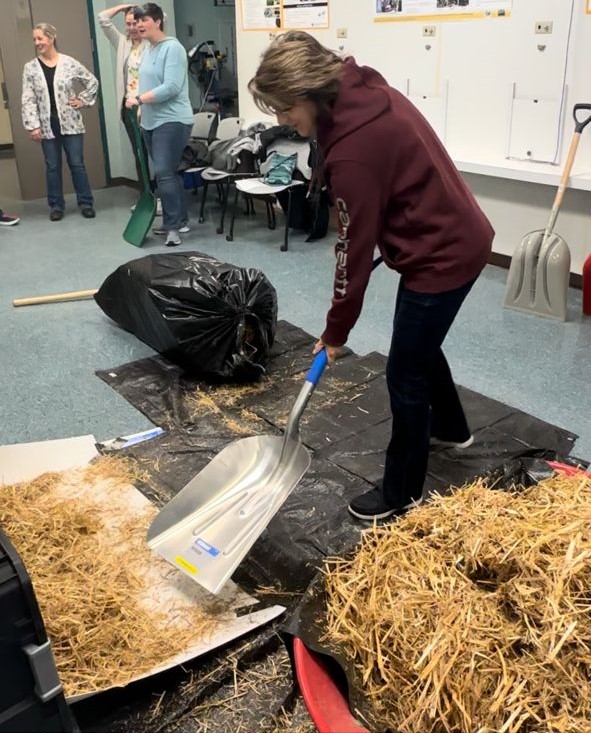
Study 1: Experimental Study on 12/05/2023 during Focus group meeting
Hypothesis: (1) Tools with ergonomically designed features such as appropriate lift angles and handle heights will lead to higher user comfort levels. (2) There is a significant reduction in physical strain when women farmers use ergonomically enhanced tools compared to standard tools.
Materials and methods:
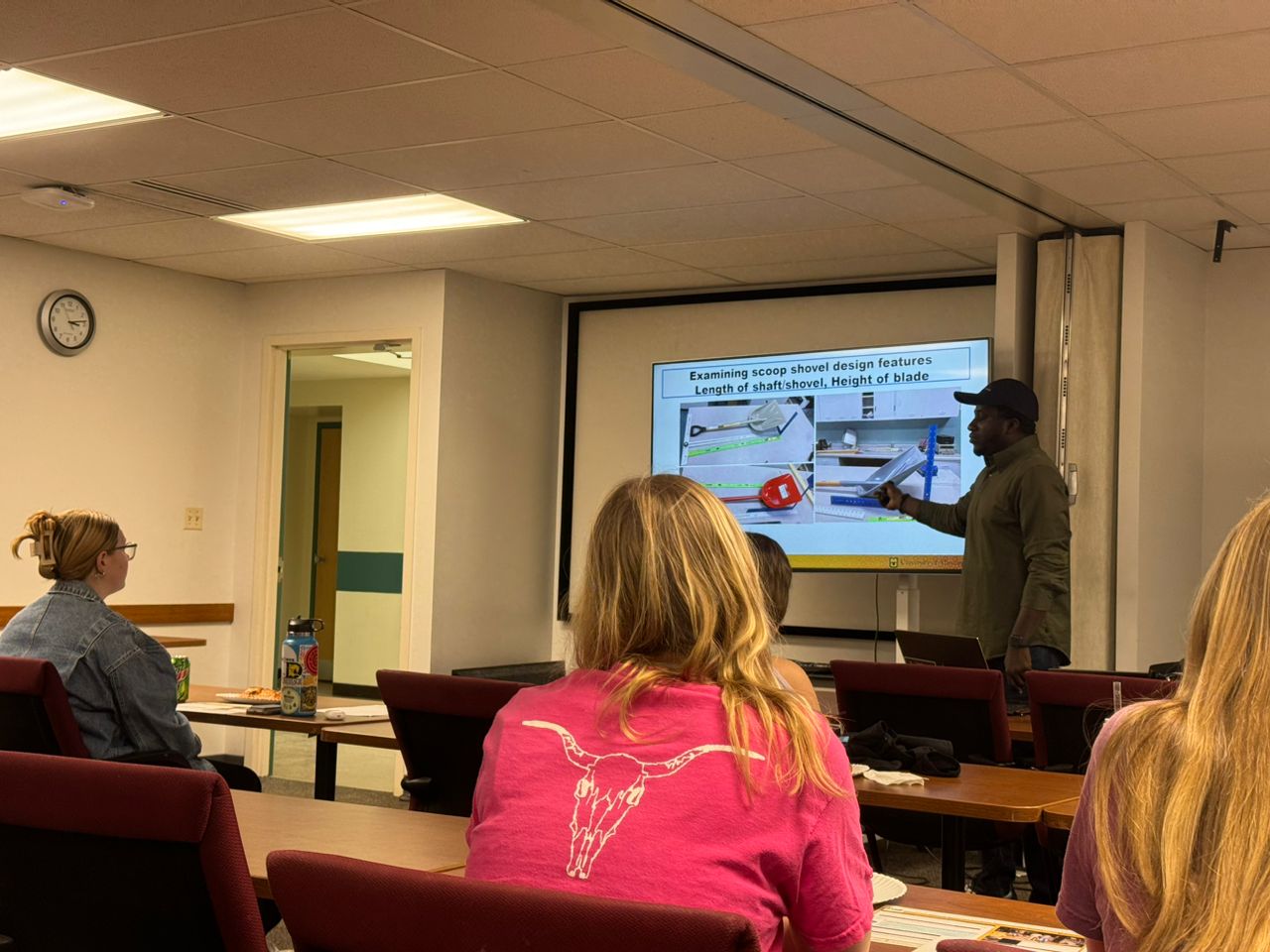
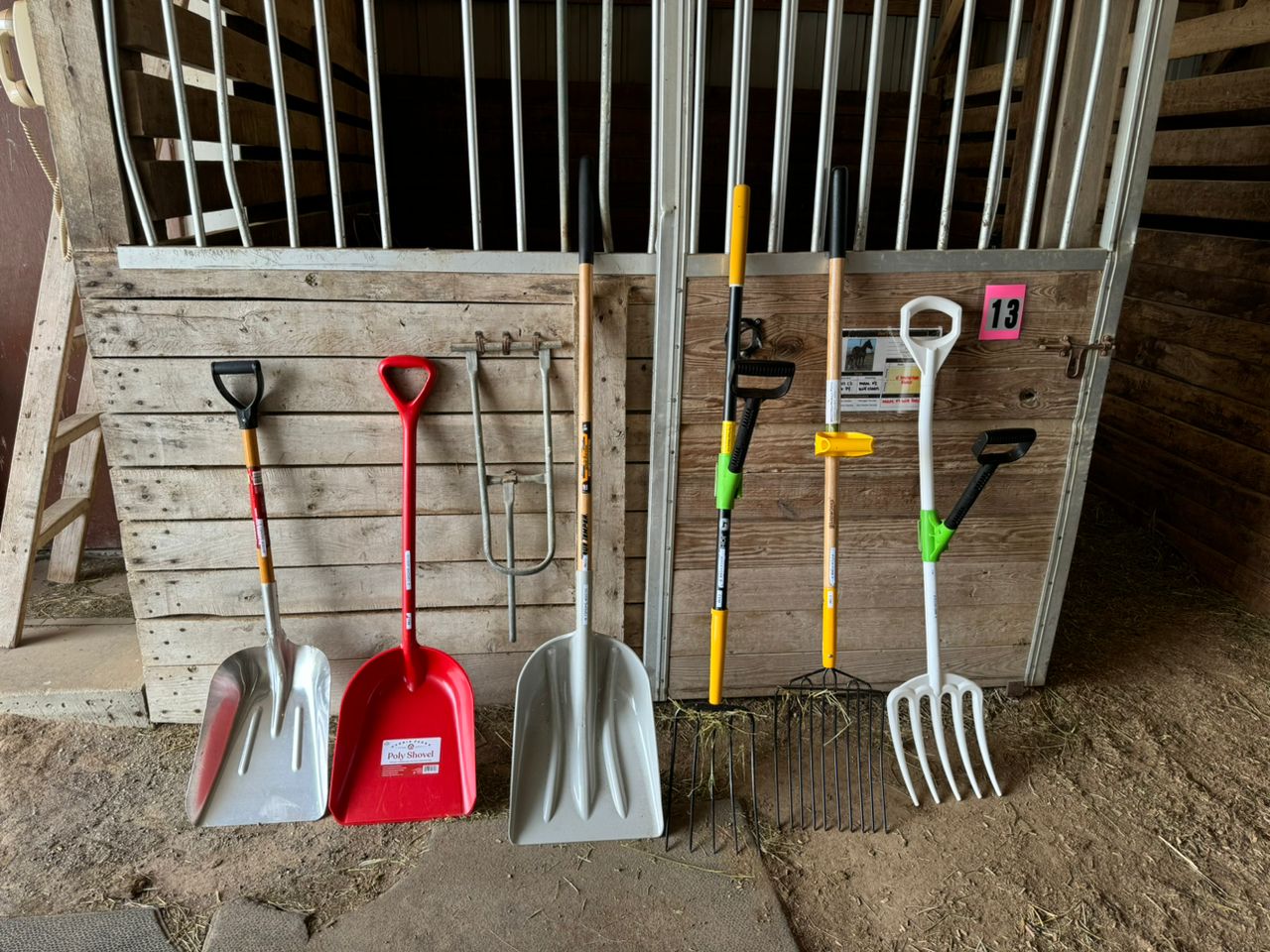
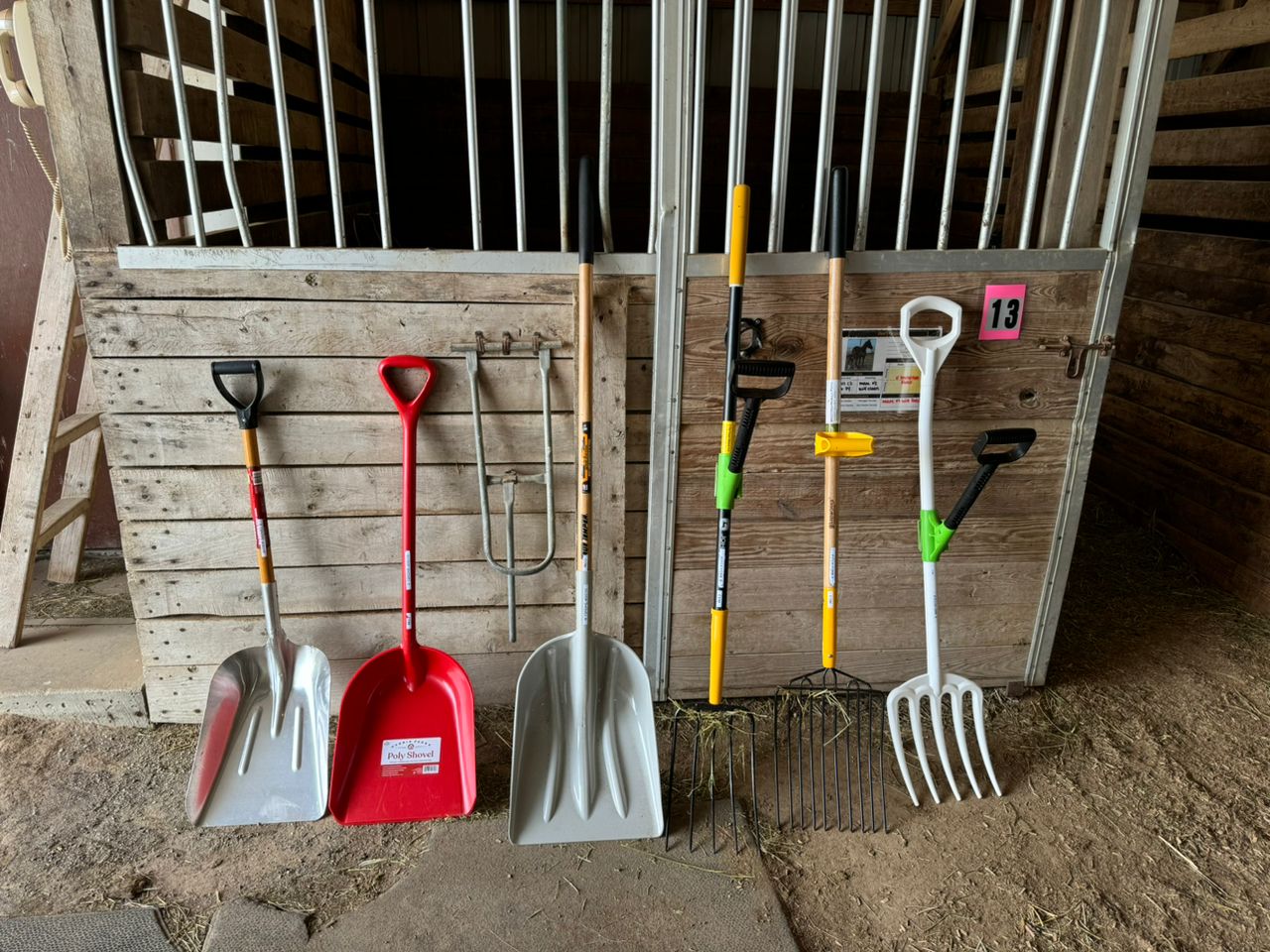
This study involved an in-depth evaluation of 24 shovels and 19 pitchforks, focusing on their use in tasks such as throwing straws at wheelbarrows. Participants included seven women with varied body types, reflecting a range of physical diversity typically found in agricultural work settings. The tools varied in handle lengths, diameters, grips, and blade characteristics to explore how unique designs impact user performance and strain. Advanced measurement tools including tapes, calipers, and scales were employed for precise physical dimensions and weight assessments. To analyze the impact of tool design on posture and strain, we utilized AI-powered software motion capture systems, and force monitoring devices to calculate the Rapid Entire Body Assessment (REBA), and Rapid Upper Limb Assessment (RULA), enabling the collection of both quantitative data and qualitative feedback regarding tool preferences and comfort. This approach ensured a comprehensive understanding of how specific design features affect physical strain on users.
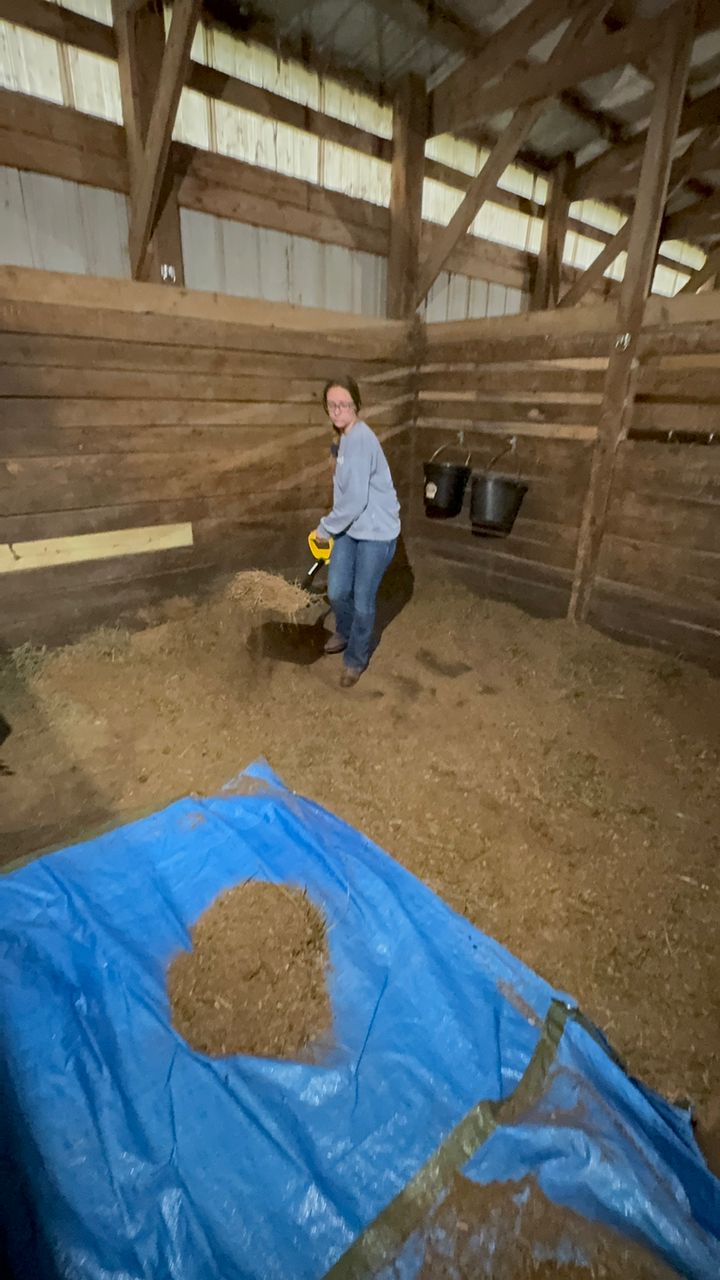
Study 2: Conducted on 11/04/2023 and 18/04/2023 at MU Equine Teaching Facility
Hypothesis: Women farmers using Auxiliary grip handles on shovels and pitchforks will significantly decrease heart rate, oxygen uptake, and energy consumption during use, reducing low back pain and musculoskeletal disorders among women farmers compared to tools with conventional handles.
Rationale: The selection of both conventional and ergonomically modified tools allowed for a direct comparison of their impacts. The detailed physiological and biomechanical measurements were intended to provide comprehensive data on ergonomic modifications' effectiveness.
Materials and methods:
This study adopted a cross-sectional design with eight women participants divided based on weight, height, and age to represent a diverse array of body types. The study compared conventional pitchforks and scoop shovels against ergonomically modified versions equipped with auxiliary handles (EAHA and EAHB). Anthropometric measurements such as weight, height, hand height, shoulder height, and grip strength were meticulously recorded to customize the tools to each participant’s ergonomic needs. Physiological parameters like heart rate, blood pressure, and oxygen uptake were monitored before, during, and after performing tasks involving the transfer of straw mixed with dung, providing insights into the physiological impacts of using these tools. Video recordings of the tasks further supplemented the ergonomic posture analysis, allowing for a detailed comparison between traditional and ergonomically enhanced tools.
Research conducted in Year 2024:
Advancements in Ergonomic Agricultural Tools and Smart Tiller Development
Introduction
Agriculture is a physically demanding profession, with women farmers particularly vulnerable to musculoskeletal disorders (MSDs) due to tools designed primarily for men (Singh & Arora, 2010; Madinei & Nussbaum, 2023). These tools often require excessive physical exertion, leading to poor postures, fatigue, and increased injury risk (Banibrata, 2013; Verma & Chaudhary, 2021). Studies confirm that most agricultural tools fail to accommodate women’s biomechanical differences, making tasks such as shoveling and tilling more strenuous (Koopman , Kingma, Faber, De Looze, & Van Dieen, 2019; Davis & Kotowski, 2007).
Research has explored general ergonomic interventions such as anti-vibration handles, lightweight materials, and adjustable tool features, but these are rarely optimized for women’s anthropometry (Singh & Arora, 2010; Thota, Kim, Freivalds, & Kim, 2022). While such modifications improve usability, they do not fully address stature, grip strength, or biomechanics, leading to persistent inefficiencies and discomfort (Madinei & Nussbaum, 2023; Banibrata, 2013). Traditional hand tools require higher force exertion from women, resulting in greater energy expenditure and injury risks (Koopman , Kingma, Faber, De Looze, & Van Dieen, 2019).
Technological advancements, including ergonomic auxiliary handles and electric tillers, offer promising solutions to mitigate these risks. Research on auxiliary handles has shown improved posture, reduced strain, and enhanced grip control, yet many designs lack customizable angles and height adjustability (Mahajan, et al., 2024). Similarly, electric-powered tillers reduce vibration exposure but suffer from limited ergonomic adaptability (Eskandari, Ghezelbash, Shirazi-Adl, Arjmand, & Lariviere, 2024).
This study systematically designs and evaluates ergonomic auxiliary handles Building on the insights from previous research (Studies 1 and 2 in 2024), and a redesigned Green Heron Electric Auger Tiller tailored to women farmers. It integrates biomechanical assessments, motion capture analysis, and smart automation features such as real-time vibration monitoring, tilt angle tracking, and obstacle detection. By bridging these gaps, this research aims to enhance the efficiency, safety, and usability of farming tools.
Research project 1: Development of Ergonomic Auxiliary Handles (Completed, Awaiting Field Testing)
Hypothesis: Women farmers using ergonomically designed auxiliary handles with adjustable height, rotation, and grip angles will experience reduced muscle strain, improved postural alignment, and enhanced work efficiency compared to those using traditional tools.
Rationale: The biomechanical inefficiencies of standard shovels and pitchforks place excessive stress on the wrist, elbow, and lower back, leading to fatigue, discomfort, and long-term MSDs. Previous research highlights that improper grip angles contribute to awkward wrist positions, increasing torque and strain during lifting and throwing motions. By introducing auxiliary handles with adjustable configurations, this study seeks to optimize joint alignment, reduce energy expenditure, and improve ergonomic efficiency.
Materials and Methods
Two novel auxiliary handle prototypes were fabricated and refined based on anthropometric and biomechanical assessments. Prototype 1 features a 180° rotational clamp allowing full wrist mobility with height adjustability in two increments of 20 mm (0.79 inches) for a total adjustability of 40 mm (1.58 inches) to accommodate different users, integrating a D-Grip handle with a Natural Inward Curvature (NIC) design for improved wrist positioning and reduced muscle fatigue. The second prototype, incorporating a 45° lateral rotation design for a dynamic wrist positioning handle, is designed to support lateral wrist movements, allowing dynamic positioning for task-specific optimization, with adjustable height in 20 mm (0.79 inches) increments, with a total of 40 mm (1.58 inches) adjustment range, Includes D-Grip handle with NIC design, similar to Prototype 1, for improved ergonomic alignment.
The design and fabrication process employed computer-aided design (CAD) software to create 3D models, ensuring optimal ergonomic configurations. Prototypes were manufactured using 3D printing technology, utilizing high-strength PLA and aluminum-reinforced polymer composites to achieve a balance of durability and lightweight usability. Adjustable clamp mechanisms were CNC-machined for precision, accommodating various tool handle diameters. The lift angles for both prototypes (16°, 32°, and 48°) were determined based on biomechanical load analysis, optimizing wrist alignment, and reducing excessive flexion.
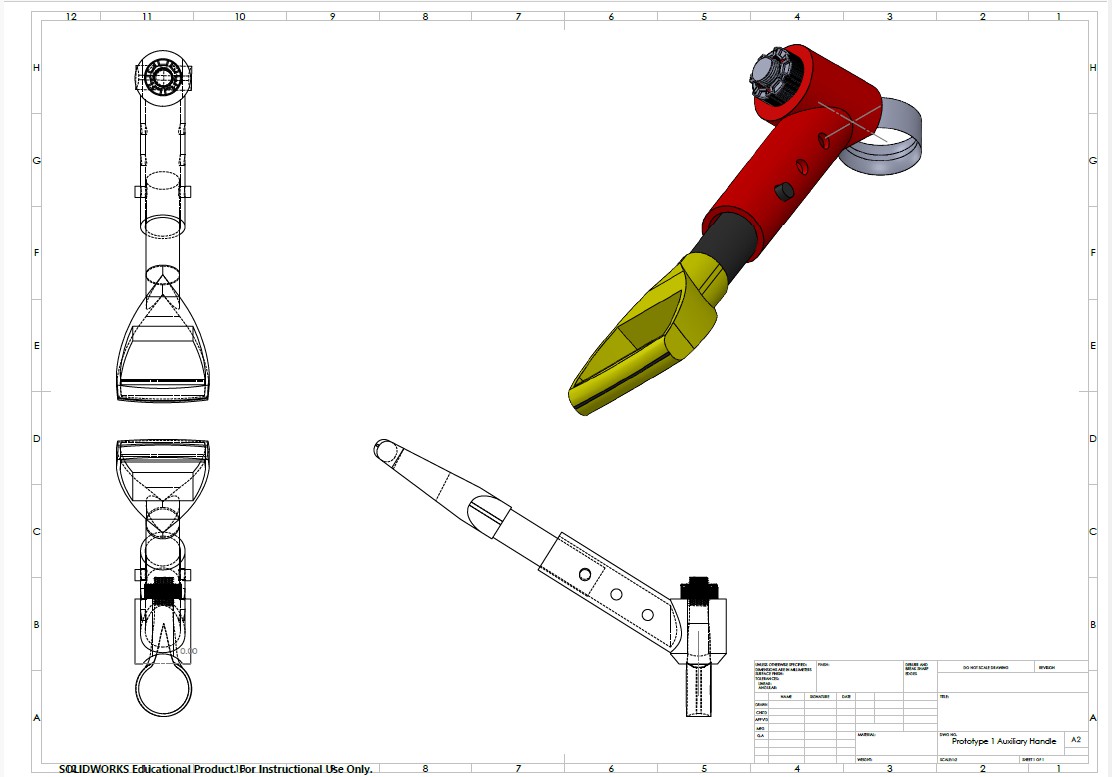
Fig. 1 Prototype 1: Auxiliary handle with 180° rotational clamps and adjustable height. This design will enable full rotational flexibility, promoting natural wrist alignment, and might reduce strain during farming tasks.
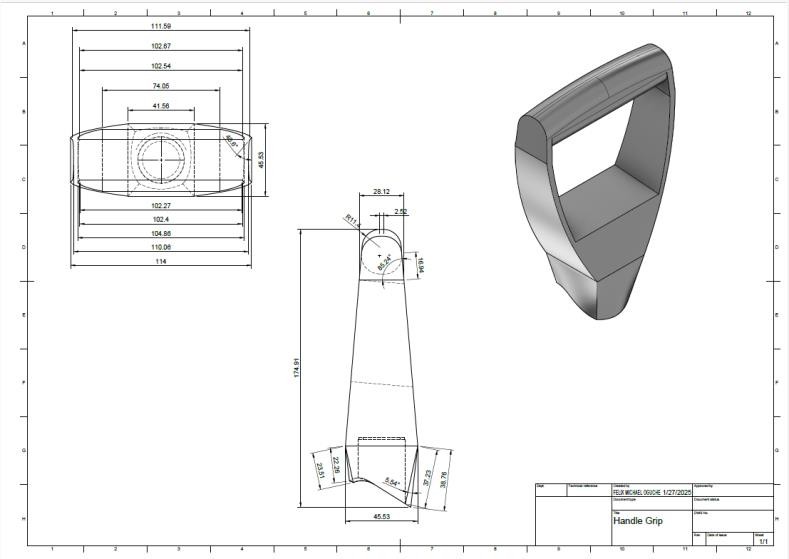
Fig. 2 Integrated D-Grip handle with Natural Inward Curvature (NIC) design. This ergonomic feature enhances grip comfort, minimizes wrist flexion, and allows for natural wrist alignment.
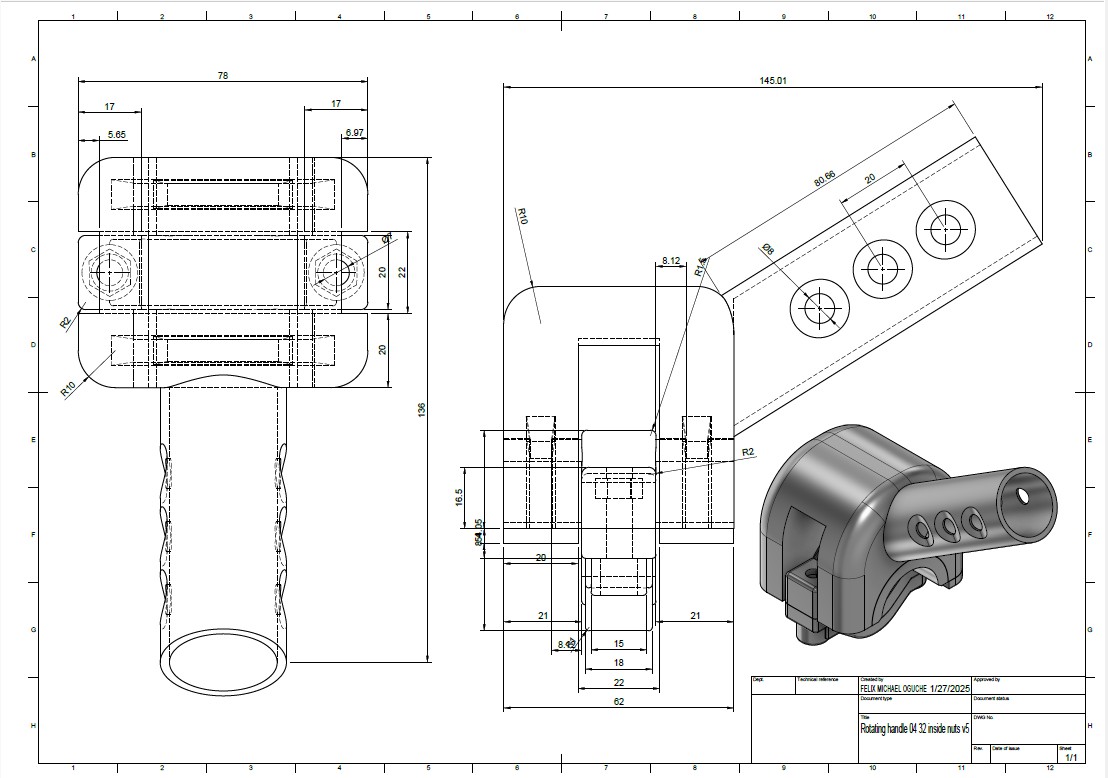
Fig. 3 Prototype 2: Auxiliary handle with 45° rotational support and adjustable height, reducing strain during lateral tasks.
Prototypes 3 and 4: Auxiliary Handles for Straight-Handled Tools
Designed for tools with straight handles, attached to the top handle to provide an additional grip point. Front-curved handle grip and back-curved handle grip variations. Adjustable clamp mechanism to fit different tools' handle diameters, ensuring versatility. Field testing is pending to validate real-world usability and effectiveness.
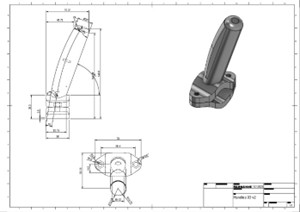
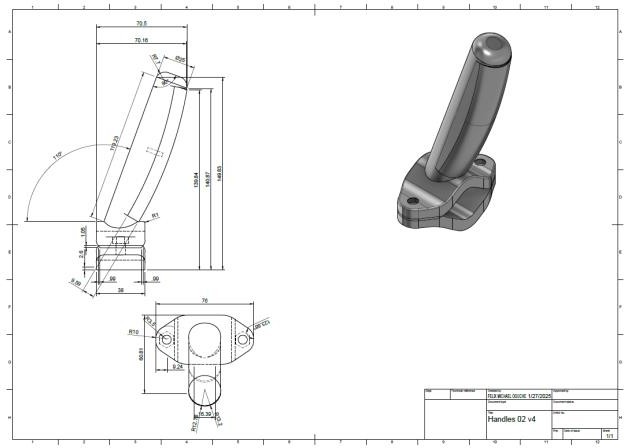
Fig. 4 Prototypes 3 and 4: Adjustable Auxiliary Handle attached to a straight-handled tool. This design provides an additional grip point, and an adjustable clamp mechanism accommodates tool handles of varying diameters.
Future field testing will assess practical usability and ergonomic impact through direct user feedback from women farmers. Performance metrics such as force distribution, grip comfort, and postural adaptation will be recorded to refine the final design before large-scale implementation.
Study 2: Redesign and Improvement of the Green Heron Prototype Electric Auger Tiller
Hypothesis: The redesigned Green Heron Electric Auger Tiller with ergonomic handle configurations, vibration-dampening mechanisms, and smart automation features will lead to lower vibration exposure, improved user control, and reduced muscular fatigue compared to conventional models.
Rationale: Traditional tillers exert high vibrational forces on the hands and arms, causing fatigue, grip strength loss, and chronic pain among operators. Although electric tillers reduce some of these risks by eliminating engine vibration, they often lack customizable ergonomic features tailored to diverse user profiles. This study seeks to redesign the Green Heron Electric Auger Tiller by incorporating height-adjustable handles, vibration reduction technology, and real-time performance tracking for enhanced safety and usability.
Materials and Methods
The redesign process incorporated ergonomic and automation improvements to optimize usability, safety, and performance. Height-adjustable ergonomic handles were integrated, offering 30°, 45°, and 60° positions to accommodate different user heights and reduce postural strain. A vibration-dampening system was added to mitigate hand-arm vibration syndrome (HAVS) and enhance operator comfort during prolonged use.
The auger system was equipped with visual and auditory warnings for user safety, an automated shutdown mechanism to protect hardware and prevent misuse, and programmable automation powered by an Arduino Nano microcontroller for:
- Real-time feedback on vibration, noise levels, and operational metrics.
- A dual-battery system for extended operation.
- Electrically motorized wheel addition, which will be controlled by the user as part of the improved simplified control unit, enhancing maneuverability and reducing operator fatigue.
To improve real-time monitoring and automation, an IoT-enabled control system was developed, featuring sensor-based tracking of vibration levels, tilt angles, and obstacle detection. The system utilizes proximity sensors for obstacle detection, allowing the tiller to adjust power output and operational speed based on terrain conditions. Additionally, tilt sensors provide real-time feedback on tilling depth and ground stability, ensuring more efficient and precise soil cultivation.
Prototype development included computer-aided design (CAD) modeling, and iterative prototyping to evaluate structural durability, torque efficiency, and ergonomic feasibility. The tiller frame was constructed using reinforced aluminum and composite materials, enhancing durability while maintaining lightweight usability. Future field testing will involve operator assessments and performance evaluations to validate ergonomic and automation improvements in real-world farming conditions.
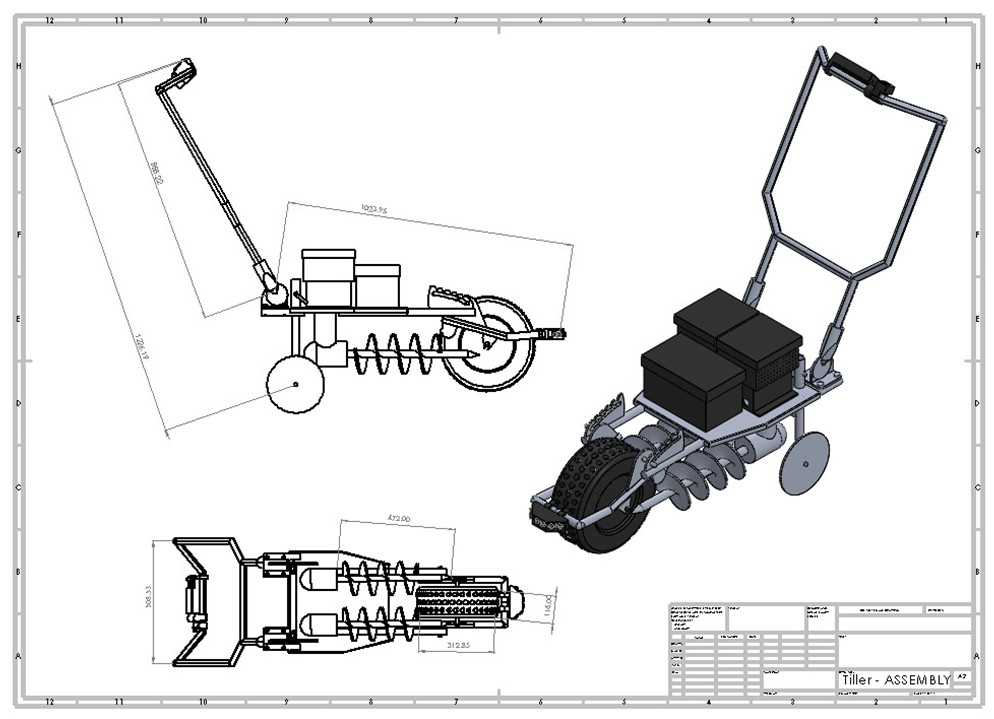
Fig. 5 The Auger Electric Tiller, with improvement. It features real-time feedback on vibration, sound, and operational metrics, along with visual and auditory warnings followed by a safe shutdown mechanism to enhance usability and safety for farmers.
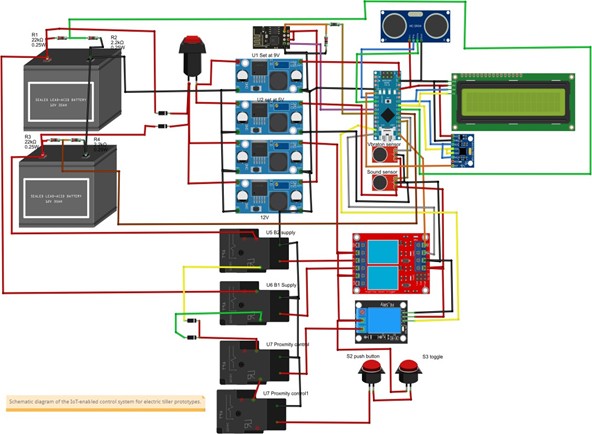
Fig. 6 Schematic diagram of the IoT-enabled control system for electric tiller prototypes. This system integrates sensors, dual-battery management, and automation for monitoring and enhancing performance during agricultural tasks.
Research conducted in the year 2025:
Study 3: Development and Experimental Evaluation of Ergonomic Auxiliary Handles for Long-Handled Agricultural Tools
The 2025 auxiliary handle study focused on developing and evaluating ergonomic handle attachments designed using anthropometric and biomechanical principles relevant to women farmers. The prototype family included adjustable (ErgoFlex) and fixed (ErgoCore) configurations, incorporating multiple design concepts such as dual rotational support, flexible clamping, and ball-bearing locking systems. These were tested across different handle angles (16°, 32°, and 90°) to evaluate their influence on posture and workload.
Prototypes featured a Natural Inward Curvature (NIC) D-grip, adjustable height mechanisms, and rotational joints to improve wrist alignment and reduce excessive trunk bending. All designs were developed using CAD modeling and fabricated using 3D printing and reinforced materials for durability.
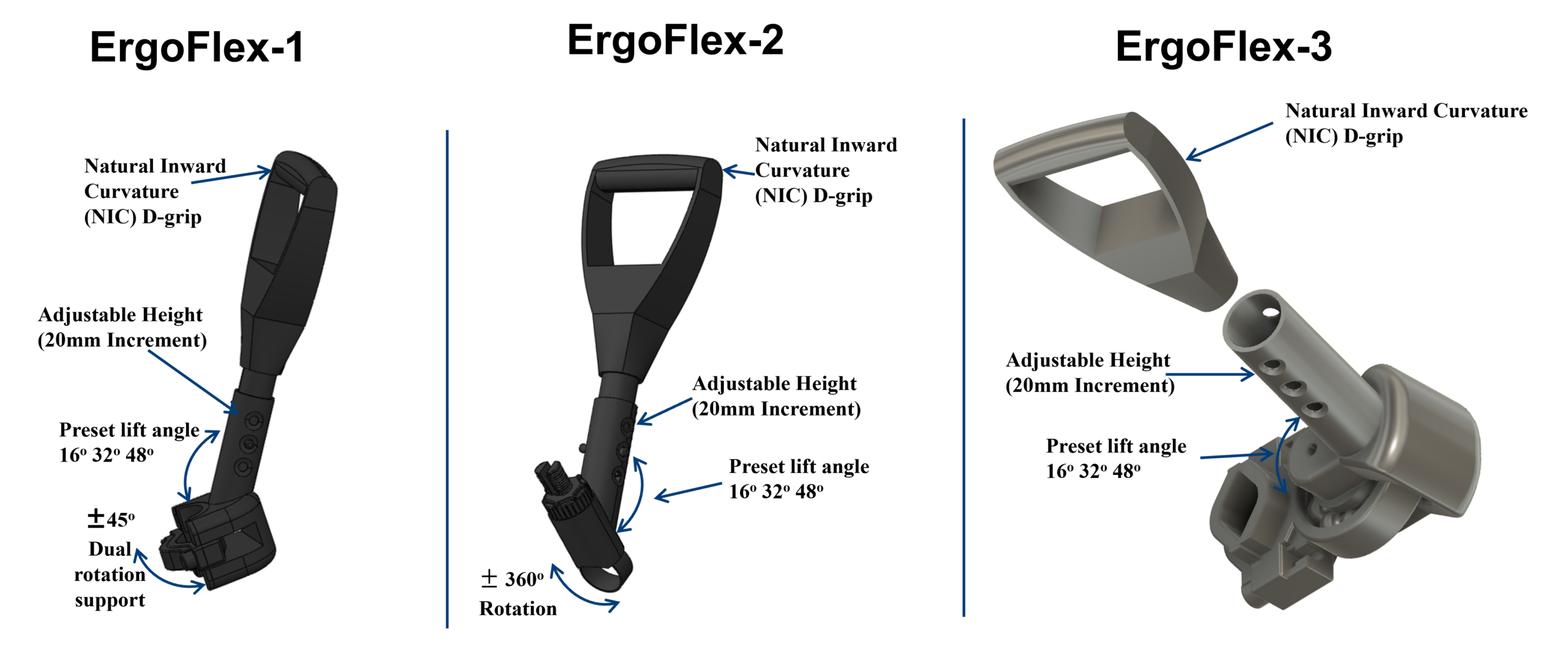
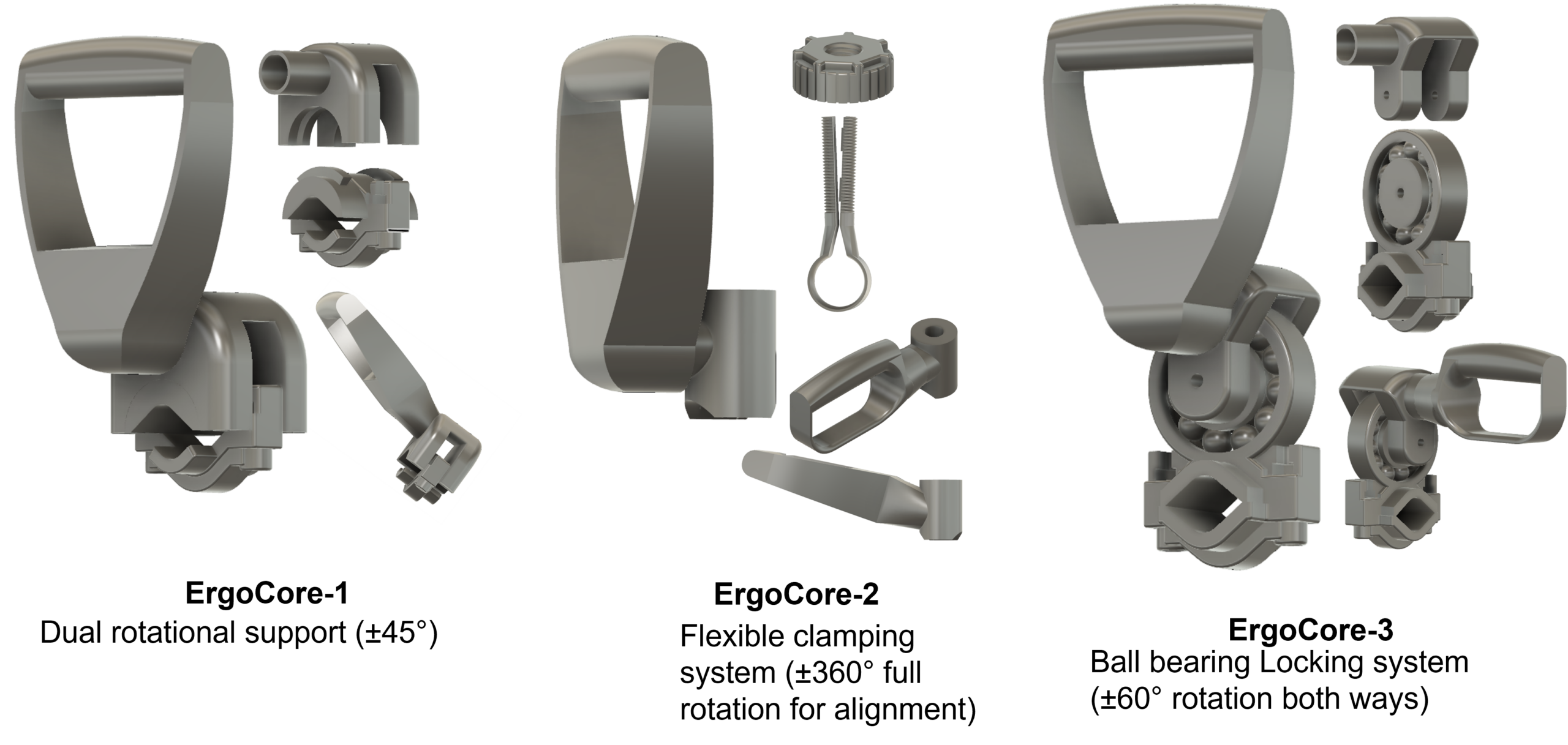
Fig. 1. Ergonomic auxiliary handle prototype family (ErgoFlex and ErgoCore configurations) showing adjustable height, rotational joints, and structural variations designed for long-handled agricultural tools.
A total of twelve participants were included in the experimental study. Anthropometric measurements such as height, weight, elbow height, forward reach, and hand dimensions were collected to ensure representation of diverse body types and to support ergonomic interpretation.
The experimental design compared three tool conditions:
(1) conventional tools without auxiliary handles,
(2) commercial handles (e.g., RAH! Handle and BackEZ handle), and
(3) newly developed ergonomic prototypes.
Participants performed repetitive scoop-shovel tasks simulating material handling activities commonly encountered in agricultural settings.
Subjective measures included comfort ratings, rating of perceived exertion (RPE), and user preference, while objective measures included joint angles (elbow, shoulder, wrist, trunk, and neck) and posture-based ergonomic scores using REBA and RULA.
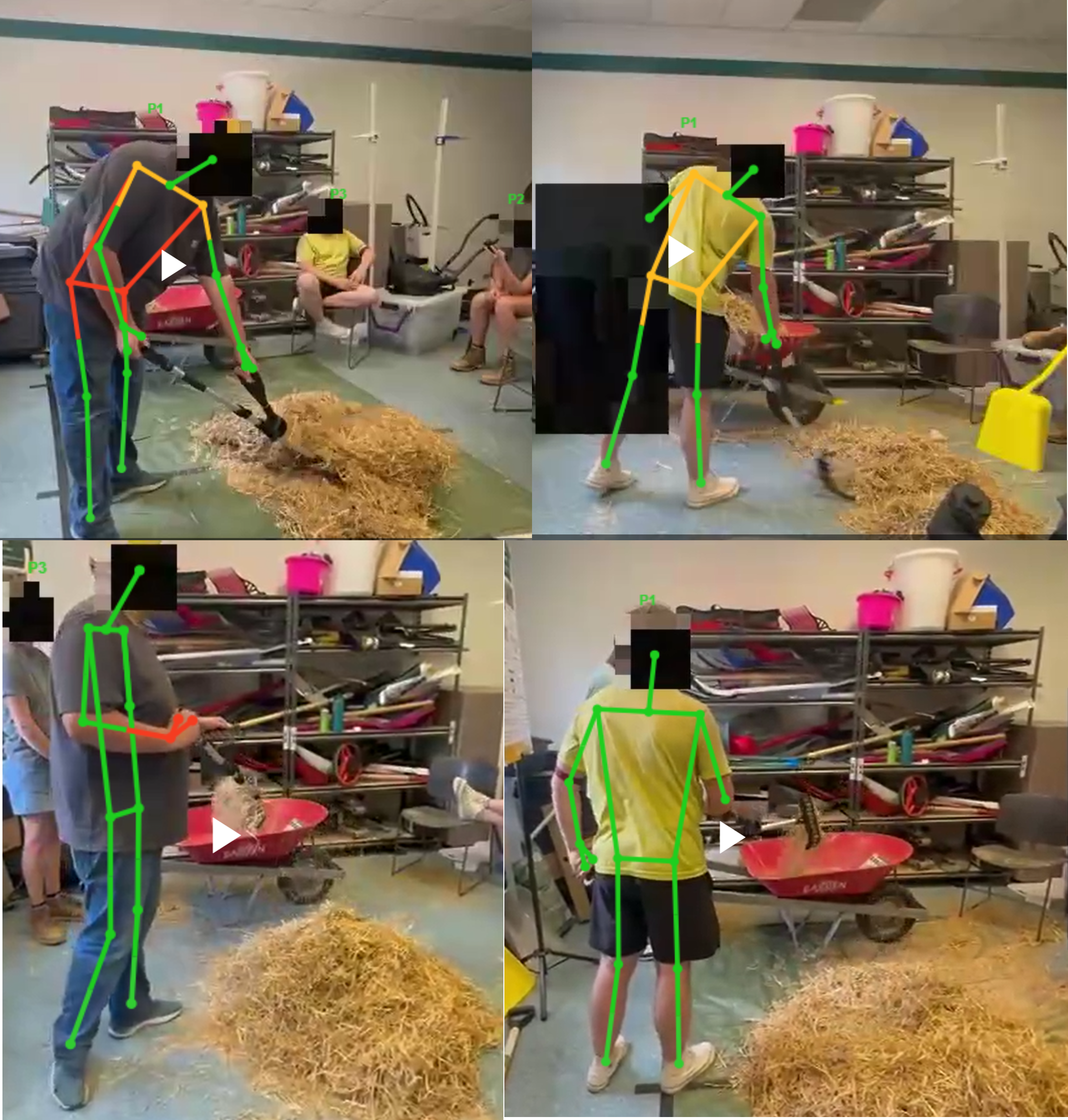
Fig. 2. Experimental setup showing scoop-shovel task with auxiliary handle attachment during controlled ergonomic evaluation, and Illustration of joint-angle measurements and posture assessment using video-based analysis and ergonomic scoring methods (REBA and RULA).
Study 4: Development and Comparative Evaluation of Rear-Tine, Front-Tine, and Electric Auger Tillers
The 2025 tiller study expanded the redesign of the electric auger tiller into a comparative experimental evaluation against conventional compact tillers. Three systems were tested: rear-tine, front-tine, and the electric auger tiller prototype.
The auger tiller incorporated ergonomic improvements such as adjustable handles, improved stability, and refined auger geometry, along with preparation for sensor integration to support future smart monitoring.
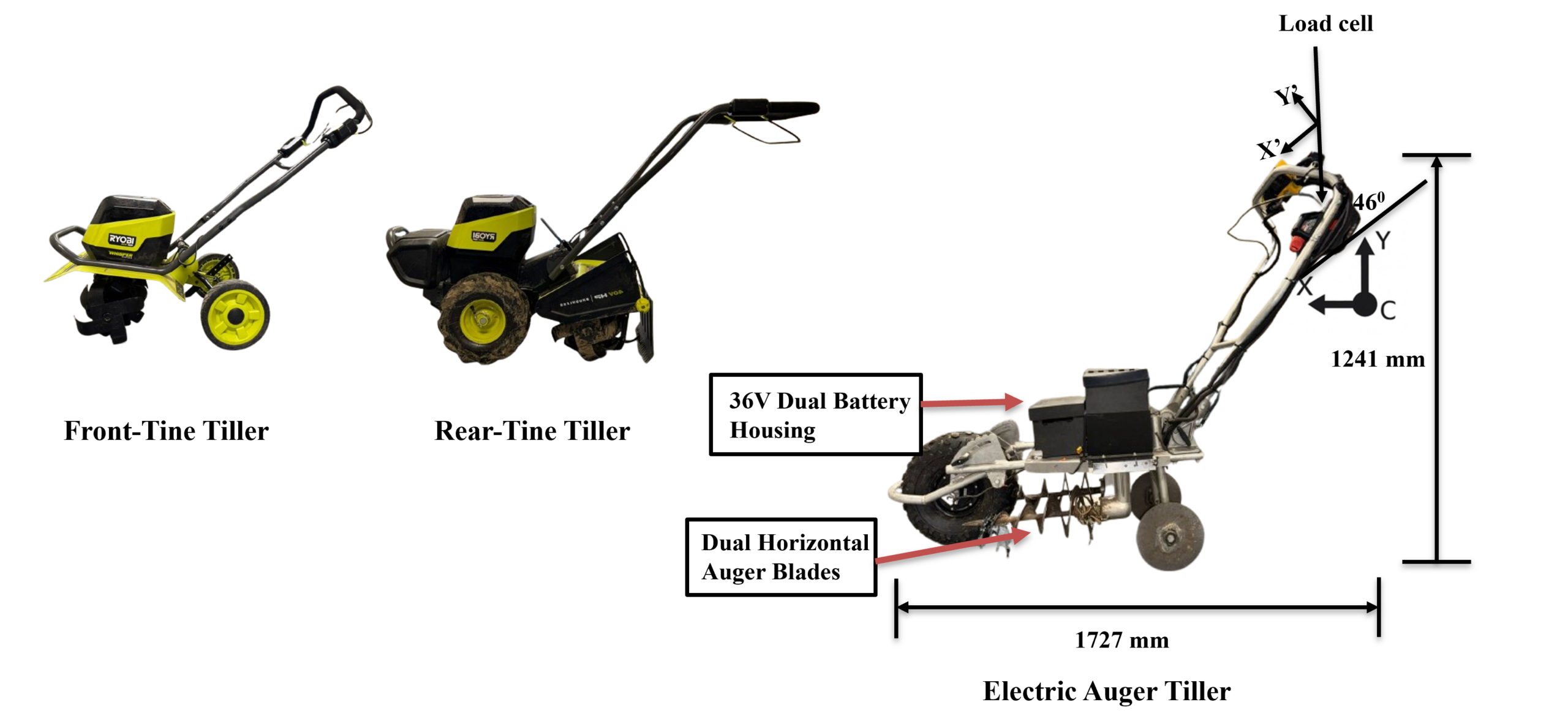
Fig. 3. Electric auger tiller prototype with ergonomic handle configuration, improved stability, and modular design for performance evaluation.
Twelve participants completed randomized trials in which each tiller was operated under similar working conditions. A repeated-measures design allowed direct comparison across all three systems.
Physiological measures included working heart rate, energy expenditure, and Borg RPE to assess workload. Postural assessments focused on trunk flexion, elbow angle, and wrist deviation during operation.
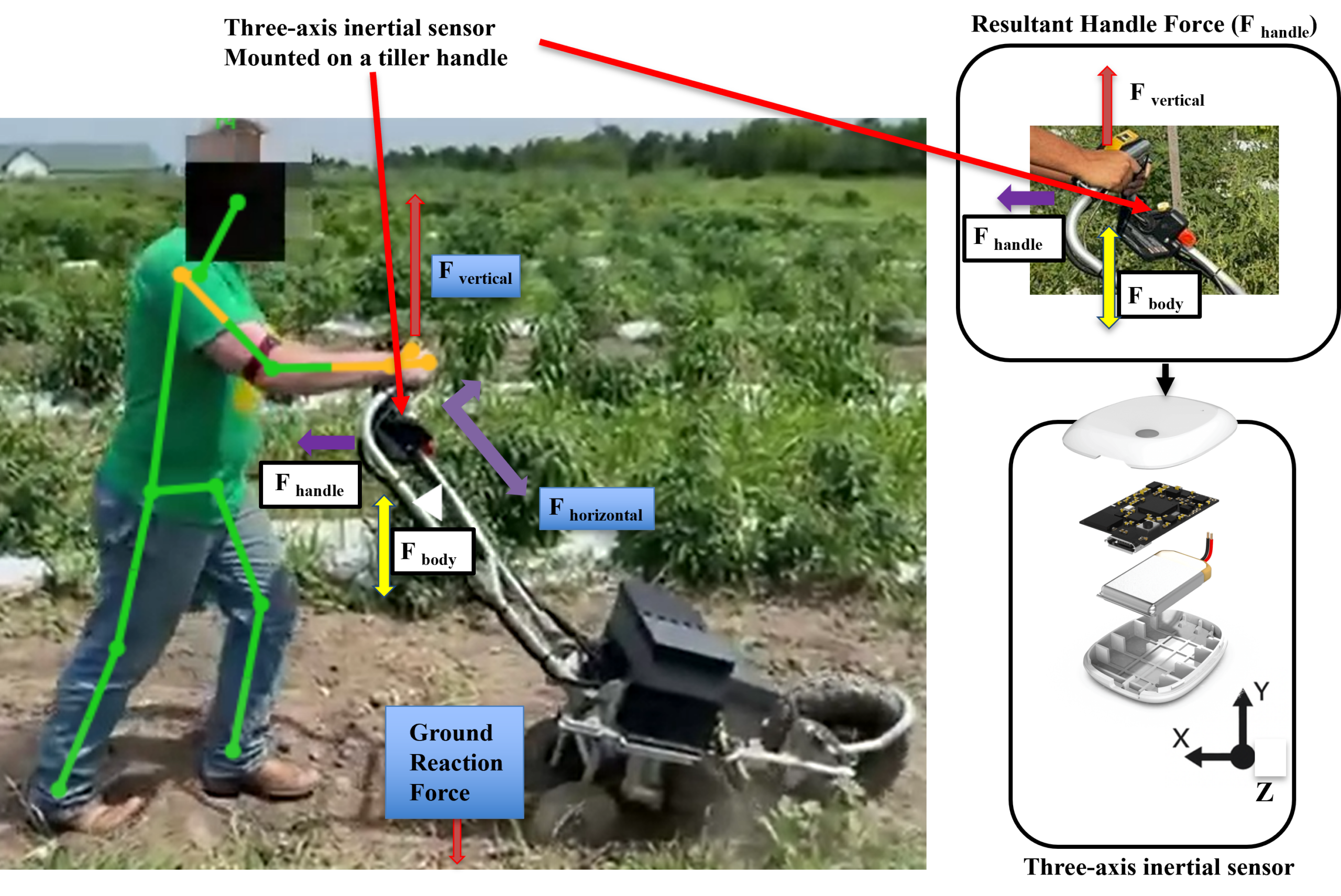
Fig. 4. Experimental setup for tiller evaluation shows operator posture and measurement of physiological and ergonomic parameters during field-simulated operation.
Vibration exposure was quantified using RMS, VDV, and A(8), while noise levels were measured in dB(A). Soil performance was evaluated using compaction and mean weight diameter to ensure that ergonomic improvements did not compromise tillage effectiveness.
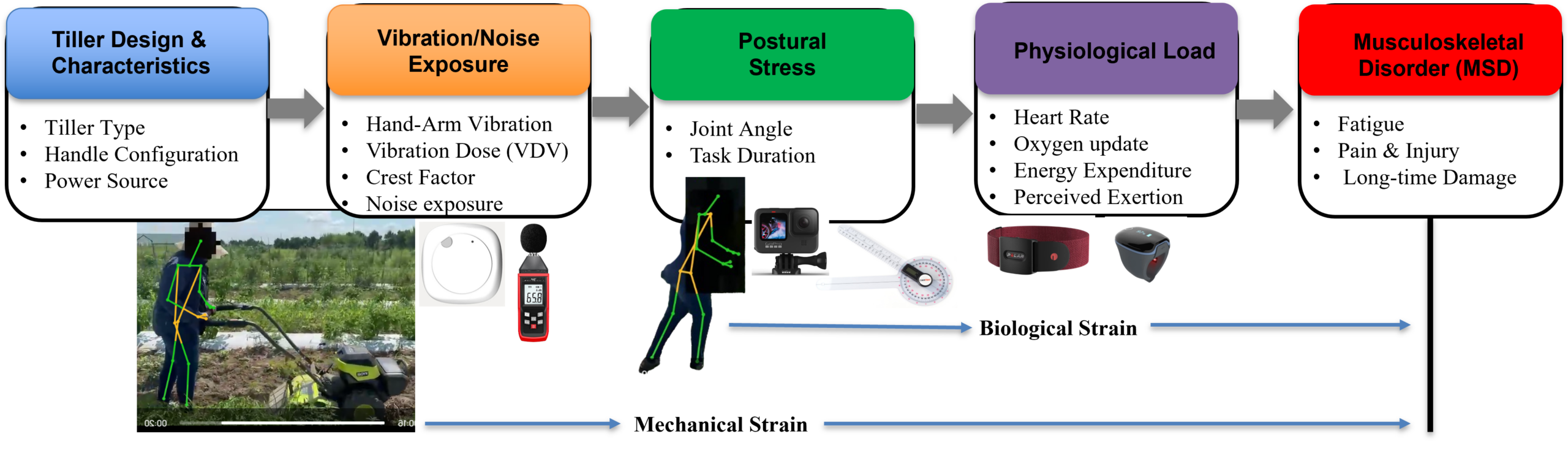
Fig. 5. Measurement framework for vibration, noise, and soil performance during comparative tiller testing.
Results and discussion for survey in 2022:
The response to our survey questions:
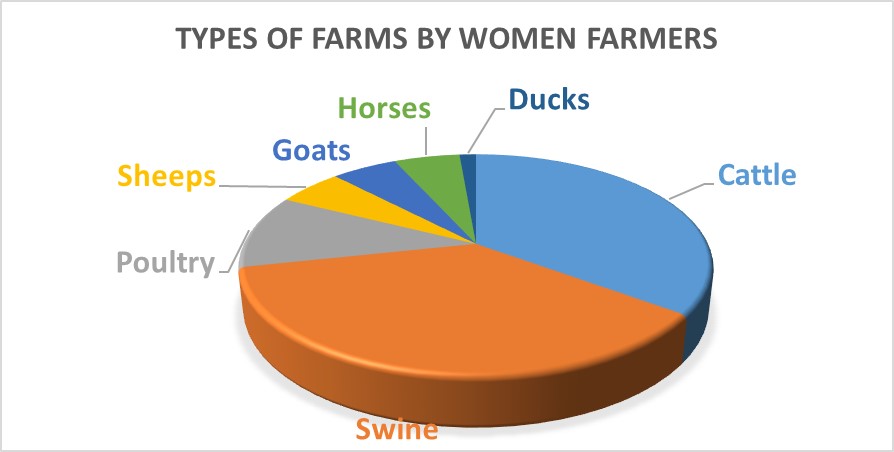
- Information about your farm, such as type of production (e.g., cattle, dairy, swine, vegetables …) and number of animals/acres.
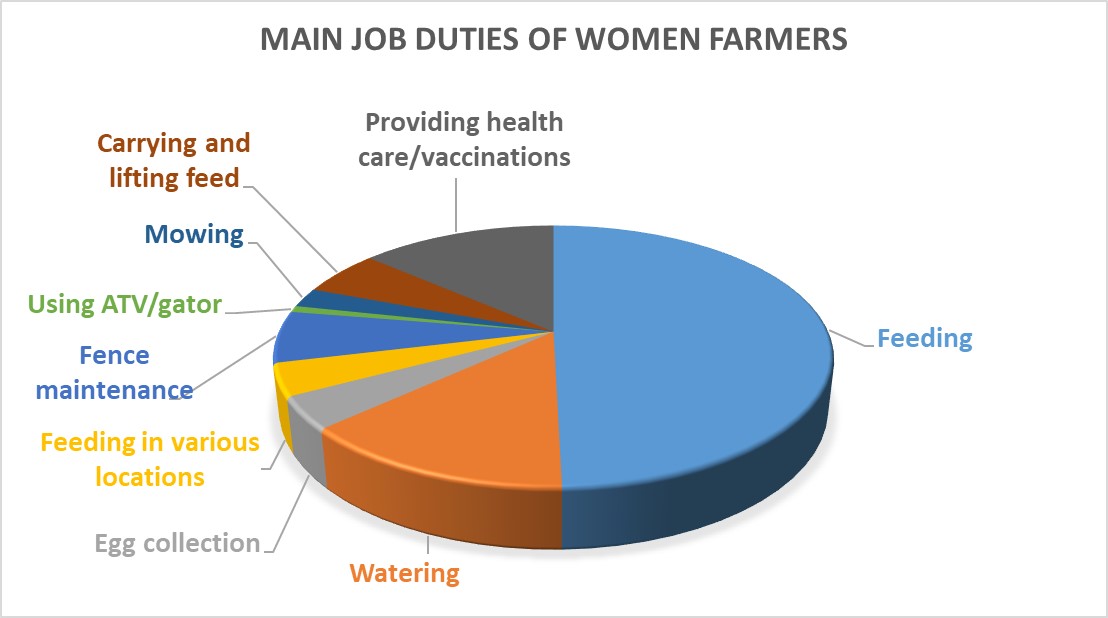
- What are your main job duties on the farm (feeding, hauling, carrying, lifting, …).
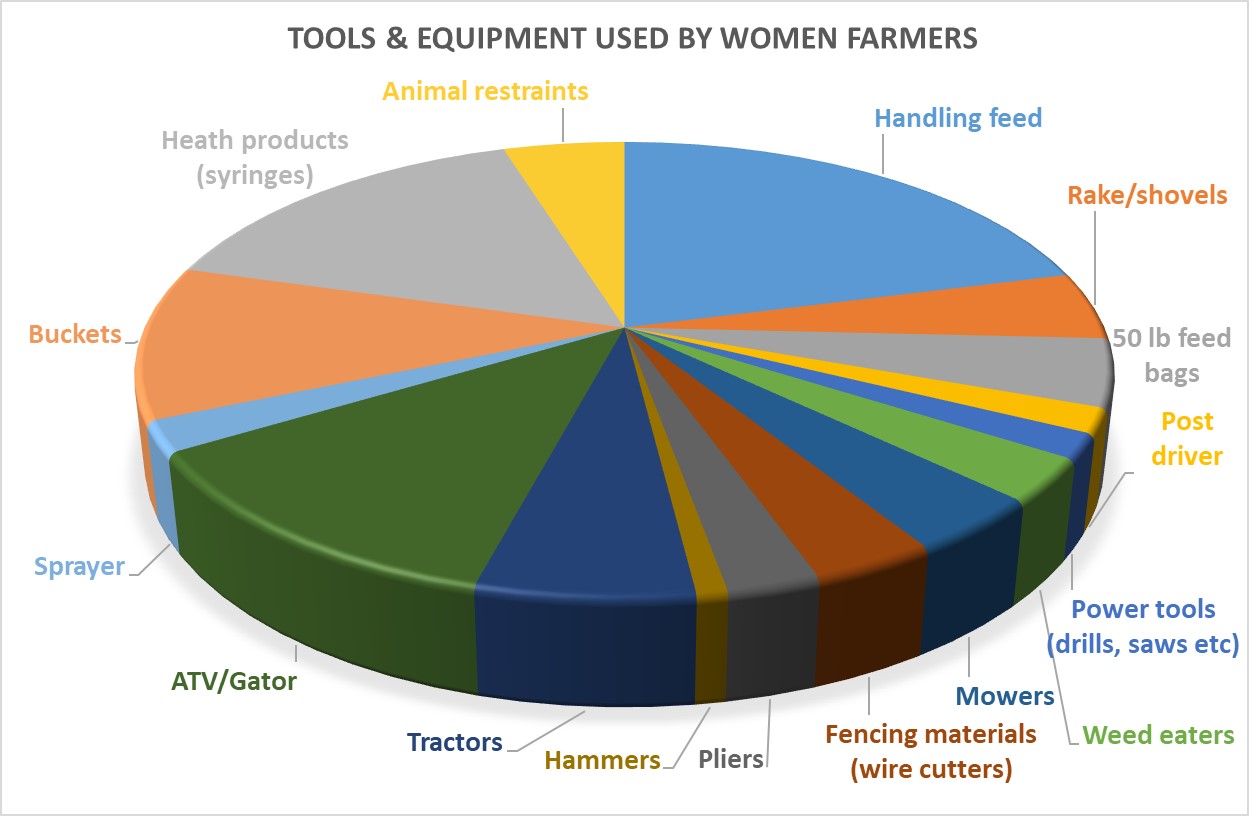
- What everyday tools and equipment are used on your farm(s)?
- When using a tool or equipment, what adjustments do you need to make to prevent injury or make the tool/equipment easier to use?
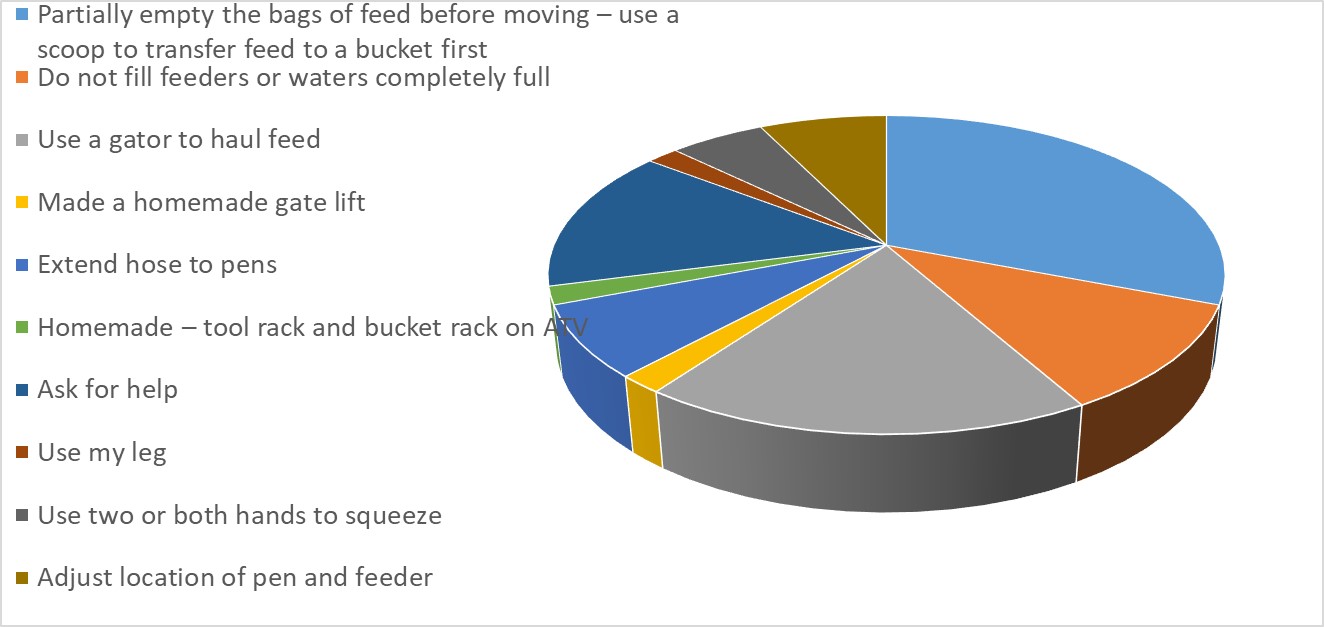
- What are the 5- 10 issues or complaints of the current tools or equipment that you use.
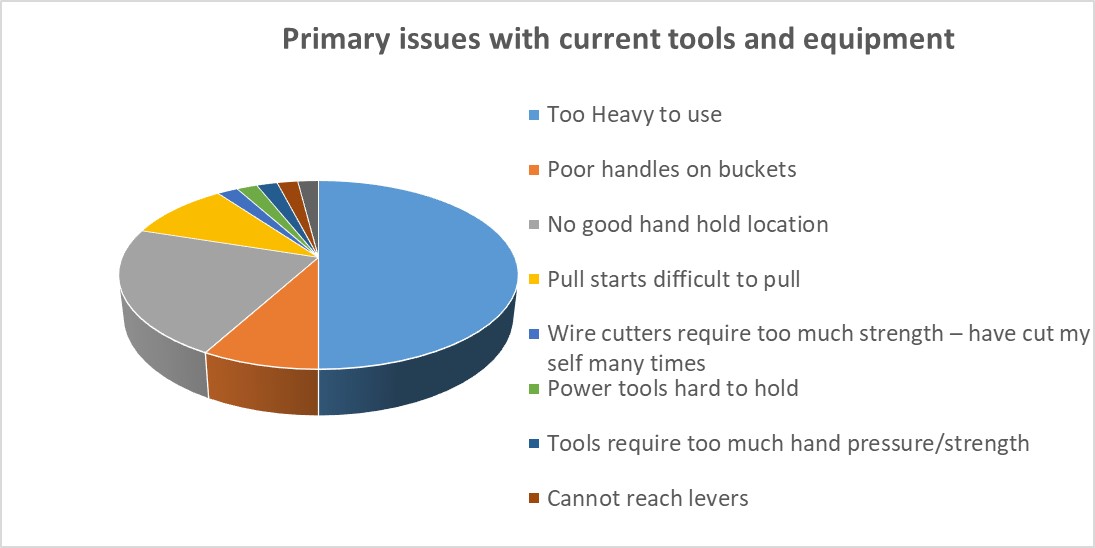
- Have you or others on your farm been injured due to poorly designed tools and equipment? If yes, please provide some details about how injury happened and how we can improve tools.
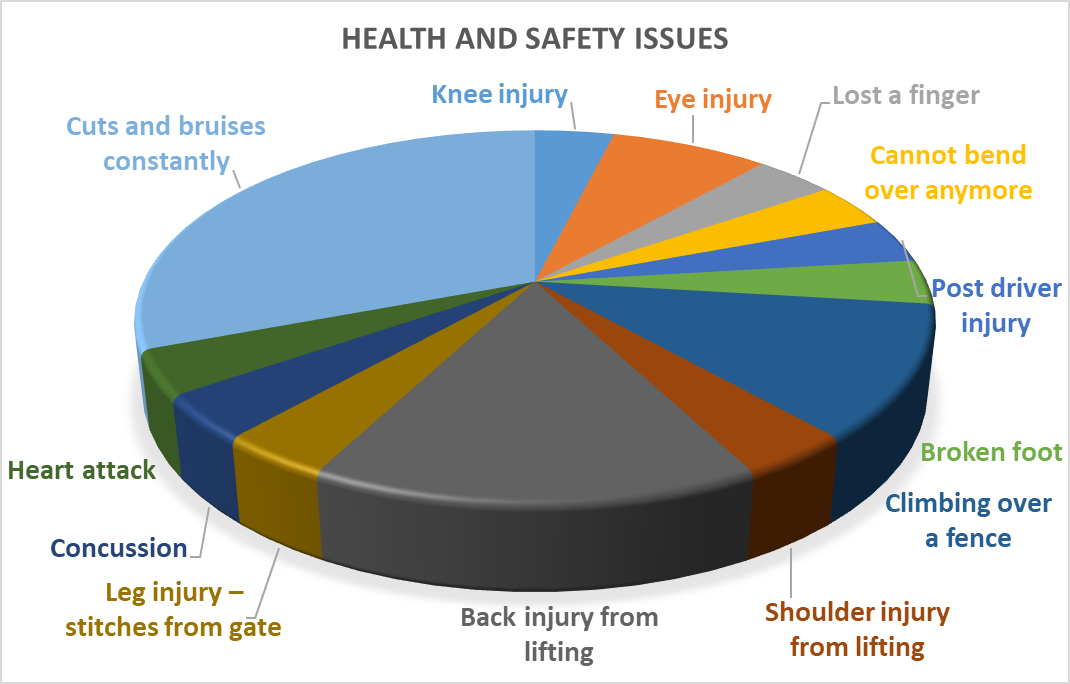
- List 2-3 dream tools/equipment that you would love to have to help you.
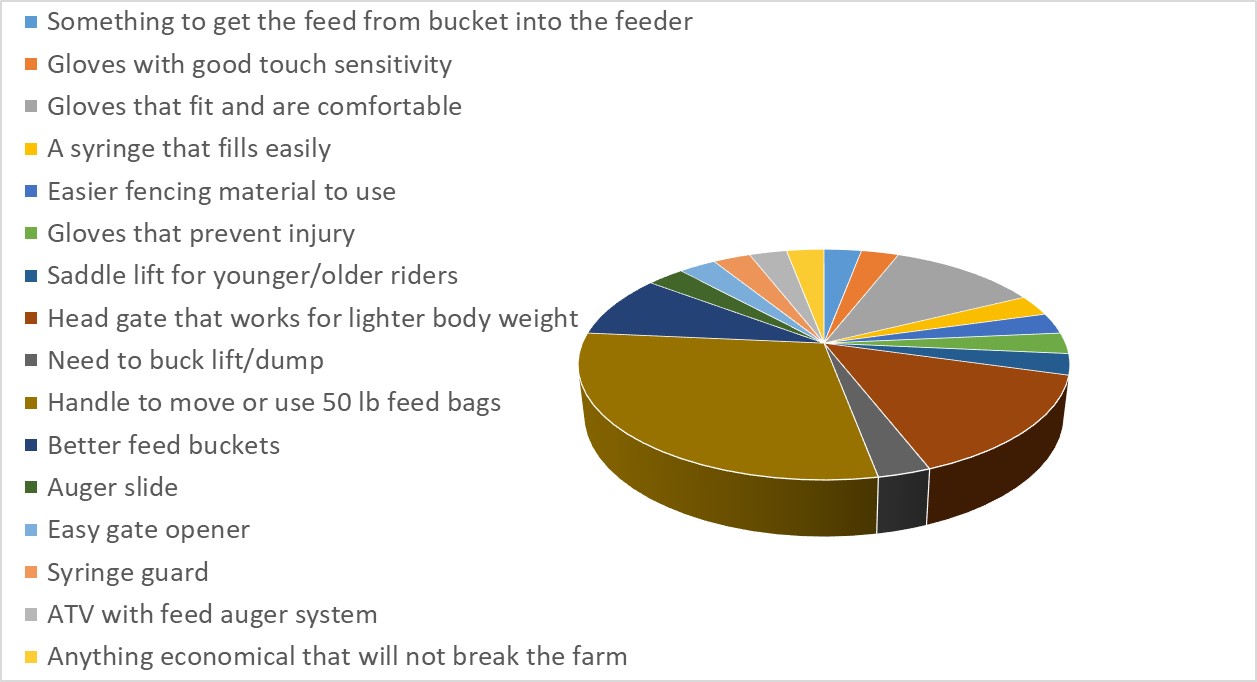
Results and discussion for Study I and II in 2023:
Study 1: Ergonomic study
The focus was on the direct impact of tool design on usability and ergonomic safety. It was found that tool design, particularly lift angle and handle height, significantly affected tool usability and comfort. Optimal lift angles between 30 to 45 degrees and appropriate handle heights provided mechanical advantages and were also preferred by users, as confirmed by previous research (Freivalds, 1986a; 1986b). However, both RULA and REBA scores indicated high risks for upper limb disorders across all tools tested, underscoring a significant ergonomic challenge. The high scores suggest that current tool designs often necessitate awkward postures, thereby increasing the risk of musculoskeletal disorders, especially in upper limbs. Interestingly, while some tools met theoretical ergonomic standards, they were not preferred by users, highlighting the influence of individual physical differences such as height and BMI on tool suitability (Nunes and Bush, 2012). Our study findings demonstrate:
- Strong preference for PFE pitchforks and SSA and SSC shovels, due to their ergonomic D-shaped handles that align with the natural inward curve of a user's hand, particularly those that These handles are ergonomically superior because they align with the natural inward curve of a user's hand, providing enhanced comfort and reducing strain during use. These handles, with grip widths ranging from 93 to 106 mm (about 4.17 in) and upper grip diameters from 32 to 35 mm (about 1.38 in), were strongly preferred and found to reduce hand fatigue and improve control by participant exertion.
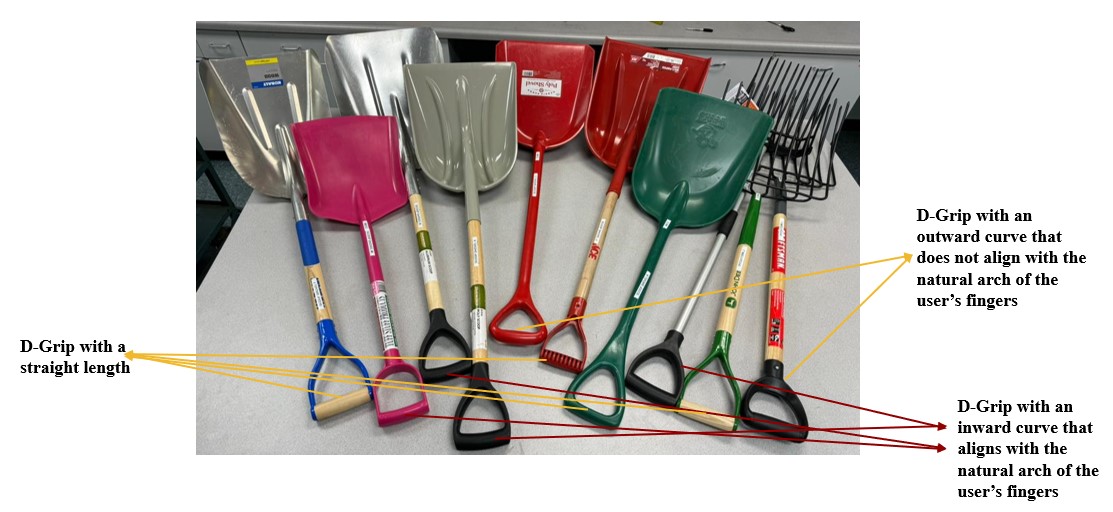
Figure 1: D-Grip Handle Types
- The graph illustrates the preferences for diverse types of shovels and pitchforks based on the lift angles, which were recorded during our ergonomic evaluations. This data visualizes the strong preferences for specific models such as PFE pitchforks and SSA and SSC shovels. These tools were notably favored by participants, showing a preference rate of 60% for pitchforks and 80% for shovels. This aligns well with ergonomic principles, particularly those outlined by A. Freivalds (1986b), who recommended optimal lift angles ranging from 30 to 50 degrees to minimize user strain and maximize efficiency.
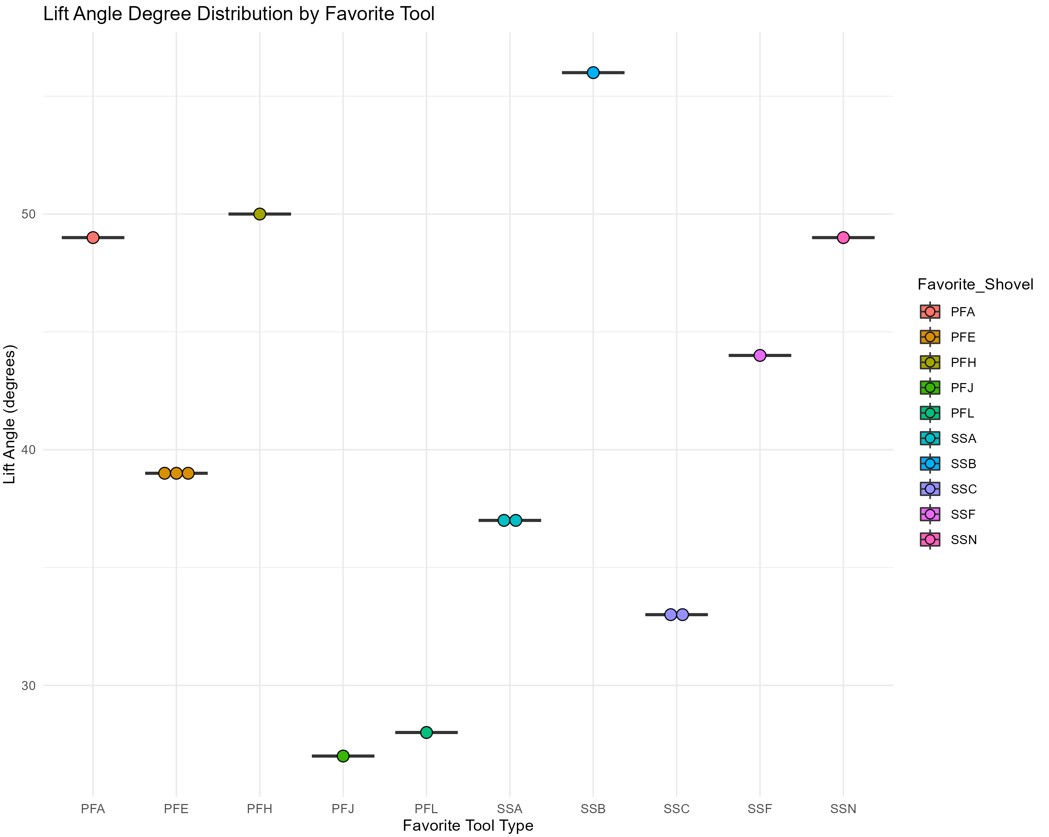
Figure 2. Lift Angle Variability in Preferences by Participants
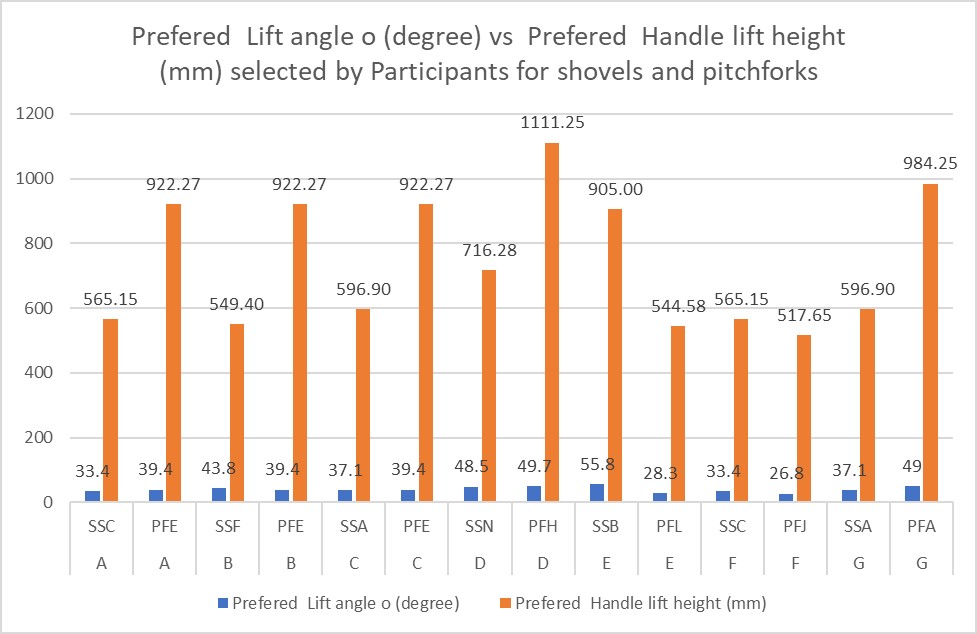
Figure 3. Comparison of Preferred Lift Angles and Handle Lift Heights for Shovels and Pitchforks as Selected by Participants
- The figures below provide a visual representation of the biomechanical impact that different tools have on users, highlighting the importance of matching tool design to the user’s physical characteristics. Subject 1 (F) 180 cm (about 5.91 ft) displayed a significant hip angle when using the tool, which may indicate an ergonomic mismatch due to either the tool’s height or the handle’s design not being suited for his taller stature. The graph accompanying the image maps out the fluctuation in angles throughout the task, with notable peaks suggesting points of high strain. Subject 2 (B) 159 cm (about 5.22 ft) shows a different pattern of interaction, with a more favorable hip angle but still,
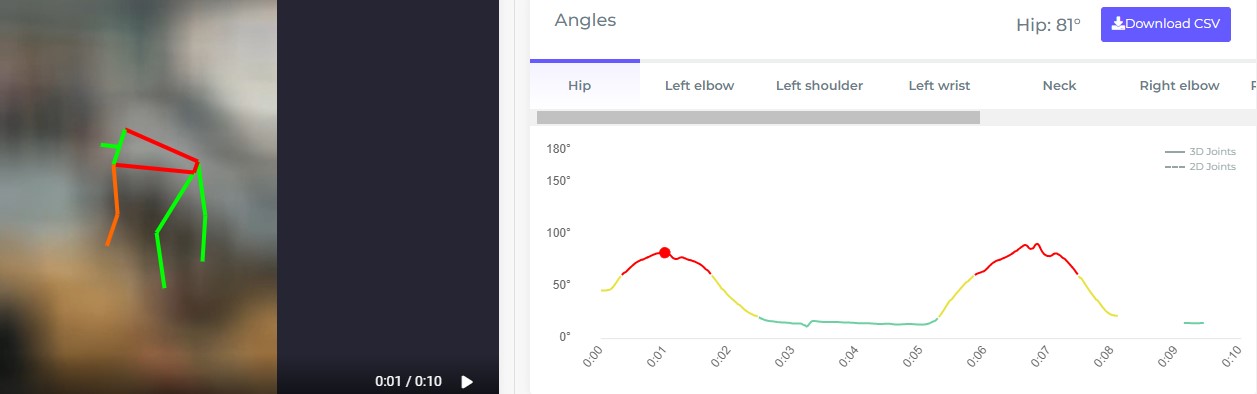
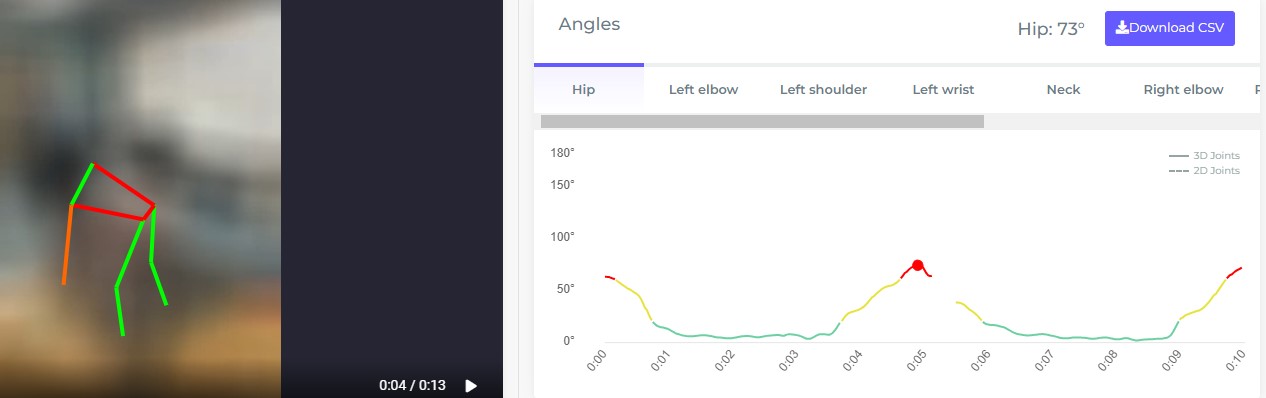
Figure 6. Biomechanical impact of different tools (Screenshot from software TuMeke)
- The provided figure illustrates the ergonomic postures of subjects B and C while using the PFE pitchfork and SSA shovel, captured during motion analysis sessions. These images serve as a visual representation of the ergonomic challenges and variations in tool interaction based on user height and tool design, highlighting the necessity for ergonomic redesigns to accommodate diverse user physiques and reduce the risk of injury.
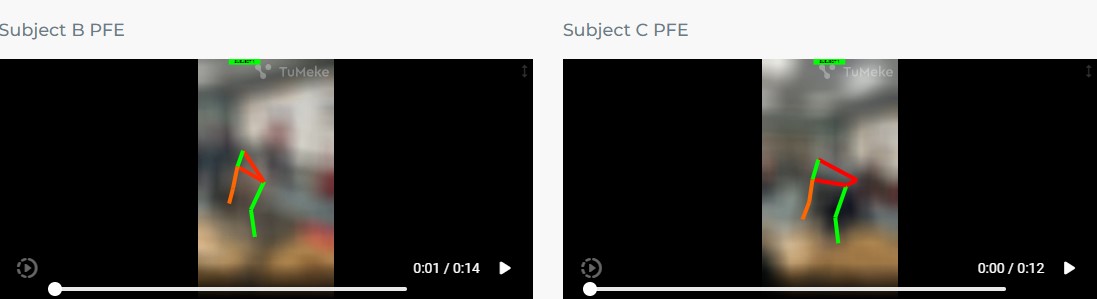
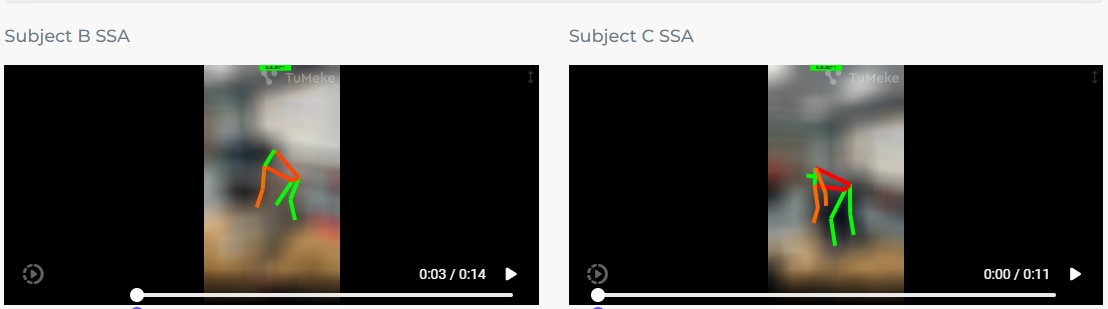
Figure 7. Comparison of posture movement for subjects B and C using Pitchfork PFE and Shovel SSA
Implications
These findings emphasize the importance of considering ergonomic design in agricultural tools to reduce physical strain and enhance usability. The unexpected results suggest a need for further research into personalized ergonomic designs.
Study 2: Ergonomic study II
Physiological Measures show that there were no significant differences in heart rate, SpO2 levels, or blood pressure showed no significant differences between users of ergonomic and conventional tools, suggesting that the ergonomic modifications do not negatively impact these health parameters. However, specific physical strain reductions were noted in the hip and wrist areas with ergonomic tools. Contrarily, an increase in elbow effort with ergonomic tools highlighted a potential trade-off, where improvements in one area might exacerbate strain in another. This unexpected finding indicates that while ergonomic improvements can reduce strain in specific areas, they may also introduce new strain elsewhere.
Results and discussion in 2024:
Study 3: Development of Ergonomic Auxiliary Handles (Completed, Awaiting Field Testing)
Ergonomic Analysis and Preliminary Findings
The design of auxiliary handles with adjustable height and rotation aimed to reduce wrist, elbow, and back strain during shoveling, raking, and material transfer tasks. Prior research has confirmed that standard tool designs force users into awkward postures, increasing joint stress and muscle fatigue (Koopman et al., 2019; Davis & Kotowski, 2007).
A key outcome of this study was the design validation through CAD modeling, finite element analysis (FEA), and iterative prototyping. Initial biomechanical simulations indicated that the D-Grip handle with Natural Inward Curvature (NIC) design allowed for more neutral wrist positioning, potentially reducing muscle activation in the flexor and extensor groups.
The rotational flexibility (180° for Prototype 1 and 45° for Prototype 2) was engineered to accommodate natural wrist movements, reducing unnecessary torque at the elbow. Literature suggests that reducing wrist flexion beyond 50° significantly lowers the risk of musculoskeletal disorders (Madinei & Nussbaum, 2023). The integration of height adjustability (increments of 3 cm) aligns with anthropometric recommendations for task-specific tool optimization, improving overall ergonomic adaptability.
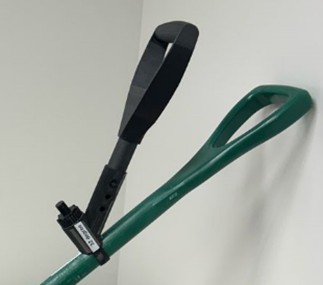
Fig. 7 3D-printed prototype1, ergonomic auxiliary handle prototype mounted on a standard shovel. The design features a 180° rotational clamp and height adjustability, allowing users to customize grip positions for reduced wrist strain and improved posture.
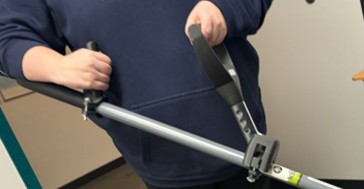
Fig. 8 A participant testing the ergonomic auxiliary handle prototypes 2 and 3. The handle is attached to a shovel, demonstrating its adaptability to different agricultural tools and its potential for improving control and reducing musculoskeletal strain.
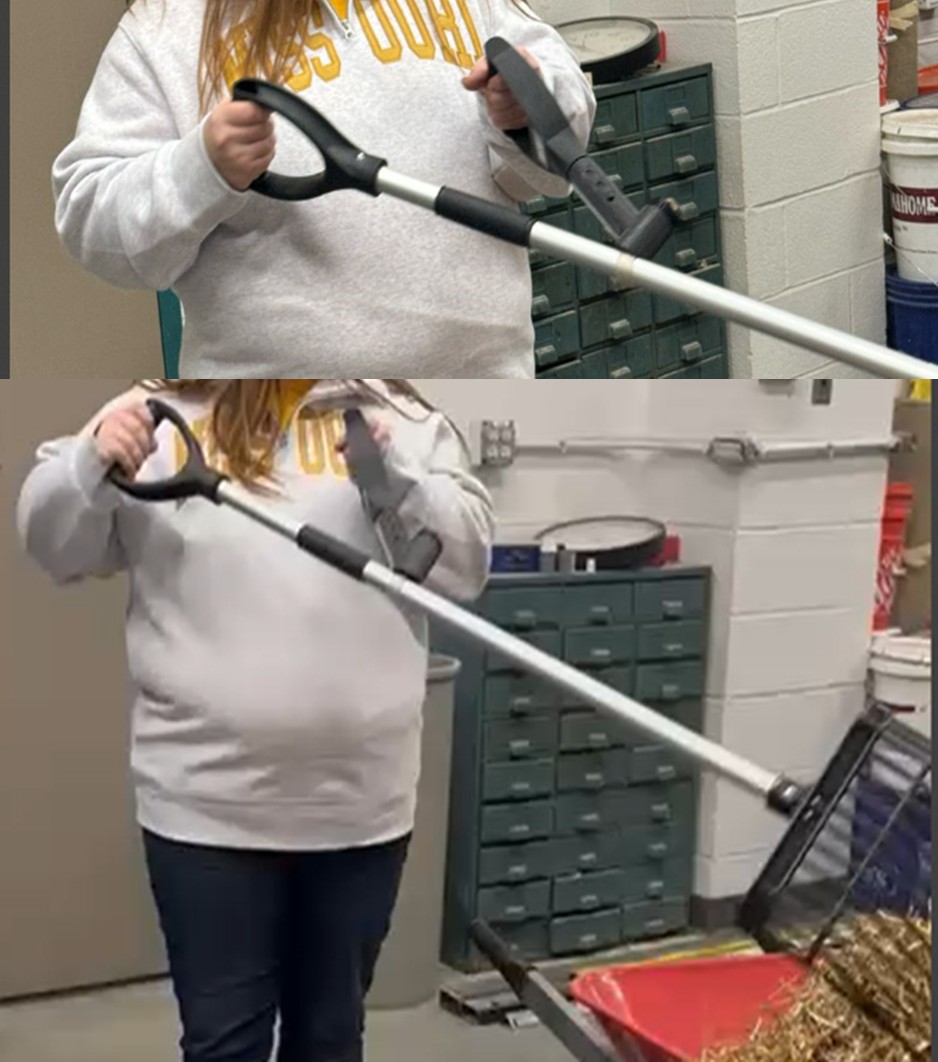
Fig. 9 Experimental use of the auxiliary handle prototype1 with a pitchfork during a simulated material transfer task. The integrated D-grip handle and clamp rotation ensure better force distribution, reducing the physical effort required for lifting and throwing motions.
Implications for Future Field Testing
Although field trials with women farmers have not yet been conducted, laboratory-based usability tests indicate improved grip control, reduced excessive wrist supination, and better overall posture stability. Future kinematic assessments and force measurement trials will provide empirical data to confirm the effectiveness of the auxiliary handles in real-world applications.
These findings suggest that ergonomically designed auxiliary handles may significantly reduce upper limb strain, aligning with studies highlighting the importance of customizable tool designs for diverse user anthropometry (Thota et al., 2022; Banibrata, 2013).
Study 4: Redesign and Improvement of the Green Heron Prototype Electric Auger Tiller (Development Awaiting Field Testing Phase)
Ergonomic and Technological Improvements
The Green Heron Electric Auger Tiller was redesigned to address key issues related to vibration exposure, operator fatigue, and inefficient posture adaptation. Studies indicate that high vibration levels in power tools contribute to hand-arm vibration syndrome (HAVS), leading to chronic pain and reduced grip strength (Naeini et al., 2014; Mahajan et al., 2024).
To counteract these challenges, the redesigned tiller integrates vibration-dampening technology and height-adjustable ergonomic handles, allowing for customized positioning at 30°, 45°, and 60°. This adjustability helps users maintain a more neutral spine posture, reducing lumbar stress and prolonged back flexion, a common issue reported among farmers using traditional tillers.
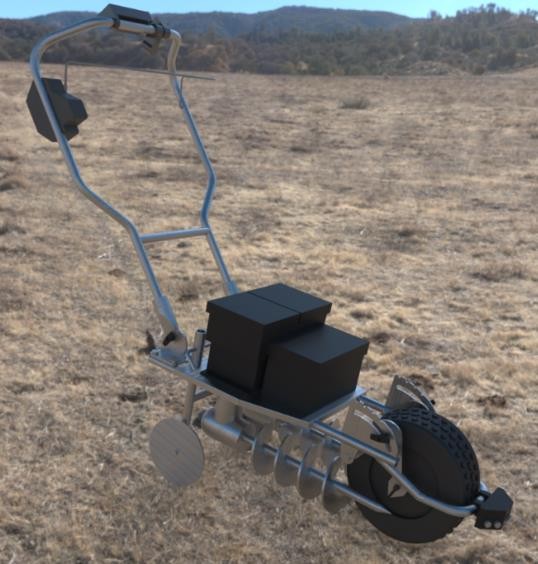
Fig. 10 Enhanced prototype of the Green Heron Electric Auger Tiller, integrating a secondary handle with an emergency stop function for increased safety. The control system unit has been repositioned for better accessibility and intuitive operation, ensuring improved maneuverability and ease of use. Additional ergonomic refinements include electrically motorized wheels for reduced operator fatigue and adjustable handle positions to accommodate diverse user needs. The IoT-enabled monitoring system continues to track vibration levels, tilt angles, and obstacle detection, enhancing automation and optimizing tilling efficiency in real-time farming conditions.
Smart Automation and IoT Integration
A major advancement in this redesign is the integration of smart automation features for real-time monitoring and performance adjustments. Key technological improvements include:
- Real-time feedback on vibration, noise levels, and operational metrics via an IoT-enabled control system.
- Dual-battery system for extended operation, allowing continuous use in the field without frequent recharging.
- Proximity sensors for obstacle detection, ensuring safer operation by adjusting speed and power output based on terrain conditions.
- Tilt sensors provide real-time feedback on tilling depth and ground stability, optimizing soil cultivation.
- Electrically motorized wheel addition, which will be controlled by the user as part of the improved simplified control unit, enhancing maneuverability and reducing operator fatigue.
Field testing, once conducted, will evaluate:
- Energy expenditure comparisons between the redesigned tiller and conventional models.
- Vibration exposure analysis, measuring reductions in hand-arm vibration impact.
- User comfort and efficiency metrics, using motion capture and kinematic assessments.
Given that previous research on electric tillers lacked anthropometric customization, this study provides a critical step toward more adaptive, ergonomic mechanization solutions for smallholder farmers.
Results and Discussion (2025)
Study 3: Development and Experimental Evaluation of Ergonomic Auxiliary Handles
The 2025 evaluation confirmed that auxiliary handle performance depends strongly on configuration rather than simply adding a secondary grip. Conventional tools showed relatively high comfort ratings, likely due to familiarity, but were consistently associated with higher perceived exertion and less favorable posture, particularly increased trunk flexion and wrist deviation. Commercial handles such as RAH! and BackEZ provided partial improvements, but their fixed geometry limited consistent ergonomic benefits.
In contrast, several ErgoFlex and ErgoCore configurations, especially at 16° and 32°, demonstrated lower perceived exertion and improved posture. These configurations reduced trunk bending and improved wrist alignment, indicating that adjustable geometry and controlled rotation are key to ergonomic performance.
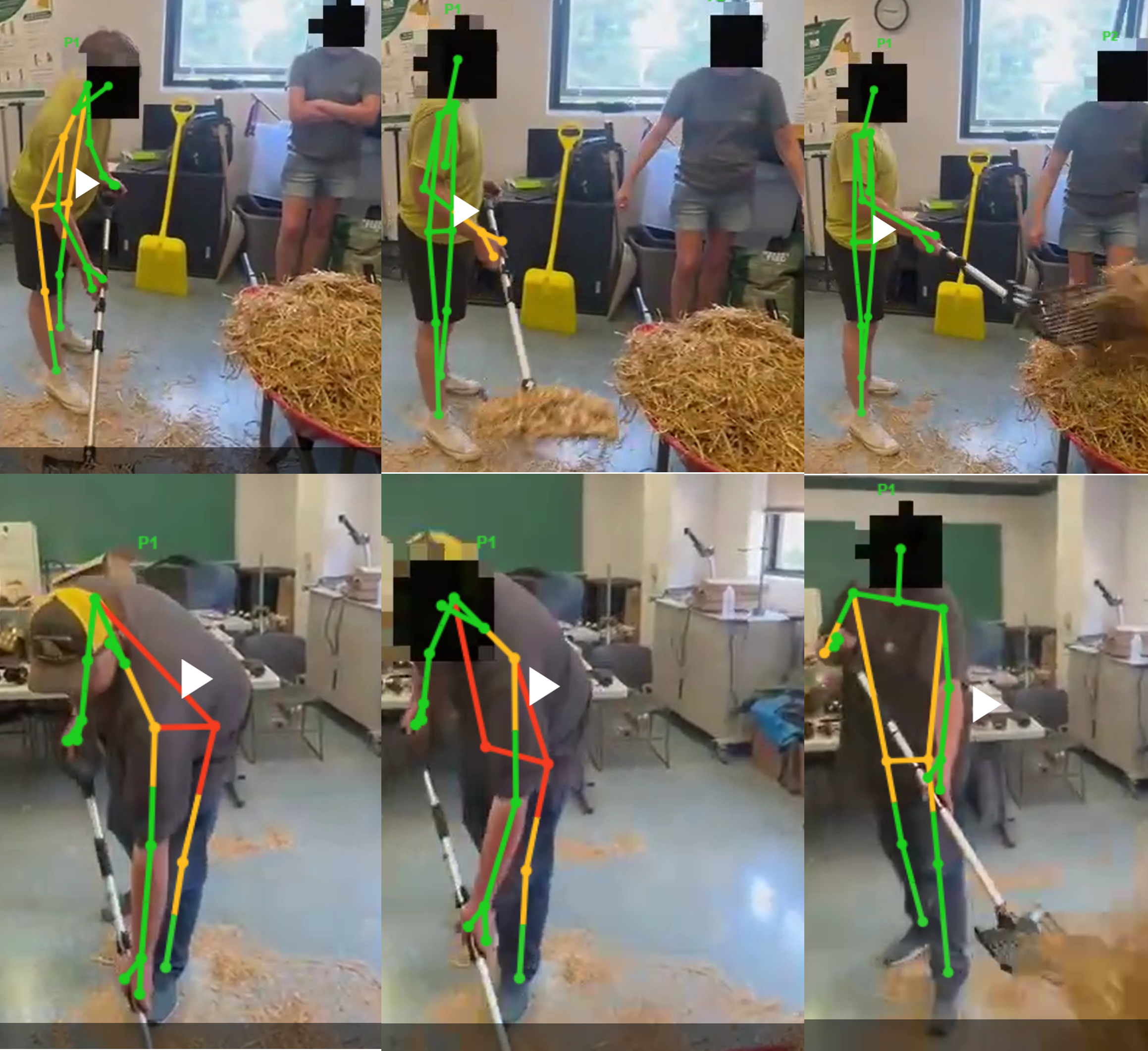
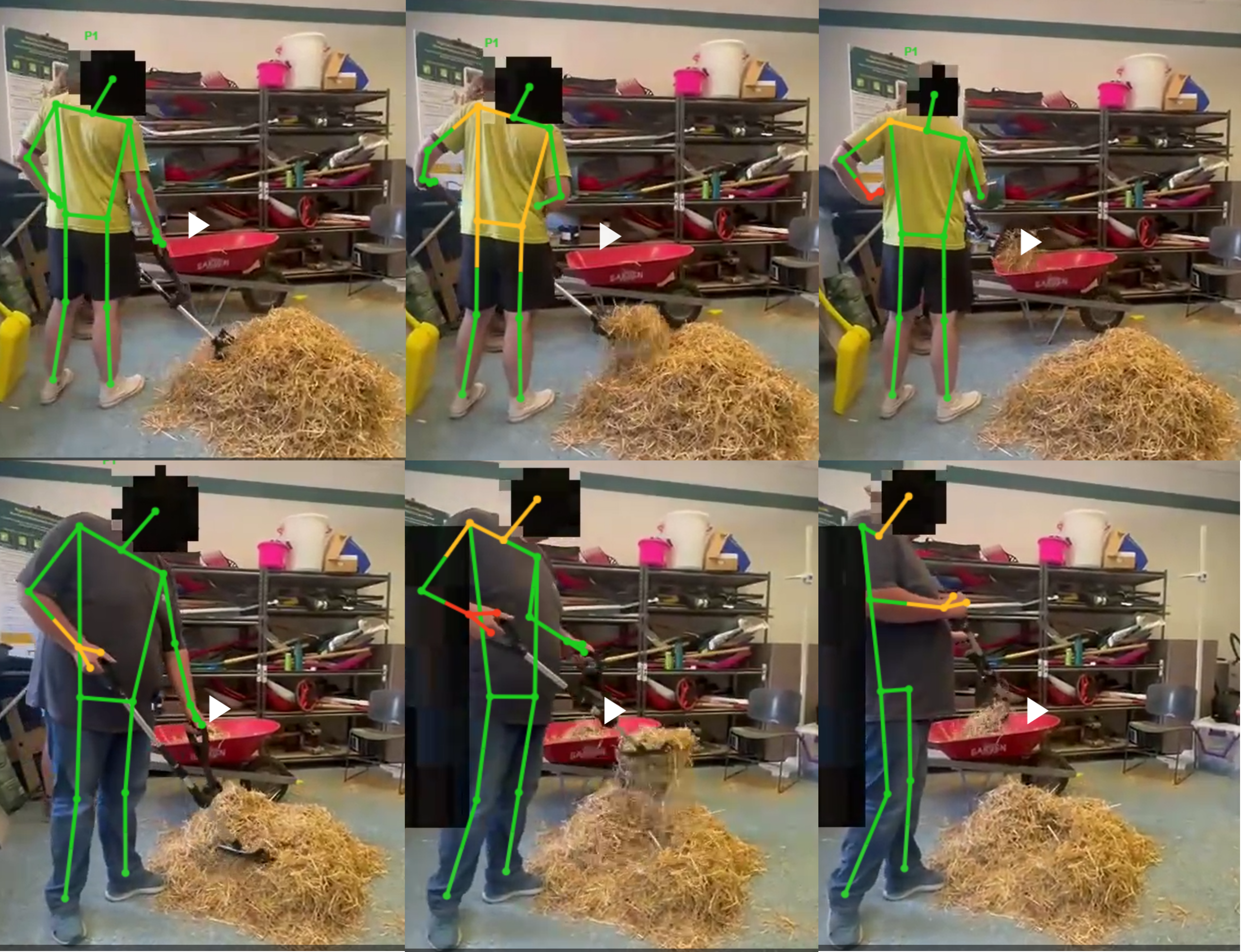
Fig. 11. Comparison of perceived exertion and comfort across conventional tools, commercial handles, and ergonomic prototype configurations and Posture comparison shows reduced trunk flexion and improved wrist alignment with auxiliary handle use.
Postural analysis showed that auxiliary handles generally reduced trunk and hip flexion, supporting a more upright working posture. However, a trade-off was observed, where reductions in trunk strain were sometimes accompanied by increased elbow flexion or shoulder involvement. This confirms that ergonomic design must consider whole-body interaction rather than isolated joint improvements.
User feedback reinforced these findings. Participants reported improved control, reduced bending, and better grip comfort, particularly with the NIC D-grip design. However, mechanical limitations such as stiffness in rotational joints and inconsistent motion affected usability in some configurations, highlighting the importance of smooth mechanical performance.
Overall, the results demonstrate that properly configured auxiliary handles can improve posture and reduce workload, but performance depends on both ergonomic geometry and mechanical refinement.
Study 4: Comparative Evaluation of Rear-Tine, Front-Tine, and Electric Auger Tillers
The comparative tiller study revealed clear differences in operator workload and ergonomic performance. The rear-tine tiller produced the highest heart rate, perceived exertion, and trunk flexion, indicating greater physical demand. The electric auger tiller showed a more favorable profile, with reduced perceived workload and improved upper-body posture, while the front-tine tiller showed intermediate performance.
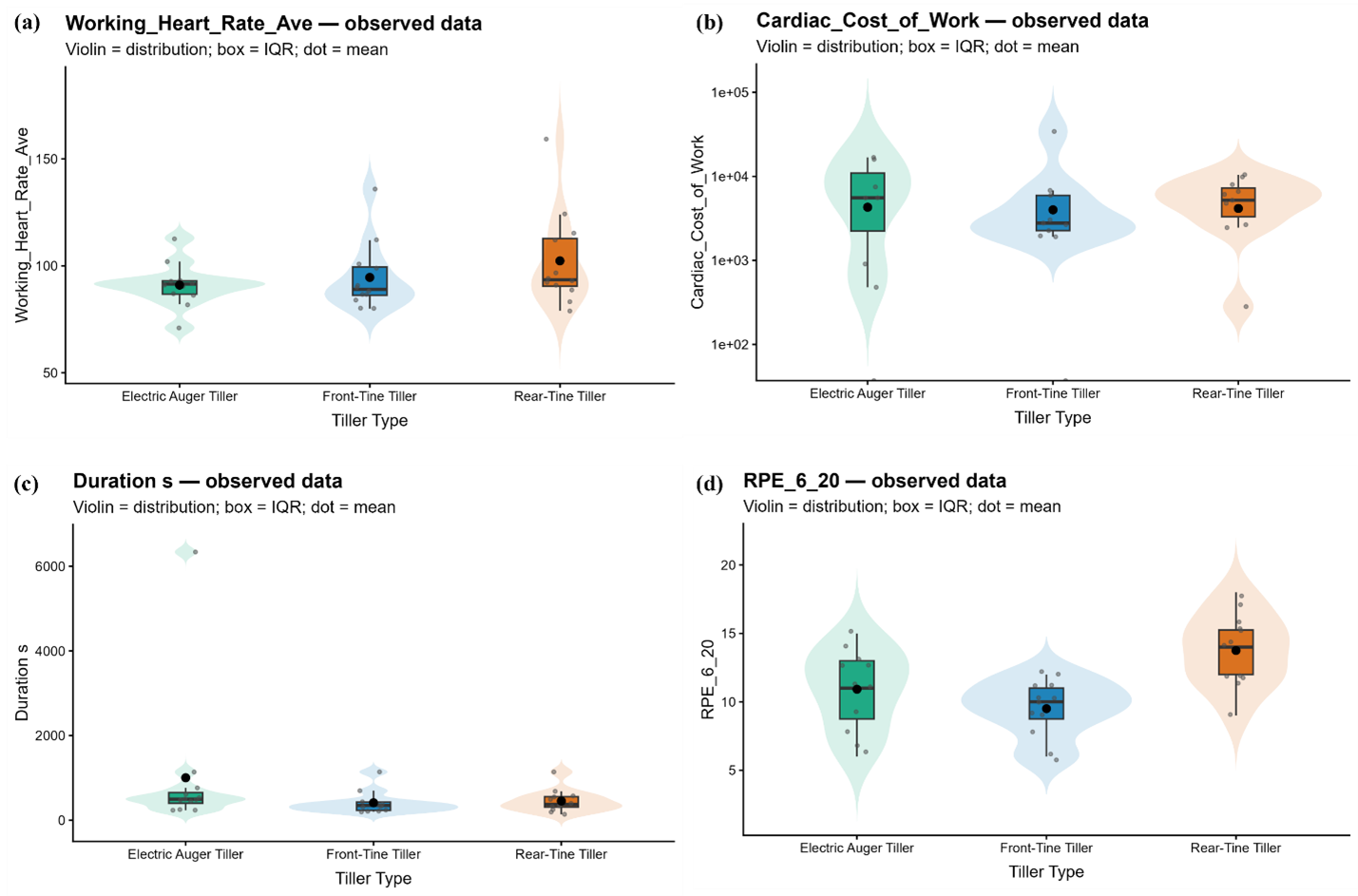
Fig. 12. Comparison of physiological workload and perceived exertion across tiller types.
Noise exposure differed substantially, with the rear-tine tiller reaching about 86 dB(A), while the electric auger tiller operated at lower levels in the mid-70 dB(A) range. Vibration metrics did not differ significantly across systems, indicating that ergonomic improvements in the auger design were achieved without increasing vibration exposure.
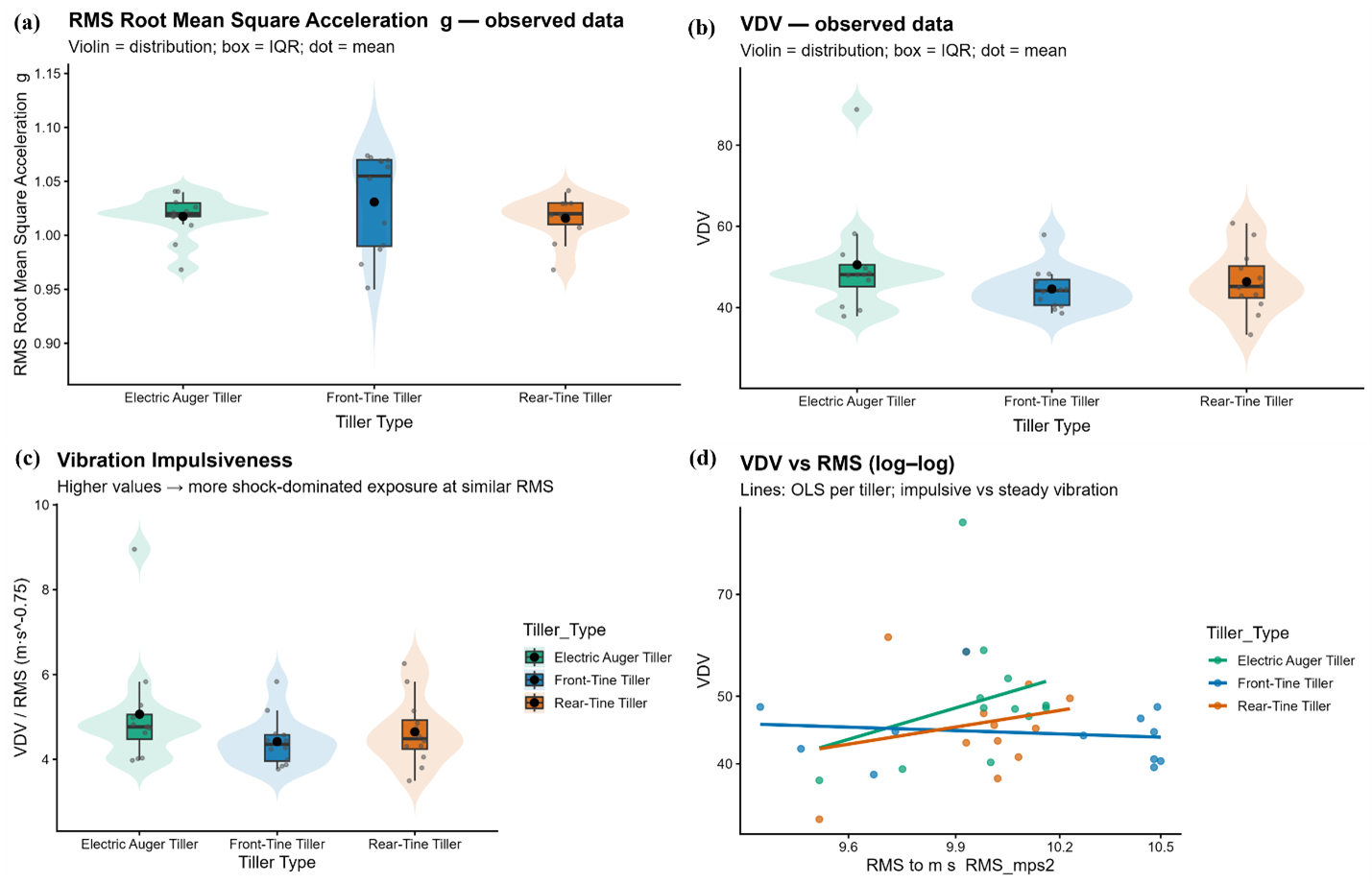
Fig. 11. Noise and vibration comparison across rear-tine, front-tine, and auger tillers.
Soil performance metrics showed no major disadvantage for the auger tiller, confirming that improved ergonomics did not compromise tillage effectiveness. Design refinements, including improved auger geometry, stability, and handle positioning, contributed to better control and reduced operator demand.
Overall, the auger tiller demonstrated reduced workload, improved posture, and lower noise exposure while maintaining functional performance, supporting its potential as a safer and more user-centered mechanization solution.
Study I: Research Conclusion
Proper ergonomic design significantly reduces musculoskeletal risks and enhances comfort and efficiency in tool use. There is a marked need for personalized tools to accommodate individual differences among users, which affects their efficiency and comfort levels. Our results support the need for standards in agricultural tool design that consider ergonomic principles to improve safety and performance in agricultural tasks.
Recommendations:
- Development and Refinement: Continue the development and refinement of ergonomic tools tailored to the specific needs of women farmers.
- Adjustable Features: Adopt adjustable features in tool design to cater to a broader range of user body types and preferences.
- Impact on Farming: Implementing our findings could lead to improved health outcomes for women in agriculture, increased productivity, and a reduction in work-related injuries. These improvements have the potential to significantly impact farming efficiency and worker satisfaction.
Study II: Research Conclusion
The study's findings suggest that while ergonomic modifications to agricultural tools can reduce physical strain in specific body areas, such as the hips and wrists, they do not uniformly reduce overall physiological strain or energy expenditure. The unexpected increase in elbow effort highlights the complexity of ergonomic design and the need for careful consideration of how changes in one aspect of design may impact others.
Recommendations:
- Holistic Design Consideration: Future tool designs should consider the interconnectedness of body mechanics to prevent the displacement of strain from one body part to another.
- Real-world Testing: Continued refinement and testing of ergonomic tools in real-world farming conditions are recommended to validate laboratory findings and to ensure that these tools can meet the diverse needs of women farmers effectively.
Impact on Farming:
Implementing these ergonomic improvements could lead to better health outcomes and increased productivity for women farmers by reducing the incidence of musculoskeletal disorders associated with poor tool design.
General Implications from research in 2023
The results from both studies emphasize the critical need for ergonomic considerations in tool design to reduce physical strain and enhance usability for women in agriculture. The findings suggest that while ergonomic tools can offer localized benefits such as reduced strain in hips and wrists, they may also lead to unintended consequences such as increased elbow effort. These insights underline the importance of a comprehensive approach in ergonomic design that considers the complex interactions of body mechanics involved in using agricultural tools. Moreover, the need for personalized tool designs becomes evident, as individual differences significantly influence tool preference and effectiveness.
Conclusion and general implications from research in 2023
Although field trials with women farmers have not yet been conducted, laboratory-based usability tests indicate improved grip control, reduced excessive wrist supination, and better overall posture stability. Future kinematic assessments and force measurement trials will provide empirical data to confirm the effectiveness of the auxiliary handles in real-world applications. These findings suggest that ergonomically designed auxiliary handles may significantly reduce upper limb strain, aligning with studies highlighting the importance of customizable tool designs for diverse user anthropometry (Thota et al., 2022; Banibrata, 2013).
General Implications from the 2024 Research
Findings from Study 3 and Study 4 reinforce the importance of ergonomic considerations and smart automation in agricultural tool design. While ergonomic auxiliary handles can significantly improve the usability of manual tools, electric tillers with real-time monitoring systems represent a major step toward sustainable, user-friendly mechanization.
However, challenges remain in ensuring optimal anthropometric adaptability, usability in diverse farming environments, and cost-effectiveness. Future research should focus on integrating AI-driven decision-making systems, real-time analysis of user feedback, and expanded field testing to further refine these innovations.
By addressing ergonomic inefficiencies and integrating smart technologies, these advancements aim to reduce work-related injuries, enhance farming efficiency, and support the long-term sustainability of women farmers in mechanized agriculture.
Research Conclusions and Implications for 2025
Study III: Research Conclusion
The 2025 findings confirm that ergonomic auxiliary handles can improve posture, reduce perceived exertion, and enhance task efficiency when properly configured. Adjustable designs, particularly those incorporating optimized handle angles and controlled rotation, demonstrated clear advantages over conventional tools and commercially available handles. However, performance varied across configurations, indicating that ergonomic benefit depends on precise design parameters rather than a single solution.
A key insight from this study is that improvements in trunk and wrist posture may introduce increased demand at the elbow or shoulder, reinforcing the need for a balanced, whole-body design approach. Mechanical performance, especially smoothness of rotational joints and stability of the handle system, also played a critical role in user acceptance and effectiveness.
Recommendations
- Prioritize high-performing configurations (e.g., optimized angle and rotation combinations) for further refinement
- Improve the mechanical reliability of joints and locking mechanisms
- Expand testing across diverse users and task conditions
- Integrate longer-duration and physiological assessments to evaluate fatigue
Impact on Farming
If refined and implemented, these auxiliary handles have strong potential to reduce musculoskeletal strain, improve working posture, and enhance efficiency in repetitive manual tasks. The benefits are especially relevant for women farmers, who are often underserved by current tool designs.
Study IV: Research Conclusion
This study shows that tiller design strongly influences both soil performance and operator ergonomic exposure. The rear-tine tiller delivered the best overall performance, achieving the greatest soil loosening with the lowest physiological workload, shortest task time, and lowest perceived exertion. Its operational stability reduced continuous operator effort.
The electric auger tiller produced the lowest vibration and noise levels, indicating smoother soil interaction. However, its soil performance was intermediate, and stability issues required additional operator correction.
The front-tine tiller imposed the highest workload, vibration exposure, and control demands, making it the least ergonomic option.
Education
The general approaches include:
- Field or on-site demonstration of tools and equipment: Women farmers can see and touch them to have a better understanding.
- Hand out or brochures: provide take-home materials so they can learn more later
- Farmers teach farmers: Invite experienced women farmers to give talks and demonstrations
Educational Approach
Field demonstrations allow women farmers to see and test ergonomic tools.
Brochures and educational materials are distributed for continued learning.
Farmer-to-farmer training, where experienced women farmers lead discussions.
Educational Materials
Flyers & Booklets:
- "Ergonomics in Hand Tools: Shovels and Pitchforks for Women Farmers."
- "Ergonomic Safety in Hand Tools: Using Shovels and Pitchforks the Right Way."
Videos:
- "Introduction & Benefits of Ergonomic Tools."
- "Choosing & Using Ergonomic Tools."
- "Auxiliary Handles & Proper Posture for Injury Prevention."
Website Under Review: FarmTechForHer – A digital platform for ergonomic farming resources and research updates.
This research provides vital insights for improving ergonomic tool adoption, safety, and efficiency in agriculture.
Manuscripts & Abstracts Submitted
Manuscript Titles:
- Quantitative Assessment of Farming Hand Tools: Camera-Based Analysis of Postural and Mechanical Parameters for Reducing Physical Strain in Women Farmers.
- Ergonomic Effects of Auxiliary Handles on Hand Farming Tools for Women Farmers.
- Ergonomic Evaluation of Three Electric Walk-Behind Tillers: Physiological Load, Vibration Exposure, and Soil Performance
Abstract Titles & Conference Submissions:
- Design and Fabrication of Ergonomic Auxiliary Handles for Agricultural Tools (ASABE Annual International Meeting 2025).
- Development and Optimization of an Upgraded Walk-Behind Electric Tiller for Enhanced Farming Efficiency and Safety (ISASH 2025).
Project Activities

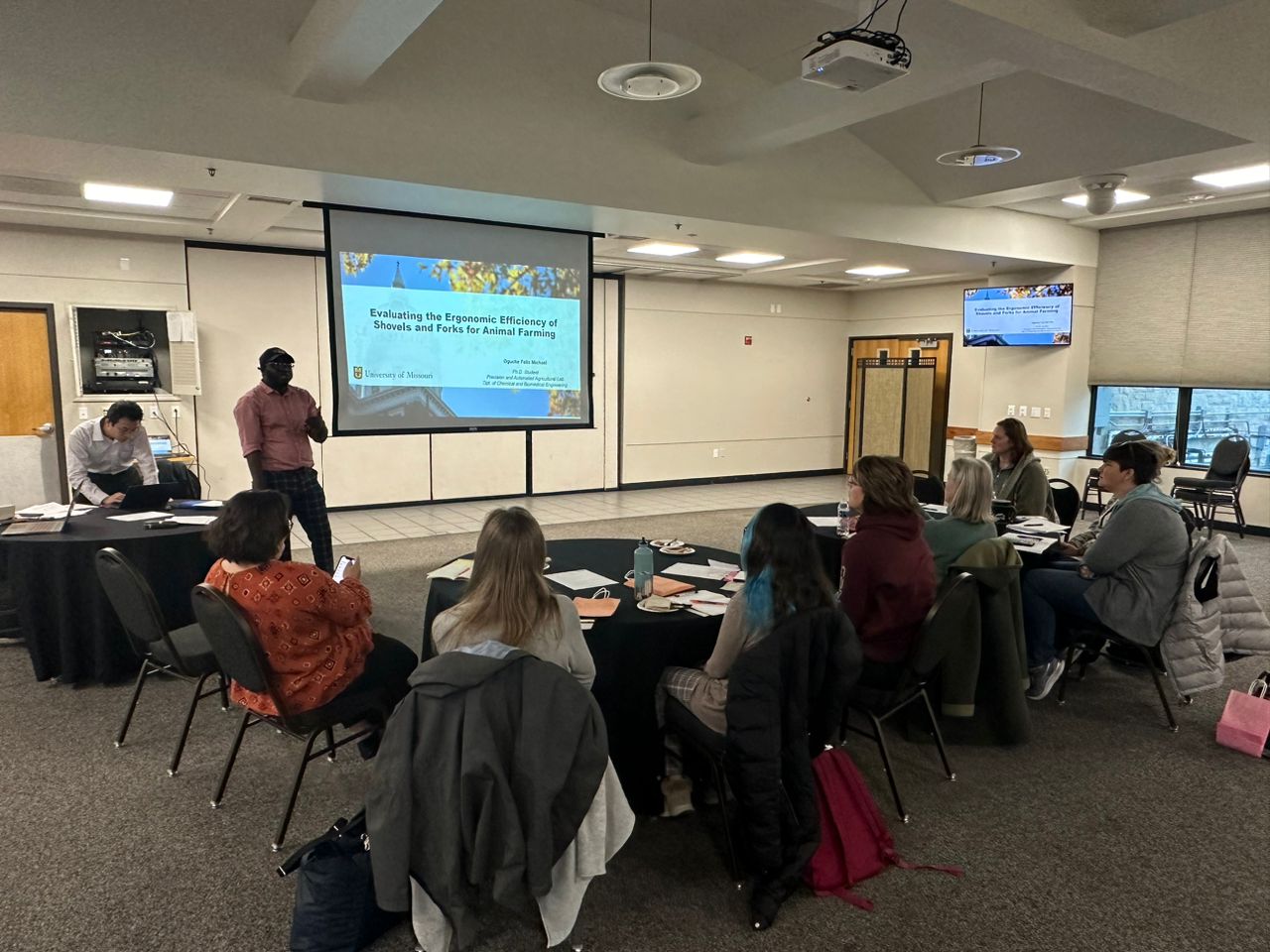

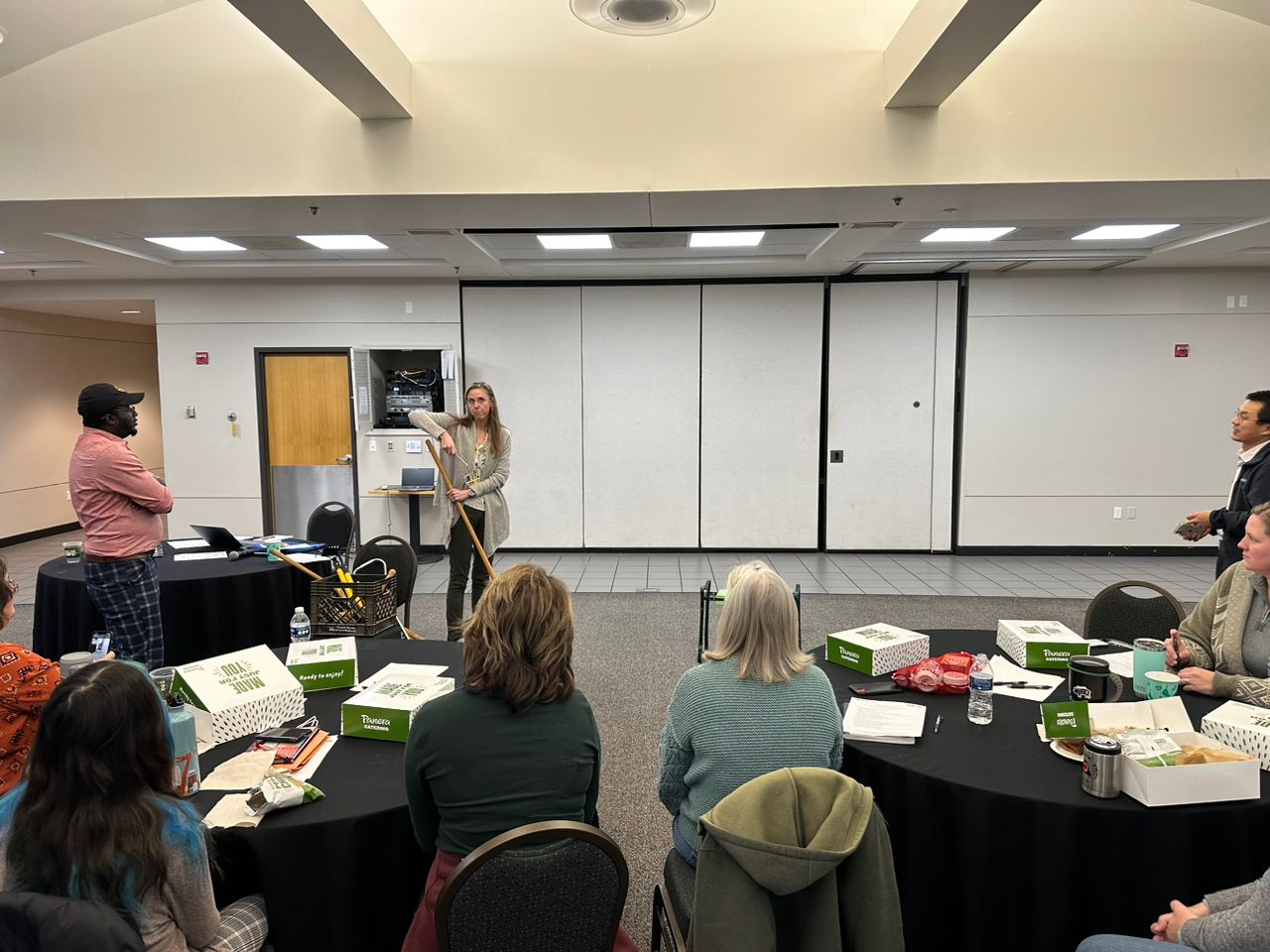
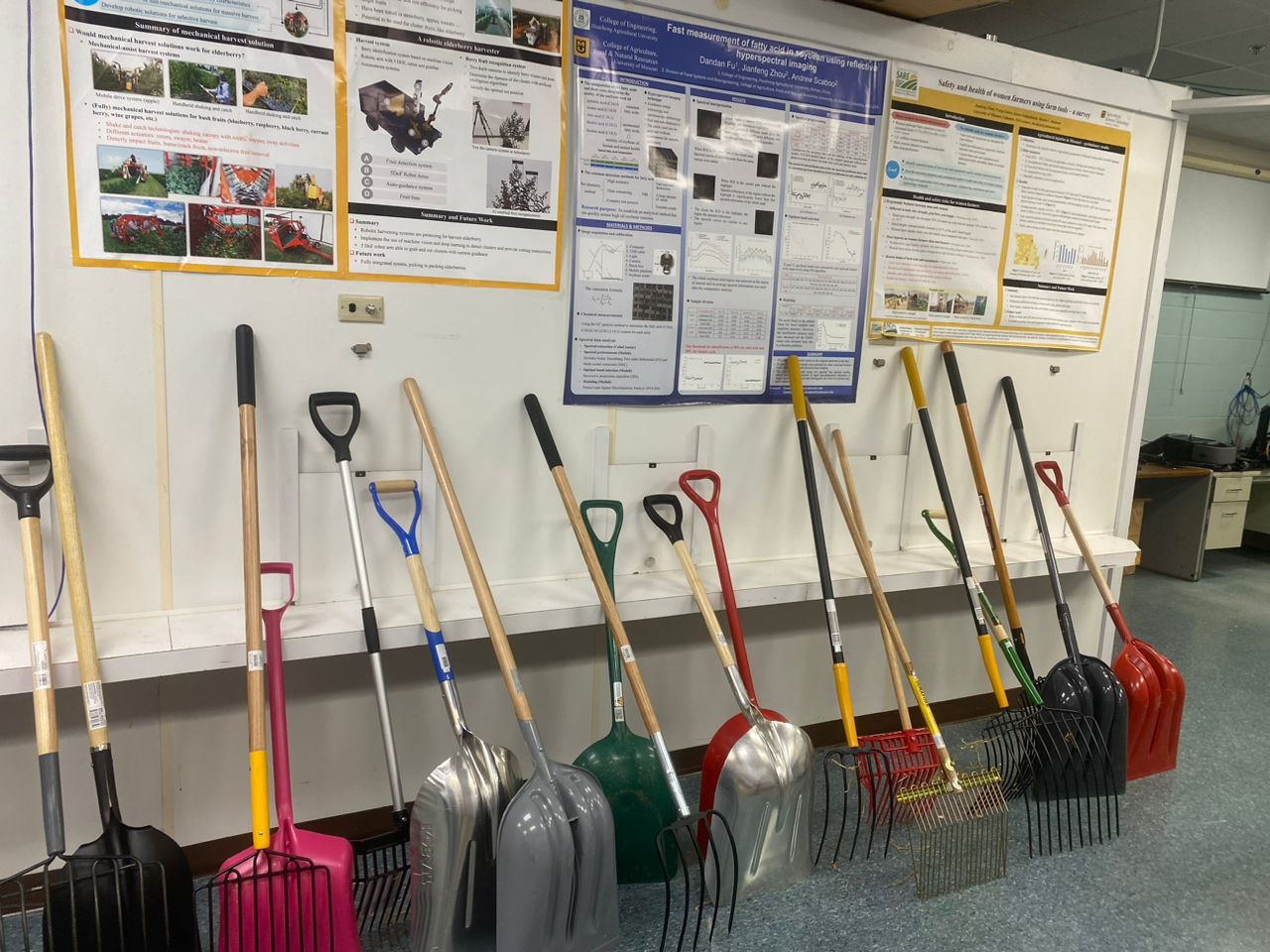
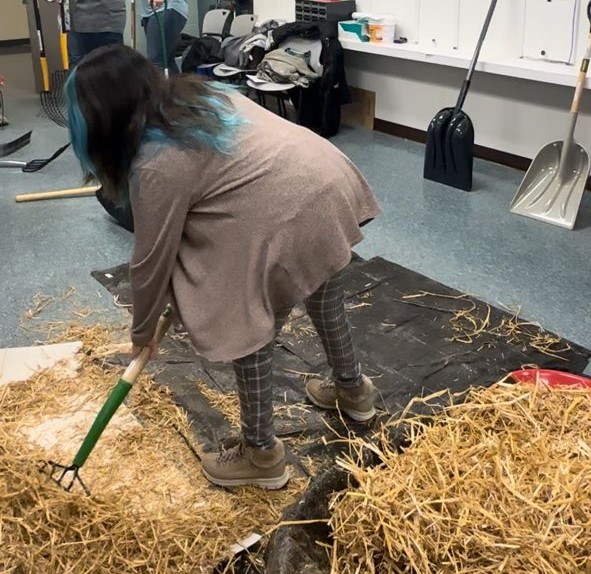
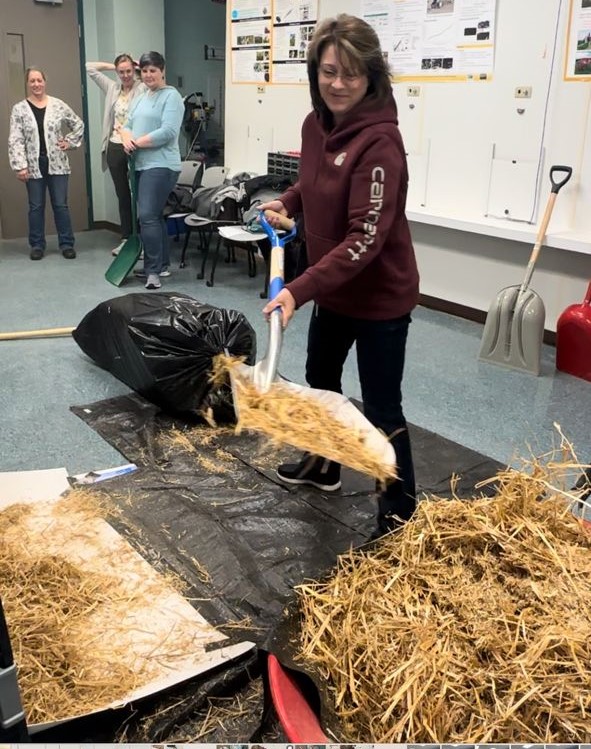



Educational & Outreach Activities
o 5 farm vehicle companies
o 4 farm tool companies
Participation summary:
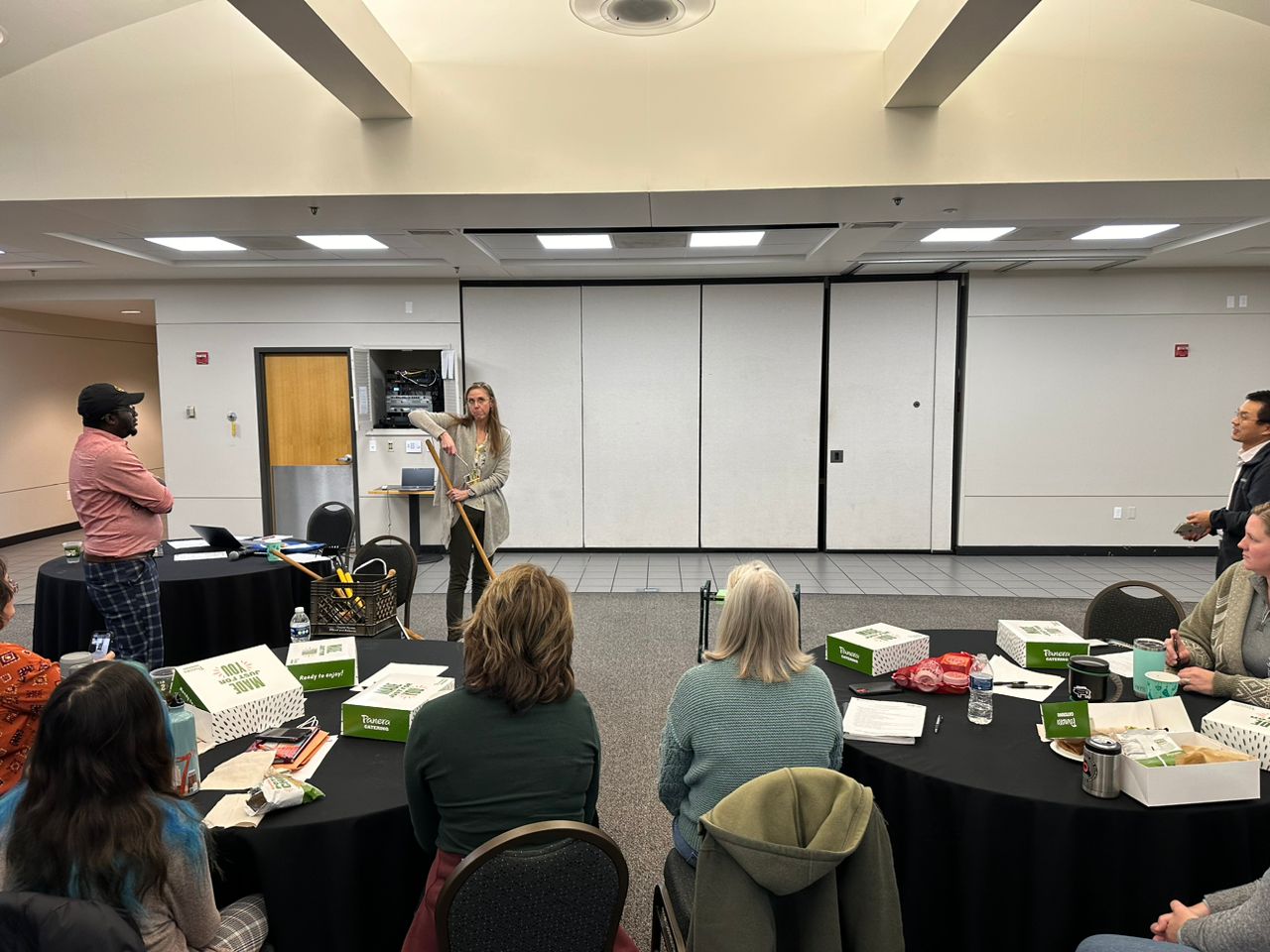
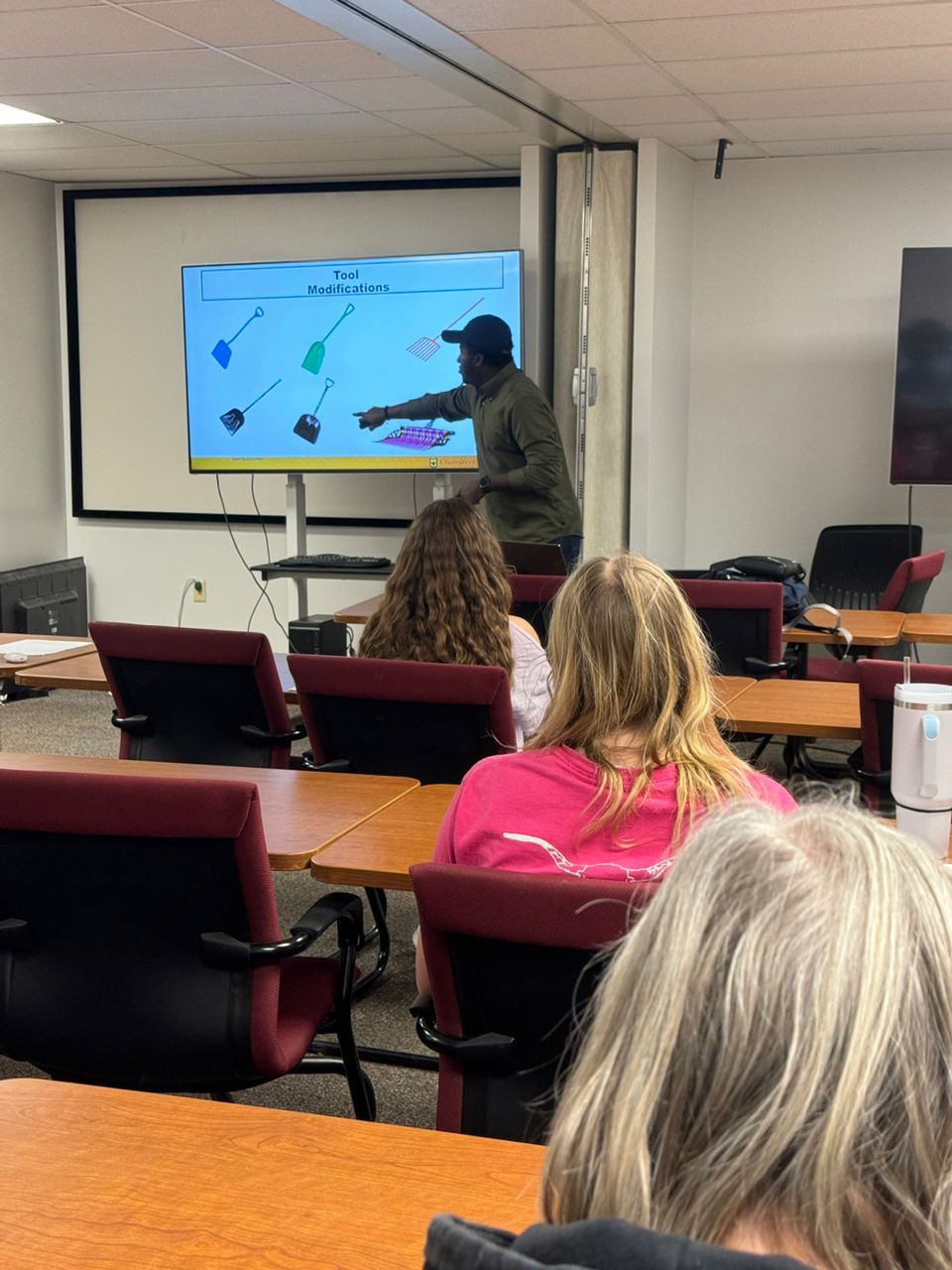
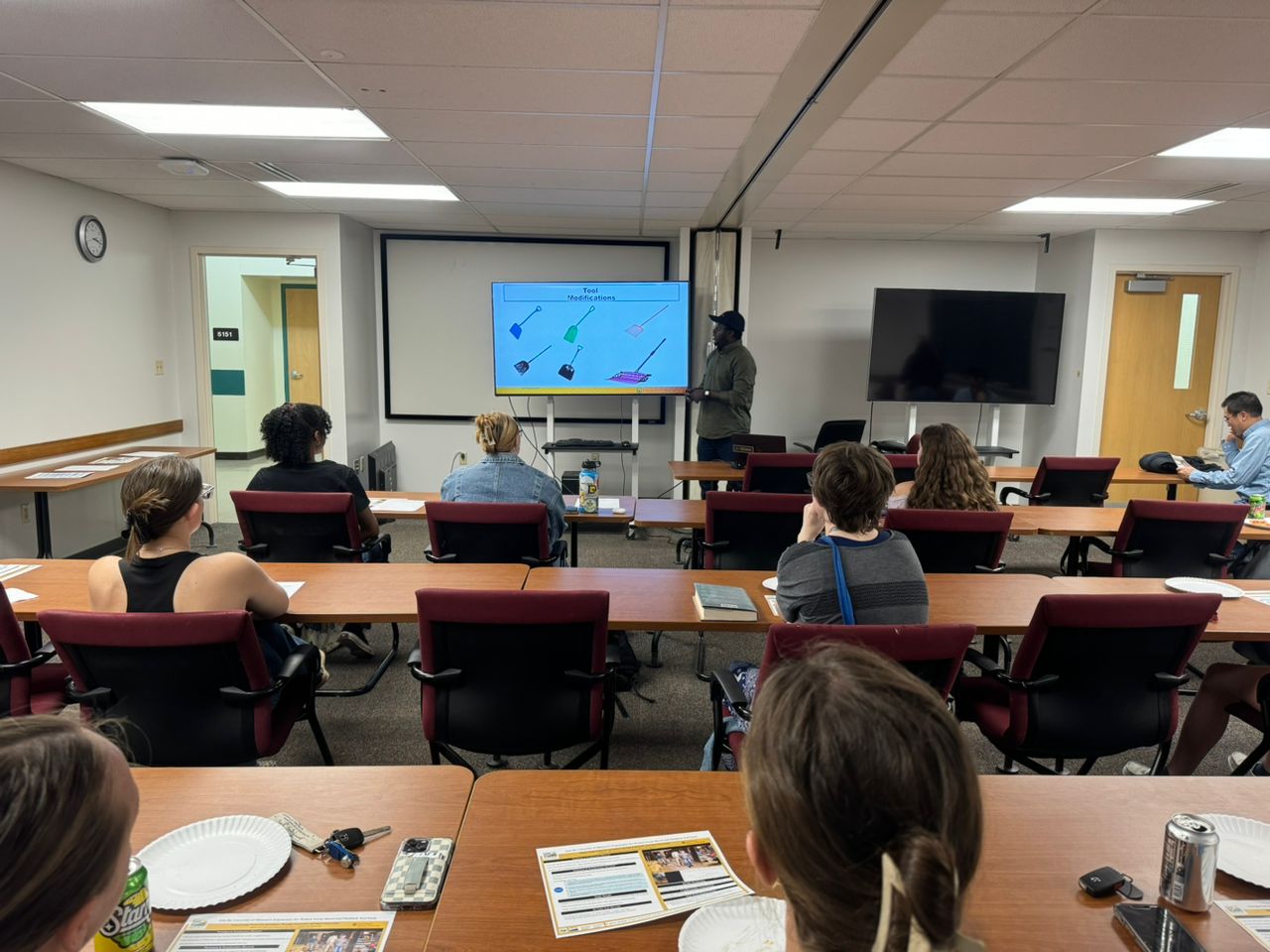
In each event, we typically conducted the following activities:
- Introduction of the project - PPT slides, hands-out, and oral presentations
- Promoted the project through flyer presentation
- Attached flyers: Poster_Safety horse farm229A2024
- Conduction of surveys - On-site survey (paper survey), and interview
- Attached Surveys and Questionnaire for Study 1: Survey/Questionnaire Subject B -1 Subject C-1 Subject D-1 Subject E-1 Subject F-1 Subject G-1
- Attached Surveys and Questionnaire for Study 2: Survey/Questionnaire Study 2 Subject B -2 Subject C -2 Subject D -2 Subject E -2 Subject F -2 Subject G-2 Subject H -2
- Recruit volunteers to participate in field evaluation
Conferences Attended and Presentations
Presentations in 2024:
- ASABE 2024 Annual International Meeting: Ergonomic Evaluation of Scoop Shovels and Pitchforks in Women Farmers.
- ISASH 2024 Conference: Ergonomic Benefits of Auxiliary Handles on Scoop Shovels and Pitchforks.
- MRASH 2024 Midwest Rural Agricultural Safety and Health conference: Optimizing Tool Ergonomics for Farmers: Development of Adjustable Auxiliary Handles for Reduced Strain.
- DAREC 2024 Digital Agricultural Symposium: Leveraging AI for Ergonomic Assessment in Agricultural Tool Design
- CAFNR Research Symposium 2024: Advancing Ergonomics in Agricultural Hand Tools
Industry & Public Engagements
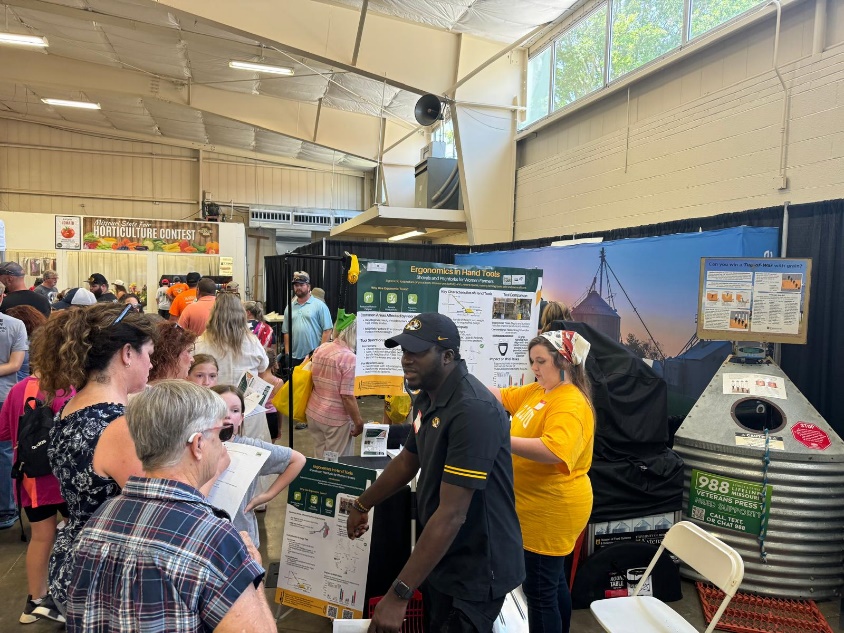
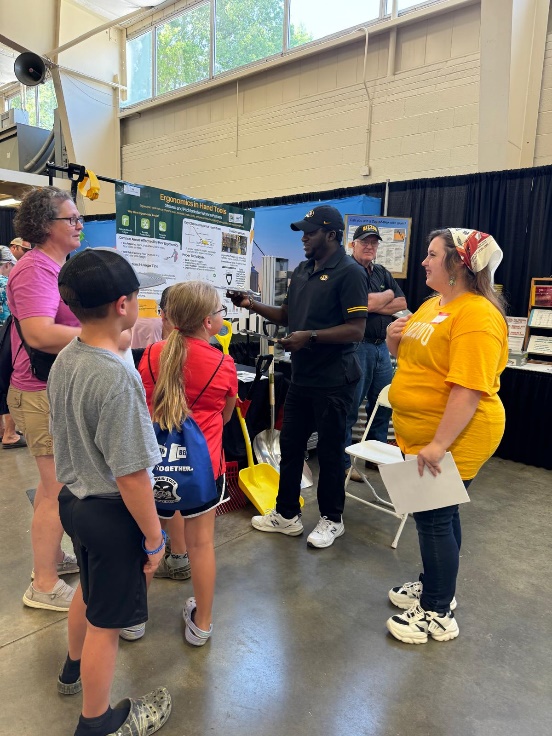
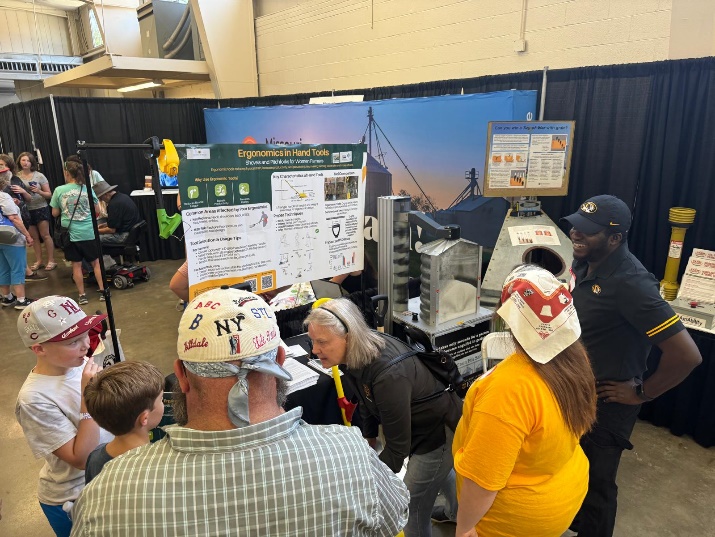
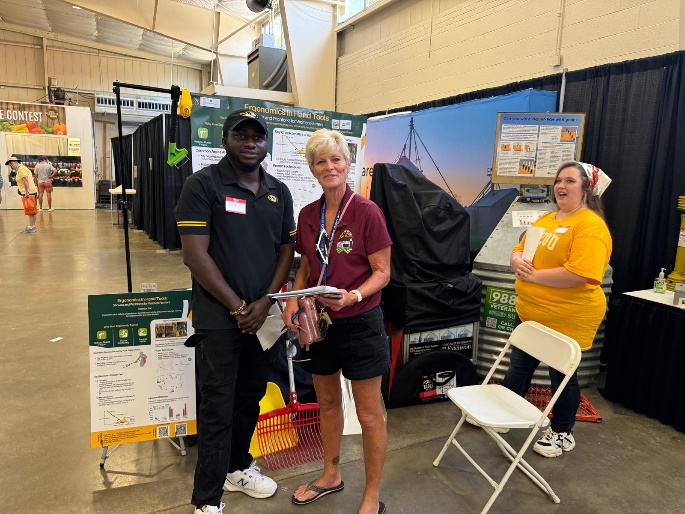
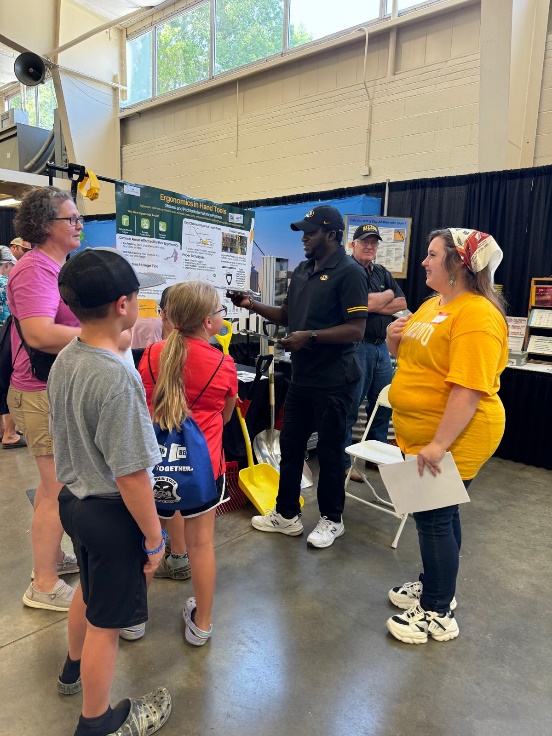
- Show-Me Farm Safety Exhibit (Missouri State Fair 2024).
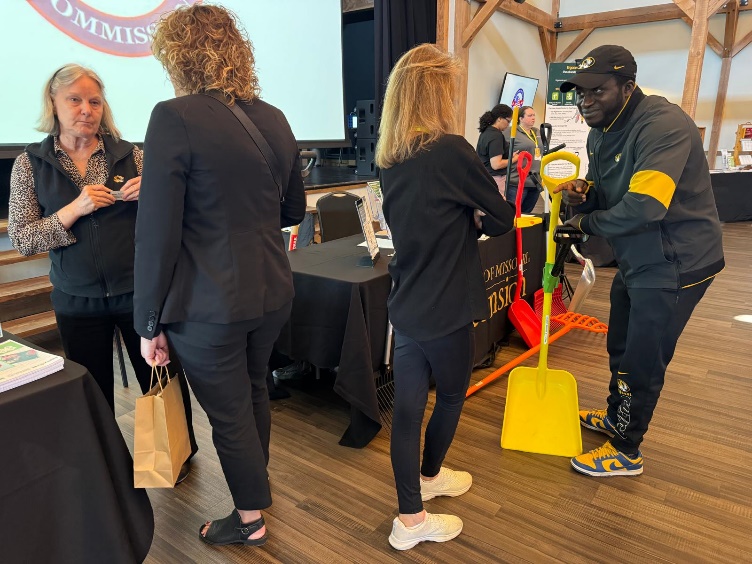
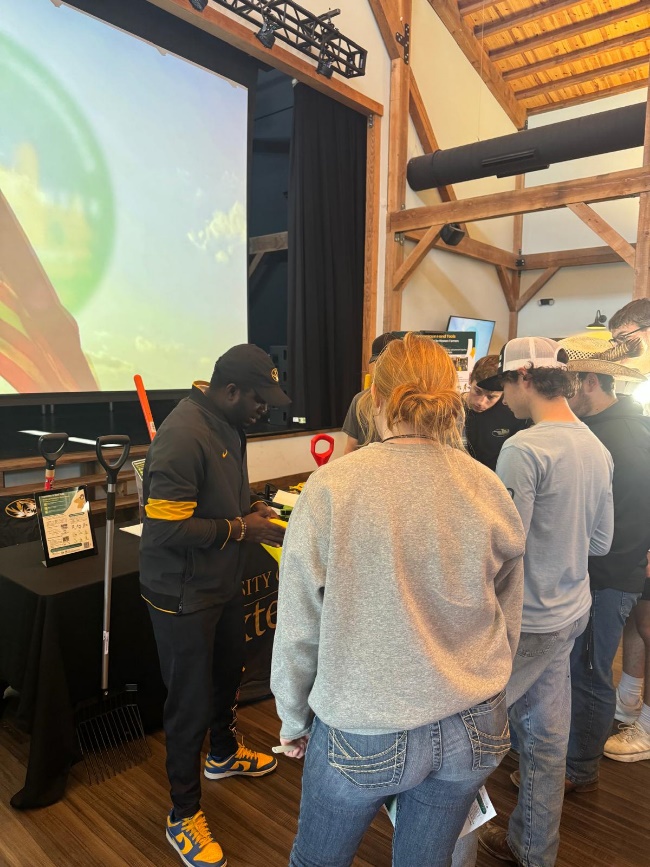
- 2024 Agribusiness Summit and Expo: Showcasing ergonomic farm tools and engaging with the public.
Future Research & Grant Proposals
- Grant Proposals Submitted & Under Review "Improving Farming Safety and Efficiency by Adopting Electric Tillers" (Submitted to Heartland Center for Occupational Health & Safety, February 2025). "Developing Ergonomic Auxiliary Handles to Reduce Musculoskeletal Disorders" (To be submitted to GPCAH Pilot Grants, May 2025).
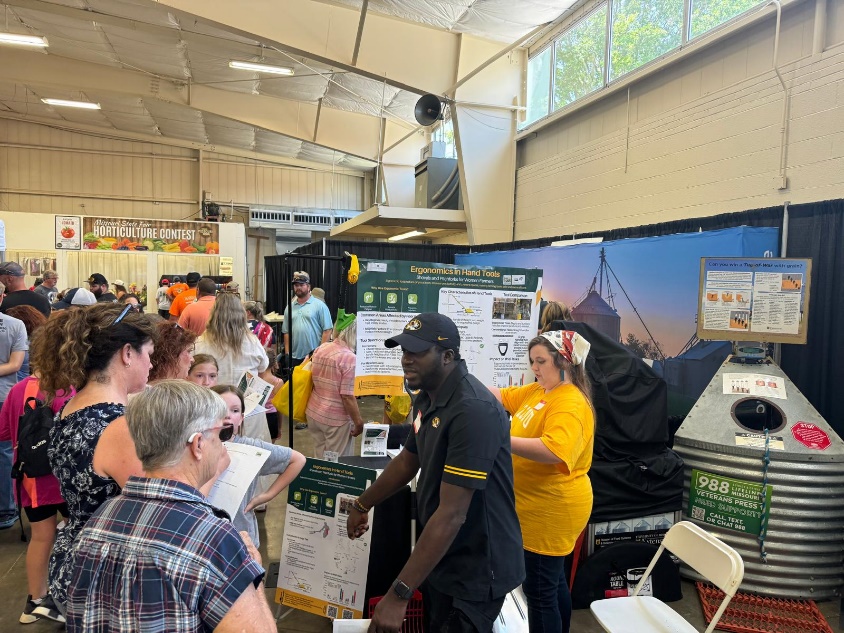
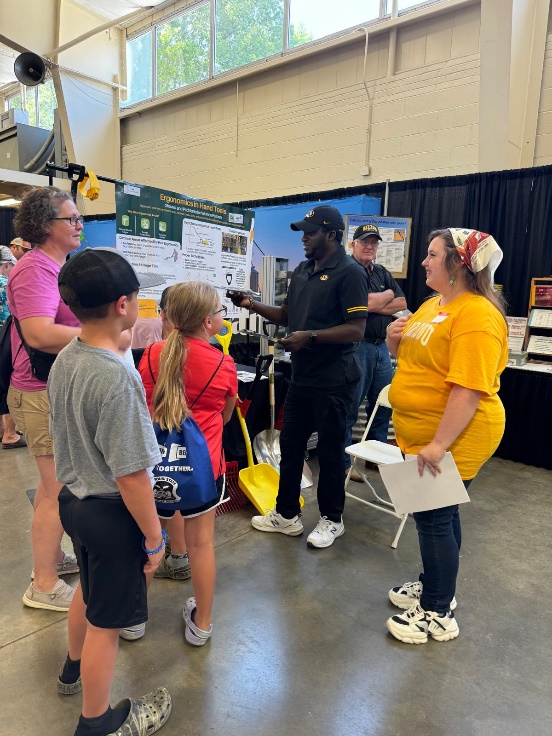
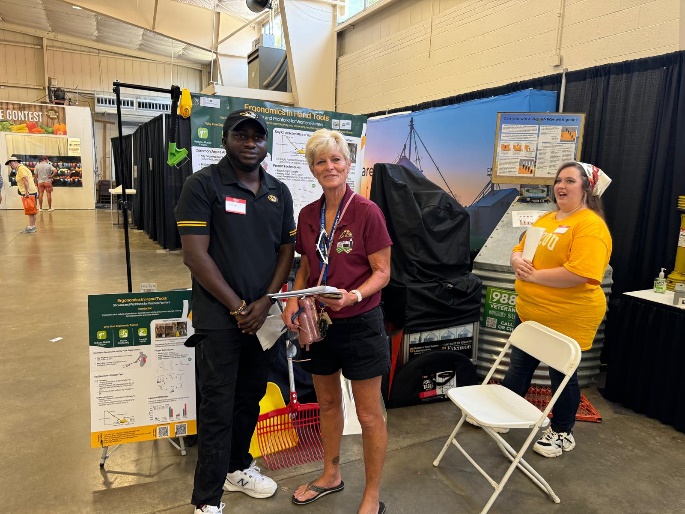
Showcasing Hand tools during Show-Me Farm Safety Exhibit (Missouri State Fair 2024).
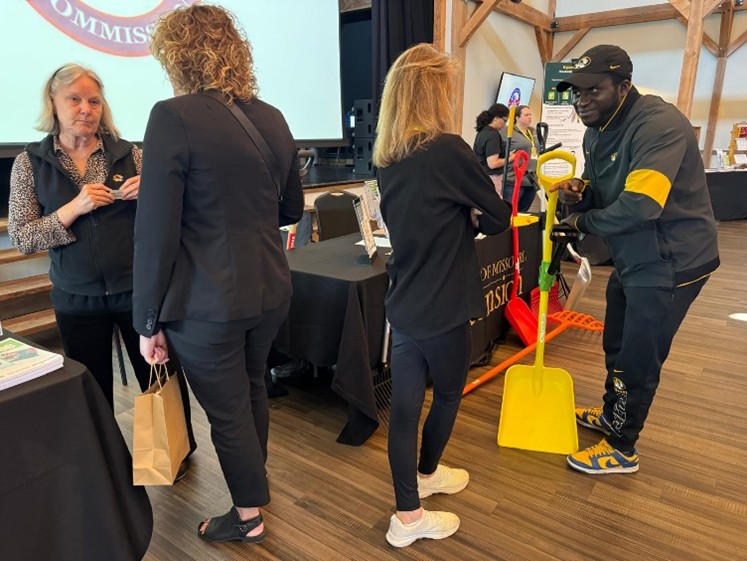
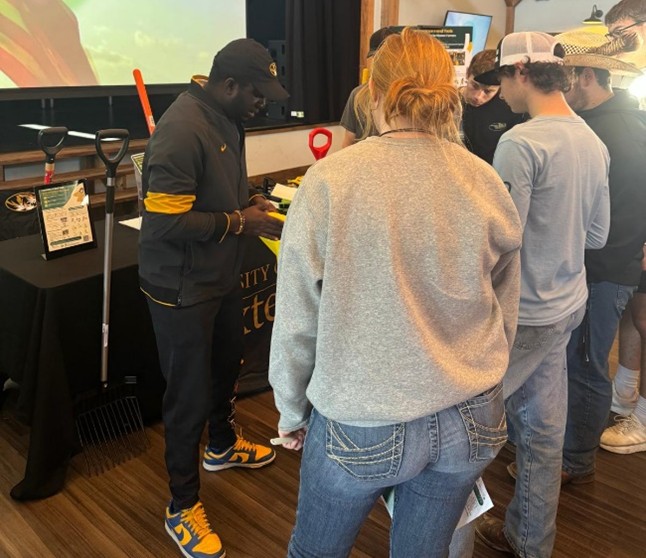
Showcasing ergonomic farm tools and engaging with the public during the 2024 Agribusiness Summit and Expo.


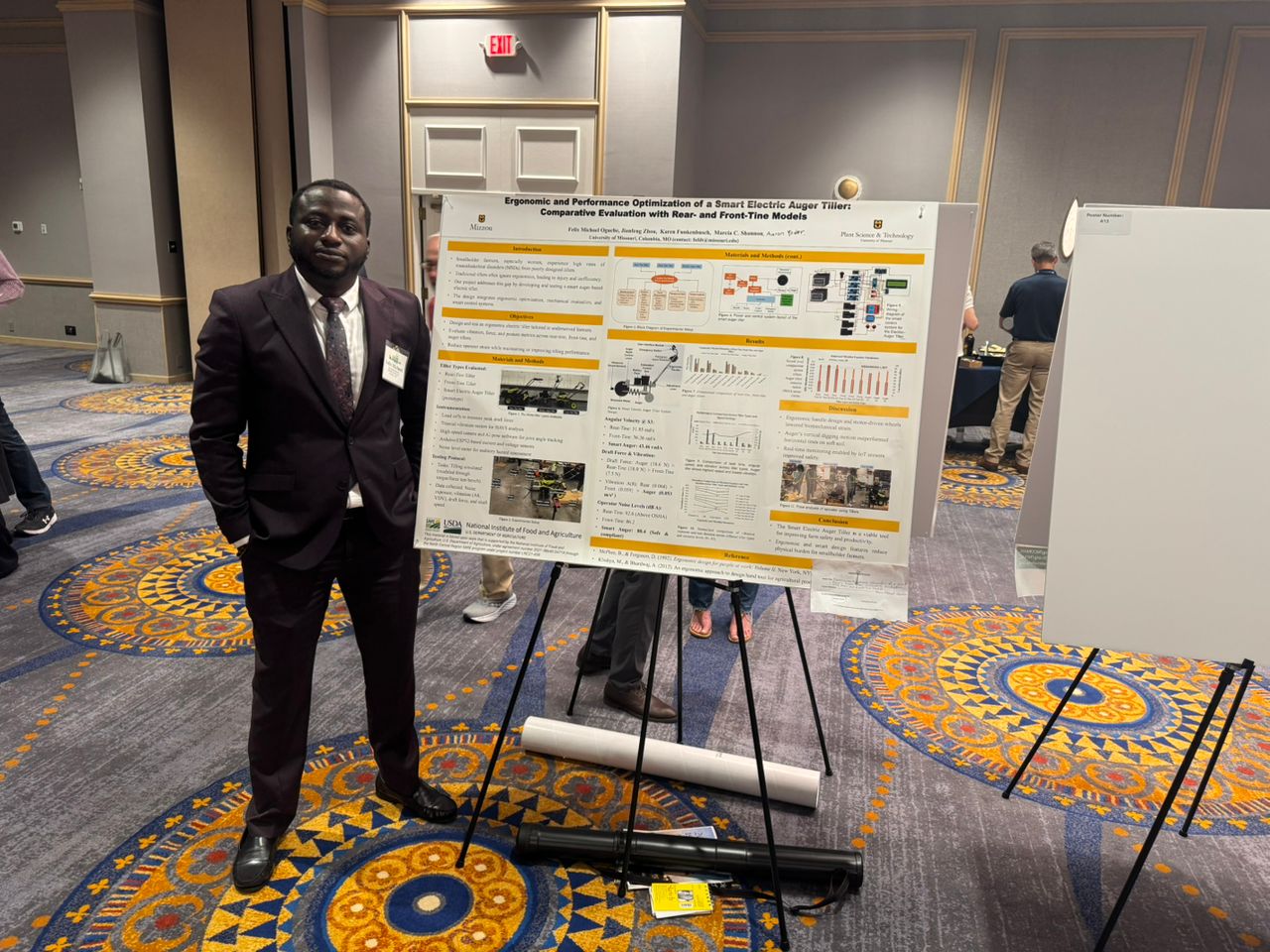
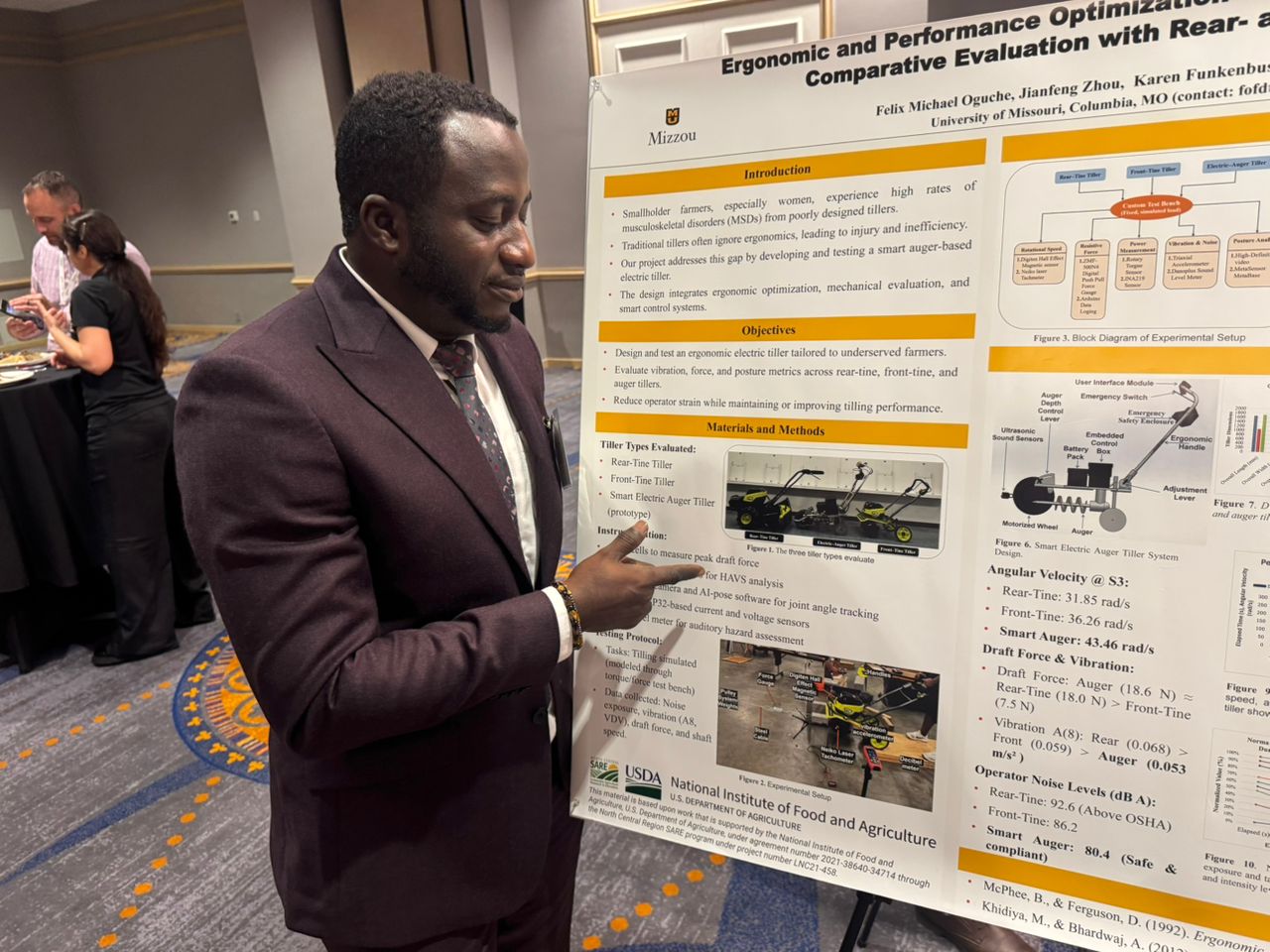
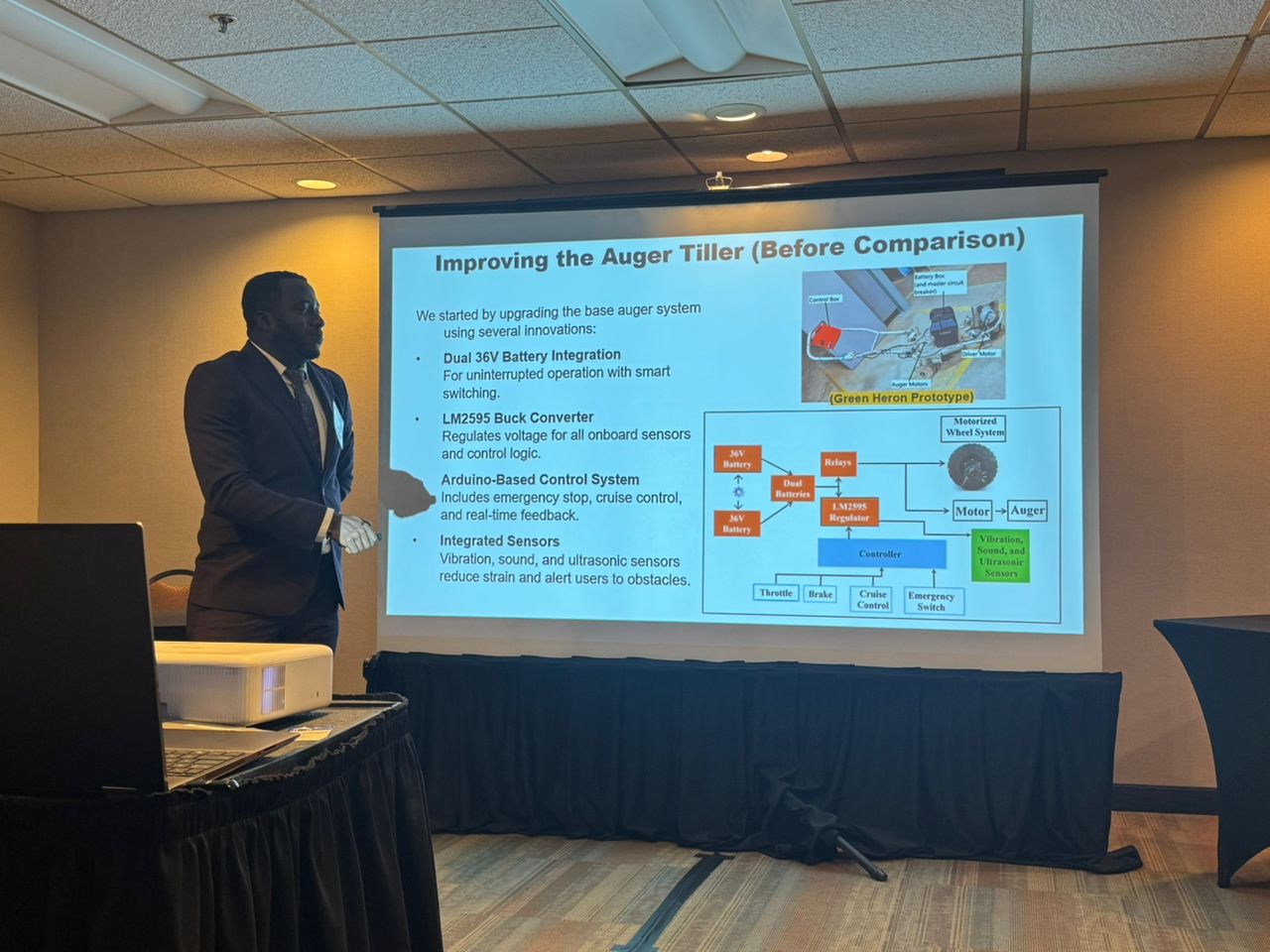
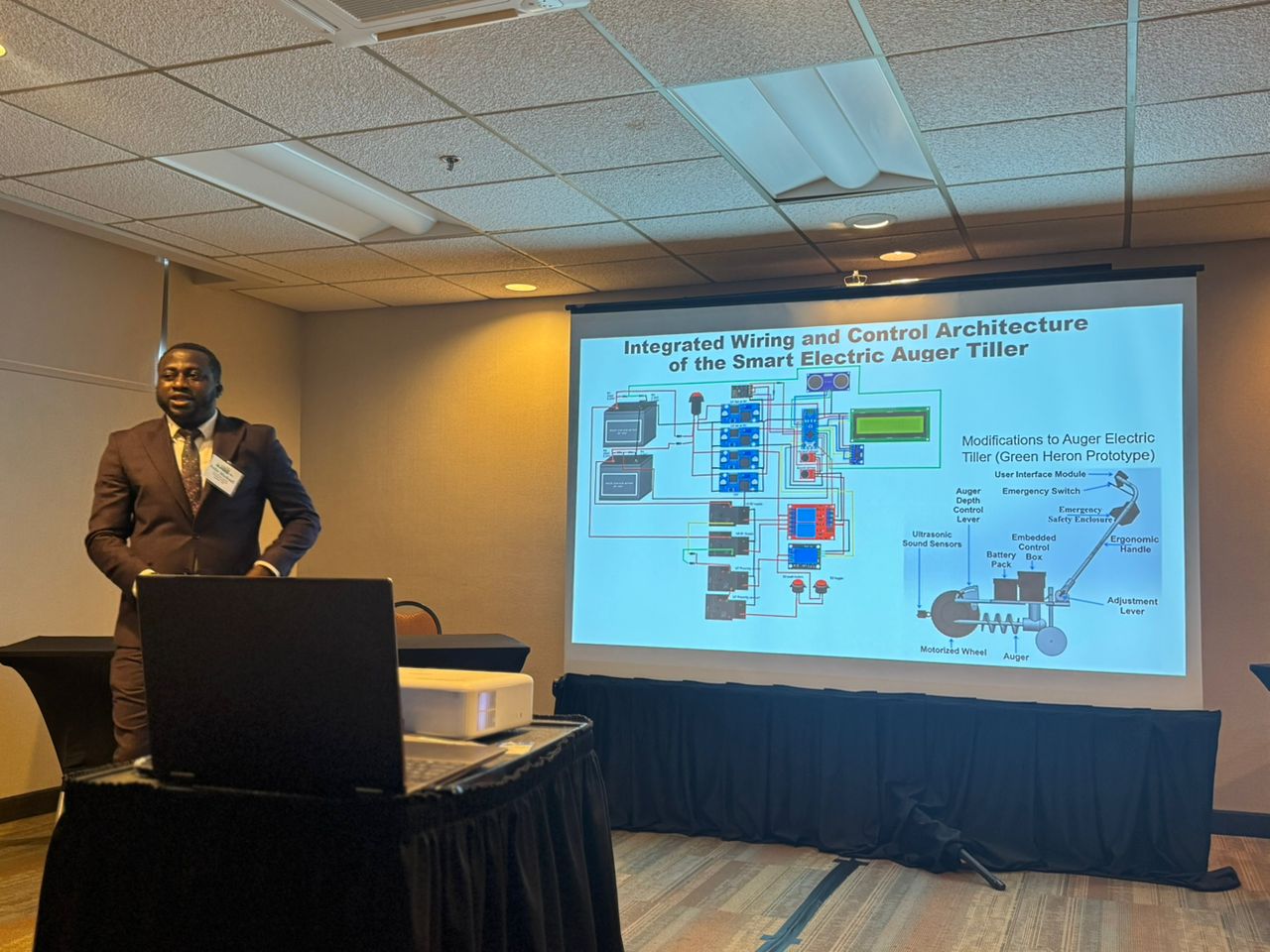
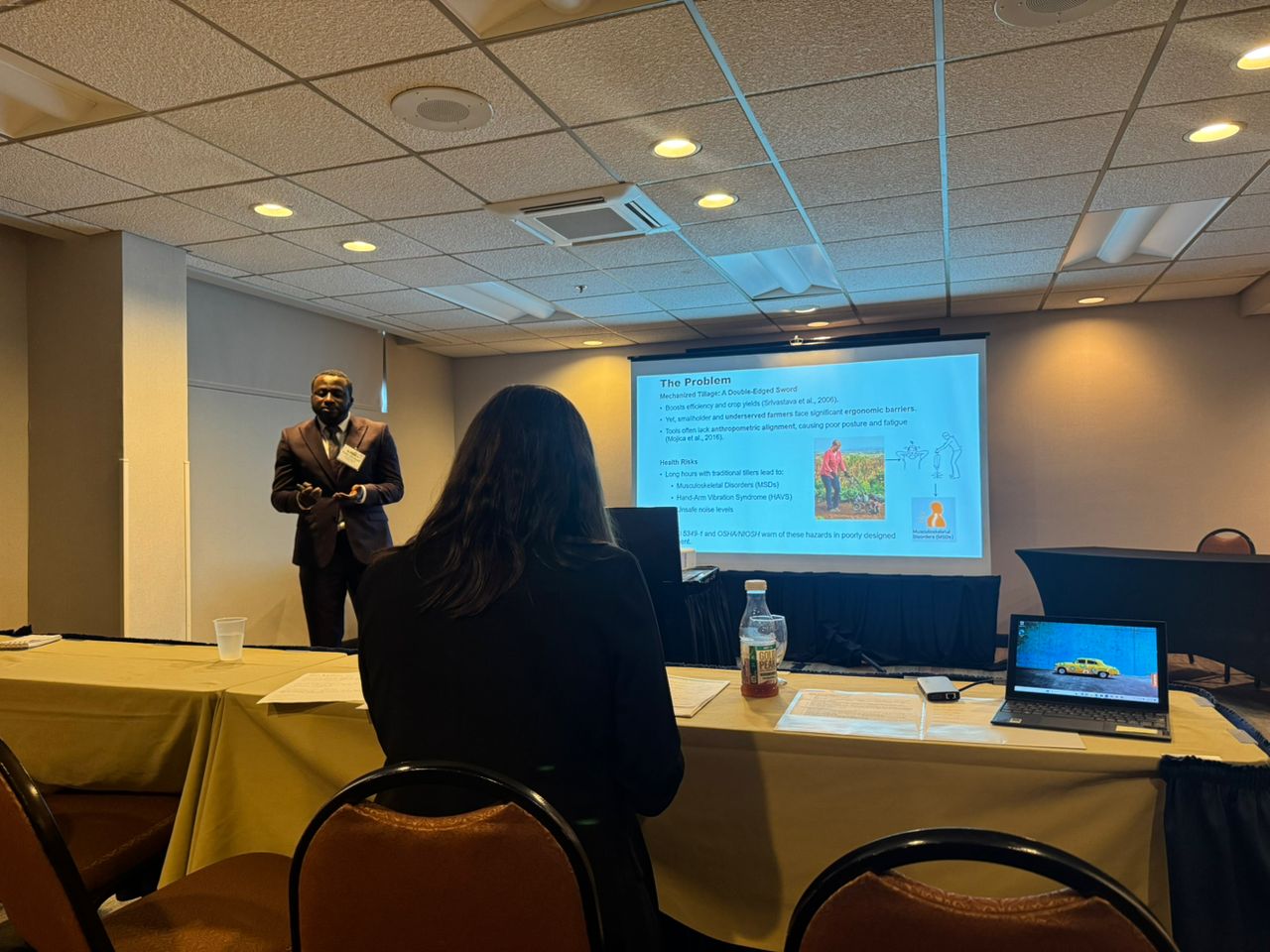
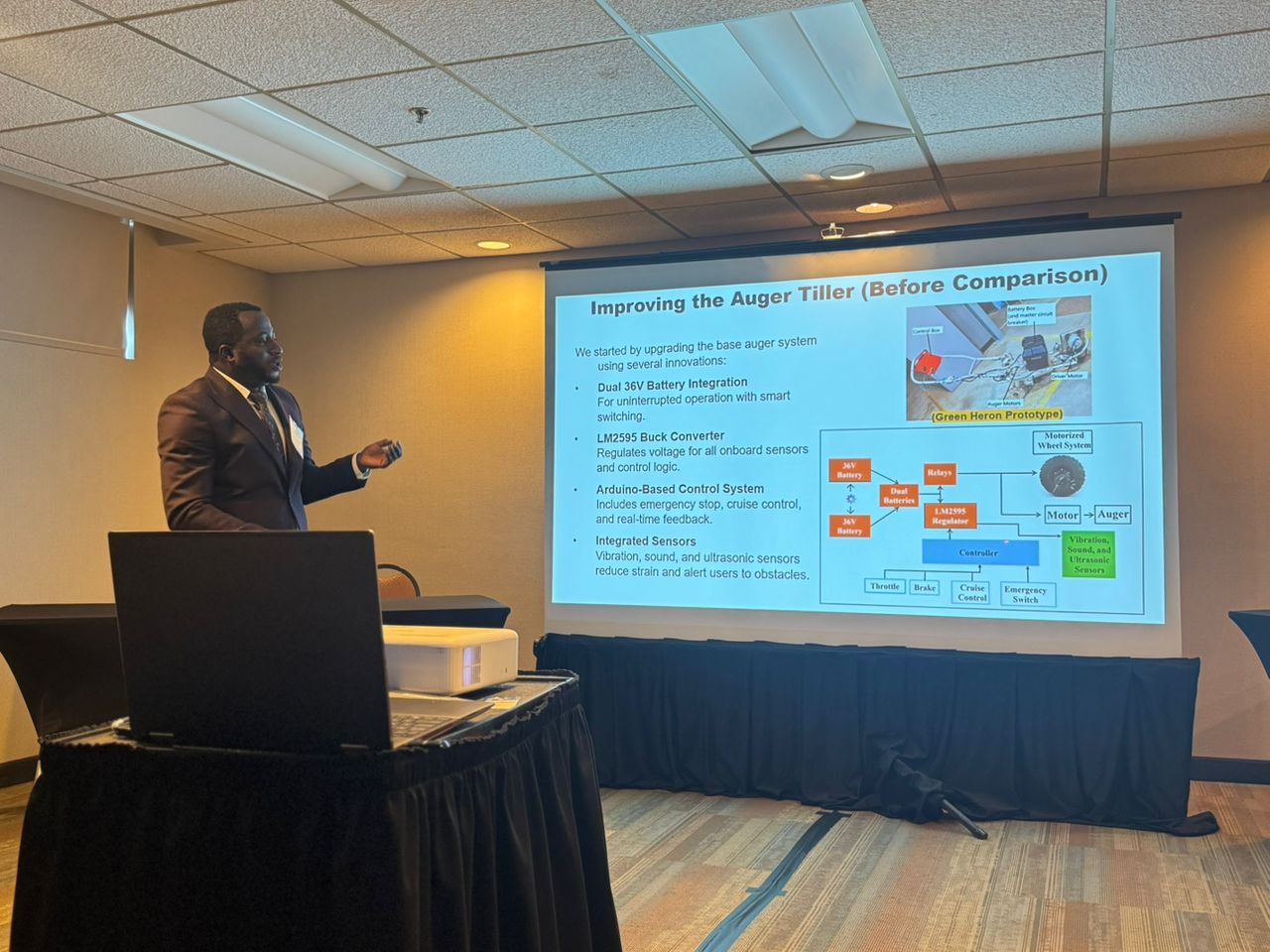
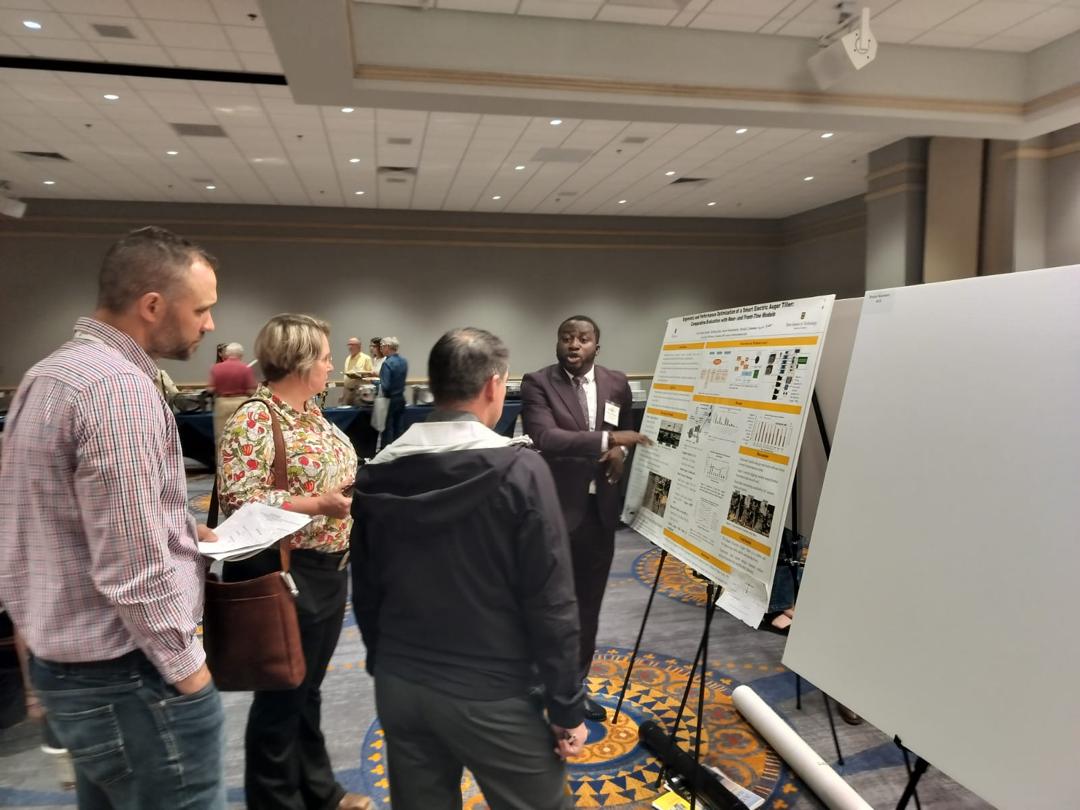
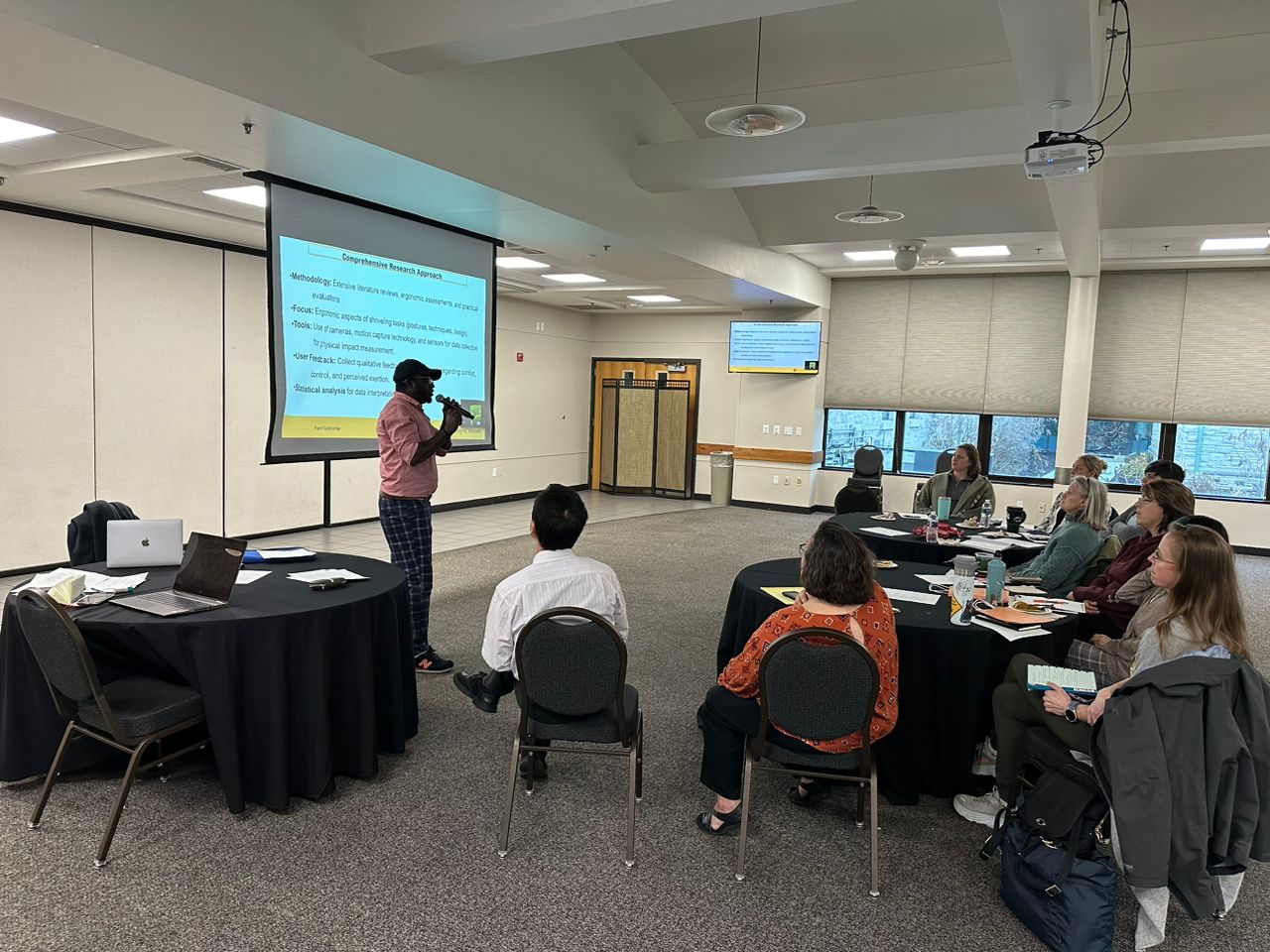
Photos from the presentation, Oral/Poster at ISASH 2025
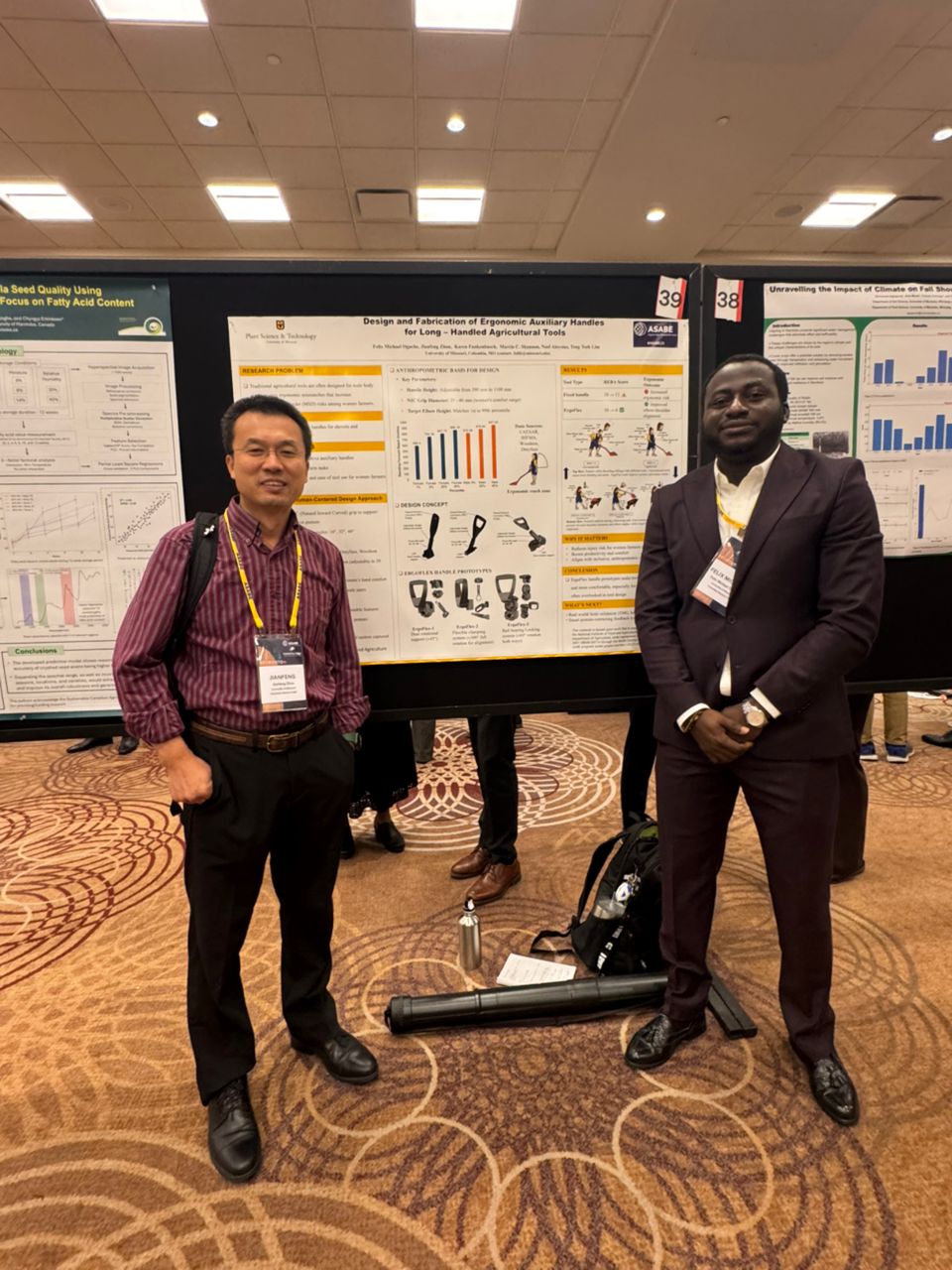
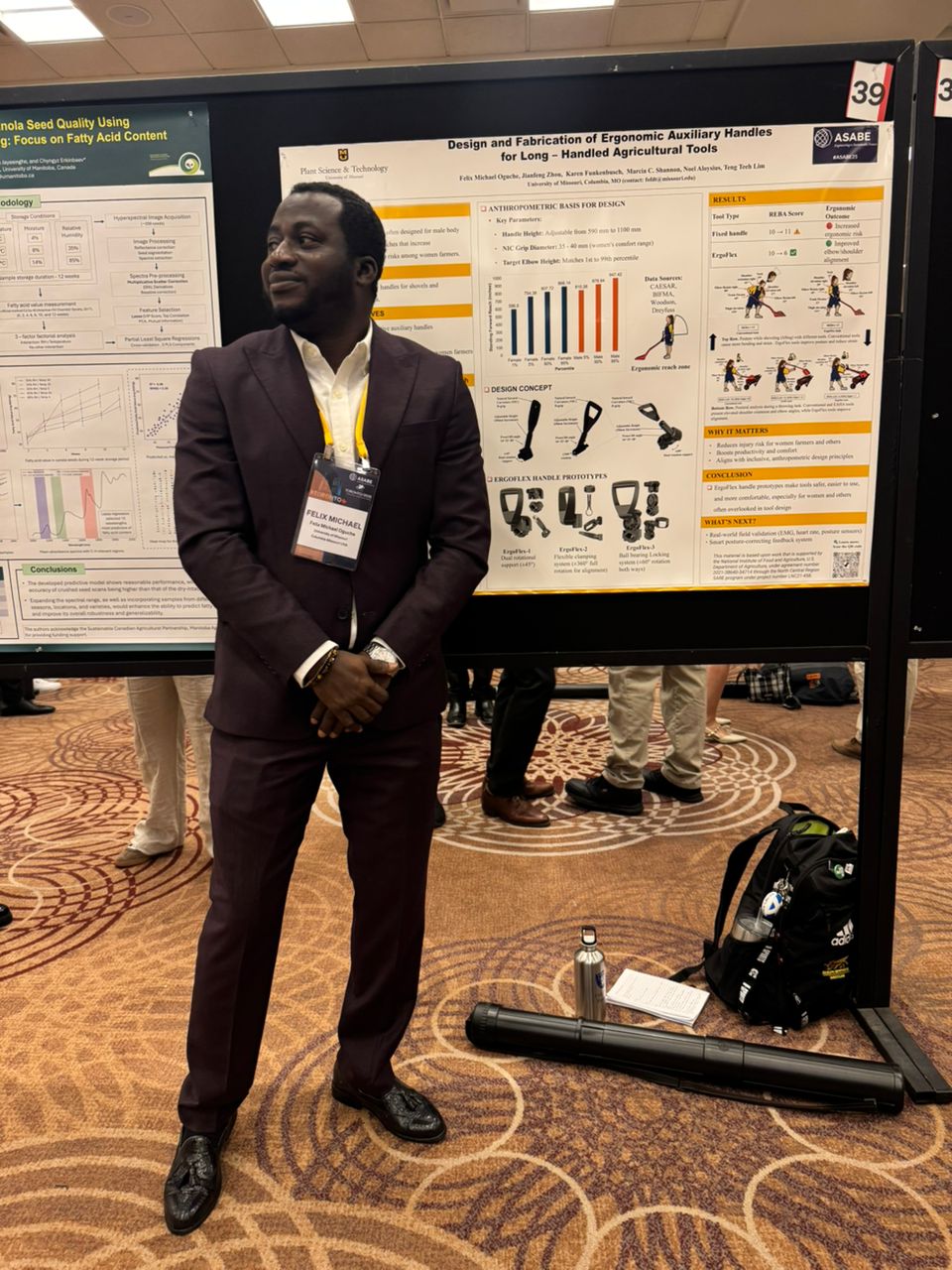
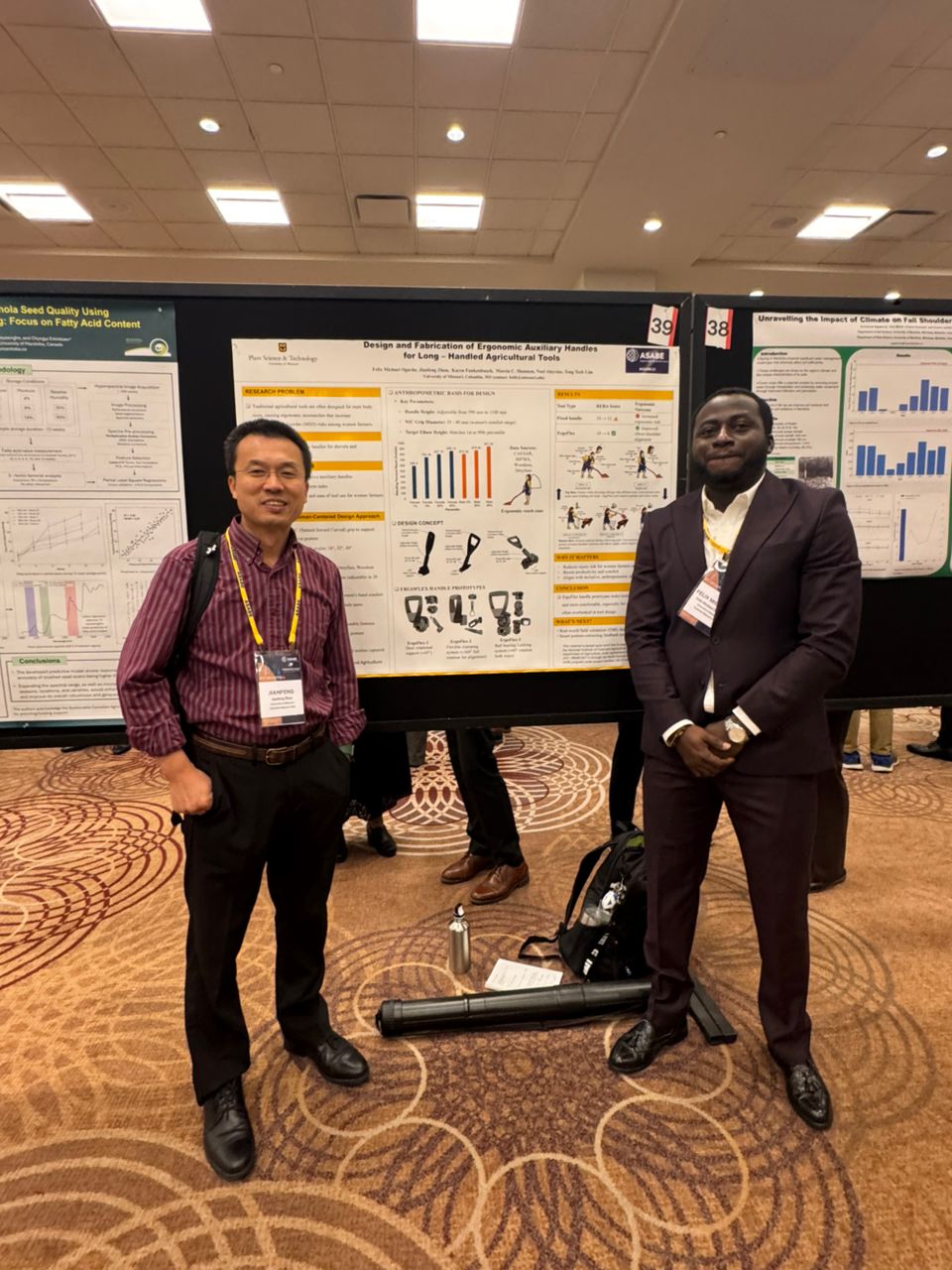
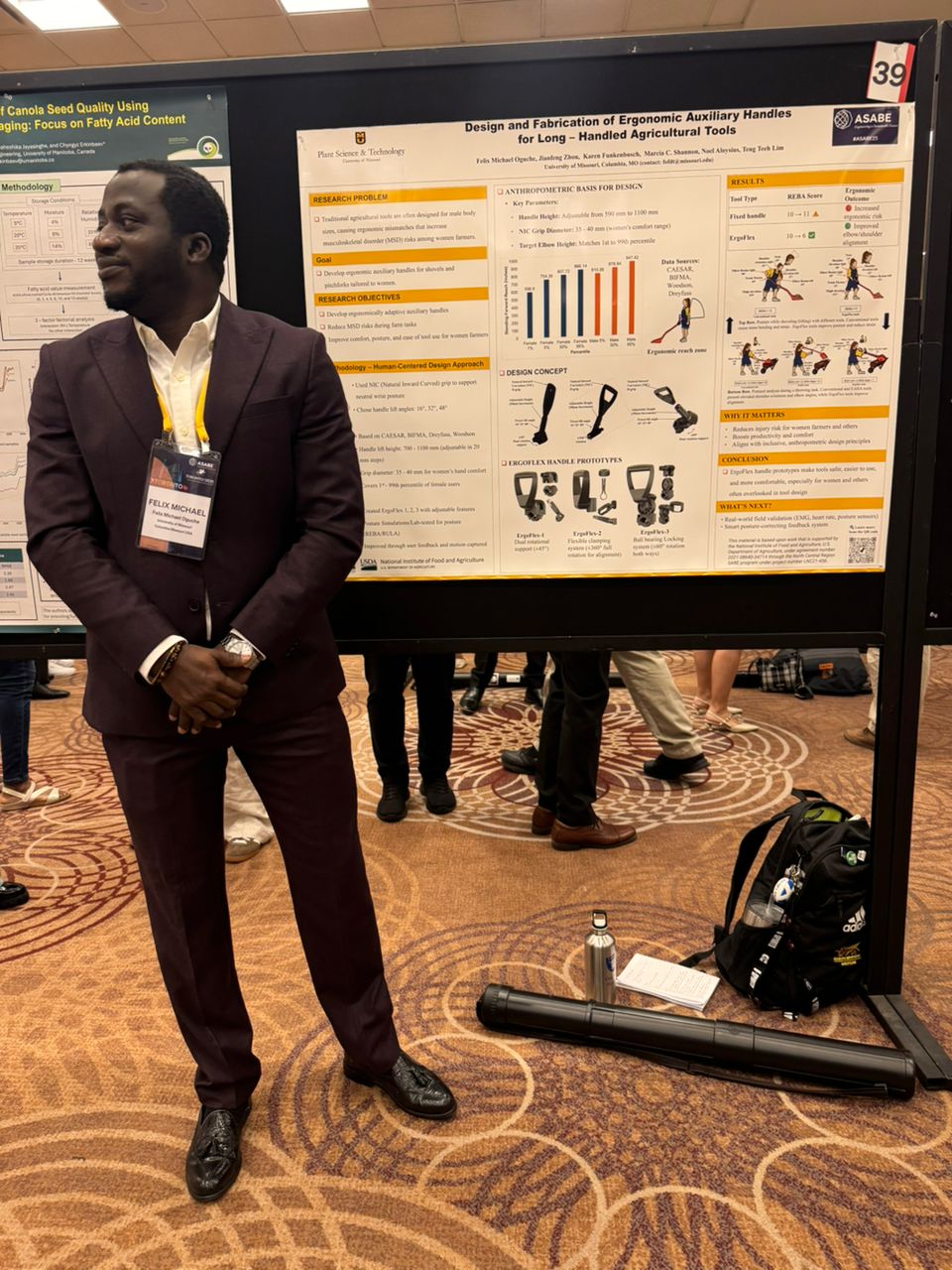
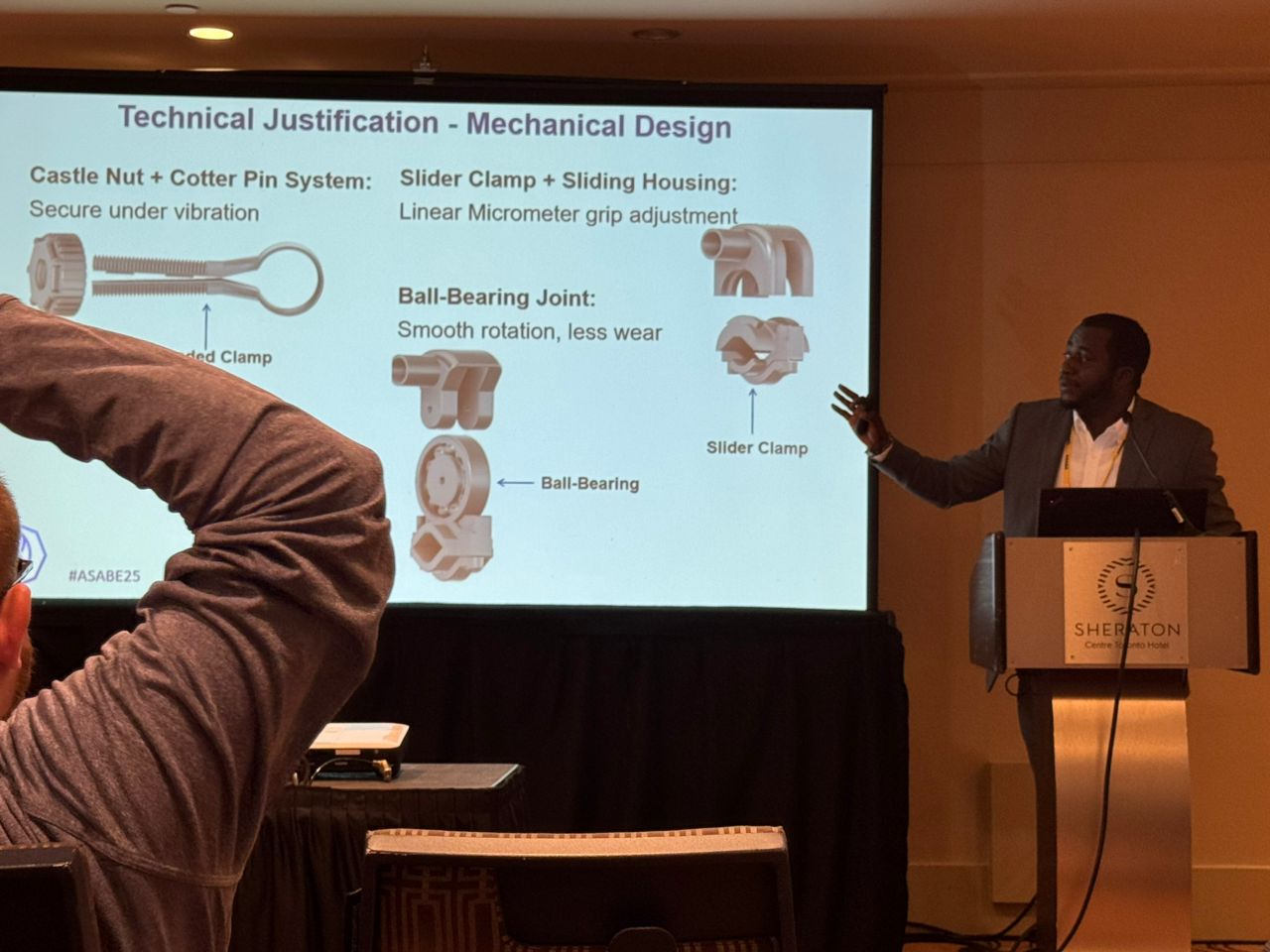
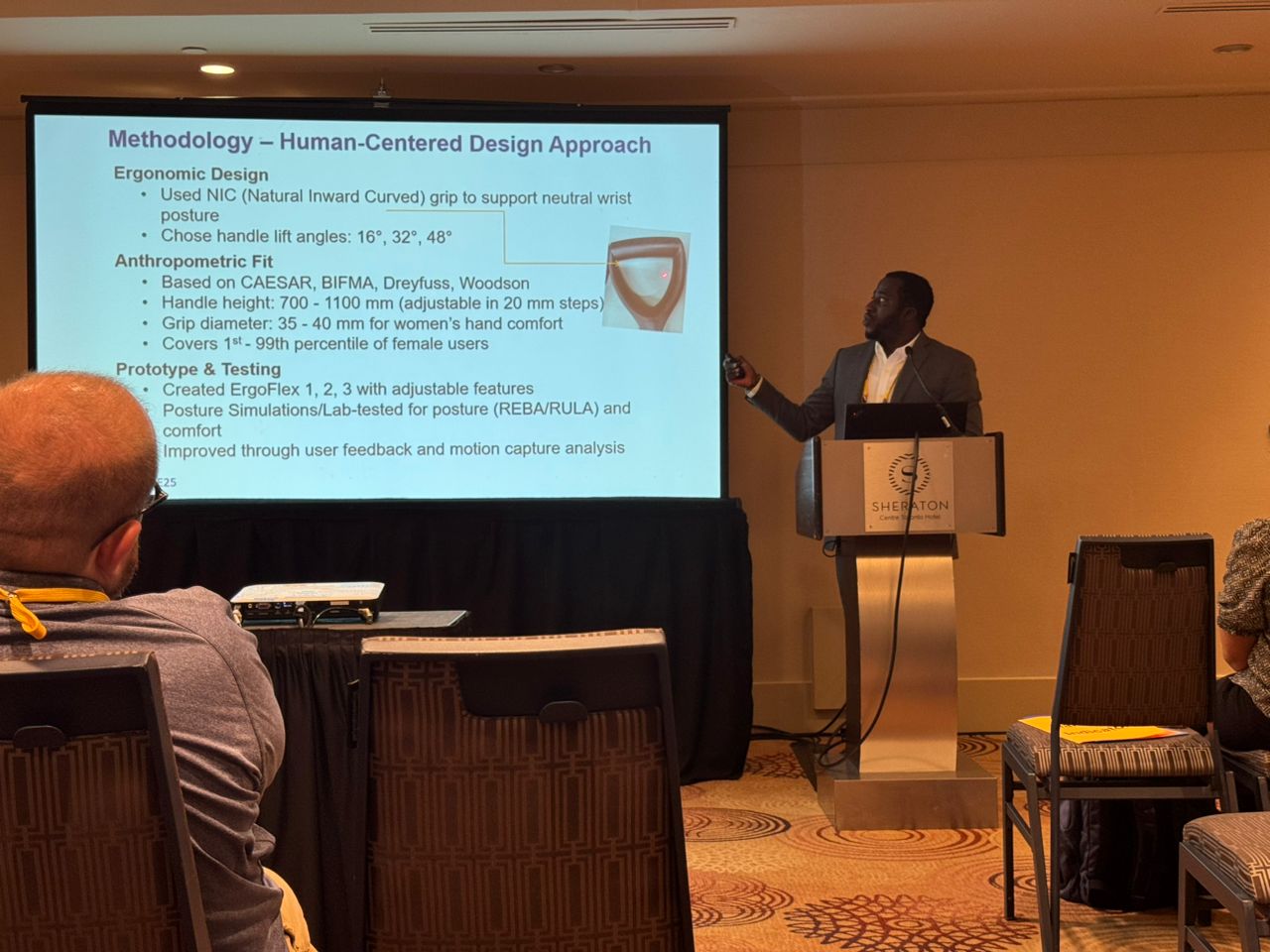
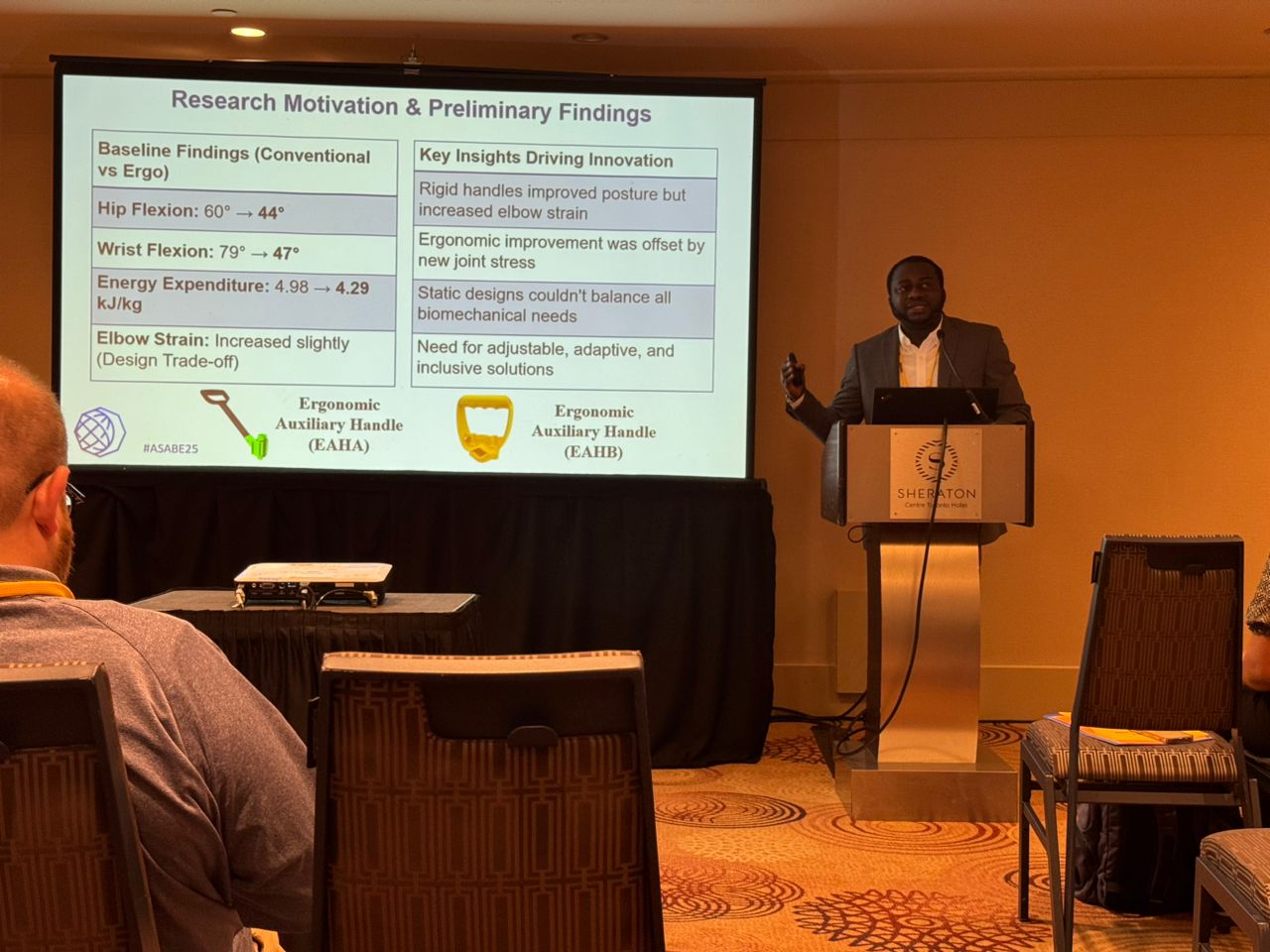
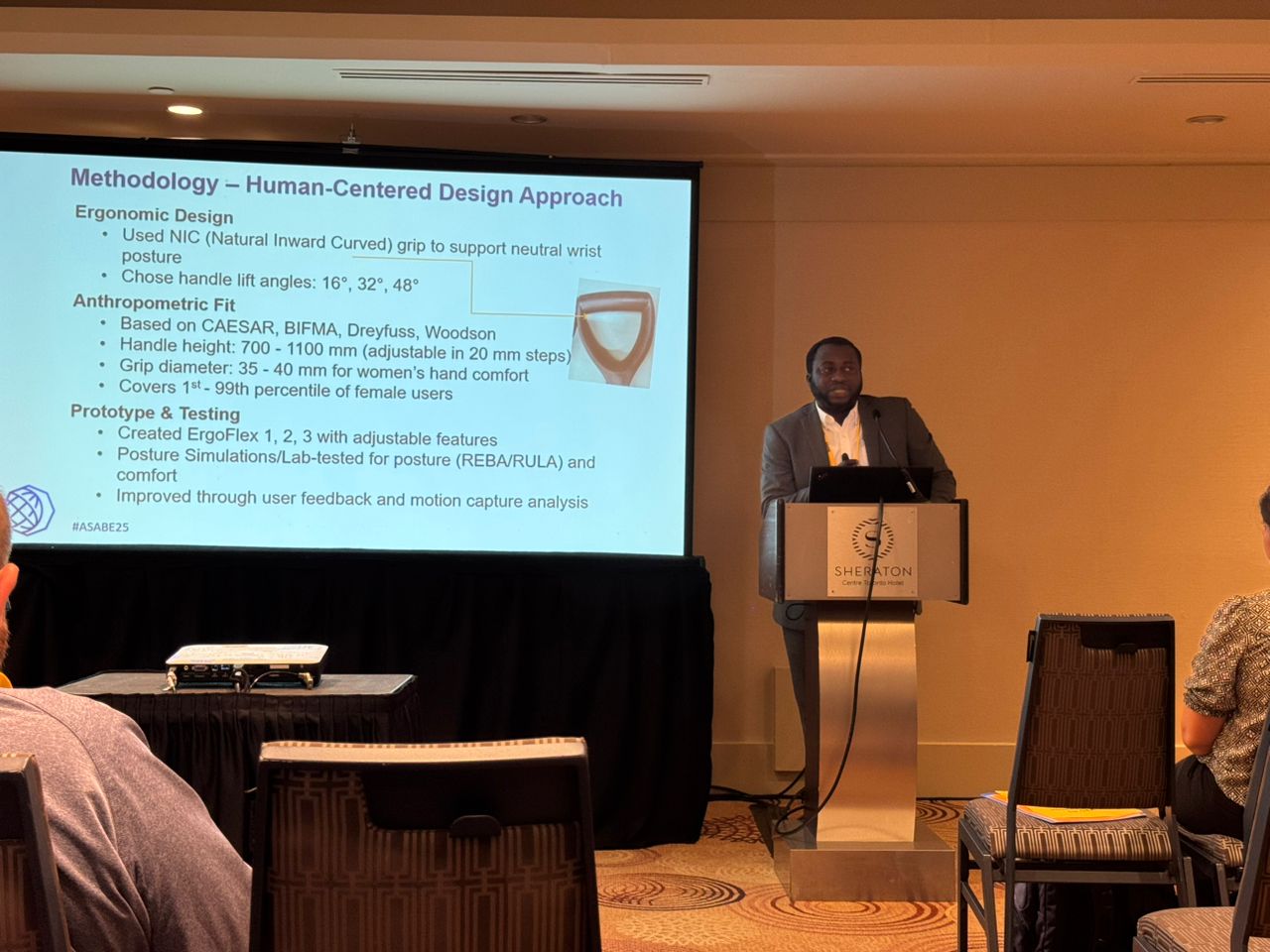
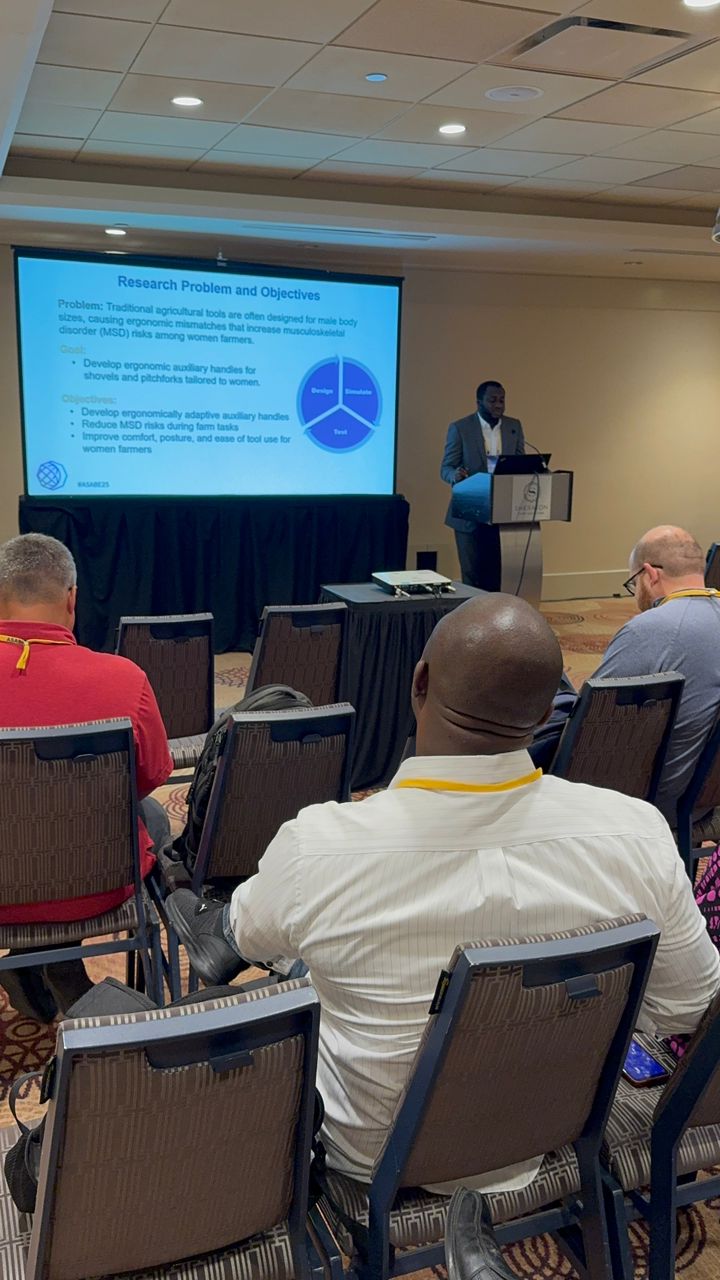
Photos from the presentation (Oral/Poster) at ASABE 2025
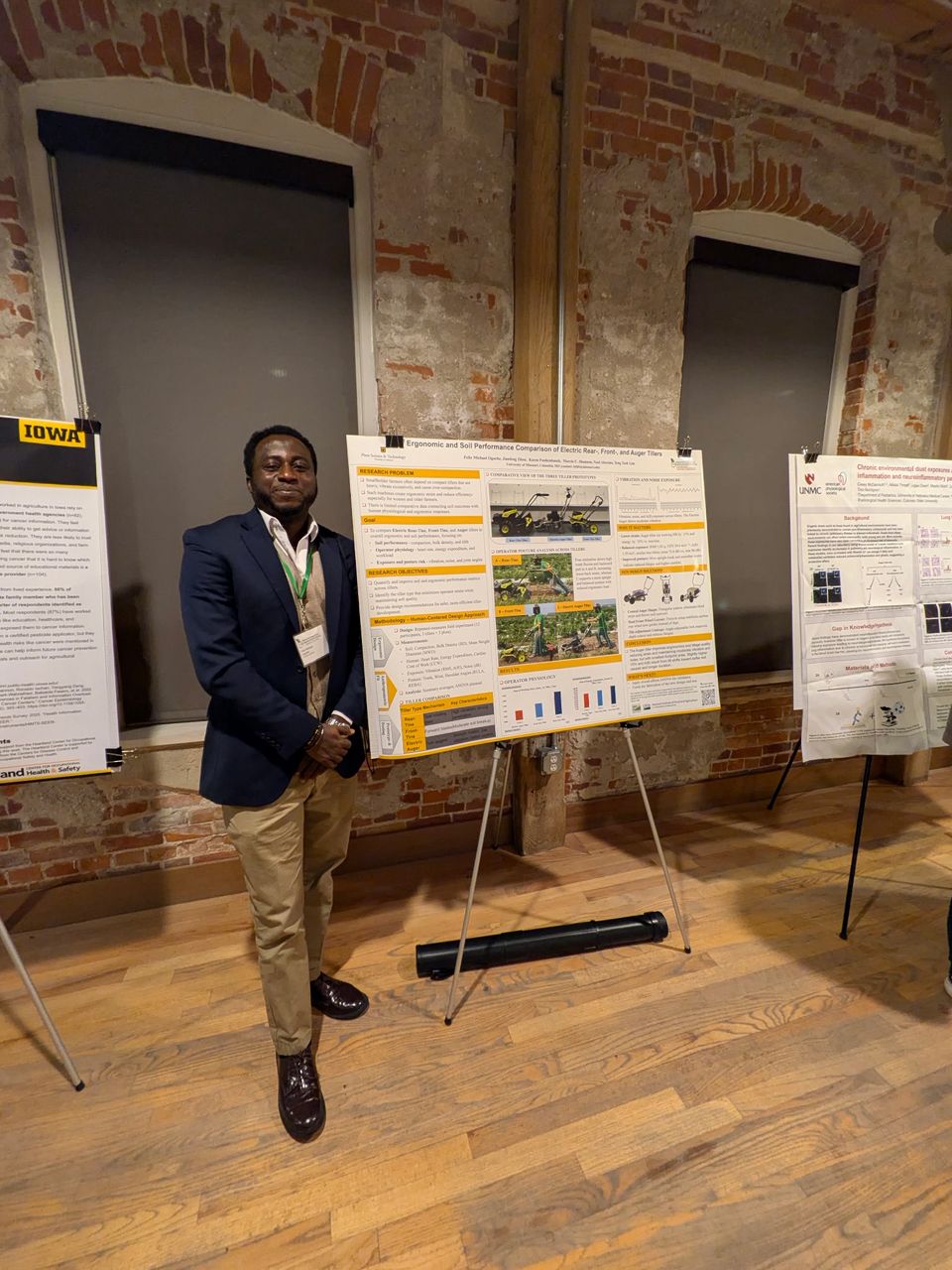
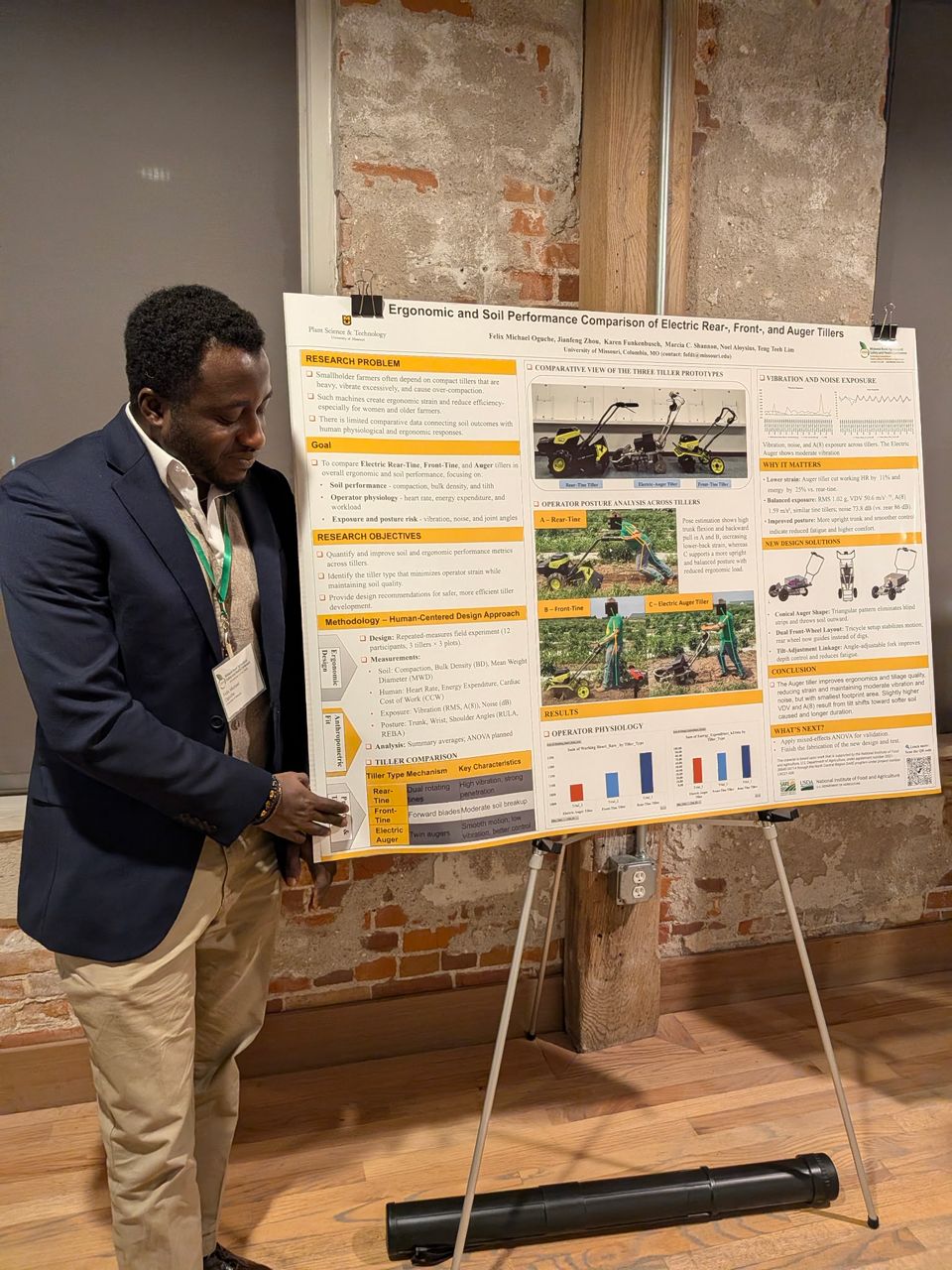
Photos from poster presentation at MRASH 2025
Learning Outcomes
- General knowledge about Agriculture ergonomic tools and equipment
- Available ergonomic hand tools, long handled tools, livestock tools and other tools of interest to women producers
- How women farmers can use tools differently to improve their health and safety
Project Outcomes
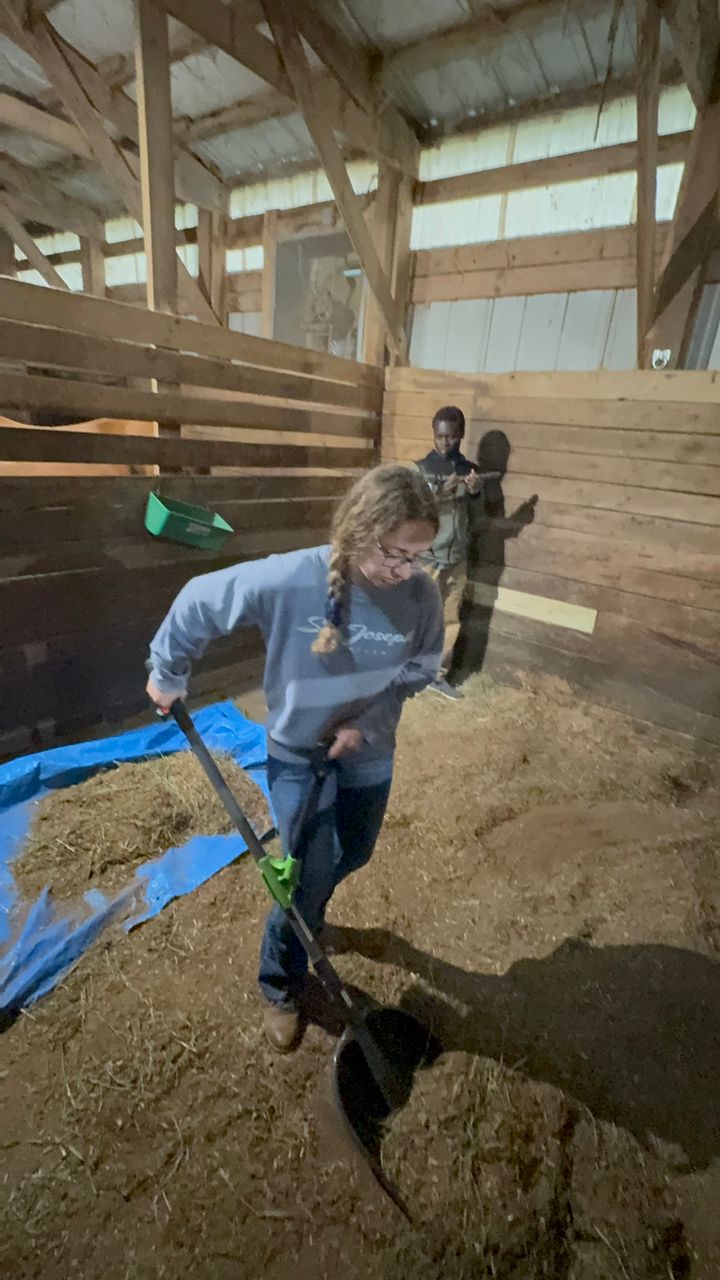
One significant change observed in farmers and ranchers at the MU Equine Teaching Facility is their approach to using shovels and pitchforks. Through our project, participants now get closer to the load, such as straw to be thrown, and understand that these tools operate as third-class lever devices. They have learned that the hand on the shaft acts as the effort hand, while the one on the grip serves as the fulcrum, providing support. This knowledge helps them use both hands properly and apply appropriate force more efficiently. This change in practice has led to improved control and reduced physical strain during their tasks.
Success Stories from MU Equine Teaching Facility Study
Horse Farmer at MU Equine Teaching Facility
Subject A-2
- Shovel 1: "The ergonomic handle makes it easier to pick up the heavy load the scoop carries. The good control, especially with the handle added on, ensures it doesn’t slip out of my hand."
- Shovel 2: "Great control since this shovel fits my height the best, and it’s less wobbly with the handle."
- Shovel 3: "Better control than without the handle."
- Pitchfork 1: "It was fairly lightweight, so it did not cause discomfort."
- Pitchfork 2: "The lightweight design and grip were great and caused no discomfort."
- Pitchfork 3: "It was tall/long and the plastic was slippery to hold on to, which made me have to bend my elbow back."
Subject B-2
- Shovel 1: "The handle definitely made the work easier."
- Shovel 2: "The attachment made it easier to perform the tasks."
- Shovel 3: "I really liked the added grip."
- Pitchfork 1: "The height was perfect for my use."
- Pitchfork 2: "I liked the attachment; I didn’t have to bend as far."
These testimonials highlight the practical benefits of ergonomic tool modifications for horse farmers at the MU Equine Teaching Facility. The improved handle designs, grips, and appropriate tool heights significantly enhanced the ease of performing tasks and reduced physical discomfort. These success stories demonstrate the project's positive impact on farmer efficiency and comfort, illustrating the value of ergonomic improvements in agricultural tools.
- Development and Refinement: Continue the development and refinement of ergonomic tools tailored to the specific needs of women farmers.
- Adjustable Features: Adopt adjustable features in tool design to cater to a broader range of user body types and preferences.
- Impact on Farming: Implementing our findings could lead to improved health outcomes for women in agriculture, increased productivity, and a reduction in work-related injuries. These improvements have the potential to significantly impact farming efficiency and worker satisfaction.
Information Products
- Safety and health of women farmers using farm tools – a survey
- Introduction to Benefits of Ergonomic Tools
- Choosing the Right Tool for the Job
- Auxiliary Handles and Proper Posture for Injury Prevention
- Fitting the Farmers: ERGONOMICS FOR WOMEN
- TIPS TO AVOID PAIN: FARM SMARTER, HURT LESS
- STOP BACK AND WRIST PAIN! FARM SMARTER, HURT LESS
- Ergonomic quantitative ergonomic assessment of long-handle farming tools among women farmers using camera-based analysis
- Design and Fabrication of Ergonomic Auxiliary Handles for Agricultural Tools
- Design and fabrication of ergonomic auxiliary handles for long-handled agricultural tools
- Felix Dissertation
- Ergonomic and Performance Optimization of a Smart Electric Auger Tiller: Comparative Evaluation with Rear- and Front-Tine Models
- Design and Fabrication of Ergonomic Auxiliary Handles for Long-Handled Agricultural Tools
- Design and Fabrication of Ergonomic Auxiliary Handles for Long – Handled Agricultural Tools
- Ergonomic and Performance Optimization of a Smart Electric Auger Tiller: Comparative Evaluation with Rear- and Front-Tine Models
- Ergonomic and Soil Performance Comparison of Electric Rear-, Front-, and Auger Tillers
- Ergonomic Evaluation of Scoop Shovels and Pitchforks: Impact on Women in Agriculture
- Ergonomic Benefits of Auxiliary Handles on Shovels and Pitchforks for Women Farmers
- Health and Safety in Agriculture: Ergonomic Shoveling and Pitchforking for Women Farmers
- Optimizing Tool Ergonomics for Farmers: Development of Adjustable Auxiliary Handles for Reduced Strain