Final report for ONE24-432
Project Information
The project addressed the high rate of honey bee colony losses among new and newer backyard beekeepers by testing whether a structured, cohort-based education and mentoring model could improve beekeeper knowledge, decision-making, and colony survival. The project focused particularly on varroa mite monitoring and management because varroa mites are identified as a leading stressor in honey bee colony decline and can also contribute to the spread of pathogens among honey bees and other pollinators as well as “state of the bee” topics as they related to the current season.
The basic method was to recruit and support a cohort of new or newer beekeepers in south-central Pennsylvania who had completed at least a Beekeeping 101 course and had fewer than five years of beekeeping experience. Forty-two applicants applied, 30 were selected as official participants, and 6 were accepted as alternates. The project concluded with 31 active participants, meeting the goal of maintaining at least 30 active participants through the project period. Participants were expected to attend educational sessions, participate in hands-on workshops, complete three knowledge assessments, and submit two monthly reports: a colony inspection report and a varroa mite monitoring report.
Significant project elements included 19 virtual meetings, 4 on-site workshops, 22 participant slide decks with accompanying recorded sessions, monthly inspection and mite-monitoring forms, a private participant networking group, and small-group peer support. Four on-site workshops were held at Keys to Bees and Dickinson College and included small-group colony inspections, colony pathogen review, varroa mite testing, winter preparation, and honey processing instruction. Nine guest beekeeping leaders contributed expertise during the educational sessions, expanding the range of instruction beyond the Project Leader and project partners.
Measurable results showed strong educational gains and improved colony survival outcomes. Knowledge assessments were administered at the beginning, midpoint, and conclusion of the project. The cohort’s average score increased from 64% at the initial assessment to 72% at the midpoint to 90% at the final assessment, representing an 8-percentage-point midpoint gain and a 26-percentage-point overall gain. Live-session attendance averaged 81% during the 2025 project year. Report completion was weaker, with inspection report submission compliance at 55% and mite-monitoring report submission compliance at 44%; indicating that participants were engaged in learning but that future reporting tools should be simplified.
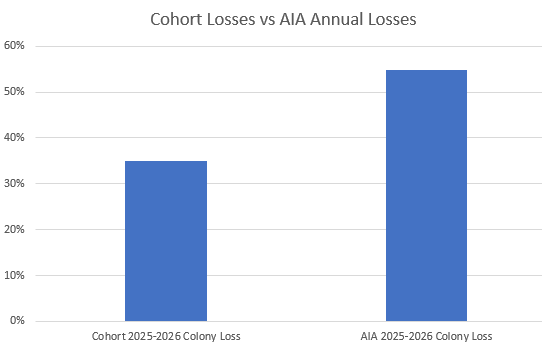
Colony survival data also indicated positive project outcomes. National winter colony losses for backyard beekeepers were reported at 54.8%, compared with 38.7% for commercial beekeepers and a 15-year backyard beekeeper average of 49.1%. The project cohort experienced a winter colony loss rate of 35%, which was 19.8 % points lower than the national backyard beekeeper loss rate and 6 % points lower than the participants’ prior-year colony loss rate. These results were achieved despite an unusually cold winter in south-central Pennsylvania, during which freezing conditions occurred during nearly 88% of the observed period, compared with approximately 75% during a typical winter.
The results are useful because they provide measurable evidence that ongoing education, structured accountability, and cohort-based support can improve knowledge retention and may contribute to improved colony survival among new and newer beekeepers. The 26-percentage-point increase in knowledge scores and the 35% cohort winter loss rate, compared with the 54.8% national backyard beekeeper loss rate, suggest that the model has practical value. However, the lower compliance rates for monthly reports show that future versions should use shorter, simpler reporting tools. The project team also identified a flipped-classroom format as a useful improvement, allowing participants to review pre-recorded lessons before live sessions so that meeting time can focus more heavily on questions, discussion, and applied problem solving.
Outreach activities included recruitment through Tri-County beekeeping organizations, local beekeeping meetings, social media, the Keys to Bees website, and distribution of an initial program flyer. Project results and materials were shared or offered to be shared with regional and state beekeeping organizations, and other interested groups. Outreach products included a project flyer, curriculum schedule, knowledge assessment, 22 slide decks with recorded sessions and trainer outlines, one additional Q&A slide deck, reporting tools, newsletter, and journal article submissions, website and blog postings, Facebook-based Q&A, Lancaster Farmer and Beekeeping organization postings. Farmers, educators, beekeeping leaders, Penn State Extension representatives, Dickinson College partners, apiary inspectors, and regional beekeeping associations participated in or supported the outreach effort.
“This project seeks to” increase the colony survival rate for new(er) backyard beekeepers compared to the state/national average. Bee Informed Partnerships (BIP) abstract of Honeybee Losses for 2023 reports backyard beekeepers as the highest group of beekeepers leading with colony losses. In 2022-2023 Bee Informed Partnership calculated an annual loss of backyard beekeepers to be 54.6%.
Colony health will be identified monthly through monthly inspection reports participants provide; this reporting method will maintain a status of colony survival.
Year-end colony survival will be determined at the completion of twelve-month project. Number of starting colony’s vs twelve-month end to compare to state/national data.
Each participant w/in the cohort will provide a monthly colony number, mite count report, treatment course (if applicable), and updated colony inspection report.
“The question we will answer” is if this virtual platform is beneficial for the participant demographics represented within the cohort. A report with demographics will also outline all participants within the cohort. Demographics included: age, work status, male/female, years beekeeping, prior beekeeping instruction received, purpose for keeping bees, purpose for joining cohort.
Measurements will include:
- attendance and participation during each meeting
- submission of monthly inspection and action reports
- replies to 3 surveys given at start, midway and completion of
project.
“The question we will answer” is if this virtual platform is an effective method to impact the quality decisions the participants make while tending to their bees to improve survival percentages.
Measurements will include:
- survival rate of honeybee colonies
- examination of knowledge levels at start, middle and end of
project
“The project seeks to” develop a format/platform that beekeeping organizations can utilize as a model to guide new(er) beekeepers towards successful beekeeping. The final project will be a model program presented to at least the three beekeeping organizations within the Tri-County (YCBA, CABA, LCBS).
STATISTICAL DATA UPDATE AS OF 11/29/2024
The Bee Informed Partnership (the source utilized to calculate the annual loss for backyard beekeeper colonies) has shut down due to lack of funding. This will require a different source needed to capture the data to calculate the statistics of backyard beekeepers. Tiffany Ayres, Project Leader (here after abbreviated as PL) has reached out to Apiary State Inspector (Rob Dwyer), State Apiarist (Karen Roccasecca), Partners Dickinson College - Assistant Professor Dr. Maggie Douglas, and PennState Educator (Robin Underwood) to obtain a different source for quality data. Currently those responding do not have this information or approval to share this information has not yet been provided. PL will continue to seek updated colony loss on a large scale to compare to the cohort group to be established. If additional sources do not become available by conclusion of project, cohort loss rates will be compared to the most recent BIP calculations of 2022-2023 (54.6% average colony loss).
FINAL STATISTICAL DATA UPDATE 8/29/26
Multiple research statistics were reviewed (see "Project Outcomes" for details) to capture best realistic comparison results. The use of Apiary Inspectors of America (AIA) provided the best statistics found measuring backyard beekeeper statistics to utilize as a control for our project group since BIP is no longer available.
ONSITE WORKSHOP 6-28-2025 focused on top 5 stressors of colony losses with a focus on the varroa mite (full information provided in Materials & Method Section).
The Cohort participants have met a total of twenty two times. Four of these sessions were in-person workshops (two at Keys to Bees location performing small group colony inspections & reviewing ailments of the colony, one at Dickinson College performing varroa mite monitoring, and one at Dickinson College preparing for winter and reviewing honey information). The Cohort group was comprised of 30 official participants and 6 alternates (we retained alternates with the understanding there would be attrition over time and wanted at least 30 participants for the duration of the project). Over the course of the project we had 31 active participants.
Records have been maintained on attendance to virtual meetings (though participants are able to view recorded sessions if they miss an in-person virtual meeting &/or wish to rewatch a session), inspection submitted reports, mite monitoring reports, and three examinations taken (initial, midway, & final).
Through these on-going educational sessions and by going through the required motions to complete the two separate monthly reports, the hypothesis was established that the participants would have the knowledge to make best decisions, timely to establish stronger/healthier bees entering into the winter season (mostly varroa mite impact) that this would positively impact the survival rates of the participants' colonies.
THE ISSUE is the high number of honeybee colony losses each year, and particularly with newer beekeepers. The Bee Informed Partner (BIP) has identified over 48% honeybee losses in 2022-2023. Both the BIP and USDA identify the number one known stressor to colonies are varroa mites (Varroa Destructor). Failing colonies reduce the number of available pollinators within an area, by negatively impacting other honeybee colonies as well as other species of wild bees. According to Cornell University Master Beekeeping studies many ailments are transmitted by the varroa mites such as Deformed Wing Virus (DWV), Acute Bee Paralysis Virus (ABPV), Kashmire Bee Virus (KBM), and others. These viruses lower the immunity of the honeybee making them susceptible to additional pathogens that are transferrable to other species such as: bumble bees (Sacbrood Virus, DWV, Black Queen Cell Virus, ABPV, KBM, chalkbrood), carpenter bees (DWV), mason bees (chalkbrood), leaf cutter bees (chalkbrood), orchard bees (DWV), and others. When colonies become weak or die (dead out) they are commonly robbed of any/all food resources by other bees. The bees robbing not only take the food reserves, but indirectly pick up pathogens which they carry back and infect their nests.
Dealing effectively with the varroa mite is challenging, even for experienced beekeepers, and is often a major contributor to the failure of new bee colonies. We know that untreated or poorly treated colonies will be weakened and eventually perish. These infected hives become “mite incubators” creating a cycle for honeybees and other bees in the area to be negatively impacted. Thus, the failure to fully prepare newer beekeepers not only impacts their investment but harms surrounding honeybees and other pollinators.
This project proposal looks to address this issue by focusing on the gaps in knowledge of new(er) beekeepers and their need for on-going support and guidance during their first couple of seasons of beekeeping. It has been estimated that 80% of new beekeepers quit after their first 3-years of beekeeping due to the inability to keep their bees alive. The BIP shows a higher annual rate of losses in backyard beekeepers 54.6% versus 47.9% of commercial beekeepers. A large portion of backyard beekeepers fall into the category of those new to the keeping of bees.
There are numerous Beekeeping 101 classes, through clubs, universities and online videos, there are few on-going support opportunities for new(er) beekeepers. What is available is inconsistent and often offers conflicting and/or inaccurate information. Some beekeeping clubs and organizations offer assistance but consistent training and mentoring is generally unavailable. Beekeeping 101 classes routinely cover topics such as hive components, beekeeping tools, bee castes, basic behaviors, biology, nutrition, and pests, there is an extremely steep learning curve with beekeeping. The basics learned in a 101 class are not enough. It takes time of working with the honeybees to “read” the colony to provide quality stewardship to the honeybee. We recognize the challenges new beekeepers face with translating the information they gather into practical application.
This proposal is to address the on-going support needs for new(er) beekeepers and provide a model to provide this support. The model is built on the need for personalized mentoring by using a combination of virtual and in-person interactions. The virtual platform will be timely (1-3 times monthly depending upon the activity of the bees), will be convenient (access anywhere there is Wi-Fi), require minimal time (1.5-hour for each meeting) and be recordable for later review. A cohort of 30 newer beekeepers (3 years or less experience) will be selected from south central Pennsylvania (primarily Cumberland, Dauphin, York, Adams, and Perry counties) to participate in this project. Participants will have already completed a Beekeeping 101 class and be committed to maintaining their colonies for the duration of the project. Tiffany Ayres, Master Beekeeper, is the Project Leader (PL). She will provide the content and consultation for the cohort primarily through regular, timely virtual meetings. Peer support and team building will be encouraged in addition to reinforce learning and engagement. Some on-site, in-person events will also be part of the curriculum. Virtual meetings will be provided 1-3 times per month depending upon the time of year. Each session will be 1 hour with the first portion being a presentation by the PL on the “state of the bees”, or what is happening for bees in the area at that time and what the beekeeper should be doing to care for their bees. The second portion will be a Q&A session with specific questions and problems supplied by members of the cohort. It is anticipated that any question or concern by one member is likely to be relevant to most others, so this provides concrete and timely help. Questions will be coordinated by the assistant with participants encouraged to submit their issues in advance allowing the PL to prepare in-depth and coherent coaching for all.
This project proposal will offer new(er) beekeepers the timely support they seek and help them through the honeybee learning curve process, so, they can better recognize the behavior of the honeybee and the actionable items to address needs. By taking timely action while managing their honeybees the participants within the project cohort should improve their colony survival numbers and produce healthy quality honeybees ultimately providing more pollination and higher crop yields. In addition, their healthy hives will have a positive impact on all surrounding bees by limiting the spread of the Varroa mite and the pathogens it carries.
Long term production yield increases for farmers and surrounding communities are positively affected economically; potentially creating jobs for more farm hands, financial stability for the farmer, and a reduction in product costs for the local community. This project cohort model can then be provided to other beekeeping organizations to utilize on a broad scale, helping to improve our honeybee survival rates across the state.
LOGISTICS:
- Nineteen (19) virtual meetings
- Four (4) on-site workshops
- Encouragement of small working cohort groups
- Use of Zoom as the virtual application
- Use of Zoom polls vs paying for an additional platform of Kahoot
- Use of Google Forms vs. paying for additional platforms of shared documents
- Collected demographic information to use if helpful during the final analysis (determine if underlying patterns for success based on demographic related specifics) DEMOGRAPHIC INFORMATION - Google Forms (this information was not needed).
SUMMARY & INSIGHTS:
- Meeting Structure: 19 cohort virtual meetings and 4 in person workshops. This blend of formats supports both direct engagement and flexible participation, as virtual meetings are recorded for later viewing.
- Participant Engagement: Attendees were encouraged to join live, but the availability of recordings ensures that everyone can access the material, even if they miss a session.
- Program Hypothesis: The underlying belief is that increased knowledge gained will help participants make better decisions in their honey bee husbandry. The process of completing monthly inspection and mite reports is designed to foster routine monitoring, which should result in healthier and stronger bee colonies.
- Content Focus: The topics covered are aimed at improving the quality of honey bee care, empowering participants to make informed decisions, and ensuring beekeepers are equipped to share accurate information with their communities.
SIGNIFICANCE:
This approach combines education, accountability, and community-building to support best practices in beekeeping. The emphasis on both knowledge acquisition and regular hands-on monitoring is likely to yield positive outcomes for colony health and beekeeper confidence.
Cooperators
Research
An application to participate in the project was established and forty-two applicants have applied/registered to participate in the program (applicants have completed an on-line google document see link for questions). Link to Application. Applicants span over multiple counties in south central Pennsylvania. Qualified applicants were reviewed and determined by the Project Leader and Consultant. Additional questions were asked to filter down applicants by February 2025. Thirty applicants were invited to participate and six applicants were offered alternate positions (they being free to participate and if positions opened they could take an active "seat". Our goal was to end the project with at least 30 participants. All applicants received a letter of commitment and engagement letter to review and return confirming their interest in the project.
MINIMUM CRITERIA FOR APPLICATION
- Applicant will have taken a Beekeeping 101 course prior to project initiation.
- Applicant has kept bees less then 5-years.
- Applicant is prepared to participate in the project, attending the majority of meetings, and submitting reporting data.
- Applicant is within a manageable commuting distance from on-site workshop base of Cumberland County.
Reviewed during the first March 2025 cohort virtual meeting: meeting dates, two month reports, and expectations. Additionally reviewed were how to submit questions, the encouragement of small cohort groups, and a private Facebook group were established to encourage the cohort to network. In addition, the first knowledge base examination was conducted to establish a baseline average of knowledge for the cohort group. This examination was conducted again midway through the project and at its' finale.
- QUESTION SUBMISSION FORM BEEKEEPING COHORT QUESTION - Google Forms- this form establishes order for the influx of questions received and also tracks the number, frequency, category of questions accumulated. This will also aid in establishing a FAQ document for later use.
- MONTHLY COLONY INSPECTION REPORT COLONY MONTHLY INSPECTION FORM - Google Forms- 1 form to be submitted monthly by each participant. This will ensure the methodology of the inspections performed and establish a routine for the newer beekeeper of best beekeeping practices. This data will be utilized to track each participants progress over the course of the year.
- MITE CHECK REPORT Varroa Mite Monthly Counts - Google Forms- 1 form to be submitted monthly by each participant. This will ensure the methodology of the inspections performed and establish a routine for the newer beekeeper of best beekeeping practices. This data will be utilized to track each participants progress over the course of the year.
PARTICIPANT COMPLIANCE REVIEW: A compliance review was performed during the first quarter of the project. This review focused on the submissions of the two required reports by participants: Inspection Report & Varroa Mite Report. The compliance report showed an elevated number of participants not submitting their required reports monthly.
- 39% Non-compliance for Inspection Reports
- 52% Non-compliance for Varroa Mite Reports
Onsite Workshop conducted 6-28-25 - an additional survey was distributed asking participants their comfort level with performing varroa mite testing and if they would like an individual review/discussion with project leader. 8 out of 34 attendees requested an individual conference with leadership (these contacts are underway)7 Meeting 6-28-25 Summer Prep for Winter slides. The topic of this workshop was on the top 5 colony stressors leading to colony losses (see slide deck #7) with a focus on varroa mites. Colonies at Dickinson College were utilized to demonstrate the two approved methods to conduct varroa mite checks: alcohol wash and sugar roll methods.
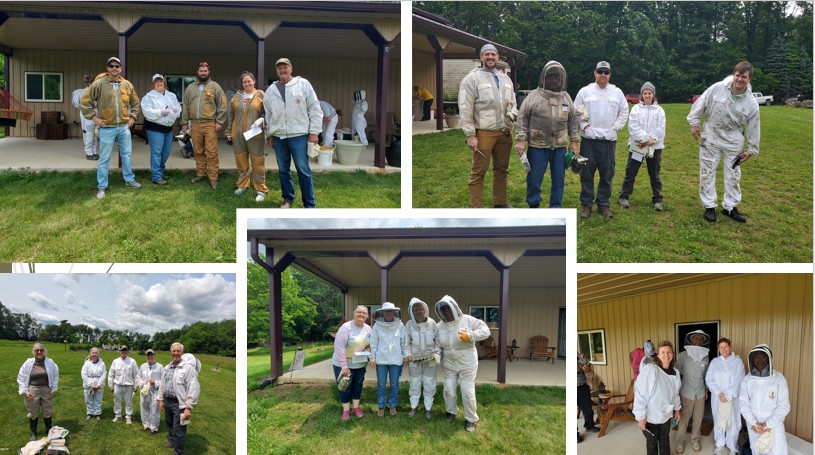 5-31-25 Workshop Small Group Colony Inspections
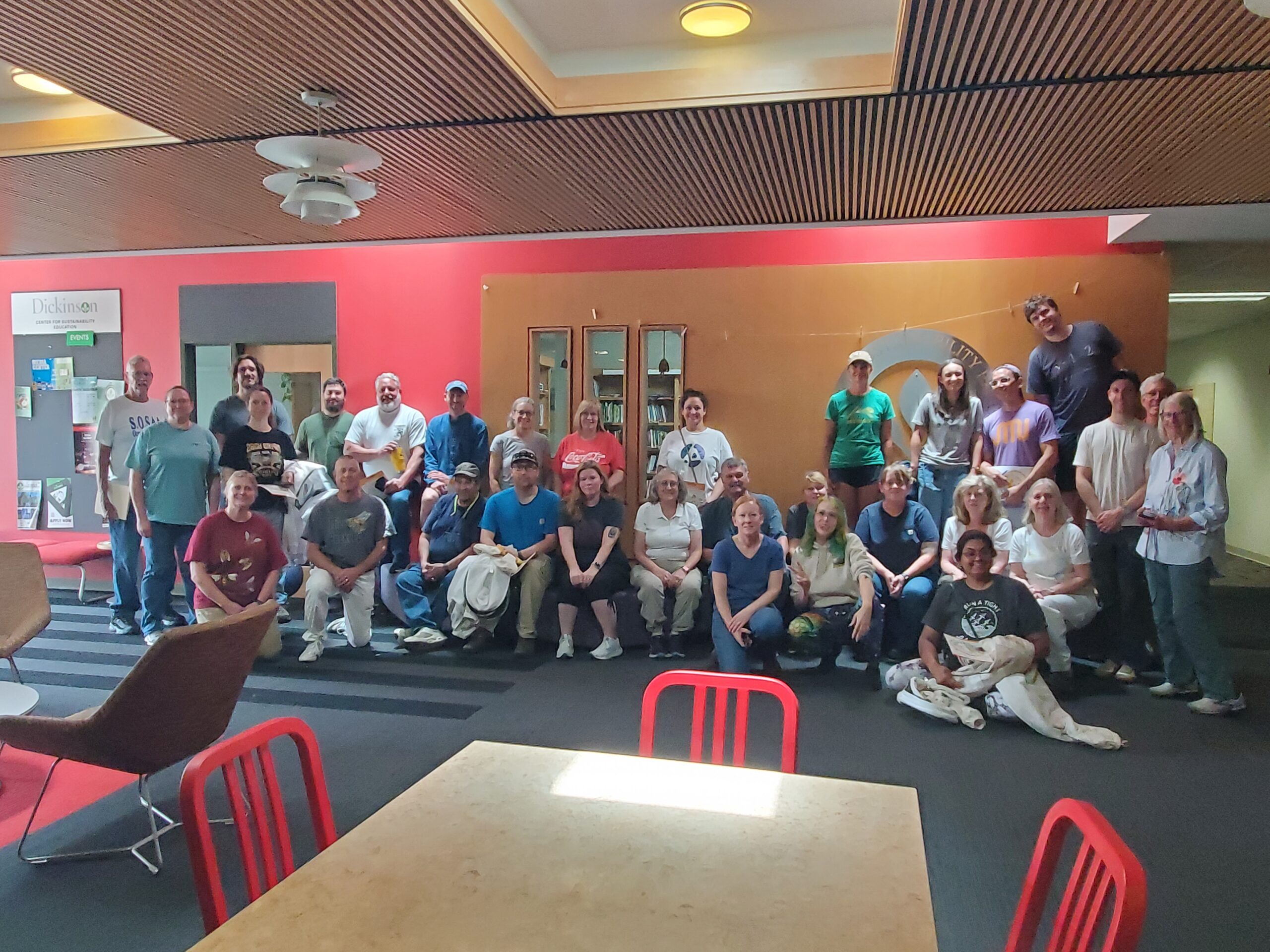 6-28-25 Dickinson College Field Day Varroa Mite Testing
NETWORKING:
Private Facebook Group: A private Facebook group has been created (initiated in May) for participants to discuss findings and share insights. Notably, the Project Leader has chosen not to join this group, allowing participants to freely exchange ideas and experiences. However, members are monitoring the group to ensure accurate information is shared, and the Project Leader may interject if necessary to correct or clarify discussions. This approach balances autonomy with oversight, supporting a safe space for peer learning while maintaining the integrity of information.
Small Group Formation: Small group formation has been encouraged and many participants have formed small groups, indicating strong engagement and willingness to collaborate. These groups are likely to enhance the learning experience and provide additional encouragement for participants to follow through with best practices in honey bee husbandry.
Examinations have been taken twice, once upon the onset of the project and repeated in October as a midterm. This examination will be taken one last time upon the conclusion of the project.
Surveys to participants have been collected and their feedback has been consolidated in the "results and discussion area".
Virtual meeting continue monthly, Q & A continues to be open over the winter season, and resources continued to be shared via emails, FB, or small groups.
SESSION RECORDED LINKS can be found on this document https://docs.google.com/document/d/1BIfcQxLfzWnRq6Iyo9RX480hXtmfuXP2wiquEXMTgIo/edit?tab=t.0
An outline of topics was established by the Project Leader, Consultant, and Farming Partners. Beekeepers within the community were invited to participate in presenting different topics covered over the course of the year. We had nine guest speakers share their expertise during the meetings.
- 3/19/25 - Initial introductions and cohort expectations - EXAMINATION
- 4/9/25 - Explanation of reports
- 4/23/25 - "Catching Swarms" - guest presenter Nathan Pears, YCBA President
- 5/14/25 - "All About Swarms"
- 5/31/25 - WORKSHOP - "How, Why, When to do Colony Inspections" - onsite at Keys to Bees
- 6/11/25 - "Bee Genetics" - guest presenter Robert House, commercial beekeeper
- 6/28/25 - WORKSHOP - "All about Varroa Mites" - onsite at Dickinson College
- 7/9/25 - "Honey Preparation & Extraction" - guest presenter David Papke, Beekeeper of the Year 2024
- 7/23/25 - Open Q & A Session
- 8/13/25 - "Bee Law" - guest presenter Mark Gingrich, PSBA President
- 8/27/25 - "Winter Preparation"
- 9/6/25 - WORKSHOP - "Small Hive Beetles, Winter Prep, & All About Honey" - guest presenter Valerie Hawthorne, PA Honey Judge
- 9/24/25 - "Regenerative Beekeeping" - guest presenter Jeremy Barnes, Beekeeper of the Year 2017
- 10/1/25 - EXTRA SESSION - Open Q & A for examination prep - meeting optional for participants
- 10/8/25 - Open Q & A Session - MIDTERM EXAMINATION
- 10/22/25 - "Colony Registration & Inspections" - guest presenter Robert Dwyer, PA Inspector
- 11/12/25 - "Fall Considerations"
- 12/10/25 "Winter Inspections"
- 1/14/26 "Absconding Behavior" - with guest speaker Cici Sweeney, PennState Ext.
- 2/11/26 "Brood & Adult Diseases/Viruses" - with guest speaker Dr. Robyn Underwood, PennState Ext.
- 3/11/26 Q & A
- 4/8/26 FINAL EXAMINATION
- 4/22/26 "What's Next"
Number of farmers to participate initial were 2 Project Partners, 30 Project Participants, 6 Project Alternates and 9 Guest Beekeeping Leaders. We accepted alternates anticipating routine attrition among the participants. As of 4/30/26, 31 Project Participants Partners concluded the project.
Further replication of the project has been discussed in "Research and Discussion" section.
PARTICIPANTS: 30 active participants and 6 alternates.
All applicants received a detailed explanation of the project and expectations of participation (attendance at virtual (19) & on-site workshops (3), monthly submission of colony inspection report, monthly submission of mite report, and participation in (3) knowledge base tests). Participants were asked to actively respond if they were committed to the outline of the expectations outlined for the project. Leadership evaluated responses, took in consideration text of commitment, centralized location (due to the on-site workshops), and the general requirements to determine the 30 applicants to participate. Due to several additional high quality applicants that did not make the 30 seats, 6 were offered alternate positions. These alternates will participate as normal and in the event one of the 30 seats opens, an alternate will slide into the seat. Project concluded with 31 active participants, our goal being at least 30 active participants = met goal.
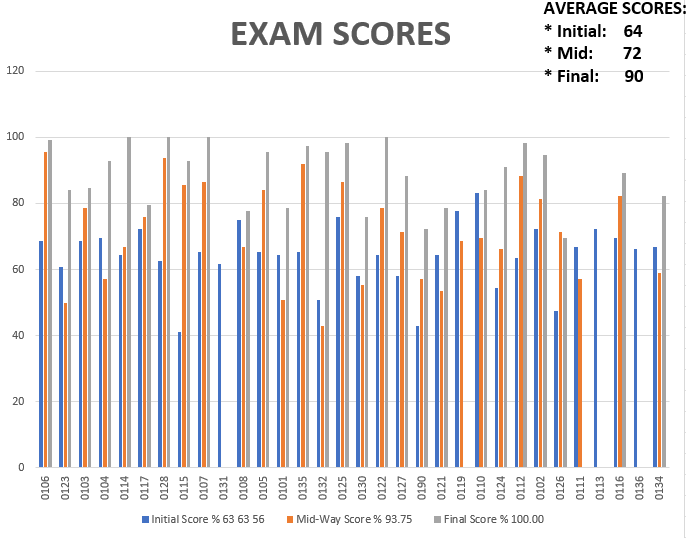
EXAMINATION SCORES INITIAL TESTING (Knowledge Base) -
A knowledge base examination was established to test participants on information a beekeeper should know to share with the community and information that would help them manage the health of their honey bees. This examination was given at the beginning of the project, midway, and at conclusion to measure their retention of the information. The chart below identifies the participants with numbers to keep their identity anonymous and provides their three scores. Initial score average 64%, midway 72%, conclusion 90%. This shows a midway improvement of 8% and a finale improvement by 26%. Clearly showing an improved knowledge base with the general material provided during the cohort sessions. The theory is this improved knowledge base will aid in the participants managing their bees and improve their colony survival rates.
ATTENDANCE - attendance participation during live sessions averaged 81% during the 2025 year. The majority of participants attended live virtual meetings regularly but if they had a conflict they watched the recorded session.
REPORTS - Inspection Report submission compliance 55 % From participant surveys collected, both reports may need to be adjusted to simplify if utilized in the future. A number of participants admitted to having conducted the inspections and mite counts but not completing the reports.
Mite Monitoring Report submission compliance 44 % From participant surveys collected and discussions held privately with participants from PL, more participants completed the mite reports then completed the reporting, need to adjust reports for future project use to simplify. However, many participants (routinely less seasoned) continue to be uncomfortable with performing mite checks. Future project recommend adding additional mite monitoring one on one or group sessions (they know how to do these, but just uncomfortable to complete).
Survey responses from participants have been extremely positive with notations of the amount of information they have learned and the enjoyment of the camaraderie of the group. They feel they are better beekeepers for having participated and feel hopeful with their current colonies surviving the winter season. Further constructive survey comments are noted in the "Research Conclusion" section.
COLONY LOSSES
The historic statistical data used to establish comparison colony loss data was established by Bee Informed Partnership (BIP). Due to the loss of this organization other quality sources were researched to identify quality statistical data. Honey Bee Colony Loss Rate statistical data was compiled from four primary sources and analyzed for the best source for our project:
- USDA – NASS – annual Honey Bee Colony Reporting
- American Bee Journal – compiled information from: Apiary Inspectors of America, One Hive Foundation, Project Apis m., National Honey Board, the North Dakota Department of Agriculture, the American Beekeeping Federation, and the American Honey Producers Association
- Penn State Ext. – direct reporting received through PA beekeeping organizations
- Apiary Inspectors of America (AIA) in collaboration with: Auburn University, Oregon State University, University of Maryland
Due to the scope of reporting, vast number of collaborating sources, high CI rate, and the separation of backyard beekeepers (which is what we are representing within our project) from commercial beekeepers, we chose to utilize the reporting from Apiary Inspectors of America.
This winter was unusual for most of the counties within the scope of our project. The temperatures maintained freezing temperatures for record durations of time, creating a hardship on our honey bees not giving them an opportunity to perform cleansing flights or in many cases, move the winter cluster within the hive to find food. This environment caused an increase in conditions of: nosema, dysentery, starvation, and moisture issues within the colonies which led to many increased colony losses across Pennsylvania. It also caused simple correction issues such as the need to scrape dead bees from the bottom boards to unblock entrances, that many backyard beekeepers may not have considered to be important, because in prior years the honey bees had opportunities of warmer weather to clear these minor blockages. With the duration of freezing temperatures, these housekeeping duties regularly performed by the worker bees were not possible and if not completed by the beekeeper, many colonies had blocked entrances causing internal moisture issues and and increase in dysentery. Post mortem inspections showed multiple deadouts (dead colonies) to succumb to this avoidable cause. .
National Winter Colony Losses reached a high of 54.8% for backyard beekeepers (only 38.7% for commercial beekeepers), which is higher than the 15-year average of 49.1%, as reported by AIA. In our project our Winter Colony Losses for Participants was 35%. This is a significant reduction from the national average of 19.8%. It is also a 6% reduction from the participants prior year colony loss, even with the challenges of the unseasonably cold conditions.
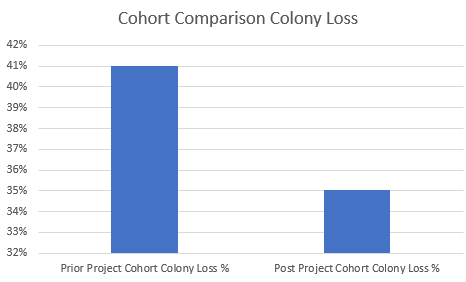
ADDITIONAL DISCUSSION: Contributing Factors - Seasonal and annual colony outcomes are shaped by a changing set of environmental and management conditions. During the 2025–2026 winter period, many participants located in York, Cumberland, Dauphin, Perry, and Lancaster counties experienced prolonged episodes of unusually cold weather. Based on post-mortem inspections, this winter pattern appears to have contributed to elevated incidence of dysentery consistent with suspected Nosema-related stress, as well as increased hive entrance blockages associated with extended freezing conditions. These blockages likely reduced ventilation and contributed to internal hive moisture accumulation, both of which are plausible factors in observed colony losses. Although these conditions can occur during a typical Pennsylvania winter, the 2025–2026 season appears to have produced an atypical increase in both colony loss factors among the monitored cohort.
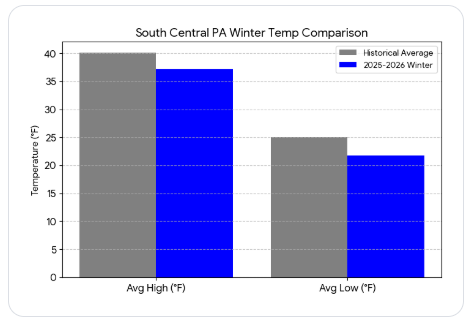
Climate information referenced from the Pennsylvania State Climatologist and related weather summaries for the South-Central Pennsylvania region, using Harrisburg-area monitoring as a reference point, indicates that the 2025–2026 winter was colder and more persistently below freezing than historical norms.
Metric Historical Average (Dec-Feb) 2025-2026 Winter
Average High 40.1 F 37.2 F
Average Low 25 F 21.7 F
One of the most notable differences was the persistence of below-freezing conditions. Whereas a typical winter experiences freezing temperatures during roughly 75% of the season, the 2025–2026 winter monitoring period reflected freezing conditions during nearly 88% of the observed period.
Varroa mites and starvation are routinely among the most frequently cited causes of colony loss. Within this participant cohort, however, those causes appeared lower than expected relative to the increase observed in dysentery-related losses and hive entrance blockages. The elevated occurrence of these cold-associated conditions appears to have contributed to the overall loss rate and may explain the modest increase in total losses relative to expected seasonal patterns.
The project sought to accomplish two areas of improvement for farming beekeepers:
- Improve participant general knowledge with the projection that with this enhanced knowledge baseline the beekeepers would make better/timely decisions when working with their honey bees that would then contribute to the second area of improvement
- Lower the loss rate of colony losses over the winter season.
EVALUATIONS:
Though the final outcome of knowledge retention and reduction of colony losses was successful, the Project Team believes the results could be improved with simplifying the reports (suggestions from participants) and providing a different material delivery method "flipped classroom". With the help of survey suggestions and the Project Teams discussion on retained knowledge and adult learning, suggestions for the delivery of information were made. It was suggested to pre-record virtual sessions, send pre-recorded sessions to participants one week prior to live virtual session; this would allow more time for Q & A during the live virtual sessions and for the presenter to highlight the important areas of the material reviewed. This delivery would provide clarity for outstanding questions and provide additional repeat of the information to aid in solidifying the material for participants allowing it to be retrievable when necessary.
Through feedback received from participant surveys, future adjustments to the two monthly reports were suggested for simplification as this would help to improve report compliance.
Project Team(Partners, Consultant, and Project Leadership) felt it is necessary to run the full project another year to capture additional statistics to ensure accuracy towards conclusion results and to tweak the project. This second year would incorporate feedback received from participants and observations made by Project Team for improvement tweaks (adjust information delivery method, simply reports, establish more small groups activities, etc.). The pre-recorded sessions will also make the project easier to replicate for beekeeping organization. These pre-recorded sessions would be self standing and not include the Q & A of the live session, which could prove to be distracting to future participants. Future participants could run their own Q & A sessions with an experienced mentor from the beekeeping organization and ask their own specific questions, making this proposed pre-recorded sessions most attractive.
CONCLUSION
OBJECTIVES
OBJECTIVE 1: Improve the overall knowledge base for participants:
Measurement of improved knowledge base was provided through examinations. Though, this enhanced knowledge was also noted during meeting discussions, questions asked, and solutions offered.
KNOWLEDGE BASE averaged an improvement by 26%.
Best said from the participants surveys collected in regard to the helpfulness of the project ( 30 out of 31 provided positive feedback see sampling below).
- Response provided by participant #127 Yes! I have learned a lot and it helped this winter for the survival of my colonies.
- Response provided by participant # 130 Yes, Very informative and interesting. I learned a lot and am a better beekeeper.
- Response provided by participant # 121 Yes, entirely! This is my first year successfully keeping my bees alive over winter, and all 3 hives I had in November are still alive and well now at the end of April.
- Response provided by participant #116 The sessions over the past year, both virtual and in-person, have been very helpful in improving my knowledge base and confidence. I especially appreciated the mix of interactive discussions and hands-on activities, which made it easier to apply what I learned in real-world settings. The lineup of speakers was especially valuable and interesting. It would be great if this grant was extended to provide additional support to new beekeepers. Without a doubt I will be a better beekeeper after participating in this class.
- Response provided by participant #114 Absolutely, yes. I am grateful for the opportunity to participate in the SARE Grant Program. I have clearly picked up various positive processes to better manage my hives. The how to , when to , and how not to , and when not to has made a huge positive difference from my years past ~ thank you.
Out of the 31 responses received, we did receive 1 that was less than positive.
- Response provided by participant #101 It isn’t what I was expecting. I was hoping it would be more like a support group and less like a classroom. I appreciate the knowledge I have gained, but my bees absconded after making it through the winter and I don’t feel confident in trying again this year. I hope to find a mentor before I resume with the hobby.
OPJECTIVE 2: Improve the colony survival rates among the averages for same demographics:
In conclusion, the project accomplished what it set out to do: Increase knowledge of participants and provide them with timely support to improve the colony survival rates of the participants.
Although the project was successful, it also served as an important learning experience for the Project Team. While a program outline has been developed, lessons have been created, and video footage is available, the team has identified several opportunities to strengthen the model and make it more easily replicable by others. At its current stage, the project provides a usable program framework; however, continued development is recommended to refine program materials, strengthen participant data collection, and improve overall consistency in delivery. These enhancements would support broader adoption and help ensure that the program could be successfully implemented even by individuals with limited instructional experience, thereby extending its reach and impact among new beekeepers across the county.
Education & outreach activities and participation summary
Participation summary:
ON-FARM VISITS: 4 On-site participant workshops and accompanied lecture meetings (1: Keys to Bees, 2: Dickinson College, 3: Dickinson College 4: Keys to Bees). 11 colony inspections with farming partner Diakon and 13 colony inspections with farming partner Dickinson College
Brochure Initial Applications (1)
The initial outreach to gain participants was through the Tri-County Beekeeping organizations (YCBA, CABA, & LCBS). The targeted demographic is newer beekeepers (less than 4-years) that have completed a Beekeeping 101 course. Prior students of Keys to Bees and other local trainers were informed to invite their graduates. A flyer explaining the program was established and distributed to all contacts. In addition, we visited many local beekeeping meetings in the fall 2024 and beekeeping groups to promote the grant project and provide application information to membership; these organizations were in the surrounding counties (York, Cumberland, Dauphin, Lancaster, Perry, and Adams). Other outreach was conducted through local social media groups for beekeepers and on the www.keystobees.com website. This initial outreach helped spread the word of the project and establish a pool of applicants for the Team Leader and Consultant to review and identify quality participants.
Upon completion, results of the beekeeping training model has been broadly shared in a similar manner. The Team Leader shared findings with the boards of the Tri-County Beekeeping organizations and offered to present findings to these organizations. Additional outreach was performed to the PA State Beekeepers Association and Eastern Apiculture Society with submission of professional papers and offers to do presentations at meetings, conferences and newsletter articles. The outline of the project was summarized and the supporting statistical data was reviewed showing the success of the project. This will hopefully encourage these beekeeping organizations to utilize the project material to organize their own post beekeeping 101 support cohort group to improve the colony survival rates within their own organizations.
FACTSHEET/EDUCATIONAL TOOLS
- Project marketing flyer
- Curriculum scheduling outline working live document
- Knowledge base (honey bee) examination (given initial, mid, and end of project)
- Twenty-two (22) Participant Slide Decks (with note session), accompanied recorded meeting sessions, and trainer outline of slide deck.
- One (1) additional Q & A Participant Slide Deck (with note session) created - optional
- Two (2) Monthly reports: Inspection Report & Mite Report
- Zoom Poll Group Questions created (not supplied) but can be requested
ARTICLES
Articles submitted to beekeeping organizations for newsletters, beekeeping journals (ABJ & Bee Culture), multiple website blog posting with Q&A, Facebook group created and used as Q&A tool, Lancaster Farmer posting, and PSBA posting.
PRESENTATIONS
Presentations delivered at many beekeeping organizations (YCBA, CABA, LCBS, PCBA, Women's Beekeeping Soiree of Harrisburg Area, PSBA). Additional beekeeping organizations have reached out for future presentations post grant finale (NWPBA, PSBA, & Berks Co).
See information products for session presentation.
FARMERS THAT PARTICIPATED IN OUTREACH
- Nancy Nolton - beekeeper on Facebook
- NatureKind - small business on Facebook
- Mich Ygy - beekeeper on Facebook
- Marty Jones - beekeeper on Facebook
- Cecelia Potts Berkstresser - beekeeper on Facebook
- Cherry Lane Farm, LLC - agriculture/beekeeping small business - Facebook and word of mouth
- Heavenly Honey, LLC - agriculture/beekeeping small business - presented topic on commercial beekeepers
- David Papke - beekeeper - presented topic on honey extraction
- Valerie Hawthorne - beekeeper - presented topic on honey judging
PARTICIPANTS REPRESENTED COUNTIES
- Farming Beekeeper Participants in Cumberland County 9 individuals
- Farming Beekeeper Participants in Dauphin County 5 individuals
- Farming Beekeeper Participants in Bucks County 1 individual
- Farming Beekeeper Participants in Fulton County 1 individual
- Farming Beekeeper Participants in Lancaster County 1 individual
- Farming Beekeeper Participants in Perry County 1 individual
- Farming Beekeeper Participants in Tioga County 1 individual
- Farming Beekeeper Participants in York County 12 individuals
FARMERS WHO PARTICIPATED IN EDUCATION AND OUTREACH ACTIVIES
Original 36 participants and alternates, 2 Farming Partners, 2 Project Leads
EDUCATORS/SERVICE PARTICIPATING IN OUTREACH
- Lindsey Lyons, Director Center for Sustainability Education - Dickinson College
- Dr. Maggie Douglas, Assistant Professor - Dickinson College - Introduction made, Dr. Douglas has been involved in prior PennState Ext. SARE grants and may be a source for over-wintering statistics.
- Kim Patten, Diakon Youth Services Manager
- YCBA
- CABA
- LCBS
- FCBA
- PCBC
- PSBA
- PBG
- PennState Ext. Services (Robyn Underwood) 19-Meeting-2-11-26-Robyn-Underwood-Winter-Spring-Threats-slid
- NorthWest Pennsylvania Beekeepers Association (NWPBA)
- Pennsylvania Bee Inspector - Robert Dwyer
- Mark Gingrich, President of PSBA
- Jeremy Barnes, Prior President of YCBA
- Nathan Pears, President YCBA
- PennState Ext. Services (CiCi Sweeny)
Learning Outcomes
Project officially started with participants (cohort group) 3/2025. During this first month the cohort was instructed on the outline of the project and needs of participation (attend virtual and in-person meetings and submit two monthly reports). Also during this first month a knowledge base examination was given to establish a base line of knowledge for the cohort. This examination was repeated again midway through the project and upon completion of the project to provide data on knowledge base improvement from the project. Knowledge base examination includes questions that any general beekeeper should know to provide accurate information to the public and/or knowledge to ensure their bees remain healthy. This knowledge base examination was established by the Team Leader and reviewed and modified by the Project Consultant and Farming Partners.
Knowledge base test KNOWLEDGE REVIEW #1 - Google Forms established to identify the starting point of knowledge of the participants. All participants have participated in at least a Beekeeping 101 class. However, participants took a variety of classes, spanning over a dozen options. This knowledge base examination determined how much information the participant retained and/or the quality of the different Beekeeping 101 classes. This examination (same questions) was given on 3/19/25 (beginning), 9/24/25 (mid-way), 4/8/25 (final) to determine the change in knowledge base. The theory was that this enhanced knowledge will be utilized to make quality decisions of beekeeping stewardship. Examination included topics covering: basic honey bee biology, behavior, husbandry, honey processing, and other basic honey bee questions.
- INITIAL EXAM: Average score 72/112 = 64% from 38 participants. Participants included 30 active participants, 6 alternates, and 2 farming partners.
- MIDTERM: Average score 93.75/112 = 72% 3 less participant (35 participants)
- FINAL: Average score 100/112 = 90% 2 less participants (33 participants) - Plan was to end with at least 30 participants, met goal.
RESULTS: Average knowledge base increase during the first half of the project increased by 8% and by the final increased a total of 26%. This learning objective, to increase the over-all knowledge of the cohort group, we theorized would aid the cohort group with managing their honey bees to improve their success rate with colony survival.
LESSON TOPICS twenty-two (22) lessons are listed under section "Materials & Methods".
SIDE BAR: An additional learning objective established by a select few within the cohort was the establishment of networking groups. The individuals within these networking groups showed an elevated level of knowledge improvement, engagement, and general success with their bees. Though these network groups had been encouraged, the statistics gathered on this project shows a significant impact on success: 15% higher examination score average and the colony survival rate is higher averaging about 20% (CI is low due to unknown variables not collected). The establishment of future cohort groups should take this grouping into networks into consideration.
Project Outcomes
The project was a success, but some adjustments are necessary to make the program easier to use with a wider scope.
The assessments and analytics show a need for adjustments to the reports (shorten and simplify for participants); these adjustments should improve participant compliance in submitting the reports. In addition, separate research indicates moving the information delivery to a flipped classroom method would improve the cohort retention of knowledge (see "Conclusion" section for more details). These two main adjustments were submitted in a Farming Community Grant to improve the final product . These tweaks would make the final product easier to replicate for other beekeeping organizations to use with little guidance needed (prerecorded sessions and then only needing a mentor to lead the live sessions to conduct a Q & A about the recorded sessions). With these adjustments the mentor utilizing this project would not need to present from the power point material, but only run the live Q & A session; which would require much less time for the mentor. This should make this position of "mentor" easier to fill for beekeeping organization and would not need a consistent mentor.
We also submitted for a smaller Farmer Grant in the fall of 2025, which would build upon this grant. Upon establishing the outline of topics to cover for this grant we discovered that many (new and seasoned) beekeepers do not know or understand the law when it comes to keeping bees or selling honey. We touched on these two topics during our project sessions (visit from President of PSBA & visit from Pennsylvania Apiary Inspector), but considering lack of general awareness in the beekeeping community regarding these two areas, the need to develop broad reaching material to all beekeepers was identified. This proposal focuses on the development of that material (PA laws, need to register apiaries and why, requirements to selling honey, how to become a certified honey location, etc.). Once material is developed it will be provided in many platforms and made available to the legal entities (Department of Agriculture Bureau of Food Safety). The developed materials would be incorporated into this project, along with interviews conducted through these future efforts.
Neither one of these two grant proposals were approved for coverage, but positive feedback was received from grant reviewers and we will look to resubmit in the near future.
FEED BACK FROM PARTICIPANTS (see "Conclusion" for more specific participant comments:
Participant feedback supports the conclusion that the project influenced both beekeeper behavior and confidence. Participants shared that they gained practical knowledge from the sessions, improved their ability to interpret colony conditions during inspections, and benefited from the peer support created through small cohort groups. Several participants indicated that the camaraderie and shared learning environment increased their confidence in managing bees. Feedback received from 31 participants indicated that they were glad they participated in the project, reinforcing the value of the program as both an educational and community-building model.
KEYS TO PROJECT SUCCESS
We had a diverse leadership group, overseeing the project from the Project Leader and Consultant to the two Farming Partners. Each brought a quality rounded skillset to establish a quality project. The project also provided a solid foundation of knowledge and coverage coming from leaders within the community so the participants got to meet and learn from a variety of beekeeping leaders. We also incorporated hands-on lessons during the four on-site workshops. These workshops provided another opportunity for the cohort to come together in person to develop smaller networking groups.
CHALLENGES
As with any training, participants all have different learning styles. Though we provided materials ahead of our virtual/in-person meetings, the one hour meetings were consistently presentation style; which may not have been the best delivery of the material for the majority of participants. We did use two meetings specifically for Q & A, it did seem we were running out of time for Q&A during our normally scheduled meetings (this could be resolved with "flipped classroom" style of delivery). Additionally we did attempt to establish a cohort group that allowed for smaller networking groups be established, but some participants had extended distances to travel.
REVISIONS:
Running the course as a "flipped classroom" style would allow more time for the participants to review the materials and come to the virtual meetings with questions. This would allow the meeting time for Q&A and general discussion of the materials. The actual presentation would be prerecorded for the participants to review at their leisure prior to the scheduled meeting time. These prerecorded meetings would not be "live" so they would be better used by future mentors to utilize; this would simplify the program for future mentors and aid in its sustainability.
ANSWERED QUESTION WE SET OUT TO ANSWER:
This project did confirm the need for on-going beekeeper support. This project also confirmed the lack of retained knowledge the average backyard beekeeper has that can make a huge impact on the survival of their honey bee colonies. Lastly, we confirmed that with this network of beekeeping support, beekeepers are more successful with their honey bee livestock.
CONTINUE TO PROMOTE:
We do plan to promote the project as it stands, but also plan to resubmit for a second year grant to enhance the project. This program is just too important to our pollinators to not continue the work. The program directly impacts the beekeeper participating, the health of the honey bees, but also the health of surrounding honey bees and native bees which ultimately impact surrounding experienced beekeepers. The range of impact just continues to range outward. If we could get this program in the hands of key leaders across the county we could truly make a difference in the survival of honey bees for our country.
Information Products
- Session #1 Initial Kick off
- Session #2 Explanation of Required Reporting
- Session #3 Swarm Catching
- Session #4 The Swarming Event Slide Deck
- Session #5 Honey Bee Colony Inspection Slide Deck
- Session #6 Honey Bee Genetics Slide Deck
- Session #7 Summer Preparation for Winter Slide Deck
- Session #8 Honey Extraction with guest David Papke Slide Deck
- Session #9 Open Q & A session Slide Deck
- Session #10 Organization & Legislation with guest Mark Gingrich slide deck
- Session #11 Condensing Hives Preparing for Winter slide deck
- Session #12 Winterizing Preparation and Hive Beetles slide deck
- Session #13 Challenges Facing Beekeepers with guest presenter Jeremy Barnes
- Session #14 Q & A Session associated slide deck
- Session #15 PA Apiary Inspector Program with guest presenter Robert Dwyer, PA State Inspecter
- Session #16 Fall Considerations slide deck
- Cohort Meeting Outline Sessions 1-22
- Session #17 Winter Inspections Slide Deck
- Session #18 Honey Bee Absconding
- Session #20 Post Mortem Colony Inspections
- Session #21 General Q & A session for honey bees
- Session #22 What's next